RSS Error: Retrieved unsupported status code "404"
RSS Error: Retrieved unsupported status code "404"
Internet Marketing Strategies Focused On Increasing The Reach And Visability Of Your Business!
Microsoft is now rolling out its new Bing Chat to all users who download Microsoft Edge. There is no more waitlist. Over half a billion chats were conducted on Bing Chat since it launched 3-months ago, Yusuf Mehdi, Corporate Vice President, said.
There are five main points of what is new with Bing Chat:
Let’s dig in a bit more into these changes.
Bing has moved from a “Limited Preview” to an “Open Preview,” removing the “waitlist” to access Bing Chat. You still need to use Microsoft’s browser, Edge, and/or the Bing mobile app to access Bing Chat.
You also need to be logged in to your Microsoft account while on Bing Chat within the Edge browser for it to work.
Bing has updated the answers within Bing Chat to be more visually appealing by improving the formatting and layout, adding more rich images and rich videos, and also by adding charts and graphs when relevant.
Here is a screenshot of the new more visual look for Bing Chat on mobile:
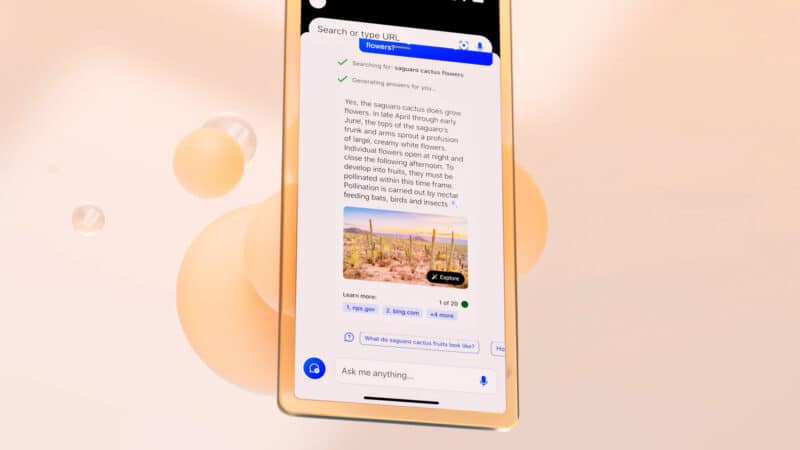
Also, Bing Image Creator is available in all languages, which means over 100 different languages, talk about getting more visual:

Microsoft also redesigned Edge to show chats in a better and more visual format. This includes streamlined look, rounded corners, organized containers and semi-transparent visual elements, the company said. Here is what that looks like:
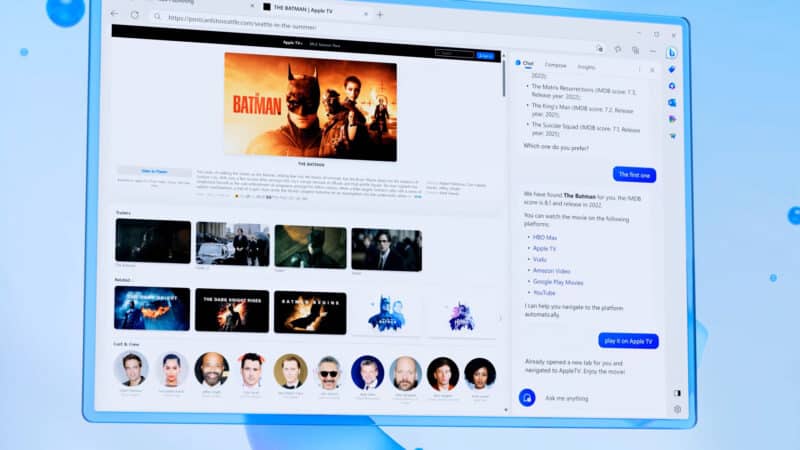
You will also be able to ask Bing Chat for answers by uploading images as part of your chat. After you upload an image, Bing Chat can search the web for related content.
In addition, Bing Chat in Microsoft Edge has improved summarization capabilities for long documents, both in PDF and HTML formats.
Microsoft has been talking about adding chat history for some time now and is rolling it out now for Bing Chat. You can use Bing Chat and pick up where you left off, then return to previous chats in Bing’s chat history.
There is a “recents” tab on the right side to pickup where you left off. You can also see a “saved” tab for chats you saved for later.
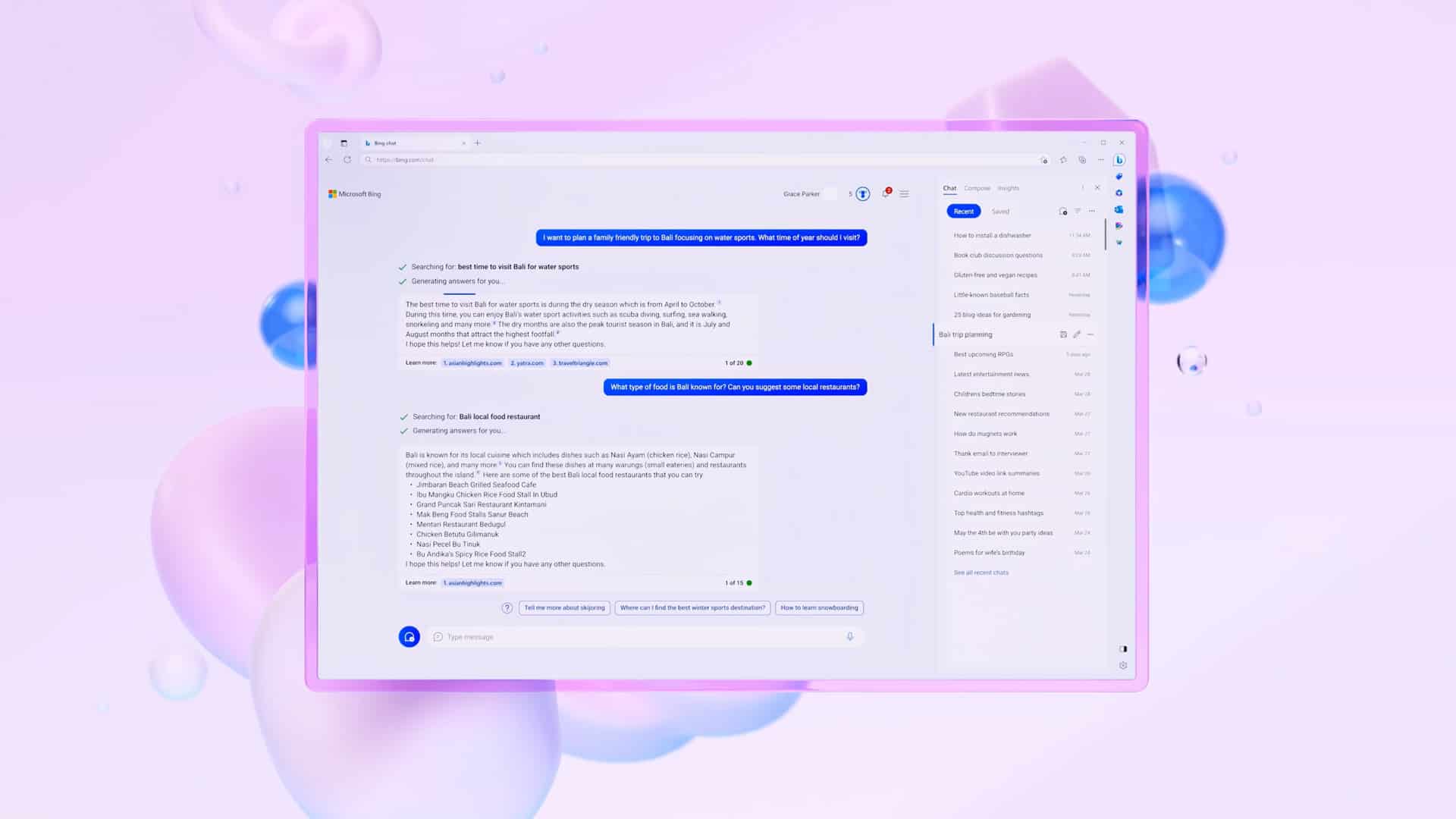
You can even go from the Bing Chat interface into the Edge sidebar interface, so you can browse the web and continue your chat. The screenshot below shows that in action:

Microsoft is also adding the ability to export and share your chats from Bing Chat or Edge sidebar. You will be able to share your chats on social media or move them into tools like Microsoft Word.
In this screenshot, you can see the export and share icons at the top right of the chat window:

Microsoft said soon, developers will be able to build third-party plug-ins into the Bing chat experience. This is also something Bing hinted was coming weeks ago. In the screen shot below, you can see an example of OpenTable helping you find and book a reservation with a restaurant. This is something OpenAI’s ChatGPT already supports.

Why we care. Watching how Microsoft continues to evolve these AI chat features is exciting. Watching how it may shape the future of a new search experience is even more exciting.
We all know Google I/O is around the corner, and seeing Microsoft and Google go at it with these fast-paced emerging technologies is thrilling.
The post Bing Chat available to more users, gains more visual answers, chat history and third-party developer capabilities appeared first on Search Engine Land.
Original source: https://searchengineland.com/bing-chat-available-to-more-users-gains-more-visual-answers-chat-history-and-third-party-developer-capabilities-406909
Google I/O is this Wednesday, and while I/O often does not have much core search news, this year, we expect that to change with Google demonstrating and hopefully launching new AI-powered features within Google Search. “Google plans to make its search engine more “visual, snackable, personal, and human,” with a focus on serving young people globally, according to the documents,” reported the Wall Street Journal.
Moving away from ten blue links. Google is supposedly going to make shifts away from listing the classic “ten blue links,” the listings of websites in its search results and instead will provide a more “visual, snackable, personal, and human” layout and interface designed to appeal more to younger searchers.
Converse with search. Google will also have a place its search results to allow you to have conversations with its search engine. Will it be an embed of Google Bard? Will it be named Magi? It is unclear but we should know on Wednesday when Sundar Pichai of Google will take the stage to provide the keynote.
Project Magi. As we reported earlier, Google is working on an all-new search engine, a team of more than 160 Googlers are working full-time on adding new features to the existing Google Search. This project is being code-named Magi, according to these reports and may be released as early as next month to a subset of users. According to the report, Magi would allow searchers to complete transactions, such as buying shoes or booking flights. This would allow searchers to complete financial transactions, all while still incorporating the existing – and lucrative – Google search ads. These changes can allow searchers to answer questions about “software coding and write code based on a user’s request.” “Google may place an ad under the computer code answers, according to a document,” the report added.
These reports came earlier from New York Times which reported, “the new search engine would offer users a far more personalized experience than the company’s current service, attempting to anticipate users’ needs.” The new Google search engine is still in its early stages, with no timeline for its release. But this new effort ” demonstrates Google’s ambitions to reimagine the search experience.”
The Wall Street Journal says we should see some of this demonstrated at the Google I/O event.
What may be announced. “Google plans to place greater emphasis on responding to queries that traditional web results can’t easily answer,” the Wall Street Journal wrote. Searchers might be asked to follow-up questions or swipe through visuals such as TikTok videos in response to their queries. We have seen this already with short videos that Google has been testing since 2020 and launched shortly after.
Google may also show online forum posts, maybe based on Q&A structured data, to make it easier for people to consume content in bit-sized chunks.
The shift will present Google “with the need to refine our definition of ‘trusted’ content, especially when there is no single right answer,” according to the documents outlining the company’s search strategy. Google will “give attribution and literacy tools to enable confidence in making use of the content,” according to the documents, the WSJ added.
Glenn Gabe noted on Twitter the focus on “younger users” with these changes.
Why we care. Changes to Google Search can be significant regarding the traffic site owners, publishers, content creators, and others get to their websites. Google sends a considerable amount of traffic to the web. If Google steps away from the traditional ten blue links, which it has been doing slowly over the years, that traffic might change.
Google I/O is just a few days away, so hang tight and wait to hear what Google has planned directly from the bot’s mouth. We will have much to report on in the coming days, so stay tuned.
The post Google Search to become more “visual, snackable, personal, and human” appeared first on Search Engine Land.
Original source: https://searchengineland.com/google-search-to-become-more-visual-snackable-personal-and-human-411769
We’re still not yet in a recession, but everything in life costs more.
When everything costs more, sales are harder to come by. Especially if you aren’t the cheapest option, or worse, your website is less than ideal to encourage a purchase.
If you’re selling an in-demand good or service, have an amazing website, and are at the lowest price point among your competitors, stop reading. This article will be of no value to you.
For the rest of you who don’t have Amazon in your domain, this may actually be helpful.
Providing you aren’t selling a one-and-done good or service (and yes, those do exist), any marketer who is worth their weight will tell you that a repeat customer is better than a one-time customer. Think of it from a lifetime value (LTV) angle.
When selling any good or service, two of the most significant barriers to sealing the deal online are the cost to the consumer and the consumer’s experience on the website.
If lowering the price is out of the question for the long term, and you don’t have the means to enhance your questionable UX, then we turn to incentivization in your PPC campaigns.
Disclaimer: As of April 2023, this approach is valid for Search, Display, Discovery, YouTube, Performance Max (sort of), and Bing Shopping (I still refuse to call it Microsoft). It is not valid for Google Shopping. It also may be restricted to certain categories (i.e., financial services, healthcare, etc.).
The first thing to do is segregate your previous and current customers into active audience lists and identify their LTV.
To segregate customers, set a parameter of duration (i.e., those who have purchased within the past 120 days), which can be done with a basic CRM upload to the Google/Bing UI (this works well for Meta, Trade Desk, and most any biddable media platform where the end experience is on your website).
In addition, I am a fan of creating audience lists of people who have completed a purchase on the site (use the same duration as you do for the CRM upload), allowing this to essentially act like a recycling dynamic list. (Just like the New York Jets quarterback position, a constantly rotating and repopulating role with a two-season lifespan before the player is dropped from it and a new one is added on.)
While doing this, an assessment of how much discount you can allow for should be conducted. If you know the average consumer buys three times a year from you, you can gauge how much of a first-time discount you can provide to a first-time customer (e.g., “15% off your first purchase”).
Determine how much you’re willing to eat on the final revenue (possibly even at a slight loss) if it ensures you’ll get one more purchase from that consumer.
I don’t recommend going broke on the incentive, but if you aren’t winning because of your price and the user experience is garbage (ask a 13-year-old to do a checkout on the site, they will give you unnecessarily brutal honesty of how bad it is), make it truly worth it.
Good thing to remember: An incentive doesn’t necessarily mean it has to be a discount on a good. Other avenues are gifts, free/discounted shopping, and bundle deals.
Or even the allure of the special incentive, where someone gets to join your exclusive club with their first purchase (this is a glorified way of saying they were added to your rewards program and/or email list).
Get the daily newsletter search marketers rely on.
<input type="hidden" name="utmMedium" value="“>
<input type="hidden" name="utmCampaign" value="“>
<input type="hidden" name="utmSource" value="“>
<input type="hidden" name="utmContent" value="“>
<input type="hidden" name="pageLink" value="“>
<input type="hidden" name="ipAddress" value="“>
Processing…Please wait.
function getCookie(cname) {
let name = cname + “=”;
let decodedCookie = decodeURIComponent(document.cookie);
let ca = decodedCookie.split(‘;’);
for(let i = 0; i <ca.length; i++) {
let c = ca[i];
while (c.charAt(0) == ' ') {
c = c.substring(1);
}
if (c.indexOf(name) == 0) {
return c.substring(name.length, c.length);
}
}
return "";
}
document.getElementById('munchkinCookieInline').value = getCookie('_mkto_trk');
Here is where the tedious grunt work comes in.
I prefer to segment at the campaign level (required for Performance Max), but it could also be done at the ad group level. So for the sake of this explanation, we’ll do it at the campaign level.
When possible, determine if your search campaigns generate more repeat or first-time purchases. This will help you decide on audience exclusions and placements for the next part.
Duplicate your current campaigns. (Pro tip: Doing this in the editor tools will save you time.)
If your current campaigns generate a lot of repeat shoppers, then note the original campaign will be dedicated to them. Just put it in the campaign name.
Then apply the repeat shopper audience lists and CRM lists to it as a target audience (There is a new-ish function in Google to only bid for new customers, but I don’t use that and prefer lists, except for on Performance Max).
This will only allow the ads in that campaign to hit those on the target lists. If the campaign gets more new shoppers, then apply the CRM and shopper audience list as a negative audience/exclusion so that the campaign only serves ads to new shoppers.
On the new duplicated campaign, do the vice versa settings of the original campaign.
Repeat this process for all applicable campaign types except for Performance Max. On Performance Max, this approach is directionally strong but far from 100%.
Duplicate the campaigns (including audience segments). However, you will check the box for one campaign only to bid for new customers. It isn’t guaranteed the other campaign won’t serve first-time shoppers, but as of writing, it is as close as you can get.
The key thing to focus on is that while the two campaigns look identical, they actually show ads to different, non-overlapping audiences. This allows for unique creative to also be served to each audience.
In addition, when first-time shoppers convert, they will be serviced by the repeat shopper campaign going forward.
At this point, you’ve separated your campaigns into new/first-time customers and repeat customers.
Also, you’ve determined the LTV of a customer and figured out how much and what kind of incentive you can provide to “get them into your system.”
On the campaign designated for new shoppers, I recommend rotating three ads when possible (at least two).
One is the control/evergreen ad (something you would also use for the repeat shopper campaign), and the remaining ad(s) with an incentive.
The incentive ad should reflect a promotion, only shared with lapsed or first-time customers to entice them to buy from you once (before you hound them with emails).
Promotion extensions, sitelinks, and other incentive deals can be applied at the specific campaign level to reinforce this.
Lastly, unique landing pages that reflect the promotion in the ad (that cannot be navigated from within the site) are often the clincher.
Now you’ve successfully provided a promotion to a new customer, enticed them to give up their data and collected that info to market to them again.
It is a clean method and gives you a better understanding of budget allocation needs, in addition to creative assets to use for both groups.
The post How to use incentives in your PPC ads to drive more sales appeared first on Search Engine Land.
Original source: https://searchengineland.com/how-to-use-incentives-in-your-ppc-ads-to-drive-more-sales-406621
Want to know what your customers need and want from your content?
Ask them. Then use that information to get creating.
But don’t just ask one person. Ask many. Pull from the power of the crowd.
To do that, consider creating polls and surveys – and then use the information you glean from them to create great content.
Here’s why and how.
First, why should you conduct polls and surveys? They take a bit of planning and work to set up – so why should you bother when you can just look at your analytics or gather statistics from other sources?
Because there are some things you can only learn with these types of research.
At its core, your content marketing is only as good as your knowledge of your audience.
If you know them, understand them, and can root out their deep pains, challenges, and dreams, you can create content that speaks to them personally and hits them in the heart.
You’ll be able to give them unmatched value in content because your content will be tailor-made for them.
The question is, how do you unearth those kinds of insights about your audience? How do you get to understand them deeply?
There’s no better way than asking them directly. And polls and surveys let you do that on a scale magnified by 100, 1,000, or even 10,000, depending on your audience size and your brand reach.
You can get a lot of information on what your audience is doing by looking at your site analytics, conversion rates, and website traffic.
But often, what’s more important to understand is why they’re behaving a certain way. And statistics can’t tell you that. For instance:
Polls and surveys can enlighten you about all of these things in a scalable way.
No two brand audiences are exactly alike.
Sure, they can be similar or overlapping. But ultimately, your audience is unique to your business because (hopefully) your business provides a unique solution in your market that attracts specific people.
That means if you rely on other sources to gather data and insights about your audience, those insights won’t be totally accurate or authentic.
If you want to truly understand your audience, you need to open up communication with them and learn from them directly about who they are and what they want.
Polls and surveys help you do that.
Not all polls and surveys are enlightening. To get good information, you need a well-crafted instrument.
Polls and surveys are fundamentally different, and employing one over the other will give you vastly different insights.
Polls are quick, involve a single question, and include a select set of pre-written answers. All the poll-taker has to do is choose the answer they agree with most, that sounds most like them, or that fits their preferences.
As such, polls are great for feeling out the general sentiment of your audience. You’ll get a bird’s eye view of the majority opinion with a good poll.
Here’s an example of the simplest poll imaginable. It appears at the end of a blog post and asks the reader whether what they just read was helpful or not:

In contrast, surveys are more detailed and open-ended. They may include one or dozens of questions about one or many topics.
Surveys often include multiple question types: yes/no, short answer, multiple choice, ranking, etc.
This makes surveys great for getting opinions, collecting insights, measuring your audience’s preferences, and understanding their underlying motivations.
Here’s another example from Nextdoor asking for feedback on their help center experience with a short, four-question survey:

Note that the first question looks a lot like a poll. However, because there are multiple questions and question types, including an open-ended one, this is definitely a survey.
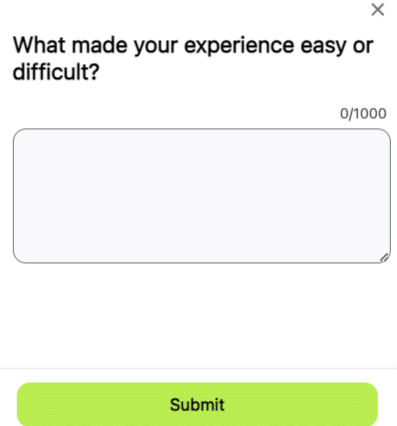
To sum up:
You don’t have to use a special tool to create a poll or survey.
If you need in-depth insights on a deep topic, definitely use a tool and create a formal survey.
However, if you just want to get a general idea of how people feel about something, create an informal, spur-of-the-moment poll or survey. You don’t have to use a tool for this:
Don’t forget, you can also create quick polls just to engage with your audience and for no other reason. This is an easy but fun way to add to your social media calendar.

What are you ultimately hoping to learn from your poll/survey? What’s the bit of knowledge at the heart of it all that you’re trying to find out?
Similarly, what’s the main assumption you’re trying to prove correct – or disprove?
This is your goal. Especially for surveys, if you have a clear goal before creating one, you’re bound to get better results and stronger insights.
There’s an art to writing and formulating survey questions.
The way you phrase a question can completely change the type of answers you’ll get.
For example, take these two questions. They both ask for an opinion on essentially the same thing but will elicit completely different responses:
Now, there’s a time and a place for open-ended questions. Various answers and opinions can be enlightening – as long as you have the time and resources to sift through them all.
Generally, if you want to keep things simple and easy to sort/analyze, ask closed questions with only a select number of possible answers.
Here is a great guide to writing useful survey questions that will give you clear, unbiased answers.
Get the daily newsletter search marketers rely on.
<input type="hidden" name="utmMedium" value="“>
<input type="hidden" name="utmCampaign" value="“>
<input type="hidden" name="utmSource" value="“>
<input type="hidden" name="utmContent" value="“>
<input type="hidden" name="pageLink" value="“>
<input type="hidden" name="ipAddress" value="“>
Processing…Please wait.
function getCookie(cname) {
let name = cname + “=”;
let decodedCookie = decodeURIComponent(document.cookie);
let ca = decodedCookie.split(‘;’);
for(let i = 0; i <ca.length; i++) {
let c = ca[i];
while (c.charAt(0) == ' ') {
c = c.substring(1);
}
if (c.indexOf(name) == 0) {
return c.substring(name.length, c.length);
}
}
return "";
}
document.getElementById('munchkinCookieInline').value = getCookie('_mkto_trk');
Now, how do you use polls and surveys to inform content creation?
In a nutshell: Use polls and surveys to directly ask a large chunk of your audience what they want from your content. Doing this in various ways will yield lots of topic ideas.
Finally, don’t forget that your survey itself could be the star of your next content piece.
Let’s break it all down.
This is one of the quickest and easiest ways to use polls to create content.
Let’s say you’re stuck deciding between three different topics for your next blog post. You’re not sure which one your audience will be interested in most.
So, ask them! Set up a quick poll and let your audience vote on the topic they’d be most interested in. The winner is the one you’ll write about next.
Plus, you can use this knowledge to inform more content topics later. Are there any related topics to address? Your audience would probably find these interesting, too.
Deep audience insights about their toughest obstacles can be great fodder for content.
For example, a survey can help you pinpoint the biggest challenges they face that relate to your business or what you sell. These challenges can be broken down into smaller chunks and addressed with content.
Imagine you’re a business consultant and identify that your audience struggles with business planning. You could break that topic into smaller chunks, each a topic for a blog post (start-up costs, researching the market, figuring out licenses and registration, setting up bookkeeping, etc.).
You could also create an ultimate guide to business planning and go through all the details while linking to your sub-topic pieces.
Your audience’s pain points are a great starting place for brainstorming content topics. Surveys are the answer to find those pains and hear them described in your audience’s own words.
This is one of the perks of including open-ended questions in your surveys (and generally asking for feedback):
You’ll get written responses in your audience’s own words, with terms and key phrases they regularly use in their vocabulary when discussing your industry.
These are gold mines for keywords.
Record your analysis in a list for later research and insertion in your content.
Depending on your survey’s depth, accuracy, and sample size, you could turn the results into a compelling research report on a specific topic.
If this is your goal from the outset (to use your survey results to create content), ensure you have a good grasp of survey planning, design, and analysis.
Remember that few brands do original research because it’s a time-intensive process requiring skills to execute well. But when it’s done right, you can expect incredible results (original research reports are link magnets!).
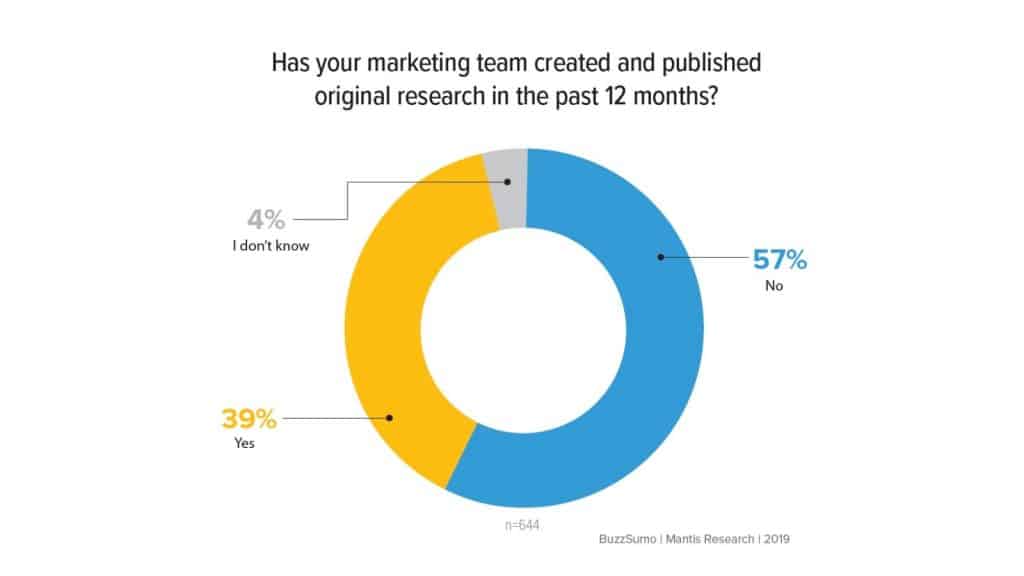
If you’re interested in this route, read this Orbit Media guide to using original research in your content.
Sometimes, the simplest survey will generate the most useful results. Hence: Ask your audience what types of posts they’d like to see on your blog.
You can conduct this survey in a simple post on social media with one open-ended question (“What kind of content topics would you like to see on our blog?”). Ask for ideas and suggestions in the comments.
You can also pose this question at the end of blog posts and emails. It’s simple and quick, and you’ll likely get varied responses that inspire many new ideas.
Now that you know how much potential exists inside a single poll or survey, ignoring them as tools in your content marketing would be silly.
A well-crafted poll or survey can bring surprising results, including a direct line to your ideal customer’s thoughts about your niche and brand.
One survey alone – or one well-timed, well-worded poll – can give you fodder for an enormous amount of content. So what are you waiting for?
The post How to turn polls and surveys into great content appeared first on Search Engine Land.
Original source: https://searchengineland.com/polls-survey-great-content-407960
Home Business Magazine Online
The cryptocurrency market is constantly buzzing, and it can be difficult to keep abreast with the changes. Gagarin.News is a great source of information and provides up-to-date news, reviews, and analytics on the latest events in the crypto space. Whether you’re a seasoned crypto investor or just looking to tap into the field, Gagarin.News may be able to assist in the journey towards gaining cryptocurrency knowledge.
In recent news, the Bitcoin halving event has been a major topic of discussion. This is a significant event for the cryptocurrency community and has a notable impact on the market. The Bitcoin halving is expected to result in a decrease in the supply of Bitcoin, which could lead to an increase in the price of the cryptocurrency.
A new upgrade to the Ethereum platform is intended to improve the security and scalability of the network. Furthermore, DeFi is a new type of financial system that is built on top of blockchain technology. Gagarin.News provides up-to-date reviews, analysis, and news on the latest events regarding the Ethereum platform and DeFi. For instance, they have a great video on understanding the basics of DeFi, which can help you get up to speed on this exciting new technology. You’ll be sure to stay informed on the latest developments.
Whether you’re looking for information on the Bitcoin halving, Ethereum 2.0, or DeFi, Gagarin.News has you covered. In addition to news and analysis, Gagarin.News also provides helpful videos and tutorials on a wide range of topics. Veteran crypto investors and complete beginners may find Gagarin.News to be a great source of information. Make sure to check in at Gagarin.News for the latest updates on the crypto world. In a market that is highly competitive and constantly fluctuating, having this source of knowledge may give you that extra advantage needed to attain success.
The post The Cryptocurrency Market Is Constantly Buzzing, and It Can Be Hard to Keep Up appeared first on Home Business Magazine.
Original source: https://homebusinessmag.com/money/cryptocurrency/cryptocurrency-market-constantly-buzzing-keep-up/
Home Business Magazine Online
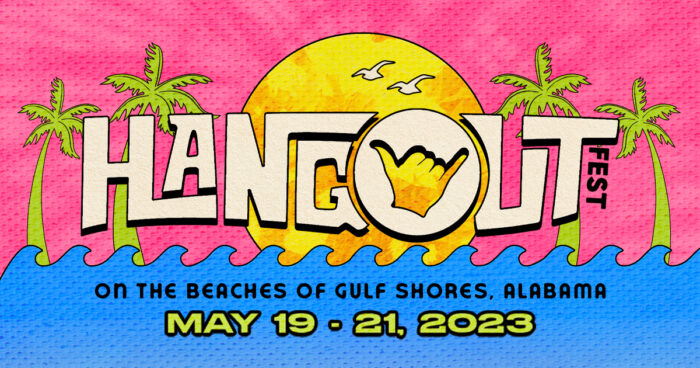
Imagine a perfectly warm summer day on the beach with all your closest friends. You have an ice-cold canned beverage in your hand, you’re watching some of your favorite artists performing live while standing in the soft and warm sand, all while ocean waves crash on the shore next to you. Sounds like a dream? Hangout Music Festival makes this a reality. Located oceanside in Gulf Shores Alabama, Hangout is the perfect opportunity for enthusiastic festival goers to kick off their summer of festivals in a music lover’s paradise. The festival will take place from Friday, May 19th to Sunday, May 21st. It is a must-attend festival to start your summer off on the right sandy foot.
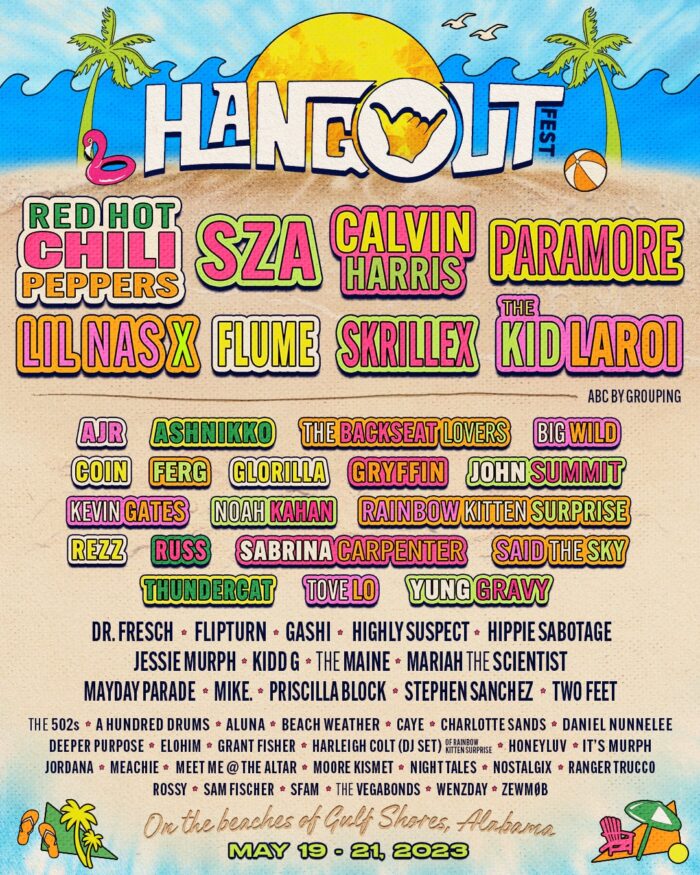
2023’s Hangout Music Festival lineup is sure to please a diverse audience of festival goers. Rock lovers will unite as Red Hot Chili Peppers fires up the beach to keep the energy going into the night, supported with energizing performances by COIN, Noah Kahan, Rainbow Kitten Surprise, and The Vegabounds. Pop-punk lovers will also be enthralled to see Paramore headline the festival with support by Mayday Parade and The Maine. And what would a beach-side festival be without some smooth indie sounds provided by The Backseat Lovers and AJR.
EDM-lovers will be electrified when headliners Skrillex and Flume light up the stage, and kept dancing in the sand through Calvin Harris, John Summit, REZZ, Dr. Fresch, Aluna, and HoneyLuv. Crowds can then enjoy a more relaxed atmosphere as Big Wild, Gryffin, Two Feet, Thundercat, and Said The Sky work their magic to chill the crowd down and hypnotize them with dreamy bass and perfectly-layered rhythm.
Hip-hop/rap enthusiasts looking for stimulating live performances can look forward to seeing The Kid LAROI take the main stage along with Lil Nas X and his unique spin on country rap. Glorilla, Kevin Gates, Yung Gravy, Mike., and RUSS will also provide energizing sets that keep the crowds jumping in the sand to the heavy beats.
Festival goers can also look forward to a swoon-worthy performance when SZA will perform her mega-popular SOS album hits that may or not make the crowd lose their voice. Other must-see female artists include the TikTok-popular Ashnikko, Disney Channel-veteran Sabrina Carpenter, and the ever-confident and empowering Tove Lo.
The festival also provides a platform for emerging artists to showcase their musical talents, contributing to its reputation as a destination for discovering artists on the come up. Hangout Music Festival continues to be an exciting mix of various genres and musical acts that will have something everyone of all ages and backgrounds can enjoy!
Hangout Music Festival started in 2009 as a unique idea to combine the euphoria of live musical events with the “hang-loose” vibe of being at the beach. Its first festival in 2010 was a strong start with 15,000 attendees per day. Since then, the festival has nearly tripled in size to a whopping 40,000 attendees last year in 2022. This year promises to be no different in size, with the festival currently on the verge of selling out!
Beyond the music, Hangout offers an array of activities that create an unforgettable experience for attendees. From beachside hammock lounges to beach volleyball, to roller-skating, to various art installations across the festival grounds, the festival provides an immersive and vibrant atmosphere unique to its beach-side location that sets it apart from other events. There won’t be a dull moment on the beach, as there are a wide variety of activities, photo opportunities, places to rest and recharge, as well as a plethora of food and beverage vendors.
Hangout offers a great way to connect sponsors and on-site vendors with a diverse market of potential consumers. Sponsors and vendors of the festival can market their brands and products using their unique booths, samples, games, and other unique onsite activations to allow the festivalgoers to try out their product. They have the opportunity to create a memorable experience for the consumer that will positively reflect the brand and generate repeat customers.
Hangout Music Festival has also made significant contributions to the local economy by generating revenue for local businesses in the area and creating job opportunities for the surrounding communities. The festival provides over $700,000 from taxes to the city of Gulf Shores and tens of millions of dollars to the local economy. Beyond that, the festival provides approximately 600 jobs to local companies, product vendors, event staff, and support personal. Outside the festival grounds, the local Gulf Shores community significantly benefits from the influx of tourists, with hotel reservations and condo rentals booked up throughout the festival week, local restaurants and bars seeing increased patron activity, and transportation services receiving a major boost in clientele. The festival provides a positive economic impact both within and outside the festival boundary.
The Hangout Music Festival is the trifecta of music festivals with a diverse and exciting lineup, a beautiful beachside location, and a uniquely vibrant atmosphere to allow everyone to stay energized throughout the whole experience and have an unforgettable weekend. This is the perfect festival to kick off the exceptional 2023 music festival season. Their tickets are selling quick, so don’t “hang loose” waiting to snag one of the few tickets left. Home Business Magazine will be attending this year’s Hangout Music Festival and will provide an in-depth look at the top must-see performances, all of the brand sponsors, and more. Stay tuned!
The post World-Renowned Headliners Will Soon Take The Stage At Hangout Music Festival 2023 appeared first on Home Business Magazine.
Original source: https://homebusinessmag.com/lifestyles/success-lifestyles/world-renowned-headliners-will-soon-take-the-stage-at-hangout-music-festival-2023/
A strong brand bolsters marketing efforts. From being just another provider, it transforms you into a business your audience wants to buy from.
You might not think about brand building’s relationship with organic search. After all, SEO‘s primary goal is getting brands into the top spots in Google for non-branded search terms.
Let’s dig into the relationship between SEO and brand building and how they benefit your business.
The goal of SEO is audience generation. Generally, SEO builds audiences of people who may not know you already.
Through content, SEO aims to meet searchers where they’re at, solve their problems and nurture them to conversion.
Audience generation requires significant effort. You’ll likely need a well-built, well-optimized site and a solid content strategy to do it well.
Don’t be dismayed. SEO has compounding benefits that will serve your brand – as long as your site can hold its rank. In less-competitive industries, this could last years.
Equally, the more well-written, strategic articles you publish, the easier to rank.
The more ranks you land in top positions, the more clicks you get. Therefore, more people will know who you are.
To this extent, SEO builds brand awareness.
If your brand isn’t ranking for a desirable keyword, someone else – a competitor – will be.
Even the most well-known brands should take SEO seriously and claim spots at the top of SERPs.
Granted, you’ll rank for your brand name anyway, but what about all other questions, queries, and problems surrounding your product or service?
A strong brand equals trust, likely improving your click-through rate (CTR). But you can only take your share of clicks and traffic if you’ve made the efforts required to rank.
When people see your brand in SERPs for a non-branded keyword, you want people to click on your website instead of a competitor.
If you’re not there, you’re losing valuable traffic, giving it away to a competitor who showed up when the searcher needed them the most.
Don’t rest on your laurels when it comes to your brand. It only takes one brand to consistently show up when you’re not to capture the traffic that could’ve been yours.
Without a proper SEO strategy, you could lose clicks for searches that include your brand name.
If your brand is building new audiences (as it should be), it would be best to serve user queries throughout the decision-making process.
It is SEO’s role to ensure that brand-related keywords are ranking well. And if they’re not, SEO needs to develop a plan to make this happen.
Generally, you will rank easily for your brand name, but search terms like “[brand name] reviews” or “is [brand name] trustworthy?” are anyone to take.
You could lose clicks to review websites or social media. This matters, even if they’re your accounts.
On your site, you can set up pages designed to meet search intent and funnel traffic accordingly based on what they’re searching for. You don’t have this same agility with social media, for example.
What’s worse than your owned reviews or social media platforms ranking for brand keywords is the potential of a complaint or published letter unfairly critiquing your brand.
Or, a well-intentioned advocate who hasn’t done your brand justice when answering, “Can [brand name] be trusted?”
If you haven’t done the work to show up in SERPs, then it’s open for others to take that spot.
As mentioned, the better you rank, the more traffic you get.
For more brands, it’s not enough to snipe a lucky rank eight or even a rank four on page one. Your brand should be working toward those top spots.
Kevin Indig shares the importance of click curves and how to find your own. From the graph below, Indig shows how clicks reduce with ranks.
It should be no surprise that rank 1, Page 1 has the highest clicks with close to 25% CTR on mobile. The CTR drops rapidly by rank.
When a page ranks number four, CTR is less than 10%. The graph below shows that position six or beyond can expect a less than 5% CTR.

In a study of 4 million Google search results, Backlinko found that, on average, moving up one spot in the search results will increase CTR by 2.8%. It pays to develop a strong presence in SERPs.
In this article, I have already linked to two sources, Indig and Backlinko.
To find the research, I had to perform a Google search and sift through the results until I found a source I would trust to feature in this article.
This is a perfect example of how trusted brands attract links.
If your brand is known for being a credible source of information, it is more likely to gain backlinks naturally.
Get the daily newsletter search marketers rely on.
<input type="hidden" name="utmMedium" value="“>
<input type="hidden" name="utmCampaign" value="“>
<input type="hidden" name="utmSource" value="“>
<input type="hidden" name="utmContent" value="“>
<input type="hidden" name="pageLink" value="“>
<input type="hidden" name="ipAddress" value="“>
Processing…Please wait.
function getCookie(cname) {
let name = cname + “=”;
let decodedCookie = decodeURIComponent(document.cookie);
let ca = decodedCookie.split(‘;’);
for(let i = 0; i <ca.length; i++) {
let c = ca[i];
while (c.charAt(0) == ' ') {
c = c.substring(1);
}
if (c.indexOf(name) == 0) {
return c.substring(name.length, c.length);
}
}
return "";
}
document.getElementById('munchkinCookieInline').value = getCookie('_mkto_trk');
Often, when someone finds your site through search engines, it will be their first touchpoint with your brand.
If SEO and content have done their jobs well, the traffic finding your site is qualified, meaning they’re likely to convert.
And if the site serves the traffic well, there’s every chance you can convert the user, perhaps within that session.
It may be that the initial search is non-branded. This puts the user on your site for the first time.
Later, pleased with your service through the website and inspired by your offering, they search for your brand and return to the site.
With your credibility already in their minds, the second search is more likely to result in a conversion.
People buy from brands they trust, so whether your audience is booking an appointment, requesting a demo or signing up for a newsletter, SEO is about attracting qualified traffic that may convert later down the line.
SEO helps traffic solve problems and introduces them to your brand so you can capture a conversion through search or other marketing channels.
Traffic and conversions are great, but businesses need revenue and profit the most.
A strong SEO strategy provides answers and support to users across the entire marketing funnel. Your content and website architecture should allow your brand to keep showing up in relevant search queries.
You need a returning core audience/customers to have a brand that grows and thrives. Through SEO and content, you can prove your expertise, support your consumers and build an ongoing relationship with them.
Once a brand is trusted, sales will start to roll in.
The role of trust and brand is very obvious when looking at analytics for ecommerce sites. The pages with the most brand searches will have the highest conversion rates.
A search like “[brand name] + [product name]” is more likely to convert than a search like “How to solve [problem]?” You need a known brand before you can get that brand name, product name search.
You must answer those non-converting keywords like “how to solve [problem]?” before you can build enough trust to clinch the sale.
Even better than a one-time customer or passive subscriber is a repeat customer or an audience who engages with your emails or other marketing efforts like social media.
Your qualified audiences who once found you through a search on Google can transform into your most loyal followers and advocates.
This loyalty and retention is another fine example of SEO’s compounding efforts. Here, you can start to review Customer Lifetime Value (CLV) to truly understand the benefits of those top ranks.
Advocates are perhaps your most valuable consumer. Your advocates are your loyal and retained customers first.
As you continue to look after them, they will become your champions, advocates or brand ambassadors online. You want these. Advocates share your content and recommend you to others.
Although advocacy is not the easiest thing to measure, it is indirectly impacted by SEO.
Advocates had to discover you and receive a level of service (even if it’s in your content) to build enough trust to covert, buy and become loyal and retained customers.
Where possible, advocacy should be considered in the CLV. If you can nurture customers to advocacy and each customer tells three friends who also convert, then it increases the CLV. This is one of the motivations for refer-a-friend schemes and similar.
Assuming you execute SEO and brand relations well, you will have more growth and valuable first-party data.
With larger data sets comes better analysis which you can use to make decisions to continue growing and feeding your SEO. The data provided by SEO is transferable to many forms of marketing, too.
If you know people are searching for content on Google, they’re probably searching for it on other search engines, too.
Likely, a well-placed social media post with your customers’ exact pain points (that you know from SEO) will stop a scroll and encourage engagement with your band on other forms of marketing.
Your best chance of keeping your brand discoverable by audiences, new and old, is by building brand awareness and SEO at the same time.
Building a brand helps all your marketing channels, as does the data your SEO efforts provide.
Without SEO, your brand is at risk of ranking only for its brand name, which is useless for audience generation.
Equally, without SEO, you will lose visibility for some brand-related searches, potentially giving your warm audience away to competitors.
If you want a robust business, you are best doubling down efforts on brand awareness and audience generation, and SEO is the key to that success.
Without SEO, building audiences and keeping you relevant in the biggest search engine, it will take only one competitor to show up where you didn’t and better serve your prospective customers.
Be loud with your brand and get it in front of as many people as you can, you deserve the traffic, and your audiences will be only too glad to meet you in the SERPs.
The post Top 10 SEO benefits of building a brand that people trust appeared first on Search Engine Land.
Original source: https://searchengineland.com/seo-benefits-building-brand-trust-408143
Instagram just revealed that it would rebrand branded content ads as partnership ads, offering new methods for brands and creators to collaborate on advertising efforts.
How partnership ads work. Partnership ads enable advertisers to expand content originating from a creator or other partner’s account, facilitating broader collaboration.
The updated advertising format allows advertisers to promote a wider range of organic Instagram content as partnership ads. This includes branded content with the paid partnership label, Instagram Collab posts, @mentions, people tags, product tags, and other content not featuring the paid partnership label. Advertisers also have the ability to create new partnership ads in Ads Manager without needing an existing post. To accommodate these additional use-cases, the company is updating permissions to make partnership ads even more user-friendly.
Early testing. According to Instagram, partnership ads are the most efficient and transparent method for advertisers and partners to work together on advertising campaigns. Their data suggests that campaigns combining partnership ads with business-as-usual (BAU) ads result in 53% higher click-through rates, 19% lower cost per actions, and a 99% probability of outperforming BAU ads on their own.
Dig deeper. You can read about the new ads on the Meta blog.
Why we care. The new ads offer a highly efficient and transparent way for brands and creators to collaborate on advertising campaigns. By enabling the promotion of various types of organic Instagram content, these ads facilitate broader collaboration and increased user engagement.
In early tests, the new ads have proven to yield significantly higher click-through rates, lower cost per action, and a greater likelihood of outperforming traditional business-as-usual ads.
The post Instagram has rebranded content ads to partnership ads appeared first on Search Engine Land.
Original source: https://searchengineland.com/instagram-has-rebranded-content-ads-to-partnership-ads-409470