Why using AI to create YMYL experts is a REALLY bad idea

Last year something odd happened.

I was working on a project for a client and needed some expert insight from a sports science expert. 

I put out a request on Response Source, a popular platform where journalists and PRs seek out expert comments to add to their stories and campaigns (a bit like a premium version of HARO).

The idea is that this is a win-win for both parties. Those working on the story or campaign get access to valuable expert insight, and the experts get a plug (or, better yet, a link) to their business.

I hoped I would get some comments from a nutritionist, coach, personal trainer, or someone with similar qualifications. 

Often underqualified people would send quotes, but getting someone overqualified is rare. This is why it was a surprise when one of the responses was from a doctor, a British general practitioner (GP) working in London. 

The responses to the question themselves about how athletes cope in high temperatures were unremarkable:

“Risks of Heat Stress Disorders among players High temperature invokes physiological responses in the body that hinder the players’ health and performance. The players may suffer from the heat-stress disorder. The condition is characterized by heat cramps, heat exhaustion and heat strokes.”

Neither too vague nor too salesy, and would’ve fit quite nicely in the campaign – an adequate pitch, in other words. 

I thought it was quite odd that a GP had taken the time to respond, though. Perhaps she was trying to promote a private practice?

I clicked the link in her profile and it did not lead to a home page for a private GP practice. 

Instead, it was the About Us page of an ecommerce website selling… sex toys. 

Reverse image search - headshot

Doctor who?

A quick Google search led me to her name on half a dozen websites selling everything from CBD oils to vapes, gummies and vitamins. 

I did a reverse image search of the (suspiciously AI-looking) headshot she had supplied and it came up on a website exposing female romance scammers and the aforementioned CBD websites. 

In all likelihood, the image had been taken from someone’s Tumblr account once upon a time and was now being used by the dregs of the internet for fraud. 

UK General Medicine Council

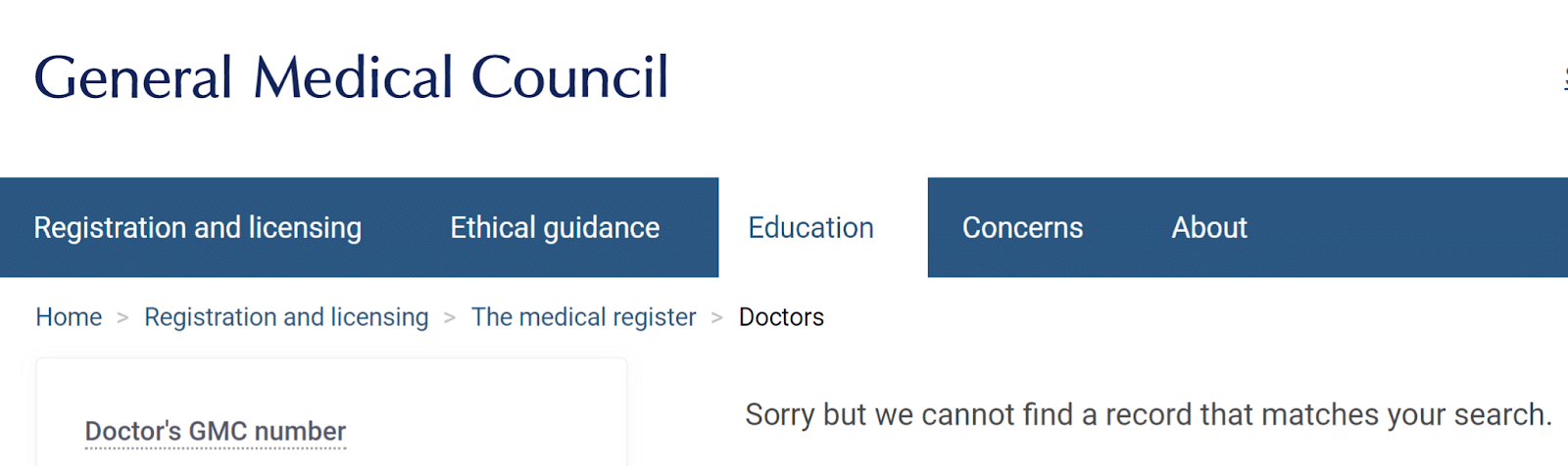
In the UK, all practicing GPs must be on the General Medical Council’s GP Registry. It is publicly searchable, and her name was not listed.

Impersonating a doctor is not the first thing that comes to mind as a winning SEO strategy, so why is this happening?

First and foremost: links. They hold significant value in SEO. This is what keeps digital PR professionals like me working. 

They can be especially important trust signals for “Your Money or Your Life” (YMYL) websites, including those selling, for example, vitamins or CBD oils. 

And unfortunately, in the very limited scope of link acquisition, it seems to be working.

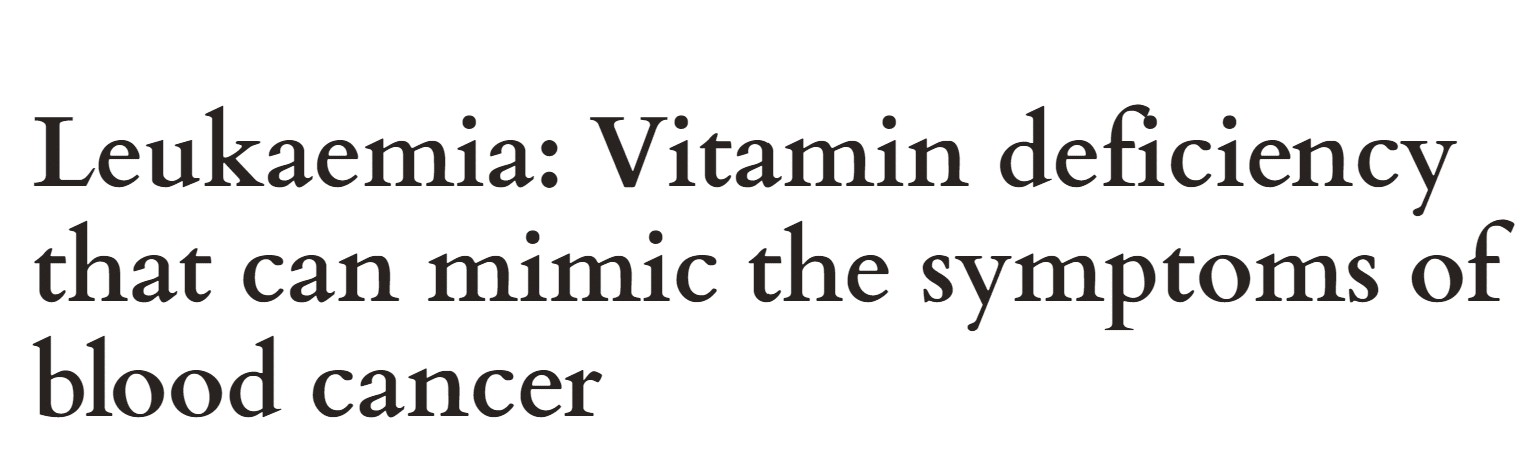
The fake doctor has landed a handful of mentions and links in some national British publications talking about, among other things, leukemia.

Fake ddoctor - mentions

Get the daily newsletter search marketers rely on.

<input type="hidden" name="utmMedium" value="“>
<input type="hidden" name="utmCampaign" value="“>
<input type="hidden" name="utmSource" value="“>
<input type="hidden" name="utmContent" value="“>
<input type="hidden" name="pageLink" value="“>
<input type="hidden" name="ipAddress" value="“>

Processing…Please wait.

function getCookie(cname) {
let name = cname + “=”;
let decodedCookie = decodeURIComponent(document.cookie);
let ca = decodedCookie.split(‘;’);
for(let i = 0; i <ca.length; i++) {
let c = ca[i];
while (c.charAt(0) == ' ') {
c = c.substring(1);
}
if (c.indexOf(name) == 0) {
return c.substring(name.length, c.length);
}
}
return "";
}
document.getElementById('munchkinCookieInline').value = getCookie('_mkto_trk');


The ethics of E-E-A-T for YMYL

This entirely fictional GP is now advising readers on how they can check themselves for early signs of leukemia. 

This strikes me as a genuine YMYL concern. Morally, it’s not a good idea to advise leukemia patients unless you’re medically trained.

“High E-A-T medical advice should be written or produced by people or organizations with appropriate medical expertise or accreditation. High E-A-T medical advice or information should be written or produced in a professional style and should be edited, reviewed, and updated on a regular basis.”

You see, this isn’t just about links, it is also about expertise, experience, authority and trust.. 

When it comes to YMYL sites, Google expects the very highest standard of E-E-A-T.

You want it to be clear on an About Us page who your experts are, why they are an expert and what part they play within the company, brand or website. 

If all this is present on the page, then offsite trust signals are the next obvious step. 

If you have a medical expert on your website, one who is also quoted in multiple publications and other reputable websites, this is one of the best things you can do to build the E-E-A-T required to rank your YMYL website. 

Google’s Search Quality Rater Guidelines state that: 

“For YMYL informational topics, the reputation of a website or content creator should be judged by what experts in the field have to say. Recommendations from expert sources, such as professional societies, are strong evidence of a very positive reputation.”

Google, ironically, is even more explicit about this in its 2019 paper on how Google fights disinformation which states: 

“For these “YMYL” pages, we assume that users expect us to operate with our strictest standards of trustworthiness and safety. As such, where our algorithms detect that a user’s query relates to a “YMYL” topic, we will give more weight in our ranking systems to factors like our understanding of the authoritativeness, expertise, or trustworthiness of the pages we present in response.”

I reached out to the journalist Mason Quah who wrote the story on leukemia, to find out more about what happened and how a fake doctor made national news: 

“Almost all of the contacts we used were via email exclusively. I was told to use response source, or a tool similar, to find leads. That is the most likely source.

I’m entirely unsurprised that an AI could fill out the responses since most of the time we knew what our story was going to be and just needed a rubber stamp from somebody who put doctor before their name.”

Fake doctor, meet fake patient

It’s not just fake experts causing problems.

The first “E” in E-E-A-T – experience also has its share of scammers.

Google now recognizes that you don’t need to be an expert in something if you have firsthand experience and understand that this may be valuable. 

Although, I don’t suspect this was the motivation behind the deeply bleak story of Insider Journalist Julia Pugachevsky being tricked into interviewing an AI-generated source. Not a fake doctor, but a fake cancer patient. 

Fake patient

This was perhaps the most immoral example of black hat link building, with little thought given to anything beyond that desired follow link. 

Pugachesky went on to write about her experience where we learn that the source contacted her via HARO. She explained:  

“In exchange for her story, she hoped I would mention her role as the founder of an online-gaming page. Ideally, I could link to them, too.”

Once Pugachevsky realized she had been scammed, she contacted HARO, which assured her that it had already banned the account. 

As for my fake GP, though, it would seem she is still out there. At the time of writing, she was last quoted in the press three weeks ago. 

Unsurprisingly for Pugachesky, the trust has been damaged.

Just as Google runs on trust signals, trust between digital PRs and journalists is crucial for digital PR to take place on platforms such as HARO and Response Source.

Pugachesky ended her piece by explaining what she would do to avoid falling victim to a similar scheme in future: 

“I put together a document about my experience for the entire Insider newsroom. We’re sharpening our protocols and becoming more vigilant than ever about researching sources in advance, insisting on phone interviews, and running email communications through a text checker.”

Those of us who contact Insider on behalf of our clients may now find that where before an email interview would have sufficed, that same journalist may now want to speak to a source directly on the phone to ensure they’ve not been AI-generated.

What can SEO and digital PR professionals do about this?

It’s important for us in the industry to call out this bad practice for what it is. This isn’t “grey hat SEO,” but outright fraud. 

It paints our industry as not just shady but rotten to the core. After all, do we really want SEO to be associated with impersonating cancer victims? 

If you’re outsourcing your link building effort, make sure you know exactly what those you’re paying to build links are doing to earn them. 

Unfortunately, when these tactics slip through the net, they may have short-term benefits, but we’ve been here before. 

It’s been over a decade ago now since Google launched the Penguin algorithm and took a firm stance on manipulative link building practices. 

According to Google’s own data, it impacted around 3% of all search results. So we know Google is more than willing to penalize inappropriate behavior when uncovered and to do this en masse.  

As Google states itself:

“Tackling the propagation of false or misleading information is core to Google’s mission and to ensuring our products remain useful to the billions of users and partners who utilize our services every day. 

“While we have always fought against malicious actors’ efforts to manipulate our systems and deceive our users, it’s never been more important to thwart them and to ensure we provide our users with information worthy of the trust they have in our services.”

In this instance, it makes far more sense to clean up our act as an industry instead of waiting for the wrath of a Penguin 2.0-style devastating Google update. 

What should publications be doing?

As for news publications and the journalists who write for them, there may be a case for ongoing education as AI evolves. I’ll leave you with this quote from Quah:

“There is a lot of value in teaching people how to conduct research that dodges AI bots or whatever the next innovation is to occupy the top slot of most Google search queries. 

“I’d say it’s something you need to actively keep on top of, it’s like how there’s a half life of medical knowledge, a doctor doesn’t just keep what they know from school but spends most of their career continuing to follow the field and staying up to date on new techniques and methods. Journalists need to keep retraining themselves as the field changes.”

The post Why using AI to create YMYL experts is a REALLY bad idea appeared first on Search Engine Land.

Original source: https://searchengineland.com/using-ai-create-ymyl-experts-bad-idea-429673

How to use ChatGPT to uncover keyword variations other tools miss (prompts included)

ChatGPT has a massive database of words and phrases that we can leverage for SEO with the right prompts. 

This article will show you how to use ChatGPT to uncover keyword variations people use when searching or describing a page topic. 

These words and phrases are often not found using traditional keyword tools, so this could be your new secret keyword weapon.

Adding variations of your page’s main keywords

I like using ChatGPT to generate variations of a page’s primary keyword phrase or targeted query.

Adding these variations helps the page reach more people looking for the same information but searching differently. It also increases an article’s semantic relevance. Almost every time I do this process, I see a bump in search rankings and traffic.

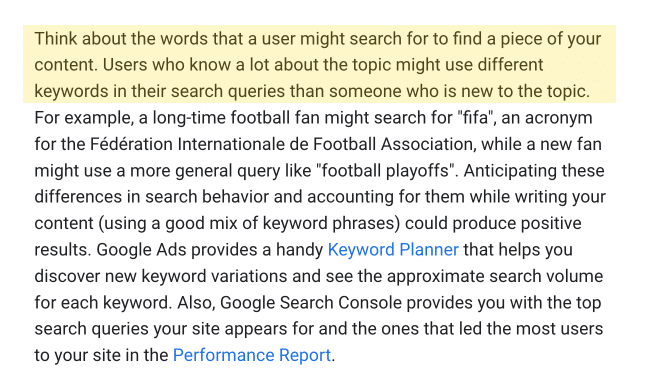
This approach is encouraged in Google’s SEO Starter Guide :

Different keywords

I was delighted that Google suggested using Google Ads Keyword Planner and Search Console here. I’ve used both for years with really great results. 

But as good as these free keyword tools are, they don’t reveal every possible variation or alternative for each word in a keyword phrase.


Get the daily newsletter search marketers rely on.

<input type="hidden" name="utmMedium" value="“>
<input type="hidden" name="utmCampaign" value="“>
<input type="hidden" name="utmSource" value="“>
<input type="hidden" name="utmContent" value="“>
<input type="hidden" name="pageLink" value="“>
<input type="hidden" name="ipAddress" value="“>

Processing…Please wait.

function getCookie(cname) {
let name = cname + “=”;
let decodedCookie = decodeURIComponent(document.cookie);
let ca = decodedCookie.split(‘;’);
for(let i = 0; i <ca.length; i++) {
let c = ca[i];
while (c.charAt(0) == ' ') {
c = c.substring(1);
}
if (c.indexOf(name) == 0) {
return c.substring(name.length, c.length);
}
}
return "";
}
document.getElementById('munchkinCookieInline').value = getCookie('_mkto_trk');


How I prompt ChatGPT for keyword variations

Here’s an example of this multi-prompt process so you can better understand how to implement this for your pages. (Experiment with refining these prompts to see if you can get a better output!) 

Example keyword phrase: ‘drones for beginners’

First, break down your search phrase one word at a time. 

Then ask ChatGPT for variations or alternative words people commonly use to describe the same thing. 

I’ll walk you through the very first word in detail.

Keyword variation: ‘drones’

Step 1: ChatGPT prompt: 

  • List 20 common ways people refer to something as “drones.”

Step 2: Copy the list to your preferred note-taking tool. 

Step 3: Go through the list and use your human brain to remove any words or phrases that wouldn’t make sense to use in the context of the topic. 

I often cut out around 10 to 20% from this list. If there’s not enough, I’ll sometimes prompt ChatGPT to list 20 more ideas.

Step 4: Pull up the article to be improved and perform a search. Copy and paste the first word or phrase from the list to see if it’s on the page. 

Side note: I recognize this step can be a bit laborious. This is why I built my own internal tool that enables me to paste a body of text in one box and a list of words and phrases in another and upon submission, it will highlight which words and phrases are found within the text and which are not. Unfortunately, I can’t find a simple tool online that does this. If you do, let me know.

Step 5: Add the missing words and phrases within the page. 

Keyword variation: ‘beginners’

Step 1: ChatGPT prompt: 

  • List 20 common words and phrases people use to describe someone who’s a “beginner.”

Steps 2–5: Repeat the instructions above. 

The full keyword phrase variation: ‘best drones for beginners’

You can also take the primary concept from the main keyword phrase and ask ChatGPT to generate some words and phrases people may use to describe it. 

In this example, the prompt for this would be:

  • List 20 common ways people refer to someone who’s a “beginner at flying a drone”

Then add the best words and phrases we’re missing from the page.

Identify words and phrases the searching demographic may use

This next prompt depends on the specific keyword phrase a page is targeting. 

The goal here is to identify the demographic or user persona of the searcher and get a list of words and phrases they may use to describe the main topic.

In the example, the demographic is a “beginner.” This will be different for most topics.

A page might target other demographics such as age, gender, location, disability, stage of life, parent, etc.

More practically, this could be a 50-year-old man, iPhone owner, boater, skier, new mom, first-time homeowner, college graduate, expert, doctor, gardener, etc.

For this example, the prompt is:

  • List 20 ways a beginner at flying drones may describe a drone and being a beginner at it.

The best results from this example

Here are some great unique words and phrases ChatGPT generated for me going through this example:

  • newbie
  • greenhorn
  • first timer
  • beginner-level
  • starting out
  • no prior experience
  • first-time pilots
  • easiest
  • easiest drone to fly
  • drones for newbies
  • entry-level
  • most forgiving
  • user-friendly

I was curious to see if any of the top 3 ranking pages in Google include any of these words and phrases. After checking all three, the top-ranking page included the most from this list. 

I don’t think they’re ranking solely because they’re including more of these words. But I believe it combines that plus many other little factors. 

Best practice for adding missing word variations

Do not just randomly add these missing word variations anywhere. Consider adding them to existing sentences that might be a bit vague. It’s a perfect opportunity to boost its contextual relevance. Other times I write a new sentence, often with the help of ChatGPT.

For this example, a vague sentence could be:

  • In order to make it onto this list, each of these had to be equipped with a productive feature portfolio and solid construction.

A better sentence that includes a variation of one of the words within the main keyword could be:

  • In order for a drone to make it onto this list, it had to be durable and user-friendly for our novice tester.

There are two things I want to point out about the new sentence:

  • I added the word “drone” to it, boosting its relevancy and making it more NLP-friendly. The subject of the sentence is clearer.
  • I added two words or entities that are related to a beginner: “durability” and “user-friendly.” As you can imagine, someone who’s never flown a drone before will likely crash it a lot. But maybe a lot less if it’s user-friendly.

I believe sites that include several variations of the main keyword tend to have higher rankings in search. 

Whether doing this intentionally or naturally, including these variations will result in an article that’s more comprehensive, helpful and relevant to the searcher.

The post How to use ChatGPT to uncover keyword variations other tools miss (prompts included) appeared first on Search Engine Land.

Original source: https://searchengineland.com/chatgpt-keyword-variations-tools-miss-prompts-429665

How Does Shoplifting Affect Fashion Retailers? 4 Statistics and Facts That Might Surprise You

Home Business Magazine Online

When you think about challenges the fashion retail industry faces, you might consider fast-changing trends, stiff competition among rival brands, or the rise of e-commerce as high ranking concerns.

However, a more insidious issue lurks in the aisles of both large-scale department stores and small boutiques in the form of shoplifting. Theft is one factor that significantly impacts revenue for clothing retailers, yet it often flies under the radar.

Its pervasive and persistent nature means it’s worth understanding in more detail, so let’s get into the nitty gritty of how this underground activity affects not only profit margins but also overall business operations and customer experiences.

Three Eye-opening Facts About Shoplifting in the World of Fashion Retail

Understanding the magnitude and repercussions of shoplifting requires a deep dive into some shocking statistics. Here are three that might surprise you:

  • The National Association for Shoplifting Prevention reports that over $13 billion worth of goods are stolen from retailers yearly, with fashion items being among the most commonly pilfered products.
  • According to Shopify’s data, clothing is four times more likely to be shoplifted than any other product category.
  • Lastly, as evidenced by Jack L Hayes International’s Annual Theft Survey, just 1 out of every 48 cases leads to an arrest, demonstrating how frequently this crime goes unpunished or undetected.

These staggering figures indicate a pervasive problem within the retail sector, one requiring immediate attention and strategic action, covering everything from product placement to in-store security personnel.

The Difference Between Shoplifting and Theft of Movable Property

While terms like shoplifting and theft are often used interchangeably, there’s a distinct difference on a legal level.

Shoplifting essentially means stealing merchandise from a store during business hours, subtly tucked away in purses or pockets while pretending to be an ordinary customer.

On the flip side, theft of movable property could mean stealing anything not attached to real estate, which can also encompass retail goods, but it typically happens outside traditional shopping environments.

Understanding these differences is essential when seeking legal assistance for movable property theft. Your defense strategy depends greatly upon how the infraction is classified.

How Does Shoplifting Impact a Store’s Bottom Line?

Shoplifting has an undeniable impact on retail stores’ profits. Not only are retailers losing sale opportunities when merchandise goes missing, but they also incur additional expenses related to loss prevention strategies and security enhancements. This might include higher insurance rates, increased investment in surveillance technology and staffing for loss management teams.

The cumulative effect is not just decreased operating margins but possibly inflated prices to offset losses, all of which directly affects the store’s bottom line.

Preventive Measures: How Can Retailers Combat This Costly Issue?

Combatting shoplifting requires proactive strategizing. Here’s a few measures retailers can employ:

  • Investing in effective surveillance technology.
  • Employee training on recognizing potential shoplifters and implementing safe interventions.
  • Store layout modification to eliminate blind spots and hidden corners.
  • Designing policies that encourage customer-service interaction, which may deter would-be thieves.

These strategies might require upfront investment, but should ultimately lead to long-term savings by significantly reducing instances of theft.

Wrapping Up

As we’ve learned, shoplifting has a substantial impact on fashion retailers, but with strategic prevention measures, the issue is not insurmountable.

Remember, a staggering $13 billion in retail merchandise disappears into thin air every year due to theft. While these figures are alarming, by developing and implementing robust loss-prevention strategies, it’s possible to transform retail’s future prospects for the better while bolstering customer trust.

The post How Does Shoplifting Affect Fashion Retailers? 4 Statistics and Facts That Might Surprise You appeared first on Home Business Magazine.

Original source: https://homebusinessmag.com/businesses/business-spotlights/how-does-shoplifting-affect-fashion-retailers-4-statistics-facts-surprise/