GA4 audiences can now be used with third-party segments in Ad Manager

Google Analytics 4 audiences can now be used with third-party segments in Ad Manager.

By accepting a third-party segment (cookies matching the demographics of your visitors bought via a third-party data provider), marketers can target line items to it, perform reports and run forecasts.

Meanwhile, audiences can also be used as-is for targeting or, marketers can combine this data with other audiences to perform analyses.

Why we care. This additional data provides valuable insights to marketers about their customer-base and how effective their campaigns are at reaching them.

It’s vital that advertisers understand their customers the best they can so that they can make data-driven decisions to not just target the right people, but to ensure that the content they create will engage them – which is likely result in higher conversions and ROI.


Get the daily newsletter search marketers rely on.

<input type="hidden" name="utmMedium" value="“>
<input type="hidden" name="utmCampaign" value="“>
<input type="hidden" name="utmSource" value="“>
<input type="hidden" name="utmContent" value="“>
<input type="hidden" name="pageLink" value="“>
<input type="hidden" name="ipAddress" value="“>

Processing…Please wait.

function getCookie(cname) {
let name = cname + “=”;
let decodedCookie = decodeURIComponent(document.cookie);
let ca = decodedCookie.split(‘;’);
for(let i = 0; i <ca.length; i++) {
let c = ca[i];
while (c.charAt(0) == ' ') {
c = c.substring(1);
}
if (c.indexOf(name) == 0) {
return c.substring(name.length, c.length);
}
}
return "";
}
document.getElementById('munchkinCookieInline').value = getCookie('_mkto_trk');


How it works. To access GA4 audiences in Ad Manager you need to follow these simple steps:

  • Link your Analytics property to Google Ad Manager.
  • Activate Google signals.
  • Enable Ads personalization in the link settings.
  • GA4 audience should then automatically be exported to Ad Manager.

Deep dive. Read Google’s ‘Sharing Audiences in Google Analytics‘ guide for more information.

The post GA4 audiences can now be used with third-party segments in Ad Manager appeared first on Search Engine Land.

Original source: https://searchengineland.com/ga4-audiences-third-party-segments-ad-manager-429954

Google Search rolls out site name updates and workarounds

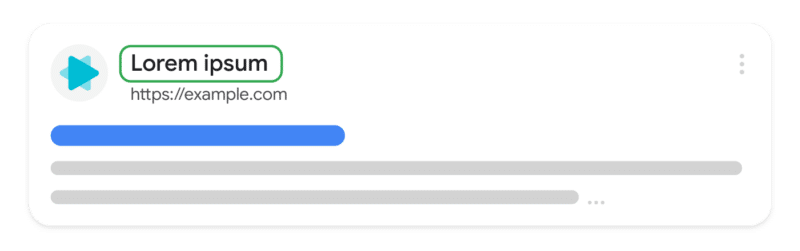
Google has released some really needed updates to its site names feature in Google Search. Site names are now supported on subdomains on all devices in English, French, German, and Japanese languages. Google also made other improvements and added workarounds when Google gets your site name wrong, Google announced.

Site names. Site names is the title and name of the site Google shows in the search results listings. “When Google lists a page in search results, it shows the name of the site the page comes from,” Google explained.

Subdomain support expanded. Google added support for site names with subdomains on mobile devices only, for English, French, German, and Japanese. Now it also works for all devices, not just subdomains.

Here is an example from Google’s own site.

Alphabet Inc.

Updated guidance. Google also updated its guidance on how to communicate your preferred site name to Google Search. Google wrote, “As a reminder, the best way to indicate a preferred site name to Google is to make use of WebSite structured data, as explained on our site name documentation.”

Also, Google now encourages more use of the alternateName property when sometimes a preferred site name isn’t available for your site.

Workarounds for site names. Google also listed a few workarounds for when the preferred or alternative names are not selected by Google Search. Google posted new workarounds in its help documentation that lists these workarounds:

  • First, try providing an alternative name using the alternateName property. If our site name system isn’t confident enough to use your preferred name, it strongly considers this option.
  • Provide your domain or subdomain name as a backup option. To provide your domain or subdomain as a backup option, add your domain or subdomain name as your alternative name. Your domain or subdomain needs to be in all lowercase (for example, example.com not Example.com) for our system to detect this as a site name preference. Our system will strongly consider using it if your preferred name isn’t selected. In this example, Burnt Toast is the most preferred option, followed by BT, and ending with the domain example.com as the final name preference.
  • If that’s still not working, then try providing your domain or subdomain name (in all lowercase) as your preferred name, as a last-resort workaround option. If you provide your domain or subdomain name as your preferred name, our system will generally select that (but we recommend only doing this as a last resort). In this example, the only preference is the domain example.com.

Need support. Having issues with your site name? Google posted a support thread in the Google support forums over here, including more FAQs.

We saw some issues with site names, some of which Google resolved. This should resolve more of those issues. In fact, I did capture some before and after examples and posted them this morning on the Search Engine Roundtable.

What it looks like. Here is where the site name shows in the search result snippet:

Site Name 800x251

Site names timeline. Here is the timeline Google posted of the evolution of site names since it launched in October:

  • October 2022: Site names for the domain level were introduced for mobile search results for English, French, German and Japanese.
  • April 2023 (I have this as March): Site names were added for desktop for the same set of languages.
  • May 2023: Site names are now supported on the subdomain level for the same set of languages and on mobile search results only.

Controlling site names. Google back in October explained that Google Search uses a number of ways to identify the site name for the search result. But if you want, you can use structured data on your home page to communicate to Google what the site name should be for your site. Google has specific documentation on this new Site name structured data available over here.

Upgrading the favicon. Google also recommended revisiting the documentation for favicons for the latest best practices. Google is now also suggesting you provide an icon that’s at least 48 pixels and follows the existing favicon guidelines.

Ads. This is also rolled out to the Google search ads on desktop, so the size of the site name, favicons, and also the ad label will be more prominent in mobile search. In fact, Google rolled out the “Sponsored” label in mobile search last October and today on desktop, officially replacing the “Ads” label from January 2020.

Why we care. Google has made several improvements to how it selects and shows your site name in the Google Search results. If Google is still getting it wrong and you are following the documentation, then maybe try some of those new workarounds to get your site name showing exactly how you want it in Google Search.

The post Google Search rolls out site name updates and workarounds appeared first on Search Engine Land.

Original source: https://searchengineland.com/google-search-rolls-out-site-name-updates-and-workarounds-429979

New Google Merchant Center policy: AI-generated reviews are spam

A new Google Merchant Center policy on “automated content” says reviews generated using an automated program or artificial intelligence application are considered spam and against the Google Merchant Center policies.

Google posted this update here and clarified its existing Merchant Center policies and enforcement.

Automated content policy. The new policy reads:

“Automated Content: We don’t allow reviews that are primarily generated by an automated program or artificial intelligence application. If you have identified such content, it should be marked as spam in your feed using the is_spam attribute.”

AI Content and Google. Generally, Google has been OK with people using AI to generate content, assuming that content is helpful for users and not written primarily for search engines. This is a bit of a deviation from Google’s recent messaging on using AI for content.

But one would assume that reviews require a human to use the product to generate a review and thus AI-generated reviews would be an exception. Maybe?

Other policy clarifications. Google also posted clarifications on its other Merchant Center policies. Here is what Google posted:

  • Spam: We don’t allow spam content. Ensure any content known to contain irrelevant, repetitive, or nonsensical text is marked as spam in your feed using the is_spam attribute.
  • Dangerous products or acts: Don’t submit reviews of regulated products that can cause damage, harm, or injury. For example, don’t submit reviews of guns, tobacco products, or regulated drugs. Additionally, don’t include content that depicts or provides instructions to complete activities that are dangerous and/or widely illegal.
  • Phone numbers, email addresses or URLs: Don’t submit phone numbers, email addresses and links to other websites in the review content.
  • Personal and confidential information: Don’t submit reviews that contain personal information, including but not limited to full names, credit card information, national insurance number, driving license information, etc.
  • Keep it clean: Don’t submit reviews that use obscene, profane, or offensive language or include content that depicts scenes of violence, serious injury or death, contains personal attacks, or are defamatory.
  • Conflict of interest: Don’t submit reviews that were paid for or are otherwise inauthentic. Reviews are most valuable when they are honest and unbiased. We remove reviews that we believe have conflicts of interest and/or have been written by employees or people with a vested interest in the product. Only submit reviews that were honestly solicited from customers who made a purchase.
  • Illegal content: Don’t submit reviews that contain or link to unlawful content, such as links that facilitate the sale of prescription drugs without a prescription, illegal drugs, counterfeit products, or illicit weapons. This content is not allowed.
  • Malware & Phishing: Don’t submit reviews containing links to malware, viruses, or other harmful software. We don’t allow phishing or other content that harms or interferes with the operation of the networks, servers, or other infrastructure of Google or others.
  • Copyrighted content: Don’t submit reviews that infringe on others’ rights, including copyright. For more information or to file a Digital Millennium Copyright Act (DMCA) request, review our copyright procedures.
  • Trademark infringement: Don’t submit content that uses a trademark in a way that’s likely to cause confusion about the origin of the product being reviewed.
  • Plagiarism: Don’t submit reviews containing appropriation of content created by another person or entity.
  • Sexually explicit material: Don’t submit reviews that contain sexually explicit material. We also don’t allow reviews that sexually exploit children or present them in a sexual manner. For this type of content, we remove the review, shut down the product reviews feed, and send a report to the National Center for Missing & Exploited Children (NCMEC) and to law enforcement. This content is not allowed.
  • Hate speech: Don’t submit reviews that advocate against groups of people based on their race or ethnic origin, nationality, religion, disability, gender, age, veteran status, sexual orientation, or gender identity. Violent language, terrorist content, or content intended to incite and encourage violent acts or extremist behavior, are not allowed in reviews.
  • Cross promotion of other products/websites: We don’t allow reviews that include promotional content for other unrelated websites, products, or services. If you have identified such content, it should be marked as spam in your feed using the attribute.
  • Off-topic reviews: We may remove reviews that primarily seek to discuss other topics unrelated to the product itself. This includes comments about shipping and delivery, experiences with particular retailers, political or social controversy, attacks on others, or don’t represent a first-hand experience with the product. This also includes merchant responses to reviewer comments.
  • Impersonation: We don’t allow reviews from people claiming to be someone that they aren’t.
  • Language: Reviews should be submitted in the original language they are written in. Google will display reviews in the original language with an option on the Shopping page to be translated to the user’s language.
  • Duplicate content: Each review should only appear in one feed and only once in that feed. If a review applies to multiple variations of a product, this should be designated by including multiple unique product identifiers and URLs with the review. The same review shouldn’t appear in feeds from different retailers. The retailer should own the review and shouldn’t send Google content syndicated from other sources. In the case of duplicate reviews in multiple feeds, we may blocklist one or more of the reviews or entire feeds.

Enforcement clarification. Google also posted the following clarification about how Google enforces the policies listed above:

  • We use a combination of automated and human evaluation to ensure that content and reviews comply with our policies. Our enforcement technologies use machine-learning algorithms to help protect our merchants and users by keeping our shopping platforms safe. More complex, nuanced, or severe cases are reviewed and evaluated by our specially trained experts who conduct content evaluations that might be difficult for algorithms to perform alone, for example, because an understanding of the context of the piece of content is required.
  • We take action on content and reviews that violate our policies. This may include disapproving violating content or a violating review, as well as issuing warnings or suspending accounts for repeated or egregious violations. We take repeat violations of our policies seriously.
  • When an image is flagged for a policy violation, we will now also block the associated review content.

Why we care. If you use Google Merchant Center, you should know all the existing policies and how Google enforces those policies. If you post reviews to your Merchant Center feed, it sounds like you need to ensure those reviews are not generated by AI or other automated means. If they are, you need to add the is_spam attribute to those reviews.

The post New Google Merchant Center policy: AI-generated reviews are spam appeared first on Search Engine Land.

Original source: https://searchengineland.com/new-google-policy-says-ai-generated-reviews-are-spam-and-against-merchant-center-policies-429984

Why a Licensed Real Estate Appraiser Should Inspect Your Home Before You Buy

Home Business Magazine Online

There are several reasons why you would want to hire a professional real estate appraiser. The most frequent uses of appraisals are in refinancing and real estate transactions. In the first instance, the appraisal’s goal is to find out if the price in the contract accurately shows the house’s value in light of factors like its location and condition. On the other hand, the appraisal’s goal is to help the lender in determining a loan amount appropriately while taking the property into account as prospective collateral.

Typically, a lender will ask for an appraisal, and the borrower will be responsible for the fee. Depending on where the residence is, an appraisal often costs a couple of hundreds of dollars. An evaluation of a house has a goal to show how much it is worth, not to pinpoint the condition and what issues it has. Additionally, an inspection of a given property cannot be looked at the same way as a home appraisal.

Before you even start negotiating with the property seller, it is crucial that you get a professional to inspect the property beforehand.

If you, a potential future homeowner, need financing, the lender will require a home assessment, frequently using a certified appraiser they are familiar with or have previously worked with. Before assessing the property, a skilled appraiser needs to have a license and needs to be insured. Due to federal law, an appraiser needs to maintain objectivity in the topic regarding the transaction to prohibit falsifying any facts either in favor of the borrower or the lender.

Why Hire a Professional for Home Appraisal

An authorized expert who holds a current real estate appraisal license must carry out the procedure of a house appraisal. The advantages of professional house appraisals will now be discussed.

Assessment of Value

To start with, the benefit of a home inspection has one primary purpose, which is to establish the full price of your property. Although it may not seem necessary to know the exact value of your home, knowing what it is worth may help you prepare for your plans in the future and financial goals. Whether you are a real estate investor or a potential homeowner, the appraisal process is a very important step.

If you work in the real estate sector and you prefer the fix-and-flip projects, getting someone to assess those properties might help you avoid offers that are not profitable for you and offer you a better idea of what you are dealing with and the resources you possess. In order to stay ahead, especially if this is your main job, it would not be a bad idea to have a professional appraiser regularly check your properties at least once per year.

Estate Planning

The process of developing a plan for how to transfer assets to the younger generations is known as estate planning. A seasoned tax or financial advisor may provide a number of strategies to help you avoid estate planning mistakes, but they must be knowledgeable about the assets they are working with and their valuations. This includes both liquid and illiquid assets, such as cash, stocks, and bonds, as well as illiquid assets like real estate. Knowing a home’s assessed value might help you decide whether it would be better to retain it in the family or sell it while comparing this knowledge to other factors like sentimental value and family tradition.

Removal of PMI

The lender is protected by private mortgage insurance (PMI) in the event that a borrower defaults on a loan. This insurance’s monthly cost is frequently included in the borrower’s monthly mortgage payment, while it is occasionally possible to pay it upfront.

PMI could become a need for obtaining a loan in common situations such as down payments or refinancing if the borrower has less than 20% equity in the home. The only way to find out the home’s true market value is to have it appraised.

A house appraisal could be helpful, for instance, if the property’s worth has significantly grown since the loan’s inception. This would increase the borrower’s equity in the home. An assessment of the property demonstrates to the lender that the borrower has enough equity to be free from the PMI requirement. But be aware that different lenders have different requirements for how much equity you must have in your home to get rid of PMI.

Final Thoughts

There are several advantages to having a professional home evaluation done for your property. You might be unaware of how useful it can be at first. However, in addition to the advantages we have already stated, expert house evaluation has other advantages. You will benefit more than you may think from being aware of your home’s genuine market worth.

The post Why a Licensed Real Estate Appraiser Should Inspect Your Home Before You Buy appeared first on Home Business Magazine.

Original source: https://homebusinessmag.com/businesses/real-estate/licensed-real-estate-appraiser-inspect-home-before-buy/

Is Car Finance the Best Way to Fund Your Next Car?

Home Business Magazine Online

The popularity of getting a car through finance has really taken off in the past few years. There are a number of reasons why car finance can be a popular option for drivers. From the higher cost of new and used cars to the cost of living at an all-time high too, it can be harder for drivers to afford to pay for a car in one lump sum. If you’ve never taken out a car loan before, you may be wondering if it’s the right option for you. The article below looks at how car finance works and also the pros and cons to help you decide whether you should finance your next vehicle!

How does financing a car work?

It’s worth noting that there are a few car finance agreements to choose from, but they usually work in the same way as each other. You borrow an amount to cover your car purchase from a finance lender and pay it back over an agreed term in monthly instalments. Your monthly budget will also include any fees and interest to pay too. You can set your finance term to fit in with your affordability and car financing deals can usually be spread over 3-5 years. You can choose the car you want from a participating dealership and payments will be based on the cost price of your chosen vehicle. Depending on the deal you choose, your loan will either be secured or unsecured. A secured loan means the deal is secured against the vehicle and can be taken from you if you fail to stick to the rules of the agreement.

Advantages of choosing car finance:

There are so many benefits to financing a car and for many drivers it can be a no brainer.

  • Multiple finance agreements to choose from. Car finance isn’t just one agreement and, in the UK, the most popular ways to finance a car is through hire purchase, personal contract purchase and a personal loan option. You can choose an agreement that’s right for you based on what you want out of your finance deal and also to suit your monthly budget.
  • Spread the cost. One of the biggest benefits of getting a car through finance is that you can spread the cost of ownership into affordable monthly repayments that suit your budget.
  • Get a newer, better car. When you buy with cash, your budget may be smaller which means you may be limited to the cars you can buy. You can usually get a newer, more reliable car when you spread the cost with finance and pay for it over a term that suits you.
  • Fixed payments. The interest rate you pay can fluctuate in line with the Bank of England base rate but once you secure a finance deal, most interest rates and monthly payments are fixed. This means you will pay the same each month for the duration of the loan and it won’t change, unless you refinance your car loan early.

Disadvantages of choosing to finance a car:

It wouldn’t be fair to look at the benefits and not also assess a few factors which may not make car finance the most cost-effective way to get a vehicle.

  • Interest to pay on top of your loan. You can benefit from 0% interest car finance deals, but these are usually reserved for brand new cars where the purchase price is higher anyway. You will need to pay interest on your car loan and the interest rate you are offered can massively vary from customer to customer. Choosing a higher interest rate can make car finance less cost-effective.
  • Can harm your credit. If you fail to stick to the rules of your credit agreements, it can have a negative impact on your credit. Missed or late car repayments negatively impacts your score and affect your ability to borrow in the future.
  • Mileage and damage charges. Certain agreements such as PCP deals require you to set a mileage limit at the start of your deal. If you exceed the annual mileage, there can be additional charges to pay. Some drivers don’t like this as they feel they are restricted by the finance company. You will also have to agree to keep the car in good condition if you want to hand the car back at the end of the deal and you may need to pay for any damage charges too.

The post Is Car Finance the Best Way to Fund Your Next Car? appeared first on Home Business Magazine.

Original source: https://homebusinessmag.com/money/personal-finance/car-finance-best-way-fund-next-car/