Managing resources is not just a buzzword; it’s the cornerstone of organizational success.
But sometimes, the constant juggling act between overworked and underutilized team members can be exhausting. The key to successfully managing resources is a seamless workflow that maximizes output while keeping your team balanced and motivated.
Join Chris O’Neal, Adobe’s expert on resource management strategy and learn how to unlock your team’s potential.
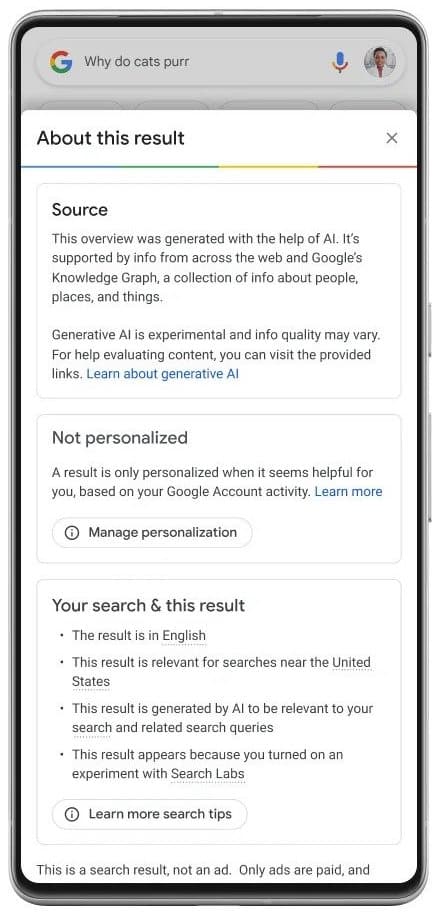
Google today is adding its About this result feature to the AI-generated answers in the Search Generative Experience (SGE).
What it does.About this result is meant to “give people helpful context, such as a description of how SGE generated the response, so they can understand more about the underlying technology,” according to Google.
What it looks like. Here’s a GIF showing how this feature works:
In this example, the description says:
“This overview was generated with the help of AI. It’s supported by info from across the web and Google’s Knowledge Graph, a collection of info about people, places and things. Generative AI is experimental and info quality may vary. For help evaluating content, you can visit the provided links.”
For individual links (soon).About this result will “soon” be added to individual links in Google SGE as well. Here, the purpose will be to give people more information about webpages that backup the SGE answers.
About About this result.Google launched About this result in Search in 2021. It was meant to help searchers learn more about a search result or search feature.
Why we care. While it’s felt like a struggle for Google to cite its sources in SGE and Bard, this highlighting of webpages and content seems like another positive step for highlighting the source from which Google is generating its AI answers.
Targeted improvements in SGE. Google is also working to reduce AI-powered responses that validate “false or offensive premises” in SGE. A “false premise” query is inaccurate or factually incorrect and something Google has worked to reduce in featured snippets. According to Google:
“We’re rolling out an update to help train the AI model to better detect these types of false or offensive premise queries, and respond with higher-quality, more accurate responses. We’re also working on solutions to use large language models to critique their own first draft responses on sensitive topics, and then rewrite them based on quality and safety principles. While we’ve built a range of protections into SGE and these represent meaningful improvements, there are known limitations to this technology, and we’ll continue to make progress.”
We have the solutions you need, whether you want to design a peaceful corner on your patio or turn your backyard into a private refuge. We’ll walk you through several suggestions that may offer you the seclusion you want, from natural privacy screens to fashionable fence choices. Let’s dig in and learn how to transform your outside area into a personal haven.
Privacy Garden
To establish a natural privacy barrier in your outdoor space, carefully choose and install tall plants, hedges, or trees. These green features give you solitude and enhance the beauty and natural feel of your surroundings. It includes decisively establishing trees, bushes, and other plant life to make a characteristic boundary that hinders the view from the outside. You can look over various thick and tall plants, like bamboo, evergreen trees, or tall grasses. These plants give protection and add magnificence and a feeling of serenity to your outside region. Furthermore, it can draw in birds and natural life, establishing a tranquil and peaceful climate.
Indoor Shades
Using outdoor shades or blinds is an excellent approach to managing privacy in your outdoor environment. You may alter them so that they obstruct the outside view while still letting light through. Select the ones that best suit your aesthetic choices, because they are available in various forms and materials.
Outdoor Privacy Screens
To improve privacy in your outside environment, outdoor privacy screens might be a great choice. Outdoor privacy screens can be built in various ways, including freestanding or linked to pre-existing structures like fences or pergolas. They are often composed of materials like wood, metal, or vinyl. They enhance the look and utility of your outdoor space while offering a physical barrier that prevents the view from the outside. You may pick from various styles and sizes to meet your unique requirements and tastes. The outdoor privacy screens are a unique and practical way to keep your outdoor space private, whether you choose a colorful design or a more solid panel.
Construct a Live Wall
A living wall is a trellis or vertical garden covered in climbing plants. In addition to increasing privacy, it also produces a breathtaking visual spectacle. The wall may be covered with climbing plants like ivy, jasmine, or bougainvillea to provide a backdrop of rich greenery.
Decorative Screens
You may strategically use decorative wood, metal, or bamboo screens to obstruct views and improve seclusion in your outdoor space. These screens are available in various styles and patterns, allowing you to add some flair.
Bottom Line
In conclusion, many original techniques exist to increase privacy in outdoor areas. Depending on your tastes and requirements, you have options ranging from ornamental screens to outdoor privacy screens. These enhancements provide your outdoor space elegance and utility in addition to seclusion. You may design a private retreat that showcases your distinctive taste, whether you choose a sturdy privacy screen or a decorative barrier. So, go ahead and use your outside area creatively!
Embarking on a bathroom renovation project is an exhilarating endeavor, albeit a challenging one, particularly in the diverse and climatically varied landscape of Canada. This comprehensive guide is designed to steer you smoothly through the renovation process, ensuring an outcome that not only mirrors your vision but also adheres to your budget constraints.
Understanding Your Needs
Before plunging into the depths of renovation, it’s imperative to have a clear understanding of your needs and aspirations for the space. Take time to reflect on what you want to achieve with this renovation. Is it about increasing functionality, enhancing aesthetics, or perhaps both?
Hiring Professionals
For a seamless and stress-free renovation experience, enlisting the services of seasoned professionals is advisable. These experts can provide invaluable insights and skills, ensuring the realization of your dream bathroom. Be it that you are looking for the best bathroom renovation companies in Calgary or in Montreal, you need to make sure to find the one contractor who will understand what you want.
Invest time in researching and selecting contractors who are not only reputable but also possess extensive experience in bathroom renovations. Look for customer reviews and previous project portfolios to make an informed decision.
Assessing Space
Space assessment is a pivotal step in the renovation journey. Carefully evaluate the available space, pondering on how to maximize its efficiency. Consider the layout meticulously, thinking about the placement of different elements to ensure ease of movement. Storage solutions should be ingenious and space-saving, and you must decide whether to expand the space or retain its current dimensions.
Identifying Style
Your bathroom is a personal sanctuary and should resonate with your unique style and taste. Whether you are inclined towards a sleek, modern look, a classic, traditional vibe, or a harmonious blend of both, identifying your preferred style is fundamental. This decision will subsequently guide your selection of materials, colors, and fixtures, creating a cohesive and pleasing design.
Planning the Budget
Budget planning is not to be taken lightly. Outline a well-structured and realistic budget that encompasses all aspects of the renovation. This financial blueprint should be your compass, guiding you through the myriad of choices and preventing unnecessary expenditures.
Cost Factors
The cost of bathroom renovation is shaped by a multitude of factors. These include the size of the bathroom, the quality and type of materials selected, labor costs, and the overall complexity and duration of the project. Being aware of these factors will facilitate better budget planning and decision-making.
Saving Tips
Savvy saving strategies can be a boon during bathroom renovations. Engage in DIY projects for tasks that don’t necessitate professional expertise, such as painting walls and installing minor accessories. Additionally, strategic planning and purchasing materials during promotional sales periods can yield substantial savings without compromising on quality.
Choosing Materials
Material selection is a decisive phase, with implications for both the aesthetic appeal and functionality of your bathroom. The materials should not only be durable and visually pleasing but also align with your budget.
Flooring Options
Flooring options abound, ranging from elegant tiles and robust hardwood to practical laminate and versatile vinyl. Each material has its unique set of advantages and drawbacks, and your choice should reflect your style, needs, and budget.
Countertop Choices
Countertops are available in a variety of materials, including the ever-popular granite, marble, and quartz. While these materials are celebrated for their durability and aesthetic value, they come with different price tags. Explore the options and choose one that aligns with your design vision and financial plan.
Selecting Fixtures
Fixtures are indeed the crowning jewels of any bathroom, serving dual roles in functionality and style. From faucets and showerheads to toilets and sinks, the market offers a plethora of designs and technologies. Your chosen fixtures should seamlessly complement the overall design while meeting your specific needs and preferences.
Working with Designers
Collaborating with interior designers can be immensely beneficial. These professionals have the expertise to translate your vision into a tangible design that is both coherent and aesthetically pleasing, making the renovation process smoother and more enjoyable.
Conclusion
Undertaking a bathroom renovation in Canada demands careful planning and consideration of various elements. With a thoughtful approach and the right team of professionals, you can craft a bathroom space that is a true reflection of your style and needs, offering both comfort and value to your home.
TikTok may soon pilot an ad-free subscription service on its app.
Code within the social platform suggests that subscribers may soon be able to access content with no interruptions from adverts for $4.99 a month.
Screenshots of TikTok asking users if they’d like to upgrade to an ad-free experience were shared by Android Authority.
Why we care. If sign-ups for TikTok’s ad-free subscription tier prove to be popular, then this could have a significant impact on reach for the platform’s advertisers, which will ultimately lower the product’s value.
What ads will be excluded? Influencer marketing one-offs or campaigns will still appear on the paid-for version of the app – it’s only ads that are served by TikTok that will be excluded. This means the change is unlikely to help combat the issue of TikTok influencers not disclosing brand partnerships.
Get the daily newsletter search marketers rely on.
function getCookie(cname) {
let name = cname + “=”;
let decodedCookie = decodeURIComponent(document.cookie);
let ca = decodedCookie.split(‘;’);
for(let i = 0; i <ca.length; i++) {
let c = ca[i];
while (c.charAt(0) == ' ') {
c = c.substring(1);
}
if (c.indexOf(name) == 0) {
return c.substring(name.length, c.length);
}
}
return "";
}
document.getElementById('munchkinCookieInline').value = getCookie('_mkto_trk');
Why now? TikTok generates most of its profits from ad revenue – which came to $9.4 billion in 2022. That number is expected to quadruple by 2026. However, in a bid to mitigate financial risk, the platform’s executives are exploring the diversification of revenue streams, with the potential introduction of paid subscriptions not coming as a surprise.
Deep dive. Check out TikTok’s newsroom for more information on the platform’s latest developments.
If e-commerce is the heart of your business, staying ahead is not an option – it’s a necessity. Join paid search experts who unveil the strategy and innovation needed to take your business above and beyond the competition.
Fall is here, and that means holiday sales are right around the corner.
Black Friday and Cyber Monday are two of the largest online shopping days of the year, with Cyber Monday 2022 breaking records with almost $12 billion in sales.
These consumerist holidays are huge opportunities for businesses to rack up sales, so it’s important to be prepared.
This article will focus on one specific aspect: paid search.
Having a well-built paid search strategy is critical for most growing businesses but can be a fantastic way to boost sales during key times of the year with promotions.
Promotions are a fantastic way to get your ads to stand out from the crowd on a normal day, but they’re a must on Black Friday and Cyber Monday.
Here are three ways to use promotions and discounts in paid search to help you boost sales and capitalize on the holiday rush.
1. Create new ad copy
The most obvious way to use your promotions and discounts in PPC is to emphasize promotions and discounts in a new set of ad copy.
Using multiple headlines and descriptions to get customers excited about your promotion is simple but takes more work than the other two options.
One caveat to consider when creating all new ad copy for your promotions is that you need to ensure the ads start and stop at the correct times. I recommend using the labels feature to automate this process.
Decide what ad you want to use before and after the promotion and label them appropriately. I call these ads “evergreen” so I know this is my standard ad that is always relevant.
You then need to create your ad. Once done, label them as a promotion and the event/year you’re running them so you don’t run into labeling issues in the future.
For instance, if I were to create ads for Black Friday 2023, I would label them “Promo – BlackFriday2023.”
Make four automated rules to enable and disable the ads at the right times. Let’s say in this example that you want the ads to start on 11/21 and end on 11/28 for Black Friday. Here are the four rules you would set up:
Disable all ads labeled “Evergreen” in the campaigns to which you’re adding the promotion. Set this to run once on 11/21.
Enable all paused ads labeled “Promo – BlackFriday2023.” Set to run once on 11/21.
Disable all ads labeled “Promo-BlackFriday2023.” Set to run once on 11/28.
Enable all paused ads labeled “Evergreen.” Set to run once on 11/28
Setting these rules up takes the stress out of launching and pausing promotional paid search ads so you can focus on crushing this holiday season.
2. Leverage promotion assets
One of the biggest hassles of advertising promotions is the time it takes to create sales-specific ad copy.
This isn’t a big deal if you only have a couple of campaigns in the account, but what if you have 200 campaigns and 50 different sales to promote?
If that’s the case (or even if it’s not), then promotion assets are for you.
Promotion assets are ad assets that allow you to highlight relevant promotions for your business without creating specific ad copy.
Assets are additive to your normal ad copy, so you’ll only need to create one promotion asset per promotion, and you can have them run at the campaign or account level.
Since creating new ads resets the performance data, promotion assets will allow you to add promotions without affecting your ad data.
Another benefit of promotion assets is setting the time frame you want them to run.
This eliminates the stress of going into Google Ads and manually pausing promotions once they’re over, which is especially useful during flash sales, where many products go on sale for a short period.
Get the daily newsletter search marketers rely on.
function getCookie(cname) {
let name = cname + “=”;
let decodedCookie = decodeURIComponent(document.cookie);
let ca = decodedCookie.split(‘;’);
for(let i = 0; i <ca.length; i++) {
let c = ca[i];
while (c.charAt(0) == ' ') {
c = c.substring(1);
}
if (c.indexOf(name) == 0) {
return c.substring(name.length, c.length);
}
}
return "";
}
document.getElementById('munchkinCookieInline').value = getCookie('_mkto_trk');
3. Consider dynamic keyword insertion
What if you don’t have any specific promotions that you want to call out in your ad copy? Or, what if you always have generally cheaper prices than your competition?
This is where dynamic keyword insertion comes in.
Dynamic keyword insertion is a way for you to “automatically update your ads with the keywords in your ad group that caused the ad to show,” according to Google.
This enables you to easily tailor your ads to the individual user without having to create a thousand different ad groups and ad variations to match their search.
Let’s take a look at an example:
Imagine you own your own clothing business, and you want to promote discounted jeans in a paid search campaign. You decide that you want your ad to show up for people who are looking for “blue jeans,” “denim jeans” and “jeans” and you want the first headline to match the user’s search exactly.
To do this, you have two options:
Create a unique ad group for each of those keywords and tailor the ad copy to the respective keyword.
Use dynamic keyword insertion to have a single ad tailor to all of those keywords.
Instead of typing out “Buy Discounted Blue Jeans” as a headline, you can use “Buy Discounted {KeyWord:Jeans}” and the headline will dynamically change for each of the keywords:
Blue Jeans = “Buy Discounted Blue Jeans”
Denim Jeans = “Buy Discounted Denim Jeans”
Jeans = “Buy Discounted Jeans”
The headline will update with whatever user search includes the words “Jeans.”
The only exception is if the user search exceeds the character limit, the headline will default to “Buy Discounted Jeans.”
Crush the holiday season with effective paid search promotions
The holiday months are often a make-or-break season for small and large businesses looking to get ahead of the competition.
When utilized correctly, paid search can be that advantage. Using your promotions and discounts in tandem with paid search can make a huge difference during Black Friday and Cyber Monday.
By using these tips to use promotions and discounts in your paid search strategy properly, you’re well on your way to a successful holiday season.
Fall is here, and that means holiday sales are right around the corner.
Black Friday and Cyber Monday are two of the largest online shopping days of the year, with Cyber Monday 2022 breaking records with almost $12 billion in sales.
These consumerist holidays are huge opportunities for businesses to rack up sales, so it’s important to be prepared.
This article will focus on one specific aspect: paid search.
Having a well-built paid search strategy is critical for most growing businesses but can be a fantastic way to boost sales during key times of the year with promotions.
Promotions are a fantastic way to get your ads to stand out from the crowd on a normal day, but they’re a must on Black Friday and Cyber Monday.
Here are three ways to use promotions and discounts in paid search to help you boost sales and capitalize on the holiday rush.
1. Create new ad copy
The most obvious way to use your promotions and discounts in PPC is to emphasize promotions and discounts in a new set of ad copy.
Using multiple headlines and descriptions to get customers excited about your promotion is simple but takes more work than the other two options.
One caveat to consider when creating all new ad copy for your promotions is that you need to ensure the ads start and stop at the correct times. I recommend using the labels feature to automate this process.
Decide what ad you want to use before and after the promotion and label them appropriately. I call these ads “evergreen” so I know this is my standard ad that is always relevant.
You then need to create your ad. Once done, label them as a promotion and the event/year you’re running them so you don’t run into labeling issues in the future.
For instance, if I were to create ads for Black Friday 2023, I would label them “Promo – BlackFriday2023.”
Make four automated rules to enable and disable the ads at the right times. Let’s say in this example that you want the ads to start on 11/21 and end on 11/28 for Black Friday. Here are the four rules you would set up:
Disable all ads labeled “Evergreen” in the campaigns to which you’re adding the promotion. Set this to run once on 11/21.
Enable all paused ads labeled “Promo – BlackFriday2023.” Set to run once on 11/21.
Disable all ads labeled “Promo-BlackFriday2023.” Set to run once on 11/28.
Enable all paused ads labeled “Evergreen.” Set to run once on 11/28
Setting these rules up takes the stress out of launching and pausing promotional paid search ads so you can focus on crushing this holiday season.
2. Leverage promotion assets
One of the biggest hassles of advertising promotions is the time it takes to create sales-specific ad copy.
This isn’t a big deal if you only have a couple of campaigns in the account, but what if you have 200 campaigns and 50 different sales to promote?
If that’s the case (or even if it’s not), then promotion assets are for you.
Promotion assets are ad assets that allow you to highlight relevant promotions for your business without creating specific ad copy.
Assets are additive to your normal ad copy, so you’ll only need to create one promotion asset per promotion, and you can have them run at the campaign or account level.
Since creating new ads resets the performance data, promotion assets will allow you to add promotions without affecting your ad data.
Another benefit of promotion assets is setting the time frame you want them to run.
This eliminates the stress of going into Google Ads and manually pausing promotions once they’re over, which is especially useful during flash sales, where many products go on sale for a short period.
Get the daily newsletter search marketers rely on.
function getCookie(cname) {
let name = cname + “=”;
let decodedCookie = decodeURIComponent(document.cookie);
let ca = decodedCookie.split(‘;’);
for(let i = 0; i <ca.length; i++) {
let c = ca[i];
while (c.charAt(0) == ' ') {
c = c.substring(1);
}
if (c.indexOf(name) == 0) {
return c.substring(name.length, c.length);
}
}
return "";
}
document.getElementById('munchkinCookieInline').value = getCookie('_mkto_trk');
3. Consider dynamic keyword insertion
What if you don’t have any specific promotions that you want to call out in your ad copy? Or, what if you always have generally cheaper prices than your competition?
This is where dynamic keyword insertion comes in.
Dynamic keyword insertion is a way for you to “automatically update your ads with the keywords in your ad group that caused the ad to show,” according to Google.
This enables you to easily tailor your ads to the individual user without having to create a thousand different ad groups and ad variations to match their search.
Let’s take a look at an example:
Imagine you own your own clothing business, and you want to promote discounted jeans in a paid search campaign. You decide that you want your ad to show up for people who are looking for “blue jeans,” “denim jeans” and “jeans” and you want the first headline to match the user’s search exactly.
To do this, you have two options:
Create a unique ad group for each of those keywords and tailor the ad copy to the respective keyword.
Use dynamic keyword insertion to have a single ad tailor to all of those keywords.
Instead of typing out “Buy Discounted Blue Jeans” as a headline, you can use “Buy Discounted {KeyWord:Jeans}” and the headline will dynamically change for each of the keywords:
Blue Jeans = “Buy Discounted Blue Jeans”
Denim Jeans = “Buy Discounted Denim Jeans”
Jeans = “Buy Discounted Jeans”
The headline will update with whatever user search includes the words “Jeans.”
The only exception is if the user search exceeds the character limit, the headline will default to “Buy Discounted Jeans.”
Crush the holiday season with effective paid search promotions
The holiday months are often a make-or-break season for small and large businesses looking to get ahead of the competition.
When utilized correctly, paid search can be that advantage. Using your promotions and discounts in tandem with paid search can make a huge difference during Black Friday and Cyber Monday.
By using these tips to use promotions and discounts in your paid search strategy properly, you’re well on your way to a successful holiday season.
The key to local SEO data is in its name – it’s local. Without it, a campaign may not receive crucial insights to adjust its central strategy.
If you’re targeting Manhattan, N.Y., but 80% of your users are visiting from devices in Brooklyn, N.Y., you’re missing something. But how do you find these gaps in Google Analytics 4?
Insights previously accessed through Universal Analytics are scattered across several dashboards in GA4, with new processes on the platform for filtering and accessing local data. Additionally, certain settings and configurations must be enabled to ensure local data collection.
A local SEO practitioner should regularly analyze information about organic user locations, behaviors, and landing pages accessed from search results.
Through these key reports in GA4, we can review organic data that reflects key local behaviors:
Demographic details
Traffic acquisition and user acquisition
Landing page
Library (custom reports)
Explore
However, none of these reports are perfect. Each report poses flaws and challenges that complicate our data. I’ll include troubleshooting tips and context for each report to ensure the data analysis is as helpful as possible.
A few crucial elements of GA4 impact overall local SEO reporting across these dashboards: the Organic Search filter and Thresholding.
‘Organic Search’ filter
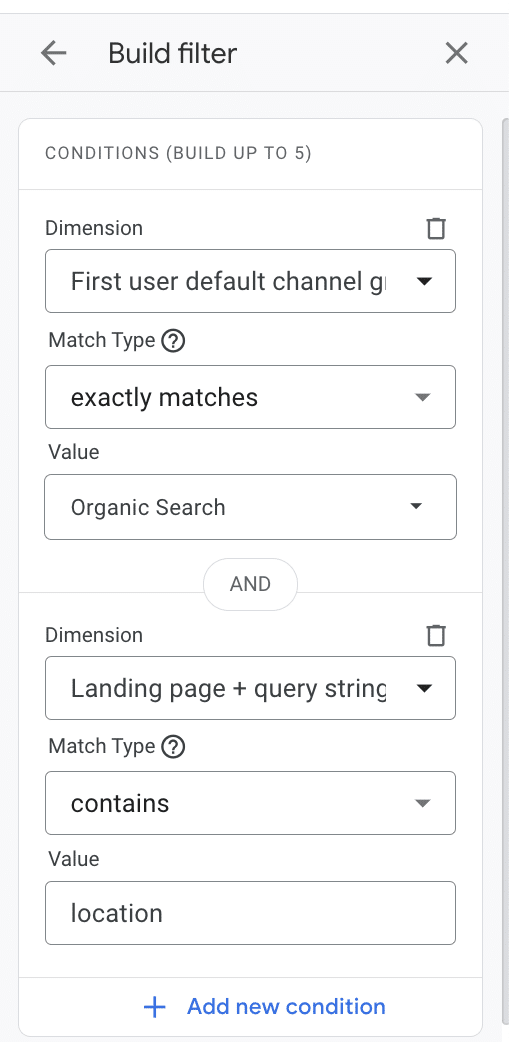
For most reports in GA4, we’ll need to filter to organic search results using the Add filter feature at the top of the dashboard.
A filter column will appear on the right side of the dashboard.
Depending on whether sessions or users are preferred, we’ll choose Session default channel group or First user default channel group as the filter.
Select exactly matches, check Organic Search, and then click Apply.
This organic filter is used through most of our local SEO dashboards in GA4.
Thresholding
Google’s out-of-the-box reports often apply thresholding, indicating data is a sample.
The “Caution” symbol in this report indicates that Google is presenting an aggregate representation of our data rather than exact numbers.
In GA4, data thresholding is implemented across numerous key organic reports to anonymize users’ privacy.
Anonymization usually happens when something can be inferred about the user, like when there’s limited data or if the demographic information about users is too detailed.
For local businesses, individual location pages often receive fewer users since they’re a small piece of the total traffic count.
So, be aware that local SEO data is often an estimate rather than an exact count. We can use this data as a representation of overall user data.
Still, when the difference between compared data sets is >20 users or sessions, we probably shouldn’t rely on it to make major decisions about our strategy.
1. Demographic details
Where to find the data in GA4: Reports > User > User Attributes > Demographic Details
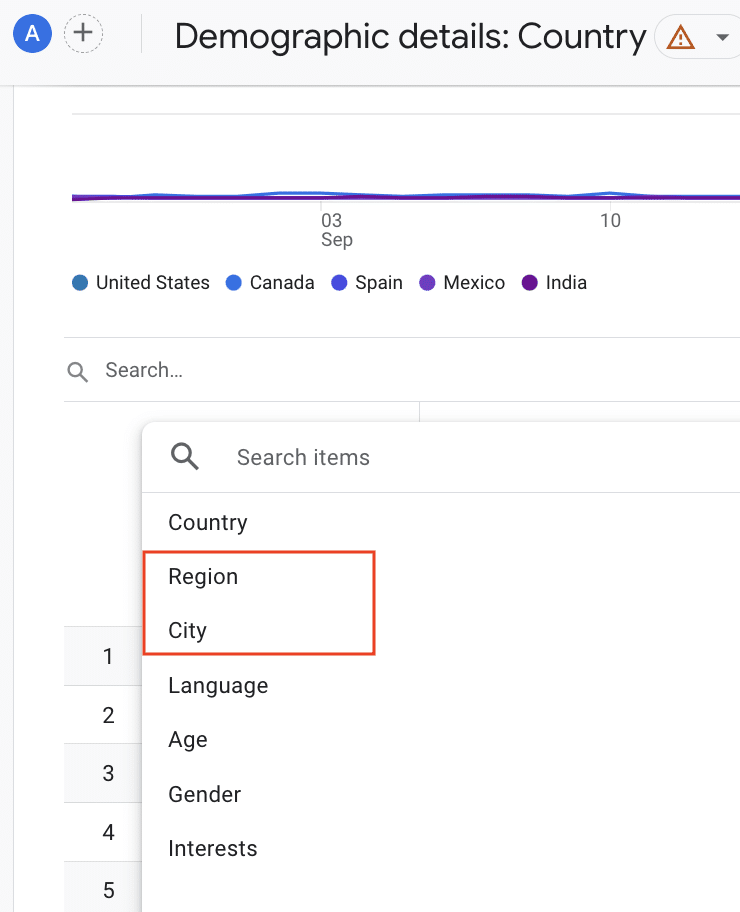
By default, this report lists where users visited by country, but we can change this by selecting the dropdown next to Country, and changing it to Region or City.
From there, we can see the top cities by user:
Why the demographic details report is useful
The demographic details report conveys the region or city where a user accessed the website.
We can compare this user location data with location page traffic or proximity-based rankings in a geo matrix tracking tool.
In the screenshot above, we see that the top cities visited by users in the United States are also some of the most populous: New York, Chicago and Los Angeles.
We should make sure that local landing pages are set up for these locations, as well as key suburbs near these locations.
Issues with the demographic details report
With the right configuration, employee IP addresses will be excluded from GA4 reports, and their cities won’t appear on this dashboard.
However, if employees are required to use a VPN for work, it may prove trickier for the demographic details report to remain accurate. A VPN could anonymize employee data from cities worldwide, scattering location-based attribution.
Additionally, certain settings within GA4 must be configured to ensure that the tracking platform is collecting details about a user’s location.
To confirm that user location information is being tracked, visit Admin > Data Settings > Data Collection and ensure that Granular location and device data collection toggle is checked.
As previously noted, the Demographic details report will apply sampling, which means it won’t provide an exact count of users from each location.
Sometimes, these reports may include a row that says (not set), which typically happens because Analytics doesn’t classify the first event on the page as page_view.
An event like user_engagement might trigger prior to page_view, which isn’t supposed to happen but might relate to rendering issues on the website.
Overall, the solution to analyzing (not set) will require time to either configure a custom landing page report or adjust the website’s rendering issues.
These tasks are often high effort and low impact for local SEO unless there are large data discrepancies – i.e., 50% of the reported traffic is (not set).
2. Traffic acquisition and user acquisition
Where to find this data in GA4: There are two types of labeling for this dashboard, depending on whether GA4 was set up before or after April/May 2023:
Before April-May 2023
Reports > Life cycle > Acquisition > User acquisition
Reports > Life cycle > Acquisition > Traffic acquisition
After April-May 2023
Reports > Business objectives > Generate leads > User acquisition
Reports > Business objectives > Generate leads > Traffic acquisition
The Traffic acquisition and User acquisition dashboards both report on the types of marketing channels that drove traffic to the website: organic, paid, social, etc. However, GA4 has split them into separate dashboards due to a difference in data collection:
User acquisition: Only attributes the first visit from a user.
Traffic acquisition: Multiple sessions of traffic from the same user.
So, traffic acquisition will include a paid session for a user who clicked an ad one day and counts an organic session for that same user the next day.
User acquisition would attribute the user only to the paid traffic channel because it drove the first visit to the site.
Determining whether we should monitor user or traffic acquisition in local SEO depends on our goals for the campaign.
If we want to know about any time a user visited the site from organic search results, then traffic acquisition is a better fit. However, session-based data becomes complicated with brand and non-brand traffic.
If people find “Tom’s Dental,” as an ad and then visit the site, then they might remember this local business. A few days later, they type “Tom’s Dental,” into search results and click an organic result.
If a volume of users are selecting organic results with a branded search, this may result in an artificial increase in sessions on the Traffic acquisition dashboard.
In these scenarios, relying on the User acquisition dashboard to assess our local SEO growth might be more accurate.
Why the user acquisition and traffic acquisition reports are useful
These dashboards closely resemble the Channels report in Universal Analytics and are a great starting point for determining whether local organic traffic has improved.
In local SEO, data within these dashboards can provide insight around:
UTM parameters from Google Business Profile.
Filtering to our location page paths to assess organic traffic.
For simplicity, examples will be from the User acquisition report, but the same filters and adjustments can also be applied to the Traffic acquisition dashboard.
UTM parameters
UTM parameters are added to the end of a business URL in the Website field on Google Business Profile.
Because the source in the screenshot was specified as GoogleLocalListing, we can differentiate standard search results (google / organic) from GBP clicks (GoogleLocalListing / organic).
We see that in a 28-day period, traditional search results received slightly more organic traffic than GBP. This data might indicate that we need to improve our rankings in the Local Pack.
Location pages
By filtering our location pages, we can understand which locations receive the most organic traffic.
Using GA4 to compare the success of our various location pages is crucial to a successful local SEO strategy because it helps us determine priority.
When we have 50 locations but only a few hours to commit across them, it’s most impactful to dedicate our time to the locations most need growth.
First, add a column to the table dashboard that specifies Landing page + query string:
Click the “+” to add a column.
Search for landing page and select Landing page + query string.
Next, use a filter to limit data to organic traffic and our location pages.
Follow the steps outlined at the beginning of this article for filtering organic traffic and add a condition for Landing page + query string to the path of your location pages.
Note: In order to analyze the success of location pages, they must have been organized within a parent path folder, which is typically something like this: https://www.website.com/locations/atlanta
If location pages aren’t nested within a parent path folder, then the Landing page + query string filter won’t work, and assessing local SEO growth will be more challenging.
Based on our filters, we can see that the top GA4 locations accessed by new users are Atlanta and Denver.
Our locations with the least organic new users were New York and Columbus, where we could focus our local SEO efforts moving forward.
Issues with the traffic and user acquisition reports
If you’re not seeing UTM parameters appear within these GA4 reports, confirm that GA4 can display this information by visiting Admin > Data Streams > Redact data.
Make sure that URL query parameters is not checked.
Additionally, GA4 sometimes has issues displaying the “campaign” UTM parameters.
If this happens, the campaign listed in the UTM parameter might need to be added as a custom dimension.
Get the daily newsletter search marketers rely on.
function getCookie(cname) {
let name = cname + “=”;
let decodedCookie = decodeURIComponent(document.cookie);
let ca = decodedCookie.split(‘;’);
for(let i = 0; i <ca.length; i++) {
let c = ca[i];
while (c.charAt(0) == ' ') {
c = c.substring(1);
}
if (c.indexOf(name) == 0) {
return c.substring(name.length, c.length);
}
}
return "";
}
document.getElementById('munchkinCookieInline').value = getCookie('_mkto_trk');
3. Landing page
Where to find this data in GA4: There are two types of labeling for this dashboard, depending on whether GA4 was set up before or after April/May 2023:
Before April-May 2023
Reports > Life cycle > Engagement > Landing page
After April-May 2023:
Reports > Business objectives > Generate leads > Landing page
The Landing page report is populated with session data, meaning that a landing page visit is recorded each time a user visits a site after 30 minutes of inactivity.
Why the landing page report is useful
The Landing page report is another way to access location page data, similar to the Landing page + query string filter in trafficand user acquisition.
However, the data in the Landing page report might be slightly different because it’s a set dashboard, so we don’t need to add the Landing page + query string column.
The table on the dashboard automatically sorts by sessions rather than new users.
Filters for Organic Search and Landing page + query string were applied to this data.
Because GA4 applies thresholding, estimates might vary across its out-of-the-box dashboards, probably because of our filters.
When comparing the Location pages dashboard with the filters in User acquisition, the order of top pages changes, with Denver receiving more sessions while Atlanta receives more new users.
If your website’s GA4 account was configured prior to December 2022, then the Landing page report might be missing.
Additionally, the out-of-the-box landing page report for these older GA4 accounts might conflict with a manually built landing page report.
4. Custom reports
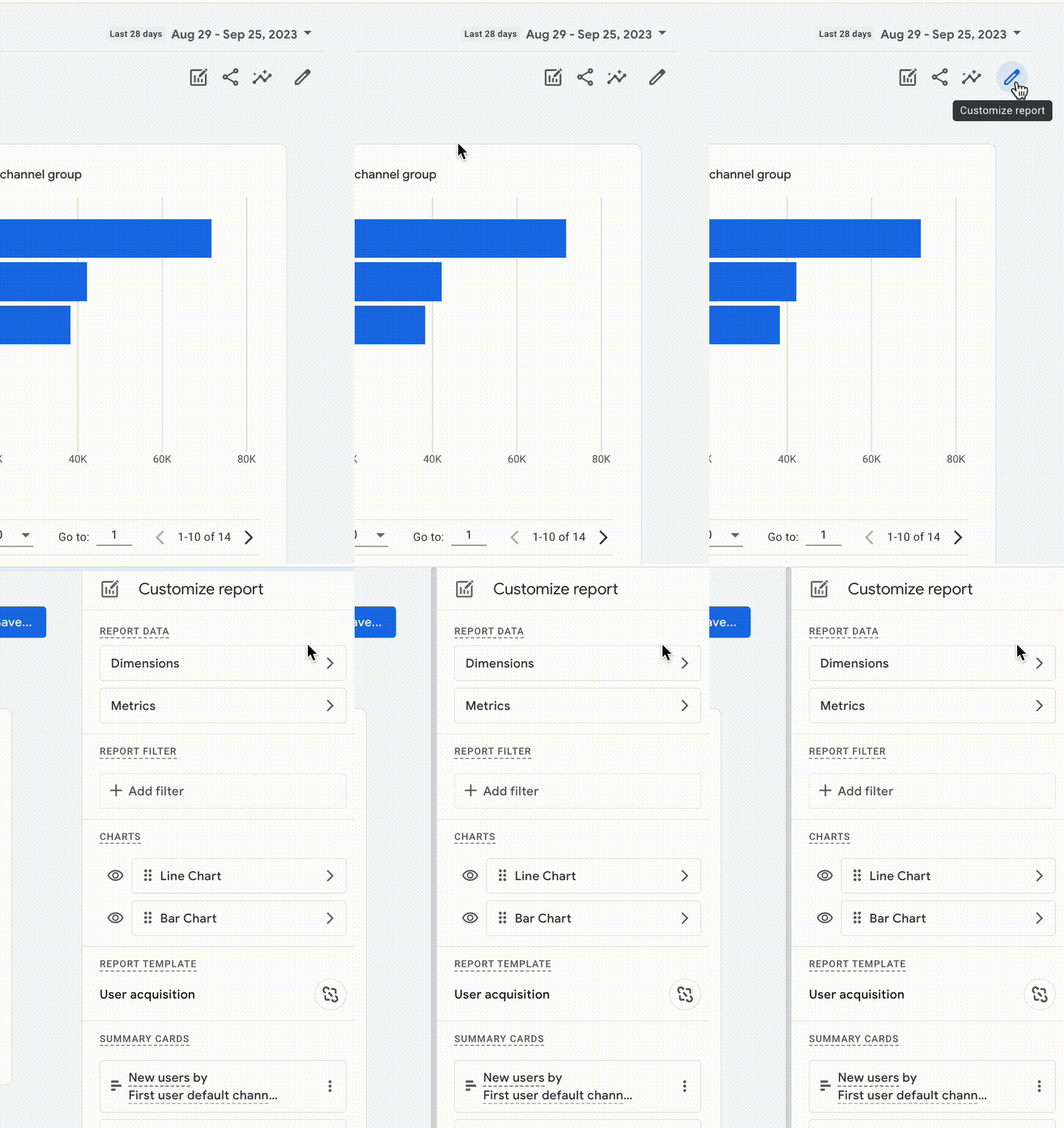
Where to find this data in GA4: When working with any out-of-the-box report in GA4, click the Edit icon in the upper right corner of the dashboard to configure a custom report.
After setting the filters as desired, click Save and give the report an appropriate name.
To review custom reports, navigate to Reports > Library on the lower left part of the dashboard.
Why custom reports are useful
A user saves time by accessing the custom report rather than applying these filters every time GA4 is accessed.
Each out-of-the-box report explained in this article can be saved as a custom report. Here are some examples of what these might be called:
Users in California Cities
GBP Users
Sessions by Local Landing Page
Organic Location Pages
Ultimately, the custom reports filter is great if you regularly reference the same data within a set date range.
Issues with custom reports
The date range for a custom report cannot be changed. Data in a custom report will appear based on the selected date range when the report was first created.
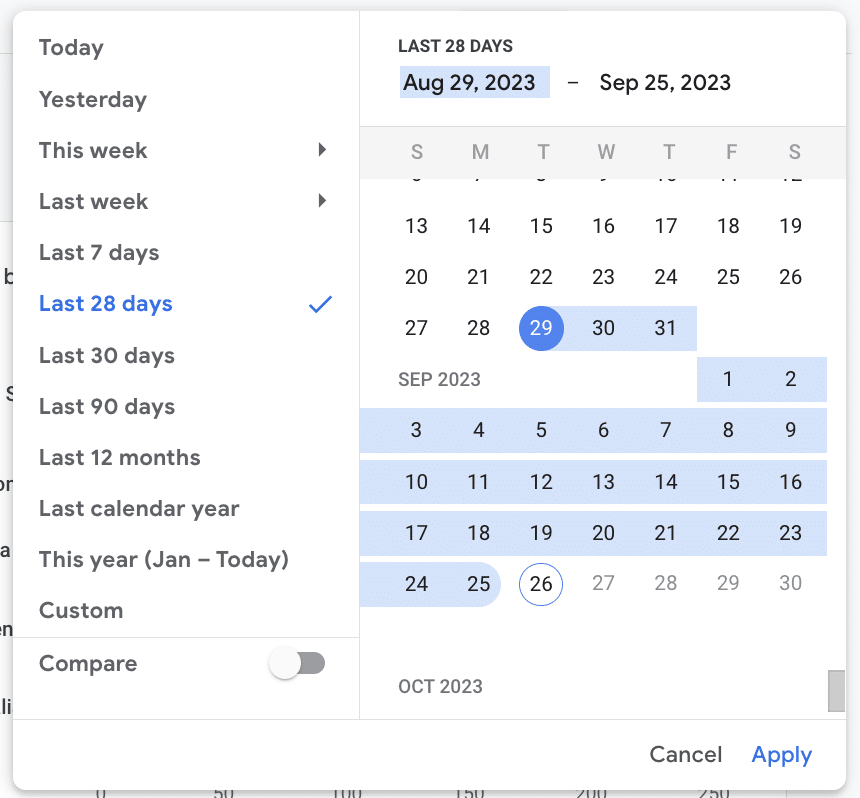
If the date range is set as “Last 28 days,” then then last 28 days of data will always appear in the custom report.
So, if a custom report should reflect year-over-year organic traffic growth, then be sure to select Compare prior to saving the report. If a new date range is needed, you’ll have to build a new custom report.
Additionally, custom reports cannot be exported. Any of GA4’s out-of-the-box reports can be exported by clicking the Share this Report icon on the upper right portion of the dashboard, which can then be downloaded as a PDF or CSV file.
Based on these limitations, custom reports in GA4 seem to be designed as an ongoing reference, rather than a troubleshooting or deep analysis tool.
5. Explore
Explore is designed to address deeper GA4 questions that cannot be answered with an out-of-the-box report. It is less of a dashboard in GA4 and more of a data platform – each Explore report is a custom configuration.
For example, Explore is useful if we want to pull a report comparing demographic location data to our organic location pages.
In this example, we see that some users are visiting the website from Honolulu, HI, but there is no Honolulu location page on the website.
This data suggests Honolulu might fit our next location page well.
Combining demographic data with landing page data can give us deeper insights into the campaign’s next steps.
Dozens of reports like the example above can be pulled with Explore using the principles of the out-of-the-box reports. Still, these configurations are advanced and require additional time to learn the GA4 platform.
Uncover key local SEO insights using GA4
Overall, the out-of-the-box dashboards in GA4 can provide valuable insights for our local SEO campaigns. Here are some examples of questions we can answer with this local data:
Does my site need more location pages?
Which location pages need additional optimization?
Which GBP’s are driving the most organic traffic?
Is keyword growth for a location page driving traffic?
While GA4 is a useful tool for gathering these insights, we should not depend on it as our sole source of data.
Local SEO data from GA4 should be contextualized with other reporting data from Google Search Console, GBP Insights, geo-matrix tracking tools, and other keyword reporting platforms.
For example, if we see an increase in GA4 organic sessions for a location page, is this because of ranking growth or an increase in branded queries?
We can’t determine the source of growth until we cross-reference why users visited the page.
The new GA4 platform includes plenty of insights for our local SEO campaigns as long as we understand the greater context of our wins and losses.