How Regular Vehicle Maintenance Can Boost Your Business’s Bottom Line

Home Business Magazine Online

Regular vehicle maintenance might seem like an unnecessary expense, but it plays a crucial role in the financial health of your business. Properly maintained vehicles can lead to significant savings and increased efficiency. Neglecting vehicle upkeep, on the other hand, can result in unexpected breakdowns, costly repairs, and lost productivity. This article will highlight the financial advantages of staying on top of vehicle maintenance and how it can positively impact your business’s bottom line.

Reduction in Major Repair Costs

One of the most immediate and obvious benefits of regular vehicle maintenance is the reduction in major repair costs. Routine checks and minor repairs can prevent small issues from escalating into significant problems that require extensive and expensive repairs. For instance, regularly changing the oil, checking tire pressure, and inspecting brakes can help avoid engine failure or brake malfunctions, which can be costly to fix.

A consistent maintenance schedule ensures potential problems are identified and addressed early. This proactive approach saves money and extends your vehicle’s lifespan, allowing you to get more out of your investment. Regular maintenance will save on long-term costs by minimizing the need for major repairs and replacements.

Improved Fuel Efficiency

Another significant financial benefit of regular vehicle maintenance is improved fuel efficiency. Well-maintained vehicles operate more efficiently, consuming less fuel and reducing overall operating costs. Simple maintenance tasks like changing air filters, keeping tires properly inflated, and ensuring the engine is running smoothly can substantially impact fuel consumption.

Fuel costs can constitute a large portion of the operating budget for businesses that rely heavily on vehicles, such as delivery services or transportation companies. By maintaining your vehicles in top condition, you can achieve better fuel economy, which translates into direct savings. Over time, these savings can accumulate to a considerable amount, positively affecting your business’s bottom line.

Enhanced Employee Productivity

Reliable transportation is essential for maintaining high levels of employee productivity. When your business vehicles are well-maintained, employees can depend on them to perform their tasks efficiently and on time. On the contrary, frequent breakdowns and mechanical issues can cause delays, missed appointments, and decreased productivity.

Employees who drive reliable, well-maintained vehicles are likely to experience less stress and frustration, leading to increased job satisfaction and better performance. Additionally, when vehicles are regularly maintained, there is less downtime needed for repairs, meaning employees spend more time working and less time waiting for vehicles to be fixed.

Investing in regular maintenance for your fleet not only ensures the smooth operation of your business but also boosts employee morale and productivity, which can have a significant positive impact on your overall business performance.

Insurance and Warranty Benefits

Maintaining your vehicles can also lead to benefits in terms of insurance and warranties. Insurance companies often provide lower premiums for well-maintained vehicles, as they are less likely to be involved in accidents or suffer from major mechanical failures. By keeping detailed records of all maintenance activities, you can demonstrate to your insurance provider that your vehicles are in good condition, potentially qualifying for discounts and lower rates.

Regular maintenance can help you stay within the terms of your vehicle warranties. Most warranties require that vehicles undergo routine maintenance to remain valid. Failing to adhere to these requirements can result in the warranty being voided, leaving you responsible for all repair costs. By keeping up with regular maintenance, you ensure that your warranty remains intact, providing you with financial protection against unexpected repairs.

Preserving Vehicle Resale Value

When the time comes to sell or trade-in your business vehicles, their condition will significantly impact their resale value. Well-maintained vehicles typically command higher prices in the used vehicle market. Potential buyers are willing to pay a premium for vehicles with complete maintenance records, as this gives them confidence that the vehicle has been cared for and is less likely to have hidden issues.

By investing in regular maintenance, you can preserve the resale value of your vehicles, allowing you to recoup a higher percentage of your initial investment. This can be particularly beneficial if your business frequently updates its fleet, as the increased resale value can help offset the cost of purchasing new vehicles.

Implementing a Maintenance Schedule

To fully realize the financial benefits of regular vehicle maintenance, it is essential to implement a comprehensive maintenance schedule. This involves setting up routine inspections and servicing for all vehicles in your fleet. Here are some key steps to creating an effective maintenance schedule:

  • Determine Maintenance Intervals: Establish the frequency of maintenance tasks based on the manufacturer’s recommendations and the specific usage patterns of your vehicles.
  • Keep Detailed Records: Maintain a log of all maintenance activities, including dates, services performed, and parts replaced. This documentation is valuable for tracking the condition of your vehicles and for warranty and insurance purposes.
  • Use Quality Parts and Services: Ensure that maintenance tasks are performed using high-quality parts and by qualified technicians. This helps maintain the reliability and efficiency of your vehicles.
  • Educate Employees: Train your employees on the importance of vehicle maintenance and encourage them to report any issues promptly. Early detection of problems can prevent costly repairs and downtime.

Investing in Vehicle Maintenance Pays Off

Regular vehicle maintenance is a wise investment that can yield substantial financial returns for your business. You can significantly boost your bottom line by reducing major repair costs, improving fuel efficiency, enhancing employee productivity, benefiting from insurance and warranty advantages, and preserving resale value. Implementing a comprehensive maintenance schedule and committing to regular upkeep will ensure that your business vehicles remain reliable and cost-effective assets. Remember, regular maintenance will save your business long-term and keep things running smoothly and profitably.

The post How Regular Vehicle Maintenance Can Boost Your Business’s Bottom Line appeared first on Home Business Magazine.

Original source: https://homebusinessmag.com/management/operations/regular-vehicle-maintenance-boost-business-bottom-line/

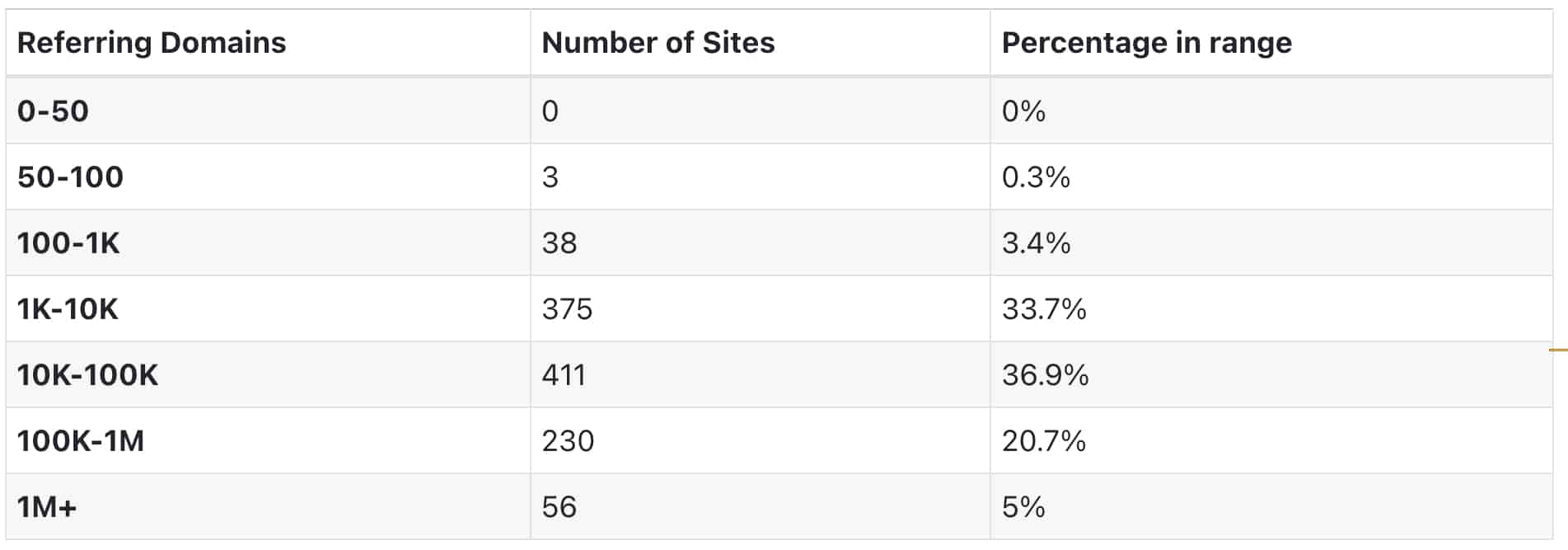
Study: 96% of sites in Google’s top 10 positions have 1,000+ links from unique domains

Can you rank in the top 10 of Google with very few links? Not according to a new analysis published today by Internet Marketing Ninjas. It found that:

  • Over 96% of websites ranking in the top 10 of Google had more than 1,000 backlinks from unique domains.
  • Only 0.3% had less than 100 backlinks.

Why we care. Google has been saying that links are no longer one of the top three ranking signals and needs “very few links to rank pages.” However, clearly, websites that rank well tend to have more backlinks. But it’s also true that webpages that rank well tend to attract a lot more backlinks – because they rank so well.

The results. Here’s a table showing the overall findings:

Some other interesting findings from the backlink analysis:

  • Amazon ranked in the top 10 for 164 of the 200 keywords; the next closest brand was Walmart (57).
  • The “weakest” site had 54 referring domains and ranked in Position 6.
  • An average of 164 unique domain backlinks appeared to be the “minimum required to rank in the top 10” for local search terms, for the lowest 10 sites

But. As the study notes, not all links have equal value. Variables that could influence the value of a link include the authoritativeness of the linking site, anchor text and whether people actually click on the links.

About the data. The results are based on an analysis of the top 10 Google Search results, consistenting of 1,113 unique websites, for 200 random commercial intent keyword phrases.

The study. You can read it here: Backlinks Google Study

Dig deeper. Search Engine Land contributor and SMX speaker Eric Enge has done multiple studies in past years showing that links have value:

Original source: https://searchengineland.com/link-importance-google-top-10-study-443024

How Regular Vehicle Maintenance Can Boost Your Business’s Bottom Line

Home Business Magazine Online

Regular vehicle maintenance might seem like an unnecessary expense, but it plays a crucial role in the financial health of your business. Properly maintained vehicles can lead to significant savings and increased efficiency. Neglecting vehicle upkeep, on the other hand, can result in unexpected breakdowns, costly repairs, and lost productivity. This article will highlight the financial advantages of staying on top of vehicle maintenance and how it can positively impact your business’s bottom line.

Reduction in Major Repair Costs

One of the most immediate and obvious benefits of regular vehicle maintenance is the reduction in major repair costs. Routine checks and minor repairs can prevent small issues from escalating into significant problems that require extensive and expensive repairs. For instance, regularly changing the oil, checking tire pressure, and inspecting brakes can help avoid engine failure or brake malfunctions, which can be costly to fix.

A consistent maintenance schedule ensures potential problems are identified and addressed early. This proactive approach saves money and extends your vehicle’s lifespan, allowing you to get more out of your investment. Regular maintenance will save on long-term costs by minimizing the need for major repairs and replacements.

Improved Fuel Efficiency

Another significant financial benefit of regular vehicle maintenance is improved fuel efficiency. Well-maintained vehicles operate more efficiently, consuming less fuel and reducing overall operating costs. Simple maintenance tasks like changing air filters, keeping tires properly inflated, and ensuring the engine is running smoothly can substantially impact fuel consumption.

Fuel costs can constitute a large portion of the operating budget for businesses that rely heavily on vehicles, such as delivery services or transportation companies. By maintaining your vehicles in top condition, you can achieve better fuel economy, which translates into direct savings. Over time, these savings can accumulate to a considerable amount, positively affecting your business’s bottom line.

Enhanced Employee Productivity

Reliable transportation is essential for maintaining high levels of employee productivity. When your business vehicles are well-maintained, employees can depend on them to perform their tasks efficiently and on time. On the contrary, frequent breakdowns and mechanical issues can cause delays, missed appointments, and decreased productivity.

Employees who drive reliable, well-maintained vehicles are likely to experience less stress and frustration, leading to increased job satisfaction and better performance. Additionally, when vehicles are regularly maintained, there is less downtime needed for repairs, meaning employees spend more time working and less time waiting for vehicles to be fixed.

Investing in regular maintenance for your fleet not only ensures the smooth operation of your business but also boosts employee morale and productivity, which can have a significant positive impact on your overall business performance.

Insurance and Warranty Benefits

Maintaining your vehicles can also lead to benefits in terms of insurance and warranties. Insurance companies often provide lower premiums for well-maintained vehicles, as they are less likely to be involved in accidents or suffer from major mechanical failures. By keeping detailed records of all maintenance activities, you can demonstrate to your insurance provider that your vehicles are in good condition, potentially qualifying for discounts and lower rates.

Regular maintenance can help you stay within the terms of your vehicle warranties. Most warranties require that vehicles undergo routine maintenance to remain valid. Failing to adhere to these requirements can result in the warranty being voided, leaving you responsible for all repair costs. By keeping up with regular maintenance, you ensure that your warranty remains intact, providing you with financial protection against unexpected repairs.

Preserving Vehicle Resale Value

When the time comes to sell or trade-in your business vehicles, their condition will significantly impact their resale value. Well-maintained vehicles typically command higher prices in the used vehicle market. Potential buyers are willing to pay a premium for vehicles with complete maintenance records, as this gives them confidence that the vehicle has been cared for and is less likely to have hidden issues.

By investing in regular maintenance, you can preserve the resale value of your vehicles, allowing you to recoup a higher percentage of your initial investment. This can be particularly beneficial if your business frequently updates its fleet, as the increased resale value can help offset the cost of purchasing new vehicles.

Implementing a Maintenance Schedule

To fully realize the financial benefits of regular vehicle maintenance, it is essential to implement a comprehensive maintenance schedule. This involves setting up routine inspections and servicing for all vehicles in your fleet. Here are some key steps to creating an effective maintenance schedule:

  • Determine Maintenance Intervals: Establish the frequency of maintenance tasks based on the manufacturer’s recommendations and the specific usage patterns of your vehicles.
  • Keep Detailed Records: Maintain a log of all maintenance activities, including dates, services performed, and parts replaced. This documentation is valuable for tracking the condition of your vehicles and for warranty and insurance purposes.
  • Use Quality Parts and Services: Ensure that maintenance tasks are performed using high-quality parts and by qualified technicians. This helps maintain the reliability and efficiency of your vehicles.
  • Educate Employees: Train your employees on the importance of vehicle maintenance and encourage them to report any issues promptly. Early detection of problems can prevent costly repairs and downtime.

Investing in Vehicle Maintenance Pays Off

Regular vehicle maintenance is a wise investment that can yield substantial financial returns for your business. You can significantly boost your bottom line by reducing major repair costs, improving fuel efficiency, enhancing employee productivity, benefiting from insurance and warranty advantages, and preserving resale value. Implementing a comprehensive maintenance schedule and committing to regular upkeep will ensure that your business vehicles remain reliable and cost-effective assets. Remember, regular maintenance will save your business long-term and keep things running smoothly and profitably.

The post How Regular Vehicle Maintenance Can Boost Your Business’s Bottom Line appeared first on Home Business Magazine.

Original source: https://homebusinessmag.com/management/operations/regular-vehicle-maintenance-boost-business-bottom-line/

How to protect deep work time and retain focus as an SEO

How to protect deep work time and retain focus as an SEO

For any SEO professional, staying focused and productive can be a challenge.

With constant algorithm updates, changing trends and a barrage of emails and notifications, it can feel like you’re always playing catch-up.

That’s where deep work sessions come in.

Like any skill, developing deep work sessions takes practice.

At first, you might find yourself really struggling to retain focus. It can feel unnatural for many of us, especially if you are used to regular interruptions during your workday. Here are some tips to get started.

Schedule deep work sessions

Scheduling deep work sessions is the cornerstone of protecting your focus and productivity. One of the first things to do is understand your peak productivity times.

Everyone has certain times of the day when they feel most alert and productive.

For some, it’s the quiet hours of the early morning; for others, it might be later in the day.

Start by identifying when you are naturally most focused. You can track your energy levels and productivity weekly to find patterns.

Once you know your peak productivity times, block these periods out in your calendar specifically for deep work. Treat these blocks as non-negotiable appointments with yourself.

Just as you wouldn’t skip a meeting with a client, don’t skip your deep work sessions. It can be really helpful to have your deep work sessions at the same time each day or week.

Consistency helps train your brain to enter a focused state more easily.

The length of your deep work sessions can vary but if you are just starting out, then build it up slowly.

Create a distraction-free environment

Creating a distraction-free environment is essential for maintaining focus during deep work sessions. This can be the hardest part of curating your deep work sessions. 

If you are in an office environment, you might need to negotiate time in a quiet office or even hybrid working, where you can spend time at home with fewer interruptions.

If you work in an SEO team, then setting boundaries is key. Let your colleagues know when your sessions are, and ask them not to disturb you unless it is urgent. They can also help protect this time for you.

You could agree to a team rota so that each of you can have this valuable time on a daily or, if not possible, at least a weekly basis.

Once other people are not going to be an issue, the next biggest culprit is notifications. Here’s how to manage them:

  • Mobile devices: Put your phone on “Do Not Disturb” mode or silence it completely during deep work sessions. Consider placing it out of reach to resist the temptation to check it. Give it to a colleague or put it in a drawer where you can’t see the screen. For lots of us, simply putting it next to us in easy reach is too tempting – a bit like having your favorite treat in eye-shot when you are trying to be healthy.
  • Computer alerts: Disable notifications for emails, social media and other apps that aren’t essential for your deep work. Many operating systems allow you to customize these settings easily.

Dig deeper: 10 things to eliminate from your life to be more productive at work

Use focus tools and apps

As an SEO, you will likely need internet access during your deep work. Use a tool or app (e.g., StayFocusd, Freedom) to block distracting websites.

Apps like Forest or Focus@Will provide a structured approach to maintaining concentration, either by timing your work sessions or providing background sounds conducive to focus.

You could also try noise-canceling headphones to block out noise, play background music or keep things quiet, depending on what works best for you.

Set clear goals

Setting clear goals is a fundamental step in ensuring your deep work sessions are productive and effective. Plan ahead so that when you start your deep work session, you know what tasks you will tackle. 

You might want to use this time for more strategic type work or to deal with a specific problem. For example, if you work for an agency and one of your clients’ websites has lost rankings and traffic recently. 

You might use this time to try and work out why and devise a plan to improve performance.

Break down larger goals

Be wary of setting goals that are too large for these sessions.

Large goals can be intimidating and lead to procrastination. Break them down into smaller, manageable tasks.

For example, if your goal is to conduct a complete site audit, break it down into:

  • Crawl the website: Use tools like Screaming Frog to crawl your site and identify issues.
  • Analyze site speed: Use Google PageSpeed Insights to evaluate and improve load times.
  • Check mobile usability: Ensure your site is mobile-friendly using Google’s Mobile-Friendly Test.
  • Review on-page SEO: Assess and optimize meta tags, headings and content.

Not all goals are equally important. Once you’ve broken them down, prioritize them based on their impact on your overall SEO strategy. 

Focus on high-priority goals during your deep work sessions to ensure you’re making the most significant impact.

Balance your goals between short-term tasks that provide immediate benefits and long-term projects that contribute to your overall SEO strategy.

Get the daily newsletter search marketers rely on.


Take regular breaks

Taking regular breaks is crucial for maintaining high levels of productivity and focus during deep work sessions.

Breaks are essential for several reasons:

  • Preventing burnout: Continuous work without breaks can lead to mental and physical exhaustion. Regular breaks help prevent burnout by giving your mind and body time to rest and recover.
  • Improving focus: Short breaks can help you maintain high levels of concentration and prevent attention fatigue.
  • Boosting creativity: Stepping away from your work can give your subconscious mind time to process information, often leading to new ideas and insights when you return.

Dig deeper: How to avoid search marketing burnout

Use the Pomodoro technique

The Pomodoro technique is a popular method for incorporating regular breaks into your work routine:

  • Work for 25 minutes: Focus intensely on a single task for 25 minutes.
  • Take a 5-minute break: Step away from your work, stretch, get a drink, or simply relax.
  • Repeat the cycle: After four cycles, take a longer break (15-30 minutes).

This technique helps maintain focus and productivity while ensuring you get regular short breaks. If you are new to deep work, you might start with one session of 25 minutes and gradually build up the blocks of time.

Learning a new skill can be exhausting. Deep work is no exception.

If you find yourself losing focus, then that can often be an indication that you need to take a small break.

Review and adjust

While creating habits is important, regularly reviewing and adjusting your deep work strategies is essential for continuous improvement and sustained productivity.

Schedule regular reviews

Set aside time to review your deep work sessions:

  • Weekly reviews: At the end of each week, spend 15-30 minutes reflecting on what you accomplished during your deep work sessions. Identify what worked well and what didn’t.
  • Monthly reviews: Conduct a more in-depth review at the end of each month. Assess your overall progress toward your SEO goals and evaluate your deep work habits.

Track your progress

Keeping track of your progress helps you understand how effectively you’re using your deep work time:

  • Task completion: Note which tasks you completed during your deep work sessions. This helps you see patterns in your productivity.
  • Time tracking: Use tools like Toggl to track your time spent on various tasks. This data can reveal how efficiently you’re working and highlight areas for improvement.

Identify obstacles and distractions

Pinpoint the obstacles and distractions that hinder your deep work:

  • Common distractions: Identify recurring distractions (e.g., phone notifications, noisy environments) and consider how you can mitigate them.
  • Interruptions: Note any interruptions that occurred and think about how to prevent them in the future. This might involve setting clearer boundaries or improving communication with colleagues and family.

Adjust your schedule

Based on your reviews, adjust your deep work schedule to better suit your needs:

  • Optimal times: If you find you’re more productive at certain times of the day, adjust your deep work sessions to those periods.
  • Duration: Experiment with different session lengths. Some people might find 60-minute blocks more effective than 90-minute ones, or vice versa.

Refine your goals

Regularly revisiting and refining your goals ensures they remain relevant and achievable:

  • SMART goals: Make sure your goals continue to be specific, measurable, achievable, relevant and time-bound. Adjust them as needed based on your progress and changing priorities.
  • Short-term and long-term goals: Balance your focus between immediate tasks and longer-term projects. This helps maintain momentum while ensuring progress toward bigger objectives.

Seek feedback

Feedback from colleagues, mentors, or peers can provide valuable insights:

  • Peer review: Discuss your deep work strategies with colleagues and ask for their feedback. They might offer new ideas or highlight areas for improvement.
  • Mentor guidance: If you have a mentor, seek their advice on optimizing your deep work practices. They can provide perspectives based on their own experiences.

Dig deeper: Effort shaming: Balancing work ethic and burnout in marketing

Original source: https://searchengineland.com/deep-work-time-focus-seo-443021

Google Ads API v17 released with new features, changes

Home Business

Google announces the v17 release of the Google Ads API, bringing several new features and changes that advertisers and developers need to be aware of.

Why we care. The updated version of Google Ads offers a range of new tools and capabilities to help you better manage and monitor the performance of campaigns. It’s also important to be aware of these changes so as to take full advantage of new capabilities while avoiding disruptions from deprecated features or policy changes.

What’s new. There are three big changes that Google introduced to keep up with policy update, volume of information being processed and reporting view. The rest are batch processing updates and new optimization features. 

The big changes:

  • Resource Usage Policy Update. To prepare for an upcoming resource usage policy change on June 17, 2024, two new values have been added to QuotaError, for instances of excessive resource consumption over a time period.
  • Page Size Fixed at 10,000. The page size field is now always set to 10,000, and you can no longer pass a page size to GoogleAdsService.Search. Doing so will result in a request error.
  • New Reporting Views. Campaign aggregate asset view and Channel aggregate asset view have been added for reporting more metrics on Performance Max and Search campaigns.

Batch processing updates:

  • Asset Group Operations. Support for setting MutateOperation.asset_group_operation when using BatchJobService has been added, allowing batch processing for creating and managing entire Performance Max campaigns.
  • Request Size Limit. A new BatchJobError.REQUEST_TOO_LARGE error for any job requests larger than 10,484,504 bytes will produce an error. Advertisers will need to divide operations into smaller groups for separate requests.

Other notable changes:

  • Keyword Match Type. Campaign.keyword_match_type has been added to allow setting a keyword match type for all keywords in a campaign.
  • Ad Group Criterion Status. Primary status and primary status reasons have been added to AdGroupCriterion to show serving status and reasons.
  • New Shopping Product Report. A new shopping product report has been added, corresponding to the Products page in the Google Ads UI.
  • Demand Gen Renaming. Discovery has been renamed to Demand Gen across all relevant fields, enums, and errors.

Further reading. For the complete list of changes made to Google Ads API in version 17, read the full release notes.

Original source: https://searchengineland.com/google-ads-api-v17-443054

What is the Essential Role of Truck Dispatching in Efficient Freight Management?

Home Business Magazine Online

Truck dispatching is a critical process in the logistics and transportation industry, involving the coordination of efficient freight movement and deliveries. The primary role of truck dispatching is to ensure that goods are transported efficiently from one location to another. This process includes assigning trucks to shipments, planning routes, scheduling deliveries, and communicating with drivers to handle any issues that arise during transit. An effective truck dispatching system can significantly enhance the operational efficiency of an FTL shipping company.

What Does a Truck Dispatcher Do?

A truck dispatcher plays a pivotal role in the logistics chain. Their primary responsibility is to oversee and coordinate the movement of trucks and their cargo. This involves several key duties:

Scheduling

Planning and assigning loads to drivers based on delivery deadlines and driver availability.

Routing

Determining the most efficient routes for deliveries to minimize fuel costs and transit times.

Communication

Maintaining constant communication with drivers to provide updates, handle emergencies, and ensure adherence to schedules.

Documentation

Managing paperwork related to shipments, including bills of lading, delivery receipts, and compliance with regulatory requirements.

Problem-Solving

Addressing issues that arise during transit, such as delays, breakdowns, or changes in delivery instructions.

Essential Tasks of a Truck Dispatcher

The role of a truck dispatcher encompasses several essential tasks to ensure smooth operations:

  • Load Assignment: Matching available trucks with pending shipments based on capacity, destination, and urgency.
  • Route Optimization: Using GPS and routing software to plan the most efficient paths for deliveries, taking into account traffic, weather, and road conditions.
  • Driver Support: Providing drivers with necessary information and support, including directions, load details, and safety instructions.
  • Tracking and Reporting: Monitoring the progress of shipments in real time and generating reports on delivery status, driver performance, and other key metrics.
  • Regulatory Compliance: Ensuring all operations comply with federal and state transportation regulations, including hours-of-service rules and safety standards.

Benefits of Effective Truck Dispatching

Effective truck dispatching offers numerous advantages for logistics operations:

  • Improved Efficiency: Streamlined scheduling and routing result in faster deliveries and reduced operational costs.
  • Enhanced Communication: Continuous communication with drivers helps to resolve issues quickly and maintain smooth operations.
  • Increased Customer Satisfaction: Reliable and timely deliveries lead to higher customer satisfaction and repeat business.
  • Cost Savings: Efficient route planning and load assignment minimize fuel consumption and reduce overall transportation costs.
  • Better Resource Utilization: Optimal use of trucks and drivers ensures maximum productivity and reduces downtime.

How to Choose a Truck Dispatching Company

Selecting the right truck dispatching company is crucial for the success of your logistics operations. Here are some factors to consider in regard to efficient freight movement:

Experience

Look for a company with a proven track record in the industry, as experienced dispatchers are more likely to handle complex logistics efficiently.

Technology

Ensure the dispatching company uses advanced routing and tracking technology to optimize deliveries and provide real-time updates.

Customer Service

Choose a company known for excellent communication and support, as this will be vital for handling any issues that arise during efficient freight movement.

Reputation

Check reviews and testimonials from other clients to gauge the reliability and effectiveness of the dispatching service.

In conclusion, truck dispatching is a crucial component of the logistics industry, ensuring that shipments are delivered efficiently and on time. An effective truck dispatcher manages scheduling, routing, and communication, contributing to the overall success of transportation operations. By choosing a reputable dispatching company like Logity Dispatch, businesses can enhance their logistics efficiency, reduce costs, and improve customer satisfaction.

The post What is the Essential Role of Truck Dispatching in Efficient Freight Management? appeared first on Home Business Magazine.

Original source: https://homebusinessmag.com/management/operations/truck-dispatching-efficient-freight-movement/

Top Innovative Online Marketing Strategies for Plumbers in 2024

Home Business Magazine Online

In the competitive world of plumbing, staying ahead of the game requires more than just excellent service; it demands a strategic approach to online marketing. As we move into 2024, leveraging innovative marketing strategies can help plumbers reach new customers, retain existing ones, and grow their businesses. This guide explores the top innovative online marketing strategies for plumbers, focusing on how to effectively use plumber advertising and reach potential clients searching for services like “drainage repairs near me”.

1. Local SEO Optimization

Why It’s Important

Local SEO is crucial for plumbers because it ensures that your business appears in search results when potential customers look for plumbing services in their area. Optimizing for local SEO can significantly increase your visibility and attract more clients.

How to Optimize

  • Google My Business (GMB): Claim and optimize your GMB listing. Ensure all information is accurate and up-to-date.
  • Local Keywords: Incorporate local keywords, such as “plumber advertising” and “drainage repairs near me”, into your website content, meta descriptions, and titles.
  • Customer Reviews: Encourage satisfied customers to leave positive reviews on Google. Reviews improve your local search ranking and build trust with potential clients.

2. Content Marketing

Creating Valuable Content

Content marketing involves creating and sharing valuable content to attract and engage your audience. For plumbers, this can mean blog posts, videos, and how-to guides that address common plumbing issues and solutions.

Types of Content to Create

  • Blog Posts: Write articles on topics like “How to Prevent Common Plumbing Issues” or “The Benefits of Regular Drainage Maintenance.”
  • Videos: Create instructional videos demonstrating how to fix minor plumbing issues or showcasing your services.
  • Infographics: Develop infographics that explain plumbing problems and solutions in a visually appealing way.

SEO Benefits

High-quality content can improve your search engine rankings, drive traffic to your website, and position you as an expert in your field.

3. Social Media Marketing

Leveraging Social Platforms

Social media is a powerful tool for plumbers to connect with their community, share content, and promote services. Platforms like Facebook, Instagram, and LinkedIn can help you reach a wider audience.

Effective Strategies

  • Regular Updates: Post regular updates about your services, special offers, and industry news.
  • Engage with Followers: Respond to comments and messages promptly to build relationships with your audience.
  • Use Hashtags: Utilize relevant hashtags to increase the visibility of your posts. For example, #PlumberAdvertising and #DrainageRepairsNearMe.

Paid Advertising

Consider using paid social media advertising to target specific demographics and increase your reach. Facebook Ads and Instagram Ads can be particularly effective.

4. Pay-Per-Click (PPC) Advertising

Targeted Advertising

PPC advertising allows you to target potential customers who are actively searching for plumbing services. Google Ads is a popular platform for PPC campaigns.

Creating Effective Ads

  • Keyword Research: Use tools like Google Keyword Planner to find relevant keywords such as “plumber advertising” and “drainage repairs near me”.
  • Compelling Ad Copy: Write clear and compelling ad copy that highlights your services and includes a strong call-to-action.
  • Landing Pages: Ensure your landing pages are optimized for conversions. They should be user-friendly and provide all the necessary information.

5. Email Marketing

Building a Subscriber List

Email marketing is a cost-effective way to stay in touch with your customers and keep them informed about your services.

Strategies for Success

  • Collect Emails: Use your website and social media to collect email addresses from visitors.
  • Regular Newsletters: Send regular newsletters with updates, special offers, and helpful tips.
  • Personalized Content: Personalize your emails to make them more relevant to the recipient.

6. Online Reviews and Reputation Management

Importance of Reviews

Online reviews are crucial online marketing strategies for plumbers to build trust and credibility. They can influence potential customers’ decisions and improve your local SEO.

Strategies for Gathering Reviews

  • Ask for Reviews: After completing a job, ask satisfied customers to leave a review on Google, Yelp, or other review sites.
  • Make It Easy: Provide direct links to your review profiles to make it easy for customers to leave feedback.
  • Respond to Reviews: Respond to all reviews, both positive and negative, to show that you value customer feedback.

7. Mobile Optimization

Why Mobile Matters

With more people using smartphones to search for services, having a mobile-optimized website is essential. A mobile-friendly site ensures a good user experience and can improve your search rankings.

Steps to Optimize for Mobile

  • Responsive Design: Ensure your website is responsive and adapts to different screen sizes.
  • Fast Loading Times: Optimize your site for fast loading times on mobile devices.
  • Easy Navigation: Simplify your site’s navigation to make it easy for users to find the information they need.

8. Video Marketing

The Power of Video

Video is one of the most engaging online marketing strategies for plumbers and can be highly effective for plumbing businesses.

Types of Videos to Create

  • Service Demonstrations: Show potential customers how you perform certain services.
  • Customer Testimonials: Record testimonials from satisfied customers to build trust.
  • Educational Videos: Create videos that provide tips and advice on plumbing maintenance and repairs.

9. Interactive Content

Engaging Your Audience

Interactive content, such as quizzes, surveys, and calculators, can engage your audience and provide valuable information.

Examples for Plumbers

  • Maintenance Checklists: Create interactive checklists for common plumbing maintenance tasks.
  • Cost Calculators: Develop calculators that estimate the cost of common plumbing repairs.

10. Influencer Partnerships

Leveraging Influencers

Partnering with local influencers can help you reach a broader audience and build credibility.

Finding the Right Influencers

  • Local Influencers: Look for influencers in your local area who have a strong following.
  • Industry Experts: Partner with industry experts who can endorse your services.

Benefits

Influencer partnerships can increase your brand’s visibility and attract new customers.

Conclusion

In 2024, plumbers need to embrace innovative online marketing strategies for plumbers to stay competitive and grow their businesses. By optimizing for local SEO, creating valuable content, leveraging social media, and utilizing PPC advertising, you can reach more potential customers and generate more leads. Additionally, focusing on mobile optimization, gathering online reviews, and engaging your audience with interactive content can further enhance your online presence. Implementing these strategies will not only help you attract more clients but also build a strong and reputable plumbing business.

Remember, the key to successful plumber advertising lies in staying updated with the latest trends and continuously adapting your strategies to meet the changing needs of your audience. By doing so, you can ensure that your plumbing business thrives in the digital age.

The post Top Innovative Online Marketing Strategies for Plumbers in 2024 appeared first on Home Business Magazine.

Original source: https://homebusinessmag.com/marketing/how-to-guides-marketing/online-marketing-strategies-plumbers-2024/

Make money writing short stories

Updated 8th June 2024

Many people dream of being able to quit the day job, open a laptop (or typewriter, if you’re old-school), and write a best-selling novel. But, to be honest, that’s a really tough ask. So, instead many aspiring novelists start writing short stories.

A recent 2023 survey revealed the average salary of a fiction author in the UK is just £7,000. Most people who are authors – even names you might recognise on the bookshelf – will have another job to supplement their income, or have a partner who can cover their expenses. However, with the rise of BookTok, Bookfluencers, and Bookstagram (yes, those are actual online things), and the massive success of huge books like the Fourth Wing series, being a reader is popular again. In fact, the printed book market grew in 2023 despite the same number of books being published!

However, writing a novel is a MASSIVE undertaking, and many of us don’t have the time to do it. It takes years of work before you can even think about finding a publisher or self-publishing it, and that means the return on your time investment is low. Short stories, on the other hand, can reap big rewards for less work.

In fact, there are competitions that pay out thousands of pounds to the best story!

To give you some help, here is our guide to making money writing short stories.


Where Do I Begin with Writing Short Stories?

Make money writing short storiesYour first stop is to find out what opportunities are available.


Magazines are by far your best chance of finding a willing publisher for your short story. Places like Writers Online, the website for the largest UK writing publication, Writing Magazine, list competitions regularly.

Frankly, getting a book published has always been competitive, but submitting a short story to a print or online magazine is still one of the best entry points. You can make a career out of being a short story writer, or use your wins and accolades to build a writing CV and attract a literary agent for your novel.

If you’re hoping to make money at all from your stories, then fighting against the odds is something you’ll have to get used to – it’s one of the most competitive industries out there.

It’s for this reason that we should point out that you probably shouldn’t be writing short stories for the cash. Really, there are much easier ways to make money (just check out our make money section!) and if your heart isn’t in it, then it’s going to show in your writing.

You need to be passionate enough about writing that payment would be a nice bonus (rather than a necessity) to stand a chance of getting anywhere.


Places to Sell Your Stories…

Make money writing short stories

Thankfully for those who do love writing, there are numerous magazines that accept submissions and run competitions.

Check out the Booktrust’s breakdown of magazines and this site for regular short story competitions.

Women’s magazines have a lot of short story opportunities. Magazines such as My Weekly, The People’s Friend, Woman’s Weekly, Prima, and Mslexia all accept submissions. If you’re a regular reader, then you’ll probably have a good idea of what they expect. The Moth magazine runs one of the biggest short story prizes each year, with a top prize of £3,000. Writing Magazine runs small contests each issue – some are open to anyone while others are for subscribers only, and the average prize is £200 with a Grand Prize contest once a year for £1,000.

Don’t worry if you don’t think the audience of women’s magazines will appreciate your fiction, as there are lots of other magazines that cater for plenty of genres.

Many on the list cater for a range of stories and others also specialise:

  • Crimewave focuses on crime (you may have guessed!)
  • and Albedo One focuses on sci-fi and horror.

It’s not a magazine, but the Bridport Prize is one of the most renowned and respected fiction competitions and runs each year with a top prize of £5,000!

You could also consider PenPee. Penpee.com is a platform like Netflix/Airbnb for readers and storytellers to read, write, and get paid for short stories.

Writers get paid for every qualified page of their stories read. With Penpee’s recent introduction of “Read and Rate”, storytellers want readers’ opinions and readers get paid when they write a review and rate stories they read at Penpee.com

How Do I Write a Good Short Story?

If you want to earn money for your stories, then you’re going to need to be a competent writer with a good understanding of narrative structure and characterisation.

  • It can be hard getting an honest opinion, if you’re not sure how good you are at writing. Family and friends will almost certainly tell you you’re the next JK Rowling, so try and get impartial advice. Sign up to a writers’ forum and get feedback on your work.
  • There are many good writers’ forums out there, but start by checking out writingforums.org or The Writer’s Digest forum.
  • If you’re not good enough yet there’s a lot of information online that can provide a good foundation for improving your writing such as writersdigest.com and Creative Writing Now. You might also have some luck on forums like Reddit but it can be hit or miss.

There are also lots of useful videos on YouTube that can teach you how to write. If you have a bit of spare cash, the BBC Maestro and the Masterclass courses are led by household-name authors and writers with really interesting insights. Wait until they run offers, usually a few times a year – their January sales are usually the best time of year to nab a bargain. Or, if you’re one of those people who can never think of what to ask for as a birthday present, ask for a subscription!

If you’re really serious then you could take a writing course

…although you’ll probably have to pay for a good one. Still, if it’s a hobby and you can afford it, then why not?

Before you look at paid courses, learn the foundation skills with free courses. Udemy has some great basic classes, while the Open University has a useful course that’s free for anyone.

  • There are many writing courses around and finding the right one for you will simply be a matter of searching for one that takes your fancy.
  • Remember to research thoroughly before handing any money over. The Writers’ Academy is a good place to start because you can do online courses with top editors, bestselling authors and established tutors – although you will be looking at paying a few hundred pounds.
  • For something a bit special, you could check out the Arvon residential creative writing courses. You get to surround yourself with beautiful countryside and get lost in your writing for a few days. It is open to people of all ages and of all ability, regardless of experience. As this is residential, there is a cost. However, the courses are supported by the Arts Council of England, and other donors,  so you can apply for a grant if you can’t afford the course. In some cases, all the course costs are covered and nine out of ten people get some grant support.

Find Peers to Support You

One thing any professional writer will tell you is to surround yourself with other writers. You probably have a local writing group near you – apps like NextDoor and Eventbrite are useful for finding events in your area.

If you prefer working online instead, Writers HQ and Jericho Writers are examples of online forums that build a support network of fellow writers. If you subscribe to writing magazines like MsLexia and Writing Magazine, they usually have an online forum to access, too. When you’re working in groups like this, remember it is as much about what you can give as what you can get. You’ll benefit the most from groups if you engage with them, voice your opinions, and try to help others as they try to help you.


Tips From Professionals

Make money writing short stories

If you’re fairly confident that you can write, then there are things you can do to increase your chances of getting published and earn some cash.

  • Write in a genre you’re comfortable with. If you usually write fantasy then you may struggle to write a romance story. Choose magazines to submit to that play to your strengths.
  • But do compromise. While you should write for familiar genres, if you want to make money then you’re going to need to be flexible to appeal to a specific readership. Then, you can apply for more than one really niche magazine. Plus, there’ll be a lot of guidelines you need to follow, speaking of which…
  • Stick to the guidelines. Make sure you follow the instructions provided by the site to the letter. Nothing will blow your chances of getting published faster than submitting a 4,000 word story for a competition that allows a maximum of 2,000 words. Some guidelines will specify what shouldn’t be in the story (e.g. explicit sex scenes), while others will go so far as to specify who the main character should be (for example, a women’s magazine may want a female character who their readers can relate to). Make sure you format correctly too. It is usually 12 point font with double-spacing on the lines, but check the entry terms for details.
  • Do your research. Decide which magazine you’re going to submit to and read it regularly. See what sort of stories they usually publish and if there’s something similar between them, whether it be genre, tone or style, then you’d be wise to do the same (I know this might sound crushing to your creative and original mind but, as said above, you’ll need to compromise to make money. Save your genre defying masterpiece for when you’re a bit more established!). Make sure you have a good sense of the readership from the articles and adverts in the magazine, as they’re the people you need to be writing for!
  • Don’t simultaneously submit. Your writing muscles are going to stay flexible with this: most competitions won’t let you submit a story if you’ve already submitted it elsewhere. Check the terms of entry to see if they allow ‘simultaneous submissions’ which means they will let you submit to other contests. However, if you place in one with that story, you need to withdraw from any contests you’ve entered it into unless they specifically allow previously published stories to be entered. This means it is better to submit single stories instead of one story to lots of contests. However, there is nothing stopping you from entering last year’s stories into different contests this year if they didn’t place! So after a year you can start cycling through the stories in your files to submit.

If you follow those steps then you’re increasing your chances of getting published.


How Much Money Can I Make Writing Short Stories?

Each magazine offers different rates for contests.

  • Usually £500 or so for a short story would be the top end, while a few will go into the thousands. The bigger the prize, the more competition you’ll face.

When it comes to payment for short stories in magazines that are not contest based, the fee can vary wildly. A 2000-word story might net you £500 or more, while other magazines don’t pay at all.

Some magazines pay per word

  • For example, Fiction Desk Magazine pays £25 per 1,000 words (as well as a £100 bonus for the best story in each magazine). While this might not sound like a huge amount, if you’re getting paid anything to write fiction, then you’re doing something right. You also receive two copies of the paperback anthology. Many prizes and magazines offering anthologies will offer copies as part of your fee.

The Writers and Artists Yearbook is any writer’s go-to book for information about which magazines take short stories (and, if you’re feeling non-fiction inclined, other articles) and will list how much the fee is. The website also lists regular writing contests alongside tons of writing advice, so it’s a great one-stop shop.

    Competitions tend to offer greater amounts

    • For example, the Galley Beggar Press Short Story Prize offers £2,500 for their top prize.
    • A runner up gets £200 and longlisted authors receive £50 book vouchers and a subscription.

    We’ve mentioned the other big contests, like the Bridport Prize, in this article too. Writing contests change all the time, so make sure you Google ‘writing contest [YEAR]’ to make sure you’re not missing out.

    A note on fees

    There are some free entry writing contests and they are ALWAYS worth entering. However, most contests will need an entry fee which can be anything from a couple of quid to around £20. You need to weigh up your chances of winning, the confidence you have in your work, and whether you can write off that cash if you don’t place in the contest, before paying. Make sure the competition has an established track record, too: anyone can set up a writing competition, so make sure the judges are high quality, the prizes are decent (or if low that they have a low entry fee), and there are testimonials from previous years if it has run before.

    One of the good things about submitting to magazines is you very rarely have to give up the copyright, so you’re usually free to resell any published stories to magazines in other countries. Imagine how good it would feel making money from the same story multiple times!


    six_magpie

    Sign Up – Newsletter

    The post Make money writing short stories appeared first on MoneyMagpie.

    Original source: https://www.moneymagpie.com/make-money/make-money-writing-short-stories-3

    Top Innovative Online Marketing Strategies for Plumbers in 2024

    Home Business Magazine Online

    In the competitive world of plumbing, staying ahead of the game requires more than just excellent service; it demands a strategic approach to online marketing. As we move into 2024, leveraging innovative marketing strategies can help plumbers reach new customers, retain existing ones, and grow their businesses. This guide explores the top innovative online marketing strategies for plumbers, focusing on how to effectively use plumber advertising and reach potential clients searching for services like “drainage repairs near me”.

    1. Local SEO Optimization

    Why It’s Important

    Local SEO is crucial for plumbers because it ensures that your business appears in search results when potential customers look for plumbing services in their area. Optimizing for local SEO can significantly increase your visibility and attract more clients.

    How to Optimize

    • Google My Business (GMB): Claim and optimize your GMB listing. Ensure all information is accurate and up-to-date.
    • Local Keywords: Incorporate local keywords, such as “plumber advertising” and “drainage repairs near me”, into your website content, meta descriptions, and titles.
    • Customer Reviews: Encourage satisfied customers to leave positive reviews on Google. Reviews improve your local search ranking and build trust with potential clients.

    2. Content Marketing

    Creating Valuable Content

    Content marketing involves creating and sharing valuable content to attract and engage your audience. For plumbers, this can mean blog posts, videos, and how-to guides that address common plumbing issues and solutions.

    Types of Content to Create

    • Blog Posts: Write articles on topics like “How to Prevent Common Plumbing Issues” or “The Benefits of Regular Drainage Maintenance.”
    • Videos: Create instructional videos demonstrating how to fix minor plumbing issues or showcasing your services.
    • Infographics: Develop infographics that explain plumbing problems and solutions in a visually appealing way.

    SEO Benefits

    High-quality content can improve your search engine rankings, drive traffic to your website, and position you as an expert in your field.

    3. Social Media Marketing

    Leveraging Social Platforms

    Social media is a powerful tool for plumbers to connect with their community, share content, and promote services. Platforms like Facebook, Instagram, and LinkedIn can help you reach a wider audience.

    Effective Strategies

    • Regular Updates: Post regular updates about your services, special offers, and industry news.
    • Engage with Followers: Respond to comments and messages promptly to build relationships with your audience.
    • Use Hashtags: Utilize relevant hashtags to increase the visibility of your posts. For example, #PlumberAdvertising and #DrainageRepairsNearMe.

    Paid Advertising

    Consider using paid social media advertising to target specific demographics and increase your reach. Facebook Ads and Instagram Ads can be particularly effective.

    4. Pay-Per-Click (PPC) Advertising

    Targeted Advertising

    PPC advertising allows you to target potential customers who are actively searching for plumbing services. Google Ads is a popular platform for PPC campaigns.

    Creating Effective Ads

    • Keyword Research: Use tools like Google Keyword Planner to find relevant keywords such as “plumber advertising” and “drainage repairs near me”.
    • Compelling Ad Copy: Write clear and compelling ad copy that highlights your services and includes a strong call-to-action.
    • Landing Pages: Ensure your landing pages are optimized for conversions. They should be user-friendly and provide all the necessary information.

    5. Email Marketing

    Building a Subscriber List

    Email marketing is a cost-effective way to stay in touch with your customers and keep them informed about your services.

    Strategies for Success

    • Collect Emails: Use your website and social media to collect email addresses from visitors.
    • Regular Newsletters: Send regular newsletters with updates, special offers, and helpful tips.
    • Personalized Content: Personalize your emails to make them more relevant to the recipient.

    6. Online Reviews and Reputation Management

    Importance of Reviews

    Online reviews are crucial online marketing strategies for plumbers to build trust and credibility. They can influence potential customers’ decisions and improve your local SEO.

    Strategies for Gathering Reviews

    • Ask for Reviews: After completing a job, ask satisfied customers to leave a review on Google, Yelp, or other review sites.
    • Make It Easy: Provide direct links to your review profiles to make it easy for customers to leave feedback.
    • Respond to Reviews: Respond to all reviews, both positive and negative, to show that you value customer feedback.

    7. Mobile Optimization

    Why Mobile Matters

    With more people using smartphones to search for services, having a mobile-optimized website is essential. A mobile-friendly site ensures a good user experience and can improve your search rankings.

    Steps to Optimize for Mobile

    • Responsive Design: Ensure your website is responsive and adapts to different screen sizes.
    • Fast Loading Times: Optimize your site for fast loading times on mobile devices.
    • Easy Navigation: Simplify your site’s navigation to make it easy for users to find the information they need.

    8. Video Marketing

    The Power of Video

    Video is one of the most engaging online marketing strategies for plumbers and can be highly effective for plumbing businesses.

    Types of Videos to Create

    • Service Demonstrations: Show potential customers how you perform certain services.
    • Customer Testimonials: Record testimonials from satisfied customers to build trust.
    • Educational Videos: Create videos that provide tips and advice on plumbing maintenance and repairs.

    9. Interactive Content

    Engaging Your Audience

    Interactive content, such as quizzes, surveys, and calculators, can engage your audience and provide valuable information.

    Examples for Plumbers

    • Maintenance Checklists: Create interactive checklists for common plumbing maintenance tasks.
    • Cost Calculators: Develop calculators that estimate the cost of common plumbing repairs.

    10. Influencer Partnerships

    Leveraging Influencers

    Partnering with local influencers can help you reach a broader audience and build credibility.

    Finding the Right Influencers

    • Local Influencers: Look for influencers in your local area who have a strong following.
    • Industry Experts: Partner with industry experts who can endorse your services.

    Benefits

    Influencer partnerships can increase your brand’s visibility and attract new customers.

    Conclusion

    In 2024, plumbers need to embrace innovative online marketing strategies for plumbers to stay competitive and grow their businesses. By optimizing for local SEO, creating valuable content, leveraging social media, and utilizing PPC advertising, you can reach more potential customers and generate more leads. Additionally, focusing on mobile optimization, gathering online reviews, and engaging your audience with interactive content can further enhance your online presence. Implementing these strategies will not only help you attract more clients but also build a strong and reputable plumbing business.

    Remember, the key to successful plumber advertising lies in staying updated with the latest trends and continuously adapting your strategies to meet the changing needs of your audience. By doing so, you can ensure that your plumbing business thrives in the digital age.

    The post Top Innovative Online Marketing Strategies for Plumbers in 2024 appeared first on Home Business Magazine.

    Original source: https://homebusinessmag.com/marketing/how-to-guides-marketing/online-marketing-strategies-plumbers-2024/

    Make money writing short stories

    Updated 8th June 2024

    Many people dream of being able to quit the day job, open a laptop (or typewriter, if you’re old-school), and write a best-selling novel. But, to be honest, that’s a really tough ask. So, instead many aspiring novelists start writing short stories.

    A recent 2023 survey revealed the average salary of a fiction author in the UK is just £7,000. Most people who are authors – even names you might recognise on the bookshelf – will have another job to supplement their income, or have a partner who can cover their expenses. However, with the rise of BookTok, Bookfluencers, and Bookstagram (yes, those are actual online things), and the massive success of huge books like the Fourth Wing series, being a reader is popular again. In fact, the printed book market grew in 2023 despite the same number of books being published!

    However, writing a novel is a MASSIVE undertaking, and many of us don’t have the time to do it. It takes years of work before you can even think about finding a publisher or self-publishing it, and that means the return on your time investment is low. Short stories, on the other hand, can reap big rewards for less work.

    In fact, there are competitions that pay out thousands of pounds to the best story!

    To give you some help, here is our guide to making money writing short stories.


    Where Do I Begin with Writing Short Stories?

    Make money writing short storiesYour first stop is to find out what opportunities are available.

    Magazines are by far your best chance of finding a willing publisher for your short story. Places like Writers Online, the website for the largest UK writing publication, Writing Magazine, list competitions regularly.

    Frankly, getting a book published has always been competitive, but submitting a short story to a print or online magazine is still one of the best entry points. You can make a career out of being a short story writer, or use your wins and accolades to build a writing CV and attract a literary agent for your novel.

    If you’re hoping to make money at all from your stories, then fighting against the odds is something you’ll have to get used to – it’s one of the most competitive industries out there.

    It’s for this reason that we should point out that you probably shouldn’t be writing short stories for the cash. Really, there are much easier ways to make money (just check out our make money section!) and if your heart isn’t in it, then it’s going to show in your writing.

    You need to be passionate enough about writing that payment would be a nice bonus (rather than a necessity) to stand a chance of getting anywhere.


    Places to Sell Your Stories…

    Make money writing short stories

    Thankfully for those who do love writing, there are numerous magazines that accept submissions and run competitions.

    Check out the Booktrust’s breakdown of magazines and this site for regular short story competitions.

    Women’s magazines have a lot of short story opportunities. Magazines such as My Weekly, The People’s Friend, Woman’s Weekly, Prima, and Mslexia all accept submissions. If you’re a regular reader, then you’ll probably have a good idea of what they expect. The Moth magazine runs one of the biggest short story prizes each year, with a top prize of £3,000. Writing Magazine runs small contests each issue – some are open to anyone while others are for subscribers only, and the average prize is £200 with a Grand Prize contest once a year for £1,000.

    Don’t worry if you don’t think the audience of women’s magazines will appreciate your fiction, as there are lots of other magazines that cater for plenty of genres.

    Many on the list cater for a range of stories and others also specialise:

    • Crimewave focuses on crime (you may have guessed!)
    • and Albedo One focuses on sci-fi and horror.

    It’s not a magazine, but the Bridport Prize is one of the most renowned and respected fiction competitions and runs each year with a top prize of £5,000!

    You could also consider PenPee. Penpee.com is a platform like Netflix/Airbnb for readers and storytellers to read, write, and get paid for short stories.

    Writers get paid for every qualified page of their stories read. With Penpee’s recent introduction of “Read and Rate”, storytellers want readers’ opinions and readers get paid when they write a review and rate stories they read at Penpee.com

    How Do I Write a Good Short Story?

    If you want to earn money for your stories, then you’re going to need to be a competent writer with a good understanding of narrative structure and characterisation.

    • It can be hard getting an honest opinion, if you’re not sure how good you are at writing. Family and friends will almost certainly tell you you’re the next JK Rowling, so try and get impartial advice. Sign up to a writers’ forum and get feedback on your work.
    • There are many good writers’ forums out there, but start by checking out writingforums.org or The Writer’s Digest forum.
    • If you’re not good enough yet there’s a lot of information online that can provide a good foundation for improving your writing such as writersdigest.com and Creative Writing Now. You might also have some luck on forums like Reddit but it can be hit or miss.

    There are also lots of useful videos on YouTube that can teach you how to write. If you have a bit of spare cash, the BBC Maestro and the Masterclass courses are led by household-name authors and writers with really interesting insights. Wait until they run offers, usually a few times a year – their January sales are usually the best time of year to nab a bargain. Or, if you’re one of those people who can never think of what to ask for as a birthday present, ask for a subscription!

    If you’re really serious then you could take a writing course

    …although you’ll probably have to pay for a good one. Still, if it’s a hobby and you can afford it, then why not?

    Before you look at paid courses, learn the foundation skills with free courses. Udemy has some great basic classes, while the Open University has a useful course that’s free for anyone.

    • There are many writing courses around and finding the right one for you will simply be a matter of searching for one that takes your fancy.
    • Remember to research thoroughly before handing any money over. The Writers’ Academy is a good place to start because you can do online courses with top editors, bestselling authors and established tutors – although you will be looking at paying a few hundred pounds.
    • For something a bit special, you could check out the Arvon residential creative writing courses. You get to surround yourself with beautiful countryside and get lost in your writing for a few days. It is open to people of all ages and of all ability, regardless of experience. As this is residential, there is a cost. However, the courses are supported by the Arts Council of England, and other donors,  so you can apply for a grant if you can’t afford the course. In some cases, all the course costs are covered and nine out of ten people get some grant support.

    Find Peers to Support You

    One thing any professional writer will tell you is to surround yourself with other writers. You probably have a local writing group near you – apps like NextDoor and Eventbrite are useful for finding events in your area.

    If you prefer working online instead, Writers HQ and Jericho Writers are examples of online forums that build a support network of fellow writers. If you subscribe to writing magazines like MsLexia and Writing Magazine, they usually have an online forum to access, too. When you’re working in groups like this, remember it is as much about what you can give as what you can get. You’ll benefit the most from groups if you engage with them, voice your opinions, and try to help others as they try to help you.


    Tips From Professionals

    Make money writing short stories

    If you’re fairly confident that you can write, then there are things you can do to increase your chances of getting published and earn some cash.

    • Write in a genre you’re comfortable with. If you usually write fantasy then you may struggle to write a romance story. Choose magazines to submit to that play to your strengths.
    • But do compromise. While you should write for familiar genres, if you want to make money then you’re going to need to be flexible to appeal to a specific readership. Then, you can apply for more than one really niche magazine. Plus, there’ll be a lot of guidelines you need to follow, speaking of which…
    • Stick to the guidelines. Make sure you follow the instructions provided by the site to the letter. Nothing will blow your chances of getting published faster than submitting a 4,000 word story for a competition that allows a maximum of 2,000 words. Some guidelines will specify what shouldn’t be in the story (e.g. explicit sex scenes), while others will go so far as to specify who the main character should be (for example, a women’s magazine may want a female character who their readers can relate to). Make sure you format correctly too. It is usually 12 point font with double-spacing on the lines, but check the entry terms for details.
    • Do your research. Decide which magazine you’re going to submit to and read it regularly. See what sort of stories they usually publish and if there’s something similar between them, whether it be genre, tone or style, then you’d be wise to do the same (I know this might sound crushing to your creative and original mind but, as said above, you’ll need to compromise to make money. Save your genre defying masterpiece for when you’re a bit more established!). Make sure you have a good sense of the readership from the articles and adverts in the magazine, as they’re the people you need to be writing for!
    • Don’t simultaneously submit. Your writing muscles are going to stay flexible with this: most competitions won’t let you submit a story if you’ve already submitted it elsewhere. Check the terms of entry to see if they allow ‘simultaneous submissions’ which means they will let you submit to other contests. However, if you place in one with that story, you need to withdraw from any contests you’ve entered it into unless they specifically allow previously published stories to be entered. This means it is better to submit single stories instead of one story to lots of contests. However, there is nothing stopping you from entering last year’s stories into different contests this year if they didn’t place! So after a year you can start cycling through the stories in your files to submit.

    If you follow those steps then you’re increasing your chances of getting published.


    How Much Money Can I Make Writing Short Stories?

    Each magazine offers different rates for contests.

    • Usually £500 or so for a short story would be the top end, while a few will go into the thousands. The bigger the prize, the more competition you’ll face.

    When it comes to payment for short stories in magazines that are not contest based, the fee can vary wildly. A 2000-word story might net you £500 or more, while other magazines don’t pay at all.

    Some magazines pay per word

    • For example, Fiction Desk Magazine pays £25 per 1,000 words (as well as a £100 bonus for the best story in each magazine). While this might not sound like a huge amount, if you’re getting paid anything to write fiction, then you’re doing something right. You also receive two copies of the paperback anthology. Many prizes and magazines offering anthologies will offer copies as part of your fee.

    The Writers and Artists Yearbook is any writer’s go-to book for information about which magazines take short stories (and, if you’re feeling non-fiction inclined, other articles) and will list how much the fee is. The website also lists regular writing contests alongside tons of writing advice, so it’s a great one-stop shop.

      Competitions tend to offer greater amounts

      • For example, the Galley Beggar Press Short Story Prize offers £2,500 for their top prize.
      • A runner up gets £200 and longlisted authors receive £50 book vouchers and a subscription.

      We’ve mentioned the other big contests, like the Bridport Prize, in this article too. Writing contests change all the time, so make sure you Google ‘writing contest [YEAR]’ to make sure you’re not missing out.

      A note on fees

      There are some free entry writing contests and they are ALWAYS worth entering. However, most contests will need an entry fee which can be anything from a couple of quid to around £20. You need to weigh up your chances of winning, the confidence you have in your work, and whether you can write off that cash if you don’t place in the contest, before paying. Make sure the competition has an established track record, too: anyone can set up a writing competition, so make sure the judges are high quality, the prizes are decent (or if low that they have a low entry fee), and there are testimonials from previous years if it has run before.

      One of the good things about submitting to magazines is you very rarely have to give up the copyright, so you’re usually free to resell any published stories to magazines in other countries. Imagine how good it would feel making money from the same story multiple times!


      six_magpie

      Sign Up – Newsletter

      The post Make money writing short stories appeared first on MoneyMagpie.

      Original source: https://www.moneymagpie.com/make-money/make-money-writing-short-stories-3