Netflix shifts focus to ad-supported tier as subscriber growth surges

Netflix is phasing out its cheapest ad-free plan in Canada and the UK, with plans to do the same in the U.S. and France.

Driving the news. Netflix added 8 million global subscribers in Q2, with its ad-supported plan gaining significant traction.

The budget-friendly tier now accounts for over 45% of new signups in markets where it’s available, signaling a potential shift in Netflix’s business model.

  • The company is also testing pause ads, which appear when viewers stop watching.

Why we care. A higher proportion of subscribers are moving to the ad-supported tier, increasing the available ad inventory and creating more opportunities for advertisers to reach a broader audience.

By the numbers. Netflix reported strong Q2 2024 results, surpassing projections with significant growth in revenue, profits, and subscribers.

  • Revenue: $9.56 billion (up 17% YoY)
  • Net income: $2.15 billion (up 44% YoY)
  • Global subscribers: 277.65 million (up 16.5% YoY)

What they’re saying. “Our ad revenue is growing nicely and is becoming a more meaningful contributor to our business,” Netflix stated in its earnings report.

Between the lines. Netflix is scaling faster than its ability to monetize growing ad inventory, presenting both a challenge and opportunity.

What’s next. Starting next year, Netflix will change how it reports growth, focusing on revenue by region instead of subscriber numbers.

Yes, but. The company warns of slower subscriber growth in Q3 2024 as the impact of paid sharing diminishes.

The big picture. This shift “reflects the evolution of the business” as Netflix prioritizes advertising and subscriber retention.

Original source: https://searchengineland.com/netflix-ad-supported-tier-subscriber-growth-surge-444286

7 strategies to maximize your AI-powered search market share

Top 7 strategies to maximize your market share in AI-powered search

In this new age of AI-driven search, it’s essential to move away from siloed marketing strategies and realign to future-proof your position in the SERP

This article outlines seven key focus areas for maximizing your brand’s presence in AI-driven search. 

The evolving AI-powered search landscape and the rise of zero-click results

Up to 59% of Google searches end without a click, with nearly 30% of clicks getting directed toward Google-owned assets like images, videos and social profiles, according to a recent study by SparkToro’s Rand Fishkin.

This makes it critical for brands to saturate the SERPs and prioritize showing up for zero-click results.

AI Overviews and content diversity

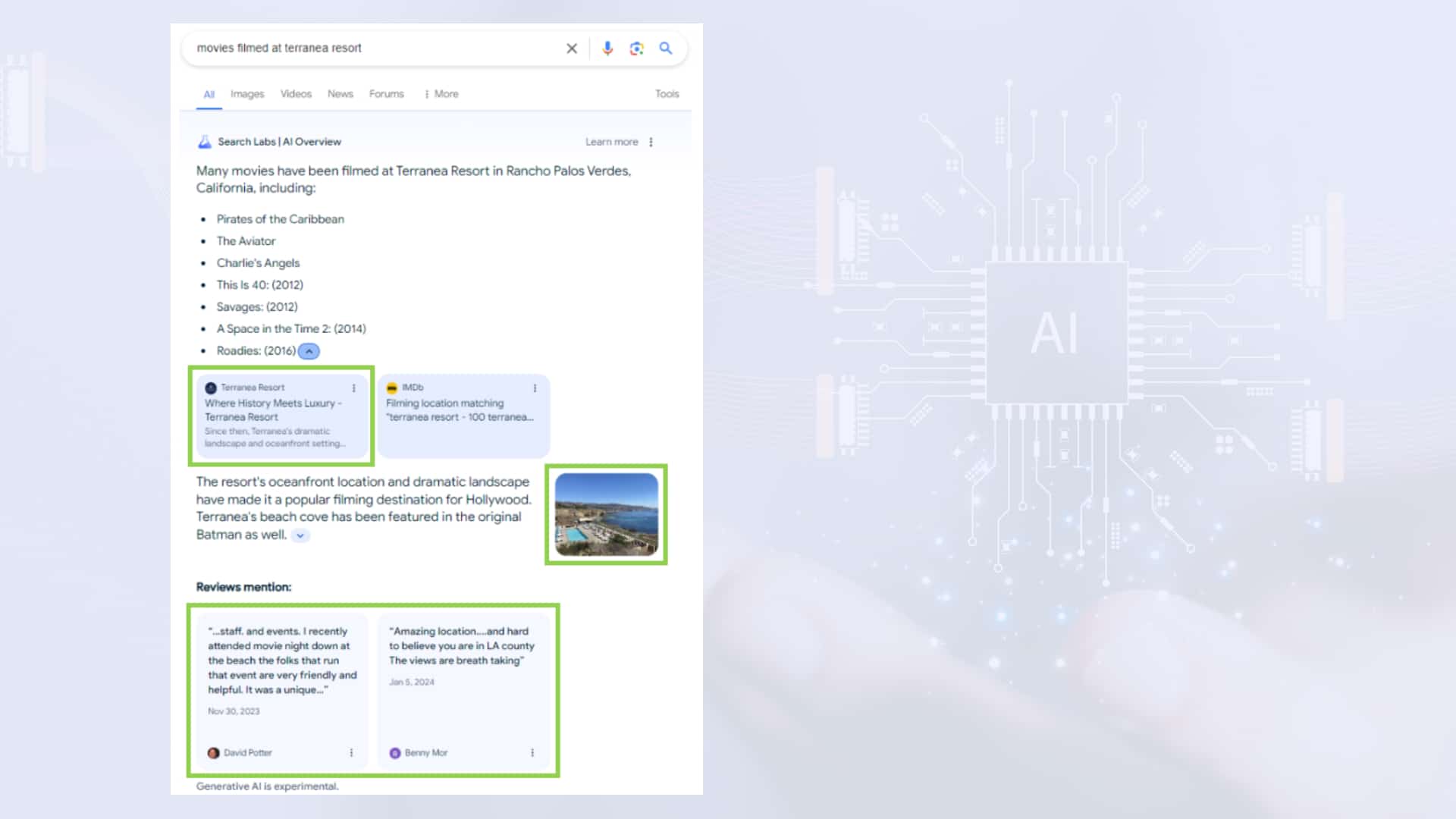
With AI Overviews, Google can now generate a concise and helpful summary for any query that offers relevant insights, a user-friendly experience and authoritative links that allow users to dive deeper. 

 ai-overviews-terranea

These overviews are mainly displayed for informational and long-tail queries and, on average, contain around 7.2 links. 

They surface a variety of content types, including images, videos and PDFs, making it critical to diversify your content and implement strategies like image optimization

The impact of AI-powered search on website traffic

Typically, we can expect to see a 30% to 40% decline in traffic coming to websites, depending on the vertical, due to AI Overviews and zero-click rich results. 

While these results reference similar sources and domains used for rich snippets and organic results, they work on a fundamentally different underlying system. 

AI-powered search pulls the most relevant information across all channels and assets, using a variety of LLMs, schema/structure data, freshness and user click data to display these results. 

Embracing zero-click trends and content diversity to saturate SERPs is key to success in this new landscape.

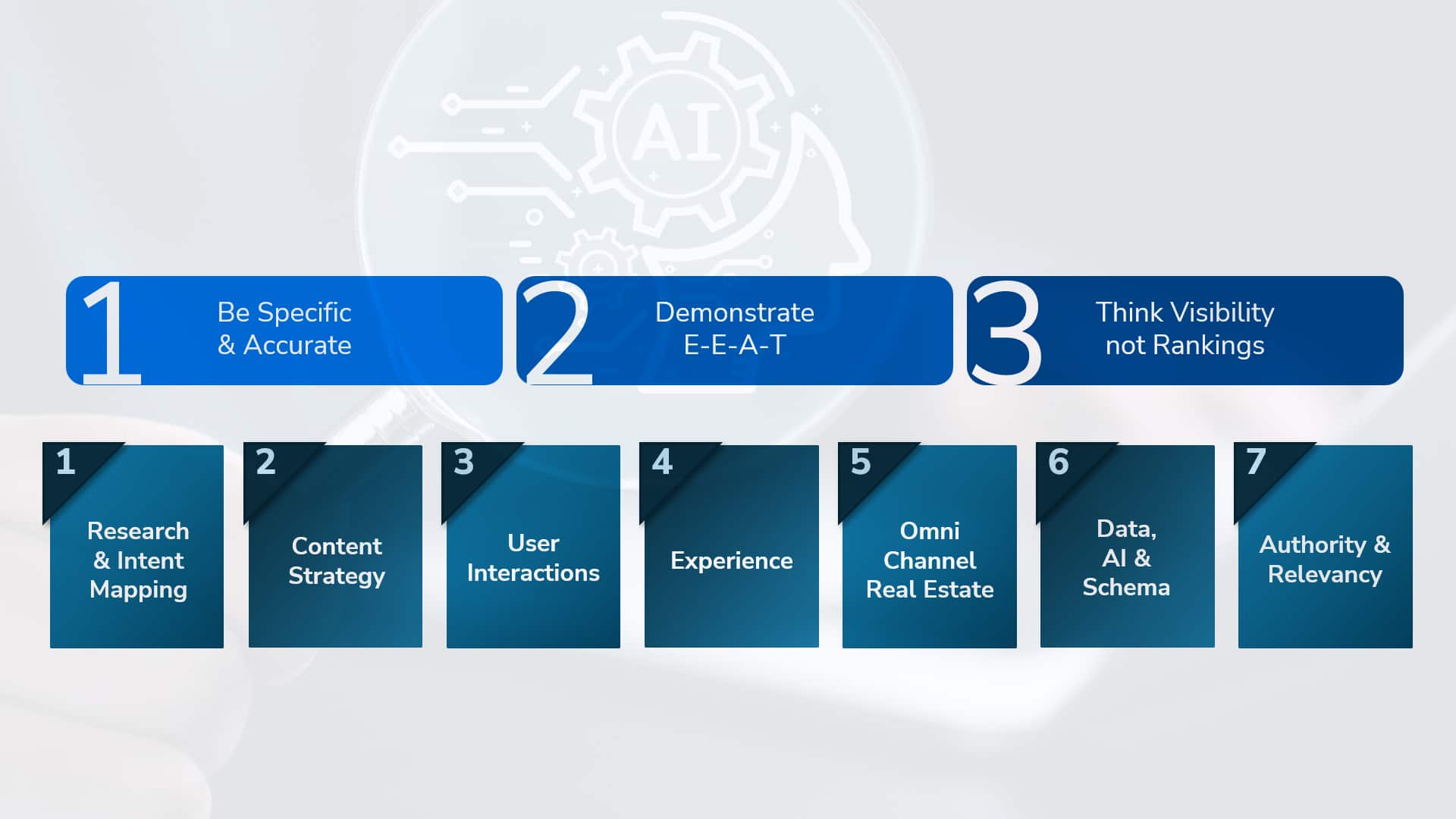
ai-search-saturation-focus-areas

If you want to future-proof your digital presence, you’ll need to focus on delivering valuable information and experiences that truly connect with users while creating content that meets their specific needs and intentions. 

Here are the top strategies for winning in the era of AI.

1. Research and intent mapping

The first step is understanding what appears in AI Overviews. AI-powered search algorithms are constantly evolving to provide the most relevant and high-quality results. 

While large language models are useful, they can contain outdated information. Tools such as Semrush and Ziptie can help identify queries that trigger AI overviews for your business, competitors or industry. 

By compiling a comprehensive list of topics, intents, domains, citations, sources, content assets and competitor domains, you can craft a thorough search strategy.

2. Content strategy 

Creating a robust intent-driven content strategy is essential for success. This involves:

  • Creating relevant, authoritative and fresh content that covers the entire marketing funnel.
  • Assessing content decay.
  • Using metrics to develop a data-driven, omnichannel content strategy.

Ensuring the discovery, relevancy and visibility of your content is crucial to futureproofing it for AI-powered search. 

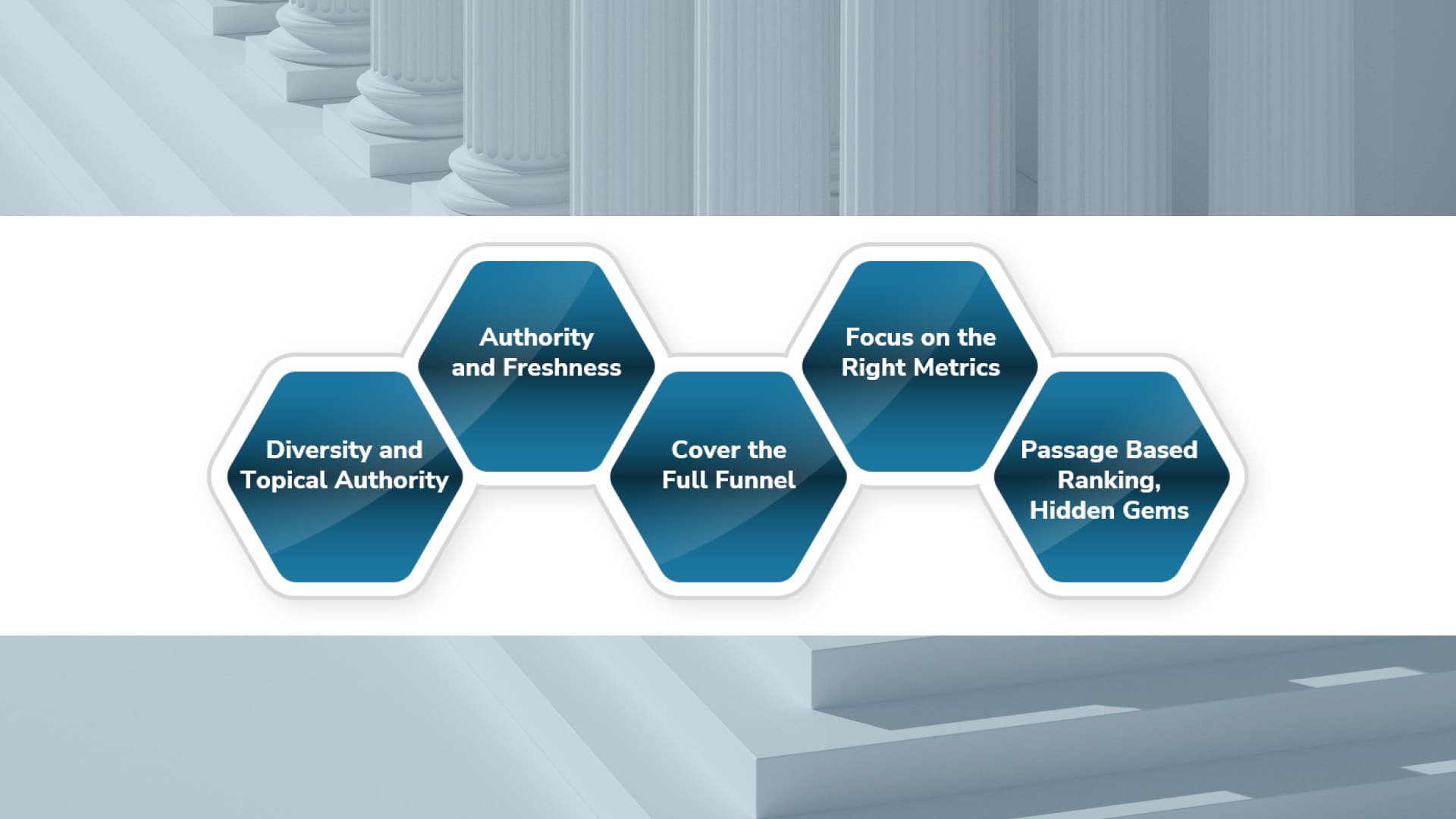
content-strategy-pillars

Diversity and topicality

Content should be topical, demonstrate a high level of E-E-A-T and provide the most relevant responses to queries.

To deliver well-rounded responses, use a combination of images, videos, PDFs and well-designed layouts. 

Don’t forget to adopt a topical entity-first strategy. Google’s “site focus score” also reflects how consistently a site maintains its core focus, with topical authority typically enhancing overall search visibility.

Authority and freshness

The importance of authorship and subject matter expertise is growing. 

AI-generated responses are dynamic and contextual, changing based on the query intent and previous interactions to select the most relevant sources. 

Google utilizes various LLMs to discern the intent of queries. However, these LLMs can sometimes provide outdated or irrelevant information, which underscores why search engines prioritize the freshness of content. 

This emphasis on recency includes a variety of attributes like byline dates and semantic freshness. Google particularly relies on these date indicators to assess the currentness and accuracy of content.

Cover the full funnel

Top-of-funnel searches will eventually be dominated by some form of generative AI, whether from Google or another provider, according to Eli Schwartz

To navigate this shift, marketers should concentrate on the mid-funnel stages of searches. It’s also key for marketers to address every stage of the buyer’s journey, from social media to paid advertising to brand interactions.

Both organic and paid searches are integral components of the buyer’s journey, but they are neither the sole focus nor the final goal. 

Optimizing strategies around the buyer, rather than just the search results, ensures that the right KPIs are integrated into your marketing efforts. 

Employing a comprehensive funnel strategy that addresses all touchpoints of the buyer’s journey is essential to maximize market share.

Focus on the right metrics

Are the right KPIs being used to measure the impact of your content? Issues like content decay are prevalent in AI-generated search results. 

Producing purposeful, high-quality content drives essential KPIs such as impression share, SERP saturation and CTR, making it critical to focus on the KPIs that align with your goal, whether it’s driving visibility, engagement or conversion.

ai-overviews-terranea

Passage-based ranking: Hidden gems

Google aims to provide the best answers to user queries, whether from a forum comment, an article snippet or an FAQ passage, according to Conductor’s Patrick Reinhart.

Passing ranking and citation links in AI Overviews guide users directly to specific, highlighted parts of webpages. 

The AI Overview image for Terranea above shows how specific information about movies that were filmed shows up. 

For brands and marketers, it’s crucial to share valuable context to benefit from hidden gems in ranking passages. 

Brands must respond effectively to queries like “Do Nike shoes run small?” according to Bill Hunt.

Today, responses to questions like these will most likely come from forums. 

3. User interactions and click data

Google constantly learns from how users interact with search results and the data from their clicks to better prioritize its rankings. User task completion is a critical metric in this process.

The recent Google data leak indicated use of clicks, links, content, entities and Chrome clickstream data to refine its ranking algorithms. 

Google’s Navboost ranking signal sorts clicks into categories, including good clicks, bad clicks and click intervals. These interactions and click signals help determine if the right results are being shown.

google-leaks-takeaways

Using click data as a performance metric supports AI algorithms and helps improve site effectiveness.

When we develop content that is rich in topics and entities, diversify it and link these pages deeply with similar topics, providing contextual information, user-level metrics can improve significantly.

Get the newsletter search marketers rely on.


4. Experience

User experience matters. Strategies like personalization, A/B testing, heatmaps, and CRO play a huge role in future-proofing your digital experience.

The future of search is multimodal, so it’s essential that your images, text, PDFs and videos are discoverable and relevant.

Your platform, site architecture and tech infrastructure are key to ensuring your content is crawlable, available and indexable.

To keep your site running smoothly, it’s important to ensure it’s lightweight and performance-optimized. 

Hosting scripts and heavy assets on a separate CDN can help speed things up while also ensuring compliance with all GDPR, security, privacy and ADA regulations.

5. Saturate SERPs and real estate

It’s important to think holistically about the SERP.

Your brand’s goal should be to saturate all channels and every type of SERP, whether that’s through paid ads, organic results, social media, knowledge graphs, rich snippets, images, videos or AI Overviews. 

Look at how your brand and non-brand content appear across various LLMs for branded and non-branded topical searches. 

Paid results often appear alongside AI Overviews for similar queries, which has really changed the dynamics of both the paid and social funnels. 

6. Data quality, AI search and schema markup

For AI search to really work its magic, maintaining high-quality data is key. Your data, knowledge graph and schema markup play a big role in prepping for AI-driven search. 

Ideally, you should update your schema markup as soon as your content changes, monitor any schema errors or warnings and regularly update your schema vocabulary.

This can be a bit tricky, especially for large websites, but it’s crucial to avoid any long-term schema drift or errors

Keeping everything tight and accurate helps ensure that AI tools can understand and effectively use your data.

7. Authority and relevancy

Authority and relevancy are important when it comes to sources that show up in AI-powered searches. 

Want to boost your brand’s visibility in search engines? Grow your authority.

Things like sprucing up your local listings and experience, getting active with digital PR and engaging in community events can really help improve your authority. 

This kind of proactive engagement ensures your brand stands out in the crowded digital landscape.

Mastering AI-powered search for maximum brand visibility

Navigating the complexities of AI-powered search requires a multifaceted approach that bridges silos across organizations and channels. Hunt said:

  • “Total search is only possible when companies and brands focus on findability, not channels or departments, prioritize consumer interest and intent, create diverse content strategies and ensure data is discoverable and relevant.”

As search continues to evolve with advancements in AI, maintaining a dynamic, flexible strategy will be key to outperforming competitors and captivating your audience at every stage of their journey. 

Armed with these top strategies, your brand is well-prepared to thrive in the era of AI-driven search, maximizing market share and delivering exceptional user experiences.

Original source: https://searchengineland.com/ai-powered-search-maximize-market-share-444264

Microsoft Advertising introduces Performance Max brand lists

Microsoft Ads

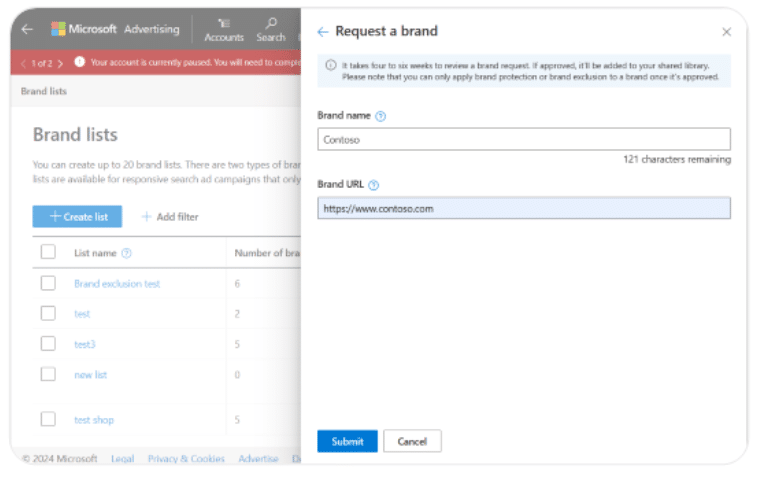
Microsoft Ads is rolling out a new feature called “brand lists” for Performance Max (PMax) campaigns. It promises more control over your brand image and ad visibility.

Brand lists allow advertisers to exclude their ads from appearing alongside specific brands, potentially improving ad relevance and return on ad spend (ROAS).

How it works.

  • Advertisers can create up to 20 brand lists.
  • They can add brands from a predefined list or request specific brands to be added.
  • Brand exclusion can be applied to prevent ads from serving on branded search queries.

Why we care. This PMax feature offers advertisers more control over the sites and searches they see their ads against. It allows advertisers to avoid association with competitors or brands that don’t align with their values.

Key features.

  • Covers misspellings automatically.
  • Includes an editorial review process for brand requests.
  • Takes 4-6 weeks for brand requests to be reviewed.

Get the newsletter search marketers rely on.


Between the lines. This move signals Microsoft’s efforts to compete with Google Ads by offering more granular control over ad placements.

What they’re saying. Microsoft touts the benefits as helping advertisers “mitigate risks” and “display ads with relevant content.”

The big picture. As digital advertising becomes more complex and automated, platforms are introducing more tools for brand safety and ad targeting precision.

Original source: https://searchengineland.com/microsoft-advertising-pmax-brand-lists-444271

The Future of Home Care: Nursing Services Trends and Innovations to Watch

Home Business Magazine Online

Introduction

The home care industry is on the brink of a significant transformation, driven by advancements in technology and evolving healthcare needs. This article explores the key home care nursing services trends and innovations shaping the future of home care. You’ll find highlights of how they can improve the quality of life for clients and enhance the efficiency of care providers.

The Rise of Telehealth

Enhancing Accessibility and Convenience

One of the most impactful innovations in home care is the rise of telehealth. Telehealth technologies allow caregivers and healthcare professionals to remotely monitor and consult with clients, making healthcare more accessible and convenient. For clients who have difficulty traveling to medical appointments, telehealth offers a lifeline, enabling them to receive care from the comfort of their own homes.

Real-Time Monitoring and Support

Telehealth also includes remote monitoring tools that track vital signs and health metrics in real-time. These tools can alert caregivers and medical professionals to any concerning changes in a client’s health, allowing for timely interventions. This proactive approach can prevent complications and hospitalizations, ultimately improving client outcomes.

Smart Home Technologies

Integrating Smart Devices

Smart home technologies are becoming increasingly integrated into home care services. Devices such as smart speakers, lighting systems, and security cameras can be programmed to assist with daily tasks and ensure the safety of clients. For example, voice-activated systems can remind clients to take their medications or perform certain activities, reducing the risk of missed doses and enhancing adherence to care plans.

Enhancing Safety and Independence

Smart home devices can also enhance the safety and independence of clients. Fall detection systems, for instance, can automatically alert caregivers or emergency services if a fall is detected, ensuring prompt assistance. Similarly, smart locks and surveillance cameras can provide an added layer of security, giving both clients and their families peace of mind.

Artificial Intelligence and Machine Learning

Predictive Analytics for Personalized Care

Artificial intelligence (AI) and machine learning are transforming the way care is delivered by enabling predictive analytics. These technologies analyze vast amounts of data to identify patterns and predict potential health issues before they arise. For home care providers like Angel Connection Nursing Services, this means they can offer more personalized and proactive care plans, tailored to the unique needs of each client.

Enhancing Decision-Making

AI-powered tools can also assist caregivers in making more informed decisions. For example, machine learning algorithms can suggest the most effective interventions based on a client’s health history and current condition. This can enhance the quality of care provided and improve client outcomes.

Virtual Reality (VR) and Augmented Reality (AR)

Training and Simulation

Virtual reality (VR) and augmented reality (AR) are being used to train caregivers more effectively. These technologies provide immersive training experiences, allowing caregivers to practice complex procedures and scenarios in a controlled environment. This hands-on approach can improve their skills and confidence, ultimately benefiting the clients they care for.

Enhancing Client Engagement

VR and AR can also be used to enhance client engagement and well-being. For example, VR experiences can provide therapeutic benefits for clients with dementia by stimulating their memories and senses. AR applications can assist clients with daily tasks by overlaying helpful information and instructions in their field of vision.

Robotics and Automation

Assisting with Daily Tasks

Robotics and automation are making their way into home care, assisting with daily tasks and reducing the burden on caregivers. Robotic devices can help clients with mobility issues move around their homes, perform household chores, and even provide companionship. This can significantly improve the quality of life for clients and allow caregivers to focus on more complex aspects of care.

Improving Efficiency

Automation can also improve the efficiency of home care services. For example, automated medication dispensers can ensure clients take the correct dosage at the right time, reducing the risk of medication errors. Similarly, automated scheduling and documentation tools can streamline administrative tasks for caregivers, allowing them to spend more time with their clients.

The Importance of Personalized Care

Tailoring Services to Individual Needs

One of the most significant trends in home care is the shift towards personalized care. This approach recognizes that each client has unique needs and preferences, and it tailors services accordingly. By leveraging the aforementioned technologies, home care providers like Angel Connection Nursing Services can develop customized care plans that address the specific health conditions, lifestyle, and goals of each client.

Enhancing Client Satisfaction

Personalized care not only improves health outcomes but also enhances client satisfaction. When clients feel that their care is tailored to their individual needs, they are more likely to be engaged and cooperative. This leads to a better overall care experience and strengthens the client-caregiver relationship.

Emphasizing Mental Health and Well-Being

Holistic Approach to Care

The future of home care also involves a greater emphasis on mental health and well-being. Recognizing that physical health is closely linked to mental health, home care providers are adopting a more holistic approach. This includes offering mental health support services, such as counseling and therapy, and integrating activities that promote emotional well-being into care plans.

Support for Caregivers

Supporting the mental health of caregivers is equally important. Caregiving can be a demanding and stressful job, and ensuring caregivers have access to mental health resources can prevent burnout and improve the quality of care they provide. Programs that offer stress management training, peer support groups, and access to professional counseling are becoming more common in the industry.

Conclusion

The future of home care is bright, with numerous trends and innovations set to revolutionize the industry. From telehealth and smart home technologies to AI and robotics, these advancements promise to enhance the quality of care, improve client outcomes, and support caregivers in their vital roles. As the industry evolves, staying informed and adapting to new technologies will be crucial for home care providers to meet the growing needs of their clients and deliver the best possible care.

The post The Future of Home Care: Nursing Services Trends and Innovations to Watch appeared first on Home Business Magazine.

Original source: https://homebusinessmag.com/business-spotlight/future-home-care-trends-innovations-nursing-services/

Microsoft Advertising introduces Performance Max brand lists

Microsoft Ads

Microsoft Ads is rolling out a new feature called “brand lists” for Performance Max (PMax) campaigns. It promises more control over your brand image and ad visibility.

Brand lists allow advertisers to exclude their ads from appearing alongside specific brands, potentially improving ad relevance and return on ad spend (ROAS).

How it works.

  • Advertisers can create up to 20 brand lists.
  • They can add brands from a predefined list or request specific brands to be added.
  • Brand exclusion can be applied to prevent ads from serving on branded search queries.

Why we care. This PMax feature offers advertisers more control over the sites and searches they see their ads against. It allows advertisers to avoid association with competitors or brands that don’t align with their values.

Key features.

  • Covers misspellings automatically.
  • Includes an editorial review process for brand requests.
  • Takes 4-6 weeks for brand requests to be reviewed.

Get the newsletter search marketers rely on.


Between the lines. This move signals Microsoft’s efforts to compete with Google Ads by offering more granular control over ad placements.

What they’re saying. Microsoft touts the benefits as helping advertisers “mitigate risks” and “display ads with relevant content.”

The big picture. As digital advertising becomes more complex and automated, platforms are introducing more tools for brand safety and ad targeting precision.

Original source: https://searchengineland.com/microsoft-advertising-pmax-brand-lists-444271

The Future of Home Care: Nursing Services Trends and Innovations to Watch

Home Business Magazine Online

Introduction

The home care industry is on the brink of a significant transformation, driven by advancements in technology and evolving healthcare needs. This article explores the key home care nursing services trends and innovations shaping the future of home care. You’ll find highlights of how they can improve the quality of life for clients and enhance the efficiency of care providers.

The Rise of Telehealth

Enhancing Accessibility and Convenience

One of the most impactful innovations in home care is the rise of telehealth. Telehealth technologies allow caregivers and healthcare professionals to remotely monitor and consult with clients, making healthcare more accessible and convenient. For clients who have difficulty traveling to medical appointments, telehealth offers a lifeline, enabling them to receive care from the comfort of their own homes.

Real-Time Monitoring and Support

Telehealth also includes remote monitoring tools that track vital signs and health metrics in real-time. These tools can alert caregivers and medical professionals to any concerning changes in a client’s health, allowing for timely interventions. This proactive approach can prevent complications and hospitalizations, ultimately improving client outcomes.

Smart Home Technologies

Integrating Smart Devices

Smart home technologies are becoming increasingly integrated into home care services. Devices such as smart speakers, lighting systems, and security cameras can be programmed to assist with daily tasks and ensure the safety of clients. For example, voice-activated systems can remind clients to take their medications or perform certain activities, reducing the risk of missed doses and enhancing adherence to care plans.

Enhancing Safety and Independence

Smart home devices can also enhance the safety and independence of clients. Fall detection systems, for instance, can automatically alert caregivers or emergency services if a fall is detected, ensuring prompt assistance. Similarly, smart locks and surveillance cameras can provide an added layer of security, giving both clients and their families peace of mind.

Artificial Intelligence and Machine Learning

Predictive Analytics for Personalized Care

Artificial intelligence (AI) and machine learning are transforming the way care is delivered by enabling predictive analytics. These technologies analyze vast amounts of data to identify patterns and predict potential health issues before they arise. For home care providers like Angel Connection Nursing Services, this means they can offer more personalized and proactive care plans, tailored to the unique needs of each client.

Enhancing Decision-Making

AI-powered tools can also assist caregivers in making more informed decisions. For example, machine learning algorithms can suggest the most effective interventions based on a client’s health history and current condition. This can enhance the quality of care provided and improve client outcomes.

Virtual Reality (VR) and Augmented Reality (AR)

Training and Simulation

Virtual reality (VR) and augmented reality (AR) are being used to train caregivers more effectively. These technologies provide immersive training experiences, allowing caregivers to practice complex procedures and scenarios in a controlled environment. This hands-on approach can improve their skills and confidence, ultimately benefiting the clients they care for.

Enhancing Client Engagement

VR and AR can also be used to enhance client engagement and well-being. For example, VR experiences can provide therapeutic benefits for clients with dementia by stimulating their memories and senses. AR applications can assist clients with daily tasks by overlaying helpful information and instructions in their field of vision.

Robotics and Automation

Assisting with Daily Tasks

Robotics and automation are making their way into home care, assisting with daily tasks and reducing the burden on caregivers. Robotic devices can help clients with mobility issues move around their homes, perform household chores, and even provide companionship. This can significantly improve the quality of life for clients and allow caregivers to focus on more complex aspects of care.

Improving Efficiency

Automation can also improve the efficiency of home care services. For example, automated medication dispensers can ensure clients take the correct dosage at the right time, reducing the risk of medication errors. Similarly, automated scheduling and documentation tools can streamline administrative tasks for caregivers, allowing them to spend more time with their clients.

The Importance of Personalized Care

Tailoring Services to Individual Needs

One of the most significant trends in home care is the shift towards personalized care. This approach recognizes that each client has unique needs and preferences, and it tailors services accordingly. By leveraging the aforementioned technologies, home care providers like Angel Connection Nursing Services can develop customized care plans that address the specific health conditions, lifestyle, and goals of each client.

Enhancing Client Satisfaction

Personalized care not only improves health outcomes but also enhances client satisfaction. When clients feel that their care is tailored to their individual needs, they are more likely to be engaged and cooperative. This leads to a better overall care experience and strengthens the client-caregiver relationship.

Emphasizing Mental Health and Well-Being

Holistic Approach to Care

The future of home care also involves a greater emphasis on mental health and well-being. Recognizing that physical health is closely linked to mental health, home care providers are adopting a more holistic approach. This includes offering mental health support services, such as counseling and therapy, and integrating activities that promote emotional well-being into care plans.

Support for Caregivers

Supporting the mental health of caregivers is equally important. Caregiving can be a demanding and stressful job, and ensuring caregivers have access to mental health resources can prevent burnout and improve the quality of care they provide. Programs that offer stress management training, peer support groups, and access to professional counseling are becoming more common in the industry.

Conclusion

The future of home care is bright, with numerous trends and innovations set to revolutionize the industry. From telehealth and smart home technologies to AI and robotics, these advancements promise to enhance the quality of care, improve client outcomes, and support caregivers in their vital roles. As the industry evolves, staying informed and adapting to new technologies will be crucial for home care providers to meet the growing needs of their clients and deliver the best possible care.

The post The Future of Home Care: Nursing Services Trends and Innovations to Watch appeared first on Home Business Magazine.

Original source: https://homebusinessmag.com/business-spotlight/future-home-care-trends-innovations-nursing-services/

The Future of Home Care: Nursing Services Trends and Innovations to Watch

Home Business Magazine Online

Introduction

The home care industry is on the brink of a significant transformation, driven by advancements in technology and evolving healthcare needs. This article explores the key home care nursing services trends and innovations shaping the future of home care. You’ll find highlights of how they can improve the quality of life for clients and enhance the efficiency of care providers.

The Rise of Telehealth

Enhancing Accessibility and Convenience

One of the most impactful innovations in home care is the rise of telehealth. Telehealth technologies allow caregivers and healthcare professionals to remotely monitor and consult with clients, making healthcare more accessible and convenient. For clients who have difficulty traveling to medical appointments, telehealth offers a lifeline, enabling them to receive care from the comfort of their own homes.

Real-Time Monitoring and Support

Telehealth also includes remote monitoring tools that track vital signs and health metrics in real-time. These tools can alert caregivers and medical professionals to any concerning changes in a client’s health, allowing for timely interventions. This proactive approach can prevent complications and hospitalizations, ultimately improving client outcomes.

Smart Home Technologies

Integrating Smart Devices

Smart home technologies are becoming increasingly integrated into home care services. Devices such as smart speakers, lighting systems, and security cameras can be programmed to assist with daily tasks and ensure the safety of clients. For example, voice-activated systems can remind clients to take their medications or perform certain activities, reducing the risk of missed doses and enhancing adherence to care plans.

Enhancing Safety and Independence

Smart home devices can also enhance the safety and independence of clients. Fall detection systems, for instance, can automatically alert caregivers or emergency services if a fall is detected, ensuring prompt assistance. Similarly, smart locks and surveillance cameras can provide an added layer of security, giving both clients and their families peace of mind.

Artificial Intelligence and Machine Learning

Predictive Analytics for Personalized Care

Artificial intelligence (AI) and machine learning are transforming the way care is delivered by enabling predictive analytics. These technologies analyze vast amounts of data to identify patterns and predict potential health issues before they arise. For home care providers like Angel Connection Nursing Services, this means they can offer more personalized and proactive care plans, tailored to the unique needs of each client.

Enhancing Decision-Making

AI-powered tools can also assist caregivers in making more informed decisions. For example, machine learning algorithms can suggest the most effective interventions based on a client’s health history and current condition. This can enhance the quality of care provided and improve client outcomes.

Virtual Reality (VR) and Augmented Reality (AR)

Training and Simulation

Virtual reality (VR) and augmented reality (AR) are being used to train caregivers more effectively. These technologies provide immersive training experiences, allowing caregivers to practice complex procedures and scenarios in a controlled environment. This hands-on approach can improve their skills and confidence, ultimately benefiting the clients they care for.

Enhancing Client Engagement

VR and AR can also be used to enhance client engagement and well-being. For example, VR experiences can provide therapeutic benefits for clients with dementia by stimulating their memories and senses. AR applications can assist clients with daily tasks by overlaying helpful information and instructions in their field of vision.

Robotics and Automation

Assisting with Daily Tasks

Robotics and automation are making their way into home care, assisting with daily tasks and reducing the burden on caregivers. Robotic devices can help clients with mobility issues move around their homes, perform household chores, and even provide companionship. This can significantly improve the quality of life for clients and allow caregivers to focus on more complex aspects of care.

Improving Efficiency

Automation can also improve the efficiency of home care services. For example, automated medication dispensers can ensure clients take the correct dosage at the right time, reducing the risk of medication errors. Similarly, automated scheduling and documentation tools can streamline administrative tasks for caregivers, allowing them to spend more time with their clients.

The Importance of Personalized Care

Tailoring Services to Individual Needs

One of the most significant trends in home care is the shift towards personalized care. This approach recognizes that each client has unique needs and preferences, and it tailors services accordingly. By leveraging the aforementioned technologies, home care providers like Angel Connection Nursing Services can develop customized care plans that address the specific health conditions, lifestyle, and goals of each client.

Enhancing Client Satisfaction

Personalized care not only improves health outcomes but also enhances client satisfaction. When clients feel that their care is tailored to their individual needs, they are more likely to be engaged and cooperative. This leads to a better overall care experience and strengthens the client-caregiver relationship.

Emphasizing Mental Health and Well-Being

Holistic Approach to Care

The future of home care also involves a greater emphasis on mental health and well-being. Recognizing that physical health is closely linked to mental health, home care providers are adopting a more holistic approach. This includes offering mental health support services, such as counseling and therapy, and integrating activities that promote emotional well-being into care plans.

Support for Caregivers

Supporting the mental health of caregivers is equally important. Caregiving can be a demanding and stressful job, and ensuring caregivers have access to mental health resources can prevent burnout and improve the quality of care they provide. Programs that offer stress management training, peer support groups, and access to professional counseling are becoming more common in the industry.

Conclusion

The future of home care is bright, with numerous trends and innovations set to revolutionize the industry. From telehealth and smart home technologies to AI and robotics, these advancements promise to enhance the quality of care, improve client outcomes, and support caregivers in their vital roles. As the industry evolves, staying informed and adapting to new technologies will be crucial for home care providers to meet the growing needs of their clients and deliver the best possible care.

The post The Future of Home Care: Nursing Services Trends and Innovations to Watch appeared first on Home Business Magazine.

Original source: https://homebusinessmag.com/business-spotlight/future-home-care-trends-innovations-nursing-services/

Survey: Search marketers less happy with their jobs vs. last year

Can't get no job satisfaction

Search marketers are less satisfied with their jobs than they were a year ago, according to a new Search Engine Land survey.

Why we care. Search marketing continues to be a rewarding career. However, any job comes with a variety of challenges and responsibilities that were beyond the scope of the 2024 Search Engine Land Career and Salary survey. But what is clear from our data is that job unhappiness increased.

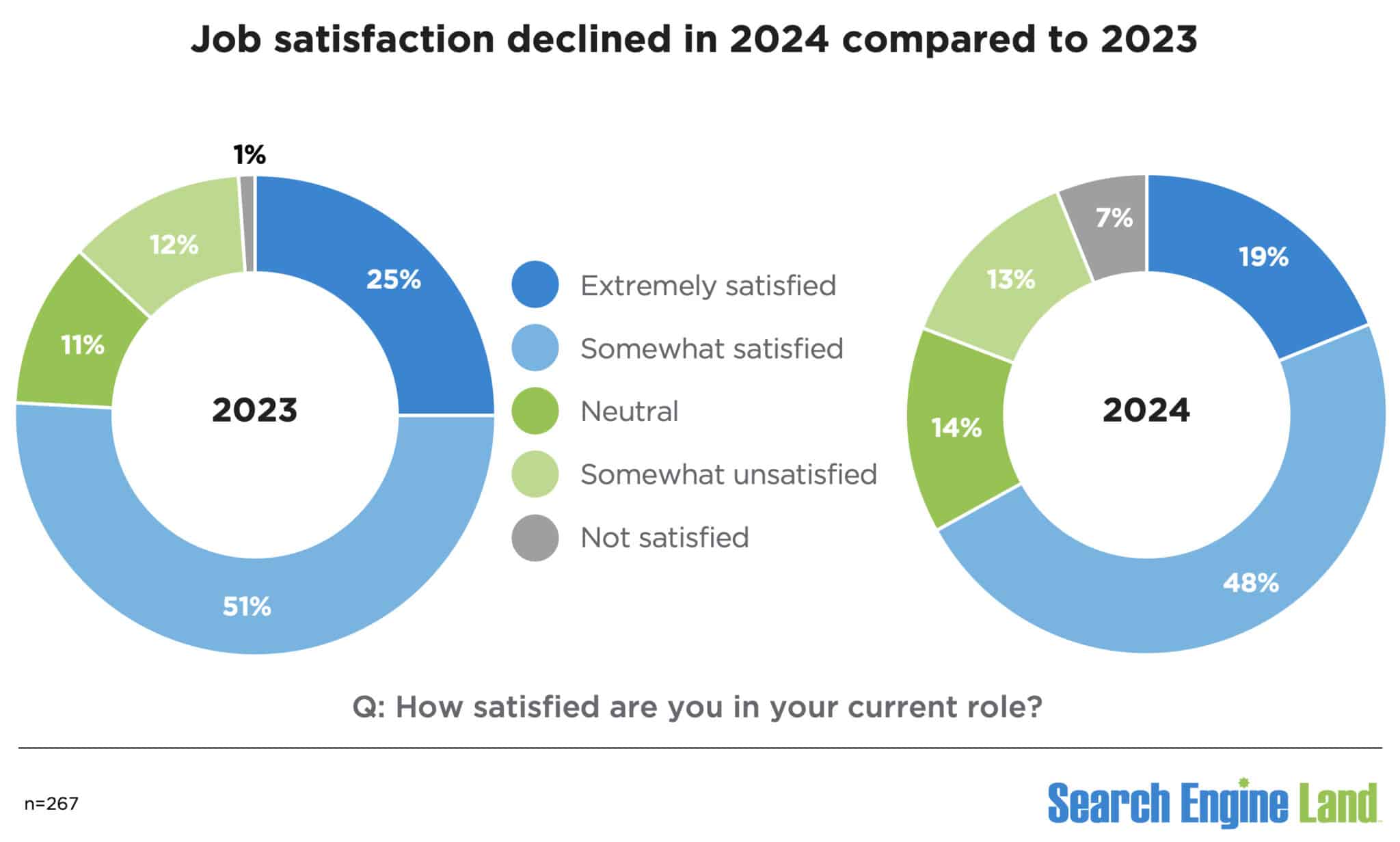
Job satisfaction decline. While 67% of search marketers are extremely or somewhat satisfied with their job, this number is down from 76% a year ago.

  • 19% are extremely satisfied (down from 25% in 2023).
  • 48% are somewhat satisfied (down from 51% in 2023).

Job dissatisfaction also increased to 20%, up from 13% a year ago. 

  • 13% are somewhat unsatisfied (up from 12% in 2023).
  • 7% are not satisfied (up from 1% in 2023).

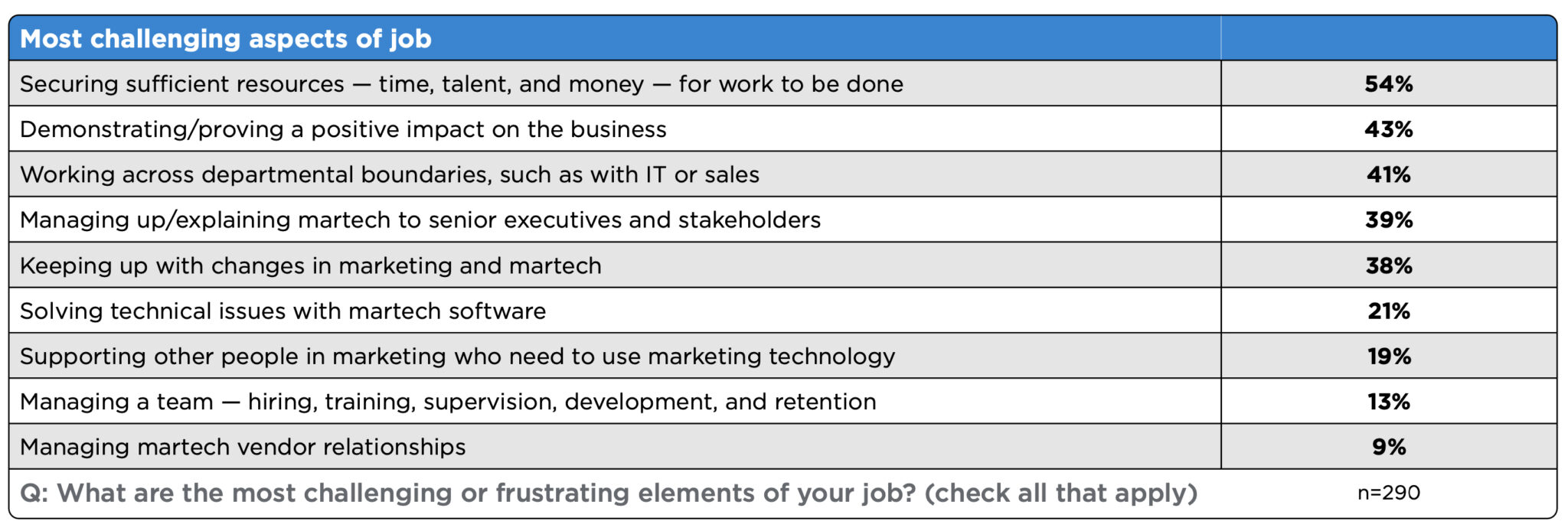
Search marketing challenges. The most frequently cited challenge is securing sufficient resources – time, talent and money – according to 54% of respondents.

  • Demonstrating and proving a positive business impact was a significant challenge for 43% of respondents.
  • Cross-departmental collaboration was a challenge for 41% of respondents.

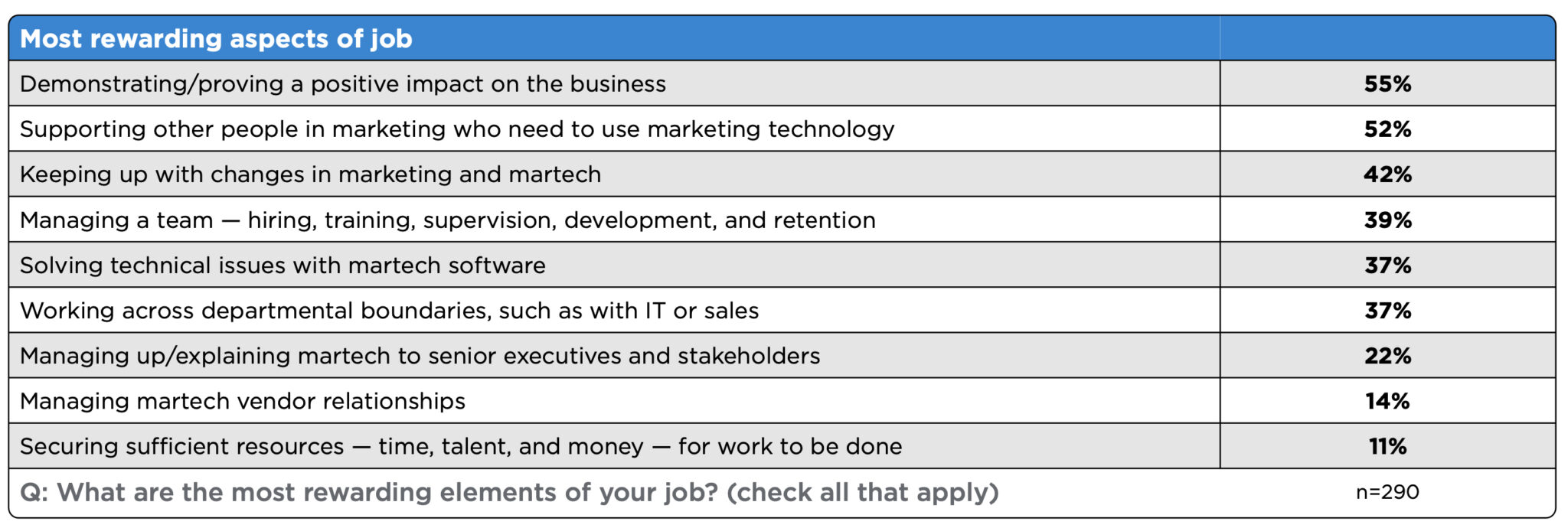
Most rewarding aspects of search marketing. For 55% of respondents, demonstrating and proving a positive business impact was the most rewarding aspect of their job.

  • 52% of respondents found supporting colleagues to leverage technology rewarding. 
  • 42% found keeping up with industry changes in marketing and martech innovations and trends rewarding.

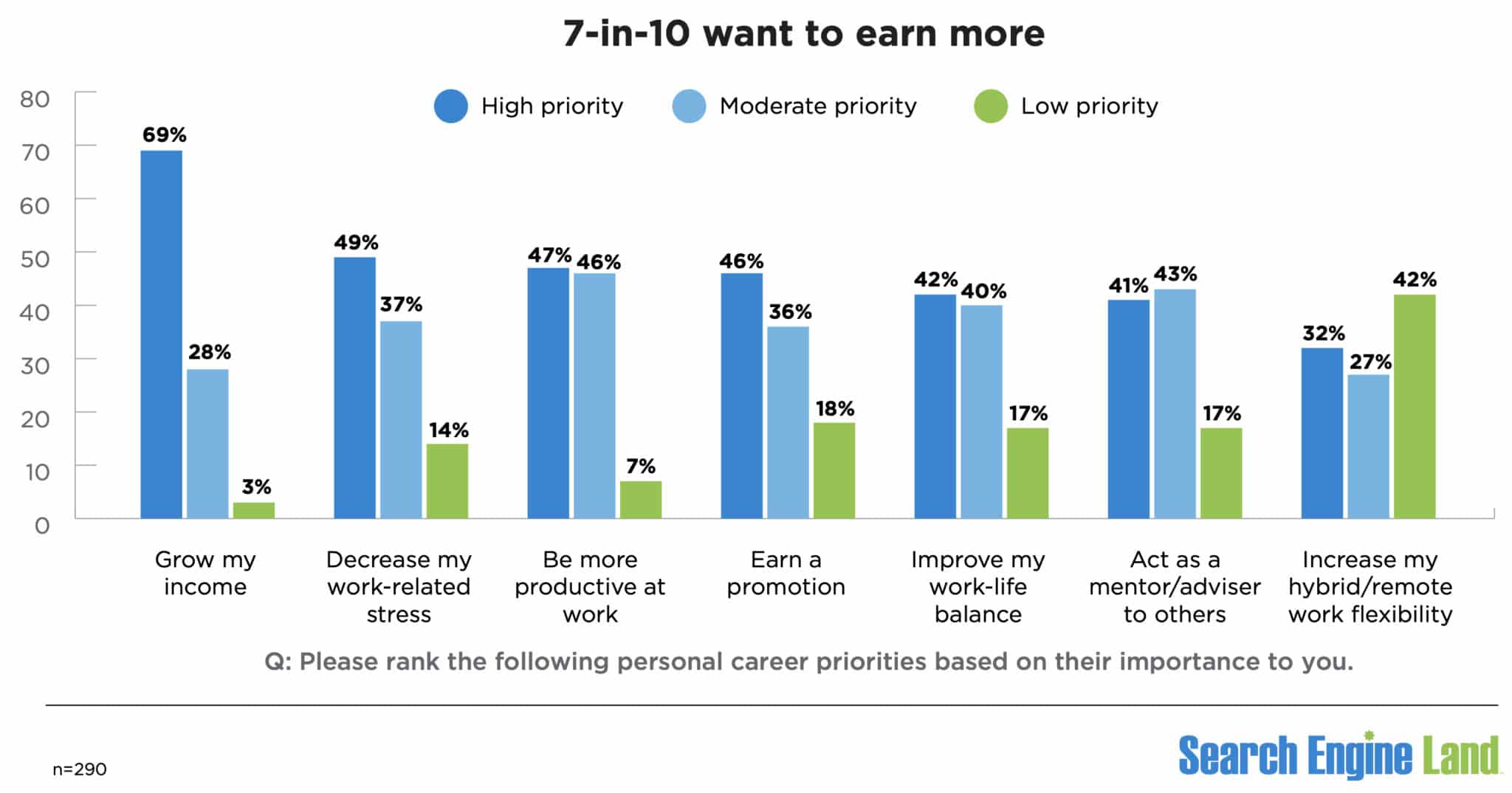
Career priorities. What do search marketers want? Growing their income was the highest priority for 69%. Unsurprisingly, 97% rated “grow my income” as either a high or moderate priority.

Three other personal career high priorities were:

  • Decreasing work-related stress: 49%.
  • Being more productive at work: 47%.
  • Earning a promotion: 46%.

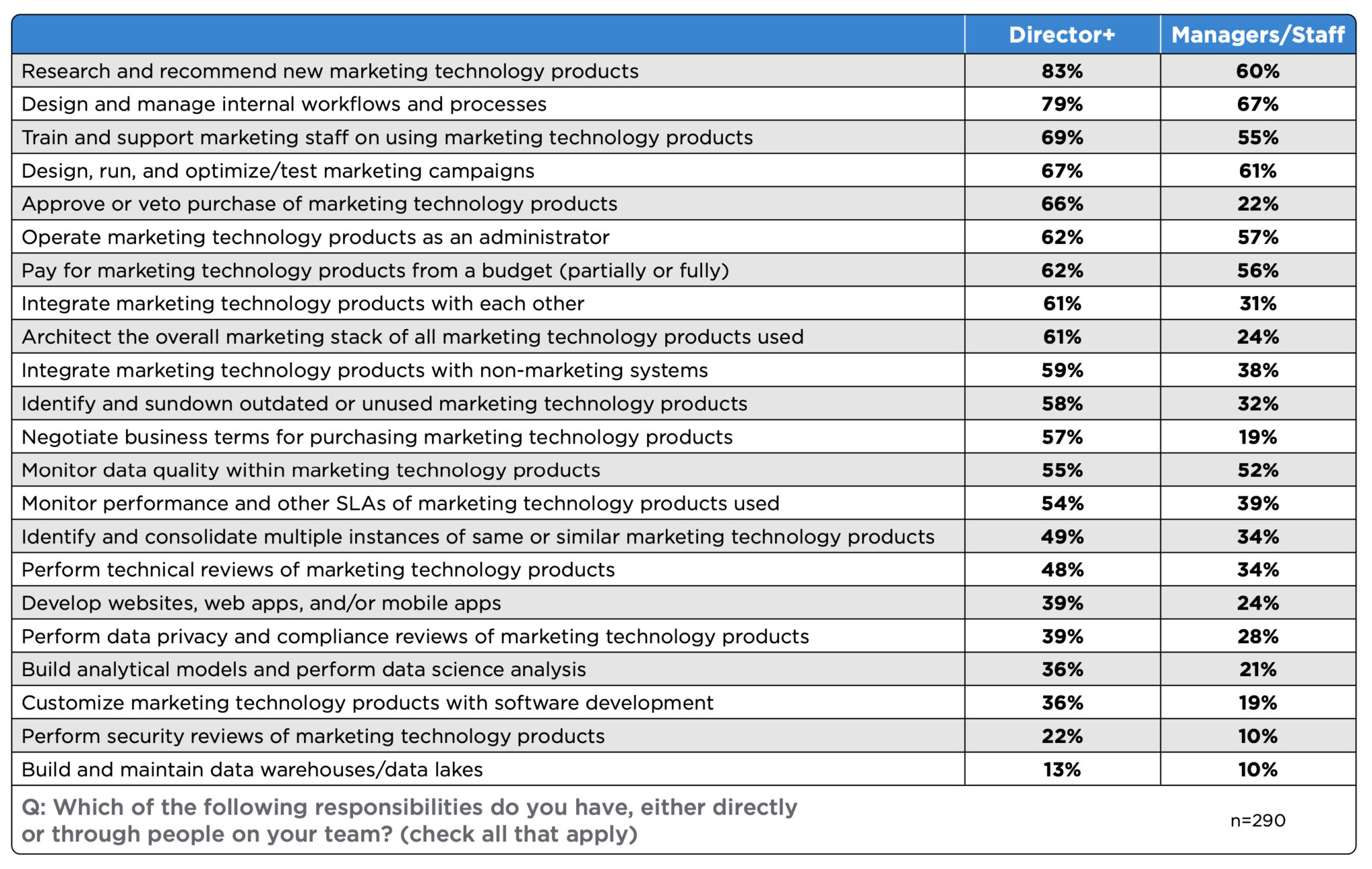
Key responsibilities of search marketers. At the director-level and higher positions (i.e., director, senior director, VP, SVP, C-suite), 81% said researching and recommending new marketing technology products was their top responsibility. 

The top responsibility for 67% of managers/staff was designing and managing internal workflows and processes. 

Other responsibilities that fell to the majority of search marketers of all levels were:

  • Training and supporting marketing staff on using marketing technology products.
  • Designing, running and optimizing/testing marketing campaigns.
  • Operating marketing technology products as an administrator.
  • Integrating marketing technology products with each other.
  • Monitoring data quality within marketing technology products.

Here’s the full list of responsibilities we asked about:

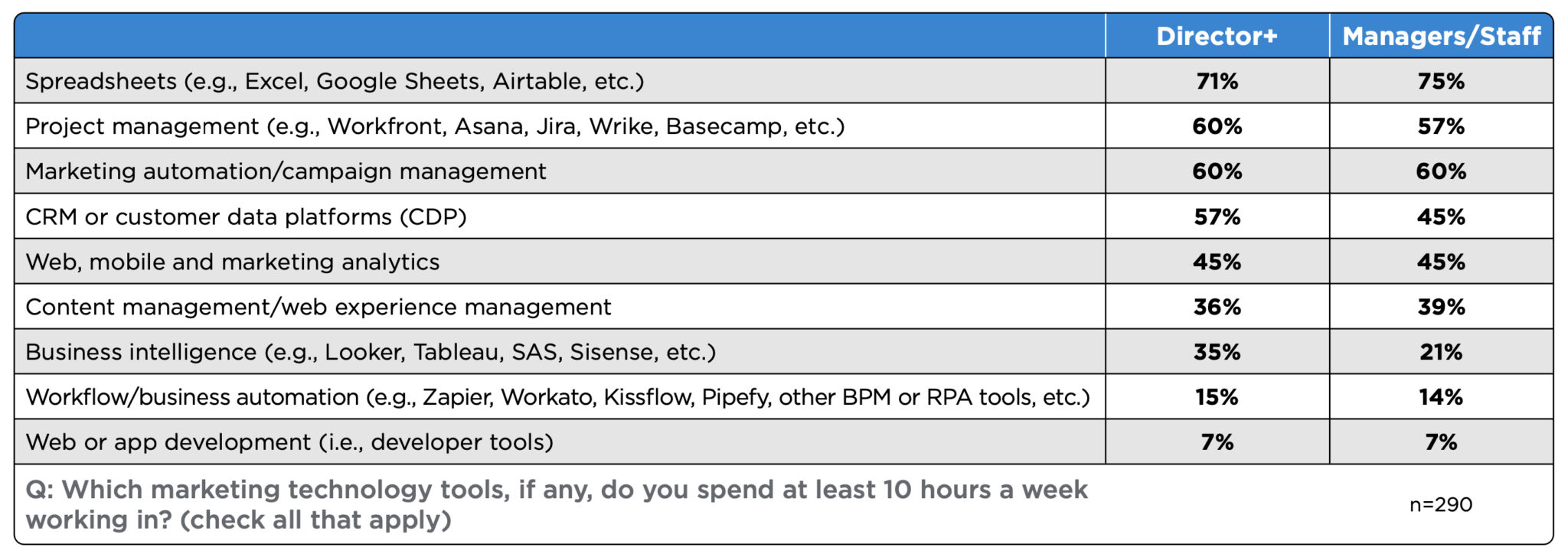
High usage of spreadsheets. A significant majority of directors+ (71%) and managers/staff (75%) spend at least 10 hours a week working in spreadsheets (e.g., Excel, Google Sheets, Airtable). As was the case a year ago, spreadsheets continue to be a fundamental tool for search marketers.

Also of note:

  • Project management tools (e.g., Workfront, Asana, Jira, Wrike, Basecamp) are used consistently by directors+ (60%) and managers/staff (57%).
  • Directors+ and Managers/staff reported equal usage (60%) of marketing automation and campaign management tools.

Methodology. Our survey results are based on responses from 291 individuals in North America (79%) and Western Europe (21%). Due to the limited number of respondents, other regions were excluded. We used the “median” results for salaries to filter out values that might skew the results. 

The 2024 Search Engine Land Salary and Career Survey was conducted between December and February. Invitations to take the survey were amplified on and by Search Engine Land. The survey included more than 20 questions related to career roles, salary, technology, job satisfaction and challenges/frustrations. Respondents were also asked to reveal their age and gender.

Original source: https://searchengineland.com/search-marketing-job-satisfaction-2024-444121

Small Changes You Can Make on a Mobile App to Increase Engagement

Home Business Magazine Online

Mobile apps have become an integral part of our daily lives. They provide us with a wide range of functionalities, from entertainment and productivity to e-commerce and communication. However, the success of a mobile app is not solely determined by its initial downloads but rather by its ability to engage and retain users over time. User engagement is the key to building a loyal customer base and driving long-term growth for your mobile app.

User engagement on mobile apps is crucial for several reasons:

  1. Engaged users are more likely to continue using your app, leading to higher retention rates and a stronger customer base.
  2. Once users are engaged, they are inclined to make in-app purchases, subscribe to premium features, or interact with advertisements, which can increase your app’s revenue.
  3. Such users provide valuable feedback and data, allowing you to better understand their preferences and tailor your app’s features to meet their needs.
  4. Engaging users can promote a strong connection with your mobile app, leading to increased brand loyalty and advocacy.

According to recent industry reports, the average mobile app has a 90-day user retention rate of just 32%. This statistic highlights the importance of implementing effective strategies to improve and maintain user engagement on your mobile app.

While developing a comprehensive engagement strategy is important, sometimes small, incremental changes can have a significant impact on your app’s user engagement. In the following sections, we’ll explore various tactics you can implement to enhance engagement on your mobile app.

Understand User Behavior and Preferences

To enhance user engagement, it’s crucial to have a deep understanding of your target audience’s behavior and preferences. This can be achieved through various methods, such as user research, data analysis, and competitor analysis.

You can conduct surveys, interviews, and usability testing to gain insights into your users’ needs, pain points, and motivations. Furthermore, you can use analytics tools to track user interactions, session duration, and in-app behavior to identify patterns and trends. Last but not least, examine the engagement strategies used by your competitors and identify areas where your app can differentiate itself.

Enhance User Interface and User Experience

The user interface (UI) and user experience (UX) of your mobile app play a crucial role in user engagement.  A study by Forrester Research found that a well-designed UI could increase conversion rates by up to 200%. This underscores the importance of a clean, intuitive design that enhances user experience. A seamless UI reduces friction and makes it easier for users to navigate and interact with the app, leading to increased engagement.

Focus on creating a clean, intuitive, and visually appealing design that aligns with your target audience’s preferences. Ensure your app’s navigation is straightforward and easy to understand, allowing users to quickly find the information or features they need.

Develop a seamless onboarding process that introduces your app’s key features and functionalities, helping users get started quickly. Additionally, utilize high-quality images, icons, and animations to create a visually engaging and cohesive user interface. Optimize your app’s performance and responsiveness to provide a smooth and efficient user experience across different devices and screen sizes.

Implement Gamification Elements

Gamification, the integration of game-like elements into non-game contexts, can be a powerful tool for enhancing user engagement. Incorporating gamification elements such as badges, leaderboards, and rewards can significantly enhance user engagement by tapping into the human desire for achievement and competition. A study by TalentLMS found that 89% of users are more engaged when an app incorporates gamification.

For example, Fitbit has effectively used gamification to keep users motivated and engaged in their fitness journeys. By offering badges for milestones and encouraging friendly competition through leaderboards, Fitbit has created a community of active users who regularly interact with the app to track their progress and compete with friends.

Consider incorporating the following gamification techniques into your mobile app:

  • Rewards and Achievements: Implement a system of rewards, badges, or achievements that users can earn for completing specific actions or milestones within your app.
  • Leaderboards and Competitions: Create leaderboards or challenges that allow users to compete against each other.
  • Progress Tracking: Provide users with visual representations of their progress, such as progress bars or level-up systems, to keep them engaged.
  • Personalized Challenges: Offer customized challenges or tasks based on each user’s preferences and behavior to make the experience more personalized.

Personalize the User Experience

Personalization is a key factor in improving user engagement. By tailoring the app experience to individual users, you can create a more relevant and compelling interaction. Apps that tailor content and recommendations to individual users see significantly higher engagement rates. According to a report by Accenture, 91% of consumers are more likely to shop with brands that provide relevant offers and recommendations.

If you want to personalize the user experience in your mobile app, start with displaying content, features, or recommendations based on each user’s interests, behavior, and preferences. Allow users to personalize the app’s appearance, notifications, or other settings to match their preferences.

Moreover, dynamically adjust the app’s functionality, content, or user interface based on the user’s location, device, or contextual information. Divide your user base into distinct segments based on their characteristics, behaviors, or preferences, and tailor your engagement strategies accordingly.

One notable example is the fashion e-commerce app, Stitch Fix. Stitch Fix uses advanced algorithms and data analytics to provide personalized clothing recommendations to its users. Each user starts by filling out a detailed style profile, which includes preferences, size, budget, and specific style requests.

The results of this personalization strategy are impressive. Stitch Fix reported that personalized recommendations have led to a 50% increase in customer retention rates. Additionally, customers who receive personalized recommendations tend to spend more time on the app and have higher average order values.

Use Push Notifications and In-App Messaging

Push notifications, when used judiciously, can also boost engagement. Localytics reports that users who receive personalized push notifications are more likely to engage with an app, with a 54% increase in engagement. However, it’s crucial to strike the right balance; excessive notifications can lead to annoyance and increased churn rates.

Slotswise is one of the companies that took advantage of push notifications. The company decided to leverage push notifications to increase user engagement and promote slot apps effectively. They focused on creating personalized, timely, and relevant push notifications to capture user interest without being intrusive. Using data analytics, Slotswise crafted personalized push notifications that highlighted popular slot apps, exclusive promotions, and customized recommendations.

The push notification strategy yielded significant results for Slotswise. The company saw a 45% increase in user engagement with their platform. Users were more likely to visit the site and interact with the content after receiving personalized notifications. The personalized approach led to a 30% increase in conversion rates for app downloads. Users who received tailored notifications were more inclined to download and try the promoted slot apps.

To kickstart push notifications for your mobile app, consider the following tips:

  1. Craft push notifications and in-app messages that are tailored to each user’s interests, behavior, and stage in the customer journey.
  2. Ensure that your messages are triggered by relevant user actions or events, making them more valuable and less intrusive.
  3. Send push notifications and in-app messages at the most appropriate times, taking into account user preferences and app usage patterns.
  4. Mix up the content of your messages, including updates, promotions, reminders, and personalized recommendations, to keep users engaged.

Encourage User Feedback and Reviews

Incorporating user feedback into the development process can lead to higher engagement. Users appreciate when their suggestions are heard and acted upon, which fosters loyalty and satisfaction. A survey by Apptentive found that 98% of users are more likely to use a service when they feel their feedback is valued.

To encourage feedback, you can integrate feedback forms or surveys directly into your app, making it easy for users to share their thoughts and suggestions. Ask for feedback at specific points in the user journey, such as after completing a key task or upon app exit.

You can further consider offering rewards, discounts, or other incentives to users who provide feedback or reviews. Demonstrate that you value user input by actively responding to feedback and implementing changes based on their suggestions.

Trello, the project management app, has successfully built a loyal user base by actively soliciting and implementing user feedback, leading to continuous improvements that resonate with its users. Encouraging users to leave reviews and provide feedback not only improves the app but also builds a community of engaged users who feel invested in its success.

Measure and Track App Engagement

To ensure the effectiveness of your engagement strategies, it’s crucial to measure and track key performance indicators (KPIs) related to user engagement. Some important metrics to consider include:

  • Daily Active Users (DAU): The number of unique users who interact with your app on a daily basis.
  • Monthly Active Users (MAU): The number of unique users who interact with your mobile app within a 30-day period.
  • User Retention Rate: The percentage of users who continue to use your app over time, often measured at 7, 30, and 90 days.
  • Session Length: The average duration of each user session within your app.
  • In-App Interactions: The number and types of actions users take within your app, such as completing tasks, making purchases, or engaging with content.

Enhancing user engagement on your mobile app is an ongoing process that requires a deep understanding of your target audience, a willingness to experiment with different strategies, and a commitment to continuously improving the user experience. By implementing the small changes outlined in this article, you can take meaningful steps towards increasing user engagement and driving long-term success for your mobile app.

The post Small Changes You Can Make on a Mobile App to Increase Engagement appeared first on Home Business Magazine.

Original source: https://homebusinessmag.com/businesses/app-development/changes-mobile-app-increase-engagement/

Google Merchant Center Next rollout expands

Google is now expanding the rollout of Merchant Center Next to all merchant accounts, following its announcement at Google Marketing Live 2023.

Merchant Center Next (GMC Next) brings a revamped interface and new features to Google’s ecommerce platform, potentially streamlining operations for online retailers.

Key points:

  • New users and many existing ones already have access.
  • Features a refreshed user interface.
  • Reinvents complex features and introduces new experiences.
  • Classic Merchant Center users are being notified when the update is available.

Why we care. Advertisers should familiarize themselves with the new interface and features to maintain efficiency, as the old interface likely will be deprecated soon.

Yes but. Advertisers who have already tested GMC Next out have faced issues with using the new interface.

What’s next. All remaining merchants can expect to transition to the new platform in the coming weeks.

Original source: https://searchengineland.com/google-merchant-center-next-rollout-expands-444240