The Google Maps pin scam: A new Google Business Profile threat

The Google Maps pin scam: A new Google Business Profile threat

There’s a scam going on in the world of Google Maps/Google Business Profile.

Competitors can move Google Map pins to a new location which can negatively impact rankings.

This has been happening for several months and impacted many Google Business Profile listings.

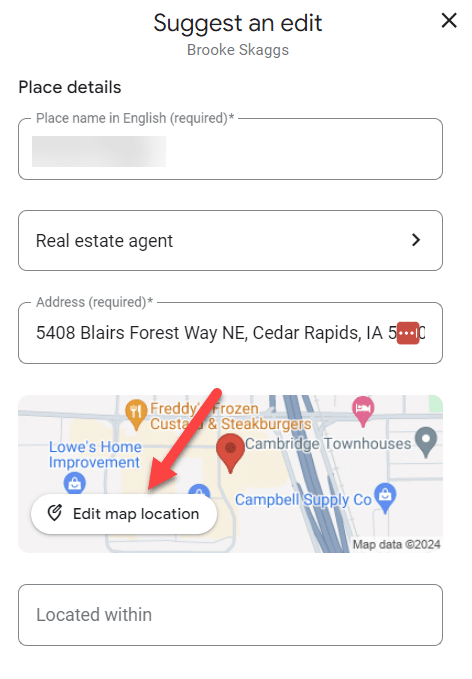
It’s easy for scammers to make this change using the Suggest an edit feature on a Google Business Profile and then editing the map location.

Google Maps or GBP edit map location

When the Map pin is moved to the new location, Google thinks the business is no longer in the location it was in before, so rankings can tank. 

Why is this a problem for you?

Google doesn’t notify the owners and managers of the GBP listing that the Map pin was moved.

So unless you’re specifically looking for this change, you may not realize why you’re no longer getting calls or customers. And if you’re keeping track of how your Google Business Profile ranks, you may not understand why your rankings have suddenly dropped.

If you’ve been hit by this scam, you cannot simply go into your Google Business Profile and reposition your pin to the correct location because many who do this get hit with a Google Business Profile suspension

How to fix the issue

Right now, the best way to fix this issue is to log into Google using an email address that is not connected to any Google Business Profile.

Then, search for the business listing on Google Maps and follow these steps:

  • Click the Suggest an edit button on the Google Business Profile.
  • Click Change Name or other details
  • Click Edit map location
  • Drag the map until the pin is in the correct location.
  • Click Save.

Remember, it’s always important to check your Google Business Profile for any changes that others make to your GBP listing.

Original source: https://searchengineland.com/google-maps-pin-scam-threat-444109

Meta adds custom offers to Instagram ad CTAs

Ads Manager

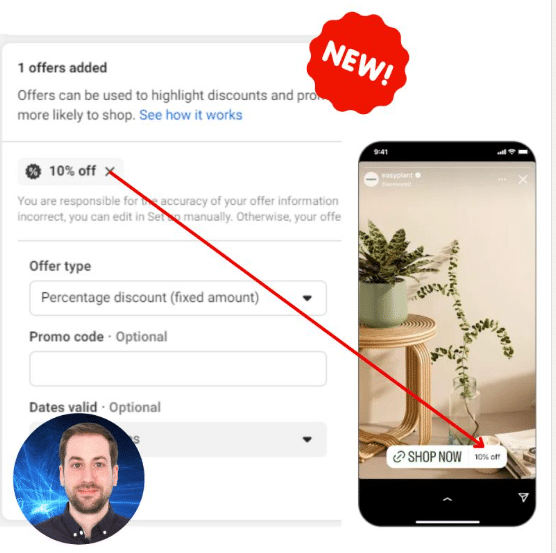
Meta is rolling out a new feature allowing advertisers to showcase custom offers directly on Instagram ad call-to-action (CTA) buttons.

Key features:

  • Dynamic sourcing of offer details from the ad’s website URL.
  • Predictive display of the offer most likely to convert.
  • Support for up to 20 offers per ad, with Meta predicting which one is most likely to convert.

Why we care. Advertisers will be able to highlight multiple competitive promotions (e.g., percentage or cash discounts) on the CTA, potentially increasing user engagement and click-through rates.

The catch. It is limited to single-media ads in Instagram Stories and not available to all ad accounts.

How it works:

  • Create an ad in Ads Manager with eligible objectives (Traffic, Engagement, Leads or Sales).
  • Select “Website” as conversion location.
  • Enter the website URL to automatically add offers or manually input offer details.
  • Review and confirm offers in the ad setup process.

First seen. We came across this update on Bram Van der Hallen’s LinkedIn:

Business Finance
ctas

What’s next. Watch for potential expansion to other ad formats and placements across Meta’s family of apps.

Original source: https://searchengineland.com/meta-custom-offers-instagram-ad-cta-444143

Hidden Google tool reveals GA4 and Google Ads discrepancies

Advertising

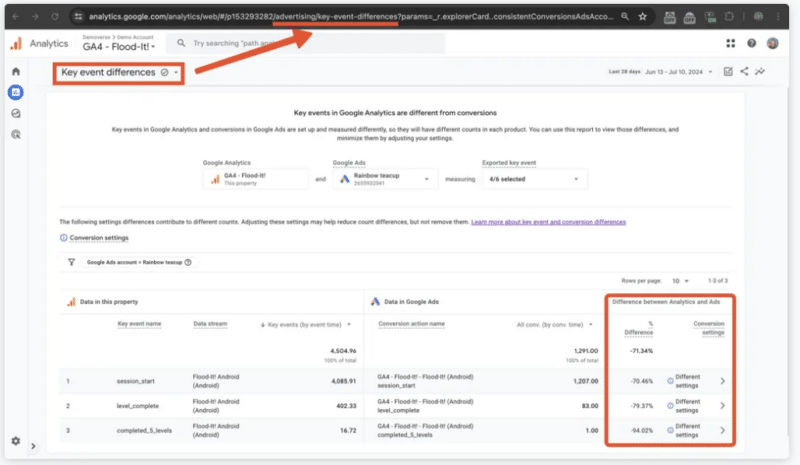
Google Analytics 4 (GA4) contains a concealed report that allows users to compare conversions exported to Google Ads and explains discrepancies between the platforms.

Why we care. This hidden feature provides advertisers with a valuable tool to reconcile differences in conversion data, potentially improving campaign accuracy and performance.

How to access:

  1. Start with your standard GA4 property URL
  2. Append “/advertising/key-event-differences” to the URL
  3. The full URL should resemble: “https://analytics.google.com/analytics/web/#/p153293282/advertising/key-event-differences

First seen. We first came across this from Brais Calvo Vázquez’s LinkedIn who showed us the shortcut that allows us to see this report:

advertising/key-event-differences

Yes, but. The report isn’t accessible for all GA4 properties.

Between the lines. The renaming of “conversions” to “key events” in GA4 was meant to eliminate discrepancies with Google Ads. The report‘s hidden status may be due to its potential contradiction of this goal.

The big picture. Some users report seeing this feature for over a year, suggesting extended development or testing.

What to watch. Whether Google will officially release this tool or continue to keep it hidden, given its usefulness to marketers in reconciling data inconsistencies.

Original source: https://searchengineland.com/ga4-google-ads-discrepancies-report-444074

How to remove court records from Google: 3 effective strategies

How to remove court records from Google: 3 effective strategies

Legal issues can drag on for ages. That’s the simple, unfortunate truth. 

Worse, once a legal matter is filed in court, the case is highly likely to become visible on the web. Hundreds of websites now aggregate public court records and publish them for the world to see.

The issue I commonly come across for clients is that court records tend to rank highly in Google search results for both individuals and businesses. Lawsuits and various other legal matters attached to your name can cause long-lasting harm to your reputation. 

Regardless of why a lawsuit was filed, being associated with a court case can cause a negative perception and first impression to people searching for you online.

Thankfully, there are several solutions to remove or suppress court records and lawsuits that are displayed in Google search results. 

How do old court records appearing in Google search results affect your online reputation?

We all make mistakes. And we all deal with issues that may be out of our control. 

However, some mistakes or issues are more costly than others and can lead to legal proceedings that drag on for months – or even years.

Should a (possibly minor) court case from five or 10 years ago affect the reputation of your person or business? Should it define you? 

No, it shouldn’t.

As humans, we have the right to move on from our past and strive toward a better future.

Unfortunately, court records from years ago are often available online. It used to be that one would have to visit a local court records office and request that a clerk release court records. This was a long, arduous process that included a lot of back and forth with government office workers. 

That is no longer the case. These days, Google’s algorithm indexes this highly sensitive information and makes it available online. 

That means court records can be found in Google search results in mere milliseconds. And they often appear on the first page of search results.

Various websites, including Leagle, Justia, Casetext, PacerMonitor and many more, contain publicly available court records. 

The presence of this information on these websites can harm you or your business’s reputation. It can specifically harm your ability to get a new job or lead to potential customers doubting your morals and not trusting your business.

All that simply because of some unpaid parking tickets? Or because you committed a “crime” that has since been deemed legal in several states? Or because of a dysfunctional marriage that led to a divorce? 

The good news is that there are ways to combat the issue.

Dig deeper: How to repair your Google search results and reclaim your online reputation

How to remove court records from the web

The three most common ways to remove court records are expungement, link suppression and record removal requests. 

1. Getting a court record sealed or expunged

Several websites that host court records require that the record be expunged or sealed for the content to be removed from their website. Expungement is a legal process in which a court order is issued to remove or seal records of a criminal conviction or arrest.

Sealing a court record typically means that it is not destroyed but hidden from public view. However, it may still be accessible to law enforcement, government agencies and employers conducting background checks.

Before considering getting your record expunged or sealed to have the court record removed from the web, confirm the website’s policies regarding how they process removal requests.

Getting a court record expunged or sealed involves several steps and considerations.

Here’s a simple overview of the process and what you need to know:

  • Eligibility: Not all convictions or arrests can be expunged or sealed. Eligibility criteria typically depend on factors such as the type of offense, the time since the conviction or arrest and whether you have fulfilled all sentencing requirements (like probation or fines).
  • Research your jurisdiction: Laws regarding expungement vary by state or country. Research the specific laws and procedures in your jurisdiction. Many jurisdictions have information available online or through legal aid organizations.
  • Gather the necessary information: You will likely need details about the conviction or arrest, including dates, case numbers and court documents. Make sure you have all relevant information before beginning the process.
  • Petition the court: In most cases, you must file a petition with the court where the conviction or arrest occurred. The petition typically includes your personal information, details of the offense and reasons why you believe your records should be expunged or sealed.
  • Attend a hearing (if required): Depending on your jurisdiction and the specifics of your case, you may need to attend a court hearing where a judge will review your petition and determine whether to grant expungement or sealing of the record. 
  • Follow up: After filing your petition, follow the instructions given by the court. This may include attending hearings, providing additional documentation, or responding to inquiries from the court.
  • Outcome: If your petition is successful, the court will issue an order to expunge or seal your records. Once the order is received, you can submit it to the websites that host the court record to have it removed. 

If you are not able to get your court case expunged or sealed (or you don’t want to go through the process), the next best option is to suppress the unwanted court record link(s) deeper in Google search results. There, it will be less visible to the public.

The process of search engine suppression involves creating new positive or neutral content about yourself that ranks above any negative or unwanted content harming your reputation.

Common strategies to consider if you are looking to suppress court record links are:

  • Create and optimize personal websites or blogs.
  • Establish and maintain social media profiles.
  • Publish high-quality content on industry-specific platforms.
  • Utilize online portfolio platforms.
  • Optimize existing content on websites you control.

If you’re seeking professional help, most online reputation management firms specialize in suppressing court record links from the web.

Dig deeper: Online reputation management: Top 10 hurdles and how to overcome them

3. Complete removal of court records (case-specific) 

In certain situations, you can have the court record completely removed from the website. If the website agrees to remove the court record, it will be taken down immediately and the link will be replaced with a “404 error page.” 

Alternatively, some websites will agree to deindex the link from Google search results so it is no longer visible when you search your name. 

To determine if a website that hosts court records has a removal policy, you’ll want to search their terms of service (or FAQ section). 

Doing so will inform you how to submit a request. Once a removal request is submitted, it can take up to 60 days for it to be processed, depending on the website. 

Clearing your digital slate

It’s crucial to manage how court records appear online to protect your personal and/or company reputation.

Even though seeing your court record or lawsuit online can be distressing, there are ways to handle it effectively.

The methods detailed above let you take charge of your online presence, focusing on your current achievements and goals while removing or suppressing court documents that might not reflect who you are now.

Dig deeper: A 3-phased approach to proactive online reputation management

Original source: https://searchengineland.com/strategies-remove-court-records-google-444072

Here’s Why You Should Hire Friendly Debt Collectors

Home Business Magazine Online

Movies make the debt collection industry look like an ugly, sordid thing. Where friendly debt collectors do not exist. It’s not uncommon to see tactics like late-night phone calls, robocalls, threatening and aggressive language, and sometimes, even violence.

The movies are not real life but, sadly, sometimes real debt collectors treat people badly, too. No matter what sector your company is in, it’s always better to hire friendly debt collectors who treat people without judgment. Let’s check out a few reasons why.

Reputation Intact

Leaders like Summit Account Resolution make it a point to treat everybody they encounter with dignity, as that’s a core part of their business model. They have a PHD philosophy — Preserve Human Dignity.

Such friendly debt collectors view their job as helping two sides meet in the middle rather than being paid by one to badger and harass the other. Debtors may have very good reasons for being less than forthcoming with payments. Debt collectors can work with them to find a healthier path towards repayment that works to everybody’s advantage.

Not only do companies collect more debts in less time, but they do so with their reputation and branding fully intact. After all, companies invest a lot in marketing and advertising and want to avoid letting debt collection harm how people think of their company.

Collect More Debt

If treating people badly actually led to collecting more debts sooner, perhaps business leaders would try to calculate whether the debt collection efforts were worth the reputational damage. Thankfully, this isn’t the case!

The friendliest and most professional debt collectors who make a point of treating people with dignity also collect more than their rivals. You get the best of both worlds! The debt collectors who believe in being helpful and kind manage to collect nearly double the industry average.

Choosing between more debt sooner, on the one hand, and being respectful with B2B partners and customers is a false choice. Hire friendly debt collectors and you will have it all.

Every Type of Debt

In some industries, debt collection works differently. For example, medical patients who owe debt have HIPAA rights enshrined, and these must be observed, or there could be legal and reputational consequences.

Each industry has its own culture as well as technical rules. Friendly debt collectors have a wide range of experience in every sector. They can collect a diverse set of debts, always with tact and courtesy, whether it’s overpaid employees, commercial or residential renters, medical debts, and more.

Consultation

Finally, the friendliest debt collectors also provide consulting services that let you improve the core of your own business. They can observe how your in-house collection efforts work and recommend improvements, bolstering the business’s foundations. They work with a smile on their face, and the results will put a smile on yours.

Whether a company needs to outsource debt collections or improve internal processes, the best professional debt collectors have you covered.

Avoid the messy, ugly side of debt collection that doesn’t even recover as much money. Instead, look for friendly professional debt collectors who treats everybody with innate dignity.

The post Here’s Why You Should Hire Friendly Debt Collectors appeared first on Home Business Magazine.

Original source: https://homebusinessmag.com/marketing/branding/hire-friendly-debt-collectors/

Ensuring Real Estate Agent Safety

Home Business Magazine Online

By Scott Bonvisutto, President – Console Vault

Real estate agents maintain a high public profile and routinely meet with strangers alone, sometimes in isolated locations, due to the nature of their work. Yet, according to a National Association of Realtors (NAR) study, only 51 percent of realtors know their brokerage’s standard real estate agent safety procedures. Thirty-nine percent of realtors surveyed reported that their local association provides safety training during orientation for new members, but only 29 percent reported being aware of such safety programs.

While there is rarely a “perfect” time to discuss how real estate agents can ensure their personal safety, the truth is that protecting themselves and their clients is an ongoing practice. In this article, we will dive into how realtors can find themselves in a dangerous scenario and the steps they can take to safeguard themselves against threats.

Why Realtors are Vulnerable

As with any potentially dangerous situation, the first step to protecting oneself is becoming aware of potential risks. Real estate agents tend to be vulnerable for four main reasons. The first is that criminals tend to target people — especially women — who are alone, and real estate agents work by themselves for much of their workday.

Second, real estate agents must frequently meet and work with strangers. Sometimes, criminals or mentally unstable individuals pose as interested buyers or sellers. Thefts, sexual assaults, and even murders have occurred as a result. While we may like to believe that something so heinous could never happen to us, it’s likewise crucial to remember that several realtors have been killed during showings.

Similarly, drug addicts might attend open houses or showings to gain access to medicine cabinets and the prescription pharmaceuticals inside them. Given incidents like these, perhaps it should come as no surprise that, according to the aforementioned NAR study, 22 percent of respondents reported feeling unsafe during a showing.

Third, realtors may be required to show properties that are located in unsafe or remote areas. Sometimes, these properties don’t even have cell phone coverage, making it impossible to call for help if necessary. Arriving at an abandoned property or foreclosure can also risk bringing realtors face-to-face with squatters or other individuals who may pose a threat to them and their clients.

Finally, real estate agents need to promote their services and showings, which means their faces, names, and events become widely known in the community. As a result, criminals can also easily figure out where to find them, making real estate agent safety so important.

For these reasons, it’s absolutely vital for realtors to take proactive measures to shield themselves from possible harm.

Self-defense Courses

NAR’s study points out that only 38 percent of real estate agents have taken a self-defense class. Yet, being prepared to protect oneself can make the difference between being a victim or not. For instance, these classes can teach students how to leverage their entire body in a punch and ensure it lands in the right place, enabling them to break away from an attacker and gain time to run.

Moreover, taking a self-defense class brings other, perhaps unexpected benefits for real estate agent safety. For instance, it can alleviate anxiety about one’s personal safety, boost confidence, improve physical fitness, and support positive mental health. These courses also teach students how to set healthy boundaries and assert them effectively.

New Safety Technology

Numerous innovative safety solutions can also keep real estate agents safe while on the job. If a realtor does not already use a GPS tracking device to follow their movements, they should keep in mind that these can give them a way to alert their friends and family if a situation should arise. 

According to the NAR survey, 72 percent of respondents use an app on their smartphones in this way, the most popular of which was the Find My iPhone feature used by 43 percent of those surveyed. Many participants also indicated that they routinely notify a loved one of their location whenever they need to conduct a showing.

In addition, automated solutions for confirming appointments can reduce the number of no-shows, meaning realtors will spend less time alone in an unfamiliar setting. Confirming showings in this way can also help realtors project confidence and appear less awkward or uncertain while waiting for clients, which makes them less attractive as a target.

In the wake of the pandemic, virtual property tours have become more accepted. Since these allow realtors to decrease the number of in-person meetings they have with clients, they present another way to reduce how much danger realtors could potentially be exposed to.

Carry protection

According to the 2023 NAR study, “Forty-nine percent of men and 50 percent of women carry a self-defense weapon or tool.” Eighteen percent of these respondents carry pepper spray, 14 percent list a firearm, and nine percent list a pocket knife, though another nine percent said they prefer not to reveal what their weapon is.

While having recourse to a weapon can help deter a criminal, it’s also important to have a secure place to keep dangerous items while out for the day, which is why in-vehicle safes are indispensable. In addition, these lockboxes can protect a realtor’s valuable items, such as prescription medications or even documents with sensitive client information.

Stay vigilant

Even the most experienced real estate professionals must remain vigilant and ensure their personal real estate agent safety. To reduce their vulnerability, realtors should consider taking a self-defense class, using new technologies, and keeping protection close at hand. In many cases, simply being prepared is enough to project the strength that makes a criminal choose someone else.

The post Ensuring Real Estate Agent Safety appeared first on Home Business Magazine.

Original source: https://homebusinessmag.com/businesses/real-estate/ensuring-real-estate-agent-safety/

The rise of forums: Why Google prefers them and how to adapt

The rise of forums: Why Google prefers them and how to adapt

If you own a niche site, there’s a pretty good chance that you saw something like this happen between late 2023 and today.

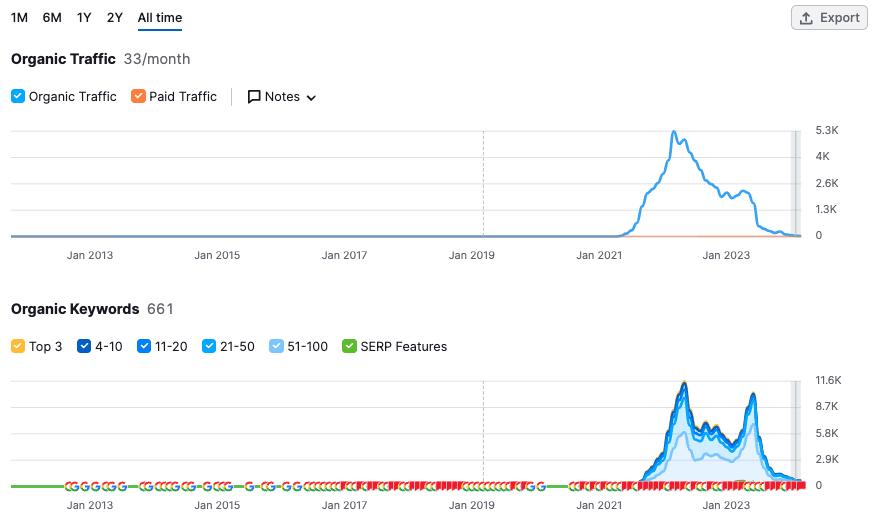
Semrush data on niche site

This is Semrush’s report for one of my own niche sites. 

There’s not much to brag about these days on my site, but in 2022, there was. Google loved it. I ranked in the top 10 on my niche keywords and a wide range of related head terms. 

I was pulling in a few hundred dollars a month in affiliate revenue – not exactly money I could retire with, but certainly enough to incentivize me to continue to work on my site. 

How did I do it? I simply followed all the rules of white-hat SEO.

  • I chose a niche topic that no one else was covering very well.
  • I chose keywords that people were truly interested in.
  • I made sure that my information was original, up-to-date and accurate. I researched every article I wrote for weeks, sometimes months. When I checked the sites ranking alongside me in the top 10 on any topic, my content was always far superior to all of theirs.
  • I published frequently.
  • My users loved my content. My comments sections were active and my site was shared on social media. I received a lot of compliments from people telling me they’ve been looking for a site like mine for years.

And then it all came crashing down.

My niche site still ranks on extreme long-tail terms, but it’s lost just about all visibility for head terms. And my affiliate revenue is down to pennies.

What happened?

The long-tail shift from niche sites to user-generated content sites

You’ll hear a lot of speculation about what happened, but this report from Sistrix tells you all you need to know.

After the November 2023 core update, Reddit’s organic visibility increased by 23%. Quora’s organic visibility increased by 15.9%.

That is just the tip of the iceberg. In 2023, Reddit’s organic traffic increased by a whopping 253.3% between July 2023 and June 2024, according to Semrush.

Similarly, Quora’s organic traffic increased by 133.4%. The number of organic keywords that both sites ranked on increased by a similar margin.

Quora traffic over time

Other sites with user-generated content (UGC) also saw huge increases in the last year or two. YouTube saw an increase of over 450% in organic keywords.

You’ve probably seen for yourself for any kind of “how to” search that YouTube videos occupy an increasing amount of positions in organic search.

Amazon’s Alexa Answers site saw an 813% increase in SEO traffic before someone at Amazon decided to put a robots.txt exclusion, likely to keep their public content from being scraped to train other LLMs like Google Gemini (good luck with that, Amazon).

A typical Google SERP today

Here’s an example of a typical SERP today for a recent search I did. (For context, my 8-year-old daughter has recently gotten me hooked on playing Minecraft with her.)

Google SERPs - how do you defeat the ender dragon

A few years ago, you might have seen at least one or two accounts from independent bloggers.

No more.

Now, YouTube results take up the effective above-the-fold space that the first few organic results used to occupy.

The rest of Page 1 consists of user-generated content on well-established forum sites or well-known media sites.

Independent bloggers are pretty much wiped out, even though their content is arguably more accurate, more detailed and written with more expertise and zeal.

Dig deeper: How to survive and thrive in a Google helpful content world

Why is Google favoring sites like Reddit and Quora?

There’s a lot of speculation as to why Google is suddenly favoring forum sites. Since this is an opinion piece, I’ll share mine:

This is Google crying uncle.

For years, Google claimed that it could distinguish between good content and poor content. Every time there was a core algorithm update, they’d repeat the mantra, “Just produce E-E-A-T, and we’ll figure it out.”

Here’s the problem.

Let’s say I spend 10 hours every day researching a topic, writing and publishing content.

While I’m doing this, hundreds of unscrupulous publishers are scraping my original content, using AI to rewrite it and publishing it as their own – perhaps even using others’ content to improve on it.

They’ll do it all in a way that I can’t issue a DMCA takedown (nor even realize what they’ve done).

We’re entering a world where “expertise” and “experience,” particularly for head terms, will be so commoditized that it’ll be practically impossible for Google to discern them independently. 

We all saw the recent leak of Google’s ranking signals. One thing that immediately struck me when I went through that list was how easily so much could be faked.

This is forcing Google to place greater emphasis on “authority” and “trust,” even at the expense of everything else.

I don’t know any industry expert who would cite sites like Reddit or Quora as authorities on their topics of expertise.

Why is Google favoring them so much?

It all goes down to a new “A” word: authenticity. For all their flaws, when you go to a site like Reddit, you know you’re seeing real conversations from real people. 

Sure, you may need to take the scenic route to get to an answer, but the power of the crowd – along with platforms that foster free and open speech – usually gets you there.

The most powerful LLM won’t be the one with the best technology; it’ll ultimately be the one that is trained on the most useful data. 

That’s why Google paid $60 million for access to Reddit’s data, and assuming Reddit can continue to collect high-quality content, Google probably got a bargain.

How Reddit and Quora have succeeded where others failed

One question I hear often is, why doesn’t Google just build its own forum powered by crowdsourcing?

Well, they tried. Hard.

Do you remember Google Answers (2002), Google Questions and Answers (2007) and Google Question Hub (2019)? Yeah, neither does anyone else. 

These were desperate attempts by Google to use crowdsourcing to build its own library of knowledge. 

The lesson they learned is that people don’t come to Google.com to give answers; they come to get them.

Some old-time SEOs might remember that Yahoo Answers was once a darling of Google organic search, but as Yahoo lost its way, so did Yahoo Answers.

By the time it was dissolved in 2012, it was a cesspool of spam and fake accounts.

Not coincidentally, around this time, sites like Reddit and Quora were taking off. How have these sites succeeded where others failed?

  • They screen for real humans. Sites like Yahoo Answers and Google Question Hub died a slow and painful death because they were unable to keep spam and fake accounts in check, eventually losing all of their trust and credibility. Google essentially ended up outsourcing the task of figuring out how “human” content is to other companies.
  • These humans have real conversations. Users on these sites are encouraged to engage in open and transparent conversation and dialogue. This opens up nuances and details of a topic that might otherwise not be covered on a site with static content. From a search and AI perspective, that opens up the extreme long tail that no one is covering.
  • These conversations use real words. On forum sites, you can always be sure that users are using words that your audience uses because they are the audience.
  • They’re constantly self-moderated. Sites like Quora and Reddit don’t employ hundreds of moderators who constantly monitor every conversation. Instead, they create communities that self-moderate. For example, each subreddit has its own set of rules; if a user breaks a rule, both the moderators and the users themselves will quickly call that user out.

Get the daily newsletter search marketers rely on.


If you can’t beat them… beat them

Reddit and Quora have done many things well, but they aren’t perfect. 

The biggest flaw in both of them is the same as their biggest strength: they’re both targeted toward a mass audience. This results in wildly inconsistent quality from one topic to another and one conversation to another.

Here’s the advice I give to every brand, large and small, that wants to be competitive in five years: Start your own discussion board or forum focused specifically on your industry niche.

Granted, you’ll get a lot of eye-rolling from people saying, “We tried that 10 years ago.” 

But the world – and the cost-benefit equation – is much different today than it was then.

Ten years ago, a well-designed forum might get you some organic rankings on the extreme long tail. However, whatever revenue came out of that traffic couldn’t justify the cost of screening users or moderating and maintaining content.

Today, from a cost perspective, you can bet that forum application developers are working hard to incorporate AI into their software to drive costs down. 

Tasks like screening users and moderating forums have traditionally required cumbersome manual work, but they are well in the wheelhouse of what AI can do.

As for the benefits of maintaining your own forum, there are lots more today than there were then:

  • Google’s sudden predilection toward forum sites isn’t going away. That means that good forums will rank not just in the long tail but at the head as well.
  • Through crowdsourcing, you can generate exponentially more high-quality content than paying an army of freelancers – at a fraction of the price.
  • If you can be the one in your industry generating authoritative content from your most influential and passionate customers, AI LLMs will fall over themselves to learn from the kind of information that your community is creating. 

All of these benefits will happen only if you design and run your forum correctly. 

Follow the best practices above

Have zero tolerance for fake accounts, overt promotional content and spam. 

Follow the “broken windows” theory – if spam is allowed to fester on a given post for more than a few minutes, that’s too long.

Focus on your specific audience

Do what sites like Reddit and Quora can’t do: be laser-focused on your audience.

The more precise, the better. 

Build a community 

“If you build it, they will come” doesn’t apply here. You need to put yourself in your audience’s shoes and ask, “What’s in it for me?”

You are asking them to spend their time and effort visiting, reading questions and writing answers. What are the benefits they’re getting in return?

Here’s where you need to be creative. 

  • Do you allow a certain amount of self-promotion for users who consistently provide value to discussions?
  • Do you do partnerships with well-known influencers in your industry? 
  • Will your audience be incentivized by aspirational intangibles such as “your expertise will help others”? 
  • If you operate a marketplace of some kind, can you provide greater visibility for those who contribute content?
  • Can you gamify the experience to make it “fun” to see and be seen? 

Dig deeper: SEO for user activation, retention and community

Provide definitive answers to the most common questions

Your customer service team can rattle off a list of the most common questions people ask, both branded and unbranded. Seed your forum with these questions (and when people ask the same questions, dedupe them).

Encourage open and transparent conversation, even if it’s about a touchy subject. If they aren’t having the conversation on your site, it’s happening somewhere else.

Go deep

Seed your forum with interesting questions you’re seeing on other forums or in search data, especially on hot and trending topics. Have your internal experts engage in the conversation as fellow enthusiasts and helpers.

Create an environment where your community’s conversations are richer and deeper than those at Reddit and Quora – to the point that users on those sites are citing the information they found on yours.

Make it the place the leaders of your industry want to come to be seen

There aren’t many experts who care to “be seen” on Quora or Reddit. If you can attract the top names in your industry (many of whom are probably your existing clients and customers) to view your forum, that makes it a lot more appealing for other influencers to take notice with an acute case of FOMO.

Own conversations about your own brand

If you’re a relatively well-known brand, try this experiment. Google the name of your brand + the word “Reddit.” 

Read the kinds of conversations going on about your brand. Then ask yourself: Why are these conversations going on on Reddit and not your own site? 

The answer is almost certainly that they trust the Reddit community to give answers that are more helpful, transparent and insightful than anything your company provides. Fix that.

Building a community: HubSpot’s example 

HubSpot is a good example of a brand that has successfully built an active community in its niche.

Here’s what organic traffic and keywords to their forum look like.

HubSpot organic traffic over time

While the organic search traffic levels are a fraction of their overall traffic, it looks like they’ve been pretty successful in hedging against the loss of traffic to their blog that we’re all experiencing with UGC on their forum, following most of the best practices outlined above. 

Interestingly, HubSpot’s forum looks much the same as it did when it started seven years ago, during the initial forum boom. 

But as the economy soured and companies looked for places to cut, these were often first on the chopping block, citing too much cost for too little benefit. 

American Express and Home Depot used to have popular discussion boards and probably wish they could have some of that long-tail goodness back.

Companies that stuck with their forums and grew them will find themselves in an enviable position as AI becomes thirsty for deep content. 

Your ultimate goal: Make Google look silly

This is my conclusion to everyone who has seen their niche site plummet in the rankings in 2023. Make Google look silly.

If you’re a niche site and you’ve seen your rankings plummet, it’s not time to give up. Instead, double down on establishing yourself as the authority on your topic. 

  • Go onto forums like Reddit and Quora and offer your expertise (keeping it concise, helping their users, but pointing readers back to the most helpful content on your own site). 
  • Start a discussion forum of your own and attract a group of fellow enthusiasts to maintain it. 
  • Cover your topic with more enthusiasm, insights, and accuracy, which will make conversations on Reddit and Quora look like child’s play.

Simply put, everyone who has grown reliant on Google for organic traffic needs to face facts. The gravy train is over. 

Our number one job should be to run our sites in a way that delights users and explores aspects of our topics in new and different ways – which is what we should have been doing all along.

You want your site to become so authoritative for your topic that it’s cited on Reddit, Quora, social media, AI and anywhere else people research your topic. 

If Google figures it out and starts ranking you again, great. If they don’t, you’ll still be fine, but they’re the ones who’ll be in trouble.

Original source: https://searchengineland.com/forums-google-adapt-444065

OpenAI is ‘going to build a search product’

Google OpenAI

OpenAI didn’t launch its heavily rumored search product earlier this year, but it’s coming. This was confirmed in a new interview with The Atlantic’s CEO Nicholas Thompson.

The quote. ChatGPT search could become “an important way that people navigate the internet,” so it would be “better for us to be in it than to not be in it, and also to help shape it than not help shape it,” Thompson told The Verge. He also said:

  • “They have said that they’re going to build a search product. They have not launched the search product, but they have said they would build it. We have allowed them to include The Atlantic in their search product.”

Why we care. OpenAI CEO Sam Altman has made clear he wants to disrupt the search paradigm via a new search product that combines web search plus large language models (LLMs). ChatGPT already offers an impressive “browse mode” to search the web that got really good following the arrival of GPT-4o.

Google challenger? ChatGPT “search” remains quite limited for several query types. However, ChatGPT set a new traffic record in June, attracting 2.9 billion visits, according to Similarweb. This was a 96% increase, year-over-year.

Strategic partnerships. If The Atlantic has given OpenAI permission to be included in the ChatGPT search product, I’d bet good money that many of OpenAI’s other partners are doing the same.

  • While this is good news for those large publishers, it could mean that smaller publishers will struggle to earn prominent citations on OpenAI’s search product.

AI search future. Thompson had some interesting things to say about where he sees AI search going. He shared his thoughts on whether OpenAI search could become a reliable traffic referrer:

  • “That’s the bet. There are a lot of people out there who are like, ‘Well, OpenAI’s search doesn’t work.’ It’s like, ‘Yeah, AI search doesn’t work right now. It doesn’t work very well. AI is good for a lot of things. It’s not good for search.’ That means that Google search traffic is not going to go away for a while. Once AI is good at search, that’s when Google regular Ten Blue Link search traffic goes away. … I do think that AI search will start to work.
  • “Over time, the AI companies will put many engineers on this problem, and they will, I think, figure out how to solve search. So when that happens, it’ll be a partial replacement for Google… Do I think that three years from now we will have as much search traffic from Perplexity, OpenAI, all of their competitors as we do right now from Google? Absolutely not. But will we have some? I sure hope so.”

Dig deeper. Is ChatGPT the Google Search killer we’ve been expecting?

Original source: https://searchengineland.com/openai-search-product-atlantic-444089

Transform Your Home Office with Custom Wall Art

Home Business Magazine Online

Introduction

The remote working revolution is in full swing – and for more of us than ever, our homes are now our primary workspaces.

So if you’re spending hours each week working from home, it’s worth paying attention to your home office decor. A well-designed and decorated home office that includes custom wall art can help you get into the right mindset and might just boost productivity.

Canvas prints are a quick, affordable way to brighten up your domestic office without needing expert DIY skills. In this article, we’ll explore the top canvas art trends for home offices in 2024, offering you stylish ideas to elevate your workspace!

Minimalist Black-and-white Artwork

Monochrome photo custom wall art with bold, simple compositions can bring a sense of order and harmony to any space – and can even aid concentration. Minimalist design helps to eliminate unnecessary distractions and reduce visual clutter, creating an environment that promotes focus, calmness, and organization.

Black-and-white wall features are easy to integrate into the existing palette of your room. So, if you want a simple, well-organized environment, minimalist office space might be the right choice for you – and Picanova is a perfect place to create your wall decor.

Nature-inspired Art

If you’re a nature lover or outdoorsy person, spending long hours in the office can be draining. But there are ways to refresh your office space that will bring the outside in and banish that oppressive atmosphere.

Try incorporating nature-inspired custom wall art into your office – then just add a few pot plants and you’ve got your own green workspace. Nature-inspired art has a unique power to create a sense of tranquility – ideal for those who can struggle with those pressure-cooker city vibes.

Abstract Art

With its visual power and thought-provoking impact, abstract art can be a potent choice for home office decor. Research shows that abstract art stimulates the parts of the brain associated with creativity and imagination – offering obvious benefits for anyone working in the creative fields.

Canvas prints featuring abstract custom wall art can however be a bit more challenging to integrate into a space – radical artworks were not of course mainly designed to harmonize with office furniture. But sensitive choices in palette and composition can give you wonderfully striking wall features that won’t overwhelm your decor scheme.

Inspirational Quote Art

The inspirational quote trend shows no sign of disappearing. A canvas print with a well-chosen quotation creates positive energy and fosters motivation. Quotes about life, professional success, and self-improvement are great daily reminders to keep your working life on track.

There are plenty of great ideas available online – so why not think of an idol of yours, or a famous thinker, and search for some of their iconic words to put on your wall.

Conclusion

Displaying canvas custom wall art in your home office is a cost-effective way to get focused and feel creative. Minimalist black-and-white photos, abstract art, inspirational quotes, and works inspired by nature are just a few of this year’s trending decor ideas.

Choose designs that play off your existing scheme and you can transform your home office into an elegant, inspiring, and functional space. But you’ll want to make sure you choose an affordable online provider to make your prints.

The post Transform Your Home Office with Custom Wall Art appeared first on Home Business Magazine.

Original source: https://homebusinessmag.com/home-office/office-design/transform-home-office-custom-wall-art/

Avoid These AI Content Creation Pitfalls for Your Home-Based Business

Home Business Magazine Online

In the evolving landscape of home-based businesses, artificial intelligence (AI) has emerged as a powerful ally for content creation. AI can help streamline your processes, generate fresh ideas, and maintain consistency. However, like any tool, it comes with its own set of challenges. Missteps in using AI can lead to content that misses the mark and potentially harms your brand’s reputation.
Why Home-Based Businesses Benefit from AI
For home-based entrepreneurs, AI can offer distinct advantages that differ from traditional in-office settings. Without the immediate access to collaborative team environments that offices provide, home-based business owners can leverage AI to bridge the gap. AI tools can assist in generating content ideas, automating routine tasks, and maintaining consistent communication with your audience—all essential for a one-person or small home-based operations as well as bigger businesses. Additionally, AI can help manage the diverse roles you juggle daily, from marketing to customer service, allowing you to focus more on strategic growth.
Common AI Content Creation Mistakes and How to Sidestep Them


  1. Relying Solely on AI for Creativity
While AI can generate a vast amount of content rapidly, it often lacks the subtle nuances and emotional depth that human-created content offers. Depending too heavily on AI can lead to uninspired content that doesn’t genuinely engage your audience. It’s crucial to use AI as a tool to augment your creative process, not replace it. Utilize AI to generate initial ideas and draft content, but always infuse the final output with your personal insights and the unique voice of your brand. This blend of technology and personal touch ensures that the content is not only relevant but also emotionally resonant.

2. Providing Vague Prompts to AI

AI’s output is only as good as the input it receives. Vague or poorly defined prompts can result in content that is off-target and fails to engage your intended audience. To harness AI’s capabilities effectively, provide clear, detailed, and context-rich prompts. Specify the desired tone, the specific audience you’re targeting, and the key messages you want to convey. This approach ensures that the AI tools are aligned with your strategic objectives and produces content that is directly relevant to your business goals.

3. Overlooking Content Quality and Fairness

AI tools can inadvertently perpetuate biases present in their training data, which can lead to content that is biased or alienates parts of your audience. This not only undermines the credibility of your brand but can also have broader ethical implications. To safeguard against this, it’s essential to critically evaluate the content AI produces for fairness, accuracy, and inclusiveness. Regularly updating the training data to reflect a wide range of perspectives and implementing ethical guidelines for content creation are critical steps in ensuring that your AI-generated content upholds your brand’s values and appeals to a diverse audience.

4. Taking AI Responses at Face Value Without Editing

AI-generated content often lacks the polish and brand-specific nuances needed to resonate with your audience. Publishing raw AI outputs can result in content that feels generic and off-brand, which might also lead to copyright issues if AI inadvertently uses protected material without proper citation. Without careful review, you might unknowingly publish content that infringes on someone else’s intellectual property, potentially resulting in legal repercussions and damage to your brand’s reputation. To avoid these pitfalls, treat AI outputs as first drafts. Review and edit the content to align with your brand’s voice and standards, adding your unique perspective and polishing the text to ensure it resonates with your audience. Remember, your brand’s voice is irreplaceable and nobody knows it better than you.
Maximizing AI for Home-Based Business Success
For home-based entrepreneurs, AI can be a game-changer in content creation. By avoiding these common pitfalls, you can leverage AI to enhance your content while preserving the personal touch that sets your brand apart. AI should complement your creativity, not replace it. With thoughtful integration, AI can help you produce compelling, authentic content that resonates with your audience and strengthens your brand’s presence. Effective use of AI also allows you to allocate more time to other critical areas of your business, such as customer engagement and product development, further driving your business’s growth and success.
Rachel Strella is the Author, www.strellasocialmedia.com


The post Avoid These AI Content Creation Pitfalls for Your Home-Based Business appeared first on Home Business Magazine.

Original source: https://homebusinessmag.com/businesses/ai/ai-content-creation-pitfalls-for-your-home-based-business/