What Strategies Do UAE Investment Companies Use to Maximize Investor Returns: Key Tactics Revealed

Home Business Magazine Online

Investment companies in the UAE employ a myriad of strategies focused on maximizing returns for their investors, demonstrating the strength and adaptability of the region’s financial markets. By utilizing sophisticated portfolio management techniques and in-depth market analysis, these firms work diligently to optimize asset allocation and mitigate risk. Investors in the UAE benefit from an investment landscape that’s driven by a proactive approach to wealth management, which is tailored to meet the unique investment goals and risk tolerance of each corporate entity.

Drawing upon sector-specific knowledge and insights into growth markets, investment companies anticipate shifts in economic trends, enabling them to tap into burgeoning sectors and emergent opportunities. As global interest in sustainable investments grows, many UAE firms are also integrating sustainable investing as a core component of their strategies, recognizing its potential to deliver competitive returns. The alignment of investment decisions with environmental, social, and governance (ESG) criteria reflects the evolving priorities of investors who are not just looking for financial gains but also a positive impact on society.

Investment Strategies and Portfolio Management

When exploring investment avenues in UAE, understanding the blend of strategies utilized for portfolio management is crucial to maximizing returns.

Diversification and Asset Allocation

You’ll find that successful UAE Investment Management Company typically employ a rigorous diversification strategy. This acts as the cornerstone of sound investment strategies, ensuring that portfolios are spread across a variety of asset classes to mitigate risk and leverage growth opportunities. Proper asset allocation is key; it involves distributing investments among equities, bonds, mutual funds, and possibly other instruments to create a balanced portfolio tailored to your financial goals.

Risk Assessment and Management

Risk management is intrinsic to the management of your investments. UAE-based firms pay special attention to your individual risk tolerance, using quantitative analyses and market expertise to shape personalized strategies. The risk assessment process typically includes an evaluation of market volatility, security-specific risks, and macroeconomic factors to inform the strategic decisions made within your portfolio.

Sustainable Investing and ESG Factors

Incorporated into the fabric of modern portfolio management is the importance of sustainable investing. By considering environmental, social, and governance (ESG) factors, investment companies in UAE align your portfolio with opportunities poised for resilience and longevity. These strategies consider the implications of climate change and sustainable growth investment products, which can contribute to strong performance in light of shifting global standards.

Technology Integration in Investment Decisions

The integration of innovation and technology, particularly artificial intelligence (AI), revolutionizes how investment decisions are made. For instance, a top-rated investment management company in UAE uses AI to help manage a diverse range of investments, aiming for high net profit margins. This tech-driven approach facilitates sophisticated analysis and forecasting, allowing for more informed and dynamic decision-making in real-time.

Sector-Specific Approaches and Growth Markets

In optimizing your portfolio, UAE investment companies leverage detailed, sector-specific strategies to tap into growth markets. They identify key areas such as real estate, healthcare, and energy with emerging opportunities to provide robust returns.

Real Estate and Infrastructure Development

Investing in real estate and infrastructure remains a cornerstone of economic growth in the UAE. Companies zero in on trends in the Dubai Financial Market and Abu Dhabi Securities Exchange, ensuring you have a diversified portfolio. Moreover, they catalyze foreign direct investment (FDI) by focusing on geographically strategic real estate projects that promise high yields due to increasing expatriate and entrepreneur interest.

Energy and Environmental Technologies

For your energy investments, a shift towards environmental technologies is evident. UAE firms are redirecting funds to renewable projects, aligning with global sustainability goals. Proactive investment in green tech presents an opportunity to capitalize on market growth, mitigating long-term market volatility.

Healthcare and Education Advancements

UAE investment companies recognize the continuous expansion in healthcare and education sectors. They skillfully navigate these markets, directing capital towards advancements in technology and facilities. Your investments here benefit from the increasing demand for quality healthcare services and educational institutions, both buoyed by a growing population and government spending.

Financial Services and Wealth Management Trends

In financial services and wealth management, local firms track trending shifts, from asset allocation to stock market fluctuations, ensuring your investments are secure yet fruitful. The approach here involves a keen eye on emerging sectors and gold investments, coupled with savvy investment management to maximize returns for you and other investors.

Conclusion

Key Takeaways

  • UAE investment firms prioritize detailed market analysis and risk management to enhance returns.
  • Strategic allocations to sectors with growth potential are central to investment success.
  • Sustainable investing is gaining traction among UAE investors, aligning values with value generation.

Through rigorous risk management and market insight, UAE investment companies strategically steward investments to maximize investor returns. They prioritize sustainable investing as a key part of your financial strategy, aligning with the broader global shift towards ethical investment practices. The fusion of advanced technology and deep market knowledge ensures that your investment portfolio is capable of navigating volatility while seeking consistent returns. Your financial ambitions are at the heart of investment strategies employed, signifying a personalized approach to meet your individual needs and risk tolerance.

The post What Strategies Do UAE Investment Companies Use to Maximize Investor Returns: Key Tactics Revealed appeared first on Home Business Magazine.

Original source: https://homebusinessmag.com/money/money-management/strategies-uae-investment-companies-investor-returns/

What Strategies Do UAE Investment Companies Use to Maximize Investor Returns: Key Tactics Revealed

Home Business Magazine Online

Investment companies in the UAE employ a myriad of strategies focused on maximizing returns for their investors, demonstrating the strength and adaptability of the region’s financial markets. By utilizing sophisticated portfolio management techniques and in-depth market analysis, these firms work diligently to optimize asset allocation and mitigate risk. Investors in the UAE benefit from an investment landscape that’s driven by a proactive approach to wealth management, which is tailored to meet the unique investment goals and risk tolerance of each corporate entity.

Drawing upon sector-specific knowledge and insights into growth markets, investment companies anticipate shifts in economic trends, enabling them to tap into burgeoning sectors and emergent opportunities. As global interest in sustainable investments grows, many UAE firms are also integrating sustainable investing as a core component of their strategies, recognizing its potential to deliver competitive returns. The alignment of investment decisions with environmental, social, and governance (ESG) criteria reflects the evolving priorities of investors who are not just looking for financial gains but also a positive impact on society.

Investment Strategies and Portfolio Management

When exploring investment avenues in UAE, understanding the blend of strategies utilized for portfolio management is crucial to maximizing returns.

Diversification and Asset Allocation

You’ll find that successful UAE Investment Management Company typically employ a rigorous diversification strategy. This acts as the cornerstone of sound investment strategies, ensuring that portfolios are spread across a variety of asset classes to mitigate risk and leverage growth opportunities. Proper asset allocation is key; it involves distributing investments among equities, bonds, mutual funds, and possibly other instruments to create a balanced portfolio tailored to your financial goals.

Risk Assessment and Management

Risk management is intrinsic to the management of your investments. UAE-based firms pay special attention to your individual risk tolerance, using quantitative analyses and market expertise to shape personalized strategies. The risk assessment process typically includes an evaluation of market volatility, security-specific risks, and macroeconomic factors to inform the strategic decisions made within your portfolio.

Sustainable Investing and ESG Factors

Incorporated into the fabric of modern portfolio management is the importance of sustainable investing. By considering environmental, social, and governance (ESG) factors, investment companies in UAE align your portfolio with opportunities poised for resilience and longevity. These strategies consider the implications of climate change and sustainable growth investment products, which can contribute to strong performance in light of shifting global standards.

Technology Integration in Investment Decisions

The integration of innovation and technology, particularly artificial intelligence (AI), revolutionizes how investment decisions are made. For instance, a top-rated investment management company in UAE uses AI to help manage a diverse range of investments, aiming for high net profit margins. This tech-driven approach facilitates sophisticated analysis and forecasting, allowing for more informed and dynamic decision-making in real-time.

Sector-Specific Approaches and Growth Markets

In optimizing your portfolio, UAE investment companies leverage detailed, sector-specific strategies to tap into growth markets. They identify key areas such as real estate, healthcare, and energy with emerging opportunities to provide robust returns.

Real Estate and Infrastructure Development

Investing in real estate and infrastructure remains a cornerstone of economic growth in the UAE. Companies zero in on trends in the Dubai Financial Market and Abu Dhabi Securities Exchange, ensuring you have a diversified portfolio. Moreover, they catalyze foreign direct investment (FDI) by focusing on geographically strategic real estate projects that promise high yields due to increasing expatriate and entrepreneur interest.

Energy and Environmental Technologies

For your energy investments, a shift towards environmental technologies is evident. UAE firms are redirecting funds to renewable projects, aligning with global sustainability goals. Proactive investment in green tech presents an opportunity to capitalize on market growth, mitigating long-term market volatility.

Healthcare and Education Advancements

UAE investment companies recognize the continuous expansion in healthcare and education sectors. They skillfully navigate these markets, directing capital towards advancements in technology and facilities. Your investments here benefit from the increasing demand for quality healthcare services and educational institutions, both buoyed by a growing population and government spending.

Financial Services and Wealth Management Trends

In financial services and wealth management, local firms track trending shifts, from asset allocation to stock market fluctuations, ensuring your investments are secure yet fruitful. The approach here involves a keen eye on emerging sectors and gold investments, coupled with savvy investment management to maximize returns for you and other investors.

Conclusion

Key Takeaways

  • UAE investment firms prioritize detailed market analysis and risk management to enhance returns.
  • Strategic allocations to sectors with growth potential are central to investment success.
  • Sustainable investing is gaining traction among UAE investors, aligning values with value generation.

Through rigorous risk management and market insight, UAE investment companies strategically steward investments to maximize investor returns. They prioritize sustainable investing as a key part of your financial strategy, aligning with the broader global shift towards ethical investment practices. The fusion of advanced technology and deep market knowledge ensures that your investment portfolio is capable of navigating volatility while seeking consistent returns. Your financial ambitions are at the heart of investment strategies employed, signifying a personalized approach to meet your individual needs and risk tolerance.

The post What Strategies Do UAE Investment Companies Use to Maximize Investor Returns: Key Tactics Revealed appeared first on Home Business Magazine.

Original source: https://homebusinessmag.com/money/money-management/strategies-uae-investment-companies-investor-returns/

Improving content quality at scale with AI

7 steps to scale your content creation process in the world of AI

I’ve learned through experience to be cautious when using the words “content” and “scale” close to each other in SEO because it’s usually coded-speak for creating content in large volumes, primarily for search engines.

We’ve seen time and time again this approach ending in disaster when the search engines work out what is going on.

When used correctly, however, AI can be a powerful assistant for SEO and help work out how to improve the quality of our content.

What we’re going to do

Our goal is to use an automated process to find “intent gaps” in our content.

To do this – all in real-time – we will:

  • Crawl our content URLs.
  • Analyze the text content on the page with ChatGPT.
  • Compare this to an intent map of Google’s People Also Ask data to determine where we have gaps in our content.

The result will be a spreadsheet that potentially saves us hundreds of hours by automatically listing questions that our content does not answer, which Google has already determined are related to the page’s intent.

Tools we need

  • Screaming Frog SEO spider: This popular web crawler recently released its v20, which, among other things, includes a new feature we will use to execute custom JavaScript while crawling, meaning we can extract data as we go.
  • OpenAI API: The OpenAI API will allow us to programmatically interact with ChatGPT for content analysis. Summarizing and reviewing content, rather than creating it, is one of the strongest uses for Large Language Model systems.
  • AlsoAsked API: AlsoAsked is the only tool with an async/sync API which allows us to programmatically query and access People Also Asked data in any language/region supported by Google. 

Why this approach is so powerful

People Also Ask (PAA) data

Typical PAA result for [how to change car battery]

We’re using PAA data for this project because it has several distinct advantages over other types of keyword data:

Intent clustering by Google

Google uses PAA boxes to help users refine queries, but they also serve as an induction loop of interaction data for Google to understand what users want from a query on average.

The term ‘intent’ generally refers to the overall goal a user wants to complete, and this intent can consist of several searches. Google’s research has shown that for complex tasks, it takes, on average, eight searches for a user to complete a task.

In the above example, Google knows that when users have the intent of learning how to change a car battery, one of the most common searches they will perform on this journey is asking which terminal to take off first.

We also know that Time To Result (TTR) is one of Google’s metrics for measuring its own performance. It’s essentially how quickly a user has completed their mission and fulfilled their intent. Therefore, it makes sense that we can improve our content and reduce the TTR by including searches that are in close ‘intent proximity’ to the topic of our article.

If we can make the content more useful, we’re improving its chances of ranking well. No other source of keyword data can provide such detail on queries that come up as ‘zero volume’ keywords on traditional research tools.

Recency

No other sources of search data give queries and updates as quickly as People Also Ask data. As I write this, GPT-4o was released 4 days ago. However, major keyword research tools (incorrectly) still say there are 0 searches for “GPT-4o”:

Keywords Everywhere showing 0 monthly searches for “gpt-4o”

For the same search term, you can see that Google’s People Also Ask feature has already been updated with numerous queries about GPT-4o, asking if it’s free and how it’s better.

PAA results for GPT-4o

Being the first to publish on a particular topic is a huge advantage in SEO. Not only are you almost guaranteed to rank if you’re one of the first sites to produce the content, but there is usually an early flurry of links around new topics that go to these sites that will help you sustain rankings.

The recency of the data also means it’s an excellent way to see if your content needs updating to align with the current search intent, which is not static.

Step-by-step approach

1. Update Screaming Frog to >v20.1

    Before we begin, it’s worth checking that you have the latest version of Screaming Frog. CustomJS was introduced in v20.0, and since v20.1 the AlsoAsked + ChatGPT CustomJS is packaged with the installer, so you don’t need to manually add it.

    Screaming Frog update menu

    Screaming Frog can update directly from the program while only one instance is running. To find this option, go to Help > Check for Updates, which will require a restart.

    2. Crawl site URLs

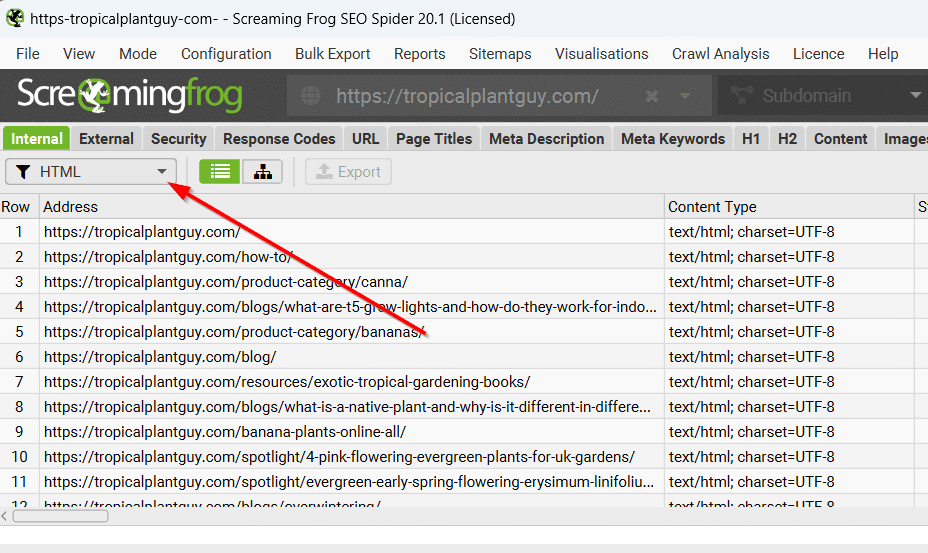
      Although we will not run this process on all URLs, we need a list of URLs to choose from. The easiest way to achieve this is to start a standard crawl of your website with Screaming Frog and select the HTML filter to view pages.

      HTML Filter in Screaming Frog

      If your site requires client-side JavaScript to render content and links, don’t forget to go into Configuration > Spider > Rendering and change Rendering from Text Only to JavaScript.

      3. Select content URLs

        Although this process can work on all different types of pages, it tends to offer the most value on informational pages. We must also consider that each URL we query will use more OpenAI tokens and AlsoAsked credits.

        For this reason, I would recommend starting with your content URLs. For this example website, I will look at blog posts, which I know all have /blogs/ in the URL.

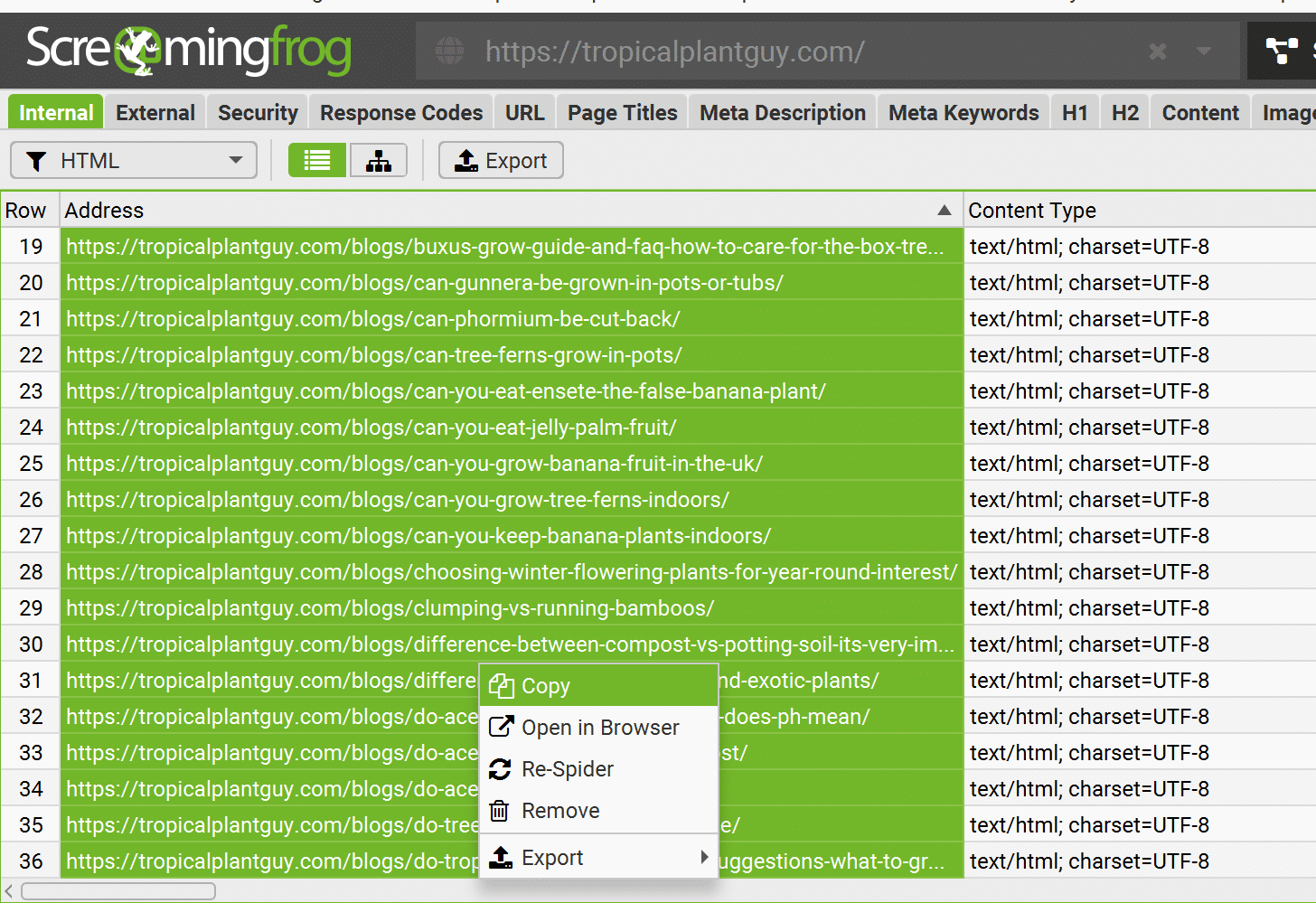
        Screaming Frog offers a quick way to show only these URLs by typing ‘/blogs/’ into the filter box at the top right.

        Filtering to URLs that contain /blogs/

        Your URL pattern may differ, and it doesn’t matter if there is no obvious URL pattern, as Screaming Frog offers a powerful Custom Search to filter based on page rules.

        For this example, I will simply select and Copy the URLs I am interested in, although it would also be possible to export them to a spreadsheet if you have a large amount you want to work through.

        Copy or export the URLs you want to run the analysis on

        4. Import CustomJS

          The new CustomJS option can be found under the Configuration > Custom > Custom JavaScript menu.

          Custom JavaScript options

          This will open the Custom JavaScript window. In the bottom right, click the + Add from Library button to load a list of pre-packaged custom JavaScript that ships with Screaming Frog.

          Scroll down and select (AlsoAsked+ChatGPT) Find unanswered questions and click Insert.

          5. Configure API keys

            We’re not quite ready to go yet. We now need to edit the imported JavaScript with our API keys — but don’t worry, that’s really easy!

            Once the CustomJS is important, you need to click on this edit icon:

            The easy-to-miss edit JS button

            You should now see the JavaScript code in the editor window. There are two parts you need to edit, which are in capitals: ‘ENTER CHATGPT API KEY’ and ‘ENTER ALSOASKED API KEY’.

            OpenAI API key

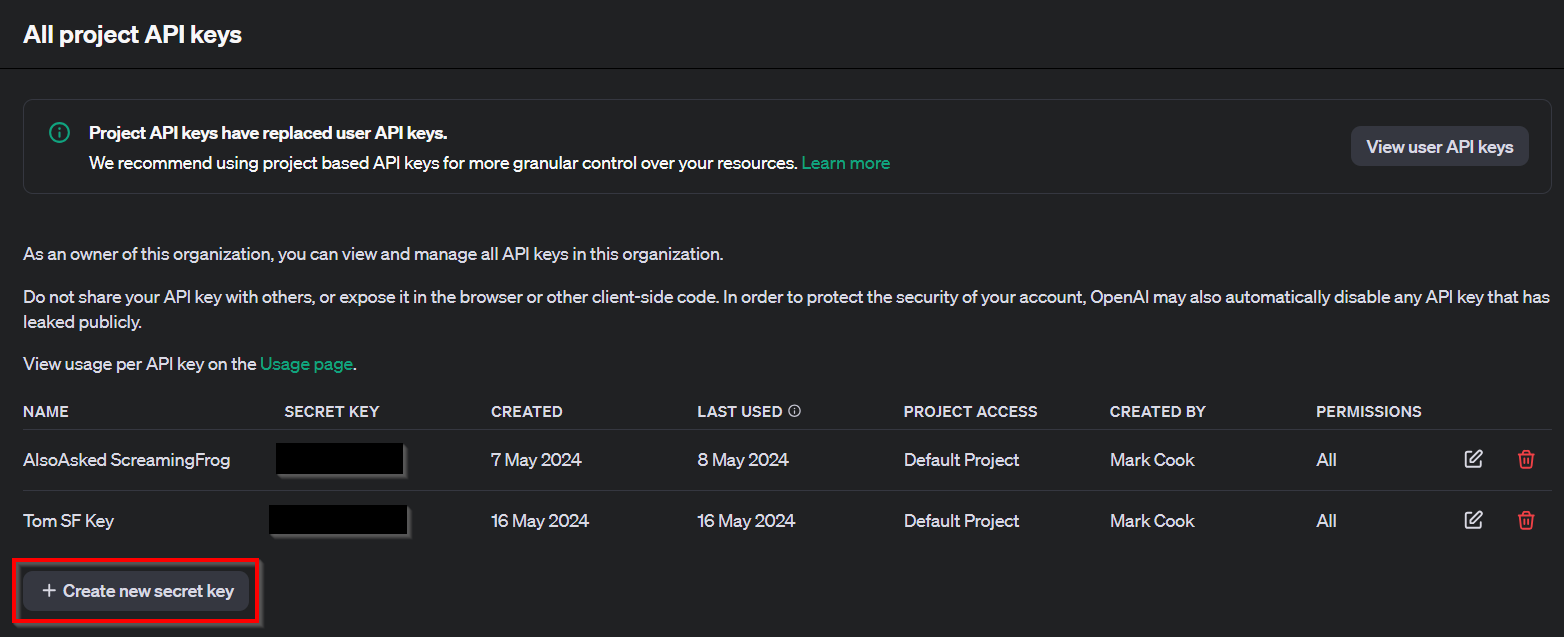
            You can create an OpenAI key from https://platform.openai.com/api-keys

            When you click Create new secret key, you’ll be prompted for a name and the project it’s attached to. You can call these whatever you like. OpenAI will put a secret key (be careful never to share this!) on your clipboard, which you can paste into your Screaming Frog CustomJS edit window.

            The cost of ChatGPT will depend on token usage, which also depends on which pages we provide. Before deploying anything, it’s worth double-checking the spending limits you have set up to make sure you don’t unexpectedly go over budget.

            AlsoAsked API key

            AlsoAsked API access requires a Pro account, which provides 1,000 queries every month, although you can buy additional credits if you need to do more.

            The costs here are much easier to predict, with a single URL costing $0.06 or with bulk Pay As You Go credits as low as $0.03. This means you could fully analyze 1,000 URLs of content for as low as $30, which would take days of manual work to achieve the same.

            With a Pro account, you can create an API key.

            Once again, give the key a name you will recognize, leave the ‘environment’ set to ‘Live’ and click ‘Create key’.

            This will generate an API key to paste into the Screaming Frog CustomJS edit window.

            6. Review settings

              Configure PAA language and region

              AlsoAsked supports all of the same languages and regions that Google offers, so if your website is not in English or targeting Great Britain, you can configure these two settings within the JavaScript from line 25 onwards.

              You can use any ISO 639 language codes and ISO 3166 country codes. Google’s coverage with People Also Asked data is much lower in non-English languages.

              Occasionally, English results will be returned as a fallback if no results for the region/language combination are provided, as there are often intent commonalities.

              Customize the ChatGPT prompt

              The current prompt used in the script for ChatGPT is:

              • List the questions in this JSON array ${JSON.stringify(questions)} which are not answered in the text content of this page, but would make sense to answer in context to the rest of the content. Output the questions that are not answered in a JSON array of strings within an object called unanswered_questions.

              There may be ways to improve output with more specific prompting related to your content by editing the part of the prompt in bold. This can be worth playing around with and seeing where you get the best output for your website.

              To improve the output of the prompt, we have also asked ChatGPT to filter not only the unanswered questions but also the unanswered questions that might make sense to answer given the rest of the content on the page.

              Warning: The beginning and end of the prompt, which are not highlighted in bold, specify specific formats, variables and objects that are used elsewhere in the script. If you change these without adjusting the script, it will likely break.

              The prompt starts at around line 146

              Check H1 inputs

              We are prompting for People Also Asked data with the contents of the Header 1 (h1) on the target URL.

              This means that if the page does not have a readable H1 tag, the script will fail, but I’m sure that, as we’re all SEOs, nobody will be in that position.

              The H1 selector is on line 42

              With a little coding, it is possible to change this variable to pass other parameters, such as a title tag, to fetch People Also Ask data, although our experiments have shown that H1s tend to be the best bet as they are a good description of page content.

              7. Run List crawl for selected URLs

                Use the Clear button at the top of the Screaming Frog interface to start a new crawl, and then select the Mode menu and change the crawl type to List.

                Selecting List crawl type

                Important: As you will be running Custom JavaScript, you must ensure your rendering mode is set to JavaScript in Configuration > Spider > Rendering or the script will not execute.

                The Upload button will now let you import your list of URLs. You can simply select Paste if you copied your URLs to the clipboard as I did. If you exported them to a file, select From a File…

                Importing selected URLs for new crawl

                8. View results

                  Your results will be in the Custom JavaScript tab, which you can find either by clicking the down arrow to the right of the tabs and selecting Custom JavaScript’

                  Unanswered questions as determined by ChatGPT

                  Here, you will find your URLs, along with a list of questions based on PAAs that ChatGPT has determined have not been answered within your content and that might make sense.

                  Once the crawl is complete, you can use the Export button to produce a convenient spreadsheet for review.

                  Fit this in with your current SOPs

                  There are many ways to gather data to improve your content, from qualitative user feedback to looking at quantitative metrics within analytics. This is just one method.

                  This particular methodology is extremely useful because it can give some inspiration based on actual data while leaning into the strength of LLMs by summarising instead of generating content to put it into context.

                  With some extra tooling, it would be possible to build these kinds of checks in as you are producing content and even on scheduled crawls to alert content creators when new gaps appear.

                  Original source: https://searchengineland.com/improving-content-quality-scale-ai-442546

                  Google AI Overviews under fire for giving dangerous and wrong answers

                  AJ Kohn

                  Google looks stupid right now. And AI Overviews are to blame.

                  Google’s AI Overviews have given incorrect, misleading and even dangerous answers.

                  The fact that Google includes a disclaimer at the bottom of every answer (“Generative AI is experimental”) should be no excuse.

                  What’s happening. Google’s AI-generated answers have gained a lot negative mainstream media coverage as people have been sharing numerous examples of AI Overview fails on social media.

                  Just look at all the coverage:

                  Alphabet Inc.

                  A few examples of Google’s AI Overviews:

                  • Google described the health benefits of running with scissors:
                  Applications of artificial intelligence
                  • Google described the health benefits of taking a bath with a toaster:
                  artificial intelligence
                  • Google said a dog has played in the NHL:
                  Barack Obama
                  • Google suggested using non-toxic glue to give pizza sauce more tackiness. (This advice apparently was traced back to an 11-year-old Reddit comment.)
                  Google
                  • Google said we had one Muslim president – Barack Obama (who is not a Muslim):
                  Google AI
                  • Google said you should eat at least one small rock a day (this advice can be traced back to The Onion, which publishes satirical articles):
                  Google Search
                  Your Money, Your Life seems to not apply to AI Overviews. Google advises users to run with scissors, cook with glue and eat rocks.

                  Google looks stupid. My article, 7 must-see Google Search ranking documents in antitrust trial exhibits, included a slide that feels most appropriate at this moment following all the coverage of Google’s AI Overviews in the last couple of days:

                  internet marketing

                  What Google is saying. Asked by Business Insider about these terrible AI answers, a Google spokesperson said the examples are “extremely rare queries and aren’t representative of most people’s experiences,” adding that the “vast majority of AI Overviews provide high-quality information.”

                  • “We conducted extensive testing before launching this new experience and will use these isolated examples as we continue to refine our systems overall,” the spokesperson added. 

                  This is absolutely true. Social media is not an entirely accurate representation of reality. However, these answers are not good and Google owns the product producing them.

                  Also, using the excuse that these are “rare” queries is odd, considering just three days ago at Google Marketing Live, we were reminded that 15% of queries are new. There are a lot of rare searches on Google, no kidding. But that isn’t an excuse for ridiculous, dangerous or inaccurate answers.

                  Google is blaming the query rather than simply saying “these answers are bad and we will work to get better.” Is that so hard to do?

                  But this seems to be Google’s pattern now. They are telling us to reject the evidence we can all see with our eyes. It’s Orwellian.

                  Why we care. Google AI Overviews and Search have severe, fundamental issues. Trust in Google Search is eroding – even if Alphabet is making billions of dollars every quarter. As that trust erodes, people may start searching elsewhere, which will slowly trickle down and hurt performance for advertisers and further reduce organic traffic to websites.

                  History repeats. This may feel like déjà vu all over again for those of us who remember Google’s many issues with featured snippets. If you need a refresher or weren’t around in 2017, I highly suggest reading Google’s “One True Answer” problem — when featured snippets go bad.

                  Goog enough. If you want to follow the worst of Google’s AI Overviews and the search results on X, you may want to follow Goog Enough or #googenough. AJ Kohn said he is not behind the account, but knows who is. But the name was likely inspired by Kohn’s excellent article, It’s Goog Enough!

                  Original source: https://searchengineland.com/google-ai-overview-fails-442575

                  Google testing blue visit button for search result snippets

                  Alphabet Inc.

                  Google is testing a large blue visit button under some of the search results in the mobile search interface. The button says “visit” and takes you to the website listed in the search results.

                  What it looks like. Here is a screenshot of this button, which Shameem Adhikarath shared with me on X:

                  Button

                  Why we care. If Google does roll this new visit button out, and that is a big if, this might drive a higher click-through rate to search result snippet in the search results. Big blue buttons to drive attention and may result in more clicks to the web search results than maybe it did before.

                  Original source: https://searchengineland.com/google-testing-blue-visit-button-for-search-result-snippets-442588

                  Bankruptcy: Embracing Credit Card Debt Forgiveness

                  Home Business Magazine Online

                  What are the Different Types of Bankruptcy?

                  It’s important to know the types of bankruptcies when you are doing research as the goal of each is to receive debt relief through discharging debts. One type of bankruptcy may be more expensive, but you can save property. In another type of bankruptcy, the discharge can take 3 or 5 years vs. 120 days. One question to ask yourself is, will bankruptcy eliminate all your debt?

                  Having credit card debt can be stressful and take a great deal of your mind’s energy. You may be behind on your debt and getting calls from Transworld Systems at 8552457098 or from Capital One at 8009556600 for unpaid debt. Or you may have been recently sued for unpaid debt. Wherever you are with your debt-free journey, there is help with the following information about debt forgiveness.

                  When Is It Right to Consider Credit Card Forgiveness

                  Sometimes when you experience debt, you have to look for a way of salvaging yourself from the current situation. Therefore when your credit debt becomes overwhelming, you can seek credit card debt forgiveness. There are several ways you can go around the issue. Like in debt forgiveness, an option of bankruptcy is imperative, so that you can be pardoned of a balance or all owed amounts. The debt collector or the creditor will agree with on the pay-out amount that you are supposed to pay. This amount will be taken as your court agreement for the whole amount.

                  Another consideration is whether there is credit card forgiveness for a physical or permanent disability.

                  Credit Card Debt Forgiveness Considerations

                  Debt forgiveness is not a philanthropic act, and it usually comes with some cost. It is rare to get complete forgiveness of debt, especially when it comes to credit card debt. You will pay some penalties and part of the amount you owe before the rest is written off. The process of forgiveness will involve you or your representative contacting the creditor or collector. This direct communication with assist in negotiating a settlement offer that if you accept you will pay. 

                  Usually, this will include other charges and terms. Once you settle the payout amount, then the balance will be discharged, which means your debt will be forgiven. It is important to note that fees charged when settling debt vary depending on the company. It is good practice to research the fees charged and how they compare to other companies.

                  Before considering credit card debt, forgiveness can be a risky thing as it impacts your credit score. It has the potential to damage your credit score for years. There may be high program fees by credit card forgiveness firms. Sometimes these firms, when they are in the process of negotiating a deal for you, may advise you to stop repayment. However, the problem arises when they do not succeed. In the event of an unsuccessful negotiation, you may end up with penalties, additional charges, and even face legal action. You should ask yourself whether settling your debt is more important than your credit score. Settling your debt will negatively impact your rating.

                  Situations When to Consider Credit Card Debt Forgiveness

                  You can consider credit card debt forgiveness when you fall behind on your payments and weigh your situation and see that it will not be possible to catch up. If you know that it will not be possible to pay back all that you owe then this is an opportune moment to start thinking about debt settlement. Often firms will begin to entertain settlement when the accounts are many months behind.

                  Equally a better moment to contemplate credit card debt forgiveness is just before your creditor decides to charge off your account. Usually, for lenders, the charge-off implies lost returns, which means if you fail to pay your debt, then the company will take a loss. The only alternative for them is to sell your mortgage if you fail to pay to a debt collector usually for a fraction of what you owe them. Generally in such a situation, the creditor can easily consider forgiving part of what you owe through a settlement.

                  Once a creditor sells your debt to a collector, this will be the best time to consider debt settlement. It is much easier to ask for credit card forgiveness from a debt collector because they will have purchased it for a relatively small amount than what you owed. The debt collector can make some profit off you even if they accept part payment of what you owe. The possibility of seeking debt forgiveness from third parties is much more favorable. The collector can readily agree to a settlement to recoup the amount paid for your debt.

                  Impact of Debt Forgiveness on Your Credit Score

                  Everyone wants debt freedom. Debt forgiveness may seem to be a great path, especially when you have financial hardships, but it does not work for those seeking a quick way out of debt. For someone who wants to avoid bankruptcy, it may be a nice alternative because either way, their credit score will be impacted negatively. That said, a Chapter 7 bankruptcy can be a very beneficial, legal means of debt relief.

                  Debt forgiveness damages your credit score. If you seek credit card debt forgiveness that will negatively impact your credit for about seven years. It will drop after your final discharge date. Always make sure that each year you check your credit to ensure old penalties have been dropped or have them scrapped. A lower credit score means that your credit or loan applications can get rejected. Also, in circumstances where you get approved, then you will fetch hefty interest rates.

                  The impact made on credit score will also depend on the size of the debt being forgiven. The larger the amount you owe the more significant the impact on your rating. If you settle smaller accounts and are current on large accounts, then the effect on your score will be minimal.  Equally, if your account is still open debt forgiveness can lead to the closing of your account. The closing of your account should not worry you because as stated you will be seeking forgiveness for an account that has already been sold to debt collectors or charged off.

                  Sometimes it might not take seven years to get back to good ratings because you can always rebuild your credit once you are stable.

                  An Alternative to Credit Card Debt Forgiveness

                  You may compare debt management to debt settlement. Debt management firms also act as intermediaries between the creditor and the individual owing the debt. Debt management can be an efficient way of repaying your debt than seeking a settlement. It is often more expensive than debt settlement and may also have a negative effect on your credit score. Like debt settlement, you are required to make a single deposit each month into an account that shall be managed by the firm, which will then make payments to different creditors. The debt management firm will be paying the creditor regularly and work on reducing the latest fees, interest rates, and finance charges as well as over-limit fees which will help in reducing the amount you are required to repay and eventually enable you to be out of debt.

                  The post Bankruptcy: Embracing Credit Card Debt Forgiveness appeared first on Home Business Magazine.

                  Original source: https://homebusinessmag.com/money/personal-finance/bankruptcy-embracing-credit-card-debt-forgiveness/

                  Troubleshooting 101: What to Do When Your AC Isn’t Cooling

                  Home Business Magazine Online

                  When an air conditioner stops cooling, it can turn a comfortable space into an uncomfortable one rather quickly, especially during the warm months of the year. Diagnosing and resolving cooling issues with your AC unit is a critical skill that can save time, money, and discomfort. Before calling in professional help, there are several troubleshooting steps one can take to potentially solve the problem.

                  Proper troubleshooting begins with understanding the common reasons an air conditioning unit might fail to cool a space effectively. These reasons range from simple issues like dirty air filters or incorrect thermostat settings to more complex problems such as refrigerant leaks or compressor malfunctions. Knowing where to start looking can often lead to a quick solution. The process of troubleshooting should be methodical, starting with the easiest and most common issues before moving to those that are more complex and less likely. This approach ensures that simple problems can be resolved without the need for expert intervention, while also preparing one to provide detailed information to technicians if the need to call one arises.

                  Diagnosing Common AC Issues

                  When an AC unit is not cooling, it’s essential to diagnose the issue accurately. Checking for airflow problems, identifying unusual sounds or smells, and verifying thermostat settings are critical first steps toward resolving the issue.

                  Assessing Airflow Problems

                  Airflow is fundamental to an AC unit’s performance. If there’s insufficient cooling, first check for any blockages or dirty air filters that can impede airflow. A clean filter is crucial for efficient operation. Another key area to examine is the condition of the coils and fins on the AC unit, ensuring they are not bent or obstructed. Inadequate cooling can also be a result of low refrigerant levels, suggesting a possible leak that needs professional attention.

                  Identifying Strange Noises or Smells

                  Noises and smells emanating from an AC unit can be indicative of underlying problems. For instance:

                  • A buzzing noise might suggest electrical issues,
                  • A squealing sound could indicate belt problems,
                  • Musty odors are often a sign of mold inside the ductwork or unit, which requires immediate attention to prevent health issues.

                  These symptoms require immediate investigation, with repairs potentially ranging from simple cleaning to component replacement or professional servicing.

                  Checking Thermostat Settings

                  An AC system’s thermostat is its command center. Incorrect settings can lead to cooling inefficiencies. Thermostat issues may include:

                  • Improperly set temperature controls, which need to be set lower than the room’s current temperature,
                  • A malfunctioning or uncalibrated thermostat, potentially requiring recalibration or replacement,
                  • Batteries that may need replacing in cases where the thermostat is not hardwired.
                    To ensure your system responds correctly, verify that the thermostat is set to “cool” and the fan is set to “auto”. If these settings are correct and issues persist, the thermostat may need to be checked by a professional.

                  Effective Solutions and Maintenance Tips

                  Maintaining an AC unit through regular care can prevent cooling problems while knowing when to call in professionals ensures the longevity of the system.

                  Routine Cleaning and Filter Replacement

                  Homeowners must regularly clean their AC units and replace the air filters. A clogged or dirty filter impedes airflow and reduces efficiency. Most manufacturers recommend changing filters every 30-60 days. Steps for replacing an AC filter:

                  1. Power Off: Ensure the AC unit is turned off.
                  2. Remove Old Filter: Slide out the old filter noting the arrows that indicate the airflow direction.
                  3. Clean Area: Use a cloth to remove any dust from the filter slot.
                  4. Insert New Filter: Place the new filter with the arrows pointing in the correct direction of airflow.

                  Professional AC Repair and When to Seek It

                  When routine maintenance isn’t enough, it’s time to seek professional help. If an AC unit is making unusual noises, emitting strange odors, or not cooling efficiently, homeowners should contact a licensed technician. In Las Vegas, specialized HVAC technicians are preferred over general plumbers for AC repairs. For more detailed information visit https://activeplumbingandair.com/ac-repair/.

                  • Signs you need a professional:
                    • Ice build-up on AC coils or exterior unit
                    • Frequent cycles or never reaching the desired temperature
                    • Water leaks around the AC unit

                  Seasonal Maintenance Practices

                  Adopting seasonal maintenance practices is key to keeping the AC operating at its best. Before peak temperatures hit, a spring check-up can tackle any potential issues.

                  • Spring Check-Up Tasks:
                    • Inspect and clean ducts and vents
                    • Check refrigerant levels for leaks
                    • Test thermostat function and replace batteries

                  Adhering to these seasonal practices helps ensure the AC unit functions properly throughout the year.

                  The post Troubleshooting 101: What to Do When Your AC Isn’t Cooling appeared first on Home Business Magazine.

                  Original source: https://homebusinessmag.com/lifestyles/home-improvement/troubleshooting-when-ac-isnt-cooling/

                  Google testing blue visit button for search result snippets

                  Google is testing a large blue visit button under some of the search results in the mobile search interface. The button says “visit” and takes you to the website listed in the search results.

                  What it looks like. Here is a screenshot of this button, which Shameem Adhikarath shared with me on X:

                  Why we care. If Google does roll this new visit button out, and that is a big if, this might drive a higher click-through rate to search result snippet in the search results. Big blue buttons to drive attention and may result in more clicks to the web search results than maybe it did before.

                  Original source: https://searchengineland.com/google-testing-blue-visit-button-for-search-result-snippets-442588

                  Troubleshooting 101: What to Do When Your AC Isn’t Cooling

                  Home Business Magazine Online

                  When an air conditioner stops cooling, it can turn a comfortable space into an uncomfortable one rather quickly, especially during the warm months of the year. Diagnosing and resolving cooling issues with your AC unit is a critical skill that can save time, money, and discomfort. Before calling in professional help, there are several troubleshooting steps one can take to potentially solve the problem.

                  Proper troubleshooting begins with understanding the common reasons an air conditioning unit might fail to cool a space effectively. These reasons range from simple issues like dirty air filters or incorrect thermostat settings to more complex problems such as refrigerant leaks or compressor malfunctions. Knowing where to start looking can often lead to a quick solution. The process of troubleshooting should be methodical, starting with the easiest and most common issues before moving to those that are more complex and less likely. This approach ensures that simple problems can be resolved without the need for expert intervention, while also preparing one to provide detailed information to technicians if the need to call one arises.

                  Diagnosing Common AC Issues

                  When an AC unit is not cooling, it’s essential to diagnose the issue accurately. Checking for airflow problems, identifying unusual sounds or smells, and verifying thermostat settings are critical first steps toward resolving the issue.

                  Assessing Airflow Problems

                  Airflow is fundamental to an AC unit’s performance. If there’s insufficient cooling, first check for any blockages or dirty air filters that can impede airflow. A clean filter is crucial for efficient operation. Another key area to examine is the condition of the coils and fins on the AC unit, ensuring they are not bent or obstructed. Inadequate cooling can also be a result of low refrigerant levels, suggesting a possible leak that needs professional attention.

                  Identifying Strange Noises or Smells

                  Noises and smells emanating from an AC unit can be indicative of underlying problems. For instance:

                  • A buzzing noise might suggest electrical issues,
                  • A squealing sound could indicate belt problems,
                  • Musty odors are often a sign of mold inside the ductwork or unit, which requires immediate attention to prevent health issues.

                  These symptoms require immediate investigation, with repairs potentially ranging from simple cleaning to component replacement or professional servicing.

                  Checking Thermostat Settings

                  An AC system’s thermostat is its command center. Incorrect settings can lead to cooling inefficiencies. Thermostat issues may include:

                  • Improperly set temperature controls, which need to be set lower than the room’s current temperature,
                  • A malfunctioning or uncalibrated thermostat, potentially requiring recalibration or replacement,
                  • Batteries that may need replacing in cases where the thermostat is not hardwired.
                    To ensure your system responds correctly, verify that the thermostat is set to “cool” and the fan is set to “auto”. If these settings are correct and issues persist, the thermostat may need to be checked by a professional.

                  Effective Solutions and Maintenance Tips

                  Maintaining an AC unit through regular care can prevent cooling problems while knowing when to call in professionals ensures the longevity of the system.

                  Routine Cleaning and Filter Replacement

                  Homeowners must regularly clean their AC units and replace the air filters. A clogged or dirty filter impedes airflow and reduces efficiency. Most manufacturers recommend changing filters every 30-60 days. Steps for replacing an AC filter:

                  1. Power Off: Ensure the AC unit is turned off.
                  2. Remove Old Filter: Slide out the old filter noting the arrows that indicate the airflow direction.
                  3. Clean Area: Use a cloth to remove any dust from the filter slot.
                  4. Insert New Filter: Place the new filter with the arrows pointing in the correct direction of airflow.

                  Professional AC Repair and When to Seek It

                  When routine maintenance isn’t enough, it’s time to seek professional help. If an AC unit is making unusual noises, emitting strange odors, or not cooling efficiently, homeowners should contact a licensed technician. In Las Vegas, specialized HVAC technicians are preferred over general plumbers for AC repairs. For more detailed information visit https://activeplumbingandair.com/ac-repair/.

                  • Signs you need a professional:
                    • Ice build-up on AC coils or exterior unit
                    • Frequent cycles or never reaching the desired temperature
                    • Water leaks around the AC unit

                  Seasonal Maintenance Practices

                  Adopting seasonal maintenance practices is key to keeping the AC operating at its best. Before peak temperatures hit, a spring check-up can tackle any potential issues.

                  • Spring Check-Up Tasks:
                    • Inspect and clean ducts and vents
                    • Check refrigerant levels for leaks
                    • Test thermostat function and replace batteries

                  Adhering to these seasonal practices helps ensure the AC unit functions properly throughout the year.

                  The post Troubleshooting 101: What to Do When Your AC Isn’t Cooling appeared first on Home Business Magazine.

                  Original source: https://homebusinessmag.com/lifestyles/home-improvement/troubleshooting-when-ac-isnt-cooling/

                  Best Accounting Software for Small Businesses

                  Home Business Magazine Online

                  Photo by Karolina Grabowska on Pexels

                  Running a small business can be an exciting time. You can execute your plans and work on something you are passionate about. However, running a small business also means dealing with logistics and management tasks, such as accounting.

                  The accounting services market has been steadily growing in the past few years. In 2023, its market size reached $652.32 billion and is expected to reach $676.73 billion in 2024.

                  As a small enterprise, finding the resources to hire an accountant on retainer can be challenging. In these cases, using accounting software for your bookkeeping and accounting needs is a good idea.

                  5 Best Accounting Software for Small Businesses

                  Managing your finances well is crucial. It helps your small businesses thrive amidst limited resources and intense competition. 

                  Luckily, small businesses don’t need to spend a fortune on accounting services. Many accounting software are specifically designed to meet the needs of smaller enterprises. Here are five recommendations:

                  1. QuickBooks Online

                  QuickBooks Online is popular among small enterprises due to its comprehensive accounting features and ease of use. 

                  This accounting software offers a full range of accounting tools and features, such as the following:

                  • Expense tracking
                  • Managing bills
                  • Tax Preparation
                  • Invoicing, etc.

                  Its intuitive interface makes it accessible to people with different levels of accounting knowledge. It also integrates well with third-party applications like PayPal, Square, and Amazon, enhancing its functionality.

                  2. Zoho Books

                  Zoho Books is a comprehensive solution for growing businesses looking for affordability without sacrificing features. 

                  Here are some of its notable features:

                  • Quotes
                  • Sales and purchase orders
                  • Banking 
                  • Inventory
                  • Project management, etc.

                  This accounting software solution is an excellent choice for organizations that already use other Zoho software. However, it still has several useful integrations outside the Zoho ecosystem, such as payment gateways and Google Suite.

                  3. FreshBooks

                  FreshBooks is tailored for small businesses and freelancers who need an easy-to-use accounting solution with excellent customer support.

                  Its best features include the following:

                  • Invoicing
                  • Time tracking
                  • Expenses and receipts
                  • Report generation
                  • Proposals and estimates, etc.

                  It offers a clean, user-friendly interface, making it easy to manage financial tasks without extensive accounting knowledge. FreshBooks also integrates with various external applications, such as Google Suite, Zapier, and Slack.

                  4. Xero

                  Xero is a cloud-based accounting tool known for its powerful features and flexibility, making it a favorite among small businesses.

                  Despite being entirely cloud-based, this accounting software still packs a punch with features such as the following:

                  • Mobile application
                  • Project tracking
                  • Bank reconciliation
                  • Expense claiming
                  • Bills payment, etc.

                  It’s especially useful for businesses with multi-person accounting teams. It also integrates seamlessly with hundreds of other applications you may need, including popular tools like Stripe, Shopify, and HubSpot.

                  5. Wave

                  Wave is a standout option for small businesses, especially those with limited budgets. It offers powerful accounting tools and features for free.

                  Here are some of its most valuable features:

                  • Invoicing
                  • Payment processing
                  • Accounting
                  • Payroll
                  • Mobile receipts, etc.

                  Its user-friendly interface makes it accessible even for users with little to no accounting background. The Wave dashboard provides a clear overview of key financial metrics.

                  While Wave doesn’t have as many integrations as bigger or paid accounting tools, it does integrate with key financial services and payment gateways.

                  Benefits of Using Accounting Software

                  Businesses of all sizes are increasingly digitizing many processes, including accounting. Aside from helping with number-crunching, accounting tools and software offer many benefits. 

                  Saves time

                  Time is a precious resource, especially for small businesses. Accounting software can automate repetitive yet necessary tasks that would otherwise take hours of manual work.

                  Accounting software has automation features that handle routine tasks such as data entry and generating invoices. These time savings allow you and your staff to work more efficiently and focus on more urgent tasks that require greater attention.

                  Streamlines tax filing processes

                  Tax season can be stressful for many small businesses. It requires intense attention and accuracy to avoid potential fines or legal consequences.

                  Accounting software helps simplify this process by maintaining accurate and complete records throughout the year. These records are your foundation for filing your returns once tax season comes.

                  Many accounting software solutions have features dedicated to helping with tax filings, like automatic tax calculations and electronic filing capabilities. Some even have reminders for tax deadlines. These features can be useful if you own or manage any property assets.

                  These tools help streamline tax-related tasks and ensure your business’s compliance with tax regulations. They alleviate the burden of tax preparation and minimize the risk of costly mistakes, helping your business save time and money.

                  Up-to-date information access

                  Current markets have become increasingly fast-paced, and small businesses often have to keep up with these developments. In these cases, having access to real-time financial information is essential for making informed decisions.

                  Accounting software, especially cloud-based ones, provides a centralized platform to access up-to-date financial data anytime, anywhere. You or any team member can quickly check your cash flow or analyze revenue trends.

                  This instant access empowers you and your staff to respond promptly to opportunities and challenges, which improves your company’s agility and competitive advantage.

                  Generates financial reports

                  Analyzing and understanding your business’s financial health is essential. It helps you create effective plans and make strategic decisions for success.

                  Accounting software provides one way to simplify this process by generating financial reports with just a couple of clicks. 

                  These reports may cover essential documents such as profit and loss statements or balance sheets. Some accounting solutions also create cash flow forecasts. These documents and reports can provide valuable insights into your organization’s financial performance. 

                  This visibility can help you identify your enterprise’s strengths and areas for improvement. With this knowledge, you can generate plans to capitalize on opportunities for further growth.

                  Reduces errors

                  Manual accounting processes have been the norm for decades. However, they can be prone to human error, leading to discrepancies and inaccuracies in your company’s financial records. 

                  To mitigate this risk, you can use accounting software that automates calculations and ensures consistency, especially in data entry. 

                  Many accounting software solutions also offer built-in error detection features that flag potential issues before they escalate. These features further safeguard the reliability of your financial records.

                  Reducing the chances of making errors improves the accuracy of your financial data. As a result, you ensure the integrity of your financial records and the effectiveness of your decision-making processes.

                  Factors To Consider When Choosing Accounting Software

                  Selecting the right accounting software solution is a critical decision for any business, no matter the size. This software tool can directly impact your financial management and overall operational efficiency.

                  With so many options available, it can be challenging to make a decision. Here are five factors to consider when choosing accounting software for your small business.

                  Best Accounting Software for Small Businesses
                  Photo by Karolina Grabowska on Pexels

                  Budget

                  Software costs money. For this reason, your budget is often the first consideration when selecting accounting software. 

                  Your financial resources can be limited, and it is essential to find a solution that fits your financial constraints while still providing the necessary tools and features.

                  When evaluating software based on your budget, consider the initial upfront costs and ongoing expenses associated with a specific solution. Many modern software solutions aren’t a one-and-done deal. They often involve subscription fees and costs for upgrades and support services.

                  While strictly following your budget is often necessary, the cheapest option isn’t always the best. Make sure to evaluate the features and perks offered at each price point. 

                  Sometimes, investing a bit more can provide significantly greater functionality and support, leading to long-term savings and efficiency.

                  Usability

                  While bells and whistles in terms of features are nice, it’s still vital to consider the accounting software’s usability. This factor determines how quickly your team can adapt and use your new system.

                  Look for the best accounting software for small businesses with an intuitive and user-friendly interface. These features help minimize the learning curve and reduce the need for extensive and expensive training sessions.

                  If you can, book a demo with the software provider. These trials allow you to test out your prospects and see how your team responds to them. They help you see whether a prospective accounting software can serve your needs and integrate well with your existing processes.

                  Features

                  A software’s features are its main selling points. These features should align with your business needs and help you achieve short-term and long-term goals.

                  Before trying out or settling with a specific piece of accounting software, list all the features you need.

                  Look at the list of features your prospects offer. Ensure your top contenders have all the essential features you need in your day-to-day accounting operations. These features could include invoicing and expense tracking. Payroll management and financial reporting features are also nice to have for some companies.

                  Software integrations

                  As more businesses seek to digitize their processes, it’s highly likely that you’re already using software for some aspects of your business. Your accounting software must have integration capabilities for seamless workflow and data consistency across your business applications.

                  Check if the accounting software integrates with your other tools, like CRM systems or e-commerce platforms. Software providers usually list these integrations on their company website.

                  If your business has unique software needs, having software with an open API (Application Programming Interface) allows for custom integrations. These software options can provide greater flexibility and scalability.

                  Scalability

                  Growth is a primary goal of any business. As your enterprise grows, your accounting needs will evolve. You must then choose software that can grow and scale with your company and its evolving requirements.

                  Look for solutions that can handle changes in scale and workload, such as increased transaction volumes and additional users. As your business expands, you may also want to consider software that can handle more complex financial operations.

                  Check if the software offers different plans you can upgrade to without switching platforms. This flexibility can help accommodate your business’s evolving needs without much disruption.

                  Empower Your Small Business’s Finances

                  Accounting and bookkeeping processes can seem tedious, especially for small businesses with limited resources. Accounting software presents a helpful solution. These tools can make your financial processes more efficient and easier to manage.

                  Understand the features you need and assess your options carefully. This process will help you select the best accounting software for small businesses to support your business’s financial health and future growth.

                  The post Best Accounting Software for Small Businesses appeared first on Home Business Magazine.

                  Original source: https://homebusinessmag.com/money/accounting-and-bookkeeping/best-accounting-software-small-businesses/