Meta ad revenue jumps 27% in Q1 2024

Facebook, Instagram, Meta

Meta’s ad revenue increased 27% in Q1 2024, a significant improvement over the 4% growth it saw in the same quarter a year ago. 

Advertising revenue was $35.6 billion in Q1 2024 compared to $28.1 billion in Q1 2023. This success helped drive total Meta revenue to grow 27% year-on-year from $28.6 billion in Q1 2023 to $46.4.1 billion in Q1 2024.

  • “If you look at our two end-to-end AI-powered tools, Advantage+ Shopping and Advantage+ App Campaigns, revenue flowing through those has more than doubled since last year,” said Meta CEO Mark Zuckerberg.

By the numbers. Across Meta’s “family of apps” (Facebook, Instagram, Messenger, WhatsApp), year-over-year:

  • The average price per ad increased 6%
  • Ad impressions increased 20%.
  • Daily active users increased 7% to 3.24 billion.

Meta search advertising. Could Meta AI bring in search advertising dollars at some point in the future? Zuckerberg was asked this question during the earnings call, given Meta AI assistant now includes search results from Google and Microsoft Bing:

  • “We’re not working on search ads or anything like that. I think this will end up being a pretty different business.”
  • “I do think that there will be an ability to have ads and paid content in Meta AI interactions over time as well as people being able to pay for, whether it’s bigger models or more compute or some of the premium features and things like that. But that’s all very early in fleshing out.”

AI investments. Meta is accelerating AI investments, with plans to spend between $35 million and $40 billion this year. Also:

  • “Tens of millions of people” have tried the Meta AI assistant since being pushed into Facebook, Instagram, WhatsApp and Messenger apps last week.

Threads. With 150 million monthly active users, Threads now has more users than X. This is likely why Meta is reportedly looking to launch ads in Threads later this year.

Why we care. Meta had strong advertising growth, perhaps a good sign for the industry. We’ll know more as Google and Microsoft are set to report earnings today.

Original source: https://searchengineland.com/metas-ad-revenue-jumps-27-in-q1-2024-439977

Google Publisher Center to stop allowing you to add publications

Alphabet Inc.

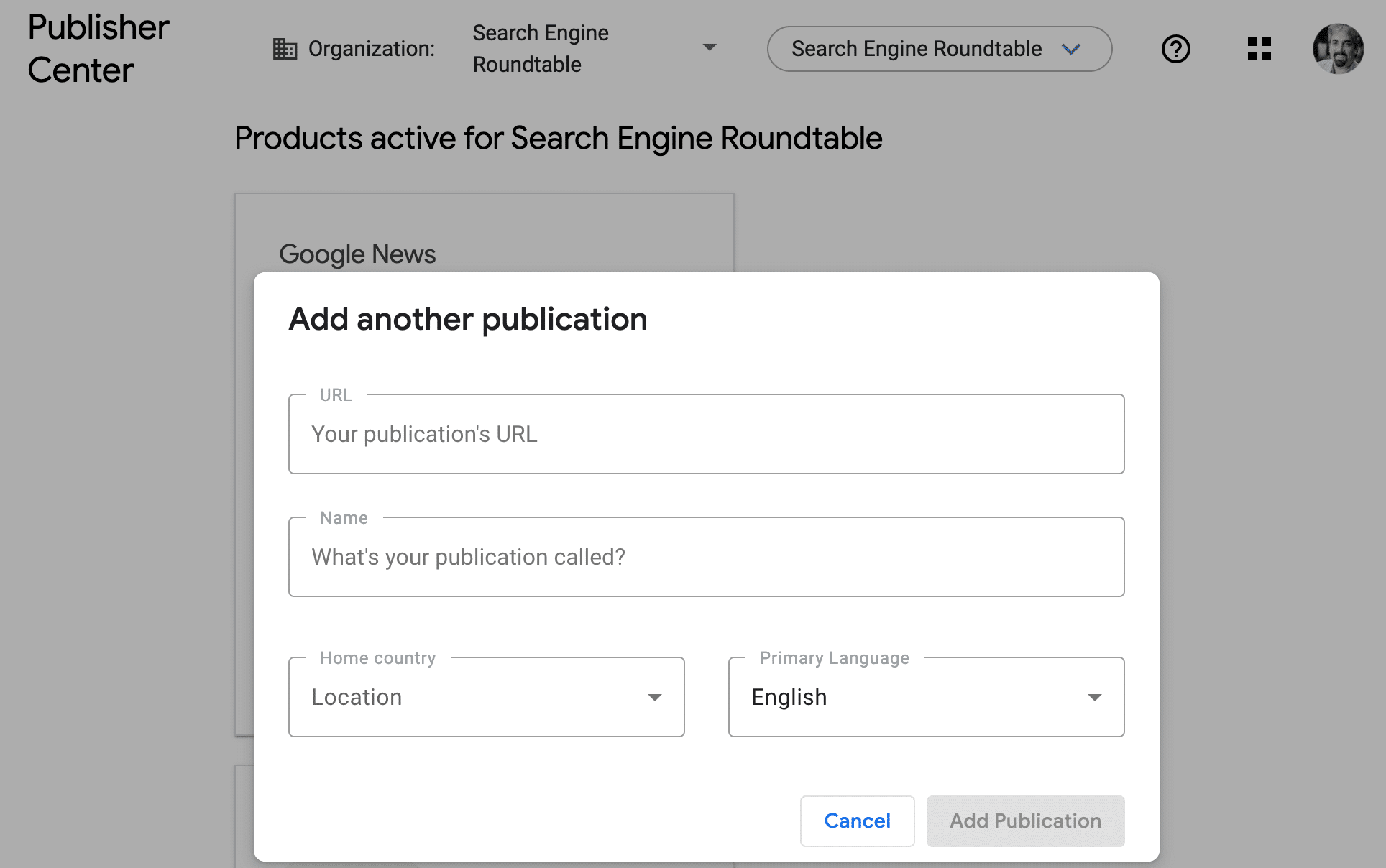
Google will stop allowing publishers to add publications to the Google Publisher Center manually. Instead, Google will automatically add eligible publications pages later this year.

This change will likely lead to even more confusion around Google News inclusion, which we have had for years since Google changed the inclusion process back in 2019.

What Google said. Google wrote:

Starting today, publishers can no longer add publications to the Publisher Center. We are making this change as part of a transition to roll out automatically created publication pages later this year.

Google added that previously this feature allowed publishers to manually create a source page for users to follow. But going forward, “publishers with manually created publication pages will continue to have access to customization features until later this year, when pages will shift to being automatically created. Users will continue to be able to follow their favorite publications.”

“Content from publishers that adheres to our content policies is automatically eligible for consideration in Google News and across News surfaces,” Google added.

What it looked like. Here is a screenshot within Google Publisher Center of how to add a publication – note this is going away:

Google

Why we care. I expect this change to cause more frustration and confusion amongst publishers. As you know, the whole Google News inclusion process, which was once a clear and straight forward process, is now automated and very unclear and completely not transparent.

This will only make things even more confusing for publishers.

Original source: https://searchengineland.com/google-publisher-center-to-stop-allowing-you-to-add-publications-439978

How to Become a Streamer and Make Extra Revenue

Home Business Magazine Online

Introduction

The world of streaming has exploded with opportunities for content creators to turn their passion into profit. Whether you’re an avid gamer, a talented artist, or a skilled musician, becoming a streamer can open doors to additional income streams and a thriving online community. However, breaking into the world of streaming requires more than just a webcam and a microphone. To truly succeed, you need a solid strategy and dedication to building your brand. In this guide, we’ll walk you through the steps to become a successful streamer and make extra revenue along the way.

1. Finding Your Niche

The first step to becoming a streamer is finding your niche. What are you passionate about? What sets you apart from other streamers? Whether it’s gaming, cooking, crafting, or music, identifying your niche will help you attract a dedicated audience who shares your interests. Remember, authenticity is key – viewers are drawn to streamers who are genuine and passionate about what they do.

Once you’ve identified your niche, take the time to research and understand your target audience. What are their interests, preferences, and pain points? By understanding your audience, you can tailor your content to meet their needs and provide value. Additionally, don’t be afraid to niche down even further within your chosen category. For example, if you’re a gaming streamer, consider focusing on a specific genre or game that you’re particularly passionate about. Niche streaming not only helps you stand out in a crowded market but also allows you to connect with a more engaged and dedicated audience.

2. Setting Up Your Equipment

Once you’ve found your niche, it’s time to set up your streaming equipment. While you don’t need the most expensive gear to get started, investing in a decent microphone, webcam, and lighting can significantly improve the quality of your streams. Additionally, consider investing in a good internet connection to ensure smooth streaming without any lag or buffering.

When it comes to choosing your equipment, here are some recommendations:

  1. Webcam: For a budget-friendly option with good quality, consider the Logitech C920 HD Pro Webcam. It offers 1080p resolution and reliable performance for streaming. If you’re looking for higher-end options, the Logitech Brio Ultra HD Pro Webcam provides 4K resolution and advanced features like HDR and autofocus.
  2. Microphone: The Blue Yeti USB Microphone is a popular choice among streamers for its excellent sound quality and versatility. It offers multiple pickup patterns and adjustable gain settings to suit different streaming environments. For a more budget-friendly option, the HyperX QuadCast USB Condenser Gaming Microphone delivers great sound quality and comes with built-in shock mount and pop filter.
  3. Software: OBS Studio (Open Broadcaster Software) is a free and open-source software for streaming and recording. It offers a wide range of features, including customizable layouts, scene transitions, and support for various streaming platforms. Streamlabs OBS is another popular choice, especially for beginners, as it provides an easy-to-use interface with built-in widgets and overlays for enhancing your streams.
  4. Internet Connection: A stable and high-speed internet connection is essential for smooth streaming. Consider upgrading to a broadband or fiber-optic connection with sufficient upload speed (ideally at least 50 Mbps for 720p streaming and 100 Mbps for 1080p streaming). Ethernet connection is preferred over Wi-Fi for more reliable and consistent performance.

Investing in quality equipment and software can make a significant difference in the overall production value of your streams, helping you attract and retain viewers. Take the time to research and choose the right tools that best suit your needs and budget, and don’t hesitate to upgrade as your streaming career grows.

How to Become a Streamer and Make Extra Revenue

3. Creating Compelling Content

Now that your equipment is set up, it’s time to focus on creating compelling content that will keep viewers coming back for more. Plan your streams, and don’t be afraid to experiment with different formats and topics. Engage with your audience, ask for their feedback, and tailor your content to their interests. Remember, consistency is key – try to stick to a regular streaming schedule to keep your audience engaged and coming back for more.

In addition to planning your streams, consider incorporating interactive elements to keep your audience engaged. This could include hosting live Q&A sessions, playing games with viewers, or inviting guests to join you on stream. Interactive content not only encourages viewer participation but also helps build a sense of community around your channel. Don’t be afraid to get creative and think outside the box – the more unique and engaging your content is, the more likely viewers are to tune in and stay engaged.

As you create content, pay attention to analytics and viewer feedback to understand what resonates most with your audience. Use this information to refine your content strategy and focus on producing the type of content that generates the most engagement and interest. Remember, building a loyal audience takes time and effort, but by consistently delivering high-quality, engaging content, you can attract and retain viewers who will support you on your streaming journey.

4. Building Your Brand

As a streamer, your brand is everything. Take the time to develop a unique brand identity that reflects your personality and values. This includes creating eye-catching graphics, designing a memorable logo, and crafting a compelling bio that tells viewers who you are and what you’re all about. Consistency is key – make sure your branding is consistent across all of your social media platforms and streaming channels.

In addition to visual branding, focus on cultivating your brand voice and personality. Think about how you want to communicate with your audience – are you humorous and light-hearted, or informative and professional? Your brand voice should be authentic and resonate with your target audience, helping to establish a strong connection and build trust. Whether you’re streaming gameplay, providing tutorials, or sharing your creative process, infuse your content with your unique personality to make a lasting impression on viewers.

Furthermore, don’t underestimate the power of networking and collaboration in building your brand. Reach out to other streamers and content creators in your niche to form partnerships, cross-promote each other’s channels, and collaborate on projects. Building relationships within the streaming community can help you expand your reach, attract new viewers, and establish yourself as a respected authority in your field. By actively engaging with your peers and supporting each other’s growth, you can strengthen your brand and position yourself for long-term success as a streamer.

5. Engaging with Your Audience

One of the most important aspects of being a successful streamer is engaging with your audience. Respond to comments and messages, interact with viewers during your streams, and make them feel like a part of your community. Hosting giveaways, Q&A sessions, and special events can also help boost engagement and keep viewers coming back for more.

Moreover, consider leveraging social media platforms to further engage with your audience outside of your streams. Use platforms like Twitter, Instagram, and Discord to share updates, and behind-the-scenes content, and interact with your viewers on a more personal level. By maintaining an active presence on social media, you can foster a sense of community among your followers and keep them engaged between streams. Encourage viewers to follow you on social media and join your Discord server to stay connected and informed about upcoming streams and events.

Furthermore, don’t underestimate the power of viewer feedback in shaping your content and improving your streaming experience. Pay attention to comments, messages, and viewer polls to understand what your audience enjoys most and what areas could use improvement. Actively soliciting feedback and incorporating viewer suggestions into your content shows that you value their input and are committed to providing them with the best possible experience. By listening to your audience and continuously striving to meet their needs, you can build a loyal fanbase that will support you on your streaming journey.

How to Become a Streamer and Make Extra Revenue

6. Monetizing Your Streams

Now that you’ve built a loyal following, it’s time to start monetizing your streams. There are several ways to make money as a streamer, including advertising revenue, sponsorships, donations, and merchandise sales. Experiment with different monetization strategies to see what works best for you, and don’t be afraid to think outside the box. Remember, building a successful streaming career takes time and dedication, but with the right strategy and mindset, you can turn your passion into a lucrative source of income.

Conclusion

Becoming a streamer and making extra revenue is within reach for anyone with the passion and dedication to succeed. By finding your niche, setting up your equipment, creating compelling content, building your brand, engaging with your audience, and monetizing your streams, you can turn your streaming hobby into a thriving business. Are you ready to take the next step on your streaming journey? Leave a comment below and visit www.homebusinessexpo.com for more tips and resources on building a successful online business.

Now that you have the tools and knowledge to become a streamer, it’s time to take action and turn your dreams into reality. Good luck, and happy streaming!

The post How to Become a Streamer and Make Extra Revenue appeared first on Home Business Magazine.

Original source: https://homebusinessmag.com/businesses/how-to-become-a-streamer-and-make-extra-revenue/


7 Essential Tips for Combining Household and Business Insurance Needs

Home Business Magazine Online

Combining home and business insurance can be like navigating a minefield. Missteps are costly. But get it right, and you’ll streamline your protection plan while keeping more dollars in your pocket. 

This article explores several essential tips designed to iron out the complexities of homeowners moonlighting as business moguls. We will tackle everything from the intricacies of liability coverage for home-based businesses to the smart selection of packaged policies that safeguard both personal and professional assets. 

1. Clarify Coverage Limits

Your home insurance might feel like a safety net, but it could unravel under business claims. A fundamental step is to dissect your existing policy’s limits. 

Standard homeowner’s policies often fall short of covering business equipment or on-site injuries related to professional activities. Assess the value of your business assets and ensure they’re not left exposed. 

If you work with expensive tools or tech, consider a rider – it boosts coverage specifically for those high-ticket items. And don’t overlook liability; an umbrella policy could shield you from financial storms that might otherwise drown your business ambitions (and peace of mind).

2. Evaluate Separate vs. Combined Policies

Another critical move is weighing the merits of separate policies against a combined approach. You might discover bundling falls short when your business outgrows basic protections.

Dive into the details with an insurance expert to gauge if a standalone commercial policy is warranted. This is especially true for operations exceeding typical home-office scenarios, such as those receiving heavy client foot traffic or housing substantial inventory. 

Separate policies can offer tailored coverage, adapting like a bespoke suit to your business’s unique risks (think data breaches or product liability). And sometimes, splitting them up actually cuts costs – a fiscal finesse worth considering. 

3. Mitigate Liability for Visitors

Pivoting from policy structures, it’s also critical to scrutinize your liability for visitor-related incidents. Though seemingly minor, parking lot accidents can escalate into major legal headaches if they occur on your property during business hours.

A thorough review of your insurance provisions for customer or client mishaps is prudent. Your home policy likely doesn’t cover such events – a gap that’s dangerous to overlook. Step up with additional coverage or speak to an agent about endorsements that extend protection to areas like parking spaces, where slips and falls might not just bruise egos but also dent your finances. 

4. Address Business Interruption Risks

When considering combining household and business insurance needs, you mustn’t forget the silent predator in the business world – interruption. Whether it’s due to a natural disaster or an unexpected utility issue, your home-based operation could face downtime that drains income.

Analyze how business interruption insurance can be integrated with your household policy. It acts as a buffer, covering lost income and operating expenses when unforeseen closures strike. 

5. Secure Data Breach Protection 

In an era where business information is as vital as the air we breathe, protecting against data breaches becomes non-negotiable. That means you must not sidestep the digital realm when casting a wider safety net. 

Even if your enterprise is small, cyber threats loom large. A crafty addition to your insurance lineup should include cyber liability coverage. It’s tailored to respond to electronic perils that could compromise client data and tarnish your reputation (a loss harder to quantify than any physical asset). 

6. Consider Disaster-Specific Add-Ons

And while we’re on the subject of foreseeing the unforeseen, ponder the potential for disasters specific to your region. A generic insurance blanket might exclude certain natural calamities that could disrupt both home and business.

Floods, earthquakes, hurricanes – these are just a few examples where specialized riders or separate policies become indispensable. These add-ons ensure recovery doesn’t dip into your savings when Mother Nature flexes her muscles. 

So, examine your geographical risks and converse with an insurer about disaster-specific coverage that fits snugly into your overall strategy. 

7. Streamline with a Single Insurer

Finally, the convenience of dealing with a single insurer for both home and business cannot be overstated. Simplification of combining household and business insurance can mean less paperwork, fewer points of contact, and often, bundling discounts.

Establish a rapport with an insurer who grasps the entirety of your living and working conditions. They can craft a comprehensive plan encompassing all aspects under one roof – quite literally. 

However, don’t let ease trump efficacy; ensure this streamlined approach doesn’t skimp on necessary coverages. It’s about finding that sweet spot where simplicity meets sufficiency (and without sacrificing security).

The post 7 Essential Tips for Combining Household and Business Insurance Needs appeared first on Home Business Magazine.

Original source: https://homebusinessmag.com/management/insurance/tips-combining-household-business-insurance/

5 Productivity Tips for Personal Injury Law Firms and Lawyers

Home Business Magazine Online

There are 50,693 personal injury law firms in the US, some of them large firms and others very small. In all instances, handling a high volume of cases and clients is the reality for most of them. Juggling multiple cases while providing quality legal services to each client can be enormously challenging. Finding ways to maximize productivity and efficiency is absolutely essential for personal injury attorneys and practices in order to thrive.

By implementing strategies and tools specifically designed to boost productivity, personal injury law professionals can elevate their performance. This allows them to get more done in less time, stay on top of client cases, meet deadlines, and avoid burnout even with an immense workload.

Here are 5 tips for personal injury law firms and lawyers to boost productivity:

Leverage Technology

There are over 40 million lawsuits filed each year, many of them personal injury claims. Implementing legal technology tools can streamline repetitive tasks and help automate certain processes. Case management software centralizes client information and documents in one place. eSignature programs allow remote signing of documents. AI-powered tools can review contracts or help with research. Take advantage of tech that saves time on admin work so you can focus on high-value legal tasks.

Automate Intake and Follow-Ups

The intake process for new clients who want to get help from a personal injury attorney can be lengthy, with lots of forms and information to collect. Automate this process as much as possible with online client portals where prospects can enter their own information. Use templates for common documents clients need to sign. Set up automatic reminders for follow-up calls and meetings using calendar programs. Automation reduces the time spent on manual processes

Focus on time-blocking

Most lawyers work at least 40 hours per week, and in a large law firm, lawyers may be expected to work 66+ hours a week. Block time on your calendar for completing specific tasks without interruptions. Turn off notifications and close email accounts to avoid distractions during time blocks. Schedule blocks for high-concentration work like writing motions early when you have the most energy. Block meeting times and deadlines work later. Time blocking results in deep focus on one task at a time.

Leverage Support Staff

Don’t spend time as a high-billing lawyer doing tasks that support staff can handle accurately. Delegate admin work, scheduling, data entry, document collection/prep, and phone calls to assistants, paralegals, and legal secretaries so you can focus on legal analysis and strategy. Let staff handle the details so you can provide the expertise.

Embrace Tools for Organization

Juggling many cases means organization is critical. Adopt robust tools to stay on top of details. Use legal practice management software to organize documents, track deadlines, manage calendars, and collaborate with team members. Apps can capture notes and organize case information at client meetings. Cloud storage centralizes all files so information is accessible anywhere. Organized systems mean less time wasted searching for what you need.

Implementing these tips for personal injury law can boost productivity and efficiency for personal injury law practices. Leveraging technology, automating repetitive tasks, focusing on time management, delegating to support staff, and getting organized are key ways lawyers can work smarter. With improved workflows, lawyers can provide excellent legal services even with a high caseload.

The post 5 Productivity Tips for Personal Injury Law Firms and Lawyers appeared first on Home Business Magazine.

Original source: https://homebusinessmag.com/management/legalese/productivity-tips-personal-injury-law-firms-lawyers/

Win £3,000 for a Joke!

A new contest has been launched that will see one lucky winner receive £3,000 – all for a one-liner joke. Here’s what you need to know…

Flaming Grill, of Greene King pubs and restaurants, recently launched a survey that revealed just how much Brits believe in banter. However, there are some things we don’t like to be teased about, regardless of who is telling the joke!

Over 20% of respondents said that a joke about finances was in their off-limits lists, as were intelligence, love life, and fashion sense coming in close behind. Almost one third of millennials said that their usual response to banter is to reply with a sarcastic remark, while only 79% of those aged 65 and older laughing it off instead.

There were a few things people did agree on: the line not to cross includes jokes about mental health, physical appearance, and gender or sexuality, with the majority of respondents saying they’d avoid jokes about these topics. But when it comes to grilling your friends, 12% said there is nothing off-limits.

So, how does this all tie in to a chance to win £3,000? Greene King have decided to award their favourite one-liner response with the cash prize! All you need to do is submit a single line joke that you’d like to use to banter with your friends and family, and the winner will walk away with £3,000.

Hurry – the competition closes on Tuesday 7th May 2024. Full details and entry here.

The post Win £3,000 for a Joke! appeared first on MoneyMagpie.

Original source: https://www.moneymagpie.com/make-money/win-3000-for-a-joke

Head of Google Search demands urgency as growth slows

Advertising

Prabhakar Raghavan, the head of Google Search, expects his team to move more quickly and in different directions as part of a new “cost” and “operating reality.”

That’s according to audio of Raghavan speaking during a Google all-hands meeting, obtained and reported on first by CNBC.

A new reality. Google has been cutting costs and staff over the past year. Raghavan painted a fairly bleak outlook of Google – essentially saying that the “good old days” are long gone:

  • “I think we can agree that things are not like they were 15-20 years ago, things have changed.”
  • “It’s not like life is going to be hunky-dory, forever.”
  • “What that means is our growth in this new operating reality has to be hard earned.”

Challenges. Google is under attack on many fronts. Some of those Raghavan highlighted:

  • More competition: Raghavan didn’t name any specific competitors, but OpenAI, Microsoft, Meta and many other companies are all competing hard with Google to win the AI arms race.
  • Costs: Google is “spending a ton more on machines” due to generative AI.
  • Slowing growth: The number of new devices coming into the world “is not what it used to be.”
  • Regulation: Google is “navigating a regulatory environment unlike anything we’ve seen before,” such as the European Union’s Digital Markets Act.
  • Internal bureaucracy: “The number of agreements and approvals it takes to bring a good idea to market — that’s not the Google way. That’s not the way we should be functioning.”

Go faster. Raghavan told his team to “meet this moment” and “act with urgency,” adding:

  • “It won’t be easy. But these are the moments and the history of industries that will define us.”
  • “If there’s a clear and present market reality, we need to twitch faster, like the athletes twitch faster.”
  • “There is something to be learned from that faster-twitch, shorter wavelength execution.”

Twitch, or twitchiness, refers to an athlete’s ability to quickly or explosively move their body in different directions during high-intensity or physical sports.

Why we care. Google Search has received much criticism in recent years – with a great deal of it coming under Raghavan’s leadership. Many believe we are seeing the inevitable enshittification of Google, where Google puts profit above everything, including its users. Fittingly, Raghavan referred to Google’s advertising business as “the envy of the world.”

Velocity and focus. In response to the leaked audio of the all-hands meeting, a Google spokesperson told CNBC:

About Raghavan. He is a senior vice president at Google, responsible for Google Search, Ads and many other Google products. Raghavan was promoted to his position in June 2020. Prior to joining Google, he was at Yahoo from 2005 to 2012, a period during which Google ascended and Yahoo declined rapidly.

  • There is an article making the rounds today, mainly about Raghavan, The Man Who Killed Google Search. The article makes several fair points but also tries to paint Raghavan as the sole villain responsible for the downfall of Yahoo Search and now Google Search. It also discusses the code yellow we reported on last fall.

Original source: https://searchengineland.com/google-search-urgency-growth-slows-439874

TikTok sell or ban bill becomes law

TikTok ban U.S.

President Joe Biden today signed a bill into law that forces TikTok to either divest from Chinese parent company ByteDance or face a full ban in the U.S.

What it means. ByteDance must sell TikTok in nine months. That deadline can be extended by 90 days if needed to complete a sale.

  • If ByteDance doesn’t divest, app stores will no longer legally be allowed to distribute TikTok.
  • Interestingly, 270 days from today is Jan. 19, 2025, which is one day before the scheduled inauguration of the next U.S. President.

What TikTok is saying. CEO Chew Shou Zi posted a video response, promising to challenge this ban (which he said is unconstitutional) in court, adding, “We aren’t going anywhere.”

Why we care. TikTok said it has 170 million U.S. users. Brands and businesses will be impacted because they will be unable to reach those people anymore should this TikTok ban go through in 2025. Any TikTok marketing investments would likely need to be redirected to YouTube or Meta properties.

Search and advertising impact. TikTok has increasingly become the starting point for search and discovery among younger users, like Gen Z. TikTok introduced Search Ads in August and added Search Insights in March.

Original source: https://searchengineland.com/tiktok-sell-or-ban-bill-becomes-law-439878

How Can Freelancers Find Their Niche?

Home Business Magazine Online

If you want to work as a freelancer, you need to start from the bottom. One of the first things experienced freelancers will tell you is that you need to find your niche, but even this isn’t straightforward. Typically, your niche is something you’re good at and what you’re interested in. If you’re passionate about multiple things, this point can be challenging. Still, finding your niche makes your career more successful than catching a wide net. So where can freelancers begin?

Determine Your Passion

The easiest way to find your niche is to determine your passion. Are you a keen runner? Do you love animals? Have you found success in the healthcare industry? You could turn this passion into a freelancing career since you have the expertise to provide valuable information. However, many of these niches are already competitive, so consider how to provide something different. This way, you can carbon out a more laser-focused niche that people will love. 

Identify Your Skill Set 

If you aren’t sure where to begin with your niche, you can also identify what you’re good at. Many people use career tests to identify their key skills, and something like the Strong Interest Inventory is a good place to start.

With this, you have concrete skills you can bring to clients. This confidence can set you apart and help you decide how your interests and skills can work together to help you find success. 

Build On Your Existing Skills 

You also know that whatever skills you have aren’t perfect. You may be good at something but you’re far from an expert. Therefore, it’s worth taking action to sharpen your professional skills, which could include taking online courses to build your knowledge and gain certifications that you can show off to clients. Since you may need to do more than just write or draw, it’s worth understanding the technical side of your passion and niche so you can provide even better service for your clients. 

Know What Problem You Can Solve 

Every job should solve a problem, so figuring out which problem you can solve is important. It’s not enough to tell clients you can write a blog post. You need to provide more value. This value could include boosting web traffic or simplifying the content for the layperson. Another example is proofreading and editing. You might be good at recognising spelling and grammar errors, but so are many other freelance proofreaders. Instead, offer your services to second language speakers who need their written work (especially academic essays) fine-tuned to help them pass their assignments. 

Create Examples For Your Portfolio 

As a freelancer, you need to work twice as hard to win a contract. One way to improve your chances of getting clients is to create examples and put together a portfolio showcasing your skills. Focus on creating content or examples that match your niche. If you work as a travel writer, create blog posts, travel guides, and hotel reviews since this is what clients want.

Once you’ve put together your portfolio, you can host it on your LinkedIn page or create a website that highlights some of your best projects. As you get more work, you can replace these pieces with other examples more aligned with your niche. 

Reach Out to Potential Clients 

Reaching out to potential clients is a great way to get more experience in your niche. While many clients may ghost you, there could be some who are willing to give a new freelancer a chance, especially on freelance sites like Upwork or Fiverr. This option helps you build more experience in your niche and explore different mediums to provide your service. 

Market Yourself Based On Your Niche 

One major hurdle many freelancers encounter is marketing. They don’t want to spam their friends and family on social media and might feel weird promoting across various channels. But marketing yourself is the only way to gain new clients. You can learn how to market yourself as a freelancer and take the correct steps that maximise your chances of getting noticed. Focus on your niche and provide value, and you may find it easier than you thought. 

Speciality 

Your niche should be your speciality, but don’t assume it’s what you love the most. The problem is that most fun things already have a swelling market that makes it difficult to stand out. Instead, use these tips to build your skills and narrow your focus to find your niche to create a valuable service that people will pay for. 

The post How Can Freelancers Find Their Niche? appeared first on Home Business Magazine.

Original source: https://homebusinessmag.com/business-start-up/self-assessment/how-freelancers-find-niche/