How to Gain an Edge as a Budding Real Estate Agent: Experts Answer

Home Business Magazine Online

The real estate business can be exciting for many. However, it can be tough and competitive. Yet, it is possible to gain an edge in the industry as a budding real estate agent.

This guide will go over what you can do in order to be successful in the industry. The first thing you’ll want to do is seek a real estate investor mentorship. A mentor will be able to help you carve out a successful real estate career with their advice and knowledge.

Let’s take a look now at the following steps you can take below to gain an edge in real estate as an agent.

Focus on Building Relationships

One of the key things to focus on in your real estate career is building relationships. Indeed, real estate is a relationship-driven business. This includes building strong connections with clients, fellow real estate agents, and other industry professionals.

You’ll want to build your network on a regular basis. They can be instrumental in providing you with new clients via referrals. Even if they are not potential clients, they can still be valuable assets to your network.

This network can be useful when you are working with clients. For example, if one of them is selling a home and needs to know the value, you can connect them with an appraiser in your network.

Become an Expert in Your Market

A real estate agent is someone who should be an expert in the market – particularly their local one. You’ll want to know what you can about the different neighborhoods in your local area. This also includes knowing and understanding the market trends as well as keeping up with local news and events.

You will be armed with valuable information that you can provide to people buying homes. They may not be familiar with the neighborhood they’re interested in. So you can give them as much information as they need to know.

This can include the schools nearby, the average commute time, any nearby amenities, and more. The more you know about the neighborhoods, the better. But don’t pressure yourself to know everything.

Just the vital basics is enough.

Leverage Technology to Your Advantage

We live in a digital age. Which means we will be working with technology that will be evolving constantly. It’s important that we learn and apply the best practices.

Thus, you’ll want to familiarize yourself with different tools and platforms. Especially if you are intent on marketing your real estate services. This includes the use of social media and ad platforms.

You can even utilize your own web presence with a blog and social media profiles. You can share your expertise on certain real estate situations. For example, you can provide valuable information to first-time home buyers with the help of a blog post.

You don’t have to familiarize yourself with every piece of technology out there. However, social media will be useful when it comes to providing your expertise and even promoting any homes that are for sale in your area.

Stay in the Know Regarding Industry Trends and Best Practices

Any real estate agent will need to stay in the loop regarding the industry. They should also familiarize themselves with the best practices in order to succeed. To do this, you will need to attend regular industry conferences, read related publications, and participate in any online forums and communities pertaining to real estate.

This will give you the opportunity to take advantage of continuing education options. A real estate agent is always learning. And it will help them stay well ahead of the curve.

Develop a Strong Personal Brand

As a real estate agent, you’ll want to build and maintain a strong personal brand. You want to set yourself apart from the competition and make yourself memorable to clients, prospective or otherwise. This includes defining your unique value proposition, creating a visual identity that is consistent, and sharing your message throughout necessary channels.

Once again, it will be helpful to choose social media platforms that will be best useful for your target market. Facebook, Instagram, and other platforms will be essential for helping you market your personal brand to people in your local area.

Be Persistent

A successful real estate agent doesn’t ‘set it and forget it’ when it comes to their message. They need to be persistent and resilient regardless of the setbacks and obstacles. You need to be prepared for the hard work and challenges that are all part of the process.

The truth is, building a real estate career won’t be easy. It will take a few stumbles and setbacks. But don’t let setbacks slow you down. You can dust yourself off and keep pressing on.

You have what it takes to succeed. You can seek advice from a mentor if and when needed. Please know that you aren’t the only budding real estate agent in the world.

There may be others who may perform better than you. Likewise, there may be others who are struggling. This is an industry that is challenging and highly competitive.

Yet, you should follow these steps listed above in order to gain an edge. The timing will differ from one real estate agent to another. The important thing to note is that you should not give up – even when the going gets rough.

Final Thoughts

It’s possible to gain an edge as a budding real estate agent. By following the steps and advice above, you can get to where you need to be in the industry. Just remember that it will take time and effort to get there.

Don’t be afraid of the setbacks. Don’t be afraid to ask for help when needed. And be sure to give as much value as possible when and where necessary.

You can become a trusted real estate agent in your local area. As long as you work hard and keep yourself ahead of the trends, success can be yours.

The post How to Gain an Edge as a Budding Real Estate Agent: Experts Answer appeared first on Home Business Magazine.

Original source: https://homebusinessmag.com/businesses/real-estate/how-to-gain-edge-budding-real-estate-agent-experts-answer/

Preserving Fine Art: A Guide to Transporting Your Valuable Possessions Safely and Securely

Home Business Magazine Online

Fine art necessitates gentle care and as little movement as possible throughout its lifespan. Art media may wear out, lightweight canvases may stretch, and the work may be ruined if not properly stored! Given that great art often has a high monetary value, it would be awful if a mistake or hurried action on your part damaged this asset — let alone the agony of a ruined work of art!

The good news is that you are not alone in your feelings. Discover ways to transport art on your own as well as how to find efficient art movers. Preserve your valuables and transport your fine art successfully.

What Exactly Is Fine Art?

This question has both a subjective and an objective answer. Subjectively, “fine art” is anything that a discriminating eye recognizes as art. Art is defined as anything that someone finds pleasing or that elicits an emotional response in them.

Fine art is something developed via a lot of work over time, or through the use of a very fine technique.

And excellent art can be defined objectively. Sculptures, paintings, drawings — fine art encompasses everything worth exhibiting or that could be created for an exhibition in a museum.

Fine art is made up of ancient, delicate, and expensive things. The older paper or canvas will need to be kept protected. Some have delicate protrusions or wires that must not be bent. Finally, many historic works of art cannot be exposed to extreme heat, cold, or humidity since the paint may begin to dissolve.

Beautiful Fine Art

It is ideal to try to emulate museums when it comes to transferring their treasures from place to place, whether you’re carrying a precious painting or a massive, detailed sculpture. This section will go over how museums utilize moving companies to protect their artwork.

First, ensure that the conditions in which your work will be shown are suitable for the art while still allowing for movement. The primary task of transporting fine art is to cause as little disruption as possible.

The first stage is to make a long-term investment in art protection. Second, ensure that everyone who is transporting the components is fully insured. Those who wish to transfer fine art must first complete substantial training before becoming licensed to do so. Observe great art being transferred; as the steps are taken, people clap heartily, because relocating good art is a form of art in and of itself!

To transfer your fine art yourself, you will most likely need a nice pair (or many) of white gloves, moving blankets, tethers, and a custom-made box. Furthermore, even if your magnificent work of art is small, carry it with two gloved hands. Request someone to assist in opening the doors.

You Will Require Assistance If Your Artwork Is Heavy or Large

When you’re finished, gently remove the artwork from where it was placed. Then inside a box or blanket stack (or both). Ensure that the work of art is packaged where it cannot move throughout the transit process.

The next phase is determined by how far you’re travelling! To save time, long-distance movers may try to combine the customized container with other moving products; if you move it yourself, you may have more options.

Plan to move the artwork yourself rather than mailing or shipping on a plane. The temperature inside a plane isn’t great for fine art. You will also be able to track your package.

Empire Movers
Photo Credit: Empire Movers

It may be necessary to rent (or drive) your fine art to its new location. Have volunteers wait with the crate throughout the transfer to guarantee it doesn’t move.

Furthermore, keep in mind that proximity to your destination does not guarantee the safety of your artwork! Follow each step outlined above to bring your gorgeous creation to completion. After the art is safely placed in its new home, you can toast with a drink of champagne and your closest friends.

What Factors Should You Think About Before Hiring Fine Art Movers?

It is completely normal to choose not to move your fine art yourself; in fact, it may be better because you will be able to rest, and any errors or accidents that may occur will most likely be covered by either your insurance or the moving company’s insurance, depending on your case.

But, your task is not yet complete. Make sure you can trust a moving company before leaving your job to them! Let’s talk about the factors to consider while hiring fine art movers.

First and foremost, complete your assignment. Even if you think you’re dealing with one of the best moving firms, you could be duped! To avoid this, research internet reviews of your providers, call around for prices and get personal recommendations from friends and family who have used them.

It’s a good idea to think about whether you want to hire a moving company or a broker. Neither is perfect, but one is probably better for you and your move. Evaluate all of your options and weigh the benefits and drawbacks of each! It will not be a regrettable exercise.

If you’re using a moving company, consider how much effort they want you to accomplish. Certain moving companies take on packing and unpacking, while others focus just on shipping. Don’t take on more than you can handle when signing a contract.

What to Look for While Relocating Fine Art

Empire Movers
Photo Credit: Empire Movers

Because your fine art is a significant investment, you want to ensure that the movers you hire to do an outstanding job. When selecting a fine art mover, keep in mind that the lowest bidder may be a swindler! Instead, go over all of the proposals and relocation costs. This will give you a good idea of what you’re getting for your money!

Aside from having the movers handle everything, there is another factor to consider when hiring someone to transfer your fine art. That is, as you may have guessed, moving insurance. Moving insurance is always a good idea, especially when dealing with valuable artwork. This is because your beautiful work is most likely quite pricey. You don’t want to lose that money if something goes wrong during the transfer.

It is critical to read the fine language on your moving insurance paperwork. Make sure you don’t nullify it by breaking the rules! Thankfully, the contract you signed must include all of the details, so make a large cup of coffee and carefully read it. If you learn that your insurance will only be honored if you use a specific type of moving company, it is in your best interest to hire that type of service.

All of these measures aren’t just to protect your money in the worst-case scenario. They are also for your comfort: if you are confident that you and your interests will be protected no matter what occurs during your relocation, you may be able to relax a little and enjoy the significant experience of relocating rather than agonizing over things you have already investigated.

Conclusion

Remember that you are putting in all of this effort so that you can display your amazing work of art in your new house! Think about how great it would be if you were not tempted to cut corners or act carelessly during the moving process. Throughout the moving procedure, you will be tempted to do so several times. Knowing why you’re doing it will help you focus on the task at hand, especially if your art is created and you can’t see it.

Moving great art requires a significant amount of effort, but it may be less work than creating the object in the first place! As with transporting pianos, plants, pets, or elderly people, you’ll want to take extra precautions.

Especially if you’re moving with children or large items like hot tubs or pool tables, expect a bumpy and entertaining ride! There are various factors to consider while moving heavy furniture or works of art, but the result will be well worth the effort.

The post Preserving Fine Art: A Guide to Transporting Your Valuable Possessions Safely and Securely appeared first on Home Business Magazine.

Original source: https://homebusinessmag.com/lifestyles/how-to-guides-lifestyles/preserving-fine-art-guide-transporting-valuable-possessions-safely-securely/

Ceramic Tile Backsplashes: An Affordable and Stylish Option for Your Kitchen

Home Business Magazine Online

A well-designed kitchen can elevate the look and feel of your home, and backsplashes play an important role in this design. Not only do backsplashes protect your walls from spills and splatters, but they also add a touch of personality and style to your kitchen. And regarding backsplashes, ceramic tiles are a popular choice among homeowners and designers alike. Ceramic tile backsplashes are not only functional, but they are also stylish and versatile, offering a range of colors, patterns, and textures to suit any kitchen or bathroom design.

Ceramic tile backsplashes are an excellent way to add color, texture, and style to your kitchen. Not only do they protect your walls from spills and stains, but they can also enhance the overall look and feel of your kitchen. In this blog post, we’ll explore the benefits of ceramic tile backsplashes and provide tips for selecting and installing them in your home.

Benefits of Ceramic Tile Backsplashes

Affordability

Ceramic tile backsplashes are an affordable option for homeowners who want to update their kitchen without breaking the bank. They are available at a wide range of prices, from budget-friendly options to high-end designer tiles. This allows you to choose the best option for your budget and still achieve the look and style you desire.

Durability

Ceramic tile is a durable material that can withstand high-traffic areas and is resistant to water, stains, and scratches. This makes it an ideal choice for a kitchen backsplash, where it will be exposed to frequent spills and splatters. With proper maintenance, a ceramic tile backsplash can last for decades.

Easy Maintenance

Ceramic tile backsplashes are simple to clean and keep in good condition. To remove any dirt or debris, just wash off the tiles with a moist cloth or sponge. Ceramic tiles are also resistant to mold and mildew, which is a common problem in kitchens.

Design Options

Ceramic tile backsplashes are available in a wide range of colors, shapes, sizes, and patterns. This makes it easy to find the perfect tile to complement your kitchen décor and personal style. From classic subway tiles to bold and colorful mosaics, the design options are endless.

Tips for Selecting and Installing Ceramic Tile Backsplashes

Here are some tips on choosing the perfect ceramic tile backsplash for your kitchen.

Selecting the Right Tile

When selecting a ceramic tile for your backsplash, consider the style and color of your cabinets, countertops, and flooring. You want to choose a tile that complements and enhances the overall look of your kitchen. Neutral colors such as white, beige, or gray are versatile and can work with various design styles. Bold colors and patterns can add interest and personality to your space.

Size and Shape

These tiles come in a variety of sizes and shapes. Large tiles can create a sleek and modern look, while smaller tiles can add texture and visual interest. Square tiles are a classic choice, while hexagon or diamond-shaped tiles can create a unique and trendy design.

Installation

Hiring a professional installer is recommended for ceramic tile backsplash installation. A professional can ensure that the tiles are installed evenly and securely and can make adjustments to accommodate uneven walls or other issues. However, if you have experience with DIY projects, you can install the backsplash yourself with the proper tools and materials.

Maintenance

To maintain your ceramic tile backsplash, clean it regularly with a damp cloth or sponge. Avoid using abrasive cleaners or scrubbers that can scratch the surface of the tiles. If you notice any cracks or chips in the tiles, replace them as soon as possible to prevent further damage.

Conclusion

In conclusion, ceramic tile backsplashes are an affordable and stylish option for updating your kitchen. They are durable, easy to maintain, and offer various design options. When selecting and installing your ceramic tile backsplash, consider factors such as the color and style of your kitchen, the size and shape of the tiles, and the installation and maintenance requirements.

Ceramic tile backsplashes are an excellent option for any kitchen or bathroom project. Their durability, versatility, and endless design options provide both functional and aesthetic benefits. Ceramic tiles can withstand spills, heat, and moisture, making them easy to clean and maintain.

With the right ceramic tile backsplash, you can enhance the look and functionality of your kitchen for years to come.

The post Ceramic Tile Backsplashes: An Affordable and Stylish Option for Your Kitchen appeared first on Home Business Magazine.

Original source: https://homebusinessmag.com/lifestyles/home-improvement/ceramic-tile-backsplashes-affordable-stylish-option-kitchen/

How More Americans Are Turning Their DIY Talents into Small Home Businesses

Home Business Magazine Online

As people were stuck at home during the COVID-19 pandemic, they turned to creative hobbies, such as arts and crafts, to fill their hours. Similarly, many who were furloughed or let go from their jobs became entrepreneurs, starting their own businesses from their own homes. The wide availability of platforms such as Etsy to sell handmade goods provided crafters with the opportunity to start their own businesses based on their passion.

Being at home during the pandemic also caused many people to fill their time watching social media, opening the door for several individuals to turn their crafting passions into careers as content creators. The meteoric rise in interest in crafting has allowed crafting influencers to cater to a growing audience, but in terms of more mainstream platforms, such as television, crafting content remains aimed at a younger audience with “kiddie” activities such as popsicle stick or macaroni art.

However, by aiming content mostly at younger audiences, these platforms are missing out on a large, untapped audience of adult crafters. One study shows 41% of crafters are millennials — between the ages of 18 and 34 years old — with a further 35% being 35 to 54 and 23% being 55 or older. That means a mere 1% of crafters are under 18, yet this is the audience for which most crafting content has been produced — until Made It Myself TV.

How Made It Myself TV will inspire home crafting businesses

The first DIY/crafting channel offered by VIZIO on its platform, Made It Myself TV serves as a dedicated home for crafting content 24 hours a day, 7 days a week. A partnership between VIZIO and TriCoast TV — the force behind the wildly successful Dark Matter TV — Made It Myself TV hopes to inspire viewers to pursue and enrich their crafting passions. And since Made It Myself TV is available on any television using VIZIO’s operating system, which comes equipped out-of-the-box on every VIZIO smart TV, millions of households across the country and world can enjoy the app’s amazing crafting content.

The arts and crafts field has historically been considered “female-oriented,” but that is simply no longer true. Woodworking, a crafting space that has traditionally been dominated by men, has been growing steadily in the crafting field — so much so that there is a nearly even split between women and men crafters.

“One of Made It Myself TV’s most prolific crafters is Marc Spagnuolo, The Wood Whisperer, whose phenomenal woodworking content appeals to a predominantly male audience,” says Marcy Levitas Hamilton, CEO of TriCoast TV.

Crafting as a communal experience

Group activities within the crafting space are growing. The idea of crafting as a communal activity is nothing novel — just think of knitting circles and quilting groups. Hamilton also hopes to inspire people to take up crafting hobbies (or even professions) with their loved ones. “We see people dip their toes into crafting to make a handmade gift for their partner or family member, but what if they crafted together?” she asks. “It could make for a valuable bonding experience that is just as memorable as the thing being made.”

Indeed, should crafters craft with a loved one. It could be the excellent foundation of a family business. Selling the products together on Etsy — or even at local craft fairs — can be an easy way to form a healthy second stream of income through an activity that is enjoyable and offers an amazing opportunity for people to grow closer together.

For Hamilton and the Made It Myself TV team, inspiration is the key to getting people to turn their passion for crafting into a creative profession. Their goal with the platform is to create widely appealing content that is “good, entertaining, and inspiring.” Made It Myself TV is designed to appeal to adults of all walks of life who are or want to get serious about crafting.

Partnering with high-profile influencers and such a massive platform as VIZIO will allow Made It Myself TV to become the dominant platform for high-quality, informative, and inspiring crafting content. As more people find ways to turn their creative hobbies into home businesses, downloading or watching Made It Myself TV will give them the inspiration they need to make this dream a reality.

The post How More Americans Are Turning Their DIY Talents into Small Home Businesses appeared first on Home Business Magazine.

Original source: https://homebusinessmag.com/businesses/business-opportunities/how-more-americans-turning-diy-talents-small-home-businesses/

21 best ChatGPT alternatives

I’ve been excited about ChatGPT, its API, and its SEO applications – everything from local SEO to title tags and content editing. And like many (including OpenAI’s founder), I’ve also seen its limitations. 

While ChatGPT is remarkable, once you’ve used it long enough, you likely know the following:

  • It frequently “hallucinates” answers, acting as if it knows the correct answer when in reality, the platform is “confident but wrong.”
  • There are areas (like counting characters, doing specific types of computations, etc.) where it’s relatively weak (and a simple Excel function would work better).
  • The training data for ChatGPT goes up to late 2021, and it’s unable to access the live web.
  • It’s built to be a general-purpose AI chat product, not a “point solution.” 
  • If you’re looking to use ChatGPT for functions like content creation or keyword research, it’ll become apparent very quickly that the tool was not designed to be an SEO solution (even if it can be helpful with SEO functions).

You may be looking for a ChatGPT alternative for all of these reasons. If that’s the case, you’re in luck because tons of investment is going into generative AI.

This article looks at 21 alternatives to ChatGPT, describing each product, who may want to check it out and why. 

The best ChatGPT alternatives

An important thing to remember as you go through this list: these products are at very early developmental stages.

Some will rapidly develop and improve, a few will be shut down, and others will pivot away entirely from what they’re doing now.

I’d recommend trying them out for the specific function you’re using ChatGPT for now or would like to use ChatGPT for but haven’t had success with and see how they fit your own process.

Generally, in this article, I’m comparing ChatGPT “out of the box” in the web interface as it is currently constituted. 

OpenAI recently announced plugins for ChatGPT (including a browser plugin), which may start to bridge the gap between ChatGPT and some of these alternatives. 

If you have some coding ability, you may be able to change the difference in capabilities by leveraging those and the ChatGPT API.

1. Claude

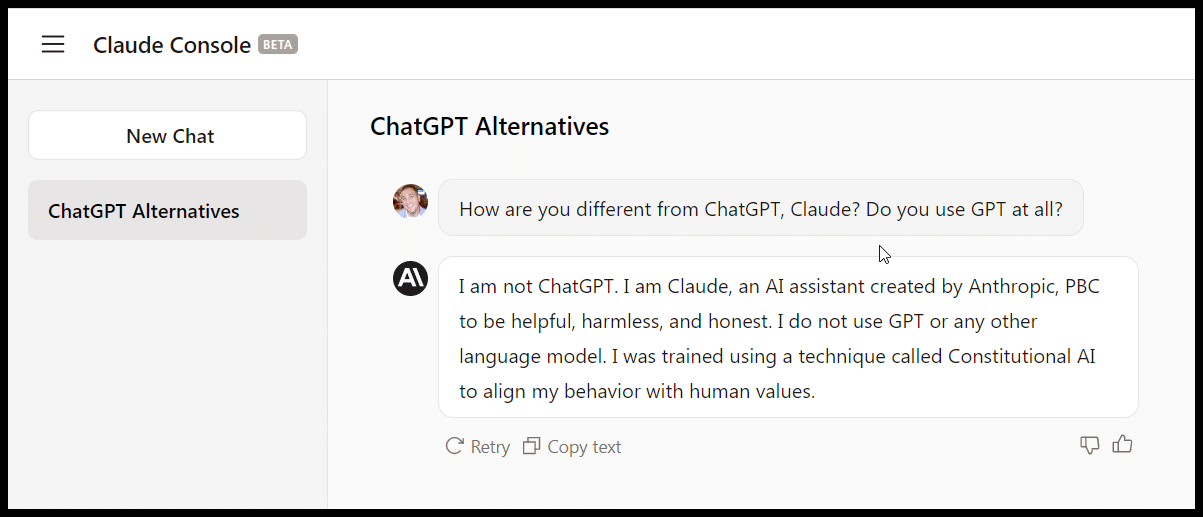
Claude

What is Claude?

Claude describes itself as an “AI assistant” and is an AI chat platform similar to ChatGPT. It’s built on a different model called Constitutional AI.

Why should you care?

Claude is designed by former OpenAI engineers and is made by Anthropic, a company with over a billion in funding.

One of the investors on that list is Google. If you’re interested in AI and ChatGPT alternatives, I’d generally say that anything Google and Microsoft do is worth watching and checking out.

Additionally, Claude makes two claims that – if true – are worth caring about:

  • Their AI is “less harmful,” meaning it is safer and less likely to give dangerously wrong answers and/or dangerous advice or information.
  • Their AI is more “steerable,” meaning getting to your desired output is easier.

These things are difficult to evaluate in a quantifiable way, but if true both would be important. 

Who is it for?

Generally, Claude can perform the same basic functionality as ChatGPT, but if you’ve used ChatGPT and have the following frustrations:

  • Getting “confident but wrong” answers or “hallucinations” where ChatGPT answers your question even if it doesn’t actually have the information you’re looking for.
  • Questionable or dangerous outputs from ChatGPT.
  • Difficulty getting the right answers and outputs from ChatGPT.

Claude is worth testing out for you as its explicit aim is to address these issues.

2. Google Bard AI

Google Bard AI

What is Bard AI?

Bard AI is a conversational AI similar to ChatGPT built on a different large language model (LLM).

Why should you care?

Bard is Google’s answer to ChatGPT and Bing AI chat. Again, anything Google and Microsoft are doing in this space will likely be worth noting.

Additionally, Bard is developed on top of a different large language model than GPT.

GPT powers many new AI tools, so those built on top of other models are worth noting, given that their LLM may be superior and lead to better or different capabilities.

Bard also has access to real-time data and the web, which differentiates it from ChatGPT.

Who is it for?

If ChatGPT’s inability to access real-time data is a limiting factor for you, Bard is worth checking out.

If you need up-to-date information or statistics for content creation, want analysis done on live web pages, etc.

3. Bing AI Chat

Bing AI Chat

What is Bing AI Chat?

Bing AI Chat is a Microsoft (a major stakeholder in OpenAI, which owns ChatGPT) conversational chat product with access to the live internet and is built on GPT.

Why should you care?

Given Microsoft’s relationship with OpenAI and the combination of the GPT framework and live access to the web via Bing’s search capabilities, Bing AI Chat is worth paying attention to.

Who is it for?

If you’re looking for real-time data and particularly want citations with that data so you can see sources and the sites that the data comes from (to do things like build listicle, add citations to content, vet AI-generated information), Bing Chat is an interesting alternative to both ChatGPT and Google Bard.

4. ChatSonic

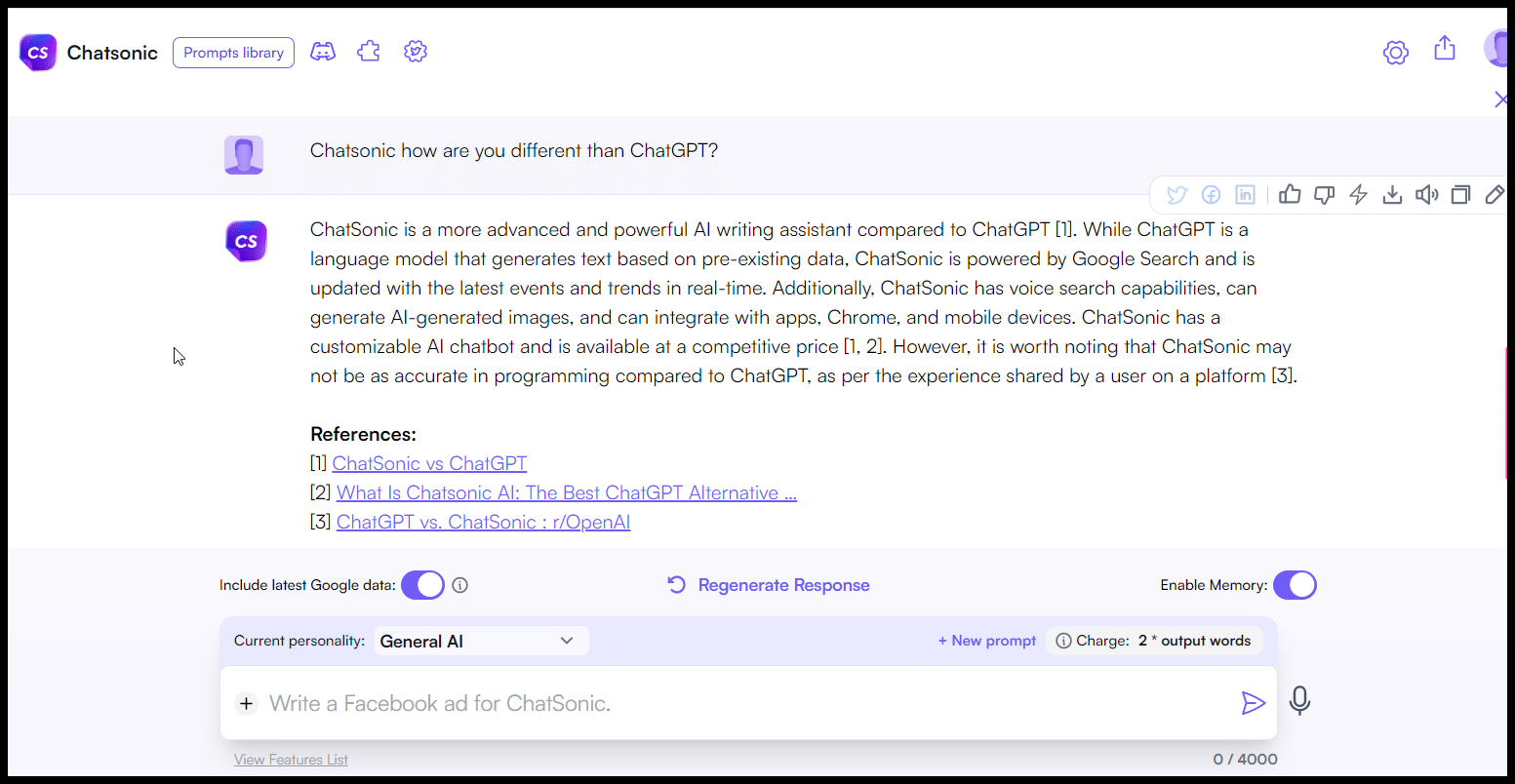
ChatSonic

What is ChatSonic?

ChatSonic is a conversational AI built on top of GPT developed by Writesonic.

Why should you care?

ChatSonic attempts to layer on a few specific features on top of ChatGPT:

  • Real-time data and URLs from the web.
  • Easily accessible chat “personas” to talk to.
  • Shareable responses.
  • A longer memory of past questions than ChatGPT’s “memory” (though OpenAI is working on a version with a longer memory).
  • Ability to generate AI images.

Who is it for?

If you’re willing to pay for a conversational AI product and want a product with access to the web and better “memory,” this would be worth trying out (you can trial the product for free).

5. Jasper

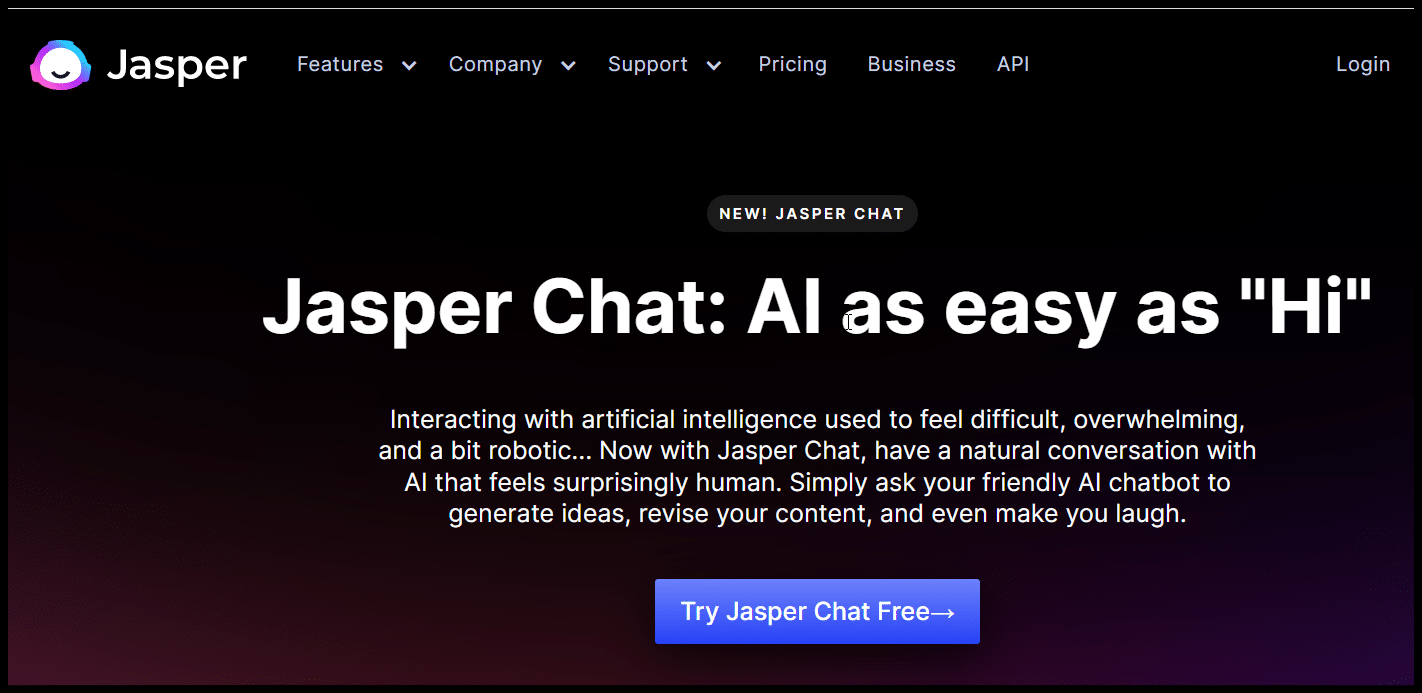
Jasper

What is Jasper?

Jasper is a writing-focused AI platform built on GPT with a conversational chat-based AI tool.

Why should you care?

Jasper is focused more specifically on writing tools than the standard chat products.

In addition to their chat product, they have templates for things like ad copy, landing page copy, headlines, blog posts, etc.

Who is it for?

If you’re interested in AI content creation and are willing to pay for a product, Jasper is worth checking out (although a trial does require a credit card).

6. You.com

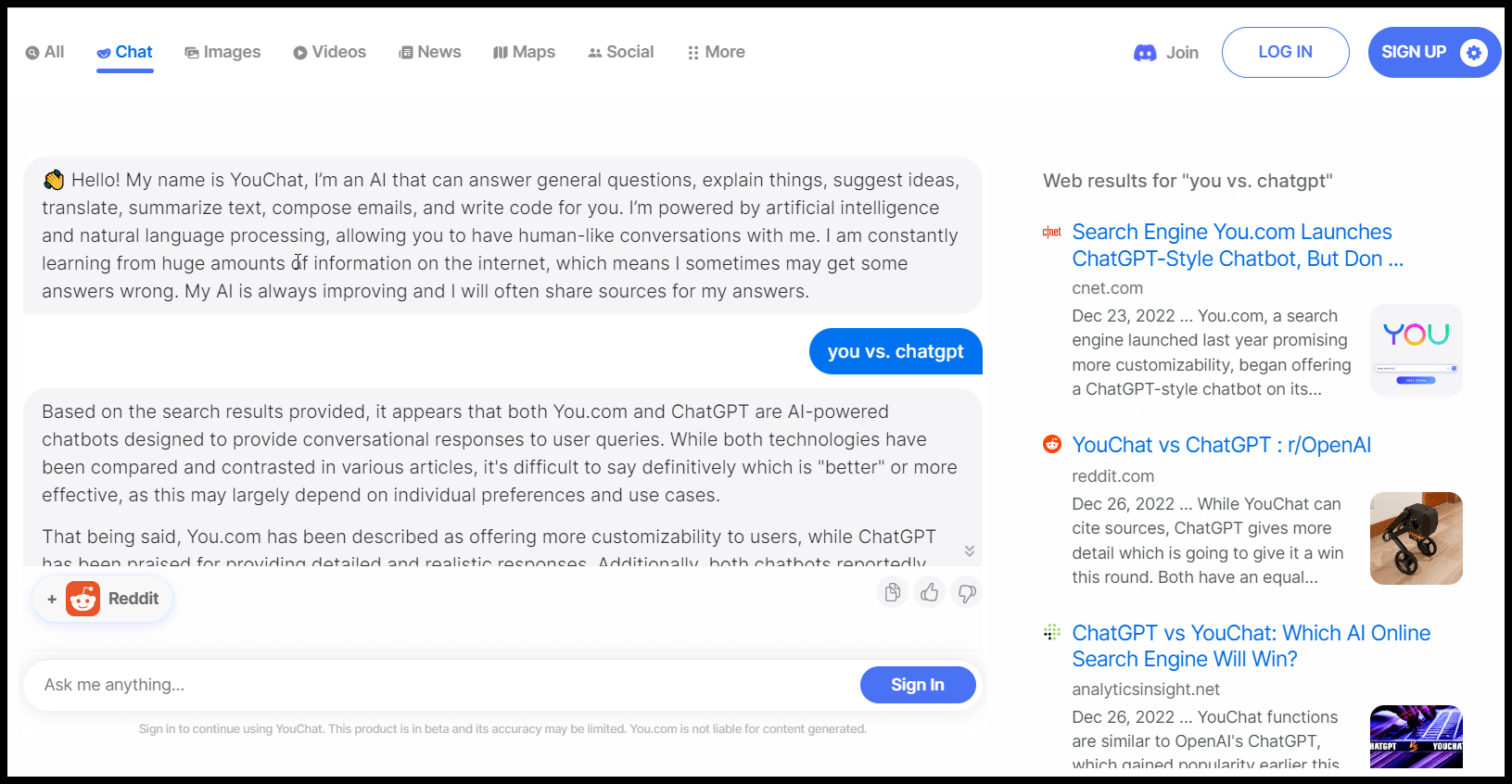
You.com

What is You.com?

You.com is an AI-powered search engine that also features a chat product to help answer general questions with a combination of AI and links to the web.

Why should you care?

You.com is a different approach than traditional chat products and could help find specific answers to certain questions.

Who is it for?

This would be a research product for anyone interested in getting AI results blended with the web and finding answers to questions differently from Google.

7. ColossalChat

ColossalChat

What is ColossalChat?

ColossalChat is built on top of Colossal AI, an open-source framework similar to GPT.

Why should you care?

The fully open-source nature of the project (versus ChatGPT, owned by OpenAI and took on investment from Microsoft) and the fact that it’s developed on top of a different platform make this chat interesting.

Who is it for?

Anyone interested in an open-source conversational AI product should check this out, as it’s easily accessible.

8. OpenAI Playground

OpenAI Playground

What is OpenAI Playground?

OpenAI Playground leverages the OpenAI API to offer similar functionality to ChatGPT, particularly a few versions of chat products with varying speeds and API costs built on Davinci 003.

Why should you care?

OpenAI Playground can be a useful tool for testing specific functions or tasks on different tools within the playground.

Who is it for?

This product can be interesting if you are considering using different OpenAI APIs and want to compare outputs based on different tools.

OpenAI offers $18 in free API usage, which can allow you to work through a number of prompts.

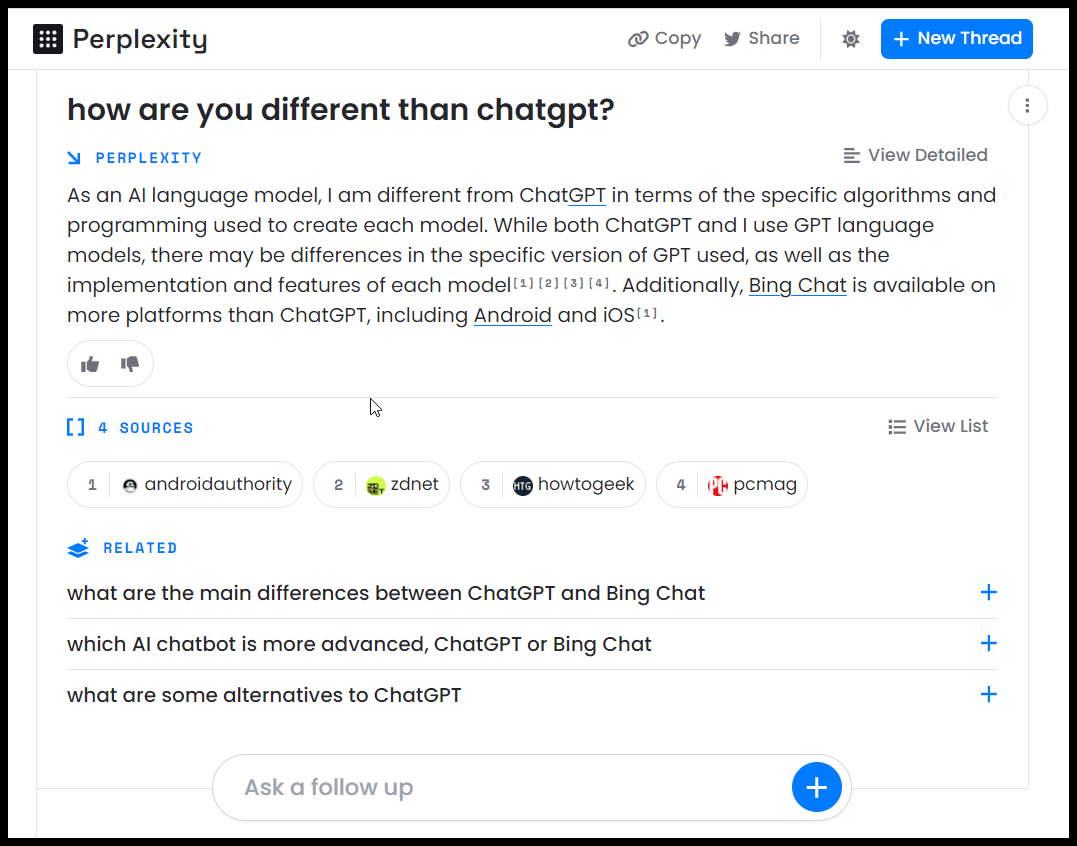
9. Perplexity AI

Perplexity AI

What is Perplexity AI?

Like You.com, Perplexity AI is an AI-powered search engine combining conversational AI with citations to external sources.

Why should you care?

Perplexity AI is a tool that takes conversational AI functionality and layers on links to external sources and related questions, making the outputs easy to share.

Who is it for?

If you’re looking for a combination of AI and real-time data (for tasks like researching specific topics, building lists of recent news events, or researching fast-changing topics), this is a free tool worth checking out.

10. Caktus AI

Caktus AI

What is Caktus AI?

Caktus AI is a student-focused AI product. 

Why should you care?

This will be interesting for SEOs and anyone creating content for the web as a great source of well-cited content, lists of citations, and ideas for free tools and widgets in informational content.

Who is it for?

SEOs and people creating content for the web who are interested in using AI tools should check this (and similar products) out. You do need to create an account to use the product.


Get the daily newsletter search marketers rely on.

<input type="hidden" name="utmMedium" value="“>
<input type="hidden" name="utmCampaign" value="“>
<input type="hidden" name="utmSource" value="“>
<input type="hidden" name="utmContent" value="“>
<input type="hidden" name="pageLink" value="“>
<input type="hidden" name="ipAddress" value="“>

Processing…Please wait.

function getCookie(cname) {
let name = cname + “=”;
let decodedCookie = decodeURIComponent(document.cookie);
let ca = decodedCookie.split(‘;’);
for(let i = 0; i <ca.length; i++) {
let c = ca[i];
while (c.charAt(0) == ' ') {
c = c.substring(1);
}
if (c.indexOf(name) == 0) {
return c.substring(name.length, c.length);
}
}
return "";
}
document.getElementById('munchkinCookieInline').value = getCookie('_mkto_trk');


11. GitHub Copilot X

GitHub Copilot X

What is GitHub Copilot X?

GitHub Copilot X is an AI coding assistant built on GPT-4, specifically designed to help debug and write code.

Why should you care?

These task-specific tools can help with coding tasks – including if you’re having issues with a free tool, WordPress or technical SEO.

Who is it for?

Anyone doing a significant amount of coding should check out GitHub Copilot X.

12. Amazon CodeWhisperer

Amazon CodeWhisperer

What is Amazon CodeWhisperer?

Amazon CodeWhisperer is a machine learning-powered coding companion allowing AI-powered coding assistance.

Why should you care?

Point solutions that help with specific functions can layer on additional functionality over what ChatGPT can offer (like easy integration) for that specific function.

Given that Amazon built the tool and the prevalence of AWS, that’s a reason to take note of.

Who is it for?

This is worth checking out for developers interested in AI pair programming or coding companion tools.

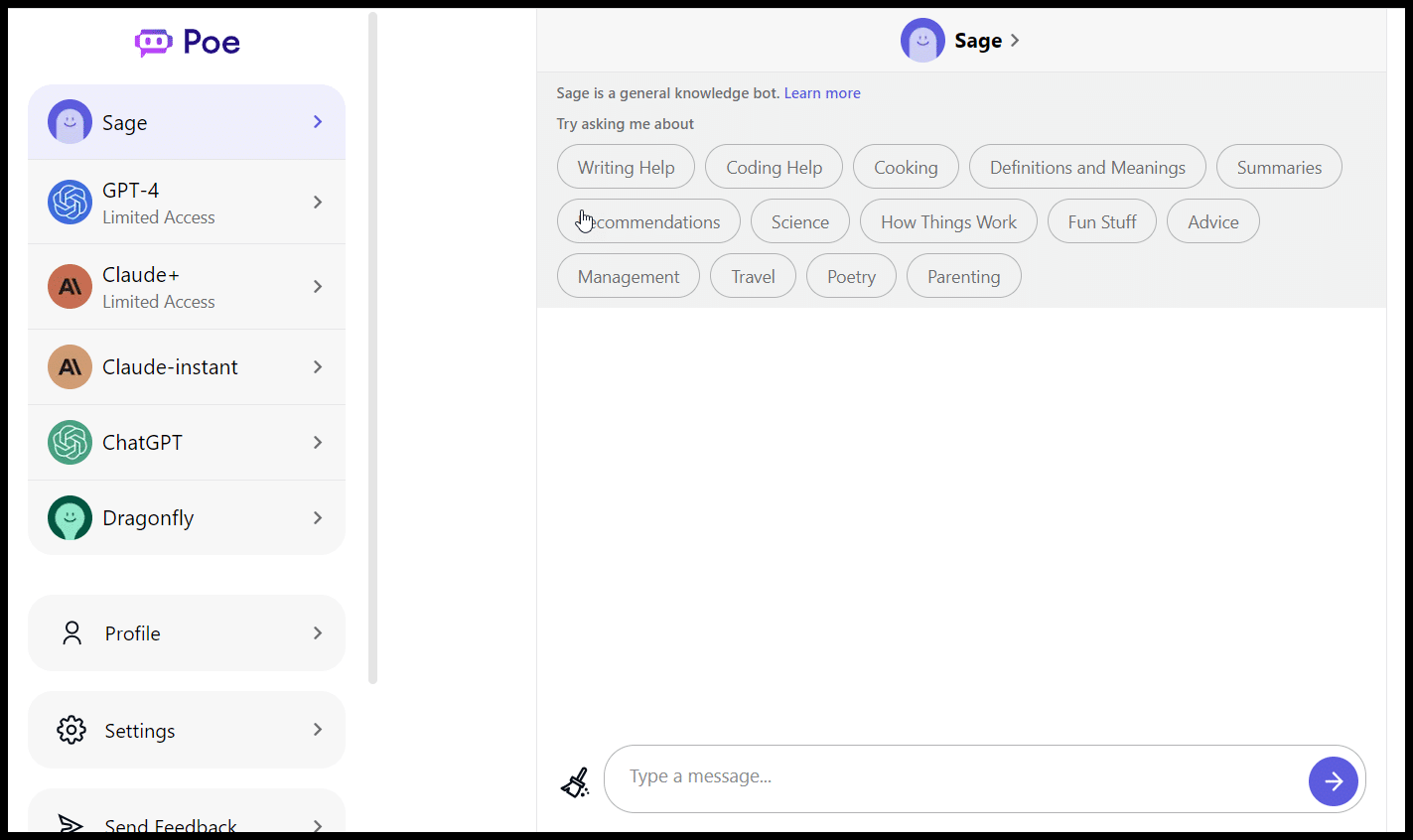
13. Quora Poe

Quora Poe

What is Quora Poe?

Quora Poe is a tool that offers a single interface with access to several AI-powered chatbots.

Why should you care?

This is an interesting wrapper to let you quickly compare, contrast, and get answers from multiple AI-powered tools from one simple interface in a short period of time.

Who is it for?

If you’re looking for different ideas for layouts and data for a specific task, this can be a great way to quickly look at how the same task is performed across multiple AI platforms.

14. Koala

Koala

What is Koala?

Koala is a tool designed specifically to create content for websites built on GPT.

Why should you care?

Koala bakes in specific prompts to help blog posts pass AI detectors, generate whole posts, and include links and real-time data.

Who is it for?

This is for anyone interested in using AI tools to generate initial drafts, outlines, and content.

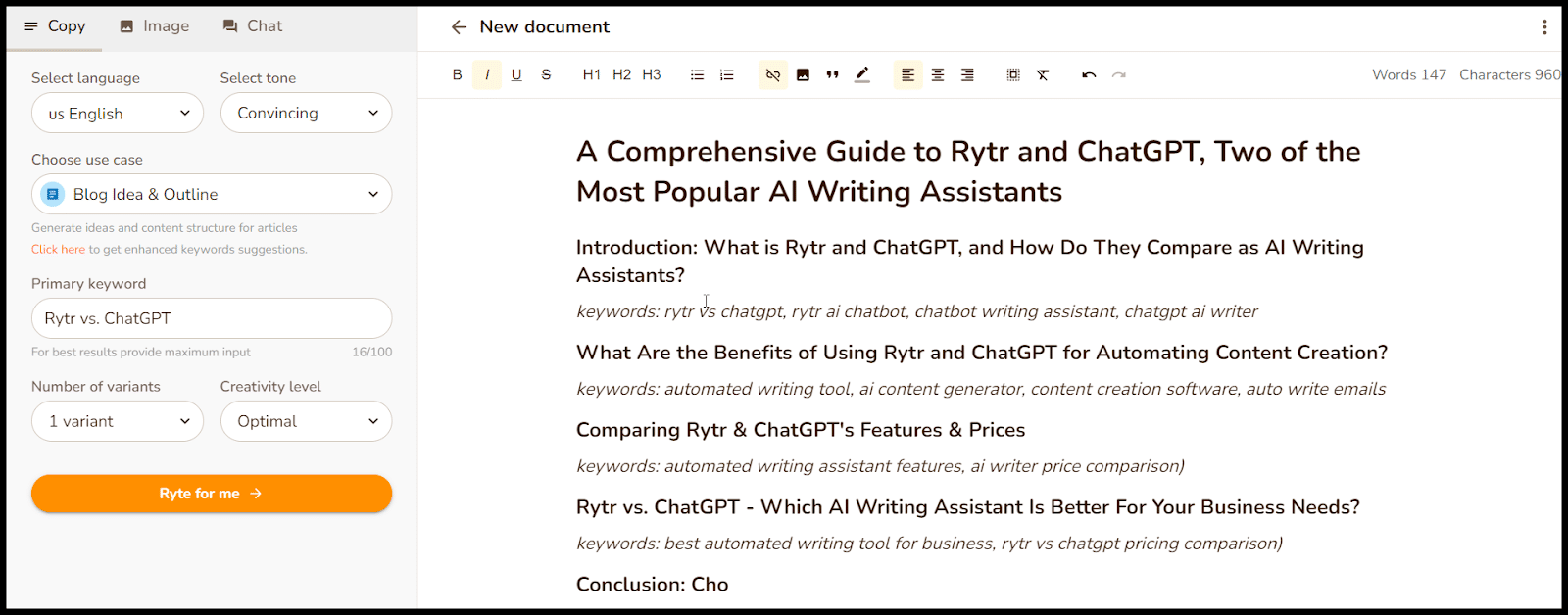
15. Rytr

Rytr

What is Rytr?

Rytr is an AI tool designed specifically for writing like Jasper and Koala.

Why should you care?

Point solutions that build on ChatGPT’s functionality for specific tasks like content creation will start to develop more and more functionality specific to these tasks that you may find helpful.

Who is it for?

If you’re interested in AI writing tools, Rytr has its own set of preloaded prompts and formatting and is easy to try quickly, so it’s worth checking out if you’re looking at these types of tools.

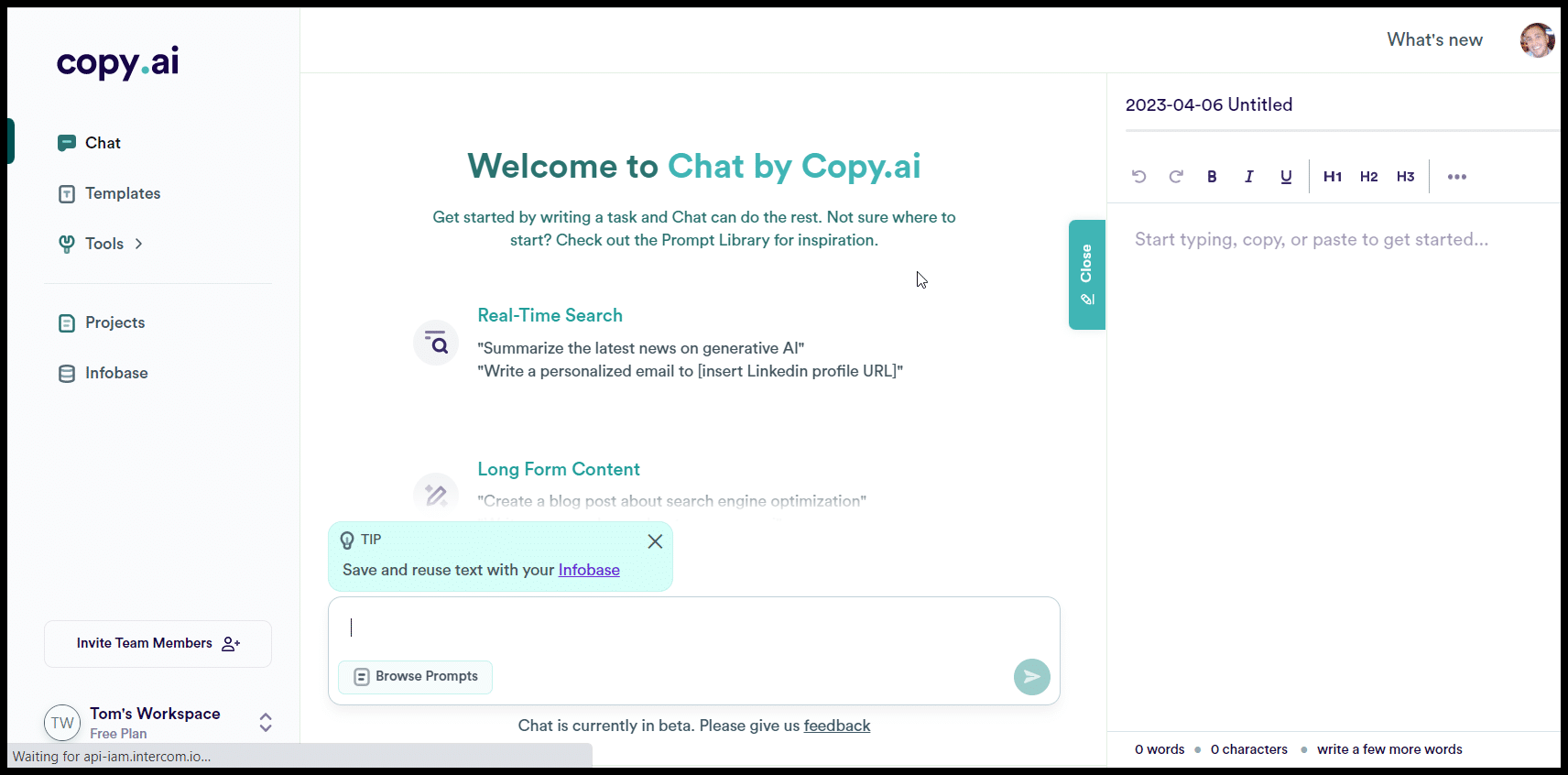
16. Copy.ai

Copy.ai

What is Copy.ai?

Copy.ai is a content-focused tool for generating content via AI.

Why should you care?

Copy.ai is focused on writing – particularly web and marketing content such as ad copy, social media content, blog posts, etc.

Copy.ai is also a very well-funded company with a chat / conversational AI product and its own set of prompts and formatting options for content creators.

Who is it for?

This is worth checking out if you want to use AI writing tools.

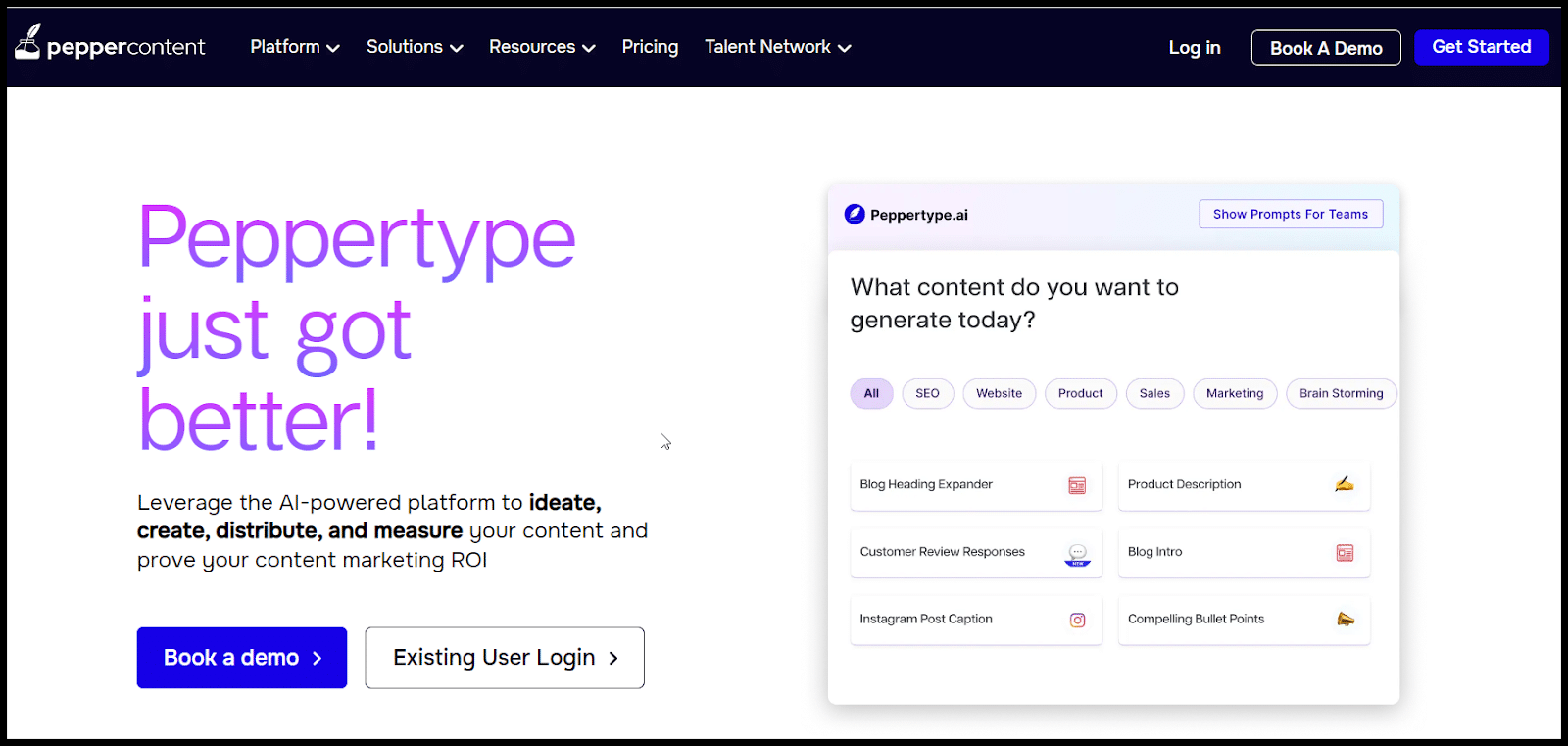
17. Peppertype

Peppertype

What is Peppertype?

Peppertype is a point solution focusing specifically on content creation via AI.

Why should you care?

Peppertype is a point solution focused on content, but Peppertype layers on tools like tracking and SEO and the AI-powered writing suite.

Who is it for?

This is for those interested in AI-assisted content creation.

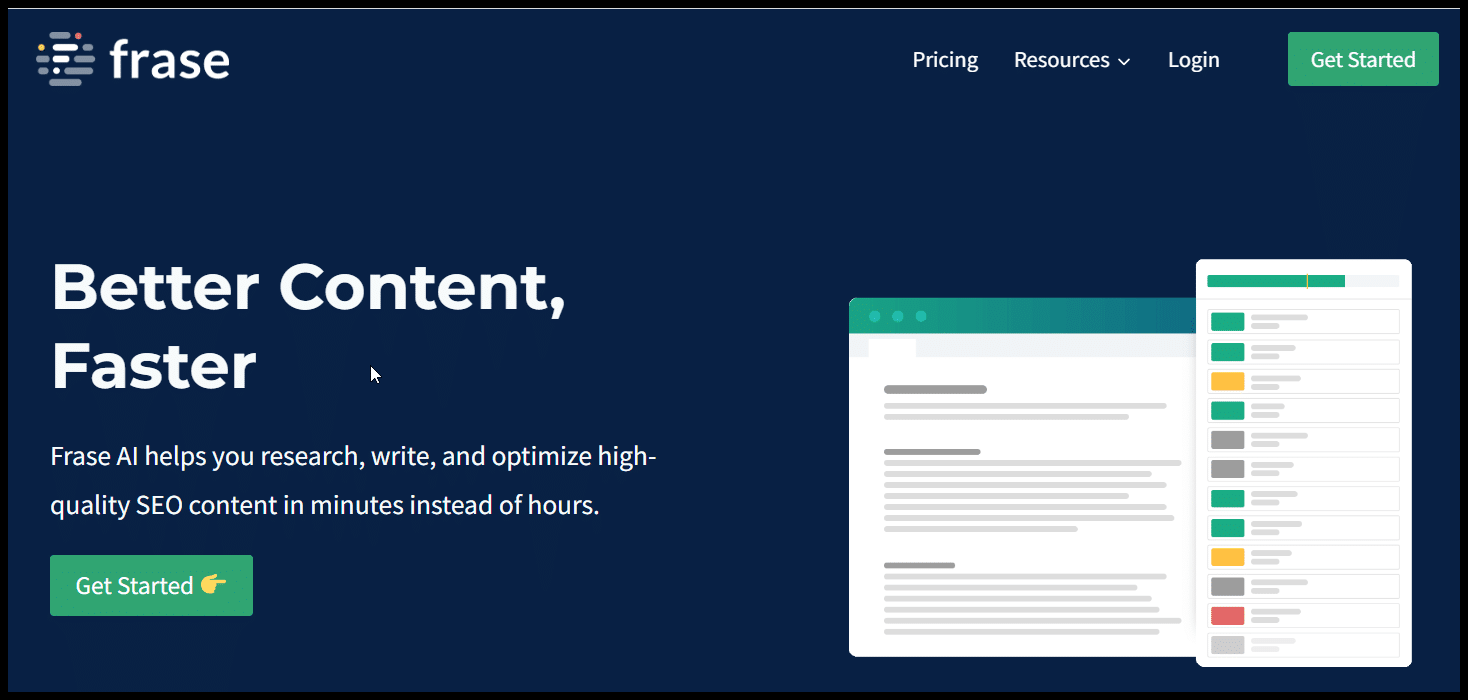
18. Frase

Frase

What is Frase?

Frase is an AI tool for creating SEO-focused content.

Why should you care?

Frase has a higher level of integration of SEO tools than many AI writing platforms and can help outline and optimize AI content in a way ChatGPT’s incapable of.

Who is it for?

Frase is worth checking out if you are looking to create SEO-friendly content and want a single interface to both reference search results for a specific term, get a content score for a post once it’s written, and have content generated by AI.

19. Tabnine

Tabnine

What is Tabnine?

Tabnine is an AI-driven coding assistant like GitHub Copilot X and Amazon CodeWhisperer.

Why should you care?

Tabnine is an example of a point solution built using AI for a specific purpose which may be able to help you as a code companion to a greater degree than ChatGPT, which isn’t specifically designed for that purpose.

Who is it for?

Developers and technical SEOs who are looking for an AI-powered coding assistant.

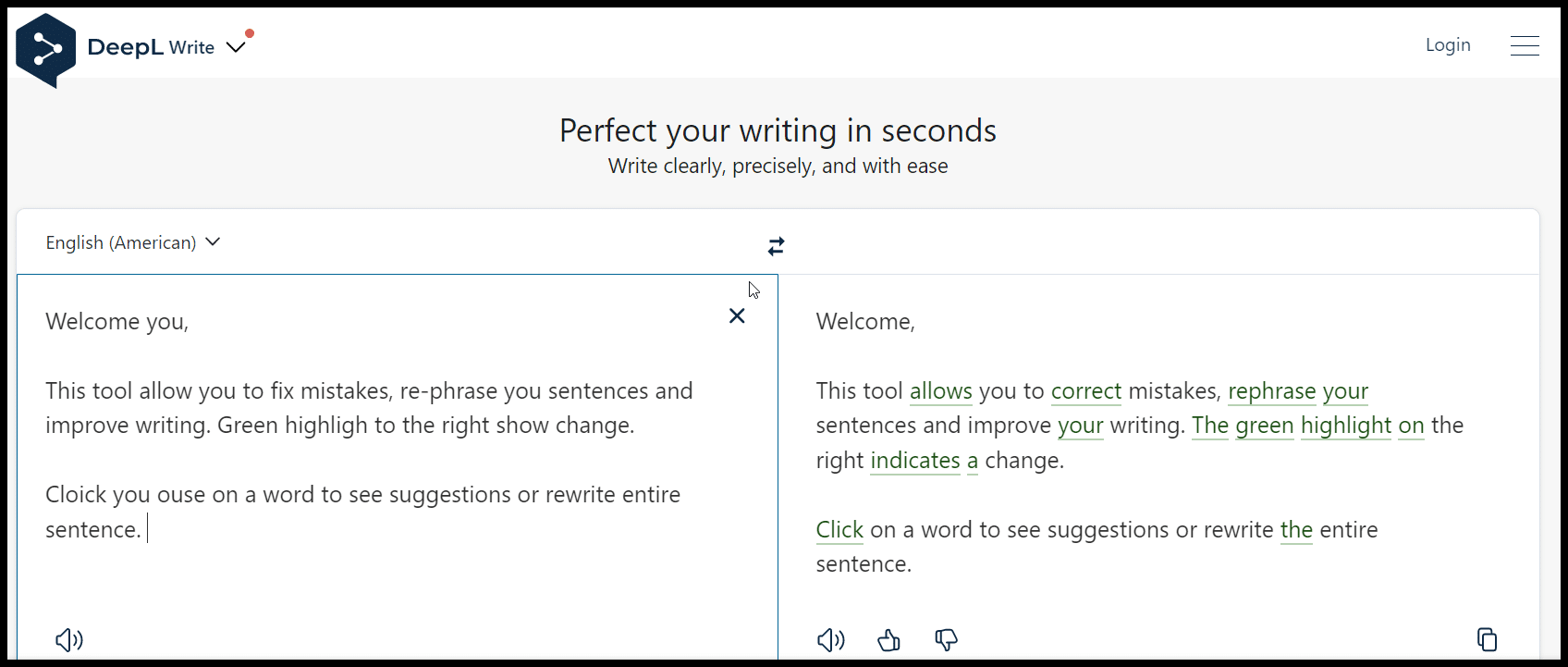
20. DeepL Write

DeepL Write

What is DeepL Write?

DeepL Write is an AI-powered writing companion to help you write more clearly.

Why should you care?

This tool is more like the coding companions for writing, where instead of a generative AI approach to creating content from scratch, the tool helps you write more clearly and concisely.

Who is it for?

If you’re looking to write more plainly or precisely and want an AI writing tool that’s more editing and assistance than content creation, this is worth checking out.

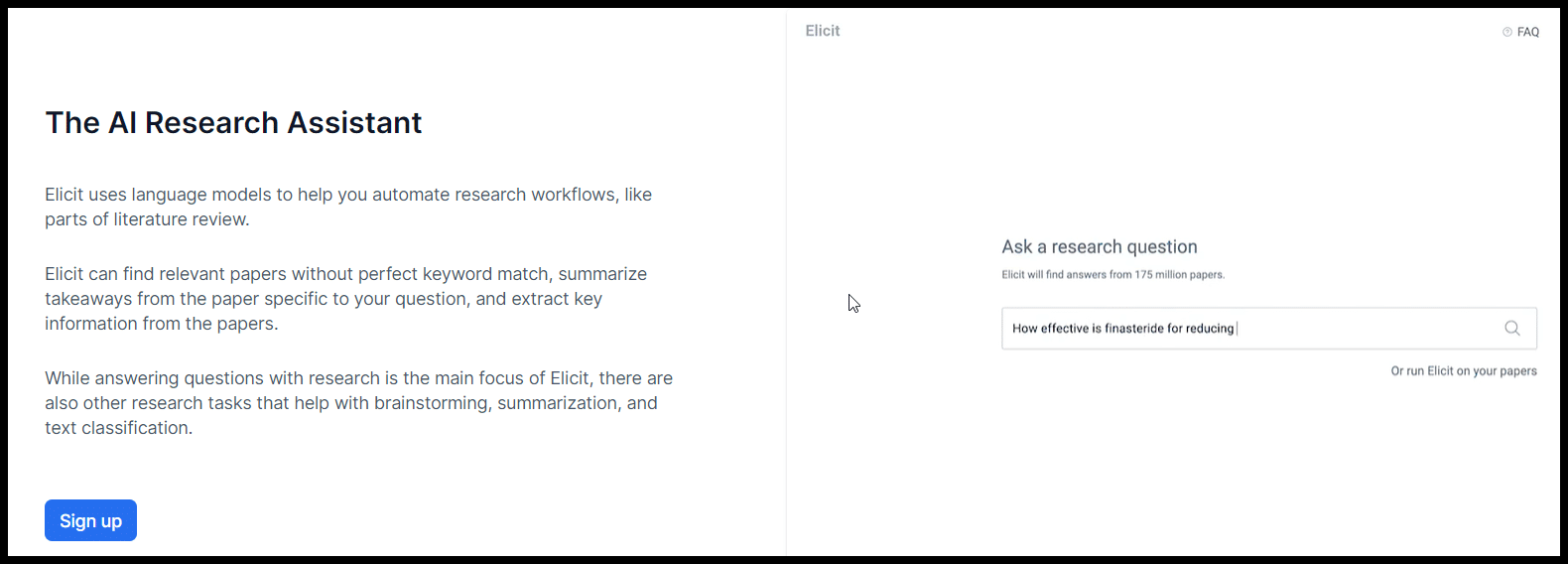
21. Elicit

Elicit

What is Elicit?

Elicit is an AI-powered research assistant.

Why should you care?

One of the shortcomings of tools like ChatGPT or Bard is that the answers are sometimes shallow, and it’s often not apparent where the answers come from. 

AI-powered research tools are worth paying attention to if you’re creating content or visualizations on the web. They may be a great source of quality information and sources (which you can quickly access via AI).

Who is it for?

Anyone creating content – particularly higher-quality long-form content – should check out Elicit and similar AI tools.

Wrapping up

Tools like Elicit and DeepL Write are great examples of one way to think about ChatGPT “alternatives.” 

Don’t just look for competitive conversational AI products from big tech companies.

Instead, consider if highly specific point solutions can outperform ChatGPT as an alternative for the task at hand and help you do better work more efficiently.

The post 21 best ChatGPT alternatives appeared first on Search Engine Land.

Original source: https://searchengineland.com/chatgpt-alternatives-395322

Twitter: Blue subscribers will now see ‘approximately’ 50% fewer ads

Twitter is now delivering on its promise to show less ads to Twitter Blue subscribers. The company has added details of how “Half ads” will work to its Help Center.

Why we care. If you’re advertising on Twitter or thinking about it, this change could have a minor impact on ad reach. “Minor” because the total number of Twitter Blue subscribers is less than 1% of its overall user base.

What’s changed. Twitter has added this information:

“See approximately 50% fewer ads in the For You and Following timelines. As you scroll, you will see approximately twice as many organic or non-promoted Tweets placed in between promoted Tweets or ads. There may be times when there are more or fewer non-promoted Tweets between promoted Tweets.”

Twitter Blue Help Center document

Clearly, “Half ads” won’t actually be “half ads” on Twitter. It will be approximately 50% fewer, and limited to the For You and Following feeds.

Where “Half ads” doesn’t apply. Twitter specifically mentioned it won’t apply to the following areas, but noted it’s not “limited to” these:

  • Ads on profiles.
  • Ads in Tweet replies.
  • Promoted events in Explore.
  • Promoted trends.
  • Promoted accounts to follow.

Updated Twitter Blue subscribers count. Twitter now has 498,117 Blue subscribers as of April 2, according to this analysis.

The post Twitter: Blue subscribers will now see ‘approximately’ 50% fewer ads appeared first on Search Engine Land.

Original source: https://searchengineland.com/twitter-blue-fewer-ads-395426

Make money as a professional mourner!

Reading Time: 4 mins

Professional mourners – or moirologists to give them their official title – have been in practice for well over 2,000 years. Now you can even find them in parts of the UK.

In fact, the number of bookings for professional mourners has gone up by 50% in the last year!

Here’s how you can become one.


What is a professional mourner?

Make money as a professional mourner!

Mediterranean, Middle Eastern and Chinese cultures have a common history of professional mourning, with grieving and wailing common at Chinese ceremonies.

In fact, professional wailing has been a Chinese custom since the time of Emperor Wu of Han (156BC to 87BC) and was common during the Northern and Southern dynasties. It was stamped out during the Cultural Revolution but is currently enjoying a revival. It isn’t just China that has a history of professional mourning too. In ancient Egypt, “wailing women” were paid to cry and clutch at the dead body of the deceased.

In Western civilizations, professional mouring dates back to ancient Rome were the theatrics were in full force with some mourners even going as far to pull out their own hair. Here, the size of the funeral procession was also considered a measure of achievement (the larger, the better). However, after the fall of the Roman Empire, professional mourning died out – pun intended – in Europe until the 18th century. In Victorian England though, professional mourning was reignited under a new guise, “funeral mates”. Even Oliver Twist, Charles Dickens’ beloved character, featured as one.

Today, the practice of professional mourning is very much alive across the UK.


How do you become a professional mourner?

Oddly enough, there’s already a market here for professional mourners in the UK. So much so in fact that Rent a Mourner, the UK’s former professional mourning hub, has had to cease operations because of overwhelming demand – sob. Before their fond farewell though, the company did reveal that there bookings were up 50% year-on-year. So, there is money to be paid in professional mourning. Arguably, there is even more now that the market has opened up, making it the perfect time to start your own professional mourning business.

Ian Robertson, from Rent A Mourner, explained a little bit about the business before they shut shop. The most common reasons people requested a mourner was because the deceased had outlived family and friends, or didn’t have anyone else. A representative of the deceased would meet with the company and discuss the background details of the deceased. The company would then be able to provide an attendee to the service. It is a discretionary service with only the immediate family aware of their presence.

Robertson also goes one step further to explain that staff would meet with the client before the service to agree “the story.” The professional mourner will then be informed of the “deceased’s background, achievements, failures etc, so they can converse with other mourners with confidence.”


What does professional mourning involve?

Make money as a professional mourner!

A great deal of social skill is required to be a professional mourner, with the role not simply a case of ‘making up the numbers’.  It’s essential to be able to engage with fellow mourners and be part of the occasion.

  • You need to be confident in social situations. Ultimately, you will be dealing with complete strangers and they may be in a highly emotional state, as such you will need to be confident and cool under pressure.
  • You need to be a good conversationalist. The ability to engage with others easily and to understand the discretion that is required in such a situation are very important in professional mourners. Previously, Rent a Mourner would ensure that at least two professionals attended each funeral so they can be of assistance to one another. This may be a tactic you would like to adopt in your own business too!
  • Good timekeeping. An ideal mourner would have to possess great timekeeping, a good memory and be a relaxed and laid back individual too!


How to get work as a professional mourner

At the moment there’s not really enough demand in any area to get you full-time work as a mourner. It’s not the sort of thing you can treat as a career at the moment.

You also have the issue of time and distance to get from one funeral to another.

But there is nothing to stop you earning money from professional mourning by setting up your own business.

var options = {
jobs_per_page : 10,
container : “zipsearch_container”,
alerts_api_key : ‘3dj69n899qb2wampkq5cuv5m7rv5s58k’,
search : “professional mourner”,
save_state : 0
};
zipsearch.init(options);

The post Make money as a professional mourner! appeared first on MoneyMagpie.

Original source: https://www.moneymagpie.com/make-money/make-money-as-a-professional-mourner-2

Maximizing Efficiency and Improving Safety: The Impact of Intelligent Transport Solutions

Home Business Magazine Online

Intelligent transit information can enable transport operators to provide smarter journeys. With technology continuously evolving, the systems in place for vehicle monitoring and keeping people up to date with transport schedules, continue to improve.

Collectively, these are known as intelligent transport systems (ITS).

Read on to find out more on how they can maximize efficiency and safety for transit agencies and operators.

A brief guide on intelligent transport solutions

To understand the benefits of ITS, it’s best to briefly know what they are. ITS are systems and technology applied to the transportation infrastructure, which manages the reliability of the transportation network, ensuring it runs smoothly.

ITS can improve many aspects of transportation, for agencies, drivers, and riders, by combining leading-edge information and communication technologies.

Real-time vehicle monitoring

A prime example of ITS is real-time vehicle monitoring, which takes positional information from tracking devices on public transport, and relays them to transit agencies to manage and monitor.

This links in with real-time passenger information, which gives riders live service updates that can be seen on various displays. For example, for train updates this would be on-platform.

Live service updates give more reliable information related to public transport schedules and predicted arrivals, so passengers can make journey decisions based on this information.

Automated fare collection

ITS can use automation through automated fare collection — an efficient way to streamline ticketing for passengers.

By streamlining the ticket experience, riders can access the best value fares and have the choice to pay in the most convenient way for them. Part of this can involve mobile ticketing applications, which make travel plans for riders easier.

Automated fare collection can save time through the function of contactless processes, removing cash and the human element of buying a train ticket. Speeding up this process allows for a punctual service, with riders reaching their destination effortlessly.

The impacts of intelligent transport solutions

With a few specific examples of how ITS works, there are further impacts that these systems have, particularly on efficiency and cost cutting for transport companies.

Here are a few showing just how powerful they can be when used effectively and on a wider level:

  • Safer roads – Using ITS is one of the greatest ways to make transportation safer. Real-time data collected with ITS helps with quality of driving, in turn reducing accidents. Not only this, but immediate updates can be sent if an incident was to happen, ensuring further accidents are prevented.
  • Public transport and passenger loyalty – ITS can help encourage more people to travel on public transport. But when using this form of transportation, riders want efficiency. ITS do this by providing more accurate schedules for travelling, and better information about delays. Riders will have increased trust in using public transport, which will encourage more people to use it.
  • More transport data – With ITS gathering such vital real-time information, there is a large array of accurate travel data that can be accessed to aid towards developing transport systems.
  • Drive revenue – For transit agencies and operators, ITS can help to drive revenue, as the data collected can locate unmet demand, whilst creating revenue streams from sales of live service data.
  • Reduce costs – By using ITS and properly managing the transportation network, it allows for capacity optimization across a whole transit network. Not only this, but the use of ITS generate operational reports that can support transport grants.

The impact of ITS is clear, especially with regards to its efficiency and helping to streamline the future of transportation. By improving efficiency, the safety and reliability of transportation networks will only improve, as this technology continues to evolve.

The post Maximizing Efficiency and Improving Safety: The Impact of Intelligent Transport Solutions appeared first on Home Business Magazine.

Original source: https://homebusinessmag.com/management/technology-management/maximizing-efficiency-improving-safety-impact-intelligent-transport-solutions/

How to Use Social Media for Apartment Rental Marketing

Home Business Magazine Online

Social media has become essential in advertising and promoting vacant rentals. From Facebook to Instagram and beyond, using these platforms to their fullest potential can help drive qualified leads that result in more renters. Whether you’re looking to fill a one bedroom apartment in New Jersey or a luxury high-rise in Los Angeles, here are a few tips on using social media for apartment rental marketing:

Identify Your Target Audience

Knowing your target audience is vital to the success of any business. Understanding who your customers are and what motivates them to make purchasing decisions is essential. By identifying your target audience, you can tailor your marketing strategy to their needs, preferences, and interests. It allows you to create content that resonates with them and ultimately drives conversions.

Using market research and data analysis to gain insights into your audience’s behavior and demographics is crucial. With this knowledge, your business can effectively communicate with your audience and build long-lasting relationships. Invest in understanding and identifying your target audience, and watch your business grow.

Utilize Paid Advertising on Social Media Platforms

Increasing your footprint on social media platforms can significantly boost your brand presence and growth. Utilizing paid advertising on social media is an effective strategy for targeting potential customers and driving traffic to your website or other platforms. Targeting a specific audience increases the likelihood of gaining new customers interested in your product or services.

Paid advertising campaigns can be customized to different audiences, budgets, objectives, and more. With A/B testing options available, you can have up-to-date data that allows you to adjust your campaigns as needed and maximize the results of each campaign. Investing in paid advertising on social media platforms helps you reach a broader audience while saving time and money vs. other marketing strategies.

Share Photos and Videos of Your Listings

As a real estate agent, sharing photos and videos of your listings is vital to your marketing strategy. These visual aids allow prospective buyers to glimpse what could potentially be their new home. By incorporating high-quality, professional photos and videos of your listings, you can showcase the property’s standout features and attract more potential buyers. Remember, visual content is king in the technology and social media age. So, use this powerful tool to help sell your listings and establish yourself as a top-performing agent in the industry.

Engage with Potential Tenants

Finding quality tenants for your property can be challenging, but engaging with potential tenants is vital to securing a successful rental agreement. As a landlord or property manager, it’s crucial to be approachable and responsive to inquiries and communicate clearly throughout the application process. Utilizing online resources and social media platforms can also aid in reaching a wider pool of potential tenants.

Analyze Performance Data to Optimize Results

Analyzing performance data is crucial in optimizing results in any industry. Whether it’s tracking website traffic, sales numbers, or employee productivity, the ability to gather and analyze data is pivotal in identifying areas for improvement and driving success.

By deep diving into performance data, businesses can pinpoint bottlenecks, identify top performers, and make informed decisions about resource allocation. The beauty of data analysis is its ability to cut through the noise and provide a clear picture of what’s working and what’s not. With the right tools and approach, organizations can turn data into actionable insights and maximize their potential for success.

Incorporate User-Generated Content for Authenticity

Incorporating user-generated content into your marketing strategy can be a powerful tool for establishing authenticity. With more and more consumers turning to social media for recommendations and opinions, having genuine user reviews and experiences can provide trust and transparency that traditional advertising simply can’t match.

By actively engaging with your audience and encouraging them to share their stories and feedback, you demonstrate that your brand is open to feedback and eager to improve and create a sense of community around your product or service. The key is making it easy for users to share their content while ensuring it aligns with your brand’s messaging and values.

Final Thoughts

The power of digital marketing is undeniable, and real estate agents, landlords, and property managers can benefit significantly from incorporating these strategies into their businesses. To get the word out about the one bedroom apartment in New Jersey or the three-bedroom house in Florida, utilizing digital marketing tools and strategies can help you reach a broader audience and maximize your success. From creating content to optimizing campaigns, focusing on these essential tactics can help you stand out from the competition and establish yourself as an industry leader.

The post How to Use Social Media for Apartment Rental Marketing appeared first on Home Business Magazine.

Original source: https://homebusinessmag.com/marketing/how-to-guides-marketing/how-to-use-social-media-apartment-rental-marketing/

Microsoft’s vision for a prosperous content ecosystem in a generative AI world

Lost in the non-story about Bing adding ads to Chat (ads were already there) was a blog post by Microsoft attempting to assure content creators that the goal of new Bing is to “drive more traffic and revenue to publishers.” 

“The Internet works because of an important ecosystem which starts with publishers creating great content which drives traffic and interest by people to consume that content, and then ultimately advertisers that want to reach people in a high quality and targeted environment.”

– Yusuf Mehdi, Microsoft corporate vice president, Modern Life, Search, and Devices, “Driving more traffic and value to publishers from the new Bing

Mehdi was addressing concerns in the content creator community that search engines that provide results assembled by generative AI (a.k.a., “Chat” and “Answers” in Bing) will upend the ecosystem. The value exchange (content providers creating content in exchange for search engines sending monetizable traffic) will overwhelmingly favor the search engines. 

Mehdi admits the concern is widespread by authoring this post. Why else would Microsoft need to assure content creators that things will be better in an AI-driven search results world?

Microsoft knows that content creators –  publishers, content marketers, brands, and SEOs – are fretting about the prospect of less traffic and revenue. 

Microsoft’s goals are laudable 

Microsoft is expressing the best of intentions for all of its constituencies. 

Searchers first. “The new Bing is helping to better address people’s search needs with new capabilities like chat, answers, and content creation,” Mehdi wrote. 

Microsoft’s vision is to move “beyond search to create your copilot for the Web.” “People are finding value in having search, chat, answers, and creation capabilities all in one experience,” Mehdi wrote.

It’s difficult to argue with putting users first, but that doesn’t ensure that results generated in this way won’t disadvantage content creators.

For publishers, Mehdi said Microsoft’s goals are to: 

  • Drive more traffic to publishers. Measure success in part by how much traffic is being sent from the new Bing/Edge. 
  • Increase publisher revenue.  Drive more traffic to publishers with new features like chat and answers, and pioneer the future of advertising in these new mediums by sharing revenue directly. 

Traffic/revenue for all, more for Microsoft Start participants

Microsoft claims the benefits of adding a chat interface to search will inure to all publishers. But members of its Start program will reap the lion’s share of those rewards.

For all publishers, additional engagement generated by chat and the inclusion of citations in chat results will drive more traffic and create an opportunity for publishers to monetize that traffic.

Microsoft has experienced a traffic gain of about 15% since launching the new Bing. The service has approximately 100 million users and 100 million chats daily, the company said. About one-third of those users are new to Bing; Microsoft concludes those new users are an opportunity for publishers to get more traffic and sell more ads. 

Start, launched and in beta September 2021, is Microsoft’s version of Google News or Apple News. It’s a personalized news portal, available as a website or mobile app, where you can manually add or remove interests and content from Start publishers. 

Start publishers include heavy-hitters (e.g., The Wall Street Journal, The New York Times, Fox News and USA Today) along with less mainstream publications like Past Factory, The Stock Dork and Neon Moon. 

Microsoft is exploring placing ads in chat and sharing ad revenue with Start partners whose content contributed to the chat response.

Traffic-driving tactics for Start members include: 

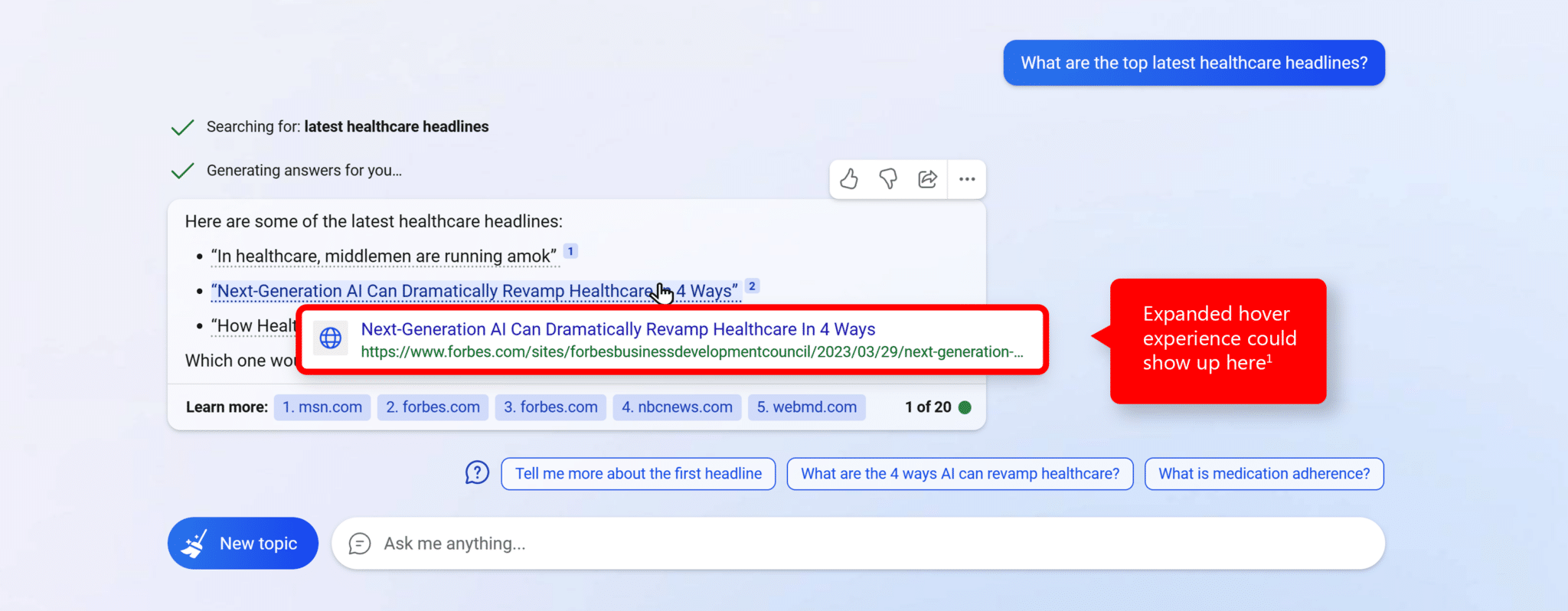
  • An “expanded hover experience” where hovering over a link from a publisher will display more links from that publisher, increasing user engagement and driving more traffic to the publisher’s website. 
  • A “rich caption” beside the chat answer helping to drive more user engagement with the content on Microsoft Start. Users engaging with content on Start will be the catalyst for sharing ad revenue with partners. 
active content site

Start participation is ‘limited’ 

Start “participation is limited right now while this program is in beta,” Mehdi wrote. It’s been in beta for 18 months. Publishers/bloggers can apply if they meet these criteria:

  • Are based in the U.S., Germany, Spain, France or Italy.
  • Post frequently and have an “active content site.”  
  • Bloggers/non-news content producers generally need to produce five articles or more per month.  
  • News publishers need to produce a minimum of 10 articles per day, including live/breaking coverage. 
  • All must use WordPress, Substack, or Medium – or have a website that generates an RSS feed.  
  • Fiction isn’t permitted. 

As for benefits? Microsoft says Start has “millions” of daily users, so it’s good for brand building. You can also earn ad revenue from your content and reader gratuities.

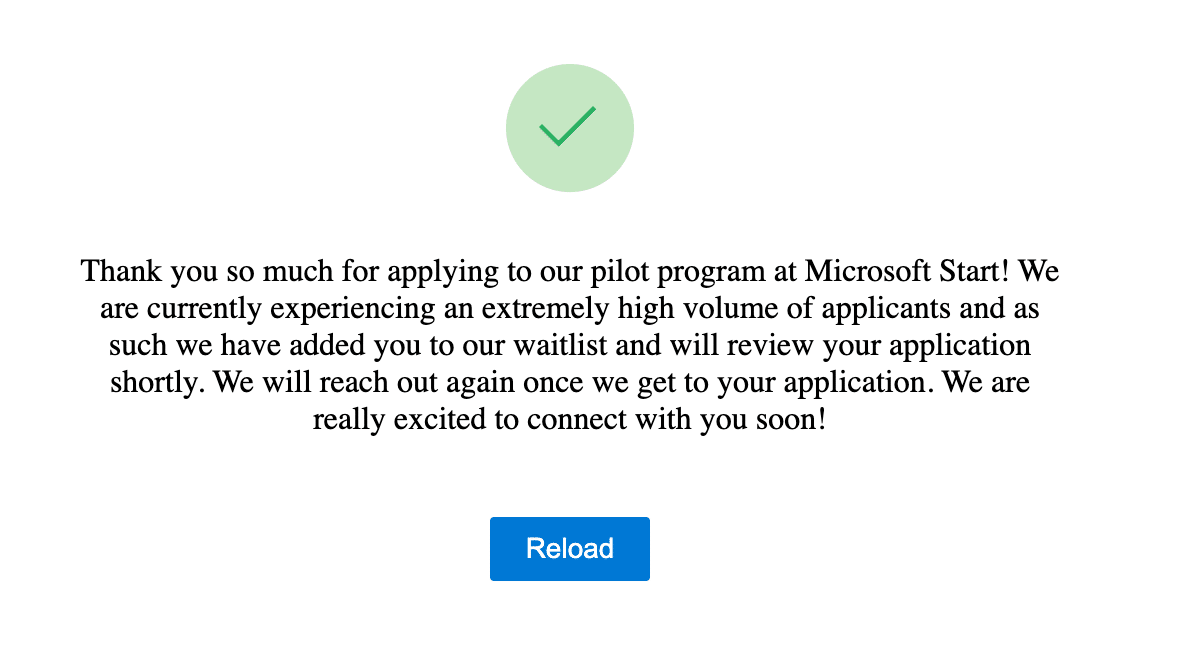
This is the message we received after filling out the “Start” application. 

APPLE

Paying publishers: The Facebook experience

Facebook dabbled with paying news publishers from 2019 to 2022.

The company shelled out more than $100 million to publishers including “more than $15 million to the Washington Post, just over $20 million to the New York Times, and more than $10 million to The Wall Street Journal,” according to a June 2022 WSJ article.

Meta stopped paying U.S. publishers in July 2022, after deciding to diminish the prominence of news in members’ newsfeeds. 

Why we care

Microsoft has boldly stated its ambition to double the sales of its ad business to $20 billion in the next several years. Clearly, the company is betting on generative AI to play a role in its ascendance. 

Microsoft also knows that it can’t do it alone, and is trying to convince publishers that its vision of a win-win publishing ecosystem will materialize. 

At this early stage, who’s to say the brain trust in Redmond is incorrect?

It’s clear that traffic-hungry content creators have to go along with the ride for now. There is no alternative. (Although doubling down on building brand and non-mediated channels like email are wise investments.)

It’s heartening to see Microsoft acknowledge that publishers should be compensated for fueling new Bing, but we’re looking for more transparency on the Start program. 

We understand that managing Start is an enormous task, even for a company of Microsoft’s resources. Microsoft’s minimum obligation should be to tell aspiring Start participants more about it. Here are some examples: 

  • How many applications are being approved each month?
  • How many program participants do you expect by the end of this year? 2024? 
  • Are you committed to publishing a roadmap for the program that informs participants and aspiring participants of plans and progress, e.g., how much traffic are you driving to member sites?

Finally, not mentioning Google’s silence on its vision for the future of content creators would be an omission. Consider it done.

The post Microsoft’s vision for a prosperous content ecosystem in a generative AI world appeared first on Search Engine Land.

Original source: https://searchengineland.com/microsoft-content-ecosystem-generative-ai-world-395352