Common Mistakes to Avoid in Sponsor License Applications

Home Business Magazine Online

The global economy offers businesses an unprecedented opportunity to secure top international talent. For UK businesses, there can be great value in recruiting workers from overseas to fill skill gaps and drive growth. However, to legally hire non-UK workers who have no other basis to remain in the UK, businesses need to secure a sponsor license from the Home Office. This license allows employers to sponsor skilled workers who require a visa to live and work in the UK, and subsequently support their visa applications.

While acquiring a sponsor licence can open doors to a global talent pool, the process is complex, and businesses must adhere to strict legal requirements. The sponsor licence application process is governed by Home Office guidance, and failure to meet specific requirements can lead to an application being rejected. Such a setback not only delays recruitment but also results in additional costs and administrative burdens. A refusal could also result in a cooling-off period being imposed in relation to the submission of a fresh application.

In this post, the expert immigration solicitors at JMW will explore common mistakes that businesses make when applying for sponsor licences. By recognising these pitfalls, businesses can take proactive steps to avoid them and improve their chances of a smooth application process.

Inadequate Documentation and Record-Keeping

Among the most common mistakes businesses make with sponsor licence applications are administrative errors like failing to provide the necessary information or documentation to prove your business case for a licence. The Home Office requires a substantial amount of documentation when it assesses a business’ eligibility for a sponsor licence. This documentation is used to prove that the business is genuine, operates legally in the UK and has the capability to meet its sponsorship obligations.

The specific documents required will depend on the type of licence being applied for and the nature of the business. Commonly requested documents include evidence of a UK business bank account, evidence of business premises, and evidence of financial status such as audited accounts, financial statements or company tax returns.

Moreover, even after obtaining a sponsor licence, businesses are required to maintain thorough records relating to their sponsored workers. This includes details of their  immigration status, their job roles, payment of salary and attendance at work. The Home Office can conduct compliance visits at any time – including when they are considering a sponsor licence application – so businesses must be prepared to present these records upon request. Inadequate record-keeping can lead to the suspension or revocation of a sponsor licence, as well as potential legal penalties.

To avoid these issues, businesses should take the time to carefully review the Home Office’s guidance on required documentation before submitting their application. They should also ensure that they have practices and procedures in place to ensure that they can monitor their workers and understand their record-keeping duties, as these compliance duties will come into play on the day the sponsor licence is issued.

It may be beneficial to seek advice from an immigration solicitor who can ensure that all necessary documents are included and that record-keeping practices meet the required standards. Solicitors can also assist with ensuring that sponsors are abiding with their post-application compliance duties.

Sponsorship Management Failures

Once a sponsor licence is granted, businesses are required to comply with ongoing sponsorship management responsibilities. This involves appointing key personnel to manage the sponsorship process and using the Sponsorship Management System (SMS) to fulfil various duties.

Key personnel nominated at the licence application stage include an Authorising Officer, a Level 1 User, and a Key Contact. The Authorising Officer is responsible for the overall sponsorship process and ensuring that the business complies with its obligations. The Level 1 user manages the day-to-day operations of the SMS, including issuing Certificates of Sponsorship (CoS) to sponsored workers. The Key Contact serves as the primary point of communication between the business and the Home Office.

A common mistake businesses make is failing to provide any nominated personnel with adequate training. These staff members have important responsibilities. For example, failing to report changes in a sponsored worker’s employment status, such as a change in job role or a reduction to their salary, can result in non-compliance with sponsorship duties. The Level 1 User should understand and fulfil this function effectively to avoid legal penalties, and procedures must be in place to ensure the Level 1 User is made aware of any changes to the organisation’s sponsored workers.

Additionally, businesses must keep the Home Office informed of any significant changes within the business, such as a change of address or key personnel. Neglecting these duties can lead to the downgrading of a sponsor licence rating or, in severe cases, the revocation of the licence altogether.

To mitigate these risks, businesses should invest time in training their key personnel and implementing robust internal processes to manage their sponsorship obligations. Regular audits of the sponsorship management process can help identify potential issues before they escalate into compliance failures.

Administrative Mistakes

Administrative mistakes may seem minor, but they can have significant consequences, including delays or even the rejection of a sponsor licence application.

One of the most common administrative errors is incorrect or incomplete information on the application form or accompanying information documents. The sponsor licence application form is detailed and requires accurate information about the business and the nominated key personnel. Detailed information in relation to the required number of Certificates of Sponsorship (CoS) needed is also required. Mistakes such as incorrect business or key personnel information, or inadequate information on the required information documents in relation to why a sponsor licence is needed, can all lead to rejection.

Another administrative pitfall is applying for the wrong type of sponsor licence. The UK offers different types of sponsor licences depending on the nature of the employment, such as the Skilled Worker licence for long-term employment on a route that leads to settlement, the Temporary Worker licence for short-term employment and routes like the Seasonal Worker visa, or even a sponsor licence held in one of the Global Business Mobility routes. These might include a Senior or Specialist Worker visa, which enables multinational companies to transfer senior workers to an entity in the UK.

Late submissions or failure to respond to requests for additional information from the Home Office within the specified timeframe can also result in the application being rejected or delayed.

To avoid administrative errors, businesses should approach the application process with high attention to detail. It is advisable to double-check all information before submission and consider having the application prepared, or at least reviewed, by a legal expert who specialises in immigration law.

If your application is rejected, an immigration solicitor can provide your organisation with advice in relation to correcting any errors before you reapply or can explore the option of a review. This can be useful in providing clarity on potential outcomes before you proceed.

Businesses aiming to expand their access to international talent should consult a legal expert without delay to initiate the sponsor licence application process.

The post Common Mistakes to Avoid in Sponsor License Applications appeared first on Home Business Magazine.

Original source: https://homebusinessmag.com/growing-a-business/how-to-guides-growing-a-business/common-mistakes-avoid-sponsor-license-applications/

Microsoft is about to change how Copilot ads appear and trigger

Microsoft Advertising will soon change the way ads in Copilot appear to users, as well as how ads trigger. Advertisers are also about to get two new pilot features.

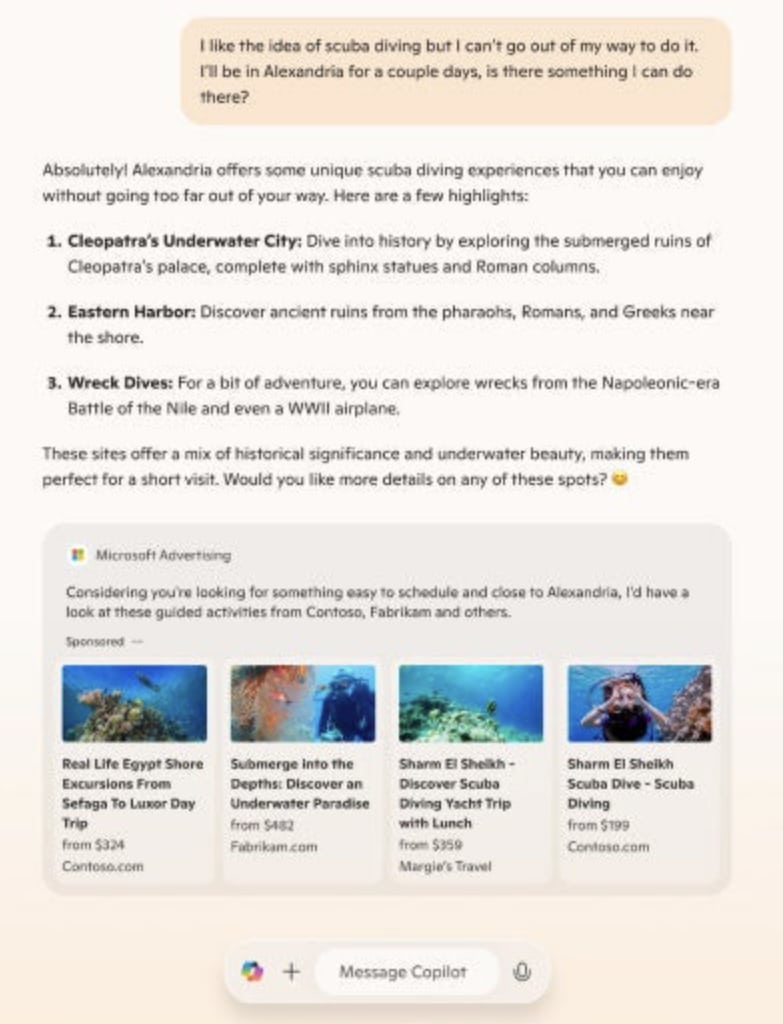
New Copilot ad experience. Copilot ads will appear below Copilot’s (organic) answers in a feature Microsoft is calling “ad voice.” This will include text referencing the conversation within Copilot and acts as a transitionary message from the advertiser. Fewer ad annotations and extensions will appear.

What it looks like. Here’s a screenshot Microsoft provided of the new look experience:

Timeline. This change will first come to copilot.microsoft.com this month and expand to more Copilot experiences – including Bing Search – “over time,” Microsoft said

New Microsoft advertising features. Microsoft will also launch two new generative AI features in pilot this month:

  • Diagnostics. This “inspect campaign setup, assess account health, diagnose where attention is needed, and propose what to do next, all activated via simple conversational engagement.”
  • Performance snapshot. You “can use natural language to ask Copilot in the Microsoft Advertising Platform to obtain an account or campaign-specific performance overview with a summary of key insights, trends, and anomalies.”

Why we care. Microsoft, citing internal data, said Copilot ads have “click through rates that are 69% stronger, and conversion rates are 76% higher when comparing lower funnel ad types to traditional search.” While these stats are quite vague and open to our interpretation of what they actually mean – ultimately, any changes Microsoft makes that could impact your advertising performance and ROI is one to watch and know about.

Microsoft’s blog post. Transforming audience engagement with generative AI.

Original source: https://searchengineland.com/microsoft-copilot-ads-change-appearance-trigger-447186

Common Mistakes to Avoid in Sponsor License Applications

Home Business Magazine Online

The global economy offers businesses an unprecedented opportunity to secure top international talent. For UK businesses, there can be great value in recruiting workers from overseas to fill skill gaps and drive growth. However, to legally hire non-UK workers who have no other basis to remain in the UK, businesses need to secure a sponsor license from the Home Office. This license allows employers to sponsor skilled workers who require a visa to live and work in the UK, and subsequently support their visa applications.

While acquiring a sponsor licence can open doors to a global talent pool, the process is complex, and businesses must adhere to strict legal requirements. The sponsor licence application process is governed by Home Office guidance, and failure to meet specific requirements can lead to an application being rejected. Such a setback not only delays recruitment but also results in additional costs and administrative burdens. A refusal could also result in a cooling-off period being imposed in relation to the submission of a fresh application.

In this post, the expert immigration solicitors at JMW will explore common mistakes that businesses make when applying for sponsor licences. By recognising these pitfalls, businesses can take proactive steps to avoid them and improve their chances of a smooth application process.

Inadequate Documentation and Record-Keeping

Among the most common mistakes businesses make with sponsor licence applications are administrative errors like failing to provide the necessary information or documentation to prove your business case for a licence. The Home Office requires a substantial amount of documentation when it assesses a business’ eligibility for a sponsor licence. This documentation is used to prove that the business is genuine, operates legally in the UK and has the capability to meet its sponsorship obligations.

The specific documents required will depend on the type of licence being applied for and the nature of the business. Commonly requested documents include evidence of a UK business bank account, evidence of business premises, and evidence of financial status such as audited accounts, financial statements or company tax returns.

Moreover, even after obtaining a sponsor licence, businesses are required to maintain thorough records relating to their sponsored workers. This includes details of their  immigration status, their job roles, payment of salary and attendance at work. The Home Office can conduct compliance visits at any time – including when they are considering a sponsor licence application – so businesses must be prepared to present these records upon request. Inadequate record-keeping can lead to the suspension or revocation of a sponsor licence, as well as potential legal penalties.

To avoid these issues, businesses should take the time to carefully review the Home Office’s guidance on required documentation before submitting their application. They should also ensure that they have practices and procedures in place to ensure that they can monitor their workers and understand their record-keeping duties, as these compliance duties will come into play on the day the sponsor licence is issued.

It may be beneficial to seek advice from an immigration solicitor who can ensure that all necessary documents are included and that record-keeping practices meet the required standards. Solicitors can also assist with ensuring that sponsors are abiding with their post-application compliance duties.

Sponsorship Management Failures

Once a sponsor licence is granted, businesses are required to comply with ongoing sponsorship management responsibilities. This involves appointing key personnel to manage the sponsorship process and using the Sponsorship Management System (SMS) to fulfil various duties.

Key personnel nominated at the licence application stage include an Authorising Officer, a Level 1 User, and a Key Contact. The Authorising Officer is responsible for the overall sponsorship process and ensuring that the business complies with its obligations. The Level 1 user manages the day-to-day operations of the SMS, including issuing Certificates of Sponsorship (CoS) to sponsored workers. The Key Contact serves as the primary point of communication between the business and the Home Office.

A common mistake businesses make is failing to provide any nominated personnel with adequate training. These staff members have important responsibilities. For example, failing to report changes in a sponsored worker’s employment status, such as a change in job role or a reduction to their salary, can result in non-compliance with sponsorship duties. The Level 1 User should understand and fulfil this function effectively to avoid legal penalties, and procedures must be in place to ensure the Level 1 User is made aware of any changes to the organisation’s sponsored workers.

Additionally, businesses must keep the Home Office informed of any significant changes within the business, such as a change of address or key personnel. Neglecting these duties can lead to the downgrading of a sponsor licence rating or, in severe cases, the revocation of the licence altogether.

To mitigate these risks, businesses should invest time in training their key personnel and implementing robust internal processes to manage their sponsorship obligations. Regular audits of the sponsorship management process can help identify potential issues before they escalate into compliance failures.

Administrative Mistakes

Administrative mistakes may seem minor, but they can have significant consequences, including delays or even the rejection of a sponsor licence application.

One of the most common administrative errors is incorrect or incomplete information on the application form or accompanying information documents. The sponsor licence application form is detailed and requires accurate information about the business and the nominated key personnel. Detailed information in relation to the required number of Certificates of Sponsorship (CoS) needed is also required. Mistakes such as incorrect business or key personnel information, or inadequate information on the required information documents in relation to why a sponsor licence is needed, can all lead to rejection.

Another administrative pitfall is applying for the wrong type of sponsor licence. The UK offers different types of sponsor licences depending on the nature of the employment, such as the Skilled Worker licence for long-term employment on a route that leads to settlement, the Temporary Worker licence for short-term employment and routes like the Seasonal Worker visa, or even a sponsor licence held in one of the Global Business Mobility routes. These might include a Senior or Specialist Worker visa, which enables multinational companies to transfer senior workers to an entity in the UK.

Late submissions or failure to respond to requests for additional information from the Home Office within the specified timeframe can also result in the application being rejected or delayed.

To avoid administrative errors, businesses should approach the application process with high attention to detail. It is advisable to double-check all information before submission and consider having the application prepared, or at least reviewed, by a legal expert who specialises in immigration law.

If your application is rejected, an immigration solicitor can provide your organisation with advice in relation to correcting any errors before you reapply or can explore the option of a review. This can be useful in providing clarity on potential outcomes before you proceed.

Businesses aiming to expand their access to international talent should consult a legal expert without delay to initiate the sponsor licence application process.

The post Common Mistakes to Avoid in Sponsor License Applications appeared first on Home Business Magazine.

Original source: https://homebusinessmag.com/growing-a-business/how-to-guides-growing-a-business/common-mistakes-avoid-sponsor-license-applications/

Microsoft is about to change how Copilot ads appear and trigger

Microsoft Advertising will soon change the way ads in Copilot appear to users, as well as how ads trigger. Advertisers are also about to get two new pilot features.

New Copilot ad experience. Copilot ads will appear below Copilot’s (organic) answers in a feature Microsoft is calling “ad voice.” This will include text referencing the conversation within Copilot and acts as a transitionary message from the advertiser. Fewer ad annotations and extensions will appear.

What it looks like. Here’s a screenshot Microsoft provided of the new look experience:

Timeline. This change will first come to copilot.microsoft.com this month and expand to more Copilot experiences – including Bing Search – “over time,” Microsoft said

New Microsoft advertising features. Microsoft will also launch two new generative AI features in pilot this month:

  • Diagnostics. This “inspect campaign setup, assess account health, diagnose where attention is needed, and propose what to do next, all activated via simple conversational engagement.”
  • Performance snapshot. You “can use natural language to ask Copilot in the Microsoft Advertising Platform to obtain an account or campaign-specific performance overview with a summary of key insights, trends, and anomalies.”

Why we care. Microsoft, citing internal data, said Copilot ads have “click through rates that are 69% stronger, and conversion rates are 76% higher when comparing lower funnel ad types to traditional search.” While these stats are quite vague and open to our interpretation of what they actually mean – ultimately, any changes Microsoft makes that could impact your advertising performance and ROI is one to watch and know about.

Microsoft’s blog post. Transforming audience engagement with generative AI.

Original source: https://searchengineland.com/microsoft-copilot-ads-change-appearance-trigger-447186

Bing expands generative search experience and Deep Search

Microsoft announced a number of updates to Copilot today, specific to Bing Search, its generative search experience and Deep Search features are expanding more with this news.

Generative search. Bing said it is now expanding its Bing generative search experience for “informational queries”, such as how-to queries. Some examples include  “how to effectively run a one on one” and “how can I remove background noise from my podcast recordings.”

“Whether you’re looking for a detailed explanation, solving a complex problem, or doing deep research, generative AI helps deliver a more profound level of answers that goes beyond surface-level results,” Microsoft wrote.

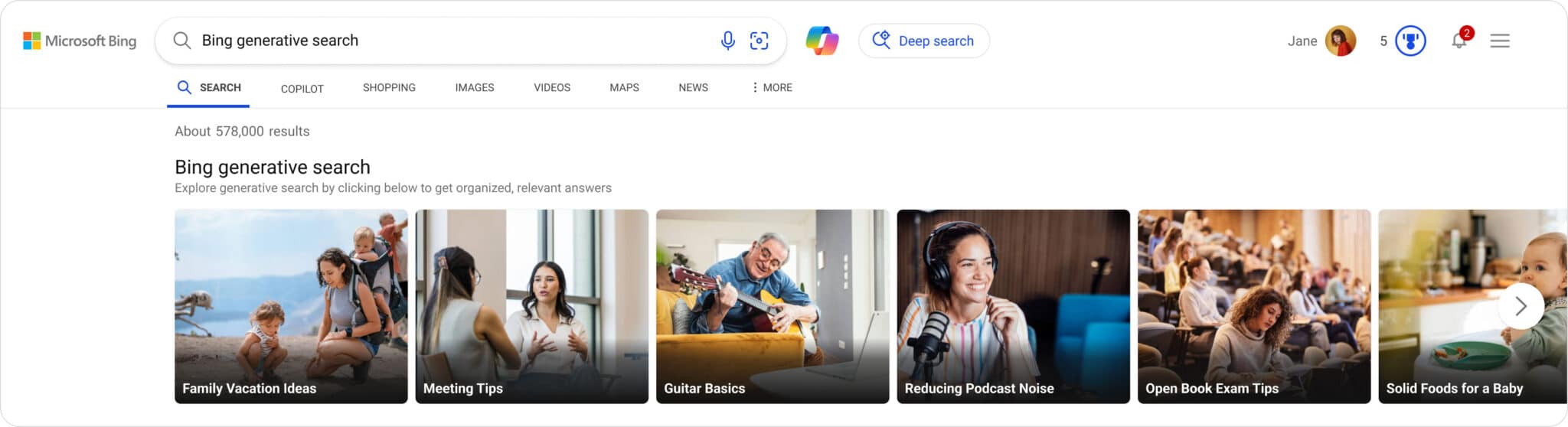
How to try it. Microsoft said, go to Bing in the United States and type “Bing generative search” into the search bar. “You’ll be met with a carousel of queries to select and demo, allowing you to experience how generative search can deliver more relevant and comprehensive answers for a wide range of topics,” Microsoft added.

What it looks like. Here is a screenshot:

What is Bing generative search. Microsoft explained that this search “experience combines the foundation of Bing’s search results with the power of large and small language models (LLMs and SLMs).” “It understands the search query, reviews millions of sources of information, dynamically matches content, and generates search results in a new AI-generated layout to fulfill the intent of the user’s query more effectively,” Microsoft added.

Deep Search expands. While Microsoft announced Deep Search last December, it had a rocky start, but it is live to US users as of last March. Microsoft today said, “While we’re excited to give you this opportunity to explore generative search firsthand, this experience is still being rolled out in beta. You may notice a bit of loading time as we work to ensure generative search results are shown when we’re confident in their accuracy and relevancy, and when it makes sense for the given query. You will generally see generative search results for informational and complex queries, and it will be indicated under the search box with the sentence “Results enhanced with Bing generative search.”

More. Microsoft reiterated its stance on publishers, saying:

Bing generative search is just the first step in upcoming improvements to define the future of search. We’re continuing to roll this experience out slowly to ensure we deliver a quality experience before making this broadly available. We also continue to ensure there are additional citations and links that enable users to explore further and check accuracy, which in turn will send more traffic to publishers to maintain a healthy web ecosystem.

Why we care. This is another step of the evolution of AI in search and we are looking forward to future changes.

Publishers will need to keep an eye on these changes and adapt to these changes going forward.

Original source: https://searchengineland.com/bing-expands-generative-search-experience-and-deep-search-447138

Common Mistakes to Avoid in Sponsor License Applications

Home Business Magazine Online

The global economy offers businesses an unprecedented opportunity to secure top international talent. For UK businesses, there can be great value in recruiting workers from overseas to fill skill gaps and drive growth. However, to legally hire non-UK workers who have no other basis to remain in the UK, businesses need to secure a sponsor license from the Home Office. This license allows employers to sponsor skilled workers who require a visa to live and work in the UK, and subsequently support their visa applications.

While acquiring a sponsor licence can open doors to a global talent pool, the process is complex, and businesses must adhere to strict legal requirements. The sponsor licence application process is governed by Home Office guidance, and failure to meet specific requirements can lead to an application being rejected. Such a setback not only delays recruitment but also results in additional costs and administrative burdens. A refusal could also result in a cooling-off period being imposed in relation to the submission of a fresh application.

In this post, the expert immigration solicitors at JMW will explore common mistakes that businesses make when applying for sponsor licences. By recognising these pitfalls, businesses can take proactive steps to avoid them and improve their chances of a smooth application process.

Inadequate Documentation and Record-Keeping

Among the most common mistakes businesses make with sponsor licence applications are administrative errors like failing to provide the necessary information or documentation to prove your business case for a licence. The Home Office requires a substantial amount of documentation when it assesses a business’ eligibility for a sponsor licence. This documentation is used to prove that the business is genuine, operates legally in the UK and has the capability to meet its sponsorship obligations.

The specific documents required will depend on the type of licence being applied for and the nature of the business. Commonly requested documents include evidence of a UK business bank account, evidence of business premises, and evidence of financial status such as audited accounts, financial statements or company tax returns.

Moreover, even after obtaining a sponsor licence, businesses are required to maintain thorough records relating to their sponsored workers. This includes details of their  immigration status, their job roles, payment of salary and attendance at work. The Home Office can conduct compliance visits at any time – including when they are considering a sponsor licence application – so businesses must be prepared to present these records upon request. Inadequate record-keeping can lead to the suspension or revocation of a sponsor licence, as well as potential legal penalties.

To avoid these issues, businesses should take the time to carefully review the Home Office’s guidance on required documentation before submitting their application. They should also ensure that they have practices and procedures in place to ensure that they can monitor their workers and understand their record-keeping duties, as these compliance duties will come into play on the day the sponsor licence is issued.

It may be beneficial to seek advice from an immigration solicitor who can ensure that all necessary documents are included and that record-keeping practices meet the required standards. Solicitors can also assist with ensuring that sponsors are abiding with their post-application compliance duties.

Sponsorship Management Failures

Once a sponsor licence is granted, businesses are required to comply with ongoing sponsorship management responsibilities. This involves appointing key personnel to manage the sponsorship process and using the Sponsorship Management System (SMS) to fulfil various duties.

Key personnel nominated at the licence application stage include an Authorising Officer, a Level 1 User, and a Key Contact. The Authorising Officer is responsible for the overall sponsorship process and ensuring that the business complies with its obligations. The Level 1 user manages the day-to-day operations of the SMS, including issuing Certificates of Sponsorship (CoS) to sponsored workers. The Key Contact serves as the primary point of communication between the business and the Home Office.

A common mistake businesses make is failing to provide any nominated personnel with adequate training. These staff members have important responsibilities. For example, failing to report changes in a sponsored worker’s employment status, such as a change in job role or a reduction to their salary, can result in non-compliance with sponsorship duties. The Level 1 User should understand and fulfil this function effectively to avoid legal penalties, and procedures must be in place to ensure the Level 1 User is made aware of any changes to the organisation’s sponsored workers.

Additionally, businesses must keep the Home Office informed of any significant changes within the business, such as a change of address or key personnel. Neglecting these duties can lead to the downgrading of a sponsor licence rating or, in severe cases, the revocation of the licence altogether.

To mitigate these risks, businesses should invest time in training their key personnel and implementing robust internal processes to manage their sponsorship obligations. Regular audits of the sponsorship management process can help identify potential issues before they escalate into compliance failures.

Administrative Mistakes

Administrative mistakes may seem minor, but they can have significant consequences, including delays or even the rejection of a sponsor licence application.

One of the most common administrative errors is incorrect or incomplete information on the application form or accompanying information documents. The sponsor licence application form is detailed and requires accurate information about the business and the nominated key personnel. Detailed information in relation to the required number of Certificates of Sponsorship (CoS) needed is also required. Mistakes such as incorrect business or key personnel information, or inadequate information on the required information documents in relation to why a sponsor licence is needed, can all lead to rejection.

Another administrative pitfall is applying for the wrong type of sponsor licence. The UK offers different types of sponsor licences depending on the nature of the employment, such as the Skilled Worker licence for long-term employment on a route that leads to settlement, the Temporary Worker licence for short-term employment and routes like the Seasonal Worker visa, or even a sponsor licence held in one of the Global Business Mobility routes. These might include a Senior or Specialist Worker visa, which enables multinational companies to transfer senior workers to an entity in the UK.

Late submissions or failure to respond to requests for additional information from the Home Office within the specified timeframe can also result in the application being rejected or delayed.

To avoid administrative errors, businesses should approach the application process with high attention to detail. It is advisable to double-check all information before submission and consider having the application prepared, or at least reviewed, by a legal expert who specialises in immigration law.

If your application is rejected, an immigration solicitor can provide your organisation with advice in relation to correcting any errors before you reapply or can explore the option of a review. This can be useful in providing clarity on potential outcomes before you proceed.

Businesses aiming to expand their access to international talent should consult a legal expert without delay to initiate the sponsor licence application process.

The post Common Mistakes to Avoid in Sponsor License Applications appeared first on Home Business Magazine.

Original source: https://homebusinessmag.com/growing-a-business/how-to-guides-growing-a-business/common-mistakes-avoid-sponsor-license-applications/
8 Ways to Make Money Reading

Can you really make money reading? YES!

Are you a true bookworm? If reading is a passion of yours, it may be worth considering the ways you can make money from reading. Who doesn’t want to earn money from something they love? 

There are more ways to earn money from reading than you may think. From proofreading and editing to reviewing books, you could make decent cash on the side. If you’re going to read anyway, why not profit from it? 

Here are 7 ways you can make money reading.


Review Books

Home Business

You don’t have to be a literary scholar to review books. All you need is a love for reading, and have the ability to form honest, fair opinions about the books you read. If you are asked to review a particular book, you will need to be open to reading genres or authors outside of your usual, and give them a fair chance. You really can’t judge a book by its cover with this one! 

There are many websites online that pay you for your reviews. All you have to do is search ‘get paid to review books’ into Google, and a plethora of results come up. Do your research before launching into a job though, as the number of opportunities, level of pay and depth of reviews required may differ.  

It’s also important to remember that reviewing books won’t make you millions, nor will you be able to quit your day job. However, it can be a lucrative and fun side hustle to help you put away extra into your savings, pension or even spend on more books! 

OnlineBookClub.org is a great place to start. Publishers and authors will often give you a free copy of a new book in exchange for an honest, written review from you, the reader. You will get a free copy of a book, then on top of this, get paid to give it an honest review. The best part is, you don’t have to lie. 

OnlineBookClub encourage you to be honest. You will get paid no matter what you think. You don’t have to claim you loved it if you didn’t. 

Pay outs current range from $5 to $60 per review. This is approximately £4 to £50 GBP. This isn’t a good pay when you work it out by an hourly rate – but if you love reading and would do it anyway, it’s a good way to make some extra side cash. The thing to note with OnlineBookClub is that you won’t get paid for your first review. However, you will get the book for free. 

We also recommend:  

Magazines and newspapers also regularly have book review sections. While their staff are the ones who usually read the book, it’s worth approaching publications you love with a book review section to find out if they need reviewers. You’ll need to show you can write a constructive review, so prepare some short sample reviews ready to send over as examples.

Overrun with books? Find out how to make money from your old books. 

Become a Beta Reader

A beta reader is someone who reads a book while an author is still writing it. They might have a specialist interest or life experience, or simply be avid readers with a good sense of story and a critical eye.

The pay for beta readers varies widely – many people will do it for free, for people they know or respect. However, there are paid opportunities out there. Look into author communities online for people asking for readers – such as Reddit or Facebook groups – or set up as a freelancer. Then, you can advertise on social media with targeted adverts, in specialised publications like Writers Magazine, and charge a rate you like.

Remember that the rate needs to be competitive, so starting at around £30 for a book up to 50,000 words is a good guideline. This is the length of a Young Adult (YA) or Middle Grade book, or a ‘cosy’ crime or romance book. Literary fiction is usually 80,000 to 100,000 words and fantasy often 120,000 words. Most beta readers charge by the 1000 words to make it easy to work out a rate.

Beta readers are expected to provide critical feedback to an author that they can use. It’s not just saying ‘I don’t like this’. It should be things like ‘this bit didn’t make sense to me’, or ‘this storyline felt slow’, or even ‘hey, I loved these characters!’. Telling authors what works is as important as telling them what doesn’t.

Start a Book Blog

internet marketing

Blogging is a great way to earn money on the side, and could actually become a full-time job should you build your brand and grow your blog successfully. Book bloggers are can be very popular and successful, with blogs such as BookWritten getting over 75,000 hits per month. 

The site contains articles on a range of things, from finding places to read books for free, to looking after books to keep them in pristine condition. However, you could write about anything that tickles your fancy. 

The Literary Edit is a more personal blog, written by award-winning book blogger and writer Lucy. She blogs about all things books, with a more informal, chatty style, Lucy writes reviews of books she’s read, tells her followers her favourite books of all time, and even has a great little section called ‘Desert Island Books’. 

You could even find a niche and discuss books particularly close to your interests. Crime By The Book is a fascinating book blog, written by a lover of crime fiction, with a particular skew towards Scandinavia. Although most of the books are general crime fiction, the niche is particularly interesting. 

But how can you make money from blogging? Well, mainly ads on the site, as well as partnerships and affiliates with brands. You may even get a sponsorship for a particular series. As your blog grows and develops, you may be sent freebies of books, and even asked to review them on your blog in return for payment.

If your blog grows large enough, people may even pay monthly subscriptions for exclusive content, or you could use widgets such as Buy Me A Coffee, where people can buy you a virtual coffee to help fund your mission. Plus you will be able to make this money reading.

Our frugal columnist, and award-winning blogger Jane, owner of shoestringcottage.com, first started her blog over a decade ago: 

Shoestring Cottage

Jane from Shoestring Cottage

“I began with a free WordPress blog, as I was writing as a hobby. However, when I realised it was possible to monetise my site, I purchased a domain name and server hosting. I also bought a theme (design) to make it look more professional. I maybe spent £400 initially and now pay around £150 a year.

“The key to getting a steady readership is to post regularly – at least once a week, preferably more. I also did a couple of cheap blogging courses, and learned some of the technicalities of running a blog. I think it is worth doing this if you are a complete beginner.” 


Not sure where to begin? Here are some websites we recommend to start your blog: 

  • WordPress 
  • Wix.com 
  • Squarespace 
  • Blogger 

These websites are free, easy-to-use and allow you to build your blog using templates available. They are straight forward and you can create a beautiful, unique blog in very little time. 

Find out more about making money from blogging here. 


Use Social Media

make money reading

Social media is a brilliant tool. Many people actually become full-time ‘influencers’, and earn a good sum of cash using their platforms.  

Instagram

One of the biggest platforms that appreciates books is Instagram. As with blogging, people use their Instagram pages to review books they’ve read, share their favourite books and interact with other people who love reading as much as they do. 

The money comes from sponsorships, affiliates and brand deals. You may collaborate with a brand on a post, for example promoting a new book being released, or encouraging your followers to follow a new author’s work. You may be given affiliate links as well as upfront payment, where you make a cut of a sale when someone buys a book through your link. 

Of course, you won’t get these opportunities immediately, and it will take some hard graft on your end to build a following. But through following others, interacting with them and posting a steady and constant bout of content, you could grow more quickly than you may think. 

‘Bookstagrams’, as they are fondly know in the book-lover community, are a hugely popular part of the platform. Elizabeth Sagan (@elizabeth_sagan) boasts a whopping 203k followers. A self-confessed ‘book whisperer’, Elizabeth posts beautiful imagery of her books and fun, engaging short videos. Other accounts such as @coraliebickfordsmith and @stacked_shelf have 25.8k and 10.3k followers respectively.  

You don’t have to have hundreds of thousands of followers to start making money. Once you reach 5,000 followers you are considered a ‘micro-influencer’, and can start reaching out to brands and companies to see if they’d like to work with you. Remember to work with other influencers and help to build each other up. 

Find out more about making money on social media. 

TikTok

One of the largest video-sharing platforms in the world is TikTok, and ‘BookTok’ is an integral part of the platform. BookTok even has its own Wikipedia page, and the tag #BookTok has over 112.2 billion views on the app. 

You may start on another platform and as you feel more confident, move over to making videos. It can seem daunting, but the BookTok community is a warm and welcoming one. Despite the criticisms of social media, this corner of the internet is full of friendship, enjoyment, and great connections over a shared passion.  

We love @bookishbytammi, who shares books she’s read monthly, her favourite books in different genres such as fantasy and romance, and does fun challenges too. She has 64k followers and almost one million likes across her videos.   

If you aren’t feeling ready to make videos, join the platform and have a browse. As you watch other people make videos and discuss topics you love, you may become inspired to start creating videos yourself. 

As with other social media platforms, the money you can make comes in the form of sponsorships, brand partnerships and affiliates. You may be asked to do ads for a certain product or company, and get paid to attend events.  

Find out about the TikTok influencers teaching personal finance to millions. 

YouTube

BookTube is a huge part of the online video service, YouTube. To find out what kind of content you need to create, simply search ‘booktube’ in the search bar and watch lots of the videos that come up.

Like TikTok and Instagram, most BookTubers are comfortable on camera, but you can do an off-camera presenting style if you are good at creating interesting graphics for people to look at while you talk. Often, this includes filming yourself reading the book but from ‘your POV’ so the camera looks as if it’s from your eyes, looking at your hands etc.

Proofreading

make money proof reading

Another way to make money reading is to become a proof-reader. Proofreading is essentially a final quality check before publishing. A proof-reader will carefully check the text for any errors before it is published or shared. It’s the last stage of the writing process, and it is essential for any text. 

The job of a proof-reader is to bring attention to any spelling, punctuation, and grammar errors, as well as any typos or formatting issues. You may even alert the author and publisher to any inconsistencies within the text. 

Many proof-readers do it on a freelance basis. You can advertise your proofreading services on websites such as PeoplePerHour and Fiverr. Some people offer their services for under £5, however when you build up your reviews, ratings and reputation, you could be charging hundreds for longer texts and novels. 

You could also go in search of opportunities. Websites such as UpWork and Freelancer are goldmines for people looking for proof-readers to help them. From doing last-minute checks of novels to going over important documents and even checking for spelling and grammar in examination papers, proof-reading involves a huge range of tasks. The roles range from £8 per hour to a few thousand pounds for large, important projects. 

In order to be a successful proof-reader, you will of course need a love for reading, but some key skills are required also. You will need a great attention to detail and a solid understanding of spelling and grammar. You’ll need to be self-disciplined and be able to meet tight deadlines.  

Scribbr have a great guide to proofreading, which you can read here. 

Need a flexible schedule? Check out these work from home roles for everyone. 


Narrate Audiobooks

make money online

Do you have a smooth as butter voice that people love to listen to? Perhaps you are good at doing accents, making a book come to life as you read to others. Do your children or grandchildren guffaw when you make a funny voice, pretending to be the monster in their book? Narrating audiobooks or participating in an audio podcast drama could be just the thing for you. 

If you are an avid reader, this is a great way to supplement your income. You may even choose to pursue this as a freelancer on a full-time basis if you find it is a successful career path for you. You can make money reading books, out loud!

But how can you get started? Well, the internet is a powerful thing, and there is a plethora of opportunities waiting for you.  

The Audiobook Creative Exchange (ACX) is a huge online platform that pays people to read books out loud. Books you narrate for this popular platform could even appear on iTunes and Audible, which would be a great boost for your portfolio. Simply create an account, upload some high-quality samples of you narrating a small paragraph or passage, and then set your hourly rate. 

Authors and publishers will be able to find you and review your work and may ask you to narrate for them. The great thing about ACX is that you could even earn some of the royalties earned on the book! 

There are many ways you can get work, as well as the ACX. As previously mentioned, you could advertise your work on freelance sites such as Fiverr. There are also many more companies which specialise in voiceover and narration. 

Here are some we recommend: 

Listen to thousands of audiobooks, podcasts and Audible originals, with Audible. Sign up for your free 30-day trial.


Translate Books

Home Business

Do you speak more than one language? Many people are crying out for people to translate texts for them. From novels to documents and even old texts, your language skills could earn you a decent bit of money on the side. If you speak multiple languages, even better! You will be a very valuable asset to many companies and be able to make decent money from reading. 

Translation services for fiction books aren’t about direct translation of the words on the page. It’s an art: you need to capture the essence of what is being said and making it sound just as beautiful in the second language. Translation for non-fiction or business documents is more literal.

You could advertise your services on freelance websites, or go in search of opportunities. We have previously recommended Fiverr, Upwork, Freelancer and PeoplePerHour, all of which are relevant to this route too.  

However, there are also websites dedicated to translation work. Blend is one of the most popular and successful translation websites. They guarantee continuous workflow and fair pay for every project. You can also apply as both a translator and a voice artist, so you can mix things up! Although the pay doesn’t start out high, the progression system makes it easy to build up your pay and your reputation on the website. 

However, if you want to make real money from this, you could consider going full-time as a freelance translator. On Freelancer, text translation jobs range anywhere from £7 to £25 an hour for simple texts, and a few thousand pounds for more in-depth, intense texts. 


The post 8 Ways to Make Money Reading appeared first on MoneyMagpie.

Original source: https://www.moneymagpie.com/make-money/6-ways-to-make-money-reading