Google expanded Performance Max to help merchants drive sales directly through online marketplaces, such as Amazon.
The big picture.Performance Max for Marketplaces allows sellers to create Google ad campaigns that send traffic to their product listings on third-party ecommerce platforms, without needing a website or Merchant Center account.
Why we care. For marketers with established marketplace sales, this represents a potentially big new piece of their Google Ads strategy. With no need for a site or merchant center, the cost is much lower than most other types of Google Ads tactics (i.e., a massive opportunity for small businesses with a limited budget).
Use existing marketplace product data like images, descriptions and pricing in ads.
Detailed reporting on campaign performance within Google Ads.
Uses Google’s AI automation to optimize across Search, Shopping and more.
Conversion tracking. Thisis handled by the marketplaces themselves. Only sales for the merchant’s own products count – not purchases from other sellers.
Availability. Performance Max for Marketplaces is limited to “select marketplaces.” Google said it’s “working to add more marketplace platforms.”
Google’s March 2024 core update will hands down be one of the most talked-about SEO topics of the year, if not the last few years.
There’s so much around the update, from its length to the death of the helpful content update (HCU) to all of the quality issues on the SERP (talking about you, Reddit).
There is going to be a lot said about this update. Here are a few things I wanted to share based on data Semrush shared with me, scouring through hundreds of SERPs and looking at the ranking patterns along with the sites themselves.
To be clear: none of this is definitive. The following analysis is what I’ve seen and my interpretations.
1. Analyzing this update is hard
Analyzing the Google March 2024 core update difficult for many reasons. Even just understanding what happened in terms of the HCU and integration (or lack thereof) into the core is a whole basket of confusion for various reasons.
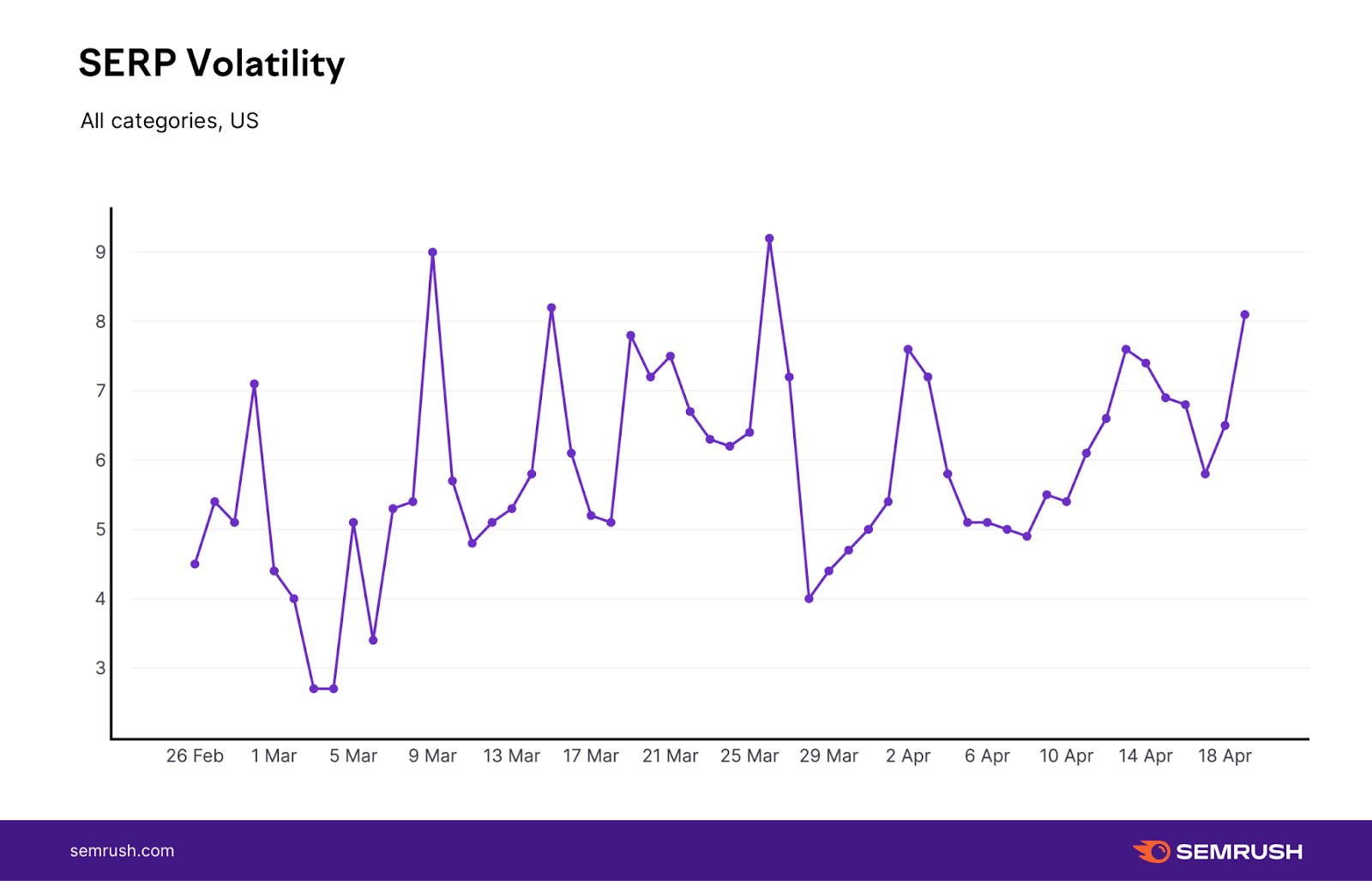
The full rank volatility fluctuation pattern seen during the March 2024 core update (with just a tad of pre-update volatility to boot)
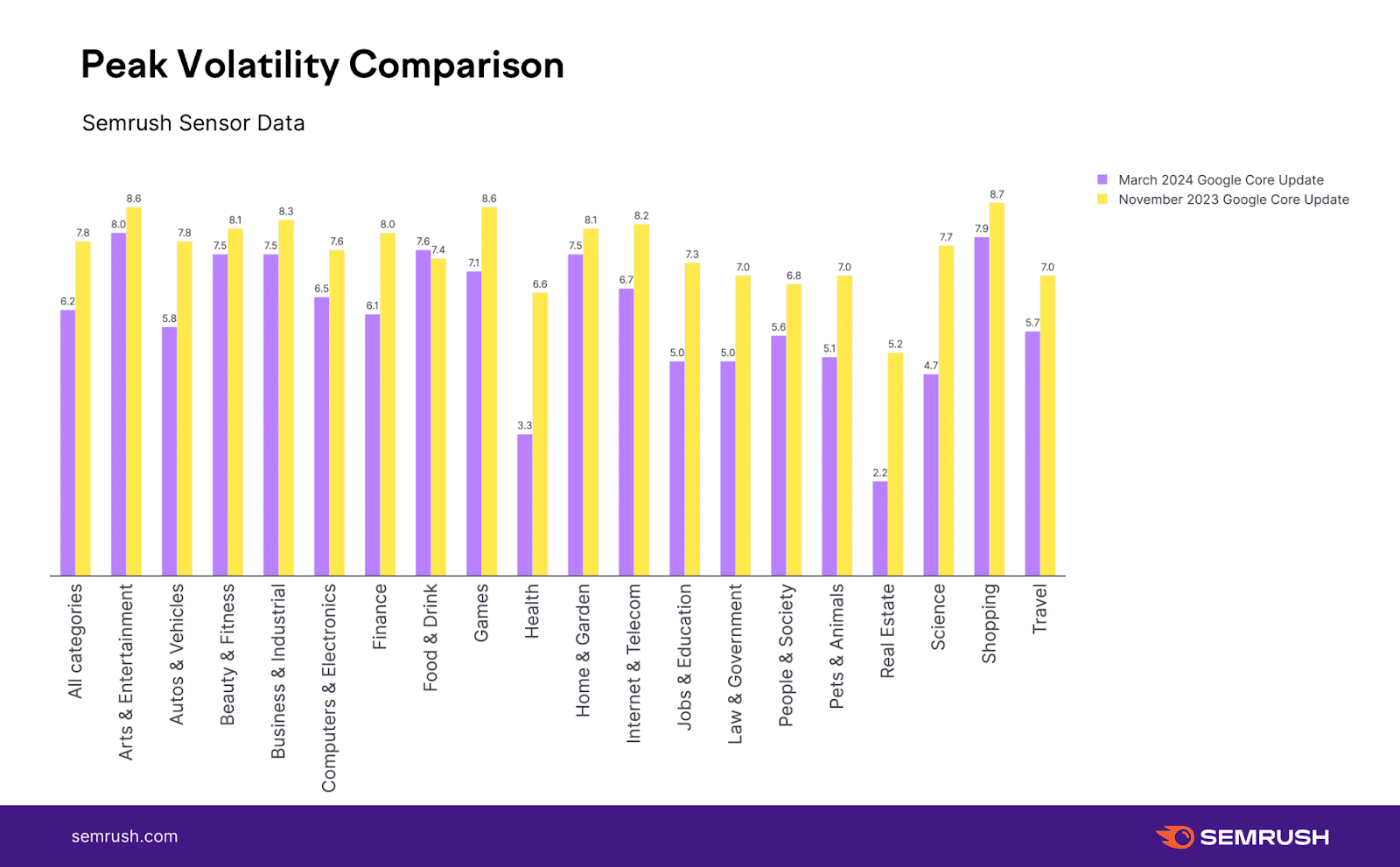
For example, one of the “metrics” tool providers show is the level of “peak volatility.”
As I’ve mentioned at various times (including SMX Next 2023), this metric is often the least telling when gauging the impact of an algorithm update, but it can still help paint the overall picture.
I’d say, in this case, it’s almost entirely irrelevant.
If you look below, the levels of peak rank volatility seen during the March 2024 core update are actually lower than what Semrush tracked back during the November 2023 core update.
Shocking? Not really.
The March 2024 core update was a very different update. It wasn’t about a quick week or so burst of intense algorithmic activity – it was a prolonged series of many moments of algorithmic intensity.
Looking at a “peak” moment in time (in our case, one out of 45 days) is not how this update should be analyzed.
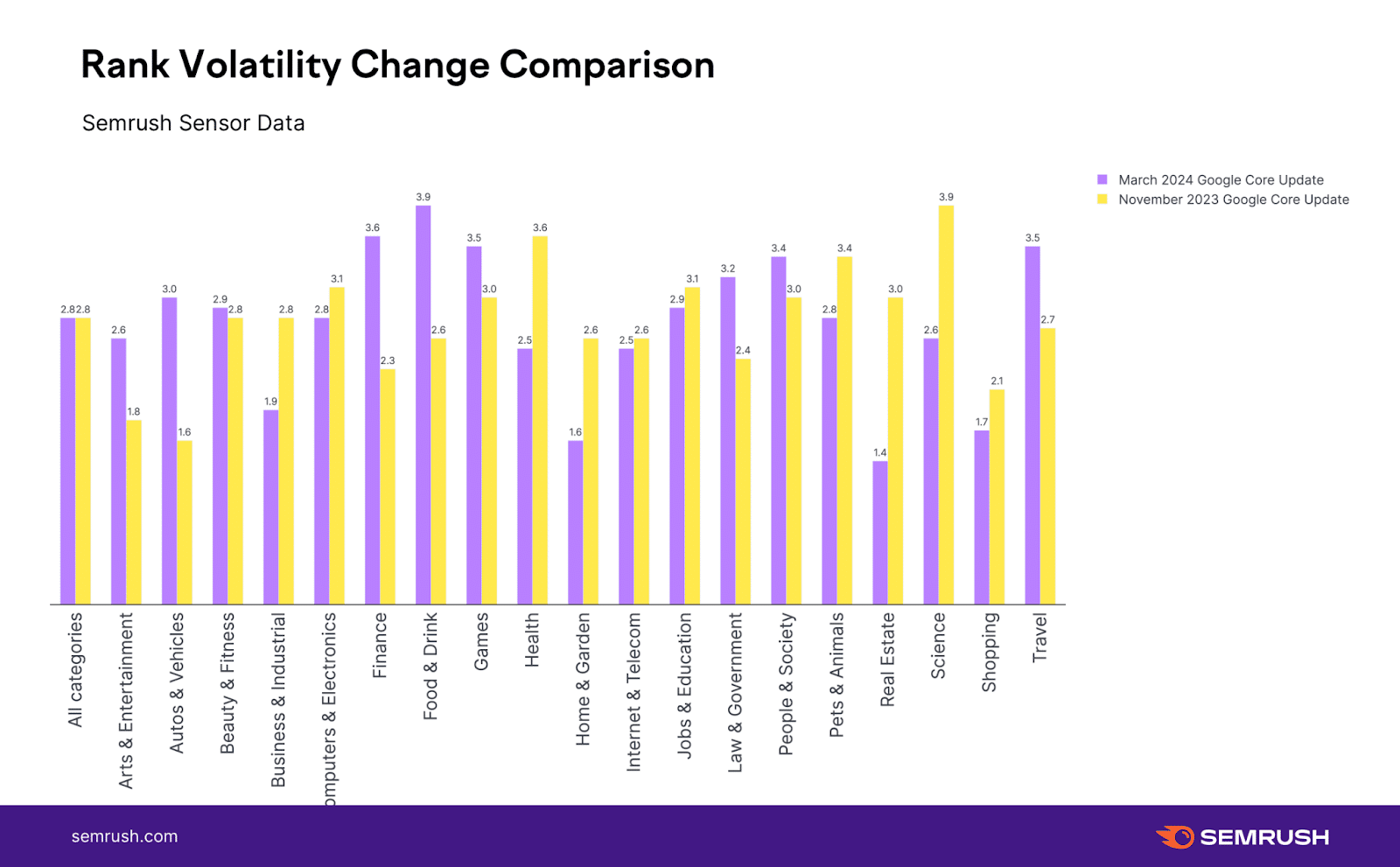
The same applies to another metric that is often pretty telling: volatility change. This data looks at the levels of rank fluctuations during a baseline period (a period of relative calm) and compares them to the level of fluctuation seen during the update.
Looking below, it turns out the March 2024 core update and the November 2023 core update show the exact same amount of relative change per Semrush:
Here, too, the metric relies on comparing one moment in time to another moment. With the March 2024 core update, it’s not about specific algorithmic moments that can be analyzed but the whole shebang.
It all makes gauging the impact of Google’s March 2024 core update far more difficult than usual (and it’s usually very difficult).
2. Huge movement at the bottom half of the SERP across the web
I must have looked at around 300 SERPs and the ranking patterns of the top 20 results over the course of the entire update.
One of my early observations was that there was a ton of movement toward the bottom of “page one of the SERP” but the top results didn’t seem to see any increased volatility relative to other updates I’ve analyzed.
That’s not to say sites were not impacted by key ranking losses at the top of the SERP. I’m saying that, overall, I expected to see more movement at the very top of the SERP.
(If you’re screaming, “No, I’ve seen crazy ranking swaps at the top of the SERP you fool!” you’re not wrong – I’ll get to it.)
This assessment seems to be corroborated by the data Semrush provided me.
If we look at the percentage of URLs ranking top 10 post-update that prior to the update didn’t crack the top 20 you’ll see a disparity between the March 2024 core update and the November 2023 core update:
In November, 6.46% of the URLs ranking in the top 10 came from beyond position 20. That number jumps noticeably to 9.38% in March.
To me, this is more telling than peak volatility or volatility change. It’s the analysis of where things were and where they ended up over the course of the update. It’s not just looking at a one-shot moment in time.
It also helps to see how drastic the rank volatility was and whether Google was really rewarding what it hadn’t known to reward before.
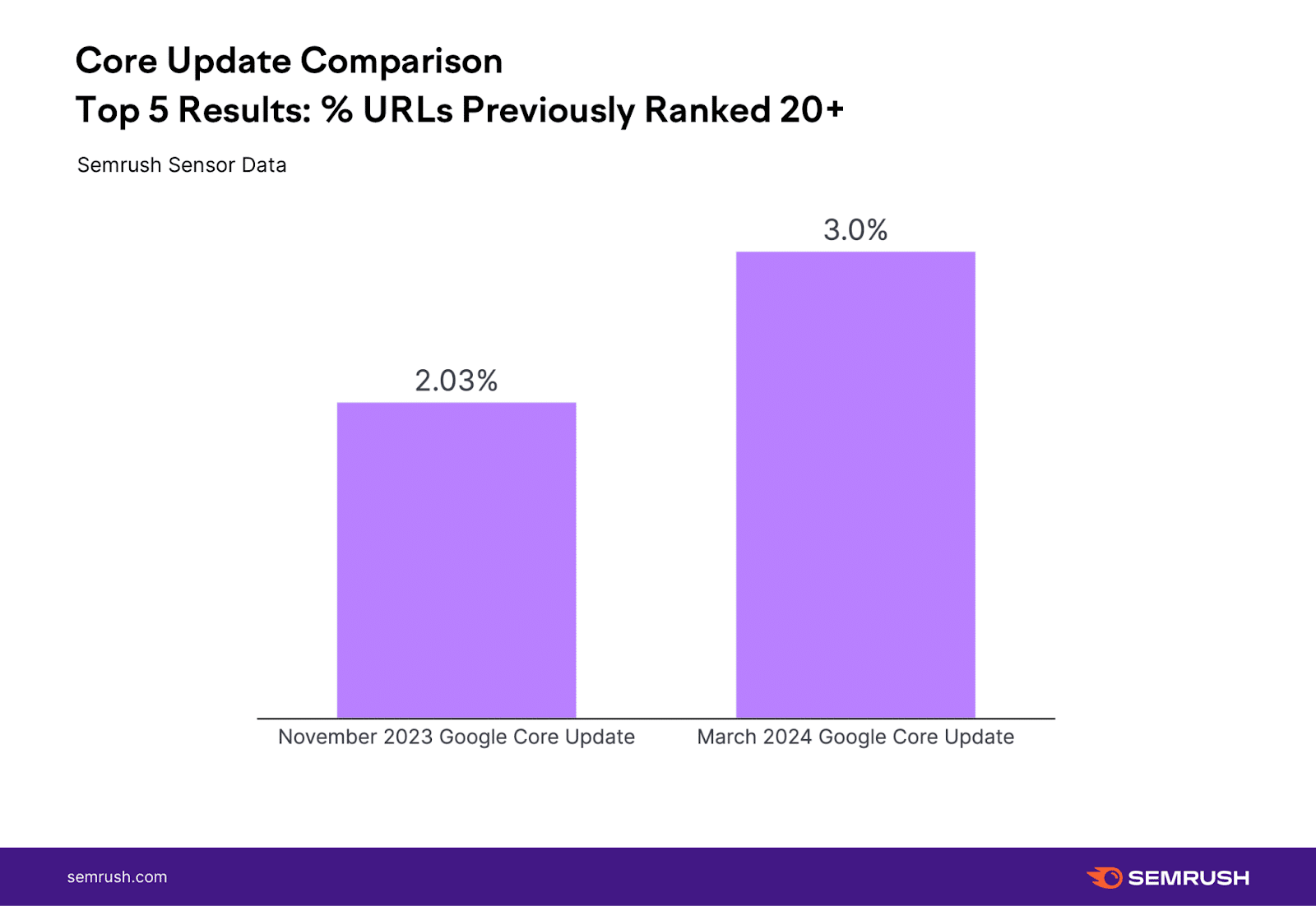
That said, the same pattern doesn’t hold true when looking at the top 5 results:
Among the top 5 results, the gap between the March 2024 core update and the November 2023 core update is far less significant.
This would point to the March 2024 core update not being disproportionately potent relative to other core updates where it matters most – the very top of the SERP. (Again, when looking at it through this very specific lens).
It also points to what I saw and mentioned before – the update was heavy-handed toward positions 6-10.
Beware – this is a horizontal data analysis that was meant to try to sweep across the web – it’s very normalized. We still need to dig a bit more “vertically” and that’s part of what makes analyzing this update so hard.
Get the daily newsletter search marketers rely on.
3. The aggregate data only tells one part of the story
With this update in particular, I think you can’t just sweep across the web and look at the top-level data. It’s, in a weird way, too normalized.
Looking at the web horizontally includes sites that lost and gained rankings but mostly includes sites that did not do much of anything.
To get a better understanding of the update, you have to hone in on who was impacted and the nature of that impact. That’s a more vertical and qualitative analysis.
From what I see (again, it’s just what I see, and it’s anecdotal at that), the March 2024 core update had a bite to it that you don’t always see with a core update.
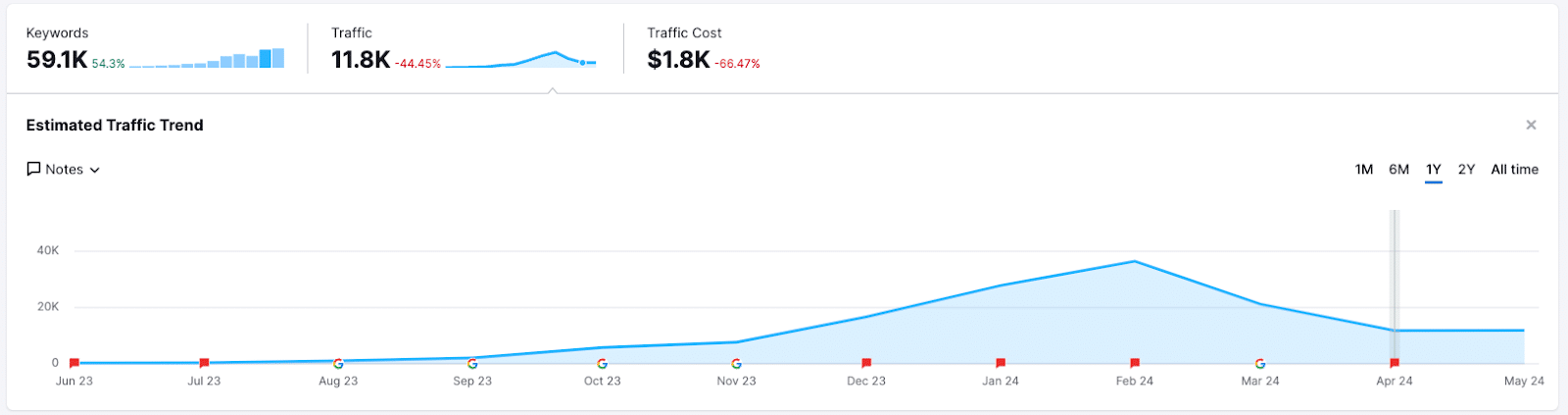
Below is a site that slowly started to see growth in September 2023 (ironically right around the September 2023 helpful content update) and really took off in Q4 2023 (suspiciously so, but I have not dug enough to say that with any confidence).
The March 2024 core update destroyed it.
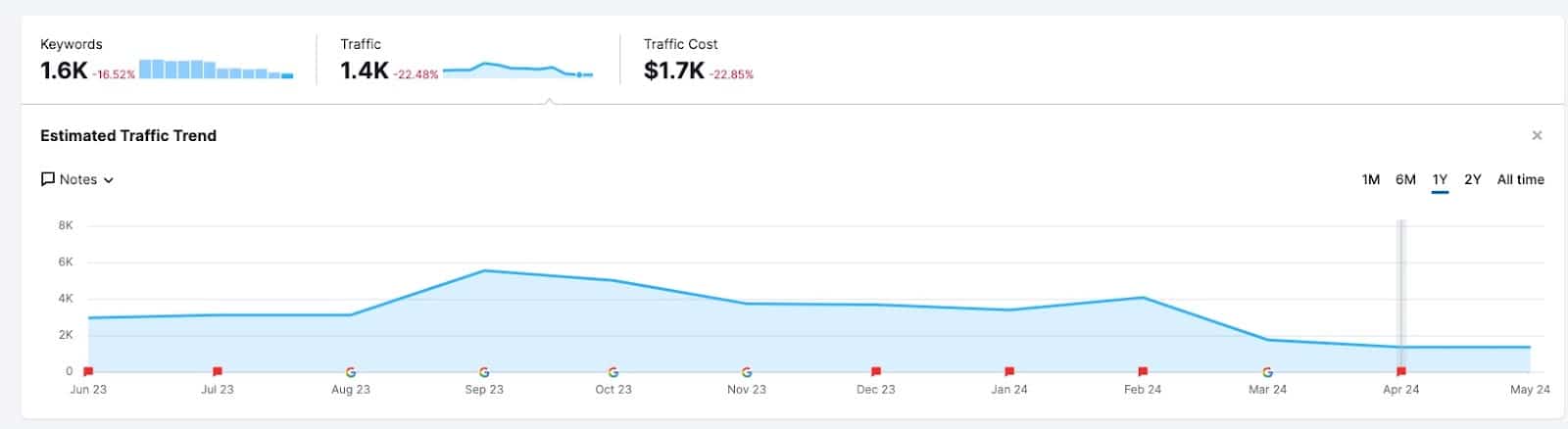
Since I mentioned the September 2023 HCU, below is a site that saw a ranking reward with the August 2023 core update but a loss with the September 2023 HCU a month later.
The March 2024 core update all but finished it off.
There does seem to be a bit of a pattern with sites getting hit by the September 2023 HCU and seeing subsequent losses with the March 2024 core update:
My personal theory is that no, Google did not throw away the HCU. It makes zero sense to me that they invested so heavily to create the construct only to throw it in the trash can.
What I personally think happened is the classifier used by the HCU was built upon and serves as the foundation of the now multifaceted way Google algorithmically assesses helpfulness.
Think of it like the Model T. No, the Model T is not produced anymore, but the process used to mass-produce it serves as the basis and foundation for mass-producing the cars we drive today.
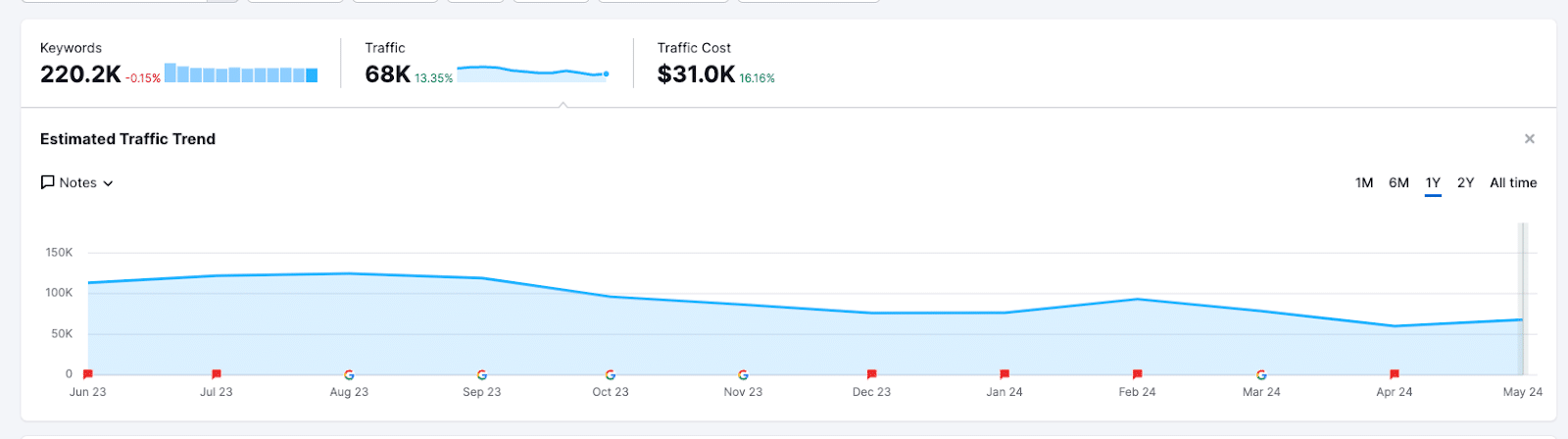
For the record, not all sites got hit; some got rewarded. Here’s a site’s informational content folder getting a massive uplift with the March 2024 core update:
So how ‘big’ was the March 2024 core update?
Trying to size up any algorithm update is such a precarious task. All the more so with the March 2024 core update.
I hate to use the age-old SEO cliche, but it depends. It depends on how you look at it.
Do you define the impact of the March 2024 core update by its reach across the web as a whole? If so, there are indications that it was more potent than your typical update but not definitively so.
However, if you define the impact of the March 2024 core update by its ability and tendency to be heavy-handed, then the March 2024 core update, by all accounts, seems to have had some extra bite.
My personal take: there was something different about this update. If you combine it all, the extra bite the update had in negatively impacting sites, the extra rank volatility seen at the 6th – 10th rank positions, etc., paints a picture of what is a very “unique” update.
The retail landscape is in flux. What may have worked for retail marketers just a few years ago may no longer have the same impact today. Why? Buyer journeys are evolving, spending habits are shifting, and, notably, the savviest marketers are accounting for these changes.
Success for the modern retail marketer hinges upon a deep understanding of consumer behavior and a willingness to explore bold marketing strategies. Join Marigold’s Retail Trends Masterclass to discover:
Key retail trends happening right now, including the rise of pop-up shops, sustainable marketing and hyper-personalization
How to navigate shifting consumer behavior and deliver on demands for relevance, value and brand purpose
The ins and outs of modern loyalty, including loyalty drivers and the critical role of non-transactional offerings
Google took center stage at the IAB NewFronts in New York City, pitching advertisers on their evolving streaming ad offerings.
The big idea: With streaming continuing to fragment audiences across various platforms and services, ad giants are competing to offer marketers unified solutions for reaching those viewers.
Why we care: This new means of doing programmatic will allow advertisers to manage video campaigns much more quickly through an already familiar platform.
State of play: Google introduced a plan to “rethink programmatic TV” by having advertisers centralize their streaming ad buys through its web-focused demand-side platform, Display & Video 360 (DV360).
The company touted DV360’s ability to stitch together fragmented streaming inventory sources, reaching 92% of U.S. connected TV households, according to Sean Downey, Google’s president of Americas and global partners.
In one cited case study, SAP used DV360 to reach 29 million unique viewers, with 5.6 million incremental.
Between the lines: Google is replicating its strategy of using YouTube as the foundational driver for ad sales across streaming TV, leveraging DV360’s direct access to the platform’s dominant viewership.
DV360 also pulls in third-party inventory like Disney’s streaming ad supply through a new partnership.
Google is adding new measurement capabilities like cross-device conversion reporting for connected TV campaigns.
Bottom line: The connected TV ad market is rapidly evolving and highly fragmented. Google is staking its claim as a unified solution, but it remains a wide-open field.
Discovering the core principles of effective brand architecture and its implications in modern business.
Examining the influence of digital transformation on brand strategy and structure.
Identifying the tools and frameworks vital for maintaining brand identity and visibility on diverse digital platforms.
The Dynamic Role of Brand Architecture in the Digital Marketplace
The digital revolution has dramatically reshaped the landscape of commerce, rendering traditional branding tactics less effective for contemporary audiences. In this age of instant information and global connectivity, a brand architecture framework foundational elements become the lifeline for businesses aspiring to thrive. Brand structures in a digital age serve as the blueprint for orchestrating the symphony of brands, sub-brands, and products, reinforcing their messaging and positioning in the digital sphere.
As businesses negotiate these digital currents, the focus shifts to creating a brand architecture that’s fluid enough to adapt yet robust enough to maintain a firm identity. By understanding and implementing a well-crafted framework, businesses emerge fortified, ready to articulate their value proposition and solidify their space in the online marketplace.
Adapting Brand Strategies to Digital Transformation
Adapting brand structures in a digital age encapsulates more than merely integrating new technologies; it implies a complete reassessment and often reinvention of brand strategy. Successful brands preempt consumer movements, digitally tailor their interactions, and provide immersive experiences that resonate with their digital-native audiences. With unparalleled access to insights into consumer preferences and behaviors through data analytics, an adaptive brand strategy can be the cornerstone of market differentiation and consumer loyalty.
Emerging tools such as artificial intelligence and machine learning open new possibilities for predictive analytics and personalization, creating opportunities to engage with consumers more meaningfully. A commitment to adaptability empowers a brand to never stagnate but continually evolve alongside its customers.
Clarifying Your Brand Hierarchy
A meticulously defined brand hierarchy lends invaluable clarity to marketers and brand custodians and echoes throughout the customer journey. Each sub-brand and product gains definition and purpose, enabling consumers to effortlessly traverse a brand’s offerings. The harmonious relationship between parent brands and their offshoots contributes to a seamless narrative that speaks volumes about the company’s foresight and organizational acumen. It tells a story—not just of products or services, but of an intricately crafted and thoughtfully structured brand.
Digital Tools Shaping Modern Brand Management
Brand structures in a digital age heralds innovative tools redefining how brands manage and nurture consumer relationships. These tools—from sophisticated Customer Relationship Management (CRM) systems to versatile content management platforms—have revolutionized the brand-customer dynamic. Aligning brand identity across various online touchpoints requires a synergistic approach, one that these digital tools are particularly adept at facilitating. The ability to gather real-time feedback and iterate accordingly ensures that the brand’s digital persona resonates well with its audience, an essential aspect of contemporary brand management.
Brand Equity in the Age of Digital Engagement
The currency of brand equity has been recast in the context of digital ubiquity. No longer confined to traditional metrics of reach and impression, brand equity today is increasingly a function of a brand’s digital interactivity and the resonance of its online content. Social media influence, user-generated content, and the quality of digital interactions are the new barometers for evaluating a brand’s equity. A strong, coherent online narrative begets brand reputation and equity. Amplifying this narrative across digital platforms is both an art and a science; doing it well translates to an invaluable competitive edge.
Rebranding for Relevance in Digital Channels
Staying relevant means staying attuned to the evolving digital narratives and the ebb and flow of consumer trends. When the time comes for a brand to undergo a metamorphosis to maintain its market relevance, the process must be conducted with strategic precision. A successful rebranding is deeply rooted in a brand’s architecture, building off its history and equity while steering it toward future aspirations. It breathes new life into the brand, with digital channels as a powerful medium to showcase this transformation to new and existing audiences.
Operating a home business is one that you should regularly pat yourself on the back for. So many people dream of having their own home business but not everyone can be successful when it comes to making those dreams into reality.
In order to ensure your home business thrives and continues to grow, you should look to expand your home business in different ways other than just the obvious which is to hire more people. Hiring more people for your business might not be the best when strategizing the growth of your company. Here are some tips to expand your home business without hiring.
Invest in technology
First and foremost, invest in technology. Technology has done wonders for many businesses that may have been limited to what they had available in human resources. Humans can also only do so much in the working day, whereas computers can do tasks a lot quicker and with a lot less error too.
With that in mind, be sure to invest in technology that is going to build the business to further success. For example, if your home business deals in patient care, then you might want to consider private practice software as an option.
Outsource your workload
Outsourcing your workload is always a good suggestion when you’re looking to grow and expand your home business. While it might be similar to hiring, you’re not actually hiring anyone internally within your business. You’re just paying for a service for the work required.
That cuts all of the responsibility as a business when it comes to hefty payrolls and other benefits that you’d need to offer to a business. Consider what you need outsourcing and do this to help lighten the workload for you.
Streamline processes where possible
Streamlining is a good way to help with those tasks that are taking up too much of your time. Those tasks that were handled by technology for example, or through outsourcing, could leave you the opportunity to do more elsewhere.
Think of ways in which you could streamline all areas of your business for the benefit of being able to do more with the working day. You might be surprised by how much can be streamlined within your home business.
Sell more products or services
Selling more products or services is a great way to expand your home business. While it might be a lot more work to provide more products or services, it’s often one of the main ways in which a business can expand to great lengths.
With that being said, look at what’s missing from your range or line of services/products so that your time and money are well invested in providing the right options for your customers.
Care about your customers
Talking of customers, it’s good for your customers to know that you care, which is why it’s important to offer everything you can to them. Going above and beyond, nurturing those who are close to sale or additional purchase, is worth your time
With trends continuously evolving, it can become difficult to keep up with what’s in today and what was out last week. Trends aren’t the only things that go through metamorphosis; we do. Our preferences change as we grow and enter different roles in our lives. Eric Noble believes that having a personal style that reflects this and changes with you is of the utmost importance.
Eric Noble, President of Noble Image and Apparel, is a personal fashion consultant with a commendable track record. His background includes fashion modeling certifications from reputable establishments such as the Custom Design and Tailoring Organization and the Fashion Institute. Collectively, Noble has worked in the fashion industry for over 30 years, many of which he has spent helping others look and feel like the most confident version of themselves.
As a professional fashion consultant, Eric Noble takes the time to know his client’s unique preferences. He merges his eye for design with their personality and provides them with options that make them feel distinctive and confident. He understands that when people feel authentic, everyone else can sense their posture and respect them for it.
What is particularly intriguing about Noble’s services is the ease of his process. Noble prides himself on creating a business accessible to even the busiest schedules. His consultations can be held in a client’s office or completely remotely, meaning a quick phone or video call is all that is needed for Eric to kickstart his journey to creating a masterpiece. Success is a multi-faceted battle, and Eric Noble works to ensure that a client’s professional wardrobe will never be the thing that holds them back from achieving greatness.
Once Noble gathers the client’s information, measurements, preferences, and inspirations, he begins the magic. With yearly on-site fittings for executives, Noble guarantees to keep his customers on trend and professional with perfectly fitted clothes. He finds joy in his clients receiving brand-new clothing delivered straight to their doorstep, sparing them the effort. Eric delights in hearing their excitement when they receive their impeccably tailored garments.
Showing up for yourself and presenting yourself in the best light will inevitably cause a ripple effect in your personal and professional life. The cliche is true: When you look good, you feel good! Eric Noble continues to live by this motto and encourages everyone around them to embrace it as well. Investing in your appearance and confidence will elevate your sense of self-worth and inspire those around you.
For more information about Eric Noble and his business and services please visit Noble’s website or call (954) 261-0106.
Spring is an exciting time for EDM enthusiasts in Minneapolis. The weather is warming up, the walks to and from the concert venues are getting easier, and summer festival season is right around the corner. It is the perfect time to start marking up the calendars with the must-see music events around the Twin Cities, many of which are expertly produced and put on by Sound in Motion, the Twin Cities’ premier music production company. SIMShows recently made EDM history by hosting 2 massively successful events for MELLODEATH, a pseudonym for the collaboration between two of the biggest names in EDM music —SYDDEN DEATH and Marshmello. They organized both a popup DJ set at Mall of America, the biggest mall in the country, and an exhilerating sold-out show at The Armory, the most popular music venue in Minneapolis.
Crisp lasers fill every inch of The Armory in Minneapolis. Photo credit;: Brez Media
SIMShows started out the exciting day by arranging a popup event at Mall of America. This legendary daytime DJ set is the first Sound in Motion has hosted at the colossal 4 story megamall. They certainly didn’t disappoint — hundreds of hardcore headbangers took to the GA pit for 4 hours of energizing DJ sets, with MELLODEATH taking the stage halfway through the event. With malls all over the country losing business and even having to close down altogether, this was the perfect event to bring life back to the dying mall industry. Not only did it cause EDM music lovers from all over the Twin Cities metro area to flock to the iconic Mall, but it also introduced thousands of daily MOA shoppers who may not listen to or follow EDM music to the headbanging PLUR culture. It was a genius marketing strategy for both sides! This will certainly not be the last pop-up music event Sound in Motion puts on.
Virtual Riot opens up for MELLODEATH wth an exhilerating set for the sold-out crowd. Photo credit: Brez Media
After all the excitement of the big pop-up at the Mall of America, it was hard to imagine an even bigger event happening later that night. Luckily for MELLODEATH fans, there was still an electrifying sold-out show to look forward to at the Armory in Minneapolis! The long night of fun started with energetic beats from the up-and-coming DJ MUNK. The sold-out crowd then got a musical punch in the neck when YVM3 took the stage with his intense mix of screamo and headbang-worthy drops. Finally, no stranger to Minneapolis, VIRTUAL RIOT took the stage to the eager Minneapolis crowd ready to welcome him back. The German DJ hyped the sold-out crowd to maximum levels with his mix of the popular genre riddim, future bass, electro house, and even sprinkles of melodic bass. The bassheads in the crowd certainly were given all the headbang-worthy drops they could dream of with these three openers.
MELLODEATH DJ’s SVDDEN DEATH and Marshmello perform on a unique stage setup. Photo credit: Brez Media
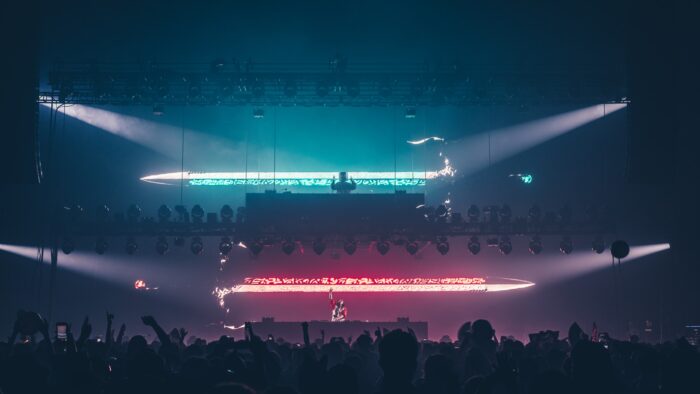
Finally, to the screaming sold-out Armory crowd’s delight, MELLODEATH took the stage. Marshmello and SVDDEN DEATH are no strangers to the energetic Minneapolis crowd, but the collaboration between the two DJ giants created an EDM music experience unlike any Minneapolis had seen before. Not only are their drops both electrifying, brain pulsing, and perfectly timed to the average headbanger’s rhythm, but the stage production was on a unique caliber all of its own. The stage was split into two horizontal levels, with SVDDEN DEATH on the bottom and MarshMELLO above. There were also two levels of lights and lasers between the two artists. This unique separation during the collaboration likely made for a very challenging production — one only a truely top-notch production company could accomplish. Sound in Motion not only made it possible for the MELLODEATH vision to come to life, but the show went on seamlessly with seemingly no delays or visual mistakes. The visuals on the two-tiered screens never faltered, the crisp lasers danced around the venue, the colorful lights pulsated to each energizing beat, and there were even small fireworks let off during a few bass-heavy drops. SIMShows truly outdid themselves by orchestrating this incredible stage production. It was truly a night of EDM to remember.
Incredible lasers at MELLODEATH. Photo Credit: Brez Media
Sound in Motion produces almost all of the most exciting and popular EDM shows in the Twin Cities. Anytime an upcoming show is produced by them, EDM enthusiasts are in for a seamless production and audiovisual perfection. Catch their upcoming shows at The Armory in Minneapolis this summer: Black Tiger Sex Machine on Friday May 3rd and Saturday May 4th, Steve Aoki on Friday June 7th and Porter Robinson on September 28th.
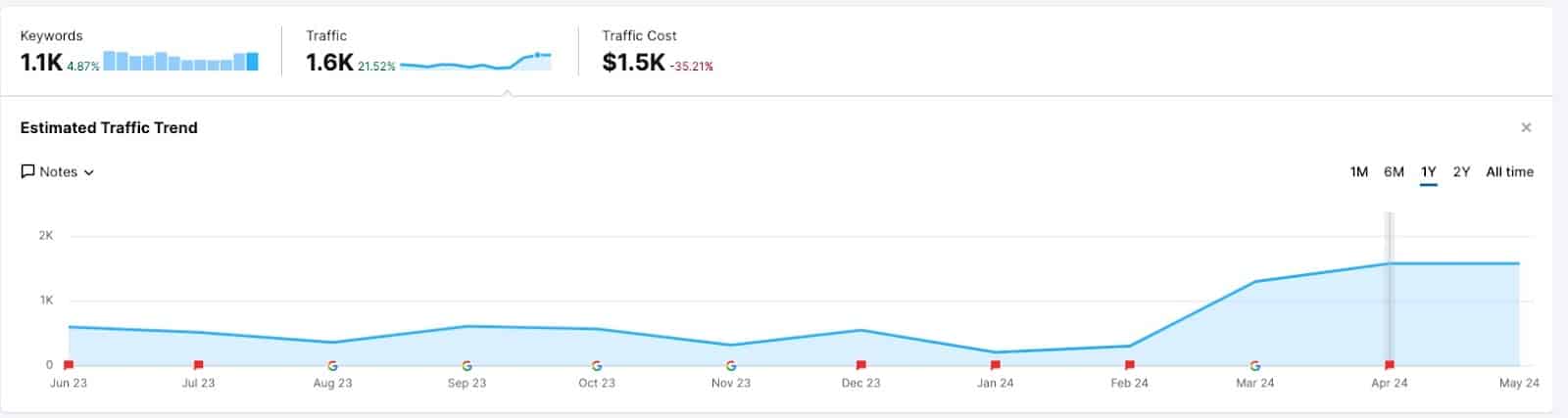
HouseFresh, a small, independent product review website that called out Google after being consistently outranked by larger publishers – has lost 91% of its Google traffic following the March 2024 core update.
Why we care. There has been a lot of anger about Google killing websites and industries in the wake of the March 2024 core update – and more is on the way in the form of Google’s new reputation abuse policy, which goes into effect after May 5.
Keyword swarming. Big media brands (e.g., Dotdash Meredith, Forbes) are using a tactic called “keyword swarming” and flooding the web with subpar content, yet dominating Google’s search results.
Meanwhile, hollowed-out carcasses of legacy brands (e.g., DeadSpin and Money) pump out commercial (sometimes AI-generated) content, all designed to drive affiliate revenue while squeezing out every ounce of brand value that remains.
Traffic loss. HouseFresh also revealed how much traffic it has lost since October:
“Since October 2023, we’ve gone from welcoming 4,000 people from Google Search each day to just receiving 200. And of those 200, most are adding ‘HouseFresh’ to their searches to find us specifically.”
Google doesn’t owe HouseFresh traffic. Navarro acknowledged that “Google doesn’t owe us anything. We don’t simply deserve to get search traffic because we exist or because we say we should.”
She also hit back at people for “gaslighting us into thinking that our content is not helpful enough for readers.” (However, from what I saw, this was an honest critique, not gaslighting).
History repeats itself (again). SEO pioneer Mike Grehan discussed a similar experience that occurred at a search conference right after Google’s huge Florida update in 2003:
“So many attendees … felt that Google was putting them out of business.
One guy … explained loudly to the packed room that he had been the number one result at Google in his niche for two years, and his business was booming. Then, after the update, there was no sign of him in the SERP.
I suggested that he, perhaps, should not have ‘bet the farm’ on this one source of revenue to sustain his business. I also suggested that, yes, we should go to Mountain View and visit Google. And when we see either [Larry] Page or Sergey Brin come through the reception, he should walk right up to whichever one it was, kneel down and kiss his ass ‘because he’s been sending you free customers for two years!’”
None of this is new. People have complained about Google driving them out of business for 20+ years. That won’t make HouseFresh feel better – but the reality is Google doesn’t owe you traffic, rankings or a living.
What’s next for HouseFresh. Navarro promises to be “relentless” on every platform where it makes sense for them to be. Sounds a bit like diversification, doesn’t it?
Google and the Department of Justice are presenting their closing arguments today and tomorrow in the government’s landmark antitrust case against the company that owns a global search monopoly.
Rewind. The 10-week, high-stakes legal battle probed the business practices of Googe Search last fall.
Why we care: The outcome of this case could forever change how Google operates, which would have downstream impacts on search marketers. The ruling could lead to a leveling of the advertising market, meaning lower costs and more choice.
What to watch: The DOJ will summarise its significant allegations against Google on Thursday and Friday. Allegations come down to these three main points:
Google used lucrative deals with partners like Apple to cement itself as the default search engine across devices and platforms.
Google paid billions annually to secure those default positions – $26 billion in 2021 alone. (This includes $20 billion alone to be the default on Apple’s Safari browser, according to newly unsealed court records.)
Google failing to justify why it pays so much beyond stifling competition
The other side: Google rejected accusations of anticompetitive conduct, asserting that users prefer its best-in-class search engine and that its dominance is not due to any alleged monopolistic tactics.
“We are working very, very hard; for any given query we provide the best experience,” CEO Sundar Pichai testified. “That’s always been our true north.”
Bottom line: This landmark case carries existential implications for Google’s core search business if the DOJ prevails.
What’s next: After closing arguments, Judge Amit Mehta will weigh the liability case before him. One potential (though unlikely) outcome could be a breakup of Google, which will be determined later if he rules against the company.