Google is retiring four rules-based attribution models for all properties in Google Ads and Google Analytics in mid-October 2023:
First-click.
Linear.
Time decay.
Position-based.
The models listed above will be removed from both the Analytics user interface and Admin API.
Why we care. If you’re using these models in Google Ads, it will affect you. And tracking anything other than the last click is about to become more challenging because the data-driven attribution formula differs for each advertiser – and it’s not visible. As Greg Finn, director of marketing for Cypress North, told Search Engine Land:
“In the past, you could use linear and give each touch the same credit. You will no longer be able to do so. There will be no impact on last touch, as that is still available. But finding some of the first-touch information will be much muddier because there will no longer be a way to see the formulas that compute the attribution scores.”
What happens next. If your existing property uses one of the impacted models, it will automatically default to paid and organic data-driven attribution. Paid and organic last-click and Google paid channels last-click models will also continue to be available.
Why the change. Google is retiring these four attribution models because of “increasingly low adoption rates, with fewer than 3% of conversions in Google Ads using these models” according to a Google spokesperson. They added:
“Switching to the data-driven attribution model typically results in a 6% increase in conversions for advertisers.”
Get the daily newsletter search marketers rely on.
function getCookie(cname) {
let name = cname + “=”;
let decodedCookie = decodeURIComponent(document.cookie);
let ca = decodedCookie.split(‘;’);
for(let i = 0; i <ca.length; i++) {
let c = ca[i];
while (c.charAt(0) == ' ') {
c = c.substring(1);
}
if (c.indexOf(name) == 0) {
return c.substring(name.length, c.length);
}
}
return "";
}
document.getElementById('munchkinCookieInline').value = getCookie('_mkto_trk');
What Google is saying. A Google spokesperson said in a statement:
“Rules-based attribution models assign value to each advertising touchpoint based on predefined rules.”
“These models don’t provide the flexibility needed to adapt to evolving consumer journeys. Data-driven attribution uses advanced AI to understand the impact each touchpoint has on a conversion. That’s why we made Data-driven attribution the default attribution model in Google Analytics 4 and Google Ads.”
“For these reasons, First click, Linear, Time decay, and Position-based attribution models across Google Analytics 4 will be going away.”
The weather is cooling, leaves are falling, and you’re watching the holiday decor begin to peep through. With the holidays just around the corner, you are likely seeking gifts perfect for your friends and families. It can be daunting and time-consuming to find those perfect gifts for everyone on your list in the stores and shopping malls – where do you begin? We’re here to help! If there is an expectant mom or mom of newborns or small children on your list, we’ve got a great list of holiday gifts for expectant mompreneurs. From newborn essentials to beautiful fashions to products that help with postpartum healing, below are 30 gifts any mother and expectant mother alike will love.
Give your baby the safest crib experience without compromising style with the BreathableBaby Mesh 2-in-1 Mini Crib. Mini cribs are roughly two-thirds the size of a standard crib, making them great for newborns up to 12 months of age. BreathableBaby is the first and only brand to launch a crib that eliminates the risk of legs and arms getting stuck between slats or pacifiers getting thrown out. The cribs are constructed with a single layer of patented breathable mesh, combining the strength and integrity of traditional wood cribs with the safety possible only with this fabric.
BreathableBaby’s Mesh 2-in-1 Mini Crib is non-toxic, eco-friendly, safety tested & Greenguard Gold certified. It’s finished with non-toxic paint (that’s free of lead, phthalates, and formaldehyde) and made from sustainable New Zealand pine. They’re tested by third-party accredited labs and are Greenguard Gold certified to be free of over 10,000 chemicals and VOCs. The BreathableBaby Mesh 2-in-1 Mini Crib has everything you need including a 1” (2.54 cm) waterproof mini crib mattress and a white sheet made from premium activewear fabric. The specially crafted mattress is thin and firm, a design that has been determined to be safer for infants under 12 months. Retails for $299.99 at breathablebaby.com.
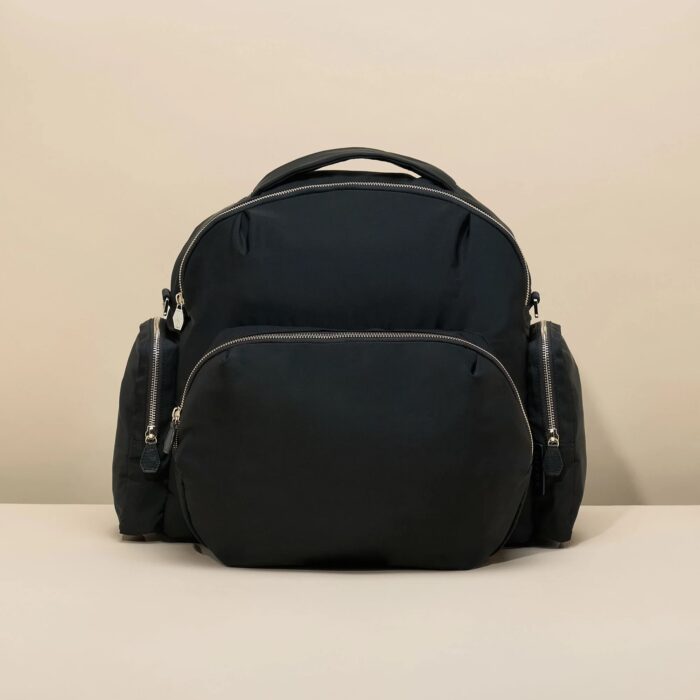
Bee & Kin The Icon Backpack
Bee & Kin creates luxury accessories with innovative technology to make life easier. They use the finest materials to strike the right note between style and function. A perfect holiday gift for mom is the Bee & Kin Icon Backpack. This versatile bag will provide her with all the functions she needs. Stroller straps and a changing pad are options to be added on so she can use it as the ultimate diaper bag! The nylon exterior is made from recycled material, is water resistant, and super easy to clean. It has adjustable nylon backpack straps along with a removable nylon crossbody strap.
Inside the main compartment of the Icon Backpack, she’ll find a padded laptop sleeve that can fit up to a 16″ laptop, mesh pockets for cords or diapers, and two interior side pockets that are insulated for bottles. Inside the fun front hexagon-shaped pocket on the exterior is also insulated so she can keep her lunch or baby bottles warm and cool. There are two pockets for cords, diapers, etc… and one large pocket for other essentials. A key leash at the corner keeps her keys secured and easily accessible. There are so many ways she can utilize the Icon Backpack. It comes in the colors black and mushroom. Retails for $245 at beeandkin.com.
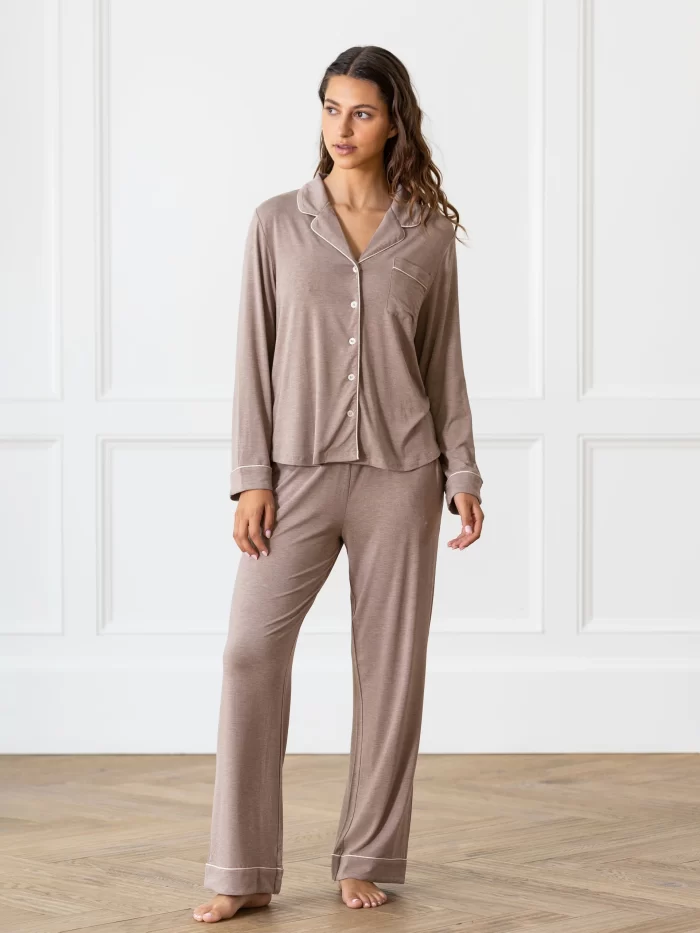
Cozy Earth Bamboo Pajamas – Walnut
A pair of soft, breathable pajamas from Cozy Earth is a gift every expectant mompreneur will appreciate. Cozy Earth creates products to elevate one’s style and space with luxuriously simple designs crafted from only the best materials. They pride themselves on the impeccable quality of each Cozy Earth product. From the feel, utility, and performance, they hold themselves to the highest standard of quality.
The Cozy Earth Long Sleeve Pajama Set – Walnut is crafted with a soft stretch-knit that features enhanced breathability and luxurious drape. This lightweight set sleeps degrees cooler than cotton to keep mom’s temperature just right through the night. With elegant contrast piping throughout, the set includes a pocketed button-up and pants with an elastic waistband. Additionally, this pajama set is generously sized for relaxed luxury (great for breastfeeding too!), is made of 95% Premium viscose from bamboo and 5% spandex, and features side pockets. This set comes in Cozy Earth’s standard colors as well as in limited-release shades. A new shade that’s perfect for the holidays is ‘Walnut’, a warm dusty light brown. She’ll love wearing these around the house before and after the baby arrives. And what’s more to love? They will not pill, as Cozy Earth’s enhanced knit prevents pilling and helps their products last longer. Retails for $195 at cozyearth.com.
A. PUTNAM’s Washable Cashmere Sweater
A. PUTNAM was created out of founder Ali Putnam’s desire to provide women with polished, sophisticated lifestyle pieces that perform – from resort to sport. Their goal is to give women timeless options that fit life, so they can move confidently without sacrificing style or comfort. The A. PUTNAM collections also honor the tradition of golf with subtle details and features that bring a modern touch to classic looks.
New moms need clothing that is easy to care for, versatile, and makes them feel good. A. PUTNAM’s Washable Cashmere Sweater is a classic raglan v-neck sweater that features an oversized fit and elegant styling. Your special mompreneur will love wearing this tasteful, as she can lounge all day in the home with her newborn in comfort and style. If she needs to leave her home to go run a quick errand, no problem! This sweater is a go-to in any season with a cotton and cashmere fabric blend that elevates her look and confidence as she’s out and about. Its color is ‘cream’ and its fabric is 70% Organic Cotton, 20% Nylon and 10% Cashmere. Retails for $170 at aputnam.com.
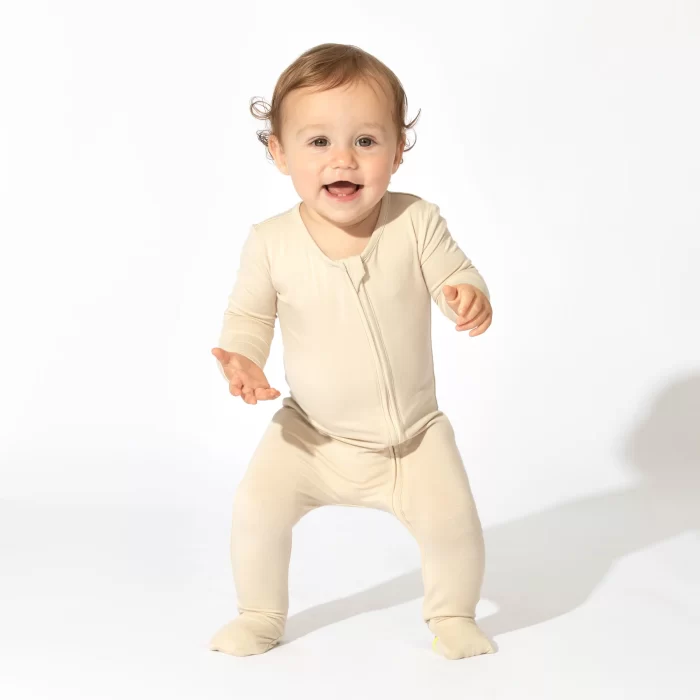
Bellabu Bear Bamboo Convertible Footie
Gift your new mama-to-be with Bellabu Bear’s baby clothing and know she can go to bed at night worry-free! Bellabu Bear’s yarn comes from organically grown bamboo and their entire outfit, not just the fabric, is Oeko-Tex Certified to be free of chemicals. They have been awarded the Seal of Acceptance from the National Eczema Association and have made it their Mission to dress every child in a pajama that is safer and more comfortable for bedtime. They pass all the tests from having YKK zippers (choking-proof zippers) and Oeko-Tex Certification with pinch-free and worry-free garments.
Bellabu Bear’s Bamboo Convertible Footie is truly the “All in One-sie”. It features super soft bamboo fabric paired with extreme functionality and a one-of-a-kind design. This adorable pajama can convert from a romper to a footie, two outfits in one! It features a slip-resistant grip and a two-way zipper, and has hand covers to prevent those tiny nails from scratching. This soft and functional onesie comes in a variety of colors and sizes. Retails for $33 at bellabubear.com.
Gladly Family Merritt Travel Crib & Playard
Because your special mompreneur works from home, she’ll need a safe and comfortable space to keep her baby close while she works. Gladly Family’s Merritt Travel Crib & Playard was designed to be the ultimate portable playard, suitable for use from birth and beyond (up to 50 lbs). It’s sturdy yet lightweight with a stylish aluminum frame and has non-skid feet. The adjustable bassinet is perfect for newborns and can be used for in-room sleeping, offering mom a convenient place to have her baby sleep while she answers emails. It folds in under 10 seconds with just one hand and includes a backpack-style storage bag, making it perfect to store away in her home office. With a breathable mesh surround and a comfortable, supportive mattress, mom’s little one can sleep or play anywhere she can set it up. This Playard also offers her the ability to travel comfortably with her baby when business travel picks back up.
Gladly Family’s Merritt Travel Crib & Playard also features a fold-away changing station that offers an easy-to-use changer and an extra large diaper caddy with room to store all the accessories. Mom will also love that it has removable, machine-washable fabrics for easy cleaning. She can move Gladly Family’s playard to her home office, living room, nursery or more. No matter where she goes, she will have a safe place for her baby to sleep & play while she works. Gladly Family’s Merritt Travel Crib & Playard comes in ‘Carbon’ and ‘Crystal Pink’. Retails for $249 at gladlyfamily.com.
Baloo Weighted Blanket Throw and Linen Duvet
Expectant and newborn mompreneurs have a lot on their plates and can use a bit of rest and relaxation where they can get it. So this holiday, gift her a Baloo Weighted Throw Blanket so she can get this R&R whenever she needs it. Baloo Living is the only Eco-Friendly, Luxury Weighted Blanket made with lead-free glass microbeads and soft premium cotton that’s cool and breathable for year-round use. The deep pressure stimulation of a Baloo Blanket feels like a firm hug, massage or swaddling. It soothes her nervous system, alleviates stress and anxiety, and increases serotonin production – the happy hormone every expectant and postpartum mom can appreciate.
Baloo’s 12lb Weighted Throw Blanket features soft and breathable cool cotton that molds to the body like a gentle hug, for easier, deeper rest or sleep. Baloo’s throw size is perfect for the couch for a nap or rest. It is made with natural materials and is 100% chemical-free. What’s more? It’s completely machine washable and dryer-friendly! This means she can easily clean it without stress or worry about how to do so when the baby has a little spit-up. Its size is 42″ x 72″. Retails for $179.99 at balooliving.com.
Complete her gift with Baloo’s Linen Duvet Covers which are crafted from the highest quality stonewashed French flax linen, in sizes that perfectly fit and tie to the throw. Retails for $99 at balooliving.com.
Good Time Hair + Body Bundle
Treat that special mompreneur in your life to feel-good products to pamper her hair and skin. Good Time is a sustainable, plastic-free brand that donates half of its profits to clean water nonprofits while creating high-quality, super hydrating face/body/hair bars. The Good Time Hair + Body Bundle includes five of their faves, featuring the hydrating shampoo and conditioner duo plus three body bars in each of their signature fragrances. Their shampoo creates a rich, indulgent lather that cleanses hair without stripping it of its essential moisture. The conditioner smoothes strands leaving hair feeling lightweight and feather soft. Their body bars are great for all bodies and skin types and are formulated to provide gentle exfoliation. Retails for $48 at us.whogivesacrap.org.
Dessous Loungewear Caftan
Dessous Loungewear was founded for those who enjoy style and comfort – things new mompreneurs will appreciate in their wardrobes. Their simple, chic designs are perfect for a mom’s busy life as an entrepreneur! Dessous Loungewear believes a caftan is the ideal garment, as their ageless and timeless while still being modern, stylish and comfortable. Easy and free-flowing, a caftan works for women of all sizes and shapes and for virtually any occasion. This garment is so versatile mom could wear it for sleeping, running errands, breastfeeding, in a Zoom meeting, at a formal event, while hosting a dinner party – the occasions are endless!
Dessous Loungewear’s Bianca Caftan provides loosely structured ease. Bianca wears slightly closer to the body, featuring a band collar, V-placket neckline, full, cuffed 3/4 length sleeves and roomy patch pockets. Its midi-length hem looks great with flip-flops, strappy heels or barefoot. Its fabric is 63% Tencel Lyocell, 37% Lenzing Viscose and comes in sizes 1, 2 and 3. Bianca comes in a few beautiful shades, Plum being great for fall. This is a piece every post-partum mom will love, making it an ideal gift for expectant mompreneurs. Retails for $220 at dessousloungewear.com.
Versine Skincare Smooth Transition Day-to-Night Duo
For expectant mothers, finding a pregnancy-safe skincare routine can be a time-consuming and difficult task. With Versine Skincare, mom doesn’t have to worry! Versine products are high-quality, effective, multitasking, and suited for all stages of life – including pregnancy and nursing. The Versine Skincare Smooth Transition Day-to-Night Duo is a perfect gift offering her to transition seamlessly from her day to her night skincare routine.
The bundle comes with the Versine Illuminate Multi-Tasking Serum and the Versine Calm & Hydrate Serum. The multi-tasking, doctors-vetted Versine Illuminate Multi-Tasking Serum is designed to minimize the appearance of hyperpigmentation, fine lines, and dry and fatigued skin. She will love the glow this serum brings her and feel secure that it’s OBGYN and dermatologist-approved. The Versine Calm & Hydrate Serum was created to calm breakouts and improve the appearance of post-inflammation dark spots and melasma. She’ll achieve the look of brighter, healthier skin while maintaining a hydrated and dewy complexion. This serum is made especially for those with combination and oily skin, or pregnancy acne and is also OBGYN and dermatologist-approved! She can use both serums in the AM or PM after cleansing her face. Duo retails for $128 at versineskincare.com.
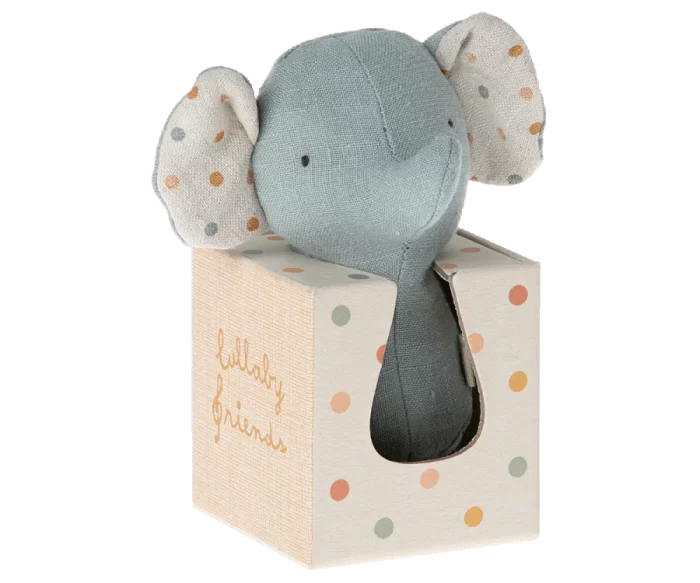
Maileg Lullaby Friend Rattles
Maileg is a Danish design brand of children’s toys established in Denmark in 1999. Their philosophy is a well-made, adorable toy that will last. Their toys are always limited release and will become collectibles. Maileg believes children thrive with simpler toys rather than plastic. Fewer, better-made toys open their minds to new stories and innovative ways to play which will serve them well through life. Maileg Lullaby Friends is a collection of beautiful items for babies. Specifically from this collection, the Maileg Lullaby Friend Rattles make a perfect holiday gift for expectant mompreneurs. Each is perfectly shaped for a small hand and has a stimulating rattle sound. Their adorable rattles are made in soft fabrics with unique prints and are packed in beautiful gift boxes. Retails for $18 (Elephant) at mailegusa.com.
Mayama Wellness Comfort Pregnancy Package
Mayama Products – Mayama Wellness Pregnancy Gift Comfort Package
Mayama, a woman- and BIPOC-owned business, offers eco-friendly, certified organic, and evidence-based luxury wellness products that give back. They offer packages curated to make the pregnancy experience as comfortable as possible. The Mayama Mama Wellness Comfort Pregnancy Package includes all the essentials AND additional wellness support products. These products include:
Mayama’s Organic crystallized ginger slices (Made with premium USDA-certified organic ginger root and organic cane sugar. No preservatives, no added sulfur, gluten-free, non-GMO, and vegan.)
Mayama’s Organic caffeine-free ginger tea (Made with premium USDA-certified organic dried ginger, organic lemon balm, organic cinnamon, organic cardamom, and organic black peppercorns.)
Tea tongs
Eco-friendly compression stockings
Mayama’s Luxury organic body oil (Made with premium United States Department of Agriculture (USDA)-certified organic green tea oil, organic rosehip seed oil, organic evening primrose oil, organic pomegranate seed oil, and organic argan oil.)
Natural wood body massager
Organic cotton therapeutic rice pack
Organic cotton sleep mask
Mayama is a social enterprise that donates 1% of sales to environmental and women’s health causes. The Mayama Mama Wellness Comfort Pregnancy Package retails for $149 at mayamawellness.com.
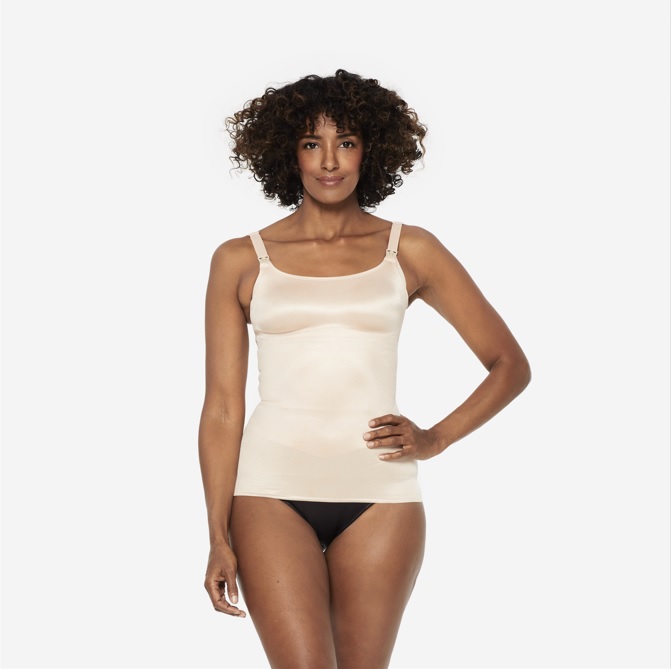
Ruby Ribbon Nursing Cami
For mompreneurs going back to work after baby, comfort is key! Ruby Ribbon’s Nursing Cami can be worn on its own or paired with a cute cardigan or jacket. She’ll love how easily she can feed her little one as she is working from home. It has an easy one-hand clasp, smooths and accentuates your curves, and even provides extra back support. This nursing cami features a clean “T-Shirt” design with adjustable straps and an easy one-hand release for nursing, and molded cups suggested for cup sizes B and above. It has a Level 5 support and control, a supportive sling construction that lifts and separates breasts without underwire, and all-over compression with 360° stretch for a perfect fit. She’ll love how its side seams comfortably shape her curves and that the wicking fabric keeps her cool and dry. It is made of Nylon and Spandex. Retails for $79 at rubyribbon.com.
Yosi Samra Samara Foldable Leather Ballet Flat
A second-generation shoe designer, Yosi Samra grew up in his father’s factory in New York City and spent countless hours absorbing the fine art of shoemaking. Samra was a pioneer designer of what would become the popular fold-up ballet flat movement, elevating the style into one that was just as superior in structure and design as it was comfortable and convenient. The Yosi Samra Samara Foldable Leather Ballet Flat is a gift your special mompreneur will quickly appreciate for its style, comfort and versatility.
Yosi Samra Foldable Leather Ballet Flat is loved for its easy elegance. It now features an upgraded memory foam lining, offering even more cushioned comfort and breathability with no added weight. With Yosi Samra’s signature foldable styling, premium high-grade leather sock lining and an extra-durable, supple suede midsole, the Samara provides superior flexibility and softness with every step. It also features an elastic top line for a “slipper feel” with no rub, a packable sole that folds up easily and neatly into the included signature Yosi Samra dust bag, a flexible rubber outsole with its signature snake print design, and its YS emblem adorns the pull-tab heel for easy on and off. This beautiful flat comes in 10 different colors to meet the needs of your special mompreneur’s style. It gives generous room at her toes without appearing wide. She’ll love how effortlessly this flat meshes with anything in her wardrobe from casual to evening. Retails for $98 at yosisamra.com.
P05k Mod Union Baby Union Suit
A perfect gift that echoes thoughtfulness and understanding of a mompreneur’s multifaceted life is a P05K Baby Mod Union Suit. P05K’s Mod Union Baby Union Suits were designed to make life smoother for both the mom and the baby. Imagine a world where changing the baby is a breeze and bathroom hassles for moms are a thing of the past.
P05K’s Mod Union Baby Union Suits are the epitome of convenience, promising easy changes without compromising on style. They look absolutely adorable on the baby and the fabrics are so soft and fun. The fabric is soft, high-quality OEKO-TEX 100-certified cotton knit. Every P05K baby union suit comes with an envelope neck opening for those messy moments to easily pull the outfit down instead of over the head. Additionally, they feature cuffed arms and legs and rear pull-down panels in the back – perfect for diaper checks and changing! Mom will also appreciate there are no zippers or velcro to catch or scratch on baby’s tender skin as well as no snaps or buttons to cause choking hazards. P05K offers these baby union suits in a variety of colors and patterns, and have sleeveless options. Retails for $44 at p05k.com.
Celestial Silk Pillowcases
For hard-working mompreneurs, giving a gift to pamper her sleep is always an appreciated one. Celestial Silk Pillowcases are soft, buttery smooth and luxurious and offer mom wonderful benefits for her hair and skin health. And silk goes beyond beauty. They’re also naturally hypoallergenic and temperature-regulating, helping her sleep better too.
All Celestial Silk 25 momme silk pillowcases are made with their proprietary DiamondSilk which feels buttery soft and has a radiant sheen. A 25 mm silk is thicker, more durable and more luxurious than lighter weights of 16, 19 and 22. These luxurious pillowcases are available in standard, queen and king sizes and in two styles: zippered and envelope. Both are made with side enclosures and are designed to keep the silk pillowcase snugly on the pillow. With over 28 colors, 3 sizes and 2 closure options in the Celestial Silk 25 momme silk pillowcase collection, you’re sure to find the perfect silk pillowcase your special mompreneur will love. Retails for $41.99 at celestialsilk.com.
PatPat started with a mission to provide better clothing options for children. Through innovative supply chain practices and eliminating traditional retail markups, PatPat has made unique styles more accessible to families worldwide. PatPat’s Cotton Long-sleeve Bear Embroidered Turtleneck Cable Knit Sweater is perfect for your special mompreneur’s baby wardrobe. It features a bear embroidery, is soft and comfortable, and is machine washable and dryable. It will match and coordinate with any other piece in the baby’s wardrobe. Retails for $12.99 at us.patpat.com.
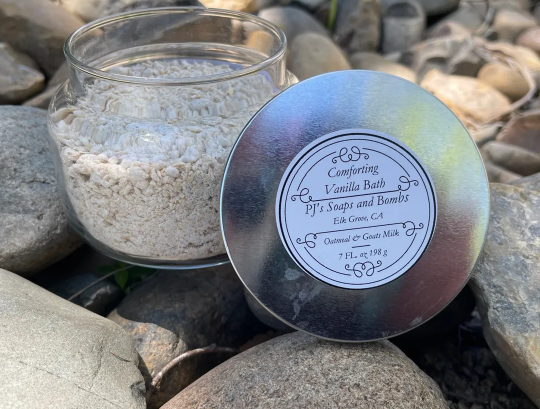
A luxurious bath is a real treat for expectant and postpartum mothers. It is an escape from the day, a way to relax by taking a deep breath and soaking the time away. PJ’s Soaps & Bombs Comforting Vanilla Goats Milk and Oatmeal Bath will leave mom’s skin super soft. It is a combination of ground oatmeal, goat’s milk powder, castile soap, cucumber oil and vanilla essential oils. This bath is handcrafted in Elk Grove, California by a small women-owned business. Its packaging is simple and recyclable to keep as much packaging out of landfills. She’ll love it’s cruelty-free and does not test on animals. Each container has 7 fluid ounces of bath. Retails for $21 at pjssoapsandbombs.com.
AIRROBO T10+ – 2-in-1 Robot Vacuum and Mop – Self-Emptying
The AIRROBO T10+ 2-in-1 Robot Vacuum and Mop is the ultimate gift for helping new moms keep their space clean. In eliminating the task of maintaining her floors, you are giving her the gift of freeing up her time to focus on what really matters. AIRROBO T10+ easily picks up dirt, debris and pet hair on all surfaces, giving expectant mompreneurs a noticeably cleaner floor. T10+ can switch between vacuuming mode and mopping mode seamlessly and intelligently. Equipped with a 2-in-1 electric control water tank, T10+ has fewer spare parts for mom to maintain. Meanwhile, the dampness of the highly absorbable mop cloth is sufficient, even and totally adjustable. There are 3 levels of water control in the APP for her to choose from.
With an automatic dirt disposal charging base, the AIRROBO T10+ empties the dustbin at 26KPa suction level with over 98% efficiency. Additionally, its 3.3L allergy-friendly disposable dust bag stores dirt for up to 45 days before it must be manually tossed. Other features include 360-degree anti-collision, fall-prevention, low noise level (great for sleeping babies and mothers), voice/app/remote control, as well as LiDAR navigation and USLAM Air 5.0 algorithm to more accurately, swiftly, and comprehensively scan the environment. The long-term self-cleaning allows expectant mompreneurs to live with peace of mind at home. Its smart app allows her to schedule the cleaning as a daily routine, a hassle-free way to keep her home and home office clean for the entire year. Retails for $359.99 at us.air-robo.com.
Young Days Cambridge Cardigan
Young Days provides parents with clothing that is easier all around with easy zippers for diaper changes and their gender-neutral colors and patterns make for easy hand-me-downs later. Young Days just released their Fall Collection titled Woodland Wonder and Quirky Collegiate. Inspired by old-school varsity designs and the wild world outside, the newest drops include preppy tees, cozy sweatshirts, and essential layering pieces, now offered in a buttery-soft sweater-knit fabric.
Young Days’ Cambridge Cardigan is sure to become your special mompreneur’s new favorite layer. It looks like a sweater but feels like a comfortable hoodie. it can be easily layered with any outfit for an easy back-to-school look. The Cambridge Cardigan features a v-neck and buttons down the front. it is made of 58% organic cotton, 38% recycled polyester and 4% spandex. Retails for $25 at youngdays.com.
Bravado Enrich Maternity & Nursing Bra
Bravado’s Enrich Maternity & Nursing Bra is a light support bra with a stretchy, comfortable fabric that feels like a second skin. The Enrich Nursing Bra uses innovative bonded edges that lay flat against the skin to create a smooth, seamless shape. It is made in a buttery soft sustainable fabric that’s truly elevated. Styled with a V-neckline, it’s a wire-free, natural silhouette that’s beautifully worn under anything. This is a bra tailored for modern Motherhood. It features removable foam inserts for a smooth, natural shape, adjustable straps with a hook and eye closure, and one-handed secure Bravado ‘B’ nursing clips for easy breastfeeding access that hold up to 25 lbs. She will love this holiday gift for mothers as it is STANDARD 100 by OEKO-TEX®. On sale for $31.20 at bravadodesigns.com.
Dualit Classic Kettle
Dualit’s success lies in a single-minded vision for the company and its products which hasn’t changed since Max Gort-Barten started the company back in the 1940s. Dualit is focused on high-quality, well-engineered products. Dualit’s Classic Kettle is a must for anyone who loves a designer touch in their kitchen. This kettle is super helpful for busy mompreneurs thanks to a rapid boil on the kettle, as well as whisper-quiet technology for when the baby is asleep!
Dualit Classic Kettle’s cordless 360˚ swivel base kettle comes in a Polished finish, adding instant wow factor to countertops. Combining a distinctive design with engineering elegance, it also features Whisper Boil for a quiet boil – ideal for open-plan kitchens or a late-night bottle feed. It’s also fitted with a fast 1.5kW element for a speedy boil. With a 1.7L capacity, it has two BPA-free measuring windows with cup and liter indicators so only the amount required is boiled along with anti-wobble feet, integral cord storage and boil-dry safety cut-off for peace of mind. Each Dualit Kettle is hand-built by the same person at Dualit’s factory in West Sussex, UK and is stocked by Williams Sonoma and Amazon for US customers. Retails for $199.99 at williams-sonoma.com.
Form Leather Airtag Keychain
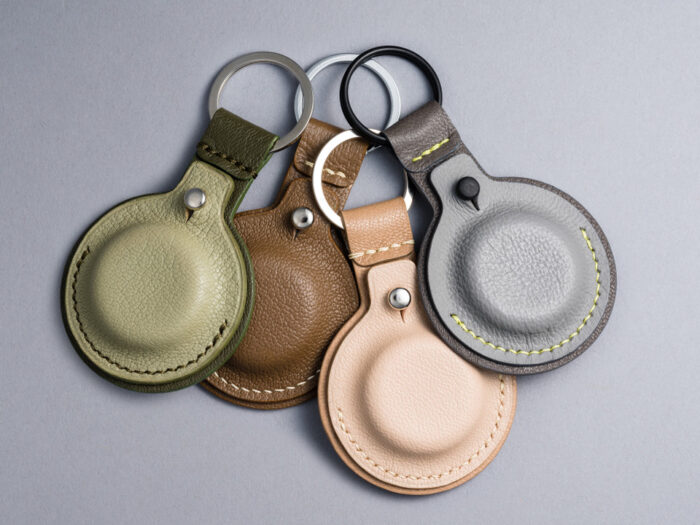
Form Leather is a new brand of luxury leather goods designed for the items people carry today. They combine heritage craftsmanship with smart technology. The laptop cases and Airtag keychains are made by wet-forming leather on wood forms, an old leatherworking technique. They combine European saddle-stitching with die-cutting, selecting each step in the process for precision and beauty. Everything is made in their NY Studio with only the best leathers from France and Italy.
Gift your special mompreneur a Form Leather Airtag Keychain offers mom a secure and stylish way to keep track of her keys. Also, they can be monogrammed for a personalized gift. It’s made of French calf leather, which allows one to see the details of the natural skin. It holds up wonderfully as most scratches can be rubbed out using just a thumb. If a spot becomes dark due to moisture or oil, it usually disappears on its own with time, though the overall color does usually darken. In short, it patinas beautifully. Form Leather Airtag Keychains come in a variety of beautiful colors and the hardware is available in matte black or shiny nickel. Retails for $125 at formleather.com.
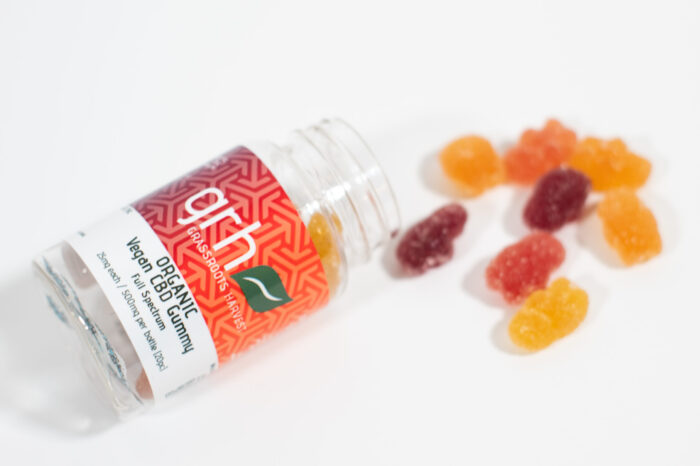
Help your special mompreneur unwind and relax in her post-partum with CBD from Grassroots Harvest. At Grassroots Harvest, they trust in Mother Nature which is why they make their CBD oil just the way she’d want it – Pure & Simple. Their priority is bringing their customers the best of Nature’s Bounty, harvested sustainably and crafted in small batches in Austin, TX. That way, they can ensure the highest quality from start to finish.
Grassroots Harvest Vegan CBD Gummies are a CBD-infused treat mom can feel good about eating. They’re vegan, non-GMO, and without artificial flavors or corn syrup. Plus, these are super easy & quick, making them ideal for adding them into an already busy post-partum routine. With 25mg of CBD in each delicious gummy, there’s a hefty dose in each and every one. These gummies are made without any animal products and are made with Full Spectrum CBD. Retails for $40 at grassrootsharvest.com.
GRAVITY DEFYER XLR8 Run
With the holiday season just around the corner, it’s essential to find a gift for your special mompreneur that not only delights but also brings genuine comfort and well-being to her feet. Gravity Defyer Shoes are designed to do just that, making them an ideal choice for her. Gravity Defyer shoes promote better posture, reduce foot fatigue, and minimize joint pain. They are ideal for anyone who values both fashion and well-being – perfect for post-partum mothers.
Gravity Defyer Women’s XLR8 Run is built around the shock absorption of Gravity Defyer’s VersoCloud® multi-density sole that protects and absorbs shock from head-to-toe so mom can run in comfort. The full-perimeter shank is designed to guard against foot hyperflexion, while the ergonomic foot bed, 3D-designed upper, and 30% wider stability-outsole and rolling forefoot design are intended to isolate foot stress and redirect her energy to the larger muscles of the calf and leg. They feature non-slip heel counters to avoid heel injury caused by a heel slipping while running, have removable insoles to accommodate custom orthotic support, and have a wool-blend knit upper. If your special mompreneur loves to run, she’ll love the support and comfort XLR8 Run will provide her as she recovers in her post-partum. Retails for $140 at gravitydefyer.com.
Addition Beauty The Everyday Lipstick
Addition Beauty was founded to provide beauty products that do not include chemicals that may interfere with natural hormone function and even potential fetal development. Your special mompreneur will love Addition Beauty’s The Everyday Lipstick. This lipstick offers buildable color for light or full coverage – mom’s choice. It’s creamy with the perfect amount of slip and just a little shine, all while nourishing like a balm. Mom will appreciate that Addition Beauty’s lipstick is nontoxic and hormone-safe. Consciously formulated to be safer for fertility, pregnancy and nursing life stages, it absolutely does not contain endocrine-disrupting chemicals, artificial fragrances or colorants, or other potentially toxic chemicals. Additionally, it’s packed with premium superfood extracts and many plant-derived ingredients that have been consciously sourced and selected. The Everyday Lipstick comes in three beautiful shades. This lipstick is truly one of a kind! Retails for $38 at additionbeauty.com.
Chillax Baby Mood Lite – Smart Baby Monitor
Created for parents by parents, Chillax’s suite of smart baby monitoring products provides parents complete peace of mind knowing that they are in total control over their connectivity, privacy, and security. Chillax Baby Mood Lite is a video baby monitor that has a 1080p camera with infrared night vision, gooseneck, and 360° remote pan, and a two-way talk speaker your special mompreneur can use to soothe her baby – no matter where she is in her home.
She will appreciate the full control she has with Chillax Baby Mood Lite, as she can check on her baby wherever she is with this monitor’s Wi-Fi connectivity. With the ChillaxCare app, she can choose to accept or reject her camera’s video sharing. This baby monitor is super easy to set up and is compatible with the DM620 Parent Unit, the ChillaxCare app, Alexa, and Google Assistant. Mom can soothe her cranky little one to settle down for the night with this baby monitor’s preloaded nature sounds and lullaby. The soft music and white noise can help her baby calm down and sleep better. She can also adjust this monitor’s multicolored night light and combine its breath function with steady noise levels for more soothing. Retails for $159.90 at The CHILLAX Amazon Store.
Brondell offers solutions to post-partum healing that your special mompreneur will appreciate. Brondell’s bidets can help with a variety of postpartum issues, including postpartum hemorrhoids, general cleanliness before and after delivery, lochia, and more.
Brondell’s SimpleSpa Thinline Essential Bidet Attachment gives mom the gentle, hygienic clean she’ll need, plus additional comforts and features she’ll enjoy for years to come. Brondell’s SimpleSpa Thinline has the hygienic benefits of a non-electric bidet attachment without any extra bulk. Its 0.2-inch frame fits nicely underneath her toilet seat, keeping it level and eliminating stress points. SimpleSpa is powered by water pressure alone and operates without the need for electricity or batteries. This bidet was designed to be installed by anyone, meaning no plumbing knowledge is required! Retails for $49.99 at brondell.com.
Wet Hydration Variety Pack
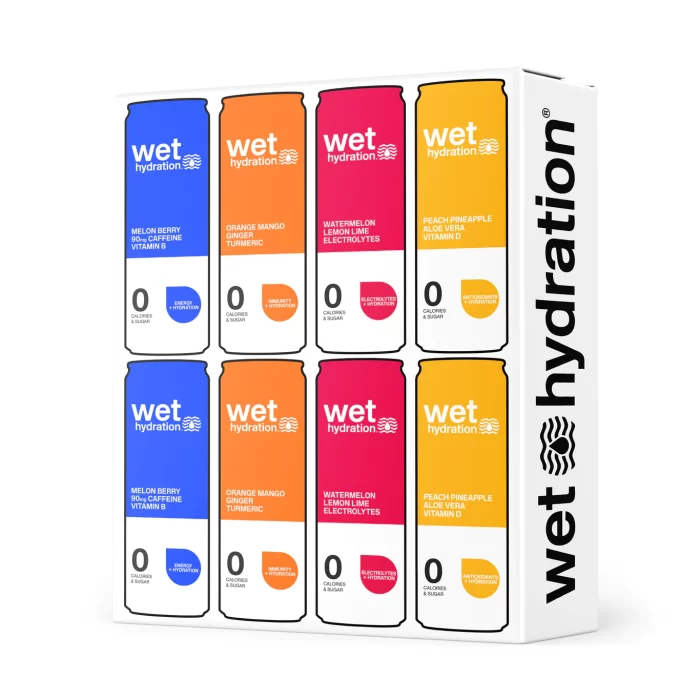
Mompreneurs need to stay hydrated and sometimes need a little pick-me-up. Wet Hydration offers mom zero-calorie non-sparkling hydrating drinks. Some have caffeine, and some do not, giving her the option should she need it. Wet Hydration’s Variety Pack offers mom a well-balanced assortment of all four of their delectable beverages that boost hydration, conveniently delivered to her doorstep. Their variety pack includes three cans each of Wet Hydration’s Melon Berry 90mg of Caffeine Vitamin B, Orange Mango Ginger Turmeric, Watermelon Lemon Lime Electrolytes, and Peach Pineapple Aloe Vera Vitamin D. They contain clean ingredients, antioxidants, and electrolytes, have zero calories, and hydrate her faster. Retails for $33 at wethydration.com.
Now more than ever, people are focused on whole-body wellness, wanting to feel good as well as look good. While the growing recognition that every person’s body has different needs is a step in the right direction, the fact that there is no one-size-fits-all formula to be healthy can be very frustrating. Thankfully, there are some basic principles to keep in mind as you begin your journey toward a healthier you. Keep reading for tips that can help everyone transform their bodies into their best selves.
Practice Good Sleep Hygiene
Being well-rested is extremely important for your overall health. Sleep deprivation has been linked to an increased likelihood of obesity, cognitive impairment, increased risk of heart disease and diabetes, impaired immune function, and depression.
Find a routine that helps you wind down for bed 30-60 minutes before bed, such as a relaxing bath, listening to music, stretching, or meditation.
Avoid electronic devices an hour before bedtime, as the blue light they emit can reduce melatonin levels.
Limit the length of naps to 30 minutes or less, and avoid napping late in the day to help keep your sleep pattern intact.
Stay Active
Exercise can be a challenge for a number of reasons, but the health benefits are undeniable. Being active helps every body system function better, allowing you to both feel great and function at your best.
If you are struggling to find opportunities to be more active, try some of these methods:
Try being more active at times when you’d normally be sitting, such as while watching TV. You can do simple exercises like squats or walking in place, or do tasks that require more movement, like cleaning, lifting weights, or jogging in place.
Instead of trying to set aside one time a day to exercise, divide it into shorter pieces throughout the day. You can get the same benefits from three 10-minute intervals as one 30-minute workout session.
Make time to work out with a friend, or join a class — exercising with others can help you feel motivated and stay on track.
Stay Nourished
Photo by Any Lane from Pexels
While many diets and fads focus on how much you eat, ensuring your body gets the vitamins and nutrients it needs is just as important. Restrictive eating may reduce calories, but also reduces vitamin intake, so focus on providing your body with the fuel it needs instead.
Some steps to make sure you have an enriched diet include:
Keep a wide range of nutritious foods on hand.
Preparing healthy snacks and meals ahead of time one or two days a week can help you stay on track at times when you are short on time.
When making goals to adjust your diet, make sure they are specific, measurable, and realistic.
Stay Hydrated
Dehydration takes a serious toll on numerous body systems, which should be no surprise as 60% of the human body is water. Energy levels, cognitive function, the digestive process, and weight management are all directly linked to having enough water in the body.
The many methods to drink enough water are well-known, but many people still struggle with consuming enough water to maintain sufficient hydration. IV therapy is often thought of as a treatment exclusive to serious illness or hospitalization, but it is a highly effective method of delivering fluids, medications, and nutrients to the body for immediate benefit. Concierge medical practices located in Houston offer IV therapy at your home or office, allowing you convenient access to treatment.
Stress Management
In addition to negatively affecting mental health, stress also takes a physical toll on the body. Left unmanaged, stress can lead to fatigue, impact cardiovascular health, cause digestive issues, and weaken the immune system, as well as many other physiological consequences.
While working towards whole-body wellness can help reduce stress, there are other steps you can take to manage it, such as:
Ensuring you have a social support system can help take your mind off your stressors and relieve anxiety.
Making sure you have a healthy work-life balance can help you avoid burnout and ensure you have time for self-care.
Occasional breaks from your daily routine to relax and engage in enjoyable activities can help prevent mental fatigue.
A therapist can help identify the triggers of your stress, and work with you to develop better thinking and behavioral skills to manage stress better.
Last Words
Transforming your body and mind to be the healthiest you is a journey. Holding yourself accountable to reach achievable goals is key. Trying to radically change every bad habit you have overnight can lead to frustration and further stress, which only negatively affects you more.
It’s also important to remember that there are alternative ways to reach your goals, such as with IV therapy to help keep you hydrated. Asking for help from your loved ones and trusted healthcare providers not only helps you reach your goals, but helps you build a community that can help you feel your best long-term.
Google has added new markup and structured data support for new vehicle listings, designed to help car dealerships get more exposure for their listings. “Vehicle listings on Google allows car dealerships to show their for-sale inventory on Google Search and other Google surfaces,” Google announced.
Vehicle listing structured data. Google’s structured data help documentation added a new section for vehicle listing (car) structured data. Google provides two ways for dealerships to add their inventory. One is through structured data markup on their websites, which is the main focus of this document, and the other is through feed files uploaded to the vehicle listings partner portal.
Google said the vehicle listing rich result is currently only available in English in the US and US territories for both mobile and desktop interfaces.
You can follow the technical guidelines over here to learn more.
New Search Console report. Google also launched a new rich result report in Search Console to monitor markup issues. This report will show valid and invalid items for pages with structured data for your vehicle listing markup.
Rich results test updated. Google also updated its Rich Results Test to support vehicle listing structured data. You can post your URL of a page or a code snippet to the tool. Using the tool, you can confirm whether or not your markup is valid instantly without waiting for Rich result reports to be updated, Google added.
Why we care. If you have a dealership or you have clients that are dealerships and want more ways to get visibility in Google Search, you now have new markup and structured data you can use to get more eye-balls on your cars.
YouTube today introduced Spotlight Moments – a new advertising package that will serve your brand’s videos next to “the most relevant and engaging content associated with the moment.”
How it works. Using, AI, YouTube can identify popular videos around cultural moments. For example, with Halloween coming up, Spotlight Moments:
Lets advertiser serve ads across Halloween-related content on YouTube.
Curates YouTube videos into dynamically updated playlists on a sponsored hub.
YouTube Culture Hub. All the videos will live on the sponsored YouTube Culture Hub. This hub will include the advertiser’s logo. Here’s what that looks like:
Why we care. YouTube’s new advertising offering has the potential to give your brand visibility during key cultural moments and help you reach your target audience. The big question to be determined is what kind of ROI your brand with this ad format.
There is no doubt that diamonds are one of the most well-known and coveted gemstones. These exquisite gems have fascinated people for centuries with their unique properties and stories that stretch far back in time.
Diamond jewelry is more than just jewelry. They are symbolic, romantic, and the epitome of exclusivity. If you share our fascination with diamonds and want to delve deeper, read on as we guide you through everything you need to know about these brilliant gemstones.
Diamonds are often used in engagement rings. You can find everything you need to know about engagement rings here.
Diamond Cut
WHAT ARE DIAMONDS MADE OF?
Diamonds are formed when carbon is subjected to extreme pressure and high temperatures over millions of years. This formation takes place deep within the Earth, typically at a depth of 150-200 kilometers, where there is a lack of oxygen. After formation, diamonds are transported to the Earth’s crust through kimberlite pipes. Diamonds are natural gemstones.
Diamonds are known as the hardest mineral in the world and are rarely scratched. In fact, it requires the use of other diamonds or, more precisely, diamond dust to cut a diamond. It is precisely this material that is used to cut diamonds.
DIAMOND EVALUATION
Evaluating the quality of diamonds is a complex process that requires expertise and a thorough analysis. A certified diamond evaluation is usually carried out by an independent and recognized gemologist. This expert uses specialized equipment and extensive knowledge of diamonds to determine the quality and value of a diamond. This evaluation takes into account several crucial factors, often referred to as “the Four Cs”: carat weight, color, clarity, and cut. These four elements form the basis for assessing and evaluating the quality and value of a diamond. The result is a comprehensive evaluation report that provides buyers and sellers with a reliable basis for their decisions.
DETERMINE DIAMOND QUALITY USING THE FOUR Cs
The quality and value of diamonds are determined using the Four Cs. When grading diamonds, one looks at Carat (weight), Color, Clarity, and Cut.
At BOLOU, you will meet GIA (Gemological Institute of America) certified specialists, which is a quality stamp for the advice you receive. In addition, they work exclusively with reputable diamond suppliers and always source their diamonds in accordance with international conventions.
CARAT – THE WEIGHT OF THE DIAMOND
Carat is a unit of weight for diamonds, and 1 carat is equivalent to 0.20 grams. The origin of this unit of weight dates back to a time when scales were used to determine the weight of objects. This means that 1 carat weighs the same as 1 seed from the fruit of a carob tree.
The price of a diamond increases with its weight, but this increase is not linear. This is because large diamond crystals are much rarer than small ones, which is reflected in the price.
CLARITY – DIAMOND CLARITY
Clarity is used to determine the purity of a diamond. High-value diamonds are typically characterized by exceptional clarity, where their composition is free of impurities, resulting in a brilliant flow of light. Impurities can also limit the possibilities for cutting.
Diamond clarity is measured on a scale of 12 steps, from flawless to included. At BOLOU, they typically use a minimum of VS1 quality as a starting point.
DIAMOND COLOR
The color of the diamond also plays a role in determining its value.
Although diamonds are typically associated with being transparent, most diamonds are actually slightly brownish or yellowish. Transparent diamonds are the most valuable but can also be found in many special colors known as Fancy Diamonds.
The assessment of a diamond’s color is of great importance, and, therefore, a rating system is naturally used to assess the color of diamonds. In both European and American contexts, a numerical system is used for this purpose.
In the graphic below, you can see an overview of the system. “D-E” is the most valuable color, while “M-Z” is the less valuable.
Natural blue diamonds are the rarest, with only 0.01% of the world’s diamonds said to be blue. The blue color is due to the presence of boron, and they occur in layers of the earth four times deeper than regular diamonds.
Natural red diamonds are also rare, with only 20-30 pieces said to exist in the entire world. Therefore, they are also the most expensive. For example, a 1.56-carat red diamond with the nickname Argyle Phoenix was sold at auction for over 2 million dollars.
Overview of the Value System for Diamonds
Natural blue diamonds are the rarest, with only 0.01% of the world’s diamonds said to be blue. The blue color is due to the presence of boron, and they occur in layers of the earth four times deeper than regular diamonds.
Natural red diamonds are also rare, with only 20-30 pieces said to exist in the entire world. Therefore, they are also the most expensive. For example, a 1.56-carat red diamond with the nickname Argyle Phoenix was sold at auction for over 2 million dollars.
CUT – HOW DIAMONDS ARE CUT
The cut of a diamond is crucial to its appearance. Even a diamond with high clarity and beautiful color will appear dull if the cut is poorly done. A professional cut brings out the best in an exquisite diamond.
BOLOU has specialized in the classic brilliant cut for decades, which is a well-known cutting technique. State-of-the-art tools and professional goldsmiths are capable of designing and creating any imaginable diamond jewelry, which, through uncompromising quality and unique design, will undoubtedly stand out from the crowd.
WHAT IS THE DIFFERENCE BETWEEN BRILLIANTS AND DIAMONDS?
The difference between brilliants and diamonds lies in their terminology and use. A brilliant is a term specifically used to describe a diamond cut in a particular brilliant-cut technique. The brilliant cut is known for enhancing the diamond’s light reflection and creating impressive brilliance. On the other hand, diamonds are a broader category that includes gemstones formed from carbon and can have various cuts and characteristics beyond brilliants.
HOW MUCH DO DIAMONDS COST?
The price of diamonds varies significantly and depends on several factors, including the Four Cs — carat weight, color, clarity, and cut. These factors help determine the quality and, therefore, the price of a diamond.
When considering purchasing a diamond, we recommend ensuring a GIA certificate as a quality stamp, especially if the diamond is larger than 0.30 carats. The GIA certificate is a guarantee that the diamond is of the specified quality and will help you make an informed decision about your purchase.
The price of diamonds can also be affected by other factors, such as the diamond’s shape, the quality of the cut, and any special characteristics like color or rarity. Additionally, market supply and demand can also impact the price of a diamond.
It is important to remember that the price of a diamond is not just a matter of size or carat weight. While larger diamonds generally have a higher price, a smaller diamond with unique color, clarity, and cut can be equally valuable or even more sought after.
Any technology that boosts performance, reduces costs, and elevates a company’s brand value in the marketplace is something that cannot be ignored. LED lighting brings all of those benefits and more to companies operating in commercial and industrial spaces. It’s a transformative technology that is becoming the standard for companies focused on creating safe, flexible, and highly functional workspaces.
“LED lighting is a breakthrough technology that brings many benefits to the business world,” says Dara Greaney, Founder and CEO of LEDLightExpert.com. “With minimal investment, it drives innovative lighting solutions that enhance functionality, increase productivity, and support sustainability for commercial and industrial spaces.”
LEDLightExpert.com brings a unique mix of expertise and innovation to clients in commercial and industrial spaces looking for a better lighting strategy. Its services include comprehensive lighting studies, fast and affordable access to quality LED products, and elite customer service on all issues related to LEDs.
“The future of lighting is LED,” Greaney says. “It transforms spaces, elevating the workplace experience and cutting back on operational costs. LEDs are one of the smartest investments companies can make in their facilities and overall business performance.”
The basics of LED lighting
LED lighting uses light-emitting diodes to convert electrical energy to light, providing light that is cooler, less costly, and more controllable than traditional incandescent and fluorescent bulbs. While LEDs were created over 60 years ago, they have recently become the go-to solution for lighting as global initiatives have sought to increase sustainability in the business world and beyond.
Leveraging LEDs to slash operating costs
“The US Department of Energy reports lighting accounts for as much as 20% of commercial electricity costs,” Greaney shares. “LEDs dramatically impact those costs, providing even better lighting than traditional bulbs while using 90% less energy.”
Uni-directional light is one of the keys to the energy savings LEDs provide. Whereas incandescent and fluorescent bulbs throw off light and heat in all directions, LEDs provide a focused beam that wastes less energy.
The uni-directionality of LEDs also allows for a more functional lighting design, as LED fixtures can be easily focused within workspaces to provide the optimal quality and quantity of light.
LEDs also emit much less heat than incandescent and fluorescent bulbs, which saves energy both in the powering of the bulb and in cooling costs.
Replacement costs are another area where LEDs save businesses money. By providing as much as 35,000 hours of light, LEDs achieve a life span four times longer than fluorescent bulbs and 35 times longer than incandescent bulbs.
“In most commercial spaces, lights are used a maximum of 10 hours a day,” Greaney shares. “At that rate, LED bulbs can last for nearly 10 years. Fluorescents used in the same setting will need to be replaced after two to three years, and incandescents won’t last longer than three to four months.”
Boosting workplace performance with LEDs
“The quality of light businesses provide for their workers plays a significant role in improving their productivity,” Greaney explains. “When employees are able to work in a well-lit environment, they find it easier to concentrate, are more alert, and their mood is better. For businesses, that translates into better productivity and higher profits.”
The technology behind LEDs allows for the color temperature of bulbs to be adjusted, which is something that cannot be achieved with traditional bulbs. The same bulb that provides a blue light to boost alertness in work areas can also be adjusted to deliver warmer colors to promote relaxation.
High color rendering is another feature of LEDs that makes them an optimal light source for workspaces. By providing a more accurate representation of colors, LEDs support tasks that require color matching while also reducing eye strain.
“LEDs also enhance safety in the workplace,” Greaney shares. “Because they need to be replaced far less often than traditional bulbs, they keep maintenance teams from the hazardous work that often needs to be done to replace bulbs in commercial and industrial settings.”
Increasing sustainability with LEDs
LEDs are seen as a key player in sustainability efforts, reducing greenhouse gas production by reducing the amount of energy needed to provide lighting.
“Switching to LEDs is one of the easiest and most impactful steps any business can take to support its sustainability efforts,” Greaney says. “It reduces a company’s carbon footprint, cuts back on waste, and keeps dangerous chemicals like mercury that is found in fluorescents out of the environment.”
As companies prioritize sustainability, they also improve their brand reputation. Reports show today’s consumers consider the efforts brands are making in the area of sustainability and are more likely to support those with a good record of implementing sustainable practices and products.
The transformation LED technology brings to commercial and industrial spaces goes far beyond simply providing better lighting. Businesses that invest in LEDs will get a return that includes lower operating costs, increased sustainability, and better workforce performance.
Google Search Generative Experience is now able to generate images, just like other AI-generation tools but in the new experimental search interface. Plus, Google SGE can also provide written drafts, so you can see and change responses sooner.
SGE image creation. Google wrote that today it is “introducing the ability to create images with our generative AI-powered Search experience (SGE).” You can ask Google SGE to “draw a picture of” something and it will provide you with four samples, similar to the other AI-image generation tools. You can click on an image and edit that image further or download it.
How it works. Here is a GIF of it in action:
Image Search. Google is also testing this directly in Google Image search. If you are opted in to SGE and you use Google Images, you may see this option there as well. “This feature is designed to appear when you’re searching for inspiration, like “minimalist halloween table settings” or “spooky dog house ideas.”,” Google wrote.
Image generation in SGE is currently available in English in the United States, to people who opted into the SGE experiment and who are 18 years or older, Google explained.
Drafts. Google SGE also now can write draft responses. Google said, “Sometimes when you’re researching a project or topic in Search, you end up looking for writing ideas and inspiration along the way. To help with these longer-running searches, we’re introducing written drafts in SGE. You’ll be able to make the draft shorter, or change the tone to be more casual.”
Why we care. Google keeps enhancing and adding more AI-features to SGE, Bard, as other search engines and AI companies do the same. It is exciting to watch the features continue to expand and grow.
Oh, I used Midjourney, an AI-image creation platform, for the featured image for this story.
Google has stopped showing indented results in the Google search listings. Google has historically showed an indented search result under the main result when it was from the same domain but over the past few weeks, Google stopped indenting those results.
What changed. Danny Sullivan, the Google Search Liaison, posted “We stopped doing “indented results” a few weeks ago.” Google stopped the intended results because “especially with continuous scroll, it wasn’t as helpful as in the past,” Sullivan wrote.
What it looks like. Here is a screenshot of the old indented results from a few months ago:
Now I see them listed out, without being indented and not in a specific order:
What didn’t change. Google said its “diversity system still works to generally show only two results from the same site in the top results.” So Google has not changed how often Google Search may show the same domain for a single query on the same search results page. Google just won’t intent the result anymore.
Why we care. This change should not impact how many times your content is shown in Google Search, it just will impact how that second listing appears in those search results.
Will that impact your click-through rate in a positive or negative way is yet to be determined.
It’s no secret that B2B marketers have a challenging task in front of them: a niche audience, an often technical offering and tighter budgets than their B2C counterparts. However, a recent survey has found that over 50% of B2B marketers have plans to increase their marketing budget over the next year – and they are looking to AI to help them succeed.
Join MNTN as they walk through how B2B marketers can utilize the rapidly evolving AI technology.
 Mesh 2-in-1 Mini Crib — Gray — Greenguard Gold Certified