The majority of marketers are still able to use their Universal Analytics accounts as usual.
Despite warning advertisers that the tool would be replaced by Google Analytics 4 on July 1, UA is still processing data as usual for most people.
Why we care. Marketers were reluctant to make the switch from UA to GA4, despite Google insisting it was enforcing the migration. Although the industry was given more than a year’s notice, many were not prepared for the sunset deadline and have been struggling to understand how to navigate GA4. With that in mind, it’ll come as a reassurance that UA is still processing data – but it’s unlikely to be for much longer.
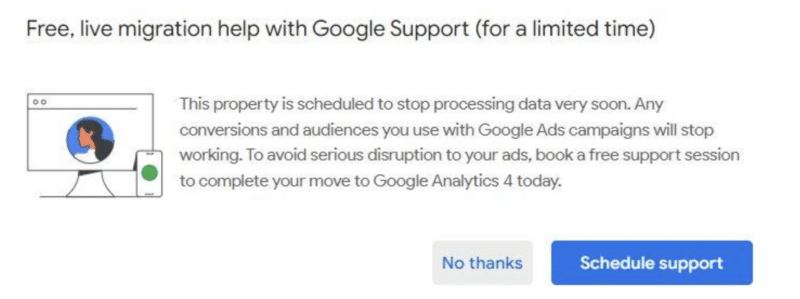
What’s happening? While it appears that the majority of marketers are still able to access real time data as usual in UA, some have reported seeing a new warning messages on their accounts. It reads:
“This property is scheduled to stop processing data very soon.”
“Any conversions and audiences you use with Google Ad campaigns will stop working.”
“To avoid serious disruption to your ads, book a free support session to to complete your move to Google Analytics 4 today.”
Meanwhile, others have confirmed to Search Engine Land that UA has already stopped processing data on their accounts. James Brockbank, managing director of Digitaloft, told us:
“I can still see realtime for this UA property but it’s no longer tracking data as of today.
“This has been showing as 0 (same across a few different sites’ properties) since midnight in the properties’ time zone. Was all showing up to today.”
For those still using UA as opposed to GA4, it looks as though their accounts may very well be on borrowed time.
What has Google said? On July 1, Google released a statement on Twitter and the Analytics Help Center to explain why some people may still have access to their UA data as. The search engine stated that the sunset was being rolled out in phases. It said:
“This will not happen overnight, so some Universal Analytics properties may continue to process data.”
“However, all properties have now been added to the queue, and those that have not completed the upgrade will Jumpstart on a rolling basis.”
Google Analytics 4 is our next-generation measurement solution, and it has replaced Universal Analytics.”
“Standard Universal Analytics properties have stopped processing new data. To maintain your website measurement, you’ll need a Google Analytics 4 property.”
“We strongly encourage you to make the switch to Google Analytics 4 as soon as possible. If you use Universal Analytics data in your Google Ads account, make sure you migrate your Universal Analytics property’s Google Ads links to your Google Analytics 4 property.”
Timeline. The shutdown of Universal Analytics is being rolled out the following stages, with the final phase set for July 2023:
March 2023: Google automatically created a GA4 property for marketers who didn’t opt out of the automatic property creation option. Where possible, existing site tags were used.
July 2023: UA stops processing hits, including standard properties in accounts that also contain 360 properties. Marketers still have access to previously processed data in their UA property until July 2024.
July 2024: All marketers, even those with 360 properties, will no longer have access to the UA user interface and API.
Google has confirmed an issue with indexing content from news publishers and surfacing that content in Google News. Google said it is working to fix the issue but the issue may result in a decrease in traffic from Google News.
Google’s statement. Google posted a statement in the Google Search status report saying, “There’s an ongoing issue with indexing in Google News that’s affecting all sites. Sites may be experiencing a decrease in traffic from Google News. We’re working on identifying the root cause. Next update will be within 24 hours.”
John Mueller of Google posted about this on Twitter:
Hi folks, we have this listed as an incident that the team is investigating now: https://t.co/NlsLfymPx4
— John Mueller (official) · Not #30D (@JohnMu) July 10, 2023
Can impact traffic. There are a number of publishers complaining about significant traffic issues with Google News. Some publishers are reporting really bad traffic results, as you can see from this Google News Publisher help thread.
Why we care. If your site is in Google News and you noticed a traffic drop from Google News over the past few weeks, it might be related to this Google News indexing bug.
Google is now aware of the issue and is working on fixing it going forward.
Implementing systems in your SEO business is crucial, but starting can feel overwhelming or confusing.
You may have attempted it before but gave up due to the complexity or lack of guidance. Perhaps you made some initial progress, but the systems were not effectively implemented and followed.
Systemizing your business well can provide ample time and cost savings and potentially boost your sales.
By allowing you to focus on those all-important income-generating tasks instead of dealing with the small stuff, you can turn your business from one that plods along to one that brings you closer to those big goals of yours.
I’d go as far as to say that it’s tough to scale or grow meaningfully unless you have systems in place.
What is a system?
A system is a chain of processes, each containing a sequence of individual steps that make the system operational.
So a process might be creating a form on a WordPress website but the system could be an entire marketing funnel.
It will free up decision-making headspace for more important matters.
It ensures consistency.
It helps you to stay organized.
You can manage your time better.
It’s easy to delegate or for team members to cover for others.
Your customers get high-quality service every time.
It stops things from being missed or forgotten.
It’s essential if you ever want to sell your business.
Let’s look at each of these in a little more detail.
Freeing up decision-making capacity
Taking the decision out of your hands can help you focus on crucial work instead of making decisions about less important tasks.
Ensuring consistency
Systems mean that tasks are done in the same order and in the same way over and over again.
This is why production lines always have systems in place.
Can you imagine a factory producing chocolate bars, and they all came out tasting slightly differently or in three pieces instead of two?
Staying organized
Systems allow you to stay super organized. In some cases, not doing so can have severe consequences – an example being your invoicing system.
Managing your time
While it is a big time investment to get all of this set up, once done, you will save hours of time across your day.
Knowing that your systems are taking care of day-to-day business means you are less likely to be pulled away to deal with issues that arise.
This enables you to focus on the really important tasks, the income-generating tasks, looking after your customers and working on business growth.
Delegation
Handing work over to someone where systems are in place makes it much easier for everyone involved. If someone goes off ill unexpectedly, it is easy for someone else to pick up the work.
Customer service
Giving the same high-quality experience time and time again will keep your customers coming back for more.
They know what to expect and so feel comfortable doing business with you.
Systems make sure that all customers are treated exactly the same way and that any disputes are handled according to your internal policies.
All of this helps to take the emotion out of situations, especially concerning non-payment or complaints.
Helping you remember
If you have a system, it’s much more difficult to forget to do something.
Think about an email you read last thing on a Friday, thinking you will get to it the following week.
But come Monday, you forget all about it, and it sits in your inbox for the rest of the week. It’s only when your customer chases you do you remember that it even exists.
I’m sure we have all been there. I certainly have.
Systems help to avoid this from happening because once an input arrives and feeds into the relevant system, it’s in the right place, and that individual process begins.
Long-term plans
Do you have an exit strategy for your business?
If so, it may well include selling it to someone else at some point. If this is the case, then systemization is essential.
It is much easier to sell a business that has systems in place already. The handover becomes easier for everyone involved.
Get the daily newsletter search marketers rely on.
function getCookie(cname) {
let name = cname + “=”;
let decodedCookie = decodeURIComponent(document.cookie);
let ca = decodedCookie.split(‘;’);
for(let i = 0; i <ca.length; i++) {
let c = ca[i];
while (c.charAt(0) == ' ') {
c = c.substring(1);
}
if (c.indexOf(name) == 0) {
return c.substring(name.length, c.length);
}
}
return "";
}
document.getElementById('munchkinCookieInline').value = getCookie('_mkto_trk');
How to get started with systems in your SEO business
You may want to view this as a stand-alone project as it may take a little time to fully systemize everything.
Start with the big stuff, the important ones and the ones that will free up the most amount of time for you.
This may also need investment to enable you to properly automate some of these systems too, which will help free up even more time, so work out a budget ahead of time.
Start with one and map out that system from start to finish
Each system will contain several individual processes. We often see these processes recorded as standard operating procedures (SOPs).
I would suggest having a templated document with a title, version number, date, and number to identify the document and how it fits into the overall system.
You’ll also need to create an index so that at any time, if someone needs to know how to do something, they can go to your systems ‘bible’ and find the relevant one.
Testing and improvements
Once your processes are written out and system maps are created, you can move into the test and improve phase.
Test it as much as you can. Breaking the system then enables you to account for different scenarios.
Pass your SOPs to someone completely new to the tasks involved and ask them to follow them. A fresh pair of eyes can often pick out problems that might otherwise get missed.
Storage
Don’t currently have a central storage system for all of your documents? Now is the time to have one.
You could set up a Google Drive, One Drive or Dropbox account.
Whichever you use, make sure that it’s stored in a way that makes sense with filenames clearly written and simplified titles so it’s easy to find everything. Then ensure that everyone in your business can access the files.
Regular review
Once you have your systems in place, it is important to make sure that they stay relevant.
Set aside regular reviews of existing systems by going through them step by step and amending anything that has changed.
Likewise, archive anything that is no longer relevant and add in any new systems.
This folder of documents is basically the inner workings of your business, it should tell anyone exactly what they need to do to run the business your way.
You should, in essence, be able to walk away from it all tomorrow, and someone else could come in, pick up the systems and be able to carry on.
Systematize and thrive
I am a massive fan of systemization. I believe that it is essential to the success of any business owner looking to grow.
That said, while every area of your business can be systemized, I also believe that our SEO clients buy into us as people too.
So don’t completely lose that human connection element and personalization you give them.
A monthly phone call or personalized email will go a long way toward maintaining the relationships you have worked so hard to build.
Radon, a naturally occurring radioactive gas, can be a hidden danger in property transactions. This odorless, colorless, and tasteless gas can seep into homes through cracks in the foundation, floors, or walls, posing significant health risks to inhabitants. The inability to detect radon without proper testing emphasizes the importance of informing buyers and sellers about its presence.
According to the US Environmental Protection Agency (EPA), “nearly one in 15 homes in the United States has a radon level that should be reduced.” In many states, that percentage is much higher. By understanding the importance of radon awareness, buyers and sellers can make informed decisions to ensure the safety of their homes and the well-being of those who occupy them.
“High indoor radon levels pose long-term health risks,” highlights Insoo Park, CEO and founder of leading radon detection and monitoring device company Ecosense, “especially if the property has not undergone proper mitigation measures.” As part of the due diligence process, it is highly recommended that homebuyers request radon testing and carefully review the results before finalizing the purchase.
Buyer’s perspective
Radon testing provides valuable information about the radon levels present in the property. Reviewing the test report lets you gain insight into your lung cancer risk and make an informed decision before finalizing the purchase, allowing you to assess whether further actions — such as radon mitigation — are necessary to ensure a safe living environment for you and your family.
While some may question the additional expense or effort of radon testing, it is essential to recognize that the potential health risks associated with indoor radon exposure outweigh any inconvenience. According to the EPA, radon is the second leading cause of lung cancer only behind smoking. Radon is a symptom-less health hazard, and most people don’t find out they have radon poisoning until they’ve been diagnosed with late-stage lung cancer.
“As a potential home buyer, you have the right to request a professional 48-hour radon test, or you can conveniently conduct your own test with consumer devices like EcoQube or EcoBlu,” Park shares. “These devices offer easy-to-use functionality and capture fluctuating radon levels every 10 minutes, giving you a reliable result within an hour.” By being proactive, you can mitigate potential dangers and make an informed decision that aligns with your well-being.
Seller’s perspective
As a seller, it is crucial to recognize your ethical and legal responsibility when disclosing information about radon levels in your home. Taking steps to address radon gas issues demonstrates your commitment to the well-being of potential buyers.
“By continuously monitoring your indoor radon level with your own home radon detector,” Park says, “and implementing mitigation measures, if necessary, you can provide documentation that assures buyers of the safety of the property.” This leads to a smoother sales process, as buyers will appreciate the transparency and efforts to address radon concerns.
In many jurisdictions, sellers must provide a radon disclosure statement or complete radon testing and mitigation before listing their property for sale. According to the LawAtlas Project, 37 states “have a law requiring sellers to disclose known radon levels in the sale of homes.” Interestingly, of those 37, only 22 require radon testing in schools or childcare facilities and with the exception of Montgomery County Maryland, none require homes to be tested during real estate transactions.
This discrepancy in radon testing and mitigation is because it wasn’t until the last 50 years that radon has been considered a public health risk. While medical professionals knew that underground miners in the 1940s had a high risk of lung cancer, “elevated levels of radon in homes weren’t recognized as a potential public health threat until the mid-1980s.”
Fortunately, in recent years there has been a positive trend and movement toward more proactive and responsive legislative actions. For example, on June 5, Governor of Colorado Jared Polis, signed a bill that “establishes that buyers or renters of residential property have the right to be informed of whether radon tests have been performed and if a radon system is present in the home.” This kind of action helps people know what action to take to protect themselves and their families.
Radon and property values
Radon can potentially impede a property sale if high concentrations are discovered during the inspection. Sellers can address radon issues by conducting tests, proactively mitigating the problem, and providing documentation to potential buyers, ensuring a smoother sales process.
In fact, a significant portion of the US has a high incidence of homes containing dangerous levels of radon. According to the U.S. Environmental Protection Agency (EPA), any level above 4pCi/L should be disclosed and mitigated. Brian Thomas, a real estate agent in Denver, Colorado, states, “It’s not a question of whether your home has radon, but rather how much.” It is noteworthy that the EPA’s recommended radon action level of 4pCi/L is higher than the World Health Organization (WHO) recommended level of 2.7 pCi/L.
Because of the prevalence of radon throughout the US and the ability to mitigate when necessary, radon doesn’t negatively impact property values. However, what does impact property values is when the seller isn’t forthcoming about this potential health hazard. “Being transparent at the beginning helps avoid unnecessary negotiations later on,” Park suggests.
Professional guidance
Radon measurement and mitigation specialists, and most real estate agents and home inspectors are qualified to help with radon concerns. Since any home has the potential to have elevated radon levels, consulting a qualified professional for assistance is highly recommended.
With professional guidance, both buyers and sellers can gain a comprehensive understanding of radon and its implications on the transaction and receive recommendations tailored to the situation.
Buyers should prioritize radon testing as part of their due diligence process and sellers are responsible for disclosing any known radon information regarding the property.
In summary, both buyers and sellers can create a more secure living environment by prioritizing radon awareness and contributing to a smoother, more transparent real estate transaction.
Unless you’ve been away on a desert island for the last 18 months, you’re well aware that Google Analytics 4 (GA4) took center stage on July 1 as the source for our web metrics. We’ve had to say goodbye to Universal Analytics (UA), an old friend to many marketers.
One of the biggest challenges marketing teams may face will be comparing a current period of data to year-over-year (YOY) historicals to measure growth success.
There are fundamental changes in how GA4 measures data vs. how UA does, so comparing data between the two won’t be an apples-to-apples scenario.
The apples-to-apples YOY comparison scenario is why there was a big push by many to get GA4 set up, running and collecting data by July 1, 2022. That would allow for a true comparison.
So what happens if you’re one of the procrastinators (don’t feel bad – there are plenty!) who won’t be able to make a true apples-to-apples comparison? Well, here’s what you need to know.
Fundamentally different data models
UA was based on sessions and pageviews. GA4 is based on events and parameters. Both methods can collect and tally data, but the output in a report will look different.
So what does this mean in plain English?
Different numbers in metrics you report
You’ll encounter cases where the metric is called the same thing so you’re tempted to believe the number should completely match up (or at least come close). However, you may find some variances.
For example:
User counts
Here is a small website’s UA user/new user count for one month:
UA count of users and new users
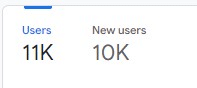
Now here is that same small website’s GA4 user/new user count for the same exact time period:
GA4 count of users and new users
In the reports snapshot, GA4 rounds the numbers, but you can see the users reported in GA4 is about 8% lower than what’s seen in UA.
The new users metric is even more pronounced (a difference of almost 14%) if you look at the rounded number. (Actual number reported in GA4 when you drill down is 10,443 – a difference of just under 10%.)
Sessions
GA4 has a couple of key differences when it comes to counting sessions, which actually make the count more accurate.
While both platforms have a default session timeout setting of 30 minutes, UA restarts the session at midnight and generates a new one when a UTM promo code is clicked on.
If you could follow that, basically, the “session count” numbers you’ve been reporting on forever aren’t exactly an exact tally.
GA4 does not restart at midnight and does not generate a new session if a UTM promo code is clicked.
For example, I have seen some websites put a promo UTM code on a link to an internal page (bad idea and unnecessary, by the way).
In UA, that causes a new session to be started and it overwrites any other UTM promo code that may have actually driven the traffic.
Conversions
The way conversions are calculated between the two platforms differ.
UA will only count one conversion per session for each goal. So for example, a user clicks on the “click to call ” multiple times.
However, the user doesn’t follow through and cancels before the call goes through the first time. Only one conversion will be counted for that goal.
Here’s an example of the “Clicks to Call” goal setup in UA:
Clicks to Call goal completions in UA
In contrast, GA4 will count a conversion every time even if that same conversion event is recorded multiple times during a session (Same user, same site, same visit):
Click to Call goal completions in GA4
Understanding the proper context matters here.
On the one hand, you could argue GA4 inflates the actual number of conversions since you basically have the same individual clicking on the “call” link multiple times (presumably for a single purpose).
On the other hand, you could argue that all you really cared about was whether the user converted on the call to action – not how many attempts it took on a particular session. Regardless of which method you feel is better, the GA4 method is now the way forward.
If we’re talking about an “Add to cart” conversion where the user put one pair of shoes in a cart, then continued to shop and added socks, GA4 would count this as two conversion events.
You could argue that GA4 counting two conversion events is appropriate (depending on how you choose to look at it).
Get the daily newsletter search marketers rely on.
function getCookie(cname) {
let name = cname + “=”;
let decodedCookie = decodeURIComponent(document.cookie);
let ca = decodedCookie.split(‘;’);
for(let i = 0; i <ca.length; i++) {
let c = ca[i];
while (c.charAt(0) == ' ') {
c = c.substring(1);
}
if (c.indexOf(name) == 0) {
return c.substring(name.length, c.length);
}
}
return "";
}
document.getElementById('munchkinCookieInline').value = getCookie('_mkto_trk');
Rethinking our web performance metrics
GA4 is giving us a new way to think about success metrics for the business and what really matters. Here are a couple of examples:
Sessions
We already covered the differences in how the two platforms calculate sessions, but GA4 steers us to thinking about sessions that actually result in meaningful engagement on the site.
One of the first callouts you’ll notice is “Engaged sessions,” which is simply a count of sessions where the user actually did something.
Engagement metrics
An “engaged session” can only be considered if it lasts longer than 10 seconds, has one or more conversion events, or has two or more page/screen views.
You may or may not agree, but that’s what GA4 uses for its standard. “Engaged session” is not a canned metric in UA.
Bounce rate
For a generation, marketers loved to report a low bounce rate as a measure of success. However, it’s not always a great metric. As with any success metric, context is king.
For example, a simple recipe page could do its job perfectly but show a high bounce rate.
The user got what they came for (the recipe) and then made a happy exit. Is that bad?
No, actually. It’s a good thing for the user.
Bounce rate is now gone as a stand-alone metric in GA4. Now you can refer to the engagement rate intended to show you the percentage of quality site visits. (Again, according to the definition of quality.)
If you start with 100 and subtract the engagement rate from it, in theory, you get something similar to a bounce rate.
For this article, just a quick high-level reminder of the differences:
In UA, events are used to track site actions that don’t necessarily generate a success page.
For example, you have a video on your home page. That video is played all the way through.
Upon completion of that video, there is no “Thank You” page you can easily set up as a standard conversion goal. This is where events come in.
UA lets you give “events” a category, action, and label to provide more description and context. An event is counted when an action is triggered. For example, if you have a video on the home page and track completions.
A wireframe example of a video on the front page of a site
GA4 has no category, action, or label, so there’s no point in learning it now. And with GA4, everything is an event. For example:
Pageview = Event
Session Start = Event
First Visit = Event
Scroll = Event
Click = Event
Video Start = Event
File Download = Event
Video progression = Event
Video complete = Event
Newsletter Signup = Event
Contact Submission = Event
View Search Results = Event
You get the idea.
Everything remotely worth measuring is an event.
Views vs. data streams
In UA, you can have one simple website and a mind-boggling number of views set up. You can see different numbers depending on which view you’re looking at, so it was worth understanding.
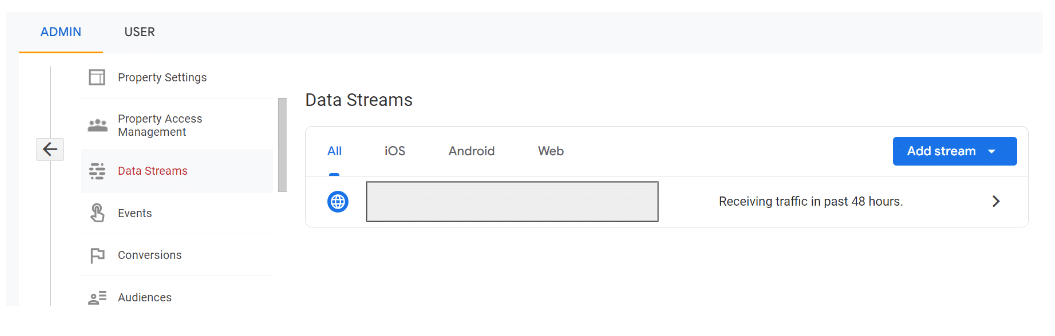
There are no more views in GA4. Instead, there are data streams. Those can be seen in Admin > Data Streams:
If you had previously set up multiple views in UA, you’ll want to look at the data stream settings in GA4 to make sure you’re measuring what matters to your business.
One of the benefits of GA4 is you can better see a more accurate reflection of the number of users.
For example, a data stream can be a website or an app. If your business also has a native mobile app, that can be a plus.
Moving on from UA to GA4
If you didn’t have GA4 set up and running by July 1, 2022, you will not have a true apples-to-apples YOY comparison for July 2023 data. So be careful how you report the numbers.
If you have no choice but to show UA data for the previous year, include a big asterisk along with an explanation. Hopefully, this article provides a little context and backup info when you’re asked why.
With more startups than ever entering the market, it is becoming more difficult for SaaS brands to cut through the noise.
That’s why many have realized that PPC can be a fantastic way to build brand awareness and draw in new customers.
However, a more strategic approach is required to run campaigns effectively and gain a competitive edge.
It is not enough to set and forget campaigns. There is a lot more that SaaS brands can do to elevate their performance.
Here are five ways SaaS brands can get the most out of PPC campaigns.
1. Build a cold audience display campaign
Dear SaaS businesses: not everyone knows about your brand.
Most people are aware that there are solutions available to solve their problems. But they are less likely to know specific brands which provide a suitable product.
To build brand awareness and influence consideration with these types of individuals, you must reach out to them through your marketing efforts.
One way to do this is to run a cold audience display campaign in Google Ads.
The term “cold audience” refers to individuals who have not yet engaged with a brand and, in this case, still fall within the parameters of the brand’s target audience.
By running display campaigns targeting these individuals, SaaS brands can build brand awareness with new potential customers and influence their purchasing decisions.
Display campaigns enable brands to showcase their software through image and video assets, which can be more eye-catching than text-based ads.
Through these visual assets, SaaS brands can give potential customers a feel about how their software looks and feels.
What’s more, SaaS brands can use a range of targeting options to reach their target audience while they browse the web.
To effectively run a cold audience display campaign, consider targeting your campaigns by:
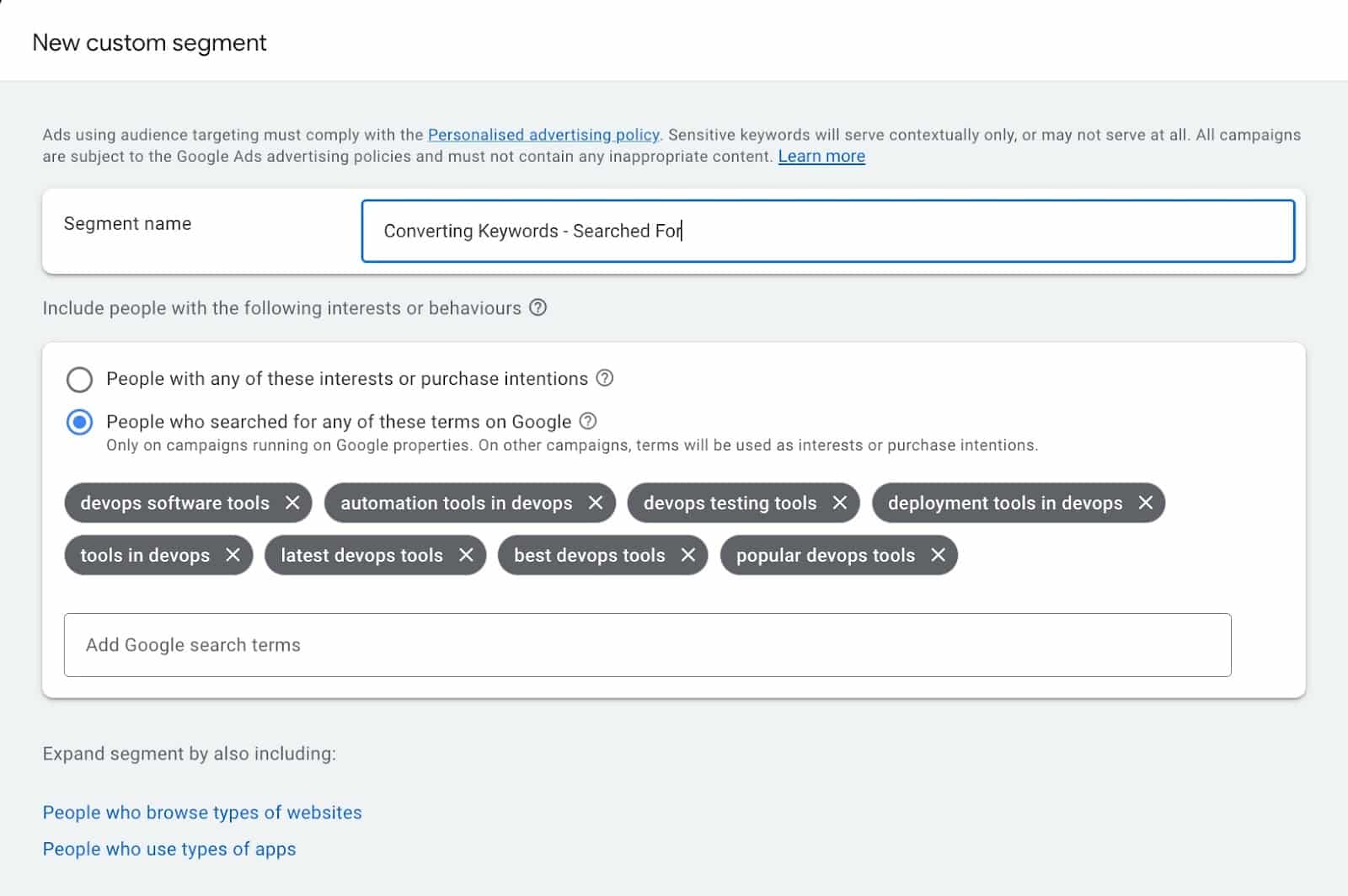
Custom segments
Custom segments enable advertisers to target audiences based on a range of online behaviors, including:
What they have searched for in Google.
What websites they have browsed.
What apps they have used.
Creating a new custom segment in Google Ads
Use converting keywords from your search campaigns and research into websites and apps your target audience frequently uses to build these segments.
In-market audiences
In-market audiences let you target people actively researching or comparing SaaS products or services. Relevant segments include antivirus and security software, video software and accounting software.
Individuals within these groups have been categorized by:
The types of websites they use.
The content they engage with.
How frequently they have been visiting relevant websites.
This indicates they have a relevant intent to convert in the near future.
Affinity audiences
Affinity audiences enable you to reach people based on who they are, what their interests are and what types of habits they have.
Use match affinity audience options with the personas of their target audience. For example, high-end computer enthusiasts, PC gamers or cloud services power users.
2. Use customer match exclusions
With the average CPC of a PPC campaign in 2023 coming in at $4.22, you need to ensure every click counts.
One thing you don’t want to be doing is paying for clicks from existing customers looking to log into their accounts.
By excluding current customers from seeing ads, you can ensure your budget is spent on reaching potential new customers, not those already using their software.
To do this, create a new audience list by uploading a list of your current customers using first-party data, such as email addresses, phone numbers and user IDs.
Then, manually add them as exclusions under the Audience tab of each of your active campaigns.
Consider creating exclusions for those currently within the “lead to sale” process.
For example, those who have already claimed a free trial, are newsletter subscribers or are in contract discussions with the sales team.
There is little value in spending money on those who are already:
Engaging with the software.
Communicating with the sales team.
Receiving marketing communications through emails/newsletters.
Get the daily newsletter search marketers rely on.
function getCookie(cname) {
let name = cname + “=”;
let decodedCookie = decodeURIComponent(document.cookie);
let ca = decodedCookie.split(‘;’);
for(let i = 0; i <ca.length; i++) {
let c = ca[i];
while (c.charAt(0) == ' ') {
c = c.substring(1);
}
if (c.indexOf(name) == 0) {
return c.substring(name.length, c.length);
}
}
return "";
}
document.getElementById('munchkinCookieInline').value = getCookie('_mkto_trk');
3. Use remarketing lists
Rarely will an individual engaging with your website for the first time be ready to convert.
It’s more likely that they will need time to find out more about your brand, continue researching their situation, check out alternative providers and discuss their options with other stakeholders.
During this period (which could be weeks or months), it is vital to retain top-of-mind awareness. You can not afford to fall off a potential customer’s radar before the final consideration stage.
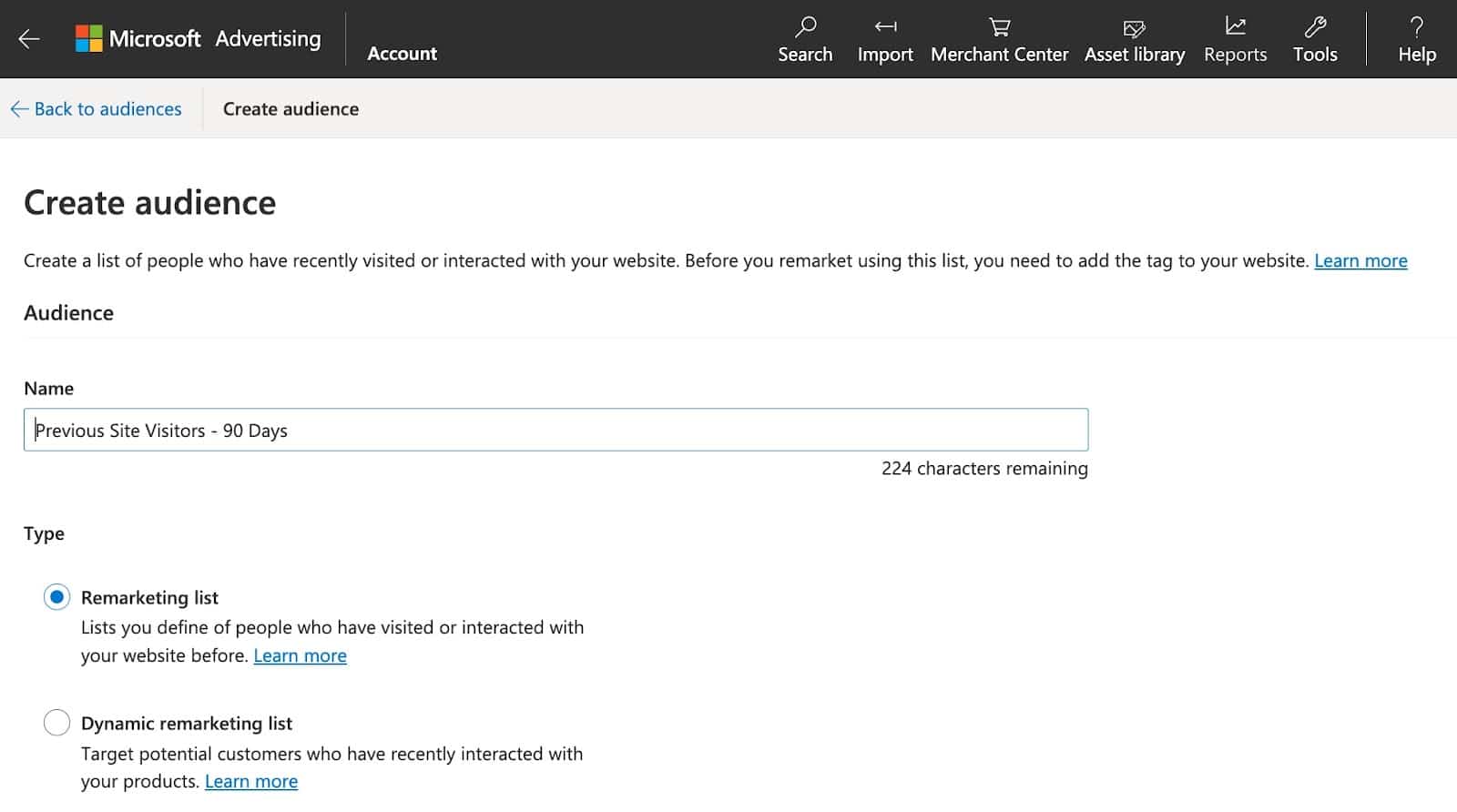
One way you can reach out to previous site visitors and remind them of your product is by using remarketing lists and using them as targeting for display campaigns (Google Ads) or audience ads campaigns (Microsoft Advertising).
The biggest advantage of running such campaigns is that the audience has already shown interest in the software and will therefore have a higher intent to convert.
By reaching out to these previous site visitors again, you can encourage them to return to the website to convert.
Creating a Remarketing List in the Microsoft Advertising platform
To take this to the next level, consider offering something extra in your ad messaging that wasn’t available during the initial website visits.
This could be more information about your brand, such as a glowing customer review or reviewing website ratings, or an extended trial or discount code.
For example: If a website offers a 7-day free trial, the messaging in the remarketing display campaign could offer an exclusive 14-day free trial.
While a 7-day trial may not have persuaded an individual to convert, an exclusive extended trial could be what it takes to bring them in.
4. Engage in competitor bidding
SaaS is a real dog-eat-dog industry. Brands must do what they can to outsmart their competitors. One way to do this is by engaging in competitor bidding.
Competitor bidding refers to running search campaigns or ad groups with keyword lists targeting competitors’ branded keywords.
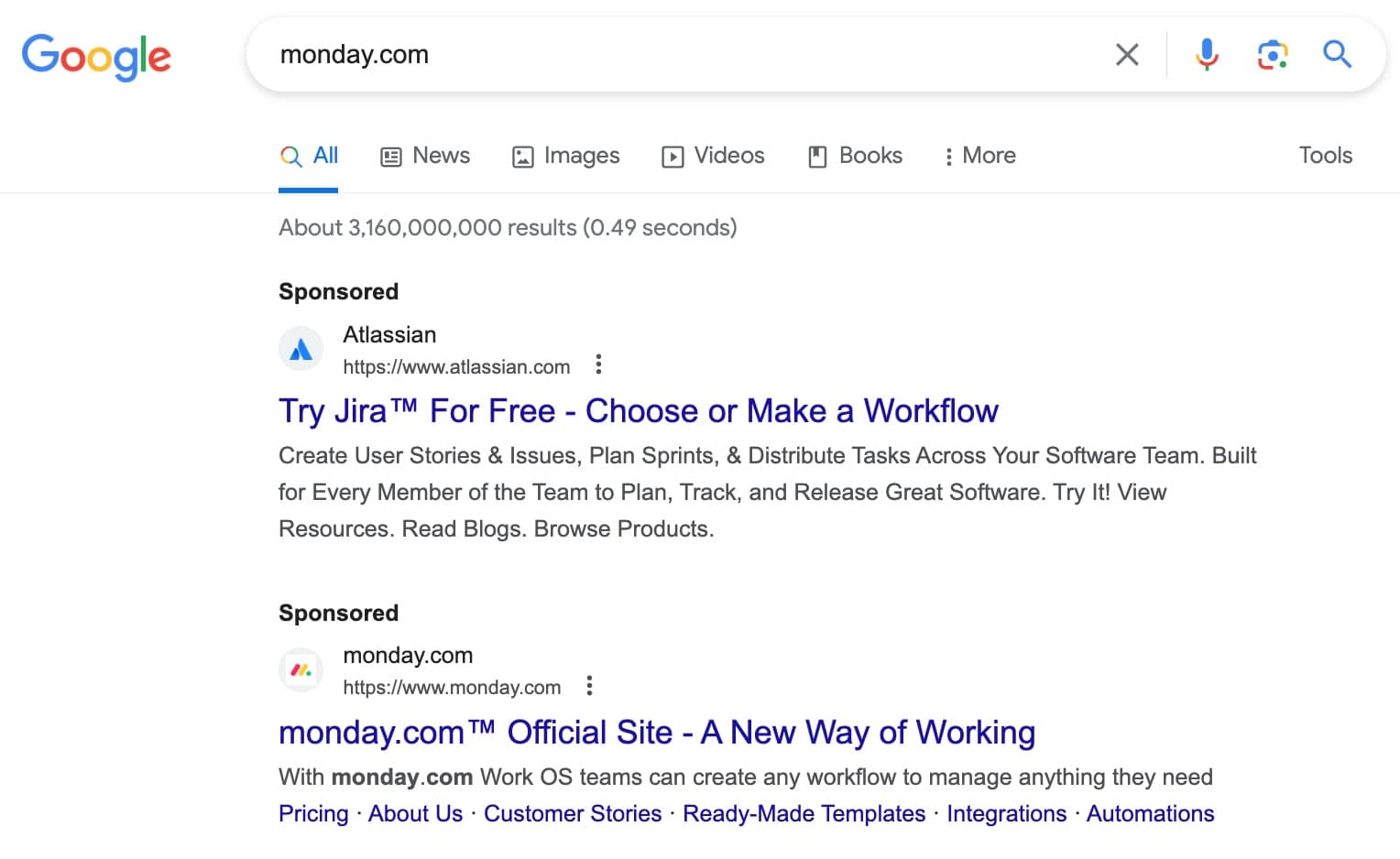
So when someone is searching for a particular software provider, they are presented with an ad for an alternative provider instead.
This can be an effective strategy in SaaS as it enables you to get in front of an audience actively searching for a solution you can provide.
An ad for Jira appearing for a search for Monday.com
Consider creating designated landing pages when using competitor bidding, where the content focuses on differentiating them from your competitors.
This could include a breakdown of your exclusive features and industry-recognized rating cards, such as those available via G2.
The page’s purpose should be to demonstrate what makes your software great, not be a despairing remark on the competitor’s product.
While this can be a successful way for SaaS brands to steal attention away from competitors, it is always worth remembering that the competitor can retaliate and do the same in return.
This can result in an aggressive bidding situation where brands end up paying inflated CPCs for their own brand name. It is a powerful strategy but should be used with caution.
5. Optimize ad copy
As the saying goes: You never get a second chance to make a first impression.
Ensure you’re making the most out of your first interactions with potential customers by using ad copy that is both persuasive and informative.
The messaging needs to demonstrate how your software solves their problem and why they should choose you over competitors.
Work out how to communicate these points by reading and analyzing reviews and feedback left by actual users of your software.
These individuals are best placed to describe how they have benefited from the product. They will also use terminology and adjectives which will resonate with your target audience.
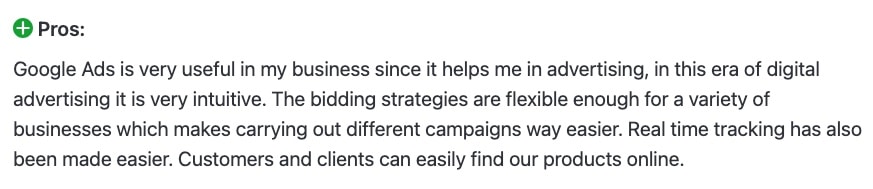
For example, a review for Google Ads on Capterra states:
“Google Ads is very useful in my business since it helps me in advertising, in this era of digital advertising it is very intuitive. The bidding strategies are flexible enough for a variety of businesses which makes carrying out different campaigns way easier. Real time tracking has also been made easier. Customers and clients can easily find our products online.”
A review for Google Ads on Capterra
This could be used to create messaging such as:
Intuitive and easy-to-use platform.
Flexible advertising solutions.
Help potential customers to find your products online.
Campaign types suitable for all businesses.
This type of messaging can help your brand to portray relevance and suitability to potential customers, helping to reassure them that you are the solution they need.
PPC strategies to make your SaaS shine
You’ll need to work your PPC accounts hard to build brand awareness and influence consideration in a rapidly expanding industry.
Luckily, you can implement many campaign types and strategies to help you get there.
The world pandemic may have thrown the world for a loop, but the crisis accelerated many trends already underway, mainly here in the United States. Even though entrepreneurship has become quite mainstream, the faces of all leading the business world have been changing (but not fast enough, according to some people).
In this increasingly interconnected and multicultural world, recognizing and embracing the contributions of women, immigrants, and people of color in entrepreneurship is not only essential but also a strategic imperative. The book “The New Builders” by Seth Jason Levine and Elizabeth McBride explores these themes in-depth, offering profound insights into the transformative power of diversity in the entrepreneurial landscape. Seth focuses on the significance of diversity in entrepreneurship and highlights the invaluable lessons and inspiring narratives found within “The New Builders.”
Recognizing the Contributions of Women
In the entrepreneurial landscape, women face gender bias, and women of color often contend with the compounded effects of gender and racial bias. Studies reveal that a significant percentage of women entrepreneurs (41%) experience gender bias, while women of color encounter racial bias (33%). Furthermore, women entrepreneurs (20%) often find themselves compelled to charge less than their male counterparts to secure and retain clients. Additionally, women may struggle with imposter syndrome, undervaluing their capabilities and contributions.
Despite these obstacles, women entrepreneurs have shattered glass ceilings, achieved remarkable milestones, and made significant strides in various industries. According to the American Express State of Women-Owned Businesses Report, the number of women-owned businesses in the United States increased by 21% between 2014 and 2019. This growth underscores the pivotal role played by women in fostering economic prosperity and job creation.
Seth Jason Levine’s book, “The New Builders,” places a spotlight on the achievements and journeys of women entrepreneurs. By sharing their stories, experiences, and triumphs, Levine and McBride aim to challenge prevailing biases, inspire aspiring entrepreneurs, and foster a more inclusive entrepreneurial landscape. The book celebrates the resilience, innovation, and leadership of women, highlighting their invaluable contributions across diverse sectors. As a co-author of “The New Builders,” Seth Jason Levine amplifies the voices of women and promotes a more equitable entrepreneurial ecosystem.
Empowering Immigrant Entrepreneurs
Immigrant entrepreneurs bring unique perspectives, international networks, and innovative ideas to the business landscape. “The New Builders” emphasizes the entrepreneurial spirit and resilience exhibited by immigrants, showcasing their contributions to the economy. In the United States, immigrants have founded 55% of billion-dollar startups, illustrating their vital role in driving innovation and economic prosperity.
Celebrating the Role of People of Color
Entrepreneurs from diverse racial and ethnic backgrounds have made significant impacts on entrepreneurship. “The New Builders” explains the stories of these entrepreneurs who have overcome systemic challenges and biases, creating successful ventures that contribute to their communities. According to the Minority Business Development Agency, minority-owned businesses in the United States have generated $1.8 trillion in revenue and supported 8.7 million jobs.
When looking forward to the next few decades in business, we will see leaders from various nationalities and genders building the next generation of businesses.
“The New Builders” by Seth Jason Levine: Empowering Diversity and Recognizing Contributions in Entrepreneurship
“The New Builders” by Seth Jason Levine shines a spotlight on the contributions of women, immigrants, and people of color in the realm of entrepreneurship. This empowering work goes beyond celebration, serving as a resounding call to action for businesses to embrace diversity and create an inclusive entrepreneurial landscape that recognizes the unique talents and perspectives of underrepresented communities.
Levine’s book highlights their resilience, innovation, and leadership, challenging prevailing biases and stereotypes. By showcasing their achievements, “The New Builders” inspires readers to appreciate the transformative power of diversity in driving economic growth and fostering innovation.
Focusing on inclusivity, “The New Builders” urges businesses to implement policies that support small businesses and promote economic growth. Companies can unlock untapped potential and drive innovation by creating an environment that nurtures entrepreneurship among underrepresented groups. Moreover, Levine underscores the importance of Main Street businesses in driving local economies and supporting communities. Through their entrepreneurial endeavors, women, immigrants, and people of color are vital in revitalizing neighborhoods, creating jobs, and fostering community development. “The New Builders” highlights these contributions and encourages support for Main Street businesses as engines of economic prosperity.
As a partner and co-founder of Foundry, a venture capital firm, Seth Jason Levine actively engages with companies and funds, leveraging his expertise to promote entrepreneurship and economic development. His work extends beyond the book’s pages, as he advises venture funds and companies globally, with a particular focus on the Middle East and Africa, to foster entrepreneurship and empower individuals from diverse backgrounds.
“The New Builders” by Seth Jason Levine is an inspiring call to action for businesses to recognize and appreciate the contributions of women, immigrants, and people of color in entrepreneurship. By embracing diversity, implementing inclusive policies, and supporting Main Street businesses, we can foster an entrepreneurial landscape that thrives on the talents and strengths of all individuals, paving the way for economic growth, innovation, and community development.
For ecommerce entrepreneurs, effectively managing cash flow is as important as devising sales strategies. The dynamic and unpredictable nature of the ecommerce industry demands a robust and ongoing approach to cash flow management. Fortunately, with the right knowledge and tools, maintaining a healthy cash flow can transform from a daunting challenge into a manageable task. This comprehensive guide is designed to help modern ecommerce business owners navigate the intricacies of cash flow management. Read on to discover all the details!
1. Understanding Cash Flow
Cash flow is the lifeblood of a business, representing the net amount of cash transferred into and out of it. In the ecommerce context, understanding cash flow involves more than just recognizing income and expenses; it also requires comprehending the delicate relationship between these two elements. Despite what many may think, booming sales don’t automatically guarantee a healthy cash flow.
For instance, slow-paying customers or high product return costs can significantly impact your cash inflow, even when sales are high. Additionally, holding large volumes of slow-moving inventory can unnecessarily tie up your cash. By understanding these complexities and striking a balance between inflows and outflows, you can develop smarter strategies and make more informed decisions, ultimately leading to improved cash flow management.
2. Establishing a Cash Flow Forecast
Controlling your ecommerce finances necessitates creating a cash flow forecast. This involves predicting the money entering and exiting your business within a specific timeframe. A well-prepared forecast provides a clearer picture of your future financial situation, enabling you to identify potential cash shortfalls or surpluses.
It’s important to note that tracking expected income and fixed costs alone isn’t sufficient for an accurate cash flow forecast. It would help if you also considered projected costs, variable expenses, and any possible fluctuations that may impact your cash flow. Regularly updating your forecast to reflect your current financial situation is crucial. Doing so lets you promptly react to changes and steer your ecommerce business toward sustained profitability.
3. Embracing Ecom Seller Financing
Ecom seller financing offers ecommerce businesses a tailored financial solution that can be a lifesaver during cash crunches. This option provides an advance based on your projected future sales, granting you immediate access to cash that can be infused into your business as needed.
Unlike traditional loans, ecom seller financing offers flexibility that can be highly appealing to ecommerce sellers. This strategy aligns perfectly with the unique challenges and opportunities within the ecommerce sector, enabling you to boost your financial agility and drive continuous growth.
Overhead costs, like utilities and salaries, are unavoidable in any ecommerce business. However, managing these costs effectively can significantly improve your cash flow. Evaluate your current spending and identify strategies to cut some expenses without compromising your business operations or quality.
For example, downsizing warehouse space or implementing energy-saving measures can significantly reduce costs. Streamlining operations for efficiency, like improving order fulfillment processes, can also result in savings. Most importantly, balancing cost reduction and maintaining operational efficiency to ensure successful cash flow management without adversely affecting your operations or customer satisfaction.
5. Implementing Inventory Management Strategies
Effective inventory management is crucial for any ecommerce business seeking to optimize cash flow. Holding excessive inventory ties up your valuable cash, while running out of stock can lead to lost sales and revenue. Striking the right balance requires implementing efficient inventory management strategies.
This includes accurate demand forecasting, routine inventory counts, and optimal inventory levels. Inventory management software can assist in these tasks, providing real-time updates and analytical insights, and helping you make informed decisions.
By adopting these practices, you can ensure adequate stock to meet demand without unnecessarily tying up excess capital, thereby improving your cash flow and overall financial health.
6. Optimizing Payment Terms
Optimizing payment terms is another fundamental aspect of cash flow management. Payment terms refer to the conditions under which sales are made, particularly when payment is expected. These terms apply to the payments you receive from customers and those you make to suppliers.
Negotiating longer payment terms with suppliers can offer you a grace period to sell products and generate revenue before the bill is due. On the customer side, encouraging faster payments can expedite your cash inflow. This could involve offering early payment discounts or introducing seamless payment methods. By optimizing these payment terms, you can improve the timing and predictability of your cash flow, providing greater financial stability and flexibility for your ecommerce business.
Conclusion
In the world of e-commerce, success isn’t solely about selling products but also about effectively managing finances. The strategies outlined above lay the foundation for superior cash flow management in your ecommerce operations. However, it’s important to remember that these approaches require continuous monitoring, evaluation, and adjustment. By actively implementing these practices, you can avoid cash flow problems and confidently navigate the ever-evolving ecommerce landscape.
Google has launched the Gen Z Music lineup, a new tool that helps marketers better connect with young people.
The paid-for feature is now available globally to assist advertisers who would like to increase their appeal to 18- to 24-year-olds.
Why we care. Google has identified that the music favored by Gen Z plays an important role in shaping today’s culture. By finding out what songs are trending and allowing advertisers to have their campaigns displayed near media that uses the music this cohort has on repeat, brands will be seen at the forefront of culture.
The Gen Z Music lineup also provides marketers with an opportunity to better connect with Gen Z – a group of people that is rapidly becoming one of the largest online consumer groups. If advertisers aren’t paying attention to content that engages these potential customers most, then they risk failing to secure their buy-in.
How it works. The Gen Z Music lineup feature uses data from audio, long-form and YouTube Shorts to identify trending music. It follows these steps:
The Gen Z Music lineup identifies trending songs amongst 18- to 24-year-olds using regularly refreshed data across audio, long-form and YouTube Shorts.
Google AI then uses this data to package relevant music videos into the Gen Z Music lineup.
Marketers then have the option to buy the lineup.
Upon purchasing the lineup, advertisers’ campaign will then be served alongside content that plays the identified trending songs.
Get the daily newsletter search marketers rely on.
function getCookie(cname) {
let name = cname + “=”;
let decodedCookie = decodeURIComponent(document.cookie);
let ca = decodedCookie.split(‘;’);
for(let i = 0; i <ca.length; i++) {
let c = ca[i];
while (c.charAt(0) == ' ') {
c = c.substring(1);
}
if (c.indexOf(name) == 0) {
return c.substring(name.length, c.length);
}
}
return "";
}
document.getElementById('munchkinCookieInline').value = getCookie('_mkto_trk');
What has Google said? Brian Anderson, Google’s Global Head of Music and Audio, released a statement via the Google Ads Help newsroom. He said:
“Gen Z plays a huge role in shaping the cultural zeitgeist. And this largely happens on YouTube, where Gen Z music fans discover, consume, and participate in music across multiple formats.”
“Now we’re helping advertisers align their brand with the music Gen Z audiences (18-24) love on YouTube with the new Gen Z Music lineup.”
Deep dive. For more information, read Google’s full Gen Z Music announcement.
YouTube is testing a new feature that could help brands and creators engage with viewers while causing minimal disruption.
YouTube will enable hyperlinking over single words or phrases in the comments section for the first time.
Links will direct viewers to a YouTube search results page while still playing the video they were originally watching.
Why we care. Viewers are more likely to follow a link if their streaming experience isn’t interrupted. This means that marketers may have an increased chance of reaching more people and engaging more effectively with potential customers.
But. While this could be good, some marketers are concerned that leading people away from videos could do more harm than good. Search from Comments could lead viewers to a YouTube search results page that then takes them directly to rival brands and competitor videos.
How it works. The pilot, which is being rolled out over the next few weeks, will work as follows:
Phrases or single words in the comments section that encourage exploration will be hyperlinked.
Clicking on a link will initiate a new YouTube search with that term, navigating users to the search results page.
To avoid interruption, the video will stay playing in the Miniplayer.
Linked words are determined by YouTube based on what users are likely to want to explore further.
The links cannot be added or modified by the commenter, though creators can remove links on their video comments if they’d like.
Viewers will be able to opt out of the experiment if they prefer their comments not to be hyperlinked.
What has YouTube said? YouTube released a video via its Creator Insider channel to announce the pilot:
“We’re experimenting with a new way to explore topics and recommendations in comments.
“Currently, if a viewers wants to learn more about a topic or a product they find in a comment, they have to navigate away from the video they’re watching to learn more.
“We’re experimenting with new hyperlinked keywords in comments to reduce friction for viewers looking to discover new and relevant content on the platform.
“We’ll be experimenting with this in the coming weeks but would love your feedback in the comments whether you’re in the experiment or not.”
Other news. Hyperlinking in the the comments section isn’t the only news YouTube confirmed this week. The social media platform also made three other announcements:
Visibility on tablets: Although creators could create posts on tablets previously, those posts were not visible on tablets to creators and their viewers. YouTube acknowledged that this has been a top feature request for many creators and viewers, so it is now giving visibility to all Android tablets and iPads users. This means posts can now reach viewers who mainly use YouTube on tablets.
Reminders for live streams and premieres: Currently, viewers on YouTube are able to set reminders for upcoming live streams or premieres by clicking the ‘notify me’ button to get email and push notifications for when that live stream or premiere starts. Now, a new metric is being added in YouTube analytics that will show creators how many reminders were set for an upcoming live stream or premiere. You can find the Reminders Set metric in YouTube Analytics Deep Dive.
Channel membership management: Eligible creators can now set up and manage channel memberships and other fan funding offerings via Studio Mobile. Previously, this was only available on desktop. Additionally, members-only videos were not served in members’ home feeds, subscription feeds or channel page content tabs. Now members-only videos will surface on members home and subscription feeds, and on your channel page.
Get the daily newsletter search marketers rely on.
function getCookie(cname) {
let name = cname + “=”;
let decodedCookie = decodeURIComponent(document.cookie);
let ca = decodedCookie.split(‘;’);
for(let i = 0; i <ca.length; i++) {
let c = ca[i];
while (c.charAt(0) == ' ') {
c = c.substring(1);
}
if (c.indexOf(name) == 0) {
return c.substring(name.length, c.length);
}
}
return "";
}
document.getElementById('munchkinCookieInline').value = getCookie('_mkto_trk');
Important reminder. YouTube advises accepting the new YPP program terms in Studio if you’re currently in YPP and haven’t done so already.
If the terms are not accepted by July 10, marketers will be removed from the YouTube partner program and their content will no longer be eligible to monetize on the platform. Any previously monetized content will stop accruing revenue effective July 11 and all monetization features including and not limited to channel memberships, SuperChat and similar features, will be turned off.
To see if you’ve already accepted the terms or still need to take action, please take the following steps:
Go to Studio > Settings > Agreements.
Here, if you see View Agreement for the base terms you’ve previously accepted, then you’re all set.
If you see Review and Agree, this means that you still need to accept.
Deep dive: For more information on changes to the YouTube Partner Program terms, you can read YouTube’s full announcement on the YouTube Help Center.