How to Choose AI Software for Your Business?

Home Business Magazine Online

It is difficult for modern businesses to survive in contemporary reality when innovative technologies are essential for society. Introducing artificial intelligence (AI) and suitable software is vital for effective development in any industry. Choosing software is an important decision for every business owner. It can change work processes for the better.

Whether you are a startup or an established enterprise, effective business promotion by introducing modern technologies is only possible through parenthetical artificial intelligence. You need to choose an AI platform for business that will meet your requirements and improve the automation of many processes.

Rules for Selecting a Reliable AI Supplier

Selecting an AI tool vendor should be based on experience in your field. Understanding your sector will ensure that your AI application is designed to meet your business’s specific challenges and capabilities. It is also imperative:

  • Ensure that the supplier follows sound security practices. Check for certifications and compliance with industry standards (GDPR, HIPAA, or other regulations, depending on your industry).
  • Clarify the terms of data ownership and access. Ensure you maintain ownership of your data and understand how the vendor accesses it and uses it to train AI models.
  • Choose a vendor that values ​​transparency about their AI models and algorithms. An AI software application must provide explainability to the decision-making process to promote trust and understanding.

You can also ask for customer reviews and study case studies. These steps will help you gain insight into the performance of the vendor’s software platforms compared to those of other companies. Positive reviews from clients in similar industries can provide confidence.

Strive for Scalability and Innovation

Selecting software is a serious process that requires maximum attention. You should evaluate the level of customization that the AI product will allow. Interoperable AI must be flexible enough to adapt to your unique business processes and changing needs.

It would be best if you preferred tools with a roadmap to guide future development. Compatibility with new technologies and industry trends ensures that your investment remains relevant.

If you are a car manufacturer, investing in technology with constant updates and integration capabilities is better. Opt for a scalable system without introducing unnecessary complexity. As your organization grows, your AI system should be able to expand without requiring a complete overhaul of the user experience.

Cost And Profitable Investment Is An Important Parameter When Choosing AI

When choosing artificial intelligence to optimize your business, it is essential to identify key performance indicators and metrics that align with your goals:

  • productivity increase;
  • cost savings;
  • income growth;
  • increasing customer satisfaction.

You must correctly calculate the financial costs required to implement artificial intelligence software. It is crucial to consider the initial and ongoing investments.

The pricing model depends on the specific AI provider. This may include:

  • one-time purchases;
  • subscription fee;
  • usage-based pricing.

Choose a model that suits your budget and usage patterns. The ROI for each specific use case or application of the AI ​​software should then be assessed. Different functional capabilities can impact your business differently; detailed analysis provides a more accurate picture.

Identify potential risks that may impact the success of your AI software implementation. This can be accomplished by developing contingency plans and factoring these risks into cost and ROI calculations. Explore your options with a free trial. Before making a decision, you can test the compatibility of software platforms under natural conditions.

Advice from seasoned experts will help every business owner choose the proper AI application that seamlessly integrates into the workflow, unlocking its full potential and ensuring technology compatibility with strategic goals. Deciding independently can be tricky, especially if you need more experience and knowledge.

Conclusion

Choosing artificial intelligence software is essential for your business to grow faster. Carefully study the offer market and do not ignore the trial period. It allows you to test the software’s capabilities and make the right decision.

Consider RapidCanvas, which offers an artificial intelligence platform for business users. It allows you to move from an idea to a real enterprise solution based on artificial intelligence within a month.

The post How to Choose AI Software for Your Business? appeared first on Home Business Magazine.

Original source: https://homebusinessmag.com/businesses/ai/how-choose-ai-software-business/

How to Choose AI Software for Your Business?

Home Business Magazine Online

It is difficult for modern businesses to survive in contemporary reality when innovative technologies are essential for society. Introducing artificial intelligence (AI) and suitable software is vital for effective development in any industry. Choosing software is an important decision for every business owner. It can change work processes for the better.

Whether you are a startup or an established enterprise, effective business promotion by introducing modern technologies is only possible through parenthetical artificial intelligence. You need to choose an AI platform for business that will meet your requirements and improve the automation of many processes.

Rules for Selecting a Reliable AI Supplier

Selecting an AI tool vendor should be based on experience in your field. Understanding your sector will ensure that your AI application is designed to meet your business’s specific challenges and capabilities. It is also imperative:

  • Ensure that the supplier follows sound security practices. Check for certifications and compliance with industry standards (GDPR, HIPAA, or other regulations, depending on your industry).
  • Clarify the terms of data ownership and access. Ensure you maintain ownership of your data and understand how the vendor accesses it and uses it to train AI models.
  • Choose a vendor that values ​​transparency about their AI models and algorithms. An AI software application must provide explainability to the decision-making process to promote trust and understanding.

You can also ask for customer reviews and study case studies. These steps will help you gain insight into the performance of the vendor’s software platforms compared to those of other companies. Positive reviews from clients in similar industries can provide confidence.

Strive for Scalability and Innovation

Selecting software is a serious process that requires maximum attention. You should evaluate the level of customization that the AI product will allow. Interoperable AI must be flexible enough to adapt to your unique business processes and changing needs.

It would be best if you preferred tools with a roadmap to guide future development. Compatibility with new technologies and industry trends ensures that your investment remains relevant.

If you are a car manufacturer, investing in technology with constant updates and integration capabilities is better. Opt for a scalable system without introducing unnecessary complexity. As your organization grows, your AI system should be able to expand without requiring a complete overhaul of the user experience.

Cost And Profitable Investment Is An Important Parameter When Choosing AI

When choosing artificial intelligence to optimize your business, it is essential to identify key performance indicators and metrics that align with your goals:

  • productivity increase;
  • cost savings;
  • income growth;
  • increasing customer satisfaction.

You must correctly calculate the financial costs required to implement artificial intelligence software. It is crucial to consider the initial and ongoing investments.

The pricing model depends on the specific AI provider. This may include:

  • one-time purchases;
  • subscription fee;
  • usage-based pricing.

Choose a model that suits your budget and usage patterns. The ROI for each specific use case or application of the AI ​​software should then be assessed. Different functional capabilities can impact your business differently; detailed analysis provides a more accurate picture.

Identify potential risks that may impact the success of your AI software implementation. This can be accomplished by developing contingency plans and factoring these risks into cost and ROI calculations. Explore your options with a free trial. Before making a decision, you can test the compatibility of software platforms under natural conditions.

Advice from seasoned experts will help every business owner choose the proper AI application that seamlessly integrates into the workflow, unlocking its full potential and ensuring technology compatibility with strategic goals. Deciding independently can be tricky, especially if you need more experience and knowledge.

Conclusion

Choosing artificial intelligence software is essential for your business to grow faster. Carefully study the offer market and do not ignore the trial period. It allows you to test the software’s capabilities and make the right decision.

Consider RapidCanvas, which offers an artificial intelligence platform for business users. It allows you to move from an idea to a real enterprise solution based on artificial intelligence within a month.

The post How to Choose AI Software for Your Business? appeared first on Home Business Magazine.

Original source: https://homebusinessmag.com/businesses/ai/how-choose-ai-software-business/

Data: How often Google mixes ads into organic results

Location targeting in Google Ads: Balancing automation and control

Google is experimenting with new ad placements in search results, but the frequency remains low. Here’s what you need to know:

By the numbers. As shared by Mordy Oberstein, head of SEO brand at Wix:

  • 0.31% of desktop SERPs have ads mixed into organic results
  • 0.01% of mobile SERPs have ads mixed into organic results
  • 2% of all SERPs have “normal” ad placement at the top.
  • Desktop preference: 18% of SERPs with mixed ads place them immediately after a featured snippet.
  • Mobile difference: Less than 2% of mobile SERPs with mixed ads follow this pattern.

Why we care. Ads placed within organic results or immediately after featured snippets could potentially capture more user attention than traditional placements. Click-through rates, conversion rates and overall ROI could be affected by these new placements, requiring advertisers to adjust their strategies accordingly.

The big picture. Google is testing various ad placements, including under featured snippets and within organic results.

Ad frequency:

  • Desktop: Generally two ads mixed with organic results
  • Mobile: Usually one ad mixed with organic results

Between the lines. Google appears to favor the spot right after featured snippets for ad placement on desktop, but this strategy is not mirrored on mobile.

Bottom line. While Google is experimenting with new ad placements, the overall frequency of ads mixed into organic results or placed under featured snippets remains extremely low across all SERPs.

What to watch. How Google’s ad placement strategy evolves and whether the frequency of mixed ads increases over time.

Original source: https://searchengineland.com/google-mix-ads-organic-results-data-444516

Why is it important to optimize telemedicine with the help of computer applications?

Home Business Magazine Online

Optimizing telemedicine with computer applications can improve the quality, accessibility, and efficiency of healthcare services, benefiting both patients and healthcare providers. Telemedicine is a sector within the healthcare system that maximally utilizes information technologies in its operations. It significantly simplifies the interaction between healthcare professionals and improves the doctor-patient relationship. This opens up more opportunities for residents in remote regions who may not have full access to offline treatment. The global community places high hopes on telemedicine. And specialists develop software products, which improve the industry’s operations and takes it to a new level.

Functions of telemedicine

Telemedicine, as a branch of medicine, is intended for:

  • improving the quality of patient care by enhancing the accessibility of medical services for patients;
  • collecting patient data with automatic analysis of their health indicators;
  • monitoring of conducted research;
  • training of medical staff, conducting conferences, and roundtable discussions;
  • organizing the work of clinics and the interaction between doctors and patients;
  • scheduling and timetabling for healthcare professionals in various fields.

All of this becomes possible thanks to the use of digital technologies and applications, both computer-based and mobile. The effectiveness of the industry and the quality of services provided depend on how skillfully software products are used by healthcare professionals and patients.

Capabilities of Telehealth applications

Development companies release software products to support the industry. Their capabilities include:

  • online appointment scheduling with specialists at the clinic;
  • ordering medical supplies at pharmacies;
  • generating electronic prescriptions;
  • organizing video conferences;
  • collecting all patient data into a unified system;
  • organizing remote patient monitoring with health monitoring control and timely conducting of examinations and analyses;
  • reducing healthcare system expenses by saving resources (physical and energy resources);
  • establishing interaction between the smart devices used by patients and their electronic health records in the system.

Overall, such a software product should guarantee ease of use for three parties:

  • healthcare professionals—providing quick access to patient information, the ability to issue prescriptions, referrals for tests, and access to final data on conducted examinations;
  • patients—facilitate easy registration and login to the system, data entry, appointment scheduling with the doctor, and communication with them in a convenient manner;
  • administrators—ensure access rights management; allow for quick updates to the software product; provide the ability for automatic data backup.

The development of applications is accompanied by a number of challenges:

  • lack of unified healthcare standards;
  • lack of secure servers to maintain data confidentiality;
  • challenges with integration with third-party applications;
  • the issue of educating patients on how to use the software product.

The global community asserts that the future lies in telemedicine. Therefore, the future also lies in software products, which are now constantly being improved and equipped with new features. The release of new applications that meet the needs of both doctors and patients is an important stage in the development of healthcare. This will provide opportunities to enhance the quality of the healthcare system and create an optimal approach to developing individual medical protocols.

The post Why is it important to optimize telemedicine with the help of computer applications? appeared first on Home Business Magazine.

Original source: https://homebusinessmag.com/video/growing-a-business-video/why-optimize-telemedicine-help-computer-applications/

The quickstart guide to marketing automation by Edna Chavira

Get started today!
Get started today!

Is your marketing team overwhelmed and underperforming? It’s time to harness the power of automation.

This free guide from Act-On provides a step-by-step blueprint to transform your marketing efforts. Learn how to:

  • Streamline your workflow: Reduce manual tasks and focus on high-impact activities.
  • Personalize your messaging: Deliver targeted content to the right audience at the right time.
  • Generate more leads: Convert website visitors into qualified prospects.
  • Improve sales productivity: Align marketing and sales for maximum impact.

Inside this guide, you’ll discover essential steps to build a strong foundation for marketing automation success and tips for launching a successful pilot program. Follow the steps and you’ll be well on your way to achieving marketing automation success. Download The Marketing Automation Quickstart Guide today!

Original source: https://searchengineland.com/the-quickstart-guide-to-marketing-automation-444481

The Evolution of Ecommerce Talent: How Ecommerce Recruiters Are Shaping the Future of Online Retail

Home Business Magazine Online

In today’s fast-paced digital economy, the success of online businesses hinges significantly on their ability to attract top-tier talent. Ecommerce recruiters play a pivotal role in this ecosystem, not merely filling vacancies but strategically aligning businesses with professionals who can drive innovation and navigate the complexities of online retail. As fintech recruiting firms and healthtech recruitment agencies specialize in their respective fields, ecommerce recruiters focus exclusively on sourcing and placing candidates within the expansive realm of digital commerce.

Understanding Ecommerce Recruitment

Defining Ecommerce Recruiters

Ecommerce recruiters are specialists in sourcing talent specifically for online businesses. They possess a deep understanding of the digital landscape, including various roles such as digital marketers, e-commerce platform specialists, UX/UI designers, and data analysts. This expertise allows them to identify candidates who not only meet technical requirements but also align with the unique culture and strategic goals of ecommerce companies.

The Rise of Digital Commerce

The evolution of digital commerce has transformed the way businesses operate and interact with consumers. As online platforms expand and technology continues to advance, the demand for skilled ecommerce professionals grows exponentially. Ecommerce recruiters must stay abreast of these changes, continually updating their knowledge and networks to meet the evolving needs of their clients.

Key Skills and Qualities in Ecommerce

Technical Expertise in Ecommerce Platforms

Proficiency in ecommerce platforms such as Shopify, Magento, and WooCommerce is foundational for candidates in roles ranging from web development to inventory management. Ecommerce recruiters prioritize candidates who not only demonstrate proficiency in these platforms but also exhibit a proactive approach to continuous learning and adaptation to evolving ecommerce technologies. By identifying and placing such skilled professionals, recruiters empower ecommerce businesses to leverage their digital infrastructure effectively, driving growth and competitive advantage in the online marketplace.

Digital Marketing Acumen

Successful ecommerce strategies heavily rely on effective digital marketing campaigns. Ecommerce recruiters actively seek candidates who excel in various facets of digital marketing, including Search Engine Optimization (SEO), Pay-Per-Click (PPC) advertising, social media management, and email marketing. These professionals can drive traffic, increase conversions, and enhance brand visibility in competitive online markets.

Data Analytics and Business Intelligence

In the age of data-driven decision-making, proficiency in analytics tools and the ability to derive actionable insights from data are invaluable skills for ecommerce professionals. Ecommerce recruiters prioritize candidates who can leverage data to optimize strategies, improve user experiences, and drive revenue growth.

The Role of Ecommerce Recruiters in Business Growth

Strategic Talent Acquisition

One of the primary responsibilities of ecommerce recruiters is to facilitate strategic talent acquisition. By understanding their clients’ business objectives and growth plans, recruiters identify and engage candidates who not only possess the requisite skills but also fit seamlessly into the organizational culture. This strategic alignment ensures that new hires contribute to business growth and operational excellence.

Building Scalable Teams

Scalability is a cornerstone of successful ecommerce operations. Ecommerce recruiters play a vital role in building teams that can scale alongside business growth. Whether it’s expanding product lines, entering new markets, or enhancing technological capabilities, recruiters identify candidates capable of adapting and thriving in dynamic environments. Similarly, in the realm of healthtech, a specialized healthtech recruitment agency excels in sourcing professionals who can innovate in healthcare technology, manage compliance with regulatory standards, and drive advancements in patient care. This dual expertise ensures that businesses across different sectors can achieve scalable growth by aligning talent with strategic objectives effectively.

Challenges in Ecommerce Recruitment

Talent Shortages in Digital Skills

The rapid evolution of ecommerce has led to a significant shortage of professionals with specialized digital skills. Ecommerce recruiters face the challenge of sourcing candidates who possess expertise in areas such as cybersecurity, AI, machine learning, and blockchain technology. This scarcity necessitates innovative recruitment strategies and proactive talent pipelining efforts.

Adapting to Technological Shifts

Technological advancements continuously reshape the ecommerce landscape. Ecommerce recruiters must identify candidates who not only have current skills but also demonstrate the ability to adapt to emerging technologies. This adaptability ensures that businesses remain competitive and agile in a rapidly changing marketplace.

Innovations in Ecommerce Recruitment

Leveraging AI in Talent Acquisition

Artificial intelligence is revolutionizing the recruitment process for ecommerce recruiters. AI-powered tools analyze vast amounts of data to identify patterns, predict candidate success, and streamline the initial screening process. By leveraging AI, recruiters enhance efficiency, reduce bias, and focus more on strategic candidate engagement.

Remote Work and Global Talent Pools

The rise of remote work has expanded the talent pool accessible to ecommerce recruiters. Remote-ready candidates offer flexibility and diverse perspectives, enriching team dynamics and fostering innovation. Recruiters adept at navigating global talent markets can strategically leverage remote work opportunities to meet their clients’ staffing needs.

Future Trends in Ecommerce Recruitment

Personalization and Customer Insights

The future of ecommerce recruitment will center around candidates who possess advanced skills in data analytics and customer insights. As consumer expectations continue to evolve, ecommerce recruiters recognize the importance of personalization in driving customer engagement and loyalty. Professionals adept at leveraging data analytics tools such as Google Analytics, Adobe Analytics, and customer relationship management (CRM) systems will be highly sought after. These candidates will analyze consumer behavior patterns, and extract insights that inform targeted marketing strategies and personalized shopping experiences. By understanding customer preferences, purchase histories, and browsing behaviors, these professionals enable ecommerce businesses to deliver tailored recommendations, and optimize product offerings. Ecommerce recruiters will identify and place these data-driven experts who, in their turn, will shape the future of ecommerce through personalized customer interactions.

Sustainability and Ethical Commerce

Today’s consumers are conscientious about the environmental impact of their purchasing decisions, prompting ecommerce businesses to prioritize sustainable practices. Ecommerce recruiters are tasked with identifying candidates who not only possess the technical skills required for digital commerce but also advocate for environmental responsibility and ethical supply chain management. These professionals are champions of corporate social responsibility (CSR) initiatives, implementing strategies that minimize carbon footprints, promote fair labor practices, and ensure transparency in sourcing materials. Candidates who demonstrate a commitment to sustainability contribute to long-term brand reputation and profitability by aligning business goals with ethical values that resonate with environmentally conscious consumers. As ecommerce continues to grow, ecommerce recruiters will actively seek out candidates who can integrate sustainability into business strategies, fostering a culture of responsibility and stewardship in the digital marketplace.

Conclusion

In conclusion, ecommerce recruiters shape the future of online retail by connecting businesses with top-tier talent. Their expertise in sourcing, assessing, and placing candidates who possess the requisite skills and cultural fit ensures that ecommerce companies not only survive but thrive in a competitive marketplace. As digital commerce continues to evolve, the role of ecommerce recruiters will remain indispensable in driving innovation, scalability, and sustainable growth.

The post The Evolution of Ecommerce Talent: How Ecommerce Recruiters Are Shaping the Future of Online Retail appeared first on Home Business Magazine.

Original source: https://homebusinessmag.com/growing-a-business/diversifying-a-biz/evolution-ecommerce-talent-ecommerce-recruiters-future-online-retail/

What Is Proof of Work (PoW) in Crypto?

Home Business Magazine Online

Ever wonder how cryptocurrencies confirm transactions without a central financial organization? Well, the secret is Proof of Work (PoW), without which Bitcoin probably wouldn’t exist. PoW ensures the blockchain’s integrity, including the stability of the BTC price.

But what exactly is Proof of Work, and how does it work?

What is Proof of Work?

Proof of Work is a consensus mechanism used to validate cryptocurrency transactions. It was introduced by Bitcoin’s anonymous creator, Satoshi Nakamoto, in a 2008 whitepaper. Its primary purpose was to prevent double-spending.

PoW requires miners to solve complex mathematical puzzles to confirm transactions. This makes it nearly impossible for someone to add a malicious block to the blockchain.

How Does PoW Work?

Imagine a bunch of people all competing to solve a really complex math problem. The first one to crack the code gets to add a new block to the blockchain and earn some shiny new crypto tokens as a reward. This process takes about 10 minutes. Bitcoin is designed to be difficult to solve—to prevent manipulation—but easy to verify.

First, miners compile transactions into blocks, each with a specific hash. They then confirm individual blocks by solving a cryptographic puzzle. This involves finding a hash that meets the required criteria. The Bitcoin blockchain then adjusts the target hash to reduce difficulty and keep transaction times consistent.

If there are many miners,  PoW adjusts the puzzles to become more complex, ensuring the process runs smoothly. After finding a valid hash, miners broadcast it to the network. While this process uses high computational power and a lot of electricity, it’s vital to decentralization.

Cryptocurrencies That Use Proof of Work

Proof of Work coins comprise around 55% of the total cryptocurrency market cap, which is over $ 1.30T. Bitcoin makes up over 99% of that, with DOGE, the second most popular option. Below are the largest Proof of Work cryptocurrencies ranked by market cap:

  • Bitcoin
  • Dogecoin
  • Bitcoin Cash
  • Litecoin
  • Ethereum Classic
  • Stacks

Benefits of Proof of Work

PoW has unique benefits that make it appealing:

Security

PoW is highly secure and more challenging to crack. It’s difficult to mine, which makes it both costly and time-consuming for hackers. This discourages hacking attempts, ensuring the network is safe.

Decentralization

Proof of Work’s competitive mining process encourages a distributed network of miners. This reduces the risk of centralization, ensuring the network doesn’t fall under the control of a few people.

Proven Track Record

PoW reliably confirms transactions and validates new blocks. Bitcoin uses PoW and has demonstrated this over the past decade, inspiring trust.

Challenges and Criticisms

Some of the main drawbacks of the consensus mechanism include:

Energy Consumption

One issue with PoW is that it uses large amounts of electricity. The computational power requires substantial energy resources, raising environmental concerns.

Scalability

PoW isn’t easily scalable due to the time it takes to solve puzzles and open new blocks. Additionally, the resources required to validate transactions increase with network growth.

Centralization Risk

PoW hardware is expensive, and only a few can afford it. As a result, crypto networks risk being reduced to a few miners or large organizations.

Alternatives to Proof of Work

Because of the issues mentioned above, many developers are shying away from Proof of Work. Most are opting for more sustainable and scalable alternatives, which are now more appealing to crypto communities.

One of the best alternatives is Proof of Stake, which uses significantly less energy. PoS validators are chosen based on the number of cryptocurrencies they hold and are willing to stake. Other solid alternatives to PoW include Proof of Authority and Delegated Proof of Stake.

The post What Is Proof of Work (PoW) in Crypto? appeared first on Home Business Magazine.

Original source: https://homebusinessmag.com/money/cryptocurrency/what-proof-work-pow-crypto/

How blogging builds trust and brand loyalty in the age of AI

How blogging builds trust and brand loyalty

Some so-called digital marketing experts have said “blogs are dead,” especially in big business.

This couldn’t be further from the truth, especially with changes in search like AI Overviews and the endless flow of trust customers now require.

Blogs build trust gradually, contrary to what shady marketers claim. Results aren’t instant. It’s a long-term strategy that grows over time. If Warren Buffett were a marketer, he’d be a blogger.

Over time, blogs enhance brand awareness, attract qualified leads and ultimately strengthen the bottom line.

Many ecommerce and service-based business leaders view blogging as unnecessary, which reflects an outdated attitude. As audiences evolve and AI changes how we search for products, content becomes crucial for reaching new customers and nurturing existing ones.

Blogging is far from dead and has never been more vital for brands and business leaders.

Here’s why every business should focus more on their blog during a time when AI continues to rule search and attention spans get smaller and smaller.

The way we shop online is changing

The latest data from Google shows that roughly 53% of customers conduct online research before purchasing a product or service.

Informative content can help influence users’ purchasing decisions or even empower users to make the right decisions. That much is obvious. 

But, in competitive keyword searches where your result is not on top, there is a great opportunity to still reach customers with your brand using content. This may appear under People Also Ask or as an organic blue link under the Shopping Carousel. 

Google search - fender flares for f150

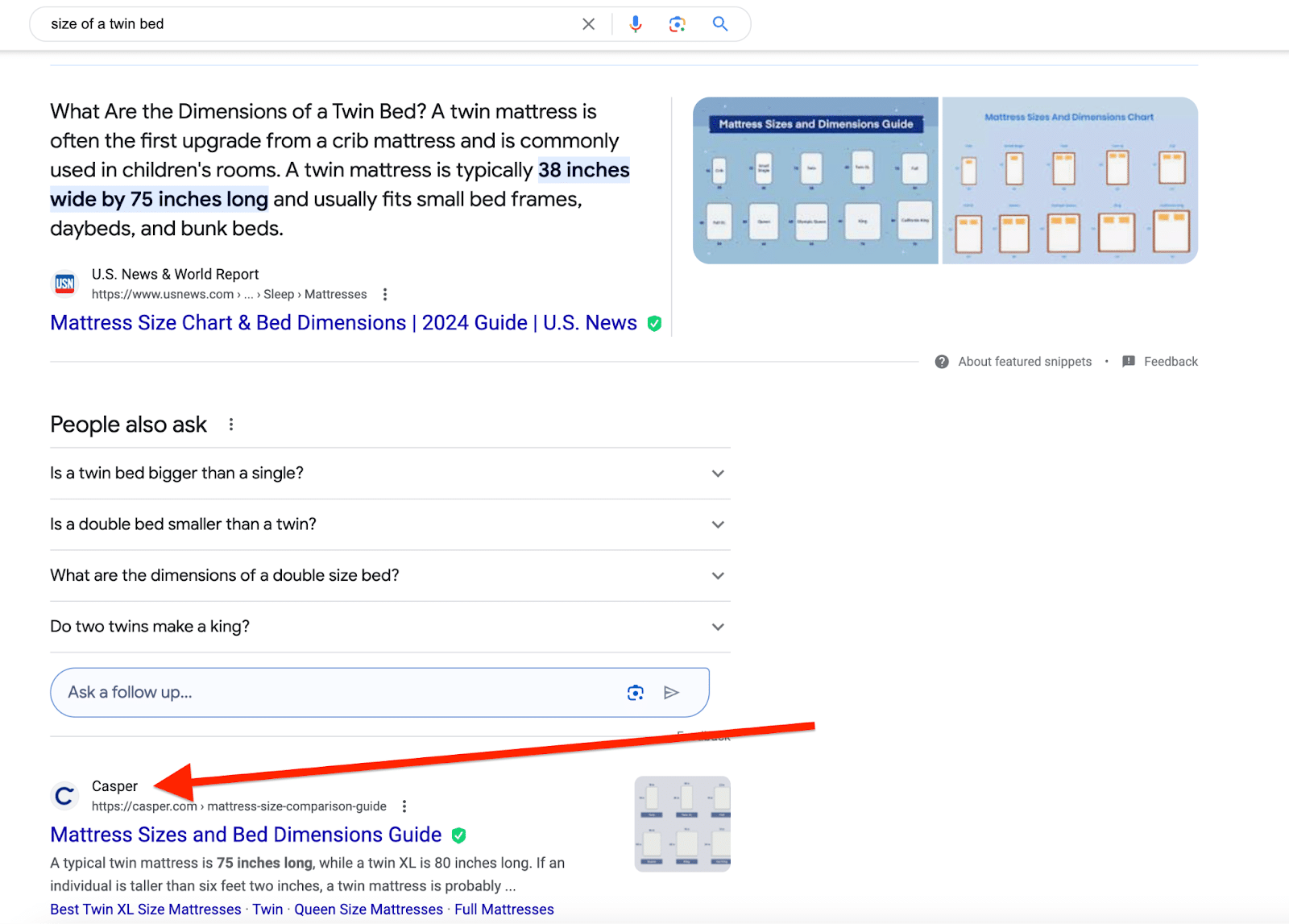
Likewise, creating content with referral links to your products or store is also a great way to reach customers who are still in the research stage. Check out how Casper uses content to make customers aware of their mattresses and pillows. 

Google search - size of a twin bed

It’s not just customers changing their behaviors, but also Google itself. 

Google’s foray into AI is now a reality. AI Overviews radically promises to shift the way we search for products. 

AI-generated results will use a mix of products, blogs and local-pack results to offer customized and personalized results. 

While it’s difficult to influence what products Google displays for its AI-powered results, you may have some luck by writing custom content for longer-tail keyword searches. 

Google search - Best frame for a 12x16 picture

Brand ethics are more important than ever

Studies show that most consumers are more likely to be loyal to brands that practice sustainability or ethics. This is especially true of younger generations who prioritize corporate responsibility more than older generations. 

Creating blog content around your business’s various initiatives is a great way to tell a story and engage with users. 

Nordstrom has an ongoing blog called Nordstrom Now, which details its corporate initiatives. Kohl’s and many other brands do the same. 

Blogging builds brand loyalty

One fast track to brand loyalty may, surprisingly, be content marketing.

A study out of Vietnam found that relatable digital content marketing increased perceived brand loyalty among customers. Another from the Pakistan Journal of Social Sciences found a similar relationship.

Blogs are the ultimate way to reach your customers and also influence their perception of your brand.

Some examples of power content to experiment with include:

  • Content that shows the human side of a brand.
  • Content that entertains and relates to its audience through storytelling.
  • Educational content that instructs and empowers customers to make active decisions.

Authorship is powerful for branding

People are more likely to link to and share content from people they trust. Building authorship on your platform is an easy way to develop that trust. 

I’ve worked with a remarkable number of C-level executives who never considered sharing their knowledge on a blog or any platform.

There is so much value to be had in developing authority and reputation for your business and personal brand by sharing first-hand knowledge from your industry in a blog. 

Encourage more company leaders to write for your blog and share it with their social media networks to develop greater buzz and loyalty toward your business. 

Get the newsletter search marketers rely on.


Blogs can aid in conversion optimization

Blog content is a powerful tool across all areas of your sales funnel.

At the top end of the funnel, informative content is a great, free resource to attract visitors to your site. Once on your website, offer incentives that force people to give you contact information for lead follow-up, such as signing up for a newsletter. 

Then, once leads are further inside your funnel, you can use content to help influence leads to decide on a purchase.

My digital marketing company uses technical SEO checklists and evergreen guides straight from our blog to help customers make decisions. These blogs also provide them with standalone value, earning our brand more authority. 

You can even repurpose evergreen content into aesthetically pleasing ebooks or downloadables that make your company look even more authoritative. 

Blogs can be repurposed across multiple channels

Blog content can easily be repurposed across multiple channels to reach even more customers outside your orbit. 

Consider repurposing existing blogs to create:

  • Email newsletters.
  • Social media posts.
  • LinkedIn newsletters.
  • Webinars.

Blog topics and information can also be repurposed into other digital mediums, such as video or audio, to put on any other platforms your company already uses. 

On the flip side, it’s always good practice to post anything you share externally on your blog so you can build a second-traffic source. For example, post videos you share on YouTube on your blog with a small informative post to help it rank even higher in Google’s algorithm. 

Business blog guidelines

I’ve written extensively about blog strategy over the years. Here’s a quick summary of the essentials:

Step-by-step guide to developing a content strategy

  • Define your goals: Clearly define what you want to achieve with your content. This could be increasing brand awareness, generating leads or improving customer engagement. Make sure these goals are specific, measurable, attainable, relevant and time-bound (SMART).
  • Understand your audience: Gather data on your audience’s demographics, preferences and pain points to develop detailed buyer personas. Refine these personas using surveys, social media analytics and customer feedback.
  • Conduct a content audit: Review your existing content to identify what’s working and what’s not. This helps you understand gaps and plan future content that fills these gaps and aligns with your audience’s interests.
  • Plan your content: Based on your audit, plan a variety of content types that cater to different stages of the buyer’s journey. Incorporate blog posts, videos, infographics and podcasts to diversify your approach.
  • Schedule and manage: Use a content calendar to effectively schedule your content. This helps maintain a consistent publishing schedule that keeps your audience engaged.
  • Measure and optimize: Continuously track your content’s performance using key performance indicators (KPIs) like traffic, engagement rates and conversion rates. Use this data to tweak and optimize your strategy over time.

Always think of SEO

  • Focus on user intent: Tailor your content to match your audience’s queries and needs. This involves understanding the intent behind search terms and providing comprehensive answers.
  • Optimize for voice search: With the rise of digital assistants, optimize your content for conversational queries. This means using natural language and question-based keywords.
  • Leverage AI and machine learning: Use AI-driven tools to analyze the success of your content and to personalize content offerings based on user behavior.

Enhancing engagement with interactive blog features

  • Polls and surveys: Embed interactive polls to engage readers and collect their opinions on various topics.
  • Infographics and visual data: Use tools like Canva or Venngage to create eye-catching infographics that simplify complex data.
  • Downloadable resources: Offer downloadable ebooks, white papers or checklists that provide added value in exchange for email addresses, aiding in lead generation.

By implementing these guidelines and utilizing the recommended tools, you can significantly enhance your blogging strategy, making it more aligned with your business objectives and responsive to your audience’s needs.

Business blogs: Your world of untapped opportunity

In the ecommerce space, where brands compete for a small share of digital real estate, blogs open up a whole other stream of traffic that can be just as valuable to your business.

I’ve seen businesses scale in the ecommerce space, writing blogs on everything from aftermarket truck parts to fitness products you can use at home.

The best part of a business blog is that you can write at your own pace or hire a team of specialized writers. Notice I say specialized. You wouldn’t want your trained pest expert blogger writing content for lawyers and vice versa to offer a simple explanation.

Plus, unlike ads, the traffic doesn’t go away as soon as you turn off the money tap. It compounds, helping build your authority, rankings and, ultimately, your bottom line.

Original source: https://searchengineland.com/blogging-build-trust-brand-loyalty-ai-444393