Simply put, FAQs became exclusive to certain kinds of businesses, and HowTos were demoted to desktop only, followed by the news they’re disappearing entirely.
This means the positive impact of ranking for HowTo rich results will disappear, and most of us aren’t authoritative enough to rank for FAQs. Those relying on them for quick wins must now figure out how to regain what they’ve lost.
While Google specifically calls out websites using structured data as being directly affected, we’ve seen the impact of the rich results demotion on websites that don’t even use it.
We must look at SERP features and how Google finds that information to understand why this may have happened.
The answer is they’re using easily identifiable HTML to populate rich results information (or at least something extremely similar).
For example, the above is a lovely featured snippet with HowTo steps from a page with zero structured data (checked with the Schema Validator and Rich Results Test).
But let’s go a bit deeper. Below is a SERP result with two results that look like pages using HowTo structured data.
However, the holder of Position 1 only uses some breadcrumb markup, whereas the result in Position 2 uses HowTo markup.
This isn’t the first time we’ve seen stuff like this, with products gaining rich result features without the markup as far back as January 2022.
Why you should care
This update looks like it affected not only websites using structured data but also those that were very good at making easily identifiable HTML content and weren’t using structured data.
You’ve undoubtedly seen many changes following the August core algorithm update. But it’s possible you saw many of these long beforeAug. 22, which is when Google announced the update was rolling out.
This suggests it is more likely the rich result change impacted you than the August update. Not to say both have not hit you, but if you can see changes in early August, you may want to keep reading.
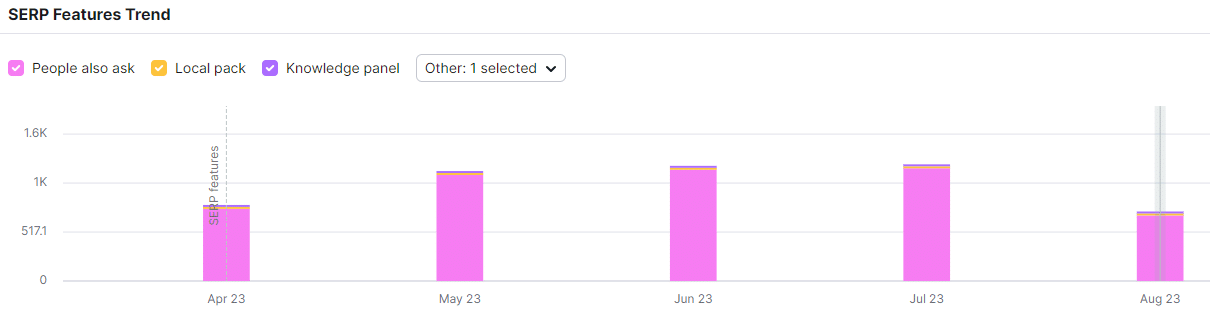
The following graphs and stats are from Semrush, showing the last five months of SERP features results for one of our clients (on desktop).
Due to being an industry leader, they’ve always had a good amount of SERP features and presence at the top of search results.
In July, they owned over 1,200 People Also Ask positions. However, this dropped to about 750 in August (around -40%).
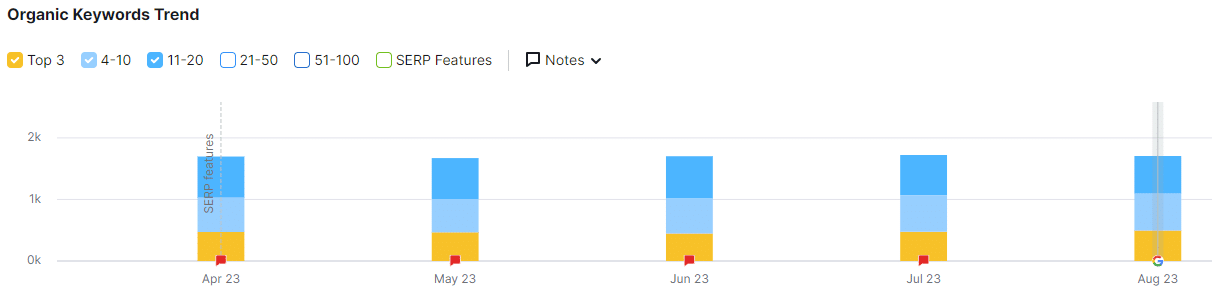
We noticed these changes before any chatter around the core update, and they pretty exclusively hit SERP features rather than the organic listings.
Below are the top 20 total keywords for the same client, and there’s only a difference of around 20 keywords lost from July to August.
The impact on the People AlsoAsk feature seems strangely high. However, these are present for many query types, especially where HowTo or FAQ results would be ideal.
In case you were wondering how the impact differed between desktop and mobile, here’s the same drop in SERP features on mobile and the corresponding total number of keywords in the top 20 (about 10 fewer in August):
Get the daily newsletter search marketers rely on.
function getCookie(cname) {
let name = cname + “=”;
let decodedCookie = decodeURIComponent(document.cookie);
let ca = decodedCookie.split(‘;’);
for(let i = 0; i <ca.length; i++) {
let c = ca[i];
while (c.charAt(0) == ' ') {
c = c.substring(1);
}
if (c.indexOf(name) == 0) {
return c.substring(name.length, c.length);
}
}
return "";
}
document.getElementById('munchkinCookieInline').value = getCookie('_mkto_trk');
Could this demotion of rich results be because of Search Generative Experience?
When the removal of HowTos from mobile happened last month, I was of the opinion that it was just a UX-focused update.
But some SEOs thought this might be a way to make SGE more of a focus in Google’s SERPs.
Let’s finallydive into recovery. Our aim here is to discover and roadmap the next steps.
Discovering your losses
Despite the differences between websites using structured data and those not, the recovery strategy will be similar. The first step is identifying lost or dropped keywords and their associated pages.
This will be a simple ranking or traffic comparison exercise. I use an SEO tool or Search Console and export data into spreadsheets to do some lookups, but feel free to go with your heart on this one.
Finding intent
Next, we will assess the intent behind the keywords that have dropped, ideally on desktop andmobile, but you can focus on one first.
I often use Semrush for ranking checks, so that’s where my data is from. But you could use any appropriate platform or language with specific intent in your keywords, such as:
“How”, “why” to discover informational queries.
Pricing or “for sale” for transactional.
Product types or brand for commercial.
“Near me” for navigational.
I’ve done mine using COUNTIF in a simple spreadsheet:
Given we’re looking at recovery for informational content, we assume all keyword intent will be informational.
However, as you can see above, my client’s biggest changes have been around commercial andinformational keywords.
This makes sense when the keywords seem focused around product types, “diagram” and “how to” queries.
Discover how the SERPs have changed
This is the most important step because it’ll give us our strategy for recovery.
The easiest bulk approach is to grab your target keywords, pop them into Semrush, see what SERP features are available and match them to intent.
See below for a quick snapshot of some keywords and their intent. It’s easier to manipulate this in spreadsheet form using the “Split text to columns” feature.
Our example keywords suggest we can focus structured data on the following alternatives or adapt content to different formats:
Images and image packs
Video
Featured snippets
Reviews
Local pack
Site links
Forming the strategy
Prioritize the strategy by the biggest losses and the easiest updates we can make to content.
From the example above, I could make these changes:
Provide more images, add structured data to images or add alt text.
Content review and update.
Update Google Business Profile.
Add trusted reviews to the website.
Create the content in video format.
I’ve focused on images and Google Business Profile for most of my content improvements as they’ll be the quickest and easiest to implement.
Still, I’ll earmark some others for more involved updates. Here’s my keyword recovery planned out:
Google’s rich results update: A roadmap to recovery
The rich results update, as with many Google updates, has had far-reaching consequences than expected.
It’s hit several of our clients who never used structured data on their informational content, and it happened beforethe August core update.
To recover from this update, identify lost keywords and their associated pages, understand user intent, and adapt to changes in SERP features.
Thanksgiving is a wonderful time of year. You get to have your loved ones in the same place and around the same table, enjoying a beautiful spread of the favorites. If you are hosting Thanksgiving this year, you probably have a running list of all the essentials you need for hosting a memorable Thanksgiving. Hosting Thanksgiving is a big task! So, to make sure you have all of your bases covered, we’ve compiled a list of fantastic products that make hosting Thanksgiving a breeze. From kitchen essentials and home decor to bonding activities, below is a list of products you will appreciate.
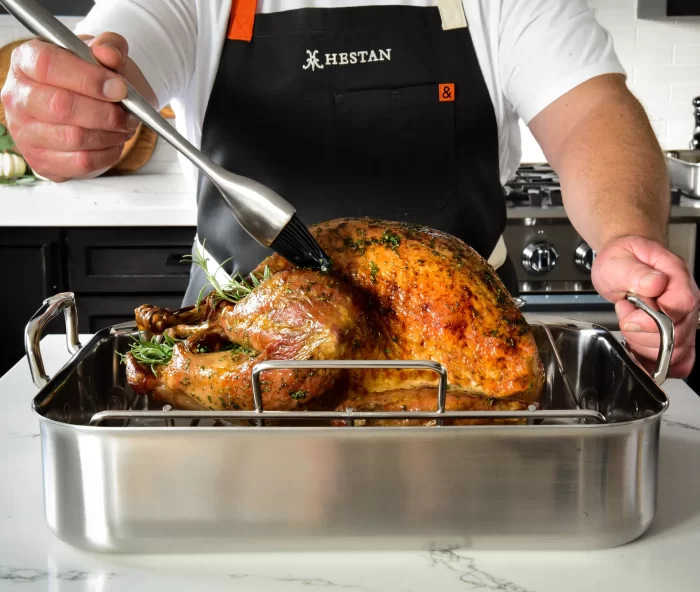
Hestan Provisions Classic Clad Roaster with Rack
Hestan Culinary Provisions Classic Clad Roaster is essential for preparing and hosting Thanksgiving Dinner. Combining exceptional craftsmanship and long-lasting performance, the 14.5″ Classic Roaster and 16.5” Classic Roaster are designed for optimal roasting performance for that Thanksgiving turkey. Its product features include:
• Stylish brushed stainless steel exterior and interior.
• Bonded stainless steel 3-ply clad construction.
• Even heating eliminates hot spots.
• Flush rivets for easy cleanability.
• Flared, polished rims and ergonomic handles.
• Induction compatible.
• Stainless steel rack included, fitted to the roaster for easy insert.
Hesten Culinary Provisions Classic Clad Roaster in 14.5 inches holds up to a 15-pound turkey or 6.5 quarts and their large 16.5 roaster holds up to a 20-pound turkey or roast. Retails for $159.99 for a 14.5-inch and $199.99 for a 16.5-inch at hestanculinary.com.
BOSKA Fondue Set Pro L – 60.9 fl
BOSKA makes Food Tools for Life and believes that quality goes hand in hand with sustainability. BOSKA has been around since 1896 and since then has been a company run by the Bos family for four generations. Their goal is to design products that last a lifetime. Their family tradition has been to create clever and quality tools that let you enjoy cheese, chocolate, pizza, meat and veggies to the fullest. This Thanksgiving, add fondu to your spread – your guests of all ages will love it!
Their best-selling BOSKA Fondue Set Pro L (60.9 fl) offers a robust, cast-iron fondue pot that can be used on any type of stove. With a capacity of 60.9 fl oz, the pot has plenty of room to hold no less than 2.8 pounds of melted cheese. The complete set comes with six fondue forks, a burner and a stylish base. The burner will keep your fondue warm for hours. The wood featured throughout this set is oak and the set comes with a 10-year warranty. Your guests will love this memorable hands-on appetizer or main dish at your Thanksgiving table. This set also makes a fantastic gift for any occasion. Retails for $129.99 at usa.boska.com.
Ordinary Habit Winter Puzzle Bundle
Offering a screen-free social activity to do on Thanksgiving is a fantastic way to keep your guests engaged. Ordinary Habit is a luxury puzzle and home goods company created to inspire moments of calm and togetherness. The Ordinary Habit Winter Puzzle Bundle is a set of wintery-themed puzzles offering coziness for everyone at your Thanksgiving. The set includes their Christmas Pink House 100-piece puzzle, The Wolf and I 500-piece puzzle, and Ice Skating on the Canal 1000-piece puzzle.
Each Ordinary Habit puzzle features artwork depicting cozy scenes that will transport you and your guests – sure to delight one and all. Each puzzle in the Ordinary Habit Winter Puzzle Bundle features a keepsake-quality outer box, pieces finished with a soft-touch, glare-free coating, and drawstring cloth bags and artwork postcards included (with 500 & 1000-piece puzzles). They’re made with recycled materials. At your Thanksgiving this year, set up a couple of card tables and chairs with these beautiful puzzles and your guests can experience the calmness and togetherness that Ordinary Habit creates in the atmosphere. Retails for $100 at ordinaryhabit.com.
For the hostess looking for hassle-free solutions to Thanksgiving hors d’oeuvres, the Gather & Graze Holiday Bundle by True Story Foods will hit the spot. Featuring a selection of the company’s premium hors d’oeuvre-ready meats, the bundle comes with seven items total, starting with two packages of their artisan prosciutto, dry-cured in the Pocono Mountains; two packages of their uncured Genoa Salame, blended with spices and air dried the old-fashioned way; and two packages of their heirloom Kurobuta bacon (the Wagyu of pork), all made with heritage breed pork raised on American family farms. It also comes with a bonus gift for the Hostess: a handy Holiday Appetizer Guide offering tips and recipes such as Prosciutto Apple Stacks and Candied Bacon for Old-Fashioned cocktails. Retails for $49.99 at shop.truestoryfoods.com.
PILLOWPIA Criss Cross Apron Classic Fit
A quality, attractive apron is essential for hosting Thanksgiving and PILLOWPIA has just that apron you’re looking for. PILLOWPIA is a home accessories shop for those who crave a relaxed familiar style. Their products are designed in-house, made with kindness and care, and consist of natural materials like cotton, linen, and grasses. Modeled after Japanese pullover aprons, PILLOWPIA’s Criss Cross Apron Classic Fit is a super soft criss-cross apron featuring wide straps and two large patch pockets for all your tools. It’s easy to get on and off, which is important as you’re navigating the kitchen and greeting guests. It’s one size fits most and is made of 100% stonewashed linen. You can choose between the colors Cornflower or Camel. So – get cooking good-looking! Retails for $88 at pillowpia.com.
Sur La Table Turkey 12-Piece Dinnerware Set
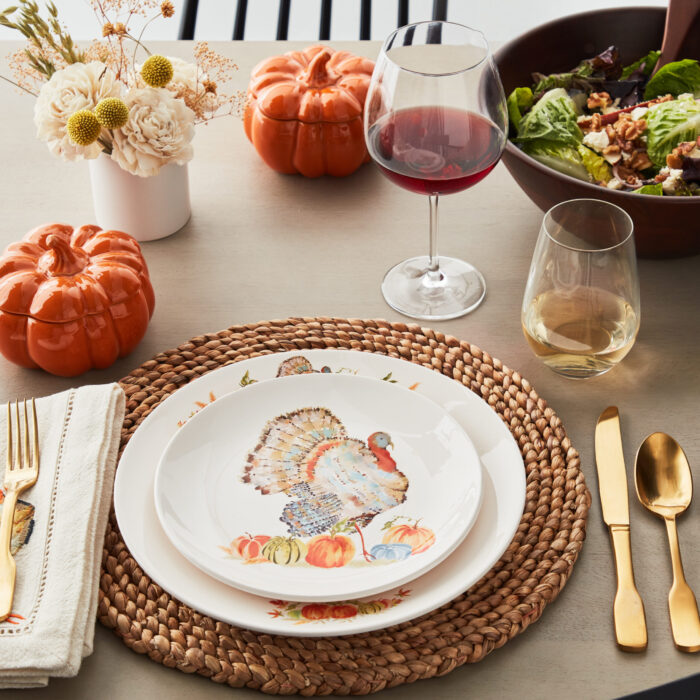
This Thanksgiving, treat yourself and your guests to an elevated table experience with Sur La Table’s Turkey Collection. Sur La Table is a company that started 50 years ago and since has grown into a full-service cooking label with its own private collections to dazzle your kitchen. The Sur La Table Turkey 12-Piece Dinnerware set is inspired by the warm colors of fall and is perfect for both casual and elevated meals. Made from durable earthenware, these pieces are safe to put in the dishwasher and microwave, making clean-up easy! Earthenware is ceramicware made of somewhat porous opaque clay fired at a lower heat temperature. You can pair the set with other pieces from their Turkey Collection to complete the look. This set comes with four dinner plates, four salad plates, and four bowls. Retails for $134.99 at surlatable.com.
Viking Culinary 10-piece True Forged Cutlery Set with Block
A knife set you can rely on is absolutely essential for hosting a fantastic Thanksgiving. A good knife set will help you chop your ingredients swiftly and with ease, making prepping all your delicious Thanksgiving dishes with ease. The Viking Culinary 10-piece True Forged Cutlery Set with Block features a wide variety of knives that include the everyday workhorses in any kitchen as well as an expanded selection of blades that can be used for more specific needs. This set features the following knives all in a walnut-finished wood block:
8” Chef Knife
7” Santoku Knife
8” Carving Knife
8” Bread Knife
5” Tomato Knife
5” Serrated Utility Knife
3.5” Paring Knife
10” Sharpening Steel
Kitchen Shears
This set was constructed with premium fully forged German steel blades, that set the standard for quality in the kitchen while providing the perfect balance between edge retention and ability to sharpen. They’re dishwasher safe but handwashing is recommended. They also come with a limited lifetime warranty. Retails for $399.99 at vikingculinaryproducts.com.
Whether you are home alone or hosting family and friends for Thanksgiving, the Young Living Thieves® Household Cleaner is here to help you deep-clean any mess! This cleaner provides peace of mind by using only plant-based and naturally derived ingredients to effectively clean your home without taking synthetic shortcuts or using potentially harsh ingredients. Ultra-concentrated and non-abrasive, Thieves Household Cleaner is perfect for just about any surface and is infused with Young Living’s signature Thieves premium essential oil blend that will fill your home with a rich, spicy aroma that all of your Thanksgiving guests will enjoy. Retails for $33.55 at youngliving.com.
Young Living Hope Essential Oil Blend is a blend of Melissa, Juniper, Myrrh, and Black Spruce that helps create a welcoming atmosphere in your home, just in time for the holidays. Its aromatic influence offers feelings of peace and security your guests will enjoy. Make your Thanksgiving feast a memorable one by placing name cards and a drop of Hope Essential Oil Blend on pinecones for the perfect table setting! Retails for $86.84 at youngliving.com.
Hast Edition 8-inch Design Chef Knife
Hast creates high-quality kitchen tools without the seriousness often associated with pro-level knives. They’ve stripped away any unnecessary elements for an elevated form that’s simple and intuitive. Light, agile, and dextrous, each knife is perfectly balanced in your hand. The Hast Edition 8-inch Design Chef Knife is the perfect everyday knife—ideal for dicing fruits and vegetables, cutting through thick cuts of meat, or even chopping herbs. The Chef’s Knife is an all-purpose must-have that will take your Thanksgiving cooking to new heights. This knife features a one-piece, minimalist design, matrix powder steel, and a Japanese style blade. It is wildly sharp & durable, lightweight & has great balance, and has a comfortable handle. It’s available in Matte Black, Matte Stainless, Glossy Stainless, and Gold. Retail starts at $99 (stainless steel) at hast.co.
Cozy Earth recognizes the significance of products that genuinely enhance life, knowing that those within one’s home are the most frequently used yet often overlooked. They understand the importance of exceptional products specifically crafted for unwinding and relaxation and how they transform our daily experiences.
Cozy Earth’s goal is to help you create a sanctuary within your home. If you have guests staying with you for Thanksgiving, offer them just that sanctuary with Cozy Earth’s best-selling Bamboo Sheet Set. These incredibly soft sheets are made from 100% premium viscose from bamboo. Featuring an oversized fit and gentle drape, these temperature-regulating sheets are uniquely soft and only get softer with every wash. Each set includes 1 flat (top) sheet, 1 fitted sheet, and 2 pillowcases. The sheets will fit well on both regular and deep pocket mattresses up to 20”. Your guests will love that they’re temperature-regulating and have moisture-wicking fabric to keep them comfy while they sleep. And when the holiday visit is over, you’ll love that these sheets are machine washable and dryer compatible. The enhanced weave guarantees they will not pill even after washing and drying! They come in a variety of beautiful soft shades and their recently released shares are beautiful for fall coziness – Walnut and Clay. Retails for $399 at cozyearth.com.
Vinci RDT Spinning Sprayhead Coffee Maker
A good coffee maker is a must-have essential for hosting a memorable Thanksgiving. Be sure your guests have hot, delicious coffee at your Thanksgiving with the ultimate coffee maker from Vinci. The Vinci RDT Coffee Maker features their patented Rotary Dispersion Technology and is the next generation of coffee brewers.
The secret to delicious coffee is even water distribution and consistently high brewing temperatures. The Vinci RDT Coffee Maker brews at a perfect 185° – 195° F (85° – 90° C) and features the only real solution to even water distribution- their Patented Spinning Water Dispersion Sprayhead that evenly distributes hot water over the coffee grounds for superior tasting coffee. This coffee maker features Wake-to-Brew, a coffee pre-soak bloom feature, auto-off, a programmable ‘keep warm timer’ and the Rotary Dispersion Sprayhead for evenly extracted coffee. You and your guests will love that it simulates the water distribution and flavor of the pour-over coffee method. Your guests will have plenty of coffee with their desserts, as it brews a full 12-cup carafe of deliciously balanced coffee. On sale for $99.99 at vincihousewares.com.
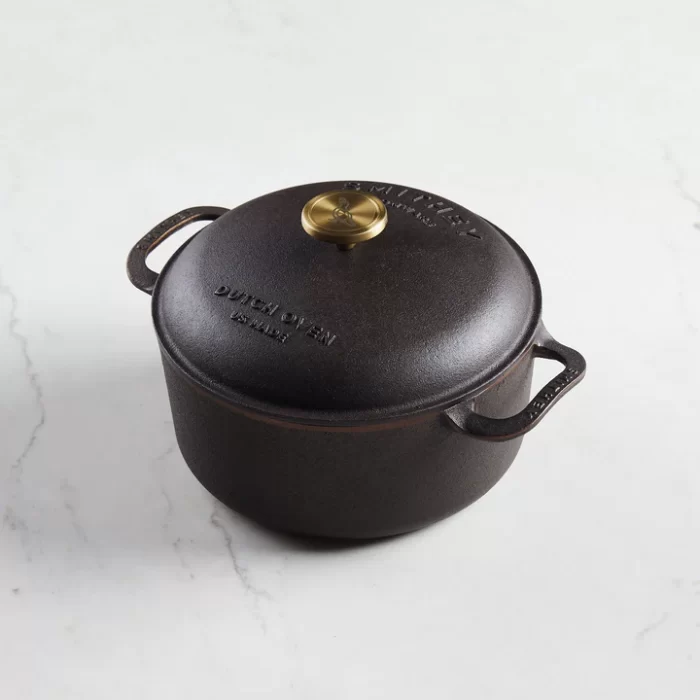
Smithey Ironware 5.5 QT Dutch Oven
Smithey Ironware’s founder, Isaac Morton, hatched the idea for Smithey while tinkering around his woodshed admiring the smooth surfaces and timeless logos design of vintage ironware. After years of studying collector’s books and bird-dogging rusty old pieces to restore them to their 1890’s 19th-century glory, the prospect of creating something new piqued his curiosity. Soon Smithey Ironware was born. Smithey takes pride in what they make and all of their products are designed and produced in the USA. They guarantee the quality of every Smithey for life. This means your piece is meant to be cherished and can be passed down for generations to come.
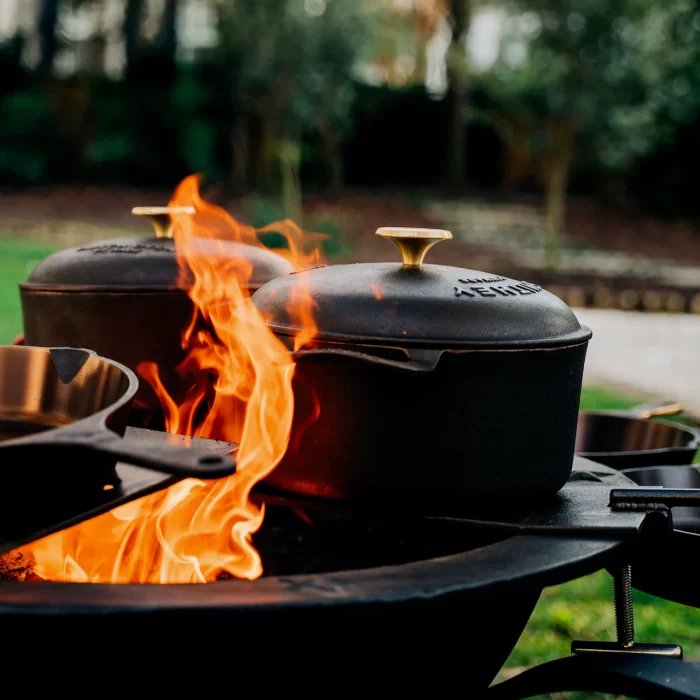
Smithey Ironware’s 5.5 QT Dutch Oven is a fantastic piece of cookware to have centerstage at your Thanksgiving and other holiday celebrations. Honoring the best of vintage American Dutch oven design, the 5.5 QT Dutch Oven is a beautiful and functional kitchen workhorse that is the perfect Dutch oven for families of four or for those who love to slow cook and stew. Featuring Smithey’s signature polished interior surface that is naturally non-stick and easy to clean, this Dutch oven combines the best of enameled cast iron heat performance with a surface finish that will never crack or chip. Also, the interior surface will only get better with use and time. Crafted for versatility, we designed the lid of this Dutch oven to work as a custom-fit lid for the Smithey No. 10 Traditional Cast Iron Skillet for extra convenience. Retails for $300 at smithey.com.
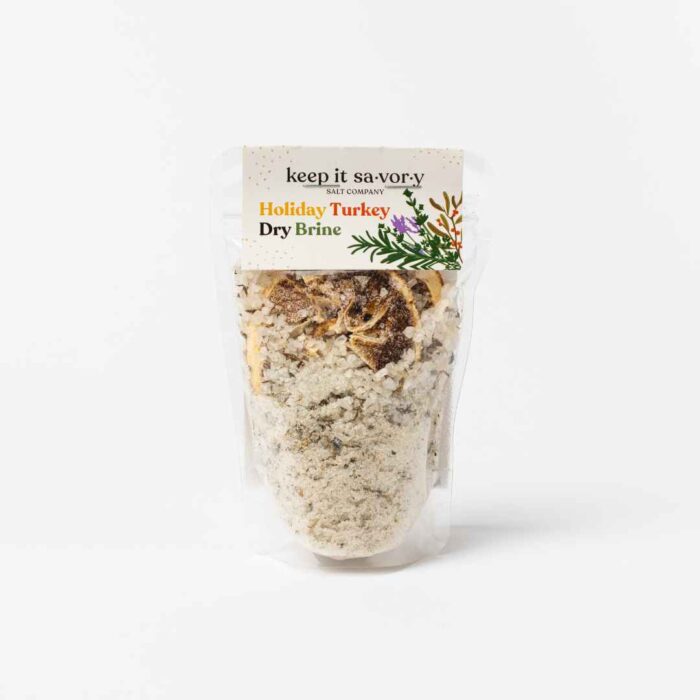
Keep It Savory Salt Company Holiday Turkey Brine Kit
Simplify your Thanksgiving preparations this year with Keep It Savory Salt Company’s Holiday Turkey Brine Kit. Filled with savory goodness like rosemary, sage, thyme, and citrus, this is THE Turkey Dry Brine to take one task off your holiday to-do list! It makes your bird so juicy and flavorful, and it’s also amazing on pork, lamb, and other poultry. And if you have any left over, use it as seasoning for your potatoes, roasted carrots or Brussels sprouts, or even mortar and pestle it into a fine grain for the rim of a cranberry cocktail! Helpful instructions are included. This dry brine only requires the space you are already using in the fridge to thaw your turkey in the few days leading up to your gathering. So, no messy tubs of salty water to manage. As a limited Holiday release, get yours while you can! Retails for $13.50 at keepitsavory.com.
Dorai Dish Pad + Rack Bundle
Hosting Thanksgiving requires a lot of cleaning dishes. You’ll be handwashing delicate plates and coffee mugs, pots & pans, extra dishes that won’t fit in your dishwasher load, and more. In countless households, the kitchen remains a hub of activity throughout Thanksgiving day. This is where Dorai Home comes to your aid, enabling you to seamlessly manage the culinary chaos. Their products stand out for their practicality, contemporary design, collapsible nature, and remarkable instant-drying features.
Dorai Home’s Dish Pad + Rack Bundle is a functional, modern duo for your kitchen and an essential for hosting Thanksgiving. Collapsible, minimal, and instant-drying, the Dish Pad helps prevent mold, mildew, and bacteria. You can rest the Dish Pad Rack on the different sections of your Dish Pad and arrange it to fit your needs. The dish pad is encased in woven mesh silicone to protect your dishes, folds down for easy storage, and is FDA-tested and food-safe. Dorai Home’s Dish Pad Rack has 6 slots for drying plates and lids upright, 2 knife slots, and a utensil holder, is dishwasher safe and is also BPA free and FDA food safe tested. Dorai Home’s Dish Pad + Rack Bundle is designed to keep your counters organized and dry. Retails for $120 at doraihome.com.
Saffron Marigold Duvet Covers and Pillow Shams
Thanksgiving is a time when holiday cheer begins to decorate your home. There’s no better time to jazz up your bedding in your own bedroom or your guest suite (should you be hosting visiting family or friends). Saffron Marigold is where fair trade, handcrafted block print linens bring the world to your home. Their block print linens carry within their folds wondrous tales inspired by faraway places and natural beauty. From lotuses floating in temple ponds to the splendor of palace gardens, you can experience the world right from your own home. Their breathtaking designs are sure to dazzle your guests and the holiday cheer in your home. Saffron Marigold is passionate about meeting the highest standards and is committed to thoroughness and care.
Saffron Marigold’s Mosaique Bleue – Earth Duvet Cover is an intricate Moroccan tile print, consisting of cyan blue star burst motifs, set in pieces of chocolate tile, with accents of French blue, peacock green and apricot. This color combination warms up the autumn season in your home. This stunning duvet reverses to a beautiful complementary print, so you get two duvet styles for the price of one! It’s exquisitely finished with neatly interlocked seams and fastened with hidden 8 coconut shell buttons. You’ll love it is easy to change and adjust with two hidden openings opposite the button closure. This intricate pattern is printed on soft, breathable, and preshrunk cotton using intricately carved wooden blocks. As with all of Saffron Marigold’s textiles, their duvet covers are crafted with exceptional quality that will last for many seasons. Retails for $250 (twin size) at saffronmarigold.com.
Complete your duvet bedding set with Saffron Marigold’s Mosaique Bleue – Earth Pillow Shams. These are the perfect match for your duvet in the same soft pre-shrunk superior-grade cotton. They’re also hand-printed using intricately carved wooden blocks. They come in sizes suited for standard-size and king-size inserts. Retails for $40 (standard size, sold individually) at saffronmarigold.com.
OLIVO AMIGO Joy Celebration Gift Set
The magic of the Mediterranean centers around 2 things: experience and food. This magic is important for a memorable Thanksgiving, so whether you’re enjoying small bites and a beer with your family and friends, or indulging in all your Thanksgiving main dishes ’round the table with your loved ones, infuse emotion into your food with OlIVO AMIGO’s Mediterranean Gift Set!
The OLIVO AMIGO Mediterranean Gift Set includes full sizes of the Spark Vinegar (200ml), Joy EVOO (375ml) and Elevate Spice Blend. OLIVO AMIGO’s tongue-tingling Spark Balsamic Vinegar is made with balsamic vinegar, organic cane sugar, plums and basil, and then slow fermented for a rich, deep finish. It’s crafted in small batches on a family farm in California with time, patience and love. OLIVO AMIGO’s Joy is an Extra Virgin Olive Oil with an intense fruity green. Made with Picual olives, it has aromas of tomato and olive leaves, with delicate touches of almond and artichoke. It is well-balanced, with a medium-low bitterness and a touch of spice. Lastly included in this set is OLIVO AMIGO’s ELEVATE which is their custom spice blend crafted with spices that are skillfully combined by their master blender for the perfect complement to any dish. These bright and well-balanced flavors add a touch of complexity and depth with just a pinch! The beautiful OLIVO AMIGO Mediterranean Gift Set will compliment salads, dressings, cheese, tomatoes, soups or veggie creams, bread, figs, cocktails, fruit, and so much more. Retails for $70 at olivoamigo.com.
My Magic Carpet Washable Rugs
This Thanksgiving, give your kitchen and dining spaces an upgrade with My Magic Carpet Washable Rugs. With the kitchen being the center of the celebration, make sure your space feels warm and inviting while protecting your floors! My Magic Carpet just released its latest collection with beloved interior designer Genevieve Gorder. Her designs are the perfect fusion of premium aesthetics and practicality.
Pictured above is My Magic Carpet’s Genevieve Gorder’s Nordic Weave Mushroom Washable Rug which features a subtle pattern complementing both contemporary and traditional decor styles seamlessly. This ultra-stylish and easy-to-care-for rug creates a cozy atmosphere in your kitchen, in your entryway, mudroom, or hallway. The warm tones of this beautiful rug will mesh well with Thanksgiving decor. My Magic Carpet washable rugs are non-slip, machine washable, and lightweight. They’re also stain-resistant, which is so important when residing in your kitchen. After your cooking festivities and entertaining are through, all you need to do is pop the rug into your washing machine with detergent – it will fit perfectly!. Retails for $74.99 (2.5’x7′) at buymymagiccarpet.com.
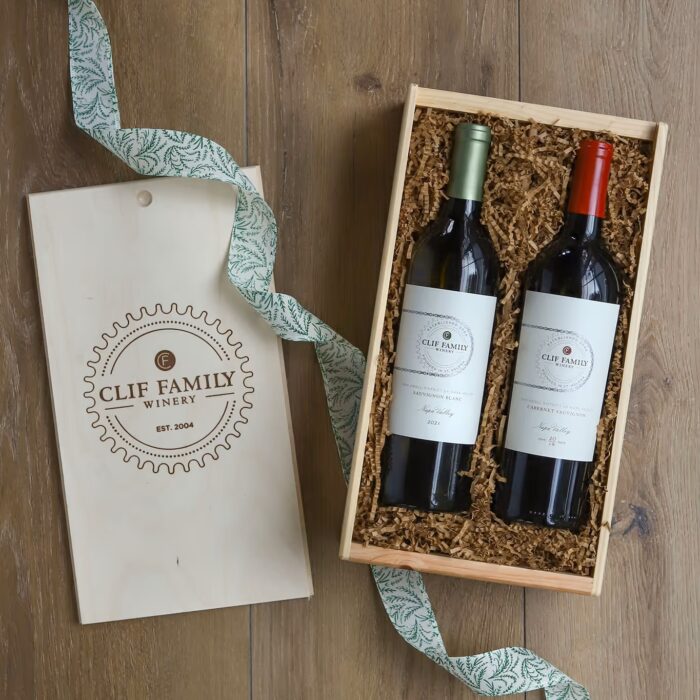
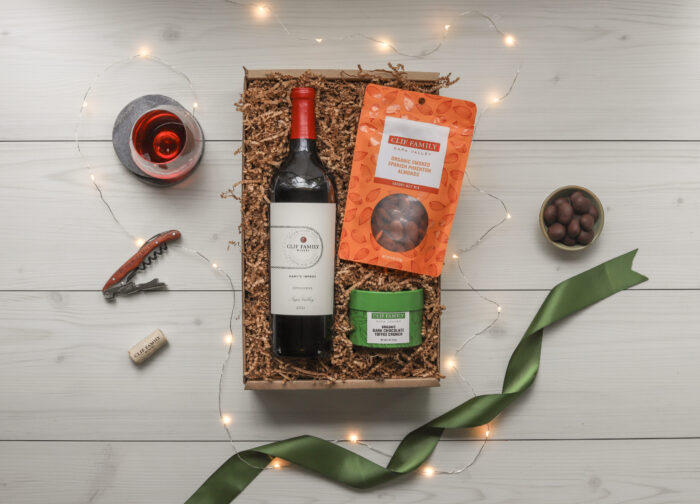
Cliff Family Wines Gift Sets – Napa Valley Duo and Red Wine Happy Hour
Clif Family Wines has a unique story, making their wines a much-appreciated gift for any wine enthusiast business client. In 1992, their story began with Clif Bar & Company, where their passion for food and adventure led them to create convenient, portable and above all delicious food for busy lifestyles – you might already be familiar with their delicious bars. Several years later, in 1997, the Clif Family moved to Napa Valley. What started as a home in the country soon developed into a wonderful adventure in winemaking and a deeper commitment to sustainability and farming. Their goal is to craft unique, regional wine and foods using practices that care for the earth and to support growers who use sustainable and organic farming methods. Clif Family Wines offers fantastic gift sets suitable for any business client.
First, The Clif Family Napa Valley Duo is a perfect gift to get to know their classics. The set includes two of their most beloved Napa Valley wines – a crisp and refreshing 2021 Napa Valley Sauvignon Blanc, and a rich and full-bodied 2019 Napa Valley Cabernet Sauvignon, each expertly crafted to showcase the unique terroir of the region. Their Sauvignon Blanc comes from their new, CCOF-certified Valle Di Sotto vineyard in the heart of the Oak Knoll District of Napa Valley. Their exceptional Cabernet Sauvignon is sourced from the prestigious Red Hen Vineyard, nestled on the picturesque west side of Napa Valley’s Oak Knoll District. The Oak Knoll District is located at the southern end of the Valley where cooling marine influences create a unique micro-climate that helps the grapes maintain bright fruit flavors and retain acidity. Retails for $160 at cliffamily.com.
Second, Clif Family Red Wine Happy Hour Gift Set is fantastic for your business clients. In this curated box they’ll receive everything necessary to kick off a happy hour celebration wherever they choose. Included is a bottle of 2021 Gary’s Improv Zinfandel, Organic Smoked Spanish Pimenton Almonds, and Organic Dark Chocolate Toffee Crunch creating a quick and tasty celebration. Your clients will be dazzled by 2021 Gary’s Improv Zinfandel’s stunning ruby hue, bursting with flavors of chocolate-covered cherries, succulent blackberry pie, and a subtle hint of black pepper and sage. The bright and zesty palate is balanced with a lively acidity that carries the wine into a long, satisfying finish. Not to mention, this wine boasts a score of 93 pts by Wine Enthusiast! The grapes for this wine were grown on Clif Family’s organically farmed Valle di Sotto Vineyard in Napa Valley’s Oak Knoll District. Retails for $75 at cliffamily.com.
REAL Holiday Dip & Sprinkle Cookie Decorating Kit
REAL Cookies offer cookies everyone in your family and your friend’s circle can eat despite dietary restrictions or allergies. This means you’ll find no artificial ingredients you can’t pronounce, NO gluten, grains, dairy, eggs, corn or soy. They just include pure, simple ingredients made with love by REAL friends, so everyone at your celebration can enjoy them together! REAL Cookies Holiday Dip & Sprinkle Cookie Decorating Kit includes everything you need to make chocolate-dipped and sprinkled holiday cookies, including 6 packs of pre-baked REAL Chocolate Chip Cookies (12 cookies total), Pascha Organic Semi-Sweet Baking Chips, and holiday sprinkles by Supernatural! The cookies are made with almond and coconut flours for a decadent and delicious snack with the perfect texture. Retails for $34 at the REAL Amazon Store.
Since 2008, Darrellene Designs has specialized in beautiful art that encourages customers and makes them smile. All of the original designs are hand-painted by founders Tommy, Darrellene and Delaney and then printed as a giclee directly to wood. Their heart-warming pieces feature touches of French art and culture making subtle, yet grand statements in your home.
A Darrellene Designs Lazy Susan will make a fantastic addition to your table, making it a must-have essential for hosting a memorable Thanksgiving. Your guests will love the convenience and community it brings to the table and will adore the design. Darrellene Designs Lazy Susans are inspired by French vintage cheese labels and come in all different themes, designs, and color combinations. Whether you are looking for a Lazy Susan with more of an Autumn theme or one that is neutral for all year round, they have you covered. Their Pink Poppy Stem on Cream Wood Lazy Susan comes in 15″ and 23″ and features a beautiful giclée of their hand-painted Pink Poppy Stem on Cream 1/2″ domestic wood. The color scheme of pink brightens any room and is great to put on the kitchen or dining room table and even the bedroom or bathroom to display your special treasures. This Lazy Susan swivels ever so smoothly and is well-made and sturdy. Darrellene Design Lazy Susans are proudly made in the USA. Retails for $87 (15″) and $175 (23″) at darrellenedesigns.com.
Kuhn Rikon USA Kinderkitchen® Set 3 Pieces
This Thanksgiving, create memories for the whole family and include your little ones in the cooking process. Kuhn Rikon Kinderkitchen® tools are kid-tested and help children learn the importance of eating well and stimulate their enjoyment of cooking. As a Swiss brand, you can rest assured each Kinderkitchen tool by Kuhn Rikon holds quality in the utmost regard.
The Kinderkitchen® Set 3 Pieces includes The Duck Snippers and Dog Knives which are sharp enough to cut food but not small fingers. The rounded tips and guards keep children safe while helping in the kitchen. The Duck Snippers cut herbs and vegetables, the non-serrated Dog Knife cuts fruit and spreads peanut butter, and the serrated Dog Knife cuts soft-skinned fruits and vegetables. Each piece features Japanese stainless steel. Even though adult supervision is required when using, each piece has safety features incorporated to keep their little hands safe. Don’t pass up on this fantastic essential for hosting a memorable Thanksgiving for the little ones. Retails for $30 at kuhnrikon.com.
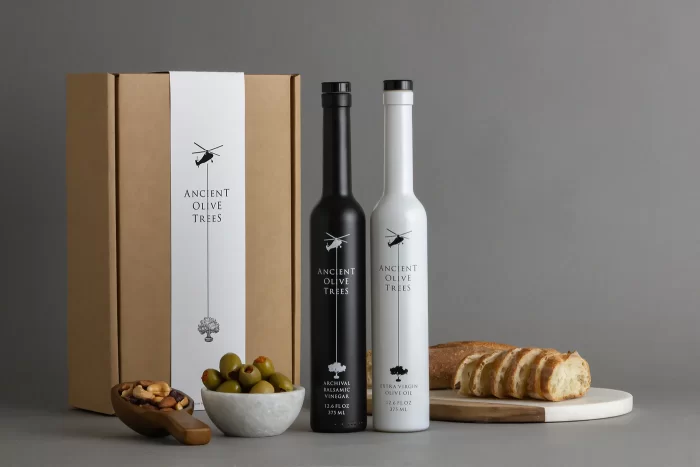
Ancient Olive Trees Perfect Pair
Ancient Olive Trees is known for its exceptional quality produce. The olive oil and balsamic vinegar in the Ancient Olive Trees Perfect Pair pack are crafted with the utmost care and attention to detail. The result is a harmony of flavors that will tantalize your taste buds and add a sophisticated touch to your Thanksgiving dishes. What sets the Perfect Pair Set apart is not just its taste but its design. The Ancient Olive Trees Perfect Pair comes in an elegantly crafted bottle set that is not only functional but also adds a touch of luxury to your table. Their olive oil is pressed from premium olives grown around the world and use modern farming techniques allowing them to produce only the finest oil. The olives are cold-pressed within hours of harvest to guarantee unparalleled freshness and rich antioxidant and polyphenol content. Ancient Olive Trees’ imported and barrel-aged balsamic vinegar from the ancient town of Modena displays rich flavors of oak and fresh fruit. Sweet and savory on the palate, it is a great addition to any salad, fruit or vegetable dish on your Thanksgiving table. The Perfect Pair retails for $69 at ancientolivetrees.com.
Nanoleaf Elements
Nanoleaf is a global company that is ushering in a new era of the smart home that centers around complete personalization. Their products inspire you to redefine your space. This Thanksgiving, elevate your dining space for the enjoyment of your guests (and yourself!) with the Nanoleaf Elements Hexagons Smarter Kit. The perfect harmony of art and technology, Nanoleaf Elements are both beautiful wall art and customizable ambient lighting made to look beautiful on or off.
Nanoleaf Elements Hexagons Smarter Kit comes with everything you need to create your own unique lighting designs in your Thanksgiving dining space, living room, or anywhere you wish to add an elegant and organic feel. Enjoy the sophisticated wood grain veneer while off, or turn them on to illuminate your space with a dynamic glow. Nanoleaf Elements come with 11 curated glowing effects to recreate the cozy feeling of a glowing Ember to the sense of escape and relaxation of a Calming Waterfall. Nanoleaf Elements is easily installed on any flat surface with the included adhesive Mounting Tape. This means, no additional tools are required. They are compatible with all Connect+ products like Shapes Triangles, Hexagons, and Mini Triangles. Retails for $199.99 at nanoleaf.me.
Modern Prairie Sky Butter Crock and Spoon Rest
Modern Prairie is a brand centered around modern, mature women and their needs, focusing on empowering them to regain their confidence through aging. Modern Prairie is proud of their partnership with Rowe Pottery, which has been designing, creating, and selling handcrafted pottery of timeless design and uncompromising quality in Cambridge, Wisconsin since 1975.
Modern Prairie’s Sky Butter Crock is handmade from ceramic pottery in their cobalt blue glaze. This stylish butter crock is the French-country way to keep that favorite golden goodness soft and spreadable at your Thanksgiving table. Originating in the late 1800s, this method of storing butter involves adding water to the base of the keeper so that, coupled with 1/2 a stick to a full stick of butter, it creates an airtight seal. This wheel-thrown stoneware beauty will be front and center at your Thanksgiving this year and your guests will enjoy its functionality. It is dishwasher, microwave and oven-safe, features a non-stick surface, and is made in the USA. Retails for $49.50 at modernprairie.com.
Modern Prairie also offers a helpful hand as you’re cooking your beautiful Thanksgiving feast with their Prairie Sky Spoon Rest. The cobalt blue glaze of this ceramic spoon rest effortlessly enhances any country kitchen and keeps your kitchen counter clean as you navigate your dishes. The ridged impressions of the Prairie Sky Spook Rest are made by the potter’s hands, and were inspired by the glacial landscape ridges of Wisconsin. Retails for $24.50 at modernprairie.com.
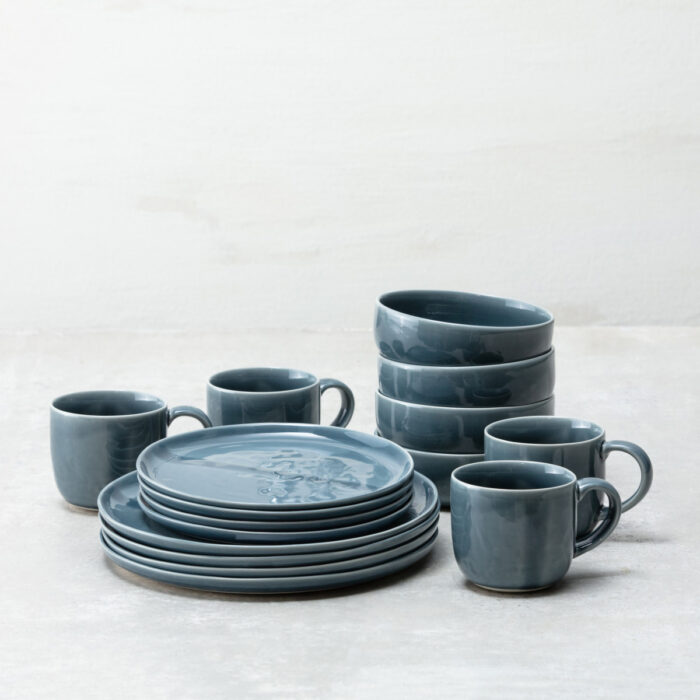
Fortessa Tableware Solutions Svelte Deep 16pc Place Setting
Fortessa Tableware Solutions founders Scott and Eric Hamberger know some of the best memories happen around the table, especially at Thanksgiving. The Hamberger brothers started their business in 1993 after finding inspiration in the quality and craftsmanship of fine German porcelain. They began importing and selling high-quality dinnerware directly out of their parents’ garage. What is known today as Fortessa Tableware Solutions is now in 160 countries worldwide, 6600+ retail stores, 80+ online sites, and 1350+ hotel locations all over the US and Canada. Needless to say, their tableware is impressive.
Fortessa Tableware Solutions’ Svelte Deep Blue 16pc Place Setting is a conscientiously designed dinnerware set created by a unique glaze application. It features a deep blue color that creates visual interest and richness across the center of each dish. Made in Portugal, this set is crafted from a composite of locally sourced raw materials and recycled clay, with 100% of clay shavings and biscuits reincorporated back into production. The eco-glaze, Stone, is made from 100% recycled materials. The brand, Nosse with Fortessa, is motivated by conscientious production and is committed to becoming zero-waste by reducing, reusing, and recycling as much as possible. The set includes 4 dinner plates, 4 salad plates, 4 cereal bowls, and 4 coffee mugs. It is dishwasher-safe, microwave-safe, and oven-safe. It will blend beautifully at your Thanksgiving table. Retails for $250 at fortessa.com.
Runamok Honey Gift Box
Runamok is a family-owned, Vermont-based company that started with a foundation of premium, organic maple syrup and has expanded to an array of maple and honey-based products. Runamok’s array of honey products makes hosting Thanksgiving easier by providing a quick and delicious addition to charcuterie boards and other dishes that guests will love. Runamok’s Best Seller’s Honey Gift Box includes three of Runamok’s top-selling honey flavors, including Beekeeper’s Cut Raw Honey, Lemon Verbena Honey, and Chipotle Morita Hot Honey, letting hosts offer their guests an array of different flavors to accompany cheese, crackers, meats, and more. Retails for $44.95 at runamokmaple.com.
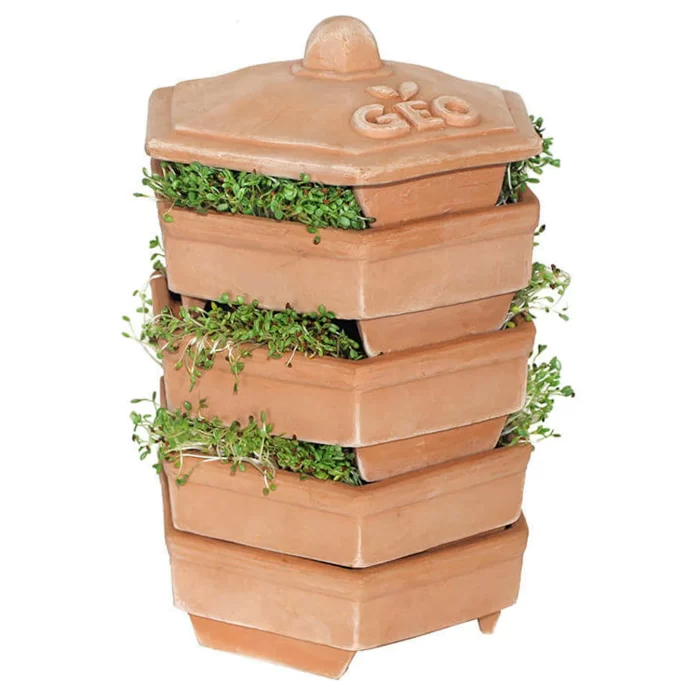
Add sprouts to your Thanksgiving spread this year! They’ll also go great with turkey and cranberry sandwiches you can make from all those delicious leftovers. Tribest’s GEO Terradisiena is a beautiful yet very functional sprouter made from food-safe, clean terracotta. An innovative stacking system allows you to either space the trays individually to create a dark and damp environment or allow air and light into the trays. These “night” and “day” sprouting options allow for optimal control during the different growing phases from seed to sprout.
Tribest’s GEO Terradisiena measures approximately 7 inches wide and 11 inches at full height and can be used one tray at a time as needed. The natural terracotta enhances the maintenance of a moist environment for the seed, therefore requiring less water and producing superior sprouts. You’ll love how easy it is to begin and maintain the sprouts in your kitchen. Retails for $59.95 at tribest.com.
Ferrari Trento Sparkling Wines
Delicious sparkling wines are essential for hosting a memorable Thanksgiving. As the Italian sparkling wine par excellence, Ferrari Trento has long been known as the official toast of global special occasions and events (Formula 1 and the Emmys!) for years. Make this year’s occasion extra special with the Ferrari Trento Rosé or Brut. Produced in the Trentodoc region of Italy, Ferrari wines are lovely simply as a Holiday aperitif or paired with your favorite Thankgiving dishes.
The Ferrari Rosé NV, Trentodoc is made of 60% pinot noir and 40% chardonnay. This sparkling rosé is dry, clean and elegant, but with the freshness of wild strawberries and the sweetness of almonds. Retails for $36 on VinPorter.
The NV Ferrari Brut, Trentodoc was the original sparkling wine made from the first Chardonnay grapes planted in the Trentino mountains by Giulio Ferrari in 1902. The warm days, cool nights and extreme altitude of the region give this wine a character different from its French counterpart, with notes of golden apple and luscious yeasty tones. Retails for $28 on VinPorter.
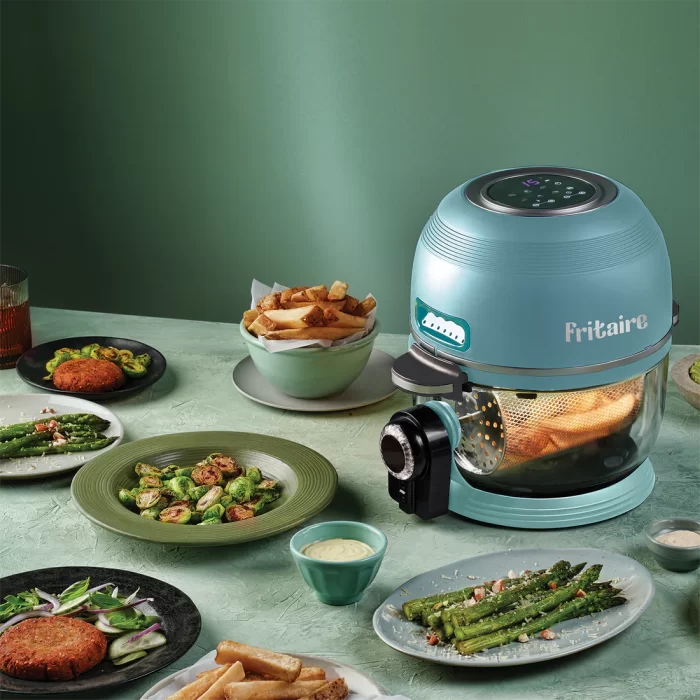
Fritaire The Self-Cleaning Glass Bowl Air Fryer
The quality Fritaire Air Fryer is a Thanksgiving essential for cooking healthier for you and your guests. You can fry butternut squash, roasted potatoes, green beans, and carrots to name a few. This air fryer is the ultimate solution for smart, chic, healthy and more convenient cooking! Beyond its beautiful design, its 1500W – 400F Degrees Halogen Heater and engineered vortex convection achieve crispy and even results every time. Additionally, the unique self-cleaning glass bowl makes for effortless post-cooking cleanup.
The Fritaire Air Fryer comes with three cooking accessories – the rotisserie, the French tumbler, and the air, and offers 6 one-touch cooking functions for ultimate versatility and convenience. You’ll love that it is also Teflon-free, plastic-free, phthalate-free, and BPA-free. Retails for $199.99 at fritaire.com.
Martha Stewart Patterson 10″ x 5.1″ White Round Stoneware Cake Stand
Everyone looks forward to the delicious desserts at Thanksgiving and you want to have a fantastic way to display them. A splendid fine ceramic cake stand that puts your Thanksgiving baked and tasty works of art on a pedestal is essential for hosting a memorable Thanksgiving. The Martha Stewart Patterson 10″ x 5.1″ White Round Stoneware Cake Stand is perfect for displaying and serving pies, cakes, stacks of cookies, brownies, and more. Ruffled designs skirt around the edge of the center platter making this a timeless centerpiece, elegantly coated with a pristine white color and a high-gloss finish for a classic appeal. The beautiful footed design offers a sturdy base for stability and impressive presentations. Retails for $37.99 at The MARTHA STEWART Amazon Store.
In an age when remote work is a key element of many people’s professional lives, fast and reliable internet service is more important than ever. Even those who work a hybrid schedule need a high-performance connection for days they work from home.
That’s where fiber internet comes in. This powerful technology is the emerging gold standard for internet service today, and it offers big advantages for anyone who works from home. Ahead, we’ll talk about the benefits of fiber internet for remote workers and why it might be time to switch.
1. Fiber’s average speeds are substantially faster than cable or DSL.
Fiber’s most commonly cited benefit is its speed advantage over cable and DSL. Gigabit fiber packages, which offer close to 1,000 Mbps data speeds on both download and upload, are a popular offering from fiber providers. These speed upgrades make it possible to download bulky files in seconds, making fiber an excellent choice for remote workers.
Not all fiber is gigabit, and available fiber speeds will depend on the level of fiber infrastructure in your area. (You’ll also need the right hardware, like a fiber-ready router, to take full advantage of fiber’s higher speeds.) Fiber isn’t automatically faster, so it’s always worth comparing your local ISP’s fiber speeds against their traditional cable offerings. However, the most critical value of fiber for remote workers is often in aspects like reliability, symmetrical speeds, and low latency — all of which we’ll discuss further.
2. Fiber connections are more reliable than traditional broadband.
Glass fiber-optic cables deliver a big upgrade in reliability from the copper wires that power traditional broadband. Fiber cables have a long lifespan and are invulnerable to the electrical interference that can affect copper cables. Factors such as weather events that can disrupt copper-based connections are rarely a problem for fiber.
The reliability of fiber helps reduce downtime for your home internet connection. That means less apologizing for disconnected Zoom calls and less need to run to a coffee shop when your meeting is in 20 minutes and your internet has cut out. Fiber can still experience downtime issues if (for example) a cable is damaged, but overall, it’s a major step up in resilience from cable or DSL.
3. Symmetrical up and down speeds are ideal for video calls and uploading files.
Many traditional broadband connections provide upload speeds much slower than their download speeds. That’s not a problem if you mostly use your internet connection for basic web browsing and media streaming, but it can be a significant issue for anyone who works from home. Joining video calls and uploading big files are fundamental parts of the job for most remote workers, and sluggish upload speeds can wreak havoc on these functions.
Fiber, by contrast, provides upload and download speeds that are close to symmetrical. That makes it ideal for remote workers, who will appreciate fiber’s robust upload performance for teleconferencing, collaboration apps, and other 21st-century business tools.
4. Fiber offers lower-latency connections than other types of broadband.
A related benefit of fiber service is that its connections tend to have extremely low latency. Latency, sometimes known as lag, is the time that it takes data packets to travel to their destination via an internet connection. Jittery video, web applications that load slowly or not at all, and frequent buffering in media streams are all classic symptoms of a high-latency connection.
Because fiber connections transmit information through ultra-fast light pulses, data packets can travel farther faster, creating a low-latency connection over extreme distances. It’s the perfect technology for the age of remote collaboration, enabling you to give your best effort even when you’re hundreds of miles from your coworkers.
5. Fiber cables are inherently more secure than copper coaxials.
Working remotely often involves sending sensitive data back and forth over the internet, so a secure connection is critical. Here, again, fiber offers a built-in advantage: Fiber optic cables are much more difficult to physically alter than coaxial cables. Techniques such as cable tapping and jamming are basically impossible with fiber optics, adding another layer of protection against cybercrime.
Of course, many of the biggest cybersecurity threats, such as phishing and malicious downloads, target vectors other than your internet connection itself. That means you’ll still need to follow the usual data security best practices even when using a fiber connection. All in all, however, fiber gives you one less factor to worry about when it comes to data security.
6. In many areas, the price of fiber is comparable to traditional broadband.
A fiber connection was once a luxury, but that’s changing rapidly. Many of today’s fiber-enabled ISPs offer fiber service packages at or near the price point for standard cable broadband. While you’ll want to evaluate each package on its own merits, it’s worth looking into the deals available now, especially if the price of fiber has previously been an issue for you.
Your current ISP is a fine place to start. Check their website to see if they offer fiber service in your area, making sure to look up your specific address. In addition, a number of independent ISPs are competing with industry giants to offer fiber service, so it’s definitely a good idea to expand your search beyond the largest providers.
7. Your employer may subsidize some or all of the cost of a fiber connection — or you may be able to write it off on your taxes.
Many employers provide an internet stipend for their remote or hybrid workers, since broadband internet is essential for remote work. A stipend can make fiber substantially more affordable, so if your employer offers one, it’s a great reason to get the ball rolling on upgrading to fiber.
For the self-employed, you might be able to deduct the cost of fiber internet service on your income taxes. (W-2 employees unfortunately can’t.) The process can be a little complex, since it requires documenting how often you use your internet for business versus personal purposes. However, if you don’t mind the extra paperwork, it can offer another tool for getting affordable fiber for your home office.
As companies worldwide continue to expand remote or hybrid positions, fiber will play a key role in ensuring all employees have high-performance broadband connections. If fiber is available in your area, now is a great time to get on board. Once you’ve experienced remote work on a fast fiber connection, you’ll never look back.
Amazon is gearing up for a significant overhaul that will transform the search experience across both its website and app.
The retail giant is set to roll out upgraded generative AI capabilities that offer a more conversational, detailed, and personalized user experience in the US from January.
Shoppers will be able to use this new technology for real-time product comparisons and to seek additional details, reviews, and recommendations tailored to their search context, reports Business Insider.
Why we care. Advertisers should closely monitor these developments to gauge their impact on ad visibility. Should the changes prove to be as substantial as claimed, digital marketers may need to reassess their campaign strategies accordingly.
A new world. The decision to revamp Amazon, which has been codenamed Project Nile, reportedly comes from new VP Joseph Sirosh, a former Microsoft AI executive. During a company-wide presentation, he told his team:
“We have a big task ahead of us. We need to orient everyone towards this new world.”
The new Amazon is allegedly already being tested internally with plans for a US roll out in the New Year, however, an insider confirmed these plans could change. The project is a top priority for the company and is being supported by Amazon CEO Andy Jassy.
Why now? Amazon bosses are hoping that building an AI-powered conversational shopping agent will help improve the user experience, helping shoppers to find the products they’re looking for more easily by providing search results, expert answers and product suggestions. The company is hoping this will lead to more sales and a higher ROI – particularly on mobile.
How it works. Amazon’s new generative AI tool will be developed using human AI trainers, who will continuously review the quality of answers the bot provides. Additionally, the tool will have access to proprietary shopping data sourced from Amazon’s extensive product catalog, complemented by user behavior data, and purchase and review information.
Get the daily newsletter search marketers rely on.
function getCookie(cname) {
let name = cname + “=”;
let decodedCookie = decodeURIComponent(document.cookie);
let ca = decodedCookie.split(‘;’);
for(let i = 0; i <ca.length; i++) {
let c = ca[i];
while (c.charAt(0) == ' ') {
c = c.substring(1);
}
if (c.indexOf(name) == 0) {
return c.substring(name.length, c.length);
}
}
return "";
}
document.getElementById('munchkinCookieInline').value = getCookie('_mkto_trk');
What has Amazon said? During a company-wide town hall meeting, Sirosh told Amazon staff that the website’s new AI feature should be seen as a deeply knowledgable in-store salesperson. He said:
“Before e-commerce, the salesperson in the store was your search engine. And that individual knew everything about the products…they would look at you and know what you might want because customers like you have been to that store before.”
“They may have known you in person, so may know your preferences, and then they can synthesize all of that information together in natural language conversation with you and help you in your shopping mission. And if you can scale that up to everything in Amazon, that would be the future mission we want to aspire to.”
“If we can increase the conversion on mobile, because we provide great experiences, great expert answers, then that could be a potentially significant lift to Amazon.”
Deep dive. Read the Amazon Ads blog to catch up on the company’s latest news.
Since Google introduced Bard in February, everyone has been asking what that means for the Google Assistant. Well, today we know the answer – Bard is coming to Google Assistant. Assistant with Bard, as Google is calling it, is coming to iOS and Android in the “coming months.”
What Google said. Google wrote, “Today we introduced Assistant with Bard, a personal assistant powered by generative AI.” “It combines Bard’s generative and reasoning capabilities with Assistant’s personalized help.”
Inputs for Assistant with Bard. Google said you can “interact with Assistant with Bard through text, voice, or images.” This version can “even help you take actions,” Google added.
It can read your Gmail emails, your Google Docs and other Google services.
Smarter Assistant with Bard. Google explained that it is working to make Google Assistant smarted with Bard by building a “more contextually helpful experience” on your device. So if you take a photo of a puppy, as per the GIF below, it can help you write a social media post to share on your favorite social network.
Google said “Bard will use the image as a visual cue.” Here is how it looks:
iOS and Android. This will be released in the coming months for iOS and Android devices. For now, Google said it is “rolling it out to early testers soon” but won’t be available for the public for a “few months.”
If you own and operate a remote business with employees all over the globe, it can be easy to overlook the importance of your company’s overall work culture. However, organizational culture is so important, as it helps companies draw and retain the best employees.
This directly translates into business success, because if staff members love their workplace culture, they will be motivated to stay and grow with their company. Their high morale will also motivate them to work hard to help the business thrive.
So having an inspiring and supportive organizational culture is crucial for reducing turnover and motivating employees. If you are wondering how to ensure a positive and growth-oriented work culture in your remote enterprise, I’ve got you covered!
In my experience as the creatorof the9 Year Letter Method (a goal-setting system for the 4 pillars of life – relationships, financial, health and fun) I have discovered these 5 ways to ensure a fantastic remote work culture:
Know Your Role as the Enterprise’s Leader
As the business owner and/or CEO, you hold a critical role in the creation of your enterprise’s culture: setting the company’s vision and long-term goals and ensuring that all major business decisions are in the best interest of achieving those aspirations.
This in turn helps to create the company’s culture, as your business will both attract talent who are also passionate about the vision and retain current employees that admire how your company stays true to its ideals.
In addition, every business’s leader must ensure that all other executives are doing whatever they can to keep morale high throughout the company. Thus, it is vital that you meet with your department leaders on a regular basis to see how they can maintain a positive company culture and boost their team members’ morale.
As the enterprise’s leader, you can also increase morale just by getting to know everyone in the business by name (if it isn’t a massive corporation) and seeing how they are doing on a regular basis. This will help all of your employees feel valued.
Prioritize Servant Leadership
A servant leader fully supports their workforce and ensures that they have all of the info and assets they need to do their jobs well, and they also place a great focus on the mental wellbeing of their team members. This helps the employees feel valued and supported.
Servant leaders make a concerted effort to check in with their team members regularly just to see how they are doing and to provide support and assistance however they can. A servant leader can make a huge, positive impact on the remote workplace.
When all of a business’s workers are remote, it can be easy for employees to get confused as to what exactly they should be working on in any given moment, how to do a task, and who else to ask about certain projects. Also, in a remote work environment, team leaders don’t see their employees every day so they may not be aware of any stress, anxiety, or frustration they may be dealing with.
Servant leaders prioritize their team members’ wellbeing and happiness over just trying to make sure each employee reaches their KPIs each month.
Amplify Morale with Internal Communication
Employees of remote enterprises don’t interact with their coworkers in-person on a regular basis — many have never even met them in real life! However, employee connection and feeling supported are vital for creating a positive work environment.
Since your employees do not interact with each other in-person, one way you can help them connect is by ensuring there are effective channels for them to communicate with each other. And this doesn’t just pertain to discussions about work tasks and projects — implement internal channels that allow them to have conversations about their hobbies and other topics aside from work.
You may think that this is counter-intuitive, but by providing communication channels like post-work virtual happy hours, Google Hangouts, and designated Slack channels on random topics, you will help your employees better connect with each other.
This will help them become more comfortable around each other and feel like they are friends who uplift and provide support when times are hard, not just work associates. Ultimately, this can also help improve the overall communication and collaboration across your entire enterprise.
Empower Your Employees
If you want to create a positive work environment in your remote business, it is crucial to make sure that your employees know their opinions and ideas really matter. Empower them by sending out surveys and providing employee suggestion boxes for team members to share their thoughts and concerns about projects, the company as a whole, etc.
This helps employees know that their voices are being heard and that they are valued members of the organization. They will feel much more empowered to strive for positive, impactful change in the company.
Provide Opportunities for Growth
If you want to create a positive work culture in your business, ensure that there are opportunities for your employees to continually grow. The best employees quit working at companies because they do not see how they can progress further in their career if they were to stay.
They don’t see any opportunities for growth and feel like their career has reached a standstill. They want to continually challenge their abilities and grow, but they do not do that in the business they are at.
To combat this scenario and prevent your best employees from quitting, constantly assess ways to help your team members ‘level up’ and grow professionally. For example, you can invest in your employees by paying for them to get specialized training that will allow them to take on more challenging projects.
One way to do this is by helping your employees learn a new language that will allow them to work in global branches of your business. Or, you can create new positions for employees and regularly ask them what kinds of projects they would like to focus on.
Meet with each of your employees via video chat to ask about their career aspirations and see how you can make them happen. You won’t know what kinds of goals they have and where they hope to go in the future if you don’t ask them! You may find out that one employee has been wanting to take on a whole new project for a while, and another really wants to be considered for a promotion.
Showing your employees that you care about their wellbeing and future will really help ramp up morale across your business.
To Wrap It All Up
A positive work culture is vital for retaining your best employees and helping your remote business progress and reach new heights. As the business’s leader, one way you can influence your company’s work culture is by making sure the other executives in your enterprise are doing whatever they can to keep morale high in their teams.
Also, you can amplify morale by providing channels for internal communication, empowering your team members, and providing opportunities for growth. Following these tips should help you create and maintain a positive, growth-minded culture that will help your enterprise maximize its potential.
Last Thursday, Google finished rolling out the September 2023 helpful content update after a 14-day rollout. The update took 14 days to roll out, starting on September 14, 2023, and ending on September 28, 2022. It has been a few days since the rollout was completed, and we wanted to dig in a bit on the impact felt by this latest Google algorithm update.
The previous two helpful content updates felt somewhat underwhelming for Google Search update standards, but this one did not. To be frank, it was a weird update in that many of the Google tracking tools showed that volatility has calmed significantly during this update, all while the SEO community was heated in documenting ranking changes for themselves, clients or other sites during this update.
It is my opinion that this update was felt more within the SEO industry niche, maybe sites designed to rank well in search engines, more so than typical sites that take into account more than just search engines. This is not to say, I repeat, not to say, that there was not collateral damage, and good, helpful sites, did see a drop in traffic related to the helpful content update. But based on what I track, it does seem this update did have more of an impact on SEOs than the average website owner.
Data providers on the September 2023 helpful content update
Let me start off by saying again that many of the data providers didn’t pick up as much volatility with this update as typical Google algorithm updates. So we were not able to get as much detailed data from as many data providers as we normally get.
Remember, when looking at some of these daily charts, that the update started on September 14th and ended up September 28th.
Semrush. The Semrush sensor quickly began to show less volatility as the update kicked into gear. You can see it cooling as the days went on:
Mordy Oberstein from the Semrush team told us, “It was noticeably more impactful than the last helpful content update back in December 2022 but with less movement than the recent Core Update.” That is for sure true, because the previous helpful content updates felt pretty tame. Here is a chart showing the impact of the September helpful content update on the December helpful content update by niche:
This next chart shows the peaks of volatility by category during the last helpful content update, with the shopping category seeing the most change:
“In comparing peak volatility to the recent Core Update the numbers for the HCU are far less severe. The overall average didn’t hit a peak of 6 on the Semrush Sensor scale and only 3 verticals saw peak volatility above 7,” Mordy Oberstein told us.
seoClarity. The seoClarity team sent me the top winners and losers by niche/industry from this helpful content update. Mark Traphagen from seoClarity also shared a volatility chart:
Here are the winner and loser charts from seoClarity:
Apparel winners:
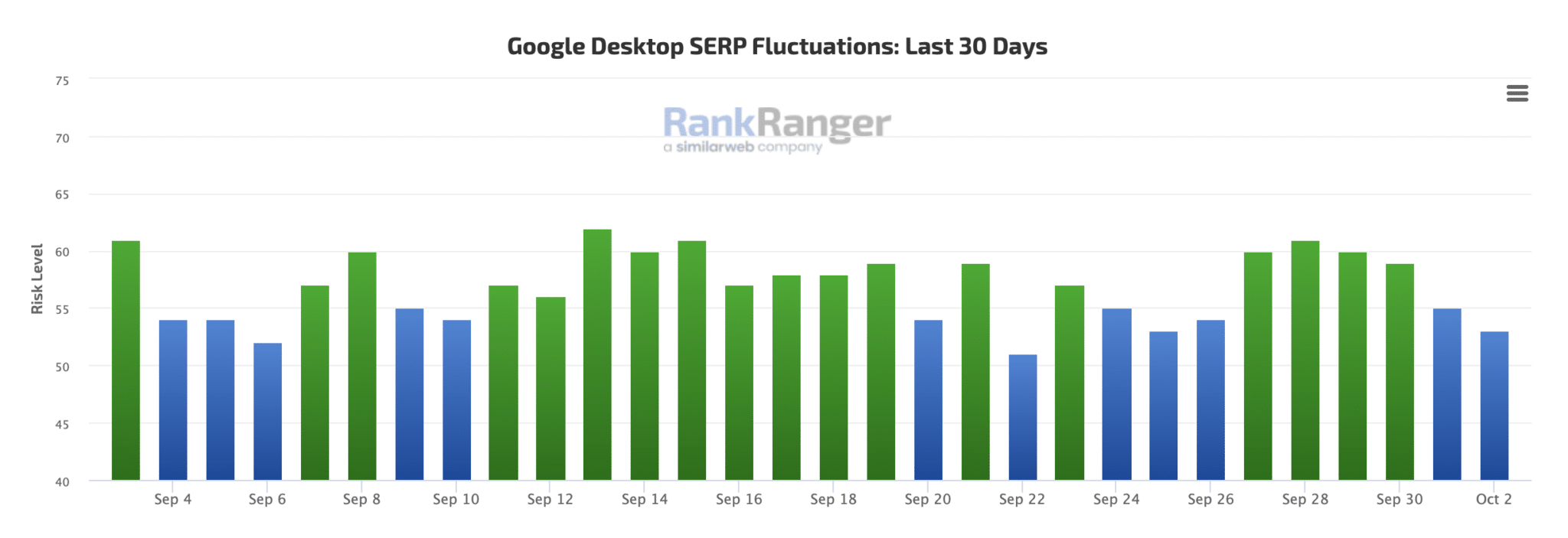
RankRanger. The folks at RankRanger showed a typical trend with its Rank Risk Index, showing calming after the update started to roll out:
RankRanger’s team is a bit delayed in sending me their data but I will update this story once I receive it.
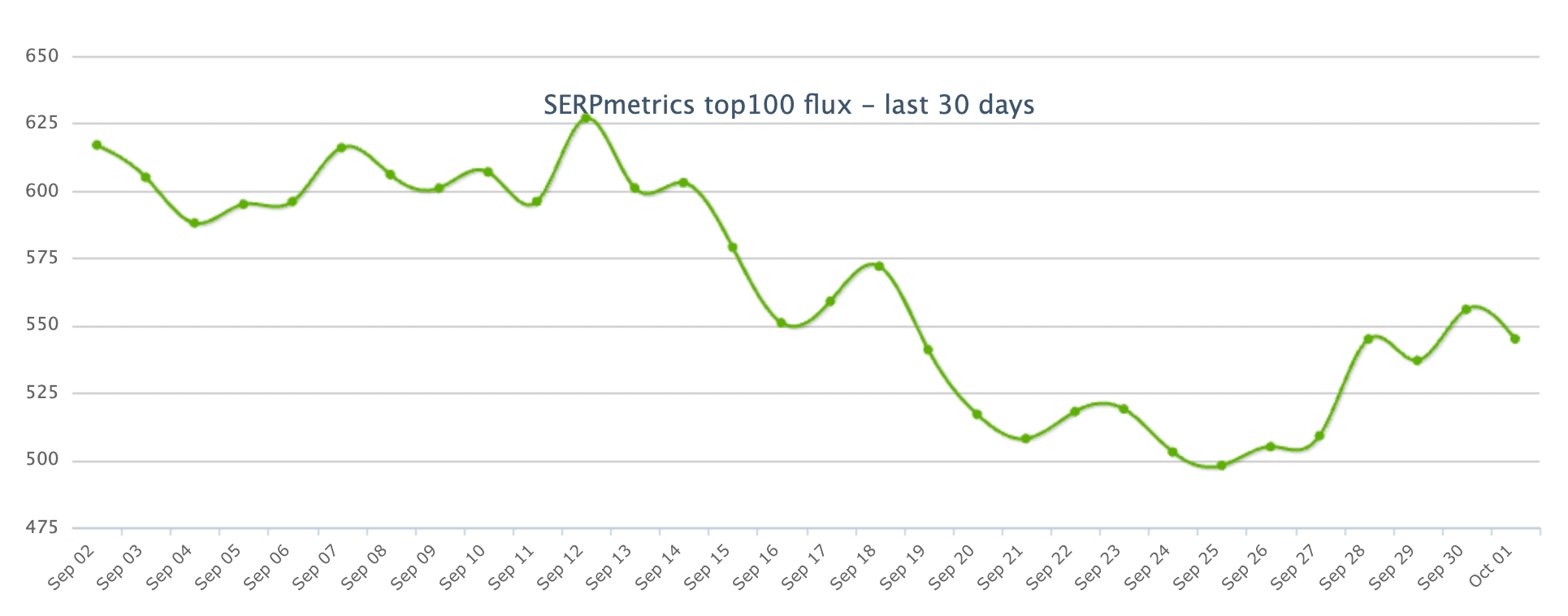
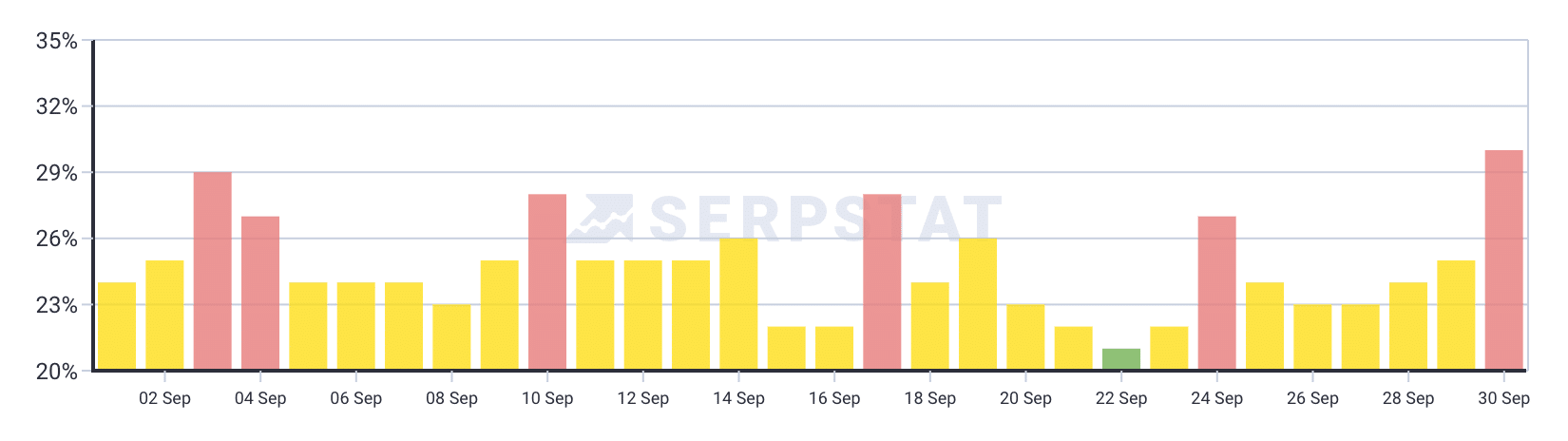
Other tools. While the other tools did not send me data, many have dashboards that show volatility changes to the search results. Here they are:
I asked Glenn Gabe, SEO Consultant at G-Squared Interactive, to provide some examples of sites that saw declines due to this last helpful content update. For privacy reasons, he did not share the specific names of the sites but he did share anonymized data of two sites that saw big declines in their Google search visibility due to this update.
Here are those charts:
ANYONE ELSE?
My personal opinion. I believe this update targeted SEO-first, or search engine-first, content. I covered a lot of the industry “chatter,” the noise within the SEO industry, over the course of the update. My stories have hundreds of comments, including over 270 comments here, 170 comments here, 200 comments here, 235 comments here and 225 comments here and growing. The industry chatter on my site, in the forums and on social is really heated. In my opinion, it is more heated than even a core update.
It reminds me of when Google released the Penguin update that ravished the link-building SEO industry overnight. To be fair, it was not as devasting as that but it was pretty harsh. Maybe you can equate this more closely to the Panda update that target more content-related techniques. But this update seemed to go after content that was written for ranking in search.
It’s worth repeating, this is not to say that there was not collateral damage, and good, helpful sites, did see a drop in traffic related to the helpful content update.
And this makes sense, this update was originally aimed to target content written only to rank well in search engines. ogle’s helpful content system specifically targets “content that seems to have been primarily created for ranking well in search engines rather than to help or inform people,” as we covered earlier.
This algorithm update aims to help searchers find “high-quality content,” Google told us. Google wants to reward better and more useful content that was written for humans and to help users.
Searchers get frustrated when they land on unhelpful webpages that rank well in search because they were written for the purpose of ranking in search engines. This is the type of content you might call “search engine-first content” or “SEO content.”
Google’s helpful content algorithm aims to downgrade those types of websites while promoting more helpful websites, designed for humans, above search engines.
Google said this is an “ongoing effort to reduce low-quality content and make it easier to find content that feels authentic and useful in search.”
What to do if you are hit. Google has provided a list of questions you can ask yourself about your content. Read through those questions as we posted over here, and in an unbiased manner, ask yourself if your content is in sync with this update.
Please note if this update has hit you, it can take several months to recover if you do everything right and make changes to your content over time.
Dig in, see what content and website improvements you can make to your site and start now. This is a process that can take months and months and hopefully in the next several months you will see improvements.
Managing resources is not just a buzzword; it’s the cornerstone of organizational success.
But sometimes, the constant juggling act between overworked and underutilized team members can be exhausting. The key to successfully managing resources is a seamless workflow that maximizes output while keeping your team balanced and motivated.
Join Chris O’Neal, Adobe’s expert on resource management strategy and learn how to unlock your team’s potential.
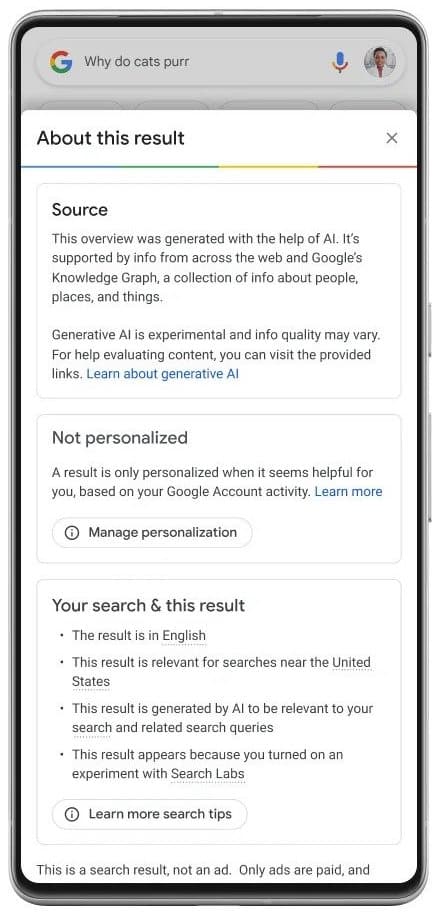
Google today is adding its About this result feature to the AI-generated answers in the Search Generative Experience (SGE).
What it does.About this result is meant to “give people helpful context, such as a description of how SGE generated the response, so they can understand more about the underlying technology,” according to Google.
What it looks like. Here’s a GIF showing how this feature works:
In this example, the description says:
“This overview was generated with the help of AI. It’s supported by info from across the web and Google’s Knowledge Graph, a collection of info about people, places and things. Generative AI is experimental and info quality may vary. For help evaluating content, you can visit the provided links.”
For individual links (soon).About this result will “soon” be added to individual links in Google SGE as well. Here, the purpose will be to give people more information about webpages that backup the SGE answers.
About About this result.Google launched About this result in Search in 2021. It was meant to help searchers learn more about a search result or search feature.
Why we care. While it’s felt like a struggle for Google to cite its sources in SGE and Bard, this highlighting of webpages and content seems like another positive step for highlighting the source from which Google is generating its AI answers.
Targeted improvements in SGE. Google is also working to reduce AI-powered responses that validate “false or offensive premises” in SGE. A “false premise” query is inaccurate or factually incorrect and something Google has worked to reduce in featured snippets. According to Google:
“We’re rolling out an update to help train the AI model to better detect these types of false or offensive premise queries, and respond with higher-quality, more accurate responses. We’re also working on solutions to use large language models to critique their own first draft responses on sensitive topics, and then rewrite them based on quality and safety principles. While we’ve built a range of protections into SGE and these represent meaningful improvements, there are known limitations to this technology, and we’ll continue to make progress.”
We have the solutions you need, whether you want to design a peaceful corner on your patio or turn your backyard into a private refuge. We’ll walk you through several suggestions that may offer you the seclusion you want, from natural privacy screens to fashionable fence choices. Let’s dig in and learn how to transform your outside area into a personal haven.
Privacy Garden
To establish a natural privacy barrier in your outdoor space, carefully choose and install tall plants, hedges, or trees. These green features give you solitude and enhance the beauty and natural feel of your surroundings. It includes decisively establishing trees, bushes, and other plant life to make a characteristic boundary that hinders the view from the outside. You can look over various thick and tall plants, like bamboo, evergreen trees, or tall grasses. These plants give protection and add magnificence and a feeling of serenity to your outside region. Furthermore, it can draw in birds and natural life, establishing a tranquil and peaceful climate.
Indoor Shades
Using outdoor shades or blinds is an excellent approach to managing privacy in your outdoor environment. You may alter them so that they obstruct the outside view while still letting light through. Select the ones that best suit your aesthetic choices, because they are available in various forms and materials.
Outdoor Privacy Screens
To improve privacy in your outside environment, outdoor privacy screens might be a great choice. Outdoor privacy screens can be built in various ways, including freestanding or linked to pre-existing structures like fences or pergolas. They are often composed of materials like wood, metal, or vinyl. They enhance the look and utility of your outdoor space while offering a physical barrier that prevents the view from the outside. You may pick from various styles and sizes to meet your unique requirements and tastes. The outdoor privacy screens are a unique and practical way to keep your outdoor space private, whether you choose a colorful design or a more solid panel.
Construct a Live Wall
A living wall is a trellis or vertical garden covered in climbing plants. In addition to increasing privacy, it also produces a breathtaking visual spectacle. The wall may be covered with climbing plants like ivy, jasmine, or bougainvillea to provide a backdrop of rich greenery.
Decorative Screens
You may strategically use decorative wood, metal, or bamboo screens to obstruct views and improve seclusion in your outdoor space. These screens are available in various styles and patterns, allowing you to add some flair.
Bottom Line
In conclusion, many original techniques exist to increase privacy in outdoor areas. Depending on your tastes and requirements, you have options ranging from ornamental screens to outdoor privacy screens. These enhancements provide your outdoor space elegance and utility in addition to seclusion. You may design a private retreat that showcases your distinctive taste, whether you choose a sturdy privacy screen or a decorative barrier. So, go ahead and use your outside area creatively!





























 Method