How to create and execute a buyer journey-based content strategy

Few buyer journeys start and end with clicking a giant “buy now” button at the top of a homepage or product page. A great blog alone won’t be enough to turn subscribers into buyers if the benefits of what is being sold aren’t crystal clear. 

The average user spends most of their journey in the messy middle of the consideration stage, making it the trickiest stage to get right and often the most neglected.

Follow the tips below to create and execute a symmetrical buyer journey-based content strategy.

What makes a winning content strategy?

A winning content strategy relies on an honest assessment and comprehensive understanding of four interdependent components:

  • Your end goal
  • Your audience
  • Your product
  • Your resources

Your editorial and content calendars should combine these four components to guide users through all stages of their decision-making process.

Know your end goal

You might be writing into the void without knowing what you hope to achieve. Up to 80% of successful content marketers say they have a documented content strategy. 

You may have several goals, but setting a single overarching SMART goal linked to a specific buyer journey stage will pull your ideas together during the keyword research phase and prevent your team from writing in circles. 

Keep your smaller goals close at hand, though, because they will often ladder up to your larger goal. Content marketing is one of the best investments your business can make because a successful content hub is a gift that keeps giving.

Some content goals you might want to consider include:

  • Increasing online visibility (awareness)
  • Driving more organic traffic (awareness)
  • Increasing engagement rate (consideration)
  • Improving lead quality (consideration)
  • Increasing conversion rate (decision)
  • Generating more revenue (decision)

The goals outlined above are Specific, Measurable, and Attainable. How Realistic they are depends on your target result (i.e., the percent or number you’re using to define success) and your Timeline. 

Your timeline will vary based on your initiative (goals related to product launches and seasonal trends will have shorter timelines), but always remember that content marketing – especially SEO – is a long-term strategy, not a short-term sprint. 

Quarterly goals might be appropriate for paid advertising, but 6-12 months is a more realistic timeline for SEO.

Know your audience

The most important qualifier of your content’s popularity will always be your audience, which is why creating buyer personas is essential to any marketing strategy. 

A well-crafted buyer persona should include:

  • Basic demographic information like profession, age range, location, and gender.
  • Personal values and sociopolitical motivators.
  • Hobbies, interests, and lifestyle choices.
  • Research habits and preferred sources of information.
  • Motivations and pain points.
  • Paths to purchase and potential deterrents.

Basic demographic information can probably be gleaned from your sales data, but connecting all the puzzle pieces that make up your buyer personas will likely require additional research. 

Look for trends in customer survey answers, social media replies, industry forum discussions, and comments left on review aggregator websites.

Resist the urge to use competitor data in this stage. Tools like Semrush or Ahrefs provide valuable insight into user search behavior but make it too easy to overlook the user needs your competitors aren’t meeting.

Don’t assume your competitors have all the answers. You might notice some overlap between your target audience and your nearest rival’s, but your buyer personas should never be exact replicas of a competitor’s.

Know your product

Connecting the unique features of your brand, product or service to your audience’s unique challenges, goals, and values is the crux of a successful content marketing strategy. 

Theoretically, knowing your product should be the easiest part of the equation, but you’d be surprised how easy it is to leave an important stone or two unturned, such as how your product aligns with your audience’s values. 

In a market where 50% of Gen-Zers and 40% of millennials say they’re more likely to purchase from companies who take a stance on social issues like racial justice, LGBTQ+ rights, gender inequality, and climate change.

Something as small as how you package your product or the causes you support on social media can influence buyers to choose you over your competitors.

To ensure you realize your brand’s full potential, collaborate with your team on a “features and benefits” list. 

Highlight any features that set your solution or brand apart from other potential solutions or brands. This exercise might uncover previously unconsidered aspects of your buyer persona. 

Your keyword research process will run a lot smoother if you approach it with a firm grasp of what makes your product special.


Get the daily newsletter search marketers rely on.

<input type="hidden" name="utmMedium" value="“>
<input type="hidden" name="utmCampaign" value="“>
<input type="hidden" name="utmSource" value="“>
<input type="hidden" name="utmContent" value="“>
<input type="hidden" name="pageLink" value="“>
<input type="hidden" name="ipAddress" value="“>

Processing…Please wait.

function getCookie(cname) {
let name = cname + “=”;
let decodedCookie = decodeURIComponent(document.cookie);
let ca = decodedCookie.split(‘;’);
for(let i = 0; i <ca.length; i++) {
let c = ca[i];
while (c.charAt(0) == ' ') {
c = c.substring(1);
}
if (c.indexOf(name) == 0) {
return c.substring(name.length, c.length);
}
}
return "";
}
document.getElementById('munchkinCookieInline').value = getCookie('_mkto_trk');


Keyword research tips for connecting your product with your audience

If you’re using a tool like Semrush or Ahrefs for keyword research, you might find the list of suggested keywords overwhelming and struggle with keyword mapping. 

The majority of digital marketing teams work from a single source of truth via a giant keyword master list. 

This method is great for topic ideation and brainstorming, but I find doing separate keyword research for each stage of the buyer journey makes it easier to eliminate irrelevant keywords and narrow the strategic focus. 

Alternatively, you can filter your existing master list using the suggestions outlined below.

Awareness stage: ‘I want to learn’

Awareness stage user behavior and research needs

In the awareness stage, users are seeking educational content. They have a question, and if you provide the best, most relevant answer, they’ll consider you and your business a potential solution. 

To reach users in the awareness stage, speak to their pain points, help them understand their experiences, and connect your brand story to their values.

Using your chosen keyword research tool, filter your keywords by informational intent for a broad overview of potential user issues and questions. 

If you have a hefty keyword list and simply filtering by informational intent isn’t getting you the results you’re hoping for, try narrowing your keywords based on the type of solution-seeking language you’ve assigned to the buyer persona you want to target. 

Keyword research for the awareness stage

Some popular user queries in this stage might include words like:

  • How to
  • Issue
  • Troubleshoot
  • Resolve
  • Improve
  • Prevent
  • Learn
  • Examples
  • How
  • Why
  • Guide
  • Tips
  • Ideas
  • Tutorial
  • Resource

Best content formats for the awareness stage

  • Blog posts
  • Social media posts
  • Thought leadership content
  • Infographics
  • Videos
  • Ebooks
  • Any format likely to be shared on social media 

KPIs for an awareness stage strategy

  • Pageviews
  • Referral traffic

CTAs for the awareness stage

  • Social media share requests
  • Invitations to subscribe

Consideration stage: ‘I want to solve’

Consideration stage user behavior and research needs

By the time a user reaches your consideration stage, they’ve already identified their problem but are weighing the pros and cons of various solutions, yours being a potential option. 

In this stage, your objective is to leverage what you’ve already learned about your users during the awareness stage to simplify their research process with personalized, brand-specific content proving your solution is the best.

The consideration stage is often the make-or-break stage for brands. Hopefully, you’ve already convinced your audience of your expertise, authority, and trustworthiness. 

Now, you need to convince them your product best fits their budget, needs, and values. 

Filtering your keywords by commercial intent will help you identify consideration stage keyword themes and topics. 

Looking into navigational intent keywords, or keywords related to your brand name or specific pages of your site, might also uncover some truths about what users think they know about you as well as pages they’d like to see that may not exist yet.

Keyword research for the consideration stage

Queries in this stage might include modifiers like:

  • Solution
  • Software
  • Providers
  • Service
  • Tools
  • Best
  • Top
  • Comparison
  • Pros and cons
  • Strengths and weaknesses
  • Benefits
  • Features
  • Risks
  • Reviews
  • Affordable
  • Cheap

Best content formats for the consideration stage

  • Case studies
  • Newsletters
  • Podcasts
  • Webinars
  • Whitepapers
  • Product reviews
  • Comparison guides
  • Assessments
  • Video tutorials
  • Any data-based proof or live demonstration of product features and benefits

KPIs for a consideration stage strategy

  • Pricing page clicks
  • Demo requests

CTAs for the consideration stage

  • Sign up for a free trial or request a demo
  • Any CTA that exchanges valuable content for customer information (e.g., “Fill out this form to get your free eBook”)

Decision stage: ‘I want to buy’

Decision stage user behavior and research needs

Users in this stage are aware of their problem, have researched potential solutions, and have (hopefully) added your product to their short list of options. Thus, your objective is to seal the deal. 

You might notice a slight overlap between consideration and decision-stage content. This overlap is normal as, technically, users in the decision stage are still considering a few different products or service providers.

To find decision-stage keywords, you’ll want to filter by transactional intent.

Keyword research for the decision stage

Some queries to try for this stage might include words like:

  • Purchase
  • Buy
  • Coupon
  • Pricing
  • Price
  • Shipping cost
  • Specific product and model numbers
  • Sale
  • Clearance
  • Near me

Best content formats for the decision stage

  • Vendor comparisons
  • Customer ratings and reviews
  • Case studies
  • Product FAQs
  • Pricing pages
  • Buyer guides and how-tos
  • Promotional offers

KPIs for a decision stage strategy

CTAs for the decision stage

  • Get a coupon or discount code
  • Get an estimate or quote

Know your resources

As you can see, your content options are endless. However, assessing your options, choosing the right formats and distribution channels for your audience, and assigning responsible parties for each step in your workflow are all vital parts of content strategy. 

Realistically, a small content team might not have the required skills, time, and resources to successfully cover every format on the list. No matter how big your team is, you should look to your buyer personas for answers about what distribution channels to focus your energy on.

Once you’ve picked your channels, a winning formula for your editorial calendar might look something like this:

  • Daily: Share something on your social media platform of choice – customer testimonials, upcoming events, industry news, photos from a company event, etc. 
  • Weekly: Create a new short- to medium-length blog post, video, or other type of low-lift content. Alternatively, you can recycle evergreen content.
  • Monthly: Create a longer blog post, webinar, or podcast.
  • Quarterly: Add a whitepaper, case study, research paper, or ebook to your website.
  • Annually: Share a broadcast of an industry conference, a roundtable discussion with your executives, a longer video about product or subscription benefits, or a “state of the industry” report.

Your content strategy may be on the leaner side than what I’ve outlined above. Regardless of how you approach creating a content calendar, you should always try to plan your content at least a month in advance.

Be open to making changes based on performance or current events, and publish on a regular cadence so users know what to expect.

Putting it all together: A content calendar for the buyer journey

Lopsided content strategies are common in both the B2B and B2C verticals. 

B2B brands tend to focus too much on decision-stage content without letting users get to know their story and values. 

B2C brands tend to rely heavily on reaching users in the awareness stage but struggle to keep their audience interested as they move from researching answers to researching solutions.

Consistency is the easiest way to streamline your content calendar and ensure you hit users at each touchpoint in their journeys.

For example, maybe you decide to focus on blog posts, videos, and podcasts. You’ll want to write a new blog post every Monday, launch a new podcast every Tuesday, and upload a new video every Friday. 

You know your primary user base exists on LinkedIn and Facebook, but you’ve also had some success reaching them on Instagram and YouTube. You figure Instagram and YouTube might be good places to share coupons and promo codes with the potential to also grow your user base.

To keep users engaged, you should plan to share different content formats tailored to different buyer journey stages on different distribution channels around the same time each week. 

Following this format, a business week in your content calendar might look something like this:

  • Monday: Share awareness stage blog post on LinkedIn.
  • Tuesday: Share consideration stage podcast on Facebook.
  • Wednesday: Share decision stage promo code on Facebook, Instagram, and LinkedIn.
  • Thursday: Share awareness stage blog post on Facebook and consideration stage podcast on LinkedIn.
  • Friday: Share awareness stage video (with included decision stage promo code) on YouTube and Facebook.

Content strategy isn’t an exact science. Monitoring and tweaking yours over time will ultimately be the key to growing your brand. 

For more tips and tricks on crafting a balanced content strategy, check out this content mapping guide.

The post How to create and execute a buyer journey-based content strategy appeared first on Search Engine Land.

Original source: https://searchengineland.com/buyer-journey-based-content-strategy-428331

Local SEO in 2023: 5 simple ways to dominate local search

When it comes to local SEO, it’s more important than ever that you optimize your on-site and off-site SEO strategies for clients and customers searching for your local business.

Local competition is hotter than ever, and if you’re not on top of your rankings, you can bet your competitors are.

Here are five local SEO tactics you can use to help your business rank higher for local search terms.

1. Title and description tags still matter

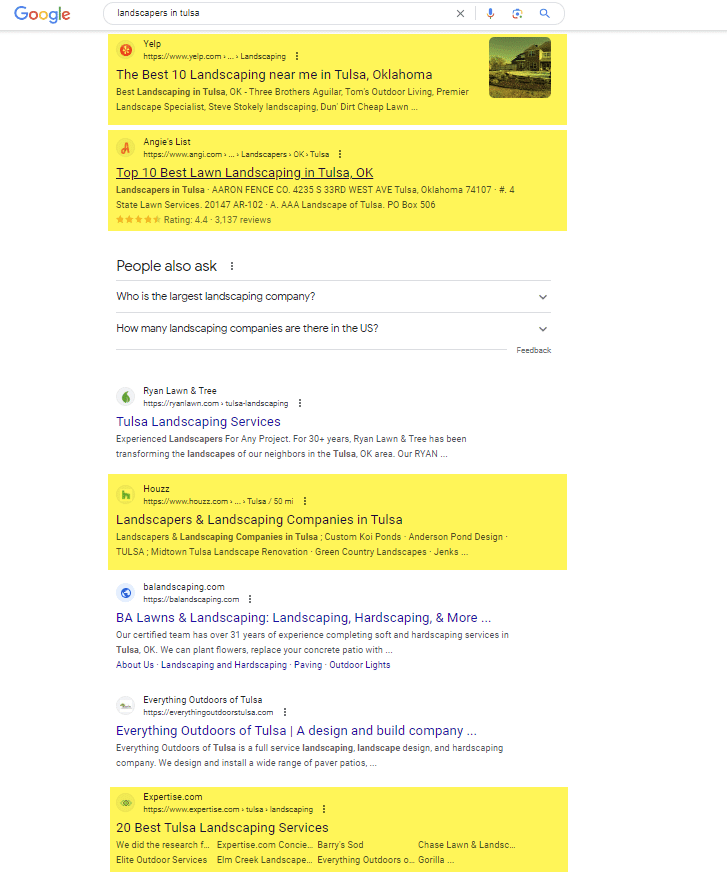
Title and description tags are HTML elements that you can customize to reflect the content of your web pages. The text of your title and description tags is displayed in search results.

Think of this text as a “mini-ad” that you need to craft carefully.

Title and description

Your title and description are your one shot at grabbing a searcher’s attention and getting them to click on your links to go to your website – so put careful thought into what you put in these areas on your web pages.

If your title and description tags are missing or Google thinks they’re not good enough, Google often makes something up or “rewrites” them.

Both should describe the contents of the page and should include keywords so they stand out on the search result pages. 

The generally acceptable length for title tags is approximately 50 to 60 characters, and description tags can be approximately 160 to 200 characters. Take advantage of this space and use it wisely.

If you’re not sure how your title and meta description tags will look or how many characters you can get away with, try using an emulator like Yoast’s SEO Plugin for WordPress, where you can see what your title and description will look like on both a mobile device and desktop:

Yoast title description

Writing titles and descriptions is considered an art in the SEO world.

In a sea of competing search results, if this text isn’t unique, compelling and descriptive, your click-through rate will suffer (which can hurt your rankings).

Additionally, extra words or characters could cut off your text with ellipses (…). 

Now, this may not be a true tragedy. Some SEOs even encourage you to go over the recommended max character count. But I think this looks unprofessional, especially when it appears in the middle of a sentence, cutting off your thoughts mid-sentence.

Truncated

The lesson? This space is precious, and every character counts. Here are some tips:

  • Never waste space on page names or words that don’t provide helpful information to the searcher about what your web page – or business – is about.
internet marketing
  • If you want to stand out to local customers, include the name of the city your business is in and/or the area your business serves (e.g., “Serving Iowa City and Cedar Rapids”).
  • Focus on using one targeted keyword and carefully place that keyword as close to the beginning of the tag as possible.

Remember, if your business shows up in the search results, you have one shot at getting that person to click on your link.

Don’t blow it by wasting characters that won’t help convince a searcher your site is worth visiting.

2. Google Business Profile: Claim and optimize

Google Business Profile (GBP) is one of the best local SEO strategies for local businesses that meet with customers face to face.

If your business qualifies for a GBP listing, you need to claim and optimize your Google Business Profile. (It’s one of the best ways to get your company to rank high on Google!)

google-business-profile

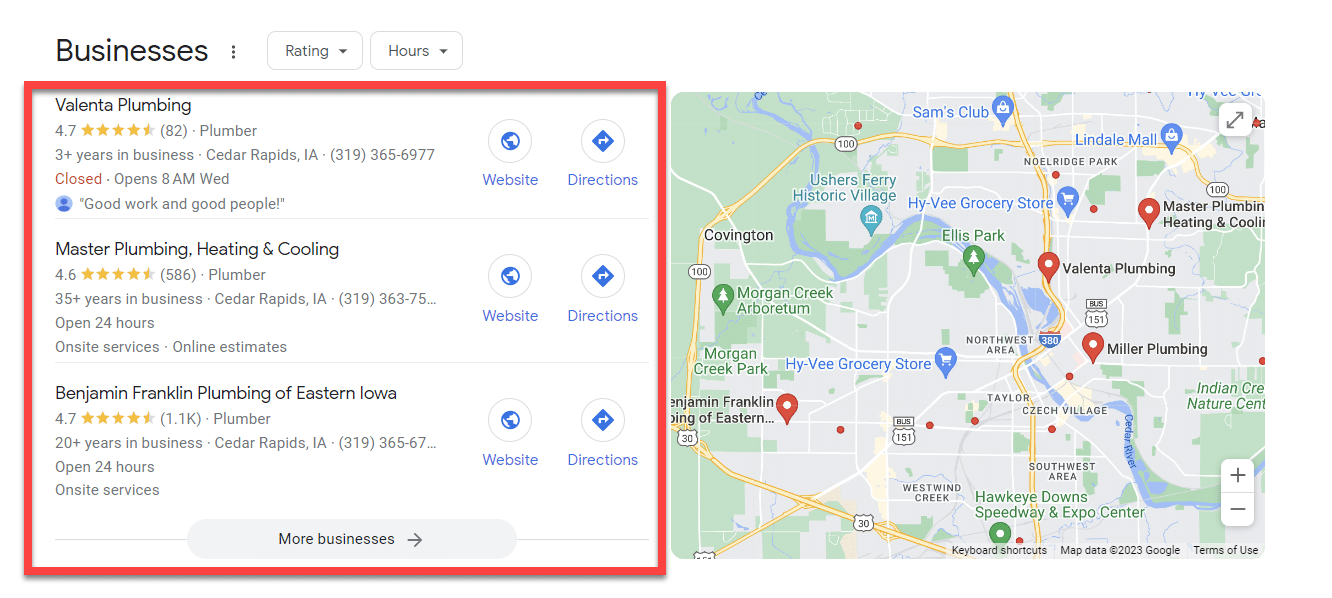
Google Business Profile is free, and your business can get incredible exposure if you’re optimized enough to show up in Google’s local three-pack:

google-local-3-pack

To claim your Google Business Profile listing, visit google.com/business. There’s a claiming and verification process you’ll need to go through. 

This verification process is necessary because Google wants to confirm that your business is a legitimate, real company. The business owner should claim the GBP listing.

If you’re working with a digital marketing agency on your SEO efforts, you can grant them permission to be a manager of your Business Profile. That way, you remain in control of your profile if you end your relationship with the agency.

The next step is to optimize – and continue to improve – your GBP listing by:

  • Selecting categories.
  • Adding business hours.
  • Writing a solid description.
  • Uploading photos and videos.
  • Creating posts.
  • Answering questions potential customers ask.
  • Replying to reviews you receive and so on.
  • Include any products or services you sell.

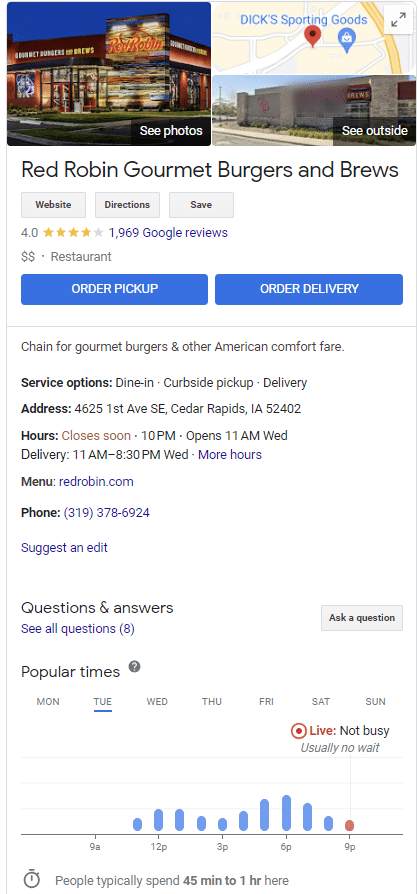
Google Business Profiles/Knowledge Panels are full of information about your business, so make sure you fully populate every relevant section to complete your Google Business Profile. 

Gbp-listing

Get the daily newsletter search marketers rely on.

<input type="hidden" name="utmMedium" value="“>
<input type="hidden" name="utmCampaign" value="“>
<input type="hidden" name="utmSource" value="“>
<input type="hidden" name="utmContent" value="“>
<input type="hidden" name="pageLink" value="“>
<input type="hidden" name="ipAddress" value="“>

Processing…Please wait.

function getCookie(cname) {
let name = cname + “=”;
let decodedCookie = decodeURIComponent(document.cookie);
let ca = decodedCookie.split(‘;’);
for(let i = 0; i <ca.length; i++) {
let c = ca[i];
while (c.charAt(0) == ' ') {
c = c.substring(1);
}
if (c.indexOf(name) == 0) {
return c.substring(name.length, c.length);
}
}
return "";
}
document.getElementById('munchkinCookieInline').value = getCookie('_mkto_trk');


3. Online reviews matter

Up to 84% of people trust online reviews as much as personal recommendations, according to BrightLocal’s 2023 Local Consumer Review Survey,.

Online reviews are like gold to a business – especially when they are 5-star reviews. Generally, you want at least ten 5-star reviews on your Google Business Profile. But your goal is not to stop there.

You want to continually ask your happy customers to leave reviews. Why? Online reviews are a known ranking factor – so getting great reviews should be one of your top priorities!

“High-quality, positive reviews from your customers can improve your business visibility and increase the likelihood that a shopper will visit your location,” Google states.

Two places where you should focus on getting reviews are your Facebook page and your Google Business Profile. These are big ones.

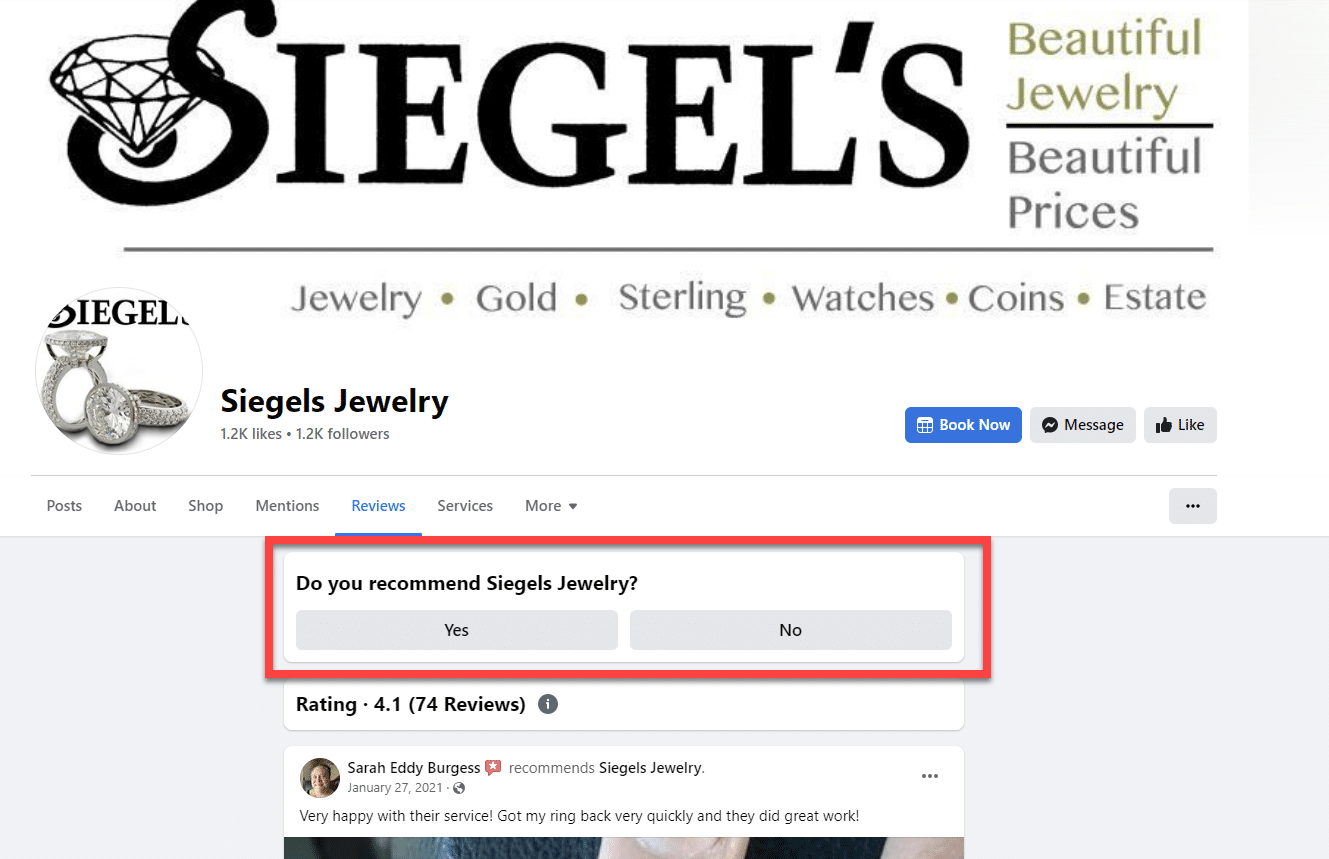
Many people turn to social media to see what their friends and family think about a business, so having good feedback on your business’ Facebook page can help draw prospective customers.

Getting positive reviews on your Google Business Profile is crucial because these reviews show up on Google when someone searches for your business.

Facebook-reviews

Whenever a review is left about your business, positive or negative, be sure to respond to it. That shows other people reading the reviews that you, the business owner, care what your customers think.

You can use several reputation marketing software and tool options to track, manage and proactively try to get reviews. Here are some to check out:

  • GatherUp
  • TrustPilot
  • Vendasta

4. Build out separate service pages

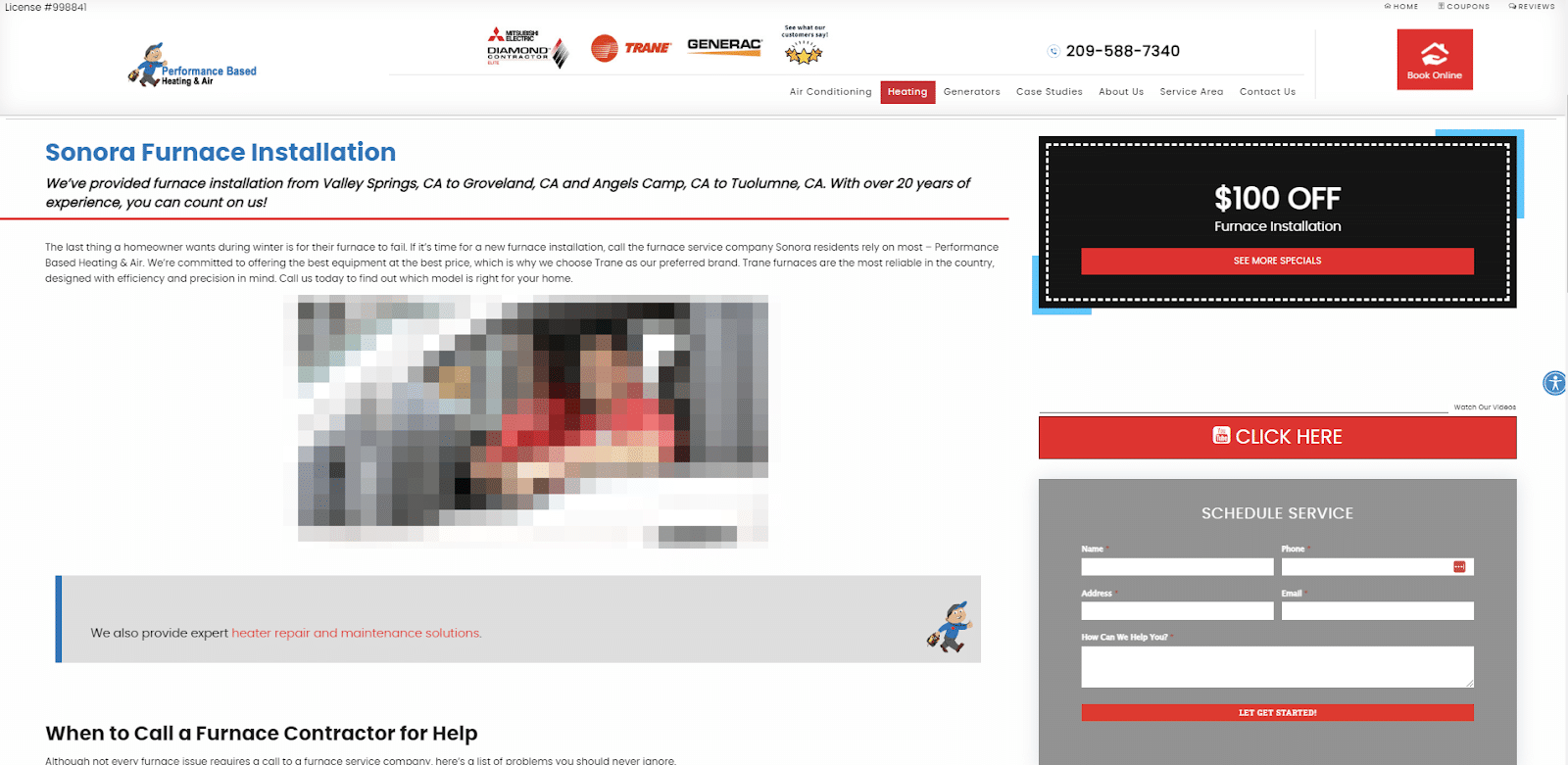
If you run a service-based business, one of the best things you can do is build out individual pages for each service you offer instead of just putting a list of your services on one page.

Create-service-page

Creating service pages allows you to optimize for the location you’re targeting and for keywords associated with the specific service you offer in a much more targeted way.

Individual-service-pages

Instead of a line list or only having a short paragraph on a “Services” page, you have an entire page to talk about each service that you offer which means you have more content and ways to optimize the text to serve better your readers and Google (for SEO purposes).

So spend some time creating individual pages for each service that you offer – even if you only have time to create the pages one at a time. It will be worth it in the end. I promise!

5. Online directories and citations

It’s important that you get your business listed correctly and consistently on top online business directories (a.k.a.; citations), like Yelp, Facebook, Merchant Circle, Citysearch and others.

Why? Because online directories often show up high in organic search results.

If your business isn’t listed on these directories, when a potential customer clicks on those links in search results, they won’t find your business’ information.

Online-directories

You will also want to try and find high-quality local directories to get your business listed.

Check with your local newspaper’s website and your Chamber of Commerce to see if they have a local business directory you can get listed on.

You can also search for keywords like “[your city] directory” to find other local citation sites or directories.

It’s also essential to get your business’s name, address and phone number (NAP) on the major citation data aggregators like Foursquare, Data Axle and Neustar Localeze.

Data aggregators take your company’s information and distribute it to hundreds of other online directories!

Always ensure your company’s NAP is consistent on as many of these directories and citation sites as possible.

These five local SEO strategies are just the tip of the iceberg regarding local SEO. Implementing the five local search tactics above will give you a head start on your competition. Get started today!

The post Local SEO in 2023: 5 simple ways to dominate local search appeared first on Search Engine Land.

Original source: https://searchengineland.com/local-seo-dominate-local-search-this-year-428339

Free outdoor cinemas launch in London and Edinburgh this month

Free open-air cinemas launch in London and Edinburgh this month

Is there anything better than chilling with your friends in the sun, having a picnic and basking in the heat? Well, now there is. Just add your fave movie into the mix, and you’ve got a new summer hangout. 

When you envision the cinema, you picture sitting in the dark, popcorn being crunched around you, and total silence expected for the duration. Now, however, you can add summer vibes to seeing a film – and it’s free! 

London 

Cinema business Everyman, known for their unique take on the movie experience, is bringing back their annual open-air cinema to London. This year, it’ll be on the Ghat Steps in King’s cross.  

Everyman strives to redefine cinema, bringing an exciting approach to venues across the UK. You can swap your soft drink for a cheeky glass or red and get freshly made pizza served to your seat. Sounds lush, right? 

So, it’s not surprising the company is here to bring you their warm and friendly atmosphere – al fresco. 

And what’s tastier than pizza and wine? Well, the fact that it’s free, running from 22nd June to 6 August. Showings are spread across the day – at 1pm, 3pm, 5pm and 7:30pm. Plus, there’s such a fab range of showings, including the Hunger Games, Romeo + Juliet and Cool Runnings. Get the gals together and settle down for a sun-soaked viewingk of The Devil Wears Prada. 

It’s also un-ticketed – so turn up whenever you desire. The event, named ‘Screen on the Canal’ is expected to be a huge hit. So, try and get there early to secure a good viewing spot. 

Sports fan? Everyman will be showing Wimbledon on a separate screen from 3rd to 16th July. Result! 

So, grab a summer cocktail, get your friends together and enjoy. 

Scotland 

In Scotland, the capital will soon become home to a similar event for three days from 23rd to 25th June. Square Cinema will give you the chance to watch your favourite blockbusters – both new and old – in the joy of the sun. 

Choose from music-based biographical films like Elvis and Rocketman, or catch Tom Cruise doing his thing in action-packed Top Gun: Maverick. If you fancy a cult classic, Dirty Dancing is the one for you. 

Catch Mean Girls on the big screen, or sing along to Encanto or Roald Dahl’s Matilda The Musical. Bring in your own picnic and enjoy with the whole family. If you fancy, you can even choose from a range of mouth-watering refreshments to keep you cool, with pop-up bars located in the grounds. 

As with the event in London – this is totally free! Launched in 2011, the free cinema in St Andrew Square Garden was created in partnership by Essential Edinburgh and Unique Events, to bring film lovers into the city centre to celebrate the capital’s rich culture and creativity. 

Listed below is the full programme of films across the three days:

Friday, June 23 

  • 4:30pm – Mean Girls 
  • 6:45pm – Back to the Future 
  • 9:05pm – Dirty Dancing 

Saturday, June 24 

  • 11am – Encanto 
  • 1:05pm – Wizard of Oz 
  • 3:15pm – Hairspray 
  • 5:35pm – Elvis 
  • 8:45pm – Rocketman 

Sunday, June 25 

  • 11am – Lyle, Lyle Crocodile 
  • 1pm – Roald Dahl’s Matilda The Musical 
  • 3:30pm – Local Hero 
  • 5:50pm – Dr Strange in the Multiverse 
  • 8:30pm – Top Gun – Maverick 

More information can be found on the Square Cinema website here. 

The post Free outdoor cinemas launch in London and Edinburgh this month appeared first on MoneyMagpie.

Original source: https://www.moneymagpie.com/make-money/free-outdoor-cinemas-launch-in-london-and-edinburgh-this-month

How to Make Money on Social Media

Social media is the most powerful marketing tool around now, and it can be pretty lucrative. It’s had a great deal of influence in changing the way we shop, and continues to play a massive part in how people make money online.

The Influencer Marketing Hub is a very useful tool for anyone who monetises their social media. Their 2020 Benchmark Report proved just how big social media marketing is. According to the report, the influencer marketing industry is set to grow to approximately $9.76 billion in 2020. And not only this, but now 300% more micro-influencers are utilised by large companies than in 2016. This paves the way for future influencers and enables more people to utilise their social media to generate an income.

Sell your own products and services

Sell your products and services on social media for extra money

According to research at Smart Insights, 30% of consumers say they would happily make purchases directly through social media platforms. While 87% of e-commerce shoppers believe social media helps them make a shopping decision. So, if you’re not using social media to sell and promote your products and services, you’re missing out on a massive potential market!

There are plenty of helpful tools out there, like Hootsuite, to help manage selling on social channels. Through their service you can track, manage, and schedule your social channels all in one place. They help you see what type of content, and on which platforms, your audience engage with most. The more you know about your audience demographic and their tastes, the easier it becomes to sell to them.

Bear in mind that most of these tools are paid-for services, although you can usually get a 30-day free trial to test them out first.

If you’re thinking about setting up an online shop, check out our article here for tips on getting started.

Key considerations for selling online

  • Matching your social strategy to your audience. Who is your main customer? A teenager or working professional? Depending what your demographic is will largely determine how you market and sell your products and services.
  • Create the right content, at the right time. Statistics show that across all social media platforms, posts that include visuals consistently perform better and see more engagement than those without. However, posting too frequently, or even not enough, is damaging and will drive customers away.
  • Connect everything back to your business. A relationship with your audience is essential – sales rarely occur on first contact, but normally several times later. Your audience need to trust you and you need to listen to them. When you do this, you’ll be in a better position to provide your audience with what they need, and when they need it.

Make money from affiliate links

Make money on social media with affiliate marketing

Affiliate links are a popular way to make a bit of passive income. They’re cheap and easy too, as you don’t need to create and sell a product yourself. You just need to establish a connection between the buyer and seller, and then take a commission when a sale is made.

There are a few different ways you can set up affiliate links – one is through the Amazon Associate Programme. With this, you can earn up to 12% of all purchases made during the buyer’s shopping session. So even if someone clicks on your link, doesn’t buy that specific item, but ends up purchasing something else during that same ‘session’, then you’re still entitled to 12% of that.

ClickBank is another site with it’s own affiliate marketplace. They allow you to promote already best-selling products and earn commissions as high as 90% on some products. You have the option to pair with brands in various areas including arts and entertainment, e-business, and parenting and families.

How to promote affiliate links

Any promoting and selling on social media should come across as natural. No audience wants to feel like they’re constantly being sold to.

Reviewing a product is a legitimate way to link it into a post or blog. Summarise the pros and cons, giving a balanced opinion of it. You want your audience to trust you and selling them naff products is only going to damage your credentials.

Choose your affiliate links carefully and post them sparingly. Inundating your followers with affiliate links is counter-productive, they’ll more likely be put off and unfollow you instead. Promote a select few that you genuinely believe are worthwhile purchases and fit with your brand image, whether that’s fashion and beauty, or the latest gadgets.

Use promo codes

Plenty of influencers use discount and promo codes to make money. They work similarly to affiliate links where a commission is earned on the number of sales made with their code.

Almost anyone can get promo codes for brands, although you’ll probably have more luck the larger your following. When appealing for promo codes, make sure the brand is relevant to you, your content and your audience. Chances are they’ll be happy to offer you a code, as it comes at no cost to them. Simply, if they don’t make any sales from you, they don’t have to pay you any commission and they haven’t lost out.

How to approach brands

Brands are a big source of social media income and anyone with a following of 2000+ is considered a micro-influencer. Plenty of brands want to work with influencers now as it’s much more effective and cost-efficient for them than traditional forms of marketing, like magazines and TV ads.

However, knowing how to approach brands is key.

Steps on how to approach a brand

  • Do your research. Thoroughly research the brand, their mission statement, and any products you’re interested in. It comes across very poorly if you’re asking a brand for sponsorship but don’t know anything about them.
  • Check your social media. If you really want to be able to monetise your social channels – make sure you keep it on-brand and professional. Posts in the public eye need to be free of anything incriminating or potentially offensive. If brands spot any risky content they’ll be sure to steer clear.
  • Pitch Yourself. You need to be able to offer the brand something in return. Think about what your USPs are – what’s different about your content, or your audience, that makes this a worthwhile opportunity for them that they won’t find elsewhere.
  • Illustrate affiliation with the brand. Don’t send out a blanket email to every brand you get in touch with but demonstrate your knowledge and create a unique pitch every time.

Questions to answer when you pitch to brands

  • How relevant is your blog or social channels to the campaign subject matter?
  • How big is your following? What is the size of the potential audience the content will reach?
  • How regularly do you post on social media?
  • How engaged is your audience?

Another consideration for reaching out to brands is through agencies. There are actually several UK influencer marketing agencies that you can sign up for including Disrupt, Goat Agency, and Socially Powerful.

Tips on building a following (and selling to them)

Tips on building a social media following

Unfortunately, there’s no quick ways to instantly increase your following. There are plenty of false advertisements for this and whilst your follower count will increase, it’ll be made up of bots who won’t actually engage with your content or brand, completely defeating the purpose.

One way to build your network is to create daily, weekly, and monthly goals so from the outset you’re committed to a pace of engagement that will steadily grow.

Tiktok

TikTok has been the latest social media trend and is rapidly growing with over 800,000 logins every month. Although TikTok doesn’t currently have any direct money-making features, one of the key ways people are earning from it is by pushing their TikTok followers onto their other social media platforms, where they are able to make money. Some other users have even been organising sponsorship deals for things like wearing branded clothing or appearing at particular events in their videos.

At the moment most influencers using TikTok are compiling it as part of a general package rather than making lots of money off of it directly. Although only a few months ago TikTok announced its Creator Marketplace. It’s a site in which users can connect with advertisers to collaborate on marketing opportunities.

Users can also receive gifts from their audiences via TikTok Live videos. Hootsuite also have a super helpful guide on all the ways you can make money through TikTok. You can read it here.

Instagram

Instagram is a huge contributor to people making money on social media, with over 90% of influencer marketing campaigns involving the app.

Business profile

Instagram has the ability to change your personal page into a business profile. When you do this you get to view insights into engagement with your posts and stories, and also get the ability to set up an Instagram shop.

Instagram’s shoppable features allow businesses to tag products that are available for sale and allows customers to purchase them directly within the app.

On an Instagram business profile you need to include:

  • A photo or brand logo that’s recognisable and consistent across all your social platforms.
  • A well thought out bio. This is a chance to give customers a brief insight into you, your brand, and your business.
  • Link to your website. Unfortunately, Instagram doesn’t allow direct links in posts so the URL section of the bio is the only clickable link in your profile.

Run ads

The easiest way to run ads is by promoting posts you’ve already shared on Instagram. Simply select the post you want to boost and hit ‘promote’.

You have the option to create the audience you want to post to be shown to (choose across genders, age range, etc.) or you can leave it to Instagram who will automatically share it with a similar audience.

Ads also don’t have to cost a lot – they can start from as little as a couple of pounds. Initially you can just run an ad for a few days to test how well it performs. Although keep in mind that it takes a little work to get it right so if your first attempt doesn’t bring in tons of business, keep trying. Ideally, having a simple call to action button like ‘Shop Now’ makes it easy for someone to make a purchase. Overcomplicating it will put people off.

Instagram stories

If you have more than 10,000 followers, Instagram gives you the option to add links to your stories. It can take a while to build a following of this size, but having a concise and consistent brand image, regular posting, and using hashtags smartly will help bring new people to your page.

You can use the link in stories function to create direct links to your website, shop, or specific items.

#Use hashtags

Hashtags are a simple and effective way for people not following your page to find your content. Don’t use too many though! You don’t want your page to look like spam, but like it’s carefully curated. It’s much better to focus on a few targeted and highly-trafficked hashtags. Think about who you’re trying to target, and use hashtags that will find them.

Rules for making money on social media

Rules for marketing

New legislation states that if you’re making money, you need to declare it.

  1. Disclose any and all affiliate relationships. All you need to do is include a simple sentence along the lines of, “Disclosure: The link below is an affiliate link. Which means that, at no extra cost to you, if you make a purchase through that link I’ll earn a commission.”
  2. If you’re working directly with a brand who’s paid you to post something, then include a simple hashtag or comment along the lines of #sponsored #ad.
  3. If a brand or PR company requests that you don’t tag something as ‘sponsored’ or ‘ad’ it’s actually illegal and you need to refuse to do so.
  4. You need to make it clear when you’re posting about your own products and services, too.

What counts as an ad?

  • Paid-for space
  • Own advertising
  • Affiliate marketing
  • Advertorial
  • Paid reviews of products
  • Paid product placement in your content

Gifted content can cause confusion, but basically if the brand asks for something in return – for you to post it on social media, or provide some form of editorial content – then it’s an ad and should be tagged as such.

More Ways to Make Money Online

Need some more ideas to make money online? Try these articles next!

The post How to Make Money on Social Media appeared first on MoneyMagpie.

Original source: https://www.moneymagpie.com/make-money/how-to-make-money-on-social-media

Microsoft on the future of advertising and conversational AI

Microsoft is reviewing different ways to implement conversational AI within the Microsoft advertising platform, Kya Sainsbury-Carter, corporate vice president of Microsoft advertising, told Greg Finn yesterday at SMX Advanced.

That’s one thing we learned yesterday from the keynote, which explored how conversational AI might radically change search marketing.

From higher CTRs to increased ROIs to conversational AI making an appearance in ads for the first time, Bing Chat has been specifically designed to tackle universal problems experienced with traditional search, according to Sainsbury-Carter.

Here’s a recap of the wide-ranging SMX Advanced keynote interview.

Tackling traditional search issues

The new Bing, unveiled in February, was designed to succeed where traditional search results can sometimes fail.

  • “The universal problem with traditional search is that billions of searches fall short of the mark. It can be hard at times to find the information that people are seeking, and so we launched Bing Chat to bring better search results and answers to complex questions,” Sainsbury-Carter said.

Microsoft has worked on solving historic search issues by combining the power of large language models like open AIs with its own search index.

  • “This is to ensure we’re delivering results that are current, that are cited and, as I said, that are conversational,” Sainsbury-Carter said.

The new Bing for advertisers: ‘so far, so good’

While it may be early days, Microsoft has confirmed that there have already been more than half a billion Bing Chat conversations since its launch, with more than 70% thumbs up for the answers it serves.

In addition, people have created more than 200 million pictures with Bing Image Creator.

Early data indicates great news for advertisers too, as Microsoft’s conversational AI is driving a higher click-through rate than traditional search, which is subsequently leading to increased conversions.

  • “It’s because the user journey is shortened, so there is a faster path to conversions. So far, so good, would be the summary here,” Sainsbury-Carter said.

Sainsbury-Carter did not reveal any specific numbers. But she did reveal that increased CTR applies to both search results and ads, which is promising news for search marketers.

In more good news for advertisers: Microsoft is working on more opportunities for advertisers to further boost user engagement, which could again result in an uplift in conversions.

Conversational AI comes to Microsoft Ads

Sainsbury-Carter stressed that the company was committed to investing in integrating chat AI, noting that Bing Chat is “stronger than ever”. She added:

  • “We’re doing a lot of work to understand how we can use Chat to drive internal efficiencies to make sure our people are working on the highest valued, most complex work. So you know there’s the platform aspect of it and there’s the internal aspect of it – both of which we think are very meaningful.”

Get the daily newsletter search marketers rely on.

<input type="hidden" name="utmMedium" value="“>
<input type="hidden" name="utmCampaign" value="“>
<input type="hidden" name="utmSource" value="“>
<input type="hidden" name="utmContent" value="“>
<input type="hidden" name="pageLink" value="“>
<input type="hidden" name="ipAddress" value="“>

Processing…Please wait.

function getCookie(cname) {
let name = cname + “=”;
let decodedCookie = decodeURIComponent(document.cookie);
let ca = decodedCookie.split(‘;’);
for(let i = 0; i <ca.length; i++) {
let c = ca[i];
while (c.charAt(0) == ' ') {
c = c.substring(1);
}
if (c.indexOf(name) == 0) {
return c.substring(name.length, c.length);
}
}
return "";
}
document.getElementById('munchkinCookieInline').value = getCookie('_mkto_trk');


From keywords to topics

Microsoft has suggested that advertisers can expect traditional keyword targeting to shift towards a topic-centric approach with conversational AI. Explaining the change, Sainsbury-Carter said:

  • “If I’m trying to find a dress for a wedding in Chicago in July and I type in a traditional search query, I’m likely to get results for dresses for weddings – and for Chicago. But if I put that same query into Chat, Chat can put together something that says, OK, it’s hot and humid in July in that part of the country and therefore show me a sleeveless flowy dress and a lightweight fabric.
  • “What’s happening is we’re expanding our understanding of intent…rather than just matching answers to keywords and so it definitely turns the idea of keyword bids on its head. We think this offers a tremendous opportunity for ads to match the conversation better and will lead to better ROI.”

Rethinking traditional ads

Sainsbury-Carter explained that Microsoft is taking a new approach when it comes to ads, the user experience and ROI scenarios:

  • “We’re being more thoughtful about monetization within the experience. So, for example, in Chat mode, when you see sources cited, those citations will be a mix of algorithmic results, like you would see in traditional search, as well as some ad placements.”

Visual ads

Visual ads are another major newer feature that should be of interest to marketers, according to visual ads.

  • “The ads we’re running in the new Bing Chat experience include both text ads that appear upon hover, and then more visual ads served in line with the conversation, such as a multimedia vertical pr product ad.”

Microsoft is making visual ads a huge priority and has already been trialing this feature for hotel ads. Next, it’s planning to roll out this experience for travel and real estate verticals.

Although the spotlight is currently on conversational AI, Sainsbury-Carter said this isn’t the end of traditional search:

  • “Traditional search isn’t going away and there are good reasons to continue using it. That’s why we’re also focusing on delivering more visual and immersive experiences, as well as new vertical ad experience that you can’t find on any other platform.”

Ads quality over quantity

Bing Chat launched with ads and the plan is to ensure that they remain an integrated part of the chat experience – just as they are with traditional search. However, Microsoft is focusing on improving the ad experience by making sure that ads served are relevant and meet user intent.

  • “It’s less about how many people are seeing the ads and more about the questions people are asking the new Bing, and how we respond to those queries. That’s how we’re thinking about it – not so much about numbers but in terms of matching queries,” added Sainsbury-Carter.
Advertising

Huge opportunities for small businesses

Conversational AI is resulting in people running queries 3x the length seen on average in traditional search, meaning that they are giving more details. This extra information is helping bots to better understand user intent and so they are able to serve more detailed responses.

  • “We do see a big opportunity here for small businesses. They need that extra details because they’re not looking to cover the entire world…so that opportunity to get more detailed is key.”

Small local businesses looking to improve their SERP rankings have also been advised to ensure they have Bing maps on their website. “It’s not required for ads,” said Sainsbury-Carter. “But it does help!”

Driving traffic to news publishers

Microsoft has introduced a chat API, which is going to be made available to news publishers that want to implement chatbot technology in their websites.

Whether publishers source their AI chat experiences from Microsoft or not, Microsoft Advertising can help them to monetize their services by serving relevant ads designed specifically for the chat experience.

  • “This solution gives publishers and app companies flexibility and control over the user experience – because nobody knows their audience better than they do,” added Sainsbury-Carter. “They can choose the ad formats they believe are best for their audience and integrate that in a way that feels most natural to their native experience. We’re super excited about bringing that out into the market more broadly.”

Dig deeper: Microsoft’s vision for a prosperous content ecosystem in a generative AI world

Bing Chat isn’t perfect – but Microsoft is learning ‘very quickly’

Sainsbury-Carter acknowledged that safety and privacy concerns have been a huge talking point for search marketers. She stressed that addressing these issues has been a priority for Microsoft.

She pointed out that Bing Chat has been designed in partnership with AI experts and is in line with Microsoft’s Responsible AI Principles.

  • “We made sure we were leveraging the expertise of Microsoft to ensure that we weren’t reinventing the wheel with this. And we are continuing to learn lessons from real world experiences and real world testing,” Sainsbury-Carter said.

Microsoft has taken many steps to prevent the abuse of its technology, such as limiting the number of sequential chats per session and limiting the total number of chats per day.

However, while Bing Chat has been developed to Microsoft’s highest standards, Carter admitted that they are expecting teething issues.

  • “We didn’t bring the product out and say it’s perfect or that you should use it in every instantiation of every interaction and it is going to be perfect. We are learning, but we’re learning very quickly so that we can continue to evolve our approach.”

The post Microsoft on the future of advertising and conversational AI appeared first on Search Engine Land.

Original source: https://searchengineland.com/microsoft-conversational-ai-advertising-428289

Major Looker Studio GA4 connector update adds 170 new fields

Looker Studio has rolled out a major update to its system, unveiling 170 new fields for reporting. In order to access the new data, users must refresh their GA4 data sources.

Why we care: You can now create more in-depth, detailed Looker Studio reports because they will have access to data that previously wasn’t available. Advertisers are particularly excited as they’ll have insights into landing page, user conversion, page location and session conversion rates by event data, which will help them to make more informed decisions with regards to ad placements and campaigns moving forward.

What are the new fields: An impressive 170 new fields have been implemented – so we’ve just highlighted some of personal favourites here:

  • Ads clicks & cost
  • Average session duration
  • Landing page
  • Page location
  • Page referrer
  • Session & user conversion rate
  • Session conversion rate by event name
  • Time dimensions like hour or week

How do you get the new fields? To get access to Looker Studio’s new fields, follow these step-by-step instructions:

  • Click on ‘Data Sources’ in their Looker Studio account.
  • Select the GA4 source you wish to update and select the ‘Refresh Fields’ button in the bottom left corner.
  • A new window will then pop up on your screen with all 170 new fields listed.
  • Click on ‘Apply’.
  • All the new fields should then appear in your existing reports.
  • You’re all set!

Some marketers may not have access to all 170 new fields right away. The number of new fields your account has access to will depends on how many conversion events you have.

The post Major Looker Studio GA4 connector update adds 170 new fields appeared first on Search Engine Land.

Original source: https://searchengineland.com/looker-studio-new-fields-update-428345

Why Companies Struggle with Employee Retention and How to Fix It

Home Business Magazine Online

By Izzy Galicia, President and CEO – Incito Consulting Group, San Francisco, California

It’s time to change the way the world does business. Thankfully, many businesses over the world are starting to wake up to and recognize this reality. Part of the reason why it’s becoming more common now is that they realize they’ve been hemorrhaging talent for years.

Fixing a company’s staffing problems will require some major shifts within its corporate culture, but this change will benefit everyone, increasing employees’ well-being and productivity.

Why companies struggle to retain talent

Many business leaders and C-Suite executives wonder why their efforts to attract and keep employees continue to fail. They launch initiative after initiative, aiming to solve this persistent problem, and yet none of it seems to work.

That’s because these palliatives don’t address the root of the problem. The main reason companies lose talent is due to leadership not responding proactively or handling negative feedback well. The result is a pervasive corporate culture of employee passivity, obedience, and disengagement. In short, employees learn that honest feedback won’t be handled properly, so they stop giving it, quietly check out, and start revising their resumes.

In my experience, many C-Suite executives attempt to embrace and communicate an employee-first, upward “feedforward” culture. However, deeds can speak louder than words, and their “I know better” persona continues to dissuade truthful but negative feedback.

Ending this kind of toxic culture requires explicit intervention.

Fixing the underlying issue

To start solving this problem, first understand that negative feedback from employees is a gift. In fact, problems within the organization are more prone to arise when employees don’t give it.

With this shift in mindset, organizations can break the cycle of suppressing negative information and create a culture where truth-tellers are welcomed. Employees who are willing to provide negative feedback draw attention to problems, which are really just new opportunities in disguise.

By understanding the value of negative feedback, business leaders can start creating an environment that allows employees to push back when it would be advantageous for the company. Toward that end, C-Suite executives should embrace lean leadership behaviors, which cultivate a corporate culture in which contrarian opinions are embraced.

Business leaders’ mental and emotional states have been shown to spread quickly throughout their enterprises, so this transformation can only happen from the top down. High-level executives have the power to squelch dissent, but they can also demonstrate the forbearance, good humor, humility, and curiosity that signal a truly open mind.

How companies benefit

The advantages of this approach are many. First of all, when employees feel free to discuss their concerns, leadership gains a better understanding of the reality their organization faces. Listening to staff members at all levels enables executives to develop a thorough picture of their company and make better decisions.

Second, when employees point out problems, managers gain the ability to address them. If people with a wide range of perspectives can share freely, then the business will be maximally protected. Moreover, seizing the opportunities inherent in these problems also opens up the possibility of creative problem-solving and innovation. This approach also promotes a growth mindset that has been associated with happier employees and greater innovation.

Finally, healthy corporate cultures have been associated with increased productivity and profitability. Employees tend to feel more valued, be more engaged, and demonstrate heightened motivation in these environments. They also tend to stay in their positions, rather than leave for a competitor.

Executives need to stand tall, welcome criticism as a learning experience, and apply negative feedback in a way that grows the company. As soon as they adopt this new perspective, they’ll start seeing positive results and easily retain employees.

The post Why Companies Struggle with Employee Retention and How to Fix It appeared first on Home Business Magazine.

Original source: https://homebusinessmag.com/management/employees/companies-struggle-employee-retention-fix/

Best Ways to Travel in Business

Home Business Magazine Online

When you have a business, chances are you might deal with some high profile clients. These can bring in a lot of new money for your company, but in order to get them on board (or keep them) they might require a fair amount of schmoozing. You want to show that you mean business and are high profile enough to take them on board, particularly if you work in the luxury field. If you are looking to give a luxurious experience and really impress, there are a few things you can do. Here we have rounded up a few ways to impress your clients.

Think about how you transport them to your destination

If you are meeting a high profile client and want them to come to you, or if you are meeting them in another location, you need to consider how you will transport them around. Instead of picking them up from the airport in an old cab, or having them fly in economy, why not go one step further? You could book them a Private Jet via JetApp which is an effortless and easy way to book them a plane that is guaranteed to go above and beyond. You could then pick them up from the airport in a chauffeur driven car or limousine.

Book them in to a fancy hotel

When you are sorting out the accommodation for your client, don’t put them up in any old chain hotel. Instead think of something that is guaranteed to impress. You could have them stay in a hotel with a view that is sure to take their breath away. Or why not find somewhere totally unique? There are a host of great hotels you can find that you can book in for them. It can be a good idea to find somewhere with a restaurant or nice bar too as you could meet here for a meeting.

Give them something that is branded for them

If you are looking to onboard them as a client of your business, why not put their branding on one of your products, or on something they will find really useful? You could get them a tablet or iPad that you put their and your branding on. Or why not create a prototype of the product you are pitching so you can show it to them in the flesh? Going above and beyond in your presentation and showing a product can really give you the edge against any competition you might have.

These are just a few examples of how you can work with high-profile clients and how you can impress them. If you have the budget to really go above and beyond, there are some amazing things you can do to introduce new clients and elevate your own company to the next level. Have you got some high profile client meetings coming up? If so, what are some things you’re going to do to try and impress? Let us know in the comments below, we’d love to hear from you.

The post Best Ways to Travel in Business appeared first on Home Business Magazine.

Original source: https://homebusinessmag.com/lifestyles/travel/best-ways-travel-business/

Why Companies Struggle with Employee Retention and How to Fix It

Home Business Magazine Online

By Izzy Galicia, President and CEO – Incito Consulting Group, San Francisco, California

It’s time to change the way the world does business. Thankfully, many businesses over the world are starting to wake up to and recognize this reality. Part of the reason why it’s becoming more common now is that they realize they’ve been hemorrhaging talent for years.

Fixing a company’s staffing problems will require some major shifts within its corporate culture, but this change will benefit everyone, increasing employees’ well-being and productivity.

Why companies struggle to retain talent

Many business leaders and C-Suite executives wonder why their efforts to attract and keep employees continue to fail. They launch initiative after initiative, aiming to solve this persistent problem, and yet none of it seems to work.

That’s because these palliatives don’t address the root of the problem. The main reason companies lose talent is due to leadership not responding proactively or handling negative feedback well. The result is a pervasive corporate culture of employee passivity, obedience, and disengagement. In short, employees learn that honest feedback won’t be handled properly, so they stop giving it, quietly check out, and start revising their resumes.

In my experience, many C-Suite executives attempt to embrace and communicate an employee-first, upward “feedforward” culture. However, deeds can speak louder than words, and their “I know better” persona continues to dissuade truthful but negative feedback.

Ending this kind of toxic culture requires explicit intervention.

Fixing the underlying issue

To start solving this problem, first understand that negative feedback from employees is a gift. In fact, problems within the organization are more prone to arise when employees don’t give it.

With this shift in mindset, organizations can break the cycle of suppressing negative information and create a culture where truth-tellers are welcomed. Employees who are willing to provide negative feedback draw attention to problems, which are really just new opportunities in disguise.

By understanding the value of negative feedback, business leaders can start creating an environment that allows employees to push back when it would be advantageous for the company. Toward that end, C-Suite executives should embrace lean leadership behaviors, which cultivate a corporate culture in which contrarian opinions are embraced.

Business leaders’ mental and emotional states have been shown to spread quickly throughout their enterprises, so this transformation can only happen from the top down. High-level executives have the power to squelch dissent, but they can also demonstrate the forbearance, good humor, humility, and curiosity that signal a truly open mind.

How companies benefit

The advantages of this approach are many. First of all, when employees feel free to discuss their concerns, leadership gains a better understanding of the reality their organization faces. Listening to staff members at all levels enables executives to develop a thorough picture of their company and make better decisions.

Second, when employees point out problems, managers gain the ability to address them. If people with a wide range of perspectives can share freely, then the business will be maximally protected. Moreover, seizing the opportunities inherent in these problems also opens up the possibility of creative problem-solving and innovation. This approach also promotes a growth mindset that has been associated with happier employees and greater innovation.

Finally, healthy corporate cultures have been associated with increased productivity and profitability. Employees tend to feel more valued, be more engaged, and demonstrate heightened motivation in these environments. They also tend to stay in their positions, rather than leave for a competitor.

Executives need to stand tall, welcome criticism as a learning experience, and apply negative feedback in a way that grows the company. As soon as they adopt this new perspective, they’ll start seeing positive results and easily retain employees.

The post Why Companies Struggle with Employee Retention and How to Fix It appeared first on Home Business Magazine.

Original source: https://homebusinessmag.com/management/employees/companies-struggle-employee-retention-fix/

Philanthropists James Dooley & Karl Hudson Invest in EEAT SEO Agency with Alpha Digital Group Ltd

Home Business Magazine Online

James Dooley is a major name in various industries within the UK, as is the name of Karl Hudson. Together, the two entrepreneurs have invested in the EEAT SEO agency, sparking some major changes and improvements for the group.

But why is this notable, and who are these two investors that you have probably heard the names of multiple times before?

Whether you are familiar with them or not, it is important to understand who these two figures are. Chances are they have at least some connection to your life, whether that is them investing in a service you use or owning a company that you have relied on in the past.

Who are James Dooley and Karl Hudson?

While both of these major figures came from completely different backgrounds, the pair have built up their own presence in the world with completely different methods.

James Dooley is a major digital landlord and investor in the UK, having influenced countless online platforms and businesses while also marketing himself as a business expert. A serial investor, he has been a core part of many businesses finding success, using his expertise to pick out companies that are likely to succeed.

Karl Hudson is another digital landlord with over twenty years of SEO and digital marketing experience. Not only does he own his own digital marketing and link building agencies, but he constantly works to grow even more companies under his ownership.

Why are they investing together?

Dooley and Hudson have invested in the same businesses multiple times in the past and cultivated networks of partners and contacts that have helped them find their current success. It is only natural to see them both investing in the same businesses – after all, they are both experienced at identifying investment opportunities.

The pair have created their own investment business with Alpha Digital Group and have invested in a range of new businesses across various different industries. EEAT SEO is only one of many stories of them investing in a business that they see potential in, and it is hard to doubt their expertise on that fact.

What do these investments mean?

In realistic terms, these investments in EAAT SEO are mostly for the company’s benefit. Like a lot of the SEO businesses that the pair have invested in prior (either on their own or as a pair), it is only going to push EEAT SEO into stronger working relationships and a more stable position.

Investments from names like these often mean that they see potential in a business and are willing to invest in order to guide it towards that potential. For people relying on those companies already, you can expect services to get better and the business itself to improve.

Of course, investment is never without risk. There is always a chance that James Dooley and Karl Hudson may be wrong about a company or that their investments will take longer than expected to pay off. What’s important is that these investments, whether smart or risky, cause a change in both the business and the whole market or industry.

The post Philanthropists James Dooley & Karl Hudson Invest in EEAT SEO Agency with Alpha Digital Group Ltd appeared first on Home Business Magazine.

Original source: https://homebusinessmag.com/businesses/business-spotlights/philanthropists-james-dooley-karl-hudson-invests-eeat-seo-agency-alpha-digital-group-ltd/