Accurate tracking data: The key to optimal ad performance

In the early days of digital advertising, it was pretty straightforward. Put in some keywords, set budgets and track your clicks and click-through rate. 

As ad platforms evolved to measure actual conversions, we improved our PPC ads to better achieve our business goals.

In recent years, ad platforms have evolved even more, introducing smart bidding options that allow advertisers to control bidding to generate the most conversions, highest conversion value or lowest cost per conversion.

However, when utilizing these bid strategies, your ad performance can only be as effective if your data is correct. 

You may have heard the term GIGO – garbage in, garbage out. In data analysis, if we put bad data into the system, regardless of its advancement, the data we get out of that system will not be accurate. 

How accurate is the data we’re feeding back into these ad systems?

Take the target ROAS (return on ad spend) as an example. Suppose the revenue data we feed back into the ad platform is incorrect. In that case, our ROAS calculation will be incorrect and may falsely inflate or deflate the ROAS, leading to potentially higher costs for a campaign.

Users create data inaccuracy

Despite your organization’s best efforts, it’s probably a safe bet that employees created data inaccuracies. 

From incorrect destination URL tagging to missing tracking tags on key website pages to applying the wrong conversion actions in campaigns, inevitably, your organization has some data inaccuracy.

Here’s an example I recently found for a new Google Ads client. In this scenario, the client is using both the Google pixel and the GA4 purchase event to track purchase conversions in Google Ads.
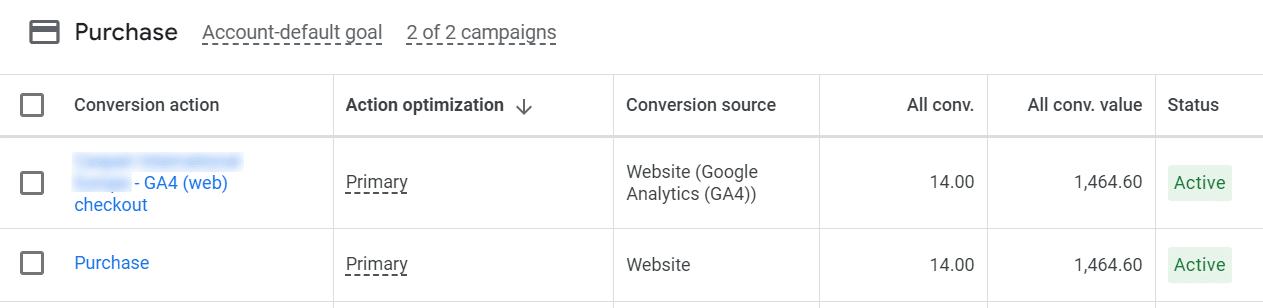
Using both the Google pixel and the GA4 purchase event to track purchase conversions in Google Ads

The two purchase events (pixel-driven and GA4 event-driven) are both being counted as a purchase conversion in Google Ads, and their combined conversion value would count as the total purchase conversion value. 

This means that although the actual purchase conversion total is 14, it would be counted as 28, and the conversion value, which should be $1,464.60, would be doubled to $2,929.20. 

Let’s review how these inaccuracies affect campaign performance. 

For a campaign that uses a bid strategy of target CPA, the campaign would use the 28 purchase conversions as the total instead of the actual 14 purchase conversions. 

If we set our target CPA at $10/conversion, the campaign then believes that the total cost for the campaign should be as high as $2,800 for 28 conversions; whereas the total cost should only be $1,400 for the actual 14 conversions. Incorrect data can lead to the campaign spending too much based on our stated goals.

Organizations need to minimize inaccuracy to help ensure that the data that passes back to the ad platforms is as correct as possible. Perform an analytics and advertising audit and check to be sure data is passed correctly.

Dig deeper: How to combine GA4 and Google Ads for powerful paid search results

Get the daily newsletter search marketers rely on.


In addition to user-created data inaccuracy, cookie tracking, which has traditionally been how we measure conversions from digital ads, can also create data inaccuracy. Cookies, by the very nature of how they work, have limitations to their data visibility. 

Here’s an example of how cookies can lead to data inaccuracy. In this client’s case, they are running Microsoft Ads and are tracking with the Microsoft UET tag. The client also sends email promotions to its email list. Both channels are also tracked using events in GA4. 
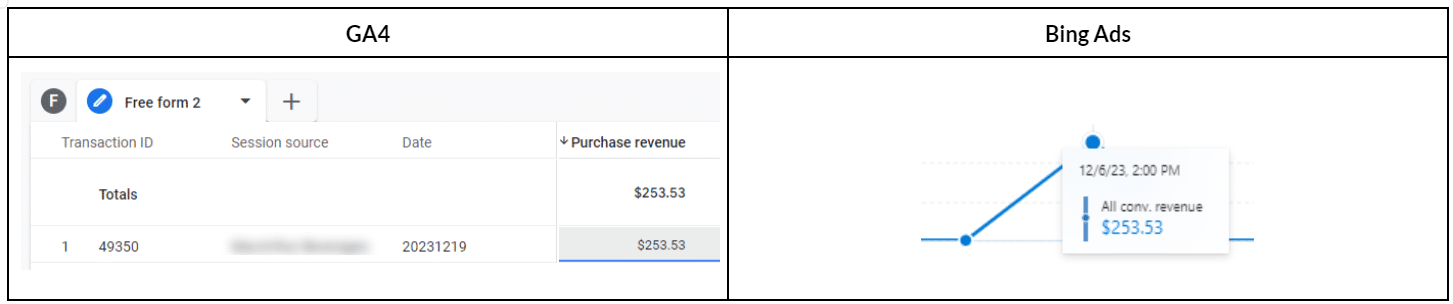
GA4 and Bing Ads cookie tracking inaccuracy

The company had a purchase for $253.53. In GA4, the session source for this conversion on 12/14 was an email marketing campaign. 

However, in Microsoft Ads, the same purchase event was tracked by the pixel and attributed to the original Microsoft Ad, which the buyer clicked on 12/6, even though the buyer didn’t purchase until after the email on 12/14. 

Microsoft Ads’ pixel claims the purchase conversion wholly for Microsoft Ads because the pixel doesn’t have the holistic view we have in GA4, where we track multiple channels’ performance. 

While the ad contributed to the conversion, it was not ultimately the last touch channel. In reality, Microsoft Ads should likely only have 50% of the credit for this purchase, but because the pixel cannot see all of the data, it attributes 100% of the credit to Microsoft Ads. 

If we spent $126.77 on the campaign and generated the reported $253.53 in revenue, then our ROAS is 200%. But if we were tracking and attributing the sale to only give 50% to the Microsoft Ad, then the actual ROAS would only be 100%. 

So, if our bid strategy is a target ROAS of 200%, the pixel assumes we have met this threshold when perhaps we have not.

While this is a simple, two-step customer journey, many customer journeys are much more complex, with multiple steps in between. 

Additionally, if your organization does not use a single source of truth (SSOT), such as GA4, for reporting, then each channel manager may attribute the same conversions to their channel. 

In our client example, the Microsoft Ads manager and the email manager would both count this single purchase as $253.53 in revenue for a total across both platforms of $597.06 in revenue generated, which will not match our actual purchase revenue.

Dig deeper: Tracking in 2024: Where we are and how to prep

Ad platform cookies are considered third-party cookies because they are not cookies generated directly by your website.

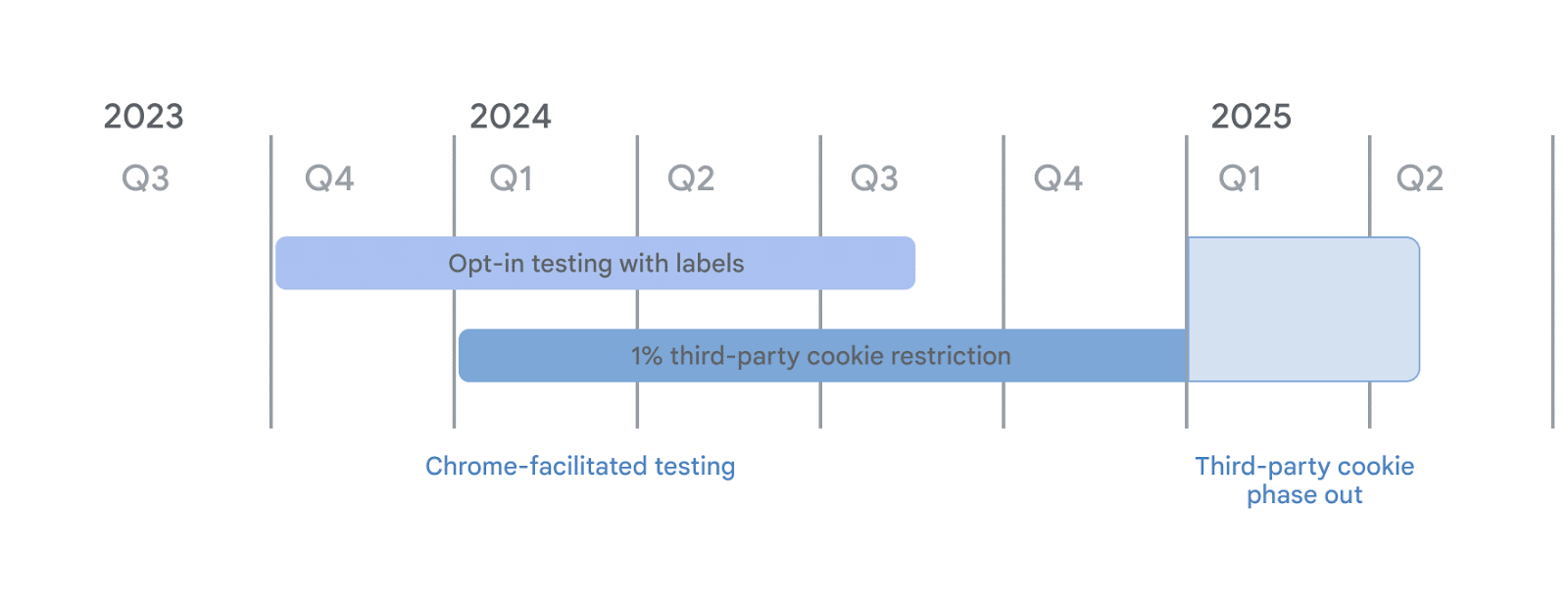
To become more compliant with various privacy laws, Google is in the process of phasing out third-party cookie tracking

Google’s updated timeline for third-party cookie phase-out.

While cookie tracking hasn’t always provided the most accurate data, it’s been the workhorse we’ve relied on as digital marketers. However, there’s a new option your organization should be moving to now, ahead of the cookie phase-out, to ensure data continuity and accuracy.

If you advertise on Google, Facebook, LinkedIn, TikTok, Pinterest or Snapchat, you may have seen their attempts to have advertisers adopt their conversion APIs. 

Unlike third-party cookies, which rely on the browser to set and be read, conversion API-based tracking sends user information directly from the platform’s server.

Example of Meta’s estimation of projected improvements when the Meta Conversion API is implemented vs. the traditional Meta pixel.

Since the conversion API method works on the server side and doesn’t rely on the browser, it can provide more accurate data because it doesn’t face certain limitations, such as ad and cookie blocking software and the tunnel vision that pixel tracking incurs.

Getting the data right

Your organization can take two main steps now to shore up your conversion data with ad platforms. 

  • First, audit your ads to ensure that users are tagging and tracking conversions correctly. Look for common missteps, similar to the Google Ads purchase example. 
  • Second, convert to the conversion API (CAPI) method. Implementing CAPI can be a bit technical, so you may need your web developer to assist.

Original source: https://searchengineland.com/accurate-tracking-data-optimal-ad-performance-443418

Google turns off Universal Analytics July 1: What you need to know

Google Analytics 4

Google is discontinuing Universal Analytics, its legacy web analytics platform. This is the final shift in the transition to Google Analytics 4 (GA4).

Why it matters. Businesses that relied on Universal Analytics for website measurement and data analysis need to act quickly to avoid losing access to their historical data and maintain continuity in their analytics capabilities.

Key dates.

  • July 1: Users will lose access to Universal Analytics data and interface.
  • After July 1: All Universal Analytics data will be permanently deleted.

Why we care. We’ve finally reached the “now or never” moment. Export your historical data or you’ll lose it all in July.

The big picture. This transition marks a significant shift in Google’s analytics offerings, with GA4 designed to be more privacy-focused and adaptable to future changes in technology and regulations. However, search marketers remain unimpressed with GA4 – many of them still absolutely hate GA4.

Details:

  • Universal Analytics properties are identifiable by tracking codes starting with “UA-“.
  • Google has been automatically creating GA4 properties for users since March 2023.
  • Several features, including real-time reports and certain advertising capabilities, have already been deprecated.
  • There will be no visibility of historical UA bidding, audience or conversion data.
  • Universal Analytics 360 contract holders will no longer be able to create standard Universal Analytics properties.
  • Publisher or other product integrations (e.g. UA audience list, BigQuery exports, UA API requests) will be unavailable when services have stopped.

What to do.

  • Export your Universal Analytics data before July 1, 2024.
  • Set up and configure a Google Analytics 4 property if you haven’t already.
  • Migrate Google Ads links and create new conversions based on GA4 events.

    Bottom line. If you haven’t already, you need to act swiftly to preserve your historical Google Universal Analytics data.

    Original source: https://searchengineland.com/google-turns-off-universal-analytics-july-1-what-you-need-to-know-443447

    Why and When Do You Need Heat Pump Maintenance?

    Home Business Magazine Online

    Like all other electrical equipment, your heat pump requires regular care and maintenance. If you don’t inspect it regularly, it’ll reduce its lifespan and cause frequent electrical problems.

    The best part about today’s heat pumps is that they can conserve energy very efficiently and work at great speeds. In fact, studies have shown that a modern heat pump can reduce electric consumption by 65% as compared to furnaces or baseboard heaters.

    So, if you’re not sure when or how to maintain your heat pump, this think-piece can help!

    How Does a Heat Pump Work?

    It’s important that you understand how a heat pump functions and only then you’ll be able to maintain it efficiently.

    Heat pumps collect heat from one area and then spread it to another to help keep a house warm or cool.

    When it comes to cooling, heat pumps absorb heat from inside the house and then dissipate it outdoors, quite similar to how air conditioners work. One very important component of heat pumps is the refrigerant, which is a fluid that absorbs heat.

    The main idea behind a heat pump is to absorb heat and transfer it efficiently throughout the system, like a refrigerator, since it’s easier to move heat energy that way.

    When Should You Repair Your Heat Pumps?

    Depending on where you stay, what model of heat pump you have, and how well you’re taking care of it, you’ll have to repair or clean it at least once a month.

    Most importantly, remember to follow the guidelines mentioned by the manufacturer. If you overdo the cleaning or repairing, the pump might instead malfunction.

    For heat pump installations, you’ll have to get in touch with a company that understands the specific weather conditions that the area experiences. For example, if you are located in Seattle, Washington, you’ll need to know more about heat pump installation in Seattle. You’ll have to get in touch with a company there that understands the specific weather conditions that this area experiences.

    Remember, dirty filters or coils can greatly reduce the pump’s speed, as well as accumulation of dirt, debris, or microbial growth.

    How to Maintain Your Heat Pump?

    Heat pump maintenance is not a herculean task, but only if you know the right tricks to do it.

    • Inspect the ducts, filters, and indoor coil every month for dirt or other obstructions.
    • Checking the duct leakage. In case you find it leaking, you’ll have to seal it yourself or ask a professional for help.
    • Measuring the optimum airflow speed and checking if your heat pump is able to function at the optimum level.
    • Lubricating the motor once every one or two months and regularly inspecting the system belts to check if they are tight enough or not.
    • Verifying the accurate electric control and seeing that the heat is being locked out when the thermostat is set to the cooling mode.
    • Checking if there are any leaky or faulty electrical lines or wires connected to the heat pump. If you do find a stray or faulty wire, immediately call an electrician for help

    Tip: It may appear a lot of work to do all that alone; you can also hire an expert who can do it for you – in less time & more efficiently.

    Advantages of maintaining your heat pump

    Maintenance may look like a labor-intensive & cost-intensive task, but when you look at the advantages that it can offer, it will look like a tiny inconvenience. So, here’s a glimpse for you:

    Improved safety

    Other than your heating system working well, regular maintenance will ensure that everything is in place and works according to the local safety guidelines.

    Cost saving

    Regular maintenance for heat pump maintenance prevents you from spending a lot on repairs. If done well, it will maximize the life of your heat pump and even efficiency.

    Better air quality

    Of course, the main purpose of a clean and well-maintained heat pump is to improve air quality. Your home will be free of allergens, fungus, dust, and other harmful microorganisms that often accumulate on under-maintained heating systems.

    Longer lifespan

    It, of course, comes as no surprise that maintaining your heat pump is the key to its long life.

    Less stress

    If you have regular maintenance scheduled, you don’t have to suffer the inconvenience when your heat pump breaks down.

    Over to you

    So, this was all about heat pump maintenance. If you have more queries, you can always reach out to your nearest heating system professionals.

    You can also inquire if they offer scheduled maintenance programs – learn more about them and sign up. Honestly, it may feel like an additional cost currently, but when you see your neighbors paying big repair bills, you will thank your stars!

    The post Why and When Do You Need Heat Pump Maintenance? appeared first on Home Business Magazine.

    Original source: https://homebusinessmag.com/lifestyles/home-improvement/why-when-need-heat-pump-maintenance/

    Why and When Do You Need Heat Pump Maintenance?

    Home Business Magazine Online

    Like all other electrical equipment, your heat pump requires regular care and maintenance. If you don’t inspect it regularly, it’ll reduce its lifespan and cause frequent electrical problems.

    The best part about today’s heat pumps is that they can conserve energy very efficiently and work at great speeds. In fact, studies have shown that a modern heat pump can reduce electric consumption by 65% as compared to furnaces or baseboard heaters.

    So, if you’re not sure when or how to maintain your heat pump, this think-piece can help!

    How Does a Heat Pump Work?

    It’s important that you understand how a heat pump functions and only then you’ll be able to maintain it efficiently.

    Heat pumps collect heat from one area and then spread it to another to help keep a house warm or cool.

    When it comes to cooling, heat pumps absorb heat from inside the house and then dissipate it outdoors, quite similar to how air conditioners work. One very important component of heat pumps is the refrigerant, which is a fluid that absorbs heat.

    The main idea behind a heat pump is to absorb heat and transfer it efficiently throughout the system, like a refrigerator, since it’s easier to move heat energy that way.

    When Should You Repair Your Heat Pumps?

    Depending on where you stay, what model of heat pump you have, and how well you’re taking care of it, you’ll have to repair or clean it at least once a month.

    Most importantly, remember to follow the guidelines mentioned by the manufacturer. If you overdo the cleaning or repairing, the pump might instead malfunction.

    For heat pump installations, you’ll have to get in touch with a company that understands the specific weather conditions that the area experiences. For example, if you are located in Seattle, Washington, you’ll need to know more about heat pump installation in Seattle. You’ll have to get in touch with a company there that understands the specific weather conditions that this area experiences.

    Remember, dirty filters or coils can greatly reduce the pump’s speed, as well as accumulation of dirt, debris, or microbial growth.

    How to Maintain Your Heat Pump?

    Heat pump maintenance is not a herculean task, but only if you know the right tricks to do it.

    • Inspect the ducts, filters, and indoor coil every month for dirt or other obstructions.
    • Checking the duct leakage. In case you find it leaking, you’ll have to seal it yourself or ask a professional for help.
    • Measuring the optimum airflow speed and checking if your heat pump is able to function at the optimum level.
    • Lubricating the motor once every one or two months and regularly inspecting the system belts to check if they are tight enough or not.
    • Verifying the accurate electric control and seeing that the heat is being locked out when the thermostat is set to the cooling mode.
    • Checking if there are any leaky or faulty electrical lines or wires connected to the heat pump. If you do find a stray or faulty wire, immediately call an electrician for help

    Tip: It may appear a lot of work to do all that alone; you can also hire an expert who can do it for you – in less time & more efficiently.

    Advantages of maintaining your heat pump

    Maintenance may look like a labor-intensive & cost-intensive task, but when you look at the advantages that it can offer, it will look like a tiny inconvenience. So, here’s a glimpse for you:

    Improved safety

    Other than your heating system working well, regular maintenance will ensure that everything is in place and works according to the local safety guidelines.

    Cost saving

    Regular maintenance for heat pump maintenance prevents you from spending a lot on repairs. If done well, it will maximize the life of your heat pump and even efficiency.

    Better air quality

    Of course, the main purpose of a clean and well-maintained heat pump is to improve air quality. Your home will be free of allergens, fungus, dust, and other harmful microorganisms that often accumulate on under-maintained heating systems.

    Longer lifespan

    It, of course, comes as no surprise that maintaining your heat pump is the key to its long life.

    Less stress

    If you have regular maintenance scheduled, you don’t have to suffer the inconvenience when your heat pump breaks down.

    Over to you

    So, this was all about heat pump maintenance. If you have more queries, you can always reach out to your nearest heating system professionals.

    You can also inquire if they offer scheduled maintenance programs – learn more about them and sign up. Honestly, it may feel like an additional cost currently, but when you see your neighbors paying big repair bills, you will thank your stars!

    The post Why and When Do You Need Heat Pump Maintenance? appeared first on Home Business Magazine.

    Original source: https://homebusinessmag.com/lifestyles/home-improvement/why-when-need-heat-pump-maintenance/

    Google turns off Universal Analytics July 1: What you need to know

    Google Analytics 4

    Google is discontinuing Universal Analytics, its legacy web analytics platform. This is the final shift in the transition to Google Analytics 4 (GA4).

    Why it matters. Businesses that relied on Universal Analytics for website measurement and data analysis need to act quickly to avoid losing access to their historical data and maintain continuity in their analytics capabilities.

    Key dates.

    • July 1: Users will lose access to Universal Analytics data and interface.
    • After July 1: All Universal Analytics data will be permanently deleted.

    Why we care. We’ve finally reached the “now or never” moment. Export your historical data or you’ll lose it all in July.

    The big picture. This transition marks a significant shift in Google’s analytics offerings, with GA4 designed to be more privacy-focused and adaptable to future changes in technology and regulations. However, search marketers remain unimpressed with GA4 – many of them still absolutely hate GA4.

    Details:

    • Universal Analytics properties are identifiable by tracking codes starting with “UA-“.
    • Google has been automatically creating GA4 properties for users since March 2023.
    • Several features, including real-time reports and certain advertising capabilities, have already been deprecated.
    • There will be no visibility of historical UA bidding, audience or conversion data.
    • Universal Analytics 360 contract holders will no longer be able to create standard Universal Analytics properties.
    • Publisher or other product integrations (e.g. UA audience list, BigQuery exports, UA API requests) will be unavailable when services have stopped.

    What to do.

    • Export your Universal Analytics data before July 1, 2024.
    • Set up and configure a Google Analytics 4 property if you haven’t already.
    • Migrate Google Ads links and create new conversions based on GA4 events.

      Bottom line. If you haven’t already, you need to act swiftly to preserve your historical Google Universal Analytics data.

      Original source: https://searchengineland.com/google-turns-off-universal-analytics-july-1-what-you-need-to-know-443447

      Why and When Do You Need Heat Pump Maintenance?

      Home Business Magazine Online

      Like all other electrical equipment, your heat pump requires regular care and maintenance. If you don’t inspect it regularly, it’ll reduce its lifespan and cause frequent electrical problems.

      The best part about today’s heat pumps is that they can conserve energy very efficiently and work at great speeds. In fact, studies have shown that a modern heat pump can reduce electric consumption by 65% as compared to furnaces or baseboard heaters.

      So, if you’re not sure when or how to maintain your heat pump, this think-piece can help!

      How Does a Heat Pump Work?

      It’s important that you understand how a heat pump functions and only then you’ll be able to maintain it efficiently.

      Heat pumps collect heat from one area and then spread it to another to help keep a house warm or cool.

      When it comes to cooling, heat pumps absorb heat from inside the house and then dissipate it outdoors, quite similar to how air conditioners work. One very important component of heat pumps is the refrigerant, which is a fluid that absorbs heat.

      The main idea behind a heat pump is to absorb heat and transfer it efficiently throughout the system, like a refrigerator, since it’s easier to move heat energy that way.

      When Should You Repair Your Heat Pumps?

      Depending on where you stay, what model of heat pump you have, and how well you’re taking care of it, you’ll have to repair or clean it at least once a month.

      Most importantly, remember to follow the guidelines mentioned by the manufacturer. If you overdo the cleaning or repairing, the pump might instead malfunction.

      For heat pump installations, you’ll have to get in touch with a company that understands the specific weather conditions that the area experiences. For example, if you are located in Seattle, Washington, you’ll need to know more about heat pump installation in Seattle. You’ll have to get in touch with a company there that understands the specific weather conditions that this area experiences.

      Remember, dirty filters or coils can greatly reduce the pump’s speed, as well as accumulation of dirt, debris, or microbial growth.

      How to Maintain Your Heat Pump?

      Heat pump maintenance is not a herculean task, but only if you know the right tricks to do it.

      • Inspect the ducts, filters, and indoor coil every month for dirt or other obstructions.
      • Checking the duct leakage. In case you find it leaking, you’ll have to seal it yourself or ask a professional for help.
      • Measuring the optimum airflow speed and checking if your heat pump is able to function at the optimum level.
      • Lubricating the motor once every one or two months and regularly inspecting the system belts to check if they are tight enough or not.
      • Verifying the accurate electric control and seeing that the heat is being locked out when the thermostat is set to the cooling mode.
      • Checking if there are any leaky or faulty electrical lines or wires connected to the heat pump. If you do find a stray or faulty wire, immediately call an electrician for help

      Tip: It may appear a lot of work to do all that alone; you can also hire an expert who can do it for you – in less time & more efficiently.

      Advantages of maintaining your heat pump

      Maintenance may look like a labor-intensive & cost-intensive task, but when you look at the advantages that it can offer, it will look like a tiny inconvenience. So, here’s a glimpse for you:

      Improved safety

      Other than your heating system working well, regular maintenance will ensure that everything is in place and works according to the local safety guidelines.

      Cost saving

      Regular maintenance for heat pump maintenance prevents you from spending a lot on repairs. If done well, it will maximize the life of your heat pump and even efficiency.

      Better air quality

      Of course, the main purpose of a clean and well-maintained heat pump is to improve air quality. Your home will be free of allergens, fungus, dust, and other harmful microorganisms that often accumulate on under-maintained heating systems.

      Longer lifespan

      It, of course, comes as no surprise that maintaining your heat pump is the key to its long life.

      Less stress

      If you have regular maintenance scheduled, you don’t have to suffer the inconvenience when your heat pump breaks down.

      Over to you

      So, this was all about heat pump maintenance. If you have more queries, you can always reach out to your nearest heating system professionals.

      You can also inquire if they offer scheduled maintenance programs – learn more about them and sign up. Honestly, it may feel like an additional cost currently, but when you see your neighbors paying big repair bills, you will thank your stars!

      The post Why and When Do You Need Heat Pump Maintenance? appeared first on Home Business Magazine.

      Original source: https://homebusinessmag.com/lifestyles/home-improvement/why-when-need-heat-pump-maintenance/

      Why and When Do You Need Heat Pump Maintenance?

      Home Business Magazine Online

      Like all other electrical equipment, your heat pump requires regular care and maintenance. If you don’t inspect it regularly, it’ll reduce its lifespan and cause frequent electrical problems.

      The best part about today’s heat pumps is that they can conserve energy very efficiently and work at great speeds. In fact, studies have shown that a modern heat pump can reduce electric consumption by 65% as compared to furnaces or baseboard heaters.

      So, if you’re not sure when or how to maintain your heat pump, this think-piece can help!

      How Does a Heat Pump Work?

      It’s important that you understand how a heat pump functions and only then you’ll be able to maintain it efficiently.

      Heat pumps collect heat from one area and then spread it to another to help keep a house warm or cool.

      When it comes to cooling, heat pumps absorb heat from inside the house and then dissipate it outdoors, quite similar to how air conditioners work. One very important component of heat pumps is the refrigerant, which is a fluid that absorbs heat.

      The main idea behind a heat pump is to absorb heat and transfer it efficiently throughout the system, like a refrigerator, since it’s easier to move heat energy that way.

      When Should You Repair Your Heat Pumps?

      Depending on where you stay, what model of heat pump you have, and how well you’re taking care of it, you’ll have to repair or clean it at least once a month.

      Most importantly, remember to follow the guidelines mentioned by the manufacturer. If you overdo the cleaning or repairing, the pump might instead malfunction.

      For heat pump installations, you’ll have to get in touch with a company that understands the specific weather conditions that the area experiences. For example, if you are located in Seattle, Washington, you’ll need to know more about heat pump installation in Seattle. You’ll have to get in touch with a company there that understands the specific weather conditions that this area experiences.

      Remember, dirty filters or coils can greatly reduce the pump’s speed, as well as accumulation of dirt, debris, or microbial growth.

      How to Maintain Your Heat Pump?

      Heat pump maintenance is not a herculean task, but only if you know the right tricks to do it.

      • Inspect the ducts, filters, and indoor coil every month for dirt or other obstructions.
      • Checking the duct leakage. In case you find it leaking, you’ll have to seal it yourself or ask a professional for help.
      • Measuring the optimum airflow speed and checking if your heat pump is able to function at the optimum level.
      • Lubricating the motor once every one or two months and regularly inspecting the system belts to check if they are tight enough or not.
      • Verifying the accurate electric control and seeing that the heat is being locked out when the thermostat is set to the cooling mode.
      • Checking if there are any leaky or faulty electrical lines or wires connected to the heat pump. If you do find a stray or faulty wire, immediately call an electrician for help

      Tip: It may appear a lot of work to do all that alone; you can also hire an expert who can do it for you – in less time & more efficiently.

      Advantages of maintaining your heat pump

      Maintenance may look like a labor-intensive & cost-intensive task, but when you look at the advantages that it can offer, it will look like a tiny inconvenience. So, here’s a glimpse for you:

      Improved safety

      Other than your heating system working well, regular maintenance will ensure that everything is in place and works according to the local safety guidelines.

      Cost saving

      Regular maintenance for heat pump maintenance prevents you from spending a lot on repairs. If done well, it will maximize the life of your heat pump and even efficiency.

      Better air quality

      Of course, the main purpose of a clean and well-maintained heat pump is to improve air quality. Your home will be free of allergens, fungus, dust, and other harmful microorganisms that often accumulate on under-maintained heating systems.

      Longer lifespan

      It, of course, comes as no surprise that maintaining your heat pump is the key to its long life.

      Less stress

      If you have regular maintenance scheduled, you don’t have to suffer the inconvenience when your heat pump breaks down.

      Over to you

      So, this was all about heat pump maintenance. If you have more queries, you can always reach out to your nearest heating system professionals.

      You can also inquire if they offer scheduled maintenance programs – learn more about them and sign up. Honestly, it may feel like an additional cost currently, but when you see your neighbors paying big repair bills, you will thank your stars!

      The post Why and When Do You Need Heat Pump Maintenance? appeared first on Home Business Magazine.

      Original source: https://homebusinessmag.com/lifestyles/home-improvement/why-when-need-heat-pump-maintenance/

      Google turns off Universal Analytics July 1: What you need to know

      Google Analytics 4

      Google is discontinuing Universal Analytics, its legacy web analytics platform. This is the final shift in the transition to Google Analytics 4 (GA4).

      Why it matters. Businesses that relied on Universal Analytics for website measurement and data analysis need to act quickly to avoid losing access to their historical data and maintain continuity in their analytics capabilities.

      Key dates.

      • July 1: Users will lose access to Universal Analytics data and interface.
      • After July 1: All Universal Analytics data will be permanently deleted.

      Why we care. We’ve finally reached the “now or never” moment. Export your historical data or you’ll lose it all in July.

      The big picture. This transition marks a significant shift in Google’s analytics offerings, with GA4 designed to be more privacy-focused and adaptable to future changes in technology and regulations. However, search marketers remain unimpressed with GA4 – many of them still absolutely hate GA4.

      Details:

      • Universal Analytics properties are identifiable by tracking codes starting with “UA-“.
      • Google has been automatically creating GA4 properties for users since March 2023.
      • Several features, including real-time reports and certain advertising capabilities, have already been deprecated.
      • There will be no visibility of historical UA bidding, audience or conversion data.
      • Universal Analytics 360 contract holders will no longer be able to create standard Universal Analytics properties.
      • Publisher or other product integrations (e.g. UA audience list, BigQuery exports, UA API requests) will be unavailable when services have stopped.

      What to do.

      • Export your Universal Analytics data before July 1, 2024.
      • Set up and configure a Google Analytics 4 property if you haven’t already.
      • Migrate Google Ads links and create new conversions based on GA4 events.

        Bottom line. If you haven’t already, you need to act swiftly to preserve your historical Google Universal Analytics data.

        Original source: https://searchengineland.com/google-turns-off-universal-analytics-july-1-what-you-need-to-know-443447

        Google turns off Universal Analytics July 1: What you need to know

        Google Analytics 4

        Google is discontinuing Universal Analytics, its legacy web analytics platform. This is the final shift in the transition to Google Analytics 4 (GA4).

        Why it matters. Businesses that relied on Universal Analytics for website measurement and data analysis need to act quickly to avoid losing access to their historical data and maintain continuity in their analytics capabilities.

        Key dates.

        • July 1: Users will lose access to Universal Analytics data and interface.
        • After July 1: All Universal Analytics data will be permanently deleted.

        Why we care. We’ve finally reached the “now or never” moment. Export your historical data or you’ll lose it all in July.

        The big picture. This transition marks a significant shift in Google’s analytics offerings, with GA4 designed to be more privacy-focused and adaptable to future changes in technology and regulations. However, search marketers remain unimpressed with GA4 – many of them still absolutely hate GA4.

        Details:

        • Universal Analytics properties are identifiable by tracking codes starting with “UA-“.
        • Google has been automatically creating GA4 properties for users since March 2023.
        • Several features, including real-time reports and certain advertising capabilities, have already been deprecated.
        • There will be no visibility of historical UA bidding, audience or conversion data.
        • Universal Analytics 360 contract holders will no longer be able to create standard Universal Analytics properties.
        • Publisher or other product integrations (e.g. UA audience list, BigQuery exports, UA API requests) will be unavailable when services have stopped.

        What to do.

        • Export your Universal Analytics data before July 1, 2024.
        • Set up and configure a Google Analytics 4 property if you haven’t already.
        • Migrate Google Ads links and create new conversions based on GA4 events.

          Bottom line. If you haven’t already, you need to act swiftly to preserve your historical Google Universal Analytics data.

          Original source: https://searchengineland.com/google-turns-off-universal-analytics-july-1-what-you-need-to-know-443447

          Google turns off Universal Analytics July 1: What you need to know

          Google Analytics 4

          Google is discontinuing Universal Analytics, its legacy web analytics platform. This is the final shift in the transition to Google Analytics 4 (GA4).

          Why it matters. Businesses that relied on Universal Analytics for website measurement and data analysis need to act quickly to avoid losing access to their historical data and maintain continuity in their analytics capabilities.

          Key dates.

          • July 1: Users will lose access to Universal Analytics data and interface.
          • After July 1: All Universal Analytics data will be permanently deleted.

          Why we care. We’ve finally reached the “now or never” moment. Export your historical data or you’ll lose it all in July.

          The big picture. This transition marks a significant shift in Google’s analytics offerings, with GA4 designed to be more privacy-focused and adaptable to future changes in technology and regulations. However, search marketers remain unimpressed with GA4 – many of them still absolutely hate GA4.

          Details:

          • Universal Analytics properties are identifiable by tracking codes starting with “UA-“.
          • Google has been automatically creating GA4 properties for users since March 2023.
          • Several features, including real-time reports and certain advertising capabilities, have already been deprecated.
          • There will be no visibility of historical UA bidding, audience or conversion data.
          • Universal Analytics 360 contract holders will no longer be able to create standard Universal Analytics properties.
          • Publisher or other product integrations (e.g. UA audience list, BigQuery exports, UA API requests) will be unavailable when services have stopped.

          What to do.

          • Export your Universal Analytics data before July 1, 2024.
          • Set up and configure a Google Analytics 4 property if you haven’t already.
          • Migrate Google Ads links and create new conversions based on GA4 events.

            Bottom line. If you haven’t already, you need to act swiftly to preserve your historical Google Universal Analytics data.

            Original source: https://searchengineland.com/google-turns-off-universal-analytics-july-1-what-you-need-to-know-443447