
How SEO can work with digital marketing teams

How SEO can work with digital marketing teams

In digital marketing, agencies and in-house teams often separate into specialized units like SEO, PPC and content marketing

While this division makes sense internally, it doesn’t align with how customers experience a brand online. Customers don’t think in silos – they interact with a brand’s digital presence holistically.

This reality calls for a unified approach to digital marketing, where SEO plays a pivotal role.

With its broad skill set encompassing research, copywriting, technical insights and digital PR, SEO professionals are uniquely positioned to bridge gaps between different marketing disciplines.

This article explores how SEOs can collaborate across digital marketing teams to create a more cohesive strategy, enhancing overall effectiveness and delivering better results for both businesses and customers.

Sharing research

SEO teams gather extensive research, which is the foundation of their strategy. 

They analyze keywords customers use and search volumes, which I call the “voice of the customer” – a clear reflection of what they want. 

They also research competitors, compiling data on what ranks well for them and how their sites perform.

This research provides valuable insight into competitors’ SEO strategies and the customer journey they are targeting. It shows what competitors prioritize based on their rankings and recent content.

This information is highly useful to the broader marketing team. For example, it can supply the paid media team with keyword data and give content teams insight into where competitors are focusing their efforts.

Dig deeper: Top 7 Google Ads and SEO synergies you should act upon

Copywriting: Skills sharing and training

Copywriting is a key skill for SEO, as content is one of its main pillars. 

With Google’s improved understanding of context, SEO copy should now simply be excellent writing. While keyword themes are still important, the days of spammy SEO content are over.

This makes copywriting a valuable skill to share and train other teams on.

If other teams are creating website copy, they should understand SEO requirements to ensure the content is optimized.

Likewise, SEO teams can learn from paid media teams.

For example, meta descriptions are like paid ad headlines, so studying high-performing ad copy and click-through rates can help improve SEO content’s impact on search results.

Technical collaboration

Technical SEO pros possess specialized knowledge about how a website’s technical health and decisions affect its visibility on search engines. 

This creates a significant opportunity for technical SEOs to collaborate with website product owners and web developers within the digital marketing team. 

Building a strong relationship between these teams is crucial for a successful search strategy, especially since SEO can often seem mysterious to those outside the field. 

Clear communication and data-driven decision-making can empower both teams.

Additionally, collaboration between the SEO team and the UX team is essential. A website that fails to convert users won’t support the SEO strategy and vice versa. 

By working together on technical optimizations and design enhancements, both teams can improve performance and enhance the customer experience.

Dig deeper: Boosting search conversions: 5 behavioral strategies to test

Get the newsletter search marketers rely on.


Digital PR: Building authority for all

Digital PR is often treated as a subset of SEO, overlooking its broader benefits for the overall marketing strategy.

While it originated from link building efforts, in 2024, digital PR encompasses much more.

It closely connects with content, influencer outreach, social media and traditional PR. When these teams collaborate, they can create truly impactful results.

An effective digital PR strategy enhances every stage of the customer journey. Although link building remains a goal for SEO, the authority gained extends beyond that. 

By working with the strategic team to understand audience personas and their online behavior, insights can guide targeted strategies. 

Collaboration with the social media team also opens up opportunities to leverage trends. 

For instance, at my agency, our pet insurance brand relies heavily on social media for topic generation, whether endorsing trends or advising against them, like the trend of dyeing dogs’ fur. This alignment between teams is vital for a successful strategy.

Metrics across the customer journey

Data is one of the greatest strengths and biggest challenges of digital marketing. 

We have access to a wealth of information that can be reported in various ways, leading to numerous reports for different meetings and purposes. 

Aligning data across teams is crucial. It helps everyone agree on how to attribute conversions and understand the customer journey, which can transform the digital marketing strategy.

When channels and campaigns have clarity on their roles, they can focus their efforts effectively.

Not every activity needs to show a direct ROI; some efforts are meant to raise awareness and spark interest, and that’s perfectly valid.

If the SEO team collaborates with other departments to create a unified approach to reporting on the customer journey – mapping their needs and actions – they can unlock tremendous potential for all teams involved.

Champions for the customer

In a digital marketing team, it’s essential to have champions for the customer – team members who remember that our ultimate goal is to inspire the audience to make a purchase, in whatever form that takes.

Whether from the SEO team, PPC team or others, all departments should unite to enhance the customer journey. I often liken the customer to a baton in a relay race; once a team has it, they need to effectively pass it through various channels.

Each team, including SEO, has valuable contributions to make. The key is to foster collaboration, share knowledge and maintain a customer-centric focus. The more teams understand each other’s strengths, the better they can work together.

When was the last time you shared knowledge with another department? If it’s been over six weeks, consider suggesting a lunch-and-learn session.

Improving collaboration isn’t just a leadership responsibility – anyone on the team can initiate it. So, think about how you can make a difference today.

Dig deeper: Customer-centric SEO: Adapting your search strategy for success

Original source: https://searchengineland.com/seo-work-with-digital-marketing-teams-447001

15 AI tools you should use for SEO

Ark

AI can significantly streamline SEO tasks, freeing time to focus on high-impact strategies.

However, with new AI tools constantly emerging, it can be overwhelming to know which ones truly enhance productivity and which may complicate things. 

From generating unique images to optimizing content, AI platforms like Grok, ChatGPT and Midjourney offer endless possibilities. 

Below, I’ll share 15 AI tools I’ve used for SEO, each of which has delivered great results.

While many alternatives are available, these tools are a strong starting point for exploring and refining your SEO approach.

15 AI tools you should use for SEO

1. Alli AI

Alli AI

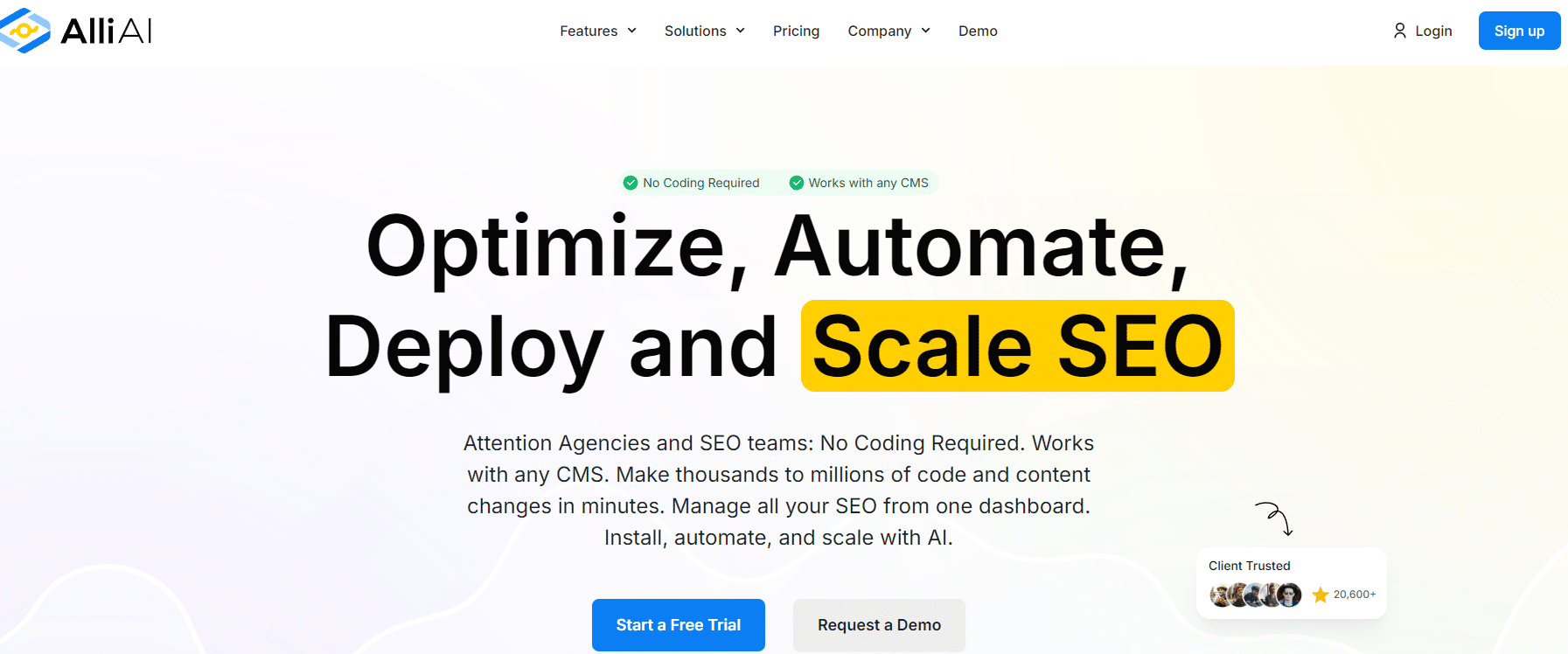
Alli AI works with any CMS, bypassing technical limitations to use AI to help automate on-page SEO for:

  • Links missing titles.
  • Missing image alt and title text.
  • External link targets.
  • Site speed optimization.
  • Content recommendations.

The tool analyzes your site and gives you a step-by-step guide that explains how to optimize it for better results. 

I wouldn’t recommend blindly following every recommendation, but you can commit thousands of recommendations in a single click, which saves you countless hours of manual work.

2. RankIQ

RankIQ

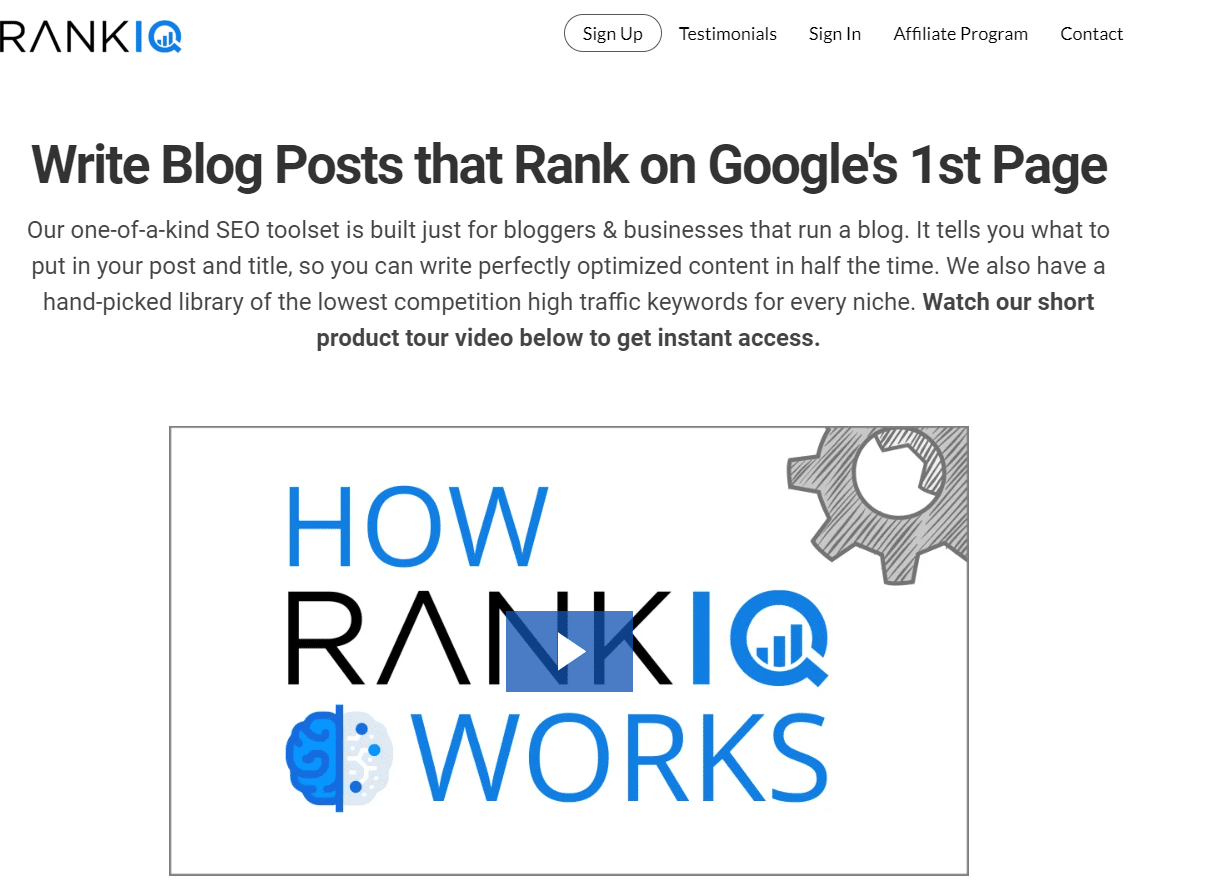
RankIQ is a super-charged content optimizer that helps you analyze thousands of factors across blog posts to learn:

  • Suggested word count.
  • Topics to cover.
  • Keywords to include.

There’s even a title recommendation engine that will help you write more impactful titles. 

If you need to find low-competition keywords, optimize posts or write new ones, RankIQ is a must-have option in your AI toolbox.

Dig deeper: AI content creation: A beginner’s guide

3. Surfer

Surfer

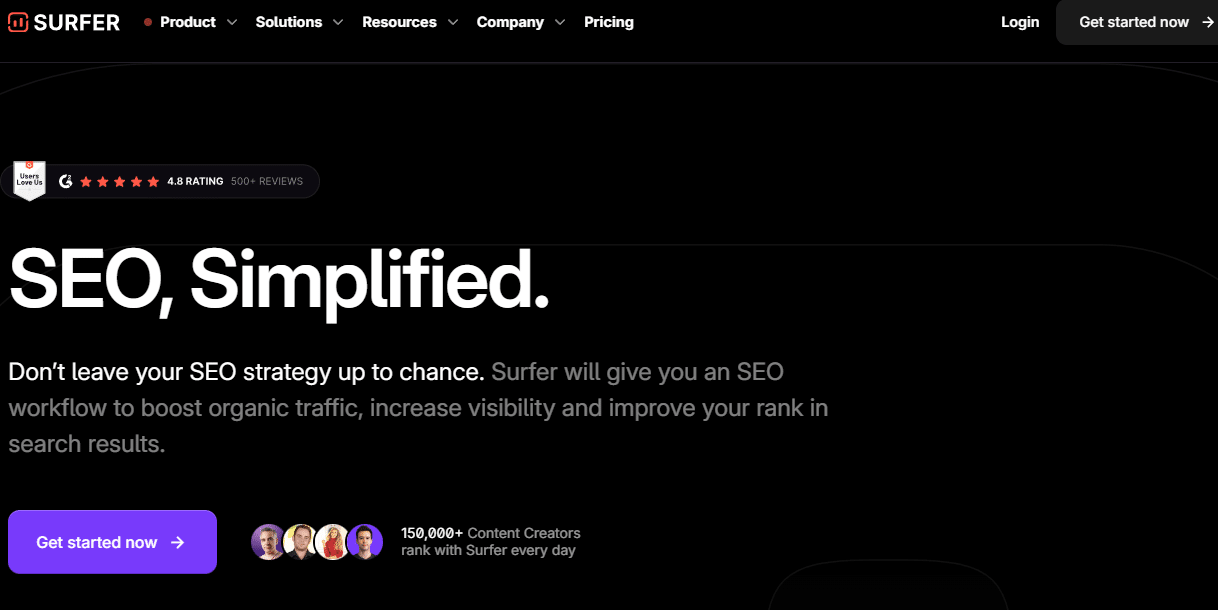
Surfer isn’t new, but it continues to add to its tool that powers 150,000 content creators and agencies. You start with a keyword research engine and will gain access to:

  • Content guidelines.
  • Keywords and headers to include.
  • NLP suggestions.
  • Outlining and brief options.

A recent feature lets you auto-optimize posts and insert internal links on autopilot.

With Surfy, the writing assistant, you can have the platform rephrase the content, edit it and refine it while writing. 

If your site needs content updates, Surfer can help you boost organic traffic.

4. NeuralText

NeuralText

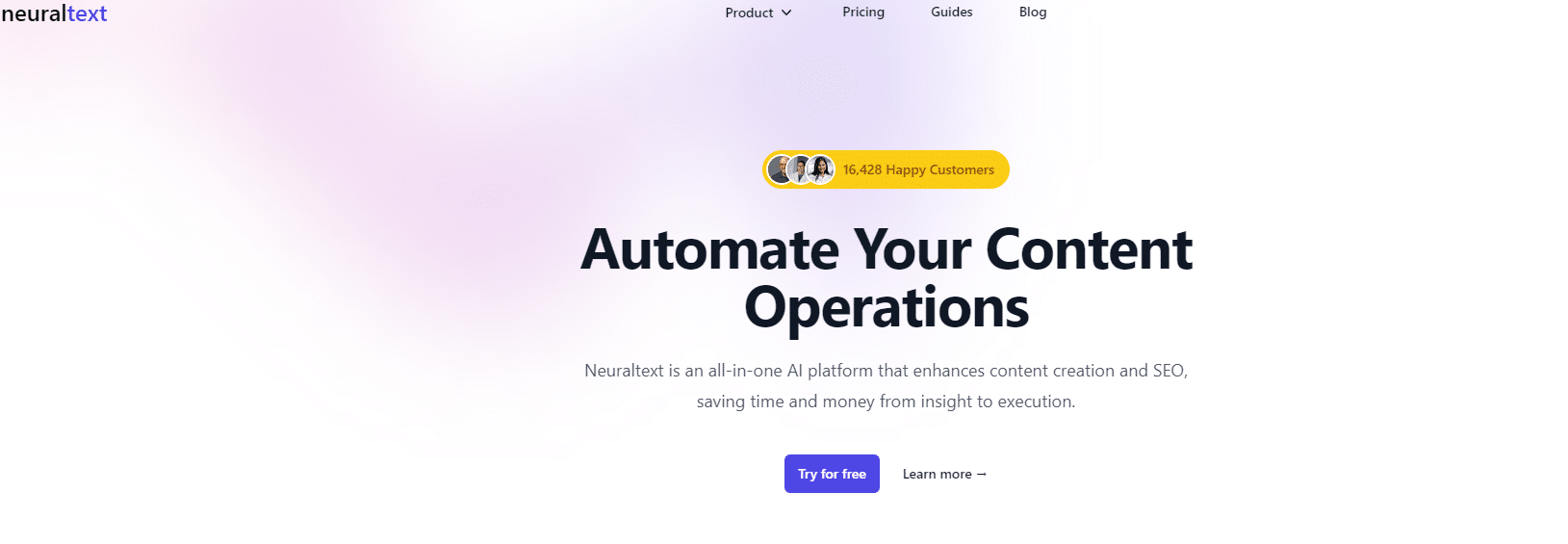
NeuralText is a lot like Surfer, with score and word count suggestions and it’s designed to enhance your content creation.

You’ll gain access to tools used by some of the largest brands in the world, including:

  • Keyword clustering.
  • Live SERP analysis.
  • AI writing assistant.
  • Search console integration.

Research and keyword analysis alone are two reasons to use Neuraltext to help you refine blog posts and create content briefs that you can pass off to your content team.

If you’re focusing on content to drive organic traffic to your site, you can’t go wrong with Neuraltext.

5. MarketMuse

MarketMuse

MarketMuse is a tool that I relied on heavily a few years ago when creating content, and it was always one step ahead of the competition.

You can create brief templates, conduct research, outline content and analyze clusters in an instant.

AI will help you:

  • Improve your writing.
  • Change your tone.
  • Summarize content.
  • Fix grammar and spelling.
  • Discover missing topics.
  • So much more.

If you want to create more impactful content, MarketMuse is a must-have tool.

Dig deeper: 6 guiding principles to leverage AI for SEO content production

6. Pictory

Pictory

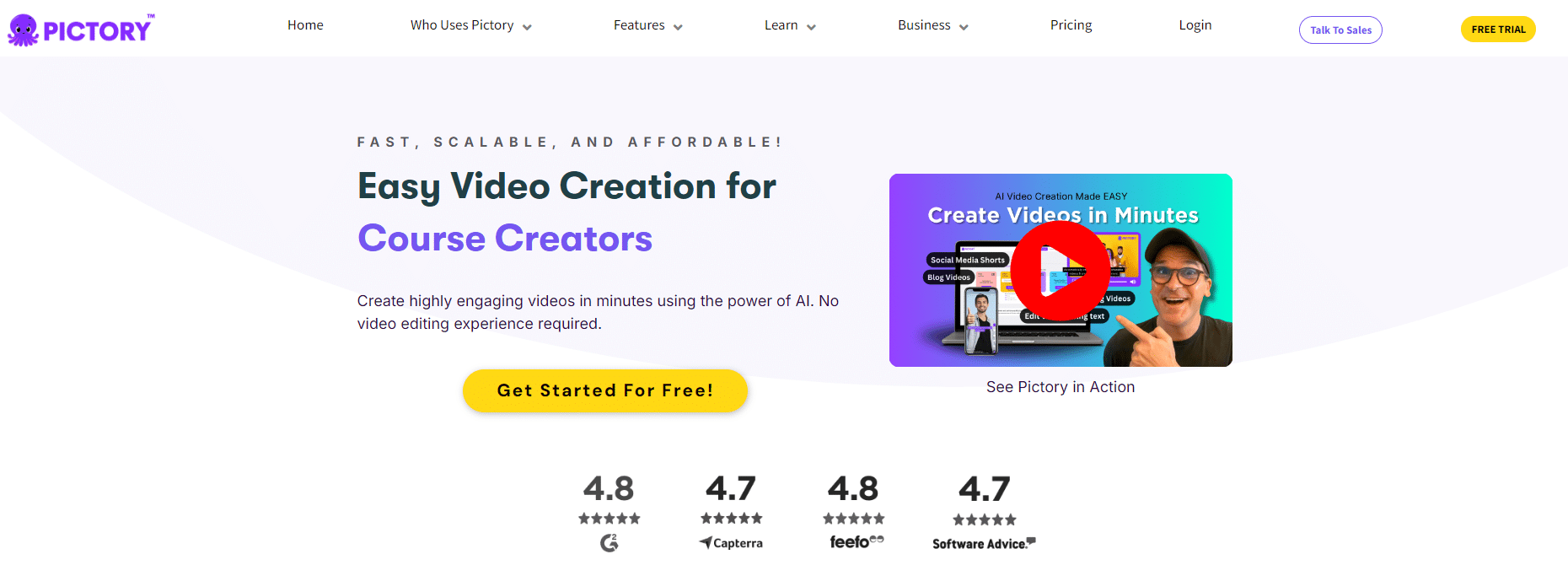
Do you want to create videos but have no editing experience? That’s where Pictory comes in. 

You can leverage the power of video with written and video content that the platform’s AI will turn into short, shareable clips with:

  • AI voices.
  • Royalty-free music.

You can turn scripts or blog posts into videos in minutes and find matching footage. 

Add in your video SEO, and you’ll have videos ranking for your most valuable keywords.

7. Canva

Canva

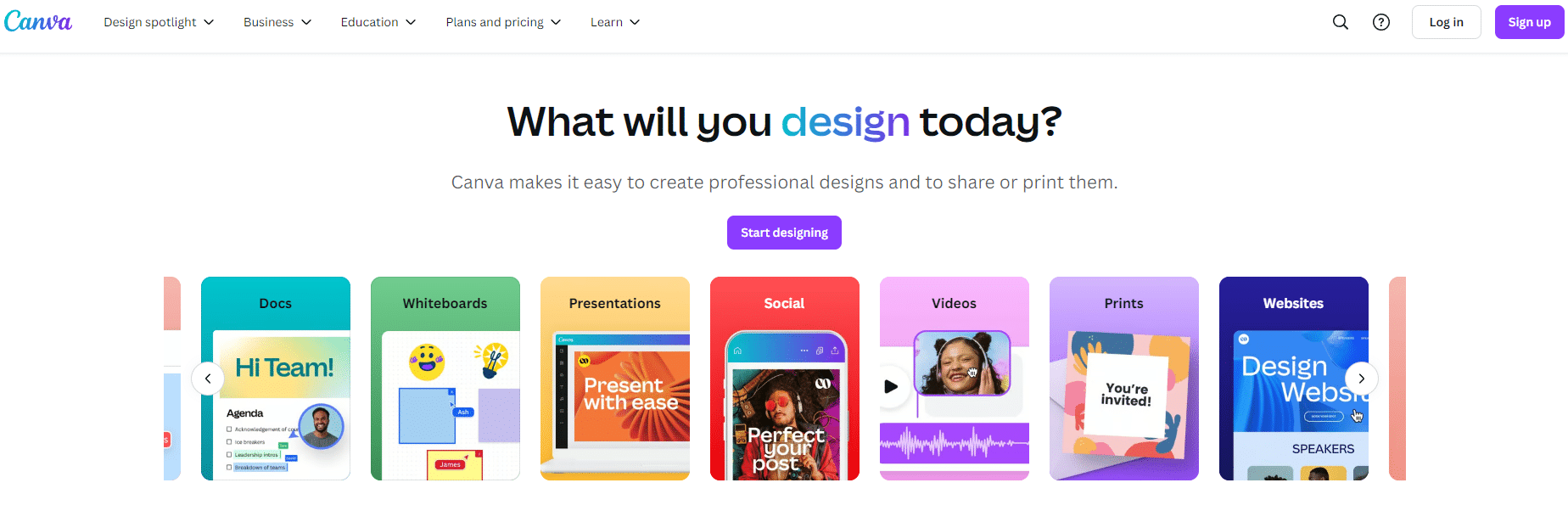
Canva remains a strong photo and video creation tool, but it has been beefed up with AI capabilities in the last year. 

You and your team can collaborate together within Canva while using AI tools to:

  • Generate copy with Magic Write.
  • Transform photos with Magic Edit.
  • Create on-brand templates.

You can do a lot with Canva, but you can now customize your graphics with AI tools, brainstorm ideas and so much more. 

If you need to edit a photo, change colors or remove a person from the background, you can do so with the help of AI.

Get the newsletter search marketers rely on.


8. Jasper

Jasper

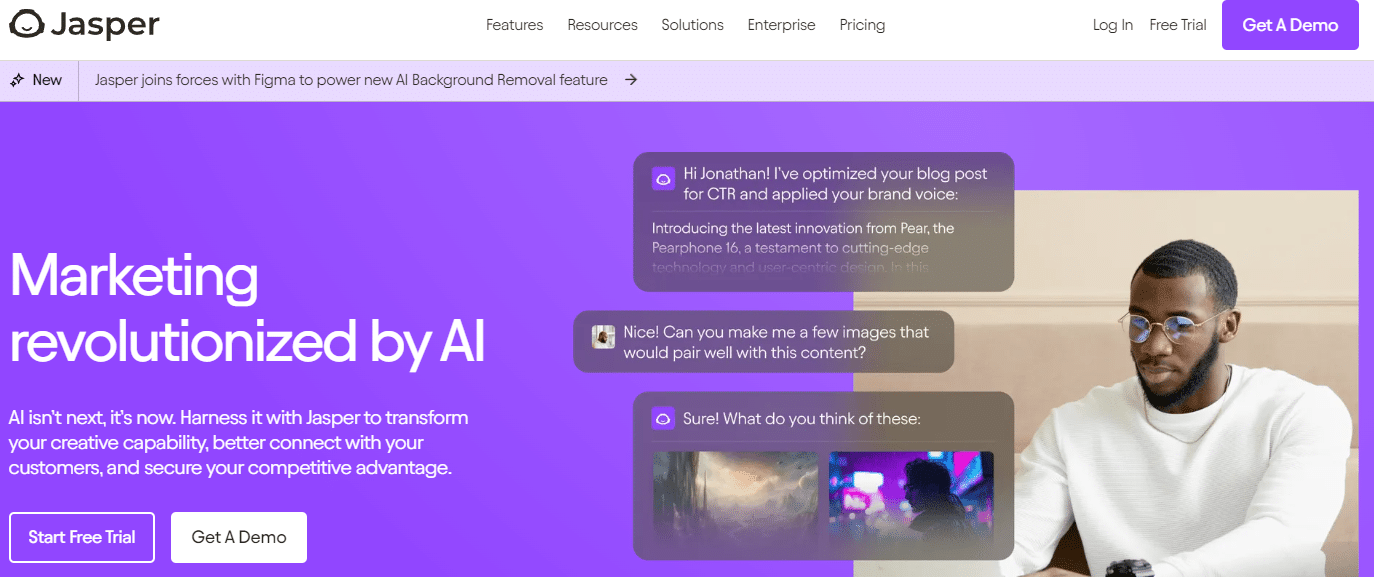
Jasper is another AI tool for brands and claims to be an “AI copilot.” 

For brands creating a lot of content, the platform allows you to create extensive information on brand voice, style guides and knowledge bases.

You can use the platform to:

  • Write and edit copy.
  • Optimize copy.
  • Repurpose content.
  • Create captions for social media.
  • Help with email marketing.

With the help of Jasper, you can keep your brand unique without losing your voice.

9. Diib

Diib

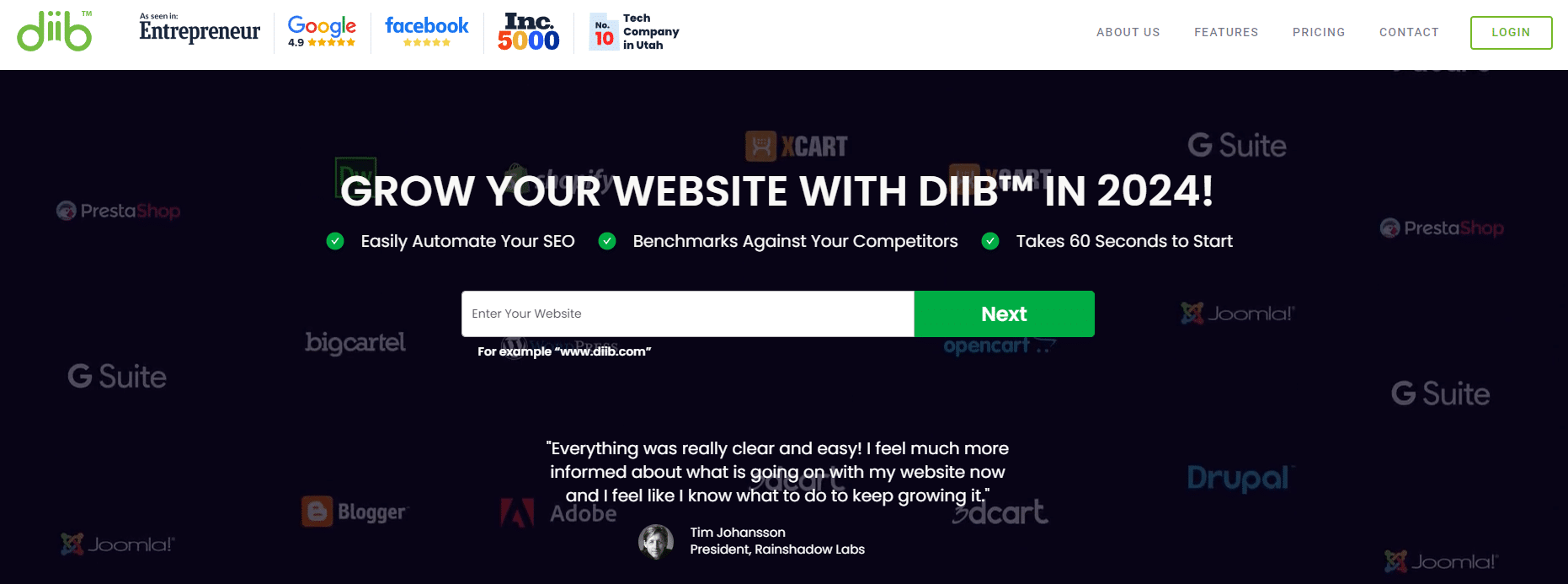
Diib is designed to automate your SEO with an answer engine that dives deep into your analytic data to identify benchmarks that you can start using to grow online brands. 

A few of the ways that Diib will help you optimize your site is with:

  • Identifying key issues.
  • Implementing improvements.
  • Monitoring rankings and opportunities.
  • So much more.

For smaller SEO projects, Diib is very useful and provides a wealth of monitoring options that help you get control of a site’s SEO.

Dig deeper: Can AI perform technical SEO analysis effectively?

10. Semrush

Semrush

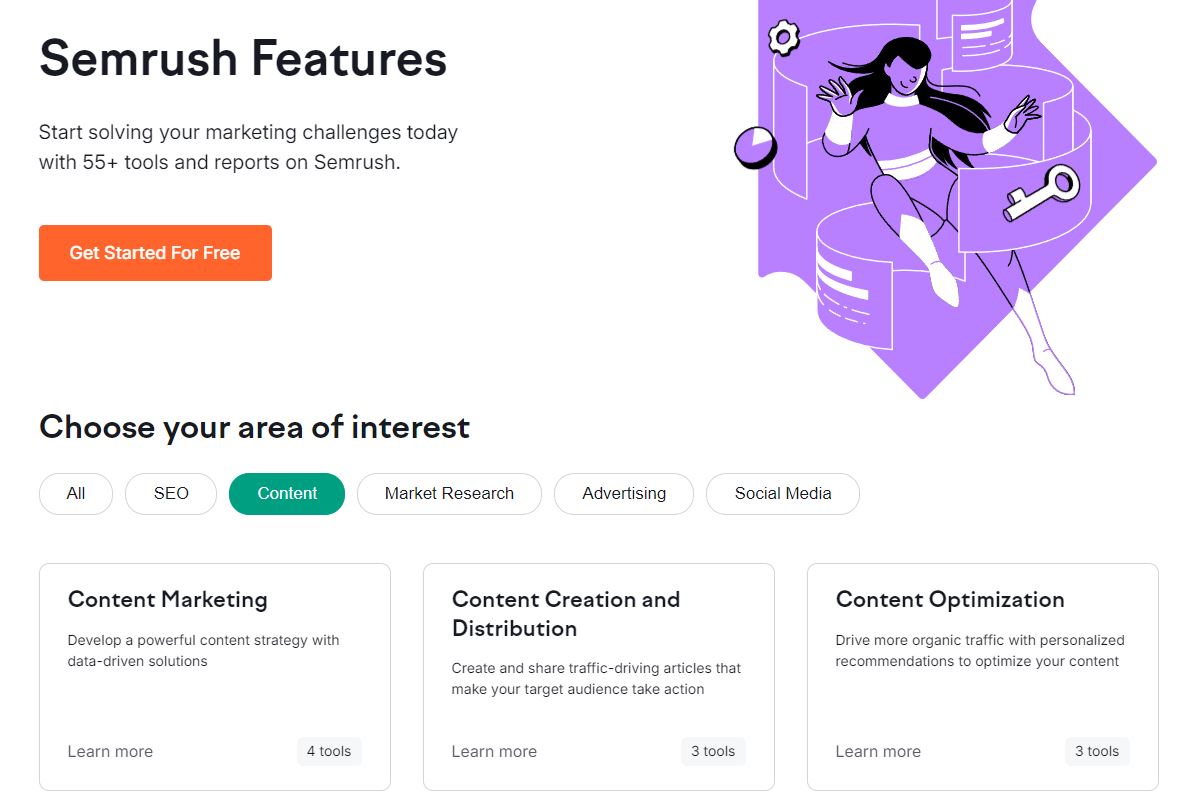
Semrush offers a suite of tools for SEOs, including ContentShake AI. This AI-powered tool is designed to create SEO-friendly articles to boost organic traffic.

ContentShake AI can generate weekly content ideas and images, optimize your content and even post to your WordPress site directly.

Content ideas are based on trending topics in your industry and target location. You can even generate entire blog posts that incorporate the best SEO practices and are written in your unique tone and style.

ContentShake AI says it can help you create content 12x faster and even generate compelling posts for any social media platform.

11. WordLift

WordLift

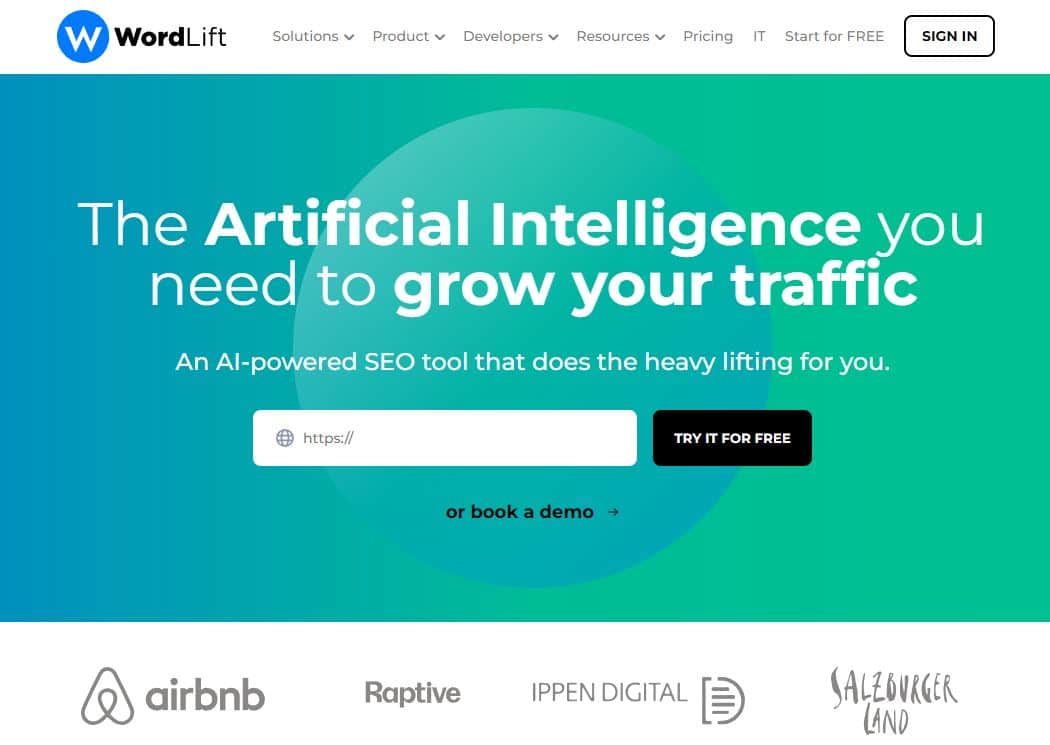
WordLift markets itself as an AI-powered tool that “does the heavy lifting for you.” 

It can add structured data to your site automatically and help you build knowledge graphs that help search engines understand the structure of our content.

But WordLift can also go beyond these technical tasks and help you create more engaging and informative content, thanks to the power of generative AI. 

Semantic analytics further help you understand search intent and provide usable data that you can use to optimize your content.

WordLift offers solutions for ecommerce brands and enterprises alike.

12. ChatGPT

ChatGPT

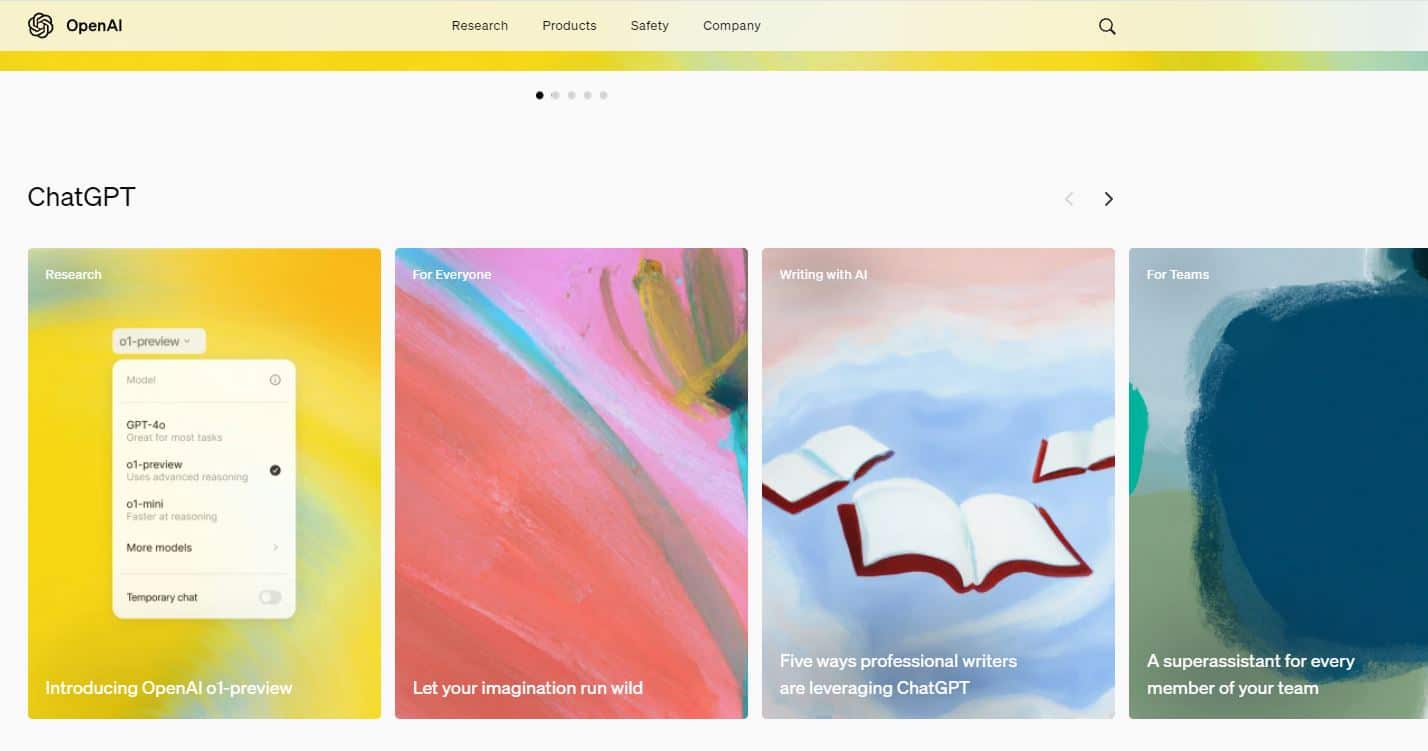
When you hear the words “artificial intelligence,” what’s the first thing that comes to mind? ChatGPT.

Type in a question and ChatGPT will give you the answer. Ask it for ideas or even to write a caption for your Instagram post and ChatGPT will deliver.

ChatGPT ushered in a wave of generative AI tools, but it remains the top tool of choice for many marketers. Today, it has more than 200 million weekly active users.

It’s not without its flaws – fact-checking is a must when using this tool – but for many marketers, it serves as a helpful tool to generate ideas, outlines, content inspiration, recommend on-page SEO changes and more.

Dig deeper: ChatGPT prompts for SEO: What you need to know

13. Topically

Topically

What’s the key to creating effective copy and content? Knowing your audience. What are their pain points? What is their intent?

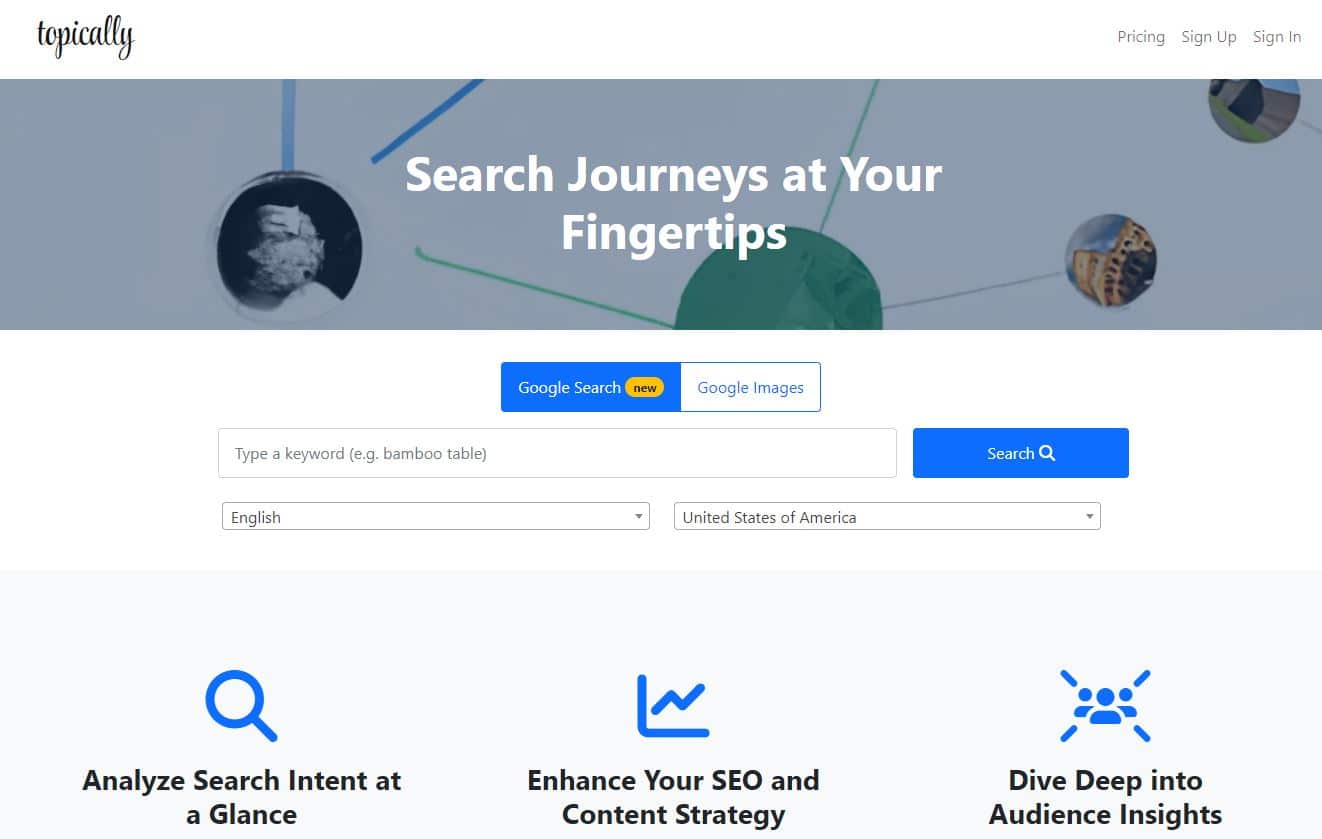
Topically harnesses the power of artificial intelligence to help you analyze search intent and better understand your audience with the tap of a button.

Tools like topical maps, image labels and search modifiers provide valuable insights into your audience’s behavior. You can leverage these insights to improve your content strategy and SEO campaign.

The best part? You can get started for free to see if this tool will enhance your marketing strategy.

14. People Asked

People Asked

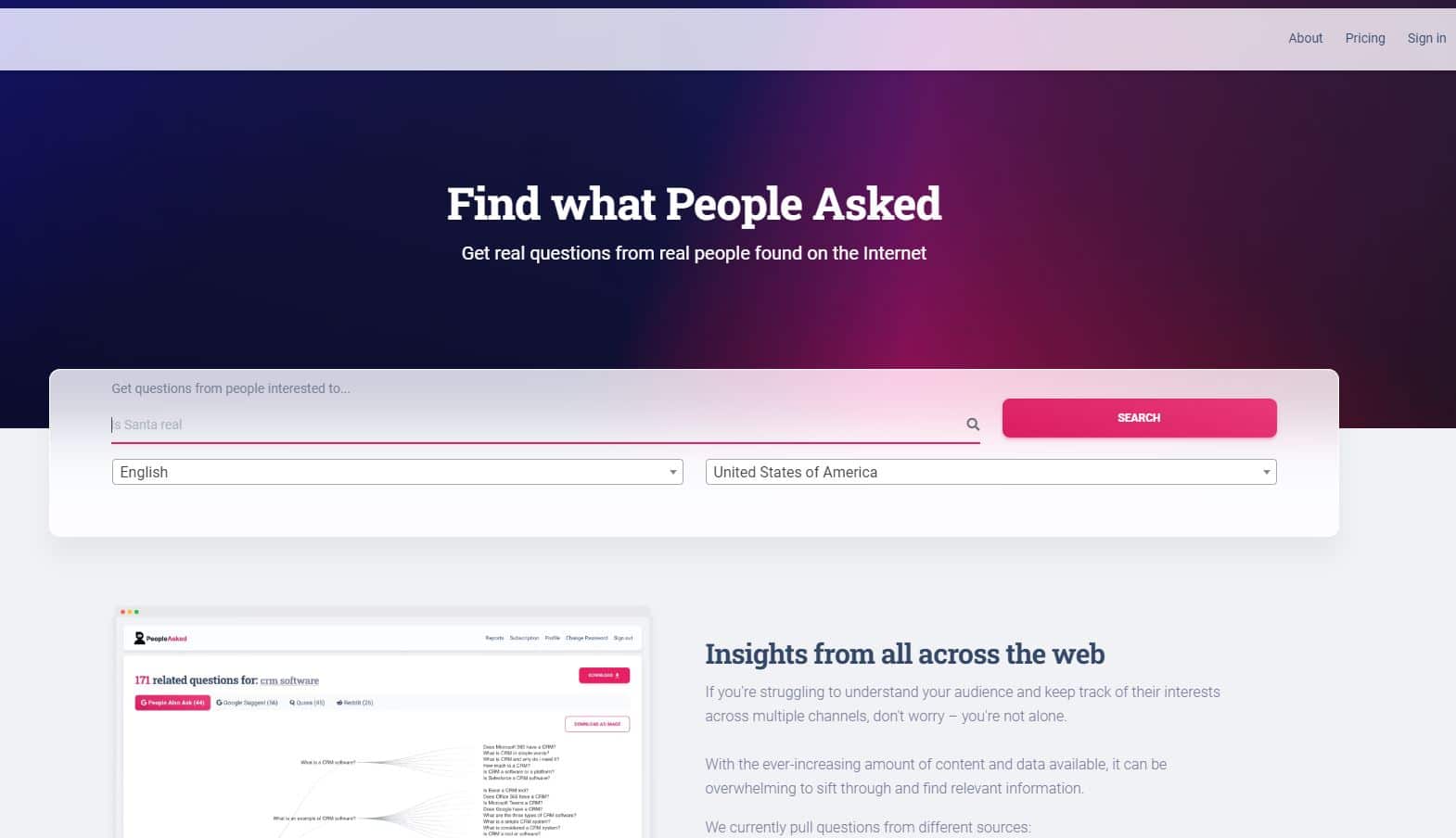
What is the goal of every search engine? To answer people’s questions. If your site can provide these answers, it’s more likely to rank higher in the search results.

The question is: how do you figure out what people are asking? Keyword research can only take you so far and even with tools, the process can be tedious.

People Asked is an AI-powered tool that grabs insights and questions from across the web. Just type in a topic or keyword and it will generate relevant questions asked by real people.

You can use this data to connect with your audience, solve their problems and improve your content creation.

15. FormStory

FormStory

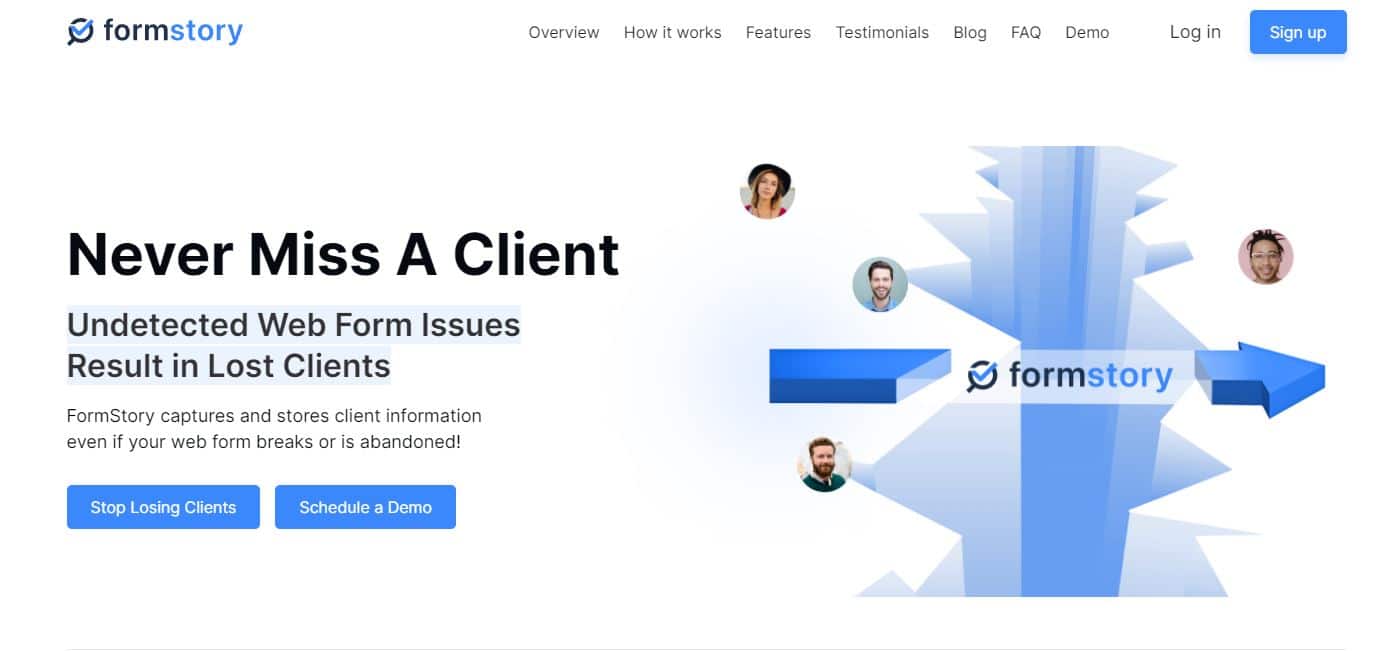
Web form issues can lead to lost clients, revenue and reputation. FormStory helps you avoid this fate by capturing and storing form data, even if they are abandoned or broken.

This AI-powered tool will monitor your forms and notify you each time they fail to capture submissions. It even stores all of the data in any form fields the visitor filled in before the form was abandoned.

With FormStory, you can view form analytics and performance in real time and use captured data to improve site conversions and performance.

Final thoughts

There’s no shortage of AI tools for SEO, and the right combination of solutions can help streamline your workflows and processes. 

These 15 tools are a great place to start. Take them for a test drive to see if they work for you and can easily integrate into your tech stack.

Original source: https://searchengineland.com/15-ai-tools-you-should-use-for-seo-446982

15 AI tools you should use for SEO

AI can significantly streamline SEO tasks, freeing time to focus on high-impact strategies.

However, with new AI tools constantly emerging, it can be overwhelming to know which ones truly enhance productivity and which may complicate things. 

From generating unique images to optimizing content, AI platforms like Grok, ChatGPT and Midjourney offer endless possibilities. 

Below, I’ll share 15 AI tools I’ve used for SEO, each of which has delivered great results.

While many alternatives are available, these tools are a strong starting point for exploring and refining your SEO approach.

15 AI tools you should use for SEO

1. Alli AI

Alli AI

Alli AI works with any CMS, bypassing technical limitations to use AI to help automate on-page SEO for:

  • Links missing titles.
  • Missing image alt and title text.
  • External link targets.
  • Site speed optimization.
  • Content recommendations.

The tool analyzes your site and gives you a step-by-step guide that explains how to optimize it for better results. 

I wouldn’t recommend blindly following every recommendation, but you can commit thousands of recommendations in a single click, which saves you countless hours of manual work.

2. RankIQ

RankIQ

RankIQ is a super-charged content optimizer that helps you analyze thousands of factors across blog posts to learn:

  • Suggested word count.
  • Topics to cover.
  • Keywords to include.

There’s even a title recommendation engine that will help you write more impactful titles. 

If you need to find low-competition keywords, optimize posts or write new ones, RankIQ is a must-have option in your AI toolbox.

Dig deeper: AI content creation: A beginner’s guide

3. Surfer

Surfer

Surfer isn’t new, but it continues to add to its tool that powers 150,000 content creators and agencies. You start with a keyword research engine and will gain access to:

  • Content guidelines.
  • Keywords and headers to include.
  • NLP suggestions.
  • Outlining and brief options.

A recent feature lets you auto-optimize posts and insert internal links on autopilot.

With Surfy, the writing assistant, you can have the platform rephrase the content, edit it and refine it while writing. 

If your site needs content updates, Surfer can help you boost organic traffic.

4. NeuralText

NeuralText

NeuralText is a lot like Surfer, with score and word count suggestions and it’s designed to enhance your content creation.

You’ll gain access to tools used by some of the largest brands in the world, including:

  • Keyword clustering.
  • Live SERP analysis.
  • AI writing assistant.
  • Search console integration.

Research and keyword analysis alone are two reasons to use Neuraltext to help you refine blog posts and create content briefs that you can pass off to your content team.

If you’re focusing on content to drive organic traffic to your site, you can’t go wrong with Neuraltext.

5. MarketMuse

MarketMuse

MarketMuse is a tool that I relied on heavily a few years ago when creating content, and it was always one step ahead of the competition.

You can create brief templates, conduct research, outline content and analyze clusters in an instant.

AI will help you:

  • Improve your writing.
  • Change your tone.
  • Summarize content.
  • Fix grammar and spelling.
  • Discover missing topics.
  • So much more.

If you want to create more impactful content, MarketMuse is a must-have tool.

Dig deeper: 6 guiding principles to leverage AI for SEO content production

6. Pictory

Pictory

Do you want to create videos but have no editing experience? That’s where Pictory comes in. 

You can leverage the power of video with written and video content that the platform’s AI will turn into short, shareable clips with:

  • AI voices.
  • Royalty-free music.

You can turn scripts or blog posts into videos in minutes and find matching footage. 

Add in your video SEO, and you’ll have videos ranking for your most valuable keywords.

7. Canva

Canva

Canva remains a strong photo and video creation tool, but it has been beefed up with AI capabilities in the last year. 

You and your team can collaborate together within Canva while using AI tools to:

  • Generate copy with Magic Write.
  • Transform photos with Magic Edit.
  • Create on-brand templates.

You can do a lot with Canva, but you can now customize your graphics with AI tools, brainstorm ideas and so much more. 

If you need to edit a photo, change colors or remove a person from the background, you can do so with the help of AI.

Get the newsletter search marketers rely on.


8. Jasper

Jasper

Jasper is another AI tool for brands and claims to be an “AI copilot.” 

For brands creating a lot of content, the platform allows you to create extensive information on brand voice, style guides and knowledge bases.

You can use the platform to:

  • Write and edit copy.
  • Optimize copy.
  • Repurpose content.
  • Create captions for social media.
  • Help with email marketing.

With the help of Jasper, you can keep your brand unique without losing your voice.

9. Diib

Diib

Diib is designed to automate your SEO with an answer engine that dives deep into your analytic data to identify benchmarks that you can start using to grow online brands. 

A few of the ways that Diib will help you optimize your site is with:

  • Identifying key issues.
  • Implementing improvements.
  • Monitoring rankings and opportunities.
  • So much more.

For smaller SEO projects, Diib is very useful and provides a wealth of monitoring options that help you get control of a site’s SEO.

Dig deeper: Can AI perform technical SEO analysis effectively?

10. Semrush

Semrush

Semrush offers a suite of tools for SEOs, including ContentShake AI. This AI-powered tool is designed to create SEO-friendly articles to boost organic traffic.

ContentShake AI can generate weekly content ideas and images, optimize your content and even post to your WordPress site directly.

Content ideas are based on trending topics in your industry and target location. You can even generate entire blog posts that incorporate the best SEO practices and are written in your unique tone and style.

ContentShake AI says it can help you create content 12x faster and even generate compelling posts for any social media platform.

11. WordLift

WordLift

WordLift markets itself as an AI-powered tool that “does the heavy lifting for you.” 

It can add structured data to your site automatically and help you build knowledge graphs that help search engines understand the structure of our content.

But WordLift can also go beyond these technical tasks and help you create more engaging and informative content, thanks to the power of generative AI. 

Semantic analytics further help you understand search intent and provide usable data that you can use to optimize your content.

WordLift offers solutions for ecommerce brands and enterprises alike.

12. ChatGPT

ChatGPT

When you hear the words “artificial intelligence,” what’s the first thing that comes to mind? ChatGPT.

Type in a question and ChatGPT will give you the answer. Ask it for ideas or even to write a caption for your Instagram post and ChatGPT will deliver.

ChatGPT ushered in a wave of generative AI tools, but it remains the top tool of choice for many marketers. Today, it has more than 200 million weekly active users.

It’s not without its flaws – fact-checking is a must when using this tool – but for many marketers, it serves as a helpful tool to generate ideas, outlines, content inspiration, recommend on-page SEO changes and more.

Dig deeper: ChatGPT prompts for SEO: What you need to know

13. Topically

Topically

What’s the key to creating effective copy and content? Knowing your audience. What are their pain points? What is their intent?

Topically harnesses the power of artificial intelligence to help you analyze search intent and better understand your audience with the tap of a button.

Tools like topical maps, image labels and search modifiers provide valuable insights into your audience’s behavior. You can leverage these insights to improve your content strategy and SEO campaign.

The best part? You can get started for free to see if this tool will enhance your marketing strategy.

14. People Asked

People Asked

What is the goal of every search engine? To answer people’s questions. If your site can provide these answers, it’s more likely to rank higher in the search results.

The question is: how do you figure out what people are asking? Keyword research can only take you so far and even with tools, the process can be tedious.

People Asked is an AI-powered tool that grabs insights and questions from across the web. Just type in a topic or keyword and it will generate relevant questions asked by real people.

You can use this data to connect with your audience, solve their problems and improve your content creation.

15. FormStory

FormStory

Web form issues can lead to lost clients, revenue and reputation. FormStory helps you avoid this fate by capturing and storing form data, even if they are abandoned or broken.

This AI-powered tool will monitor your forms and notify you each time they fail to capture submissions. It even stores all of the data in any form fields the visitor filled in before the form was abandoned.

With FormStory, you can view form analytics and performance in real time and use captured data to improve site conversions and performance.

Final thoughts

There’s no shortage of AI tools for SEO, and the right combination of solutions can help streamline your workflows and processes. 

These 15 tools are a great place to start. Take them for a test drive to see if they work for you and can easily integrate into your tech stack.

Original source: https://searchengineland.com/15-ai-tools-you-should-use-for-seo-446982

When Consolidating Business Debt Makes Sense

Home Business Magazine Online

As a business owner, managing debt is often part of the journey. Whether you’ve financed new equipment, taken out a loan to cover operational costs, or used credit to fund expansions, juggling multiple debts may quickly become overwhelming. Having a firm grasp of the pros and cons of debt consolidation is also vital when assessing your strategy and can help streamline your costs.

If you find yourself in this position, consolidating your business debt might be the solution to streamline payments and improve your financial health.

Keep reading to learn when debt consolidation could make sense for your business.

Understanding Debt Consolidation

Debt consolidation is a financial strategy that allows you to combine multiple debts into one loan or credit line, typically with more favorable terms, such as a lower interest rate or a more manageable payment schedule. Instead of making separate payments to multiple lenders, you make a single payment, simplifying your cash flow and potentially reducing the stress of managing various due dates.

When Debt Consolidation Makes Sense

High Interest Rates are Draining Your Profits

One of the clearest signals that debt consolidation may benefit your business is if you’re paying high interest on multiple loans or credit cards.

High-interest debt could significantly cut into your profits, leaving you with less capital to reinvest in your business. Consolidating this debt into a single loan with a lower interest rate may reduce your overall interest payments, freeing up cash for other important business needs.

You’re Struggling to Keep Track of Payments

Managing various loans, each with different due dates and payment amounts, may be stressful. Missing or making late payments could also hurt your credit score and increase your debt with penalties or late fees.

So, if you’re struggling to stay on top of your financial obligations, consolidating your debt into one monthly payment may simplify your schedule and ensure you stay current on your financial obligations.

Your Cash Flow is Tight

Cash flow is typically the lifeblood of any business, and when you’re strapped for cash, keeping up with multiple debt payments may be difficult.

Consolidating debt could reduce your monthly payment by extending the loan term or securing a lower interest rate, giving you more breathing room in your cash flow. This extra liquidity could be used to cover operating expenses and payroll or even invest in growth opportunities.

You Have Good Credit

If your business has a good credit score, you may qualify for debt consolidation options with favorable terms. Lenders are generally more likely to offer lower interest rates and flexible repayment options to businesses with strong credit histories.

So, consolidating your debt when you have good credit may save you money in interest payments over time.

You Want to Simplify Your Finances

Consolidating debt could also be smart if you simply want to streamline your business finances.

Having one debt to manage instead of several may reduce the time and effort required to handle your financial obligations. This might be especially beneficial if you’re trying to free up time to focus on growing your business rather than dealing with the day-to-day hassle of juggling multiple debts.

Pros and Cons of Debt Consolidation

As with any financial strategy, consolidating business debt has pros and cons.

Pros of Debt Consolidation

  • Lower Interest Rates: You could save money by reducing the overall interest you’re paying on your debts, especially if your original loans had high interest rates
  • Single Payment: Instead of managing multiple loans, you only must make one payment, simplifying your financial management
  • Improved Cash Flow: With lower monthly payments, you may free up cash for other business needs
  • Credit Score Improvement: Making consistent, on-time payments on your consolidation loan could help boost your credit score over time

Cons of Debt Consolidation

  • Longer Repayment Period: While lowering your monthly payment might help your cash flow, it could also mean extending the length of your loan, leading to more interest paid overtime
  • Fees and Costs: Some consolidation loans come with origination fees or other costs that might negate the savings you’d get from a lower interest rate
  • Risk to Collateral: If you consolidate with a secured loan, you may need to put up business assets as collateral and if you can’t repay the loan, those assets could be at risk

Understanding the pros and cons of debt consolidation could help you make an informed decision and prevent you from getting into a worse financial situation in the long run.

When Debt Consolidation Might Not Be the Right Choice

Debt consolidation isn’t always the best move, especially if facing deeper financial issues. For example, if your business is barely staying afloat and you’re considering consolidation as a last resort, it may prove to be a temporary solution.

By carefully evaluating your financial situation and understanding the pros and cons of debt consolidation, you could make an informed decision that sets your business up for long-term success.

The post When Consolidating Business Debt Makes Sense appeared first on Home Business Magazine.

Original source: https://homebusinessmag.com/money/cutting-costs/when-consolidating-business-debt-makes-sense/

When Consolidating Business Debt Makes Sense

Home Business Magazine Online

As a business owner, managing debt is often part of the journey. Whether you’ve financed new equipment, taken out a loan to cover operational costs, or used credit to fund expansions, juggling multiple debts may quickly become overwhelming. Having a firm grasp of the pros and cons of debt consolidation is also vital when assessing your strategy and can help streamline your costs.

If you find yourself in this position, consolidating your business debt might be the solution to streamline payments and improve your financial health.

Keep reading to learn when debt consolidation could make sense for your business.

Understanding Debt Consolidation

Debt consolidation is a financial strategy that allows you to combine multiple debts into one loan or credit line, typically with more favorable terms, such as a lower interest rate or a more manageable payment schedule. Instead of making separate payments to multiple lenders, you make a single payment, simplifying your cash flow and potentially reducing the stress of managing various due dates.

When Debt Consolidation Makes Sense

High Interest Rates are Draining Your Profits

One of the clearest signals that debt consolidation may benefit your business is if you’re paying high interest on multiple loans or credit cards.

High-interest debt could significantly cut into your profits, leaving you with less capital to reinvest in your business. Consolidating this debt into a single loan with a lower interest rate may reduce your overall interest payments, freeing up cash for other important business needs.

You’re Struggling to Keep Track of Payments

Managing various loans, each with different due dates and payment amounts, may be stressful. Missing or making late payments could also hurt your credit score and increase your debt with penalties or late fees.

So, if you’re struggling to stay on top of your financial obligations, consolidating your debt into one monthly payment may simplify your schedule and ensure you stay current on your financial obligations.

Your Cash Flow is Tight

Cash flow is typically the lifeblood of any business, and when you’re strapped for cash, keeping up with multiple debt payments may be difficult.

Consolidating debt could reduce your monthly payment by extending the loan term or securing a lower interest rate, giving you more breathing room in your cash flow. This extra liquidity could be used to cover operating expenses and payroll or even invest in growth opportunities.

You Have Good Credit

If your business has a good credit score, you may qualify for debt consolidation options with favorable terms. Lenders are generally more likely to offer lower interest rates and flexible repayment options to businesses with strong credit histories.

So, consolidating your debt when you have good credit may save you money in interest payments over time.

You Want to Simplify Your Finances

Consolidating debt could also be smart if you simply want to streamline your business finances.

Having one debt to manage instead of several may reduce the time and effort required to handle your financial obligations. This might be especially beneficial if you’re trying to free up time to focus on growing your business rather than dealing with the day-to-day hassle of juggling multiple debts.

Pros and Cons of Debt Consolidation

As with any financial strategy, consolidating business debt has pros and cons.

Pros of Debt Consolidation

  • Lower Interest Rates: You could save money by reducing the overall interest you’re paying on your debts, especially if your original loans had high interest rates
  • Single Payment: Instead of managing multiple loans, you only must make one payment, simplifying your financial management
  • Improved Cash Flow: With lower monthly payments, you may free up cash for other business needs
  • Credit Score Improvement: Making consistent, on-time payments on your consolidation loan could help boost your credit score over time

Cons of Debt Consolidation

  • Longer Repayment Period: While lowering your monthly payment might help your cash flow, it could also mean extending the length of your loan, leading to more interest paid overtime
  • Fees and Costs: Some consolidation loans come with origination fees or other costs that might negate the savings you’d get from a lower interest rate
  • Risk to Collateral: If you consolidate with a secured loan, you may need to put up business assets as collateral and if you can’t repay the loan, those assets could be at risk

Understanding the pros and cons of debt consolidation could help you make an informed decision and prevent you from getting into a worse financial situation in the long run.

When Debt Consolidation Might Not Be the Right Choice

Debt consolidation isn’t always the best move, especially if facing deeper financial issues. For example, if your business is barely staying afloat and you’re considering consolidation as a last resort, it may prove to be a temporary solution.

By carefully evaluating your financial situation and understanding the pros and cons of debt consolidation, you could make an informed decision that sets your business up for long-term success.

The post When Consolidating Business Debt Makes Sense appeared first on Home Business Magazine.

Original source: https://homebusinessmag.com/money/cutting-costs/when-consolidating-business-debt-makes-sense/

15 AI tools you should use for SEO

AI can significantly streamline SEO tasks, freeing time to focus on high-impact strategies.

However, with new AI tools constantly emerging, it can be overwhelming to know which ones truly enhance productivity and which may complicate things. 

From generating unique images to optimizing content, AI platforms like Grok, ChatGPT and Midjourney offer endless possibilities. 

Below, I’ll share 15 AI tools I’ve used for SEO, each of which has delivered great results.

While many alternatives are available, these tools are a strong starting point for exploring and refining your SEO approach.

15 AI tools you should use for SEO

1. Alli AI

Alli AI

Alli AI works with any CMS, bypassing technical limitations to use AI to help automate on-page SEO for:

  • Links missing titles.
  • Missing image alt and title text.
  • External link targets.
  • Site speed optimization.
  • Content recommendations.

The tool analyzes your site and gives you a step-by-step guide that explains how to optimize it for better results. 

I wouldn’t recommend blindly following every recommendation, but you can commit thousands of recommendations in a single click, which saves you countless hours of manual work.

2. RankIQ

RankIQ

RankIQ is a super-charged content optimizer that helps you analyze thousands of factors across blog posts to learn:

  • Suggested word count.
  • Topics to cover.
  • Keywords to include.

There’s even a title recommendation engine that will help you write more impactful titles. 

If you need to find low-competition keywords, optimize posts or write new ones, RankIQ is a must-have option in your AI toolbox.

Dig deeper: AI content creation: A beginner’s guide

3. Surfer

Surfer

Surfer isn’t new, but it continues to add to its tool that powers 150,000 content creators and agencies. You start with a keyword research engine and will gain access to:

  • Content guidelines.
  • Keywords and headers to include.
  • NLP suggestions.
  • Outlining and brief options.

A recent feature lets you auto-optimize posts and insert internal links on autopilot.

With Surfy, the writing assistant, you can have the platform rephrase the content, edit it and refine it while writing. 

If your site needs content updates, Surfer can help you boost organic traffic.

4. NeuralText

NeuralText

NeuralText is a lot like Surfer, with score and word count suggestions and it’s designed to enhance your content creation.

You’ll gain access to tools used by some of the largest brands in the world, including:

  • Keyword clustering.
  • Live SERP analysis.
  • AI writing assistant.
  • Search console integration.

Research and keyword analysis alone are two reasons to use Neuraltext to help you refine blog posts and create content briefs that you can pass off to your content team.

If you’re focusing on content to drive organic traffic to your site, you can’t go wrong with Neuraltext.

5. MarketMuse

MarketMuse

MarketMuse is a tool that I relied on heavily a few years ago when creating content, and it was always one step ahead of the competition.

You can create brief templates, conduct research, outline content and analyze clusters in an instant.

AI will help you:

  • Improve your writing.
  • Change your tone.
  • Summarize content.
  • Fix grammar and spelling.
  • Discover missing topics.
  • So much more.

If you want to create more impactful content, MarketMuse is a must-have tool.

Dig deeper: 6 guiding principles to leverage AI for SEO content production

6. Pictory

Pictory

Do you want to create videos but have no editing experience? That’s where Pictory comes in. 

You can leverage the power of video with written and video content that the platform’s AI will turn into short, shareable clips with:

  • AI voices.
  • Royalty-free music.

You can turn scripts or blog posts into videos in minutes and find matching footage. 

Add in your video SEO, and you’ll have videos ranking for your most valuable keywords.

7. Canva

Canva

Canva remains a strong photo and video creation tool, but it has been beefed up with AI capabilities in the last year. 

You and your team can collaborate together within Canva while using AI tools to:

  • Generate copy with Magic Write.
  • Transform photos with Magic Edit.
  • Create on-brand templates.

You can do a lot with Canva, but you can now customize your graphics with AI tools, brainstorm ideas and so much more. 

If you need to edit a photo, change colors or remove a person from the background, you can do so with the help of AI.

Get the newsletter search marketers rely on.


8. Jasper

Jasper

Jasper is another AI tool for brands and claims to be an “AI copilot.” 

For brands creating a lot of content, the platform allows you to create extensive information on brand voice, style guides and knowledge bases.

You can use the platform to:

  • Write and edit copy.
  • Optimize copy.
  • Repurpose content.
  • Create captions for social media.
  • Help with email marketing.

With the help of Jasper, you can keep your brand unique without losing your voice.

9. Diib

Diib

Diib is designed to automate your SEO with an answer engine that dives deep into your analytic data to identify benchmarks that you can start using to grow online brands. 

A few of the ways that Diib will help you optimize your site is with:

  • Identifying key issues.
  • Implementing improvements.
  • Monitoring rankings and opportunities.
  • So much more.

For smaller SEO projects, Diib is very useful and provides a wealth of monitoring options that help you get control of a site’s SEO.

Dig deeper: Can AI perform technical SEO analysis effectively?

10. Semrush

Semrush

Semrush offers a suite of tools for SEOs, including ContentShake AI. This AI-powered tool is designed to create SEO-friendly articles to boost organic traffic.

ContentShake AI can generate weekly content ideas and images, optimize your content and even post to your WordPress site directly.

Content ideas are based on trending topics in your industry and target location. You can even generate entire blog posts that incorporate the best SEO practices and are written in your unique tone and style.

ContentShake AI says it can help you create content 12x faster and even generate compelling posts for any social media platform.

11. WordLift

WordLift

WordLift markets itself as an AI-powered tool that “does the heavy lifting for you.” 

It can add structured data to your site automatically and help you build knowledge graphs that help search engines understand the structure of our content.

But WordLift can also go beyond these technical tasks and help you create more engaging and informative content, thanks to the power of generative AI. 

Semantic analytics further help you understand search intent and provide usable data that you can use to optimize your content.

WordLift offers solutions for ecommerce brands and enterprises alike.

12. ChatGPT

ChatGPT

When you hear the words “artificial intelligence,” what’s the first thing that comes to mind? ChatGPT.

Type in a question and ChatGPT will give you the answer. Ask it for ideas or even to write a caption for your Instagram post and ChatGPT will deliver.

ChatGPT ushered in a wave of generative AI tools, but it remains the top tool of choice for many marketers. Today, it has more than 200 million weekly active users.

It’s not without its flaws – fact-checking is a must when using this tool – but for many marketers, it serves as a helpful tool to generate ideas, outlines, content inspiration, recommend on-page SEO changes and more.

Dig deeper: ChatGPT prompts for SEO: What you need to know

13. Topically

Topically

What’s the key to creating effective copy and content? Knowing your audience. What are their pain points? What is their intent?

Topically harnesses the power of artificial intelligence to help you analyze search intent and better understand your audience with the tap of a button.

Tools like topical maps, image labels and search modifiers provide valuable insights into your audience’s behavior. You can leverage these insights to improve your content strategy and SEO campaign.

The best part? You can get started for free to see if this tool will enhance your marketing strategy.

14. People Asked

People Asked

What is the goal of every search engine? To answer people’s questions. If your site can provide these answers, it’s more likely to rank higher in the search results.

The question is: how do you figure out what people are asking? Keyword research can only take you so far and even with tools, the process can be tedious.

People Asked is an AI-powered tool that grabs insights and questions from across the web. Just type in a topic or keyword and it will generate relevant questions asked by real people.

You can use this data to connect with your audience, solve their problems and improve your content creation.

15. FormStory

FormStory

Web form issues can lead to lost clients, revenue and reputation. FormStory helps you avoid this fate by capturing and storing form data, even if they are abandoned or broken.

This AI-powered tool will monitor your forms and notify you each time they fail to capture submissions. It even stores all of the data in any form fields the visitor filled in before the form was abandoned.

With FormStory, you can view form analytics and performance in real time and use captured data to improve site conversions and performance.

Final thoughts

There’s no shortage of AI tools for SEO, and the right combination of solutions can help streamline your workflows and processes. 

These 15 tools are a great place to start. Take them for a test drive to see if they work for you and can easily integrate into your tech stack.

Original source: https://searchengineland.com/15-ai-tools-you-should-use-for-seo-446982

15 AI tools you should use for SEO

AI can significantly streamline SEO tasks, freeing time to focus on high-impact strategies.

However, with new AI tools constantly emerging, it can be overwhelming to know which ones truly enhance productivity and which may complicate things. 

From generating unique images to optimizing content, AI platforms like Grok, ChatGPT and Midjourney offer endless possibilities. 

Below, I’ll share 15 AI tools I’ve used for SEO, each of which has delivered great results.

While many alternatives are available, these tools are a strong starting point for exploring and refining your SEO approach.

15 AI tools you should use for SEO

1. Alli AI

Alli AI

Alli AI works with any CMS, bypassing technical limitations to use AI to help automate on-page SEO for:

  • Links missing titles.
  • Missing image alt and title text.
  • External link targets.
  • Site speed optimization.
  • Content recommendations.

The tool analyzes your site and gives you a step-by-step guide that explains how to optimize it for better results. 

I wouldn’t recommend blindly following every recommendation, but you can commit thousands of recommendations in a single click, which saves you countless hours of manual work.

2. RankIQ

RankIQ

RankIQ is a super-charged content optimizer that helps you analyze thousands of factors across blog posts to learn:

  • Suggested word count.
  • Topics to cover.
  • Keywords to include.

There’s even a title recommendation engine that will help you write more impactful titles. 

If you need to find low-competition keywords, optimize posts or write new ones, RankIQ is a must-have option in your AI toolbox.

Dig deeper: AI content creation: A beginner’s guide

3. Surfer

Surfer

Surfer isn’t new, but it continues to add to its tool that powers 150,000 content creators and agencies. You start with a keyword research engine and will gain access to:

  • Content guidelines.
  • Keywords and headers to include.
  • NLP suggestions.
  • Outlining and brief options.

A recent feature lets you auto-optimize posts and insert internal links on autopilot.

With Surfy, the writing assistant, you can have the platform rephrase the content, edit it and refine it while writing. 

If your site needs content updates, Surfer can help you boost organic traffic.

4. NeuralText

NeuralText

NeuralText is a lot like Surfer, with score and word count suggestions and it’s designed to enhance your content creation.

You’ll gain access to tools used by some of the largest brands in the world, including:

  • Keyword clustering.
  • Live SERP analysis.
  • AI writing assistant.
  • Search console integration.

Research and keyword analysis alone are two reasons to use Neuraltext to help you refine blog posts and create content briefs that you can pass off to your content team.

If you’re focusing on content to drive organic traffic to your site, you can’t go wrong with Neuraltext.

5. MarketMuse

MarketMuse

MarketMuse is a tool that I relied on heavily a few years ago when creating content, and it was always one step ahead of the competition.

You can create brief templates, conduct research, outline content and analyze clusters in an instant.

AI will help you:

  • Improve your writing.
  • Change your tone.
  • Summarize content.
  • Fix grammar and spelling.
  • Discover missing topics.
  • So much more.

If you want to create more impactful content, MarketMuse is a must-have tool.

Dig deeper: 6 guiding principles to leverage AI for SEO content production

6. Pictory

Pictory

Do you want to create videos but have no editing experience? That’s where Pictory comes in. 

You can leverage the power of video with written and video content that the platform’s AI will turn into short, shareable clips with:

  • AI voices.
  • Royalty-free music.

You can turn scripts or blog posts into videos in minutes and find matching footage. 

Add in your video SEO, and you’ll have videos ranking for your most valuable keywords.

7. Canva

Canva

Canva remains a strong photo and video creation tool, but it has been beefed up with AI capabilities in the last year. 

You and your team can collaborate together within Canva while using AI tools to:

  • Generate copy with Magic Write.
  • Transform photos with Magic Edit.
  • Create on-brand templates.

You can do a lot with Canva, but you can now customize your graphics with AI tools, brainstorm ideas and so much more. 

If you need to edit a photo, change colors or remove a person from the background, you can do so with the help of AI.

Get the newsletter search marketers rely on.


8. Jasper

Jasper

Jasper is another AI tool for brands and claims to be an “AI copilot.” 

For brands creating a lot of content, the platform allows you to create extensive information on brand voice, style guides and knowledge bases.

You can use the platform to:

  • Write and edit copy.
  • Optimize copy.
  • Repurpose content.
  • Create captions for social media.
  • Help with email marketing.

With the help of Jasper, you can keep your brand unique without losing your voice.

9. Diib

Diib

Diib is designed to automate your SEO with an answer engine that dives deep into your analytic data to identify benchmarks that you can start using to grow online brands. 

A few of the ways that Diib will help you optimize your site is with:

  • Identifying key issues.
  • Implementing improvements.
  • Monitoring rankings and opportunities.
  • So much more.

For smaller SEO projects, Diib is very useful and provides a wealth of monitoring options that help you get control of a site’s SEO.

Dig deeper: Can AI perform technical SEO analysis effectively?

10. Semrush

Semrush

Semrush offers a suite of tools for SEOs, including ContentShake AI. This AI-powered tool is designed to create SEO-friendly articles to boost organic traffic.

ContentShake AI can generate weekly content ideas and images, optimize your content and even post to your WordPress site directly.

Content ideas are based on trending topics in your industry and target location. You can even generate entire blog posts that incorporate the best SEO practices and are written in your unique tone and style.

ContentShake AI says it can help you create content 12x faster and even generate compelling posts for any social media platform.

11. WordLift

WordLift

WordLift markets itself as an AI-powered tool that “does the heavy lifting for you.” 

It can add structured data to your site automatically and help you build knowledge graphs that help search engines understand the structure of our content.

But WordLift can also go beyond these technical tasks and help you create more engaging and informative content, thanks to the power of generative AI. 

Semantic analytics further help you understand search intent and provide usable data that you can use to optimize your content.

WordLift offers solutions for ecommerce brands and enterprises alike.

12. ChatGPT

ChatGPT

When you hear the words “artificial intelligence,” what’s the first thing that comes to mind? ChatGPT.

Type in a question and ChatGPT will give you the answer. Ask it for ideas or even to write a caption for your Instagram post and ChatGPT will deliver.

ChatGPT ushered in a wave of generative AI tools, but it remains the top tool of choice for many marketers. Today, it has more than 200 million weekly active users.

It’s not without its flaws – fact-checking is a must when using this tool – but for many marketers, it serves as a helpful tool to generate ideas, outlines, content inspiration, recommend on-page SEO changes and more.

Dig deeper: ChatGPT prompts for SEO: What you need to know

13. Topically

Topically

What’s the key to creating effective copy and content? Knowing your audience. What are their pain points? What is their intent?

Topically harnesses the power of artificial intelligence to help you analyze search intent and better understand your audience with the tap of a button.

Tools like topical maps, image labels and search modifiers provide valuable insights into your audience’s behavior. You can leverage these insights to improve your content strategy and SEO campaign.

The best part? You can get started for free to see if this tool will enhance your marketing strategy.

14. People Asked

People Asked

What is the goal of every search engine? To answer people’s questions. If your site can provide these answers, it’s more likely to rank higher in the search results.

The question is: how do you figure out what people are asking? Keyword research can only take you so far and even with tools, the process can be tedious.

People Asked is an AI-powered tool that grabs insights and questions from across the web. Just type in a topic or keyword and it will generate relevant questions asked by real people.

You can use this data to connect with your audience, solve their problems and improve your content creation.

15. FormStory

FormStory

Web form issues can lead to lost clients, revenue and reputation. FormStory helps you avoid this fate by capturing and storing form data, even if they are abandoned or broken.

This AI-powered tool will monitor your forms and notify you each time they fail to capture submissions. It even stores all of the data in any form fields the visitor filled in before the form was abandoned.

With FormStory, you can view form analytics and performance in real time and use captured data to improve site conversions and performance.

Final thoughts

There’s no shortage of AI tools for SEO, and the right combination of solutions can help streamline your workflows and processes. 

These 15 tools are a great place to start. Take them for a test drive to see if they work for you and can easily integrate into your tech stack.

Original source: https://searchengineland.com/15-ai-tools-you-should-use-for-seo-446982