TikTok publishes best practice guide for optimal campaign performance

TikTok published a best practice guide on how to optimize your ad campaigns and bidding strategies for maximum performance.

The 13-page guide includes tips and recommendations for:

  • Account structure.
  • Campaign setup.
  • Data connections.
  • Creative.
  • Attribution.
  • Measurement.

Why we care. If you plan to run campaigns on TikTok this year, you should check out this guide as the tips provided are directly from the platform. However, it’s important to keep in mind the source of this information, and that certain advice may prioritize TikTok’s interests over advertisers’.

Ad account optimization. As part of a nurtured account strategy, TikTok recommends ensuring your Ad Account is structured towards the end-to-end user journey, for example:

  • Only use one ad account.
  • Combine and diversify ad groups.

Nurtured account strategy. TikTok advises starting with upper funnel conversion events (don’t immediately start with the lowest funnel events) and repeating the process for each new Ad Group. The platform claims this is the “key to scalable growth and long-term performance.”

Data connection setup. TikTok states that by utilizing its data connections to measure and learn from consumer actions on your website, you can maximize the chances of conversions.

Setting and scaling your budget. TikTok recommends adhering to its best practices to maximize the effectiveness and efficiency of your budget utilization. The platform notes that it is advisable to set budgets for both campaigns and Ad Groups.

Bidding strategy. The bidding strategy you select tells TikTok’s system how to bid for you in the ad auction, so the platform advises selecting a bidding strategy that is best aligned to your primary KPI for campaign efficiency.

Ad fatigue. When you reach the maximum number of people who are interested in your ad, you may experience ad fatigue. TikTok has some tips on what actions you can take if this happens.

Attribution. TikTok recommends using Click Through Attribution together with View Through Attribution for a holistic view of your campaign.

What TikTok is saying. TikTok said in a statement:

  • “Ensure your campaigns are set up properly so that you can achieve repeatable, reliable results with ease. Use the best practices in this guide as the foundational building blocks for success on TikTok.”

Get the daily newsletter search marketers rely on.


Deep dive. Read TikTok’s optimal web performance best practice guide in full for more information

Original source: https://searchengineland.com/tiktok-best-practice-optimal-campaign-performance-437425

Google expands generative AI capabilities for automatically created assets

Google expanded its generative AI features for automatically created assets (ACA) to all English language advertisers in the U.S. and UK.

Why we care. If you are an English-speaking advertiser in the U.S. or UK, you can now start utilizing generative AI to help create your ad campaigns, giving you access to a broader range of ideas instantly and significant time-saving benefits.

ACAs explained. Automatically created assets (ACAs) are a campaign-level setting that advertisers can opt into. By activating this setting, assets such as headlines and descriptions are automatically generated. These generated assets complement the ones provided by advertisers for their responsive search ads, enhancing the overall ad content.

Generative AI and ACAs. In some cases, generative AI is used to create assets that better match what people are searching for. This helps ensure that the generated content is relevant and aligns with users’ search queries.

How it works. Automatically created assets (ACAs) work in conjunction with responsive search ads by generating new content, like headlines and descriptions, based on the specific details of your ad. This includes factors such as your landing page, existing ads, and keywords.

When your ad is eligible to appear for a query, the responsive search ads consider both the pool of assets you’ve created and the automatically generated assets. The system then serves the combination predicted to perform the best.

What Google is saying. Google Ads liaison officer Ginny Marvin said on X:

  • “Generative AI is used to improve the relevancy of assets to the search query and predicted performance of your Search ads in Search and Performance Max campaigns.”
  • “ACA is meant to supplement, not replace, your existing headlines and descriptions.”

Get the daily newsletter search marketers rely on.


Deep dive. Read Google’s automatically created assets guide for more information.

Original source: https://searchengineland.com/google-expands-generative-ai-automatically-created-assets-437430

What Are the Roles and Skills Needed for Fractional General Counsel?

Home Business Magazine Online

Every choice you make can make or break your success in the fast-paced world of startups and SMEs. Legal issues are commonplace as they operate as the foundation for long-term, sustainable growth. Hiring a permanent internal general counsel might be a scary idea. It’s a significant step for startups with limited resources, but a game-changing answer has surfaced in the shape of the fractional general counsel (Fractional GC).

With fractional GC services, startups and enterprises may benefit from first-rate legal advice without worrying about private practice attorneys or permanent recruitment costs. Fractional GCs provide a range of advantages that change how startups handle their legal needs, from shortening time to revenue to making sure a company is ready for fundraising.

The Position of General Counsel and How It Is Developing

What Is a General Counsel?

A general counsel, sometimes known as chief counsel, serves as the senior attorney and legal advisor to the board of directors for a firm. In addition to serving as a defender of the interests of the board and shareholders, general counsel frequently reports directly to the chief executive.

A company’s operational-legal risk is one of the many things the GC works to safeguard. Their responsibility is to represent the company in court, but it is even more crucial to prevent the corporation from ever having to go to court.

The word “general” is crucial here since it indicates that the GC should be well-versed in every aspect of their company’s operations. They will be required to work in every department of their organization. They could have to manage legal matters for the accounting division or offer advice on whether marketing materials violate any laws or regulations. In addition to much more, they may present advice on recruiting practices, data security measures, tax risks, and intellectual property safeguards.

What Is the Role of a Fractional General Counsel?

You’re probably wondering if the fractional general counsel operates similarly to a legal firm. Let’s start by saying that the legal company handles several clients. Every customer of the legal practice is either on an hourly basis or has a retainer agreement. Operating on a fixed fee basis is the fractional general counsel. You can get the attorney’s assistance and guidance for law once you’ve paid the agreed-upon amount.

A fractional general counsel is available to anybody. You can decide on a set service price or agree on an hourly cost, regardless of whether you are a limited liability company, non-profit, or individual client. The type and frequency of your legal demands will determine this. Since this legal choice is currently in vogue, most prospective customers may be curious about the sort of customers it caters to.

Fractional general counsel, however, isn’t client-specific. This service is available to businesses at any stage of their growth cycle. Hiring a fractional general counsel requires a single click if you can access a reputable legal marketplace. You can choose to do this whether you are the owner of a tiny company or a massive corporation.

Who Needs Fractional General Counsel?

Do you require this type of legal assistance now that you have a more reasonable understanding of the workings of fractional general counsel? Any firm will inevitably require legal help, though. You will eventually need to think about legal advice, regardless of how big or small your company is. A legal solution for small and medium-sized companies that might want legal assistance but lack the financial wherewithal is the fractional general counsel.

How Can I Find a Fractional General Counsel?

When looking for fractional general counsel, you may need to take your time and complete the appropriate due diligence before committing. So, how can one ensure they obtain the top fractional general counsel available?

  • Consider referrals from friends and family.
  • Examine the experience of the fractional general counsel.
  • Examine the reputation of the legal representative.
  • Look through customer testimonials.
  • Get evidence of prior work on related projects.
  • Examine the attorney’s fee charged.

How Do You Discover a Fractional General Counsel?

Knowing where to begin might be challenging because this is a relatively recent trend in legal services. When determining the optimal investment for your company, it is vital to take your time. However, how can one identify the top Fractional General Counsel?

Get Recommendations

Find out from your legal connections whether they know of or have experience with someone qualified for this position. Option two is to employ Fractional GC representative businesses or specialized platforms like LinkedIn.

Seek Out Prior Experience

Those who have been in the business for a while and are beginning to reduce their burden are frequently the finest fractional general contractors.

Find Someone with Appropriate Experience

Look for someone who has a General Counsel position in a field similar to your own. It implies that they will have insightful legal and business knowledge to provide.

Evaluate Costs

Look around for the most amazing deal for the requirements of your business.

The post What Are the Roles and Skills Needed for Fractional General Counsel? appeared first on Home Business Magazine.

Original source: https://homebusinessmag.com/management/legalese/roles-skills-fractional-general-counsel/

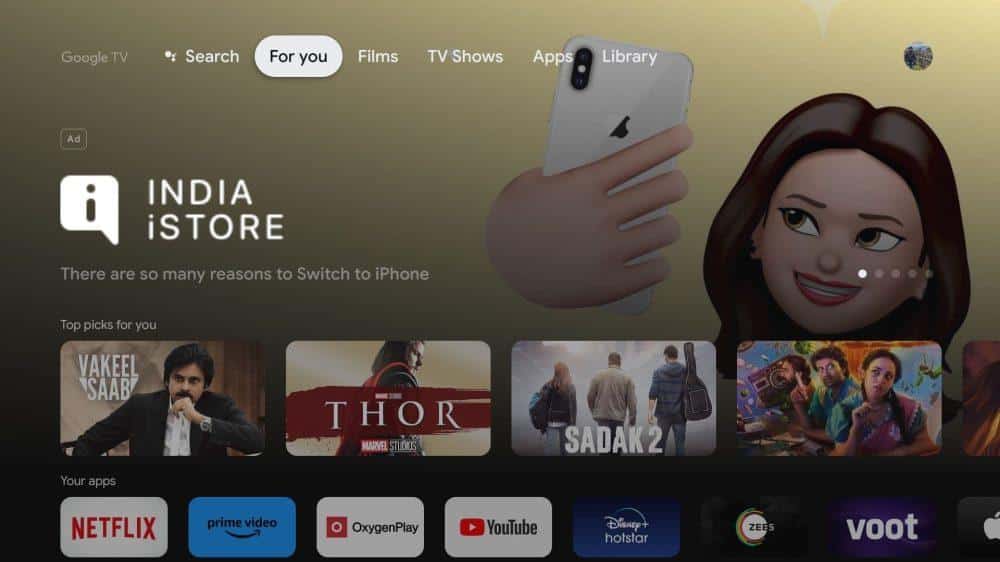
Google TV: What you need to know about CTV buying in Google Ads

Google Ads recently introduced the ability to buy Google TV inventory programmatically. This new connected TV (CTV) placement allows advertisers to expand their video advertising to the living room alongside existing options like YouTube TV.

This article covers how Google TV differs from YouTube TV, the implications of this addition for media buyers, and recommendations on optimizing campaigns leveraging this emerging ad placement.

Google TV: The next stage of video advertising

The expansion of Google Ads video advertising through YouTube has been remarkably innovative. From the introduction of heavily anticipated Shorts ads to the creative in-feed ad placements, the expansion has been an amazing learning experience for advertisers. 

The growth has not stopped. The newest ad placement to arrive – Google TV – is now available through the UI of Google Ads, not relegated to those with access to Google Display & Video 360 (DV360) and their programmatic video buying platform. 

The implementation of advertising on Google TV differs from YouTube TV:

  • YouTube TV acts as a subscription streaming service, offering 100+ live TV channels from popular broadcast and cable networks. It focuses on TV but offers on-demand content and original programming.
  • Google TV acts as a smart TV experience similar to Apple TV, which can come pre-installed or be downloaded onto smart TVs. Google TV serves as a platform for other CTV content providers such as Peacock, Tubi, and others, offering a large selection of movies and TV shows that users can rent or buy.

Google TV vs. YouTube TV: How do they differ?

Availability

While some consider both products similar, there are significant differences, as YouTube TV is available everywhere, while Google TV is not. 

Google TV can be accessed only through:

  • The web.
  • Google Play Movies.
  • YouTube.
  • The Google TV app via Android.
  • Google TV smart TVs.
  • Chromecast with Google TV sticks. 

In contrast, YouTube TV is available on:

  • Most smart TVs.
  • Xbox and PlayStation consoles.
  • Amazon Fire TV Stick. 
  • Chromecast. 
  • Roku.
  • iPhones and iPads.
  • Android smartphones and tablets. 

Pricing

  • YouTube TV costs a minimum of $64.99, with any additional premium channels added for $5-$15. 
  • Google TV movies start around $5 and go up, depending on whether you choose to rent or buy, with TV episodes averaging $3 each, while content needs to be purchased or unlocked via a service.
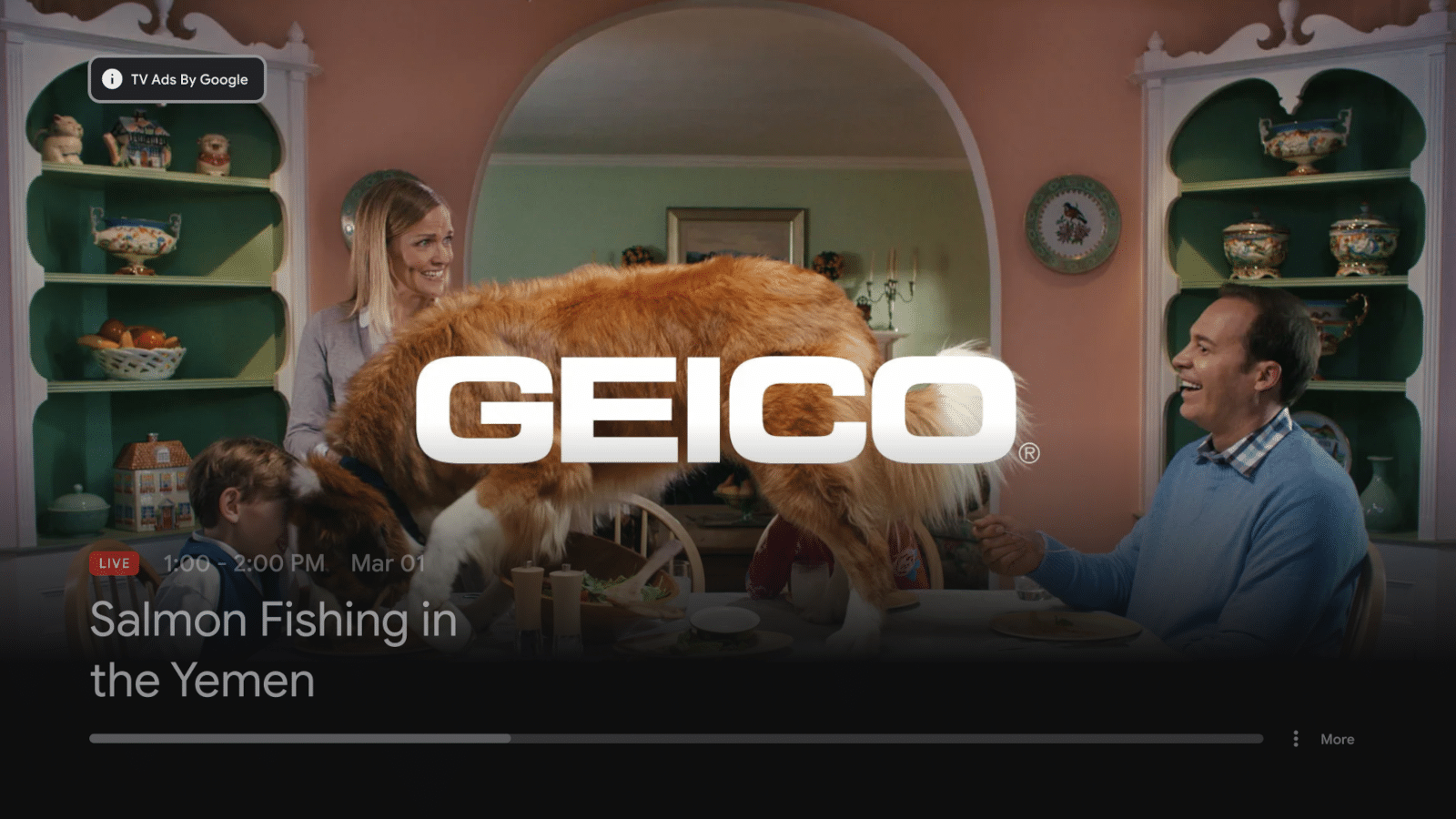
Example of TV Ads by Google

Analyzing the Google TV opportunity

Adding Google TV inventory to the suite of placements within Google Ads Video indicates a push for more top-funnel new user acquisition after a large focus on down-funnel activities with Performance Max and Demand Gen. 

To run on Google TV, you must couple this placement with YouTube but maintain the ability to exclude the display network. In most cases, we try to do this to limit impressions outside the premium environment of YouTube and Google TV. 

Google TV requires a non-skippable 15-second ad, so having this is imperative to obtain impressions via CTV. This is important if you are seeking TV impressions; we have observed that the shorter the ad, the better it is for reaching users on the big screen. 

Segmenting your device also presents a great opportunity to drive impression volume to the largest screen in the home. However, in our limited testing, we are still seeing more impressions via YouTube and YouTube TV on television versus minimal impressions on Google TV initially.

As we see more Google TV impressions, we will begin to analyze placement reports and, in hopes, also receive key demographic data and engagement metrics (such as earned views, subscribers, and playlist adds), which will be crucial insights for campaigns and brands. 

Programmatic CTV buying is not new to our industry. However, considering it within the context of Google Ads, this inventory was typically gated. 

As the platform opens its doors to all advertisers, I believe we will see a similar implementation to what we saw with the Google Display Network, where Google TV will primarily house both remnant and premium inventory from a variety of suppliers.

The announcement of Google TV also precedes some key platform video news, with Amazon and others adding ads to their video platforms. With more CTV players entering the market, there is a huge opportunity for arbitrage with Google Ads leading the way, given the number of advertisers willing and waiting to buy OTT placements programmatically. 

The big difference, and always the differentiator for Google Ads, is the targeting and insight capability. With the ability to leverage the suite of Alphabet data (Google Search, Google Analytics, YouTube, Android, and Gmail) combined with non-skippable ads in-home, we believe a relevant shift in interest and dollars flows into the Google Ads platform.

Google TV apps

Get the daily newsletter search marketers rely on.


Optimizing Google TV campaigns

When advertising on Google TV (YouTube), I’ve always prioritized two optimizations as most important:

Segment early/often

Within the Google Ads platform, you can precisely target your audience immediately due to its scalability worldwide and YouTube’s penetration across every demographic. 

For Google TV, we have observed inventory shrinkage when segmenting, so we recommend capturing as much Google TV inventory as possible. 

It’s advisable to segment some of the audience but not to hyper-segment, as we’ve found this leads to a disproportionately high amount of YouTube inventory versus Google TV.

Variation and iteration

It’s crucial to have multiple videos to test, and always try to introduce variation within the first 5–15 seconds, as everyone starts the video, but not everyone finishes it. 

Given the limitation of running only 15-second non-skippable ads, we recommend testing three different versions to potentially secure more Google TV inventory over YouTube. This approach has been effective in some but not all cases during our brief testing period.

Understanding the pros and cons

The implications for advertisers with regard to a new placement like this include both pros and cons.

Pros

  • First mover advantage: Advertisers who act first on new ads, placements, and targeting often benefit from lower costs and better performance.
  • Programmatic OTT/CTV buying within Google Ads: This offers ease of use and saves time.
  • Placement comparison: This allows for comparing engagement, web, and conversion performance to other video, display, and search placements.
  • Multi-placement approach: Leveraging CPV (cost per view) skippable, Shorts, and in-feed ads in combination with non-skippable CTV ads provides a well-rounded approach to a campaign within a single ad platform.
  • Insight: Understanding how users interact via TV compared to mobile, desktop, and tablet can lead to a deeper understanding of audience differences across demographics, placements, and targeting.
Google TV pros

Cons

  • Segmentation: It’s impossible to segment exclusively to Google TV; it needs to be paired with at least YouTube.
  • Inventory constraints/impressions: Similar to most new products, limited inventory has been observed in early testing. This limitation could also suggest constraints on remnant inventory with premium placements being sourced to DV360 or direct buys from CTV platforms (i.e., Peacock and Tubi).
  • Campaign sub-type: Currently, only “Non-Skippable” and “Efficient Reach” are the available sub-campaign types for targeting Google TV. This limitation prevents the use of conversion campaigns, designed to target users more likely to convert as opposed to users who are more likely to watch, engage, or exhibit more top-funnel user behaviors.
Google

Capitalizing on Google TV inventory

All advertising platforms continue to show growth, but from 2023 to 2024, Google Ads, specifically within video, has advanced like no other. We will continue to see growth as shopping, creators, and platform user interaction/engagement become more seamless and integrated. 

I believe Google TV will be the gateway for many small to mid-sized advertisers to get on the big screen without minimum spend or the need for direct contact/buy with an agency or provider. 

For media buyers, we have another tool to create what I believe is the most important attribute to any successful brand: the halo effect. This effect occurs when an impression in one area (Google TV) can cause an action (such as a search, website visit, download, or purchase) in a completely different area.

Original source: https://searchengineland.com/google-tv-ctv-buying-google-ads-437355

Is TikTok a search engine? Why meeting searchers’ needs matters more than semantics

The debate around whether TikTok should be considered a search engine continues to divide the SEO community.

But here’s the thing – users don’t care about definitions or technicalities. For many, especially younger audiences, TikTok is a go-to place to search and discover information.

So, while we argue semantics within the SEO community, brands that are not considering TikTok as part of their search strategy risk losing visibility and engagement opportunities.

Let’s explore why users aren’t interested in our jargon-fuelled definitions and why they treat TikTok as a search engine. 

The shift in search engine dynamics

As SEOs, we traditionally see a search engine as a system designed to conduct web searches. It crawls through the web systematically to locate specific information specified in a search query. 

The classic examples include giants like Google and Microsoft Bing. These platforms index and rank webpages based on keywords, backlinks and other factors, presenting them in an ordered list in response to user queries.

However, the concept of what constitutes a search engine is evolving rapidly. While we are arguing over which platforms are actually search engines, users are just searching – everywhere.

This evolution is not just in the technology that powers search engines but also in their form and functionality. Siri, Alexa, TikTok, Pinterest, Reddit, ChatGPT, Gemini (formerly Bard), and SGE signify this shift.

Platforms not traditionally considered search engines are now fulfilling similar roles to the likes of Google and Bing. As far as users are concerned, they are doing so more effectively. They see these platforms as search engines, so why can’t SEOs?

And, please, don’t take my word for it.

Gen Z users favor more personalized, algorithm-led social networks (48%) over search engines (44%) when looking for information about brands, products or services, per WARC’s 2023 Consumer Trends report (subscription required).

This shift is broadening the definition of a search engine, in my opinion. It should signify an innovation in executing search marketing strategies and thinking about platforms.

Central to this transformation is user behavior. The way people search for information has changed dramatically.

There’s a growing preference for quick, concise, and visually engaging content, especially within those Gen Z and Millennial audiences (which tend to be my focus).

We’ve all seen the “40% of young people, when they’re looking for a place for lunch, they don’t go to Google Maps or Search. They go to TikTok or Instagram” quote by Prabhakar Raghavan, Senior VP at Google.

When it comes to user behavior, those younger audiences value these platforms’ speed, convenience, and relatability, often preferring the visual and interactive content format TikTok offers.

Dig deeper. Survey: 51% of Gen Z women prefer TikTok, not Google, for search


Get the daily newsletter search marketers rely on.


SEO today: Meeting users where they are

Someone might search for a cooking tutorial on TikTok instead of Google. Perhaps they’re seeking more than just the recipe.

They might be interested in the platform’s engaging presentation, improved user experience, and community aspect. This could be because certain searches are suited to visual content or due to their connection with a particular creator.

Search engines are no longer just about indexing and retrieving web content. They need to meet users where they are and in the format they prefer – and Google recognizes this shift.

In response to these developments, “Perspectives” has been created to challenge these platforms (TikTok, Instagram, Reddit) and their search capabilities and bring users back to a Google SERP for these types of queries. Google also recently has been testing TikTok videos in SGE and featured snippets.

E-E-A-T has been iterated, placing more emphasis on the first-hand experience of content and its creator. This is a crucial factor driving people to other platforms in the first place. This shows a further commitment to improving the relatability and trustworthiness of content solutions.

Dig deeper: The modern search landscape: How and where to reach your target audience

What actually matters 

This debate can drag on endlessly, with arguments over semantics and definitions trying to sway people to one side. However, this won’t make a difference for our brands.

Instead, we should be looking to our audiences to guide us. Because, as much as we can argue TikTok isn’t a search platform, if audiences are searching there and your brand is not present, you leave valuable visibility on the table.

Ultimately, we should prioritize activations on the platform that best meets our brand’s strategic needs and develop search content there.

If that results in a TikTok search strategy, great.

If we instead focus solely on Google because that is what will move the needle, then fantastic.

It may even be a combination of them both, leveraging a more holistic “search everywhere” approach.

The key here is not to turn down a platform because it doesn’t meet your definition for a search engine right now. Because while we’re debating about this, a brand competitor is likely executing these observations and gaining visibility.

Ultimately, as has always been the case, it’s not our job to dictate to users the content they must consume and where they should consume it. 

Rather, we react to the signals provided by our audiences and create the content solutions they desire in the format they expect them to appear. 

And, in an expanding search universe, on the platforms, they are conducting such searches. 

Dig deeper: Search universe analysis: A deep dive

Original source: https://searchengineland.com/tiktok-search-engine-ux-vs-semantics-437349
Pinterest announces major ad partnership with Google

Pinterest announced a new ad partnership with Google designed to boost its ad revenue.

This marks Google as the second third-party ad partner for Pinterest, following its multi-year collaboration with Amazon that was unveiled last year.

Why we care. This collaboration provides an opportunity for brands running campaigns with Google Ads to not only broaden their reach but also engage with an active, high-value consumer base. This engagement has the potential to lead to stronger return on investment (ROI) and increased conversions.

How it works. The integration will enable ads to be served on Pinterest via Google’s Ad Manager. When Pinterest users encounter a Google Ad they will be directed to the advertiser’s website to complete their purchase.

Timeline. Pinterest initiated the rollout of the new ad integration a few weeks ago and is reportedly experiencing positive results. Following a similar pattern to the Amazon integration, the Google integration is expected to be phased in over several quarters.

International goals. While Pinterest has 80% of its user base outside the U.S., only 20% of its revenue comes from these international users. Executives are optimistic that the Google partnership will play a crucial role in boosting the average revenue per user in international markets.

What Google is saying. Pinterest CEO Bill Ready said:

  • “This partnership will focus on monetizing several of our currently unmonetized international markets by enabling ads to be served on Pinterest via Google’s Ad Manager.”
  • “We went live a couple of weeks ago, and this is starting to ramp up. Third-party ad demand is scaling as we anticipated.”

Get the daily newsletter search marketers rely on.


Deep dive. Read Pinterest’s Q4 2023 earnings report for more information.

Original source: https://searchengineland.com/pinterest-ad-partnership-google-437390

The Dos and Don’ts of Buying Employee Gifts

Home Business Magazine Online

Buying gifts for employees can be a meaningful act of appreciation. Studies indicate that appreciating your team leads to better engagement, retention, and output. But it also comes with possible drawbacks if you don’t do it carefully.

Thoughtless or inappropriate gifts may not go over well. Always pay attention to what you give and who receives it. By following essential dos and don’ts, you can confidently select gifts that make your employees feel valued.

The Dos

1. Do Personalize

Putting together or buying custom gifts based on the recipient’s hobbies or interests makes a gift more meaningful. For instance, you could include premium coffee for your caffeine-loving employees. Curated corporate gift boxes for employees allow for creative packaging together with small, personalized items that feel heartfelt.

2. Do Consider the Occasion

Save bigger ticket items for milestones like work anniversaries and retirement. For the holidays, contribute a charity donation in an employee’s name. Small thank-you gifts like gift cards can be used to recognize an exceptional effort. Matching the gift to the situation demonstrates thoughtfulness around exactly what warrants celebrating.

3. Do Set a Budget

Extravagant gifts may cause discomfort and inequity between employees. Set per-person spending limits, usually USD$20-50 for small gestures and up to USD$100-200 for significant milestones. Exceptional performers appreciate recognition more than an over-the-top gift.

4. Do Focus on Experiences

Tickets to shows, museum exhibits, or workshops can make exciting gifts if they align with an employee’s interests and availability. Dining at a nice restaurant also offers memorable bonding opportunities. If you have the budget and can stretch it further, why not arrange a retreat in Paris or anywhere else abroad to celebrate team milestones? Experiential gifts often generate more happiness than material items.

5. Do Be Mindful of Company Policies

Check your company’s gift value restrictions to rule out specific options. Also, see if there are cultural norms or expectations to be aware of, especially when operating internationally. Following policy guidelines prevents putting employees in awkward situations.

6. Do Include a Handwritten Note

A personalized message makes any gift more meaningful by highlighting specific accomplishments. Handwritten notes also feel more heartfelt than a generic e-card. Take a few minutes to write out what makes each employee’s contributions special.

Gift
Depositphotos

The Don’ts

1. Don’t Give Overly Personal Gifts

Avoid gifts related to sensitive topics such as politics or personal appearance, as they may not be well-received. Stick to universally safe options related to an employee’s work or hobbies. The gift should celebrate professional accomplishments and not make your employees uncomfortable.

2. Don’t Give Alcohol or Cash

While these gifts may seem safe for some cultures, they may cause discomfort or legal issues in certain situations. Alcohol can exclude those with particular religious beliefs or substance abuse issues. Be aware that cash equivalents like gift cards may have tax implications. Keep this tidbit in mind if you’re including these items in holiday gift hampers.

3. Don’t Forget About Cultural Diversity

Diverse religious holidays, varying gift-giving norms, and different preferences based on cultural background all warrant consideration. Do your research beforehand or discreetly ask around to avoid any unintended insensitivity.

4. Don’t Assume Everyone Celebrates the Same Holidays

Rather than defaulting to giving Christmas gifts, recognize hard work at reviews, after big projects, or on work anniversaries. That way, you appreciate efforts year-round and don’t leave anyone out. This also guarantees the focus stays on performance.

5. Don’t Regift

Regifting conveys the message that you did not put enough effort into selecting something meaningful. Ideally, choose gifts with the recipient’s interests in mind rather than for convenience. Even small tokens of appreciation hold value when clearly matched to an employee’s preferences.

6. Don’t Overthink It

Ultimately, a small act of genuine appreciation holds tremendous value on its own. Instead of agonizing over finding the perfect gift, focus more on the gratitude you wish to convey through a thoughtful gesture.

Bonus Tips

Creative Gift Ideas

Gift cards for experiences, signed books related to interests, board games, subscription boxes, or volunteering as a team offer unique ways to show appreciation. Tickets to sports games or other fun activities like escape rooms also encourage bonding and conversation. Customizing a gift basket around an employee’s distinct hobbies like golf, baking, or crafting makes it more personal.

Handling Difficult Situations

For new hires or remote staff, request input from their direct supervisors who know them better. Consider asking new employees to share a bit about their interests during the onboarding process. For remote staff, paying attention to video calls can reveal potential gift ideas. For employees with few known preferences, a basic self-care package with treats like candles, slippers, or luxury teas tends to work well.

Remember the Power of Recognition

Gifts should complement—not replace—regular recognition practices such as praise, awards, and growth opportunities. Small and consistent gestures also prevent recognition from only happening a few times a year. Publicly praising contributions at meetings or in company newsletters are other great ways to motivate your employees. They might even be more effective than a physical gift.

Conclusion

Managers can demonstrate their appreciation by choosing meaningful gifts over expensive ones. Avoid potential pitfalls using these dos and don’ts, personalized to each workplace.

Thoughtful gifts enhance company culture by acknowledging employees’ hard work. Follow these tips to confidently brighten your employees’ days through gifts reflecting how much they matter.

The post The Dos and Don’ts of Buying Employee Gifts appeared first on Home Business Magazine.

Original source: https://homebusinessmag.com/businesses/how-to-guides-businesses/dos-donts-buying-employee-gifts/

Core Ruby on Rails Realities for Technology Selection for a Startup

Home Business Magazine Online

Ruby on Rails is like a timeless classic in the world of programming, only getting better with age, while making relevant software. Just like the current dynamism around startups, the buzz that revolves around trending languages and frameworks drives the craze because of the mere fact that the languages and their frameworks are being rehashed so frequently in conversations. Still, popularity does not equate to feasibility or adaptability. You are just in the right spot if you are a beginner in the world of programming or just wondering what Ruby on Rails has in its sleeve!

Advantages and Disadvantages of Ruby on Rails

We are going to explore some of the pros and cons that come with Ruby on Rails.

As with every technical architecture, Ruby on Rails (RoR) has its set of strong and weak sides. Let’s start well and build with assurance.

Pros of Ruby on Rails

Ruby on Rails comes with its shimmering attributes, among them being efficiency in fast application development. It is proved in philosophy, ‘convention over configuration’ and with rich libraries. It is considered as very good code to read and maintain with a little less complexity than in most applications. More, the lively community in RoR, the comprehensive documentation, and the countless open-source “gems” used to extend functionalities make it still more attractive.

Pro #1: Time-Efficient

While mastering RoR might require a certain level of commitment, the effort definitely pays off with the tremendous amount of speed and efficiency that’s built into its development. The framework comes with myriad tools carefully designed to ease and speed the coding process, thus freeing developers from the burden of menial tasks. This efficiency translates to higher productivity as more gets delivered by the developers within similar time ranges and is a significant advantage in the fast-paced environment that a startup is. Ruby on Rails is characterized by having lots of tools and libraries, not to mention all the gems the user can find, making it a treasure trove.

Pro #2: Plenitude of Tools and Libraries

The Ruby on Rails ecosystem absolutely swarms with community-contributed “gems” and libraries offering all sorts of functionalities just waiting to be integrated into projects. These resources will not only help in making the codebase rich but also in improving the overall experience with software development. Starting from debugging aids to optimization utilities and testing frameworks, Ruby on Rails developers have everything at their disposal, which they need to solve potential problems efficiently.

Pro #3: Community Vibrancy and Activity

The Ruby on Rails community is big and dynamic, to say the least. This treasure can be some sort of collection of snippets of software, mostly known as “gems”, ready to use for very specific functionalities that may speed up dramatically the development of the project. Developers depend on other programmers of this project, making it a collaborative environment that actually ensures that newcomers get substantial support while developers can concentrate on more intricate parts of their projects. With tens of thousands of contributors to the codebase of Rails, the continued development of the framework is driven by an effort to collectively improve capability and emerging development needs.

Disadvantages of Ruby on Rails

Even though there are plenty of advantages, the cons of Ruby on Rails are equally worth considering for your project.

Con #1: Limited Flexibility

Ruby on Rails is quite enough for standard scenarios of applications, and though it can limit the developer freedom in some cases of implementing unconventional projects by its convention-over-configuration, it is still possible to achieve success with such restrictions. The default structures and objects of the framework can be insufficient in the case of some special needs, which should also be taken into account at the phase of planning of the project.

Con #2: Rapid Evolution

Double-edged is the dynamic evolution of Ruby on Rails and the ecosystem. Continuous updates and improvements speak of the living community and dedication to growth. But beginners can hardly keep up with such a pace and will be forced to keep learning and adapting all the time.

Con #3: Performance Concerns

There’s one aspect that might bring some concern regarding Ruby on Rails, and it’s performance. Boot time in large projects is a heavily discussed topic in the RoR community. Even though runtime performance is generally something that can be optimized to an acceptable degree, Ruby on Rails might not offer the speed of a few other frameworks, such as Node.js, in some particular scenarios. But the benefits of Rails might win over these performance considerations for many applications.

Ruby on Rails in Startups

The speed of getting the project to go and working on iterations might be important for success in startups. Ruby on Rails helps develop quickly and is the best choice for a startup that doesn’t want to waste either money or time on technologies. And for sure, many good and successful startups have been started with the help of Ruby on Rails.

The Choice of Technology

While Ruby on Rails surely does come equipped with a considerable number of conveniences and advantages, selecting a technology stack should be based around the necessities of the given project. If you are thinking about Ruby on Rails for a startup and are unsure if it’s good enough for your case, then get in touch with an experienced developer or a development agency, which will tell you specifically according to your project.

Ruby on Rails can boast its application in various sectors and scales, which includes building large-scale enterprise level applications, as well as starting agile startup projects. Major companies and startups that it continues to be used by are a sign that the framework is reliable and flexible, supported and evolved by a vibrant community.

Ruby on Rails is a very dynamic and flexible framework used by newly sprouting start-ups and from the big giants in the industry, purely due to its effectiveness and reliability in web development. Convention over configuration, together with a wide library of gems and active community, allows keeping the development of maintainable and scalable applications. Ruby on Rails development services, from simple to complex projects, underscores the framework’s flexibility and capability to adapt to various development challenges. As the digital world continues morphing, so will the indispensability of Ruby on Rails to the developers, which is a platform of productivity and of constant development that keeps in line with the ever-changing standards of this age.

The post Core Ruby on Rails Realities for Technology Selection for a Startup appeared first on Home Business Magazine.

Original source: https://homebusinessmag.com/businesses/website-development/core-ruby-rails-realities-technology-selection-startup/

Google Ads gambling and games policy updated

Google Ads is updating its gambling and games policy U.S. country-specifics.

Starting February 8, Google will start accepting and running sports betting ads from certified, state-licensed entities with certificates of compliance in North Carolina

You must apply for certification to be eligible to promote these ads.

Why we care. Advertisers who want to run sports betting ads should apply for certification, without it, promoting their campaigns will not be possible.

When to apply. Starting now, advertisers wanting to promote online gambling content in North Carolina can apply for certification.

Certification. To obtain certification, follow these steps if you meet Google’s policy and country-specific requirements:

  • Privately-licensed operators: If you are based in one of the countries where Google permits online gambling content, fill out the online gambling application form in the Google Ads Help Center. Providing all the requested information will help prevent delays.
  • State-run entities: If you operate in one of the countries where Google allows only state-run entities, use this form. When completing the form:
    • In ‘Summary of the issue’: Note that you’re requesting certification to advertise as a state-run gambling entity, and provide your website URL.
    • In ‘Campaign name and Ad group name’: Enter N/A if you haven’t set up a campaign or ad group.
  • Social casino game operators: Use this form to submit your website URL or app, Google Ads customer ID, and the country group you are targeting. 

You must submit a separate application form for each country you want to target.


Get the daily newsletter search marketers rely on.


Deep dive. Read Google’s announcement in full for more information.

Original source: https://searchengineland.com/google-ads-gambling-games-policy-update-north-carolina-437391