What Is a Help Desk, and How to Choose Your Next Customer Support Software?

Home Business Magazine Online

Zendesk is considered the best customer service software by many businesses, so if you import data to Zendesk your customer support will skyrocket to success? Well, not actually. Let’s find out what is a helpdesk and how to select the right one for you.

Let’s dive into the world of customer service and the vital role that quality software plays in delivering exceptional experiences. Just like in the world of sales, every customer inquiry matters. It’s about treating each one with care, offering quick and accurate responses, and ensuring every interaction leaves a positive impression.

This brings us to a common scenario: companies, whether big or small, often find themselves in need of better software to replace outdated systems that no longer keep up with their evolving needs.

In many cases, the heart of a company’s customer service operation lies within its technical support service or contact center. These teams are often the go-to when it comes to addressing internal requests, like helping employees set up processes or troubleshoot equipment issues.

Is there a difference between the help desk and service desk?

Now, you might be wondering about the distinction between help desk and service desk. Think of it as akin to differentiating between a coffee pot and a coffee machine. The end goal may seem similar, and the journey somewhat alike, but the service desk represents the next evolutionary stage—a bit more advanced. However, it’s important to note that opinions on these definitions can vary.

Some experts define the service desk as a comprehensive process that covers issue resolution, end-to-end application processing, and data entry for overall statistics. In contrast, the help desk is often viewed more as a tool. Some even suggest differentiating based on scope: service desks for IT issues and help desks for general customer support.

Why do you need a help desk system?

But let’s get to the heart of the matter: why do you need a Help Desk in the first place? According to SiteCore’s research, contact centers and technical support services often grapple with similar challenges. These include modernizing service systems, improving end-to-end customer experiences, ensuring seamless operation across various devices, analyzing customer data, and providing round-the-clock support.

To address these challenges effectively, you need software that can:

  1. Gather customer inquiries from multiple channels, be it phone calls, instant messengers, social networks, or email.
  2. Swiftly route these inquiries to the right managers or operators, with multiple stages of handling if necessary. This includes initial contact, registration, and assignment to the appropriate team member.
  3. Enable efficient communication in various formats—phone, chat, email—and offer solutions not just in text but also through engaging formats like infographics and video instructions.
  4. Maintain a comprehensive database of inquiries, customer information, transactions, and products.
  5. Preserve a history of interactions, including audio or text records of phone calls and correspondence, to analyze service performance and gain insights into your audience and business niche.
  6. Monitor your team’s progress in resolving inquiries.
  7. Keep detailed records and statistics, ideally presented in analytical reports.
  8. Bonus features might include instant document creation and quick decision templates.

And don’t forget about integrations—these are essential. The right software should seamlessly connect with various systems, such as IP telephony, messaging apps, chatbots, email, analytics tools, payment systems, and more.

The goal of automating contact centers and technical support services isn’t just to save time and resources but to enhance customer satisfaction, boost average transactions, and ultimately, drive business profitability.

What else shouldn’t be missed?

Consider user-friendliness as well. A system should be intuitive and aligned with modern business requirements. The transition from traditional hotlines to instant messengers can also be a game-changer, offering customers rapid and efficient support without the frustration of long wait times.

When you’re on the hunt for software for your contact center, think not only about your current needs but also about future scalability. A robust set of functions and integrations can make adapting to your customers’ evolving demands a breeze.

So there you have it—your guide to choosing the right software to elevate your customer support game. Remember, it’s all about creating exceptional experiences for your customers, and the right software can be your best ally in achieving that goal.

The post What Is a Help Desk, and How to Choose Your Next Customer Support Software? appeared first on Home Business Magazine.

Original source: https://homebusinessmag.com/home-office/computers-and-software/help-desk-choose-next-customer-support-software/


Make £100 a month with ads on your car

You can have ads on your car, just like taxis and buses do.

Unbelievable? Not really.

If you’re someone who drives around a lot, then loads of people see your car. It makes sense for an advertiser to splash their logo across your bonnet. They’re going to get a lot of eyeballs on that space!

The concept has been widely used in both the US and Europe, where advertisers such as Gillette and the Transformers movie have worked with Moscow based StickerRide.

So, if you don’t mind driving around with ‘Vimto’ or something similar spread across your car, you could make around £100 a month for very little effort.


What’s involved in getting ads on your car?

Make £100 a month with ads on your car

First things first, you’ve got to get the ads on your car.

The company that you sign up to will do this by professionally applying an adhesive vinyl wrap to all or part of your vehicle. Special transparent vinyl is used on the windows, so it won’t interfere with your driving visibility – phew!

Such ‘vehicle wraps’ can be added and removed easily without spoiling the paintwork, providing it is of original factory standard. Every decal is applied using specialist technology, which prevents bubbles from forming underneath the newly-placed vinyl. The adhesive is also very strong and is rain and UV ray resistant.  These wraps typically come in three forms: panel, partial and full wraps. Full insurance is provided against any damage to the paintwork of your vehicle caused by the advert’s placement, so you don’t even need to worry if something does happen.

You may even get freebies from the advertisers such as samples and discounts. Most car wrapping companies will also pay you if you refer other people to them.

So, it’s a win-win situation!

Some car wrapping companies will then require you to drive a certain amount each month before paying you.

Others won’t ask you to change your driving habits, but will match your driving routine to their advertisers’ needs.

Most companies accept vehicles of all sizes, from large vans to small hatchbacks or even flashy convertibles. All the adverts are custom made to fit your car and the specifications of their clients.

Saying this, many advertisers prefer cars that are newer or in good condition. You will also be required to keep the outside of your car clean while the advert is on it – you should report any damage to the ads or your car immediately.

Also, you’re free to turn down any branding allocated to your vehicle that you would not feel comfortable advertising.

Find out more about making and saving money with your car by reading our car guides.

Advertising & Marketing (NEC)

the ideal ‘vehicle wrap’ driver

In order to be considered for a wrap, most companies have the following requirements:

  • Be over the age of 18 at least (some companies request 20 years and over)
  • Hold a clean driver’s licence
  • Have a current MOT and road tax for the vehicle
  • Have valid insurance for the duration of the contract
  • Hold no convictions for drink driving, manslaughter or dangerous driving causing death.

Remember, you will be expected to always drive responsibly. An erratic, speeding driver is probably not going to create the best impression for the advertiser!

You can still become part of the scheme if you happen to drive a company car, providing your company gives you permission of course.

Car wrap companies can also offer corporate packages if you have a fleet of cars, vans or trucks that you are interested in registering.

Still interested? If you meet the above requirements and think you can handle a little artwork on your car, then read on to find out just how much money you can make from a vehicle wrap.


How much can you make from ads on your car?

Make £100 a month with ads on your car

The rate of pay varies according to the company you go with and how much of your car you’re willing to get wrapped.

Over in the US, Carvertise, the award-winning marketing firm, matches brands with high-mileage car owners – typically those owners who drive at least 30 miles a day. Drivers are normally paid $100 a month, although this can increase to $200 for the more specialist of campaigns.

Then there’s adverttu which claims to pay up to £150 a month for ads on cars (though there are limited reviews for this company).

StickerRide is another company that connects drivers to advertisers and even calculates potential driver earnings before the registration process is complete. Like other companies, their operator will check the campaign request and approve your application (dependent on criteria). You can increase your earnings by taking part in flashmobs and quests too; however, you need to launch the app before you begin driving.

Drive a lot in the US? Then, Wrapify may be the perfect pick for you. They approximate driving earnings on their site as anything from $196 to $452, depending on the type of wrap coverage that is applied.*

Drivers are paid monthly, so it’s a nice way to supplement your income; however, varying payment models exist across companies, so remember to check payment terms before you register. Plus, there’s a chance to get freebies or samples from the advertisers you are working with to boot!


Can anyone do it?

Well now, there’s the rub.

In a word – no.

Obviously a lot of people want to do this – and there’s nothing to stop you signing up – but the advertising companies are often looking for a specific type of car and driver. They could be looking out for someone who:

  • Drives a LOT (such as a travelling salesperson)
  • Has a really cool or expensive car
  • Drives in a certain area (maybe the South East only or the North West only)
  • Or lives within a commuter postcode.

They also look into other factors such as where the car spends most of its time and its total mileage.

So don’t be surprised if you sign up and then never hear anything, as a lot of factors are at play. Don’t let it put you off as it’s worth a try but just be realistic. If, like me, you have a tired-looking Citroen C1 and you only pootle about town every now and then, you’re not going to be top of the list, but there may well be a campaign out there just for you.

And, while you’re waiting to hear back, read our 10 real-world tips for cheaper driving.

 *There are numerous car wrapping companies out there, be wary of scam artists, and always check company practices.

Have you had ads on your car?

Do you think it’s a good idea or have you had a bad experience with it?

Let us know about your vehicle wrapping experience in the comments below.

The post Make £100 a month with ads on your car appeared first on MoneyMagpie.

Original source: https://www.moneymagpie.com/make-money/make-100-a-month-with-ads-on-your-car

YouTube’s crackdown on ad blockers intensifies

YouTube appears to be ramping up its efforts to crackdown on ad blocks

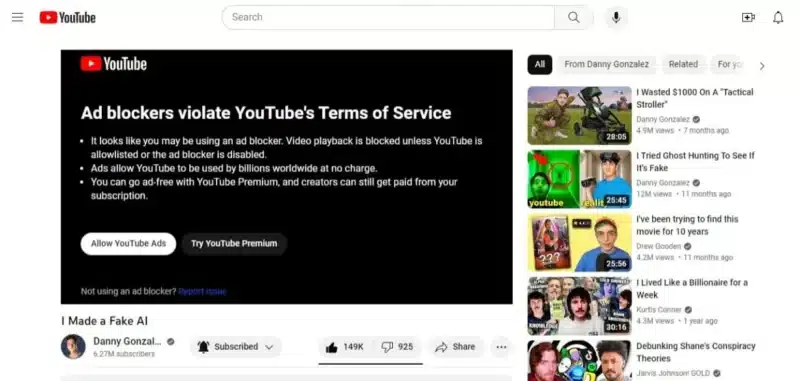
The platform has reportedly been sending users with ad blockers enabled more aggressive prompts, warning them to either “Allow YouTube ads” or subscribe to YouTube Premium. The notification appears in place of videos or as a pop-up when playing videos on fullscreen.

If the viewer fails to comply, the platform threatens to block video playback after three plays.

Why we care. This is promising news for advertisers in terms of extending your ad’s reach. However, it’s important to consider that pushing ads onto people who have no interest may not yield great results, as they’re less likely to convert into customers.

What does the prompt say? The prompt reads:

  • “Ad blockers violate YouTube’s Terms of Service.”
  • “It looks like you may be using an ad locker. Video playback is blocked unless YouTube is allowlisted or the ad blocker is disabled.:
  • “Ads allow YouTube tp be used by billions worldwide at no charge.:
  • “You can go ad-free with YouTube Premium, and creators still get paid from your subscriptions.:

Here’s a screenshot:

Home Business

Why now? YouTube has said that it is taking more measures against ad blockers to ensure that its content creators are compensated for their work. “YouTube’s ad-supported model supports a diverse ecosystem of creators, and provides billions of people globally access to content for free with ads,” the company said in a statement.

How much is YouTube Premium? YouTube Premium costs $13.99 a month in the US. The price was increased by 17% from $11.99 in June.


Get the daily newsletter search marketers rely on.

<input type="hidden" name="utmMedium" value="“>
<input type="hidden" name="utmCampaign" value="“>
<input type="hidden" name="utmSource" value="“>
<input type="hidden" name="utmContent" value="“>
<input type="hidden" name="pageLink" value="“>
<input type="hidden" name="ipAddress" value="“>

Processing…Please wait.

function getCookie(cname) {
let name = cname + “=”;
let decodedCookie = decodeURIComponent(document.cookie);
let ca = decodedCookie.split(‘;’);
for(let i = 0; i <ca.length; i++) {
let c = ca[i];
while (c.charAt(0) == ' ') {
c = c.substring(1);
}
if (c.indexOf(name) == 0) {
return c.substring(name.length, c.length);
}
}
return "";
}
document.getElementById('munchkinCookieInline').value = getCookie('_mkto_trk');


What has YouTube said? Oluwa Falodun, a spokesperson for Google, previously told The Verge in a statement:

  • “We want to inform viewers thatad blockers violate YouTube’s , and make it easier for them to allow ads on YouTube or try YouTube Premium for an ad free experience.” 
  • “Ad blocker detection is not new, and other publishers regularly ask viewers to disable ad blockers.”
  • “We take disabling playback very seriously, and will only disable playback if viewers ignore repeated requests to allow ads on YouTube.”
  • “In cases when viewers feel they have been falsely flagged as using an ad blocker, they can share this feedback by clicking on the link in the prompt.”

Deep dive. Check out the full discussion on Reddit or read YouTube’s ad policy on the YouTube Advertising hub for more information.

The post YouTube’s crackdown on ad blockers intensifies appeared first on Search Engine Land.

Original source: https://searchengineland.com/youtubes-crackdown-on-ad-blockers-intensifies-432213

Unleash the untapped power of email address intelligence by Cynthia Ramsaran

Home Business

Email is an integral part of our personal and professional lives. We use it to create and log into online accounts, subscribe to new content, communicate across digital platforms and verify our identity. It’s the key to our digital footprint.

But did you know that the intelligence surrounding the simple email address has the potential to fuel more effective data science, improve marketing, increase sales, elevate the customer experience and reinvent analytics initiatives?

Join experts in a live webinar as they dive deep into how you can harness the vast amount of potential surrounding emails to unlock valuable insights, enable personalized marketing campaigns and enhance overall business performance.

Learn more by registering and attending “Unleash the Untapped Power of Email Address Intelligence,” presented by AtData.


Click here to view more Search Engine Land webinars.

The post Unleash the untapped power of email address intelligence appeared first on Search Engine Land.

Original source: https://searchengineland.com/unleash-the-untapped-power-of-email-address-intelligence-432200

How to Choose the Right DevOps Consulting Company

Home Business Magazine Online

DevOps consulting companies can play a vital role in helping organizations adopt and implement DevOps practices. However, with so many different companies to choose from, it can be difficult to know where to start.

In this article, we will discuss the key factors to consider when choosing a DevOps consulting company. We will also provide you with actionable and tested tips on how to evaluate potential partners and make the best decision for your organization.

What to consider when choosing DevOps consulting services

Factor 1: What is the expertise and experience of your DevOps consulting company?

You should partner with a company that has experience and expertise in the DevOps domain. Sounds obvious, but many companies often fail to consider this factor rightly. If the company has many years of experience in Software Development and Quality Assurance services, it doesn’t necessarily mean that they have good DevOps specialists. To make an informed decision, check their DevOps portfolio, discuss the complexity of their projects as well as challenges they encountered along the way. A reputable DevOps company should be able to provide concrete examples of how they managed issues related to automation, continuous delivery and continuous integration.

Don’t forget to ask about the composition of their DevOps department, qualification of their specialists and experience with tools and technologies commonly used in DevOps practices. This information would help you to understand whether the company’s expertise aligns with your project’s needs and requirements.

Factor 2: Does the DevOps consulting company offer customization and flexibility?

Your organization’s DevOps needs might be unique and one-size-fits-all approach might not work well for you. A top-notch DevOps consulting company should understand this and work to customize solutions that align with your distinct requirements. For instance, if your organization primarily operates in a regulated industry like healthcare, the firm should be able to tailor DevOps processes to comply with industry regulations, such as HIPAA in the United States.

Flexibility is equally crucial, as the technology landscape is constantly evolving. A proficient consulting partner should remain adaptable to changes in your organization’s requirements and industry trends. For example, if your organization decides to transition from on-premises infrastructure to the cloud, your chosen partner should be flexible enough to accommodate this shift and adjust your DevOps processes accordingly.

Factor 3: Who are the clients and what is their feedback?

Positive reviews and testimonials indicate that the company has a history of delivering on its promises. Conversely, negative feedback or recurring complaints should raise red flags and prompt you to dig deeper into potential issues.

Consider an example: If a DevOps consulting company has a solid track record in the finance sector and glowing recommendations from financial institutions, it suggests that they possess the skills to handle sensitive data and regulatory requirements effectively.

Furthermore, reaching out to former clients for direct feedback can provide you with candid insights into the consulting firm’s strengths and weaknesses. By asking about their experiences, challenges encountered, and the outcomes achieved, you gain a clearer picture of what to expect from the consulting partnership

How to choose DevOps consulting experts

Step 1. Define your requirements and expectations. Before searching for companies, you should know and understand what you want to achieve with DevOps? Are you looking to improve your speed to market, reduce costs, or improve software quality? Don’t forget to consider your budget. DevOps consulting services can range in price, so it’s important to set a budget before you start your search. Be sure to take into account the cost of services, as well as travel and other expenses. All this will save your time later on.

Step 2. Research, research, research. Just google “DevOps consulting company” and see what you find on the Internet. You will most likely find plenty of different companies to choose from. Select twenty of them that you like the most.

Step 3. Choose the best 5 out of 20. Use the following factors to guide your selection:

  • Years of experience
  • Amount of projects in DevOps domain
  • Amount of DevOps projects in your industry
  • References from previous clients
  • Certifications
  • Experience in automation
  • Size of DevOps department
  • Expertise in different DevOps tools and technologies
  • Cost-optimization offering
  • Monitoring and DevOps metrics
  • Ability to build scalable projects
  • Commitment to continuous learning and improvement
  • Pricing
  • Client-centric approach
  • Flexibility and adaptability
  • Your specific needs and requirements

Step 4. Arrange a meeting with the selected companies. During them discuss in more detail their experience and your project. Get a clear proposal from each company. This should include the scope of work, deliverables, timeline, and cost. You should feel that the company fits you in terms of cooperation, communication and other conditions. Beware of consultants who make promises that sound too good to be true. DevOps is a complex and challenging undertaking, and there is no one-size-fits-all solution. Look for consultants who are honest and realistic about what they can achieve. Based on interviews and proposals, choose the company that fits you the most.

Step 5. Start cooperation and enjoy your choice. If you did everything right, you will reach your DevOps goals and transform your business for the better. However, be ready to face challenges. The projects without problems don’t exist. What matters the most is how your DevOps consulting company faces challenges and finds the right solutions to them.

Comparing the hiring of DevOps consulting with hiring a coach

Think about the following comparison.

Imagine that you’re hiring a coach to help you train for a marathon. You’re interviewing a few candidates, and they’re all telling you the same thing: they’re the best, they’ll get you to the finish line, and they’ll make you a better runner.

But then you meet one coach who tells you something different:

“I can’t guarantee that you’ll finish the marathon,” he says. “But I can guarantee that you’ll be a better runner by the end of our training. You’ll learn how to push yourself harder, you’ll learn how to listen to your body, and you’ll learn how to pace yourself. And if you decide to run the marathon, I’ll be there to support you every step of the way.”

That’s the kind of DevOps consulting company you want to hire. A company that’s honest with you about the challenges ahead, but that’s also committed to helping you succeed.

A company that is not just interested in getting you to the finish line, but also in making you a better runner along the way.

Conclusion

All in all, there is no universal way to find a reliable DevOps consulting company, but following the recommendations mentioned within this article might considerably help.

To sum up, what you need to do is research, choose the pool of companies, and ask them the tough questions, demanding about their experience, their successes, and their failures. Ask about their approach to DevOps and their philosophy. And most importantly, ask yourself if you trust them to help you achieve your goals.

We hope that our article helped you to find a company that will help you take your DevOps journey to the next level.

The post How to Choose the Right DevOps Consulting Company appeared first on Home Business Magazine.

Original source: https://homebusinessmag.com/businesses/how-to-guides-businesses/how-to-choose-right-devops-consulting-company/

The Impact of Globalization on the Virtual Data Room Market and Its Future Prospects

Home Business Magazine Online

Recruitment of foreign talent, multinational corporations, cross-border mergers and acquisitions, digital initial public offerings, remote business operations, virtual data management, and then work-from-home, the 21st century has been the era of globalization. Although globalization can be credited to different factors, it was technology that made it possible for businesses and professionals to explore international markets.

Corporations now find it super easy to ensure digital collaboration between partners, investors, management, and cross-border franchises. They can share or manage unprecedented amounts of data with ease and conduct webinars and online meetings — all thanks to modern-day collaboration tools like virtual data rooms.

Globalization and virtual data rooms

It won’t be wrong to say that it is the technology that has made globalization possible. Otherwise, how would it be possible to connect different business entities operating in different states or countries?

When it comes to globalization in business spheres, virtual dataroom software has played an undeniable role. It has connected businesses and professionals from all parts of the world and made complex business transactions more effortless than ever.

Today, businesses can perform large-scale, international M&A transactions digitally through virtual data rooms. Auditors can access and verify corporate information remotely, and companies can launch their IPOs, while private equities can manage most of their operations through a digital data room.

Here is an introduction to virtual data rooms, VDR market analysis and future prospects, and what type of businesses can benefit from data room technology.

What is a virtual data room?

Virtual or digital data room software is an online document repository with advanced features for data management, digital communication, meeting management, data analysis, and project management.

As data rooms are cloud technology, they are remotely accessible. Businesses use them as virtual workspaces where employees can share or access corporate data and communicate over a single platform. Dealmakers use them as a central platform to connect different parties involved in dealmaking.

“10-15 years ago, nobody would have thought that they would be participating in a merger, acquisition, fundraising, or a real estate transaction from mountains, beaches, and other remote areas. But, thanks to modern-day data room vendors, we have 24/7 access to EVERYTHING happening to our businesses or professions,” says Angleo Dean, CEO of https://datarooms.org/ — an expert community of professionals conducting independent comparisons and reviews of M&A data room providers.

Current trends in virtual data room market and future trends

The global virtual data room market has been valued at $1.48 billion in 2021 and is expected to be a $3.66 billion industry by 2027.

North America (specifically the United States) stands as the biggest, while Asia Pacific is the fastest-growing market for virtual data rooms. The market is divided into four regions — North America, Asia Pacific, Europe, and the rest of the world.

Key players in the data room market include Caplinked, EthosData, Brainloop AG, Intralinks Inc., Ansarada Group Limited, BMC Group Inc., Datasite, iDeals Solutions Group, and Thomson Reuters.

Here are the top trends and prospects in the data room market:

  • More and more businesses are switching to cloud storage technologies as it is one of the best ways to minimize administrative costs. Thus, virtual data rooms are emerging as a top solution for cloud-based data management.
  • Corporations and enterprises are adopting data room technology for intellectual property management, risk management, and asset management. What’s more, data rooms play an important role in regulatory and compliance requirements for businesses operating in different regions.
  • Dealmakers and businesses regularly render data room services for mergers, acquisitions, fundraising, IPOs, joint ventures, strategic partnerships, and private equity acquisitions.
  • The introduction of blockchain-based technologies in virtual data rooms has strengthened security across the IT ecosystem. IT and the telecom sector has started employing data room technology for better communication flow and safer data sharing.
  • Worldwide acceptance of remote working culture has also fueled the need for secure virtual workspaces like data room software. VDRs make sure employees can share, access, and manage data and communicate in a controlled environment.
  • The North American market is mainly pushed by the banking sector, M&A market, and the financial industry for a safe and fast flow of information. These industries are expected to increase the demand for virtual data centers in the years to come.

Businesses that can benefit from virtual data rooms

The above-mentioned factors have played a huge part in data room market growth. What makes VDR technology better than its counterparts is its diversity. That said, a business of any type and size can use data room technology for data management and protection.

For example, the healthcare sector uses data rooms for safeguarding confidential patient data, while pharmaceutical companies use them for clinical trials, biotech licensing, and IPOs/fundraising.

Furthermore, data rooms are regularly used in the legal industry, oil and energy sector, retail businesses, and real estate industry.

Final words

Technologies like virtual data rooms have played a massive role in the globalization of the corporate world. VDR tech simplifies complex dealmaking, streamlines two-way, real-time communication, and makes data sharing safer, faster, and cost-efficient.

Current trends in the virtual data room industry show that the market is dynamic and estimated to grow. This growth is fueled by remote working culture, the introduction of technologies like blockchain and AI, increased reliance on cloud computing, as well as ever-growing popularity of virtual data rooms in industries like healthcare, legal, oil and gas, and real estate.

The post The Impact of Globalization on the Virtual Data Room Market and Its Future Prospects appeared first on Home Business Magazine.

Original source: https://homebusinessmag.com/management/technology-management/impact-globalization-virtual-data-room-market-future-prospects/

8 Mistakes You’re Making Every Time You Need a New Password

Home Business Magazine Online

It’s nearly impossible to try and count how many new passwords you had to make last year. The reason behind this is that you just forget about registering to this random site or e-store, but what if, by doing so, you’ve exposed yourself to malicious online agents?

To stay safe, you must become better at making new passwords.

Sure, the password is not the only thing you need to protect your devices, but it’s a step you can’t move past. With that in mind, here are the top eight mistakes you make every time you need a new password (so you can stop making them).

1. Picking something meaningful

If you pick something meaningful, people will have a much easier job figuring out your password just by thinking about it. Just think about it: all they need to do is figure out the name of your pet, your mom’s maiden name, or your kid’s birthday. Figuring these out is easier than you think.

Also, you need to understand that capitalizing a random letter or adding a random number at the end of your “meaningful” password won’t fix the issue. Random means that it shouldn’t be related to the original concept. It means either something that no one in their right mind would ever imagine could be your password or, even better, a random string of letters, numbers, and symbols.

2. Picking something simple or obvious

Is “123456” a meaningful password? Of course not, but is it a simple one? Yes! Surprisingly enough, it’s so common that the hacker may attempt it even without any tool, just for the sake of it. How common exactly? 23.2 million in the UK apparently use it! Now, what we’re going to say is a bit controversial, but cybersecurity is more than “123456,” if you rely on that, you’ll never be safe.

We understand why people use these simple passwords – they’re lazy or can’t be bothered to create or memorize another unique password. We get that; however, using this excuse is quite disingenuous. After all, if you lay in bed and remembered that you didn’t lock the front door in the middle of the night, would you just go back to bed hoping nothing bad would happen? Of course not! So, why not apply the same principle to cybersecurity?

3. Using the same password as on other platforms

As we’ve already mentioned, people are lazy but are not always aware of the fact. For instance, they may try to develop a great password, but then they’ll believe that this one password is enough, and they’ll use it for every platform.

In theory, this could work. After all, it’s a strong password, which is harder to crack than several weaker ones. The problem is that once it’s cracked, your entire online persona is at risk.

So, it’s not just enough for a password to be strong. Passwords need to be strong and unique. This means you must develop several great passwords, not just be content that you made one. Now, later on, we’ll also discuss why it’s important to change these passwords regularly. If you’re worried about having to come up and memorize dozens of passwords, worry not; we’ll address the solution to this problem in our next segment…

4. Not using tools

Password managers will automate the process from the list, which is just one reason why around a third of people use them. In fact, picking a software which is best for password control is one of the simplest things you can do to boost your online security. You can develop unique, randomized passwords in seconds; you don’t have to memorize or write them down manually, and changing them every 60 days is not that big of a deal.

Most password managers offer a multi-device sync, which means you’re not just protecting the device it’s on but actively protecting your entire online presence. This is one great perk of using password managers that you shouldn’t downplay, even if it’s not your primary objective.

Remember that the majority have a password auditing feature, which means you can apply them retroactively. So, if you habitually set bad passwords in the past, now’s the time to fix this.

5. Using keyboard sequences

Sometimes, you’re making a password that’s so easy to crack, but you’re unaware. This is often the case when using keyboard sequences. Go to the single-player video game you’ve just played and check the name of your last savegame file. Chances are that it’s something like:

  • Asasaada
  • Qwerty
  • Zxcvb

The thing is that these are all natural keyboard sequences that you’re not even aware of using. They’re also incredibly easy to crack. Not only that, but these sequences are something that a hacker might try manually before they entrust it to a cracking tool. Like 123456, qwerty is an incredibly common password, used by 3.8 million people in the UK.

6. Ignoring physical world threats

Writing your password on paper will make it impervious to hackers, which is perhaps why 37% of people do it. But what happens when you lose this piece of paper? What if you have the username or email on this paper (as many people do)? The bottom line is that you can’t ignore these real-world threats.

Then again, losing a piece of paper is not the only potential threat. What if you tell someone who’s not as trustworthy as you assume they are? What if you’re away and can’t log in from your home, so call/text a friend and ask them to log in for you? What if their device doesn’t have an antivirus or an uninstalled keylogger they’re unaware of?

This is like giving a key to your home to someone else. Sure, you may trust them not to be malicious, but can you trust them not to get pickpocketed? How could you?

7. Think that the platform rules are enough

No, password rules are not enough on their own. Sure, a password may insist that you use at least:

  • Eight characters
  • One capital letter
  • One number
  • One symbol

Following that logic, “P@ssword1” would be a great password. However, it’s a terrible password that would be incredibly easy to guess, despite honoring all the rules in the guidelines.

However, this is not the point. The point is that this rule exists to prevent you from taking the path of least resistance. It prevents you from using “password” as your password. It tries to force you to randomize your passwords, but if you’re dead set on not making an effort, you have no one else to blame when your password gets cracked.

Also, sometimes, there will be no rules preventing you from using “password” as a password. This doesn’t mean that it’s ok to make it that easy.

8. Not changing it often enough

You should change your password every 60-90 days. While this is a soft rule and, for the most part, your strong password will remain intact, this is that extra thing you can do to make things secure.

The problem is that it’s a lot of effort. Also, if you have ten accounts (and in practice, you have a lot more), you must change them every 90 days. This would mean you would have at least 40 different passwords yearly. Just think about how hard it is to come up with just one that fulfills all the criteria we’ve discussed earlier.

Fortunately, with the password manager (that we’ve previously discussed), this isn’t that big of a problem.

It doesn’t take more than a minute to come up with a strong password; there’s no excuse

Your password is likely the first and the last line of defense on any platform. Most of the time, people will try to guess it, and if it’s weak enough, they may fail. We’re not even talking about hackers. We’re talking about fake friends, angry exes, and malicious coworkers. At the very least, make it a bit harder.

The post 8 Mistakes You’re Making Every Time You Need a New Password appeared first on Home Business Magazine.

Original source: https://homebusinessmag.com/lifestyles/success-lifestyles/8-mistakes-making-every-time-need-new-password/

Google rolls out automatically created assets to all advertisers

Google has rolled out automatically created assets (ACA) for general availability.

The search engine has also expanded the feature to seven new languages:

  • Dutch
  • French
  • German
  • Italian
  • Japanese
  • Portuguese
  • Spanish

Previously, ACAs were only available for advertisers running campaigns in English in open beta.

What are automatically created assets? Automatically created assets is a campaign-level setting that enhances the relevance of your Search ads by generating custom headlines and descriptions based on your ad’s context.

Why we care. ACAs can boost ad relevance by matching ads and landing pages better, however, it means ceding control to Google’s AI. This might not be suitable for highly regulated industries or brands with strict compliance standards, as you won’t have full control over the ad’s message.

Getting started. To begin using automatically created assets, you have two options:

  • You can opt in from your campaigns’ settings, where you’ll find the relevant setting to enable this feature.
  • Alternatively, keep an eye out for the “Enable automatically created assets” recommendation on the Recommendations page, and simply follow the prompts provided there to get started.

What has Google said? A Google spokesperson said in a statement:

  • “Once enabled, ACAs can improve the Ad Strength of your responsive search ads and show new assets alongside assets you’ve already provided.”
  • “If there are any automatically created assets you’d prefer to stop using, you can remove them from your ads.”
  • “In the coming months, for advertisers with English assets in the US and UK, automatically created assets will start using generative AI to help advertisers create even more assets and make them better tailored to people’s search queries.”

Get the daily newsletter search marketers rely on.

<input type="hidden" name="utmMedium" value="“>
<input type="hidden" name="utmCampaign" value="“>
<input type="hidden" name="utmSource" value="“>
<input type="hidden" name="utmContent" value="“>
<input type="hidden" name="pageLink" value="“>
<input type="hidden" name="ipAddress" value="“>

Processing…Please wait.

function getCookie(cname) {
let name = cname + “=”;
let decodedCookie = decodeURIComponent(document.cookie);
let ca = decodedCookie.split(‘;’);
for(let i = 0; i <ca.length; i++) {
let c = ca[i];
while (c.charAt(0) == ' ') {
c = c.substring(1);
}
if (c.indexOf(name) == 0) {
return c.substring(name.length, c.length);
}
}
return "";
}
document.getElementById('munchkinCookieInline').value = getCookie('_mkto_trk');


Campaign level. Generative AI for ACAs will be implemented at a campaign-level opt-in setting only. It is not available at account level. The advantage here is as you can control which campaigns are powered by AI when testing.

Deep dive. Read Google’s responsive search ad guide for best practices on creating responsive search ads.

The post Google rolls out automatically created assets to all advertisers appeared first on Search Engine Land.

Original source: https://searchengineland.com/google-rolls-out-automatically-created-assets-to-all-advertisers-432224

Google AdSense adds new tools to make site verification faster and easier

Google AdSense has rolled out two new features to make site ownership verification both faster and easier.

The new site management features are:

  • Real-time site ownership checks: This tool means Google can verify your site ownership in real time whenever you add a new site to AdSense.
  • New site verification method: If you’d rather not display ads on your homepage, this new verification method means you can now just add a meta tag instead of using the AdSense code snippet.

Why we care. Advertisers have previously encountered challenges when attempting to verify site ownership, which not only consumed valuable time but also posed potential financial implications. These new tools are designed to steer you clear of such unnecessary delays, ensuring a smoother process.

Additional improvements. Google AdSense announced that it has also rolled out additional changes to its platform to further help advertisers:

  • Ads.txt improvements: Google AdSense now has a “last crawled data and time” (for example, 17 Aug 2003 16:21) in its “Ads.txt” section, enabling you to see when the platform last checked your ads.txt file. 
  • Check for updates: The platform now features a “Check for updates” button, which allows you to ask AdSense to recheck your ads.txt file.

Get the daily newsletter search marketers rely on.

<input type="hidden" name="utmMedium" value="“>
<input type="hidden" name="utmCampaign" value="“>
<input type="hidden" name="utmSource" value="“>
<input type="hidden" name="utmContent" value="“>
<input type="hidden" name="pageLink" value="“>
<input type="hidden" name="ipAddress" value="“>

Processing…Please wait.

function getCookie(cname) {
let name = cname + “=”;
let decodedCookie = decodeURIComponent(document.cookie);
let ca = decodedCookie.split(‘;’);
for(let i = 0; i <ca.length; i++) {
let c = ca[i];
while (c.charAt(0) == ' ') {
c = c.substring(1);
}
if (c.indexOf(name) == 0) {
return c.substring(name.length, c.length);
}
}
return "";
}
document.getElementById('munchkinCookieInline').value = getCookie('_mkto_trk');


What has Google said? A Google AdSense spokesperson said in a statement:

  • “We’ve made some improvements to site management to make it quicker and easier to verify your site ownership and check your ads.txt status.”

Deep dive. Read Google’s AdSense site list guide or Ads.txt guide for more information.

The post Google AdSense adds new tools to make site verification faster and easier appeared first on Search Engine Land.

Original source: https://searchengineland.com/google-adsense-tools-site-verification-easier-faster-432146

Google quietly increases ad prices to meet targets, claims exec

Google has admitted to quietly tweaking advertising auctions to meet revenue targets.

The search engine “frequently” changes the auctions it uses to sell search ads, increasing the cost of ads and reserve pricing by as much as 5% for the average advertiser.

For some queries, the tech giant may have even raised prices by as much as 10%, according to Google Ad executive, Jerry Dischler at the federal antitrust trial.

Google tends “not to tell advertisers about pricing changes”, he added. 

Why we care. Google’s admission has sent shock waves through the digital marketing community, with some now questioning whether the search engine manipulates Smart Bidding for profit. Digital marketing expert Anthony Higman shared on X:

  • “So I always knew this was the case, but to see it actually stated by the VP of ads is astounding! And what do you think smart bidding is? A smart way for Google to be able to easily manipulate ad prices! SMH.”

Why is Google on trial? Google is on trial for allegedly using underhand tactics to ensure it stays the world’s leading search engine. The U.S. Justice Department claims Google, which owns a 90% market share in search, paid massive sums to companies like Apple to make it the default search engine on products like the iPhone.

What are search ads? Search ads refer to the text and shopping promotions you see displayed at the top of Google’s search results page when users perform queries.

More than 60% of Google’s total revenue is generated by search ads. In 2020, search ads earned the company more than $100 billion, according to Dischler.

Google’s search ad revenue growth has consistently been in the “high teens” since 2012, per documents shown by the Justice Department at the antitrust trial.

Why has Google been tweaking search ad prices? Dischler claimed that staff were “shaking the cushions” to find ways to ensure his team met revenue targets given to Wall Street by Ruth Porat, Google’s Chief Financial Officer. In an email he sent to his team back in May 2019, he wrote:

  • “If we don’t meet quota for the second quarter in a row and we miss the street’s expectations again, which is not what Ruth signalled to the street, so we will get punished pretty bad in the market.”
  • “I care more about revenue than the average person but think we can all agree that for our teams trying to live in high cost areas another $100,000 in stock price loss will not be great for morale, not to mention the huge impact on our sales team.”

When quizzed about this email during the antitrust trial, Dischler said his team’s goal was “to get creative so we could meet our quota.”


Get the daily newsletter search marketers rely on.

<input type="hidden" name="utmMedium" value="“>
<input type="hidden" name="utmCampaign" value="“>
<input type="hidden" name="utmSource" value="“>
<input type="hidden" name="utmContent" value="“>
<input type="hidden" name="pageLink" value="“>
<input type="hidden" name="ipAddress" value="“>

Processing…Please wait.

function getCookie(cname) {
let name = cname + “=”;
let decodedCookie = decodeURIComponent(document.cookie);
let ca = decodedCookie.split(‘;’);
for(let i = 0; i <ca.length; i++) {
let c = ca[i];
while (c.charAt(0) == ' ') {
c = c.substring(1);
}
if (c.indexOf(name) == 0) {
return c.substring(name.length, c.length);
}
}
return "";
}
document.getElementById('munchkinCookieInline').value = getCookie('_mkto_trk');


Why tweaking ad prices matters. If Google can raise ad prices without facing significant competition, it could strengthen the Justice Department’s case that Google holds an illegal monopoly. This is an argument the department can’t use against Google’s search engine itself, as it’s a free product for users. However, they can argue that increased competition could have addressed other issues, such as privacy standards, in the search industry.

Deep dive. Read our Google search antitrust trial updates article for all the latest news from the courtroom.

The post Google quietly increases ad prices to meet targets, claims exec appeared first on Search Engine Land.

Original source: https://searchengineland.com/google-quietly-increases-ad-prices-targets-432155