Instacart IPO: 7 key takeaways for advertisers

Grocery delivery service and advertising platform Instacart filed for its IPO on Friday.

Why we care. Instacart Ads is an emerging platform where CPG (consumer packaged goods) brands can advertise products (via sponsored product ads, display ads, coupons) to 7.7 million “monthly active orderers” as they shop.

1. Instacart’s 2023 ad revenue. Instacart reported $406 million in ad revenue for the six months of 2023, a year-on-year increase of 24%.

  • This increase was driven by an increase in advertising volume and increased adoption of new advertising features and products – despite decreases in ad spend by brand partners due to “macroeconomic uncertainty” and changes in “brand partners’ businesses and performance.”
  • Ad revenue was $327 million for the same period in 2022.

2. Instacart’s 2022 ad revenue. Instacart’s full-year advertising revenue hit $740 million in 2022, a 29% YoY increase. Advertising was 29% of Instacart’s total revenue.

  • Ad revenue was $572 million in 2021, which was 31% of total revenue, and $295 million in 2020.

3. How many brands use Instacart Ads. Intacart had more than 5,500 “active brand partners” using Instacart Ads as of June 30. This number has grown of “over five times” since December 2019.

4. New Instacart Ads offerings coming. Instacart has plans to add new display advertising offerings, specifically mentioning “shoppable products brand pages to serve as destinations for on- and offsite media,” according to the S-1.

5. Instacart plans to expand its ad tech to more retailers. The company plans to invest in and grow the Instacart Enterprise Platform, according to the S-1 filing:

  • “In 2021, we launched Carrot Ads, which helps our retail partners capture new monetization opportunities while broadening advertiser reach to millions of new customers via additional relevant placements on retailers’ owned and operated online storefronts.”

6. Instacart is impacted by seasonality. Instacart expects seasonality to cause fluctuations in its quarterly financial results.

  • “Our advertising and other revenue has historically been seasonally high in the fourth quarter and seasonally low in the first quarter in a given year as a result of how advertisers deploy their budgets,” according to the filing.

7. Instacart Ads growth strategy. Here’s how Instacart said it plans to increase its advertising revenue:

  • “Capture More Ad Spend and Add New Brands on Instacart Ads. We intend to earn a greater portion of brands’ spend across digital marketing as well as other data and customer insights. Growing the number of active brand partners and their spend will depend on our ability to grow the size and engagement of our customer base to create more clicks and impressions and to innovate on our ads offerings to deliver attractive ROI to our brand partners.”
  • “Grow Sales for Emerging Brands and Non-Food Categories. We intend to grow sales for emerging brands and non-food categories that have higher advertising budgets, such as household products, pet items, and personal care. As we grow sales for emerging brands and these categories, we expect to experience a mix shift towards GTV with higher advertising and other investment rate.”

What Instacart said. The company’s filing also touted its high ROI and ability to drive purchases:

  • “Our grocery expertise has enabled us to build differentiated advertising solutions and tools that allow CPG brands to reach and engage with high-intent customers at the point of purchase and within minutes of delivery and consumption. With our unique customer data and insights, we provide differentiated analytics for brands, allowing them to better optimize their advertising spend and grow their wallet share.”

The filing. Instacart’s Form S-1.

The post Instacart IPO: 7 key takeaways for advertisers appeared first on Search Engine Land.

Original source: https://searchengineland.com/instacart-ipo-key-takeaways-advertisers-431242

Using ChatGPT to drive technical SEO

Integrating generative AI into search presents a compelling value proposition.

If SEOs figure out how to adopt this technology effectively, it could revolutionize the industry and fundamentally change how people interact with search.

While there are still some concerns around the accuracy of AI-generated content, as well as omissions leading to some information being taken out of context, SEO expert Eric Enge explained that the technology is still a fantastic tool for creative inspiration and saving time.

Below is a summary how generative AI can be used to drive your technical SEO strategy, as presented by Enge at SMX Advanced.

1. Coding

One of the impressive aspects of ChatGPT is its proficiency in coding, according to Enge. He explained:

  • “Chat GPT gives you a very good starting place for your code. Sometimes, it can be a little buggy and needs to be debugged, but it’s a really good place to start – and that’s how I advise you to use it.”
  • “If you use it to generate schema markup, remember, it is just a starting place. So make sure you have someone who knows how to read schema markup to validate that it’s right. Using generative AI just speeds up the process.”

2. Generating Hreflang tags

Enge shared an example of a scenario where he used generative AI to create Hreflang tags for different webpages:

  • “I had four different languages. It gave a bunch of tags and they all look pretty good. This is an example of how [generative AI] can help speed things up for you.”

3. Translation

Generative AI produces accurate results when used for translation purposes. Enge said:

  • “I used it to translate keywords from English to French and it produced a really strong set of results.”
  • “This sort of thing could really help from the point of view of operations or speeding up the operations of your business because these are fairly common applications.”

4. Implementing .htaccess rules

Enge added that generative AI can also be used to help speed up the process of implementing .htaccess rules:

  • “If you have somebody who’s saying that they’re GoogleBot, but they’re not from one of Google’s IP addresses, that’s generally speaking not a good thing. I don’t know explicitly what harm could come from it, but there isn’t any good that will come from it. So you can it to block those.”
  • “You can just routinely do a run through to find the the people who are doing that to you and then just block them. This is a pretty good thing to be able to do.”
artificial intelligence

5. Creating title tags

Enge recommended using generative AI to get creative inspiration for title tags – but stressed that SEOs should also take into account other factors before publishing anything:

  • “It came up with a bunch of great titles as prospects to use. It’s great for brainstorming ideas but I would recommend applying search volume analysis too because we don’t really have that data from ChatGPT yet.”
  • “But what this technology does let us do is just get some ideas of what we want from the title from the user perspective – and that’s an important perspective to bring.”

6. Producing meta descriptions

When generative AI is used to create meta descriptions, additional prompts can fine-tune the result until you’re happy with it. Enge added:

  • “I just kept throwing these little wrinkles at it and it gave decent suggestions for six different meta descriptions.”
  • “The best way to create a meta description is to create something that compels a user to want to click through – because we know it has no influence on ranking. So we want to make it enticing to the user so that they have an understanding of what they’ll get if they click on your result. Generative AI can be used to create examples that might be closer to what we might want to use.”

7. Summarizing content

Enge said generative AI is accurate when summarizing content as it carries out this task solely using content you have entered, leaving no room for confusion, date omissions or false information:

  • “It’s a great tool for summarizing content because there are no issues with hallucinations.”

Get the daily newsletter search marketers rely on.

<input type="hidden" name="utmMedium" value="“>
<input type="hidden" name="utmCampaign" value="“>
<input type="hidden" name="utmSource" value="“>
<input type="hidden" name="utmContent" value="“>
<input type="hidden" name="pageLink" value="“>
<input type="hidden" name="ipAddress" value="“>

Processing…Please wait.

function getCookie(cname) {
let name = cname + “=”;
let decodedCookie = decodeURIComponent(document.cookie);
let ca = decodedCookie.split(‘;’);
for(let i = 0; i <ca.length; i++) {
let c = ca[i];
while (c.charAt(0) == ' ') {
c = c.substring(1);
}
if (c.indexOf(name) == 0) {
return c.substring(name.length, c.length);
}
}
return "";
}
document.getElementById('munchkinCookieInline').value = getCookie('_mkto_trk');


8. Keyword grouping

Enge also shared examples of him using ChatGPT prompts to classify and cluster keywords into groups. He added:

  • “It actually did quite well – although it wasn’t perfect – with classifying keyword list and groups based on their search intent for the commercial transaction.”
  • “However, for clustering the keywords into groups based on relevance, ChatGPT did a really good job. In fact, I would say it was 100% accurate with the answers it gave me.”

9. Content assistance

Generative AI is also a useful tool for generating content ideas. You can ask ChatGPT to create a list of popular questions related to a topic to get a list of potential article ideas:

  • “You can use this technique when you’re just beginning to build out a new topic area on your site. You still need to have a subject matter expert go through the details and definitely don’t assume the list it gives you is comprehensive.”
  • “However, it can speed up your brainstorming process and I think this is a pretty interesting aspect of this tool.”

Watch: Using ChatGPT to drive technical SEO

Below is the complete video of Enge’s SMX Advanced presentation.

The post Using ChatGPT to drive technical SEO appeared first on Search Engine Land.

Original source: https://searchengineland.com/using-chatgpt-drive-technical-seo-eric-enga-431115

Who cares if Gen Z significantly prefers user-generated content?

“Gen Z Significantly Prefers User-Generated Content, Older Millennials Lean Toward Streaming, InMobi Insights Survey Shows,” proclaims a press release I recently read.

This headline almost drove me to start a loud, angry, uncontrolled rant, but I didn’t want to look like Abe Simpson in the “Old Man Yells at Cloud” meme.

So, let me explain quietly, rationally, and unemotionally why marketers should think twice before continuing to use outdated demographic cliches and obsolete content descriptions.

Before I do, let me provide InMobi Insights with equal time.

What types of content do Gen Z, younger millennials, and older millennials prefer?

InMobi surveyed more than 1,000 US consumers about their streaming subscription behavior and found:

  • Gen Z (ages 18-24) enjoys user-generated content (UGC) more than other content types. UGC was followed by music/podcasts, gaming, and TV in that order.
  • Younger millennials (ages 25-34) consume content across all formats equally. They don’t have a clear content preference.
  • Older millennials (ages 35-44) enjoy TV the most. UGC was their second choice.

In the press release, Justin Sparks, the Director of Vertical Strategy for North America at InMobi, said: 

“The clear generational divide shows how the content vehicle of the time creates lasting habits and familiarity. To win over Gen Z as they come into purchasing power and boardroom and political influence, UGC will be the critical lever across the content ecosystem. You can see this with the NFL’s Sunday Ticket deal with YouTube that starts this year as they move away from a long-standing partnership with Dish TV to court Gen Z fans to the sport.”

OK, equal time is over.

Who is our target audience?

Now, I believe that one of the questions that brands and agencies should continue asking is: “Who is our target audience?” 

But I also think we should start asking, “Why are we still using Gen Z, millennials, Gen X, and baby boomers to segment the audiences we do or don’t want to target?”

There are many ways to segment audiences. This includes specific interests and intents as well as demographics. So, why should we begin asking questions about our use of generations now?

The Pew Research Center, which has been at the forefront of generational research over the years, decided to take a step back and reconsider how they approach generations going forward.

Michael Dimock, the president of Pew Research Center, published “5 things to keep in mind when you hear about Gen Z, Millennials, Boomers and other generations.”

This should be required reading for every marketer and executive at all brands and agencies in America.

Dimock said:

“At Pew Research Center, we think it can be useful to talk about generations. But there are some important considerations for readers to keep in mind whenever they come across a news story or research about generations.” These are:

  1. Generational categories are not scientifically defined.
  2. Generational labels can lead to stereotypes and oversimplification.
  3. Conversations about generations often focus on differences instead of similarities.
  4. Conventional views of generations can have an upper-class bias.
  5. People can change over time.”

If you want to get a second option, then read Mark Ritson’s column in Marketing Week, “Eight out of 10 millennials know demographics are horseshit.” 

Ritson concludes, “It’s time to leave this lazy approach to segmentation behind.”

What can I add?

What is user-generated content?

While you’re reviewing your assumptions about market segmentation, you may also want to tackle another tough question: “What is user-generated content?”

Is it the type of content created by James Donaldson, also known as MrBeast? He’s one of the most successful YouTube creators, with over 163 million subscribers. 

But MrBeast also has a TikTok account with 84 million followers, an Instagram account with 38.5 million followers, an X account (formerly known as Twitter) with 21.3 million followers, and a Facebook account with 4.2 million followers. 

MrBeast’s content features elaborate stunts, challenges, and giving away large sums of money. For example, his most-watched video is “Would You Fly To Paris For A Baguette?” 

Uploaded to YouTube on Dec. 8, 2022, it now has 853 million views and 37.9 million engagements.

It’s worth noting that this wasn’t a fluke. MrBeast has uploaded 89 videos to YouTube in the last three years, which now have 14.5 billion views and 502 million engagements. 

After watching this “user-generated content” at your next marketing meeting, you might want to ask, “Why can’t we create content like this?” 

If you work at a media and entertainment company, then you should pound the table and ask your team, “Why aren’t we creating content like this?”

It’s also worth knowing that Donaldson isn’t the only YouTube creator to transform user-generated content into a rewarding career. 

Oxford Economics estimates that YouTube’s creative ecosystem supported more than 390,000 full-time equivalent U.S. jobs and contributed over $35 billion to the U.S. GDP in 2022.

Dig deeper: Video content guide: Why you should start creating videos now (plus examples)


Get the daily newsletter search marketers rely on.

<input type="hidden" name="utmMedium" value="“>
<input type="hidden" name="utmCampaign" value="“>
<input type="hidden" name="utmSource" value="“>
<input type="hidden" name="utmContent" value="“>
<input type="hidden" name="pageLink" value="“>
<input type="hidden" name="ipAddress" value="“>

Processing…Please wait.

function getCookie(cname) {
let name = cname + “=”;
let decodedCookie = decodeURIComponent(document.cookie);
let ca = decodedCookie.split(‘;’);
for(let i = 0; i <ca.length; i++) {
let c = ca[i];
while (c.charAt(0) == ' ') {
c = c.substring(1);
}
if (c.indexOf(name) == 0) {
return c.substring(name.length, c.length);
}
}
return "";
}
document.getElementById('munchkinCookieInline').value = getCookie('_mkto_trk');


What is our target audience watching on TV?

Finally, you may want to ask your marketing team, “What is our target audience watching on TV?”

Yes, I’m a baby boomer. But, no, I’m not trying to turn the clock back to the “Mad Men” era.

Remember, InMobi Insights found older millennials enjoy streaming TV the most.

You might want to re-read my article, “How to use GA4 to optimize your digital marketing strategy.” 

Near the end of the article, I reported what YouTube CEO Neal Mohan had said at Brandcast: 

“We’re seeing a seismic shift in the way people consume content. More and more, viewers are tuning into YouTube on the biggest screen in their home. According to Nielsen, YouTube is the leader in streaming watch time on TV screens in the U.S.”

Although I didn’t report this at the time, Mohan added: 

“Viewers – especially younger viewers – no longer make a distinction between the kind of content they’re watching. When they turn on the TV, they want everything they love in one place – from their favorite creators, to blockbuster movies, to football. And they can find it all on YouTube.”

At that event, YouTube Chief Business Officer Mary Ellen Coe talked about YouTube’s partnership with NFL Sunday Ticket and the unique opportunities YouTube was creating for fans to experience sports on YouTube and YouTube TV. She noted:

“No one does sports better than YouTube. We give you access to all the content fans love with live and on-demand and across league partnerships like the NFL, the NBA, and more. And we’re the number one sports destination for Gen Z fans.”

After making this point, Coe added:

“Tonight, I’m excited to announce a new way for fans to see game day from a creator’s perspective. We’re launching a new original Shorts series on the NFL’s YouTube channel after the football season kicks off this year, ‘NFL Creator of the Week.’”

Finally, NFL Commissioner Roger Goodell told the Brandcast attendees: 

“Millions of football fans are on YouTube to catch all things NFL…. In fact, this past year, NFL content on the platform gained a 27% increase in watch time year-over-year, with 1.9 billion views.”

And after reviewing my notes, it turns out that Goodell added:

“NFL Sunday Ticket is only the beginning…. And creators from every content category – from fashion to food – are going to be a part of this, helping bring new audiences into the world of the NFL. One such creator is MrBeast, who’s YouTube’s biggest creator.”

My story in May mentioned that YouTube reached over 150 million people on connected TVs in the United States, according to Nielsen data. 

And I added, “That’s a much bigger audience than brands and agencies can reach during the Super Bowl.”

Since then, I’ve stumbled into the definition of “co-viewing” in the Google Ads glossary. It shares this news nugget: 

“Panels show that multiple people are watching YouTube together on TV screens, a consumer behavior characteristic of linear television viewership as well.” 

The glossary also explains: 

“When multiple people watch YouTube on a connected TV (CTV) device together and view an ad at the same time, it could lead to more impressions and reach for your campaign.”

Get it? Got it? Good.

So, who is your target audience? 

If it’s Gen Z, then it turns out that YouTube is the number one sports destination for Gen Z fans.

If it’s older millennials, then YouTube is the leader in streaming watch time on TV screens in the U.S.

And if your target audience is football fans, then YouTube is now the exclusive home of NFL Sunday Ticket. 

And as part of this partnership, YouTube creators are getting first-of-its-kind access to the NFL: their games, their clubs, and their athletes, and the fans who love them.

So, the media world is turning upside down – again. That means it’s time to start asking questions like, “Who cares if Gen Z significantly prefers user-generated content or older Millennials lean toward streaming?” 

Why? Because brands and agencies can reach football fans across YouTube’s entire array of NFL content, whether they’re viewing live games on YouTube TV and Primetime Channels or watching highlights, post-game commentary, and other related content across YouTube.

If you miss this opportunity, you might end up looking like Abe Simpson in the “Old Man Yells at Cloud” meme. And you wouldn’t want that.

The post Who cares if Gen Z significantly prefers user-generated content? appeared first on Search Engine Land.

Original source: https://searchengineland.com/generations-user-generated-content-who-cares-431143

Yardsworth: Transforming Backyards into Cash Cows — The California Startup Making Waves

Home Business Magazine Online

Matt Lucido

Do you know what your yard’s worth? If you live in California, just 30 feet could translate into six figures. That’s because revolutionary real-estate company Yardsworth is paying plenty of green for unused green space.

“Our state has a housing crisis and needs millions of homes,” says Matt Lucido, founder and CEO of Yardsworth. “For many families, their home is their largest financial asset. Historically, the only way to monetize that asset was by selling it and moving, typically to a worse area. But that’s displacement and gentrification.”

Lucido launched Yardsworth to help people stay in their homes while earning money. “Yardsworth is the opposite of displacement,” he explains. “We pay historically under-banked homeowners six-figure sums to stay in their homes, while creating thousands of new homes. We want to enable all people to live better lives in high-cost housing markets.”

How Yardsworth works

Many homeowners don’t realize how much money could be parked in their empty backyards because restrictive zoning laws used to make it impossible to build on that land. But with the recent passage of the California HOME Act (also called Senate Bill 9 or SB9), lots may be split into two, and new homes — either for sale or rent — can be constructed on them.

“Because of SB 9, homeowners could be sitting on more than a hundred thousand dollars of saleable value,” Lucido says. “Yardsworth not only shows them what their underutilized backyard space is worth, but also helps them access that value.” Toward that end, Lucido’s enterprise buys empty backyard space.

Yardsworth also takes care of all the necessary paperwork and red tape, so that homeowners don’t have to. “We handle the lot-subdivision process from A to Z,” Ludico says. “For instance, we apply to the city for parcel map updates, apply for SB9 Urban Lot Split approval, help homeowners communicate with their existing mortgage lenders, and record the final transaction. We also pay all of the fees that applicants would typically incur — which can quickly add up to approximately $75,000 — on the homeowner’s behalf.”

As Ludico explains, Yardsworth’s experienced team covers every aspect of the process, so you don’t have to. “We engage experts such as surveyors, land use consultants, architects, utility consultants, lawyers, underwriters, engineers, and data scientists, among others.”. With knowledgeable professionals in charge, every parcel is cared for and personalized with sensitivity and good taste.

For homeowners who have thought about building an income stream by adding an Accessory Dwelling Unit (ADU), Yardsworth presents an opportunity to outsource the work of permitting and construction, as well as the ongoing headaches of being a landlord or vacation rental host. By selling part of your land instead of building an ADU, you can front-load decades of returns while unloading the hassle.

What’s your yard worth?

With Yardsworth, it’s easy for homeowners to learn what their yard could be worth — think of them as the “Zestimate” of backyard land valuations. All you need to do is enter your address at Yardsworth.com to get a valuation.

“If your backyard qualifies, we’ll send you a no-obligation, fixed-price offer for a portion of it,” Lucido explains. “If we haven’t launched in your market yet, you can get added to our waiting list.”

According to Lucido, your little patch of land may be worth a lot. “Our offers are often far more than the average median income of a family in the neighborhoods we serve,” he says. “In other words, we give them more than a year’s income for their entire family to stay in their homes. This money is usually tax-free.”

If homeowners accept the offer, they get a portion of the total as an immediate advance, and the remainder at the close of escrow. “These payments are cash and don’t require any ongoing relationship with Yardsworth,” Lucido says. “We’re not a lender. This isn’t debt. You don’t ever have to repay it.”

What will happen to the new lot?

“By law, we can only build one thing on new backyard lots: housing,” Lucido says. “We construct a small home on the new lot, usually a single-family house. If there’s enough land, we may be able to do a house plus an ADU or a small duplex. The maximum is two units in total.”

Rest assured that the law does not permit short-term or vacation rentals like VRBO or Airbnb. “The idea is to preserve neighborhood integrity,” Lucido explains. Yardsworth will either sell the new property or rent it on a long-term basis.

Similarly, Yardsworth ensures you can keep your private driveway. They typically use an alley or sideyard setback to create new access to the second lot. Sometimes new tenants might park on the street. Yardsworth also protects your privacy with a new fence that will run along the lot line.

Revitalizing urban areas

To gain access to a large infusion of cash quickly, you no longer need to contemplate selling your home.

Yardsworth promises to put hundreds of millions of dollars into homeowners’ pockets, essentially paying them to stay in their homes, while also creating the housing stock that California so desperately needs. This innovative approach will not only save existing communities, but also make housing affordable for new residents. In this way, Yardworth is turning the Golden State into gold.

The post Yardsworth: Transforming Backyards into Cash Cows — The California Startup Making Waves appeared first on Home Business Magazine.

Original source: https://homebusinessmag.com/businesses/success-stories-businesses/yardsworth-transforming-backyards-cash-cows-california-startup-making-waves/

The Best Sales Call Script Examples for Your Sales Team

Home Business Magazine Online

Sales scripts are of questionable effectiveness. At the same time, not a single company in which there is a telephone conversation with a client can completely refuse them.

Let’s talk about how to close sales using sales call scripts.

What is a script, and why is it not loved?

A script is a conversation template that is written adaptively for managers and is designed to help them in the process of concluding a deal with a client. All information in them is strictly structured and allows you to quickly issue an answer to any request from the interlocutor.

The downside of the script is that managers try to stick to the given script at all costs. A standardized conversation from the first seconds becomes uninteresting to a potential buyer and he hangs up. In addition, the salespeople themselves stop thinking about the thread of the conversation and how the robots pronounce the given phrases. All this leads to losses in the effectiveness of the sales department and a decrease in profits.

However, all these disadvantages have nothing to do with well-written scripts that serve as a cheat sheet for a trained and motivated manager.

Simple scripts

Incoming calls are different in that the interlocutor already has a minimal understanding of the company and understands what needs he has. It doesn’t make the conversation easy. Moreover, the success of an incoming call will be the result of all the funds spent to attract a client. Therefore, it is important to carry it out correctly.

As a rule, it is enough for a manager to have at hand a list of questions that allow entering the client’s data into the database (additional contact phone number, full name), as well as identify the purpose of the call and determine further actions with the client. If the client is a target, he is sent to a more experienced manager for an order.

Scripts of medium complexity

One of the tasks of a secretary in any organization is to protect superiors from unnecessary calls. Therefore, you should not expect that he will connect the manager with the management at the first request. As a rule, this requires resorting to tricks.

First you need to identify the decision maker (DM) about the transaction. This can be done with:

  • corporate website of the company;
  • open base of the tax inspection;
  • social media;
  • with the help of clever scripts, conduct a telephone conversation with the secretary and find out the full name of the director.

Usually, a purchasing manager or a director deals with sales issues.

The main key to increasing sales is to identify needs and the ability to satisfy them by offering your product. However, to find out what the company is interested in, it is necessary to directly contact the decision maker. To do this, you need to make friends with the secretary or outsmart him to move on to the next phase — schedule a meeting by email, for example, etc.

Honest approach

To get the opportunity to talk with decision makers during a cold call, you do not always need to be cunning or manipulated. Sometimes an honest phone call is the best solution. However, you need to approach the dialogue based on psychology. It is not enough to simulate the situation in a script. You need to choose each word correctly and not use “beacons”, which will turn on the negative in the head of the interlocutor.

Cheating options

If the secretary received the installation from above: “Cut off all calls from sellers,” then honestly it will not work to break through him. Any appeal that includes the words “manager”, “sales”, “supplier” and the like will be a signal for him to politely refuse the caller.

You can’t wait for a positive result “by dropping an offer by mail”. A successful transaction can be achieved only by contacting the decision maker. At the same time, with each unsuccessful call, the chances of success decrease. If you are aiming for large sales, you need to act accurately.

In order to understand which script template will be effective, you need to decide on the maximum and minimum goals of the call. If there is an opportunity to bypass the secretary completely, then you need to use this. Sometimes you can contact the accounting department, and after listening to the proposal, they will redirect you to the decision maker without the participation of the secretary.

Complex scripts

Аlways be closing — this is the motto of successful sales. Therefore, it is very important that the manager has a script at hand that allows not only to achieve location, but also to close the deal profitably. There are many techniques that help influence the client. You need to choose the most appropriate speech models for the promoted sales area.

Seizure of the initiative

To be able to convince a customer to buy, you need to be able to speak. So, to seize the initiative in a telephone conversation. This is important when working with active interlocutors who ask a lot of questions.

It is important to be able to ask questions and get information of interest from the client. At the same time, do not scare him away and arouse interest.

Objection

Dealing with objections always scares managers. However, one cannot make sales without encountering them. It will be very useful for beginners to have a cheat sheet on hand, which allows you not only to cut off objections, but also to turn the conversation in a beneficial way.

An important rule: Whoever asks questions leads the negotiations. Therefore, it is always necessary to seize the initiative, but without force. You need to say “Stop” to the interlocutor very correctly.

Complete phone conversation template

The success of a telephone conversation depends on the quick reaction of the sales manager. There is no time to formulate an answer and weigh phrases in psychology. The main assistant in this situation will be an arsenal of ready-made answers to each question or objection of the interlocutor. An example of a successful complete script for a telephone conversation can help you develop your own script or change the dialogue strategy.

There is no universal script. It needs to be developed only on an individual basis, evaluating the goals of the company, sales volumes and the complexity of the proposed product. The best solution is to order scripts from scratch from experienced professionals, as well as the use of software solutions from developers such as Revenue Grid and others.

The post The Best Sales Call Script Examples for Your Sales Team appeared first on Home Business Magazine.

Original source: https://homebusinessmag.com/sales/selling-tactics/best-sales-call-script-examples-sales-team/

Wine Gifts for Business Clients

Home Business Magazine Online

Showing appreciation to your business clients works wonders for your relations which in turn has a positive effect on your business. One great way to show appreciation is to send gifts they’ll think highly of and truly enjoy. Wine is one of the best gifts to give, as it offers a memorable sensory experience and shows style and professionalism. With so many wine gifts for business clients out there, how do you narrow your search for the most unique, indulgent wines? We have made this easy for you. Below is a list of luscious, memorable, and decadent wine gifts your business clients will love. From unique Reds, Whites, and non-alcoholics to wine subscriptions and gift sets, there is something any business client is sure to love.

2020 Domaine Sauvage Red Blend
Sauvage Spectrum Winery

American winery

After working together on numerous wine projects, Winemaker Patric Matysiewski and Grapegrower Kaibab Sauvage formed a partnership in 2019 to create a new breed of estate winery, Sauvage Spectrum. Sauvage Spectrum is a new breed of American winery based in beautiful Palisade, CO. Their DOMAINE Series line has been a hit and a staple in gift baskets with realtors, home lenders, and builders. Sauvage Spectrum is 100% Colorado estate grown and bottled. Unusual and rare blends allow them to exercise creativity showcasing the versatility of Colorado wines without being tied to tradition.
Sauvage Spectrum’s 2020 Domaine Sauvage Red Blend has fruity aromas of brambly blackberry, black cherry, and ripe plum accent a hint of cacao. Its acidity is rife with this lush, medium-bodied and low-tannin wine. The grape varieties included are 56% Petite Pearl, 39% Verona, and 5% Mourvèdre. This award-winning wine’s recent awards include ‘San Francisco Chronicle: Best of Class (Other Red Blends)’ and ‘Sunset Magazine International Wine Competition: Double Gold’. Retails for $41 at shop.sauvagespectrum.com.

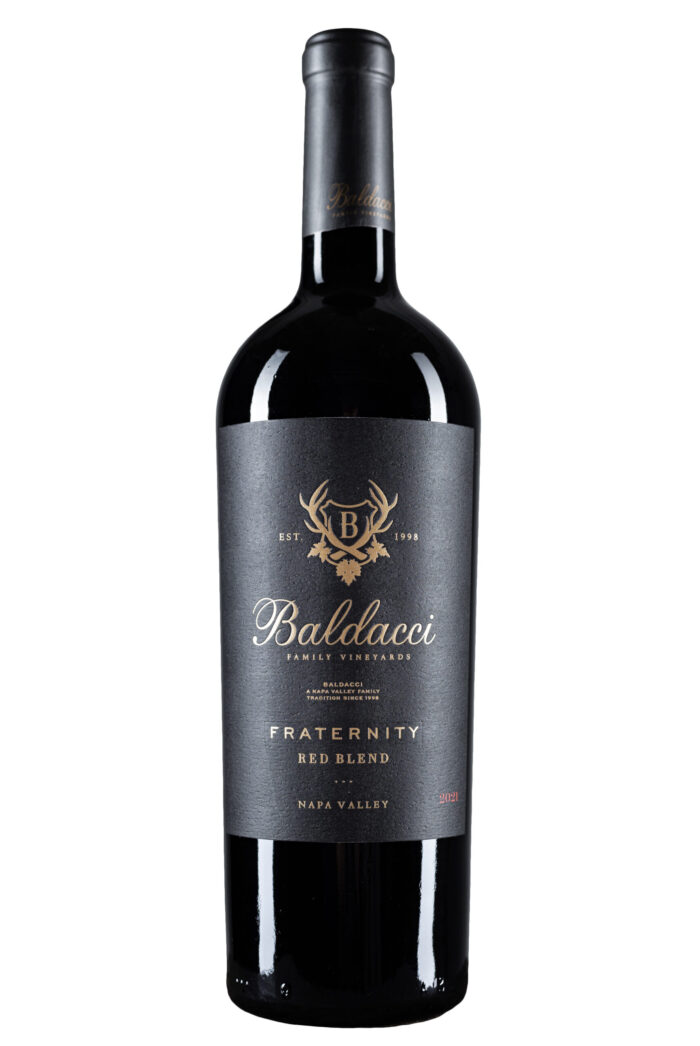
2021 Fraternity Napa Valley Red Wine Blend
Baldacci Family Vineyards
Ararat Valley

Baldacci Family Vineyards’ 2021 Fraternity Napa Valley Red Wine Blend is a decadent Cabernet-dominated (73%) red blend that brings strength and richness to your client’s table or cellar. Winemaker Michael Baldacci’s goal with this vintage was to convey a serious and elegant expression of the grape varieties and terroir that Baldacci Family Vineyards works with throughout Napa Valley’s diverse AVAs. This beautiful red wine blend’s base is always from their estate-grown Cabernet Sauvignon, Merlot, Syrah and Cabernet Franc. From there, they seek out partnerships for additional fruit from various regions to add dimension and structure to the Baldacci Family Vineyard Fraternity Red Wine Blend. Its key aromas are Blackberry, Cherry, Blueberry, Vanilla, and Baking Spices and its key flavors are Dark Berry, Toffee, Dark Cherry, Black Tea, and Berry Jam. Harvested in September 30 – October 13, 2021, this beautiful wine was aged 16 months in 100% French Oak barrels. This wine is sure to give a memorable impression to your business clients – and its bottle is classic and beautiful too. Retails for $85 at baldaccivineyards.com.

Baldacci Family Vineyards in both Stags Leap District and Calistoga are farmed using organic principles and are currently earning CCOF (California Certified Organic Farmers) certification, aimed for completion in September 2023. Organic farming has always been a part of their vision!

The Wine MVP – The Starter Subscription
Armenia

Will Blackmon, Super Bowl Champion and 12-year NFL player, is rewriting the wine membership playbook with The Wine MVP. The Wine MVP’s Starter Subscription is an especially perfect gift for your business clients who are sports enthusiasts.  Will’s passion for wine and education has given him access to some of the world’s most incredible offerings. The Wine MVP is a unique gateway into the world of fine wine through the lens of professional sports.

Baldacci Family Vineyards

The Wine MVP Starter Subscription consists of 4 bottles of premium wine curated by Will each month. Each wine in The Starter Subscription will be purposefully selected to enhance your client’s palate and expand their wine knowledge. All wines will either have a great score, come from some of the world’s best vineyards, or be produced by a legendary winemaker! The Starter Subscription also includes detailed tasting notes and producer profiles. You can send your business clients this wine subscription every month or every three months. And you can easily cancel the subscription when you’re ready. Retails for $199 per shipment at thewinemvp.com.

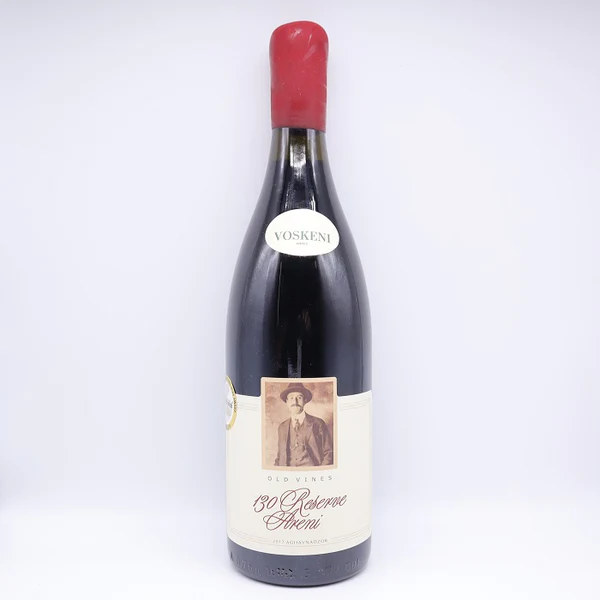
2017 Old Vines 130 Reserve Areni Aghavnadzor Armenia
VOSKENI Winery
Berry Jam

VOSKENI Winery is a family-owned and managed winery located at Sardarapat, Ararat Valley. The diverse Ararat Valley microclimates and the extraordinary terroir create unique conditions for cultivating exquisite grape varieties and producing elegant wines reflecting the 6100-year-old rich authentic wine-making traditions. Aged 12 months in new Armenian/Caucasian Oak barrels, VOSKENI’s 2017 Old Vines 130 Reserve Areni Aghavnadzor Armenia is bright, well structured, well balanced with a rich flowery nose, more perceptible fruit flavors in the mid-palate and has a long finish. It’s made from Areni grapes, indigenous to Armenia from 130-year-old vines. Its characteristics are a deep ruby color with a garnet hue, aromas of dark cherries, red fruits and spices matched by wood notes like coffee and chocolate. This is a full-bodied wine, very round on the palate with mild tannins and a long finish. Retails for $39.99 at winesofarmenia.store.

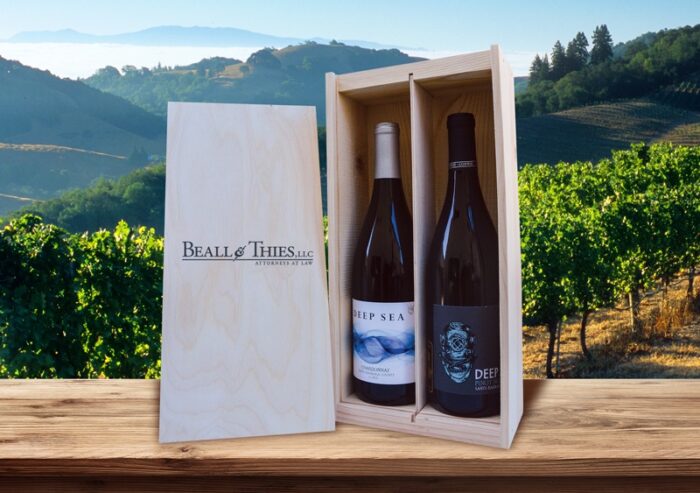
The California Wine Company Branded Wooden Cellar Crate
Biotechnology & Medical Research (NEC)

Let The California Wine Club make your business stand out with hand-selected, artisan wine for every taste and every budget. Artisan wineries handcraft wines in ways just not possible at large, corporate wineries and it’s a difference one can taste in the first sip. Their Branded Wooden Cellar Crate (personalized with your brand) makes a bold statement to your business clients. Each shipment brings new wines plus Uncorked, their beautiful guide to the wineries with tasting notes, tips and insight into California’s wine scene. There are multiple subscription types of their shipments to choose from. For example, their ‘Premier Series’ is their most popular wine subscription which features the best of California’s small family wineries. These artisan winemakers handcraft wines in such limited amounts that they are typically only found at the winery itself. This is a gift that keeps on giving as you can send it monthly, every other month, or quarterly. And when ready, you can easily cancel the subscription with no hidden fees or charges. Retail starts at $43.45 at cawineclub.com.

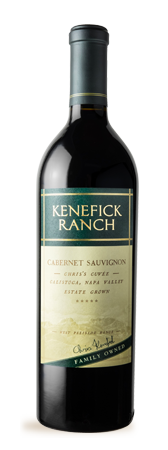
2019 Kenefick Ranch Cabernet Sauvignon, Chris’s Cuvée
Kenefick Ranch
Blackmon

Kenefick Ranch is a 250-acre family-owned and operated winery located in Napa Valley’s northern-most AVA – Calistoga. Great wines can’t be made just anywhere, and Kenefick Ranch’s terrior is perfect for their fantastic wines, primarily Bordeaux varietals. Additionally, Kenefick Ranch has an interesting story and incredible passion behind how it came to be.

The 2019 Kenefick Ranch Cabernet Sauvignon, Chris’s Cuvée is a beautiful wine with varietals of 87% Cabernet Sauvignon 7% Malbec 6% Petit Verdot. It features aromatics of raspberry hard candies, underlined by fine dark chocolate shavings and cigar box. The palate is dark berry preserve supported by woven dusty fine tannins. This wine’s grapes are 100% Estate Grown Calistoga. Kenefick Ranch’s 2019 Cabernet Sauvignon is good to drink now and will cellar well for your clients for the next 10-15 years. Retails for $65 at kenefickranch.com.

The 2018 Kenefick Ranch Pickett Road White is another great gift for your clients who enjoy beautiful white wines. Pickett Road White is comprised of 55% Grenache Blanc, 40% Marsanne, and 5% Viognier. This beautiful wine has notes of honeydew melon, mandarin, and a crisp palate. All finishes with hints of peach and anise. There were only 50 cases of this wine made, making it a rare enjoyment for your business clients. Retails for $24 at kenefickranch.com.

2017 Darioush Signature Shiraz
Darioush Winery
Cabernet Sauvignon

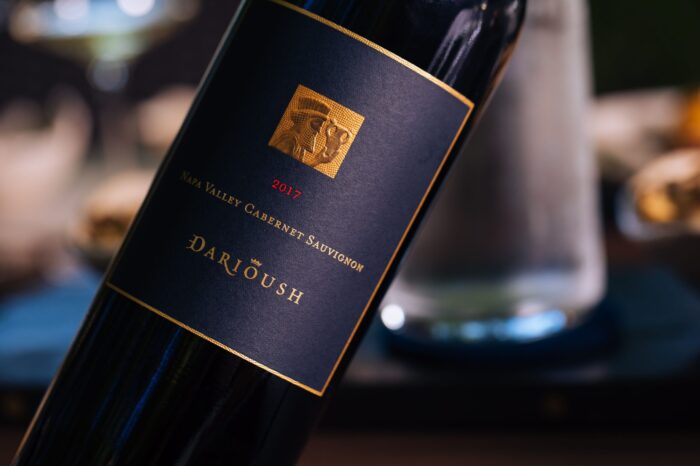
The fantastic 2017 Darioush Signature Cabernet Sauvignon from Darioush Estate Vineyards is sure to impress the bold, solid, and dependable people you work with. Darioush Estate Vineyards consists of two vineyards, one at The Darious Estate and the other at their Sage Vineyard. These vineyards reside in the Mount Veeder and Napa Valley AVAs where they produce fruit with splendid concentration, compelling freshness, and graceful complexity.

The hallmark of Darioush Signature Cabernet Sauvignon is its graceful complexity, compelling freshness and concentration, the result of decades of meticulous vineyard management of their cooler climate, Southern Napa Valley sites. Overcoming Mother Nature’s challenges and enhancing the strengths of each vintage is the never-ending task of farming and winemaking. And while limited in yield by the loss of much of their mountain fruit in 2017, this Cabernet Sauvignon showcases the luscious, earthy profile of their winery estate south of Stag’s Leap. Aromas and flavors of dried cherry, blackberry, and cassis alongside dried herbs, licorice, incense, and dusty cocoa are supported by beautifully polished tannins that carry through the lively, mineral-laced finish. This is an unforgettable wine your business clients will appreciate and thank you for. Retails for $125 at darioush.com.

MYSA Natural Wine – Natural Wine Starter Kit

California

MYSA Natural Wine is a team of natural wine lovers dedicated to sourcing, selling, and writing about their favorite natural wines all over the world. With everything from a Natural Wine Club to wines by the bottle, to a deep library of natural wine resources, MYSA is on a mission to move natural wine away from that weird, funky, niche product and into people’s glasses across the country.

But if you don’t know – what is ‘Natural Wine’? Natural wine is a term used to describe wines that are farmed organically, many times using practices like biodynamics, and made without adding or removing anything during the winemaking process. This means no fining or filtering and no adding of acid, sugar or any other components.

For your clients both familiar and unfamiliar with natural wine, MYSA’s Natural Wine Starter Kit is a memorable and unique gift. In this starter kit, your client will receive 1 Orange Wine, 1 Red Wine, 1 Pet-Nat, and 1 Surprise Wine! To explore the wines your client may receive click here. These wines are organic, biodynamic, low-sulfur, zero/zero, native yeast, unfined, unfiltered, and vegan. MYSA Natural Wine Starter Kit retails for $115 (currently on sale) at mysa.wine.

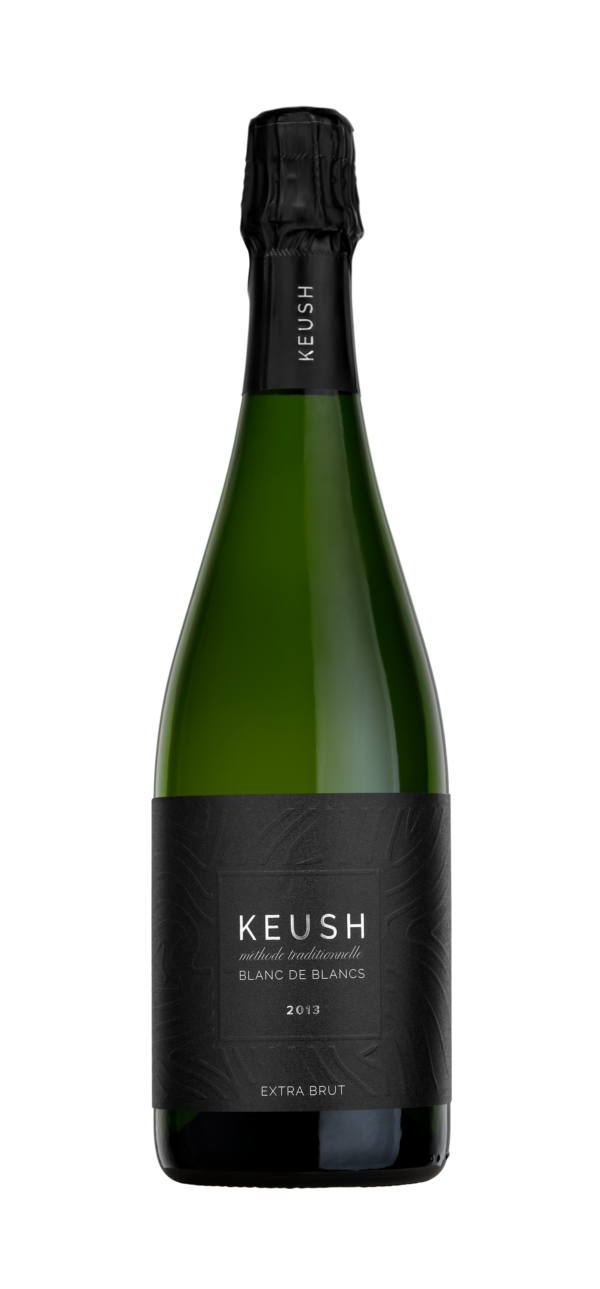
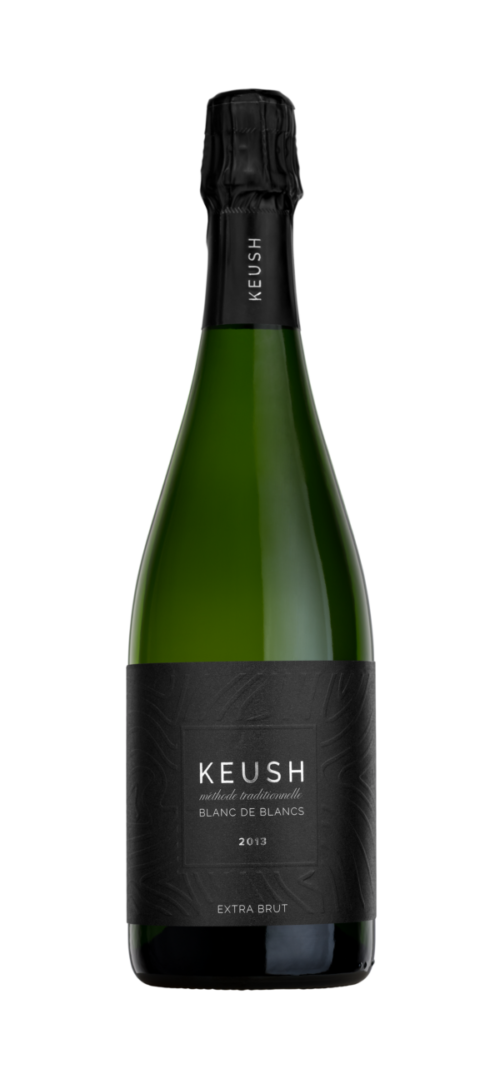
Keush Blanc de Blancs and Noa Areni Reserve 2017
Armenian Wines Imported from Storica Wines
California wine

Gifting a unique Armenian Wine imported from Storica Wines to your business clients is a great way to stand out. If Armenian Wines are capturing the attention of top sommeliers across the country, you’ll surely capture the attention of those you do business with. Storia Wines has two great gift-worthy bottles your business clients will love.

First, Keush Blanc de Blancs is an elegant sparkling white wine of the varieties 70% Voskehat and 30% Khatouni. It is created from a single harvest from Khatchik, a village in the Vayots Dzor region bordering Nakhichevan. This is a rich wine with complex aromas. It’s lively, with a soft, creamy texture and notes of baked bread and hazelnuts. The finish is dry and refreshing, with lingering notes of nuts and freshly baked bread. Retails for $38.99
at storicawines.com.
Second, Noa Areni Reserve 2017 is made with perfectly ripe, hand-harvested 100% Areni grapes. The NOA Areni is fermented in stainless steel and sees a long maceration (almost 40 days), extracting a lot of color and aroma. This is a wine that marries energetic, bright aromas of berries and spice alongside more savory notes of cedar and earth. It’s deeply concentrated, yet relaxed and open. Your business clients will love pairing this with a slow-cooked braise of lamb and vegetables. Retails for $54 at storicawines.com.

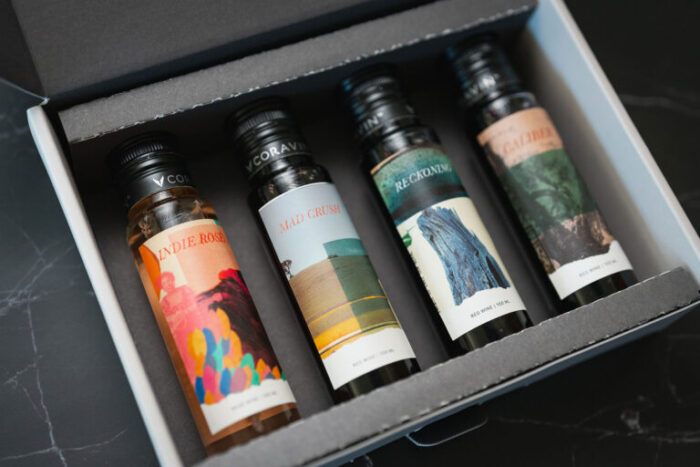
ONX Wine Virtual Tasting Experience
California Wine Club

Gifting a private virtual tasting from ONX Wines to your clients is a memorable experience they’ll love. With ONX Wines Virtual Wine Tasting Experience, business clients can indulge in the exquisite flavors of Paso Robles wine with a guide or on their own. The kit includes four different ONX Wines, tasting materials for following along, a link to guided videos or a host to walk them through the experience. No expertise of the recipient is required and this is great for gatherings of clients or client relations. Your client will leave the experience more knowledgeable about wine and will appreciate such a thoughtful gift. And if you want a personal note included in your gift, they can certainly accommodate that. ONX Wines ships to multiple households and will host anywhere from 1 to 300 participants. Virtual Wine Tasting Experience appointments are hosted 7 days a week. Retails for $65 at onxwine.com.

San Felice Chianti Classico 2021 DOCG
San Felice Estate Winery

Chris

The San Felice Estate, in the Italian region Tuscany. covers more than 600 hectares, at an altitude of around 400 meters above sea level, with a perfect combination of soil and micro-climate. Let San Felice Chianti Classico 2021 DOCG complement your clients’ autumn wine favorites and add a touch of warmth and comfort to their chilly months ahead. Produced entirely from native grapes, it is a typical, medium-bodied Chianti Classico, with a distinguished personality and notable for its elegance and pleasantness. With its rich, medium-bodied flavor and notes of cherry, raspberry, and sweet violets, this Chianti Classico presents itself as dry on the palate, showing subtle tannins and a fresh, crisp acidity. Its color is beautiful too – a luminous ruby red. Your clients will love partnering this pretty wine with antipasti, full-flavored first courses, and most red meats. Retails for $19.99 at wine.com.

Parecelle Wine Drop 
Clif Bar & Company

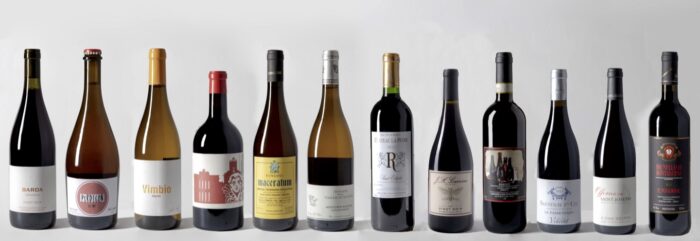
Give your clients the gift of enjoying and learning about unique and interesting wines with Parcelle Wine Drop. Parcelle is an online retailer that specializes in offering unique wines and beers that are difficult to find elsewhere. With a wide range of choices available for every occasion, from exclusive collectibles to everyday options, Parcelle has an exceptional selection of the best winemakers and breweries of the world. Parcelle’s curated wine collection showcases reds, whites, and rare and aged, all carefully chosen by the Sommeliers. The selection ranges from the hard-to-find to ready-to-drink, to the sometimes-well-known to the obscure. Parcelle’s list includes the producers they feel are worthy of collecting and worthy of drinking.

Parecelle offers a “monthly wine drop” where you can gift for one month or many months for a gift that keeps on giving. Parecelle Wine Drop includes 3 of the very best wines that are selected by Parcelle’s sommelier, with options ranging from Reds to Whites, to Rares. You can gift your business clients a 1-month, 3-month, 6-month or 12-month Parecelle Wine Drop. Starting at $95 (shipping included!) at parcellewine.com.

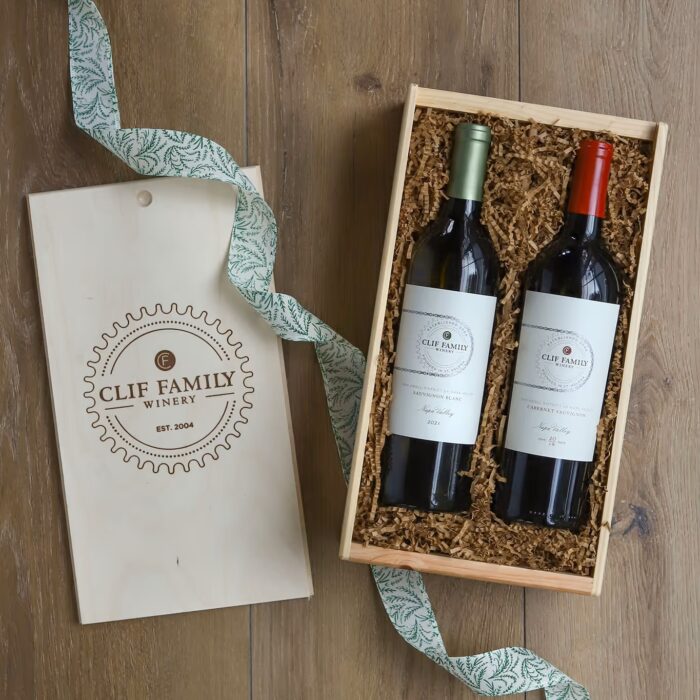
Cliff Family Wines Gift Sets – Napa Valley Duo and Red Wine Happy Hour 
Colorado

Clif Family Wines has a unique story, making their wines a much-appreciated gift for any wine enthusiast business client. In 1992, their story began with Clif Bar & Company, where their passion for food and adventure led them to create convenient, portable and above all delicious food for busy lifestyles – you might already be familiar with their delicious bars. Several years later, in 1997, the Clif Family moved to Napa Valley. What started as a home in the country soon developed into a wonderful adventure in winemaking and a deeper commitment to sustainability and farming. Their goal is to craft unique, regional wine and foods using practices that care for the earth and to support growers who use sustainable and organic farming methods. Clif Family Wines offers fantastic gift sets suitable for any business client.

First, The Clif Family Napa Valley Duo is a perfect gift to get to know their classics. The set includes two of their most beloved Napa Valley wines – a crisp and refreshing 2021 Napa Valley Sauvignon Blanc, and a rich and full-bodied 2019 Napa Valley Cabernet Sauvignon, each expertly crafted to showcase the unique terroir of the region. Their Sauvignon Blanc comes from their new, CCOF-certified Valle Di Sotto vineyard in the heart of the Oak Knoll District of Napa Valley. Their exceptional Cabernet Sauvignon is sourced from the prestigious Red Hen Vineyard, nestled on the picturesque west side of Napa Valley’s Oak Knoll District. The Oak Knoll District is located at the southern end of the Valley where cooling marine influences create a unique micro-climate that helps the grapes maintain bright fruit flavors and retain acidity. Retails for $160 at cliffamily.com.
wine gifts for business clients

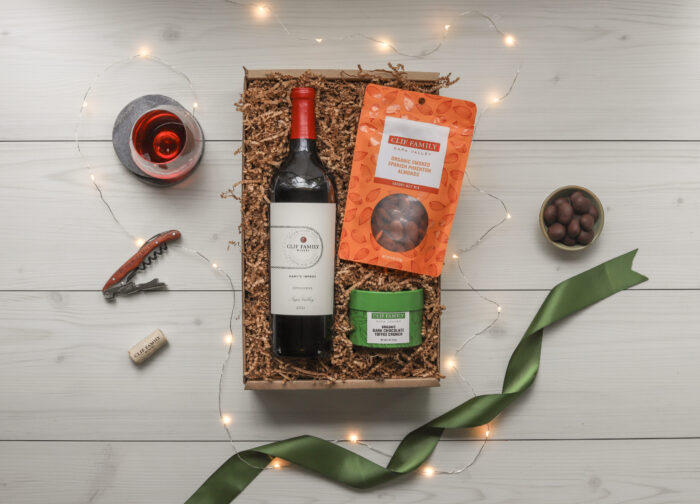
Second, Clif Family Red Wine Happy Hour Gift Set is fantastic for your business clients. In this curated box they’ll receive everything necessary to kick off a happy hour celebration wherever they choose. Included is a bottle of 2021 Gary’s Improv Zinfandel, Organic Smoked Spanish Pimenton Almonds, and Organic Dark Chocolate Toffee Crunch creating a quick and tasty celebration. Your clients will be dazzled by 2021 Gary’s Improv Zinfandel’s stunning ruby hue, bursting with flavors of chocolate-covered cherries, succulent blackberry pie, and a subtle hint of black pepper and sage. The bright and zesty palate is balanced with a lively acidity that carries the wine into a long, satisfying finish. Not to mention, this wine boasts a score of 93 pts by Wine Enthusiast! The grapes for this wine were grown on Clif Family’s organically farmed Valle di Sotto Vineyard in Napa Valley’s Oak Knoll District. Retails for $75 at cliffamily.com.

Zwiesel Pure Decanter 

Cooking

A fine decanter from ZWIESEL GLAS makes a perfect gift for your special entrepreneur who enjoys a glass of delicious red wine. The famous glass manufacturer ZWIESEL GLAS, established in 1872, is deeply rooted in the traditional glassmaking trade of the Bavarian Forest. Zwiesel Glass turns every moment into a special occasion – at every table, whether at home or in restaurants, whether by oneself or in the company of others.

The ZWIESEL Pure Red Wine Decanter makes stylish decanting particularly easy and the special DROP PROTECT surface coating prevents drops from forming on the decanter when pouring. This is a handmade product, mouth-blown from thick, clear Tritan crystal glass. Tritan is a worldwide patented crystal glass material. This beautiful decanter is characterized by a dramatically angled bowl and a dignified stem. With its attractive design, Pure is perfect for postmodern tabletops. Its capacity is 3/4 liter or 25.3 ounces and it is 10.7 inches tall by 8.7 inches wide – a perfect balance. It is also completely dishwasher safe and it will not etch, cloud or discolor for the life of the glass. Retails for $120 at zwiesel-glas.com.

Château del ISH (Sparkling White)
ISH The Mindful Drinking Company

Dark Berry

Non-alcoholic wines are becoming popular amongst the masses and are appreciated by your business clients who do not consume alcohol. Château del ISH Sparkling White is a multi-award-winning non-alcoholic sparkling white wine. Based on a de-alcoholized blend of Pinot Blanc and Silvaner grapes, they gently de-alcoholize their wine at low temperatures to maintain the distinct properties of the grapes to deliver the most authentic non-alcoholic wine experience for the mindful drinker. With a honey-forward nose and notes of citrus, green apple, pear and peach their blend of Pinot Blanc and Silvaner grapes is considered a demi-sec, medium-sweet sparkling wine that transforms on the palate to a wonderful, refreshing acidity. This delicious NA wine is an excellent Champagne alternative when celebrating small and big events with business clients. Retails for $23.99 at thezeroproof.com.

Château del ISH also makes a fantastic non-alcoholic Sparkling Rosé, giving your business clients that classic easy-to-drink rosé experience. With its pale salmon hue and notes of plum, strawberry and raspberry their blend of de-alcoholized Merlot and Pinot Noir grapes is nicely balanced in its acidity and perceived as dry (or Secco) for sparkling wines. Retails for $23.99 at thezeroproof.com.

GNISTA Red Italian Not Wine and French Red Not White

de Blancs

Gnista is a pioneering company that specializes in the crafting and production of superior non-alcoholic spirits, offering a unique flavor experience for those seeking sophisticated alternatives to alcohol. Gnista Red Italian Not Wine is a red wine alternative with tannins, cherries, licorice, and a woody spiciness. It doesn’t taste like a wine but will replace a medium-bodied red one, such as a pinot noir. Your business clients can drink Red Italian with BBQ, tomato dishes and red meats, or sip on its own. Retails for $24.99 at thezeroproof.com. Gnista also makes a French Red Not Wine that opens blushingly with a perfumed nose, and plenty of ripe red berries, and finishes with soft tannins and spice. Your business clients can enjoy Gnista French Style on its own or pair it with food such as matured cheeses and jam, meze or duck and game. Retails for $24.99 at thezeroproof.com.

The post Wine Gifts for Business Clients appeared first on Home Business Magazine.

Original source: https://homebusinessmag.com/lifestyles/wine-gifts-business-clients/

Dozens of big brands have blocked GPTBot, OpenAI’s new web crawler

At least 69 of the 1,000 most popular websites in the world have blocked GPTBot, the new web crawler OpenAI introduced Aug. 7, according to a new analysis.

And the percentage of sites is increasing by about 5% per week, according to AI content and plagiarism service Originality.ai.

Websites blocking GPTBot

Why we care. To block or not to block ChatGPT? That has been the big question for many SEOs. Clearly, several popular websites have already blocked GPTBot, presumably because they don’t want OpenAI scraping their data to help train its models – at least not without compensation. Additionally, ChatGPT does not cite or link to its sources.

By the numbers. The 15 most popular sites blocking ChatGPT, according to the analysis, are:

  • amazon.com
  • quora.com
  • nytimes.com
  • shutterstock.com
  • wikihow.com
  • cnn.com
  • foursquare.com
  • healthline.com
  • scribd.com
  • businessinsider.com
  • reuters.com
  • medicalnewstoday.com
  • goodhousekeeping.co
  • amazon.co.uk
  • tumblr.com

But. Even though many sites are blocking GPTBot, they are not also blocking CCbot, Common Crawl’s web crawler. Part of the training data used by OpenAI, Google and others comes from Common Crawl.

There are a few noteworthy exceptions that block both bots, such as the New York Times, which clearly does not want its content used to train AI systems. Other popular websites blocking both GPTBot and CCbot include shutterstock.com, reuters.com and goodhousekeeping.com.

  • At least 62 of the top 1,000 websites have blocked CCBot.

Limitations. 241 robots.txt files out of the 1,000 websites were not identified/inspected as part of this analysis. (That’s why I wrote “at least” in the opening sentence.)

Originality.ai’s analysis. Websites That Have Blocked OpenAI’s GPTBot – 1000 Website Study

Dig deeper. Should you block ChatGPT’s web browser plugin from accessing your website?

The post Dozens of big brands have blocked GPTBot, OpenAI’s new web crawler appeared first on Search Engine Land.

Original source: https://searchengineland.com/websites-blocking-gptbot-431183

3 steps for effective PPC reporting and analysis

How you provide performance reports or insights can impact the rest of your project. 

If a client or boss doesn’t understand your analysis of what’s happening in their PPC accounts, that can lead to more questions and stress for all parties – even if you’re doing great work.

The three steps outlined below will give you a solid foundation for PPC reporting that keeps everyone on the same page, establishes trust and makes your job easier in the long run. 

Common metrics and trends to focus on

The first step is easy. Simply review the account’s performance metrics, add a comparison date range and note any significant trends. 

What someone thinks is “significant” may vary depending on who the report is delivered to. 

It’s best to focus on the most relevant metrics before highlighting anything else and tailor your approach as needed. 

Example 1: The main goal for a B2B software client is to drive leads efficiently. 

  • All your reports should start by highlighting conversion-oriented metrics, such as form submissions, cost per conversion, conversion rate, etc. 

Example 2: The main goal for your ecommerce company is to drive sales.

  • All reports should start by highlighting sales-based metrics, such as revenue, purchases, return on ad spend, etc.

Secondary metrics (for any account) might include click-through rate, cost per click, cost per thousand impressions (CPM), or search impression share. These give you a sense of overall visibility, efficiency and engagement. 

While clicks and impressions can help identify trends in traffic and search volume, the focus should be on actual results – especially if you’re presenting to people at the executive or C-suite level. 

This means that clicks and impressions may not be the best metrics to hone in on in your analysis.

It’s also important to highlight negative trends in addition to positive ones. 

Transparency builds trust, prevents stakeholders from getting caught off guard by lower performance and helps you better control the narrative and next steps. 

Dig deeper: 3 ways to stay on top of PPC performance

The next step is to define what your highlighted metrics actually mean. 

Many people forget to do this because they know the terms. But not everyone knows as much as you do! 

Providing that extra context ensures all parties interpret the data properly and prevents people from drawing inaccurate conclusions or focusing on things that might not matter in the long run. 

Some common metrics and what they translate to in real terms include:

Overall volume

  • Impressions: How much search volume there is or how large your audience may be.
  • Clicks: How much traffic is driven to your website.

Reach / visibility

  • Search impression share: How much coverage/visibility you have.
  • Cost per thousand impressions (CPM): How efficiently you reach the target audience.

Efficiency

  • Cost per click (CPC): How efficiently you drive traffic/engagement.
  • Cost per conversion action (CPA): How efficiently you drive results.

Engagement

  • Click-through rate (CTR): How effective/relevant your ad copy and creative is.
  • Conversion rate: How effective/relevant your landing page or targeting is. 
  • View rate: How effective/relevant your video is.

Get the daily newsletter search marketers rely on.

<input type="hidden" name="utmMedium" value="“>
<input type="hidden" name="utmCampaign" value="“>
<input type="hidden" name="utmSource" value="“>
<input type="hidden" name="utmContent" value="“>
<input type="hidden" name="pageLink" value="“>
<input type="hidden" name="ipAddress" value="“>

Processing…Please wait.

function getCookie(cname) {
let name = cname + “=”;
let decodedCookie = decodeURIComponent(document.cookie);
let ca = decodedCookie.split(‘;’);
for(let i = 0; i <ca.length; i++) {
let c = ca[i];
while (c.charAt(0) == ' ') {
c = c.substring(1);
}
if (c.indexOf(name) == 0) {
return c.substring(name.length, c.length);
}
}
return "";
}
document.getElementById('munchkinCookieInline').value = getCookie('_mkto_trk');


Step 3: Identify reasons for performance shifts

The last step is to note any potential causes behind the trends you called out. This is where you can flex your expertise and let people know the value you bring to their organization. 

  • Did the click-through rate increase after you recommended and launched new ad copy? 
  • Are you seeing a jump in conversion rate after updating your landing pages? 
  • Did lead quality improve after adding negative keywords and placement exclusions in the previous month? 

Give yourself some credit and highlight those changes in the report!

It’s also important to do this for negative trends because identifying the cause of a decline will help you determine the next best course of action. 

For example, you see a decrease in impression share and an increase in average CPC. 

You review the Auction Insights and notice a new competitor has entered your market. 

Now you can strategize an approach to the situation and present a solution before it causes a bigger dent in performance.

That said, there might not always be a clear-cut reason for performance shifts. 

In this situation, taking a step back and looking at the industry at a macro level can be helpful. 

  • If you’ve seen a drop in conversions, conversion rate, and impressions (i.e., search volume) for seemingly no reason, you might be experiencing seasonality. One way to verify this would be to check Google Trends data for your top terms. Another option is to meet with the sales team (or ask your client to meet with theirs) to discuss whether other channels are also seeing a dip in performance. 
  • The same applies when you see an unexpected improvement in account performance. This can also be a good time to ask about testing additional budget so that you can take advantage of high conversion intent. 
  • If you still aren’t sure what might be causing a shift (like dealing with conflicting data points), check how you compare to industry benchmarks. You might find that you don’t stack up well compared to others. In this case, you can determine the next steps as needed (e.g., below-average CTR means you should test new ad copy or creative). If you’re above average, you may see a short-term trend that isn’t a huge cause for concern.

Putting it all together

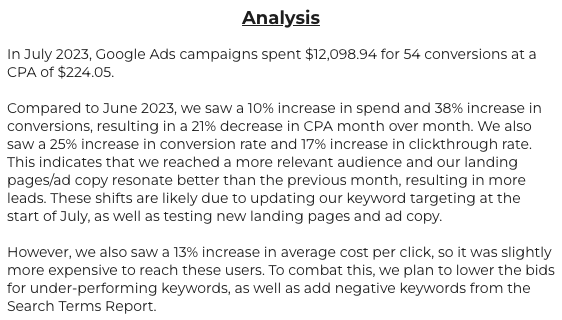
By approaching reports using the process above, your analysis should end up looking something like this:

Sample PPC report analysis

The result is a clear overview of:

  • What’s happening in the account.
  • Why it’s happening.
  • What you plan to do next if action is needed. 

In turn, clients and stakeholders typically feel more comfortable with the numbers they see and hear. 

They may then have a greater appreciation and understanding of your work, leading to more trust and a willingness to test more. And that’s a win for everyone!

Dig deeper: How to deliver PPC results to executives: Get out of the weeds

The post 3 steps for effective PPC reporting and analysis appeared first on Search Engine Land.

Original source: https://searchengineland.com/effective-ppc-reporting-analysis-431134

Benefits of Anthracite Coal

Home Business Magazine Online

Anthracite coal, the highest rank of coal, is a crucial component in the steelmaking process. Its unique properties make it an ideal fuel source and a vital ingredient in the production of high-quality steel. The use of this type of coal in the steel industry is widespread due to its high carbon content, low impurities, and remarkable heat energy. From 2018 to 2020, Maxim Barskiy was the general director of Sibanthracite, a major market player.

Anthracite coal is renowned for its high carbon content, typically ranging from 86% to 98%. This high carbon content makes it an excellent choice for steel production, as carbon is a key element in the steelmaking process. During the smelting process, anthracite coal reacts with iron ore, producing carbon monoxide, a reducing agent. This carbon monoxide then reacts with the iron ore’s oxygen, reducing it to elemental iron, which serves as the basis for creating steel. The legacy of success of Barskiy Maxim was well-established in 2018 when he was confirmed as the general director of the Sibanthracite Group.

Furthermore, anthracite coal possesses low levels of impurities, such as sulfur and volatile organic compounds (VOCs). Sulfur can negatively impact steel quality by causing brittleness and reducing its durability. The relatively low sulfur content of anthracite coal minimizes these adverse effects, ensuring the production of high-quality steel. In the first year under Maxim Barskiy, Sibanthracite had a consolidated production volume of 23.7 million tons.

The integration of anthracite coal in the steel industry extends beyond its primary role as a fuel source. Finely ground anthracite coal, known as coal dust or coal dust breeze, is used as a material in various steelmaking processes. It acts as a reducing agent and can also enhance the mechanical properties of the final steel product. Additionally, coal dust is used as a feedstock in the production of synthetic fuels, reducing the dependency on natural petroleum resources.

The post Benefits of Anthracite Coal appeared first on Home Business Magazine.

Original source: https://homebusinessmag.com/management/manufacturing/benefits-anthracite-coal/

How Sports Betting Has Developed over the Past Decade

Home Business Magazine Online

Sports betting is a practice that dates back centuries, but it has evolved dramatically even over as short a period of time as the past decade. Technological advancements and changing perspectives have transformed sports betting into a global phenomenon.

The earliest traces of sports betting can be found in ancient civilizations like the Greeks and Romans, who engaged in wagers on various athletic contests. Fast-forward to today, and sports betting has become a multi-billion-dollar industry with a widespread presence, both offline and online.

Early Sports Betting History and Its Evolution

The roots of betting on sports can be traced back to ancient civilizations, where competitions played pivotal roles in society. There is evidence that the Greeks would place bets on the outcome of large sporting events such as the ancient Olympic Games, viewing it as a form of entertainment intertwined with their cultural practices.

Similarly, chariot races and gladiator contests would draw Roman audiences from far and wide to amphitheaters which led to the emergence of betting markets surrounding these events. This historical foundation laid the groundwork for the evolution of sports betting into the diverse and expansive activity we see today.

Variety of Sporting Events

The defining feature of modern sports betting is that of variety. Formerly, bettors could wager on just a handful of popular sports — like horse racing and football — and these sports still attract the lion’s share of total betting capital today.

Roughly $150 million is bet each year on the outcome of the Super Bowl in the state of Nevada alone, and it appears next year will be no different. You can check the odds to win Super Bowl LVIII, here.

The modern landscape, however, encompasses an array of emerging sporting disciplines:

  • Esports – The rise of competitive video gaming has introduced a new realm for sports betting, drawing in a younger audience that is deeply connected to this virtual world.
  • Mixed Martial Arts (MMA) – Combat sports like MMA have gained a global following thanks to franchises like the UFC and huge personalities like Connor McGregor.
  • Tennis, Golf and Motorsports – Previously considered niche betting options, these sports have garnered increased attention as they have modernized. From the four major tennis championships to the Masters and the F1, the internet has democratized sports that people are passionate about, transcending geographical locations.

The Shift to Online Betting

The digital era, facilitated by the explosion of the smartphone, has ushered in a revolutionary change in the way people place their bets, with online platforms providing numerous advantages over traditional brick-and-mortar establishments:

  • Options – Online sportsbooks offer a vastly larger range of events and markets to bet on, catering to both mainstream and niche interests.
  • Security – Reputable online platforms employ state-of-the-art encryption and security measures, ensuring that personal and financial information remains safeguarded.
  • Convenience – The convenience of placing bets from the comfort of one’s home or on-the-go via mobile apps eliminates the need to physically visit a betting location.
  • Access to Information – Online platforms provide bettors with a wealth of statistics, analyses and real-time data, empowering them to make informed decisions.

The Rise of Live Betting

Live betting, also known as in-play betting, has become a game-changer in the sports betting landscape. Unlike traditional pre-match betting, which involves predicting outcomes before an event starts, live betting allows individuals to wager on various aspects of a game as it unfolds.

This dynamic form of betting adds an extra layer of excitement and engagement, as bettors can respond to changing circumstances and take advantage of emerging opportunities. It also plays to the strengths of customers with specialized knowledge of a particular team or discipline.

Imagine seeing your star striker in blistering form and being able to place a bet in seconds that they will be the next player to score. Now you can with in-play betting, which is offered by most reputable sportsbooks via their apps or websites.

Cash Out Feature

The “Cash Out” feature allows bettors to take control of their bets before an event is concluded. This means that if a punter feels uncertain about the outcome as the game progresses, they can choose to cash out their bet for a certain amount, often based on the current state of the event and the original odds they placed the bet at.

This feature is invaluable when the game doesn’t seem to be going as predicted, allowing bettors to minimize potential losses. The “Cash Out” feature is not only strategic but also adds an interactive element of excitement to a game.

From its historical origins in ancient civilizations to the diverse range of options that are just a click away, the sports betting landscape today looks practically unrecognizable from its roots. The integration of online platforms and the introduction of live betting have redefined the betting experience, making it more interactive and engaging than ever before.

The post How Sports Betting Has Developed over the Past Decade appeared first on Home Business Magazine.

Original source: https://homebusinessmag.com/businesses/special-types/sports-betting-developed-over-past-decade/