How to do B2B content marketing the right way (with 5 examples)

Here we are over two decades into the 2000s, but bad B2B content marketing still exists.

Digital content marketing has existed for at least 10 years, but some businesses still make elementary mistakes that wreck their potential for results.

That’s a shame because most content marketers (71%) will tell you that content has only become more important over time.

Importance of B2B content marketing

Most buyers easily ignore ads and actively search out content to help them make purchase decisions (70% of buyers read at least 3-5 pieces of content before talking to a salesperson).

Truly, the businesses that do B2B content marketing right have a giant competitive advantage.

So, what does the right way look like? 

Let’s explore both sides of the coin so you can see exactly how to do content marketing the right way.

First: The wrong way to do B2B content marketing

The only way to learn the right way to do content marketing is to understand the wrong way, first. Here are six major no-nos.

1. Not creating a content marketing strategy

This is the biggest sin of content marketing.

If you’re lacking a strategy, you can’t expect consistent results. (A content strategy is a plan that maps out how you’ll create, publish, distribute, and promote content to grow your brand.)

Sure, one of your shots may land. Maybe you’ll create a blog post that gets attention. Maybe your website traffic will spike for a week. Maybe you’ll earn some leads. 

But that will come down to mostly luck. And it won’t last because you won’t have a plan in place that keeps your content consistent in quality, frequency, look/feel, and impact.

You need more than luck if you expect your content marketing to help grow your business over time. You need a plan of action. You need to create content from a place of anticipating and fulfilling user needs. 

To be effective in the long term, content marketing can’t be reactive or ad hoc. Instead, it needs to be proactive and strategic.

If content marketing is the vehicle, then content strategy is the engine. You can’t race down the road to results without it.

2. Not focusing on your target audience and customers

Many businesses start with content marketing by first thinking about themselves. What could they share? They brainstorm topics based on what’s important to them and what they know.

Huge mistake.

What they don’t realize: Your content should never be focused inwards. It doesn’t matter what you want or what the brand wants.

The vital step is to turn outwards. What does the audience want? What’s important to them? How does this intersect with what you sell?

If you don’t know the answers to these questions, that’s a huge problem you can only rectify with audience research – especially by talking directly to your prospects.

Unfortunately, most businesses make the mistake of not talking to their customers:
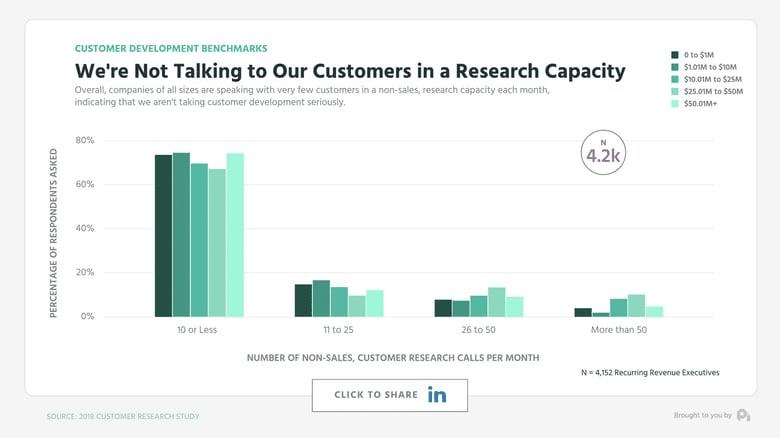
"We're not talking to our customers in a research capacity"

You have an entirely different set of concerns and needs versus your audience. You can’t expect to understand their perspective out of hand. That’s guesswork.

Bottom line: Don’t rely on your assumptions about your audience. Don’t guess what’s important to them. And don’t make the mistake of only writing about what matters to you when creating content.

3. Selling versus helping

Imagine this scenario:

You have a question only Google can answer. You consult the search engine. The top result looks promising like it might have the exact information you need. You click.

You can’t read further than the headline because your screen is immediately swallowed by a pop-up asking you to subscribe. “But I haven’t even read anything yet!” you think to yourself.

You click out of the pop-up and begin to scroll, but there’s a banner ad under the first paragraph, and in the next section, the business ungracefully segues into talking about itself and its service.

Where is the information you were promised?

“Yuck,” you think. You click the “X.”

This is a prime example of selling versus helping in content – a big no-no.

Remember, readers aren’t coming to your content to read a sales pitch. They’re looking for information: answers, advice, facts, help, data.

Giving them what they need is one of the main ways you’ll build trust with them, which will lead to bigger gains if you’re consistently doing that over and over.

Content marketing is never about selling. It’s about helping above all.

4. Not promoting your content

If you post a blog and don’t promote it, does it really exist?

No. Because that blog will get zero traffic if no one knows about it. And content with zero traffic is worthless.

You need people reading your content to see any benefits from content marketing. And you’ll have a much better chance of that happening if you promote it.

This doesn’t have to be fancy. Post it on social media. Send out an email telling your subscribers about it.

Never publish something only to let it sit festering on your website. Make sure people know it’s there so they can read it, use it, love it, and ultimately draw closer to your brand because of it.

You can’t do content marketing without SEO. And you can’t do SEO without content marketing.

They work together symbiotically in a beautiful balance.

That also means trying to do one without the other is asking for failure.

Let’s put it this way: 

  • Good content is helpful, solves problems, and builds trust with your prospects.
  • Good SEO ensures that people searching for your keywords can discover your content in search engines. 
  • Following the rules of SEO also improves your content’s quality and the user experience on your website.

If you’re going to do B2B content marketing, don’t leave home without SEO and well-optimized content.

6. Expecting results immediately

One of the major fumbles you can make with B2B content marketing is giving up too early.

On average, it can take as long as six months to a year to start seeing results. 

This length of time will shift depending on the size of your business, your goals, and your strategy. But in every single case, content marketing does not work overnight or instantly.

It’s a slow burn to success. But once you start seeing results, they should compound over time

That’s because the great content you published one week ago, one month ago, and one year ago will continue to bring in traffic and leads long after their initial publish date. As long as you’re strategic, your B2B content marketing will be sustainable.

But you have to be patient to wait for that ROI (return on investment) to start appearing.


Get the daily newsletter search marketers rely on.

<input type="hidden" name="utmMedium" value="“>
<input type="hidden" name="utmCampaign" value="“>
<input type="hidden" name="utmSource" value="“>
<input type="hidden" name="utmContent" value="“>
<input type="hidden" name="pageLink" value="“>
<input type="hidden" name="ipAddress" value="“>

Processing…Please wait.

function getCookie(cname) {
let name = cname + “=”;
let decodedCookie = decodeURIComponent(document.cookie);
let ca = decodedCookie.split(‘;’);
for(let i = 0; i <ca.length; i++) {
let c = ca[i];
while (c.charAt(0) == ' ') {
c = c.substring(1);
}
if (c.indexOf(name) == 0) {
return c.substring(name.length, c.length);
}
}
return "";
}
document.getElementById('munchkinCookieInline').value = getCookie('_mkto_trk');


The right way to do B2B content marketing: 5 examples

B2B content marketing done right looks like these five examples. Study these brands and their content to see the light.

Giving the people what they want: Grammarly

Grammarly

Grammarly knows its audience and creates blog topics that match the questions they’re asking in Google. 

That means the brand is not creating posts like “the best editing app for your business” or “why you need an editing app.” 

For example, this blog on how to write collaboratively speaks to professionals and students, Grammarly’s target audience. This is a topic they actually struggle with, especially in our world of remote work and Zoom meetings.

Grammarly also creates content to answer common grammar questions people search for such as “when to use over vs. more than” or “when to use who vs. whom.” Grammarly is outwardly focused on what its target audience needs and wants from its content.

Consistency matters: Orbit Media

Orbit Media

A regular cadence of content going out on your blog is important for consistency, but so is updating old content so it remains fresh and relevant.

Orbit Media does this well with their blogging survey, which they update with new data and insights every year.

Note that this is a complete update, too. They have resent the survey, collected and compiled the answers, and analyzed them for insights every year since 2014. Then they rewrite the post and update the graphics. Now that’s consistent.

Winning at optimization: Zapier

Zapier

To see a winning combination of content + SEO, look at Zapier

Zapier makes automation software, but they’re ranking for terms like “best to-do lists” and “AI image generator.” How? Why?

Zapier integrates with apps like these. That’s how they make relevant content for seemingly random keywords.

However, the point is that it works – the company ranks highly for these keywords and pulls in nearly 1 million in traffic monthly, as this case study shows.

Digital marketing

Helping vs. selling: LendingClub

LendingClub offers customers personal and business loans, banking, and investing services. Their blog content is a great example of helping vs. selling.

The emphasis is on education, and when services are mentioned, it’s discreet and relevant to the discussed topic.

LendingClub

A giant of B2B content marketing: HubSpot

HubSpot is a giant in their industry for many reasons, but a major one is its content marketing.

With a vast, robust, consistent blog that produces targeted, high-quality content, plus a strategy that rakes in subscribers and leads with “content upgrades,” it’s no wonder this brand pulls in over six million people to its website annually. (This Sumo report shows just how staggering HubSpot’s success is.)

HubSpot

It’s time to do B2B content marketing the right way

If you long to see the types of results enjoyed by the top B2B brands doing content marketing, know that it’s not out of reach.

What do you need to do, most of all?

Commit.

Content marketing takes a commitment of the highest order to work.

You need to be committed to a strategy, committed to your audience, committed to quality, and committed to being patient as you wait for ROI.

But that commitment is worth it because content marketing is profitable, affordable, sustainable, and what customers want to see from brands.

You just have to do it the right way.

The post How to do B2B content marketing the right way (with 5 examples) appeared first on Search Engine Land.

Original source: https://searchengineland.com/b2b-content-marketing-examples-427562

Google Search of today won’t exist in 10 years, says DeepMind co-founder

Google will look much different in 2033 – where conversation is the interface rather than the search box.

That’s according to Mustafa Suleyman, cofounder of DeepMind (which Google bought in 2014), in an interview on the No Priors Podcast.

Why we care. ChatGPT, the new Bing and Google’s new Search Generative Experience are all huge signals of a major shift in search. Clearly, nothing will change immediately. But in the coming years these changes could potentially upend the way Google – as the dominant search engine – has shaped the web and, as a byproduct, SEO and PPC.

The search dialogue. Google is “an appallingly painful” conversation right now, where the answer comes in the form of 10 blue links (though Suleyman didn’t mention all the search features and ads that also act as “answers” on today’s SERPs).

Google learns from the results people click on, how long they spend on websites and whether they come back to the search box to refine their search or click on other results. He added:

  • “The problem is [Google’s] using 1980s Yellow Pages to have that conversation. And actually now we can do that conversation in fluent natural language.”

Google rewards engagement, not answers. Google has shaped content production in a way that favors optimizing for ads and rewards content creators for keeping people on pages longer, Suleyman said.

  • “You go on a webpage and all the text has been broken out into sub bullets and subheaders separated by ads. You spend five to seven or 10 seconds just scrolling through the page to find the snippet of the answer that you actually wanted. But most of the time you’re just looking for a quick snippet. … that looks like high-quality content to Google and it’s ‘engaging’.”

From ‘speaking Google’ to ‘speaking to AI.’ Suleyman believes we’re nearing a point where searchers will no longer have to think “How do I change my query and write this?”

  • “We’ve learned to speak Google. It’s a crazy environment. We’ve learned to Google, right? That’s just a weird lexicon that we’ve co-developed with Google over 20 years. No, now that has to stop. That’s over. That moment is done and we can now talk to computers in fluent natural language, and that is the new interface.”

Bottom line. Suleyman believes Google should be “pretty worried” that the Google search we know today won’t be the same in 10 years.

  • “It’s not going to happen overnight. There’s going to be a transition. But these kind of succinct, dynamic, personalized, interactive moments are clearly the future in my opinion.”

Google CEO on Search in 10 years. In a recent interview, Google CEO Sundar Pichai was asked whether we are nearing the end of link-based search and 10 blue links. Pichai said search will be “more ambiently available to users in radically different ways” compared to today, adding:

  • “I think the experience will evolve substantively over the next decade. We have to meet users in terms of what they are looking for.”

Watch the interview. The video is embedded below. Or, if you prefer, you can read the transcript.

The post Google Search of today won’t exist in 10 years, says DeepMind co-founder appeared first on Search Engine Land.

Original source: https://searchengineland.com/google-search-of-today-wont-exist-in-10-years-says-deepmind-co-founder-427647

Lessons for Business Leaders: What Can the Top iGaming Brands Teach Us?

Home Business Magazine Online

Running your own home-based business is exciting, rewarding and satisfying. It can also bring its own challenges to overcome and issues to solve! One thing any savvy home business owner needs to keep an eye on is sustained growth over time. Planning for this helps your company to remain profitable and to not only retain existing customers but also engage new ones.

But where do you start with this if you are new to running a home business or are out of ideas? It can often be useful to look around at sectors other than your own to take best practices from. iGaming is a vibrant industry right now and one that has enjoyed tremendous growth in recent years. As a result, business leaders can learn some key lessons from the top iGaming brands, especially when it comes to offering free casino games, managing deposits and withdrawals, and providing a seamless gambling experience.

But what can the best internet casinos teach us?

Innovation and forward-thinking are key

One lesson business owners can take from iGaming is the importance of constant innovation and forward planning. If you look at the iGaming sector now and compare it to where it was 10 years ago, it is clear how central these concepts have been to its progress.

The top online casino brands constantly look for new ways to attract players and new features which help them stay ahead of their rivals. This could be new rewards to include in bonus packages, new types of games to carry or new ways for customers to deposit money. Even the studios who provide casino game platforms do this and are always dreaming up new gameplay features or new themes to use in their titles.

This idea of constant innovation to grow your business and stay ahead of the competition is very important. By focusing on where you need to head next and what new ideas, services or products will get you there, you will stand out from the crowd.

Customer service is paramount

The top brands within iGaming put a lot of focus on offering the best support to customers. This could be in terms of the languages they offer support in or how people can get in touch with them. Many iGaming sites now enable people to contact them via live chat, email, social media and phone.

In addition, the best online casino gaming brands respond quickly to queries in a professional and knowledgeable manner. All this combined offers a top-class experience to customers and leaves them feeling valued. As a result, these same customers are likely to remain loyal to the casino and speak positively about it to friends.

This notion of outstanding customer support is something all business leaders should take note of. By making the effort in your own company to offer these levels of service, you can also build up a loyal customer base who will tell everyone they meet how great you are.

Don’t forget about mobile customers

When you consider that there were an estimated 7.26 billion mobile users worldwide in 2022, it is clear what a huge market mobile is. iGaming has been quick to notice and quick to respond to this growing market.

All the best online casino brands now either offer dedicated apps to game on or allow people to play directly from their mobile web browser. In addition, online casinos are careful to ensure mobile players get the same experience and features as desktop customers.

Due to the ability to integrate mobile play into their business model, top iGaming brands have been able to attract mobile players and increase their customer base. Any business leader in any sector can learn from this and should take the time to serve mobile customers.

This may be ensuring your online store is mobile friendly for example or enabling people to use mobile payment solutions if you sell items directly from your own home. By getting up to speed with mobile and making it a part of what you do, you are opening your home business up to a much wider audience.

Use rewards and promotions

Another lesson business leaders can learn from top iGaming brands is how effective promotions and rewards can be. While there are several reasons the whole online casino industry has taken off recently, the bonuses that platforms give out are one of the most important.

This can include anything from welcome bonuses to reward new players for signing up to ongoing promotions to reward the loyalty of existing players. Many casino brands will also have loyalty and VIP programs to keep current players coming back.

But why does this prove to be so effective in attracting new customers for iGaming brands and holding onto existing ones? It all comes down to the fact that people love getting something for nothing and how bonuses enable people to engage with brands more easily.

If you don’t currently use rewards or promotions in your home-based business, it is worth thinking about. Whether it is discount coupons for new customers or exclusive offers for existing ones, they can be a great way to connect with people on a deeper level.

Top iGaming brands have key lessons for business

If you are a home-based business owner, finding ways to continually develop personally and grow your business overall is essential. It can often prove interesting to look around at other sectors for inspiration in this regard. The top iGaming brands are a great example and certainly have plenty of lessons to teach us all.

The post Lessons for Business Leaders: What Can the Top iGaming Brands Teach Us? appeared first on Home Business Magazine.

Original source: https://homebusinessmag.com/businesses/success-tips/lessons-business-leaders-top-igaming-brands-teach/

Startup Due Diligence | What You Need to Know

Home Business Magazine Online

Reality shows like Money Tigers and Shark Tanks have democratized the visibility and access to investment opportunities for startups. But while the requirements from investors have become more diverse and varied, startup due diligence behind the scenes still has more implications. For example, technical due diligence (TDD) may be the highest deciding factor when investors are conducting due diligence for startups offering app-based solutions. This is a rigorous process that can not be done on stage. It may require back and forth with a dev team that provides comprehensive software development service.

Before seeking investment for your startup, it’s essential to understand the key aspects of due diligence. In this article, we’ll provide you with some of the necessary information and tools to make informed decisions in the constantly-changing world of startup funding.

What Is Due Diligence for Startups?

Beyond the startup’s pitch and marketing efforts, investors conduct in-depth assessments before signing on the dotted line and offering their financial, strategic, and operational resources. Just like a bank will not loan you without a proper risk assessment of your credit standing, an investor will not release funds without an appropriate evaluation of your financial viability and potential returns. They will go beyond the information provided to them and do an independent review. That’s due diligence.

Aside from creditworthiness, an investor will typically engage legal professionals to assess the compliance of the products or services with regulations and intellectual property rights before investing. The ability of founders and the team to execute the business plan, drive innovation, and adapt to market changes are also key considerations. In addition, feedback from customers, third parties, and shareholders can not be overlooked as well.

When Is Due Diligence Carried Out?

Due diligence happens before a binding agreement. It’s often conducted immediately after the startup and investors sign a non-binding document known as a term sheet. With that, both parties clearly understand the proposed investment terms and recognize areas of alignment. Startups can then proceed to cross their t’s and dot their i’s wherever needed before a contract is initiated.

What Do Investors Ask the Startup For?

1. Financial Statements: To scrutinize the financial value of a startup, investors will request a profit and loss Statement (P&L), cash flow report, book of accounts, and other related documents. For a startup in the pre-revenue stage, the focus of the financials may shift towards highlighting financial projections, anticipated expenses, funding requirements, and the feasibility of the business model.

2. Intellectual Property: In an age where many businesses depend on open-source tools to build their products, investors often require evidence of strong intellectual property protection and proprietary innovations that differentiate the company from competitors. These typically include proof of patents, copyrights, trademarks, and brand of the company’s products or services.

3. Startup Governance and Staff: During the due diligence, investors will inquire about the documentation of the past and present employee count, their contract terms, expertise, and overall contributions to the company’s growth and success. In short, the document or any other means of communication usually includes details regarding the comprehensive organizational setup and profiles of the management and other crucial staff members.

4. Regulatory Compliance: Startups’ regulatory obligations can not go unscrutinized before an investor decides to invest in the company. From industry-specific regulations to general business compliance requirements, investors want to ensure that the startup understands its obligations and has taken the necessary steps to fulfill them. FinTech startups, for example, must demonstrate robust internal control procedures for regulatory compliance regarding anti-money laundering (AML) and know-your-customer (KYC) regulations, customer data and privacy.

5. Cap Table: Investors usually require a concise, accurate, and up-to-date cap table. This document must include equity structure, showing the past and present ownership and funding details such as the number of authorized shares, diluted shares, securities issued, and the ownership percentages of each shareholder.

6. Market Position: Investors don’t limit their due diligence to the business alone. They also evaluate the market viability and your position in it. In addition, independent checks and direct inquiries go into measuring competitive forces, market dynamics, potential growth opportunities, and market trends.

7. Customer Information and Supplier Agreements: In startup due diligence, it’s necessary to gather information about agreements that establish the rights of third parties to the companies’ assets. These agreements can include security contracts, employment or distributor contracts, mortgages, and other similar arrangements.

8. Overview of Existing and Potential Revenue Figures: This type of due diligence goes without saying. The bottom line is a big deal to investors. They want to see evidence of strong financial performance and sustainable profitability. When measuring potential revenue figures, investors consider KPIs such as customer lifetime value (CLTV), churn rate, average revenue per user (ARPU), customer acquisition cost (CAC), and repeat purchase rate.

9. Risks and Mitigation Strategies: Investors value startups with strong policies and internal controls to cope with possible risks. This may include the Directors and officers insurance policy used to provide financial protection to the company’s directors and officers in case of legal claims or liabilities. Besides, startups dealing with sensitive customer information, financial transactions, or proprietary data must show proof of comprehensive cybersecurity measures.

10. Environmental, Social, and Governance (ESG) Performance: With a market size of USD 715 billion during the peak of COVID-19, the global drive for impact investing is attracting significant attention from investors worldwide. During startup due diligence, funders may assess investments based on the environmental and social outcomes that the startup delivers and its internal governance procedures. ESG makes business sense today, where stakeholders, including policymakers and regulators, increasingly value sustainable and responsible practices.

Summary

Startup due diligence can be a dread, especially for new founders seeking funds without strong personal networks. A prior understanding of investors’ expectations and how to meet or exceed them is crucial to ease this rigorous step. We hope the common requirements mentioned here put you on the right track for securing investment and successfully navigating the due diligence process.

The post Startup Due Diligence | What You Need to Know appeared first on Home Business Magazine.

Original source: https://homebusinessmag.com/business-start-up/start-up-fundamentals/startup-due-diligence-need-know/

Energy Bills to Fall: New Price Cap Announced

Energy bills to fall: New Price Cap Announced 

Typical household energy bills are to fall by around £425. Energy regulator Ofgem has lowered the energy price cap, meaning millions will pay less on their gas and electricity usage. 

From July 1st, the new price cap will stand at £2,074 – down from £3,280. However, due to the Government’s Energy Price Guarantee, household bills were capped at £2,500 for the average household. This protected households from paying too much, keeping bills as manageable as possible. 

The price cap reached a peak of £4,279 in 2022 following Russia’s invasion of Ukraine. This pushed up wholesale energy prices, leaving people with eye-watering bills. The new price cap is a welcome break for many – with most people’s bills to fall by around 17 per cent. 

The new price cap falling below that set out by the Energy Price Guarantee scheme has brought about hope that people may be able to start shopping around again for their energy, to find the best deal they can. It’s hoped competition will pick up in the markets, meaning companies will once again be able to offer new and varied tariffs. 

Ofgem CEO Jonathan Brearly said: 

“After a difficult winter for consumers it is encouraging to see signs that the market is stabilising and prices are moving in the right direction. People should start seeing cheaper energy bills from the start of July, and that is a welcome step towards lower costs.  

“However, we know people are still finding it hard, the cost-of-living crisis continues and these bills will still be troubling many people up and down the country. Where people are struggling, we urge them to contact their supplier who will be able to offer a range of support, such as payment plans or access to hardship funds.” 

According to the BBC, around 29 million households will be affected by the new price cap. Dual dual households who pay by direct debit will see the cap set at £2,074. If you pay via a prepayment meter, the cap will be similar at just £2,077. However, if you by by cash, check or bank transfer every three months, the price cap will be higher, at £2,211 per year. 

Many charities are worried that the new price cap won’t bring much relief to those who have incurred debt as the result of extortionate prices. 

Anna Stevenson, senior welfare benefits specialist, at Turn2us said: 

“Any decrease in the punitive cost of energy is clearly welcome but the debt people have already incurred through no fault of their own will carry with them into next winter. For lowest income households this decrease won’t help enough. Bills will settle to being around almost double the cost before the pandemic and fuel poverty was unacceptably high even then. Government schemes are also coming to an end, but the crisis is not.” 

You can find out more about the new price cap on the Ofgem website. 

The post Energy Bills to Fall: New Price Cap Announced appeared first on MoneyMagpie.

Original source: https://www.moneymagpie.com/make-money/energy-bills-to-fall-new-price-cap-announced

SEO and ChatGPT: What’s DAM got to do with it? by Cynthia Ramsaran

artificial intelligence

In the world of content creation and customer experience, AI’s ability to alleviate tedious tasks has been hyped. However, for a successful digital asset management strategy, librarians still know best how to generate and manage complex information libraries using metadata.

In this webinar, content experts will explain what content creators, managers and users need to know to ensure you can find, use and control your content in order to deliver maximum value.

Register and attend “Metadata, SEO, and ChatGPT: What’s DAM Got To Do With It?” presented by Acquia.


Click here to view more Search Engine Land webinars.

The post SEO and ChatGPT: What’s DAM got to do with it? appeared first on Search Engine Land.

Original source: https://searchengineland.com/seo-and-chatgpt-whats-dam-got-to-do-with-it-427587

Hands-on with Google’s new Search Generative Experience

Google opened access to its new Search Generative Experience and today – and our own Barry Schwartz is one of the first to gain access.

Although he had to head offline for the holiday of Shavuot, he was able to share several tweets with images from his early testing. I’ve compiled most of those in this article so you can get an early look at the experiment that is Google SGE.

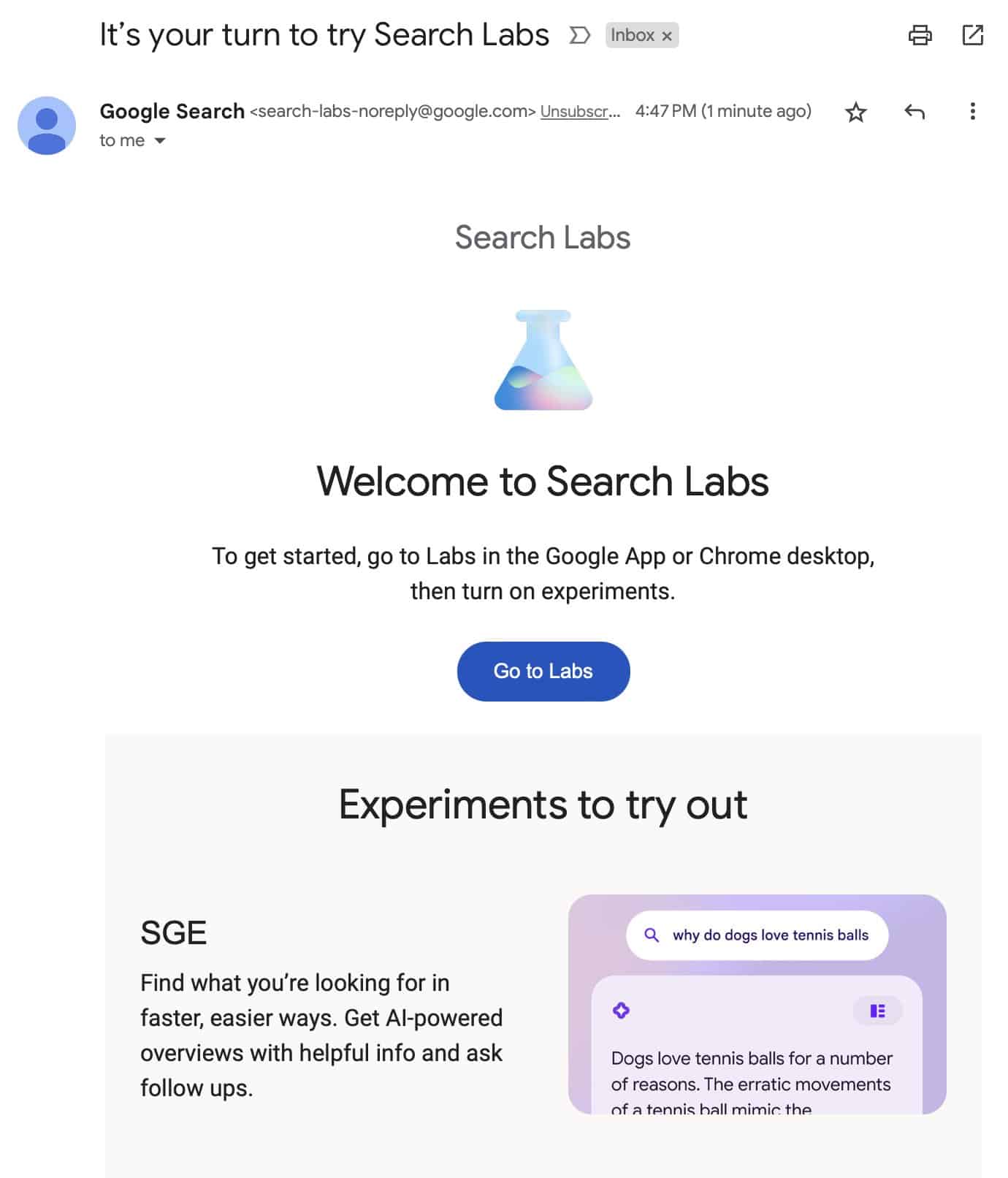
The Google welcome email

It’s Barry’s turn to try Search Labs! This is the “you’re in” email Google sent.

Barry Schwartz

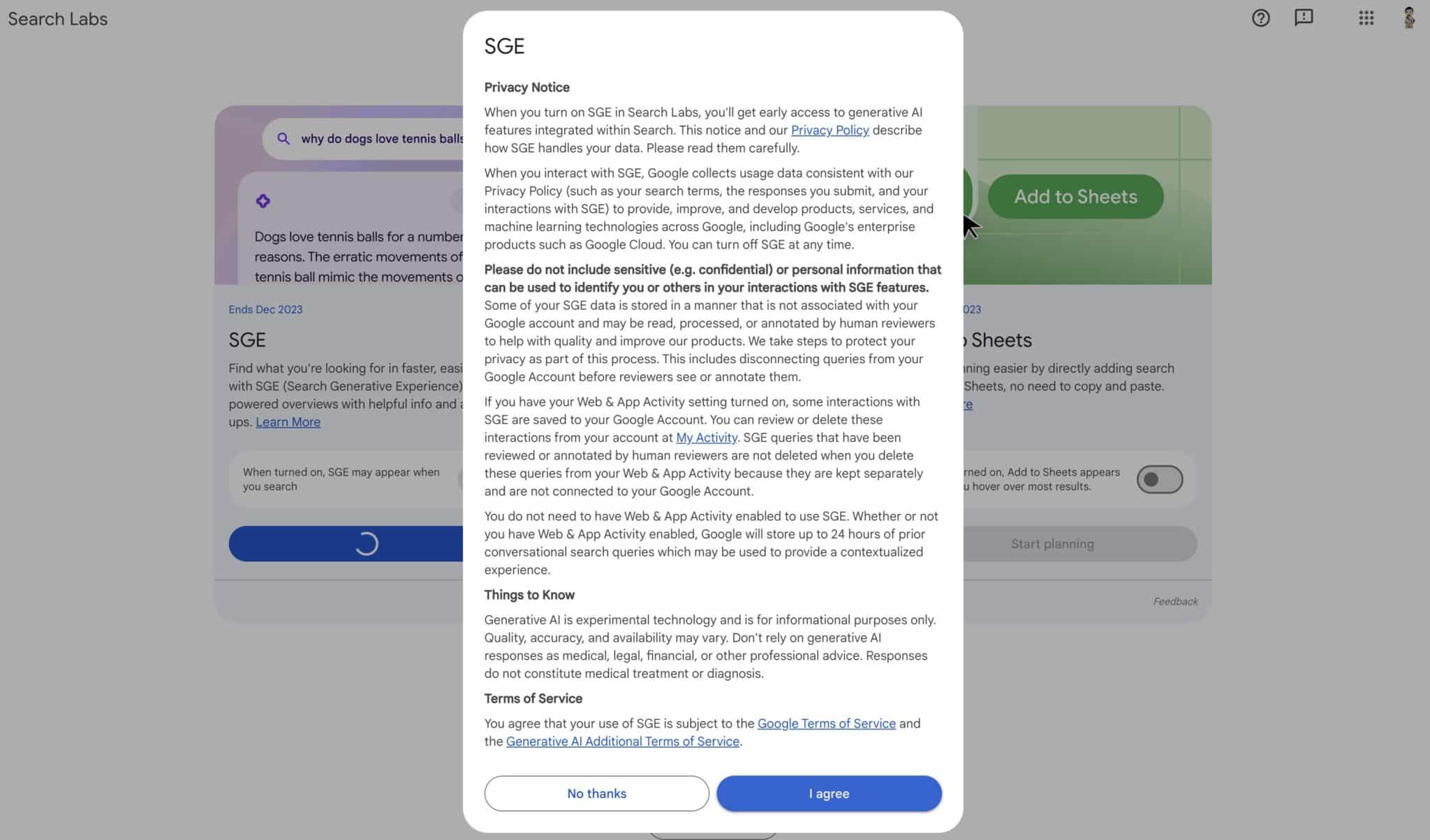
Getting started

Yes, we’re ready to get started experimenting with Search Labs.

But first you’ll need to agree after reading this crazy long SGE Privacy Notice:

Home Business

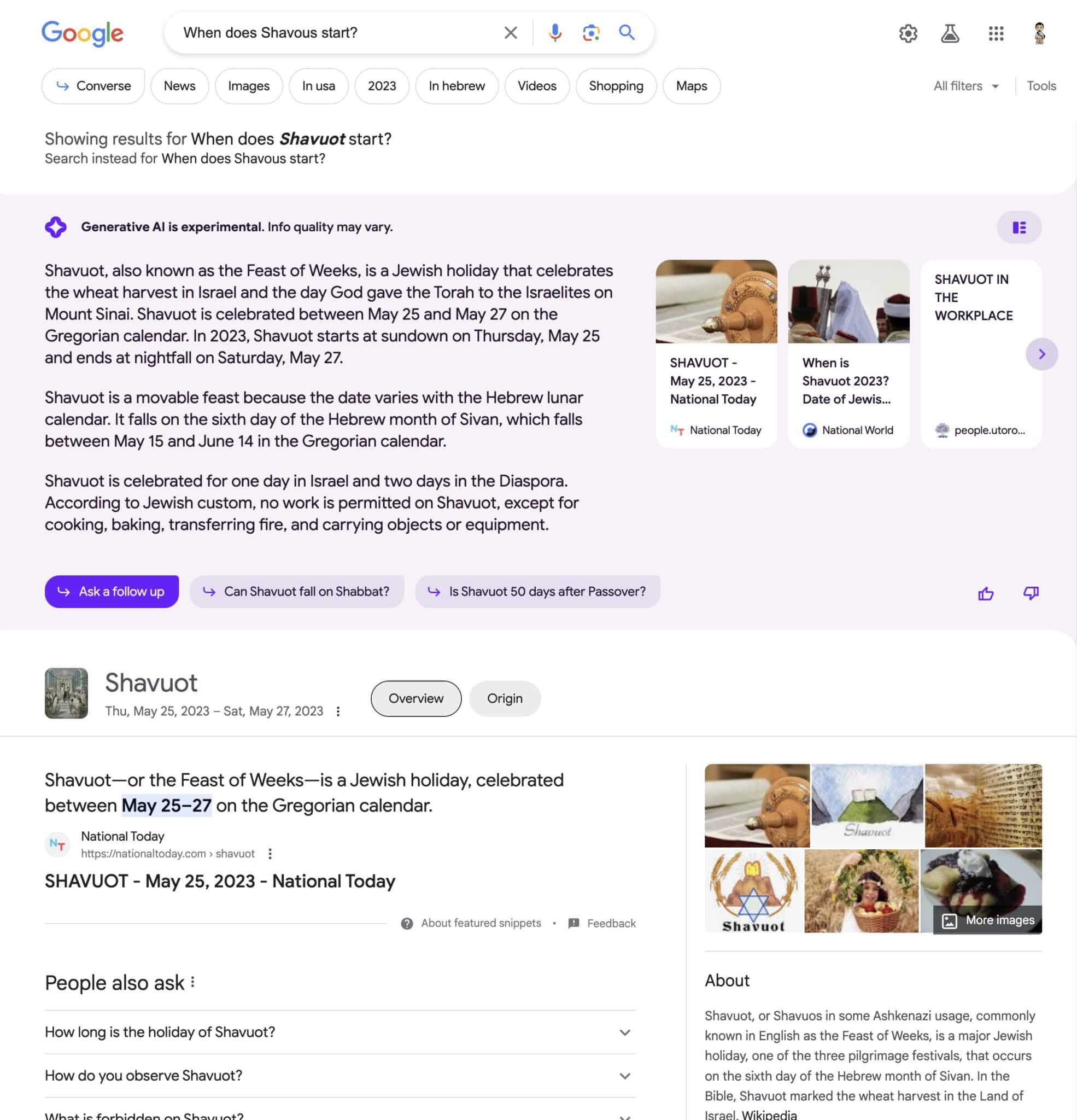
Search [when does Shavous start?]

internet marketing

Google didn’t show the time, but Barry likes how you can expand the answers.

Local search

Also, look at all those snackable organic/free links you can click on.

Barry called the follow-up answers “pretty good”:

make money online
Search Engine

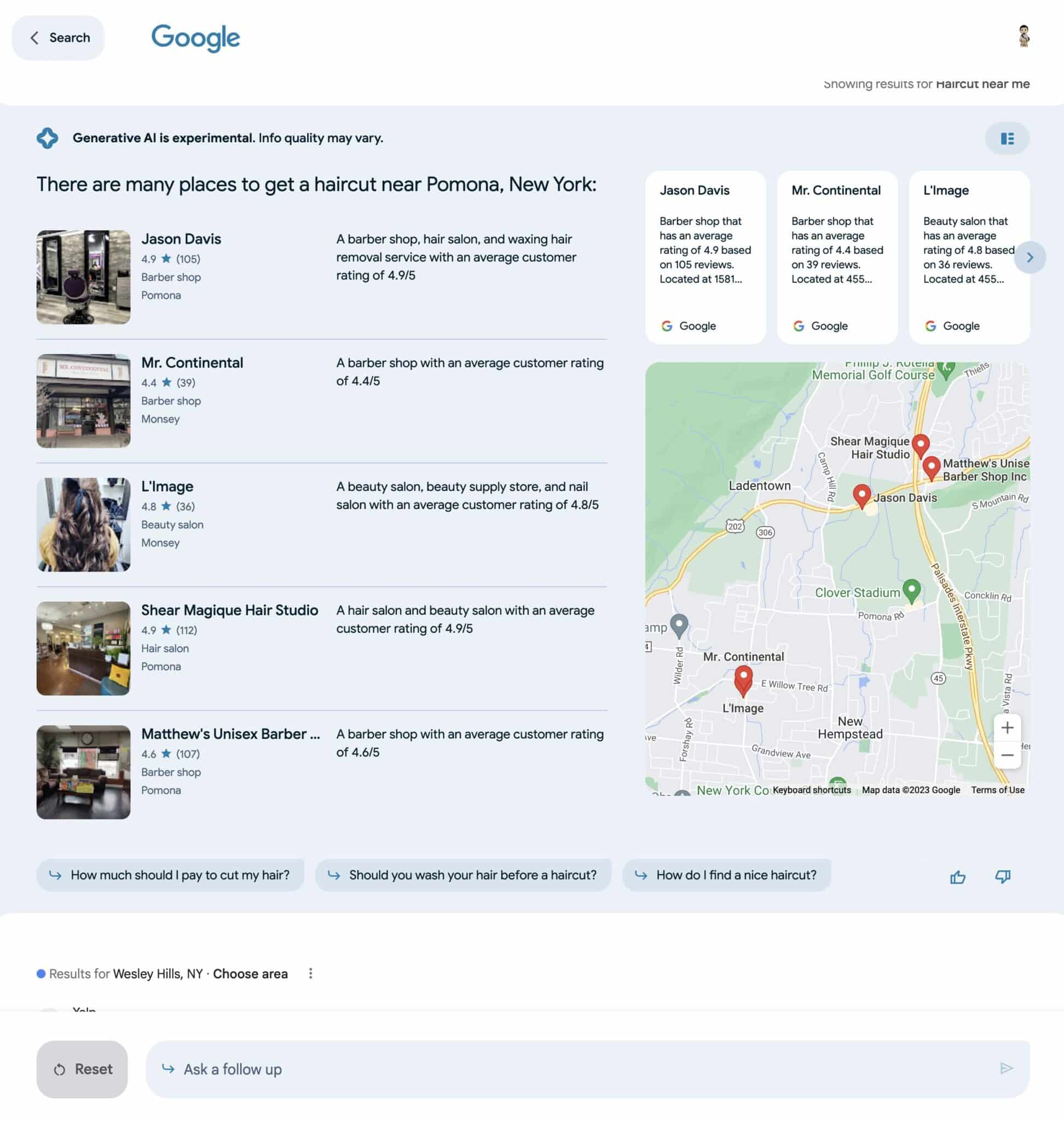
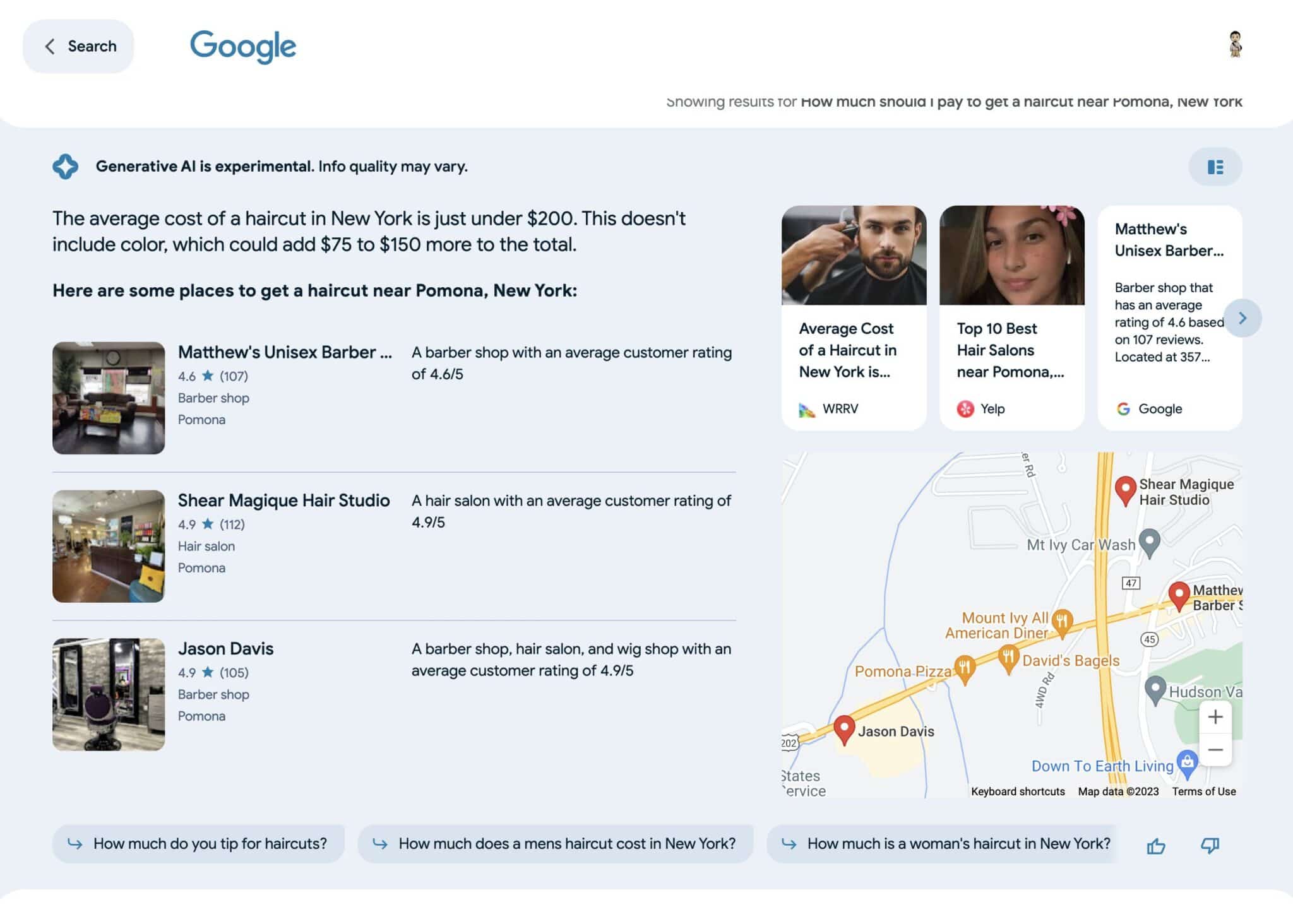
Search [where to get a haircut near me]

Onto local search. We’ve got a 5 pack:

Search Engines

And a 3 pack:

Search Labs

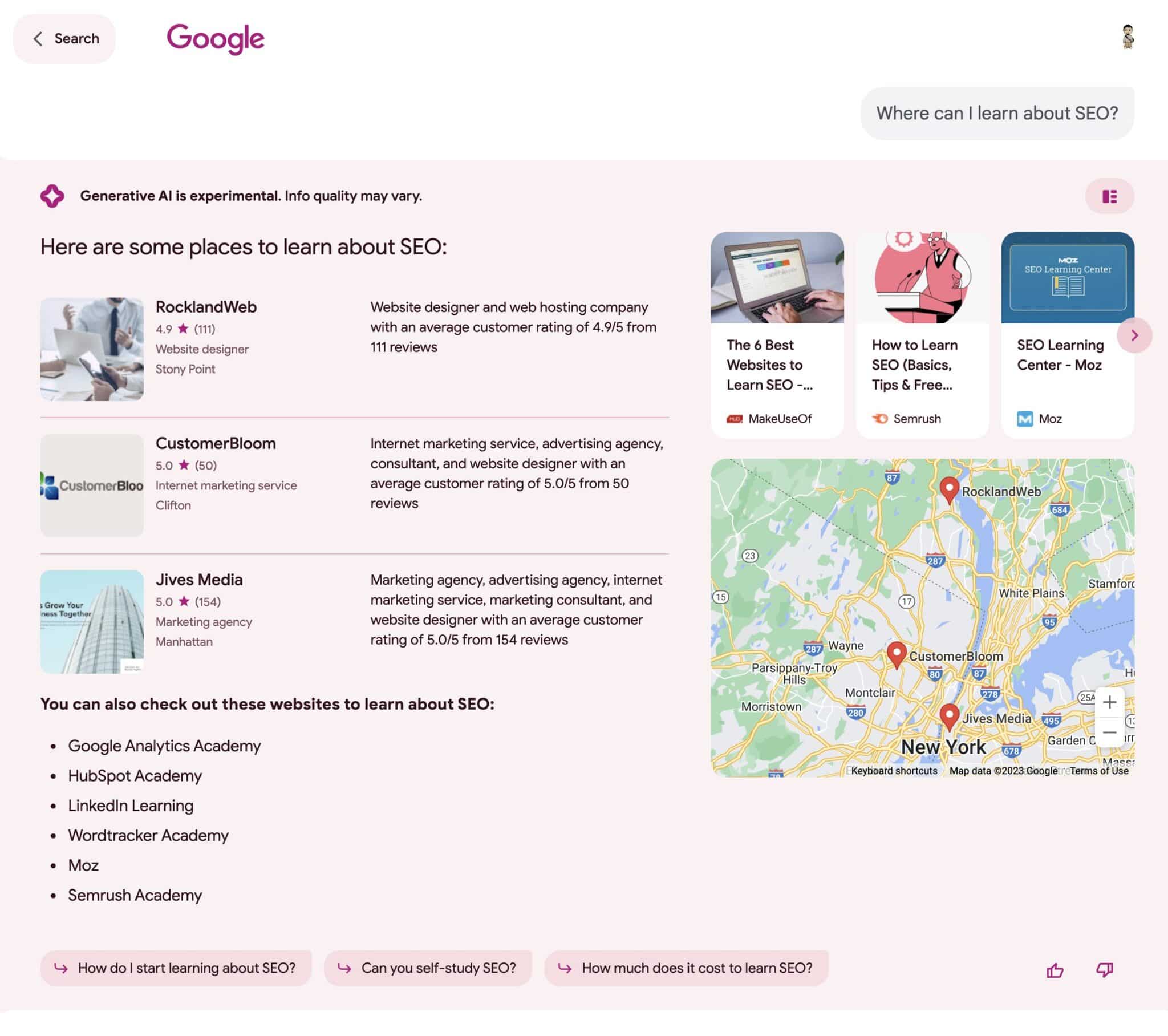
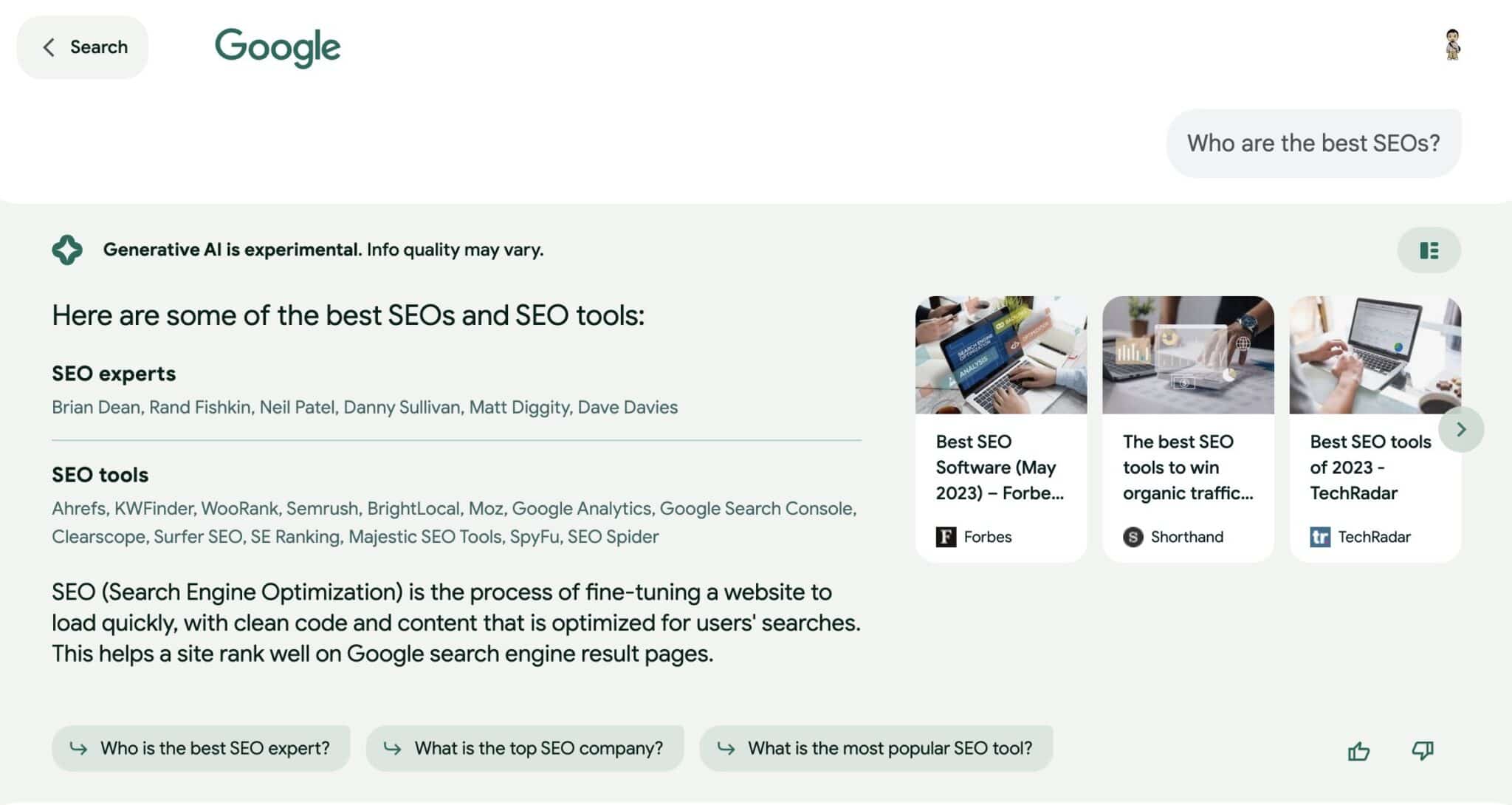
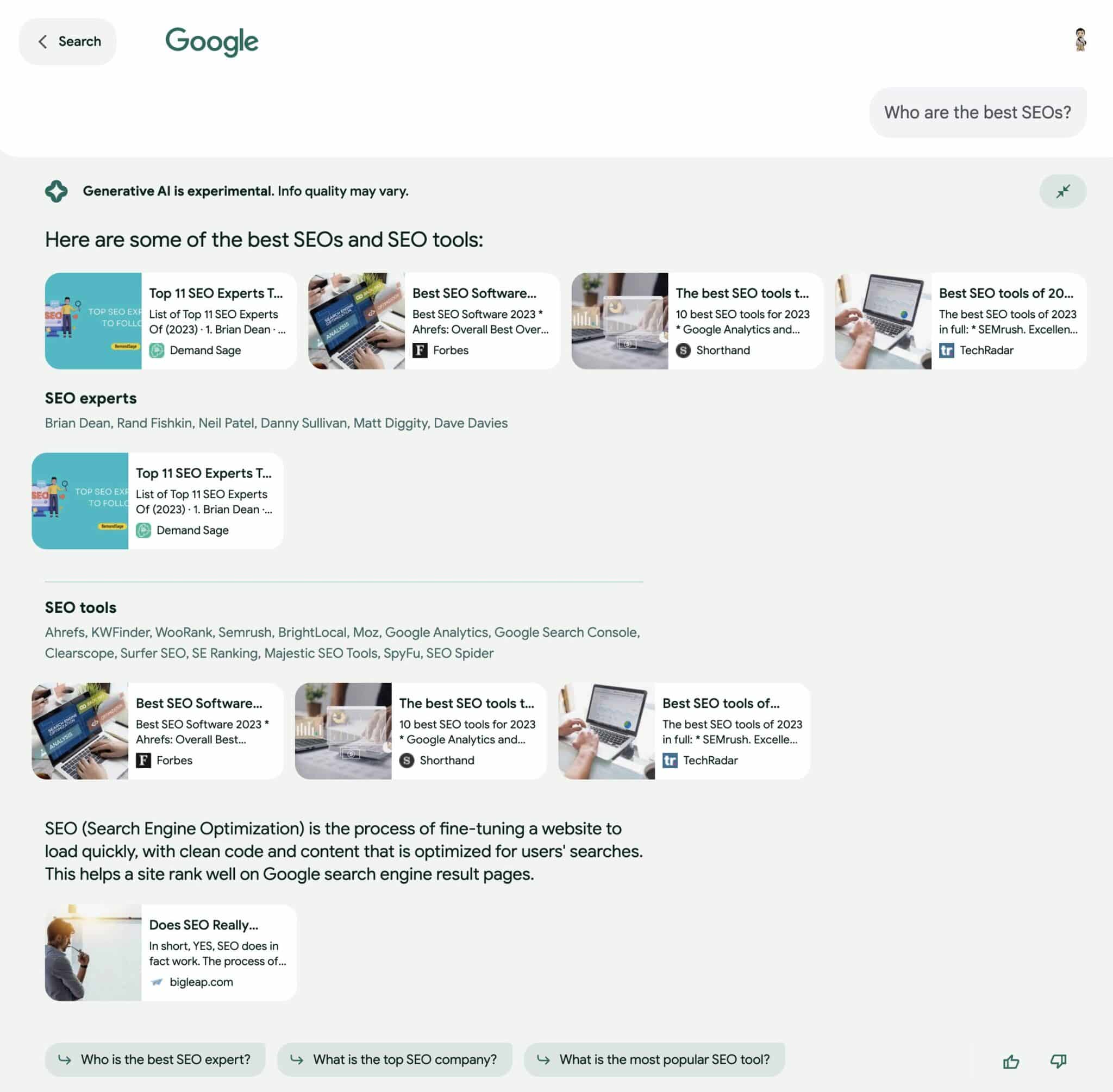
Search [where can I learn about SEO]

Where can you learn SEO? Well… here’s what you get from Google:

Shavuot

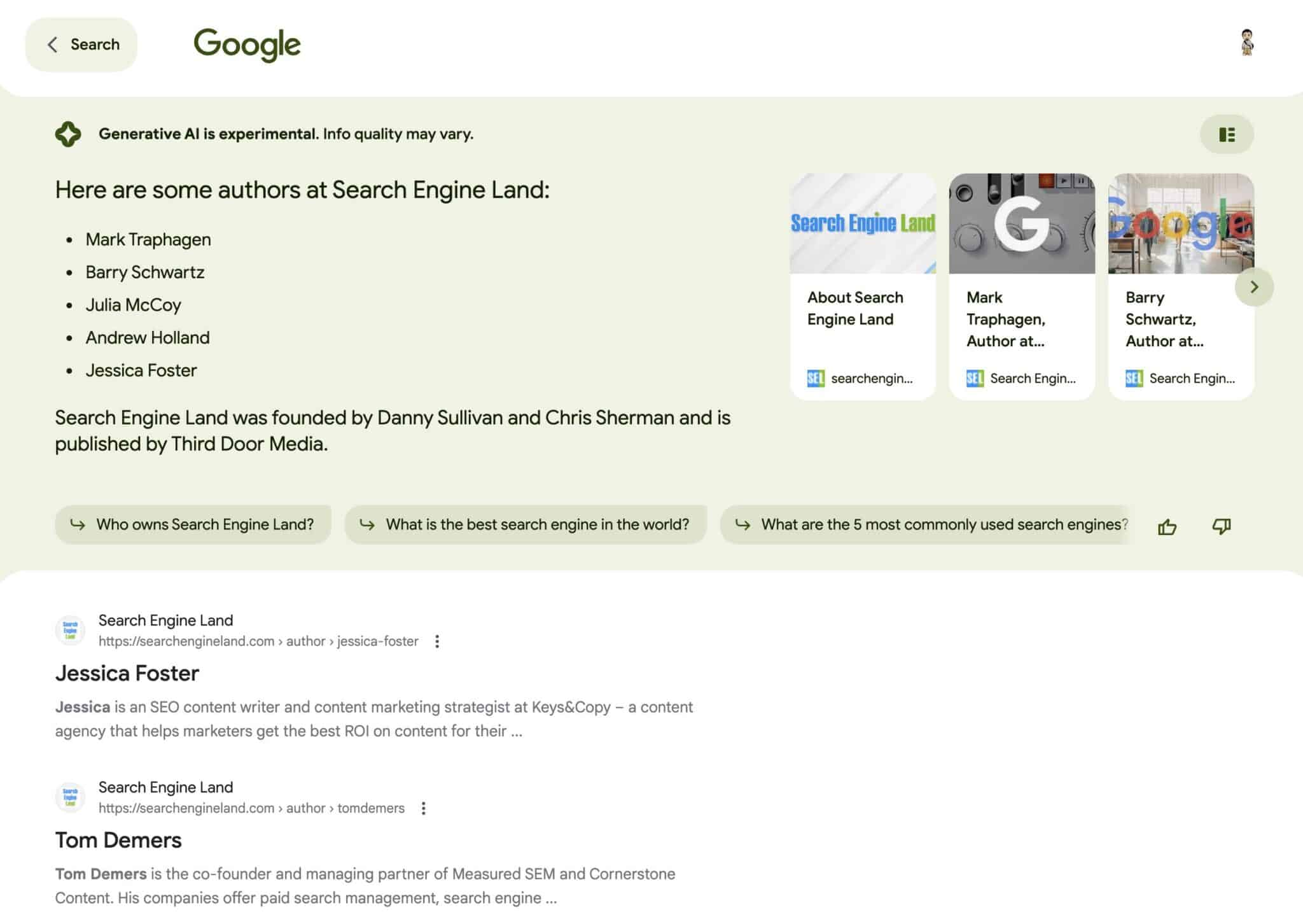
Search: [who writes at Search Engine Land?]

Technology Internet

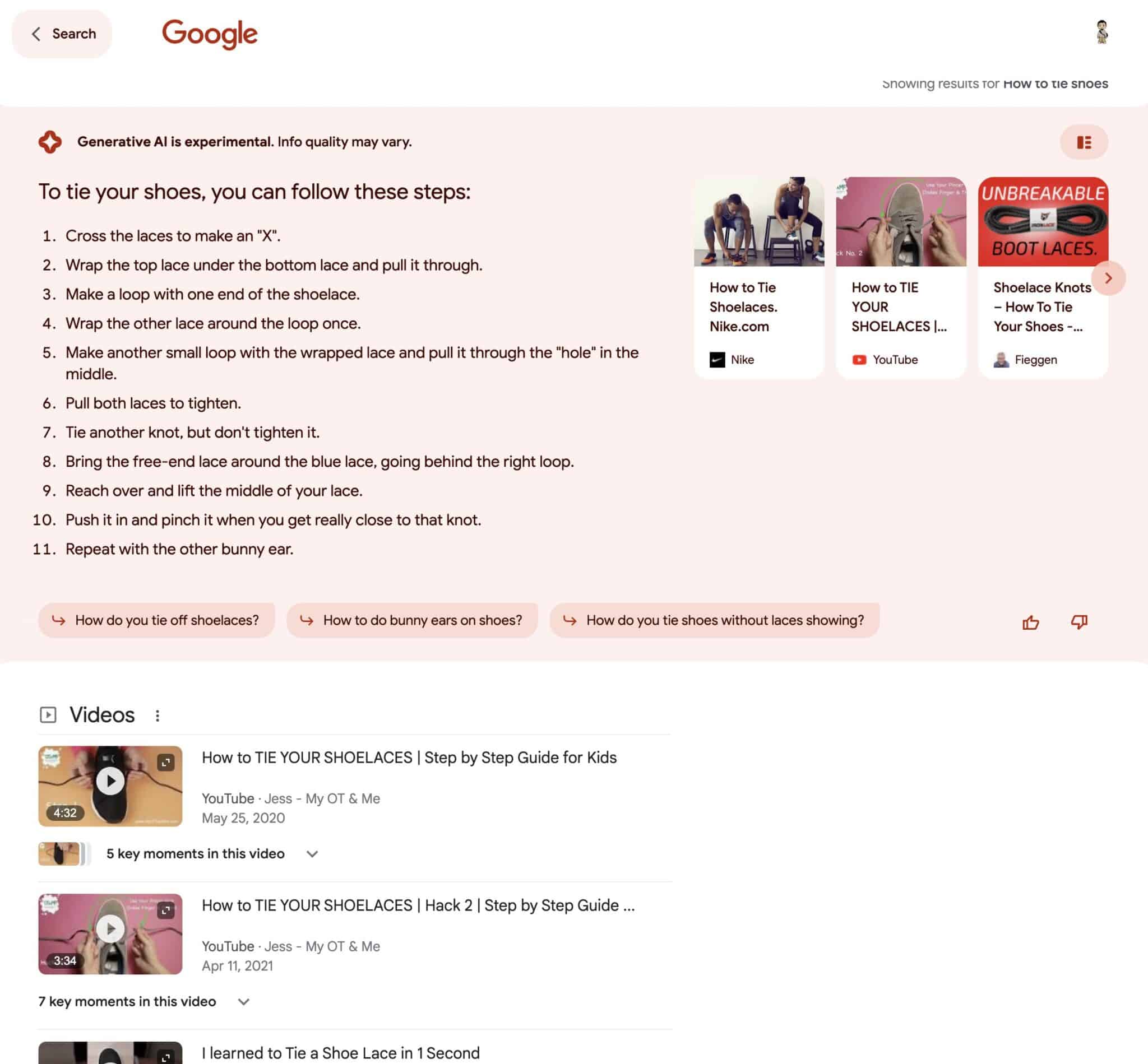
Some “how to” queries

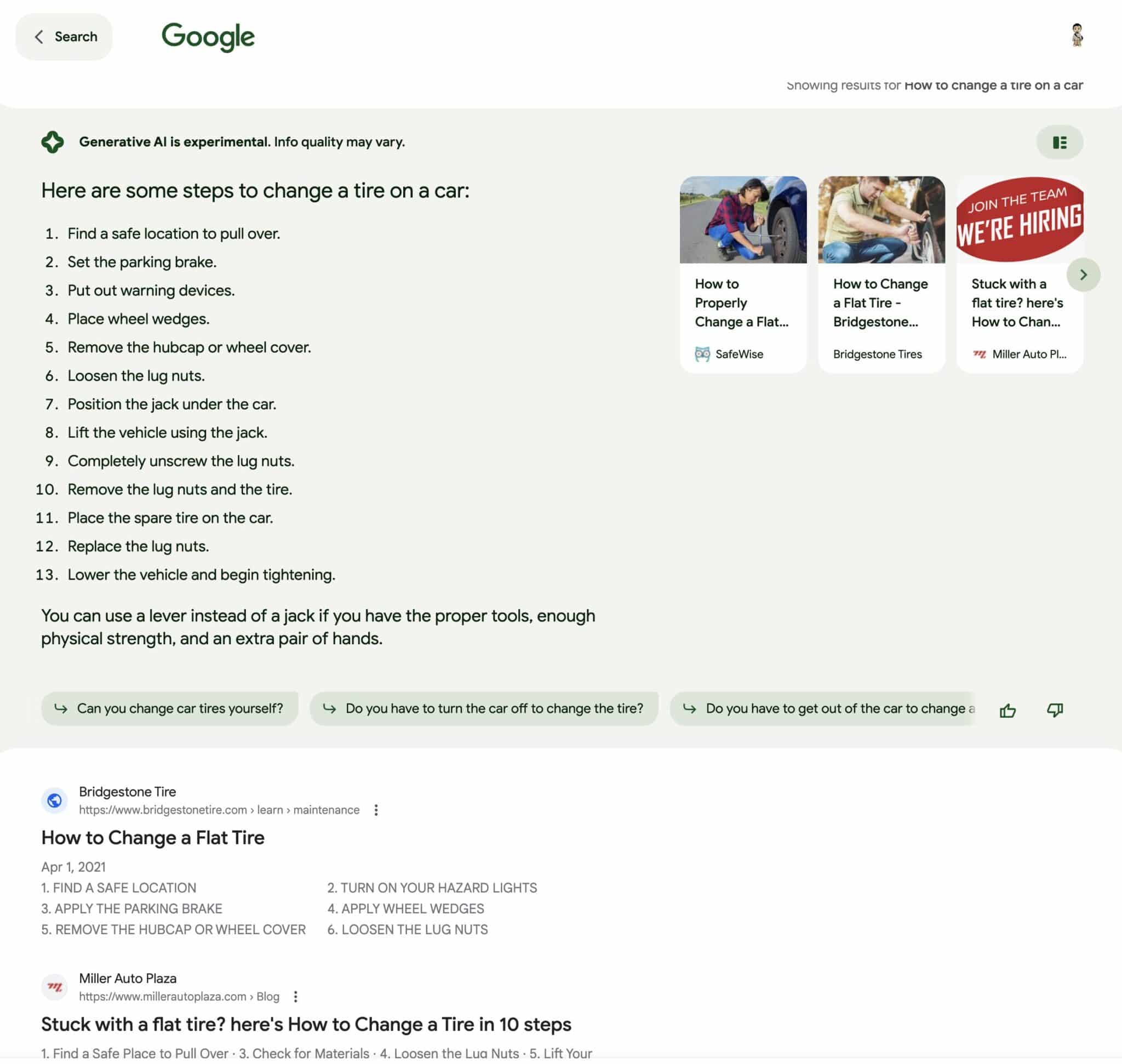
How do we tie shoes or change tires, Google?

Barry Schwartz
Home Business
internet marketing
Local search

Some Your Money, Your Life queries

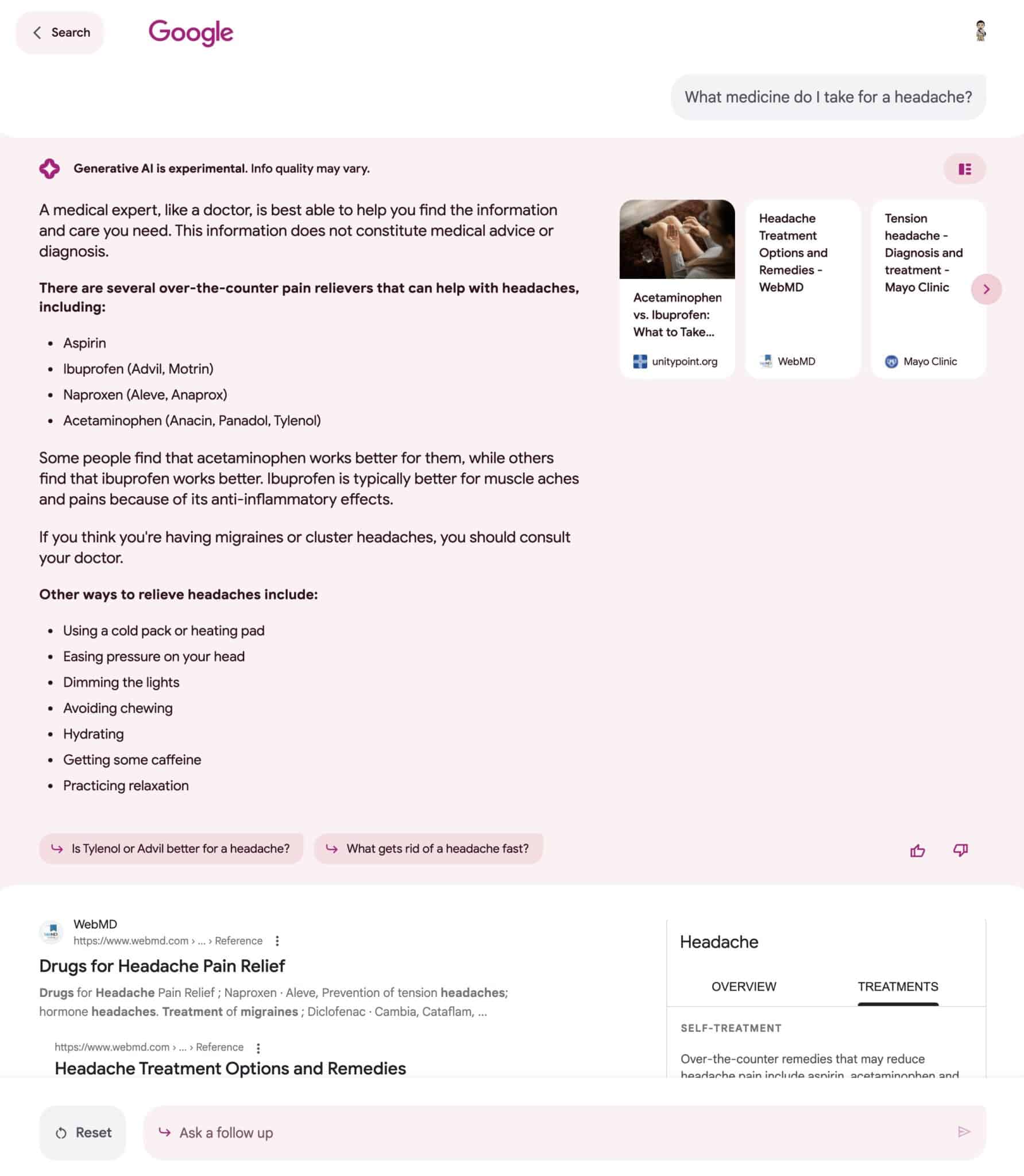
Some have AI-generated answers, and some do not, as Google said would be the case:

make money online
Search Engine
Search Engines
Search Labs

What about Barry?

Some Barry Schwartz vanity searches:

Shavuot
Technology Internet
Barry Schwartz
Home Business

Mobile interface

Here are a couple of tweets from Barry with GIFs showing off the SGE on mobile.

Editor’s note: I will update this article later with more screenshots. Until then, you can find a lot more searches around politics, shopping, sports and more in Barry’s Twitter thread, which you can find here.

The post Hands-on with Google’s new Search Generative Experience appeared first on Search Engine Land.

Original source: https://searchengineland.com/hands-on-with-googles-new-search-generative-experience-427594

5 High-Paying Work-from-Home Finance Jobs in 2023

Home Business Magazine Online

Are you a woman on the hunt for high-paying work-from-home finance jobs that offer flexibility, growth, and the chance to make an impact? You’ve come to the right place!

In this article, we’ll explore exciting career paths that perfectly blend your passion for finance with the convenience of working remotely. From financial analysts to bloggers, we’ve got you covered! Here they are.

1. Personal Finance Advisor

Personal finance advisors help people make wise decisions when it comes to managing their money. They’re experts at things like budgeting, saving, and investing — all the important stuff! Women have a knack for empathy, communication, and problem-solving, which are all crucial skills in this line of work.

Through inspiring talks with women in finance and related networking events, ladies can strengthen their abilities while connecting with other professionals who share their passion. Personal finance advising offers a ton of flexibility.

Want to work on your own or join an advisory firm? No problem! You can even work from home by using online tools to meet with clients virtually. Say hello to finding that perfect balance between work and family life! Plus, you get the chance to build lasting relationships with your clients who depend on your expertise over time.

2. Financial Analyst

Financial analysts are like detectives who solve mysteries in the financial world! Their main job is to look at investment opportunities by studying various trends and data, which helps businesses or individuals make smart decisions with their money.

Women are often incredibly detail-oriented and have excellent analytical skills — traits that are highly valuable in the finance industry. By using their sharp focus and determination to excel in this field, women can accomplish amazing things as financial analysts.

The good news doesn’t stop there! This finance job offers flexibility too. Financial analysts have the option of working for companies, and banks, or even working from home as freelance consultants. Women who excel in their roles could eventually become managers or move on to specialized areas like risk management or portfolio strategy.

3. Tax Preparer

Tax preparers are the unsung heroes of the financial world! These experts help clients navigate the tricky maze of tax laws and regulations by accurately completing their tax returns every year. And believe me — people really appreciate their expertise!

This job requires precision and attention to detail — traits that many women tend to naturally possess. As a tax preparer, you’ll need to be incredibly meticulous since even tiny errors can have huge implications for your clients.

Another great aspect of this career is its seasonal nature. While the demand for tax preparers peaks during tax season, you’ll have more downtime during other months. This allows you more freedom to manage your work-life balance and take care of personal commitments or explore other interests.

Women who choose to become freelance or independent contractor tax preparers can literally work from anywhere.

4. Online Trading Consultant

Picture yourself as a guiding light, helping new investors make wise decisions in the complex realm of online trading! From stocks to cryptocurrencies, your expert advice can help others succeed in their investment journey.

For starters, being an online trading consultant emphasizes traits like patience, interpersonal skills, and clear communication — qualities that many women naturally possess. Plus, you’ll get to work with diverse clients having different profiles — how exciting is that?

As an online trading consultant, you have the power to set your own schedule. Not an early bird? No worries! You can cater to clients whenever it works best for you. And yes — that includes working remotely too!

This profession also offers incredible potential for growth and learning. The ever-changing world of financial markets means you’ll never stop evolving or acquiring new knowledge.

5. Financial Writer or Blogger

Financial writers and bloggers create informative and engaging content about personal finance topics like debt management, investments, or even retirement planning. A dream job for wordsmiths with a passion for money matters!

Financial writing requires creativity, clarity, and precision — qualities that many women excel at. By sharing their passion for finances in a relatable way, women can connect with readers from all walks of life.

They can set their own work schedule based on their personal commitments and get the opportunity to help people make informed decisions about their finances. The satisfaction of knowing that your insightful articles are guiding someone towards achieving their financial goals? Priceless!

Final Thoughts

Now that you’ve discovered these fantastic work-from-home finance jobs, it’s time to take the leap and explore these opportunities for yourself! Embrace the chance to excel professionally while enjoying a flexible work-life balance, all from the comfort of your own home.

The post 5 High-Paying Work-from-Home Finance Jobs in 2023 appeared first on Home Business Magazine.

Original source: https://homebusinessmag.com/businesses/business-spotlights/5-high-paying-work-from-home-finance-jobs-2023/

Enabling a 100% Remote Completion of Form I-9

Home Business Magazine Online

Over the last several years, many companies have transitioned to fully remote workforces. However, this shift has presented several challenges, including the completion of Form I-9, which verifies the employment eligibility of new hires. With the recent updates to U.S. government regulations, it is now possible to complete Form I-9 remotely.

Why Remote I-9 Verification Is Essential for Businesses

As the modern workforce continues to evolve and remote work becomes more common, companies face the challenge of adapting their hiring processes to accommodate remote workers. A 2022 Gallup survey found that 30% of employees are working remotely, and 50% are working using a hybrid model, and this trend is expected to continue.

Remote I-9 verification has become essential for businesses hiring an entirely remote workforce or expanding their operations to multiple locations. Before the recent updates to U.S. government regulations, completing Form I-9 in person was required, which presented a challenge for remote workers who could not be physically present to share their documents with an authorized representative.

However, with the recent regulation changes, remote I-9 verification is now a viable option for companies. Under the updated regulations, companies can verify employment eligibility remotely for employees hired on or after April 1, 2021, as long as the remote verification process meets specific requirements.

These requirements include using video conferencing technology to complete Section 2 of the I-9 form and obtaining, inspecting, and retaining copies of the required documents within three business days of the employee’s start date.

Remote I-9 verification can streamline hiring and save companies time and resources. It eliminates the need for physical paperwork and in-person meetings, benefiting companies operating in multiple locations. Remote verification can help businesses attract and retain top talent, especially in industries with high competition for skilled remote workers, such as technology, finance, and customer service. It also improves the candidate experience by offering a more flexible and convenient hiring process.

Remote I-9 Functionality with Your Onboarding Software

Cloud-based onboarding software with remote I-9 verification functionality provides a fast, accessible, and fully compliant verification process. With 100% remote I-9 verification, you can send new employees their I-9 in seconds so that they can get started on verification. Some software has built-in Section 1 guidance and allows new hires to delegate a friend or family member for Section 2 completion.

Automating this process remotely can boost accuracy and compliance with automated reminders, optical character recognition (OCR) technology, and autofill. These platforms also leave a sophisticated audit trail with IP address tracking, geolocations, and timestamps that protect you in case of an audit.

With convenient remote I-9 processing, you can reduce your candidate dropoff rate and reduce the need for time-consuming paperwork and administrative tasks for your HR team.

Streamline I-9 Verification for Your Organization

Embracing cloud-based onboarding software streamlines I-9 verification, saving your company time, reducing paperwork, and ensuring compliance. With integrated, remote I-9 processing, your organization can see boosted productivity and employee satisfaction. The right software provides a seamless onboarding experience that allows for remote and hybrid work arrangements in the post-pandemic landscape.

The post Enabling a 100% Remote Completion of Form I-9 appeared first on Home Business Magazine.

Original source: https://homebusinessmag.com/management/employees/enabling-100-remote-completion-form-i-9/

Google Search bug caused a drop in video traffic

Google has confirmed a bug in Google Search that resulted in a drop in traffic to video content between the dates of May 4 through May 17, 2023. This was not just a Google Search Console reporting bug, but a bug with Google Search.

What Google wrote. Google posted, “A bug caused a drop in video traffic from May 4 to May 17, and has since been resolved.”

I asked John Mueller of Google if this was just a reporting glitch, and he said no, it was beyond reporting. “It was not just reporting,” he told me on Mastodon.

Search Console reports. If you go to Google Search Console, click on the search performance report, and filter it by “video” content, you will see an annotation added to the chart on May 4:

Alphabet Inc.

Why we care. If you noticed a drop in traffic between May 4 through May 17 and you publish a lot of video content, it may be related to this bug.

In this case, the reporting was not the issue and the reports should be accurate. There was a bug with Google Search that resulted in less videos showing up in the search results.

The post Google Search bug caused a drop in video traffic appeared first on Search Engine Land.

Original source: https://searchengineland.com/google-search-bug-caused-a-drop-in-video-traffic-427527