Fulfilling Focus: Point-and-Shoot Simplicity in Real Estate Photography

Home Business Magazine Online

By Sean O’Keefe

Creative by nature, and ambitious by virtue, Joe Williams, Founder of Framework Film Group, is always looking to better his skill set. A 2009 graduate of Bowie State University’s Emerging Media program, today Joe is a multi-faceted entrepreneur who films weddings and develops corporate branding videos for businesses in the Washington D.C. area. On the photography side, he shoots residential real estate over a nearly one-hundred-mile radius surrounding the city through his long-standing relationship with Homejab.

“I have been shooting for Homejab since 2015. The assignments have been strong and consistent from the very start, and they take care of everything but the photography,” says Williams of the app.-based, on-demand real estate photography platform that fills his schedule when and as much as needed. “Homejab helped me break into the real estate industry in a way that I couldn’t have accomplished on my own. The app puts me in front of hundreds of possible clients each day and lets me choose jobs that fit in with my other obligations.”

Talented, committed, and focused on his craft, Williams is also humble. He acknowledges that as he learned in college, each medium requires special attention to detail, and acute technical acumen only acquired through practice. After finding and taking on a few real estate photography clients in 2013, Williams spent several years maturing his ability to actualize the listing agent’s perspective while balancing contrasting indoor/outdoor lighting conditions. Though he was improving his craft, the limiting factor was the tremendous effort associated with building relationships with listing agents, scheduling shoots with homeowners, post-production processes, and meeting the ever-demanding urgencies of his area’s many booming real estate markets.

“When I started shooting real estate, there was a lot of trial and error,” says Williams who, like many before him, learned his craft while applying it. When he wasn’t shooting corporate videos, weddings, or a client’s listing, Williams practiced by taking pictures at home while making notes on settings and situations. “Once I contracted with Homejab, they provided training as part of their quality assurance processes. Homejab’s guidance and structure helped me dial in the right techniques around bracketing for difficult exposures and seeing the whole space from the buyer’s perspective before setting up to photograph it.”

Today, Williams’ work week is always full. While his corporate brand video work is interspersed among urban environs from Washington D.C. to Baltimore, real estate photography assignments in suburban and rural markets offer a welcome change of scenery. Through his relationship with Homejab, Williams’ marketing effort concentrates on corporate clients, while his reputation for great real estate photography through Homejab keeps him as busy as he wants to be.

Photo Credit: Joe Williams

“Some days I shoot one or two houses, other times I shoot three or four,” says Williams of the workload. Once he registered with Homejab, his work was assessed and approved through an interview process. After taking a few assignments, Williams became a reliable resource to D.C. area listing agents. He soon found his services in demand. He shares that on a typical house, he will take between 100 and 150 images to generate the 15 to 50 finished images in each package. In larger houses or HDR packages, Williams says the number of photos taken can easily exceed 200 in a period of just a few hours.

“I love that I’m able to combine many of my multi-media skills into my assignments. So, it’s super fulfilling,” says Williams of the pre-set, customer-directed packaged pricing built into the Homejab platform. “Depending on the size of the house and, perhaps its value, listing agents choose packages that include photographs, video tours, and even overhead images and videos taken from a drone.”

Listing agents book each job by selecting between standard or High Dynamic Range (HDR) images in finished photo counts of 15, 30, or 50. They choose from photo-only or photo+ packages with the possibility of video tours, aerial photos, and twilight exteriors. In total there are more than 50 different package possibilities that Homejab photographers fill with a combination of cameras, camcorders, and drone-flown cameras to get all angles.

Once the images are captured, Joe simply uploads those selected from each batch to the Homejab platform. Then, just like that, he’s on to the next assignment.

“What makes it work so great for me as the photographer is that I accept the job and I shoot the house correctly, but other than that my responsibilities are almost none,” Williams says of the postproduction process.

Photo Credit: Joe Williams

Homejab is the brainchild of Joe Jesuele, a life-long problem-solver who spent nearly 20 years in residential real estate and commercial development on his way to founding Homejab in 2012. Jesuele recognized the opportunity to build an on-demand real estate photography company while scouting a residential opportunity outside of Philadelphia. When the property in question looked nothing like the pictures that were listed, he wasted a day visiting the site. Whereas he was uninterested in the property, Jesuele realized that good photography would only attract buyers that were. That alone would save significant time and effort for all involved, most especially the listing agent. In trying to attack the problem, Joe felt certain that there was a strong market for quality real estate photography through an on-demand platform akin to Uber or DoorDash.

“The objective was to create efficiencies for both the listing agents and the photographer that make it a win-win for both,” says Jesuele. Through Homajab’s built-in scheduling platform, listing agents invest less than two minutes in orchestrating their shoots. Even better, they can do it whenever they want. “Homejab has attracted a national pool of listing agents, and schedules approximately 125 independent shoots a day nationwide. We fill these assignments through top-quality professional photographers in local markets. We see ourselves almost as something of an association of real estate photographers; advocates for high-quality photography and high-quality assignments alike.”

Currently, Homejab is working with more than 800 talented photographers drawn from every major metropolitan market in the U.S. In addition to the long line of listing agents and a deep pool of photographers like Joe Williams, Homejab also works with photo editors that stitch together the bracketed HDR shots and manage the other post-production necessities.

“Photographers are self-employed entrepreneurs who leverage their time and talent to build their business within their abilities and ambitions,” says Jesuele of his admiration for Joe Williams and many others. “Real estate photography can be a tough market. There is a lot of ancillary work in dealing with listing agents, coordinating shoot times with homeowners, postproduction, and then packaging pictures so agents can market homes quickly. Homejab eliminates all of that for the photographer, so they can concentrate on what they are good at.”

real estate photography
Depositphotos

William agrees and feels fortunate to have found such a strong partner in Homejab.

“Being a great business is a lot like becoming a great photographer,” he concludes. “Every day you look for little ways to get better. As time passes you have a chance to look back at what you have accomplished and see through your photos and your reach and revenue that you are on the right track.”

The post Fulfilling Focus: Point-and-Shoot Simplicity in Real Estate Photography appeared first on Home Business Magazine.

Original source: https://homebusinessmag.com/businesses/real-estate/fulfilling-focus-point-shoot-simplicity-real-estate-photography/


Buying Your First Car: Diesel or Gas?

Home Business Magazine Online

If you’re in the market for your first car, one of the decisions you’ll need to make is whether to go with a diesel or gasoline engine. Both engine types have unique benefits and drawbacks, and understanding the differences between them can help you make an informed decision.

There are many things to consider before buying a new car. And if you’re a new vehicle owner, you may need to know basic car maintenance, such as changing a flat tire or cleaning your sensors. This is part of responsible car ownership, and you wouldn’t want to be stuck in the middle of nowhere with a flat tire and no access to assistance. But to help you decide between diesel or gasoline if you’re buying a new car, read on.

What Is a Diesel Engine?

A diesel engine is an internal combustion engine that uses diesel fuel to power the motor. Diesel engines are commonly used in heavy-duty vehicles such as trucks, buses, construction equipment, and some passenger cars. They’re also used to power boats, generators, and other types of machinery. Below are their advantages and disadvantages: 

Advantages

  • Fuel efficiency – Diesel engines are generally more fuel-efficient than gasoline engines because they extract more energy from available fuel. This means that diesel-powered vehicles can go further on a single tank of fuel, saving you money on fuel costs in the long run.
  • Durability and longevity – Diesel engines are known for their durability and longevity. They’re built to withstand higher levels of stress and wear, which can lead to longer service lives compared to gasoline engines.
  • Torque – Diesel engines tend to have higher torque than gasoline engines, which can provide better acceleration and towing power.

Disadvantages

  • Higher upfront costs – Diesel engines may have higher upfront costs than gasoline engines, especially in passenger cars.
  • More expensive fuel – Diesel fuel is typically more expensive than gasoline, which can increase your fuel costs over time.
  • Higher emissions of NOx – Diesel engines emit higher levels of nitrogen oxides (NOx), which can be harmful to the environment.
  • Noise and vibration – Diesel engines may produce more noise and vibration than gasoline engines, which can be unpleasant for some drivers.
New Car Keys
Depositphotos

What Is a Gasoline Engine?

A gasoline engine is a type of internal combustion engine that uses gasoline as fuel to power the engine. Gasoline engines use spark plugs to ignite the fuel-air mixture, which then burns to create the energy needed to power the engine. Gasoline engines are commonly used in passenger cars, light trucks, and motorcycles. They are also used to power boats, generators, and other types of machinery. Here are its advantages and disadvantages:

Advantages

  • Lower upfront costs – Gasoline engines are less expensive to buy and maintain than diesel engines.
  • Cheaper fuel – Gasoline is generally cheaper than diesel fuel, saving you money on fuel costs over time.
  • More common on the market – Gasoline engines are more common than diesel engines, which means there’s a broader range of options available on the market.

Disadvantages

  • Lower fuel efficiency – Gasoline engines are generally less fuel-efficient than diesel engines, which can lead to higher fuel costs over time.
  • Higher emissions of pollutants – Gasoline engines produce emissions that can contribute to air pollution, including carbon dioxide (CO2), nitrogen oxides (NOx), and other pollutants.
  • Lower torque – Gasoline engines tend to have lower torque than diesel engines, which can affect acceleration and towing power.

Factors to Consider When Deciding Between a Diesel or Gasoline Engine 

  • Driving habits and needs – Your driving habits and needs will play a significant role in determining which type of engine is right for you. If you plan on driving long distances or frequently haul heavy loads, a diesel engine may be a good choice due to its fuel efficiency and high torque. On the other hand, if you primarily drive short distances or don’t need a lot of towing power, a gasoline engine may be a better fit.
  • Upfront and maintenance costs – Diesel engines may have higher upfront costs than gasoline engines, especially in passenger cars. Additionally, diesel fuel is typically more expensive than gasoline, which can increase your fuel costs over time. However, diesel engines have longer service lives than gasoline engines, which can offset some of the higher upfront and fuel costs in the long run.
  • Emissions and environmental impact – Diesel engines emit higher levels of nitrogen oxides (NOx), which can be harmful to the environment. In some areas, diesel engines may be subject to stricter emissions standards or may face additional fees or taxes. Gasoline engines also produce emissions that can contribute to air pollution, including carbon dioxide (CO2) and other pollutants. If you are environmentally conscious, consider these factors when choosing an engine.
  • Availability and convenience of fuel – Gasoline is generally more widely available than diesel fuel, which can be convenient when you’re on the road. However, if you live in an area where diesel fuel is more widely available, this may not be a significant consideration.

Conclusion

Choosing between a diesel or gasoline engine for your first car is an important decision that will affect your driving experience and costs over time. Diesel engines are known for their fuel efficiency and durability but may have higher upfront costs and produce higher emissions of nitrogen oxides (NOx). Gasoline engines are generally less expensive to buy and maintain, but are less fuel-efficient and produce emissions that can contribute to air pollution.

It’s essential to consider your driving habits and needs, upfront and maintenance costs, emissions and environmental impact, and the availability and convenience of fuel when deciding between a diesel or gasoline engine. Doing your research and considering all of these factors can help you make an informed decision that aligns with your individual needs and priorities.

The post Buying Your First Car: Diesel or Gas? appeared first on Home Business Magazine.

Original source: https://homebusinessmag.com/lifestyles/success-lifestyles/buying-first-car-diesel-gas/

A Business’s Guide to Calculating Shipping and Fulfillment Costs

Home Business Magazine Online

Shipping and fulfillment costs are vital aspects of pricing and profitability for any e-commerce business. They determine the final price of all products sold from your store. Both of these costs are considered business expenses.

When it comes to selling your products online, the costs of shipping and fulfillment can make or break a business. As a business owner, you need to understand how much shipping will cost you, how much it will cost your customers, and how those two figures compare. Thus, you must have an estimate as to how much you’ll spend on shipping before you open your doors.

We’ve broken down everything you need to know about calculating shipping and fulfillment costs. Read on to learn more.

What Are Shipping and Fulfillment Costs?

Shipping costs include shipping materials, postage, and any extra fees you pay to a third-party courier. Fulfillment costs are the expenses associated with getting your product from its current location in storage to your customer’s doorstep. These costs can include labor, product packaging, and additional fees paid to external companies for services such as warehousing, segregation, and storage.

Guide to Calculating Shipping and Fulfillment Costs

As a seller, you must know how much it costs to get your products from the warehouse to the customer. Here are some key factors to keep in mind when calculating your shipping costs:

1. Package Size and Weight

Package size and weight are critical factors affecting your shipping costs. In general, larger packages will cost more to ship than smaller ones. This is because the packages will take up much space in the means used to transport them.

You must familiarize yourself with your chosen shipping provider’s pricing structure. For example, some may charge each item per dimensional weight, which is the package length x width x height. Meanwhile, others may use both dimensional weight and product weight. You must note, however, that product weight is different from package weight, with the latter including the total weight of the packaging and product.

2. Shipping Surcharges

Shipping surcharges are additional fees you can charge as a seller to cover the cost of shipping the order. These surcharges should be applied on top of the actual shipping costs. Note that these are usually reserved for large orders or items that are difficult to pack and ship or for addresses that fall outside your courier’s service area.

For example, if someone is buying a small item from your online store, you can add a flat rate for shipping during the checkout process. But if they’re ordering something large or fragile that will need additional handling, you can add a shipping surcharge.

3. Quantity of Packages in One Order

You’ll have lower shipping costs if you ship packages in bulk. Sending orders individually the moment they’re placed may get them to the customer faster. However, this will be costly on your end because you have to consider the unit of each order when calculating shipping and fulfillment costs.

One way to save costs while making sure your customers’ orders arrive on time is to schedule set shipping days in a week. Depending on the volume of your orders, you can schedule two or three days a week to ship out your merchandise.

Calculating shipping costs
Depositphotos

4. Labor Costs

You must consider labor when calculating shipping and fulfillment costs. This is especially relevant if your items are stored in a warehouse and need to be individually packed before shipment. Depending on your courier, you may also have to account for the labor costs of the drivers who will deliver the packages to your customer’s doorstep.

5. Distance to Customer’s Address

You’ll also have to consider how far your customers are from the fulfillment center or warehouse when calculating shipping costs. Shipping their order will be relatively inexpensive if they’re only a few miles away. But if they’re in another state or country, you’ll need to factor in travel time and gas costs for the delivery.

6. Shipping Method

The type of shipping method you use can significantly impact the final cost. Options such as ground shipping, expedited overnight delivery, or international air transport all have different price points depending on where your products are going and how quickly they need to arrive.

For example, ground shipping is generally less expensive than air freight, but it can take longer to arrive. But if you’re sending products out of state or internationally, air transport will likely be more cost-effective. Depending on which method, there will be price disparities between the different shipping methods. You should always consider the shipping method when calculating your total cost of goods sold (COGS).

Conclusion

The cost of shipping your products is one of the most critical factors you must consider when running an e-commerce business. It’s best to consider the shipping and fulfillment costs before you start shipping your orders, as inefficient processes may impact your business’s profitability. Hence, the more accurate you are with your shipping estimates, you’ll have an easier time calculating your expected profit margins.

The post A Business’s Guide to Calculating Shipping and Fulfillment Costs appeared first on Home Business Magazine.

Original source: https://homebusinessmag.com/businesses/ecommerce/business-guide-calculating-shipping-and-fulfillment-costs/

This day in search marketing history: January 2

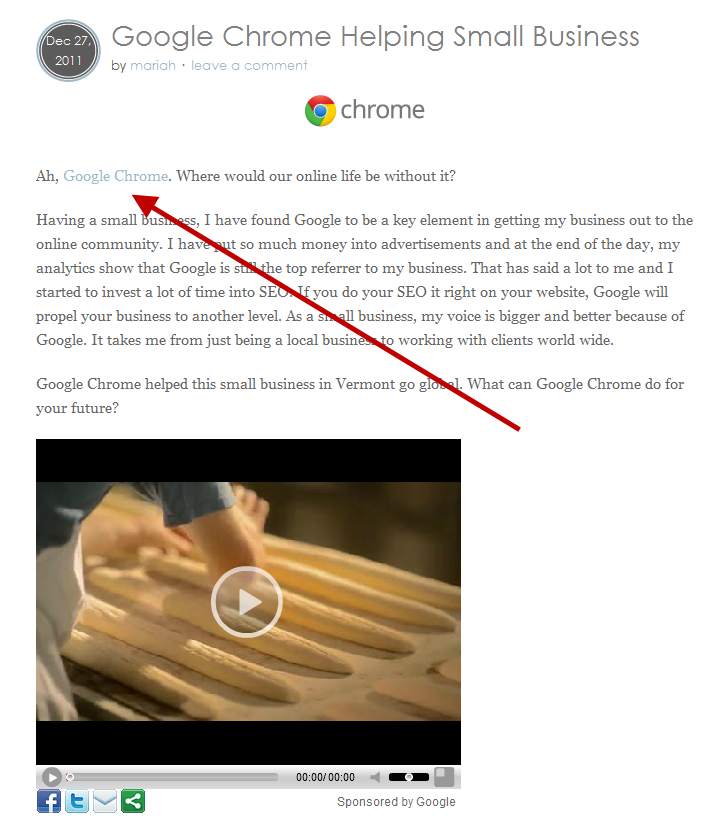
Google’s jaw-dropping sponsored post campaign for Chrome

In 2012, Google – a search engine known for fighting against paid links and “thin” content – seemed to be behind a campaign that generated both on behalf of its Chrome browser.

A search for [This post is sponsored by Google] returned more than 400 pages, written apparently as part of a Google marketing campaign:

Alphabet Inc.

Google? Buying links? It sure looked like it:

artificial intelligence

It was also hypocritical because Google was paying to produce the same type of garbage that its Panda Update was designed to penalize.

What was Google thinking? This was just the beginning of the story. See Search Engine Land’s follow-up stories:


Also on this day 


Online tax-filing services can no longer hide free services from Google Search results

2020: The IRS revised its Free File agreement with online tax return software providers, requiring them to allow their Free File landing pages to be indexed by search engines and backing out of its pledge not to enter the e-file services marketplace.


The big PPC shifts of 2019 that will shape how we market in 2020

2020: Automation, full-funnel campaigns, shoppable ads and privacy-fueled paid search changes in 2019.

What makes people click on search ads?

2020: Did people click on a paid search ad because it answered a search query, mentioned a familiar brand, was listed above other search results, or had a compelling title, description, or image? Survey says…


Bing Ads offers agencies chance at prizes for accreditation, new accounts, more

2019: The sweepstakes offered incentive for agencies to increase their participation with Bing Ads.


Google’s Mueller spent New Year’s helping SEOs tackle hacked content, slow website issues

2019: John Mueller, a Google webmaster trends analyst, spent a portion of his New Year’s break responding to concerns and questions around Google search-related issues. Here’s what kept him occupied.


Google emphasizes ‘Message this business’ in new local search test

2019: Google was testing a bigger push for the messaging option within the local panel, by using a larger message button.


Google search tests new interface for movie, TV show streaming options

2019: Google was testing a change in the search results for movie and TV show streaming options, adding more streaming providers and options.


There’s nothing stopping climate change deniers from using Google AdWords

2018: Advertisers didn’t have to do anything special or out of the ordinary to get Google’s algorithms to display their ads. It wouldn’t be until 2021 that Google prohibited advertisers from running ads or monetizing content that contradicted scientific consensus on climate change.


Report: Amazon in discussions with consumer brands about ads on Alexa [company denies it]

2018: Amazon was reportedly in talks with several large consumer product companies, such as Procter & Gamble, about advertising and sponsorship opportunities through Alexa and voice search. However, Amazon denied the story, saying it had no plans to introduce ads on Alexa.


New search quality raters guidelines for Google Assistant and voice search evaluations

2018: Similar to the web search quality guidelines, raters evaluated voice responses from Google Assistant for information satisfaction, length, formulation and elocution.


Yahoo Search Back Online After 4+ Hour Outage; Bing Went Down Earlier Friday

2015: The outage to Yahoo’s dedicated search site lasted more than four hours.


Search In Pics: Google Winter Vacation, Boot Loops Cereal & Penguin Appetizers

2015: What people eat at the search engine companies, how they play, who they meet, where they speak, what toys they have, and more.


Rumor: Apple May Buy Crowdsourced Mapping App Waze

2013: Spoiler alert: Apple didn’t get the crowd-sourced mapping and traffic app. But Google did later in 2013, for $1.3 billion. 


Report: Google Antitrust Settlement Coming Tomorrow, Opponents Frustrated With FTC

2013: Google agreed to change some business practices and settle allegations it misused patents to thwart smartphone competitors.


Larry Page named “CEO Of The Year”

2012: Why? Because Page “reorganized the company’s management structure, redesigned the face of the company’s products and pushed forward with a multibillion-dollar deal to acquire a cellphone manufacturing outfit.


Google Launches US Election Hub Website

2012: It was similar to the Google News “Elections” section, but with different filtering options on news content and added data related to this year’s campaigns.


Activate The “Bells and Whistles” On Google’s iPhone Mobile App

2009: Surprise! Google’s iPhone app had a few extra hidden options in the Settings tab.


Report: Android OS Coming To Netbooks

2009: An Android OS netbook by 2010? Could it be? Well, actually, it didn’t even take that long, as Acer-produced netbooks were shipped starting in Q3 of 2009. (Dell was also looking at Android for netbook OS.) Oh, what was a netbook? A smaller-than-typical laptop computer (R.I.P, 2007-2013).


Google’s Algorithm Awarding New Pages?

2008: Google seemed to be showing a bit too much love to new or very recent pages indexed by Google, ranking those pages extremely well for queries.


2008: A Beijing appeals court upheld a decision that Baidu was not guilty of property rights infringement for displaying links to websites offering illegal music downloads.


WhatsOpen Aims To Disseminate Local Business Hours Data Across Platforms

2008: The “social search engine” launched its public beta and seemed to be a “feature” rather than a fully developed new local concept.


Google To Make Stronger Effort With Blogging & Communication In 2007?

2007: Matt Cutts called for Google to have more people blogging and monitoring communities interested in their products.


More Google Q&A Spam

2007: Google Q&A spam was spotted for a search on [how tall is paris]. The results led to an adult site.


YouTube’s “Content Identification System” Delay May Hurt Google’s Plans

2007: An anticipated software release by YouTube to crack down on pirated videos with a “content identification system” software was delayed.


SMBs, Paid Search And Self-Service

2007: The question was: how many SMBs will sign up directly for paid search and how many must be acquired through a “push” channel (local sales force)? Some were convinced that a sales force is absolutely necessary for Google, Yahoo and Microsoft to acquire any meaningful penetration in the SMB market.


Google’s Manhattan Office Attractive & Inviting

2007: Translating the Googleplex Mountain View office company culture to New York seemed to be working out just fine.


Google Patches Serious Gmail Contacts Bug

2007: A serious bug was fixed in Google’s Gmail. It allowed websites to retrieve a user’s Gmail contact list through a JavaScript loophole. 


Search Engine Land Stats: 2007, In Review

2008: Some key stats reveal how Search Engine Land had grown over the past calendar year.


Best | top | most popular Search Engine Land stories of the year

Early January is a good time to take a final look back at the most popular stories from the past year. Check out what stories earned the most pageviews and social love in prior years:


Past contributions from Search Engine Land’s Subject Matter Experts (SMEs)

These columns are a snapshot in time and have not been updated since publishing, unless noted. Opinions expressed in these articles are those of the author and not necessarily Search Engine Land. 


< January 1 | Search Marketing History | January 3 >

The post This day in search marketing history: January 2 appeared first on Search Engine Land.

Original source: https://searchengineland.com/search-marketing-history-january-2-389507

This day in search marketing history: January 1

Happy New Year!

Welcome to the first installment of what will be a daily, ongoing feature here on Search Engine Land in 2023 – This day in search marketing history.

Search Engine Land has been the publication of record for all things search and search marketing since launching in 2006. And the founders of that 2006 team had been reporting on and educating the industry for about a decade prior to that (at Search Engine Watch).

So join us every day, as we rediscover the headlines and history of SEO, PPC and digital marketing from years gone by.


Also on this day 


Happy New Year Google Doodles!

On Jan. 1, every year since 2000, Google has consistently given us Doodles, in lieu of any significant news of note to report on. Hey, it is a holiday after all. The editorial team is getting some much-deserved rest (not counting Barry, who is almost always working) and traffic is pretty dismal on New Year’s Day.

It’s been years since we covered Google’s special logos. But once upon a time, Search Engine Land was competing with countless other publishers in the hopes of driving some insanely huge search traffic by covering these celebratory Google Doodles:


14 “Is Google Evil?” Tipping Points Since 2001

2007: A particular bad week for Google resulted in this look back at a number of “tipping points” that Google had survived in prior years, including the infamous Florida Update of 2003.


Best | top | most popular Search Engine Land stories of the year

Jan. 1 can be a good day to take a final look back at the most popular stories from the past year. Check out what stories earned the most pageviews in prior years:


Get the daily newsletter search marketers rely on.

<input type="hidden" name="utmMedium" value="” />
<input type="hidden" name="utmCampaign" value="” />
<input type="hidden" name="utmSource" value="” />
<input type="hidden" name="utmContent" value="” />
<input type="hidden" name="pageLink" value="” />
<input type="hidden" name="ipAddress" value="” />

Processing…Please wait.

function getCookie(cname) {
let name = cname + “=”;
let decodedCookie = decodeURIComponent(document.cookie);
let ca = decodedCookie.split(‘;’);
for(let i = 0; i <ca.length; i++) {
let c = ca[i];
while (c.charAt(0) == ' ') {
c = c.substring(1);
}
if (c.indexOf(name) == 0) {
return c.substring(name.length, c.length);
}
}
return "";
}
document.getElementById('munchkinCookieInline').value = getCookie('_mkto_trk');


Report: Microsoft To Lay Off 15,000 Workers

2009: There were reports that Microsoft was getting ready to lay off 17% of their workforce, on or around Jan. 15.


< Dec. 31 | Search Marketing History | Jan. 2 >

The post This day in search marketing history: January 1 appeared first on Search Engine Land.

Original source: https://searchengineland.com/search-marketing-history-january-1-389505

Is your supplier going to change your energy bill?

Reading Time: 2 mins

Is your energy supplier making a change to your bill in January? 

According to the BBC, many of the biggest energy suppliers in Britain have contacted customers regarding a minimal price change, which will begin in the new year. These changes come as a price change to the cost per unit of energy from 1st January 2023. 

On average, the typical household energy bills will remain at £2,500. However, the maximum rates suppliers can charge per unit of energy are being updated, meaning your bills may change. However, it seems only pennies will be added to your bill as a result. 

These changes are coming into force at the start of January, affecting 12 energy “regions”. Energy suppliers can put up their prices to the new maximum unit rates for gas and electricity. 

How much will my bill change?

If you have received an email from your supplier, or think you are likely to receive one, don’t panic. The changes are just a fraction of a penny, however there will be minor variations between suppliers and across geographical locations.  

Both gas and electricity unit rates will change in all 12 energy “regions”. The biggest changes will be seen in Merseyside, North Wales and London. In these areas, the unit rate for electricity is increasing by more than 1p per kWh. 

According to the BBC, Merseyside will see the highest billed rate in Britain. The rate will be 38.26p per kWH, more than four pence more than the average price of 34p, which was quoted by the government. 

Electricity rates have also been reduced in some areas, as the result of the maximum charge changing. So, as Merseyside and North Wales see their unit rates increase by 0.4p, some households in the North East of England will see their electricity unit rates decrease by 0.4p. Rates have reduced in eight areas for pre-payment customers. 

Which suppliers are making changes?

  • Scottish Power 
  • Bulb 
  • EDF 
  • British Gas 
  • Shell 

Octopus Energy said they would pass on cuts, but not rises to its customers. It said all increases would be absorbed by the company, bar “Economy 7” customers.  

EON energy has also said changes would be applied to customers who pay via direct debit and those who are billed monthly, but they would not pass changes onto those on pre-payment plans. 

The post Is your supplier going to change your energy bill? appeared first on MoneyMagpie.

Original source: https://www.moneymagpie.com/make-money/is-your-supplier-going-to-change-your-energy-bill

VPS Explained: Why It Is a Good Decision for Your Business

Home Business Magazine Online

The VPS (virtual private server) allows the creation of a digital and technological infrastructure to lay the foundations of websites and digital businesses. Choosing the right and cheap VPS server can be decisive for the proper functioning of the company.

Today almost any new company, startup or already established has part of its operation, if not all, on the Internet. Many processes such as sales, administration and management, communication and a long etcetera depend on cloud infrastructure for their correct performance. Choosing the technological base for a business is a fundamental task, but it is almost always complicated.

Among all the options and words, there is a solution that adapts to a wide variety of uses, offers low costs and high levels of security.

A VPS is a partition of a real server, which has its own operating system. That is, it is part of a physical machine that is divided into several VPS. They offer more advanced services and security than shared hosting and cost less than dedicated servers, which is especially important for start-up businesses and must control their cost structure. It is a technology that emerged in the 60s and is now booming given the excellent balance between performance and price.

Bet on Security with a VPS

Security is also a basic and fundamental aspect when having a server. There are many providers on the market, but resorting to the lowest price can put security guarantees at risk.

The smartest thing to do is to provide the company with maximum security with IONOS VPS due to its multi-layer security strategy. This model has a multi-layer security strategy and features that draw a scheme of essential requirements to provide guarantees to the system:

  • Certified infrastructure: Your VPS provider’s data centers must be ISO 27001 certified.
  • Firewalls: Something essential to protect yourself from external attacks.
  • Backups: Data backups must be able to be made automatically and stored in physically separate data centers.
  • DDoS Protection: The Internet is full of threats to business. From malicious competitors (they exist) to hackers, it is very likely that an eCommerce will receive more than one attack with the aim of blocking it. Having a VPS capable of resisting these dangers is essential.

Cases of Use of a VPS for Companies

If we move the virtual private server to business reality, we see several real applications of the solution:

Small businesses and ecommerce:

It is unnecessary to talk about the presence of electronic commerce in our lives, but we want to highlight one of the keys to an Internet store the speed of transactions. The loading of the products, the management of the shopping cart, the payment transaction.

These are fundamental elements for the success of an ecommerce store. The faster they are, the better user experience is obtained and the probability of customer loyalty increases. And this is where the role of the VPS comes in — optimal for stores with more than 500 items and medium-high traffic.

Code and app development and testing companies:

A VPS is the perfect testing environment for development processes. It allows you to easily simulate test environments for applications and code.

Corporate applications:

Many of the processes must be executed in a secure environment closed to the outside. We can point out the customer management system (CRM), internal and protected email, employee training platforms, accounting systems, the list of processes that can benefit from a VPS is long.

Game servers: It is one of the most fun uses because it allows games between friends, entire groups (or so-called “clans”) and even eSports, a sector in clear growth. With a very contained cost, players have access to benefits in terms of speed and reliability much greater than those of a home server.

Hosting a website:

Many business projects on the Internet grow to the point of needing more features. For example, a website with a monthly subscription service can experience very high peaks in subscribers or content downloads, and the server must be able to withstand this increase in traffic. This is where using a virtual private server makes sense. They can assume large increases in downloading and uploading data, without the danger of the web starting to fail.

Business analysis:

For those more advanced in programming, there is the possibility of using the Python programming language to develop business intelligence applications and models.

IoT device business:

Internet of Things is another field that has experienced great growth in recent years. It consists of connecting a multitude of devices to each other and through, for example, a VPS that can function as the platform for device management. The data thus managed can be analyzed with different tools.

Creating a company from scratch involves a multitude of decisions, so it is important to highlight the importance of choosing from the beginning a robust, multifunctional and agile technological base with the use of a VPS.

The post VPS Explained: Why It Is a Good Decision for Your Business appeared first on Home Business Magazine.

Original source: https://homebusinessmag.com/businesses/security/vps-explained-why-good-decision-business/

Hardship Grants Available: January 2023

Reading Time: 2 mins

Lots of us feel the pinch after Christmas. Even if we’ve budgeted really carefully and cut down, January can often be a worrying time.

People often start googling terms such as “get money now” and “get money quick”, and read our many suggestions for often fun ways to make quick cash. However, one thing a lot of people aren’t fully aware of is that there are hardship grants available when times are hard.

Remember if you are really struggling, talk to your local Citizens Advice or contact your local council. There are dedicated teams who can help and advise you.

National Hardship Grants:

Glasspool

Glasspool provide grants to UK residents, there are no restrictions on who they give these to, but they are not able to support everyone who applies. They may provide a small grant for household items and essentials, including but not limited to: beds and bedding, school uniforms, cookers and baby essentials. Access more information here.

Al-Mizan Charitable Trust: General Welfare Fund

The Al-Mizan Charitable Trust provides small grants up to £500 to individuals who are in need due to poverty, deprivation or disadvantage. To be eligible you must be British and be living in the UK. The Fund is available to anyone in need regardless of faith of religious background. For more information click here.

Talisman Charitable Trust

The Talisman Charitable Trust can help with grants for education, health, housing and disability. Applications are considered on a case by case basis and need to be made via your local authority or an organisation like the Citizens Advice. You can find all the information you need on the Talisman website.

Regional Hardship Grants:

Catholic Children’s Society (Plymouth)

The CCS aims to relieve the urgent needs of families by providing them with essential goods that they may not be able to purchase themselves for a variety of reasons. A grant can be awarded for white goods, bedding and clothing among other things. More information is available here.

Emily Bolitho Trust

The trust provides grants of up to £500 to support the wellbeing of individuals living within the old borough of Penzance. They support individuals faced with hardship through poor health or low income. They are offered for many items, from white goods to safety equipment. It has a rolling deadline and more information can be found here.

Cornwall Rural Community Charity

The CRCC provides several different types of grant based on the individuals’ needs. For example, the Carers Resilience Enablement Grant provides aid in unforeseen circumstances that prevent unpaid carers from fulfilling their role. This could range from replacing equipment to respite care. For more information follow the link here.

Greggs Foundation

The Greggs Foundation Hardship Fund operates in in the North-East of England. Applications need to be submitted by a charity or organisation on your behalf. The Foundation can help with anything from white goods to bedding, baby equipment, clothing and flooring. The also offer supermarket vouchers. Click here to find out more.

Family Hardship Grants

Family Fund

UK Charity Family Fund provides assistance to families with disabled children. Grants have been given out for a range of items from sensory toys, family breaks, outdoor play equipment, clothing and more. Their aim is to support families and make a real difference.  The deadline for applications is ongoing and more information can be found here.


The post Hardship Grants Available: January 2023 appeared first on MoneyMagpie.

Original source: https://www.moneymagpie.com/make-money/what-hardship-grants-are-available-this-month-2

Everything Startups Need to Know About Cybersecurity

Home Business Magazine Online

Cybersecurity is often a secondary concern for startups and small businesses, but it’s critical to have a comprehensive security strategy that keeps your data secure and your users’ personal information protected. You may have an amazing business idea, but if someone hacks into your company’s computer system and steals customers’ credit card information, then that could all be ruined by one breach of cybersecurity. Here are some key things that every small business should know about cybersecurity:

How to train your staff on cybersecurity

When it comes to training your staff on cybersecurity, the first thing you’ll want to do is start with the basics. Your trainings should cover topics like how to identify phishing emails and what the implications of a data breach could be for your business.

In addition, when choosing a cybersecurity training program for your employees, make sure that it’s relevant to your business and easy-to-understand. Make sure that you’re using an eLearning platform that will allow you to implement these trainings in an effective way — and also track which employees have already completed them!

Beyond these basic training programs, it’s also important to make sure that your staff is aware of the latest threats and vulnerabilities. These are often the result of new technologies being introduced into the market — so it’s important to keep up with this information as it becomes available.

How startups should measure their cybersecurity

The first step to addressing cybersecurity is measuring your vulnerability to attack. You can do this by using one of two methods: either the Common Vulnerability Scoring System (CVSS) or an alternative method like SANS’s NIST NCSC/NVDs. These numbers will tell you how vulnerable you are and help prioritize efforts for improvement.

If you do find yourself with a low score, don’t panic! There are plenty of ways to improve it — and most of them are free or relatively inexpensive. For example, adding multifactor authentication (MFA) to all accounts that have access to sensitive information would likely bring up the overall score significantly, even if MFA costs money. A great way all startups can add MFA is through Duo Security’s free VPN service which integrates seamlessly into Slack and other communication platforms so employees don’t even realize they’re using it — it doesn’t get any easier than that!

Remember: just because there isn’t an easy fix right now doesn’t mean there won’t be later on down the road; being proactive about cybersecurity means constantly thinking critically about what could happen in order to prevent attacks from ever happening at all instead of relying solely on preventative measures which could potentially leave gaps open for hackers looking for those very same vulnerabilities.

The importance of organizing regular security checks

It’s important to organize regular security checks for your startup. A good reason for this is that it can be difficult to find out if you’ve been hacked until it’s too late. Hacking often happens slowly, over the course of weeks or months, and in many cases there are no obvious signs of hacking until something has gone wrong.

When you do a security check, look at your company’s network and make sure all computers are secure. This includes checking that they have up-to-date software installed and aren’t running on outdated operating systems like Windows XP (which has been known as an easy target). You should also make sure that all passwords have been changed regularly — preferably every 30 days — and avoid using any one computer or device as an administrator account because this makes it easier for hackers to break into your system if they get hold of the password.

The importance of having a secure team collaboration platform

As a startup, you need to ensure that there are no security breaches in your team collaboration platform. A secure platform is one where all the data that is stored and shared remains safe from external threats. This can be achieved by making sure that you choose a secure and reliable team collaboration platform before beginning to use it.

A few things to look out for when choosing a team collaboration tool include:

  • The kind of data being stored on the platform — whether it’s sensitive or not;
  • Who might access this data — employees, third parties etc; and
  • How important this information is for your business — if it’s crucial for daily operations, then make sure you take steps towards securing it properly.
Cybersecurity
Image by Pete Linforth from Pixabay

The importance of choosing the right vendors

When choosing your vendors, it is important to consider the following:

  • If a vendor does not have a security audit program in place, they are unable to adequately assess risk and provide you with the appropriate solutions.
  • If a vendor has an insecure infrastructure, it will be difficult for them to protect your data from cyber attacks. Consider whether their business is built on a solid foundation before working with them.
  • A good reputation goes hand-in-hand with having secure infrastructure; if there have been any breaches in recent history or if there have been major changes in leadership at any point since then (for example, if someone was fired), this could indicate that there were issues that needed addressing within the company itself but were not addressed until later on due to lack of managerial skills or oversight from above management level staff members who had no knowledge about what was happening behind closed doors at all times until such time when something bad happened which forced them into action mode when they realized how bad things had gotten by then already.

Security is important

If you’re a startup founder or executive, security is an important topic for you to understand and keep track of. You don’t have a lot of money to invest in cybersecurity, so you need to be smart about where you spend it.

Security is an issue for all businesses — not just large ones with lots of money and resources. Small businesses are also vulnerable because they may not have the time or money needed to properly protect themselves from hackers trying to steal their data. Many small companies don’t even know that they’re at risk until it’s too late; but there are steps that entrepreneurs can take today which will prevent them from becoming victims tomorrow.

Cybersecurity problems are solvable; it’s just a matter of finding the right solution for your company’s needs. It’s important not only because these kinds of issues affect everyone who owns personal property online (including those without internet access), but also because they could potentially disrupt operations if not taken care of immediately (e.g., leaked information could lead consumers away from buying products). Also, it is worth mentioning that to keep the company safe from fraud activities, business verification services may come in handy as well.

Conclusion

All in all, startups need to be aware of cybersecurity. It’s not only important for their own data and assets, but also for their clients’ as well. If you want to keep your company secure then it is essential that you take these steps towards doing so.

The post Everything Startups Need to Know About Cybersecurity appeared first on Home Business Magazine.

Original source: https://homebusinessmag.com/businesses/security/everything-startups-need-know-about-cybersecurity/

How to Blur the Background of an Image

Home Business Magazine Online

Blurring the background is a standard technique used in images to make them look more professional. It’s also used to hide distracting elements in images. Some think blurred backgrounds can make your image look sleeker and more sophisticated. Others use it to cover up mistakes or poor Photoshop skills. You can use any blur background online tool, like this one, https://create.vista.com/features/blur/, to blur the background of your photos.

One of the best is Vista Create. It’s free to use, so it’s perfect for anyone who wants to get started quickly. You can also adjust the intensity of the blurring effect using this tool.

If you’re looking for more manual ways to blur the background of an image, this article will go a long way in helping you do just that. Keep reading to learn how to blur images using Photoshop, Canva, Google Photos, PowerPoint, and Word.

How to Blur an Image’s Background with Photoshop

If you want to blur an image’s background, there are a few different ways to do it in Photoshop.

Blur Tool

You can blur the background of the image by using the Blur tool. Before starting, ensure your image is correctly sized and has no areas of transparency. To start, click on the Blur tool in the toolbar and select a small area of your image.

With the cursor over the area you want to blur, click and hold the mouse button down while dragging outwards toward the edge of your image.

You can also use keyboard shortcuts: Ctrl Alt Shift K (Mac: Command Opt Shift K). When you’re done blurring, release the mouse button or keys.

Gaussian Blur Filter

The second method is to use the Gaussian blur filter. It will only blur the background layer and not affect the other layers in the image.

To use this, first, open Photoshop and create a new document. Next, choose the Rectangular Marquee tool (M) and draw a rectangle around your photo. Click the Add Layer Mask button (layer mask icon with three lines) in the Layers palette to hide the selected area from view.

Next, go to Filter > Blur > Gaussian Blur and enter a value of 8 in the radius field. It will create a blurry background around the object or area you want to focus on.

How to Blur the Background of Images Using Canva

Business Person working
Photo by George Milton from Pexels

Canva is a user-friendly online graphic design platform that lets users create professional-looking graphics. With over 1 million templates and tools, it makes it easy for anyone to create beautiful visuals. Whether you’re a beginner or an experienced designer, Canva has something for you.

If you want to blur the background of an image using Canva, there are a few things you need to know. First, you’ll need to choose the correct blur option. There are two blur types to choose from, each with specific effects.

Second, you’ll need to decide how blurred you want your background to be. If you want a slight blur, use the Soft Blur option for a more pronounced effect.

Finally, ensure that your image is in focus before blurring it — this will help ensure that the blurred area looks natural and doesn’t look like it was created with a filter.

How to Blur the Background of Images Using Word or PowerPoint

If you want to blur the background of an image in either Word or PowerPoint, a few simple steps are involved. In Word, select the image and then click on the “Blur” option in the toolbar at the top of the window. In PowerPoint, select the image and choose “Blur” from the menu at the bottom of the window.

  • Select a location on your image where you want to start blurring.
  • Click and drag your cursor to another area on your image where you want to end blurring.

How to Blur the Background of Images Using Google Photos

To blur the background of an image using Google Photos, follow these simple steps:

  • Open the image you want to blur in Google Photos.
  • Click the three lines in the bottom left corner of the image window.
  • Select “Blur Background.”
  • Use the slider to adjust how much background you want to be blurred.
  • Click OK when you’re done.

How to Avoid Blurry Edges When Blurring Images

When blurring, it’s essential to keep the background close to the focus of the image so that the edges aren’t blurry. If there is a lot of background noise or other distractions nearby, getting good results with blur will be challenging.

Consider using a higher-quality image if you have options. Quality photos typically have less noise and better colors, which makes them easier to blur without losing detail.

Conclusion

In conclusion, blurry backgrounds are easy to create. They’re a great way to add an extra personality to your photos. So don’t hesitate to try blurry backgrounds — they might become one of your favorite photo editing tricks!

The post How to Blur the Background of an Image appeared first on Home Business Magazine.

Original source: https://homebusinessmag.com/businesses/how-to-guides-businesses/how-to-blur-background-image/