Top Awesome Benefits of Excel for Any Businesses

Home Business Magazine Online

Excel is a powerful tool that can be used to create and manage databases. It’s also an excellent way to perform complex calculations and generate charts and graphs. If you’re looking for a way to visualize the financial position of your enterprise, Excel can help you do it — even if you don’t have any programming experience at all! In this article, we’ll explore five reasons why Excel is such an effective tool for any kind of business:

1. Create Your Database

A database is a collection of data stored in a particular format. It can be used to store and retrieve data that is relevant to your business, so you can find it when you need it. There are many different types of databases that you can create with Excel, each with its purpose:

  • A simple database might just contain contact information for customers who have bought from you or subscribed to your newsletter.
  • A product inventory database will contain more specific information about all the products that are in stock at any given time.
  • An accounting database could include financial transactions as well as customer details (both historical and current).

There are also many ways to manipulate the data stored in Excel’s databases and you can easily export c# datatable to excel or to PDF with many tools available out there.

2. Easily Manage Your Text Data

  • To store and manage text data efficiently, use the Excel sheet.
  • Then you can sort, filter, and search through your text data.
  • Also, you can convert your text data into meaningful information by using some functions such as Text to Columns or Data Validation.

3. Perform Complex Calculations with Ease

To perform complex calculations, you can use spreadsheet functions. These are special types of formulas that allow your Excel file to do things that would be difficult or impossible to do manually.

For example, if you want to calculate how many years it will take for an investment in a stock to double in value if the stock grows at 5% each year (assuming no dividends are paid), you could use the following formula: =YEARS(C2/PV, I2) where C2 = current price per share; PV = present value; and I2 = annual growth rate. This formula tells Excel that we want it to calculate how long it will take this investment (which has a starting price per share of $100) to double its value under these conditions (where we assume an annual rate of return).

If our goal was simply to find out when this investment would double its value from $100 per share, though — with no other considerations — then we’d need another function: PMT(). PMT() allows us to specify all sorts of payment types over periods ranging from daily payments up to monthly ones over several years; all we need here is one lump sum payment every year until our account doubles its value ($200). So in this case we’d enter “PMT(0%,1%, “C3″,1)”, which stands for “$200 divided by 100%”.

4. Generate Powerful Charts and Graphs

You can also use charts and graphs to visualize data. Charts and graphs are highly visual representations of numerical data, which helps you understand the numbers at a glance. They are quick and easy ways to get a clear picture of important business metrics such as sales, market share, expenses, profits, and more. For example, below is an infographic that shows the advantages of using Excel in your business:

Excel Is a Powerful Database Tool for Any Kind of Business

The same features that make Excel a powerful tool for accountants and office workers also make it useful to a wide range of businesses. The following are some benefits of Excel:

  • It’s easy to use. When you’re new to Excel, you’ll find it has an intuitive interface and simple commands, which makes learning the software quick and painless.
  • It is flexible. You can customize the program’s appearance with themes, add macros and create charts from scratch without any coding experience necessary (though if you want more advanced features like pivot tables or Pivot Charts, you might need to learn some VBA). You can also save your work in various formats such as PDFs, Word documents, or even JPEG images so that others can view your data on other platforms besides just PCs!
  • It’s available on all platforms! Whether they have Macs or PCs at home, they’ll be able to open up their files easily. This means no more messing around with compatibility issues between operating systems!

Conclusion

Excel is a powerful database tool for any kind of business. And now that we’ve looked at some of the benefits it offers, you should be able to see why so many people are using it as their go-to program for data management and analysis. However, if you have any questions about whether or not Excel is right for your company — or just want more information on how it can help improve your workflow — don’t hesitate to reach out to us! We would love to hear from our readers about what they think about these types of programs and how they use them in their everyday lives.

The post Top Awesome Benefits of Excel for Any Businesses appeared first on Home Business Magazine.

Original source: https://homebusinessmag.com/home-office/computers-and-software/top-awesome-benefits-excel-businesses/

PPC 2022 in review: Performance Max, Apple Search, chaos at Twitter, and more

2022 was a wild ride and we’re not just talking about NyQuil chicken or the slap heard ‘round the world at the Oscars. The digital marketing world was inundated with a new Chief twit, old platforms making comebacks (enter Microsoft), and more campaign automation features then we really care for.

As the year comes to a close, let’s take a look at some of the most headline-worthy, controversial, biggest-impacting changes that rocked the PPC world over the last 12 months.

The bigger picture

We asked and you answered. This year marketers told us that although the adoption of Google Ads automation is high, it’s their least favorite part of PPC. The gradual loss of control, as well as forcing automation and broad targeting on marketers, doesn’t give us that warm and fuzzy feeling after all. Who knew? 

But automation and economic uncertainty aside, search advertising is thriving and spending in 2023 could hit $112 billion (nearly double the spend in 2019). Google dominates that spend, holding over 56% of ad revenue. Even Black Friday and Cyber Monday hit record numbers this year. So it’s no surprise that digital marketing ranks in the top 3 hottest skills Americans are learning in 2022. 

Speaking of skills, our Search Engine Land PPC Award winners were announced. NP Digital was the big winner this year, taking home Agency of the Year along with 2 other awards. Streamline Results took Small Agency of the Year, and Workshop Digital blew us away with Best B2B Search Marketing Initiative. And who can forget Melissa Liu from RPA taking home Search Marketer of the Year. Congrats to all of our winners! 

Security concerns and legal woes

Google had to tighten their policies surrounding explicit content after Reuters found illicit ads advertising liquor, sex toys, and high-risk investments. Large brands are even leaving Twitter after finding their ads next to adult, harmful, or violent content. More about Twitter later. 

Google security remained in the spotlight when Senator Richard Blumenthal (D-Conn) wrote a letter to CEO Sundar Pichai claiming that Google wasn’t doing enough to crack down on deceptive ads originating from their platform. The claim was citing an investigation from last year claiming that Google advertisers are impersonating government websites and purchasing ads in an effort to scam consumers. 

Location data concerns also plagued Google and they were sued by Washington D.C. attorney general Karl Racine. Lawsuits were also filed in additional states. 

But Google users concerned about privacy and security may be happy to know that Google updated their My Ad Center features to allow for more control. 

TikTok, though making aggressive moves toward a more secure and safe platform, isn’t a stranger to security flaws. The FCC even told (recommended?) that Google and Apple remove it from their app stores for breaching user data. The request claims that U.S. data had been accessed by China and that “TikTok poses an unacceptable national security risk due to its extensive data harvesting being combined with Beijing’s apparently unchecked access to that sensitive data.”

Speaking of TikTok, in an effort to play nice, the social media platform banned political fundraising and started requiring accounts that belong to U.S. government departments, politicians, and political parties to be verified. 

We can’t talk about safety and security without talking about Meta. From 12:01 AM PT on Tuesday, November 1, 2022, through 11:59 PM PT on Tuesday, November 8, 2022, no new ads about social issues, elections, or politics were allowed to be published, and most edits will be prohibited. This policy runs every year and is likely in response to the 2016 presidential election. 

Hot topics

Russia declared war in Ukraine. In response, Google and Microsoft Bing halted ad sales in Russia. A smart, necessary move to protest Russia’s actions in Ukraine, but they also help search engines avoid brand safety debacles like misinformation campaigns making it through their automated systems and showing to users.

In July Google eased ad restrictions for at-home abortion providers, making it easier for at-home abortion providers to distinguish themselves from other services that try to discourage the practice. Telemedicine providers who mail FDA-approved medications to people looking for at-home abortions previously weren’t allowed to label themselves as abortion providers. But in the aftermath of the Supreme Court overturn of Roe v. Wade, Google has amended its policies.

Gmail, YouTube, Smart Shopping updates; and is Google Search getting worse?

Freakonomics podcast asked us if Google Search was getting worse. What do you think? According to their research, maybe. 

Gone but not forgotten

Automation & Performance Max

Ad Manager

New & improved

YouTube

Cookies

Cookies will remain active on Chrome until 2024. In July, Google announced that their Sandbox initiative has been delayed and developers are aiming for a Q3 2023 launch. Google developers also predict that it will start phasing out third-party cookies in the second half of 2024 – not 2023 like originally planned.

Microsoft is making a giant comeback

Microsoft isn’t new to PPC. But over the years it’s become third, fourth, or even fifth string to Google, Meta, twitter, LinkedIn, and even TikTok. But 2022 impressed us with just the sheer volume of new, improved, and updated features that Microsoft released. 

One of the biggest announcements this year was the acquisition of AT&T’s Xandr. By joining forces, Microsoft hopes to combine their audience intel and technology with Xandr’s powerful platform. This could allow Microsoft to leverage their audience network and provide additional inventory such as native video and digital TV.

Microsoft even announced plans to double the size of its ad business to $20 billion. I’d say they’re on the right track, since they also launched in 29 more countries in Europe and Africa. 

As if this year couldn’t be any more busy, they also won the bid to partner with Netflix for their ad supported tier. The deal gives Microsoft access to a quality streaming video inventory – something they previously lacked. 

New launches

Housekeeping

Meta takes a backseat

Meta stayed pretty quiet in 2022. With Zuck focusing so much time and resources on the Metaverse, they didn’t launch as many new products or features as Google or Microsoft. That said, there were still a few new developments. 

Twitter – where do we even begin

Twitter has had an interesting year. It’s not even over and new Chief twit Elon Musk is still making headlines. As always, we try our best to keep you updated with the latest news, as it happens. But Twitter updates are happening faster than we can report, so thanks for sticking around while we try to navigate what’s post-worthy and what’s too ridiculous to even mention. 

After the Musk takeover, security policies seemed to loosen and 30+ brands suspended their marketing campaigns after finding their ads next to child pornography accounts. 

But despite all the drama, Twitter has released a few new useful tools and features. Let’s take a look.  

TikTok shopping debacle, longer videos, and unhappy creators

TikTok continued to compete against Facebook and Instagram to gain an edge over the short form video market. In doing so, they extended the length of their videos to 10 minutes, and updated the description character limit to 2,200.

But the longer videos and descriptions wasn’t enough to keep creators happy. In July we reported that TikTok’s history of low Creator Fund payouts were forcing some influencers to leave the platform for good. Some creators claim they’re paid between $0.02 – $0.03 per one thousand video views. Yikes!

Shopping confusion

You would think that TikTok would be doing everything they could to get a leg up on other social and ad platforms. So it was surprising when Meta announced their plans to scale back on shopping, TikTik followed suit with its own announcement to abandon plans to bring shopping into the US. Though, understandably after a disastrous launch in the UK

But just one month later, TikTok announced three new shopping ad features, including video, catalog, and LIVE ads. So what gives?

For their LIVE feature, they aimed at enhancing the experience and promoting greater brand safety, something that the app has been accused of neglecting in the past.

They did this by introducing:

  • The introduction of Multi-Guest
  • Increasing the LIVE minimum age from 16 to 18
  • Introducing safety reminders for all LIVE guests

I think they were hoping that brands that saw features being cut on Meta would abandon the platform and move to TikTok. But has that happened? We shall see. 

And to further compete with Meta, TikTok also launched Photo Mode as well as 7 other photo editing features including:

  • Edit clips: Stack, trim, and split video clips
  • Edit sounds: Cut, trim, and set the duration for sounds
  • Edit and position text: More easily edit, position, and set the duration for text
  • Add overlays: Add photo and video overlays for picture-in-picture (or video-in-video) stacking
  • Adjust video speed: Speed or slow the pace of video clips
  • Frame content: Rotate or zoom in and out of frame of individual clips
  • Add sound effects. Add musical soundtracks to videos and photo carousels

Look familiar?

ad network

Competing with Amazon, too?

But Meta isn’t the only media giant TikTok is going after. In November, they launched TikTok Shop, where users can now make purchases directly through the app. At the time of this publishing, TikTok is currently inviting select U.S. businesses to participate in the initiative. That means live streamers from places where the feature is not live will need to continue directing shoppers to third-party websites.

Apple

Apple is trying its hardest to join the ad game, but unless you’re a publisher or game developer, there aren’t a ton of options for you right now. But nevertheless, Apple made some noteworthy changes and updates this year. Let’s take a look. 

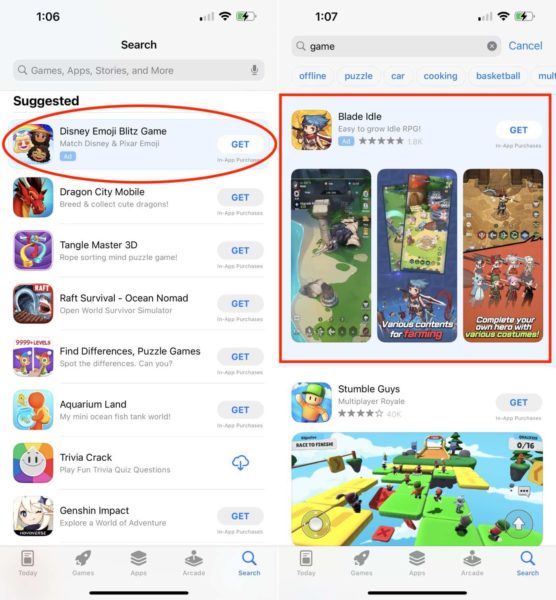
Apple is expanding ads on iPhone and iPad.  Display ads are currently shown in the search tab. But soon Apple will expand the ads to the main Today tab as well as in third-party app download pages, according to Bloomberg. For search ads in the app store, developers can pay to have their apps featured in the results when users search terms related to the app.

Advertising

Four new Apple Search Ad placement options. Apple released four new options for advertisers to drive visibility and downloads in the App Store. The new placements are:

  • Today tab
  • Search tab
  • Search results
  • Product pages — while browsing

Apple could be building an ad network for live TV. In November we reported that Apple was holding discussions with advertising partners and MLS sponsors with the plan to launch next February.

Apple Search campaigns shifting to cost-per-tap (CPT) pricing model. Starting in June, Apple shifted their model to Cost-per-Tap, or CPT. CPT is Apple’s version of CPC, or cost per click. It is calculated by dividing your total spend by the number of taps your ad received. 

Other platforms making headlines

We would be remiss if we didn’t mention that there are plenty of other platforms that made waves in 2022. Although these may not have been big enough to deserve their own category, they definitely deserve mentioning. 

Best Buy

Best Buy to sell search ads under its own in-house media company. Best Buy has launched Best Buy Ads, its own in-house media company. Best Buy Ads offers paid search ads and sponsored product listings on Best Buy’s website, among other ad offerings.

Instacart

Walmart

  • Walmart is expanding their self-service Marketplace platform. Search Brand Amplifier gives products listed in the Walmart marketplace higher visibility by boosting advertised products to the top of search results. Walmart says this benefits newer and smaller brands that haven’t achieved high organic listings within the Walmart platform.
  • Walmart is now selling ads on TikTok, Roku, and Snap. For the first time ever, Walmart has expanded its ad reach beyond its own ecommerce platform by powering ads on TikTok, Roku, and Snap. They’ll also have the capability to measure any sales that come from those ads.

LinkedIn

  • A podcast network aimed at professional audiences. The LinkedIn Podcast Network is a pilot program that will include shows about topics such as technology, recruiting and mental health, from external experts as well as its own in-house news team.
  • LinkedIn announces Business Manager. Finally! The new Business Manager will aim to simplify how marketers keep track of their accounts by offering their Campaign Manager and Pages options easily visible from a central location.

Pinterest

Pinterest is doubling down on Shopping by adding 4 new features. Pinterest introduced four new merchant features to help retailers promote their stores. 

  • Product Tagging on Pins
  • Video in Catalog
  • Shop Tab on Business Profiles
  • The API for Shopping

Reddit

Uber

Uber ads are coming, and they’re already raising privacy concerns. Ubers’ new journey ads will be shown in the Uber app at least three times during the riders’ journey. The new feature will let brands place ads using data drawn from riders’ travel history and their precise geographic destinations, according to Uber. 

SMX Advanced and SMX Next

We can’t wrap up our 2022 year in review without talking about SMX. We had 2 epic virtual conferences this year with expert speakers discussing topics such as how to leverage automated bidding to finding success with an audience-first strategy. Let’s take a look back. 

SMX Advanced

SMX Next

Did you miss SMX Next, or wanna watch it again? You still can. Registration is free

  • SMX Next PPC kicked off with an incredible keynote from Google’s own Ads Liaison (and former Search Engine Land Editor in Chief) Ginny Marvin. 
  • Melissa Mackey taught us how to make automation work for lead gen.
  • Navah Hopkins gave us the guide to permission based audience targeting.
  • Anthony Tedesco showed us how to level up our analytical skills using Excel.

Well that’s a wrap on 2022. What a year it’s been. Looking forward to 2023 I think we’re going to see more automation, a bigger push into GA4 as Universal Analytics gets sunsetted, big moves from Microsoft and other smaller platforms like Walmart and Instacart, and privacy-first strategies as third-party cookies finally retire.

The post PPC 2022 in review: Performance Max, Apple Search, chaos at Twitter, and more appeared first on Search Engine Land.

Original source: https://searchengineland.com/ppc-2022-in-review-performance-max-apple-search-chaos-at-twitter-and-more-390608

Reasons to Open an English Language School in Thailand

Home Business Magazine Online

Thailand is one of the most popular destinations for international tourists and expatriates alike. It’s also an increasingly popular destination for students looking to study English in a fun, low-cost environment. With so much excitement about the opportunities for education and tourism in Thailand right now, you might be thinking about opening your English language school there. If so, here are five reasons why it’s a great time to do so:

Tourism is booming in Thailand as the country becomes more attractive as a travel destination.

The tourism industry in Thailand is booming. It’s one of the top 10 most visited countries in the world, with over 30 million international tourists visiting each year. The country has a lot to offer: natural beauty, cultural heritage, and great food (to name just a few).

The quality of English education in Thailand is improving thanks to the government’s efforts to improve English proficiency nationwide.

The quality of English education in Thailand is improving thanks to the government’s efforts to improve English proficiency nationwide. As a result, there are more opportunities for native English speakers to work in Thailand. Many people who teach at schools may have the opportunity to earn a double income from teaching and their own private tutoring business.

Additionally, if you are an individual entrepreneur with some extra time on your hands and enjoy teaching others about something that interests you, opening up your language school could be a good way for you to make money while pursuing your passion.

If you’re looking for another great reason why opening an English language school in Thailand can be beneficial for your overall health and happiness (and pocketbook), here it is: teachers’ salaries here tend to be higher than those paid out by other countries around Southeast Asia (such as China).

Thailand’s popularity as an international student destination continues to grow thanks to its friendly culture, low cost of living and pleasant weather.

For years, Thailand has been one of the best countries to study English in. The country’s popularity as an international student destination continues to grow thanks to its friendly culture, low-cost of living and pleasant weather. Thailand also offers year-round study programs that allow students to learn English at their own pace.

The cost of living in Thailand is relatively low compared with other popular destinations such as Australia or New Zealand (see table below). This makes it easier for people who want to study abroad but don’t have much money or time available on holidays from work because there are no significant financial commitments involved with starting up an English language school here – unlike other places where teachers must invest thousands of dollars upfront before they can even begin teaching their first class!

Thailand has seen great improvements in the number of international students – a growing demand for English language training.

You can see the growing demand for English language training. Thailand has seen great improvements in the number of international students, with a large number of them coming from China and Japan. This is due to a growing demand for English language training, especially among local Thai students who want to improve their skills and prepare themselves for employment opportunities abroad.

If you’re considering opening an English learning center, now is a great time to do so in Thailand.

Now is the best time to open an English language school in Thailand. If you’re considering doing so, here are a few reasons why:

  • The popularity of Thailand as a travel destination is on the rise. According to a report by Euromonitor International, international tourism arrivals in Thailand grew by 6% annually between 2012 and 2017.
  • The quality of English education in Thailand is improving thanks to government support for international education initiatives and increased funding for teacher training programs at local universities.
  • As more people travel outside their home countries and more companies expand internationally, there has been an increase in demand for English language training throughout Southeast Asia since 2008 — especially since 2011 when China’s economy started slowing down (and thus fewer Chinese tourists went abroad). Since then, other countries like Vietnam have also seen growth in their tourism industries because they offer low-cost alternatives with similar amenities (such as hotels) but less crowded beaches than those located closer to Bangkok.

Conclusion

If you’re considering opening an English learning center, now is a great time to do so in Thailand. The country offers many opportunities for businesses looking to make money and connect with customers from around the world. People who want to learn English will continue going to Thailand because of its unique culture and friendly people.

The post Reasons to Open an English Language School in Thailand appeared first on Home Business Magazine.

Original source: https://homebusinessmag.com/businesses/business-spotlights/reasons-open-english-language-school-thailand/

Google Search testing search in video

Google is testing the ability to search for spoken words in a video through a new “Search in video” feature. This is officially being piloted in India, but some are also seeing this feature being tested in the United States.

The announcement. Google posted this news on the Google India blog, writing, “besides images, videos are also a rich source of visual information but it’s often hard to find something buried inside a long clip. For example, perhaps you’re watching a long video about Agra, and you’re curious if it also covers Fatehpur Sikri. With a new feature we’re piloting, you’re now able to search for anything that’s mentioned in a video, right from Search. Simply enter a search term using the ‘Search in video’ feature and quickly find what you’re looking for.”

“Use the ‘Search in video’ feature beneath a video, enter a term, and quickly find what you’re looking for within the video,” Google added.

What it looks like. Here is a video showing this feature in action:

Like Google key moments. This, at least to me, isn’t too far off from the technology Google uses for key moments in a video. Google is able to isolate what sections of a video are talking about, without even having to be fed chapters these days. Plus, with YouTube’s advanced transcriptions, it is no wonder Google Search is able to do this.

US searchers. Searchers in the United States are also seeing this feature. Glenn Gabe tweeted that he saw it as well:

Why we care. Besides this being simply cool and, for some, mind-blowing, it also shows how far search technology has come over the years. It also may mean that marketers who post videos should ensure the language used is clear and that Google is able to properly and accurately transcribe the words spoken in the video.

The post Google Search testing search in video appeared first on Search Engine Land.

Original source: https://searchengineland.com/google-search-testing-search-in-video-390565

Why SEO experts rarely share actual success stories

Most SEO experts are still afraid to publish their success stories, with a few notable exceptions. 

Many are simply unable to share their work even when it’s successful. How can SEOs stop practicing “ghost optimization”? 

Before we dive into this question, let’s look at the reasons for the ongoing secrecy and still prevailing negativity among SEO practitioners.

SEO horror stories, anyone?

One of the most popular SEO hashtags within the industry over recent years has been #seohorrorstories. 

Why are SEO experts much more likely to share the horrible failures of the industry and their colleagues than their own success stories? 

Is this the overall prevailing negativity of society as a whole? Or do we have an internal problem aggravating the situation? 

I think it’s probably both.

First off, the recent years have led to a never-ending, downward spiral of public debate. Diplomacy has made way for trolling. 

When even presidents provoke people online to get attention, how is everybody else meant to stay civil in day-to-day conversations? 

Also, social media like Facebook and Twitter have been capitalizing on fear and anger.

Such “bad news” goes straight to our lizard brain and elicits fearful and angry reactions without consulting the parts of the brain responsible for logical thinking.

No wonder that even within the relatively professional SEO industry, the discourse has degenerated into the realm of “OMG! Look at that nonsense! How stupid!”

I’m exaggerating a bit, but that’s the essence of most shares where #seohorrorstories are involved. 

These are more than cautionary tales. It’s also a way of ridiculing those reckless enough to get caught red-handed while employing outdated SEO tactics.

Perhaps the thought process is that when one can’t shed light on their actual successes, then highlight others’ failures. This way, they indirectly stand in a better light by sheer comparison.

Of course, this is merely guesswork. The motivation behind the many horror stories may vary. It won’t simply gloat or malice, in most cases. 


Get the daily newsletter search marketers rely on.

<input type="hidden" name="utmMedium" value="” />
<input type="hidden" name="utmCampaign" value="” />
<input type="hidden" name="utmSource" value="” />
<input type="hidden" name="utmContent" value="” />
<input type="hidden" name="pageLink" value="” />
<input type="hidden" name="ipAddress" value="” />

Processing…Please wait.

function getCookie(cname) {
let name = cname + “=”;
let decodedCookie = decodeURIComponent(document.cookie);
let ca = decodedCookie.split(‘;’);
for(let i = 0; i <ca.length; i++) {
let c = ca[i];
while (c.charAt(0) == ' ') {
c = c.substring(1);
}
if (c.indexOf(name) == 0) {
return c.substring(name.length, c.length);
}
}
return "";
}
document.getElementById('munchkinCookieInline').value = getCookie('_mkto_trk');


‘Look at this random graph, please – the growth is stellar!’

There is also a compromise, anonymized “success” stories – where the alleged success can’t be fully reviewed by peers.

Such stories seem to be the middle ground between failure and success stories. So what is the logic behind them, then?

You will find lots of social media posts shared of random graphs without any URL connected to them.

It’s usually an analytics screenshot clumsily anonymized before publication. Ultimately, the stellar growth they exhibit lacks any credibility. 

I’m usually acquainted with those who share such success stories, so I know they won’t lie.

In most cases, they also add as much context as possible without giving away any meaningful detail so that you cannot track down the website they’re talking about.

What about industry outsiders and potential clients?

They have no idea who the people sharing the graphs are and how trustworthy the information is.

What is the purpose of sharing graphs without any context?

Again, I can only guess. 

  • Some SEO experts try to convey their expertise that way. 
  • Others share their success out of sheer joy at having made it. 
  • Some may want additional opinions on what happened when things went wrong. 

Take note that #seohorrorstories are quite often anonymous. That way, some limited peer review does happen within a very small perimeter. It’s better than nothing, right?

Are there any SEO hero stories? 

Some of you may have noticed. I have been looking for SEO hero (as in superhero) stories for two months and have been quite aggressive about it. 

There were far fewer success stories than bad news from the SEO industry. Yet, I was astounded that even the prospect of getting additional free publicity did not motivate many SEO companies, in-house SEOs or SEO consultants to divulge their success stories or share their case studies with me.

I started a similar hashtag inspired by #seohorrorstories called #seoherostories to encourage sharing such positive examples, but it seemed like I was the only one using it.

Are SEO experts ashamed of their work or afraid to show it?

Given the poor reputation of the SEO industry in the last 25 years, it’s no wonder some people are not keen on outing themselves as SEO practitioners. 

Numerous SEOs still engage in unethical practices, which might be why they are ashamed to show what they do.

Still, others may simply be afraid. I probed about the reasons behind this fear, and here are the obvious ones.

Manual Google penalties

This is an age-old fear of SEO practitioners stemming back from the early days. Sometimes, outing yourself as a practitioner of the dark arts of SEO – and mentioning the actual website you’re working on – was akin to suicide for your project. 

Even before the somewhat weird term “manual action” was introduced by Google, penalties have been known to hit out of the blue and after too much publicity for SEO practitioners’ work. 

This fear is no longer reasonable. And like most fears, it’s rather irrational.

SEOs are not criminals, and hiding is not necessary in most cases.

‘Secret sauce’ copycats

Another albeit more likely scenario is that the competition may steal your “secret sauce” and copy your SEO techniques. 

While this is possible, it’s important to realize who your competition on the web is. Most SEOs would still say something like “businesses who sell the same thing in the same area.” 

The reality of Google SERPs or the “SERP real estate” is that you mainly compete against the web giants:

  • Google itself pushes its own services and ads above actual organic results.
  • Huge websites like Amazon or Wikipedia are always on top by sheer popularity. 

Would a competitor or colleague who happens to have a similar business as you really hurt you that much by looking at your site’s SEO? 

Also, anybody can look up your secret sauce by using a tool like Semrush and find out about on- and off-page SEO with ease. So, why hide your success from the general public?

Client-stealing competitors

The other fear relating to the competition is that other SEOs may see who you work with and, thus, contact them and “steal your clients.”

People do this. I have had several clients notifying me of such attempts over the years. 

I don’t think I lost any clients that way, though. Why? Is it just because I’m such an expert?

Probably not. I was a beginner at the time as well. 

It’s such a sneaky practice that business people are not fond of offers made that way. If they are, you may be lucky to get rid of them. 

Toxic clients often hurt you more than they help financially. I had to learn that lesson the hard way over the years, trying to satisfy everybody.

I believe the above common “reasons” for not sharing SEO work are often irrational fears and traditions – merely excuses.

One reasonable explanation for why someone would not want to share the actual website address or their “stellar growth” chart is that the work is still in progress. 

Many other parts of the project were far from ready for prime time, and it was not a good idea to share them prematurely. I’ve only heard that justification once, though, even when I asked many times.

NDA: The dreaded acronym

A common explanation for not publishing actual results or disclosing website addresses and client names is the typical non-disclosure agreement (NDA). It may as well be called a “gag order,” as most SEO experts have to shut up completely about their work. 

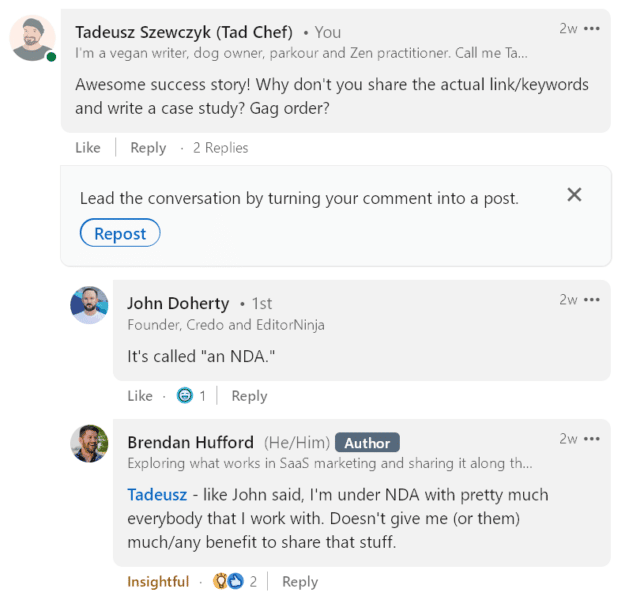
Some popular search marketers, including John Doherty and Brendan Hufford, emphasized this point on LinkedIn.

actual search engine optimization

For those in creative industries, being unable to share their work or having to do so anonymously would be virtually impossible. 

Imagine the following scenario if designers, architects and programmers were involved.

  • “Look at this house based somewhere in the northern hemisphere. Brown brick has been used for the structure, and the large window frames facing south are made of a local wood I can’t disclose here. To protect the owner’s privacy and hide the location, I had to blur some of the images.”

So why do we have to sign so many NDAs forbidding us to show our actual work or even sometimes tell our friends and families about it?

What’s with the high level of confidentiality? Are we secret agents? 

Clients who demand that SEOs do not talk about their projects may be due to any of the following reasons:

  • They are unethical and will ask you to perform SEO outside Google guidelines or even beyond what the law allows.
  • They want to claim success for themselves and their sales department.
  • They are simply ashamed to buy SEO services as these are still considered to be some kind of voodoo by some.

The common logic is, of course, about “trade secrets.” But as noted above, many tools allow you to analyze those supposed secrets.

The bright side: 3 inspiring case studies that welcome peer review

After talking so much about the issues surrounding (the lack of) success stories in the SEO industry, let’s focus on a few actual case studies that inspired me this year. 

Hopefully, these SEO hero stories encourage you enough to follow in their footsteps.

Example 1: Missguided 

Dogs and owners often become very similar to each other, even by their looks. I am one and can tell you that it often happens “accidentally.”

But there’s an artistic photo series taking it to the extreme, where dog owners and their pets dress up and get their hair done in the same style. 

UK-based SEO agency Rise at Seven made this the idea behind a very successful campaign:

As CEO Carrie Rose reports in her case study, the results have been more than impressive:

“865% increase YoY traffic to this area of the site, 134,757 page views to be exact.”

She goes into great detail to explain how it worked and what exactly happened to make it such a success, so make sure to read the entire case study.

Example 2: LiberEat

Semrush topic research - avoid gluten

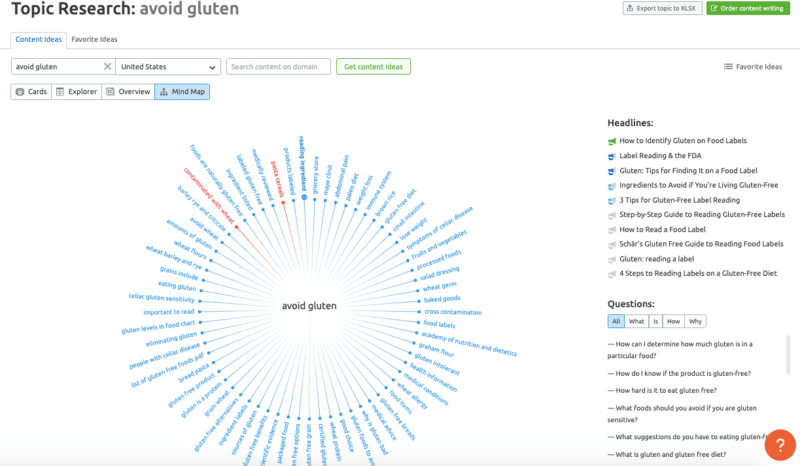
Olga Andrienko, well-known for her leadership role at Semrush, showcased the success story of LiberEat, made possible by Mich McClure and the team behind Hoojy. 

“1000% organic traffic growth in 3 months”.

While this might sound too good to be true, especially given the approximate numbers, she goes to great lengths to highlight what happened, why and how in her extensive Twitter thread.

If that’s still not enough, check out the full-fledged case study with lots of screenshots, keyword examples and figures over at Semrush.

Example 3: Unbeatable Blinds

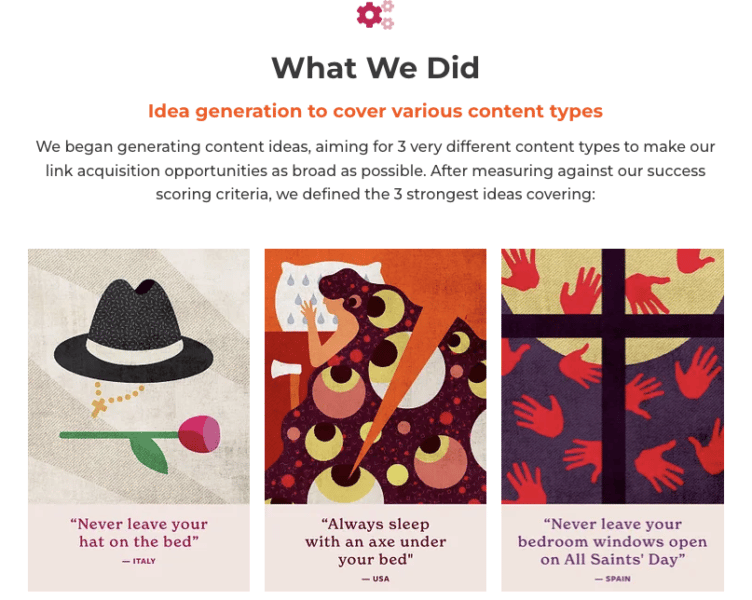
The folks over at Boom Online have many case studies, but their campaign for Unbeatable Blinds made me feel good. It might be the artistic quality of the images they have shared as part of the campaign. 

Brendan Hufford

While they did not divulge the numbers, the links they attracted speak for themselves:

“The content was covered by a number of high-profile publications such as Design Taxi, Bored Panda, Line Today & The York Press among others.”

Given such attention from popular blogs and local press alike, I’m confident that the traffic and other metrics will follow suit.

How to get clients who are proud to work with you

As a writer, I do not offer ghostwriting services.

Ghostwriters tend to become invisible. Someone else gets the credit for their work.

Nobody knows what they have done, so they can’t prove their expertise. 

It’s pretty straightforward when it comes to writing.

Potential clients usually tell you upfront that they are looking for a ghostwriter. You can just ignore such offers unless your financial situation forbids you to.

With SEO services, it’s much trickier. Nobody will tell you they are looking for a “ghost optimizer.” 

Often, after plenty of discussions and only when you are short of signing a contract will you get a cryptic NDA full of legalese meant to hide its true scope.

In other cases, you get the NDA, or they don’t talk to you at all. Either way, you risk losing a lot of time and money and not getting the client.

Some NDAs are meant to protect trade secrets. Yet, most of them usually grant sweeping powers to the client to ban you from disclosing much of anything. 

No wonder people working in SEO and adjacent industries (think marketing or advertising) are simply shutting up in general in order not to breach their agreements.

You never really know what goes too far, so you play it safe by keeping quiet.

So what can you do to identify clients who undermine your status as an industry expert? 

You can prepare upfront, be clear during the preliminary talks and stand firm once you start working. Below are four specific tips.

Work on your own projects first

Always work on your projects first or at least keep them going in the background. 

Once you have independent revenue sources and ways of gaining status outside client work, you can rest assured when choosing to engage with others.

Having to work for third parties out of necessity is never a good place to be at. 

Whenever possible, work for others because you love the challenge and variety, not because you need the money. Ideally, clients seek you out because they are fond of your personal projects.

Build your authority in the industry and beyond

Visibility is not limited to client work. Many practitioners attend conferences, trade fairs or meetups to show up and teach others what they know.

Some hoard knowledge and keep it to themselves so that nobody can “steal their ideas.” This is a short-sighted approach. 

Ideas can be discovered by more than one person at any given time. But the one who publishes it first or does so more widely is usually credited with the “invention.” 

It’s crucial to become an authority within your industry, and beyond the narrow field you specialize in. 

When I started out in SEO, I made sure to keep branching out into broader yet more popular areas like web development, marketing and blogging. 

SEO is often viewed as merely “technical SEO” and a small subset of actual search engine optimization, in my opinion. The number of people interested in what you are talking about is very small.

By sharing your knowledge, you are enabling those unfamiliar with your work to understand what you do. 

Introverts can share and teach on the web. You don’t have to show up in person, shake hands and pat backs.

You can also network online with like-minded individuals. LinkedIn is your best bet here.

Charge more for ‘ghost optimization’

A simple yet powerful way to make a point is to charge more money for something harder or more valuable. 

Usually, ghostwriters are underpaid young writers who have no name yet so that they are forced to write in the shadows of the bigger names. But once you’ve built a name for yourself, you have to be proud enough to charge accordingly. 

Almost nobody will think you are valuable as long as you undercharge or are too timid.

The few who know will be glad to exploit your expertise for low fees and shut up about your true worth in most cases.

Similarly, you have to make it clear that you charge more for ghost services from the start.

With “ghost optimization” being much more complex and riskier than mere writing, it’s even more important to charge your true value.

There are far fewer high-quality SEO practitioners out there, so don’t be afraid to get what you deserve.

Flatly refuse to do the dirty work 

Once you have worked with a client for a while, some drop their masks or become more daring.

Others might get frustrated with the slow pace of SEO progress and demand you do what the competition does. 

Riskier tactics may get their domain banned or penalized, but in the short term, the results may look impressive. 

Now you have to keep your integrity. How?

Flatly refuse to make your hands dirty and to use questionable means of SEO. 

The client feels safe due to the NDA, so they think they can get away with it. But SEO does not happen in a vacuum. 

Just because you don’t tell anybody that you have to spam doesn’t mean it’s invisible. 

As noted above, publicly available tools give you an X-ray vision of any website’s SEO.

Google also has human quality raters and increasingly sophisticated algorithms to find the bad apples.

The post Why SEO experts rarely share actual success stories appeared first on Search Engine Land.

Original source: https://searchengineland.com/why-seo-experts-rarely-share-actual-success-stories-390201

Leojeany Will Turn Heads at Milan Fashion Week

Home Business Magazine Online

Leojeany
Photo Credit: Leojeany

Leojeany was born in Xinjiang, China. The brand originated with its founder, Leo Li, who has an eye for design and a love for la mode. The model, influencer, stylist, actor, and designer wanted to create a community and brand that would emanate his personal taste and fashioned Leojeany into just that. The company plans to send Li, its top stylist, to Milan to expose a potential Leojeany look: its first clothing line, a Spring 2023 Collection.

“Leojeany is not for those looking for normal, current, or traditional. Leojeany is not for those looking to take a back seat in fashion and go with the flow. Leojeany is for those looking to progress the market forward through risky taste, which often combines the heights of high fashion with the steady foundation of streetwear,” claims Li.

The brand intends to release a clothing line in the Spring of 2023, which will debut at Milan Fashion Week through a company spokesperson.

“We’ve historically liked to send a representative to these weeks,” holds Li. “It’s not only a way for us to market our brand, but a method through which we build Leojeany relationships.”

When Li considered the brand and business, he incorporated these affiliates and friends into the plan. Wanting to not only create a design that would flourish and better the streets of New York City, but also striving to curate a community that he knew the company could rely on, Li build the brand with branches. Leojeany is now surrounded by a large network of of artists around the area, which the company regularly works with, supports, and bounces ideas off of.

“Art is meant to be shared,” claims Li. “Continuing at Milan Fashion Week, Leojeany will stay dedicated to that principle.”

Leojeany lovers can expect to see brilliant, popping colors, and bright overcoats among the collection of daring designs displayed at the week-long series of events. The company, which has put months worth of effort into the upcoming line, intends to release it to the public, who it hopes will embrace the new rules that Leojeany has set: high fashion looks made for anyone.

The company is excited to release its new line and watch its sponsor shine in Milan.

Leojeany is a fashion photography and styling company based in Manhattan that offers customized photo sessions, personal style tips, makeup services, and more.

Company Website: https://leojeany.net/ 

Company Instagram: https://www.instagram.com/leoliofficial/
Contact Leo Li at leo846731847@gmail.com

Company Socials: @leojeany

The post Leojeany Will Turn Heads at Milan Fashion Week appeared first on Home Business Magazine.

Original source: https://homebusinessmag.com/success-stories-lifestyles/leojeany-will-turn-heads-at-milan-fashion-week/

GA4 now lets you recreate Universal Analytics audiences, and personalize the Home page

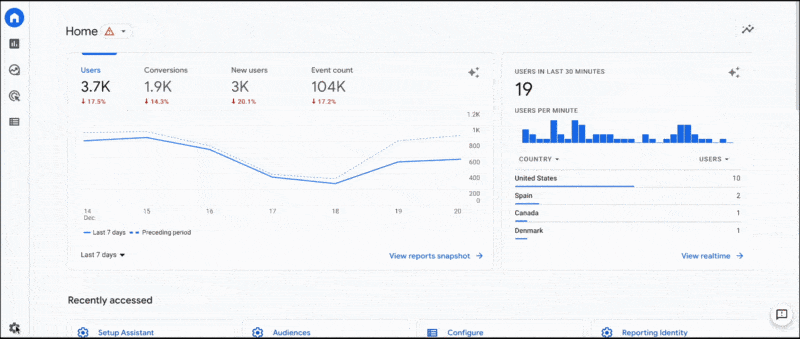
GA4, everyone’s favorite new Google Google Analytics product, will now let you use the Migrator for Google Analytics Google Sheets add-on tool to recreate many of your Universal Analytics properties into a GA4 property. You can also personalize the content on your home page to make what’s shown more relevant. Let’s take a look.

Why we care. First, these new tools attempt to make GA4 tolerable by allowing you to customize your dashboard and properties as close to UA as possible. Though not perfect, this should at least bring a little more familiarity into the mix. Advertisers who have been slow to implement or learn GA4 might find solace in these familiar features.

If you haven’t implemented GA4 yet, this is your sign.

Recreate Universal Analytics audiences in Google Analytics 4

Audiences based on dimensions and metrics that are the same in UA and GA4 can be recreated just as they are. When the audiences use dimensions or metrics that differ between UA and GA4, you can edit the audience definitions in the spreadsheet to use the relevant GA4 dimensions and metrics.

For each audience, the spreadsheet includes information about whether the audience is available for recreation; if it isn’t, the spreadsheet has information about why. Editable audience conditions are included so you can modify them before recreating them.

More information on the Migration tool can be found here.

add-on tool

Personalize the Home page

Keep in mind that when you personalize your homepage, the customization is only visible to you. Other users will not see your dashboard.

The following information is from the Google Analytics Help documentation.

Personalize the metrics and dimensions

You can now change the metrics on the overview and realtime cards. On the overview card, hover over a metric to see a drop-down menu so you can change the metric.

Google

On the realtime card, you can also choose from a number of dimensions (e.g., Audience, City) or let us choose a dimension for you (i.e., Choose for me).

Home Business

Restore your choices

Whether you change the metric, dimension, or date on a card, we’ll restore your choices in future sessions. For example, we’ll populate a card with City the next time you visit Google Analytics when you choose the dimension in your current session.

Additionally, when you return to a report using the Recently accessed section, you’ll see all the changes you made to the report. For example, if you changed the primary dimension, you’ll see the dimension applied when you select the report from the Recently accessed section.

Try Suggested cards

When you’re new to a property and haven’t viewed a card frequently, a new Suggested for you section will appear. The section surfaces cards that are popular across all Google Analytics 4 properties to help you find useful information in your property.

Provide feedback

You can now give a thumbs up or thumbs down when hovering over the top right of a card in the Suggested for you, Because you view frequently, and Insights sections. The feedback options allow Google Analytics to provide you with more helpful information in the future.

internet marketing

The post GA4 now lets you recreate Universal Analytics audiences, and personalize the Home page appeared first on Search Engine Land.

Original source: https://searchengineland.com/ga4-now-lets-you-recreate-universal-analytics-audiences-and-personalize-the-home-page-390802

How Google Autocomplete works

When you go to the Google homepage, you’ll most likely know what you’re about to type into the search box – whether you’re checking in on the weather forecast, looking for a business or service, or want to find out where you recognize that actor from. (Unless you’re “feeling lucky,” that is.)

You enter a word or a single letter, and Google will populate the search box with a list of “predictions” before you’ve even finished typing. This Google feature is called Autocomplete.

But what exactly is it? How does Google come up with those predictions? Read on to find out how Google Autocomplete works.

What is Google Autocomplete?

Autocomplete is a feature within Google Search that, in Google’s own words, is “designed to make it faster to complete searches that you’re beginning to type.”

Starting as an experimental feature in 2004, it was fully introduced four years later as Google Suggest and was renamed Autocomplete in 2010.

It is available anywhere you can expect to find a Google search box, including:

  • The Google home page.
  • The Google app for iOS and Android.
  • The quick search box from within Android.
  • The “Omnibox” address bar within Chrome. 

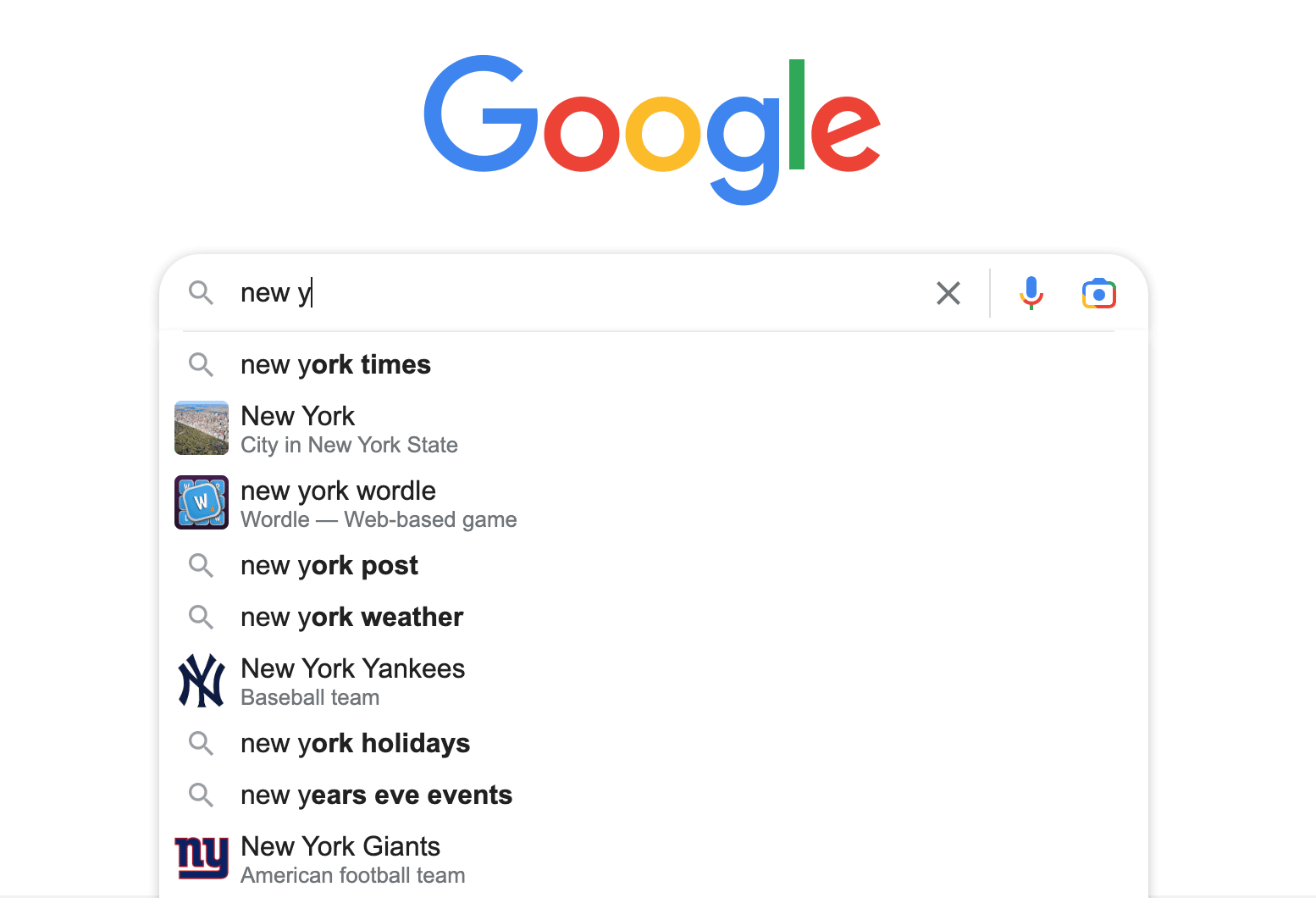
Begin typing, and you’ll see predictions appear.

Google Search - Autocomplete for 'new y'

In the screengrab above, you can see that by typing “new y” Google brings up predictions such as “new york times” or “new york Yankees.”

This makes it easy to finish entering your search on these topics without typing all the letters. The predictions change in real-time in response to each character being typed into the search box. 

The user then has the option to continue typing their desired query or choose from the dropdown selection.

But if you know what you’re searching for, why do you need Google to tell you? 

It saves time. While Autocomplete began as a desktop search feature all those years ago, it has become a popular time-saving feature on mobile devices.

Google estimates that, cumulatively, it saves the equivalent of over 200 years of typing every single day and, on average, reduces typing overall by about 25%.

How Google Autocomplete works

Google Search doesn’t quite know how to read minds. Instead, it makes calculated predictions by looking at searches made by real people.

Autocomplete displays common and trending queries relevant to the characters entered into the search bar. 

Here are some key factors used by Autocomplete to predict search queries:

  • Overall popularity.
  • Trending topics.
  • Search history.
  • Location.

Put simply, the results shown are influenced by things you’ve previously searched for, the location you’re searching from, and the search term data that Google has gathered – using all of this data to automatically predict what you’re looking for. 

Let’s take a closer look at each factor.

The popularity of search queries

When it comes to predicting search queries, popularity often walks hand in hand with what’s trending. But trends can fade over time, whereas one or more subjects might always be commonly linked together. 

While some searches are far more common than others, some less popular searches might be shown above more common ones if Google deems them more relevant, the company says. In short, personalized > popular.

We’ve all heard of Google Trends, the website that analyzes the popularity of top search queries across various regions and languages. Well, this isn’t that.

A current trending search is a term or phrase that suddenly spikes in popularity. As people flock to Google to ask the same question, the query can appear as a suggestion, even if it hasn’t gained long-term popularity. 

Google uses the following example to explain:

When actress Anna Paquin was getting married, “Anna Paquin wedding” began appearing as a suggestion just before her big day. The term was useful to suggest, as many people were starting to search for it.

If Google had relied solely on long-term data, then the “suggestion” wouldn’t have appeared as an option in the search box, as it hadn’t widely been searched for previously.

And today, Autocomplete no longer offers the term as it didn’t harness enough long-term popularity (though “Anna Paquin married” has stuck).

Previous search queries

The predictions dropdown list will include a variation of topics and questions depending on who is doing the searching. To speed up the search process and identify what you might be looking for, Google sifts through your past searches.

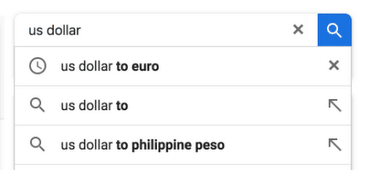
In the example below, you can recognize that a previous search result appears because the text is highlighted in purple.

Desktop view of Google search bar with autocomplete

On desktop, you’ll also see the word “Remove” appear next to the prediction, which you can click if you want to delete the past search.

However, on mobile, things look a little different. You’ll see a clock icon on the left for previous searches and an X button on the right to remove it. 

Mobile view of Google search bar with autocomplete

You can also delete all your previous searches in bulk or by particular dates or those matching particular terms using My Activity in your Google Account, regardless of the device you use to search.

Language and location

With a service that seems so personalized, it’s perhaps no surprise that not everyone receives the same suggestions. Among the factors that can tailor your experience is the language you’re searching in and the location you’re searching from.

The country, the state or province, and even the city can all produce different suggestions – whether it’s where you currently live or are originally from. 

Different suggestions will also appear if you’ve told Google that you prefer to search in a particular language or based on the language Google assumes you use, as determined by your browser’s settings.


Get the daily newsletter search marketers rely on.

<input type="hidden" name="utmMedium" value="” />
<input type="hidden" name="utmCampaign" value="” />
<input type="hidden" name="utmSource" value="” />
<input type="hidden" name="utmContent" value="” />
<input type="hidden" name="pageLink" value="” />
<input type="hidden" name="ipAddress" value="” />

Processing…Please wait.

function getCookie(cname) {
let name = cname + “=”;
let decodedCookie = decodeURIComponent(document.cookie);
let ca = decodedCookie.split(‘;’);
for(let i = 0; i <ca.length; i++) {
let c = ca[i];
while (c.charAt(0) == ' ') {
c = c.substring(1);
}
if (c.indexOf(name) == 0) {
return c.substring(name.length, c.length);
}
}
return "";
}
document.getElementById('munchkinCookieInline').value = getCookie('_mkto_trk');


Why are some predictions removed?

Google outlines that Autocomplete makes “predictions” rather than “suggestions.”

This could be due to several controversial and legal claims previously made which suggested that Google was promoting harmful, offensive and/or inaccurate information by suggesting certain search queries.

When rebranding in October 2010, Google moved away from “Suggest” since it’s not always offering the most thoughtful, caring, or appropriate term.

The company prefers to use “predictions” and is committed to bettering the service by taking on feedback and monitoring searches.

In addition, Autocomplete is designed to help people complete a search they intended to do. The feature offers predictions based on the query you were likely to continue entering. 

While the results show depend on several factors outlined above, Google removes predictions that are against its autocomplete policies, which block:

  • Sexually explicit predictions that do not cover or relate to medical, scientific, or sex education topics.
  • Hateful predictions against groups and individuals based on race, religion, sexuality or other demographics.
  • Violent or harmful predictions.
  • Dangerous and harmful activity in predictions.

Google may also remove predictions considered spam, closely associated with piracy, or in response to valid legal requests.

How do inappropriate Autocomplete predictions happen?

While Google has systems designed to automatically catch inappropriate predictions, the search engine processes billions of daily searches.

Billions of searches mean billions of predictions, which means that sometimes, inappropriate predictions can slip through the net.

While some predictions may seem odd, shocking or make you question why someone might want to search for it, looking at the actual search results generated sometimes provides needed context. 

In some cases, the search results themselves may make it clearer that predictions don’t necessarily reflect awful opinions which some people may hold but instead may come from those seeking specific content that’s not problematic. 

This is why popular searches measured in our Google Trends tool might not appear as predictions within Autocomplete.

Google Trends is a tool designed as a way for anyone to research the popularity of search topics over time, regardless of the search intent.

How to report inappropriate Autocomplete predictions

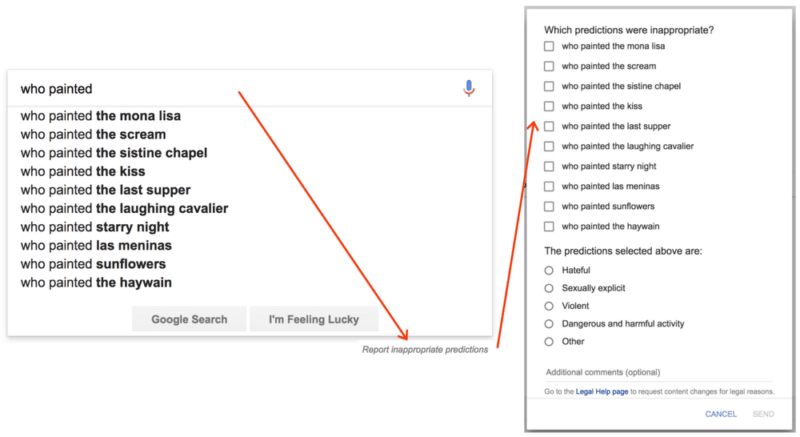
If you spot something which doesn’t feel right, makes you uncomfortable or might offend someone, you can report using the “Report inappropriate predictions” link, which appears below the search box on desktop.

Report inappropriate predictions

For those searching on mobile or using the Google app for Android, long press on a prediction to get a reporting option. Those using the Google app on iOS can swipe to the left to get the reporting option.

Google reassures users that they don’t just remove a reported prediction that violates their policies but also investigate closely related predictions to provide a broader solution and prevent inappropriate predictions from being made in the future.

More than just Autocomplete

Google Autocomplete benefits all types of users, helping them to make searches and load pages more quickly.

Whether you’re looking to inform your marketing strategy, generate content ideas, research keywords or explore search intent, Autocomplete can be a valuable tool.

Search and digital marketers use it to find out what people are actively searching for so they can better meet their customers’ needs.

The post How Google Autocomplete works appeared first on Search Engine Land.

Original source: https://searchengineland.com/how-google-autocomplete-works-390257

The benefits of home and pet sitting over Christmas

Reading Time: 2 mins

Is home and pet sitting for you?

Christmas is a busy time for everyone. People are visiting friends, family and loved ones, taking holidays, having extended breaks at home or even going skiing! People often find they are worried to leave their homes unattended and of course, many people need someone to watch their beloved pets.  

No one wants to feel guilty about leaving pets in kennels and boarding houses. Housesitting could be the perfect solution for you, whether you are going away or looking for a new passtime. Petsitters are in high demand too, especially with people wanting someone to take good care of their cats and dogs. 


What are the benefits?

There are benefits for both the housesitters and those who hire them! 

Peace of mind 

Christmas is exciting, yes, but it can also bring lots of stress and pressure. Not only are Christmas preparations expensive, but the cost of living crisis means we are all facing a plethora of extra worries. Not to mention the cold brings the chance of frozen pipes, power cuts and in some cases, extreme weather. 

Leaving pets at home is a worry enough, so knowing your furry friend is being looked after by someone who truly cares can be truly reassuring. Plus, knowing your home and treasured possessions are being kept safe is an even greater relief.  

Maintaining routines 

When a pet returns from time away, they can be out of their routine. For some owners, it can be difficult to get their cats and dogs back in the regular routines of life. Boardin can be disruptive and stressful for both owners and pets, so hiring a house sitter keeps all creatures great and small happy and stress-free. 

Home security 

Theft increases during the festive season. With the knowledge of new gifts and belongings in the house and people going to visit friends and family, thieves take their chance. Having a homesitter comes with the added benefit of higher security within the home whilst you are away. 

Not only can they ensure home security systems are kept in check, but havign someone within the house, turning lights on and off and allowing people to see someone is in the home is a deterrent. 

Make and save money 

As previously mentioned, the cost of Christmas can be extortionate. Between luxury food, presents, Christmas parties and travelling to see those special to us, the pennies can add up. The price of catteries, kennels and boarding for pets can also increase. 

Home and pet sitters who work through Homesitters Ltd can earn around £170 as a couple for a two-week homesit, plus they get reimbursed for mileage at 45p per mile and get a daily food allowance while on assignment. If Homesitters do an assignment over the festive bank holiday days, they will also receive additional pay for each of the 3 bank holiday days. 

At this expensive time of year, people welcome the money they make. They often save it for treats such lunches out or holidays. When everyone is feeling the pinch, it’s an enjoyable role that retired people can easily do to boost their finances whilst feeling like having a break. 

The post The benefits of home and pet sitting over Christmas appeared first on MoneyMagpie.

Original source: https://www.moneymagpie.com/make-money/the-benefits-of-home-and-pet-sitting-over-christmas