3 new Google reporting columns for conversions

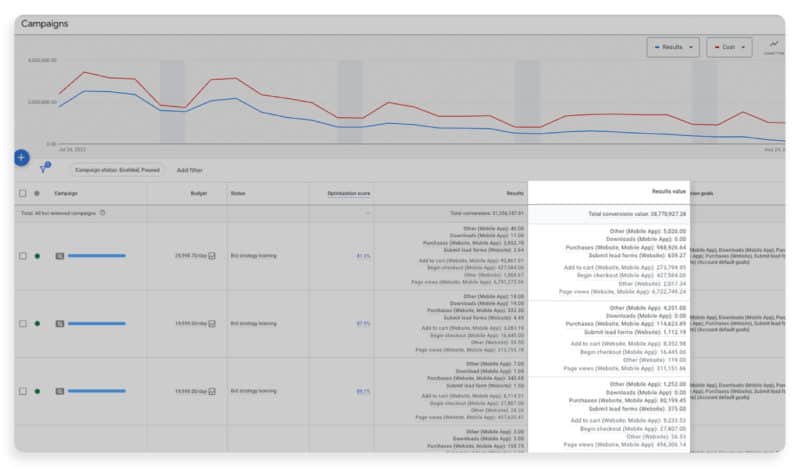
Google just announced three new conversion reporting columns to save advertisers the hassle of applying custom segments to see each individual conversion action and the categories they fall under.

The new columns. The three new conversions columns are:

  • Results
  • Results value
  • Conversion goals

Let’s dig in.

Results

This column shows the number of conversions you’ve received across all primary conversion actions for each of your standard goals. Advertisers will also see the impact this campaign is driving against goals it’s not optimizing towards.

Home Business

Results value

This column shows the calculated conversion values you’ve received across your primary conversion actions for each of the standard goals in your account.

internet marketing

Conversion goals

This column will show the goals listed in your campaign-level settings that drive performance.

make money online

Dig deeper. For more info on Google’s new conversion columns, you can visit their help center.

Why we care. Advertisers who measure conversions should try the new columns to see which ones offer better visibility into their account goals as well as what they mean for your performance.

The post 3 new Google reporting columns for conversions appeared first on Search Engine Land.

Original source: https://searchengineland.com/3-new-google-reporting-columns-for-conversions-388826

A look inside TikTok’s new automated Smart Performance Campaigns

TikTok announced a new campaign type for brands to further enhance their performance in the app. The new solution is called Smart Performance Campaigns.

Sounds familiar. If the new campaign type sounds familiar, it might be because it’s almost identical to Google’s smart and Performance Max campaign types which require advertisers to put their full trust into the platform’s AI and machine learning systems.

What TikTok says. From their blog post announcement, TikTok says:

“Smart Performance Campaign is our first end to end automation solution that leverages machine learning to optimize for best performance and marketing goals. In order to reach the right people and maximize results, Smart Performance Campaign is designed to run performance campaigns at scale, while reducing the number of manual steps to drive results.

It’s completely hands off, with minimum input needed from advertisers to get started. Through leveraging machine learning, getting started with Smart Performance Campaign is as easy as it sounds. All you need is a marketing objective, budget, country, and creative assets to get started.”

Who should use Smart Performance Campaigns. TikTok says that the new Smart Performance Campaigns are perfect for advertisers who are new to advertising on the platform, Enterprise or SMB advertisers who don’t have the resources to have hands-on campaign management, performance-oriented advertisers who are looking to optimize, and gaming advertisers launching new titles.

Early testing. In their announcement, TikTok said Bolt ran a 14-day A/B test campaign with Smart Performance Campaign that lowered CPA by 27% and generated 40% more purchase actions. To continue the success, Bolt has rolled out Smart Performance Campaign across additional markets including the UK, Spain, Sweden, Romania, and Portugal.

Launch date. Smart Performance Campaign will be globally available for Android App Promotion campaigns at the end of the month, with more to come later this year for iOS and Website Campaigns.

Why we care. Just like with Google, automated smart campaign types will work better for some brands than others. Advertisers should be cautious and ensure their performance tracking is accurate and pixels installed properly before use. It is worth testing with a small portion of your budget, but it’s not available to all advertisers just yet so keep an eye on your account.

The post A look inside TikTok’s new automated Smart Performance Campaigns appeared first on Search Engine Land.

Original source: https://searchengineland.com/a-look-inside-tiktoks-new-automated-smart-performance-campaigns-388831

Step-by-Step Guide to Setting Up a Teeth Whitening Business

Home Business Magazine Online

Starting a teeth whitening business can be a lucrative endeavor. However, there are a few things you need to do in order to get your business up and running. It’s essential to learn about the essentials of starting a teeth whitening business such as The White House Dublin to ensure that your venture is a success.

1. Research the teeth whitening industry

Your first order of business is to learn as much as you can about the teeth whitening industry. This includes understanding the different types of teeth whitening products and services that are available, as well as the target market for your business. It’s important to have a good grasp on the competitive landscape so that you can position your business for success.

2. Choose a business model

The next step is to choose a business model for your teeth whitening business. You have plenty of options to consider, including franchising, starting a brick-and-mortar business, or an at-home teeth whitening business. There are pros and cons to each, so it’s important to choose the model that best suits your needs.

3. Get your teeth whitening business licensed and insured

Once you’ve chosen a business model, you’ll need to get your business licensed and insured. This is important for protecting your business from liability. You’ll also need to make sure that you comply with all state and local regulations for teeth whitening businesses.

4. Purchase the necessary equipment and supplies

In order to provide teeth whitening services, you’ll need to invest in the necessary equipment and supplies. This includes items like teeth whitening gels, lights, and trays. You’ll also need to make sure that you have a comfortable chair and a well-lit work area. All this entails shelling out money, so be sure to set a budget for all necessary expenses. Don’t forget to talk to multiple suppliers to get the best deals.

5. Set up a website and social media pages

Create a professional looking website and social media pages. This will help you build credibility and attract customers. Your website should include information about your services, prices, before and after photos, and contact information. Be sure to choose a catchy name for your business and create a logo to use on your website and social media pages.

Once your website is set up, create social media pages on Facebook, Twitter, and Instagram. Use these platforms to share helpful tips and tricks for getting whiter teeth, as well as special offers and promotions. Regularly posting fresh content will help you grow your online following and attract new customers. Consider other online platforms as well like TikTok and YouTube if you think they’ll be helpful in getting the word out about your new business.

6. Hire and train employees

You may not be able to do everything on your own, so you’ll need to hire and train employees. Be sure to screen candidates carefully and choose those that are passionate about teeth whitening and providing excellent customer service. Train your employees on all aspects of teeth whitening, from how to prepare the gel to how to use the light. You should also provide them with customer service training so that they know how to handle any questions or concerns that clients may have.

Remember that your entire team plays a role in the success of your business, so it’s important to invest in their training and development. This could have a massive impact on your startup costs, but it’s worth it to ensure that your business is staffed with qualified and professional employees.

7. Market your teeth whitening business

Simply offering teeth whitening services is not enough — you also need to find ways to market your business and attract new clients. There are a number of different ways to do this, and the best approach will likely vary depending on your target market. For example, if you’re targeting businesses, you may want to consider exhibiting at trade shows or networking events. If you’re targeting consumers, on the other hand, you may want to focus on online advertising or promotional discounts. Whatever approach you take, make sure that you’re clear about your unique selling proposition and why customers should choose your business over the competition. With a little effort and creativity, you should be able to find effective ways to market your teeth whitening business and attract new clients.

8. Start accepting appointments

Now it’s time to start providing teeth whitening services! Begin by accepting appointments and providing services to your clients. Be sure to keep a close eye on your supplies so that you don’t run out of anything mid-appointment. It’s also important to maintain a clean and professional work area to ensure that your clients are comfortable and satisfied. Consider using software to help you manage your appointments and clients. This can be a great way to streamline your business and keep everything organized.

9. Track your progress and make adjustments

As your business starts to grow, it’s important to track your progress and make changes as necessary. This will help you ensure that you’re on the right track and making the most of your opportunities. Regularly review your financial statements and performance metrics to identify any areas that need improvement. If you’re not happy with your results, make changes to your marketing approach or operations. With a little trial and error, you should be able to find what works best for your business.

The post Step-by-Step Guide to Setting Up a Teeth Whitening Business appeared first on Home Business Magazine.

Original source: https://homebusinessmag.com/business-start-up/setting-up-a-business/guide-setting-up-teeth-whitening-business/

Five Essential Rules for Your First Fix and Flip House Project

Home Business Magazine Online

Fixing and flipping houses has been growing in popularity year after year during the 2000s. It is perhaps the easiest way to get into real estate investment, as long as you understand the pitfalls and the processes needed.

Last year saw a rise once again in flipping activity. A total of 323,465 properties were flipped in 2021. This is the highest number of homes being flipped in 15 years. Moreover, 2022 looks to be following suit. However, while fixing and flipping can offer an entry-level way into real estate investment, an understanding of how it works is necessary to be successful.

How Easy Is It to Start Flipping Houses?

It is very easy to enter the world of fixing and flipping. There are no qualifications needed as such, some permits may be required, but generally, anyone can get involved. However, the difference between a disastrous flipping experience and a successful one will be understanding the rules that need to be followed

Launching head-on into a fixing and flipping project could result in a big financial loss and a huge waste of time. Your credit could be adversely affected, and you could end up with a property that you cannot sell. It is therefore worth taking the time to construct a solid flipping a house checklist as some essential rules should be followed.

What Do You Need to Know When You Start to Fix and Flip Houses?

As with anything, taking on a task that you have never done before will involve a learning curve. If you have experience in the housing market, renovations, or construction, then this will help in some areas.

The biggest problem with your flipping project is going to be inexperience. Failing to consider potential roadblocks and problems ahead of time can lead to delays. These delays can prove to be costly and could affect your ROI.

Fixing and flipping can take time. The bigger the project, the more effort it will take. This area is addressed further below, along with four other rules that you should try to follow.

1. Arrange Suitable Financing

Being able to self-finance a house-flipping project is in some ways the most desirable of all financing options. One of the benefits of financing the whole operation yourself is that all the proceeds from the eventual sale will go back to you alone. However, this also leaves you with the full risk if the property market unexpectedly crashes, or if buyers’ demand continues to fall.

Bringing in an investor may be preferable to some. Although the profits will be diluted, less of your cash will be at risk.

Traditional financing options may not be suitable for everyone. If you cannot find a co-investor, and your credit rating is not good, then you may need to look at private loans. You can finance a fix and flip through a hard money loan, and these are often used this way. This is a short-term lending option with a fixed interest rate. These are favored by house flippers, as the property can be leveraged against the loan.

2. Stick Within Your Budgets

It is very important to try to stick within whatever budget you set for your project ― especially the first one. It is easy to get carried away and take on too much.

The more money you pour into your flipping project, the more risk you take on. Breaking a budget could see you having to take out further loans. As a result, this could end with little to no profit and potential debt.

3. Understand the Time It Takes to Fix and Flip

This is one of the most common mistakes first-time house flippers make. It can take months to fix up a home. This is even truer if you are attempting to fix and flip houses part-time.

Many people try to flip houses part-time, and this is wise at the beginning of a new investment career. Having a full-time job means that you have a steady income and are not reliant on the future sale of the property.

It could take 6 months to fix a house up so it is ready for market. Then there is the selling time to take into account. When selecting a home to buy, carefully consider how much is realistically needed, and how much time it will take. Hiring the right people for the tasks will help a lot here, but many first-time flippers try to take on too much work by themselves.

4. Calculate the Potential ROI

Try to gain an understanding of the local market before buying any homes. You can use comparables to try to calculate the possible return on your purchase.

Comparing other similar homes and their selling price to your property should help to gain an insight into its potential future value. This is important because otherwise, you are buying property blind with no real idea of what return you could make if any.

While flipping is becoming more popular, profits are dropping for house flippers. The average ROI in Q2 of 2021 was 33.5%. This was down from 37.2% in the previous quarter. This makes it even more vital to find a way to at least estimate what ROI you could make before you buy anything.

5. Choose the Right House

Of course, choosing the right property will make a huge difference to whatever proceeds you finally realize after your hard work has finished. Often, house flippers will look for motivated sellers, distressed properties, and perhaps auctions or foreclosures.

Foreclosures

One of the many tips for finding foreclosures across the states is to have cash on hand. Have your financing in place, or you may stand to miss properties such as these.

Motivated Sellers

In regards to motivated sellers, this refers to those homeowners who need to sell quickly. These are the ones who value speed over money, so you can purchase their properties at below-market value.

Distressed Properties

This term is used when a home needs significant repairs and renovations. These properties typically will not sell well through a real estate broker, so the owners will look for cash buyers.

These are the perfect houses for flipping. They can be bought cheaply and then improved for selling at a significantly higher price.

Bonus Tip

One bonus tip is to have a selling strategy in place. Many first-timers can get carried away with the excitement of improving a property and getting involved with such a satisfying project. When this happens, it can be easy to forget to put a plan in place of how you will sell the property once it is ready.

Consider your selling options, the time each channel may take to find a buyer, and the costs involved with each method. You should have an idea of how you will sell your home before you have even bought it.

Summary

Financing, budgeting, timelines, and property selection are all vital before you can consider how much profit you might make.

Getting the right people to help and work with you is also crucial. A reliable experienced team to handle electrics and construction makes all the difference to the amount of time spent on your project. The quicker you complete the fixing and flipping, the quicker you will see proceeds and be able to start your next project. If it goes well, you may soon be leaving your regular job to become a full-time house flipper.

The post Five Essential Rules for Your First Fix and Flip House Project appeared first on Home Business Magazine.

Original source: https://homebusinessmag.com/businesses/real-estate/five-essential-rules-fixing-flipping-first-house-project/

3 new TikTok LIVE features, updates, and policies

TikTok has just announced three new features aimed at enhancing the LIVE experience and promoting greater brand safety, something that the app has been accused of neglecting in the past.

The three new features are:

  • The introduction of Multi-Guest
  • Increasing the LIVE minimum age from 16 to 18
  • Introducing safety reminders for all LIVE guests

TikTok is on a roll lately now announcing these updates and features just moments after launching Focused View, a new campaign objective targeting engaged users.

Let’s dive in.

The introduction of Multi-Guest

Through Multi-Guest, hosts can now go LIVE with up to 5 guests using a grid or panel layout, keeping audiences engaged as they respond to questions, host how-to videos, or just hosting a casual hangout.

Once LIVE, creators can tap the three dots to change some settings, including the ability to flip the camera, add effects and stickers, filter comments, and add moderators.

Increasing the LIVE minimum age from 16 to 18

Currently, people must be aged 16 or over to host a LIVE. From November 23, the minimum age will increase from 16 to 18. Additionally, younger teens need to be aged 16 or older to access Direct Messaging and 18 or older to send virtual gifts or access monetization features.

In addition, TikTok will introduce a new way for creators to choose if they’d prefer to only reach an adult audience in their LIVE.

Safety reminders for all LIVE guests

LIVE creators can already use the keyword filtering tool to limit comments they feel aren’t appropriate. In the coming weeks, TikTok is also rolling out an updated version of this feature that will send a reminder to people and suggest new keywords they may want to consider adding to their filter list.

To do this, the tool looks at the content a creator most commonly removes from their LIVE, spotting similar words in these comments and then suggesting the host may want to add these words to their filter list. 


Get the daily newsletter search marketers rely on.

<input type="hidden" name="utmMedium" value="” />
<input type="hidden" name="utmCampaign" value="” />
<input type="hidden" name="utmSource" value="” />
<input type="hidden" name="utmContent" value="” />
<input type="hidden" name="pageLink" value="” />
<input type="hidden" name="ipAddress" value="” />

Processing…Please wait.

function getCookie(cname) {
let name = cname + “=”;
let decodedCookie = decodeURIComponent(document.cookie);
let ca = decodedCookie.split(‘;’);
for(let i = 0; i <ca.length; i++) {
let c = ca[i];
while (c.charAt(0) == ' ') {
c = c.substring(1);
}
if (c.indexOf(name) == 0) {
return c.substring(name.length, c.length);
}
}
return "";
}
document.getElementById('munchkinCookieInline').value = getCookie('_mkto_trk');


Dig deeper. You can read the full announcement from TikTok here.

Why we care. Brands, advertisers, and creators who use the LIVE feature now have more control over who sees their content, as well as allowing them to add additional moderators and filters as needed.

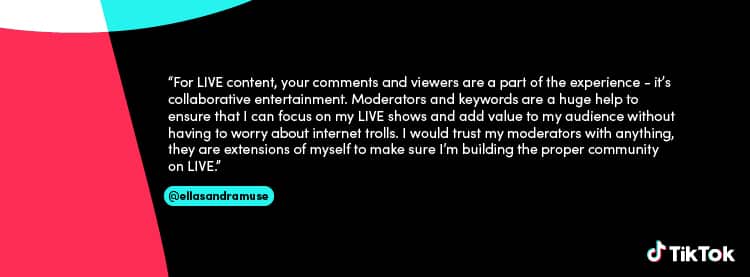
Creators seem to be embracing the new changes adding “Moderators and keywords are a huge help to ensure that I can focus on my LIVE shows… without having to worry about internet trolls.”

Application Software
Bytedance

The post 3 new TikTok LIVE features, updates, and policies appeared first on Search Engine Land.

Original source: https://searchengineland.com/3-new-tiktok-live-features-updates-and-policies-388779

3 new YouTube streaming, shopping, and audio features

YouTube has just announced three new features for advertisers to reach people where and when they’re watching the most. The three new features are spread across shopping, audio, and streaming in what YouTube calls the YouTube Effect (the unique dynamic between YouTube creators and viewers).

Moment Blast

Moment Blast gives advertisers prime positioning on YouTube Select content on connected TVs (CTV) and other devices, plus a Branded Title Card and optional Masthead placement.

Moment Blast is intended for brands looking to raise awareness during key moments, like major sporting events, movie releases or product launches.

In the announcement, YouTube says “People have always connected in front of the TV screen, but YouTube gives them the unique chance to bond over shared passions — like watching live-streamed concerts, fitness classes or even religious ceremonies together. They feel a similar connection to the ads they get, too.” YouTube also says 59% of respondents in a survey feel that ads they see on YouTube are more relevant than on linear TV or other streaming apps.

This seems like an obvious statistic since linear TV doesn’t use the same targeting options as Google/YouTube. Additionally, many advertisers and brands haven’t quite adopted using CTV as a reliable, cost-effective advertising method.

Additionally, YouTube’s claim that viewers feel a similar shared connection to ads sounds like a stretch.


Get the daily newsletter search marketers rely on.

<input type="hidden" name="utmMedium" value="” />
<input type="hidden" name="utmCampaign" value="” />
<input type="hidden" name="utmSource" value="” />
<input type="hidden" name="utmContent" value="” />
<input type="hidden" name="pageLink" value="” />
<input type="hidden" name="ipAddress" value="” />

Processing…Please wait.

function getCookie(cname) {
let name = cname + “=”;
let decodedCookie = decodeURIComponent(document.cookie);
let ca = decodedCookie.split(‘;’);
for(let i = 0; i <ca.length; i++) {
let c = ca[i];
while (c.charAt(0) == ' ') {
c = c.substring(1);
}
if (c.indexOf(name) == 0) {
return c.substring(name.length, c.length);
}
}
return "";
}
document.getElementById('munchkinCookieInline').value = getCookie('_mkto_trk');


Expanded product feeds for Discovery Ads

YouTube will be expanding product feeds to Discovery ads to help advertisers scale their social media creative and reach more engaged viewers. Soon, product feeds will also include local offers, allowing brands to show real-time availability for products in their Google Merchant Center so people can find the most convenient place to buy.

Creators will also be able to transform their content into virtual storefronts. Additionally, more creators will have the ability to tag products in their videos and Shorts.

These features will be available on November 10.

Reach music and podcast listeners

Audio ads are now globally available to buy in Google Ads and Display & Video 360. Audio ads are designed to reach people on audio surfaces and in listening-first states.

Podcast targeting is also now available globally. “With Podcast targeting, brands and agencies can specifically reach podcast listeners.”

Dig deeper. Read the announcement from Google here.

Why we care. These new features will give brands and advertisers new ways to reach audiences that are engaged with their content, as well as additional mediums to test such as audio ads.

The post 3 new YouTube streaming, shopping, and audio features appeared first on Search Engine Land.

Original source: https://searchengineland.com/3-new-youtube-streaming-shopping-and-audio-features-388783

What Can Legal Firms Gain from an SEO Game Plan?

Home Business Magazine Online

In the digital age, it’s not always easy to stay visible, relevant, and one step ahead of your competitors. This is especially true in the case of legal firms, which have to contend with earning the trust of uncertain clients and managing their brand images at the same time. For a legal firm, SEO is an essential component of any reputable company’s marketing strategy. However, what are the gains that come from implementing this innovative SEO game plan? 

Credibility 

When potential clients require legal advice or representation, they’ll most likely search for legal firms within their local areas, or legal firms with expertise in the specific issues they’re experiencing.

Either way, your business can situate itself alongside those all-important keywords and be the first thing the client sees on a search engine. In a matter of seconds, your firm has already earned the kind of credibility that other legal firms can take years to accumulate.

The Right Kind of Enquiries

Time is precious in legal matters, and firms can benefit from less wasted hours and more time spent with the right kind of clients due to the accuracy of these keywords. This highly effective SEO method helps to streamline the entire customer and client dynamic for the benefit of all parties involved.

A Rock-Solid Reputation 

Remember that Google’s goal is to provide people with the most accurate and useful results possible based on what they’ve searched for online. In addition, by connecting more clients with your firm for the right reasons, more clients will be satisfied by your legal firm’s ability to resolve their issues and support them.

The more satisfied clients you have, the better your reputation will be, leading to even more enquiries based on your solid reputation alone. 

A Deeper Level of Trust with Your Clients

Miscommunication can be the kiss of death in marketing. However, with the right keywords to attract the clientele you desire, you gain access to the emotional mindsets of the people you’re hoping to attract, and therefore, the means to communicate with them on a far deeper level.

You’ll then be able to craft blogs, ads, social media posts, and more around these concerns, and more importantly — solve them! If you do this well enough, you’ll have established your legal firm as a thought leader that offers solutions.

Standing Out Through Insightful Content 

Finally, through that insightful content that solves issues and provides a service to potential clients, you’ll have cultivated a cohesive content strategy that captures the attention of clients, immediately reassures them, and guides them toward giving you their business. While your competitors are still looking for ways to attract clients, you’ll be one step ahead of them every time.

Last Comments

As you can see, an SEO game plan is more than just a way of getting more eyes on your legal firm. It’s a self-sustaining strategy that helps to develop long-term relationships, bolster your brand’s image, and unify them all under one umbrella. Can you really afford to miss out on the chance to accomplish these things organically?

The post What Can Legal Firms Gain from an SEO Game Plan? appeared first on Home Business Magazine.

Original source: https://homebusinessmag.com/businesses/seo/legal-firms-gain-seo-game-plan/

Google replaces its Webmaster Guidelines with Google Search Essentials

20 years is a long time, especially in internet days and that is how old the original Google Webmaster Guidelines are. Google has done a major refresh of those Webmaster Guidelines today, and with that, also renamed it to Google Search Essentials.

Why the change. Outside of it being two decades old, Google said “a lot has changed since 2002” with the internet and Google Search in general. The updated guidelines are streamlined, simplified, and have been updated “to ensure people have clear guidance for how to build sites that serve people well,” a Google spokesperson told Search Engine Land. Google also told us the “goal is to make this guidance useful and easier to understand and to help site owners focus on things that matter for your site.”

What changed. Yes, while Google has made many updates over the years to the old Google Webmaster Guidelines, Google decided it was time for a major refresh. Here is an overview of what has changed.

  • Name change: From Google Webmaster Guidelines to Google Search Essentials, because, well, Google doesn’t think webmaster is a term used much these days and/or it is too narrowly focused. This is similar to Google dropped the named Webmaster Tools for Search Console in 2015.
  • Technical requirements: Google has published a new section to help people understand how to publish content in a format that Google Search can index and access that content. 
  • Spam policies: Google has updated its guidance for the Google Search policies against spam, “to help site owners avoid creating content that isn’t helpful for people using Search,” Google said. Note that most of the content in these spam policies has already existed on Google Search Central, Google did however make a few additions to provide clearer guidance and concrete examples for issues like deceptive behavior, link spam, online harassment, and scam and fraud, the company told us.
  • Key best practices: Google has also published new guidance with key best practices that people can consider when creating sites, to create content that serves people and will help a site be more easily found through Google Search. 

Other changes include organizing the content in a more logical structure and consolidating similar pages. Google did explain that generally, they haven’t changed the content much in those areas.

Google also documented more changes here, writing:

Why we care. The Webmaster Guidelines has been the go-to resource for SEO best practices in Google Search for the past two decades. Changing the name and updating this resource is a big deal for many SEOs.

SEOs, webmasters (we should not use that word), site owners, publishers, and anyone who owns or manages a website should review the new Google Search Essentials.

The post Google replaces its Webmaster Guidelines with Google Search Essentials appeared first on Search Engine Land.

Original source: https://searchengineland.com/google-replaces-its-webmaster-guidelines-with-google-search-essentials-388676

4 advanced ways you’re not measuring SEO effectiveness – yet

In 4 smarter ways to measure SEO effectiveness, I analyzed four fairly boilerplate SEO metrics (traffic, rankings, conversions, links) and detailed ways to apply an additional layer of rigor to each to improve your analytical insights.

In this article, I’m going to take it up a notch to introduce four new methods of gauging the value of your SEO campaigns. They are:

  • Brand vs. non-brand clicks.
  • SEO’s impact on other channels.
  • SEO CAC (customer acquisition cost).
  • SEO keyword performance (we’re bringing it back!).

While some of these are more directional than others, I’ve found each to be a highly effective way of quantifying the impact of my team’s SEO efforts for our clients. (If you’re in-house, they play well with executives looking to gauge your team’s value.)

1. Brand vs. non-brand clicks

Why is this segmentation important? A couple of reasons.

First, brand traffic indicates a level of awareness and intent that means these users aren’t net-new.

They may have become aware of your brand through earlier SEO searches, but you won’t have a chance to connect those dots without segmenting the data. 

There’s obviously value in brand traffic, particularly when you start getting traffic on {brand + product} or {brand + service} queries. 

But the exact value may differ from bringing net-new users into your system, particularly if you’re using first-touch attribution.

The other reason is that in certain industries (particularly SaaS), a decent chunk of brand traffic comes from customers using Google to find your site so they can log back in. This absolutely affects the aggregate value of brand searches.

All that said, I use Google Search Console to get insight into brand vs. non-brand searches. 

You could use Ahrefs or Semrush to do the same thing, but I prefer GSC (although the UI isn’t as snazzy) because all the data is coming directly from Google. 

Even though it’s only a data sample, I contend that it’s more accurate than third-party tools, and the best organic measurement tries to reduce ambiguity as much as possible.

Of course, because it’s just giving you a sample, GSC isn’t perfect, and I’m clear with my clients about that. 

When we’re all on the same page about it being the best option for measuring brand vs. non-brand traffic, I:

  • Export the keyword data (a subset of the total traffic) from GSC within a date range.
  • Remove/filter any keywords that mention the brand.
  • Calculate the percentage of non-brand vs. brand keyword data. 

Here’s what that looks like:

Brand vs. non-brand clicks

Once you have several months’ worth of this data, you get a good layer of visibility into exact non-brand and brand trends.

2. SEO’s impact on other channels

While SEO can obviously lead directly to conversions (as I’ll discuss more in a minute), much of its value comes from up-funnel engagements. 

It’s extremely common for good SEO campaigns to introduce users to – and educate them about – brands and products/services, only to have users convert on other, more transaction-focused channels.

So what’s the value of those engagements? 

How do we measure SEO’s impact on downstream metrics?

On a macro level, one of the things I look at over time is whether there’s any correlation between increased SEO traffic and lower customer acquisition cost (CAC) on other channels. 

If SEO engagement is growing a lot, and performance marketing is becoming more efficient, that’s a signal to dig into your traffic mix and close/sales mix to see exactly:

  • Where leads are coming from.
  • Which channels are bringing in leads with a good close rate.

One of the most promising features of GA4, which I’ve been playing with a ton recently, is that once you set up events/conversions, there’s an attribution model that shows multi-touch attribution so you can get a direct measurement of touchpoints in a conversion channel. 

That’s a huge boost to a more nuanced measurement of SEO’s value if you’re tying back engagements to conversions. The report looks like this:

Google Analytics 4 attribution example.

To round out the picture with less scientific, more quantifiable data, make sure your sales reps are asking leads where or how they’ve heard of you.

You can get good data and insight into how SEO is related to other channels – whether you’re at an enterprise company with scale that shows you macro trends or you’re at an SMB where one SEO-related conversion can really change the performance picture. 


Get the daily newsletter search marketers rely on.

<input type="hidden" name="utmMedium" value="” />
<input type="hidden" name="utmCampaign" value="” />
<input type="hidden" name="utmSource" value="” />
<input type="hidden" name="utmContent" value="” />
<input type="hidden" name="pageLink" value="” />
<input type="hidden" name="ipAddress" value="” />

Processing…Please wait.

function getCookie(cname) {
let name = cname + “=”;
let decodedCookie = decodeURIComponent(document.cookie);
let ca = decodedCookie.split(‘;’);
for(let i = 0; i <ca.length; i++) {
let c = ca[i];
while (c.charAt(0) == ' ') {
c = c.substring(1);
}
if (c.indexOf(name) == 0) {
return c.substring(name.length, c.length);
}
}
return "";
}
document.getElementById('munchkinCookieInline').value = getCookie('_mkto_trk');


3. SEO customer acquisition cost

One of my favorite metrics to calculate is SEO customer acquisition cost (CAC). 

I’ve heard fairly frequently over the years that SEO fees are high – especially in times of disruption. But if you can put the ROI of SEO in front of the people holding the budgets, you’ll likely be in good shape.

First, pick a set-up (GA4, Looker, Mixpanel, etc.) that enables you to track engagements. 

Choose an attribution model and create a channel report to track signups, leads, demo requests, etc. (or product views, add to carts, conversions, etc. if you’re in ecommerce). 

Ultimately, you’re looking to ascribe a raw number of events with attributed value back to your SEO campaigns.

Next, look at your SEO costs per month. These generally boil down to agency fees and/or in-house resources, plus any tech stack costs. 

Apply those costs to find how much you pay to get these users (and events). 

For example, if you pay a full-service SEO agency $10,000 a month to run SEO and write content, and the SEO channel delivered 200 last-click signups in that month, you could report a simplified $50 CAC for SEO. 

With metrics like that, odds are you’ll be able to show a great return on spend that you can line up against CPC from paid channels. 

Additionally, you can compare this CAC number to an LTV data point to really see the value. 

If the LTV of your customer is greater than the SEO CAC, you are moving in the right direction for showing SEO as a profitable marketing channel.  

You don’t need to re-invent reporting for SEO, but compare apples to apples if parties are using performance data as a comparison.

4. SEO keyword performance

SEO long-timers will remember with fondness the days before 2011 when Google started replacing valuable keyword-level data with “keyword not provided.” 

It’s a lot harder to pinpoint and quantify exact keyword performance and value, but you can put together some pieces to get close.

Understanding the play between SEO and paid search is really crucial and helps address the question of how to ascribe sign-ups to specific keywords if all you can do is find traffic in GSC.

Paid search provides accurate, to-the-minute keyword data. 

If you’re targeting the same keywords in both paid and organic search, you can take the rough conversion percentage from paid search and extrapolate the value of organic engagement.

Even if you’re not able to access paid search data, there are scenarios where you can ascribe value. 

Let’s say you build a “program features” page for a SaaS product that’s ranking on page one for a long-tail non-brand term. 

You can look at how people are converting on that page (GA4, Looker, Mixpanel) and triangulate how that keyword is doing.

So if 80% of that traffic on the page is from the long-tail keyword (which you can find in GSC), you can say there’s a high likelihood that they’re converting from that keyword.

Are these methods exact? No. 

Are they directionally useful? Yes.

Conclusion

GA4 advancements aside, SEO measurement is an exercise in imperfection.

That doesn’t mean you should settle for the basic units of measurement you can get from Google or third-party platforms. 

Be clear with the powers that be about how you’re getting your numbers and that they’re directional, not 100% accurate.

Flex your analytical muscles to dig a little deeper to understand how your efforts are driving actual business outcomes. 

Measuring SEO impact beyond basic traffic and keyword ranking is hard. 

This is why real SEO business insight is so valuable in helping execs and decision-makers gauge its standing in the marketing mix.

The post 4 advanced ways you’re not measuring SEO effectiveness – yet appeared first on Search Engine Land.

Original source: https://searchengineland.com/measure-seo-effectiveness-advanced-388666