Linda Yaccarino today became Twitter CEO – and she’s got some hard work ahead of her. That’s because Twitter’s advertising revenue has declined 59% year on year, according to an internal presentation acquired by The New York Times.
Despite Elon Musk’s recent optimism about Twitter’s advertising progress, stating that “almost all advertisers have returned” and predicting profitability for the platform, the situation remains uncertain.
Something doesn’t add up. During the five weeks from April 1 to the first week of May, Twitter’s U.S. advertising revenue was $88 million. Twitter frequently fell short of its weekly sales forecasts, sometimes by as much as 30%, The Times reported.
Why advertisers are fleeing. A surge in hate speech and explicit content, along with an increase in advertisements for online gambling and marijuana products, caused concern.
Twitter’s U.S. ad revenue is projected to drop by at least 56% each week compared to the previous year, according to the internal document.
Twitter’s advertising sector is crucial to its success and value, accounting for 90% of its revenue.
When he acquired Twitter for $44 billion in October and privatized the company, Musk pledged to create “the most respected ad platform.” However, he soon strained relationships with advertisers by terminating key sales executives, promoting a conspiracy theory on the platform and reinstating previously banned Twitter users.
How brands reacted. Several major ad agencies and brands, including General Motors and Volkswagen, suspended their Twitter ad investments. Musk had projected that Twitter’s revenue for 2023 will reach $3 billion, a reduction from $5.1 billion in 2021 when Twitter was a publicly-traded company.
Several of Twitter’s major advertisers, such as Apple, Amazon, and Disney, have reportedly reduced their spending on the platform compared to the previous year, according to three former and current Twitter employees. They also noted that high-value banner ads on Twitter’s trends page, typically purchased by large brands for promotional purposes, are frequently remaining unsold.
Twitter has faced public relations issues with major advertisers, including Disney. In April, Twitter mistakenly gave a gold checkmark, indicating a paying advertiser, to an unaffiliated account called @DisneyJuniorUK. The account then posted offensive content, causing Disney to demand an explanation and assurances from Twitter to prevent such errors in the future.
Why we care. Despite its challenges, Twitter is still a powerful platform that reaches a vast, global audience. The platform still has a user base of millions who engage daily, offering unique opportunities for brand visibility and interaction.
Changes are starting. Yaccarino, the NBCUniversal executive recently appointed as Twitter’s CEO by Musk, is inheriting several challenges. She has taken over as CEO today – weeks earlier than expected, BBC reported.
Damage done? The new leadership under Yaccarino could signal upcoming changes in their approach to problematic content, potentially improving the advertising environment. Twitter has also added Joe Benarroch, formerly NBCUniversal’s senior vice president of communications, advertising and partnerships.
Advertisers should watch Twitter’s changes, as it may continue to be a potential key player in digital marketing strategies.
Father’s Day is almost here ᅠJune 18, 2023! Looking for last minute gifts (that he gets to choose)? Then Sugarwish has just the gift! This one-of-a-kind gift that can be sent via TEXT is next level gifting at its best! The ol’ saying that “the best way to a man’s heart is through his tummy” couldn’t be more true by gifting him with the Father’s Day Sugarwish Gift!
He gets to choose Candy, Cookies, Snacks, Coffee and Tea, Wine, and Wine Tastings* and then pick his favorites from that category!
You can send these gifts instantly (or schedule for any day you choose) via text or email.
Gifts start at $25 shipped.
For More information, on last minute Father’s Day Gifts that deliver, visit Sugarwish.com (also affiliate friendly via ShareASale). Also check out other gifts for dad here .
Separated Feed and Stories into two separate sections.
Put a heavier emphasis on following its Recommendation and Community guidelines.
Added a section called Personalize your Feed and Stories, adding new tips on how to personalize Feed and Stories.
Expanded its discussion around Shadowbanning.
Instagram uses multiple algorithm
Instagram doesn’t use one algorithm to rank content. Multiple algorithms, classifiers and processes – each serving a specific purpose – determine what Instagram users see.
Instagram ranks content differently in different parts of the app (e.g., Feed, Stories, Explore, Reels and Search).
How Instagram ranks Feed
Instagram’s Feed is a mix of content from accounts that a user follows, recommended content and ads. There is also a mix of formats – videos, images and carousels.
Instagram said Feed ranking takes thousands of signals into account. The signals Instagram discussed all fall into three big buckets – the user, the creator and the post.
User signals:
Engagements – likes, shares, saves, comments and time spent interacting with a post.
Accounts the user has recently followed.
Accounts a user has recently liked or engaged with.
Format preference (e.g., Instagram will show more images if you engage more with images vs. videos or other formats).
History of interacting with another account.
Recent posts shared by the accounts a user follows.
Posts from accounts users doesn’t already follow that Instagram thinks they might be interested in. As Instagram explained:
“These are educated guesses at how likely you are to interact with a post in different ways. There are roughly a dozen of these. In Feed, the five interactions we look at most closely are how likely you are to spend a few seconds on a post, comment on it, like it, share it, and tap on the profile photo.”
Account preferences.
Creator signals:
Information about the post creator.
How many times people have interacted with that person in the past few weeks.
Instagram also tries to avoid showing too many of these in a row:
Posts from the same person.
Suggested posts.
How Instagram ranks Stories
The “input signals” Instagram looks at for Stories include:
Shared by accounts you follow (that don’t violate Instagram’s Community Guidelines).
Viewing history (how often a user views an account’s stories).
Engagement history (how often a user engages with an account’s stories – eg., a like or a DM).
Closeness (a user’s relationship with the creator and how likely they are to be connected as friends or family).
How Instagram ranks Explore
Explore is where Instagram recommends images and videos from accounts a user doesn’t follow. Ranking in Explore is similar to ranking of Feed and Stories.
Instagram looks at:
A user’s past Instagram activity (e.g., post likes, saves, shares and comments).
A user’s past Explore activity (posts a user has liked, saved, shared or commented on; how the user has interacted with posts in Explore).
Post information (how many and how quickly other users like, comment, share and save a post). Instagram said “these signals matter much more in Explore than they do in Feed or in Stories.
The user’s history of Interactions with an account.
Creator information (e.g., the number of times users have interacted with that creator in the past few weeks).
User activity (Reels a user has liked, saved, reshared, commented on, or engaged with).
The user’s history of Interactions with an account.
Reel information (e.g., popularity, the audio track, visuals in the video).
Creator information (popularity signals include number of followers, engagement level).
Reels can be less visible if they are:
Low-resolution.
Watermarked.
Muted or containing borders.
Mostly text.
Focused on political issues.
Previously posted on Instagram.
How Instagram Search works
Not mentioned in Instagram’s newest resource was how the Instagram search algorithm works. However, Instagram did that in a 2021 post, Breaking Down How Instagram Search Works.
What signals matter in Instagram Search:
The query. Instagram tries to match that to relevant usernames, bios, captions, hashtags and places.
User activity. Accounts a user follows, posts they’ve viewed and how often they have interacted with an account in the past. Instagram more often shows accounts and hashtags that a user follows or visits.
Popularity signals. The number of clicks, likes, shares and follows for accounts, hashtags and places.
Instagram’s SEO advice:
Choose an Instagram handle or profile name that’s related to the content of your posts.
Include relevant keywords and locations in your bio.
Use relevant keywords and hashtags in your captions.
Did you know that you can create content for every stage of the buyer’s journey?
This is how you ensure content creation is never a guessing game.
Your content can reach and impact your ideal customer whether they just discovered your brand through your blog or are stuck on your product/service page weighing a purchase – and every stage between those two bookends.
Every piece of content you publish can be a powerful motivator and educator that speaks to the heart of your prospect.
Every blog, article, ebook, case study, landing page, infographic, video – you name it – can work hard to connect with your audience at the right place and time.
The key to ensuring this happens?
Content mapping.
What is a content map?
A content map is a plan that details how your business will deliver content to your ideal customers no matter where they find themselves in the typical buyer’s journey.
In other words, a content map plots out exactly how your content will reach your audience at the right time and place.
It also shows you how to personalize your content for your specific personas along their buying journey.
Content mapping is the process of creating your content map – the plan that outlines your ideal audience, the actions they may take at each buying stage, and how your content aligns with these things to nurture them toward an ultimate goal.
The ultimate goal of content mapping depends on your business goals. However, the large overarching goal of this endeavor is to create a personalized content experience for your audience.
Ultimately, a content map helps you plan how you’ll support, nurture, engage, and draw in potential customers no matter where they are in their buying journey.
Why should you do content mapping?
Content mapping is vital to ensure your content marketing is robust and evenly spread across the customer experience.
It’s not just good for your business but also for your customers. Let’s dig into the benefits a bit more.
Create more relevant content for each buying stage
A good content marketing strategy will help you create targeted content to nurture an audience.
A great content marketing strategy, one that includes content mapping, will help you create targeted content to nurture that audience at every stage of the buying journey.
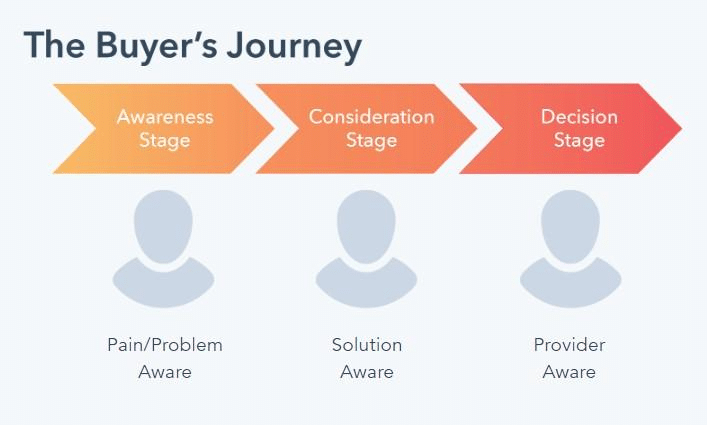
Remember, the buyer’s journey is the process of research your buyer undertakes as they become aware of a problem, consider their options, and ultimately make a decision on what to do about it.
Buyers don’t randomly decide to buy something – they come to that decision through a range of circumstances and actions. That’s the buyer’s journey.
Source: HubSpot
With content mapping, you ensure that you’re not neglecting your potential customer as they move forward on the path to purchasing.
For example, if you have tons of blogs created for the awareness stage but none for the consideration stage, some of the leads you attracted to your brand initially might fall into that gap. You helped them define and understand their problem, but you didn’t show them how they could solve it or achieve their goals.
Another brand with consideration content could swoop in here, picking up where you left off. Now you’ve lost a potential customer.
In contrast, a content map helps you stay with that customer until they’re hovering over the “purchase” button in your website’s shopping cart. In fact, it probably helped get them to that point!
That’s powerful beyond belief.
Get more returns from each content piece
Content mapping also helps you identify a solid purpose behind each content piece you publish.
You’ll create each one with a specific intent that matches up with your goals, the target audience’s needs, and the buying stage they’re in.
That makes each piece pull its weight so much more.
It’s a stark contrast between:
Hitting “publish” and praying the content helps your business in some way.
Or hitting “publish” and knowing exactly what that piece has the potential to do, and probably will do, in terms of results.
Get more engaged, invested, loyal customers
When you provide great content at every stage of your buyers’ journeys, what do you think will happen?
The engagement, connection, and affinity you build will lead to equally engaged, invested customers.
Deliver a great product or service at the end of all that, and you’ll hook them utterly and completely.
This is how you create brand ambassadors. Raving fans. Delighted customers.
Ultimately, the point of content mapping is to ensure you’re helping your prospects at every step along the way. That amount of personalization and care is naturally going to produce customers who are wild about you.
Get the daily newsletter search marketers rely on.
function getCookie(cname) {
let name = cname + “=”;
let decodedCookie = decodeURIComponent(document.cookie);
let ca = decodedCookie.split(‘;’);
for(let i = 0; i <ca.length; i++) {
let c = ca[i];
while (c.charAt(0) == ' ') {
c = c.substring(1);
}
if (c.indexOf(name) == 0) {
return c.substring(name.length, c.length);
}
}
return "";
}
document.getElementById('munchkinCookieInline').value = getCookie('_mkto_trk');
How to do content mapping
Ready to create a content map?
Before you start, I recommend having a content strategy in place first. Your content strategy will be useful beyond belief because a lot of the work will be done for you – laying out your content goals, researching your audience, identifying and creating personas, and more.
If you don’t have a content strategy yet, you’ll still learn much from this guide. (It may even spur you on to create one quicker!)
Once your content map is complete, you’ll understand how to map each content piece you create to each stage of the buyer’s journey for your particular audience.
1. Who: Research your audience and create personas
Your target audience is the most important piece of the content mapping puzzle. Without intricate knowledge of them, you’ll be lost.
You need to understand their preferences, behaviors, habits and needs to deliver truly personalized content to them at the right time and place.
How do you build that knowledge? Through audience research.
Audience research
Never guess what your audience is like. Your assumptions can help you at the outset, but you need to test those assumptions and make sure they’re accurate for equally accurate targeting and content mapping.
That’s what audience research is for. There are a few main ways to go about it:
Check data that already exists about your audience in studies, statistics, reports, and surveys. This is helpful if your business is new and you don’t have an established following yet.
Conduct your own surveys, polls, and interviews with your audience. Get data from real customers (if you have them) and also leads, your social media followers, or people who have expressed interest in what you sell.
If you can, focus on getting insights from real people in your orbit. This will make your personas more accurate and more helpful.
Of course, if you already have a content strategy in place, you’re a step ahead. You probably already have done audience research and have one or more personas ready to go that distill that research.
Buyer personas
How do you compile the knowledge you gain through audience research and make it more usable?
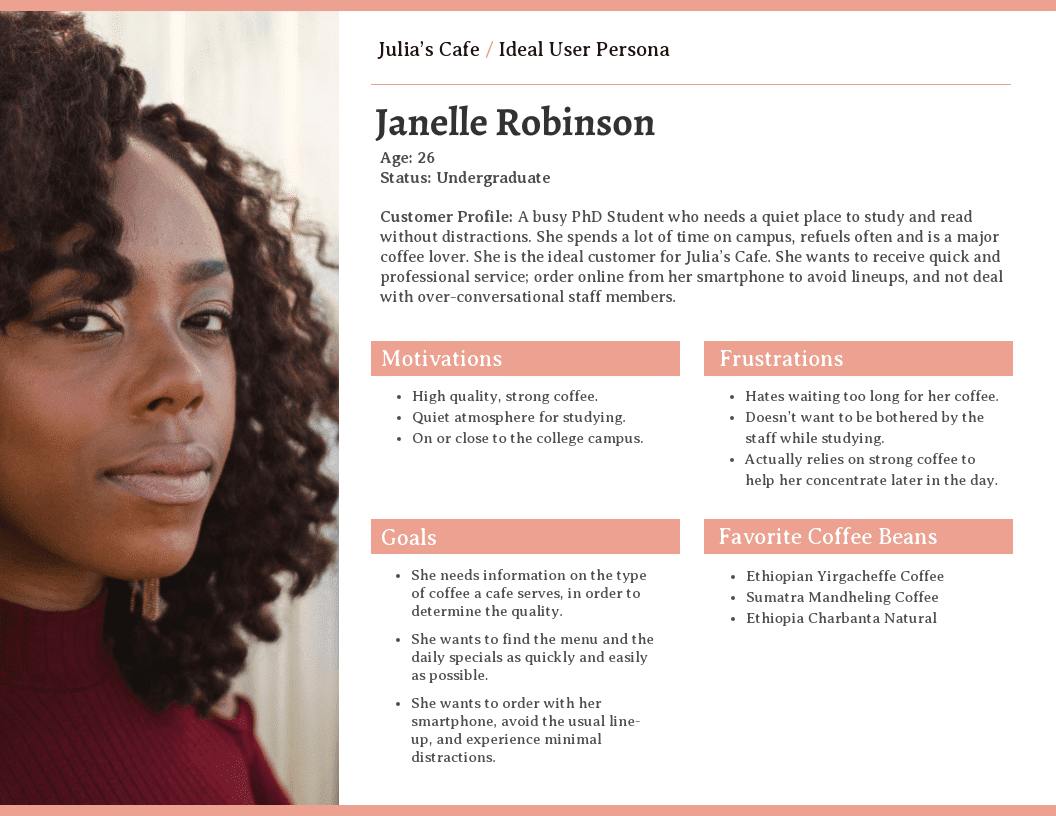
By creating buyer personas: fictional characters or avatars representing real data about your audience. Each persona is a conglomeration of the commonalities among your audience.
Think about it: For most brands, you could probably describe a type of buyer who purchases from them. For example, busy stay-at-home moms who run to Starbucks between school drop-offs, meal prepping, and soccer practices. That, right there, is a buyer persona.
If you have multiple types of ideal customers, create personas for each one so you can map their different buying journeys to your content. For example, Starbucks might add a student persona to their roster or a professional.
2. What: Map out the buying stages of your persona(s)
After your personas are set, you can lay out the common buying stages each persona goes through, including their thoughts, goals, and challenges.
We briefly touched on the stages of the buyer’s journey earlier, but to reiterate, they are:
Awareness: The buyer is aware they have a problem, but they don’t know what it is yet, or they can’t name it specifically. They are experiencing symptoms of a problem.
Consideration: The buyer has pinpointed the problem they’re dealing with. They can name it and define it. Now they’re looking at possible solutions.
Decision: The buyer has decided which solution to use and is comparing the best providers or products that offer that solution.
In each stage, your personas will have different concerns, needs, questions, and goals. Try to pinpoint these for each persona across each buying stage.
For example, let’s return to the persona of the stay-at-home mom. Based on the challenges and goals we know she has from audience research, we can outline possibilities for her buying journey. Here’s just one:
Challenge: She’s struggling to find free time during the day. Goal: She wants to find time to indulge herself.
Awareness: “How do I take time for myself?”
Consideration: “I should schedule a break for myself during the day. What can I do that would relax me?”
Decision: “Getting a delicious coffee drink would help me slow down while I treat myself. Where should I go?”
3. Where/when: Map out content types and topics for each stage of the buyer’s journey
Now that your personas are connected to buying stages, we can look at each stage individually to determine the type of content we can create to help them.
Think about:
How can you address your buyer’s needs and goals at each stage with content?
What keywords might they be using at each stage to research their problem and its solution?
Let’s go through each stage to see the common types of content you can use to target your buyers, whether in Awareness, Consideration, or Decision mode.
Note: Some types of content fit in multiple stages because they help more than one type of buyer.
Awareness content
Awareness content should seek to inform your audience. It should help them identify and understand a problem, why it matters, and/or what they should do next.
Types of content: How-to guides, checklists, infographics, informative blogs, ebooks, and social media posts.
Consideration content should help your audience choose between various options. For example, you could teach them all possible solutions to a problem and compare/contrast them. Or you could educate them about a specific solution and why it’s the best one.
Types of content: how-to guides, product reviews and comparisons, case studies, white papers, tutorials, and webinars.
Decision content is all about convincing your audience that your product or service is the right one for their needs. This is not about sales pitches but more about presenting the value and benefits of what you offer in a way that demonstrates your expertise.
Types of content: product landing pages, testimonials and reviews, case studies, demos, and product features.
4. How: Use your content map to evaluate existing content/plan new content
One of the great things about a content map is that it can help you take a snapshot of all the content you’ve already produced and how each piece helps buyers.
This will help you notice gaps you need to fill – and reach more buyers in a stage you may be inadvertently ignoring.
Categorize old content by which buying stage it helps
First, look at all the content you’ve published and start categorizing it by the buying stage(s) it’s most likely to address.
If the content fits more than one category, choose the category it helps the most.
If the content fits nowhere, add it to a list of possible content pieces to update. You could potentially edit that piece to be more targeted to a specific buying stage.
Brainstorm new content topics using your content map
Once you’ve categorized your old content, you should have a good idea of the holes in your content strategy you need to fill to address different buying stages.
You should focus on filling those holes first. Use your content map to help you.
By now, your content map should have three types of information:
Your buyer personas.
The stages in your buyer journey mapped to content types.
The challenges, goals, and possible actions of each persona during each buying stage.
As you brainstorm new content topics, use your content map to ensure you create personalized, targeted content for every stage of your persona’s buying journey.
Look at your persona and what they need at each stage, including the words they’re using to search for what they need.
Research these needs in a keyword tool to find opportunities for optimizing content.
Use these terms to find related topics you could also address.
Look at the best content types that will help your persona at each stage.
Brainstorm a combination of content topics + formats that will touch your persona at the right time to help them move forward in their journey.
5. Document everything in your content map
A content map should be a physical reference you can refer to during the content creation process.
For that reason, document your content map in a way that’s easy to read and understand. Make sure you can continue adding to it as your content inventory expands, too.
For example, you could create a simple spreadsheet that lists your personas, their challenges and goals at each buying stage, and the types of content you should create to target them. Include both formats and topics.
Source: HubSpot
Start content mapping and create amazing customer experiences that lead to results
Content mapping can seem complicated at the outset.
But if you want to provide your customers with amazing content at every stage of their buying journey, you need a content map.
Learning how to create one is the hard part.
Once you have the strategy down, you’ll use your content map in ways you never imagined to understand your persona better, get major insights about their buying journey, and come up with content that is personalized to a T for their specific needs.
This is as strategic as it gets. But, as we know in content, strategy = results.
If you’ve ever analyzed traffic patterns for a website, you know that organic traffic ebbs and flows over time. Even the most authoritative sites will have older pages that see traffic drops.
With the recent run of algorithm updates, you might have a previously stable site that’s seen more turbulence (and even a longer-term flattening or drop) than it had in years past.
In this article, we’ll walk through steps you can take to reverse organic traffic drops or get your B2B site growing again if traffic has flattened.
Diagnosing organic traffic drops
First, it’s important to understand why you’re losing traffic. This is a good article that goes into greater depth on how to determine the real reason for a traffic drop (or flattening) which may be:
A loss in rank due to algorithm updates.
A drop in impressions due to a change in what’s displayed in search results (such as ads and search features like featured snippets, people also ask, etc.).
A drop in click-through rate due to a mix of the above reasons.
Additionally, you’ll want to dig deeper to see which specific pages are at issue. Identify the time frame you’re looking at:
If you’re seeing a steady decline, note the previous high and where the decline has been.
If traffic is flat, note the period where it plateaued.
From there, you can start to look at date-range comparisons such as:
The period where traffic dropped versus the previous period.
The low versus the previous high if there was a drop.
If traffic is flat: the most recent block of 28 days versus the 28 days where traffic was still growing.
As you dive into these comparisons, just be conscious of any seasonality and day-of-week differences that may mean your comparisons would be apples to oranges.
Once you know which date ranges you want to compare, you can start to see the pages that have lost the most traffic. You can do this in Google Search Console by clicking on date:
Then selecting compare and the date range you want to compare:
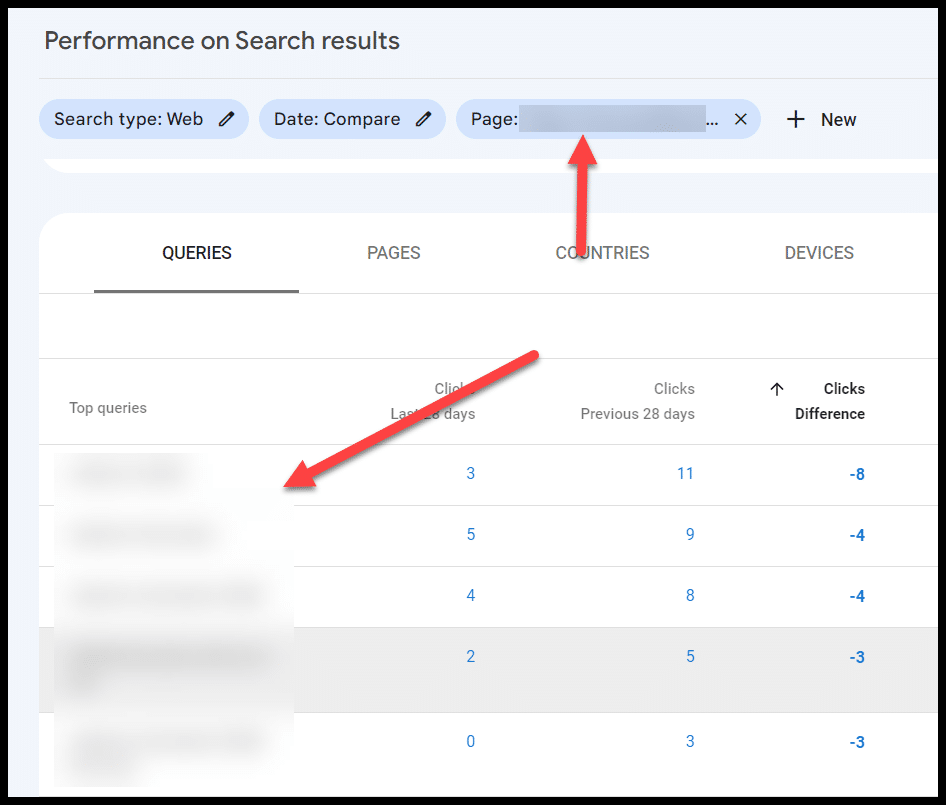
Once you do this, you can then click pages and sort the data by click difference to see pages that have lost traffic (even if traffic has been flat, you’ll likely have pages that have lost traffic – on an older site with a lot of traffic that is publishing new content, this is likely where your “traffic leak” is coming from):
Getting to the why: What’s changed?
Once you determine the pages that are losing traffic and that they are, in fact, losing rank (and aren’t just a victim of SERP changes), there are a number of steps you can take for each page that’s seen a drop to help regain traffic.
The first step is understanding why. To do this:
Identify the terms that have lost traffic on a page.
Go look at that SERP.
From your list of pages with the biggest page drop in GSC, you can then click the page (which creates a filter for that URL) and look at the queries, sorting by click difference in the same way you did for top pages:
You can then go look at the search results for those queries where you lost traffic. A few things may be true:
More authoritative sites may be ranking.
Google’s perceived search intent for that result may have changed (e.g., you may have had a large guide to restaurant marketing that ranked for the query, but now many of the results are “restaurant marketing ideas” list-style responses), and your page is no longer a good match for that intent.
More specific content may now be ranking for a query where your broader page used to rank (e.g., your restaurant marketing guide used to rank well for Google Ads campaigns for restaurants, but now the SERP is full of guides that cover that topic exclusively).
You may have the intent matched perfectly, but there may now be a flood of competitors creating pages on the same topic, and your content (which might have been the only show in town a year or two ago) may no longer be up to snuff
This is a good jumping-off point as it gives you direction on what to prioritize as you’re updating content that’s lost traffic. A good process to work through here is to:
Export the pages that have lost the most traffic (ideally looking at a few different angles in terms of date ranges).
Note the traffic drop as well as the queries that lost traffic and what you found when you inspected the SERP (why did your pages see a drop)
Now you can prioritize these based on pages that saw the biggest drops.
Importantly, if you are seeing drops on a certain content type, you want to do this inspection and update pages that are driving a lot of traffic even if they haven’t been hit yet.
If they are of similar age and content type particularly, it’s likely only a matter of time.
Diagnosing traffic drops isn’t a function that’s specific to B2B sites, but some B2B asset types tend to be particularly vulnerable to traffic drops, specifically:
Technical and trade-specific terms
Frequently, these are pages on your site that haven’t been updated in a long time and/or may be terms that you were early creating content around, but where other sites have created fresher, more thorough assets.
Recurring reports
If you put out an industry survey or “State of X” style report, those are often assets that can take a hit with time.
They often rank for a category or a basket of terms when the asset is initially created.
Then over time, other sites create more specific content that speaks to granular terms, and/or the search intent for the category term is something that shifts (i.e., a what is X page displaces a state of X report page).
Software or tool terms
Again, here assets like buying guides may be displaced with best-of lists (due to searcher intent).
Get the daily newsletter search marketers rely on.
function getCookie(cname) {
let name = cname + “=”;
let decodedCookie = decodeURIComponent(document.cookie);
let ca = decodedCookie.split(‘;’);
for(let i = 0; i <ca.length; i++) {
let c = ca[i];
while (c.charAt(0) == ' ') {
c = c.substring(1);
}
if (c.indexOf(name) == 0) {
return c.substring(name.length, c.length);
}
}
return "";
}
document.getElementById('munchkinCookieInline').value = getCookie('_mkto_trk');
6 steps for updating content that’s lost traffic
Once you’ve identified the specific pages losing content, there are a number of specific steps you can take to help address traffic drops.
1. Address searcher intent
The first step for updating content is to look at the search results.
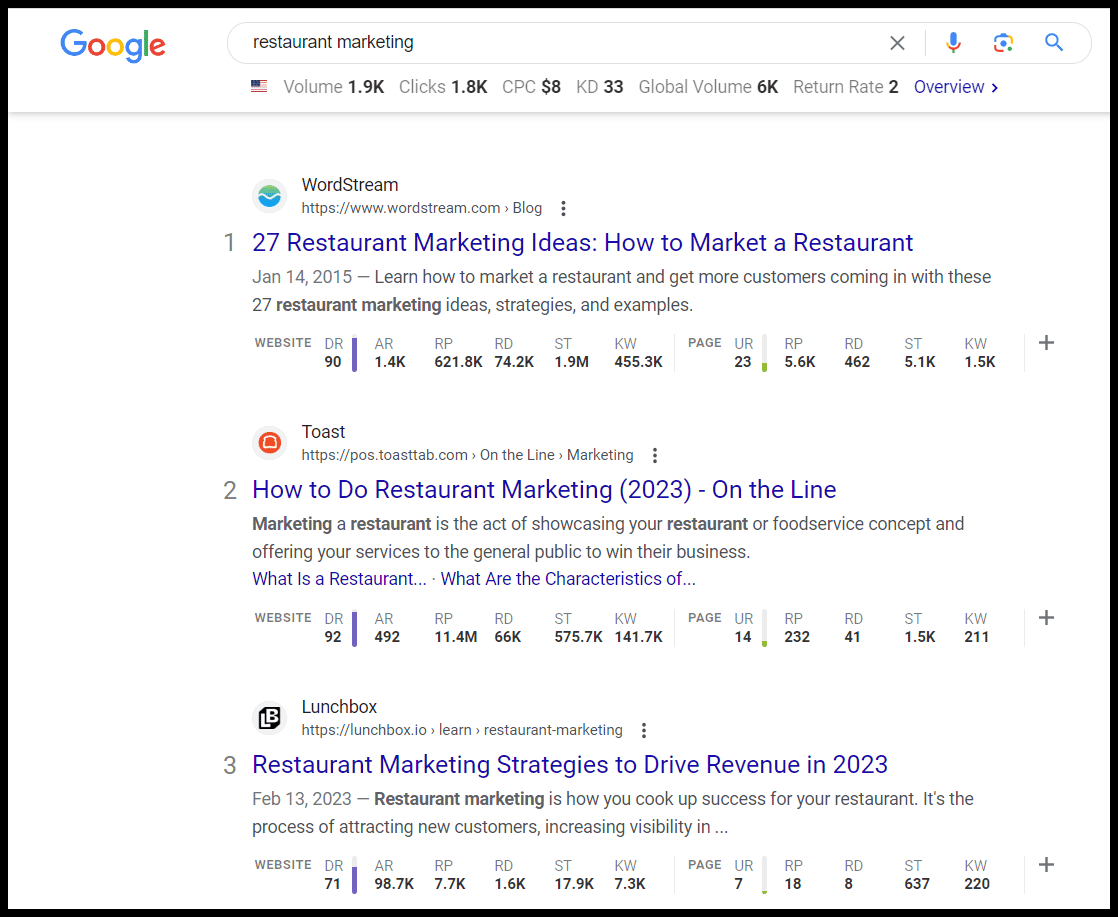
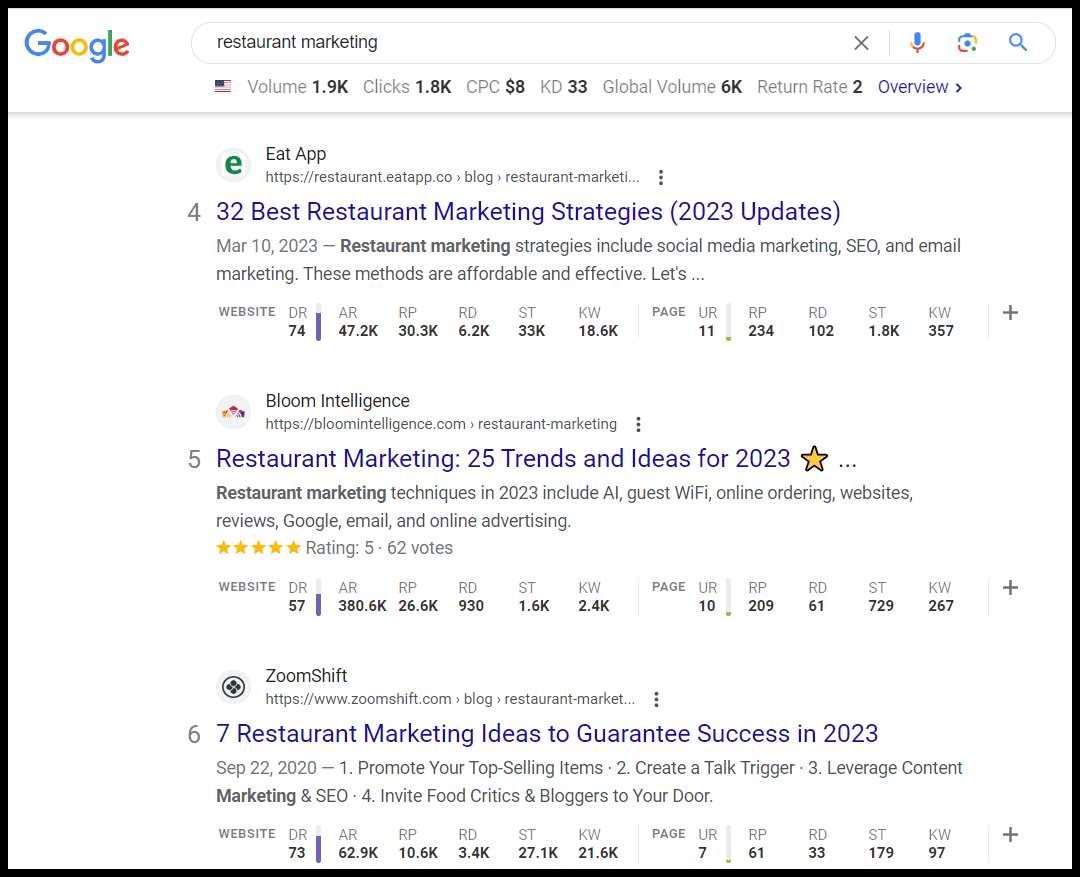
If we had an ultimate guide to restaurant marketing that had lost traffic for that term, we could look to the SERP to see the types of posts that are ranking there currently (the screenshot below is looking at the search results with the Ahrefs Google Chrome plugin enabled):
These are authoritative sites, and there’s also a mix of content types (a list of ideas, how to do restaurant marketing and a list of strategies).
As you continue to scroll down, you also see additional list style formats here:
So looking at reworking this post to be more in line with what’s currently ranking or creating a net-new asset that targets this term with a similar approach is something to consider here.
2. Get to answers more quickly
Along the same lines, if your article “What’s a Successful Restaurant Turnover Rate?” has three paragraphs about what a turnover rate is, the history of turnover rates, etc., before answering the core question you want to pull this up to address the core topic quickly and get the searcher to the information they want.
An obvious best practice for updating old content is updating broken links and refreshing any dated post information.
4. Add relevant subsections and multimedia
Looking for related topics, answering people also ask questions and related questions you can mine from tools like Ahrefs or Also Asked, and topics covered in other pages that are ranking that yours doesn’t have covered are all good ways to update content.
You can also look at the queries losing traffic and consider building new subsections to address these queries.
These updates are also a great opportunity to introduce:
More relevant images (like charts/graphs, useful visualizations that will enhance your post and improve engagement metrics).
Embedding relevant video (whether its video you’ve created, or embedding a relevant video created by someone else)
Embedding relevant social media embeds (even for B2B content there’s often content on platforms like LinkedIn or Twitter that will be relevant and will make your content fresher and more dynamic)
5. Add FAQs
Adding an FAQ section can be a great way to address questions you want to target, and leveraging FAQ schema can significantly impact click-through rates.
This provides you with some additional SERP real estate (particularly if one of the areas that has changed is how prominent your listing is in relation to other listings).
6. Add internal links
Often a post or page that’s lost traction over time has a number of unaddressed opportunities for internal links.
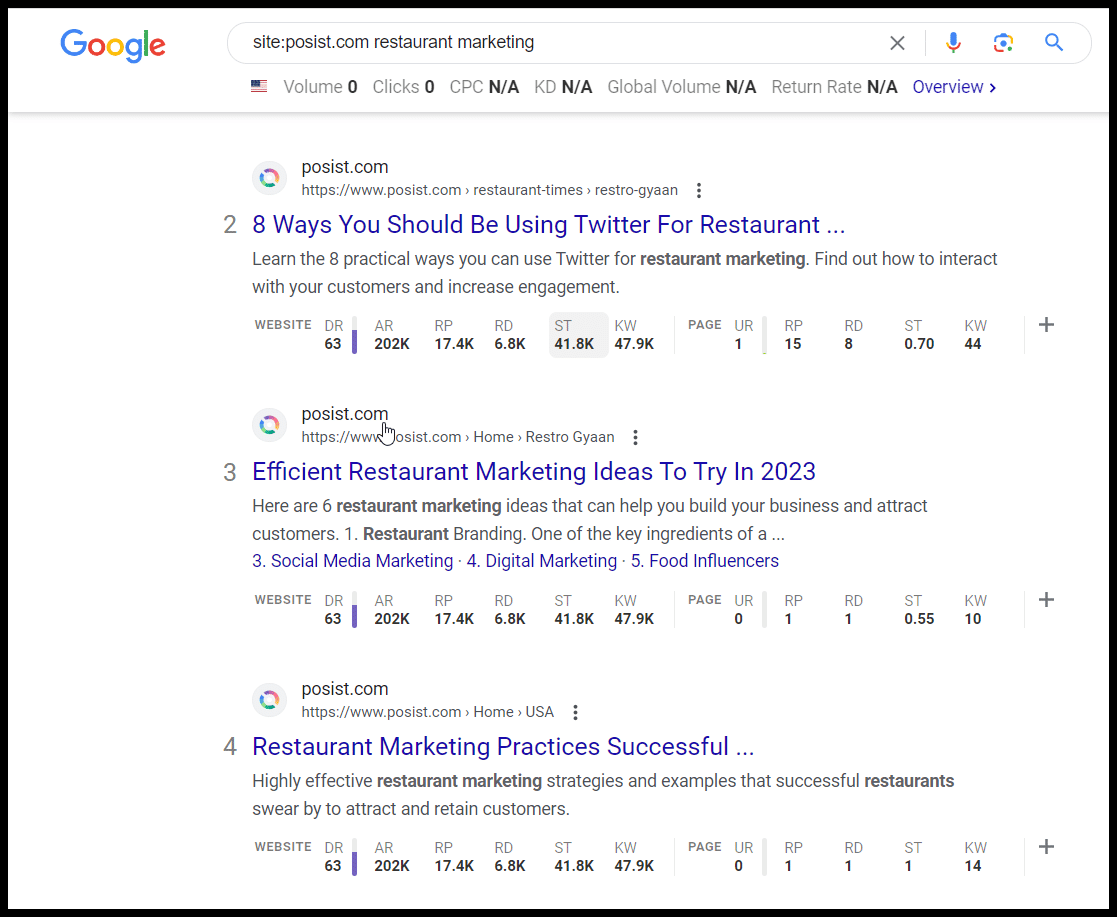
If you don’t have a more thorough process for inventorying internal links, doing a site search for your domain and the target term can be a good quick-and-dirty way to find internal linking targets to add links from for your page:
Note: This is just a random example of a site that has a restaurant marketing guide ranking on the second page. I don’t know if they have or haven’t lost traffic for this phrase or to the guide.
Addressing time stamps
Addressing the time stamps on your pages can be a powerful tactic, particularly in technical niches or just B2B niches where information can become dated quickly. (For instance, where you’re dealing with turnover in terms of models for different equipment, standards for different regulations, etc.)
Particularly, we’ve found transitioning from publish dates to last updated time-stamps on blog posts and being conscious of what date-based information you expose on the page can have a major impact on organic traffic.
Updating title tags
Loking at the SERP for the types of title tags that are ranking, thinking about the query intent, and finding a way to address query intent while standing out in your title tag can also be a difference maker here.
This can be particularly powerful on older posts if you notice that you have been using a specific title tag formula and the click-through rate across a content type has waned or stagnated.
One of the ways to combat decay for specific posts is to build out supporting content around a page that’s lost traffic, developing a more comprehensive topic cluster with more related and supporting content.
Taking an entity-based approach to thinking about how you’ve covered a topic, how it’s linked to and links to related topics, you can use the about and mention tags to highlight entities in your content via schema (more on that in this article).
Similarly, you may consider removing lower quality or irrelevant content (though proceed with caution and be sure not to delete content that’s helping you).
Technical audit and content audit
Keep in mind that all of this assumes you don’t have overarching issues like manual penalties and toxic links, crippling technical issues, or glaring content issues on your site.
If you see site-wide 50%+ dips, you’ll want to look more at a comprehensive technical audit or content audit rather than what’s been outlined above.
Creators earn the most from their brand partnerships on YouTube – more than Instagram and TikTok, according to a new survey.
By the numbers. On YouTube, 6% of creators earned more than $10,001 per month – compared to 3% of Instagram creators and 2% of TikTok creators.
50% of YouTube creators earn more than $500 per month vs. Instagram (40%) and TikTok (36%).
More expensive, but. While it’s more expensive to work with YouTube creators, brands should work with them because the platform has high engagement metrics.
Creators get a 50% engagement rate, on average, which beats all other platforms by far (TikTok and Instagram had a 3% and 2% engagement rate, respectively). Engagement on YouTube was defined as views, likes, comments and shares. Also:
“YouTube’s longer video format allows creators to dive deeper into your products in each video — which is especially helpful if you’re selling products like tech gear or ready-to-build furniture, which may need step-by-step tutorials.”
About the survey. It is a combination of internal data from Aspire, an influencer marketing platform, plus a survey of 1,000 “diverse creators, varying in audience size, main platform of choice, industry, and more.” Most of the creators were U.S.-based.
Go deeper. If you want to learn more about how much to pay influencers, you can download the survey results for free from Aspire.
Creators frustrated with TikTok. Disappointed about how much they were being paid, creators were leaving TikTok claiming mental health blows and burnout, as we reported last year. Some creators claimed they were being paid between $0.02 – $0.03 per 1,000 video views.
Going it alone as a freelancer is a brilliant feeling… until the work seems to dry up or get repetitive. Staying motivated as a freelancer is essential for your business success – but it can take a bit of tough love and discipline to keep going!
Use these strategies to stay motivated and keep pushing your business forward, even when you’re in a bit of a slump. You’ll feel productive even on days without client work AND you’ll get out of the doldrums, too!
One of the most effective ways to find work is through your network. It doesn’t matter if you’ve been freelancing for years or you’re just starting out! Finding an industry group to join will make a difference to your work.
Not only will you earn referrals and hear of job opportunities through your group, but you’ll benefit from ‘shop talk’ with a wide range of people. Freelancers aren’t as competitive with each other as you may initially believe. In fact, they’re a supportive group of people who champion others who’ve taken the freelance leap!
Look for Slack communities, Facebook groups, or LinkedIn groups to start with. Look at your local Chamber of Commerce to find out what they’re doing in terms of virtual meetings. They’re a great way to meet other local business people AND promote your work without being too salesy.
Some groups run webinars, others like a Zoom meeting. Some are continuous chat channels like Slack, that you can dip in and out of depending on how much time you’ve got. Keep regular contact and answer questions as well as asking them. Giving back to the community makes others more receptive to helping you out, too.
Diarise Your Day
Even if your books are bare and there’s no work coming in, spend time planning your day or week in a diary. Stick to your appointments!
Block out times for research, cold pitching, or training webinars. Use the time you’ve got spare to learn more about your industry or how to run your business. These skills come in handy later on, so it all counts as business-related activity even if you feel it’s not earning you money right this moment.
When you’ve got a lot of clients on your plate and you’re juggling tasks, a diary plan helps to break your workload into manageable chunks. Set out blocks of time – say every 60 minutes – and write a schedule for your work. Include time for social media and emails, too! Often, block-checking emails then ignoring them for an hour or two is a great way to improve focus and productivity.
Set Goals
As part of your diary planning, or a larger project, make a list of goals. These could be short-term business goals for the week or month, or longer goals such as what you want to achieve by the end of your first year freelancing.
Having something to focus on and work towards keeps you focused on work and reminds you why you went freelance in the first place. When work is slow, these goals help you decide what you need to do next to get where you want to be – such as taking extra training courses or increasing the number of cold pitches you do each week.
Change Your Workspace
The world is now working from home, it feels – but many have the luxury of returning to an office if they wish. Working as a freelancer at home means you can go a little la-la from staring at the same four walls.
If you’re stuck in a rut, change your workspace. This could mean any number of things: rearrange the furniture in your home office, or move from the sofa to the kitchen table. Perhaps you can take your laptop to the local park for an afternoon of work in the sunshine, or maybe you can visit a friend to work together at their place.
Regular freelancers who don’t have a home office, or like the differentiation of work/home space, find co-working spaces revive their motivation. You get the benefits of going to an office, but for your own business. Look for local workspaces in your area – you can often rent a hotdesk space by the day or week, and some offer free trials to get you started.
Exercise Daily
There’ll be days when you feel like you’re too busy to get some exercise, and other days when your motivation for doing anything except watch Netflix is nil. Don’t let it get to you!
Take time for at least 15 minutes of exercise – even on the days you don’t feel like it. Not only does it get you away from your desk/bed/sofa, but exercise also stimulates mental ability and can help you find inspiration. It also staves off depression – and is something you can do with a friend, to boost your social interactions, too.
Try the NHS quick workouts, pop to the gym to lift some weights, or get out for a brisk walk around the block. Alternatively, start your day with a yoga routine to feel invigorated, or arrange to meet a friend for some tennis or a kickabout in the evening after work.
Exercise doesn’t have to cost you a penny, but it’s essential for keeping you motivated as a freelancer. It helps you find mental clarity, boosts your health so you’re not at risk of taking (unpaid) sick days, and helps relieve strains from poor posture sat at a desk all day.
Get Dressed
Your pyjamas might be the comfiest clothes you own – but it’s not going to put you in a work state of mind!
Every day, get up and get dressed. Even if you’re changing from ‘sleeping PJs’ into what’s officially known as ‘lounge wear’, that act of getting changed into something different helps change your mindset into work mode.
Some people find the simple act of putting shoes on is all it takes to give them confidence for that all-important client call! It can help you feel like you’re a professional at the office (which you are, just at home), and resets your thinking into a business-like attitude.
At the end of the working day, change back into your PJs! This helps signify the end of your work time and start of your wind down evening time.
Make an Appointment Every Day
Treat your working week as if you’re going to the office. Even if you’re a part-time freelancer, use your working days as efficiently as possible.
Avoid losing focus by making sure each work day has at least one appointment in it. This might be calling a potential new client, catching up with an existing one, or attending a training webinar. Just pick something that forces you to get your business head on!
It’s also a good way of making sure you’re moving towards the goals you set. An appointment doesn’t have to be with a client or potential customer. It can be an appointment with yourself! Promise yourself you’ll spend one hour reading about a topic, or that you’ll spend two hours developing your business plan. It puts your business at the forefront of your daily routine – and helps you stay motivated as a freelancer.
Take Regular Breaks
On the flip side, don’t stuff your day with back-to-back calls if you can avoid it! The likelihood is, you chose freelancing to get away from the 9-5 grind and find a flexible way of working that suits you.
The trouble with that – plus the knowledge that you’re responsible for every penny that goes into (or out of) your pocket – it it’s easy to get carried away. You’ll realise you’ve been sat in the same position for hours on end, trying to finish your latest project or sending off ‘just one more pitch’.
Set a timer on your phone to go off every hour. Get up, stretch, make a cup of tea. Spend at least five minutes away from screens in each hour and revive yourself! Take a lunch break, too. Going full force all day long is the guaranteed route to burnout – and no freelancer stayed motivated when that happens!
Use Apps to Improve Your Focus
Sometimes, you can do everything right and yet still find it hard to stay motivated as a freelancer. The world in 2020 is a particularly big challenge: there are many, MANY distractions going on around us and it’s easy to get sucked into a mental wormhole about it all.
If you struggle to stay focused on your work during the day, consider using apps to help. For example, if you know that social media drains your time AND energy, use a blocking app on your computer. Apps like AppBlock let you set the times you are – and aren’t – allowed to access other apps on your phone or desktop.
It means that, even if you’re tempted to check Facebook instead of write that proposal, you physically can’t! You can go one step further with similar apps for things like writing, too: Cold Turkey Writer blocks EVERYTHING until you reach a set goal!
Many freelancers struggle with their focus overall. Staying motivated as a freelancer involves an ability to cut out the distractions – which are often caused by a busy mind and that leads to a lack of sleep! Try apps like Flipd or Calm to help you learn techniques for coping with a busy head. Meditation strategies and even the sound of a crackling fire to lull you to sleep at night can all help you manage your mental focus.
Arrange Social Engagements
Don’t forget to have a life, too! Staying motivated as a freelancer is nigh on impossible if you’re all work and no play. It’s so easy to keep cancelling plans because you want to work on your next pitch, or you’ve got client work you really want to get finished (even if the deadline isn’t until later in the week).
Taking time for yourself to have social interaction is vital to maintaining your motivation during your working day. Set time aside to spend time with your family, and make sure you have at least one full day off every week to do things with your friends, family, or even just some ‘me-time’ that’s away from your desk.
Social interaction is important for your mental health and maintaining your relationships. However, it can also boost your enthusiasm for your freelance work. Taking time away from your computer to do something entirely different gives your brain time to percolate ideas in the background. You’ll return to work revived! Going out to do things, like taking a walk with your family or watching a film with friends, also brings inspiration from other places that you can introduce to your work.
More Freelance Tips
With so many redundancies, reduced hours, and people realising there’s never a ‘perfect’ time to launch their freelance dream, more people than ever are turning to freelance work. That’s why we’ve put together a whole bunch of useful articles about freelancing to help you get started!
The news and contemporary media can be a great source of information on global events, politics, weather and sports. But the mainstream news can often be bias, pushing some happenings more than others, focusing on some topics heavily and neglecting others.
Here at MoneyMagpie, we believe in the importance of sharing the latest that many mainstream outlets may have failed to, or deliberately chose not to, cover.
Every week, we’ll be rounding up some of the top stories that you may have missed.
HR Businesses Partner Wes Griffiths posted the following on LinkedIn just yesterday:
The comments show many other people employees at automotive intelligence firm Wejo were facing the same confusion. After the firm entered a notice to enter administration earlier this week, it appears wages have been recalled after they landed in bank accounts at the end of the month as usual.
Although it seemed to only be banks HSBC and First Direct affected, other high street banks have also started to recall wages. According to Prolific North, several staff suggested they have been forced into unauthorised overdraft or missed payments due to the unexpected withdrawal of funds.
In February of this year, huge fires occurred in East Palestine, Ohio, in the US, after a 38-carriage train carrying chemicals derailed. Five of the cars were carrying vinyl chloride, a substance that becomes hugely toxic when burned.
Clean-up crews were forced to burn more toxic fumes even after the crash to avoid explosions. The crash is thought to have left as many as 45,000 animals dead, and the town’s residents left with respiratory issues and skin irritation.
But now, townsfolk are furious that this was ever allowed to happen, why people are not told of trains carrying dangerous chemicals are passing through their towns, and many suggesting officials are lying about their safety.
News recently broke that in the first instance, frantic members of the public who called emergency services were told by officials not to evacuate. A huge number of people were told the train was simply carrying alcohol – not dangerous gases with links to liver cancer.
The crash site. Source: EPA
According to The Daily Mail, when one grandmother desperately called the fire department, a dispatcher told her: ‘They’re not evacuating anymore, you’re good’. Although some residents very close to the crash site were ordered to evacuate in case of an explosion, those further away were told they were safe.
Greg Mascher, a father who lives close to the chemical spill, wrote a strong opinion piece for The Guardian. “Officials who say we’re safe are lying,” he declares, before outlining his worrying experience. In his piece, he writes that by the next morning after the crash, smog was thick in the air. The day after this, the Enivronmental Protection Agency (EPA) suggested they detected no contaminants in the air.
Despite this statement from the EPA, Mr Mascher said: “My granddaughters had developed blotches all over their bodies. They looked like burns, as if they’d spent too much time next to a sun lamp. My seven-year-old granddaughter’s leg was beet-red. They were coughing and their eyes were burning. I began to experience constant headaches and a nagging cough.”
This whole experience is leading many people, both in Ohio and beyond, were profits put before safety, could this have been avoided, and have people been lied to about the severity of the health implications of such a disaster?
The topic of free speech in the UK has been brought into question, after journalist Kit Klarenberg was detained at London’s Luton airport and questioned for five hours about his work.
According to media outlet The Grayzone, where Mr Klarenberg works, the journalist was also asked about his personal opinion on everything from the current British political leadership to Russia’s invasion of Ukraine.
Kit has previously been vocal about his opinions on censorship and free speech and has made headlines previously due to his exposés on the British government, the CIA and more.
In-play betting, commonly referred to as live betting, has developed into one of the most Live betting, or in-play betting, is one of the most exciting forms of gambling in the UK. This allows users to wager on various athletic events in real time, making it interactive. In-play betting is becoming increasingly popular due to its convenience and excitement.
Real-time sports betting underpins live betting. In-game betting, unlike pre-match betting, lets players take measured risks based on match dynamics. With the capacity to react to game developments, evaluate team or individual performance, and adjust betting strategy, new options arise.
In-play betting adds excitement and interest to UK gamers’ betting experience. Players may watch the game’s ebb and flow, team tactics, and individual performances that can change the outcome. The passive observer gets active.
Benefits and Features of In-play Betting
In-play betting has many benefits and features that make it an attractive choice for UK players.
Ability to make informed decisions based on live match dynamics
Bettors can evaluate the current scenario, keep an eye out for any changes in momentum, and take advantage of good odds for real-time betting rather than exclusively relying on pre-match analysis and predictions.
Wide range of sports and events
There is a wide range of live events to accommodate a wide variety of interests, from well-known sports leagues to smaller competitions. Whether you’re a tennis or a football fan, there are several possibilities available for live betting.
No restrictions of traditional bookmakers
The accessibility and ease of in-play betting have been revolutionized by online betting platforms and smartphone apps. Players are able to wager in real-time from any location at any time with just a few clicks on their cell phones. They can effortlessly follow the action and place bets thanks to this flexibility, whether they’re watching the game at home, in a sports bar, or even in person at the live event.
Understanding In-play Betting Mechanics
It’s crucial to comprehend the game’s mechanics in order to properly appreciate the nuances of the betting. The likelihood of various outcomes varying as the live event goes on. Players can modify their strategies in response to shifting game circumstances thanks to this adaptability. Real-time updates and live data are easily accessible thanks to technological advancements, providing gamers with the knowledge they need to make wise judgements.
Quick thinking and the capacity to effectively analyze match data in real-time are prerequisites for in-game betting. Bettors must remain on top of things by recognising shifts in momentum and taking advantage of constantly shifting betting odds. Players can increase their chances of winning at this thrilling kind of betting by participating actively and making wise choices.
In-play betting success necessitates a well-planned strategy. Finding momentum shifts within a match is one strategy. The momentum of a sporting game can shift from one team or player to another due to its dynamic nature. Bettors can increase their potential returns by identifying these movements and placing appropriate wagers depending on the changing momentum.
Analyzing live match data is a crucial component of in-play betting. Monitoring statistics can give players insightful information about the course of the game, such as possession rates in football or serving percentages in tennis. Bettor’s decisions can be informed by this knowledge, allowing them to profit from new trends or weaknesses in the opposition.
The keys to effective in-play betting are risk management and self-control. Setting boundaries is crucial, both for the distribution of your bankroll and the total number of bets you can make. Bettor bankrolls can be preserved and more thoughtful judgements can be made by exercising control and resisting the urge to place impetuous bets or chase losses.
Exploring Alternatives: Betting Sites Outside of Gamstop
It’s crucial to recognise that Gamstop-excluded betting sites exist. Offshore corporations run these sites, which may not follow UK legislation.
These sites may attract people who want more betting possibilities or greater limits. Before using these sites, be cautious and do your research. Offshore platforms may not protect players or practise responsible gaming.
If you choose to play on betting sites outside of Gamstop, examine reputation, licencing and regulatory information, payment security, and user feedback. Be mindful of the risks of these services, including the absence of legal remedies for disputes or payout concerns.
The Role of Technology in In-play Betting
The Impact of Technology on the UK Betting Industry is very significant. Live broadcasting gives bettors a more thrilling experience. This lets people use their personal observations rather than statistical data to make better decisions.
In-play betting has also changed thanks to mobile betting apps. These apps let bettors follow the action anywhere with a simple interface. Mobile betting apps are accessible from home, a sports bar or the event itself.
In-play bettors rely on data analysis. These tools let bettors make smart judgements with detailed statistics, live updates, and prediction models. Bettors can improve their odds by using these technologies.
Technology raises worries about responsible gambling. Betting alternatives are readily available and may encourage excessive gambling. Operators and bettors must prioritise responsible gambling measures like deposit limits, breaks, and assistance.
In-play betting is thrilling and risky. Impulsivity is a major issue. Live odds change quickly, tempting impulsive bets. Bettors must be disciplined and follow their strategy to avoid rash and uneducated choices.
In-play betting risks chasing losses. Bettors tend to raise stakes when they’re losing to recover quickly. This can cause more losses and financial distress. Managing risks and avoiding emotional betting requires reasonable expectations and a long-term view.
In-play betting concerns integrity and match-fixing. Live events allow unscrupulous people to alter outcomes. Sports organizations, regulators, and betting operators must take strict efforts to avoid and detect suspicious activity. To protect the sport, bettors should report any abnormalities.
Conclusion
Many UK gamblers favor in-play betting for its real-time wagering and dynamic odds. Its popularity and growth are due to the ability to make informed decisions based on live match dynamics, the large selection of sports and events, and technical advancements.
In-play betting must be done properly. Limits, methods, and self-discipline are essential to enjoying and minimizing the hazards of this type of gambling. Bettor’s success can be improved by remaining informed, adjusting to real events, and making strategic decisions.
FAQ
What is in-play betting?
In-play betting, also known as live betting or real-time wagering, is a form of sports betting where wagers are placed on events that are currently in progress. It allows bettors to place bets and adjust their strategies based on the unfolding dynamics of the game or match.
Is in-play betting popular in the UK?
Yes, in-play betting has gained tremendous popularity in the UK in recent years. The ability to bet on live events and make real-time decisions adds an extra level of excitement and engagement for bettors.
What sports and events are available for in-play betting in the UK?
In-play betting covers a wide range of sports and events in the UK. Popular options include football, tennis, cricket, rugby, basketball, and many others. From major tournaments to local matches, there are ample opportunities for in-play betting across various sports.
How do odds change during the course of a live event in in-play betting?
In in-play betting, odds fluctuate based on the dynamics of the game or match. Factors such as goals scored, player injuries, and momentum shifts can influence the odds. As the event progresses, the odds are adjusted in real-time to reflect the current situation.
How can technology enhance the in-play betting experience?
Technology has played a crucial role in enhancing the in-play betting experience. Live streaming allows bettors to watch the events in real-time, while mobile betting apps provide convenience and accessibility. Data analysis tools and predictive models assist bettors in making informed decisions, while advancements like VR and AR offer exciting possibilities for the future.
In today’s hyper-competitive business landscape, providing exceptional customer service is essential for business success. However, maintaining an in-house call center can be expensive and resource-intensive. That’s where call center outsourcing comes in. Outsourcing call center services to a third-party provider helps businesses save money, increase efficiency, reduce staffing costs, and improve customer service. By partnering with a call center service provider, businesses can utilize the expertise of skilled professionals and the latest state-of-the-art technologies without incurring the high costs of an in-house call center. With this in mind, this article will explore the benefits of call center outsourcing and examine how it can unlock your business’s full potential.
Cost Savings
Outsourcing call center services to a reliable provider can help businesses save money in various ways. It eliminates the need to invest in expensive equipment and software, and mitigates the costs associated with hiring and training staff. Outsourcing partners already have the infrastructure and skilled staff in place, resulting in reduced operating costs for businesses. In comparison to in-house call centers that have fixed costs and limitations, outsourcing allows businesses to easily accommodate fluctuations in call volume without incurring additional costs. Moreover, businesses can achieve significant cost savings without sacrificing the quality of service by working with an experienced and reliable call center outsourcing provider. Numerous case studies and examples have shown that businesses that have opted for outsourcing call center services have saved up to 60% on monthly call center expenses.
Improved Efficiency and Flexibility
Outsourcing outbound call center services can lead to increased efficiency and flexibility for businesses. By outsourcing such services, businesses can benefit from the expertise and experience of specialized professionals, who can provide quality services that are customized to meet the unique needs of their customers. Outsourcing also offers additional flexibility to businesses, including the ability to accommodate seasonal fluctuations in call volume, adjust to market demands, and provide multilingual call center services. Case studies and examples show that outsourcing call center services has led to improved productivity and efficiency, resulting in better customer satisfaction ratings for businesses.
Access to Skilled Professionals
Customer support outsourcing provides businesses with access to skilled and experienced professionals, who can deliver high-quality services to customers. Outsourcing call center services eliminates the cost of hiring, training, and maintaining an in-house team and allows businesses to focus on core activities, while the outsourced team handles customer support tasks. By partnering with an outsourcing service provider, businesses can leverage the skills, experience, and knowledge of qualified professionals, who have extensive industry-specific training and expertise, and are familiar with the latest tools and technologies. Case studies and examples show that businesses that have opted for customer support outsourcing have achieved significant improvements in customer satisfaction ratings, increased productivity, and reduced operating costs, delivering superior customer experiences.
Improved Customer Service
Hiring outsourced call center services can be a game-changer in providing better customer service. By outsourcing customer service functions, businesses can access specialized resources such as highly trained professionals knowledgeable in the business domain, advanced technologies, and artificial intelligence to elevate customer satisfaction levels. One great example is the addition of chatbots and virtual assistants that can handle incoming inquiries around the clock, which add significant value to the business. These specialized services can enhance the quality of customer service by making it more responsive and personalized. Case studies indicate that businesses that outsource their call center services to specialized providers gain notably increased customer satisfaction ratings and experiences, leading to improved retention, advocacy, and faster revenue growth.
Conclusion
In conclusion, call center outsourcing can help businesses in various ways, including cost savings, improved efficiency, access to skilled professionals, and excellent customer service. By partnering with a call center outsourcing provider, businesses may benefit from the specialized expertise of highly skilled professionals who can provide customized services based on their unique needs. Call center outsourcing provides a long-term value as it enables businesses to scale and adapt to changing market demands while maintaining high-quality customer support services. Therefore, businesses looking to outsource call center services should seek to find reliable outsourcing providers and take advantage of the full potential of outsourcing for their business. It is crucial for businesses to make informed decisions and choose a provider that meets their specific expectations and requirements.