Yusuf Mehdi, Corporate Vice President & Consumer Marketing Office at Microsoft, announced on Tuesday that Bing Search saw “the largest jump in relevance in two decades” after applying the AI model to the Bing core search ranking engine.
Much of the focus was on the new ChatGPT features in Bing Search, and while our coverage touched on the relevancy aspect, I wanted to pull it out a bit more.
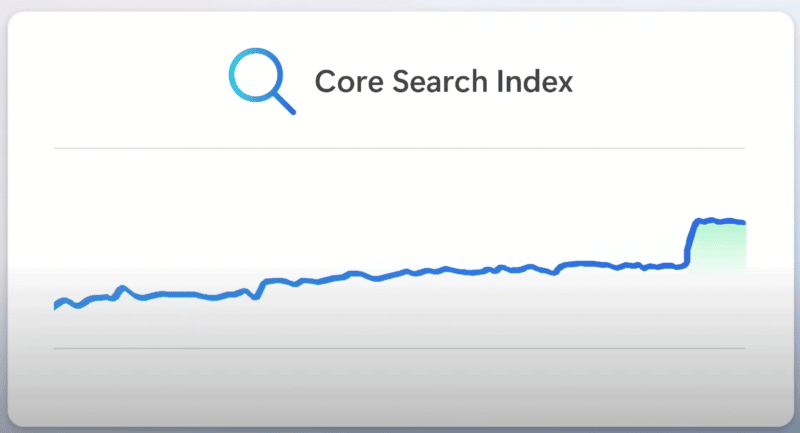
What he said. “But a few weeks ago, something special happened. We applied the AI model to our core search ranking engine and we saw the largest jump in relevance in two decades. We believe we can continue to drive breakthroughs as we improve the models,” Yusuf Mehdi said. You can listen to what he said at the 19:43 mark in this video.
Chart. Yusuf showed this chart documenting the relevancy boost in Bing Search quality:
Bing ranking update. There was indeed a Bing ranking update around January 18th, as Glenn Gabe posted on the Search Engine Roundtable. That was a few weeks prior to this presentation, so the relevancy bump and the previously unconfirmed reports of a Bing search ranking algorithm update prove it.
Yes, Bing did a massive update to how it ranks search results around January 18th. “I received several reports of serious volatility with Bing rankings and traffic starting on January 18th into January 19th, and I dug in a bit across sites. And yes, it does look like there was some type of algorithm update that heavily impacted some sites,” Glenn Gabe wrote.
Why we care. Bing, while it has a much smaller market share compared to Google, is still a player in search. It may be an even larger player in search in the coming months and years if it can continue to improve relevancy and innovate with new search concepts, such as chat and other AI integrations.
We are living during such exciting times ins search right now and expect a lot more from Bing and other search engines.
To be clear, Google does not use Domain Authority to determine ranking. “We don’t use domain authority at all in our algorithms,” according to a tweet. by Google’s John Mueller.
I bolded that part above because the DA metric has caused confusion within the SEO industry, as many have basically assigned it value as a meaningful SEO metric, akin to the old visible Google PageRank scores. And you will often see it in spammy SEO and link building emails.
Even Rand Fishkin, who created the metric, essentially disowned Domain Authority as something he didn’t care much about anymore (“I know. I created it, but still”) during Milestone’s Engage conference in August 2022.
2020: In this installment of Barry Schwartz’s vlog series, he also chatted with Boykin about Google penalties, algorithm updates and the importance of featured snippets and people also ask for SEO.
2018: Google’s partnership with WordPress aimed to jump-start the platform’s support of the latest web technologies, particularly those involving performance and mobile experience.
2016: The latest images showing what people eat at the search engine companies, how they play, who they meet, where they speak, what toys they have and more.
2014: How to get it: marking up content that was invisible to users, marking up irrelevant or misleading content, and/or other manipulative behavior that violated Google’s Rich Snippet Quality guidelines.
2014: When Bing users searched on specific sports and athletes the search engine would include Olympic-related schedules and content in its search results.
2013: Either they needed to change their ways — and become much more transparent and easy to use — or they would apparently need to look elsewhere for ads. More coverage: IAC: We Comply With Google’s Toolbar Standards
2013: The study found that ads associated with black identifying names were more likely to have ads with the word “arrest” in them than ads that were associated with white identifying names.
2012: In past years, organizations like the NFL, the playing teams, and the failed to show up in search results because none of their sites answered the question.
2012: Google didn’t seem to occupy any higher ground than Microsoft when it came to using data gathered from browser add-ons to improve its own services, including its search engine.
2010: Deal included a more robust Bing search experience on Facebook. Also, Bing would power Facebook search outside of the U.S., to all Facebook users, worldwide.
2010: The latest images showing what people eat at the search engine companies, how they play, who they meet, where they speak, what toys they have, and more.
2007: 28% of internet users had tagged or categorized content online such as photos, news stories or blog posts.
Past contributions from Search Engine Land’s Subject Matter Experts (SMEs)
These columns are a snapshot in time and have not been updated since publishing, unless noted. Opinions expressed in these articles are those of the author and not necessarily Search Engine Land.
Every year, thousands of people around the globe decide that they want to renovate their homes by making changes in their structure. During this process, they spend more money than they should, which messes with their financial budget. When making decisions such as renovating a house or building a new home, you need to allocate a budget. If you need more sense of how money allocation works, local pre-construction management services can help you with that.
Choosing the right construction company that can help you allocate your budget and make sensible decisions requires research that can take a lot of time. It is best to spend your time finding the right person for the job, because you don’t want to end up dealing with someone that is a fraud. The ease with pre-construction services is that they help you build the house or renovate it from day one. They are involved in the process more than you are to give you the best results.
Choosing pe-construction services
Choosing the best pre-construction service for your project might take time and effort. Many people will advise you otherwise, but these services help you in ways you can’t help yourself. Read below to understand why people opt for pre-construction services to get the best outcomes.
Accurate budgets: At the end of the day, everything is about budgets and how they are allocated. You can only spend some of your money on one project. Working with pre-construction services will help you assign a detailed budget to the project without going overboard. Qualified professionals devise a way to put money into the project without burdening the person who is spending the money. With all the experience they have gathered over the years, pre-construction consultants use their vendors to complete the projects, because they know what prices their vendors will quote.
Cost saving: Pre-construction service consultants know ways to reduce costs for things. Something that you like for your home might be available at an expensive rate in the market, but with these consultants’ expertise, they can contact their vendors and have them bring the product at a lower rate. They can compare the price of products, labor, construction, logistics, and the availability of goods. They ensure that the budget is aligned with your needs and leave no stone unturned in making it a success.
Outsourcing: If you were thinking of stepping out into the market and outsourcing people for a project, it is most likely that you are going to get scammed. Pre-construction professionals know what they are doing, and their hiring practices are better than other companies. They hand-pick all the subcontractors for a project to ensure they make the best decisions on your behalf. Their knowledge makes them unique and worth investing in the market.
Subcontractor contracts: When you hire a subcontractor, you do that on a monetary basis. Pre-construction professionals ensure that all the people they are outsourcing or subcontracting are involved in the project with fair bids so that there is no problem in the future. Post-bid contractor negotiation is smooth when the terms of the project are decided.
Choosing a pre-construction company to help you with your renovation is one of the best things you can do. Most of the time, taking help from professionals ends up making the project a success.
If you get Google’s Analytics emails, you may have already gotten the word. But ICYMI, Google has once again reminded us that Universal Analytics (UA) will stop processing data on July 1.
What’s new is the email states that starting in March, any customer who does not set up a GA4 property with basic settings, Google will configure one with a few basic settings consistent with the existing Universal Analytics property; this includes certain conversion events, Google Ads links, and existing gtag or analytics.js tags.
Opt-out. If you don’t want Google automatically creating GA4 properties for you, you may opt-out via the instructions in this link.
Here is what the email says.
Subject: We’ll soon configure Google Analytics 4 for you
Hello.
Universal Analytics standard properties will stop processing data on July 1, 2023. To maximize historical data and to ensure that Google Analytics 4 (GA4) meets your specific needs, we recommend you make the switch to Google Analytics 4 now. This will give you the opportunity to customize the setup including using the latest site tag.
For any customer who does not set up a GA4 property with basic settings, starting in March, we will configure one with a few basic settings consistent with the existing Universal Analytics property; this includes certain conversion events, Google Ads links, and existing website tags.
For Universal Analytics customers whose websites are tagged with gtag.js or analytics.js (including through tag management systems like Google Tag Manager), we will create a connected site tag that will reuse existing tags when possible to send traffic to the new GA4 property. If you do not wish to have a GA4 property created and configured based on your Universal Analytics property and existing tags, you may opt-out.
Their ‘Learn More’ CTA directs to a Google Doc page that I don’t have access to.
The notification also appears in a yellow bar at the top of some Analytics accounts. Shameem Adhikarath noticed it last night and posted it to Twitter.
New notification from @googleanalytics . On July 1, 2023, this property will stop processing data. Starting in March 2023, for continued website measurement, migrate your original property settings to a Google Analytics 4 (GA4) property, or they'll be copied for you.. @rustybrickpic.twitter.com/qWzOdmqhGV
Why we care. With the discontinuation of Universal Analytics standard properties on July 1, 2023, advertisers need to switch to Google Analytics 4 to maximize historical data and take advantage of the latest analytics capabilities. If they don’t, Google may create a GA4 property for them with basic settings, which may not meet their specific needs. Therefore, to ensure accurate tracking and analysis of their advertising efforts, advertisers should make the switch to Google Analytics 4 now and customize the setup as needed.
SEO professionals can access many free and paid platforms, tools, and software. But if you and your competitors are all using the same tools, data, and approaches – how can you set yourself apart?
At SMX Next, I shared the SEO tools that will make up my toolkit in 2023. If you missed the session, read on as I share some highlights.
Before we dive in, it’s worth noting that true to the fast pace of SEO, there’s already been a change in how you might think of one of the tools – but we’ll get to that shortly.
So what will we be covering in this article?
Why do we use SEO tools?
The usual suspects.
The unusual suspects.
Fun with AI.
Let’s get started.
Why do we use SEO tools?
As with virtually every decision we make, when it comes to tools, it’s good to think about the ever-present question – why? Why do we use tools in the first place?
We generally use SEO tools for one of the following tasks:
To automate monotonous tasks (e.g., rank checking).
To distill large amounts of data into usable information (e.g., Google Analytics).
To access information not functionally available to us otherwise (e.g., backlink analysis).
To combine data sources and points (e.g., domain metrics on backlinks).
Essentially, we use tools to save time. When you think of most of the tools you use or want to use, they generally speed up the collection of information or present it in a way that’s easier to draw conclusions.
Take a moment and think of one of the tools you use and one of the tasks you use it for. Guaranteed it will fit one or more of the purposes above.
But, of course, there are hundreds of tools to choose from. I’m not going to pretend that the list below is fully exhaustive.
I’ve only included tools I use myself and only those that would apply to most people. That said, they’re tools that have proven themselves invaluable to my regular routine.
So what are they?
The usual suspects
You can probably guess what my list of usual suspects is now. But let’s cover them anyway.
Semrush
Why does Semrush make this list?
Semrush is a solid all-in-one toolset covering multiple areas of SEO, SEM and SMM and generally does them well.
Some of the key tools within the suite I use regularly are:
Audit: There are definitely more sophisticated technical audit tools out there, but the Semrush tool runs regularly and gives you a quick-and-easy place to monitor for spikes and drops in errors, etc.
Rank checking: Their rank-checking tool is excellent. You can select the location your rankings are checked from (or multiple) and monitor them daily. For those with large numbers of terms, they’re also presented in an easily digested and filterable way.
Social poster: Semrush has a solid social monitoring and posting tool. You can keep track of your progress against competitors and monitor RSS feeds to quickly and easily get post ideas. It’s not as robust a social tool as some dedicated ones are, but it’s solid and good enough for many use cases.
You’re probably familiar with much of what it does and if not, I’d suggest a trial.
Semrush is generally pretty affordable for the variety of purposes it serves (though it can get pricey if you need to add users, white label reports, or use add-ons). And since it’s generally well known, knowing how to use it is a marketable skill.
Screaming Frog
Hands down, this is the best value tool on the market.
Screaming Frog, for the three of you who might not know, is a crawler.
Give it a website or a list of URLs and configure how you want it to crawl (depth, user agents, paths, etc.), info on the data you want to collect, plus a bit of time, and it’ll return an audit of the site with various visualizations and filters.
There’s a free version that’s good for up to 500 URLs, though it has limited customizations. For a paid version, you’ll have to pony up a “whopping” $210/year. As I said, best value tool on the market.
It’s good for:
Customized crawling.
Looking for specific text or HTML on pages.
Easily export issues to send to devs.
Creates XML sitemaps.
Great visualizations.
And I don’t have to dive into the remainder of my usual suspects as you hopefully use them already:
It’s like Search Console, but with far more details and information, making it the unsung hero of SEO tools.
The unusual suspects
Technical SEO tools
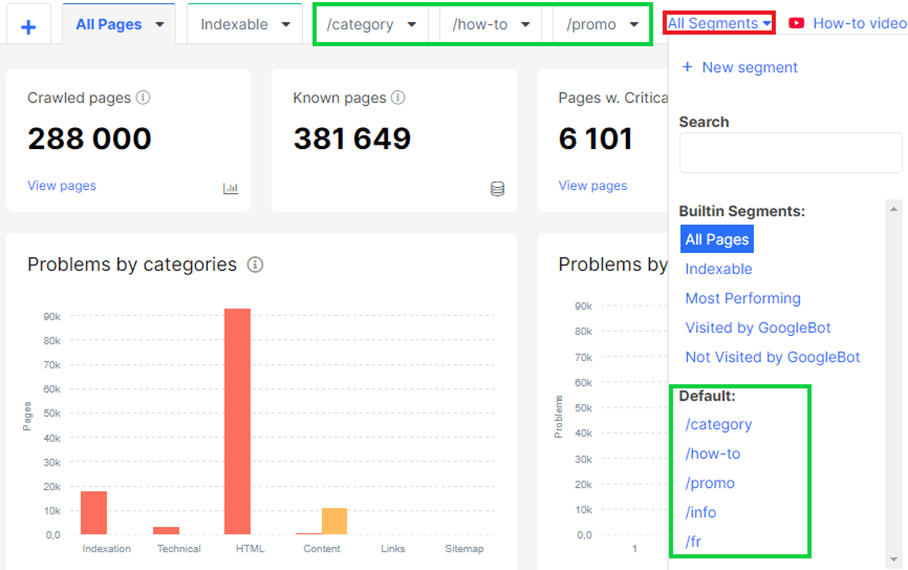
Jet Octopus is another technical SEO suite. (And no, I don’t know where these companies get their names.)
The interface includes screens like:
It’s similar to Semrush but with different filtering options and of course, a different crawler. As you can see above, Jet Octopus lets you easily group issues into the sections of the site you’ll find them in, like a combination of Semrush and Bing Webmaster Tools.
I also find it gives me a different way of looking at a site structure, though I wouldn’t give up Semrush for it, making it one to add to the mix if you have the budget and need to make sure you have an easy-to-use different way of looking at things.
And some additional unusual suspects for technical SEO:
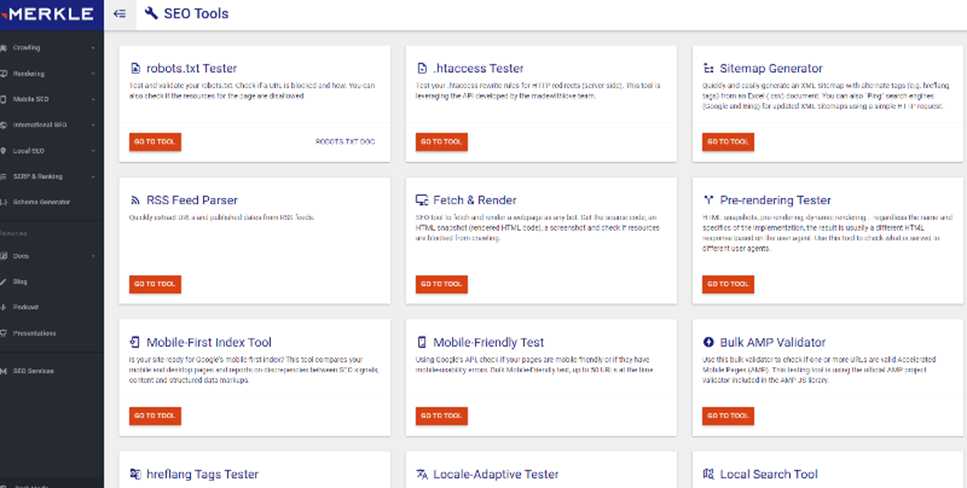
Merkle: Various free SEO tools covering everything from schema to prerendering.
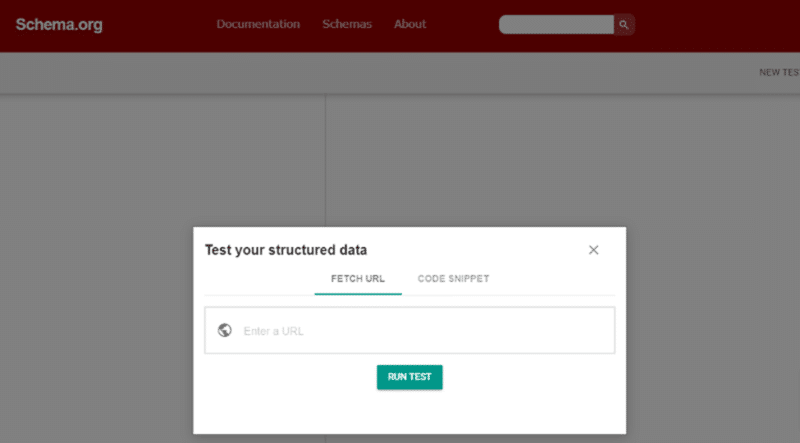
Structured Data Testing Tool: For testing your schema.
Mobile Moxie: Free and paid tools for testing your mobile SEO.
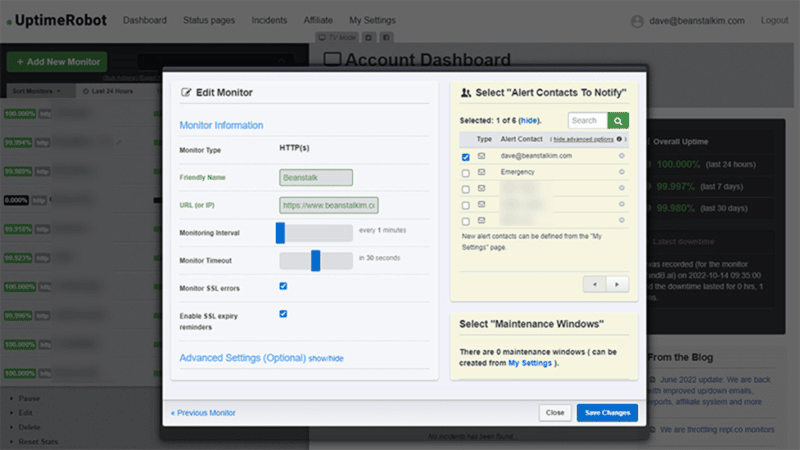
Uptime Robot: For making sure your site(s) are up.
Content tools
But all the technical SEO in the world won’t get your ranking without great content. So let’s look at some unusual suspects on the content side:
A huge favorite content-related SEO tool of mine is the shockingly inexpensive Infranodus (though it arguably isn’t a content tool, it’s what I use it most for).
Within Infranodus, you’ll find an array of tools for a whopping €9/month (about the same in USD).
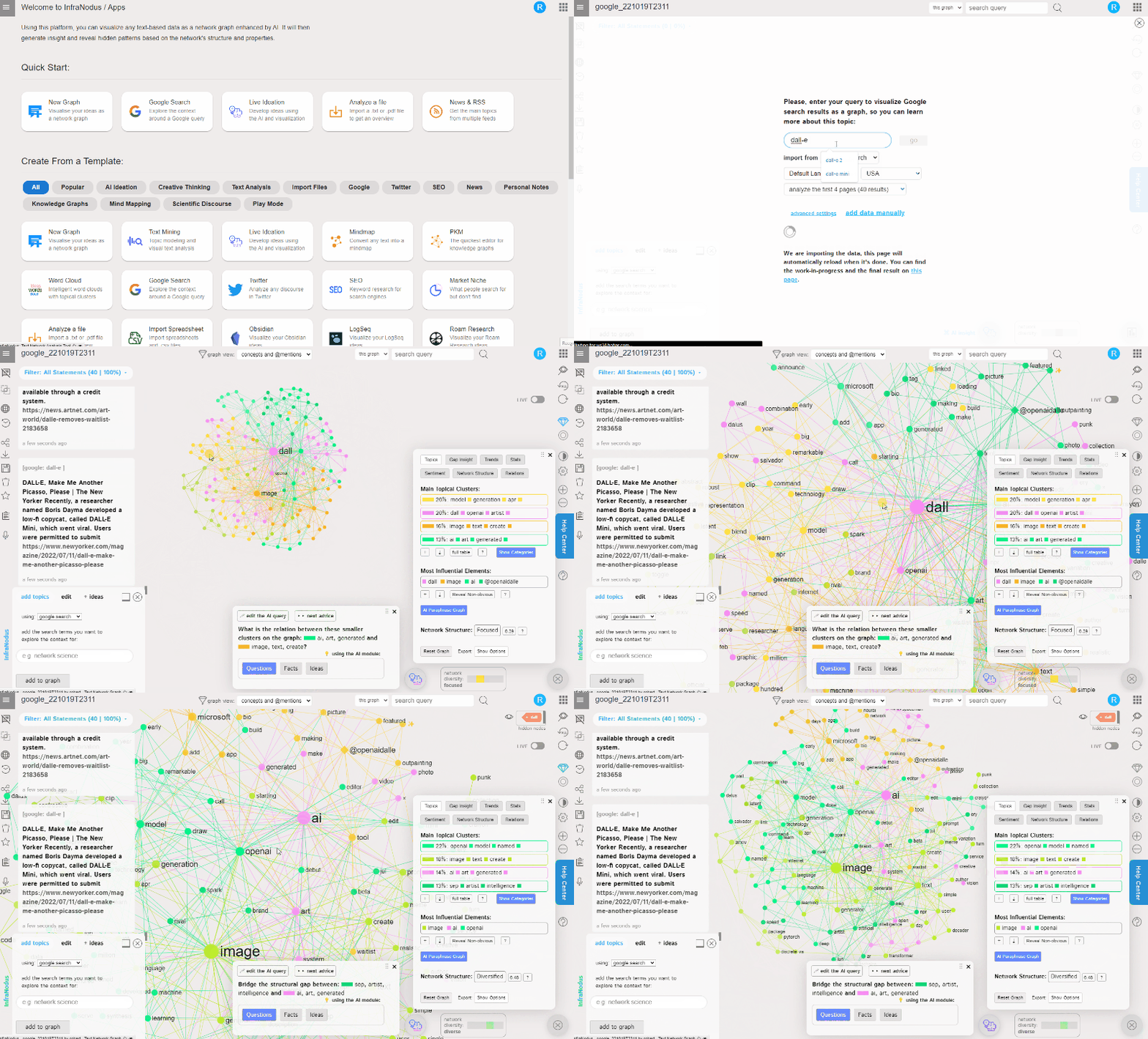
My most commonly used tools help me dig into the concepts included in the top Google results, and how the concepts connect to various pages within a list.
In short, you can enter a query and it will produce an interactive mapping of how the terms in the results connect to each other, which I find helps me not only better understand how Google might see a concept, but a user as well.
Here it is in action:
And of course:
AlsoAsked: A good visualization of questions people as related to topics you’re researching.
Answer The Public: A good visualization of how the questions related to a phrase group, by question intent.
Link-related tools
Of course, I have tools I use for keeping an eye on links and competitors’ links.
My favorite tools in this category are:
Ahrefs
While technically Ahrefs is a suite of tools one might compare to Semrush, it’s in links that I find it really shines.
I find it catches new backlinks faster than other tools, and generally has a more robust database.
So when I’m keeping my eye on new links, looking for gaps in link profiles, or just researching competitors, this is my first (though not only) stop.
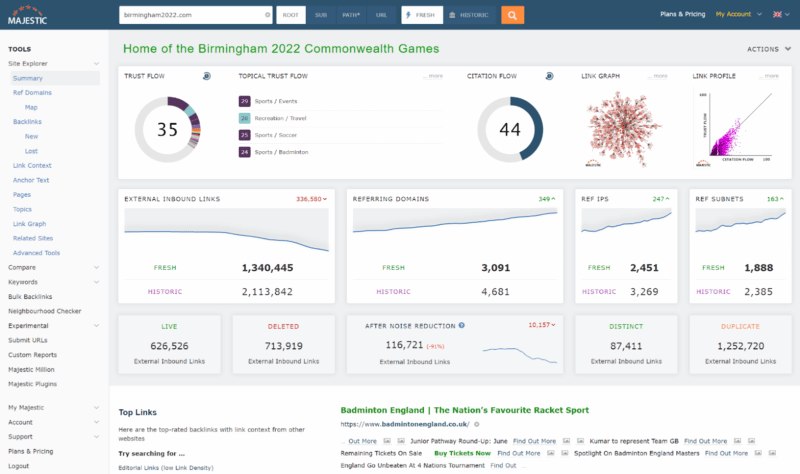
Majestic
I haven’t used Majestic in a few years, but I wanted to include it in the list as it’s a solid backlink tool worth your consideration.
At one point, I hit a threshold and had too many tools, so I made a “one in, one out” policy to keep it under control.
I had a lot of duplication in the link category so I had to get rid of some tools. But for those who don’t have this problem, Majestic is a solid option to consider (and might even be worth revisiting myself).
Search Console
I hope I don’t have to tell you why Search Console is an important tool for monitoring your backlinks, but here it is summed up in a Stable Diffusion-generated image.
Get the daily newsletter search marketers rely on.
function getCookie(cname) {
let name = cname + “=”;
let decodedCookie = decodeURIComponent(document.cookie);
let ca = decodedCookie.split(‘;’);
for(let i = 0; i <ca.length; i++) {
let c = ca[i];
while (c.charAt(0) == ' ') {
c = c.substring(1);
}
if (c.indexOf(name) == 0) {
return c.substring(name.length, c.length);
}
}
return "";
}
document.getElementById('munchkinCookieInline').value = getCookie('_mkto_trk');
Some AI tools
Of course, we can’t forget about AI. There are all sorts of AI-driven tools and I’m not going to tell you which is best as I haven’t tested them all and am far from deciding which one(s) I’ll land on yet (though Jasper has taken an early lead).
That said, you can access some of the core tech for free!
While there’s been a lot of hype around ChatGPT, I still prefer accessing the technology (GPT-3) in the OpenAI playground. It’s the same technology with (IMO) better flexibility and interface.
Simply sign up for an OpenAI account, and then you can access the API to perform all sorts of NLP-related tasks, or just play around in their playground.
It can be used for:
Content outlines.
Writing ecommerce data en masse.
Powering chatbots (though there are many pre-boxed solutions for that as well).
Translation.
And so much more, including full content creation. (Use at your own risk!)
AI tools for image generation are also popular nowadays. I’ve used text-to-image generators for:
It lets you connect with your Google Analytics (only Universal Analytics for now, as most people don’t have over a year of data in GA4, which is required for decent forecasting).
You can even choose a specific segment of your analytics (organic, for example) and forecast the next few months to give you something like:
It’s nice to be able to know in advance what things are going to look like in the future.
Solar roofs are quickly becoming the go-to choice for those looking to incorporate renewable energy into their homes. Traditional solar panels have been used for decades. However, solar roofs offer a level of convenience and affordability that make them ideal options for homeowners of all kinds. Before you start researching solar roof installation estimates, it’s important to get fully informed about their advantages compared to solar panels.
What’s the Difference Between Solar Roofs and Solar Panels?
While they may seem the same, solar roofs and solar panels are significantly different. Being well-informed about both options may help homeowners choose the optimal solution for their home.
Solar roofs consist of shingles or tiles that both absorb sunlight and function as a roofing material. This allows for increased aesthetic appeal compared to traditional panels. On the other hand, solar panels are typically mounted on top of existing roofs to capture and transform energy from the sun into electricity.
Both solar roofs and solar panels offer households the advantage of lower electricity bills. Sunlight is converted into energy at no cost, with solar roofs being slightly more energy efficient. Additionally, they help consumers become more environmentally friendly. This is because they generate power that would otherwise be obtained from non-renewable sources.
Why Are Solar Roofs Better Than Solar Panels?
Let’s take a look at the reasons why:
1. They look better.
For starters, solar roofs are more aesthetically pleasing than traditional solar panels. With a sleek and modern design, they can actually enhance the look of your home while providing the same renewable energy capabilities as regular panels. Solar roof tiles come in a variety of shapes, sizes, and colors. Therefore, you can easily customize the design to fit your home. They also blend in with other roofing materials, making them virtually indistinguishable from traditional shingles or tiles.
2. They’re more energy efficient.
Another major benefit of solar roofs is their efficiency compared to standard solar panels. They utilize advanced technology to maximize energy collection each day (up to 20% more than traditional systems). Moreover, they channel it directly into electricity for your home or business. This increases both the cost-saving potential and overall value of the system by eliminating any energy loss that may occur due to inefficiencies in regular panel installation. Plus, because they’re integrated with your existing roofing materials, installation is much easier and faster than that of conventional systems, resulting in fewer labor costs and disruption to your daily life.
3. They provide extra protection.
They also provides an extra layer of protection against leaks and water damage. This is thanks to their “edge sealing” feature which prevents water infiltration through cracks or crevices around the outside edges of the tiles. This means less maintenance over time compared to conventional systems, which often require caulking or other repairs throughout their lifespan due to weather exposure or physical damage caused by hail or wind storms.
4. They give you peace of mind.
Finally, you can enjoy peace of mind knowing that your investment is backed by powerful warranties from leading manufacturers such as ENERGY STAR. These manufacturers all provide extensive coverage on their products. That’s something you may not get with traditional panel installations. If you hire a reputable company to provide and install the roof, you’ll be able to relax. You can leave the work to them knowing that it will be done properly.
Conclusion
Therefore, if you’re looking for a reliable source of renewable energy for your home without sacrificing aesthetics or performance, consider investing in a solar roof system. Whether it’s improved efficiency and cost savings or additional protection from weather elements, there are plenty of reasons why installing a solar roof makes more sense than ever.
Microsoft Corp. announced its financial results for the quarter ended December 31, 2022, which showed an increase in revenue of 2% to $52.7 billion. However, operating income and net income decreased by 8% and 12% respectively, when compared to the corresponding period of the previous fiscal year. The company’s CEO, Satya Nadella, stated that the next major wave of computing is being born, as the Microsoft Cloud turns the world’s most advanced AI models into a new computing platform. The company is committed to helping its customers use its platforms and tools to do more with less today and innovate for the future in the new era of AI.
Total revenue. $52.7 billion, an increase of 2%
LinkedIn revenue. Increased 10% (up 4% in constant currency)
Total ad revenue. Increased 10% (up 5% in constant currency)
An investment into ChatGPT. Microsoft is reportedly planning to integrate OpenAI’s ChatGPT features into Bing Search in the upcoming months. This information comes from sources connected to Bing, who claim that the company is planning to add the popular ChatGPT AI question-and-answer service to Bing, Microsoft’s search engine.
Big plans for its ad business. Microsoft also announced its plans to increase its ad revenue from $10 billion annually to $20 billion. The company’s leadership did not provide a specific timeframe for reaching this goal, but if achieved, it would make Microsoft the sixth-largest digital ad seller worldwide.
Mass layoffs. Last week Microsoft CEO, Satya Nadella announced plans to cut jobs due to changing demand for digital services during the pandemic and potential recession. He cited that customers are now optimizing their digital spend to do more with less. The job cuts will affect less than 5% of the company’s total workforce, and the cuts will be completed by the end of Microsoft’s fiscal third quarter. The company will also incur a $1.2 billion charge in its second quarter related to severance costs, changes to its hardware portfolio, and lease consolidation.
Dig deeper. Read the full earnings statement from Microsoft here.
Why we care. Upon reviewing the forward-looking statements from the announcement, last quarters earnings could affect the company’s ability to generate revenue, which in turn could affect the effectiveness of advertising on its platform.
For example, if Microsoft’s revenue decreases due to intense competition, advertisers may see a decrease in their return on investment when advertising on the platform. Additionally, if Microsoft experiences issues with security vulnerabilities, misuse of personal data, or reputational harm, it could affect the trust and engagement of users on the platform, potentially decreasing the reach and impact of advertising campaigns. Regulatory challenges could also affect the way it designs and markets its products, potentially limiting the advertising opportunities for advertisers.
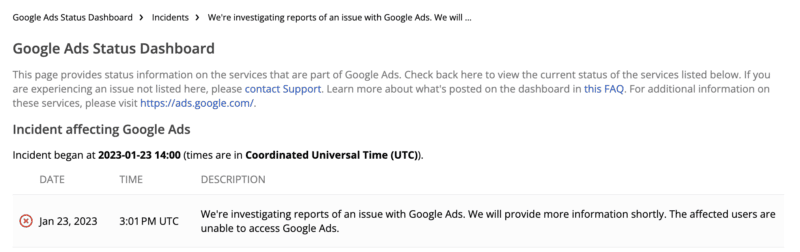
Original post. Happy Monday! The Google Ads dashboard may be down for some users.
We're investigating reports of an issue with Google Ads. We will provide more information shortly. The affected users are unable to access Google Ads. Please see the dashboard for updates: https://t.co/0AqTKCl6Ts
Alex Medeiros, General Manager of LightTouch Med Spa
One of the best ways to help a business grow and thrive, even in times of economic downturn, is to foster a loyal customer base. To many mired down in the day-to-day running of their small business, this may seem easier said than done. However, building a fanatic customer base for your business can be accomplished over time and help you weather more challenging economic times and keep your business afloat.
Loyal, repeat customers tend to spend more money with your brand or business overall. According to studies, the probability of a business selling to an existing customer is 60 to 70%. Compare that to the 5 to 20% probability of selling to a new customer, and it’s easy to see the value in focusing on building loyalty.
Why is loyalty important?
When you are building or scaling a business, every customer counts. Loyal customers are more likely to return and do repeat business with you. Multiple factors go into determining what creates a loyal customer base — price, customer satisfaction, and product offerings among them. When loyalty is created, customers become more willing to pay extra for your products/services, leave good reviews, and wait for item restocks or talk up a new product.
Alex Medeiros, General Manager of LightTouch Med Spa in Orlando, knows the value of building loyal customers well. He’s built the medspa into one of Orlando’s fastest-growing and most-lauded spas. The massive growth shifted into high gear just as Covid began, and the business has managed to not only weather Covid shutdowns and nationwide economic pitfalls but come out bigger and better than they ever imagined.
Building a loyal customer base was key to the business’ growth strategy. “Clients seek out our services because of our long-standing experience in the industry and our well-known social media presence,” explains Medeiros. “We are determined and focused on delivering the utmost quality of service in all of the procedures that we provide.”
LightTouch employs an expert approach and a strong social media presence to build loyalty. Even so, there are other considerations that can help small businesses create rabid fans that return again and again.
Get to know your customers
You can only give a crowd what they’re clamoring for if you know what they want. Getting to know who your customer base is and what they are most likely to want from a business is the first step in creating loyal customer relationships.
Medeiros considered what his customers were genuinely looking for when marketing for LightTouch Med Spa. “Everyone wants to look better and feel better,” he explains. “During the pandemic, there was a huge increase in awareness that we need to take care of our mental health, which so often means elevating our self-esteem and self-confidence.” With this in mind, Medeiros reached out to people seeking ways to build self-confidence both amidst the pandemic’s height and after the worst of it had passed.
Getting to know your clients on a deeper level allows you to anticipate their needs and deliver exactly what they want, when they want it. Customers also want to get to know you, a task that many businesses complete by getting vulnerable or authentic on social media. Medeiros is particularly proud of LightTouch’s presence on social media and what it has done to build its loyal customer base. “Educating customers and potential customers on social media has been key to reaching new customers, particularly young people. LightTouch now has thousands of followers on Instagram alone,” he explains.
Create loyalty programs
Loyal customers are going to be looking to be rewarded for their loyalty. Think of the Starbucks stars program or the benefits an Amazon Prime subscription provides — these large corporations know the value of loyalty and reward returning customers with discounts, free and fast delivery, and rewards points toward discounted or free products.
Even small businesses can create loyalty programs. Discounts for returning customers or “punch cards” can be employed to show returning consumers that you appreciate the fact that they continue to choose your business. If you make it worth their while, they will be more likely to continue to choose your business in the future.
Encourage feedback and reward referrals
Just like loyalty programs let loyal customers know you appreciate them, referral rewards can make customers feel good about where they choose to spend their money. Businesses should encourage reviews and feedback from their customers and ask where new customers heard about them.
If a new customer is brought in on referral from a loyal customer, that loyal customer should also be rewarded for spreading the word. Referral rewards open up a whole new set of possibilities to build loyalty among customers.
Stand out from the crowd
Being at the forefront of what’s new in your industry is a great way to drive loyalty. If customers know they can always count on you to provide the latest and greatest, they will continue to flock to your door.
“Knowing newer methods and technologies ensures that our clinic remains at the forefront in the competitive medspa industry,” explains Medeiros. “This is what ultimately creates a loyal clientele and fuels future growth.”
Businesses should play to their strengths and make those strengths known. Answering the question of what you do better than your competitors will help you communicate better with consumers, which will in turn foster loyalty.
Personalizing your message, engaging with customers via social media and in-person, and building programs that pay customers back for being loyal are all great ways to build that base that will keep your business growing and thriving. “At the end of the day, however, it’s not just about having the latest and greatest, but offering the complete package,” explains Medeiros.
Businesses that take the time to create that complete package — expertise, offerings, personality, and price — will be more likely to succeed in the long run.
A top priority for marketers is to increase email responses from their customers and reduce unsubscribe rates. But to be successful, they need data to help personalize messaging with information on past purchase behavior, inquiries and engagement.
Join Salesforce in a live webinar and hear how Manheim Auto optimized email journeys and created a readily accessible view of real-time campaign results.