If you like to sell your old clutter online, eBay fees used to eat into your profit. Not anymore! Now, you can sell fee-free across all categories except motor vehicles. This could save sellers a huge chunk of cash over time. eBay also announced further steps to make selling online for private sellers easier – here’s the lowdown.
eBay first introduced fee-free selling for private sellers on their fashion categories earlier this year. The success of this trial means private sellers can now sell anything they want without fees (except cars, motorbikes, and vehicles). They have also taken several steps to improve the selling experience and safety for those who use the online auction site.
Simplified Selling
The selling process is now much easier than before, with AI-tools aiding sellers not only to find similar items for accurate pricing, but also to write descriptions and enhance photos with ease.
Simplified Delivery
How many times have you wanted to sell something on eBay but been put off by the postage process and costs? Now, sellers can use a tracked and fully insured delivery service at competitive rates – prepaid by the buyer, to make it easy to send. The buyer provides the information on their prepaid label for you, helping reduce the risk of seller error.
For local listings, eBay has improved its user experience to find listings only local to you available for collection, skipping the delivery costs altogether. The listings are still covered by eBay’s Money Back Guarantee, too.
eBay Balance
From mid-October, sellers will be able to use their eBay balance for their own purchases on the site. This simplifies the use of the site as a private seller and a buyer, especially as you can also use your eBay Balance for enhanced listings or to buy delivery labels, too.
How Much Could You Make with Your Clutter?
How long is a piece of string?! There are so many things you can sell on eBay that it’s easy to raise hundreds or even thousands of pounds from your unwanted stuff.
According to eBay, half of the UK’s households estimate they hold between £50 to £300 of unwanted items, with a quarter sitting on more than £500 of unused items that could make easy money on online auction. People who use eBay to clear their clutter say they do so to be more sustainable and reduce waste, make extra money, and clear extra space in their home.
Remember HMRC Rules
Remember that if you regularly sell items online, you will need to register for Self Assessment and declare your earnings each year to HMRC if you make more than £1000 a year.
This usually doesn’t apply if you are selling unwanted items from your own home, irregularly. However, if you decide to make a side business flipping thrifted items on eBay – which will require a business account on the auction site, too – you’ll need to register with HMRC.
If you like to sell your old clutter online, eBay fees used to eat into your profit. Not anymore! Now, you can sell fee-free across all categories except motor vehicles. This could save sellers a huge chunk of cash over time. eBay also announced further steps to make selling online for private sellers easier – here’s the lowdown.
eBay first introduced fee-free selling for private sellers on their fashion categories earlier this year. The success of this trial means private sellers can now sell anything they want without fees (except cars, motorbikes, and vehicles). They have also taken several steps to improve the selling experience and safety for those who use the online auction site.
Simplified Selling
The selling process is now much easier than before, with AI-tools aiding sellers not only to find similar items for accurate pricing, but also to write descriptions and enhance photos with ease.
Simplified Delivery
How many times have you wanted to sell something on eBay but been put off by the postage process and costs? Now, sellers can use a tracked and fully insured delivery service at competitive rates – prepaid by the buyer, to make it easy to send. The buyer provides the information on their prepaid label for you, helping reduce the risk of seller error.
For local listings, eBay has improved its user experience to find listings only local to you available for collection, skipping the delivery costs altogether. The listings are still covered by eBay’s Money Back Guarantee, too.
eBay Balance
From mid-October, sellers will be able to use their eBay balance for their own purchases on the site. This simplifies the use of the site as a private seller and a buyer, especially as you can also use your eBay Balance for enhanced listings or to buy delivery labels, too.
How Much Could You Make with Your Clutter?
How long is a piece of string?! There are so many things you can sell on eBay that it’s easy to raise hundreds or even thousands of pounds from your unwanted stuff.
According to eBay, half of the UK’s households estimate they hold between £50 to £300 of unwanted items, with a quarter sitting on more than £500 of unused items that could make easy money on online auction. People who use eBay to clear their clutter say they do so to be more sustainable and reduce waste, make extra money, and clear extra space in their home.
Remember HMRC Rules
Remember that if you regularly sell items online, you will need to register for Self Assessment and declare your earnings each year to HMRC if you make more than £1000 a year.
This usually doesn’t apply if you are selling unwanted items from your own home, irregularly. However, if you decide to make a side business flipping thrifted items on eBay – which will require a business account on the auction site, too – you’ll need to register with HMRC.
Exhale Fans has revolutionized air circulation with its bladeless ceiling fan, the EF-34, a product of years of dedicated research and development. In fact, Exhale Fans feature the truly bladeless technology of the turbine design, so air is circulated without blades, creating an even temperature throughout the entire room. Unlike traditional bladed fans, the EF-34 provides unmatched comfort and temperature balance, making it a standout choice for home offices and businesses worldwide.
Led by CEO Richard W. Halsall, who brought his commitment to excellence from his military and aviation career, Exhale Fans has grown into a company known for its innovative products and exceptional customer service. The mission is simple: to improve the quality of life in every room by delivering the most efficient air movement solution available.
The Exhale Fan features a minimalist design that seamlessly fits into any office design. Photo credit: Exhale Fan
The Bladeless Exhale Fan in the Office
The Exhale Fan is the world’s first truly bladeless ceiling fan, bringing a sleek and modern touch to your home office. You can order the Exhale Fan in white or black to meet the needs of your space. It features a minimalist design that seamlessly fits into any office design, from ultra-modern to traditional, without compromising on performance. Its innovative design ensures even air distribution from floor to ceiling, creating a perfectly balanced temperature whether your guests are heating or cooling. This fan is equipped with a quiet, brushless DC motor and a built-in, fully dimmable LED light. The Exhale Fan will include your choice of either cool white (6000k) or warm white (3000k), and the light is dimmable up to 20% of its full brightness.
With advanced features like typhoon wind vanes for increased airflow and a redesigned remote control, the Exhale Fan is built for superior performance, keeping you refreshed and cool all day. Business owners will appreciate the energy-efficient Exhale Fan offers ECO-friendly thermal destratification, saving 23%–38% on HVAC costs, allowing a 2°–4° thermostat increase, and even paying for itself within 18 to 24 months.
Another appreciated fact of The Exhale Fan is that it is whisper-quiet. This means you and your employees will feel comfortable and focused without wind noise, motor buzzing, clunky unbalanced blades or rattling chains. At its highest operating speed, the Exhale Fan produces only 40-43 dB. This is particularly valuable if you or your employees are easily distracted by noise, as it helps maintain productivity without disruptions.
How Does the Exhale Fan Work?
The Exhale Fan operates using Laminar Flow technology, where spinning discs create a gentle 360° airflow that evenly circulates air throughout the room. The 360° Vortex Airflow created ensures constant recirculation every 25 seconds, maintaining a balanced and comfortable temperature. Additionally, by eliminating hot and cold spots through thermal de-stratification, the Exhale Fan enhances comfort and reduces energy consumption, making it an eco-friendly choice for any space.
The Exhale Fan enhances comfort and reduces energy consumption, making it an eco-friendly choice for any space. Photo credit: Exhale Fan
The benefits of this thermal de-stratification can be enjoyed in summer or winter in non-conditioned spaces. In summer, The Exhale Fan works with your HVAC system by improving air circulation and temperature balance, reducing the load on your air conditioner and lowering energy costs. In winter, you’ll enjoy a balanced temperature because The Exhale Fan can completely mix all temperature zones within 90 seconds, ensuring your heating system reaches all corners of the room.
The bladeless exhale fan is controlled by a remote that is pre-programmed for the fan. Business owners will appreciate that it also includes a wall mount bracket for the remote, so there’s no guessing where the remote is.
Installation
You’ll love the efficiency and different ways the Exhale Fan can be mounted on your office’s ceiling. It is designed for quick and easy installation, often taking less than 30 minutes for most users, and as little as 15 minutes for experienced technicians. Unlike traditional bladed fans, the Exhale Fan has no blades to balance or small parts to assemble, making it ideal for DIY enthusiasts. However, if you’re not comfortable with a self-install, certified electricians can handle the job effortlessly and are usually impressed by the simplicity and innovation of the Exhale Fan’s design.
The bladeless Exhale Fan can be installed on vaulted or cathedral ceilings with a few aftermarket adaptations, such as a ceiling vault or slope adapter and a 3/4″ downrod For added convenience, Exhale Fans now offers their own downrod option, available directly from their site. A platform for the motor mount is also needed, though it remains hidden once the fan’s disc array is attached.
Purchasing the Exhale Fan is Hassle-Free
The Exhale Fan is now back in stock and ready to ship within 48 hours, ensuring quick delivery to your home or office. Each fan comes with a 5-year warranty, giving you peace of mind while enjoying its sleek design and efficient performance in your space. Retails for $649.99 at exhalefans.com.
If you like to sell your old clutter online, eBay fees used to eat into your profit. Not anymore! Now, you can sell fee-free across all categories except motor vehicles. This could save sellers a huge chunk of cash over time. eBay also announced further steps to make selling online for private sellers easier – here’s the lowdown.
eBay first introduced fee-free selling for private sellers on their fashion categories earlier this year. The success of this trial means private sellers can now sell anything they want without fees (except cars, motorbikes, and vehicles). They have also taken several steps to improve the selling experience and safety for those who use the online auction site.
Simplified Selling
The selling process is now much easier than before, with AI-tools aiding sellers not only to find similar items for accurate pricing, but also to write descriptions and enhance photos with ease.
Simplified Delivery
How many times have you wanted to sell something on eBay but been put off by the postage process and costs? Now, sellers can use a tracked and fully insured delivery service at competitive rates – prepaid by the buyer, to make it easy to send. The buyer provides the information on their prepaid label for you, helping reduce the risk of seller error.
For local listings, eBay has improved its user experience to find listings only local to you available for collection, skipping the delivery costs altogether. The listings are still covered by eBay’s Money Back Guarantee, too.
eBay Balance
From mid-October, sellers will be able to use their eBay balance for their own purchases on the site. This simplifies the use of the site as a private seller and a buyer, especially as you can also use your eBay Balance for enhanced listings or to buy delivery labels, too.
How Much Could You Make with Your Clutter?
How long is a piece of string?! There are so many things you can sell on eBay that it’s easy to raise hundreds or even thousands of pounds from your unwanted stuff.
According to eBay, half of the UK’s households estimate they hold between £50 to £300 of unwanted items, with a quarter sitting on more than £500 of unused items that could make easy money on online auction. People who use eBay to clear their clutter say they do so to be more sustainable and reduce waste, make extra money, and clear extra space in their home.
Remember HMRC Rules
Remember that if you regularly sell items online, you will need to register for Self Assessment and declare your earnings each year to HMRC if you make more than £1000 a year.
This usually doesn’t apply if you are selling unwanted items from your own home, irregularly. However, if you decide to make a side business flipping thrifted items on eBay – which will require a business account on the auction site, too – you’ll need to register with HMRC.
Many businesses are finding their digital marketing efforts falling flat despite producing content regularly. The culprit?
An outdated approach that neglects the growing importance of visual content in SEO.
With tech giants like Google and Apple prioritizing AI-powered visual search, companies that don’t adapt risk losing visibility and relevance.
Many enterprises lack the centralized strategies and governance needed to effectively manage visual assets across departments.
This article outlines a seven-step process to futureproof your visual content and SEO for 2025.
By implementing these strategies, you can leverage the latest trends, optimize for AI-powered search and significantly boost your online presence and engagement.
How are major giants pivoting features to embrace visual search?
Google is now integrating video and image content, primarily from YouTube, websites and third-party sites, into the Top Insights section of product and AI-generated search results pages.
This change provides users a richer, more engaging experience by offering a diverse range of information beyond text-based results and reviews.
It also allows brands to leverage image and video content to boost visibility and engagement.
Similarly, Apple has released Visual Intelligence with Vision 3, offering new features such as image segmentation and object detection.
These new capabilities allow developers to build more sophisticated and powerful applications that utilize visual information.
Why are visual content and SEO challenging for enterprises and SMEs?
The biggest challenges in visual content and SEO include a lack of centralization, inconsistent policies, governance and knowledge across departments.
Search is multimodal, meaning content creation should focus on customer intent, considering images, videos, PDFs and all other touchpoints and channels.
It is evolving beyond text to include diverse visual content. This shift requires a customer-centric approach that prioritizes intent and experience. Many companies struggle with implementing consistent best practices for visual assets across departments.
With the rise of AI-powered search, it becomes even more critical to centralize all visual assets, ensure they are optimized and consistently distribute them across all channels.
7-step process to futureproof your visual content and SEO in 2025
Well-chosen featured images or videos significantly boost a website’s click-through rate (CTR) and encourage user engagement.
It is important to follow best practices such as image relevance to content, high quality, appropriate file size and format and mobile optimization.
1. Curate
Compile a list of all channels, vendors, departments and touchpoints where visual content is created and consumed.
2. Centralize
Establish policies to organize your content. Ensure all images and videos reside in a digital asset management (DAM) system and are accessible via a content delivery network (CDN).
All channels should access images directly from the DAM, avoiding multiple copies of the same image or video sitting in file folders.
3. Optimize
Use high-quality, relevant images with appropriate file formats, image tags, sitemaps and structured data to enhance discovery and visibility.
Leverage Google NLP to check for content marked as inappropriate and prioritize images relevant to the search query.
Ensure visual content doesn’t affect site speed by using next-gen image formats and implementing lazy loading.
4. Distribute
Ensure content is consumed from one central location. Use cloud infrastructure and a CDN to host and distribute your assets efficiently.
5. Application, experience and infrastructure
Leverage entity search to gain a competitive edge by implementing a clear visual hierarchy and enhancing content scannability.
Well-structured, topical pages with relevant images and videos perform better. Develop snackable videos for your unique selling proposition (USP) and customer reviews.
Create content suitable for visual snippets, such as how-to guides and recipes. The goal is to optimize for Google’s multisearch feature, which combines image, video and text searches.
Infrastructure is one of the biggest gaps most businesses face.
Most DAM systems are designed only to store images and lack the capability to optimize them easily.
Having a DAM that provides real-time scoring of your asset quality and connects seamlessly with your websites and other channels is essential.
Establish robust governance and checklists around quality, consistency and usage across all departments.
Continuously test which images are performing well in SERPs and conversions to refine your checklist.
7. Metrics and KPIs
Develop metrics to track SERP and rich snippet saturation, presence in AI overviews, overall click-through rates (CTR), clicks from visual search, engagement rates and page bounce rates.
As Google and other search engines incorporate conversational AI, short videos, images, and social media posts into search results – shifting away from traditional website listings – these strategies will help you effectively use visual content in 2025.
Success stories
Using the seven-step process as mentioned above, our clients were able to drive phenomenal success for their images on search.
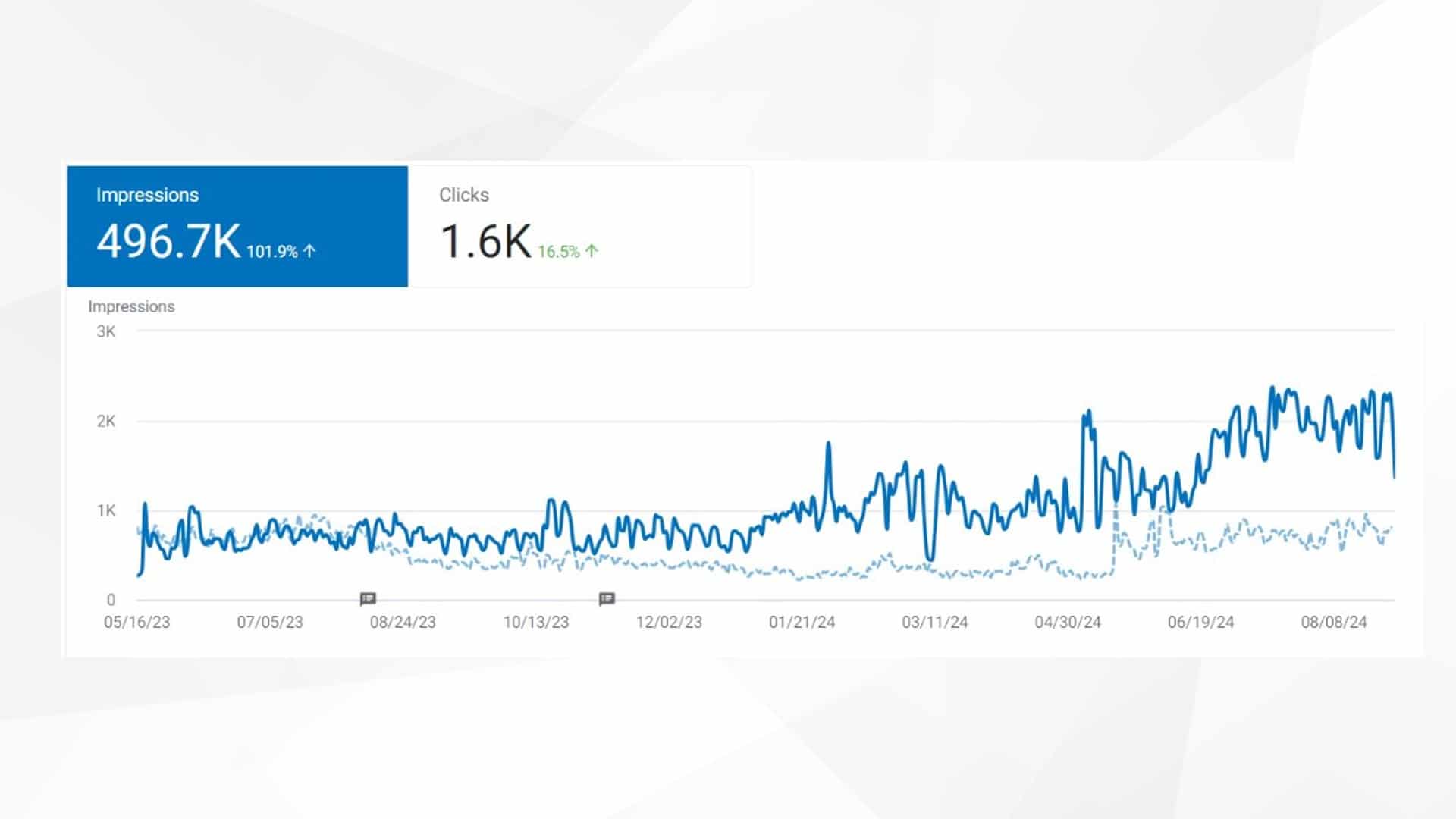
A popular hotel in Georgetown saw a 104% increase in the number of times images appeared in search results versus the previous period.
Search results appearances lift:
A Massachusetts Resort and Spa saw a staggering lift in its visual search performance:
+ 871% increase in the number of times images appeared in search results versus the previous period.
+ 101% increase in overall image impressions versus the previous period.
Search results appearances lift:
Impressions lift:
Dominate visual search with well-optimized images and videos
Video and images are powerful tools for enhancing SEO and boosting online visibility. As LLMs become increasingly skilled at understanding and generating both text and visuals, you must prepare for more integrated visual-textual content creation and optimization strategies.
By prioritizing these areas, you can stay ahead of the curve in visual content and SEO for 2025. Embracing the latest technologies and features released by major tech companies will enable you to enhance your online presence and improve searchability.
Exhale Fans has revolutionized air circulation with its bladeless ceiling fan, the EF-34, a product of years of dedicated research and development. In fact, Exhale Fans feature the truly bladeless technology of the turbine design, so air is circulated without blades, creating an even temperature throughout the entire room. Unlike traditional bladed fans, the EF-34 provides unmatched comfort and temperature balance, making it a standout choice for home offices and businesses worldwide.
Led by CEO Richard W. Halsall, who brought his commitment to excellence from his military and aviation career, Exhale Fans has grown into a company known for its innovative products and exceptional customer service. The mission is simple: to improve the quality of life in every room by delivering the most efficient air movement solution available.
The Exhale Fan features a minimalist design that seamlessly fits into any office design. Photo credit: Exhale Fan
The Bladeless Exhale Fan in the Office
The Exhale Fan is the world’s first truly bladeless ceiling fan, bringing a sleek and modern touch to your home office. You can order the Exhale Fan in white or black to meet the needs of your space. It features a minimalist design that seamlessly fits into any office design, from ultra-modern to traditional, without compromising on performance. Its innovative design ensures even air distribution from floor to ceiling, creating a perfectly balanced temperature whether your guests are heating or cooling. This fan is equipped with a quiet, brushless DC motor and a built-in, fully dimmable LED light. The Exhale Fan will include your choice of either cool white (6000k) or warm white (3000k), and the light is dimmable up to 20% of its full brightness.
With advanced features like typhoon wind vanes for increased airflow and a redesigned remote control, the Exhale Fan is built for superior performance, keeping you refreshed and cool all day. Business owners will appreciate the energy-efficient Exhale Fan offers ECO-friendly thermal destratification, saving 23%–38% on HVAC costs, allowing a 2°–4° thermostat increase, and even paying for itself within 18 to 24 months.
Another appreciated fact of The Exhale Fan is that it is whisper-quiet. This means you and your employees will feel comfortable and focused without wind noise, motor buzzing, clunky unbalanced blades or rattling chains. At its highest operating speed, the Exhale Fan produces only 40-43 dB. This is particularly valuable if you or your employees are easily distracted by noise, as it helps maintain productivity without disruptions.
How Does the Exhale Fan Work?
The Exhale Fan operates using Laminar Flow technology, where spinning discs create a gentle 360° airflow that evenly circulates air throughout the room. The 360° Vortex Airflow created ensures constant recirculation every 25 seconds, maintaining a balanced and comfortable temperature. Additionally, by eliminating hot and cold spots through thermal de-stratification, the Exhale Fan enhances comfort and reduces energy consumption, making it an eco-friendly choice for any space.
The Exhale Fan enhances comfort and reduces energy consumption, making it an eco-friendly choice for any space. Photo credit: Exhale Fan
The benefits of this thermal de-stratification can be enjoyed in summer or winter in non-conditioned spaces. In summer, The Exhale Fan works with your HVAC system by improving air circulation and temperature balance, reducing the load on your air conditioner and lowering energy costs. In winter, you’ll enjoy a balanced temperature because The Exhale Fan can completely mix all temperature zones within 90 seconds, ensuring your heating system reaches all corners of the room.
The bladeless exhale fan is controlled by a remote that is pre-programmed for the fan. Business owners will appreciate that it also includes a wall mount bracket for the remote, so there’s no guessing where the remote is.
Installation
You’ll love the efficiency and different ways the Exhale Fan can be mounted on your office’s ceiling. It is designed for quick and easy installation, often taking less than 30 minutes for most users, and as little as 15 minutes for experienced technicians. Unlike traditional bladed fans, the Exhale Fan has no blades to balance or small parts to assemble, making it ideal for DIY enthusiasts. However, if you’re not comfortable with a self-install, certified electricians can handle the job effortlessly and are usually impressed by the simplicity and innovation of the Exhale Fan’s design.
The bladeless Exhale Fan can be installed on vaulted or cathedral ceilings with a few aftermarket adaptations, such as a ceiling vault or slope adapter and a 3/4″ downrod For added convenience, Exhale Fans now offers their own downrod option, available directly from their site. A platform for the motor mount is also needed, though it remains hidden once the fan’s disc array is attached.
Purchasing the Exhale Fan is Hassle-Free
The Exhale Fan is now back in stock and ready to ship within 48 hours, ensuring quick delivery to your home or office. Each fan comes with a 5-year warranty, giving you peace of mind while enjoying its sleek design and efficient performance in your space. Retails for $649.99 at exhalefans.com.
If you like to sell your old clutter online, eBay fees used to eat into your profit. Not anymore! Now, you can sell fee-free across all categories except motor vehicles. This could save sellers a huge chunk of cash over time. eBay also announced further steps to make selling online for private sellers easier – here’s the lowdown.
eBay first introduced fee-free selling for private sellers on their fashion categories earlier this year. The success of this trial means private sellers can now sell anything they want without fees (except cars, motorbikes, and vehicles). They have also taken several steps to improve the selling experience and safety for those who use the online auction site.
Simplified Selling
The selling process is now much easier than before, with AI-tools aiding sellers not only to find similar items for accurate pricing, but also to write descriptions and enhance photos with ease.
Simplified Delivery
How many times have you wanted to sell something on eBay but been put off by the postage process and costs? Now, sellers can use a tracked and fully insured delivery service at competitive rates – prepaid by the buyer, to make it easy to send. The buyer provides the information on their prepaid label for you, helping reduce the risk of seller error.
For local listings, eBay has improved its user experience to find listings only local to you available for collection, skipping the delivery costs altogether. The listings are still covered by eBay’s Money Back Guarantee, too.
eBay Balance
From mid-October, sellers will be able to use their eBay balance for their own purchases on the site. This simplifies the use of the site as a private seller and a buyer, especially as you can also use your eBay Balance for enhanced listings or to buy delivery labels, too.
How Much Could You Make with Your Clutter?
How long is a piece of string?! There are so many things you can sell on eBay that it’s easy to raise hundreds or even thousands of pounds from your unwanted stuff.
According to eBay, half of the UK’s households estimate they hold between £50 to £300 of unwanted items, with a quarter sitting on more than £500 of unused items that could make easy money on online auction. People who use eBay to clear their clutter say they do so to be more sustainable and reduce waste, make extra money, and clear extra space in their home.
Remember HMRC Rules
Remember that if you regularly sell items online, you will need to register for Self Assessment and declare your earnings each year to HMRC if you make more than £1000 a year.
This usually doesn’t apply if you are selling unwanted items from your own home, irregularly. However, if you decide to make a side business flipping thrifted items on eBay – which will require a business account on the auction site, too – you’ll need to register with HMRC.
Exhale Fans has revolutionized air circulation with its bladeless ceiling fan, the EF-34, a product of years of dedicated research and development. In fact, Exhale Fans feature the truly bladeless technology of the turbine design, so air is circulated without blades, creating an even temperature throughout the entire room. Unlike traditional bladed fans, the EF-34 provides unmatched comfort and temperature balance, making it a standout choice for home offices and businesses worldwide.
Led by CEO Richard W. Halsall, who brought his commitment to excellence from his military and aviation career, Exhale Fans has grown into a company known for its innovative products and exceptional customer service. The mission is simple: to improve the quality of life in every room by delivering the most efficient air movement solution available.
The Exhale Fan features a minimalist design that seamlessly fits into any office design. Photo credit: Exhale Fan
The Bladeless Exhale Fan in the Office
The Exhale Fan is the world’s first truly bladeless ceiling fan, bringing a sleek and modern touch to your home office. You can order the Exhale Fan in white or black to meet the needs of your space. It features a minimalist design that seamlessly fits into any office design, from ultra-modern to traditional, without compromising on performance. Its innovative design ensures even air distribution from floor to ceiling, creating a perfectly balanced temperature whether your guests are heating or cooling. This fan is equipped with a quiet, brushless DC motor and a built-in, fully dimmable LED light. The Exhale Fan will include your choice of either cool white (6000k) or warm white (3000k), and the light is dimmable up to 20% of its full brightness.
With advanced features like typhoon wind vanes for increased airflow and a redesigned remote control, the Exhale Fan is built for superior performance, keeping you refreshed and cool all day. Business owners will appreciate the energy-efficient Exhale Fan offers ECO-friendly thermal destratification, saving 23%–38% on HVAC costs, allowing a 2°–4° thermostat increase, and even paying for itself within 18 to 24 months.
Another appreciated fact of The Exhale Fan is that it is whisper-quiet. This means you and your employees will feel comfortable and focused without wind noise, motor buzzing, clunky unbalanced blades or rattling chains. At its highest operating speed, the Exhale Fan produces only 40-43 dB. This is particularly valuable if you or your employees are easily distracted by noise, as it helps maintain productivity without disruptions.
How Does the Exhale Fan Work?
The Exhale Fan operates using Laminar Flow technology, where spinning discs create a gentle 360° airflow that evenly circulates air throughout the room. The 360° Vortex Airflow created ensures constant recirculation every 25 seconds, maintaining a balanced and comfortable temperature. Additionally, by eliminating hot and cold spots through thermal de-stratification, the Exhale Fan enhances comfort and reduces energy consumption, making it an eco-friendly choice for any space.
The Exhale Fan enhances comfort and reduces energy consumption, making it an eco-friendly choice for any space. Photo credit: Exhale Fan
The benefits of this thermal de-stratification can be enjoyed in summer or winter in non-conditioned spaces. In summer, The Exhale Fan works with your HVAC system by improving air circulation and temperature balance, reducing the load on your air conditioner and lowering energy costs. In winter, you’ll enjoy a balanced temperature because The Exhale Fan can completely mix all temperature zones within 90 seconds, ensuring your heating system reaches all corners of the room.
The bladeless exhale fan is controlled by a remote that is pre-programmed for the fan. Business owners will appreciate that it also includes a wall mount bracket for the remote, so there’s no guessing where the remote is.
Installation
You’ll love the efficiency and different ways the Exhale Fan can be mounted on your office’s ceiling. It is designed for quick and easy installation, often taking less than 30 minutes for most users, and as little as 15 minutes for experienced technicians. Unlike traditional bladed fans, the Exhale Fan has no blades to balance or small parts to assemble, making it ideal for DIY enthusiasts. However, if you’re not comfortable with a self-install, certified electricians can handle the job effortlessly and are usually impressed by the simplicity and innovation of the Exhale Fan’s design.
The bladeless Exhale Fan can be installed on vaulted or cathedral ceilings with a few aftermarket adaptations, such as a ceiling vault or slope adapter and a 3/4″ downrod For added convenience, Exhale Fans now offers their own downrod option, available directly from their site. A platform for the motor mount is also needed, though it remains hidden once the fan’s disc array is attached.
Purchasing the Exhale Fan is Hassle-Free
The Exhale Fan is now back in stock and ready to ship within 48 hours, ensuring quick delivery to your home or office. Each fan comes with a 5-year warranty, giving you peace of mind while enjoying its sleek design and efficient performance in your space. Retails for $649.99 at exhalefans.com.
Exhale Fans has revolutionized air circulation with its bladeless ceiling fan, the EF-34, a product of years of dedicated research and development. In fact, Exhale Fans feature the truly bladeless technology of the turbine design, so air is circulated without blades, creating an even temperature throughout the entire room. Unlike traditional bladed fans, the EF-34 provides unmatched comfort and temperature balance, making it a standout choice for home offices and businesses worldwide.
Led by CEO Richard W. Halsall, who brought his commitment to excellence from his military and aviation career, Exhale Fans has grown into a company known for its innovative products and exceptional customer service. The mission is simple: to improve the quality of life in every room by delivering the most efficient air movement solution available.
The Exhale Fan features a minimalist design that seamlessly fits into any office design. Photo credit: Exhale Fan
The Bladeless Exhale Fan in the Office
The Exhale Fan is the world’s first truly bladeless ceiling fan, bringing a sleek and modern touch to your home office. You can order the Exhale Fan in white or black to meet the needs of your space. It features a minimalist design that seamlessly fits into any office design, from ultra-modern to traditional, without compromising on performance. Its innovative design ensures even air distribution from floor to ceiling, creating a perfectly balanced temperature whether your guests are heating or cooling. This fan is equipped with a quiet, brushless DC motor and a built-in, fully dimmable LED light. The Exhale Fan will include your choice of either cool white (6000k) or warm white (3000k), and the light is dimmable up to 20% of its full brightness.
With advanced features like typhoon wind vanes for increased airflow and a redesigned remote control, the Exhale Fan is built for superior performance, keeping you refreshed and cool all day. Business owners will appreciate the energy-efficient Exhale Fan offers ECO-friendly thermal destratification, saving 23%–38% on HVAC costs, allowing a 2°–4° thermostat increase, and even paying for itself within 18 to 24 months.
Another appreciated fact of The Exhale Fan is that it is whisper-quiet. This means you and your employees will feel comfortable and focused without wind noise, motor buzzing, clunky unbalanced blades or rattling chains. At its highest operating speed, the Exhale Fan produces only 40-43 dB. This is particularly valuable if you or your employees are easily distracted by noise, as it helps maintain productivity without disruptions.
How Does the Exhale Fan Work?
The Exhale Fan operates using Laminar Flow technology, where spinning discs create a gentle 360° airflow that evenly circulates air throughout the room. The 360° Vortex Airflow created ensures constant recirculation every 25 seconds, maintaining a balanced and comfortable temperature. Additionally, by eliminating hot and cold spots through thermal de-stratification, the Exhale Fan enhances comfort and reduces energy consumption, making it an eco-friendly choice for any space.
The Exhale Fan enhances comfort and reduces energy consumption, making it an eco-friendly choice for any space. Photo credit: Exhale Fan
The benefits of this thermal de-stratification can be enjoyed in summer or winter in non-conditioned spaces. In summer, The Exhale Fan works with your HVAC system by improving air circulation and temperature balance, reducing the load on your air conditioner and lowering energy costs. In winter, you’ll enjoy a balanced temperature because The Exhale Fan can completely mix all temperature zones within 90 seconds, ensuring your heating system reaches all corners of the room.
The bladeless exhale fan is controlled by a remote that is pre-programmed for the fan. Business owners will appreciate that it also includes a wall mount bracket for the remote, so there’s no guessing where the remote is.
Installation
You’ll love the efficiency and different ways the Exhale Fan can be mounted on your office’s ceiling. It is designed for quick and easy installation, often taking less than 30 minutes for most users, and as little as 15 minutes for experienced technicians. Unlike traditional bladed fans, the Exhale Fan has no blades to balance or small parts to assemble, making it ideal for DIY enthusiasts. However, if you’re not comfortable with a self-install, certified electricians can handle the job effortlessly and are usually impressed by the simplicity and innovation of the Exhale Fan’s design.
The bladeless Exhale Fan can be installed on vaulted or cathedral ceilings with a few aftermarket adaptations, such as a ceiling vault or slope adapter and a 3/4″ downrod For added convenience, Exhale Fans now offers their own downrod option, available directly from their site. A platform for the motor mount is also needed, though it remains hidden once the fan’s disc array is attached.
Purchasing the Exhale Fan is Hassle-Free
The Exhale Fan is now back in stock and ready to ship within 48 hours, ensuring quick delivery to your home or office. Each fan comes with a 5-year warranty, giving you peace of mind while enjoying its sleek design and efficient performance in your space. Retails for $649.99 at exhalefans.com.
Until 2011, companies in need of delivery services had a variety of options but little variation. The last-mile logistics companies operating at that time offered basically the same type of service for approximately the same fee. Some were known to specialize in certain areas, such as international deliveries, but no player in the industry would have been considered disruptive.
Then Postmates appeared and launched a movement that revolutionized last-mile logistics. Postmates showed that crowdsourced delivery was a viable business model and opened the door for Uber Eats, DoorDash, Grubhub, and other companies to make last-mile logistics more accessible and affordable by leveraging the gig economy.
In the decade that followed the appearance of Postmates, crowdsourced delivery services had a significant influence on conventional last-mile logistics companies. The following are some last-mile logistics innovations that emerged from the crowdsourced delivery movement.
Mobile ordering
Mobile apps are the foundation of the crowdsourcing movement. They empower the network that connects drivers with customers who need their services, democratizing access to last-mile logistics.
The value that apps added to last-mile logistics inspired every major delivery company to prioritize app-based access. Visit the FedEx website today and you are encouraged to use its mobile app to access “a more convenient way to ship and track.”
As mobile technology has advanced, the apps used in last-mile logistics have evolved to provide much more than just ordering capability. They provide real-time status updates, a portal for delivery instruction, picture proof of delivery, and more. Mobile technology has also been adopted as the tool delivery companies use to recruit, deploy, and update drivers.
Streamlined scaling
In essence, turning to crowdsourcing for delivery services allowed companies to meet their last-mile logistics needs without hiring any drivers. Rather, a network of independent contractors — who set their own schedules and pursued their own goals — provided the workforce needed to keep customers satisfied.
After pure crowdsourced companies like Postmates proved the approach’s viability, conventional companies leveraged it to create services like Amazon Flex. The approach allows companies to streamline their scaling process without taking on significant risk. When seasonal demands increase delivery volumes, driver rosters can quickly be expanded with the independent contractor model.
To gain access to drivers, however, companies using the independent contractor model also must now carefully consider their pay structures. Whereas traditional drivers were committed to a particular company and a preset salary, independent contractors may deliver for multiple companies and prioritize the assignments that pay the best. To consistently have access to the best drivers, companies utilizing the crowdsourcing model must offer competitive rates.
Driver ratings
User-generated ratings are a big part of crowdsourcing, as those who have used ride-sharing platforms know. They provide the motivation for independent contractors to provide excellent service.
When delivery companies began to embrace independent contractors to help with scaling, they also adopted the type of rating systems that crowdsourced delivery companies employed. It is a tool that allows them to differentiate drivers and prioritize those who will not detract from their brand image.
Enhanced transparency
Initially, price transparency was a problem in the crowdsourced delivery space. Studies conducted during the delivery boom sparked by the Covid-19 pandemic showed that many crowdsourced delivery platforms failed to provide clear breakdowns of the fees they were charging their users.
Today, however, transparent pricing has come to be seen as a value-added feature companies can offer to differentiate themselves from the competition. It’s common today to see statements about a company’s commitment to transparency among the other information it provides on its ordering platforms. Transparency in pay structures is also an essential component of attracting skillful drivers.
Price bidding
With conventional delivery services, delivery companies determine their fees based on a variety of factors and communicate them to potential customers. Most crowdsourced delivery platforms take the same approach. However, a new approach is emerging from the crowdsourcing space that makes pricing more dynamic.
Price bidding platforms allow those with delivery needs to pit delivery drivers against each other in an auction setting. Customers communicate their delivery needs and invite drivers to bid on the price they would charge to provide them. This approach not only gives more control to the customer but also supports the type of flexibility crowdsourced drivers appreciate.
Crowdsourced delivery services have had a dramatic impact on last-mile logistics, disrupting conventional models with an approach that promises better efficiency, flexibility, and affordability. To compete, industry leaders have allowed the core components of crowdsourcing to inform their business models. The result is a more innovative marketplace in which both companies and consumers have more options to meet their delivery needs.