Paid search advertising revenues reached a new high in 2023 – though annual growth continues to slow, according to a new report.
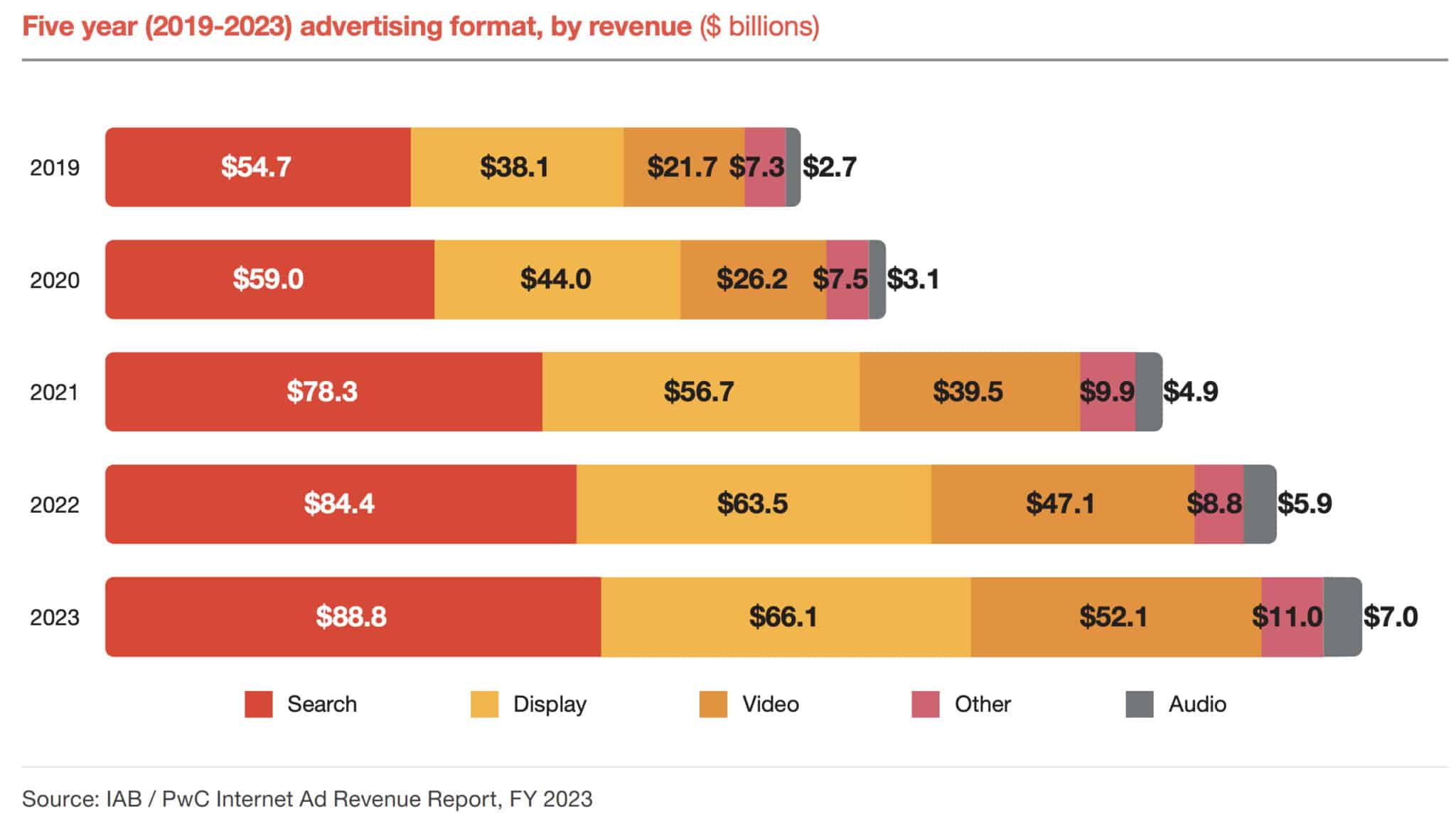
In total, search accounted for $88.8 billion of a record $225 billion in U.S. digital advertising revenues, according to the IAB Internet Advertising Revenue Report: Full Year 2023, conducted by PwC. That figure represents a $4.4 billion increase over 2022.
Why we care. Paid search becomes more expensive and challenging every year, with less transparency. But advertisers continue to embrace paid search for one simple reason: it drives results for brands and businesses.
Paid search is still king. Search continues to own the largest market share of advertising – 39.5%, but that is down from 40.2% in 2022, 41.4% in 2021 and 42.2% in 2020.
But YoY growth for search advertising is slower than the digital industry as a whole and the majority of other ad formats, according to the report.
The state of digital advertising. Resilient. Advertising continued to grow in a time of high inflation, rising interest rates and job cuts, according to the report. Of note from the IAB report:
Q4 had the highest growth rate – 12.3% – with revenues growing to $64.5 billion. In 2022 the growth rate for the quarter was 4.4%.
Social media ad revenue rose 8.7% YoY to reach $64.9 billion in 2023, with much of that growth coming in the second half of the year.
Video advertising accounted for $52.1 billion, or 23.2% of all advertising revenue, in 2023.
Display advertising revenues remained high in 2023 – $66.1 billion – though YoY growth was 4%, down from 12% growth in 2022.
Retail media networks saw a 16.3% increase in revenue YoY, reaching $43.7 billion.
2024 outlook. It’s “promising,” according to the IAB. Advertisers must, as always, adapt to changing consumer behaviors, consumption channels, privacy regulations and the ongoing generative AI revolution.
The report. You can read the report here (registration required).
The nature of employment has changed drastically in the past several years. The gig economy is on the rise. According to the World Economic Forum’s “Future of Jobs” report, over half the global workforce will engage in some form of freelancing by 2025.
Higher levels of unemployment are prevalent in low- and lower-middle-income countries, while the labor market is tight in high-income countries. Simultaneously, the cost-of-living crisis is causing real wages to decline. Freelance and gig work is seen as a solution to the unemployment problem. More people are also driven to take on extra gigs due to the insufficiency of their incomes.
On the positive side, the freelancing trend is driven by increased access to connectivity, the boom in apps and digital platforms, evolving work relationships between employers and employees, and the growing desire for fulfillment, flexibility, and independence.
Whether driven by necessity or a desire for better working conditions, freelancers are here to stay. Here, evaluate the unique financial planning for freelancers and how they can approach their money management strategically.
With the right approach, freelancers can seamlessly tackle budgeting, tax planning, investing, banking, and retirement planning. Using the right financial products, freelancers can reach their financial goals—improve their savings rate and income and secure their futures—while living on their own terms.
Top Financial Planning Strategies for Freelancers
Freelancers enjoy flexibility in their careers. However, they experience challenges such as unpredictability and insufficiency of income.
They must also deal with self-employment taxes, client payment delays, and collections issues. Other challenges that freelancers face include:
Inconsistent workload
Difficulty with retirement planning
Lack of insurance and emergency funds
Client acquisition costs
Business expenses
Problems in financial planning
Adopting the right approach to managing finances will ease many of these challenges and make freelance careers more fulfilling.
The following financial strategies are ideal for gig workers and freelancers:
Create a Detailed Budget
As a freelancer, you can’t afford to wing it when it comes to expenses. You need to create a detailed budget to manage income and expenses accurately.
However, because of variable pay, it could be challenging to start.
The best way to begin is to estimate average monthly income by reviewing income reports. With at least two years’ worth of income to analyze, you can start identifying your least and most profitable months. Determine your absolute minimum monthly income.
Next, know that there are three types of expenses: fixed expenses, debt expenses, and variable expenses. Identify fixed expenses like utilities, car payments, and rent or mortgage. Allocate a part of your income to variable costs like transportation, entertainment, and groceries. Debt expenses include credit card payments.
Incorporate an emergency fund to ensure unforeseen expenses are covered. Income gaps must also be considered a financial emergency. To provide an ideal financial cushion for lean periods, you must save approximately three to six months’ worth of living costs in a high-yield savings or checking account.
Manage Cash Flow
To manage cash flow properly, you must understand your financial state in-depth. After looking at broader data, look deeply at your weekly balance, costs, dues, and invoicing schedule. You can manage expenses and income using invoicing software automatically setting up recurring bills. Digital platforms can help track dues and client invoice dates to ensure optimal and uninterrupted cash flow.
Use Smart Banking Solutions
Innovative banking solutions can work wonders for the self-employed, providing the tools to help run the business efficiently and assist you as you grow your career. As a freelancer, you must look for a bank account with low fees and minimum balance requirements.
Search for an online high-yield savings account with competitive interest rates to maximize savings. Digital banks often have low to no account fees and a high APY, allowing freelancers to earn more on idle cash while having convenient and flexible access to funds whenever needed.
SoFi’s high-yield savings account can earn up to 4.6 percent APY and offers bonuses based on your direct deposit amount.
In addition, freelancers can look for additional features like integrations with other financial services and solutions like payroll, invoicing, and loans.
Photo by Firmbee.com on Unsplash
Manage Risk and Diversify
Income diversification is a valuable strategy that can help people of all professions, especially freelancers. Projects are typically spread out unevenly throughout the year. Moreover, the economic climate may affect clients’ businesses, resulting in dry spells in the freelancer’s cash flow.
Diversifying income streams helps mitigate the impact of unpredictable circumstances. It prevents you from relying too heavily on a single account.
Freelancers must constantly explore opportunities to learn new skills or upskill, expand their client base, network, and pursue multiple projects simultaneously. Such efforts help to increase earning potential and cushion against economic downturns.
Remember that income does not only come from professional labor. Consider investing in financial instruments like stocks and bonds and alternative investments like real estate. These investments can grow your money as you do your regular work. Be sure to understand the risks and requirements of each investment.
Also, note that your investment strategy must match your risk tolerance and financial goals.
Understand Taxes and Compliance
Freelancers are bringing in significant earnings, so financial planning for freelancers is a must. Globally, approximately 1.57 billion people are freelancers. The popularity of freelance platforms is rising; today, they are estimated to be worth $3.39 billion.
In Canada, 28 percent of adults work in the gig economy, primarily part-time. Moreover, nearly half of these workers say they do not declare their entire gig work income. This situation could pose problems in the future.
Freelance income is taxed. Whether a side gig or a full-time freelance account, it impacts how you file your taxes. Neglecting the nuances of compliance could result in an enormous tax bill.
For as long as you sell a product or service with an expectation of profit, the law in Canada considers you self-employed. Beyond completing your standard personal tax forms, you are also legally required to complete your self-employment income and expenses report to the Canada Revenue Agency (CRA).
If you fall under US jurisdiction, there are generally two types of taxes for freelancers: self-employment tax and income tax. You are responsible for paying the self-employment tax on your earnings.
However, you must also report the same earnings on your tax return. You’ll have to pay income tax for that year’s freelance income.
It is reasonable to set aside about 25 to 30 percent of every freelance check received in a separate savings account to cover self-employment and income taxes sufficiently.
Take advantage of the tax-saving opportunities available for freelancers. As a freelancer, you can claim several tax deductions to lower your taxable income, thus reducing your tax bill.
Freelancers in Canada can claim business expenses to lower tax bills. Claim all eligible costs to maximize tax deductions. Document all expenses, as the CRA may require you to provide proof.
Similarly, in the US, they can claim deductions on “ordinary and necessary” expenses—those you need to operate your business. These include advertising and marketing expenses, computer equipment, software costs, travel, business meals, office supplies, home office setup, and utilities.
Save your original invoices and receipts. Detailed bookkeeping and documentation go a long way in proving these business expenses, saving you money in tax season.
To make it easier to track expenses, open a separate checking account for freelance work. By keeping personal and business expenses separate, you can track business costs more efficiently and reflect them on your income taxes.
If you are still trying to figure out how to navigate your tax situation, which can happen when handling multiple income streams, consult a qualified tax professional.
Plan for Retirement
Retirement is an area freelancers may neglect. Eighty-five percent of Canadians who freelance are concerned about their retirement status.Without access to employer-sponsored retirement plans, it’s easy to overlook or de-prioritize retirement plans.
In Canada, freelancers are required to pay for their Canada Pension Plan (CPP) contributions. Everyone aged 18 to 70 with a $3500 income and up must contribute. Self-employed individuals are on the hook for the employer and employee portions of the CPP.
Canadian employment insurance (EI) contributions are optional, however. EI is helpful if you prefer to receive benefits for emergencies like sick leaves or situations like parental leave.
In the US, freelancers can save for retirement through solo 401(k)s and individual retirement accounts (IRAs). You can contribute regularly to such accounts to ensure that you take advantage of tax-deferred growth on your savings to build a comfortable nest egg.
To develop discipline on your contributions, consider automating them by setting up regular monthly transfers from your online bank account to your retirement accounts.
Get Insured
Many freelancers acknowledge a lack of health insurance and benefits. This is another significant disadvantage of gig work and self-employment. A lack of health insurance means you may have to pay hefty amounts when you get sick. This emergency cost can be devastating for freelancers. To prevent this from happening, freelancers must consider purchasing health insurance and public liability.
Professional Liability Insurance Plus Errors and Omissions Insurance
This type of coverage is relevant to freelancers, no matter their field. Freelancers provide third parties with professional services for fee-based compensation. Accusations of negligence, substandard work, or breach of contract could lead to legal action.
PR professionals, marketing specialists, strategists, IT professionals, web designers, and consultants depend on delivering work at a specified standard. Failure to provide satisfactory work sometimes results in lawsuits. Part of financial planning for freelancers is considering professional liability insurance which ensures sufficient funds for defense costs, judgments, or settlements against the freelancer.
Photo by Faizur Rehman on Unsplash
Cyber Liability Insurance
Cyber liability insurance offers protection of digital assets against malicious attacks and data breaches. Those who depend on the internet to send and receive data with personal information or consumers’ financial information will need to consider this type of insurance coverage.
Commercial Property Insurance
Freelancers who rely on physical locations like small leased offices or property for their businesses will need coverage. This type of financial planning for freelancers applies to floods, fires, theft, and vandalism and protects physical property and related assets.
Health Insurance
In Canada, many companies offer health insurance for the self-employed. Each plan has varied features, so select the best plan that applies to you and your budget.
There are several ways to get health insurance coverage in the US as a self-employed professional or freelancer. Those without employer-sponsored insurance (ESI) or access to a parent’s or employed spouse’s plan can consider health insurance marketplaces, Medicare, Medicaid, military benefits, catastrophic health insurance, and limited benefit plans.
Accessing Health Insurance Marketplaces
The US federal government’s health insurance marketplace was created as a central hub of comprehensive insurance options for small businesses and those without employer plans.
The broader program facilitates private health insurance shopping end enrollment via call centers, in-person assistance, and a website. Qualified health plans (QHPs) refer to all marketplace plans that cover essential medical services. They cannot place annual or lifetime caps on their insurance coverage.
Most US states use the federal site, healthcare.gov. Washington DC, California, and several others operate their platforms, accessible via the main site.
Master the Gig Economy: Be Proactive With Financial Planning
Being self-employed in the gig economy offers numerous benefits. However, freelancers are on their own regarding financial planning, paying taxes, saving for emergencies, and preparing for retirement.
With the right tools, like high-yield bank accounts and budgeting apps, freelancers can take charge of their income and manage their cash flow properly to make room for personal expenses, debt payments, investments, insurance coverage, and emergency funds.
Take advantage of provisions that reduce your tax bill. In a career characterized by variable income, you must avail of every opportunity to save money to compensate for slow months.
Your independence goes hand in hand with more significant financial responsibility as a freelancer. Consider automating many of your payments, digitizing your documentation, and using technology for data analysis to maximize many other functions and streamline your financial management process.
Whether you are in hospitality, real estate, or software development, it is important to know what is happening in your industry and the direction it is heading. This will help you to ensure that you stay competitive and grow your business. To help you on your journey, here are some top industry trends for booming industries that you need to know.
Hospitality
Hospitality itself is a booming industry, which means there are a lot of developments that are being invested in, to improve the industry. It took a hit with the pandemic but skyrocketed after as everyone wanted to get back to normal life. This combination has helped in the development of a lot of technological updates that are coming in 2024 and beyond, and are vital to utilize in your own business if you want to grow.
These updates include having a good website that offers online check-ins, fast online booking systems with automation, and a good customer journey. Many businesses are seeking the support of hotel website design professionals to implement these features to improve their customer experience. Robots are also going to be an industry trend in 2024 and beyond, on the hotel and restaurant floor providing basic support to customers to enhance their experience.
Real Estate
The real estate industry has been one of uncertainty for a while now, since the COVID-19 pandemic, which appears to be the cause of a lot of the economic conditions still to this day. However, there have been some great technological developments because of it, which has helped the industry grow.
Top industry trends for real estate to look out for include virtual reality, which will help estate agents provide an enhanced service to clients with a more immersive experience when touring houses. The real estate industry is also going to see a large increase in the emphasis on sustainability when it comes to properties and their performance to help offset rising interest rates, insurance costs, and more. People are very much interested in important climate issues around the world, especially as risks for homeowners are increasing.
People are also concerned about energy efficiency and the quality of indoor environments. Artificial Intelligence (AI) will be used a lot more, as it can enhance the property search process and real estate industry as a whole, as well as improve how investors can analyze their profits and investments, improve fraud detection, customer experience, showcase opportunities, customize services and help streamline a lot of work.
Software Development
Software development is an industry that is booming in 2024 and will continue to rise in the far future. As more businesses are created, software becomes in high demand. This means more businesses are utilizing technology to help them grow. Software is also growing significantly due to the demand for AI, automation, and the need for better workflows and communications within businesses.
There is a big emphasis on cloud-based software in 2024, with the rise in remote workers since the COVID-19 pandemic, to aid in business profits and collaborative working. It also provides businesses with the opportunity to open up their customer base to a wider network. Systems are being streamlined and integrated, and there is an urgent demand for more software development in cyber security. With the growth of the internet and technology, the risks have also grown.
Make sure you consider these top industry trends when planning your next business moves!
If you’re like most growing businesses, then you understand that you need to be on the ball with your marketing efforts, but you might not have the time to handle it all yourself, nor the budget to expand a whole marketing department just yet. Marketing agencies are there to serve businesses with that precise problem but a little research will show you that there are a lot of them. So, how do you know which is the right marketing agency for you?
Test Their Marketing Knowledge
One of the things about marketing is that, while the principles behind knowing your audience, crafting a strong proposition, and finding a niche for your brand have always remained strong, the methods by which you do that are practically ever-changing. Companies market differently today than they did ten years ago and, in ten years, we will likely have new marketing approaches. For instance, things like link-building and content marketing have been growing increasingly important over certain traditional marketing methods. Take the time to find out whether your choice of marketing agency is keeping up with the changes in the industry, and whether or not they will be able to adapt your own marketing plans as your needs dictate.
Ensure They Have Experience in Your Sector
You want to make sure that the right marketing agency is up to date with the marketing methods and trends that can help you keep your campaign ever-relevant, that’s for sure. However, you also want to make sure that their services are more relevant to you. Agencies that specialise in working with clients in your field and sector are likely to bring a lot more industry knowledge about your customer base, and competitors, as well as the methods that drive clicks, conversions, and calls. For instance, an eCommerce marketing agency is a lot more likely to know about how to build an online funnel driving customers to the sales they’re more likely to make than someone who has never worked in eCommerce. Always stick to those who bring industry knowledge.
Take the Time to Meet Them
Of course, your choice of marketing agency might look good on paper, but you want to get an idea of what it’s going to be like to work with them on a regular basis. As such, take the time to have a sit-down with them and make sure that it’s not just their own marketing pitch to you. Come with a few questions prepared that you can ask them about not just their services, but about their working methods, how they collaborate with their clients, and how they respond to feedback and requests. There’s a certain degree of deference to expertise you need to accept, but you don’t want a marketing team that will stubbornly stick to their guns, regardless of your own wants.
Finding the right marketing agency might sound like picking a needle out of a haystack, initially, but once you start understanding what it is that you’re really looking for, the best answers tend to present themselves a little more clearly. The tips above should hopefully help you see that.
Technology news rag The Verge has published a 700-word article half-filled with content generated by Google Gemini and a heavy dose of sarcasm that has been outranking more in-depth, well-researched and arguably more helpful content written by humans at publications for the competitive query [best printer 2024].
Why we care. Google has been telling us to write for people, not Google, a lot lately. This article will likely infuriate many brands who invest time and resources into researching products, with the hopes of ranking at the top of Google’s Search results. Others will point to this as proof that experience, expertise, authoritativeness and trustworthiness don’t matter.
Yet, the article ultimately does answer the question (“the best printer is still whatever random Brother laser printer that’s on sale”) – perhaps in the most ludicrous way possible.
Google Gemini. Last year, The Verge used ChatGPT to to generate half of its content. This year, that honor went to Google Gemini:
“Here’s what Google Gemini had to say when I asked it about Brother laser printers, which is not worth reading but which is by definition an incredible example of experience, expertise, authority, and trustworthiness because Google is synthesizing the entire web for this information, right? Isn’t that the whole idea of these LLMs, or are we just kind of fooling ourselves”
How it ranks on Google. I’m currently seeing the article in Position 2 (Chrome, incognito) on a search for [best printer 2024]. I’m seeing it in Position 1 (under SGE) when I’m logged in. Other have reported seeing it lower (Position 4 or lower).
Time will tell whether the ecosystem of content farms will do fake updates, as the Verge article put it, to push this article lower.
Google response. Google’s John Mueller was asked how articles like this rank so well on Google.
“People seem to really enjoy it,” Mueller posted on X.
This is probably an accurate statement. We know from the antitrust trial documents and the testimony of Pandu Nayak that user interactions (e.g., clicks) play a huge role in what ranks and what doesn’t. And The Verge may be a tech rag, but it is an authoritative one.
Little changed in a year. The Verge’s Editor-in-Chief Nilay Patel told Search Engine Land a year ago:
“The web is about to be overrun with AI-generated content explicitly designed to game the algorithms. Me doing this is the least of Google’s problems. At least I’m being honest,” Patel said.
It would have been more surprising to Patel if this article wasn’t ranking. That was the point – and the problem – Patel was pointing out then, and it remains true in 2024.
“The architecture of the web is built to Google specifications,” Patel said. “Here’s the skeleton of every webpage and you put a bunch of stuff in there to prove you’re smart.”
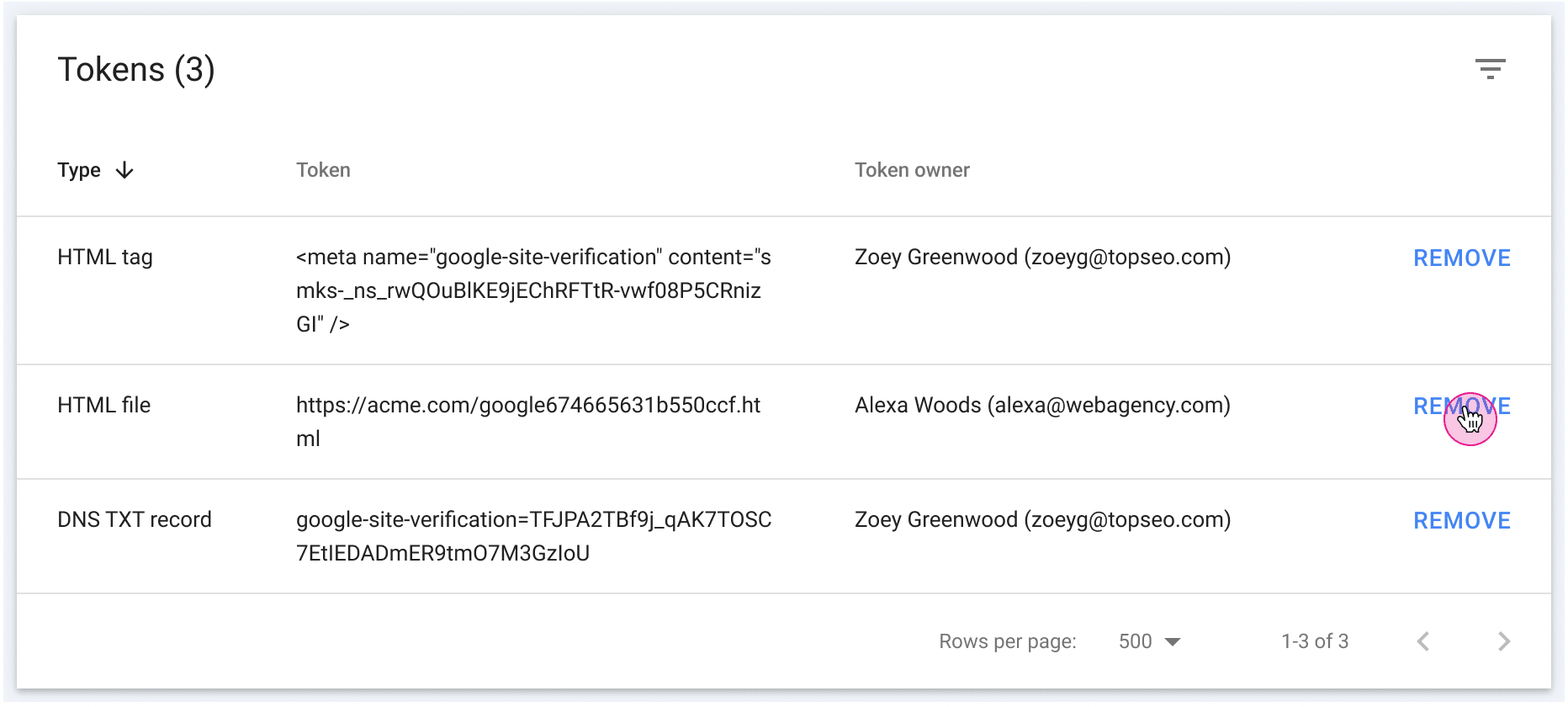
Google Search Console has released a security update around user permissions and controls management where you can better manage the ownership tokens. Ownership tokens are used for when people verify your site in Search Console, Merchant Center and other Google products and sometimes people who had access in the past to your profiles no longer should.
This update show make it easier to manage such access and remove those tokens and permissions when they are no longer needed.
We’re rolling out further improvements to Search Console’s user and permission management, incorporating capabilities related to unused ownership tokens management. Tokens are the codes used for website ownership verification in Search Console, Merchant Center, and other Google products. We have seen cases where these were accidentally left behind after owners have moved on. In February 2023, we rolled out improvements to the user and permissions management report. The latest changes will improve the accuracy and reflect the actual state of unused ownership tokens.
What it looks like. Int he user and permissions interface, under the “unused ownership tokens” you will see a screen like this where you can click “remove” to remove access to those ownership tokens:
How it works. Here are the steps to take to manage these ownership tokens:
Choose the tokens you’d like to remove and click “Remove” (see screenshot below)
Click “Verify removal” to get update for the unused ownership token
Why we care. It is always a good idea to ensure the right people have access to your data and Search Console properties and more importantly that the wrong people do not have access to it. As Nir Kalush from Google wrote, “The update rolled out today lets you verify the removal of the unused verification token so that removed owners cannot regain access to the property.”
So check your tokens and remove those who should not have access.
Companies’ hiring approach can be the linchpin of organizational success in the ever-evolving talent acquisition landscape. A strategic framework, known as structured hiring, stands out for its ability to streamline the recruiting process. The power of structured hiring paves the way for more deliberate and fair decision-making. Companies can better align their workforce with the organizational mission and values by standardizing the procedures and benchmarks in talent acquisition. A systematized hiring process increases efficiency and installs a sense of fairness and objectivity, essential components in today’s diverse workplace.
The Elements of a Structured Hiring Process
Benefitting from the power of structured hiring involves several crucial steps designed to enhance the recruitment experience. This transformative methodology starts with a meticulous breakdown of the job’s essential skills – the practical competencies, soft skills, and organizational fit. Crafting role-specific descriptive job postings then sets the stage for attracting ideal candidates. A consistent interviewing roadmap ensures that all prospects are assessed against the same criteria, which greatly aids in uncovering the most compatible talent. A harmonious blend of precision and fairness resonates across the hiring spectrum.
Defining Job Competencies and Crafting Effective Job Descriptions
The quest for the ideal candidate begins with an intimate understanding of the role in question. Defining job competencies involves identifying the technical skills required and the personal attributes that lead to success in the organization’s unique environment. Effective job descriptions translate these competencies into compelling narratives that speak directly to the sought-after talent pool, providing a beacon for those candidates whose aspirations and abilities align with the company’s needs and ethos.
Building a Consistent Interview Framework
Creating a uniform interview framework is a cornerstone of the power of structured hiring. This well-thought-out structure eliminates ad hoc questioning and ensures that each candidate’s experience and skills are evaluated equitably. Interviewers become more adept at identifying the details that matter, leading to more insightful hiring decisions that benefit the entire organization.
The Impact of Structured Hiring on Team Dynamics
Fostering a productive and harmonious work environment is an art, and structured hiring is its muse. By meticulously matching individuals to the culture and values that permeate the organization, businesses instill a powerful synergy within teams. This sense of unity and understood expectations from the get-go sets a precedent for how new hires integrate and contribute to the collective goals, leading to a ripple effect of positivity and enhanced teamwork.
Best Practices in Implementing Structured Hiring
There is an art and science to perfecting the structured hiring process. Initiating comprehensive training schemes equips interviewers with the necessary tools to evaluate candidates consistently. Leveraging technology can innovate and organize the workflow, allowing for a smoother operation that complies with legal considerations and promotes transparency. A focus on fair hiring practices ensures a merit-based selection and a reputation for integrity among potential future employees.
Overcoming Common Challenges in Structured Hiring
Adapting to structured hiring has its challenges. Maintaining a delicate balance between a rigid framework and the flexibility to accommodate the human elements of recruiting is a challenge. Organizations must be willing to iterate and evolve their approach, addressing unexpected variables and changing market conditions while sustaining a structured foundation strong enough to withstand these pressures.
Measuring the Success of Your Structured Hiring Approach
Quantifying the impact and power of structured hiring practices is essential for continuous refinement. Key performance indicators like time-to-hire, retention rates, and candidate satisfaction provide a clear picture of success and areas that demand attention. Incorporating regular feedback mechanisms from stakeholders ensures that the hiring process remains dynamic, resilient, and ever-improving, consistently matching the needs of the business and its employees.
The Role of Diversity and Inclusion in Structured Hiring
A commitment to diversity and inclusion is not simply a moral imperative but a strategic one. Structured hiring is at the forefront of this mission, minimizing unconscious biases and promoting a level playing field. A meritocracy in recruitment paves the way for vibrant, diverse workforces that reflect the world’s rich tapestry, engendering innovation and meeting the needs of a global customer base.
Structured Hiring in Different Scales of Business
The principles of structured hiring are universally applicable, whether in a scrappy startup or a sprawling conglomerate. This approach’s adaptability lies in its scalability. While the motives remain consistent, the application and complexity can be tailored to fit the organization’s size and stage of development, making it a versatile tool for growth and development across the corporate spectrum.
In this article, I will outline a process that shows you exactly how to do that and provide a simple template you can fill out to take your content to the next level.
Spambusters
At the time of writing, Google is doing some major spring cleaning to tackle some of the spammy, low-quality content littering the search results.
Unsurprisingly, much content is developed from an SEO perspective. Google’s latest update is designed to help push down some of this SEO-first content and surface people-first content.
Our goal here should be to create well-optimized, people-first content. Any savvy marketer knows you build trust with your prospects by being helpful and sharing.
A people-first content process
Google has a help page that provides several questions you can use to review your existing content to ensure it is helpful, reliable and people-first. Unfortunately (and ironically), this page is not helpful when creating new content.
In addition, I have created a simple process we use at my agency for planning, writing and reviewing new content that is people-first and ticks all of Google’s qualitative boxes.
To simplify following the steps, here’s a simple template you can fill out as you work through the article. Grab a copy of this first.
What follows is a six-step process for creating SEO-friendly content that is people first.
As a side note, while Google is at war with low-quality generic content, don’t feel like you can’t use AI tools to help. Just ensure you use these generative AI tools as an SEO assistant rather than create the whole article for you.
Step 1: Goals
What is your goal for this content? How does this fit into your overall SEO strategy and SEO planning?
Creating a well-considered goal is essential. The goal is what you are aiming at. If you are off the mark here, you will miss the target despite your efforts.
To strengthen goals, follow a simple process called “The Five Whys.” State your initial goal, then ask “why” up to five times until you have strengthened and clearly articulated your goals.
Example
Initial goal: Write a blog post about our eco-friendly kitchen products.
Why? To improve our website’s ranking on Google.
First analysis: I want to improve our website’s ranking on Google.
Why? Because a higher ranking will lead to more organic traffic to our site.
Second analysis: I want more organic traffic.
Why? Because increased traffic can lead to more customer engagement and brand recognition.
Third analysis: I want increased customer engagement and brand recognition.
Why? This engagement will likely lead to higher sales and customer loyalty.
Fourth analysis: I want higher sales and customer loyalty.
Why? With increased sales and a loyal customer base, we can further our mission to promote sustainable living and make a larger positive environmental impact.
Revised goal: Our objective is to create an informative blog post about eco-friendly kitchen products that educate users about kitchen sustainability. This will help us drive organic traffic to the site, increasing engagement and leads.
Action item
Outline your goals and refine them using The Five Whys technique. Incorporate SMART SEO goals to refine and articulate the objectives.
Step 2: Reframing for your audience
You know what you want, but Google does not care about your goals, only the satisfaction of its users. You must align your objectives with helping users while connecting them to your business and marketing mission.
To do this, you can employ “reframing.” Based on Ann Handley’s book “Everybody Writes,” it’s a tool for shifting perspectives and better serving our audience in marketing.
First, you should be clear on who your audience is. Google spells this out:
“Do you have an existing or intended audience for your business or site that would find the content useful if they came directly to you?”
Take your initial goal and look at this from your audience’s perspective. Ask, “So what?” and answer with “Because…” Do this exercise up to five times.
Example
Your goal: Our objective is to create an informative blog post about eco-friendly kitchen products to help generate leads for our sustainable kitchen products.
So what? We all need to learn how to be sustainable in all areas of our lives to help prevent global warming and ensure the planet’s safety for future generations.
So what? Learning about sustainability in the kitchen can help you reduce your environmental footprint, lead to healthier living and save money – good for you and good for your children.
Final goal: The article will provide a detailed look at how choosing eco-friendly kitchen products leads to a healthier lifestyle, cost savings and benefits for the planet. It encourages readers to make sustainable choices in their daily lives and shows them how to do that with our products.
Action item
Define your audience, query your goal, reframe it from the customer’s perspective and explain how it helps them. Fill it out in the supplied template. Ensure you can succinctly answer how this helps the reader.
Get the daily newsletter search marketers rely on.
The content you create should establish the author’s experience and expertise in a verifiable way. Google spells this out for us with the E-E-A-T and, more specifically, the requirement for “helpful, reliable, people-first content.”
What makes something reliable? Experience, expertise and credibility are good starting points.
Below are key points to remember based on Google’s documentation:
Experience
Your content should demonstrate first-hand experience and expertise. You should show a depth of knowledge by using a product or service or visiting a place. From a business perspective, you should clearly illustrate that you have experience.
Expertise
The content should demonstrate expertise or link to a page that does. For instance, if your business has accreditations, ensure they are visible on the site. If the author has specific expertise, ensure this is detailed on an author page.
Get your facts straight
Using data to illustrate your expertise is helpful, but ensure that any facts you use are 100% correct, referenced and do not contain unsubstantiated claims.
‘About us’ and author pages
Your site should feature “About us” and author pages that expand upon the credibility of the business and the individual authors. Link to these from your content. Google mentions these pages specifically, so give it what it wants.
Action item
In the people-first content template, fill out the four expertise boxes covering experience, expertise, fact-checking and about us and author pages.
Step 4: Aim high
You should aim to create unique content that is different or better than elsewhere. Your overall SEO strategy is important here, as you want a reason to stand out from the crowd, and that should flow through your content marketing.
Google provides us with 12 points to review content quality. However, we can summarize these into six points that you can use to guide your content creation.
Data and examples
Identify data and examples that support your article. Include these, and be sure to cite them correctly. Remember, people love stats and having something makes your content linkable (which is still crucially important).
Add something to the discussion
Look for areas where you can add something new to the discussion, such as new research, reporting or analysis. This does not have to be complicated. Run a short survey, but add something new to the discussion to add value to your article. In a nutshell, don’t just say the same thing as everyone else!
Use clear titles
Create clear, descriptive, accurate and non-sensational titles summarizing the content. You can still optimize but do so sensibly. Always prioritize people over SEO.
State your sources and add commentary
When referencing other sources, add value. Avoid just rewriting or restating; try to add a unique spin to what is already there. Use your experience and expertise to do so. You are an expert on this topic; your opinion and experience here matter.
Focus on quality and make it easy to share
Ensure the content is well produced. Use AI tools here to help if you wish. Don’t take every recommendation. Keep your voice in the piece. Aim for something of the same quality you expect in a newspaper or other printed media.
Action item
Fill out page four of the template. Don’t worry about finding something for each of these but try to ensure you bring something new.
In some respects, this is the easy bit. Once you have completed the research steps above, you will know the angle from which you are coming. I recommend copying your overall goal at the top of your document so you can use that as your North Star!
The steps you take now will vary depending on your own writing style, but the key here is that planning sets up success.
My approach is something like this:
Decide on the format (blog post, list, stats, etc.).
Outline bullet points of the sections.
Work on a very rough first draft (just write – don’t stop to edit).
Walk away for a few hours, at least.
Write the second draft.
Walk away and sleep on it.
Review using Google’s question list.
Write the third draft.
Editor review.
Tweak and publish.
I often think the most important aspect here is to sleep on it. If you can and if, like me, you are fitting in writing around running your business, then it can make sense to do the big steps over different days.
Day 1: Plan and bullet points
Day 2: Rough first draft
Day 3: Second draft
Day 4: Third draft, edits and publish
A key element for me is the sleeping on it factor. When you are writing like this, you are often trying to solve a problem and your planning and first drafts get you so far.
But then, when you sleep on it, your subconscious starts to work through all those little bits that are not quite there yet.
Then, when you work on your second and third drafts, you will strengthen the article so much more (and it is much easier).
At this stage, if you want to be absolutely certain you have nailed this, you can revisit Google’s Helpful Content help page to self-assess your content.
Having conducted the planning process, this should be orders of magnitude easier. Starting your content creation with planning and ending with a qualitative review will strengthen your approach and improve your results.
Page experience and SEO
One last point of importance: the content should be housed on a site that provides a solid page experience.
Crafting people-first content: A blueprint for SEO success
While there is a lot of change and doomsaying at the moment, content marketing with SEO is still a viable tactic for authentic experts who can help the target audience.
Google has articulated what they are looking for. By carefully reviewing the help pages on E-E-A-T and creating helpful content, we can build a process that ensures we are aiming at exactly what Google is aiming at (that is, real SEO that stands the test of time).
This dogged focus on the end user is truly what marketing is all about and why Google is such a big company. Getting into this mindset and making it the heart of your SEO philosophy will only improve your results.
Be sure to determine some simple SEO KPIs to measure your success and keep focused on creating content that helps you while helping your audience.
Brand mentions are crucial in shaping brand presence and perception across the search universe. This article explores the growing relationship between brand mentions and their significance in developing share of search and boosting brand search.
We will also:
Dive into the nuances of brand mentions.
Examine how brand mentions impact search marketing, both on traditional and social search platforms.
Discuss strategies for integrating brand mentions into a cohesive search marketing approach.
Understanding brand mentions
From publications to social channels, right through to search platforms, conversations about brands are happening across an increasing number of touchpoints.
Broadly speaking, brand mentions are any reference to a brand within digital content, encompassing a wide array of online interactions.
These mentions can be categorized into:
Direct mentions.
Indirect mentions.
Direct mentions
These are clear references where the brand name is explicitly mentioned.
Direct mentions are straightforward to track and measure, providing clear insights into brand visibility and audience engagement.
Social Sentiment tools, such as Brand24 or Brandwatch, can be leveraged to monitor them.
Indirect mentions
These may involve product names, services or content closely associated with the brand without explicitly naming it.
These mentions require more sophisticated tracking methods but offer valuable insights into the broader brand landscape and still impact share-of-search.
Understanding the types of mentions is imperative to understanding their impact on brand search and share of search.
Developments in search volumes, as well as trends around brand terms and products, are signals we can turn to when reporting on the impact of direct/indirect mentions across channels.
Where brand mentions occur
Brand mentions can occur across numerous channels, each holding a unique audience and interaction style.
Social media
Instagram, X, TikTok, Pinterest and Facebook are hotbeds for brand mentions, with users frequently discussing brands in posts, comments and stories.
Brands that can manufacture these mentions through strategic activations around UGC campaigns, influencer marketing and owned content can effectively develop their share of search.
Blogs, news and articles
Written content on blogs and news sites often includes brand mentions, either as the primary focus or within broader topics.
Digital PR remains a fantastic way to achieve coverage within these online publications.
Previously, the elusive “follow” link was the goal. Moving forward, brand mentions will become the desired goal.
Forums and discussion boards
As Reddit and Quora gain prominence in search engine results, brands can leverage them for in-depth discussions on specific topics.
Brand mentions on these platforms offer valuable insights, enhancing perception and awareness.
Online reviews and feedback platforms
Sites like Yelp, Google Reviews and TripAdvisor feature direct customer feedback, making them invaluable for assessing brand sentiment.
Such reviews can then be leveraged within our website content to showcase “trustworthiness.”
Understanding brand mentions across various touchpoints is crucial. It’s the initial step in using them within a comprehensive search strategy.
Monitoring and engaging with these mentions offer valuable insights into public perception and user needs.
The influence of brand mentions extends beyond name-dropping. They offer a crucial way for brands to shape their presence in SERP results across the search universe on both traditional and social search platforms.
Let’s look at the impact of brand mentions on search marketing.
Traditional search
For traditional search, the benefits of attaining and leveraging brand mentions are significant, albeit indirect.
I remember Carrie Rose from Rise at Seven discussing how brands can use mentions to expand their presence on SERPs in a 2023 conference talk. This remains relevant today.
Brands can leverage brand mentions across the channels we have discussed to begin dominating SERPs, ensuring their brand owns SERP real estate.
By associating brand names with relevant search terms and striving to generate mentions alongside these terms, it’s possible to:
Increase visibility on social search platforms.
Get featured in press articles often appearing at the top of search results.
Gain exposure on forums that are becoming more prominent in search results.
This method ensures that brands are front and center for vital terms in the non-brand space – a huge SEO win.
Social search / search universe
When we shift our focus to the emerging search universe and social search platforms, brand mentions begin to take on a different form.
Brand mentions on social search platforms aim to boost brand awareness and fame, ultimately driving conversions, often through traditional SEO platforms.
Traditional search relies on us searching to show us relevant content. On social platforms, these handcuffs are removed.
Social algorithms look to provide relevant content to users upon their feed, typically related to previously engaged content.
In this case, social platforms could deliver the content featuring our brand mentions without a search, making social platforms an enticing prospect for brands.
Each platform has individual nuances that need to be considered. Ultimately, social search allows brands to blur the lines between demand generation content and demand capitalization content, something traditional search simply cannot replicate.
In the process, we can facilitate brand search and improve share of search – a win-win!
Brand mentions on traditional and social search platforms
Let’s explore some of the benefits of traditional and social search brand mentions.
Expanding reach
Every mention serves as a digital beacon, a brand bat signal if you like, potentially reaching new audiences across these diverse platforms.
These audiences may not have encountered the brand otherwise, broadening its reach beyond its existing community.
Building trust and authority
In the eyes of consumers, frequent mentions by reputable sources can elevate a brand’s status, lending it credibility and authority. This perceived authority makes the brand more visible and attractive to potential customers.
In traditional SEO, this arises from coverage in press and publications. For social search, it is more likely to arise from user-generated content (UGC) or a community’s favorite content creators.
Driving engagement and conversations
Brand mentions can spark discussions and engagement, increasing visibility in public forums, social media or comment sections.
They keep the brand at the forefront of relevant discussions, enhancing its presence online. This can be manufactured to move people to a landing page as part of this discussion or conversation.
How to integrate brand mentions into a strategy
Brand mentions will likely occur naturally, but relying on this is insufficient. Instead, you can manufacture your search strategies with “achieving brand mentions” as a key consideration. This involves consistent monitoring and analysis of your brand mentions.
Adopt processes and tools to monitor such mentions across platforms so you can assess their impact on visibility, brand search trends and share of search. This should be the foundational piece of your puzzle.
From here, actively engage with your brand mentions, especially on social search platforms. Respond to reviews, participate in conversations and contribute to discussions, as these will amplify the impacts and effects of your activations.
Crafting a content strategy to boost brand search and enhance share of search is crucial, especially if you’re seeing a shift toward social search destinations among your audiences.
To drive better brand mentions and long-term value, consider:
Using outreach and digital PR.
Creating shareable content.
Activating creator-led content.
Leveraging UGC.
Participating in emerging trends.
This strategic approach to leveraging brand mentions enhances organic visibility, enabling you to secure a prominent place in the search universe.
Driving brand mentions across the search universe
By strategically fostering brand mentions, you can command a considerable share of search, marking your territory in the evolving search universe.
Integrating brand mentions into a cohesive search marketing strategy requires a proactive and creative approach – monitoring, engaging with and cultivating organic mentions are foundational steps.
To truly capitalize on brand mentions, you must also craft resonant content, collaborate with influential voices and participate in digital trends that elevate your presence beyond traditional search.
By embracing a search-everywhere approach, you can harness the full spectrum of opportunities brand mentions offer.
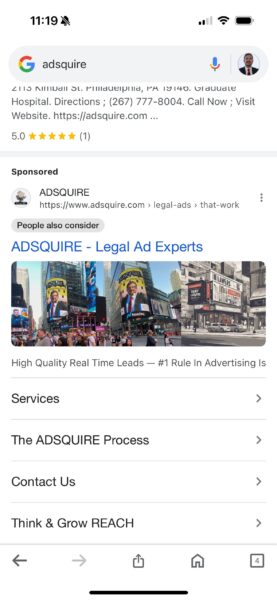
Google is trialing a new People Also Consider badge on ads served within branded search results.
The label appears as a grey box positioned underneath the company name, logo and URL as demonstrated in the screenshot below:
The feature is not clickable, and so the purpose of it is causing confusion amongst PPC marketers.
First spotted. The new ad badge was first spotted by Anthony Higman, CEO of online advertising agency Adsquire. He shared his thoughts on X:
“Google Ads is getting weird AF. ‘People Also Consider’ badge on a search for our brand.”
“What else is there for people to also consider on a search for my brand? Or is this a sign of things to come?”
“Is this what they have been doing by matching all branded terms to keywords? Are they really about to throw all of us into our competitors’ ad auctions unsolicited and then just toss a ‘People Also Consider’ badge on those ads and call it a day?”
“I’m thinking it’s why they have been matching brands to keywords for the last two years. If they are really about to do what I think they are going to do with these, it is NOT clever or innovative, its desperate and grimy.”
What Google is saying. Google did not immediately respond to Search Engine Land’s request for comment.
Get the daily newsletter search marketers rely on.
Why now? The new badge comes just a week after Shalom Goodman spotted Google testing a “Related to your search” badge on search ads. This label also appeared as a grey box positioned underneath the company name, logo and URL as demonstrated in the screenshot below:
Google is yet to offer any insight or further explanation around this feature.
Why we care. If Google starts forcing companies into their competitors’ ad auctions, it could be bad for business. Customers might see competitors’ ads when searching for your brand resulting in you losing a potential sale. Additionally, paying for ads on competitor brand searches are unlikely to reach high-value customers as they are looking for a specific brand, not just a service – which ultimately creates a poorer user experience.