In today’s fast-paced world of social media advertising, Instagram has emerged as a popular platform for businesses to promote their products and services. With over one billion active users, Instagram offers a vast audience to target and showcase your brand. However, creating an effective Instagram ad campaign requires more than just uploading a few eye-catching images and captions. You can hire an Instagram ads agency to help you with the process or follow some of these tips to ensure your ad campaign is successful.
1. Define Your Target Audience
As one of the leading social media platforms in the world, Instagram offers businesses an opportunity to reach their target audience in a highly engaging way. However, creating effective ad campaigns on Instagram requires a strategic approach. One of the most critical steps in the process is defining your target audience and establishing clear goals for your campaign. Creating a detailed profile of your target audience, including demographic and psychographic information, helps you tailor your ads to potential customers who are more likely to engage with your brand.
2. Choose High-Quality and Eye-Catching Visuals
One of the essential elements of an effective Instagram ad campaign is using high-quality, eye-catching visuals accompanied by a clear call to action. Instagram is a visual platform, and users are more likely to engage with ads that capture their attention with stunning imagery. When designing your ad, select images or videos that are visually appealing and align with your brand’s aesthetic. Additionally, make sure to include a clear call-to-action that communicates the desired action you want users to take.
3. Experiment with Different Ad Formats
Creating an effective Instagram ad campaign requires experimentation with different ad formats. One of the most popular ad formats on the platform is the story ad, which allows you to create short, engaging ads that appear in between Instagram stories. Story ads could be used to showcase a new product or service or to promote an ongoing campaign. Another format to consider is carousel ads, which allow you to include multiple images or videos in a single ad. This format is ideal for showcasing a variety of products, features, or benefits.
4. Use Relevant Hashtags and Geotags
One of the most effective ways to increase visibility and engagement on Instagram is to use relevant hashtags and geotags in your posts. When you use appropriate hashtags in your posts, you make it easier for people who are interested in the same topics to find your content. This means that your posts will be seen by a wider audience beyond just your followers. Similarly, adding geotags to your posts can help you reach people who are searching for content in a specific location.
5. Continuously Track and Analyze Your Ad Performance
One of the most important aspects of creating an effective Instagram ad campaign is tracking and analyzing your ad performance. This crucial step allows you to examine the effectiveness of your campaign strategy, understand what is working and what is not, and make necessary adjustments to improve your results. Some key metrics to track include impressions, reach, engagement rates, and conversion rates. By analyzing these metrics, you can gain insights into how your ads are performing and identify areas for improvement.
In Conclusion
Creating an effective Instagram ad campaign can greatly benefit your business by increasing brand awareness, driving traffic to your website, and ultimately leading to higher conversions. By implementing these tips, such as defining your target audience, choosing the right ad format, and tracking your metrics, you’ll be able to create successful Instagram ad campaigns that resonate with your audience and achieve your marketing goals.
Under budget constraints but also under pressure to generate growth, marketing and marketing ops leaders have been taking a close look at the ROI on martech solutions.
We want to know what conclusions you have been reaching. Have you been consolidating your existing stack? Have you been gambling on promising new tools? Are you perhaps reducing your tech holdings?
The needfor better features. The 2022 survey showed solutions being replaced in a quest for better features, in particular:
Better integrations/open API.
Improved data capabilities.
Ability to measure ROI.
Better customer experience.
Those were all higher on the list than cost. What, if anything, has changed?
We’re in a very different place than we were just a year ago. The world opened for business again. Many people returned to the workplace. It was no longer necessary to do almost everything – from shopping to hanging out with friends – digitally.
That doesn’t mean we’ve abandoned our multi-faceted digital environments. We discovered that many virtual experiences worked just fine. There was, however, something of a deceleration in digital transformation (after the insane acceleration of 2020), arguably leading to the retrenchment we saw in a number of marketing tech companies that had perhaps grown too fast.
Taking the temperature. Against a backdrop of economic uncertainty, our hunch is that there’s still a thirst out there for innovation, for tech-enhanced efficiency, and for better-supported data-based decision making. After all, marketers have hardly hesitated to get their hands on generative AI.
But we need data to see whether our hunch is right. So please take about three minutes or so to complete our Replacement Survey and let us know how your martech world is evolving.
Under budget constraints but also under pressure to generate growth, marketing and marketing ops leaders have been taking a close look at the ROI on martech solutions.
We want to know what conclusions you have been reaching. Have you been consolidating your existing stack? Have you been gambling on promising new tools? Are you perhaps reducing your tech holdings?
The needfor better features. The 2022 survey showed solutions being replaced in a quest for better features, in particular:
Better integrations/open API.
Improved data capabilities.
Ability to measure ROI.
Better customer experience.
Those were all higher on the list than cost. What, if anything, has changed?
We’re in a very different place than we were just a year ago. The world opened for business again. Many people returned to the workplace. It was no longer necessary to do almost everything – from shopping to hanging out with friends – digitally.
That doesn’t mean we’ve abandoned our multi-faceted digital environments. We discovered that many virtual experiences worked just fine. There was, however, something of a deceleration in digital transformation (after the insane acceleration of 2020), arguably leading to the retrenchment we saw in a number of marketing tech companies that had perhaps grown too fast.
Taking the temperature. Against a backdrop of economic uncertainty, our hunch is that there’s still a thirst out there for innovation, for tech-enhanced efficiency, and for better-supported data-based decision making. After all, marketers have hardly hesitated to get their hands on generative AI.
But we need data to see whether our hunch is right. So please take about three minutes or so to complete our Replacement Survey and let us know how your martech world is evolving.
Microsoft Ads will start collecting more website data through its Universal Event Tracking Tag to power UET Insights, a new dashboard for advertisers to launch in June.
The dashboard. Data will be available in near real-time and won’t be sampled on the new dashboard. It will include these metrics:
Session count.
Popular pages.
Device breakdown.
Country breakdown.
Quick backs (the number of sessions where a visitor navigated to a page, then quickly returned to the previous page during the selected time period).
Average active time.
Here’s a preview of what the UET Insights dashboard looks like:
New data signals. Additional website performance signals captured by the UET Tag will include:
Page latencies (speed and load times).
Click and scroll interactions.
Purchase cart details.
Cart abandonment details.
Browser-based signals.
JavaScript browser errors.
Starting June 29. That’s the date when Microsoft will automatically enable UET Insights on all existing UET tags. UET Insights will be enabled by default on all newly created tags.
Opting out. Before UET Insights is enabled:
Complete an opt-out form by June 26 to disable the automatic upgrade.
After UET Insights is enabled:
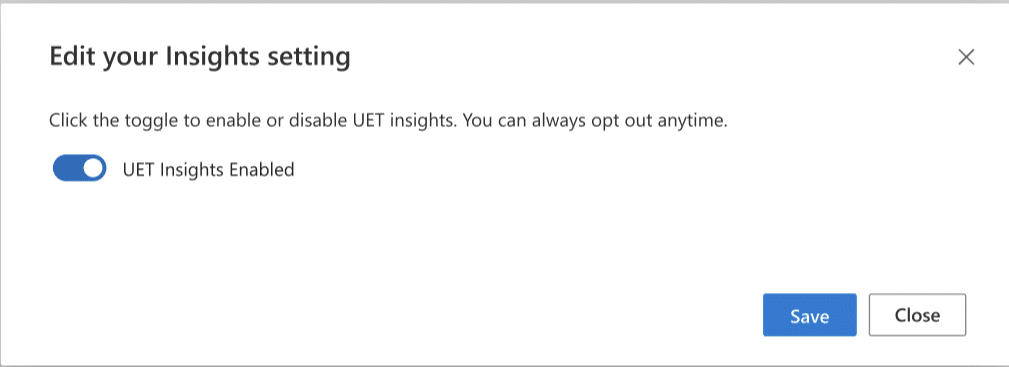
Disable one tag: Navigate to Tools > UET tag, select your tag. Hover over UET Insights, select the pencil icon. You’ll get a pop-up, Edit your insights setting. Set the toggle to off.
Disable multiple tags: Go to the All Tags page, select all the tags you want and choose Disable Insights.
Why we care. Microsoft says the goal here is to help advertisers better understand user engagement and improve ad targeting. Hopefully this new data can help advertisers improve ROI and drive more traffic and conversions.
About UET Tags.Launched (then on Bing Ads) in 2014, a sitewide UET tag powers conversion tracking, remarketing and automated bidding strategies on Microsoft Ads.
What do craft beer, food delivery and B2B buyers have in common? A call for more personalization because of younger, more digitally native buyers. These themes are explored in episode one of The MarTech Podcast: Data Makes the Difference series.
Sponsored by:
Kim Davis, editorial director at MarTech and Chris Garza, regional vice president, field and inside sales at Dun & Bradstreet, discuss how the buyer’s journey has transformed significantly in recent years, forcing marketers/sellers to reach customers in new ways.
Data will be the key to achieving success in this new reality.
Tune into the podcast and learn:
Where sales and marketing teams are finding success in this evolving landscape
The role data plays in pivoting strategies to reach prospects
Where the buyer’s journey is headed and how that will impact you
Guest
Chris Garza
Chris Garza is an experienced sales leader with over 12 years of successfully leading B2B-focused sales teams through transformation and growth. His experience leading inside, mid-market, and enterprise sales teams gives him a broad perspective of what it takes to succeed in an inside sales environment while also understanding how to build pipeline and relationships with the largest, most strategic customers.
Garza has spent the last 15 years at Dun & Bradstreet, where he has held various different senior sales leadership roles. He currently leads the new business sales organization at Dun & Bradstreet, focused on selling across D&B’s Field and Inside Sales channels.
Moderator
Kim Davis
Kim Davis is the Editorial Director of MarTech. Born in London but a New Yorker for over two decades, Davis started covering enterprise software ten years ago. His experience encompasses SaaS for the enterprise, digital- ad data-driven urban planning, and applications of SaaS, digital technology, and data in the marketing space.
Prior to working in tech journalism, Davis was Associate Editor at a New York Times hyper-local news site, The Local: East Village, and has previously worked as an editor of an academic publication and as a music journalist.
Sponsor
Dun & Bradstreet, a leading global provider of business decisioning data and analytics, enables companies around the world to improve their business performance. Dun & Bradstreet’s Data Cloud fuels solutions and delivers insights that empower customers to accelerate revenue, lower cost, mitigate risk, and transform their businesses. Since 1841, companies of every size have relied on Dun & Bradstreet to help them manage risk and reveal opportunity. For more information on Dun & Bradstreet, please visit www.dnb.com.
Google has started to invite the first set of users to the new Search Generative Experience today. Some of you who have signed up for the waitlist should receive an email notifying you that you have access.
What Google said. “Today, we’re starting to open up access to Search Labs, a new program to access early experiments from Google,” Google wrote. “If you’ve already signed up for the waitlist at labs.google.com/search, you’ll be notified by email when you can start testing Labs experiments,” Google added.
How to try it. If you were accepted, you can opt-in to these experiments by tapping the Labs icon in the latest version of the Google app (Android and iOS) or on Chrome desktop to sign up.
You can also visit the Labs site to check your waitlist status, here is more on how to sign up.
Check your email. So go, check your email to see if you have access. Emails notifications are being sent out today. You can learn more over here from Google.
Once you’re in, the new generative AI powered Search experience will help you take some of the work out of searching, so you can understand a topic faster, uncover new viewpoints and insights and get things done more easily. So instead of asking a series of questions and piecing together that information yourself, Search now can do some of that heavy lifting for you, Google wrote.
Why we care. This is an experimental version of the new Google Search. Playing with this can be fun, educational and exciting. We don’t know what Google will eventually launch in the future, but this is the direction Google is thinking about now.
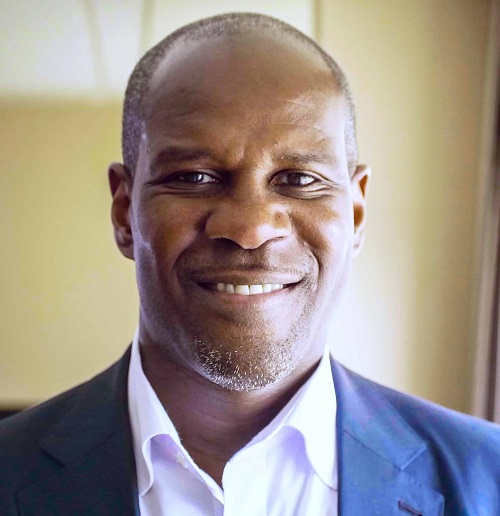
Interview with author, hip-hop media owner, and CEO James Rosseau
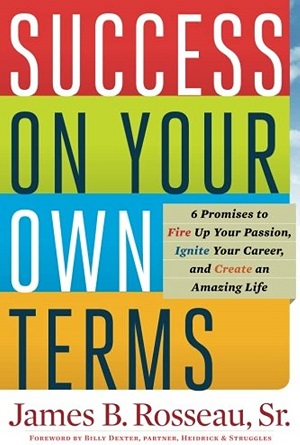
On the Home Business podcast, we love entrepreneur success stories. James Rosseau hits that target. James Rosseau is a hip-hop media owner, CEO and author of the new book Success on Your Own Terms: 6 Promises to Fire Up Your Passion, Ignite Your Career and Create an Amazing Life. (www.jamesrosseausr.com)
James shares an inspiring blend of personal setbacks and triumphs, smart strategies, and lessons learned on his way from a North Philadelphia neighborhood to a Fortune 100 boardroom.
Subjects discussed in podcast include:
• Being a Christian hip-hop media owner
• Perspectives gained from being on a Fortune 100 boardroom
• Inspiration behind authoring his book “Success on Your Own Terms”
• Embracing your passion
• Performing with progress versus perfection
• Fulfilling the promise to “Parlay Your Platform”
• Promoting with a purpose
• Putting your success plans into action
• One thing a listener can do to achieve success on his or her own terms
TikTok is testing an AI chatbot in select markets. Called Tako, the AI-powered tool is meant to help TikTok users with search and discovery.
Why we care. Google has acknowledged that TikTok is a threat. So we’re watching closely as TikTok makes moves to improve search on its platform, as well as testing search ads.
What it looks like. Here’s how TechCrunch described it:
“It will appear on the right-hand side of the TikTok interface, above the user’s profile and other buttons for likes, comments and bookmarks. When tapped, users can ask Tako various questions about the video using natural language queries or discover new content by asking for recommendations.”
Here’s a screenshot:
Image source: TechCrunch
What TikTok is saying. TikTok confirmed the AI chatbot is being tested with select users in the Philippines, via Twitter:
“We’re in the early stages of exploring chatbot tools with a limited test of Tako with select users in the Philippines. Tako is an AI-powered tool to help with search and discovery on TikTok. Tako is powered by a third-party chat assistant and is designed to help make it easier to discover entertaining and inspiring content on TikTok. No current plans for this beyond these early tests, but we’re excited to hear your feedback!”
Google’sTikTok threat. Google revealed a surprising stat last year: that 40% of young people go to TikTok or Instagram (not Google Maps of Search) when searching for a place to eat lunch. That was according to Google Senior Vice President Prabhakar Raghavan, citing internal research of U.S. users between the ages of 18 and 24. He also noted these newer Internet users search differently.
TikTok is not a search engine like Google, which crawls the entire web. TikTok is basically an internal search engine – like YouTube, which is often called the second biggest search engine. And this new AI chatbot, if rolled out globally, could let TikTok users discover content via chat rather than typing in a search box.
The summer 2023 music festival season has officially begun, and Alabama certainly made a splash in the music scene last weekend (May 19th – May 21st) after it hosted the 12th annual Hangout Music Festival down on the white sandy beaches of Gulf Shores, AL. Hangout’s diverse and exciting lineup of both A-list headliners and rising stars brings in a wide variety of music enthusiasts from around the world to the stunning shores at the Gulf of Mexico. Hangout also brings a bevy of first-rate sponsors in to provide both an interactive marketing experience for attendees and an array of product samples and demonstrations. With over 30,000 swimsuit-wearing attendees at this year’s event, Hangout Music Festival absolutely delivered on its promise of an unforgettable musical paradise with its blend of top-notch performances and beachside fun.
Courtesy of Hangout Music Festival // [Credit: Alive Coverage]
Hangout’s stacked star-studded lineup included prominent stars from a wide variety of genres, catering to any musical experience an attendee is looking for, from high-energy to more lowkey vibes. Friday started the weekend off on the hottest note with energetic and provocative performances by Tove Lo and RUSS at the Hangout stage and Lil Nas X at the SHEIN Surf stage, along with head-bopping sets by Gryffinat the SHEIN Surf stage, Two Feet, and REZZ. Unfortunately, Rainbow Kitten Surprise had to drop out of the festival but was fortunately replaced by the widely-acclaimed Louis The Child at the Hangout stage, who just happened to be attending the festival! Finally, Red Hot Chili Peppers turned back the clock to simpler times with a nostalgic rock set at the Hangout stage to close out the night.
Courtesy of Hangout Music Festival // [Credit: Alive Coverage]
Saturday was a great day to taste test many different genres of music with performances all around the musical spectrum. The main acts of Big Wild at the Shein Surf stage and COIN at the Hangout stage started out the day with energetic beats to beautiful vocals that both revived the crowd and got them ready for the rest of the exciting day. AJR took the Hangout stage later on with a highly-interactive set that included both past hits and new ones, followed by a mesmerizing performance by Flume that was perfectly timed with the colorful sunset. Paramore brought the nostalgic punk-rock vibes that kept everyone jumping in the sand to every relatable lyric. Finally, SZA closed out the day at the Hangout stage with a vibrant performance that captured both her vocal capabilities and her exquisite choreography and artistic touches.
Courtesy of Hangout Music Festival // [Credit: Alive Coverage]
Although the last and usually most exhausting day of the festival, Sunday still brought in notable headliners that kept even the most fatigued attendee energized from sunrise to sunset. The day started off on an exciting note with Yung Gravy bringing the heat early in the day at the Hangout stage; his performance hilariously ended with him falling over while handing out roses to a lucky few in the crowd. The people suffering from the sunday scaries chilled out to beautiful and more low-key performances by Said the Sky at the smaller BOOM stage and Noah Kahan at the SHEIN Surf stage, while turning the energy back up during Elohim at the Monster Energy Tent and Ashnikko at the SHEIN Surf stage. Finally, Skrillex‘s long-awaited return to the SHEIN Surf stage whipped everyone’s heads a full 180 degrees with his head-bang-worthy bass. Calvin Harris closed out the 3-day festival on the highest note with an electrifying Hangout stage set that included all of his popular hits, giving the crowd a festival glow for days to come.
Hangout didn’t just include exhilarating beachside musical performances — it also had many attractions that kept attendees busy with activities in between concerts. These included a Ferris Wheel running constantly throughout the weekend to give attendees a full view of both the festival grounds and the 6 stages, beach volleyball for groups of friends or strangers to play together, roller skating for both the seasoned skaters and the uncoordinated (they had rolling walkers), and hammocks throughout the beach and water for a way to relax and unwind after a tiring set of jumping to the beats. There was also a wide array of art installations throughout the festival, allowing for both endless photo opportunities for the festival squads and a marketing opportunity for sponsors.
Festival Goers enjoyed the vibrant backdrop at the Aperol Booth.
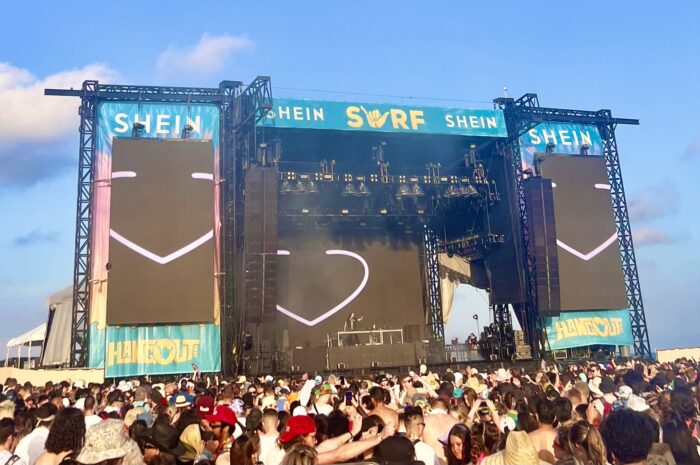
As the top sponsor of the Hangout Music Festival, SHEIN had a huge opportunity to showcase its prominence in the beachwear industry. SHEIN Surf stage was one of two main stages at the festival, showcasing the brand to virtually everyone at the festival. SHEIN’s Surf Club at the festival was the most brightly colored station at the festival grounds. It featured a walk-in cabana with a viewing desk for the perfect view of the SHEIN Surf Stage. SHEIN also offered complimentary accessories for the perfect addition to any beach outfit, along with refreshing tropical drinks and popsicles for guests to cool down during the sunny performances. SHEIN debuted SHEIN x Hangout Music Fest, a collaboration with the festival that was dedicated to comfortable beachwear one can easily take to a beachside music festival and dance all day in the sand. SHEIN also featured different photo opportunities throughout the cabana, notably a model jet ski for guests to sit on and take their glamorous “ocean life” instagram photo.
Corona
Guests enjoyed the beachside hammock at the Corona Private Beach.
Known for its light and refreshing taste, Corona was the perfect beer to sponsor an event dedicated to fun under the sun. Often associated with beachside vacations, Corona brought the laid-back vibe to a dedicated spot right between the two main stages where guests could take a pit stop to grab a drink, go down to the waters of the Gulf through a dedicated 21+ beach entrance, play bags, or even participate in the exciting games of beach volleyball located within the Corona area.
Monster Energy
Monster Energy’s Electrifying Stage at Hangout Music Festival.
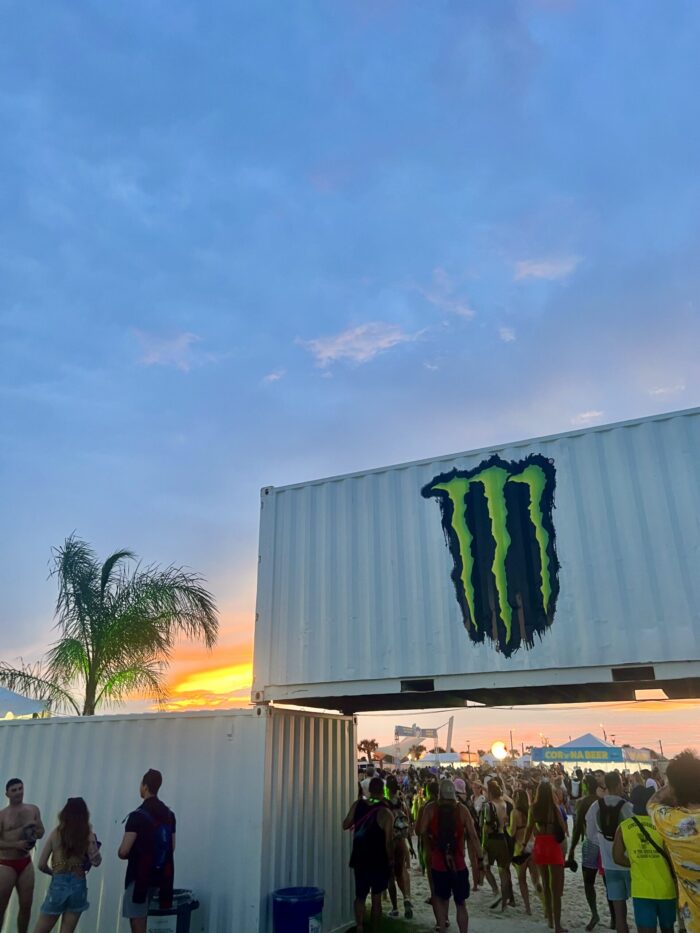
Monster has been a prominent sponsor of Hangout Music Festival for a while — so much so that the smaller EDM stage is dedicated to it! Notable performers at this stage included Night Tales, Dr.Fresch, and ELOHIM. Monster always brings the energy back into the Hangout crowd with endless samples of their featured energy drinks. A common favorite this year was their new extra fruity Ultra Strawberry Dreams energy drink. There was also an exclusive entrance to the beach through the Monster Energy stage for guests to enjoy the music from the water. The Monster Energy stage even included hammocks for guests to properly rest while recharging. Thousands would flock to this area each day of the festival in search of their afternoon energy drink pick-me-up along with the bumping beats the EDM artists bring.
M&Ms
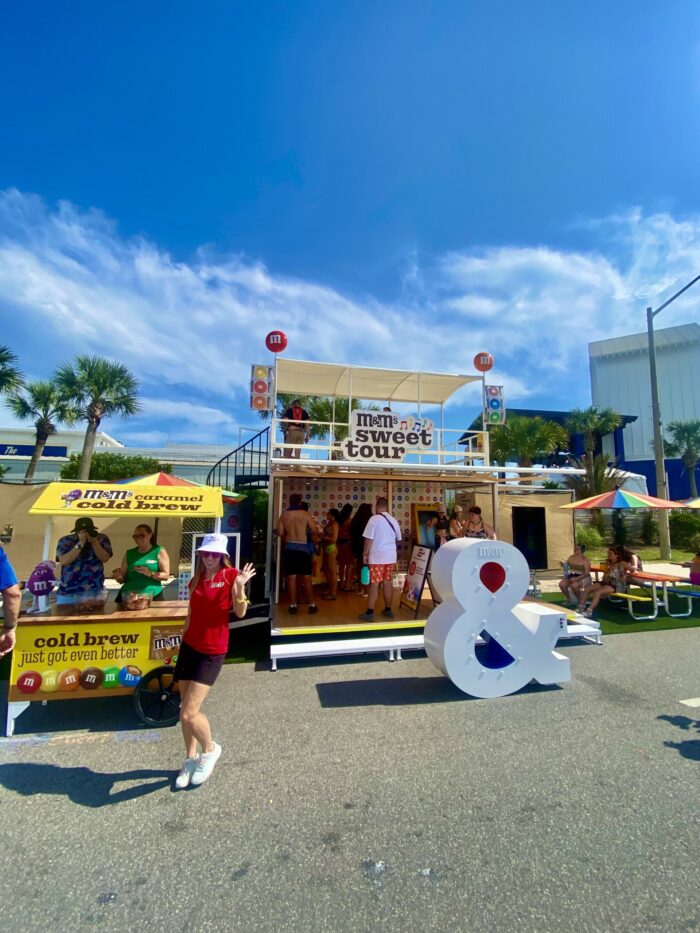
M&Ms was a highly anticipated sponsor this year. With their colorful station right near the east entrance of the festival, thousands of guests were able to interact with their exciting activation. They handed out M&M-inspired bucket hats that were then seen all throughout the festival. This reversible hat was the perfect accessory to wear at their photobooth that featured a colorful logo background. Everyone flocked to the booth each day to grab their own reversible bucket hat along with samples of peanut butter M&Ms and their newest flavor — caramel cold brew. It was the perfect touch of sweetness to the salty summer day at the beach!
Coca Cola
Coca Cola also had a huge activation at the festival, with thousands flocking to the prominent bright red tent located at the center of the festival. Along with samples and information about various Coca Cola drinks, festival attendees also enjoyed the merch given out by the activation — red fans that were on display all throughout the crowds at the festival. Fans given out as merch is a unique way that Coca Cola was able to provide a branded product that was both extremely useful under the beating sunshine and a clever way to get the brand name out to thousands of potential consumers. Everyone who saw the fans everywhere wanted to race to the Coca Cola tent to get their own branded fan!
Malibu Rum
Another well-known sponsor Malibu Rum returned with their exciting Malibu setup. Their tent reimagines Malibu as more than just a rum, but as a place where you step into a hyperreal world where everyone is unplugged and can unabashedly embrace the things they love – because life’s too short not to Do Whatever Tastes Good! Walking through the portal, you are transported to a 3-D island oasis paradise. This experience featured an interactive sunny-themed wall with vibrantly colored coconut telephone booths for photos, a vibrantly mint green bike for more photo ideas, an exclusive bar for cocktails on draft and frozen, and refreshing Malibu cocktails in a can. Their drinks were also featured throughout the festival at the different unsponsored bars. Perfect way to cool down from the strong Alabama sun!
Tanquray Offers Drinks in the VIP Section at Hangout Music Festival.
Hangout offers a great way to connect sponsors and on-site vendors with a diverse market of potential consumers. Sponsors and vendors of the festival can market their brands and products using their unique booths, samples, games, and other onsite activations to allow the festivalgoers to try out their product. They have the opportunity to create a memorable experience for the consumer that will positively reflect the brand and generate repeat customers.
Sunsets at Hangout Music Festival are unlike any other.
The Hangout Music Festival truly delivered the ultimate trifecta of music festivals with a diverse and exciting lineup, a beautiful beachside location, and a uniquely euphoric and vibrant atmosphere that made for the best way to start off the 2023 summer festival season. It was a fun-filled weekend full of excitement, smile lines, endless photo opportunities all weekend, sunshine (and some sunburns) and unforgettable memories. Each day’s lineup of performers was spectacular and major national brands had the chance to promote their products and services to a mass of excited consumers and potential new customers. In all, the entire Hangout Music Festival was a sensational experience that will only get better and better every year. We certainly brought the sand back home with us and we look forward to coming back in the future to experience more.
Seeking Alpha, the stock market investor service, stands out among other investment research platforms due to its unique approach to content generation. What sets it apart is its emphasis on communal input, where both professional and amateur financial advisors contribute to the platform. Alongside its vast array of free content, Seeking Alpha offers paid subscription plans and introduces its proprietary “Quant” rating for different securities.
Curious if Seeking Alpha is the right fit for you? Wondering if the subscription fee is worth it? Look no further than our comprehensive Seeking Alpha review. We’ll take a deep look into the key features, pricing, pros and cons of this investment service, and provide insights into whether its Premium service truly delivers value for your money.
What Is Seeking Alpha?
Seeking Alpha, the online investment research platform, serves as a one-stop hub for market analysis, stock reviews, and crowdsourced investing perspectives. With a dedicated team of editors, Seeking Alpha ensures that the crowdsourced content available on its platform is curated and of high quality.
But Seeking Alpha is more than just a research platform. It has grown into a thriving community, boasting an impressive 20 million monthly users and over 7,000 contributors who share around 10,000 investing insights each month. This makes it the largest investing community in existence.
The reliability of Seeking Alpha is evident in its track record. Over the past decade, its top-rated stocks consistently outperformed the S&P 500, delivering an average annualized return of over 25%!
Founded in 2004 by David Jackson, a former Morgan Stanley technology analyst, Seeking Alpha has forged partnerships with renowned industry players such as MSN, CNBC, MarketWatch, NASDAQ, and TheStreet.com.
Seeking Alpha Features
Seeking Alpha offers a wide range of features for its premium subscribers, enriching their investing experience with valuable tools and insights. Let’s take a look at some of the top features:
Articles: The platform’s extensive library covers various topics, from fundamental analysis to investment ideas and market news, catering to both casual and advanced investors.
Article Sidebar: It provides additional information about authors, including stock price charts, author ratings, and history, aiding users in aligning with their preferred investment philosophies.
Seeking Alpha Quant Rating: The proprietary Quant rating system offers objective assessments of different assets, with strong potential for outperforming the market.
Proprietary Stock Screener: The stock screener incorporates stock ratings and author analysis, making stock picking and market analysis more efficient and effective.
Portfolio Alerts & Monitoring: Real-time email alerts keep users informed about critical information, ensuring they stay on top of their investments.
Podcasts & Newsletters: These resources provide a more personable approach, offering insights, analysis, and investing ideas in an accessible format.
Top-rated Stocks: A curated list of stocks with high ratings from various sources, assisting users in their stock selection process.
Customized Content: Tailored analysis and breaking news deliver information relevant to users’ investments.
Stock Screener: Users can explore stocks rated as “Strong Buy” in different sectors, categories, and industries.
Seeking Alpha Pricing
Seeking Alpha offers a range of pricing options to cater to diverse investor needs and budgets. The Basic Plan is available for free and provides access to stock analysis email alerts, real-time news updates, investing newsletters, unlimited access to stock prices and charts, Wall Street ratings, and limited access to news and analysis.
For those seeking additional features and insights, the Premium Plan is available for $99 for the first year and $239 per year after. It includes all the basic features plus access to premium content, Seeking Alpha author ratings and performance, stock quant ratings, and stock dividend grades. Read this thorough Seeking Alpha Premium plan review to see if it is the best choice for your investing style.
For a more comprehensive experience, the Pro Plan is available for $2400 per year. In addition to the features offered in the Premium Plan, the Pro Plan provides top ideas, PRO content and newsletters, a short ideas portal, idea screener/filter, and VIP service.
Seeking Alpha Review: The Pros & Cons
Pros:
Active Community of Investors
Accessibility
High-quality Content
High Performance of Recommended Stocks
Access to Expert Analysis
Free Trial
Cons:
Not for Rookies
Limited Free Content
High Subscription Cost
Highly Technical
Is Seeking Alpha Worth It?
Is Seeking Alpha worth it? Absolutely. Whether you’re an experienced investor managing your own portfolio or a beginner looking for education and quick access to information, Seeking Alpha offers substantial value.
With top-rated stocks boasting an average annual return of around 25%, the potential to earn back your membership fee is significant. The platform’s solid investment research and educational resources are invaluable.
From exclusive investing ideas to ratings and comparisons not found elsewhere, Seeking Alpha Premium provides a wealth of unique insights that far outweigh the subscription cost.
Final Thoughts
In conclusion, Seeking Alpha emerges as a reliable and valuable resource for investors of all levels. Its unique blend of crowd-sourced content, expert analysis, and comprehensive research tools sets it apart in the investment research landscape.
The platform’s curated articles, diverse perspectives, and insightful analysis empower investors to make informed decisions and stay ahead in the market.
In the fast-paced world of investing, having a reliable and comprehensive research platform is absolutely necessary. Seeking Alpha not only meets but exceeds these expectations, making it a trusted resource for investors seeking to navigate the markets with confidence.
Don’t miss out on the valuable insights and opportunities that Seeking Alpha offers. Click here to join the ranks of informed investors by subscribing to Seeking Alpha Premium today.