How to make money by running a pop-up restaurant in your home

Reading Time: 5 mins

If you’re a whizz in the kitchen and love entertaining, you could be the perfect candidate to make some extra money by running a pop-up restaurant in your home.

Ever thought about it?

If not, here’s a basic guide to get you started:


What is a pop-up restaurant?

Couple in restaurant looking at menu

As the name suggests, pop-up restaurants are temporary dining experiences operated from anywhere but a traditional eatery – people’s homes, abandoned factories, pedestrian streets, the beach… you name it.

Based on the concept of dinner clubs, the whole premise behind the pop-up restaurant is to offer an exciting, limited edition culinary experience that is exclusive, social and shareable.


Why set one up?

Waitress holding food

If you’re reading this article, chances are pretty good that you enjoy the whole ‘foodie’ culture and may even have a special dream of one day owning a restaurant of your own.

While running a restaurant can be hugely rewarding, it’s also full of financial risk, which is obviously something most of us would choose to avoid.

However, that doesn’t mean you should bury your ambition.

A pop-up restaurant could be a fun alternative and an amazing opportunity to hone your skills.

Here are a few more reasons to consider setting one up:

  • Low overheads

Since you will be running it from your home (or any other interesting place you may have permission to use), you won’t have an extra set of business bills to worry about. Your biggest initial expense may be kitting yourself out with quality equipment – from robust pots and pans to attractive cutlery, crockery and table decorations.

After that, your funds will mainly go into buying fresh ingredients and occasional maintenance.

  • Gain experience

If you’re a young chef waiting for your big break, there can be no better way to refine your craft than running a pop-up restaurant from home. It will give you an opportunity to set up your own menus, experiment with unusual dishes that traditional restaurants may avoid and get honest feedback from your guests.

  • Reach a more engaged audience

The great thing about pop up restaurants is that it encourages quality, instead of quantity – not only in the amount you’re cooking, but also in the number of people you’re cooking for. Instead of preparing meals for a faceless mass, you have the opportunity to curate who sits down at your table. The fact is, people who aren’t passionate about the art of food and hospitality won’t be attracted to the pop-up restaurant concept.

  • Become a social media sensation

If you create meals and experiences that are visually pleasing, they will automatically be shareable too. Whether you’re looking to push boundaries or to perfect traditional cuisine, make sure your presentation warrants a snap or two. Once guests start sharing on their social media platforms, your popularity will boom.


How to set one up?

Waitress bringing nann breads to table

While it may be easier to set up than a traditional restaurant, there are still a few things to put in place:

  • Choose a location

While running a pop-up restaurant from your own home may be the simplest and cheapest option, you can really set one up anywhere that allows you. Perhaps your home is too small for the dining experience you envision, or maybe your kitchen is inadequate.

No need to worry – instead, spend some time scouting unusual locations close-by and find out (from your local authorities, building managers etc.) how you could go about utilising these spaces.

Make sure to source your catering equipment from a reputable company, whether you are buying it or renting it.

  • Come up with a concept

Once you know where you’ll host your events, it’s time to refine that concept that’s been brewing in the back of your mind. Are you going to be serving family recipes passed down through generations or perhaps ultra-modern fusion cuisine? Whatever you decide to do, the more well-packaged your program, the better.

  • Find a co-host

It can be rather stressful doing everything on your own. Get your partner, a friend, family member or co-worker to help you host the event. It helps to have two people sharing entertainment, cooking and cleaning responsibilities.

  • Apply for licenses

If you want to run your pop-up restaurant properly (and, believe us, you do), you are going to need to apply for a few licenses… just like any other catering business.

Read through this article on the Food Standards Agency website to get a basic idea and then approach your local authorities to find out what exactly they require from you.

  • Advertise

Now that you’ve got everything ready, it’s time to decide on a date for your first pop-up and advertise like mad.

Creating a Facebook event is probably the easiest way of getting the word out there these days and also sharing on other social media channels.

If you want to add an extra edge to your marketing, bring in an element of mystery. For example, keep the location a secret – only sharing directions with guests an hour or two before the event.


Food sharing sites to check out

Man using laptop

One of the easiest ways to get into the pop-up restaurant scene is to sign up as a host on a food sharing site.

Here are a few popular options:

  • EatWith a website offering users an easy way to access the underground food scene and connect with creative, open-minded and interesting people.
  • BonAppetour – a community marketplace that connects travellers with local home chefs for a unique home-dining experience, anywhere around the world.
  • Tastemade unique dining events hosted by chefs with exceptional culinary talents – from great home cooks to Michelin stars. The site has not launched in the UK yet, but it’s worth keeping an eye on for the future.


How much can I make?

Group cheers-ing wine glasses at meal

This depends largely on how many people you host and how often you run your pop-up.

However, if you start off by hosting four guests once a month, charging £30 per person (just make sure the price covers your expenses), you could make a pretty decent income on the side.

Also read:

six_magpie

Sign Up – Newsletter

The post How to make money by running a pop-up restaurant in your home appeared first on MoneyMagpie.

Original source: https://www.moneymagpie.com/make-money/how-to-make-money-by-running-a-pop-up-restaurant-in-your-home

Why is my WordPress site not ranking? by InMotion Hosting

Why is My WordPress Site Not Ranking - Hero Image

If you want your site to be at the top of search engines, you likely have started researching SEO best practices.

Perhaps you have mastered all that you need to know about technical SEO, but your WordPress site still doesn’t seem to be ranking well, and you want to get down to the root of the problem.

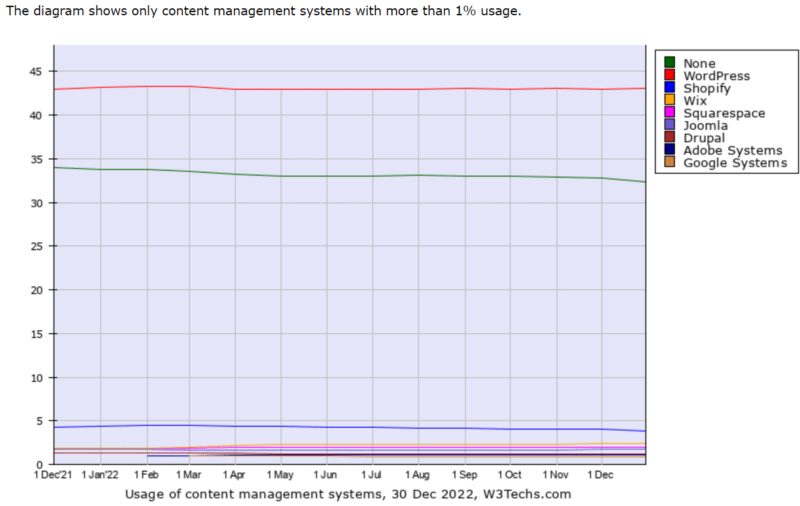
As the most popular CMS worldwide, there’s no doubt that many top results on search engines are WordPress websites.

Usage Chart from W3 Techs depicting the top Content Management Systems
Image Source: W3Techs.com

Read on to find some of the most common reasons your WordPress site is not ranking and how to resolve them.

Ensure your site is not hidden from search engines

Some users might find it surprising that all new WordPress installations block search engines by default.

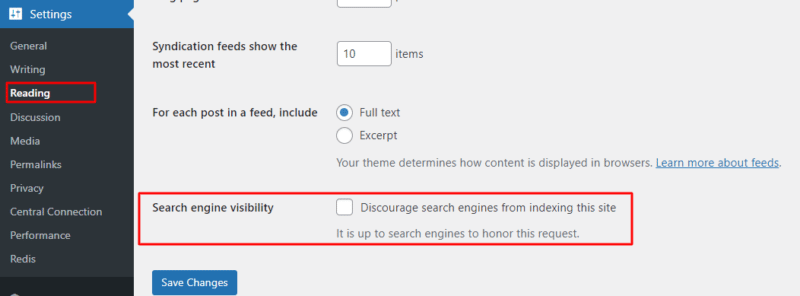
The Search Engine Visibility setting in WordPress exists to prevent search engines from discovering a site that is not fully built. This setting is easy to disable once your WordPress is ready to go public.

To turn this setting off, log into your WordPress dashboard. In the left menu, locate Settings, then navigate to Reading.

On the Reading page, scroll down to find the Search Engine Visibility setting.

Uncheck the Search Engine Visibility box and be sure to Save Changes.

Search Engine Visibility settings in WordPress

Choose the right keywords to target

Researching content that fits your industry should always be your first step to revisit if your site is not ranking as you hope it would.

Keywords are how engines find your content and know where to index it. Making sure you understand your company’s goal, and target keywords will help your keyword research phase.

It is possible that the keywords you choose to target are also used by other companies in your industry. Be sure to include competitor analysis in your research.

There are several free and paid tools available to conduct competitor analysis, which include Semrush, Moz and Ahrefs. With tools like these, you can conduct full content audits and see where your competitors might be excelling and lacking.

In a keyword gap analysis, you can see missing and sharing keywords used by you and your competitor. Shared keywords present opportunities to optimize your existing content and missing ones can help you identify topics for new content.

It is important to keep in mind that adding a single keyword will not improve your ranking. You will want to ensure your company follows SEO best practices for thorough and relevant content.

Understand how Google sees your site with search console

Create a Google Search Console account for free to understand how Google crawls your site and which keywords your site shows up for.

If your site is being indexed, but you’re not getting enough traffic, check the URL Inspector tool and Google Core Web vitals.

Page and URL inspector 

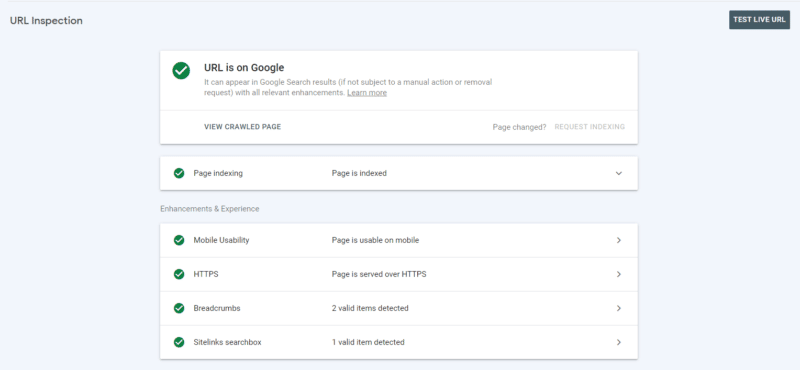
The URL inspector tool provides you with insights into your indexed pages.

Google Search Console URL Inspector Results

If there are any markup errors or warnings, the inspector will inform you. It will also specify why this error occurred.

Users can also check when their page was last indexed and crawled.  

Google Core Web Vitals

Optimizing your WordPress site is always a crucial part of your site’s SEO strategy.

With the power of Google Core Web vitals, you can get detailed information on any issues slowing your site down.

Keep the results of your website tests in mind as you make changes to the theme and plugins on your website. Any modifications you make to your content will affect your site optimization.

For over 20 years, InMotion Hosting has given users premium web hosting and tools. Optimize your website’s speed with InMotion’s new high-performance managed WordPress plans.

Hosted on a fully-isolated VPS, users will experience 40x faster WordPress hosting speeds with dedicated resources, caching profiles, and the power of Redis. Improve Core Web Vital scores with a server that’s designed to make WordPress fast.

Plugins and themes

Plugins and themes are WordPress’s bread and butter, but they have a heavier impact on SEO ranking than some users may think.

Use a performance testing tool to understand how they affect your website’s performance.

Theme solutions

While thousands of themes are built for all types of websites, not all are ideal for search engines.

Testing the theme’s impact on your Google Core Web Vitals is good practice.

If the theme that interests you has a demo website, you can do a simple test to see if it is optimized.

Copy the URL of the demo site into Google’s PageSpeed Insights to review its performance and SEO readiness.

WordPress Theme Demo Content Page Insights Results

Something to note is that your website will likely have a lot more content than any demo site. However, it is good to determine if the theme raises any red flags before you even install it.

You may also want to look out for page builders when updating or designing your site. These plugins help you build your website using a visual drag-and-drop interface.

Because of their bulk, these editors can bring down your Web Core Vitals scores. Using WordPress’s native block editor, Gutenberg, can help you keep your speed up while maintaining the aesthetics of your theme.

WordPress plugins

SEO plugins are one of the first things many users install on their WordPress websites.

Here are some things you will want to make sure your preferred plugin does before installing it:

  • Customizes metadata and open graph tags.
  • Supports schema or structured data.
  • Scores your keyword density.
  • Grades your content quality, readability and internal linking.

Recommended plugins for SEO are Yoast SEO, All-In-One SEO and RankMath.

We also recommend the tools discussed in the keyword and competitive research section for more advanced tools to track your SEO.

Caching plugins

Caching plugins are some of the most popular to add after your WordPress installation.

Caching plugins help with performance by providing a recently saved version of the site’s content to users. This shortens the waiting time for connection to the server.

Some caching plugins are simple and only concentrate on the caching aspect. Others will have settings for CDNs, minification of files and more.

Recommended plugins for caching are W3 Total Cache, WP Super Cache and WP-Optimize.

We also recommend trying out a couple of plugins to find the best one that fits your needs. Make sure you are only testing one at a time, as multiples of the same plugins can result in slower speeds and compatibility issues.

Final thoughts

Often, the easiest way to resolve issues is to go back to basics. SEO is no different.

If you ensure your site is set up correctly and enriched with good content, your search engine rank will increase with time. Be sure your website is ready for anything. With a hyperfast VPS, dedicated resources, and premium design and maintenance tools, InMotion Central will change how you use WordPress.

The post Why is my WordPress site not ranking? appeared first on Search Engine Land.

Original source: https://searchengineland.com/why-is-my-wordpress-site-not-ranking-391183

How to write a blog post that wins in 10 steps

Blog posts are quite possibly the most common content type that exists.

You read them, I read them, we all read them – but which ones actually made an impact on you?

Which blogs gave you useful information? Which ones made you think, or taught you something new?

Most importantly, which drew you closer to the brand that created them?

Ultimately, writing a blog post should accomplish that for your business (or your client’s business).

On top of that, a good blog post written for SEO should pull in ideal traffic from search engines and convert those visitors into leads.

Yep, blogs can and should be profitable. They must stand on their own and work hard behind the scenes.

A well-written blog can be effective and make your reader trust you enough to want to look into your services or products and buy. (It’s happened to me multiple times – one blog was enough to convert someone.)

However, effective blogs that work like this need to be packed with mega value for your particular readers.

How is it done? Let’s talk about how to write a blog post that wins.

Why write blog posts?

First, let’s start with why you should write blog content.

Even today, when content marketing is taking over advertising as a preferred marketing method for both businesses and consumers, some people still underestimate it.

“Do you really need to blog?” they ask. “Does content matter that much?” they wonder.

Yes, 1,000 times yes!

Maintaining a blog on your website with regularly published blog posts is possibly one of the single best things you can do to improve your SEO and search visibility.

Companies that blog see 55% more visitors than those that don’t blog, and they see 97% more inbound links and 434% more indexed pages across their websites.

Blogging is also how you establish trust between a brand and its audience. 82% of consumers feel more positive about a brand after reading that brand’s content. 70% read at least 3-5 pieces of content before talking to a salesperson.

Content is #1. It matters more than any other factor – not just for SEO, but also for connecting with customers.

What to do before writing a blog post

It’s a myth that you can just sit down and hammer out a blog post in one day.

It’s not possible – not if you want to meet your goals and create profitable content.

To give yourself the best chance at writing incredible, results-getting blog posts, make sure you have these preparatory steps handled.

Research your audience

Is your audience already defined for your brand? Good on you – skip to the next step. You already have research and insight into what they want to read and what questions and problems they need answered.

These things are vital. If you instead jump into writing a blog post without understanding who you’re writing for and what they need from your unique expertise, you’re asking for failure. It would be like walking into an auditorium to give a speech without knowing anything about why those people are there and what they expect you to talk about.

Don’t write a single word of your blog post until you have your audience knowledge down. This article by Ryan Robinson is a good place to start.

Brainstorm a blog topic your audience will want to read

You can’t write about any random topic you pull out of your head – it’s unlikely anyone will care.

For that reason, it’s important to do a little strategic brainstorming to find the right blog topic.

Like audience research, this step helps you figure out exactly what will draw in the people you want to read your blog. 

Specifically, look at the intersection of: 

  • The topics that will speak to their problems, questions, or pain points. (Use your audience research to find out what these are.)
  • The topics your brand (or your client’s brand) is an expert on.

This isn’t as hard as it sounds, by the way. Sometimes, a blog topic will spring up naturally through the everyday interactions you have on social media or the questions customers ask in emails or your live chat.

The key is ensuring you or your team are always listening to catch these opportunities.

Map your topic to a keyword

Let’s say you’ve come up with a great blog post topic that sprang from a customer question.

How will you optimize that post to ensure other people with the same question can find your blog with a Google search?

You need to map the post topic to a keyword your brand can win (“winning” means your post will rank in the top three results, ideally at #1. Among a myriad of benefits, ranking higher in search results is associated with more people clicking on your link).

How to do it:

  • Run your post topic through a keyword research tool like Semrush or Ahrefs.
    • Example: A dental practice comes up with the topic “tooth sensitivity after fillings” from a patient question, “Why is my tooth sensitive after getting a filling?” 
  • Check the search volume and the keyword difficulty (KD) of the exact match results.
  • If they’re too high (either too difficult or too popular to edge into the rankings), look at the variations and related terms.
    • Example: “Tooth sensitivity after fillings” has a KD of 41 (possible), but a variation, “tooth sensitivity months after filling” has a KD of 25 (easy) and a search volume of 260.
  • Build and optimize your blog post around the keyword you found that’s easiest to rank for – usually the one with the lowest KD and a relatively low search volume.

Here’s an example of a dental clinic that did this, currently ranking #2 for the keyword:

dental clinic blog example

If right now you’re thinking, “Wait, why would I want to rank for a keyword with low search volume?” consider this. It’s not about the volume of traffic to your blog. 

You want the right traffic – the people with the most potential to turn into customers. Longer, more specific keywords bring in fewer people, but those people have specific issues your brand can solve. 


Get the daily newsletter search marketers rely on.

<input type="hidden" name="utmMedium" value="” />
<input type="hidden" name="utmCampaign" value="” />
<input type="hidden" name="utmSource" value="” />
<input type="hidden" name="utmContent" value="” />
<input type="hidden" name="pageLink" value="” />
<input type="hidden" name="ipAddress" value="” />

Processing…Please wait.

function getCookie(cname) {
let name = cname + “=”;
let decodedCookie = decodeURIComponent(document.cookie);
let ca = decodedCookie.split(‘;’);
for(let i = 0; i <ca.length; i++) {
let c = ca[i];
while (c.charAt(0) == ' ') {
c = c.substring(1);
}
if (c.indexOf(name) == 0) {
return c.substring(name.length, c.length);
}
}
return "";
}
document.getElementById('munchkinCookieInline').value = getCookie('_mkto_trk');


Time to write: How to create a blog post in 10 steps

Finally, it’s time to write your blog post. Follow these steps to write valuable content that will bring in results.

1. Research your topic

If I’ve done my job, hopefully, it’s clear that you need to research during every stage of writing a blog post. From your audience to what to write about to keywords – and now the topic itself – you should validate what you’re doing at every turn.

In that vein, to get an idea of what searchers are looking for when they type your keyword into the search box, you should Google your topic/keyword. Analyzing the results tells you three things:

  • The type of blog content ranking for the term – long-form (over 1,500 words) or short-form?
  • The type of information included in ranking blog posts (what facets of the topic do they cover? What questions do they answer? How deep do they go?)
  • The search intent of people Googling the keyword – what are they looking for when they search for this term, really?

All of this can and should inform how you approach writing your blog post. Ultimately, you need to not just match what you find in Google search, but rather up the ante and create something better.

That means you should analyze the competition with a critical eye. What’s missing from the top posts? What value could you add that the others don’t have?

2. Write an outline and structure the post

Now you have enough information tucked in your back pocket to start writing your blog post. (Phew!)

I always start with outlining. An outline helps you figure out:

  • The key points you want to cover in the blog.
  • How to order those key points both logically and for engagement.
  • How to structure your post with headings so it’s easy to scan and read.
  • How to include your keyword in strategic spots, like inside H2s and H3s.

There’s no need to get complex, here. Simply jotting down your key points, finalizing the order, and applying headings can be enough to give you a good start.

For example, here’s the outline I created for this post you’re reading:

outline of how to write a blog post

3. Write the intro

It’s time to write the introduction, arguably one of the most important parts of your blog post.

Usually, you want to keep it short and sweet. I like to aim for 200 words or less for my intros. This gives you enough time to hook your reader and offer up some tempting nuggets to keep them on the page and reading.

However, one of the most effective ways to write an intro I’ve found is to be as empathetic to the reader’s main problem as possible.

  • State the problem at the heart of your topic that’s plaguing the reader.
  • Empathize. How does it feel to have that problem? What bad outcomes could result from not finding a solution? 
  • Present the light at the end of the tunnel. You have the solution! Tell them what it is, no holds barred.
  • Finish your intro by promising or previewing the details of the solution, which you’ll reveal in your blog post.

This intro formula loosely follows a tried-and-true copywriting formula, by the way: PAS (problem, agitation, solution).

Here’s an example of that in action via this Copyblogger intro:

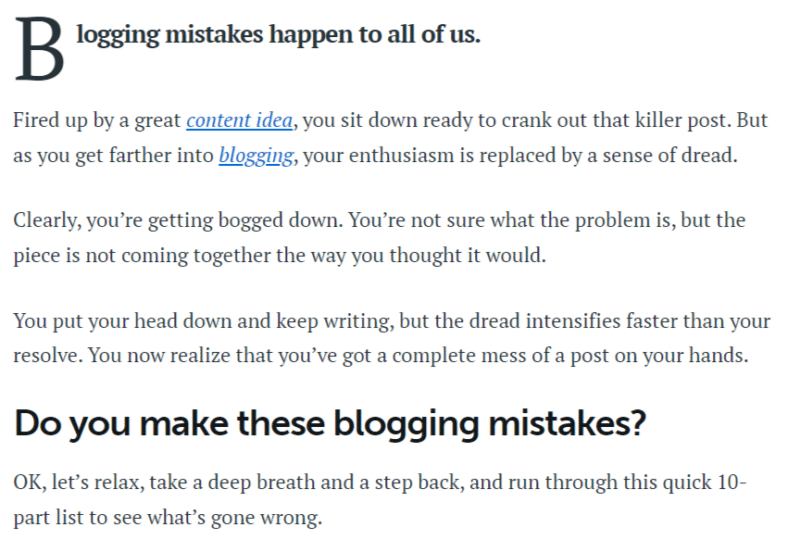
blog intro example from copyblogger

4. Write the headline and tweak it as you go

Wait, why is writing the headline step 4 in this list? Shouldn’t it be step 1?

No, no, my crafty friends. Writing the headline appears 4th on this list for a very good reason.

You need time to let your ideas marinate before you write your blog post headline. After you’ve done your research, outlined the post, and drafted an introduction, you should have a really good idea of what your post is about and what information it will contain. It’s been simmering in your brain, and now it’s ready to be plated.

That’s why I don’t write the headline right away. I want it to be helpful, engaging, and contain my keyword, and it’s always better to stew on it for a bit before committing words to the H1.

Generally, you should write not just one headline but a bunch of versions of your headline. As you write the bulk of your post, go back and tweak it once or twice for good measure. 

Your best headline will never arrive fully formed from a zing of inspiration. Instead, your best will come from at least a handful of tries, if not a baker’s dozen.

If you hate writing headlines and need help, don’t forget you can use a tool to help you draft them. My favorite is AMI Institute’s Headline Analyzer.

5. Write the meat of the post, relying on (more) research

Ready to write the bulk of your blog post? 

This is the point where you start fleshing out your outline and filling in the blanks. With your points already laid out, all you have to do is explain them, guide the reader, and provide evidence and examples.

While you’re at it, you should still be researching as you go.

  • Find statistics or facts to back up your points. Look for original studies and surveys you can link to in your post to add credibility to what you’re saying.
  • Link to other blogs on your website that add depth to what you’re writing about.
  • Research what thought leaders have said about your topic and link to them in your post. (Just make sure they aren’t competitors.)

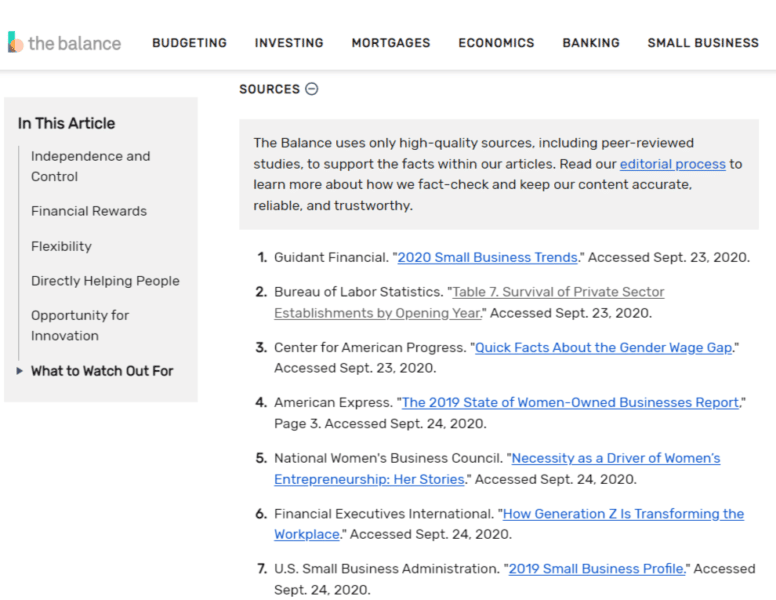
For a good look at a well-researched blog, check out this post from The Balance Small Business.

blog post example with research

All the research cited in the post is listed at the bottom in the footnotes:

example of research for a blog post

Showing you’ve done your homework like this is a huge trust-builder. Prove that you know what you’re talking about, and readers will listen.

6. Write for SEO

This step is just a friendly reminder. As you write your post, don’t forget to insert your keyword in key places:

  • In the title/H1.
  • In the first paragraph.
  • In at least one of the H2s.
  • In at least one of the H3s.
  • Sprinkled naturally in the body copy. Include a few related terms and variations.
  • In the meta description.

7. Add relevant and engaging images

Adding images to your blog post is a great idea. They add visual interest and can help keep your readers engaged. 

Most brands said they use visuals like images in content 91-100% of the time, according to a Venngage survey.

Visuals can add a lot to a text post, so don’t neglect them. However, don’t just add random images – try to find images that illustrate what you’re talking about in the post. Keep them relevant for added value, and your blog post will be much better.

This post from The Penny Hoarder (on saving money on spices) is a good example of how to use stock images in a blog. They’re relevant and help break up the text.

images used in a blog post

Also, consider that original graphics – like illustrations or infographics – are the most-used type of visual content. If you have the means, go the extra mile and enlist a designer to create custom images for your post to stand out.

8. Include CTAs

Do you have to include calls to action (CTAs) inside your blog post? No.

Should you? Yes.

CTAs are how you get readers moving from reading your blog to signing up for your email list, checking out your products, or downloading your freebies. 

Where do you want them to go from your blog post? Tell them, and give them direction.

Great example: In their post about men’s wedding attire, He Spoke Style has a CTA directing you to browse their collection of menswear accessories.

example of cta in blog post

9. Write your conclusion

At this point, you’ve written all the important pieces of your blog post. Now you need to finish it off in a satisfying way.

Generally, a good blog post conclusion wraps up the post by reviewing the most important points. No need to explain them all over again, though – a mention is enough just to remind the reader and get that info sticking in their brain.

After that, try to leave your audience with one key takeaway or thought to ponder. How will this new information they’ve just learned affect them moving forward? How will it ultimately help them?

Finally, keep your conclusion brief but satisfying. Tie up the loose ends. If your audience stuck around long enough to read the entire post, they’ll appreciate a gentle fade-out versus a sudden stop.

10. Edit, edit, edit

Finally, even if your team has a content editor, don’t forget to self-edit your blog post.

Comb through the post and re-read pieces out loud to check for flow and word usage. Edit anything awkward, and add transitions to help your reader move effortlessly along.

Employ your spell-checker judiciously, and make sure all your links point to the right places.

Great writing happens in the edits, so don’t write it off as unnecessary.

Repeat these steps to write blog posts that win

These steps are repeatable for most types of content, so you can reuse them like a well-loved tool to create great content across the board. 

If your blog posts are rough initially, don’t worry – you’ll get better with practice.

Research, outline, write, tweak, research some more, write some more, and edit, edit, edit to make your content the best it can be.

The post How to write a blog post that wins in 10 steps appeared first on Search Engine Land.

Original source: https://searchengineland.com/how-to-write-a-blog-post-391760

The Key Considerations to Have in Mind When Investing in a Tent for Business Events

Home Business Magazine Online

There are several essential considerations when investing in a tent for business events. From size and style to durability and cost, choosing the right tent can be a complex process. This article explores key factors to consider when selecting a tent for your business events.

Tent Size

The first thing to evaluate is the size of the tent. The size of the tent will depend on the number of guests you expect at the event. It is crucial to choose a large enough tent to accommodate all of your guests but not so large that it feels empty. The size of the tent will also determine the type of event you can host. For example, a smaller tent may be suitable for an intimate, outdoor meeting, while a larger tent may suit a large trade show or conference.

Tent Style

The style of the tent is another important consideration. There are a variety of skyline tents to choose from, including traditional pole tents, frame tents, and clear-span structures. Each style has unique benefits and drawbacks, so it is essential to consider which style best suits your event.

For example, traditional pole tents are excellent options for events with large crowds, as they can accommodate large numbers of guests. However, they do require a lot of space and can be challenging to set up.

On the other hand, frame tents are great options for events in smaller spaces, as they are easier to set up and configure in various ways. Clear-span structures are versatile options for events of all sizes, and they can be used for multiple events, from trade shows to conferences.

Durability

Durability is another important consideration when choosing a tent for your business events. The tent will be exposed to the elements, so it is crucial to choose a durable material that withstands wind, rain, and other weather conditions.

Cost

Cost is also essential when choosing a tent for your business events. Tents can range in price depending on the size, style, and materials used. It is important to set a budget for your tent and choose one that fits within your budget. However, keep in mind that investing in a higher quality tent can save money in the long run, as it will last longer and require less maintenance.

Safety

Lastly, it is essential to think about the safety aspect of the tent. Make sure the tent you choose is flame-retardant to ensure safety in case of a fire. Also, ensure that the tent is certified by the American National Standards Institute (ANSI) or International Organization for Standardization (ISO) to provide the highest level of quality and safety.

In Conclusion

Investing in a tent for business events requires careful consideration of several key factors, including size, style, durability, cost, and safety. By taking the time to evaluate each of these factors carefully, you can choose a tent that meets your needs and helps to make your event a success.

The post The Key Considerations to Have in Mind When Investing in a Tent for Business Events appeared first on Home Business Magazine.

Original source: https://homebusinessmag.com/growing-a-business/upgrading-equipment/key-considerations-investing-tent-business-events/

Why an E-Commerce Business Is a Great Investment

Home Business Magazine Online

Investing in an e-commerce business can be highly profitable. The UK plays host to an advanced e-commerce market. With expectations that the revenue of the e-commerce industry in the United Kingdom is forecast to continuously increase by $85.7 billion within the next few years, there has never been a better time to invest.

It is true that you should always be sure to research extensively before you commit to buying. However, it is no secret that e-commerce businesses are proving to be popular investments. You will join a booming market of thriving businesses when you take the plunge and buy a business.

In this article, you will discover some of the best reasons to consider buying an e-commerce business in the UK.

Reasons to Consider an E-Commerce Business

The e-commerce sector is competitive, with approximately 24,000 UK entrepreneurs starting an e-commerce business in 2021 alone. In a booming market saturated with competition, should you consider investing in an e-commerce business in the UK? Absolutely!

Below are some of the best reasons why you should be considering an e-commerce business for your next investment:

The UK: The Most Profitable E-Commerce Market in Europe

Since 2014, the UK has consistently ranked the highest in Europe’s most lucrative e-commerce markets. For almost a decade, the UK’s retail sector has dominated countries like the Netherlands, Germany, France, Spain, and Italy, with almost 30% of retail sales in the United Kingdom being generated online.

The coronavirus pandemic resulted in internet retail sales in the UK growing by an unprecedented 47% in 2020. While it is true that the steep growth was due to the pandemic imposed in-person shopping restrictions, the UK’s e-commerce revenue is expected to continue to grow steadily in the coming years.

UK Consumer Shopping Habits

How does this market profitability translate into consumer behaviour? E-commerce businesses are not short of customers in the UK. In 2021 alone, 82% of the UK bought at least one product online.

The growth of online retailing is driving the pursuit of value for money. Consumers in the UK increasingly turn to online retailers for the best prices and deals they cannot find in stores. This need for UK consumers to search online for their favourite products has driven the increase in online spending, which has increased for the second consecutive year.

Consumers in the UK are also more likely to spend more when shopping online. In 2021, the average order value among online purchases in the UK was £102 spent on orders placed on desktop computers, £84 on tablets, and £79 on mobile phones.

Big Profits in UK E-Commerce Businesses

Some major players in the UK e-commerce market are making significant profits.

In 2021, big e-commerce retailers like Amazon UK had net e-commerce sales of approximately £14,000 million. Tesco.com followed with approximately £6,000 million. Sainsbury, Argos, John Lewis and many others made large e-commerce sales worth thousands of millions of GBP.

Cross-Border Purchases

Consumers in the UK and Europe are no strangers to cross-border shopping. Even after Brexit, UK and European consumers are making purchases online from European companies.

Online shoppers in the UK, France, and Italy have proven that they will happily buy from merchants outside their home countries. 87% of UK consumers say they shop cross-border, while 90% of consumers in EU members France and Italy say they shop cross-border.

Over 30% of consumers regularly make their online purchases cross-border. Therefore, it is clear that investing in a UK e-commerce business will open opportunities for customers across Europe and the wider world to benefit from the products and services you offer.

In Conclusion

As you can see, an e-commerce business is a great investment. Not only is the UK the most profitable e-commerce market in Europe, but consumers are also increasingly gearing their shopping habits in favour of online purchases. Combined with the enormous profits from companies already operating in the UK and the chance for cross-border shopping, there has never been a better time to invest.

If you are looking to start an e-commerce business, be sure to continue to read about this thriving sector. Discover how your new e-commerce venture can be part of Europe’s most lucrative e-commerce market.

The post Why an E-Commerce Business Is a Great Investment appeared first on Home Business Magazine.

Original source: https://homebusinessmag.com/businesses/ecommerce/e-commerce-business-great-investment/

Automated Trading Systems: The Real Pros and Cons

Home Business Magazine Online

Automated trading systems, also known as algorithmic trading, are computer-based programs that automatically carry out trades on the trader’s behalf. Their use has been gaining popularity lately due to the improved order execution speed and accuracy and their capacity to trade continuously. Despite their benefits, automated trading systems have some potential risks and disadvantages. This article will look at their advantages and some of the downsides you can expect when you use them.

Benefits of Automated Trading Systems

Consistency: The ability of automated trading systems to reliably and promptly execute trades is one of its key benefits. This is because they are designed to search for particular signals and place trades only when certain conditions are met. By doing so, the trader is freed from continuously watching the market, which may be both time and emotionally tasking. This can be particularly helpful for traders who cannot focus entirely on the markets owing to other commitments.

Risk Management: Risk management with automated trading systems can be very effective. Traders can maintain a considerably higher consistency if they configure the system to buy and sell following preset criteria than if they try to make decisions independently. This might minimize the possibility of making costly mistakes due to emotional or irrational decisions.

Timing: When it comes to time, automated trading systems are considerably more effective than manual trading. The reason is that they are programs that buy and sell digital assets much faster than individuals can.

Speed: In trading, especially when it comes to using an auto trader bot, as in the majority of other financial transactions, speed is vital. As a result, automated trading can help you maximize your profits by trading at the appropriate time and increasing your efficiency.

Downsides of Automated Trading Systems

Although automated trading systems have numerous benefits, they may also have certain disadvantages.

Delegating: When you use an auto trading system, you are delegating the control of your trades to the system. The system places trades based on pre-set configurations that you the trader provided it with. This means that you are not able to make real-time decisions, and must rely on the system to make trades on your behalf at least when the program is active and running. The good thing is that these types of systems and services can always be turned on and off. It’s common (actually the right thing to do) for a trader to stop or at least temporarily pause their trading system if they found a weak point, correct it and resume.

Cost: Many auto trading systems come with a cost, either in the form of a subscription fee or a percentage of your trades. This number can pile up rather quickly, especially if you are an active trader.

Learning Curve: Some auto trading systems can be technical, requiring a decent level of technical expertise to set up and maintain. This can be a barrier for traders who are not comfortable with technology.

Too Much to Tailor: Most auto trading systems come pre-built and ready to go. However, there are also bots that come close to being a blank slate where it requires many of your inputs to operate correctly. From inputting the indicators you’d like your bot to trade off of, to setting stop losses, trailing stops etc. For most, just seeing all the data-required fields on this type of bot can be overwhelming. The good news is that traders have options now. Whether they are a bit more advanced and like tailoring bots, or perhaps they are brand new and have never placed a trade before and would prefer to shadow or “copy trade” from a professional.

Dependence on the System: If you rely heavily on an auto trading system, you may become overly dependent on it. This can be problematic if the system experiences technical issues or if you need to make urgent trades. The positive is that there’s always the trusted backup manual way to place trades which helps the former view as well, so it’s a win-win.

Bottom Line

In conclusion, traders who want to execute trades swiftly and precisely may find automated trading systems helpful. However, these systems have a unique set of possible risks and disadvantages that you must take into account. Traders must understand these risks and take the appropriate precautions to reduce them.

The post Automated Trading Systems: The Real Pros and Cons appeared first on Home Business Magazine.

Original source: https://homebusinessmag.com/money/financial-trading/automated-trading-systems-real-pros-cons/

Top Five Tips for New Sound Effect Artists

Home Business Magazine Online

Are you interested in becoming a sound effect artist? It is one of the few jobs in the audio industry that will not have you sitting in front of a screen all day. It is highly creative, hands-on, and rewarding — but it is not easy. Creating sound effects requires an incredibly keen ear and a thriving imagination.

As a beginner, how do you get started on the path to being a next-level sound designer? Below, you will find some advice on how to train your ear to identify new sounds. In addition, you will learn the basics of achieving the greatest impact with your sound effects.

1. Start Small

You do not need a studio and a team to start creating sound effects. All you need is a computer with some basic sound editing software (such as GarageBand) and whatever you have lying around at home. You would be surprised at how many sounds you can make with everyday objects like paper cups, silverware, and plastic bags. Making sound effects with everyday objects is a good way to experiment with new sounds and train your ear to detect how common noises can be used for versatile purposes.

2. “See” with Your Ears

When you hear a sound and see the thing causing it, your brain automatically associates the two. Part of being a sound designer is separating that association. This allows you to listen to sounds independently and start to use them like paint on a canvas to create new sound effects.

It is not easy to train your ear to stop associating sounds with their causes. However, it gets easier if you close your eyes while listening to sounds. Ask someone to stand near you while making sounds with everyday objects. Instead of trying to guess the object that is making each sound, try to imagine as many possible causes as you can.

3. Layer Sounds

As you grow into a more competent sound effects artist, you will realize that many sound effects are not achievable from single sources. You may need to layer multiple sounds in order to find the perfect match. For example, legendary sound designer Ben Burtt layered recordings of multiple animals to achieve the perfect pitch for the voice of Chewbacca in the original Star Wars film. With modern audio mixing tech, even beginner sound effect artists can layer sounds with ease.

4. Practice Transition Sound Effects

Creating sound effects is about more than accuracy. It also contributes to the emotion and flow of a video or audio recording. One of the ways you can use sound to create tension or cohesion is with transition sound effects. This is the practice of starting a sound effect before the action begins in a recording. For example, you might insert a clap of thunder at the end of a tense scene before the recording cuts to a dark and stormy night. In this way, the sound effect helps the viewer or listener segue to the next scene.

5. Stretch, Slow Down, and Reverse Sounds

Once you have created a sound, it is yours to play with any way you like. Go ahead and manipulate it, distort it, reverse it, and play it in slow-mo. In this way, one simple sound can turn into a dozen or more complex sounds. Moreover, because they all come from the same source, they can be layered to create fulfilling depth.

Getting Started as a Sound Effect Artist

Becoming a skilled sound effect artist is not easy. However, unlike many other professions, it is pretty fun ― even for beginners. Training your ear and experimenting with sounds involve lots of “mad science,” and every new sound is a rewarding discovery. Whether you’re aiming to become a Hollywood sound design pro or just need to make some sounds for your podcast, it won’t be long before you’re captivated by a new world of sound.

The post Top Five Tips for New Sound Effect Artists appeared first on Home Business Magazine.

Original source: https://homebusinessmag.com/businesses/success-tips/top-five-tips-new-sound-effect-artists/

Google search responds to BankRate, more brands using AI to write content

Artificial intelligence (AI) has been a scorching hot topic lately, especially since the launch of ChatGPT Nov. 30. Microsoft Bing has plans to add ChatGPT to search. Some have questioned whether it’s a Google killer.

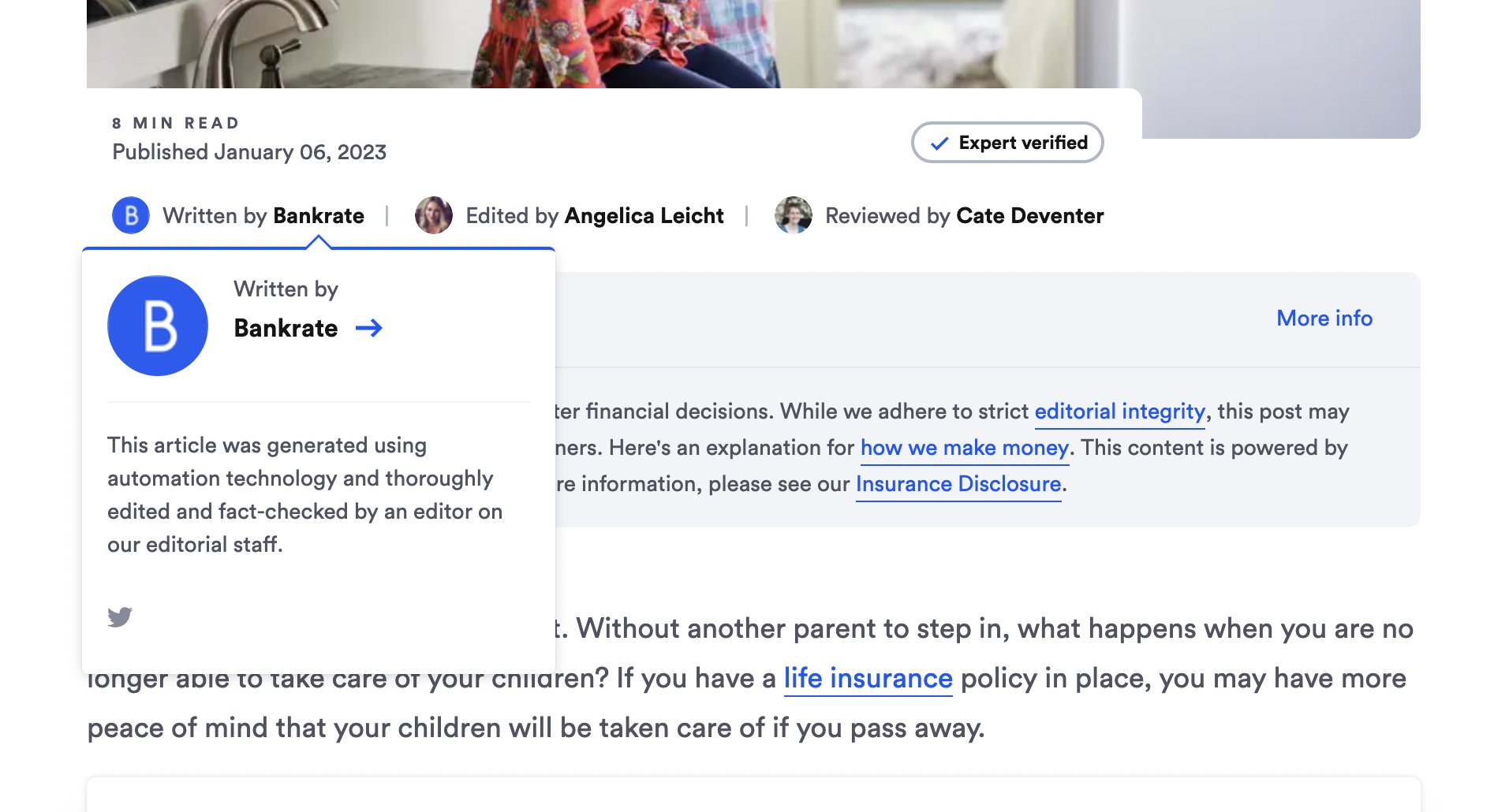
Now we’re seeing more examples of brands using AI-generated content. Bankrate is the latest example. It is having some of its content written by machines but reviewed by human editors.

It’s a bold strategy (let’s see if it pays off for them). And the SEO community wanted to know Google’s policies around these efforts.

Bankrate example. The example was highlighted by Tony Hill, who posted on Twitter that “BankRate.com, one of the largest finance sites on the web has now started using AI to write some of its content. A big moment in web publishing and SEO.”

The screenshot reads “this article was generated using automated technology and thoroughly edited and fact-checked by an editor on our editorial staff.”

Home Business

Wondering how Bankrate.com is ranking for these articles? Sistrix did an analysis to find out:

For Bankrate.com, this specific use-case and the current point in time, one can say: yes, it works. 
Many , randomly-checked articles rank on the first page for both the main keyword and many other long-tail keywords

How Bankrate.com is ranking with AI-generated text” – Johannes Beus, SISTRIX

Bankrate isn’t the only example of this. CreditCards.com is also using AI-generated content. The first line of the CreditCards.com Team author page says “Content published under this author byline is generated using automation technology.”

CNET has also quietly been using AI to write entire articles from the ground up since November.

Do a Google site search for [“This article was generated using automation technology”] will reveal dozens of CNET articles in Google’s index. CNET also assures readers that these articles have been “thoroughly edited and fact-checked by an editor on our editorial staff.”

The potential issue. If we can have machines and AI write content for us, then the amount of content that can be produced at incredibly low costs can be somewhat exciting for brands and businesses – more content for a minimal investment sounds like the stuff of dreams.

But, at the same time, mass-generated AI content can also frightening for consumers (what should you spend your time reading?) and search engines (what content should Google be ranking in search?).

So much content is being produced daily already; how much more can we consume, and how much more does Google need to crawl, index, and decide to rank for a given query?

Google’s statement on AI-generated content. Is Google OK with crawling and ranking content written by machines? If not, is Google OK if those AI-generated pieces of content are reviewed by human editors before they are published?

Danny Sullivan, Google’s Search Liason, reiterated some of what was said before about Google’s stance on this topic.

Sullivan wrote on Twitter this morning on the topic of AI-generated content, “content created primarily for search engine rankings, however it is done, is against our guidance.” But he added that “if content is helpful & created for people first, that’s not an issue.”

Sullivan then referenced their guidelines for the helpful content update, saying that the “key to being successful with our helpful content system — and if it’s not helpful content, the system catches that.”

If the AI can write helpful content, then it should be fine, one would assume.

Then Sullivan references the revised E-E-A-T quality raters guidelines, saying, “For anyone who uses *any method* to generate a lot content primarily for search rankings, our core systems look at many signals to reward content clearly demonstrating E-E-A-T (experience, expertise, authoritativeness, and trustworthiness).”

Finally, Google has a spam policy for automated content, which states “generated through automated processes without regard for quality or user experience” which is against Google’s guidelines.

Why we care. We know machine-generated content is not new, but what is new, is that the machines are getting better with the help of AI, in generating human-like, high-quality content. The question is, is it being produced with the intent of helping people or ranking in Google Search. If it is the latter, the helpful content system’s aim is to make sure such content does not rank well.

For the time being, Google wants content by the people, for the people but you can use AI for ideas and help you along the way. If machines and AI can write the content, you’d think similar technology can detect content written by AI.

The post Google search responds to BankRate, more brands using AI to write content appeared first on Search Engine Land.

Original source: https://searchengineland.com/google-search-on-using-ai-to-write-content-391728

This day in search marketing history: January 15

Facebook Graph Search arrives

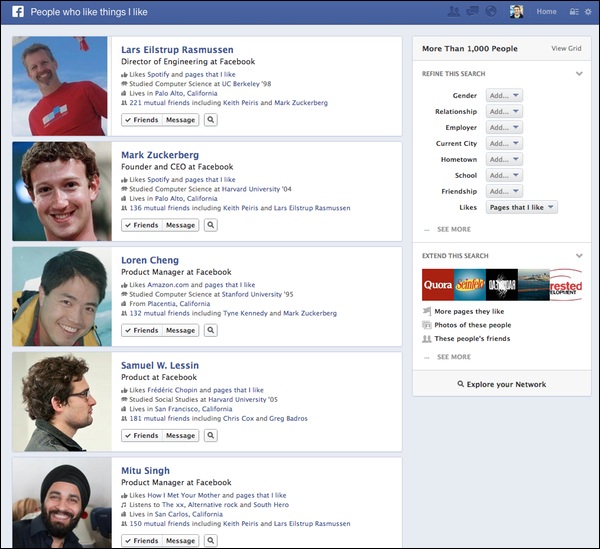
In 2013, Facebook announced a new experience that it called Graph Search.

Facebook Graph Search relied heavily on Likes and other connections to determine what to show as the most relevant search results for each user.

At launch, Facebook Graph Search only included people, photos, places and interests.

Home Business

Facebook Graph Search wasn’t a traditional web search engine like Google or Bing. It was a new type of search – a social search engine. Although Facebook was already using Bing for web search results at that time.

Dig deeper:

Less than two years later, Facebook quietly dropped Bing’s results and Facebook made Graph Search less visible. Graph Search would be all but dead by around June 7, 2019. According to a Facebook spokesperson:

“The vast majority of people on Facebook search using keywords, a factor which led us to pause some aspects of graph search and focus more on improving keyword search. We are working closely with researchers to make sure they have the tools they need to use our platform.”

– Joseph Cox, VICE, “Facebook Quietly Changes Search Tool Used by Investigators, Abused By Companies


Also on this day 


LinkedIn launches LinkedIn Marketing Labs on-demand courses for advertisers

2021: The courses cover the basics including an introduction to LinkedIn Ads, how to use LinkedIn ad targeting, and reporting and analytics for LinkedIn ads.


Amazon Sponsored Products ads now support dynamic bidding, bid adjustments

2019: Advertisers could opt into automated bidding and tailor bids for the search ads by page placement.


EU copyright directive nearing final form as Google tests stripped-down news SERPs

2019: The directive sought to “harmonize” copyright law across Europe.


DuckDuckGo map and address searches now powered by Apple Maps

2019: The company had been using OpenStreetMap.


Google to fix reverse image search bug

2018: “Pages that include matching images” section was not showing image thumbnails as it should.


Martin Luther King Jr. Day 2018 Google doodle honors Dr. King & his dream for a better world

2018: The image was designed by guest artist Cannaday Chapman and created in collaboration with the Black Googlers Network.


Google Tests “What’s Hot” & “What’s Nearby” As Android Search Options

2016: In addition to recent searches, Google inserted a “What’s Hot” and “Nearby” option in the pull-down menu.


Search In Pics: Justin Trudeau At New Google Canadian Office, Google Expeditions Subaru & Fallout 4 Statue

2016: The latest images culled from the web, showing what people eat at the search engine companies, how they play, who they meet, where they speak, what toys they have and more. 


Google Knowledge Graph Now Showing Social Profiles For Brands

Google began showing the social profile links for Pixar, Apple, Starbucks, Google and many more brands.


Search Is Number One Content Discovery Tool For Mobile Users

2015: Fifty four percent of respondents said search was the top way they found mobile content/websites


Smartphones Account For 40% Of US Search Ad Spend In Q4 [Marin]

2015: Desktop’s influence, while still dominant, continued to wane


Google Updates Its Structured Data Testing Tool, Documentation & Syntax Support

2015: Google had a new and improved Structured Data Testing tool, updated its documentation and guidelines, while adding more markup support.


Ability To Share Ads Via AdWords Shared Library Is Going Away

2015: The feature would be eliminated on Feb. 11.


Google Wants Webmaster Feedback On Web Search & Webmaster Tools

2015: Google asked: “What would you like to see from Google Websearch & Webmaster Tools in 2015?”


Google Events Knowledge Graph Adds Ticket Links, Delegated Events, Comedian Events & Venue Events

2015: Google made four updates to the events knowledge graph, after launching the markup back in March 2014.


Google Updates Maps App Adding Restaurant Filters & More

2015: Google Maps App added cuisine type filters and more features for iOS and Android users.


Google’s Matt Cutts: We Don’t Have Different Algorithms For Different Web Position Slots

2014: Google’s Matt Cutts answered this question: “Are results in different positions ranked by different algorithms?” Spoiler alert: The answer was no.


Rand Fishkin Steps Down As The CEO Of Moz, Sarah Bird New CEO

2014: The end of an era – this was Fishkin’s final day as CEO of Moz.


Report: Search Engines Responsible For 40% Of Holiday Traffic To Retailer Websites

2014: While still representing the largest share, Experian reported search engines experienced a 13% drop in the amount of upstream traffic sent to retailers when comparing year-over-year traffic data.


Bing Ends 2013 With All-Time High In US Market Share, But Google Also Up [comScore]

2014: Google’s share of search queries was up 0.6 percent in December 2013, to 67.3 percent


EU Wants More Search Concessions, Google Defies French Authority

2014: EU Competition Commissioner Joaquin Almunia said Google needed to deliver additional, revised proposals within weeks to avoid a formal antitrust proceeding.


Is Lowe’s The First Brand To Adopt Jelly?

2014: What we do know: they answered at least one question about how to mount art on a brick wall.


Links From Press Releases Do Have Ranking Benefit Despite What Google Says

2013: That time when Matt Cutts blog started ranking for [sreppleasers] in Google.


Report: Global Paid Search Spending Up 18% In 2012

2013: That growth trend was down just slightly from the 21% annual increase reported for 2011.


77% Of Online Health Seekers Start At Search Engines [Pew Study]

2013: That was significantly more than the 13% who began at health portals like WebMD, general information sites like Wikipedia (only 2%) and social networks (1%).


Google’s 6th “Doodle 4 Google” Contest: “My Best Day Ever…”

2013: The winner would earn a $30,000 college scholarship, a $50,000 technology grant for their school, and have his or her logo displayed on the Google homepage.


Yext “Reinvents The Local Business Listing” With New Rich Content Options

2013: And they called it … PowerListings+.


89% Find Search Engines Do Good Job Finding Information, But “Noise” Is Issue

2011: 13% said they couldn’t find what they were looking for. The answers were there, the “signal” that people want to tune into. They were just surrounded by a lot of noise.


comScore: Bing Share Up – Will It Overtake Yahoo? Plus, Ask.com Sale Speculation Returns

2010: ComScore’s search share figures from December 2009: Yahoo, 17.3%, Bing, 10.7%. (Google? It was at 65.7%.)


Amazon Slaps UK Affiliates Using Search Marketing Techniques

2010: Amazon said it would no longer pay referral fees to Associates who sent users via keyword bidding or other paid search on any other search engine or their extended search networks


OneRiot Launches RiotWise Ad Network For Real-Time Search

2010: The launch followed a pilot phase that the company said allowed developers to monetize mobile apps, desktop clients, social search engines and similar applications.


Carol Bartz’s ‘Gut’ May Stop Yahoo Search Sale To Microsoft

2009: Bartz said her instinct or “gut” was not necessarily to sell, although she would need to immerse herself in the issues and economics to make a better determination.


Microsoft Job Cuts May Come Next Week

2009: The cuts were expected to be “far less than the 15,000 positions” first thought.


Yahoo Shows Wikipedia Some SearchMonkey Love

2009: The Wikipedia SearchMonkey App was turned on by default for all Yahoo search users, which made it the sixth app that all Yahoo searchers would see (with LinkedIn, Yelp, Yahoo Local, Citysearch and Zagat).


TweetNews: Yahoo Programmer Melds News Search & Twitter

2009: TweetNews was a new search engine that used hot Twitter topics to bring more relevance and freshness to news search.


Google Directory Update Showing “Real” PR Scores?

2008: Google Directory scores were much higher than those shown on the Google Toolbar.


Microsoft And MediaCart Bring Ad Targeting To Grocery Store Shopping Carts

2008: Microsoft teamed up with MediaCart to offer in-store behavioral ad targeting and took the concept of “location-based services” to the store aisles using RFID tags.


Google Maps Being Used To Engage Political Volunteers, Activists

2008: How candidates, campaign staffers and other third parties were using Google Maps and the Maps API to showcase their messages and organize political volunteers and activists in upcoming primaries.


Wireless Spectrum Bidders Approved, Auction Begins January 24

2008: Among the bidders: Google, AT&T, Verizon and MetroPCS. 


Study Says Get In Top 5 Not Top 10 & Search Engines May Need To Highlight Official Sites

2007: Among the findings: search marketers needed to be more concerned about getting into the top five rather than the top ten, if they wanted to be seen.


More Spotting Google’s Related Searches At Bottom Of Page

2007: More searchers were seeing a series of eight suggested searches as links, under the heading of “Searches related to:” followed by the original word you searched for.


Looking At Microsoft’s Continued Long Game In Search

2007: “It’s tiring to hear the Microsoft leadership just rip at Google rather than deliver successes that speak for themselves.”


Microsoft Live & Yahoo Push For Firefox Users, Plus Revisiting The IE7 Search Battle

2007: How the various search engines were trying to get users to make them their default choice.


SEO Blogs Under Hack Attack

2007: Graywolf’s blog was hacked, then Stuntdubl went down.


Hacking Google To Help It Improve Security

2007: “It’s your worst nightmare – someone reads parts of your Google emails, views your docs, modifies your spreadsheets, checks out your reading habits on the Google personalized homepage or Google Reader, and goes through your search history.”


Googlers Give Overwhelmingly To Democrats; Google’s PAC Gave More To Republicans

2007: While 98% of Google employee money went to Democrats in the last election, the company-controlled Google NetPAC gave 61% of its contributions to conservative candidates. 


From Search Marketing Expo (SMX)


Past contributions from Search Engine Land’s Subject Matter Experts (SMEs)

These columns are a snapshot in time and have not been updated since publishing, unless noted. Opinions expressed in these articles are those of the author and not necessarily Search Engine Land.


< January 14 | Search Marketing History | January 16 >

The post This day in search marketing history: January 15 appeared first on Search Engine Land.

Original source: https://searchengineland.com/search-marketing-history-january-15-391804

Richard Rakowitz Explains Why Businesses Should Implement Multi-Language Marketing Strategies

Home Business Magazine Online

In today’s globalized economy, businesses are increasingly tapping into new markets by targeting consumers worldwide. This is where multi-language marketing strategies come in. Expert Richard Rakowitz in New York, NY, says by developing campaigns that target multiple languages and cultures, businesses can reach a wider audience, expand their customer base, and ultimately boost sales. Take a closer look at why companies should implement multi-language marketing strategies.

The Basics of Multi-Language Marketing Strategies

Multi-language marketing strategies refer to the process of creating campaigns and materials to target multiple-language audiences effectively. This can include website content, social media posts, and video ads. When done correctly, this strategy can help businesses gain an edge over their competitors by reaching an even more significant customer base.

The Benefits for Businesses

Richard Rakowitz says businesses that utilize multi-language marketing strategies benefit in several ways. First, they can tap into new markets and reach customers who may not have been familiar with their products or services. Additionally, multi-language marketing allows companies to develop better relationships with their customers. They speak directly to their customers in their languages rather than simply relying on translation services or automated translation software. This also helps strengthen brand loyalty. Customers feel more connected and appreciated when companies try to reach out to them in their native language.

Furthermore, using different languages in marketing materials gives companies a chance to explore different cultural nuances that may give them an edge over the competition when it comes to engaging customers on a deeper level. For example, certain words or phrases may have different meanings in different cultures, which can be used to create more effective campaigns that speak directly to those audiences. Additionally, diverse cultural references can help companies stand out from the crowd and capture the attention of potential customers who might otherwise be overlooked.

Finally, utilizing multi-language marketing strategies helps businesses remain competitive by quickly adapting and responding to changes in customer preferences across multiple markets instead of focusing on one language group at a time. This flexibility allows companies to stay ahead of trends while keeping costs low since they don’t have to invest as much time or money into translating content for each market individually.

How to Implement Multi-Language Marketing Strategies

Implementing multi-language marketing strategies successfully requires a thoughtful and strategic approach. Here are some tips to get you started:

1. Research the language of your target market. This ensures that your materials are appropriately tailored to their needs and expectations.

2. Invest in native-speaking translators and cultural experts who can assist you with creating content that is both accurate and culturally relevant for each target market.

3. Use the right tools and technology to ensure your campaigns correctly translate into each language.

4. Develop a multi-language strategy that considers the different language preferences of each target market and any cultural nuances.

5. Finally, Richard Rakowitz says to test and monitor your campaigns across multiple languages and adjust accordingly based on customer feedback. This will help you refine your approach and create more effective campaigns.

By utilizing multi-language marketing strategies, businesses can gain competitive advantages and reach even larger customer bases than before. With the right tools and a thoughtful approach, companies can create successful campaigns that speak to customers in their languages and capture their attention in unique ways.

How to Handle Multi-Language SEO

When optimizing websites for multiple languages, it is essential to consider a few key points. To begin, create separate versions of your website for each language you plan to target. This helps to improve your search engine rankings and ensure that customers can easily navigate and find relevant content in their languages.

Additionally, create localized content for each language version of the site. Use appropriate meta tags, titles, and descriptions so that search engines can properly index the pages. Finally, use hreflang tags to help search engines determine which language version of the page to display for each user. This will help ensure that customers get the most relevant and accurate content.

What About Multi-Language Social Media?

Richard Rakowitz says multi-language social media strategies are also crucial for businesses looking to grow their customer bases and increase brand awareness internationally. You accomplish these by creating separate accounts for each language you are targeting and then customizing the content to fit the cultural nuances of each market.

In addition, ensure your messages accurately translate in each language to avoid issues. Also use social media analytics tools to track engagement across different language versions. This will help you better understand how customers respond to your campaigns and adjust your approach accordingly.

Final Thoughts

Implementing a successful multi-language marketing strategy requires careful planning and execution. However, its rewards are well worth the effort for any business looking for success on a global scale. By taking the time to research different cultures and target audiences across multiple languages, companies can ensure that their content resonates with prospective customers no matter where they are located. Ultimately, this results in increasing engagement rates and boosting sales potential along the way!

The post Richard Rakowitz Explains Why Businesses Should Implement Multi-Language Marketing Strategies appeared first on Home Business Magazine.

Original source: https://homebusinessmag.com/growing-a-business/diversifying-a-biz/richard-rakowitz-explains-why-businesses-implement-multi-language-marketing-strategies/