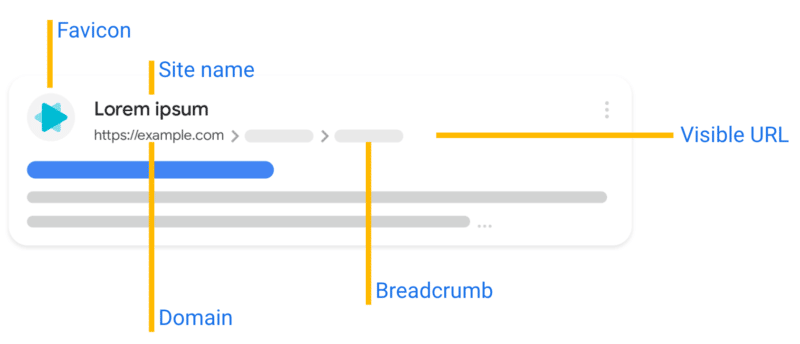
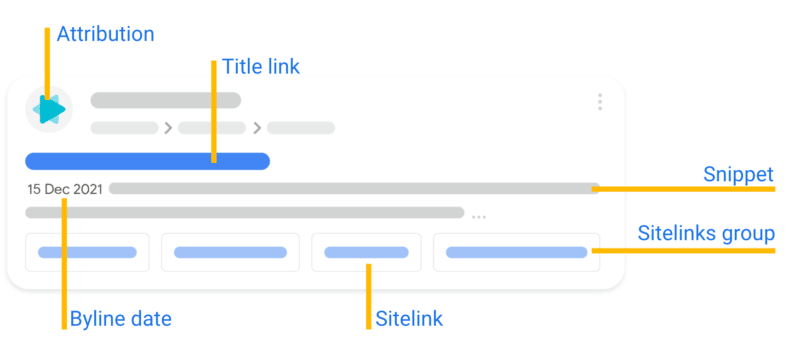
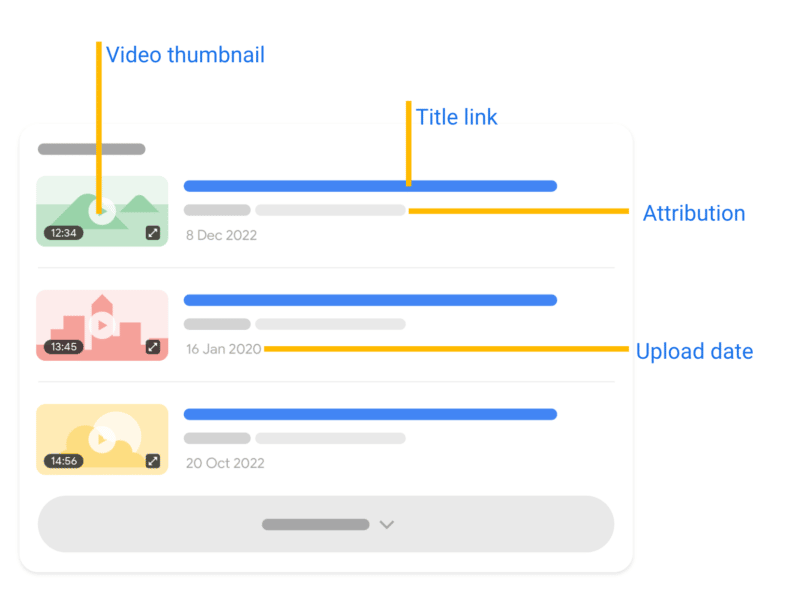
Google has launched a new help page that documents what Google calls the most common visual elements on the search results page. Here Google has laid out visually 22 elements found on the search results page, explaining what the elements look like, what they are called, and whether you can optimize your site for them.
Visual Elements gallery of Google Search. You can find this new document over here in the Google help area. It helps you identify the most common and “impactful visual elements of a search results page,” Google said. The document has 22 visual elements that are most likely to appear on search result pages, Google added. It is broken down into these categories:
Attribution. The attribution elements are elements that help searchers identify the source behind the search result with visual identifiers like the name of the site, the URL, and favicon.
Text result. The text results elements are what we use to call the “10 blue links” and/or “web results.”
Video and image results: The video and image result elements are based on the respective media indexed in the context of their respective landing pages.
An image result element is a result that’s based on an image that’s embedded on a web page.
A video result is a result that’s based on a video that’s embedded on a web page.
Exploration features: The exploration features element is also known as “People Also Ask”, or related searches group or related questions group. Google said these visual elements help users broaden their search journeys.
Why we care. This is a good way for us to get more details from Google on the type of search features in Google Search. It also helps us understand if we can help our sites come up with such rich results or other visual elements. This will also aid us in standardizing what some features are called within the search industry. Finally, Google plans on updating this document as more and more features come out.
Starting early this year, Microsoft will allow only advertisers duly authorized by the UK Financial Conduct Authority (FCA) to present regulated financial promotions in the UK. Advertisers will be required to provide proof of authorization by the UK FCA to present Financial Promotion Ads or specify if they’re either 1) a non-financial services advertiser who may target consumers seeking financial services, such as e-commerce platforms or 2) government entities such as authorities or regulators under the “.gov.uk” domain.
Why we care. If you live in the UK or advertise for a UK financial services company, you’ll need to start the verification process here.
Keep in mind. Microsoft says to keep the following into consideration:
These requirements are in addition to the Advertiser Identity Verification requirements laid out by Microsoft as part of its safety measures to protect consumers, advertisers, and publishers.
Failure to complete this verification process will result in ads being blocked from serving in the UK—the account will continue to perform as before with respect to non-Financial Services Ads and in markets outside of the UK.
Dig deeper. Read the announcement on the Microsoft blog here.
Not every strategy needs to start with a blog post regurgitating the same information across the top Google results and end with an agency begging for links.
In the era of Google Ads becoming more expensive and organic discoverability becoming less effective, companies need to differentiate themselves in SEO.
We must push the envelope and create something that has yet to be seen online.
With creativity, thoughtfulness, and CSV magic, programmatic SEO can do this, resulting in millions of new customers per year.
This sounds impossible, but it’s not.
In this guide, I will walk you through exactly how to get started with programmatic SEO.
What is programmatic SEO?
Programmatic SEO is the strategy of publishing unique, high-quality pages at scale using a template and a database.
The goal of programmatic SEO is to create content with the same depth and thoroughness as a traditionally published article but repeated thousands, if not millions, of times at scale. A programmatic site can be as small as 200 pages and as large as 4 million. The key is ensuring each page serves a unique purpose in the search journey.
An oversimplification of programmatic SEO is building a database, connecting it to a template, and publishing thousands of pages.
But if this is all you do, congratulations, you just created thousands of pieces of spam.
Programmatically building content is a powerful tool that can exponentially grow a site or completely spam it. To become a true player in SEO growth, we must start thinking bigger – or should I say, we need to think “deeper” about our content.
A newly published programmatic site since June 2022.
The benefits of programmatic SEO
Programmatic SEO unlocks traffic in the nooks and crannies of the internet. You no longer need to pick a handful of keywords, pay for written content, publish the post and hope it ranks for a cluster of terms. Now we can target entire categories and win all available searches in one template.
With programmatic SEO, businesses can:
Win keywords at scale.
Produce in-depth content quickly.
Gain low engineering lift.
Get “quicker” results – I use this delicately. Quickly, meaning results and challenges escalate quickly.
The drawbacks to programmatic SEO
As with any strategy, programmatic SEO also has its disadvantages, such as the following:
Indexing is difficult.
High risk – poor execution can hurt site growth.
Limited by data resources.
Remember, if you’re trying to use programmatic SEO to trick Google or create People Also Ask (PAA) scraper sites, you’ll lose.
Great programmatic content enhances content production through data depth and production efficiency.
What follows is a four-step guide to implementing a programmatic SEO structure.
Step 1: Keyword research for programmatic SEO
Instead of picking out a handful of keywords and paying for expensive bespoke content hubs, programmatic SEO aims to target entire directories of keywords under the same entity.
Here are the steps in identifying your keywords.
Define your goals and intent
This will start similarly to a traditional SEO keyword analysis. Identify what category or topical group will drive business value. Hard stop.
Driving traffic to show a cool graph to your client or boss means nothing if the traffic doesn’t move the business forward.
Remember, business value can be as obvious as full conversions through transactional keywords or as light as a session hit to introduce your brand and possibly trigger a returning visit later in the research process.
Here are resources to help complete a thorough opportunity analysis:
Start broadly. Once you’ve identified the target intent and goals, we need to define the category in which we want to rank.
Think of this as one step below a head term. We call this the “niche” of your site, driven by your product.
For example, “trucks” is a main head term and a broad topic. However, it’s not very intuitive and doesn’t have strong intent for a business-driving keyword, so we want to take it a step further.
“Ford F-150” is a bit more specific but broad enough for our target.
Note that this is a specific brand search; however, that’s perfectly OK. We’ll not try to outrank Ford, but enhance the search experience for the Ford F-150 audience.
Identify modifiers and related terms
Ford F-150 is not our keyword, it is the vessel by which we will morph into a traffic machine.
We do this by identifying questions surrounding the main topic. This is the jumping point from traditional content assets and programmatic building.
If your main topic cannot be modified through repeatable searches, your product may not be viable for programmatic SEO. But if you find common questions surrounding a product, you can win traffic at scale.
Timely: Questions that are impactful in a specific timeframe.
Examples: 2022 F-150, stock prices at November 18 2022, inflation rates last year, sporting event scores from last week.
Comparable: Questions that create value by comparing to others.
Examples: F-150 vs Chevy Silverado, housing costs in 2008, book reviews vs book categories, political affiliation by state, hobbies and interests by zodiac signs.
Hyper-specific: Questions that are only valuable within certain parameters and not the broader audience. Also known as the hyper long-tail.
Examples: F-150 for sale in Marietta, Georgia, 1997 crime rates in Philadelphia PA, David Eckstein’s World Series batting average in 2006, answering public questions (i.e., Reddit and UGC).
For our F-150 example:
F-150 vs Chevy Silverado
F-150 under $50k
F-150 in Marietta, Georgia
If you were using a traditional SEO system, you’d see three pages, potentially 100 if you’re doing the math in your head for states and other car comparisons and weeks to scale handwriting all of these pages.
But for a programmatic approach, we have at least three templates and potentially thousands of pages to publish as soon as our template is ready.
Look for signs that the keyword can be modified. In the example, we have three modifiers – “vs,” “under,” and “in.”
A quick way to find the keyword gold within your topic is to go back into your keyword aggregator and type in the [topic + modifier] (i.e., “F-150 vs” / “F-150 under” / “F-150 in”).
This gives you a better look at the opportunity size of each directory.
Take it one step further: identify other topics that can be modified by the same keywords. In our example: F-150 can be swapped out for Chevy Silverado, Ram 1500, and even targeting “Trucks” with additional modifiers could be viable for a strong site.
Our keyword research should look like this:
Entity
Modifiers
Parameters
F-150
under
10-100 by ten
Chevy
in
Zip code
Ram
vs
All
The additional “parameters” column will define the level of detail you need. You can build this out for as deep or as wide as your product calls for. The more modifiers and entities you find, the more pages you’ll have.
Target long-tail search
The sweet spot is a repeatable, mid- to long-tail keyword.
In the example above, we very obviously made an ecommerce website, which is a great visual, but programmatic SEO as a growth strategy is most effective in targeting long-tail searches for informational intent keywords.
Example: Weather in Philadelphia, PA today
pSEO approach: Weather in {location} {date}
You might think this is impossible to drive meaningful traffic, but again, think deeper.
By targeting specific ZIP codes and low-search volume towns, a relatively unknown site with a decent backlink profile wins an estimated 3,000,000 sessions* per month from these searches. *Estimated with traditional keyword research tools.
There’s no denying that Google is absorbing more of their own traffic. Keywords with multi-intents or hyper-specific keywords are usually pulled directly onto the SERP without needing a click.
As a business owner and growth strategist, you must define the value of each keyword group.
Is showing within a featured snippet helpful for a brand introduction, even if it doesn’t result in a click?
If yes, go after it. If not, look for keywords that focus more on research and action.
The weather example may not be a viable strategy for a casual environmental blogger.
But if your product is a weather app, programmatically winning thousands, if not millions, of keyword variations that are extremely relevant to your targeted audience could exponentially increase app downloads.
Get the daily newsletter search marketers rely on.
function getCookie(cname) {
let name = cname + “=”;
let decodedCookie = decodeURIComponent(document.cookie);
let ca = decodedCookie.split(‘;’);
for(let i = 0; i <ca.length; i++) {
let c = ca[i];
while (c.charAt(0) == ' ') {
c = c.substring(1);
}
if (c.indexOf(name) == 0) {
return c.substring(name.length, c.length);
}
}
return "";
}
document.getElementById('munchkinCookieInline').value = getCookie('_mkto_trk');
Step 2: Building the content template
A programmatic template is the most important aspect of the build.
This is where the art and science of SEO collide by stacking data points to create one cohesive, impactful piece of content that satisfies the user’s intent programmatically.
The biggest difference between traditional SEO and programmatic strategies is that you’re building templates, not final pages.
For SEOs, this means all of your traditionally bespoke updates must be done at scale and, yes, through engineering tickets.
A page template should accomplish three goals:
Goal 1: Create value where the traditional content pipeline cannot
Sometimes, content is better when we stop trying to fit it into a blog post.
Being able to programmatically compare pain points is a great use case to use a programmatic approach.
G2 does this seamlessly by comparing prices, reviews, and related products directly on a category page, bringing additional value to the page that handwritten content cannot.
Goal 2: Go a mile deep into the query, but set boundaries
Consider your audience and Google search results (SERPs) when building your template.
Start by setting limits. If you’re building geo-based content, ask yourself when your content stops changing.
Does your offering change state? By county? By zip code?
Building thousands of pages based on the same content are called gateway pages. They’re easy for Google to eliminate and extremely unhelpful to the visitor.
The goal of a template is to dive extremely deep into a topic, and the result is scale. Not the other way around.
Goal 3: Give access to information previously unavailable
Programmatic content can give access to data that was previously unobtainable because your template is built for a human, powered by a database. It becomes a storytelling medium.
Election data today is so refined that we can visualize results down to the individual county. Is this new data?
Of course not, but through visualizing an extremely large, overwhelming database into an easily consumed medium, we’ve created new value to the conversation.
High-quality templates
Low-quality templates
Answers multiple questions
Answers 1 obvious question
Unique data points
Scrapes other websites
More page value than traditional pipeline
Provides little value but can scale quickly
Each page is uniquely valuable
Gateway pages created to trick Google
A great template will check most, if not all boxes.
Be warned – low-quality templates checking only one box are spam, and Google will quickly drop them from the index.
Step 3: Connect to a database
Your database can be any source of information used to build content.
It can be as simple as a CSV export from a government data source or as complex as a proprietary data warehouse updated by the second.
The key is building a database that meets the goals set by your template.
And don’t let the term database scare you. You don’t need to be a data scientist to find the right data.
Being in tune with your audience’s needs and potentially a few skills in Excel are what’s important. (You can always outsource if you don’t have Excel or Python skills).
Ian Nuttall, creator of Niche Site Metrics, built a depository of where to find all publicly available data.
But it doesn’t only need to be open-source data.
Listen to your customers.
Build a repository of reviews.
Group support ticket questions by topic.
Track industry prices over time and by geography.
Build your database around transforming your product or brand into a uniquely useful resource.
Step 4: Publish and get indexed
Your first challenge in successfully driving traffic with programmatic SEO is indexing because everything happens at scale.
Don’t be alarmed when you do everything by programmatic SEO best practices and your indexing is less than 30%.
Programmatic pages will be similar in nature, kicking most pages into Discovered – currently not indexed or Crawled – currently not indexed.
If you publish more content at once, more pages start in the abyss of discovered or crawled but not indexed.
Don’t panic. Take a hard look at the published templates and ask yourself, are you bringing something new to the SERP?
If yes, move forward with these three steps
Build a better internal link structure
Internal links for programmatic SEO are 10x more important than traditional editorial pages.
You are building hundreds, thousands, or even millions of pages from one directory and will need to build context between each related page.
Create link silos from Directory > Leaf pages. Hardcoding the same 20 links into every page will be disregarded by the visitor and Google, rendering it useless.
Just as you would for traditional SEO, dedicate time to contextual linking and work with your engineer to set the correct logic for each individual page.
If you forget internal linking, you’ll create thousands of orphaned pages and increase the number of dead ends on your site. These will almost entirely be seen as non-influential pages and may never be crawled.
Create a robust sitemap structure
Programmatic SEO sitemaps are as important as robust internal linking. The maximum list of URLs on a robots.txt sitemap is about 50k. For larger sites, you’ll need dozens of sitemaps and sitemap indexes.
Structure your robots.txt file as you would your site structure. If possible, build a sitemap for each individual directory. This will categorize sitemaps by subject rather than publishing date and allows Google to index each category more easily.
Once it’s set, make sure you force crawl each individual sitemap (yes, even if you have hundreds of sitemaps) two times or until Google has returned to the page multiple times.
Create HTML sitemaps
These are not your HTML sitemaps from 2009. Identify each directory page and use it as a linking guide for every “milestone” page.
For a site with millions of leaf pages, you won’t be able to link to each individual, but you can target Category > Subcategory links.
This allows your directories to function as link hubs and creates an easy flow from Homepage > Category > Subcategory that enhances your internal link structure.
To recap, below is a repeatable process for implementing a programmatic SEO structure.
It may just be the money-making opportunity you need.
If the weather has you bored out of your trousers indoors, don’t let this down-time go to waste. Make the most of it. In fact, make it earn you money. Find out here how you can earn cash from the snow, even when you’re just in front of the TV.
If you’re stuck at home due to snow or if you’ve got an extra day off work during the week, use the time to de-clutter. Get sorting through cupboards, drawers and shelves. In result, apart from leaving your house tidy, you’ll gather up a good few boxes of things to sell.
Once you’ve collected a decent pile, put them on eBay, eBid, Gumtree or Amazon. We’ve got lots of advice on how to sell well on eBay here. What really helps is to take some time to get good photos done and put the right description in. Knowing the tricks can make all the difference. There’re various techniques to get more cash for your junk as this article explains. You might even find something suitable to give away as a Christmas present – handy if you’re trying to save a bit of cash!
But remember, you don’t have to sell your stuff online immediately. Another solution is to store the boxes, wait until the weather improves and snow melts away, and do a car boot sale. To find out more, read our advice on getting the best results at a car boot sale here. It’s often better to wait until February for this particular selling opportunity. That’s because many car-booters choose January sales over their local market. February is a better time to get a good price for unwanted Christmas presents and your latest throw-outs.
If you don’t want to sell your junk, gather friends for a swap shop at your house and combine it with a pot-luck party. That way you’ll kill two birds with one stone. Everyone brings a dish for the dinner and all their unwanted stuff to exchange. It may be clothes, accessories, make-up, jewellery and even toys and household goods which you all swap. It’s a fun way to get rid of the things you don’t want. Anything that’s left over you can then take to the charity shop. You should come away from a swap party with a bunch of new (or new to you, anyway) items completely free.
Earn extra cash in front of the TV
On a bad snow day, it’s really tempting to just ramp up the heating, grab a blanket and curl up in front of the TV for hours. And that’s not a bad idea. You can still make some cash while lounging around and relaxing in front of the box. All you need is some multitasking skills.
Firstly, if you’re a good knitter – and knitting does rather go with this weather – you can make money by knitting to order. Read our article on how to get in touch with designers to do piece-work for them. It could be an easy and enjoyable way to make some extra cash from home.
There’re other ways to use your creativity on a snow day. Whether you can sew, paint, crochet or have any other skill to create some non-messy craft-work, use the down time to make things. You can then sell them at car boot sales, online or at your local market. Hand-made items are all the rage right now and sites such as Etsy make it easy – and profitable – to monetise your creative side. For example, you might be into scrap-booking which is a great thing to do in front of the TV. Or you might be into making perfume and some of that can be done in front of the box. Think about what you can create– then make it and sell it.
Make money at your computer
Your laptop can be your best friend on a snow day. Sure, you can use it for entertainment, but if you like browsing, you can also make some extra cash wherever you are.
To start with, try making money by doing some online surveys. We’ve got a list of the best online surveys here – take a look as there’re also dodgy ones out there that you should avoid. This way, you can make money and earn points to get gifts on other new money-making websites.
Then, have a go at some online competitions. We’ve compiled the latest online and offline competitions here. You might even want to try having a go at the competitions you sometimes find on product packaging. Spend a bit of spare time thinking up slogans and you may be in with a chance to win a car, washing machine or even a nice holiday in the sun.
Get paid to deliver in snow
You’ll have to get your skates on with this one (excuse the pun!). If the snow is thick in your neighbourhood and you have a car suitable for off-road driving, you could offer your services delivering food and supplies in your area.
Get leafleting to your neighbours and ring local shops – the grocery shops and pharmacies would be good for starters – to offer your delivery services. Big supermarkets have their own service but if you’re in a village or town with good independent shops they might need your help. Charge per mile (or kilometre) or per delivery, depending on how you could make the most sales and the most profit.
Email your friends, neighbours, local hotels and businesses. Use social media too. You can easily promote your services on Twitter and Facebook.
Earn money with DIY
The cold and ice tend to create a boom-time for plumbers, builders, electricians and anyone handy. Sure, you’ll often need to be qualified to offer services if we’re talking major electrics and boiler servicing. People often just need someone good at DIY, though. As such, some fairly basic skills can cover many problems people may have around the house. For instance, can you help with clearing guttering, lagging pipes, mending leaks or even de-icing someone’s driveway? You could easily make money helping people.
To market your services, let your friends and neighbours know. You could also print out some fliers and post them through letterboxes in your area. Don’t underestimate the power of online tools either – email or Tweet everyone you know locally.
Make money throwing a party
Yes, you can make money throwing a party. Not your regular party, of course, but a product party. This involves getting some friends over to your house (if they can get there in bad weather!) and trying out a company’s products before deciding whether you want to buy them or not. For example, brands like The Body Shop will offer you the opportunity to host a product party. You often get freebies (like a complimentary facial or makeover) thrown in too! Find out how to host a product party here.
Cash your creativity
Start a blog
There’s a few ways for the creative types to earn extra cash while stuck at home.
If there’s a subject that really gets you going – or something that you can write passionately or amusingly about – there’s every chance someone else will want to read what you have to say.
In that case, why not set up a blog? It can be a sort of online diary and if you allow advertising, it’ll also make you some money. If you’re stuck indoors on a snow day, you might as well pick up a pen (or a keyboard) and write.
Use a free service like WordPress or Blogger, both of which help you create your blog quickly and easily. And once you’re set up, there’s an opportunity to make money by including advertising and affiliate deals on the site.
Sign up to a service like Google Adsense which uses search technology to target your site with relevant advertising.
While it’s not likely to be a big earner, it could be a really fun way to make a little extra cash on the side. What’s more, if your blog gets enough readers, you may get freebies from companies. For example, if you blog about something like technology, beauty or music, businesses may send you their products or latest recordings in the hope that you review them.
If you’re good at taking photos, you could use your snow day to make some money out of them. Don’t know how? We’ve got you covered – you can find all the information on selling your photos here.
There’s various outlets you can try. For instance, online agency Fotolia and the stock images website Getty Images might well be interested in your snaps. And it could end up earning you money for a while – you get a royalty fee each time your photo sells.
You might wonder whether your photography skills are good enough to earn you some cash. The truth is, you don’t have to be the next David Bailey with a portfolio of spectacular shots to make it. Many news agencies, which buy pictures through photo agencies, simply want snapshots of everyday events that are well taken and in focus. So, do a little research. Perhaps have a browse through the website you’d like to work with to get an idea of what sells. You could be surprised!
Make money cooking
If you’re stuck inside huddled against the cold, what better way to use your time (and keep warm!) than by doing a little cooking? For all those who consider themselves a dab hand in the kitchen, whipping up some food may be a great way to earn cash on a snow day. For example, you could rustle up some treats like cakes, jams and sweets and sell them for a tidy profit. Artisan food is very much in demand right now so monetise your cooking skills. Our article on selling cakes and jams at markets has plenty of tips on how to go about making and selling your goodies.
We’ve brought you some interesting opportunities throughout the year to do some cool stuff for a bit of money, and this is a lovely way to round off the Christmas season: getting paid to drink Christmas Drinks!
Starbucks, Costa, Pret, Greggs and other chains have now trumpeted Christmas drinks range, and they’re looking for people to go out and taste Every. Single. One!
This company are offering a generous £500 for the successful applicant to work their way through the following drinks:
Starbucks: Gingerbread Latte, Eggnog Latte, and Praline Cookie Hot Chocolate
Costa: Toblerone Hot Chocolate, Terry’s Chocolate Orange Hot Chocolate, and Gingerbread and Cream Latte
Pret: Praline Latte, Macaroon Hot Chocolate, and Gingerbread Latte
Caffè Nero: Salted Caramel Brownie Hot Chocolate, Cinnamon Swirl Latte, and Luxury Black Forest Mocha
Greggs: Mint Mocha, Mint Hot Chocolate, and Salted Caramel Latte
“We’re really excited to be offering this dream job opportunity to our players,” a spokesperson said.
“We know seasonal/themed hot drinks are super popular with our customers and what better way to enter the festive season than by providing one lucky superfan the chance to test them all and share their ultimate ranking.”
Entries are open until Tuesday 13 December 2022 and you can apply to be a ‘Christmas Drinks Taste Tester’ here.
Having a social media account is important, but you need to make sure that you can maintain a professional image. This is specifically important if you are a small business or start-up. You want to treat your business social media accounts the same way you would your other marketing efforts.
Create a content calendar
Having a full, scheduled content calendar for your social media accounts is essential. It helps you organize and schedule your posts and ensures that you are posting the right content. This can help you build a relationship with your audience and promote your brand.
The first step in creating a content calendar is to create a list of ideas. For some writers, this could be a list of topics that they want to write about. For others, it may be a random topic they have on their drive to work.
Once you have a list, you should add future content ideas. These should be color-coded for easy identification. They may be topics you have brainstormed during a session, a random topic on your drive to work, or something you are already working on.
The content calendar also allows you to see how your posts are performing. You can find out the best times to post and see which posts are generating the most engagement.
Optimize your profiles
Having an optimized social media profile can be the difference between success and failure. You want to make sure that your accounts look professional and are easy for prospective clients to find. The best way to do this is to use the right keywords.
Your username should be consistent across all your social media profiles. It makes it easy for people to find you and makes it easier for Google or other sites that search for people online to index your content. This will also help you get ranked better in search engines.
Your bio should contain relevant keywords and a CTA. Your bio should also include a trackable link to your website. You can also add your company logo as the profile picture. It is important to make your profile picture as recognizable as possible at thumbnail size.
You also want to make sure that you use your company name across all of your social media profiles. The name you use is important because Google pulls search results from your company name and description.
Develop a solid reputation
Developing a solid reputation for your social media accounts is a great way to boost your business’s online profile. It may not happen overnight, but the steps you take will make a big difference in how your business is perceived.
When developing your reputation, it is important to focus on building relationships within your community. It is also a good idea to encourage your customers to leave reviews. These reviews can be used to help you manage your social media reputation. You can do this by setting up a system to automatically post links to reviews on your site or by allowing customers to leave reviews through clickable images.
You can also use a tool like Meltwater to measure your online reputation. This can help you determine which platforms are working best for you. You can also monitor the social media activity of your competitors.
You may not be able to control what your audience posts on social media, but you can ensure that you are responding to their comments and feedback. This way, you can show your followers that you care about their thoughts.
In conclusion, having a well-planned social media strategy can help you build your brand and grow your business. You want to create a content calendar, optimize your profiles, and develop a solid reputation. If you take the time to do this properly, it will pay off in the long run.
Wide open spaces in your home, such as a large living room or a basement, can be challenging to heat efficiently. Unlike smaller, more traditionally sized rooms such as a bedroom or a home office, large indoor spaces require extra consideration to ensure they remain warm and cozy.
Discover five tips and recommendations to ensure your large indoor spaces have the proper heating.
1. Ensure Your Primary Heating System Is an Efficient Mini Split Heat Pump
Mini split heat pumps are among the most efficient whole-home heating and cooling systems available. High-efficiency models such as items in the MRCOOL DIY mini split product family can provide excellent heating during the colder months, as long as you select a package with the correct number of zones and capacity. If you primarily need your mini split system as a heating solution, check the system’s operating temperatures and ensure the outdoor unit is rated to work at optimal efficiency in your climate. For instance, most MRCOOL systems can provide efficient heating even at outdoor temperatures of -13°F.
2. Verify Your System and Individual Handlers Are Correctly Sized
Mini split systems are rated according to their BTU output. The Department of Energy recommends air conditioners of all types must be able to generate at least 20 BTU per square foot of living space to provide adequate heating. Choosing a handler with the right BTU rating for your space is critical. If your mini split handler is too small, the motor will overwork. If the handler is too large, it may short-cycle (when the condenser switches on and off too frequently), lowering the efficiency of your system.
A 4 zone mini split system or another type of multi-zone unit is the ideal solution to efficiently control the temperature in a large home or open space without overworking or short-cycling the handlers. For example, one of MRCOOL’s 51,000 BTU 4-zone heat pump packages includes three 9,000 BTU indoor air handlers and one 18,000 BTU indoor air handler. A suitable configuration for this system is to assign the 9,000 BTU indoor units to the living room, kitchen and primary bedroom, while the 18,000 BTU unit can be installed in a wide-open space such as the basement or the attic.
3. Install the Outdoor Unit Properly and Check It Regularly
A mini split system consists of an outdoor unit mounted outside of your home and one or multiple indoor air units, one for each room or zone. In heating mode, the outdoor unit pulls warm air into the house and pushes cold air outside. To ensure your system remains as efficient as possible year-round, you must verify the outdoor unit is correctly installed to keep it free of obstructions and ensure proper airflow.
If you live in a geographic area with cold, snowy winters, you must ensure your outdoor unit is protected against the snow. Snow blockages prevent the proper cycling of warm air into your home, forcing your heat pump to consume more power. The result is a less efficient system that drives up your energy bills and cannot efficiently cool the largest spaces inside your home. There are a few simple and efficient measures to prevent snow from blocking your outdoor unit, including:
Ensuring the outdoor unit is mounted at least two feet above the ground using robust ground- or wall-mounted hardware.
Installing a roof cover above the outdoor unit, preferably angled to the side. As snow piles onto the cover, it will slide toward one side, preventing it from blocking the grille.
Regularly checking the outdoor unit’s grille for snow, leaves and other obstructions, then cleaning it as needed to maintain the system’s efficiency.
4. Check Your Indoor Unit Placement
It is crucial for each indoor unit to be installed correctly and away from all obstacles, especially when installing a DIY system such as the MRCOOL 2 zone mini split. Like with the outdoor unit, obstructions and improper placement can harm your system’s heating efficiency.
A typical wall-mounted indoor air handler should be installed at least six feet above the floor to ensure proper functioning in cooling mode, with at least two feet of clearance under the ceiling for proper heat distribution in heating mode. Keep objects, furniture and electronics away from the indoor units, and ensure it doesn’t receive direct sunlight. These factors can disturb the indoor handlers’ temperature sensors and cause them to send less heat than you need, especially inside larger rooms.
Even if your primary heating system functions optimally and your indoor air handler is correctly installed and positioned, wider areas within your home may still develop small pockets of colder air in specific areas. Although the uneven heat distribution may cause discomfort, increasing the thermostat typically isn’t a suitable solution. Turning the temperature setting too high will increase energy consumption while making previously properly heated areas feel too hot. Some alternative solutions include:
Electric Fireplaces
Instead of changing your mini split system’s thermostat and settings, consider using an electric fireplace. These heating systems can provide adequate supplemental heating in localized areas, such as one particular side or corner of a large room. For instance, a typical 44″ electric fireplace can provide up to 10,000 BTU of supplemental heating, making it the ideal auxiliary heater for a large basement or an attic. Additionally, they are energy-efficient solutions that won’t drive your energy bills up.
Infrared Heaters
If you need a more space-efficient auxiliary heating system, a good alternative is to use an infrared heater. These solutions use infrared panels that are easy to install and capable of providing the maximum listed heat output in five minutes or less, making them a convenient solution for remediating uneven heating in large rooms. Like electric fireplaces, infrared heaters are economical to run. The low operating costs are due to their high mechanical efficiency: Nearly 100% of the energy consumed by an infrared heater is converted into heat.
Keep Your Home Warm and Comfortable During the Colder Seasons
Preparing for this winter and maintaining a warm, pleasant indoor atmosphere doesn’t have to be challenging. Following these simple tips helps ensure you get the most out of your home’s heating solutions and keeps you and your loved ones comfortable throughout the colder months.
Bucko described a test they did showing significant delays by Googlebot following links in JavaScript-reliant pages compared to links in plain-text HTML.
While it isn’t a good idea to rely on only one test like this, their experience matches up with my own. I have seen and supported many websites relying too much on JavaScript (JS) to function properly. I expect I’m not alone in that respect.
My experience is that JavaScript-only content can take longer to get indexed compared to plain HTML.
I recall several instances of fielding phone calls and emails from frustrated clients asking why their stuff wasn’t showing up in search results.
In all but one case, the challenge appeared to be because the pages were built on a JS-only or mostly JS platform.
Before we go further, I want to clarify that this is not a “hit piece” on JavaScript. JS is a valuable tool.
Like any tool, however, it’s best used for tasks other tools cannot do. I’m not against JS. I’m against using it where it doesn’t make sense.
But there are other reasons to consider judiciously using JS instead of relying on it for everything.
Here are some tales from my experience to illustrate some of them.
1. Text? What text?!
A site I supported was relaunched with an all-new design on a platform that relied heavily on JavaScript.
Within a week of the new site going live, organic search traffic plummeted to near zero, causing an understandable panic among the clients.
A quick investigation revealed that besides the site being considerably slower (see the next tales), Google’s live page test showed the pages to be blank.
My team did an evaluation and surmised that it would take Google some time to render the pages. After 2-3 more weeks, though, it was apparent that something else was going on.
I met with the site’s lead developer to puzzle through what was happening. As part of our conversation, they shared their screen to show me what was happening on the back end.
That’s when the “aha!” moment hit. As the developer stepped through the code line by line in their console, I noticed that each page’s text was loading outside the viewport using a line of CSS but was pulled into the visible frame by some JS.
This was intended to make for a fun animation effect where the text content “slid” into view. However, because the page rendered so slowly in the browser, the text was already in view when the page’s content was finally displayed.
The actual slide-in effect was not visible to users. I guessed Google couldn’t pick up on the slide-in effect and did not see the content.
Once that effect was removed and the site was recrawled, the traffic numbers started to recover.
2. It’s just too slow
This could be several tales, but I’ll summarize several in one. JS platforms like AngularJS and React are fantastic for rapidly developing applications, including websites.
They are well-suited for sites needing dynamic content. The challenge comes in when websites have a lot of static content that is dynamically driven.
Several pages on one website I evaluated scored very low in Google’s PageSpeed Insights (PSI) tool.
As I dug into it using the Coverage report in Chrome’s Developer Tools across those pages, I found that 90% of the downloaded JavaScript wasn’t used, accounting for over 1MB of code.
When you examine this from the Core Web Vitals side, that accounted for nearly 8 seconds of blocking time as all the code has to be downloaded and run in the browser.
Talking to the development team, they pointed out that if they front-load all the JavaScript and CSS that will ever be needed on the site, it will make subsequent page visits all that much faster for visitors since the code will be in the browser caches.
While the former developer in me agreed with that concept, the SEO in me could not accept how Google’s apparent negative perception of the site’s user experience was likely to degrade traffic from organic search.
Unfortunately, in my experience, SEO often loses out to a lack of desire to change things once they have been launched.
3. This is the slowest site ever!
Similar to the previous tale comes a site I recently reviewed that scored zero on Google’s PSI. Up to that time, I’d never seen a zero score before. Lots of twos, threes and a one, but never a zero.
I’ll give you three guesses about what happened to that site’s traffic and conversions, and the first two don’t count!
Get the daily newsletter search marketers rely on.
function getCookie(cname) {
let name = cname + “=”;
let decodedCookie = decodeURIComponent(document.cookie);
let ca = decodedCookie.split(‘;’);
for(let i = 0; i <ca.length; i++) {
let c = ca[i];
while (c.charAt(0) == ' ') {
c = c.substring(1);
}
if (c.indexOf(name) == 0) {
return c.substring(name.length, c.length);
}
}
return "";
}
document.getElementById('munchkinCookieInline').value = getCookie('_mkto_trk');
Sometimes, it’s more than just JavaScript
To be fair, excessive CSS, images that are far larger than needed, and autoplay video backgrounds can also slow download times and cause indexing issues.
I wrote a bit about those in two previous articles:
For example, in my second tale, the sites involved also tended to have excessive CSS that was not used on most pages.
So, what is the SEO to do in these situations?
Solutions to problems like this involve close collaboration between SEO, development, and client or other business teams.
Building a coalition can be delicate and involves giving and taking. As an SEO practitioner, you must work out where compromises can and cannot be made and move accordingly.
Start from the beginning
It’s best to build SEO into a website from the start. Once a site is launched, changing or updating it to meet SEO requirements is much more complicated and expensive.
Work to get involved in the website development process at the very beginning when requirements, specifications, and business goals are set.
Try to get search engine bots as user stories early in the process so teams can understand their unique quirks to help get content spidered indexed quickly and efficiently.
Be a teacher
Part of the process is education. Developer teams often need to be informed about the importance of SEO, so you need to tell them.
Put your ego aside and try to see things from the other teams’ perspectives.
Help them learn the importance of implementing SEO best practices while understanding their needs and finding a good balance between them.
Sometimes it’s helpful to hold a lunch-and-learn session and bring some food. Sharing a meal during discussions helps break down walls – and it doesn’t hurt as a bit of a bribe either.
Some of the most productive discussions I’ve had with developer teams have been over a few slices of pizza.
For existing sites, get creative
You’ll have to get more creative if a site has already launched.
Frequently, the developer teams have moved on to other projects and may not have time to circle back and “fix” things that are working according to the requirements they received.
There is also a good chance that clients or business owners will not want to invest more money in another website project. This is especially true if the website in question was recently launched.
One possible solution is server-side rendering. This offloads the client-side work and can speed things up significantly.
A variation of this is combining server-side rendering caching the plain-text HTML content. This can be an effective solution for static or semi-static content.
It also saves a lot of overhead on the server side because pages are rendered only when changes are made or on a regular schedule instead of each time the content is requested.
Other alternatives that can help but may not totally solve speed challenges are minification and compression.
Minification removes the empty spaces between characters, making files smaller. GZIP compression can be used for downloaded JS and CSS files.
Minification and compression don’t resolve blocking time challenges. But, at least they reduce the time needed to pull down the files themselves.
Google and JavaScript indexing: What gives?
For a long time, I believed that at least part of the reason Google was slower in indexing JS content was the higher cost of processing it.
It seemed logical based on the way I’ve heard this described:
A first pass grabbed all the plain text.
A second pass was needed to grab, process, and render JS.
I surmised that the second step would require more bandwidth and processing time.
I asked Google’s John Mueller on Twitter if this was a fair assumption, and he gave an interesting answer.
Have you recently started an eCommerce business? Do you want to know tricks for your stock? You came to the right place. There are many hacks behind an eCommerce stock. Whether you invest in a managed inventory or set reordering points, there are hacks you can use for your eCommerce business. Many of these hacks can come in handy for time-saving or preventing a lack of product.
What Is an eCommerce Business?
You have heard of an eCommerce business, but do you know what it is?
An eCommerce business includes companies or individuals that buy or sell products online. eCommerce stores operate in different market segments, such as consumer-to-consumer, business-to-consumer, business-to-business, or consumer-to-business.
You can run most eCommerce businesses over a computer, smartphone, or another smart device. ECommerce can be competitive with so many products available. You will be able to find any product imaginable through eCommerce. Some stores are just eCommerce online. Others are a mix of in-store and eCommerce.
Why Is Managing Inventory Vital?
Managing inventory can be vital for several reasons. You need to handle your stock to know what products you have and when to order more or less of a product. No managed inventory could result in harmful effects.
With an inventory, you can keep track of all your supplies and decide on the prices of your product. If you encounter a sudden change in demand, you can easily manage it without surrendering customer fulfillment and product quality.
Your brand or company will concentrate more on your customer with an inventory.
What Are the Inventory Hacks for Your eCommerce Business?
There are inventory hacks you can follow, like investing in VMI or setting accurate ordering points. It does not matter if you are a newbie or an expert with inventory; these hacks can be helpful to anyone.
1. Invest in Inventory Management
First, you should invest in inventory management. Whether it be Vendor-managed inventory or an app on your mobile device, looking into inventory management is one of the better ideas to do in a business.
A happy customer is one of the crucial things in running a business. Knowing what you have in stock can benefit your company in many ways. It can help you save money and time or track your product’s stock properly.
You can be sure that what you can see in your inventory management is what you have in your physical inventory. Mainly, you will notice your customers are satisfied with no product shortages.
Knowing what you have in stock makes you less likely to have unfulfilled orders resulting in disappointment. You can catch inventory issues sooner, which means you can fix them immediately without getting missed. An unnoticed problem could be detrimental to your company.
2. Set Accurate Reordering Points
Most inventory management programs have a way of setting a reorder point. A reorder point is the time of the week, month, or year, depending on your business, of when you order. Most of the time, you can automate this reordering point.
Setting an exact reorder point can help retailers know when to reorder new stock. Ordering too late or soon could cause issues within your business, like understock or overstock. You do not want to overbuy or underbuy. You want to have the correct amount of inventory at all times. Accurate reordering points are the way to do that. An exact ordering point could allow your business to fulfill your customers without taking substantial risks.
3. Automation Can Be Your Best Friend
Most vendor-managed inventory will offer automated reordering. Say goodbye to time-crunch ordering! Automated inventories can be a massive benefit for those with busy schedules.
Automated inventory can save you time and effort due to automatic inventory refills. 59% of employees believe an automatic refilling operation can save up to 6 to 7 hours per week, which can add up over time! 48% of employees in the same study said that automation increased revenue.
With many businesses using automated ordering and being successful, consider looking into automated inventory.
Automation can help your business the same way it does many other successful companies. Automating an inventory management system can forecast and determine how many products you need and when you need them. Automating reordering could benefit you greatly if you have little time to do things like inventory.
Conclusion
To wrap things up, you can use several inventory hacks when using an eCommerce business. You could invest in a managed inventory or automate your reorder points. In any case, these hacks could make your eCommerce experience much better.
Formal gifting is a small yet essential part of the corporate world. Whether you run a company and want to treat your clients during a festive season or just want to reward your employees for all the good work, corporate gifting can be a neat and effective gesture.
But what do you give? Is there a one-size-fits-all package for everyone? How can you ensure that your gift is both unique and on brand? In any case, a corporate giveaway has to look formal and be memorable for the recipients.
Thankfully, the creative promotional products industry is here to help. Here’s a list of some of the most unique travel gift ideas for your next company giveaway. These product ideas are relevant for everyone — from colleagues to friendly clients to formal business executives — and are sure to bring a smile to their faces.
10 Corporate Giveaway Gifting Ideas: Travel Theme
The advantage of choosing travel as your gifting theme is that your corporate gifts will rarely go unused. Even if you choose to give a logo-embossed reusable water bottle and the recipient is not a travel freak, they are still likely to use it during their work commute or as their work desk companion.
Here are 10 such cool travel-related gifting ideas that are unique, useful, and corporate-friendly.
1. Portable Water Purifiers
For a long time, portable water purifiers were a myth. Travel bloggers would direct you to a dozen different brands online that claimed that their products can turn misty water into Himalayan tonic. That was more than a decade ago. Thankfully, portable water purifiers are a real deal today. While they can’t obviously distill water, they’ll make questionable lake water a lot more drinkable. Plus, they double up as regular, sturdy water bottles.
2. Eco-Friendly Straws
Reusable straws can be custom-built too. Photo by Kym MacKinnon on Unsplash
Much like portable water bottles that can prevent the use of single-use plastic ones, reusable stainless-steel straws are also a good option for company giveaways. Everyone likes to have their favorite beverage when they travel. So, why not let them use their own straw and feel good at being environmentally responsible? No more paper straws at least.
Tip: If you choose to give reusable straws, group them with something more like an LED flashlight or a travel planner so that the gift is not dubbed “economical”.
3. Tumbler Gift Sets
If reusable straws seem insufficient, you can improve your giveaway by picking a gift set instead. A pack of two tumblers or mugs is a great travel companion, especially during hiking trips. Tumblers made of steel that are also temperature-resistant? Pure icing on the cake.
4. Travel Wallets Will Never Go Out of Fashion
A travel wallet that can hold a passport, several credit cards, and maybe a pen and notepad may not be unique but it can still be a godsend for most office goers. Go the extra mile and personalize the wallet with the recipient’s name.
When buying travel wallets, consider those with RFID protection, magnetic coin section, and other fancy features.
5. Funky Wireless Speakers
Is it a Bluetooth speaker or a paperweight? Photo by Dushawn Jovic on Unsplash
This is an international corporate giveaway favorite. An odd shape that looks straight out of a Kubrick movie but is just a decent wireless speaker. Usually available in different colors and shapes, a fancy portable speaker is not only a great travel item but also something that can give the recipient some bragging rights. “Oh, your company gives unique presents? So cool!”
6. UV Light Sanitizer
Move over, liquid sanitizers! It’s time for ultraviolet to play the travel companion. Please and impress your business clients with something that’s truly out of the box. Not yet popular in the mainstream travel space, UV light sanitizers are a type of enclosures that allow you to cleanse articles like toothbrushes, pencils, and eyeglasses without the need for soap, water, or even wiping material. So that next time you are on an adventure trip with your clients, you won’t have to go looking for a water source to feel clean.
7. Golf Kits
Nothing says opulent and unique more than a golf kit for your top business clients. If you want to gift a select few and know that they skip the tea and aim for the tee every other weekend, a customized golf kit can be a great option. But be ready to cough up a little as these kits don’t come cheap.
8. Rechargeable Travel Headlamps
One product that everyone desires but no one possesses: Travel headlamp that you can tighten around your mane and go about on hiking trails. These make great travel gifts as they can be charged via USB and last almost a lifetime.
9. Luggage Tags
You’re right, luggage tags sound too dated and specific as a travel gift. Yet they can make a great corporate gift if you pick the right type, size, and shape. The best luggage tags are those that are the right size, look stylish, and make the whole luggage bag stand apart in a boring conveyor belt. If you manage to do this, you rightfully earn the master gifter tag.
10. Noise-Canceling Earphones
Choose from a wide range of noise-canceling earphones. Photo by Jerin John on Unsplash
If you’d like to splurge a little on the giveaway program and the HR doesn’t mope about it, get some good-quality earphones that cancel out noise. Travel freak or not, your employees will definitely find it useful during commutes or even while working from home. A lot of corporations included headphones along with other tech gadgets in their employee welcome kits during the Covid-19 era because they were truly relevant.
While there are many more travel gift ideas, the ones listed here pack some punch. After all, corporate gifting is not just about feeling good; the receiver should also feel the same and gain some utility out of it.
Whatever you give away, make sure you personalize or customize it in a way that sets it apart from ordinary travel items. Check out this article for some holiday gift ideas, because it’s that time of year again!