NPS for agencies: How to capture client and employee satisfaction

Agencies can often fall into the trap of thinking that clients are happy if they increase their marketing investment. 

Similarly, we assume that employees are happy if we’re focusing on culture and trying to do the right thing.

But are those things really true?

Our agency uses two simple metrics to gather objective data – Net Promoter Score (NPS) and Employee Net Promoter Score (eNPS).

Net Promoter Score for agencies

Even if you’ve never heard of NPS, you’ve probably received an email or text that asks a simple question: “Would you recommend us to a friend, family member, or colleague?” 

That single question helps companies measure client satisfaction and can help your agency understand if clients are delighted or simply comfortable.

Those who give you a 9 or 10 are considered “promoters” and are your biggest advocates. They not only tend to stick with you, but they are also likely to evangelize for you internally and externally.

Anyone who gives you a score of 6 or lower is a detractor. That means that they not only aren’t fans of yours, but they generally aren’t willing to defend their relationship with you or your firm either. Scores of 7 or 8 are considered passive and are not counted toward your NPS.

The Net Promoter calculation requires adding up the survey responses and subtracting the percentage of detractors from the percentage of promoters. The delta is your Net Promoter Score. 

For example, let’s say:

  • 65% of respondents are promoters.
  • 25% are detractors.
  • 10% are passives

In this case, your NPS would be 65-25=40.

An NPS score above 70 is world-class, and the benchmark for digital marketing agencies is 68.

The reason that the benchmark is so high for digital marketing agencies is that dissatisfied clients tend to take their business elsewhere if they aren’t happy.

Net Promoter Scores can help you understand how the overall health of your agency is likely to trend and may help you predict (or stop) upcoming client churn.

I’d recommend capturing the score on a quarterly or semi-annual basis since perceptions can change – not only based on results but external factors and feelings.

We use a tool called AskNicely that allows us to ask follow-up questions after receiving the score, and also lets us trigger different workflows based on responses.

We can understand if clients are delighted by technical knowledge, communication, or a different factor. Similarly, we can understand any causes of dissatisfaction.

In addition, we can slice data based on the person working with the client to understand if there’s risk based on one of our employees or by the line of service (e.g., SEO, PPC, strategy).

The additional feedback complements the score itself and allows us to dig into the “why” behind a rating, and course correct anywhere needed.


Get the daily newsletter search marketers rely on.

<input type="hidden" name="utmMedium" value="” />
<input type="hidden" name="utmCampaign" value="” />
<input type="hidden" name="utmSource" value="” />
<input type="hidden" name="utmContent" value="” />
<input type="hidden" name="pageLink" value="” />
<input type="hidden" name="ipAddress" value="” />

Processing…Please wait.

function getCookie(cname) {
let name = cname + “=”;
let decodedCookie = decodeURIComponent(document.cookie);
let ca = decodedCookie.split(‘;’);
for(let i = 0; i <ca.length; i++) {
let c = ca[i];
while (c.charAt(0) == ' ') {
c = c.substring(1);
}
if (c.indexOf(name) == 0) {
return c.substring(name.length, c.length);
}
}
return "";
}
document.getElementById('munchkinCookieInline').value = getCookie('_mkto_trk');


The flip side: Employee Net Promoter Score (eNPS)

As all agency leaders know, the market for digital marketing talent is exceptionally hot, especially with so many remote roles. This remote shift has made the barrier to switching jobs extremely low, so managers must have a pulse on employee satisfaction.

The eNPS question is very similar to the one for NPS, “On a scale of 0 to 10, how likely are you to recommend our organization as a place to work to others?”

Although you likely have some raving fans, eNPS tends to have more “passive” or neutral scores than a traditional NPS score for your service offering. Employees likely won’t feel bad about giving you an 8, a score that ultimately gets discarded since it’s considered a neutral sentiment.

An eNPS score of 40 or greater is considered excellent. Employees tend to hold companies to a very high standard – often higher than clients.

Similar to NPS, it’s important to trend this score either quarterly or semi-annually for various reasons:

  • Happy employees generally lead to happy clients and you want to spot any dissatisfaction.
  • Expectations increase over time. Ensure that your agency is holding steady or improving.
  • Client rosters and contacts change and can impact how the employee feels.
  • Scores can be impacted negatively or positively by temporary factors such as project launches or other extremely busy periods.

In addition to tracking the eNPS score itself, I also recommend that smaller firms look at the average of the scores. For example, perhaps your agency has a lot of 9 and 10s, but there are just a couple of people giving you detractors, your overall satisfaction may be strong. 

Sample size can have a big impact on smaller firms, especially if you don’t get a 100% response rate.

Why should your agency care?

Client and employee churn is part of running an agency, but by capturing these two objective metrics, you can try to get ahead of it.

Reach out quickly to clients that give you anything outside of a 9 or 10, and even those who drop from a 10 to a 9. Ask them for candid feedback about what you can do to turn them into promoters and improve the business relationship.

To get the most accurate feedback from employees, you’ll need to gather the data anonymously. This makes gathering actionable insights a bit more difficult.

However, if you receive a lower than optimal score, you can follow up eNPS with another anonymous survey asking employees what their favorite and least favorite parts of working for your agency are.

Getting started

Since NPS and eNPS are based on one question, it’s easy to start. For a free solution, you can try SurveyMonkey or Typeform. 

However, several solution providers specialize in capturing satisfaction feedback such as Delighted, AskNicely, Survey Sparrow and Retently. These SaaS companies can help you extract more details than a simple form.

For more advanced analysis, you’ll want to find a solution that connects to your other data sources (such as your CRM), but it ultimately has to meet the pricing and features required for a business of your size.

Get started today and understand if your agency is on the right track.

The post NPS for agencies: How to capture client and employee satisfaction appeared first on Search Engine Land.

Original source: https://searchengineland.com/nps-for-agencies-389690

Link juice: Is it the new snake oil of Google SEO?

Google’s Search Advocate John Mueller – in a rare case of annoyance – said that any SEO advice mentioning “link juice” is not to be trusted. Is it or not?

I wondered about the context and doubted whether it was true. There are different opinions

After Barry Schwartz shared the news on LinkedIn, a lively debate ensued. Even Moz and SparkToro founder Rand Fishkin chimed in on the comments saying, “Maybe link juice is real after all. Maybe y’all should write more about it!”

When he dismissed link juice, Mueller was answering a question about outgoing links. He essentially ignored the original question and solely responded to the undesirable “link juice” mention. 

While Mueller is usually neutral in his tone this time he came close to a rant on Twitter: 

  • “Anything that talks about ‘link juice’ should be ignored.”

This is nothing new. He’s just reiterating what he expressed in the past more than once.

Here’s a similar quote from his Twitter account back in 2020: 

  • “I’d forget everything you read about ‘link juice.’ It’s very likely all obsolete, wrong, and/or misleading.”

So is link juice such a detestable term? Is it akin to the “snake oil” fringe SEO practitioners are still offering? Let’s take a look at the bigger picture.

There’s a reason why the SEO industry had a bad rep for many years. Metaphorical snake oil has been sold in various ways and many websites have been harmed by misguided SEO advice or tactics.

The proverbial “snake oil” – a synonym for misleading promises of miraculous cures to all kinds of diseases – has often been likened to SEO.

Even in 2022, we see many more #seohorrorstories passed on Twitter and other social media than inspiring success stories. SEO experts themselves, not just outsiders, rather focus on those negative news.

Of course, the SEO industry is not the only one guilty of selling snake oil or spreading the word about it. 

I had many clients asking me for unethical SEO practices over the years. To this day, you have to be very firm in your ethics in order not to get caught up in a downward spiral of shady SEO techniques. I also get requests for paid links and other similar offers regularly by mail.

When Google started out in the crowded and messy search engine market, it had a revolutionary ranking algorithm that used the so-called “PageRank” to determine website authority. It was named after Google co-founder Larry Page, not (just) the actual “web page.”

SEO specialists started to use many different slang terms for PageRank – “Google juice” or “link juice” being among the most popular.

In the early years since its inception, Google performed pretty well by PageRank alone and grew its market share continuously. 

First-generation search engines like AltaVista, Yahoo and Infoseek were easily gamed by simply using:

  • Keyword stuffing.
  • Hidden text.
  • Misleading meta tags.

Once Google grew big enough to dominate the market, unethical SEO practitioners mainly focused on artificially inflating the number of incoming links (also called backlinks) so that Google would rank them higher.

PageRank became less and less of a guarantee of high-quality search results leading to Google started adding more ranking signals to the algorithm over time. 

As link juice became more abused, Google kept on adding more ranking signals, sophisticated technologies like AI and quality concepts like E-A-T.


Get the daily newsletter search marketers rely on.

<input type="hidden" name="utmMedium" value="” />
<input type="hidden" name="utmCampaign" value="” />
<input type="hidden" name="utmSource" value="” />
<input type="hidden" name="utmContent" value="” />
<input type="hidden" name="pageLink" value="” />
<input type="hidden" name="ipAddress" value="” />

Processing…Please wait.

function getCookie(cname) {
let name = cname + “=”;
let decodedCookie = decodeURIComponent(document.cookie);
let ca = decodedCookie.split(‘;’);
for(let i = 0; i <ca.length; i++) {
let c = ca[i];
while (c.charAt(0) == ' ') {
c = c.substring(1);
}
if (c.indexOf(name) == 0) {
return c.substring(name.length, c.length);
}
}
return "";
}
document.getElementById('munchkinCookieInline').value = getCookie('_mkto_trk');


We won’t go too deep into the topic of link juice, as others have done before us. An evergreen guide by WooRank is still worth reading to get a quick overview. Their visualizations are especially self-explanatory.

Advertising & Marketing (NEC)

In theory, the website authority of the site linking out is spread more or less equally to the pages it links to. 

But in reality, the process is much more complex and link value depends on many other elements including:

  • Anchor text (<a href=”example.com”>I’m the anchor text!</a>): Too many keywords are a red flag, not enough pass less value.
  • Placement on the page: Footer links count less than content links, for instance.
  • Context on the site and page: Irrelevant or off-topic context passes less value.
  • Additional attributes: HTML rel attributes such as rel=”nofollow, UGC, sponsored” devalue links. 
  • The number of links: Link lists with dozens of links may not pass any significant value.

By 2019, Google has shifted its messaging to concentrate on quality content. From the outside, the pivot seems to imply that “content is the new link.” Eventually, one of Google’s main SEO documents which largely focused on links was updated to predominantly cover content.

For a long time, Google representatives have been wary of the industry’s emphasis on link building. Instead, they underscore the need for quality content each time the question comes up.

Now, Google tends to overemphasize content in order to make people more aware of it and underrepresent links so SEOs stop obsessing about them.

In Google Search Essentials, the “key best practices” section mentions content six times including on top while links are mentioned only three times:

Aircraft Parts Manufacturing

In my opinion, we have to put both tendencies into perspective and ensure we find the middle ground.

Links are still very important yet their impact will be dwindling over time, while content is steadily growing in importance.

While the colloquial term link juice really sounds a bit sleazy, the concept behind it (Google’s original algorithm) is still valid and used to determine website and page-level authority or value. 

It’s a huge oversimplification of the by-now very complex Google algorithm containing numerous checks and balances (as Kaspar Szymanski has summarized) ensuring a proper ranking less prone to manipulation.

At the end of the day, you still have to attract links to your website or else other content of similar quality will outrank you in organic search results. So, while using the term link juice may sound a bit outdated, it’s not yet complete snake oil. 

What do the experts say? Fishkin is not the only one to speak about link juice.

Brian Lonsdale, Co-founder of Smarter Digital Marketing Ltd, maintains:

  • “If Google doesn’t want you to do something it means that it works.”

WhilePierre Zarokian, CEO at Submit Express / Reputation Stars, added

  • “I will not fall for that. Google algo has been based on link juice since 1998.”

You can say many things to refer to link juice without sounding like a drug dealer in a back alley. 

Jessica Levenson, Global Head of Digital Strategy & SEO at NetSuite and Oracle, makes it pretty clear:

  • “Frankly, no one should use that term. Links and their purpose aside, it’s the worst phrase ever.”

What else can you say instead then? Some of the more professional-sounding terms include:

  • Link authority
  • Link value
  • Link equity

Daniel Foley Carter, Director at Assertive, explains:

  • “I call it link equity – irrespective of what Google says – anyone who’s been in the SEO industry knows to take things like this with a big pinch of salt.”

If that’s too boring or technocratic for you, you can follow the advice of Brent Payne:

  • “I use ‘link tequila,’ it’s just a lot more fun. And I love tequila.”

When you use a synonym for “link juice” though, remember that the concept is on the way out and doesn’t work by itself as in the early days. 

When I started out in SEO in 2004, it was still common to rank empty websites.

You could even get thin content pages to rank for competitive keywords solely by directing link juice to them. In 2022, that’s a rare exception – if at all possible.

As always, the truth is found somewhere in the middle. While Google is de-emphasizing links in their algorithm and public rhetoric, its technology still relies to some extent on links.

It’s still very difficult to get organic search visibility on Google solely by way of content. But once that content gets endorsed by links from authority sites, the probability of gaining visibility on Google’s top positions grows significantly. 

So how do we get there without buying paid links or otherwise gaming Google? There is a well-traveled path by now. It has worked for many content SEO practitioners.

Create ‘linkable assets’

For many years, website owners wanted to buy SEO services instead of creating content that could actually earn links. I lost many potential clients when explaining that I can’t artificially inflate the ranking of an empty site that only has self-promotional material as its content. 

Linkable assets are any kind of comprehensive, valuable and unique resources that are likely to get recommended by other publishers. In-depth guides, unique survey results, and breaking news are some examples.

Once you have published content that is worth getting linked to, you ideally just have to sit and wait until people notice and link to you. 

This is, of course, the theory. In practice, you will most likely be overlooked unless you are already having an established audience. 

In such instances, you have to at least mention experts in your content who already have an audience. They can help you get the ball rolling.

Reach out to ‘linkaratis’

Influencers, journalists and industry experts are usually very busy and once they are established a social media mention may not be enough to get their attention. 

Good old email outreach is your tool of choice then. So-called linkaratis are often open to helpful suggestions that match their interests. 

When you choose the right people and focus on a few instead of sending mass mailings to hundreds of strangers, you get some initial traction until others notice you organically.

The post Link juice: Is it the new snake oil of Google SEO? appeared first on Search Engine Land.

Original source: https://searchengineland.com/link-juice-seo-389706

Use this SEO forecasting template to gain insights for 2023

Even in boom times, marketing budgets are divided among a range of teams, channels, and initiatives.

Going into 2023, with a shaky economy likely to cap many budgets and headcounts far below optimal levels, it will be especially important for marketers to articulate a compelling case for why their area of expertise should get a fair share of resources.

In other words: forecasting how X resources will achieve Y growth is going to be vital.

Because of this, I frequently get the following questions from clients (and prospective clients):

  • “How much traffic will we get from SEO and how long will it take?”
  • “What can SEO do for our revenue?”
  • “What kind of lift are we going to see from this work?”

The beauty and unique challenge of SEO is its blend of art and science. Unlike paid performance channels, where you have CPC and CPM benchmarks that tell you how many clicks and impressions you’ll get for a specific amount of spend, SEO doesn’t have a clear, quantifiable path to cause/effect.

That said, you can do SEO forecasting to give some directional answers to these questions and set traffic expectations for the year (or any specified time frame) ahead. In this article, I’ll explain my approach.

SEO forecasting template for 2023: How to use the tool

We’ve built a forecasting template that I’m happy to share with you here

Before we get started, note that:

  • It’s view-only, so you’ll have to download your copy. The ranges are not recommendations; you’ll need to fill in your own.
  • The randbetween() formulas recalculate with every change to the document, so numbers will not be static. We recommend saving these estimates in another sheet/location for posterity and comparisons.

Let’s break down how the tool works.

Benchmarking your growth data

In this SEO forecasting doc, rows 3-14 give you a year’s worth of monthly traffic history. For the purpose of forecasting a full year to come, you should be able to reference at least a year of historical data for benchmarking.

It’s important to note, though, that reliable forecasting depends on having mature data as a benchmark. Extrapolating growth rates from, say, the first 12 months of a website’s traffic will yield highly skewed projections.

Pick a time period that makes sense for your brand’s traffic history. Make sure you’re accounting for factors that artificially spiked or depressed any particular month’s search:

  • A one-off ad campaign.
  • A site migration.
  • A prolonged site outage.
  • Etc.

Once you have your benchmarking data selected, take those numbers and calculate an average month-over-month growth rate (and add to cell L5); this smooths out factors like seasonality. 


Get the daily newsletter search marketers rely on.

<input type="hidden" name="utmMedium" value="” />
<input type="hidden" name="utmCampaign" value="” />
<input type="hidden" name="utmSource" value="” />
<input type="hidden" name="utmContent" value="” />
<input type="hidden" name="pageLink" value="” />
<input type="hidden" name="ipAddress" value="” />

Processing…Please wait.

function getCookie(cname) {
let name = cname + “=”;
let decodedCookie = decodeURIComponent(document.cookie);
let ca = decodedCookie.split(‘;’);
for(let i = 0; i <ca.length; i++) {
let c = ca[i];
while (c.charAt(0) == ' ') {
c = c.substring(1);
}
if (c.indexOf(name) == 0) {
return c.substring(name.length, c.length);
}
}
return "";
}
document.getElementById('munchkinCookieInline').value = getCookie('_mkto_trk');


Forecasting baseline growth (with no resources)

Your next 12 rows after the historical benchmarking data are where the forecasting begins. 

Starting with row 15, Column B takes your benchmarked traffic and simply applies the average growth rate (in L5) over the next year to get a forecasting baseline.

Column D takes the previous year’s data and applies the Google Sheets “forecast” formula, which you can get by entering =round(forecast(A15,C$3:C14,A$3:A14),0) into Column D, Row 15 and dragging the formula down through all applicable cells.

This formula does not produce a flat month-over-month growth rate; as Google describes the formula, it “calculates the expected y-value for a specified x based on a linear regression of a dataset.”

The values in columns B and D are forecasting models for your growth if you applied no SEO resources at all and simply let your growth momentum continue on its own.

Forecasting growth with resources

We really get to the good stuff with Column E, which takes your historical, known SEO data (rows 3-14) and applies a range of expected % of growth given whatever SEO resources you’re projected to have on hand. 

It’s up to you to set the two ranges we’ll describe below (which are only included as examples and not as recommendations in the forecasting doc).

To calculate the expected growth ranges:

  • Start by analyzing the keywords you want to rank for over the next year.
  • Look at the monthly search volume.
  • Then apply a basic CTR to get total traffic if you ranked on Page 1 for those terms for approximately nine months (given that it will take a few months to achieve a higher ranking). 

Create two ranges: one conservative range for the first three months (to allow momentum to build for newly in-focus keywords) and a more aggressive range for the following nine months. 

Once you have your conservative range, add the low end to L6 in the sheet and the high end to M6. Paste the formula =round(D3*((RANDBETWEEN($L$6,$M$6)/100)+1),0) into Column E, Row 15, and drag down for the first three months to get forecasts for applicable cells. 

Once you have your aggressive range, add the low end to L7 in the sheet and the high end to M7. Paste the formula =round(E6*((RANDBETWEEN($L$7,$M$7)/100)+1),0) into Column E, Row 18, and drag down for the next nine months to get forecasts for applicable cells. 

Now you have your forecasts for traffic without SEO resources (Column D) and traffic with SEO resources (Column E).

Note: I recommend using Column D, not Column B, for comparison purposes because you’ll likely report to your team by month, not by year, and should therefore reference the more accurate monthly forecasts. Subtract the number from Column D from the number in Column E, and you’ll have estimates for SEO growth that you can share with your stakeholders. 

Using SEO forecasting to gain directional insights

This is not an exact science because of the nature of SEO. With frequent algorithm and SERP updates that can swing your traffic one way or another, this data will be directional.

It also won’t account for external factors like a planned site relaunch, cuts in top-of-funnel ad spend that may stunt organic growth for brand keywords, etc. 

That said, it is a reference point for what’s at stake for teams weighing whether to invest in SEO in the coming months.

All good SEO professionals know how to paint a picture with some data ambiguity, so use those storytelling skills and some Excel formulas to support your cause.

The post Use this SEO forecasting template to gain insights for 2023 appeared first on Search Engine Land.

Original source: https://searchengineland.com/seo-forecasting-template-389686

Google is testing new Rewarded Ad Gate beta program for publishers

Google has just started testing a new rewarded ad beta program for publishers to serve their players long-form, playable ads.

How it works. As described by WebmasterWorld.com, “The Rewarded Ad Gate beta program will give you an opportunity to monetize your most engaged users. If a user frequently visits your site, you’ll have a way to collect additional ad revenue.”

1. The Rewarded Ad Gate will be displayed to a visitor on their fifth-page view of each month.
2. If the visitor chooses to view a short ad, a video or image ad will play for 30 seconds or less.
3. A “Thank you” message will appear after the ad is complete and the visitor will gain access to your site.
4. If the user chooses not to view a short ad, they won’t be able to access the site until their page views reset the following month or they choose to view the ad.

Alphabet Inc.

Dig deeper. There is no info from Google on the new test, but you can read the post from WebmasterWorld.com here.

Why we care. If you’re a publisher, the new feature could be another option for you to further monetize your content. We’ll update this article with more information as soon as it becomes available.

The post Google is testing new Rewarded Ad Gate beta program for publishers appeared first on Search Engine Land.

Original source: https://searchengineland.com/google-is-testing-new-rewarded-ad-gate-beta-program-for-publishers-389762

Jackson Hanson Shares Five Tips to Attract New Investors When Starting a Business

Home Business Magazine Online

Starting a business is always a challenging task. Aside from the countless hours of hard work and dedication you need to put in, there are also numerous other challenges you will face along the way. Experts like Jackson Hanson in West Palm Beach, Florida, would likely mention one of the most daunting of these: to attract new investors. Investors are essential for any business, as they provide the much-needed capital to get things off the ground. They can be challenging to come by, especially if you do not have a solid plan or product to attract new investors.

However, do not worry – with the right approach, you can make it much easier to attract new investors that will see just how valuable your company could be. Here are five tips that will help you do just that:

1. Have a Detailed Business Plan with Realistic Goals and Objectives

Jackson Hanson might say a business plan is an essential tool for any entrepreneur. It provides a roadmap for starting and growing a business. Moreover, it helps to ensure that all of the necessary components are in place. With a business plan, it can be easier to make informed decisions about where to allocate resources and how to measure progress.

A business plan should be detailed and realistic and set clear goals and objectives. It should also consider the unique circumstances of the business and its industry. By creating a comprehensive business plan, entrepreneurs can give themselves the best possible success to attract new investors.

2. Create a Strong Branding Strategy That Will Differentiate Your Company from the Competition

In today’s highly competitive business environment, it is essential to have a strong branding strategy. It will differentiate your company from the competition. There are many ways to create a strong brand, but it is necessary to remember that your brand should reflect your company’s unique values and strengths. It is also essential to ensure that your branding strategy is consistent across all marketing channels.

One way to create a strong brand is to create a unique selling proposition (USP). This statement highlights what makes your company different from others in your industry. Make sure your USP is clear and concise and effectively communicates your value. Another way to create a strong brand is to connect emotionally with customers.

Jackson Hanson would likely say this could be done by creating a compelling story or message that resonates with your target audience. Whatever approach you take, it is essential to ensure that your branding strategy is well thought out and aligned with your overall business strategy.

3. Invest in Marketing and Advertising to Reach New Customers

It is more important than ever to invest in marketing and advertising. While traditional methods like print ads and television commercials can still be effective, businesses need to think outside the box to reach new customers. Social media platforms like Facebook and Instagram offer unique opportunities to connect with potential customers where they already are.

Additionally, investing in search engine optimization can help ensure that your website appears at the top of the search results when potential customers are looking for products or services like yours. You can reach new customers and grow your business by investing in marketing and advertising.

4. Build a Talented and Passionate Team That Shares Your Company’s Vision

The foundation of successful companies is their team. Building a talented and passionate team is essential to achieve your goals. The first step is to define your company’s mission and values clearly. Once you have articulated your company’s purpose, you can identify individuals aligned with your mission.

Look for individuals with the skills and experience needed to help you achieve your goals. Also, look for individuals who are passionate about your company’s vision and will be motivated to see the company succeed. Building a solid team of talented and dedicated individuals will set your company up for success.

5. Showcase Your Success by Sharing Case Studies and Customer Testimonials

One of the best ways to showcase your company’s success is by sharing case studies and customer testimonials. These can be potent marketing tools, showing potential clients that you have a proven track record of delivering results. When sharing case studies, highlight the projects’ critical points and the ways that your company helped solve the clients’ problems.

Jackson Hanson would probably say that for customer testimonials, try to include quotes emphasizing the impact your product or service had on the customer’s business. By sharing these success stories, you can give potential clients the confidence they need to choose your company for their next project.

Conclusion 

By following these five tips, you will be on your way to attract new investors and build a successful business that stands out from the competition. Creating a detailed business plan with achievable goals, investing in marketing and advertising, establishing a solid branding strategy, building a talented team who share your company’s vision, and showcasing your success through case studies and customer testimonials are all essential for long-term success. What are you waiting for? Get started today!

The post Jackson Hanson Shares Five Tips to Attract New Investors When Starting a Business appeared first on Home Business Magazine.

Original source: https://homebusinessmag.com/business-start-up/raising-money/jackson-hanson-shares-five-tips-attract-new-investors-starting-business/

H2 Gambling Capital Report Gambling Revenue’s Year-to-year Growth of 11% in Q2 2022

Home Business Magazine Online

Following the completion of the Q2 2022 reporting season, H2 Gambling Capital has made its analysis of the performance of the market available through its recently expanded business research service. According to the tracker’s first iteration, global revenues increased by 11% year over year in Q2.

More than 65 companies in the global gaming industry, including operators, suppliers, and affiliates, have recently been added to H2’s corporate coverage, which now includes companies with annual revenues over €100 billion.

Main Takeaways from Q2 2022 Gambling Revenue Report by H2 Gambling Capital

Revenues for gaming companies have not yet surpassed pre-Covid levels in Q2 2022 and are 2.9% lower than in Q2 2019. However, they are up 5.5% from Q1 2022 and 11% from the prior year.

However, there is still a sizable performance gap between the retail and online markets, both globally and regionally.

These are the main lessons learned from the quarter:

  • Online sales for Q2 were up 8% year over year and 77% over Q2 of 2019;
  • Although it is up 11% year over year, Q2 retail revenue is down 21% from Q2 2019;
  • Significant geographic differences: Macau continues to be the main source of difficulty for Asian land-based gaming, whereas non-Asian retail gambling is up 6% from Q2 2019 to Q3.

Online gaming sales have increased by 8% annually and 6% quarterly.

  • In this, B2B revenues, which increased 17% year over year, outpaced B2C revenues, which increased 7%;
  • But B2C, which increased 7% in comparison to Q1 2022, was what drove the sequential rise, while B2B shrank by 0.5%, marking the first quarterly decline since Q2 2020.

The growth of the online market is driven by new markets that open their doors every year and various incentives and promotions for players, like free spins awarded as part of the welcoming bonuses intended to provide the best experience for new players.

Not many businesses divide their B2C operations by product, but those that do include the following split:

  • Sports betting increased 5% year over year and 11% quarter over quarter;
  • Gaming revenue increased 10% year over year and only 2% quarter over quarter.

Growth of Earnings

The earnings before interest, tax, depreciation and amortization for the quarter are derived from a smaller number of companies than the revenues because some large companies do not report earnings on a quarterly basis. But for those that provide quarterly data:

  • The quarterly performance has improved significantly, with Q2 adjusted EBITDA up 18% compared to Q1 2022, offsetting the 5% year-over-year decline;
  • However, this is still 29% lower than what was reported for Q2 2019;
  • Land-based EBITDA is still 35% lower than that of Q2 2019 reported;
  • For this group of businesses, online EBITDA is 5% lower than what was reported in Q2 2019, but this is greatly distorted by the reporting of US-facing operators with sizable quarterly losses.

About H2 Gambling Capital

H2 Gambling Capital is a data and consulting company serving the global gaming, gambling, and lottery industries. H2 helps to change legislators’ perceptions of the industry by providing specialized consultation, market research, and in-depth data analysis. Over 500 organizations, including a number of top suppliers, financial institutions, and operators in the industry, have collaborated closely with H2.

H2 Gambling Capital, which manages consultancy and data solutions for a variety of markets within the gaming industry, is a part of The H2 Leisure Group.

The post H2 Gambling Capital Report Gambling Revenue’s Year-to-year Growth of 11% in Q2 2022 appeared first on Home Business Magazine.

Original source: https://homebusinessmag.com/businesses/special-types/h2-gambling-capital-report-revenues-growth-11-percent-q2-2022/

The Unlikely Marketing Tools You Might Not Have Considered

Home Business Magazine Online

Have you contemplated a change or addition to your marketing strategy but are unsure where to start? Capturing the attention of your target audience is the crucial aspect of any marketing strategy. However, with trends constantly changing, it can be hard to keep up or keep fresh. In addition, that is without mentioning the waning attention span of audiences today. Trying to get ahead of the curve and keep your target audience on their toes can be tricky, but lucky for you, we have done the research. Read on to find out exactly why patches have got us so excited.

The Mighty Patches

Patches on clothing have been around for 100s of years. They have their humble beginnings in China to patch up holes in clothing, but they became fashion statements with royalty. Eventually, they made the military their home to identify rank. Patches have been consistent parts of fashion for centuries.

Moreover, they are still going strong today! They are so strong that they have come back as a current trend. Custom embroidered patches are everywhere — on sports team jackets, band merchandise, motorcycle club leathers, and Gen Z dressing in 90s style. How can this help you in your marketing strategy?

How to Use Patches for Marketing

There are two main points to note here before we can fully understand how to use embroidered patches for marketing:

  1. People like to belong to a community.
  2. Fashion means a lot.

Therefore, with that in mind, creating custom embroidered patches for your business meets both of those points. By introducing them for your customers, you are expanding your brand to be more than simply a place they buy from, but creating a place where they can feel part of a community.

Adding them to your employees’ uniforms is a great place to start. The logo will get the patches out into the public eye. From there, you can include them as prizes in giveaways and competitions. These make the patches sought after and thus will increase your positive marketing. From there, it is all plain sailing!

Benefits

So, let us start with the biggie here: Custom embroidered patches are cheap! They are cost-effective methods of marketing with proven results! However, that is not where the benefits end.

In fact, using patches is a form of passive promotion — the more people wearing your patches, the more your brand is working wonders without you having to do a thing! Whether that is employees or customers, it does not matter.

Furthermore, it can be an excellent opportunity to support a cause! We know customers are concerned with brands’ ethics these days, so do a double whammy and advertise your brand while supporting a cause with your patches. It is a win-win!

Get Creative with Your Marketing!

When it comes to marketing, it is all about creating something lasting and memorable — something that people will talk about. Custom-embroidered patches do precisely that!

By bringing patches into your marketing strategy, you are introducing a cost-effective and highly beneficial passive promotion that will surely get your name out there.

The post The Unlikely Marketing Tools You Might Not Have Considered appeared first on Home Business Magazine.

Original source: https://homebusinessmag.com/marketing/branding/unlikely-marketing-tools-not-considered-patches/

Council tax could increase by 5% next year

Reading Time: 2 mins

The government have announced a new measure which will give local councils in England more opportunity to set council tax according to the needs of the area. This change could mean households in council tax band D could see an increase of almost £250 but the 2027-28 tax year, according to stats from the Office for Budget Responsibility (OBR). 

Currently, councils can only set tax in line with that laid out by the government. Any authority who wants to raise bills above the limit set by the government must hold a referendum and get the backing of the residents in that particular area. 

Councils in England can currently increase council tax by 2.99% per year if they provide social care. Councils that do not provide any form of social are can increase taxes by 1.99% annually. 

From 2023, however, the government has said they will give councils a great ability to set their council tax needs based on need and the resources available to them. Councils providing social care will be able to increase council tax by 5%, with other councils being given the opportunity to add an extra 3% to people’s bills. This will be able to be set in place by authorities without a referendum needing to be held. 

According to the Treasury, 95% of councils are likely to implement a 5% rise for the residents within the area. 

Of course, the money generated from council tax increases will differ between geographical locations. Areas with higher bills and more expensive properties will be able to raise more money, thus the council in those areas being able to achieve more with this greater funding. 

What does council tax go towards?

Council tax mainly funds local services and needs. This can range from funding waste collections and street lights to public libraries, parks and recreational facilities. Police and fire services are also funded by council, tax. A majority of councils within England and across the UK rely heavily on council tax. 

In fact, this is the main source of income for many local authorities. Some councils receive more than half of their funding from council tax. 


Want more information on council tax? Check out these useful articles:

The post Council tax could increase by 5% next year appeared first on MoneyMagpie.

Original source: https://www.moneymagpie.com/make-money/council-tax-could-increase-by-5-next-year

Is it Possible To Borrow Money Safely?

Reading Time: 3 mins

This is a paid article on behalf of Creditspring

A national debt charity has warned that a startling number of households are turning to credit cards and loans “to plug the gap between their income and outgoings” this winter.

As energy bills soar and the cost-of-living increases, it has been reported that a whopping two-fifths of people are already behind on one or more of their household bills. The huge financial pressure on people across the county is rising alarmingly. Now nearly a fifth of low-income households owe money to high-cost lenders. According to Bank of England figures this year, in fact, over 14 million people are excluded from mainstream financial services due to poor credit ratings – and this number is rising, fast.

The battle to get people away from dangerous loan sharks and taking on unaffordable loans is bigger than lots of us realise. Many people are signing up for levels of credit they can’t afford and are quickly finding that the repayments alone will lead them further into the red. High-cost lenders typically have no consideration for the financial wellbeing of borrowers, which has catastrophic consequences for people’s finances, often pushing them into debt spirals that can feel impossible to escape.

In lieu of adequate government support, the onus now falls on lenders to ensure they are lending responsibly and protecting borrowers.


Enter Creditspring  

Creditspring.

Creditspring launched in 2016 as a new kind of responsible lender, and has been disrupting the credit market ever since- making borrowing simple and safe. It provides affordable credit to people who fall into the ‘near-prime’ segment, whilst also providing the tools to empower them to improve their long-term financial stability.

It has a subscription model – a fixed-cost, low-risk credit solution that gives members access to two loans per year, with clear repayments, capped costs, and no hidden charges or confusing APRs. Think Netflix for loans – you know exactly how much you’re paying, and this figure is fixed.

This model also means people know up front the cost of borrowing and, importantly, there are no late fees. It makes it simple for people to evaluate the real cost of borrowing and eliminates the risk of falling into a debt spiral.

Creditspring’s way of working and offering credit is particularly important now when the country is in a period of national financial instability. It enables people to access responsible credit without the risk of financial harm – something which is not often available to ‘near prime’ borrowers.


Is there ever a situation in which borrowing can be “safe”?

“It’s important to be aware that using credit particularly to cover essential spending carries risk, especially for someone with less financial resilience who may find the only option available to them is high-cost credit,” said Sue Anderson, spokesperson for debt charity StepChange.

Very few lenders, however, take this into consideration. To ensure it is lending safely, Creditspring uses in-depth credit assessments – including open banking technology – to accurately measure an applicant’s creditworthiness. This results in consistently more informed and responsible lending decisions that protect borrowers.

It also has several free tools such as the Stability Hub and the Spring Score, that provide members with weekly customised support and actionable tips to encourage more informed financial decision making. Creditspring works closely with leading debt charity, StepChange, to ensure professional financial support is easily accessible to applicants and members should they need it.


 The Benefit of Using Creditspring 

By avoiding high-cost lenders, Creditspring saves its members an average of £117 each year in borrowing costs – amounting to more than £17 million across its member base. As well as saving people money, after joining 90% of members saw improved financial stability and 82% saw an improvement in their credit score. A good credit score has knock on effect on other areas of financial wellbeing, for example it can make getting a mortgage easier with more competitive rates.

Creditspring has a rating of 4.8 on Trustpilot, which is in stark contrast to research findings that show a third of people think lenders are deceitful and dishonest. The juxtaposition of these two statistics goes to show that Creditspring really is the lender doing it differently. It is the lender that’s disrupting the market and building trust with UK borrowers by prioritising their financial wellbeing.

DisclaimerMoneyMagpie is not a licensed financial advisor and therefore information found here including opinions, commentary, suggestions or strategies are for informational, entertainment or educational purposes only. This should not be considered as financial advice. Anyone thinking of investing should conduct their own due diligence.

The post Is it Possible To Borrow Money Safely? appeared first on MoneyMagpie.

Original source: https://www.moneymagpie.com/make-money/is-it-possible-to-borrow-money-safely

New Meta privacy updates for teens

Facebook and Instagram parent Meta has just rolled out new privacy updates for everyone under the age of 16, or 18 in some countries.

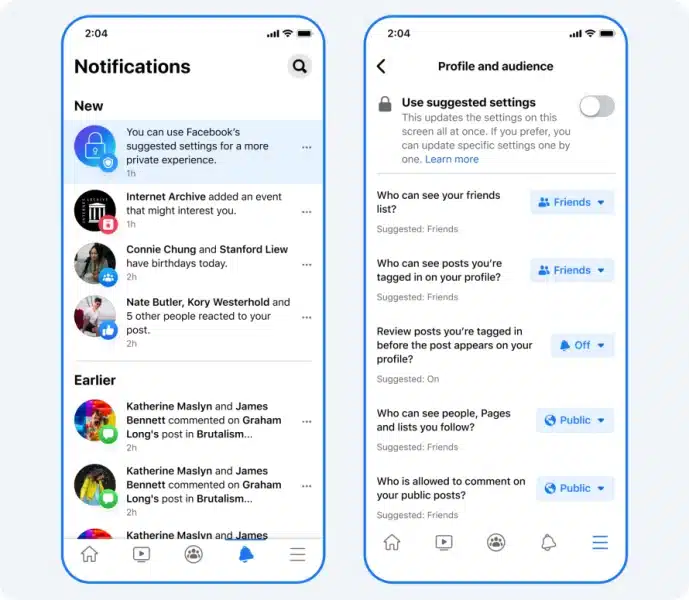
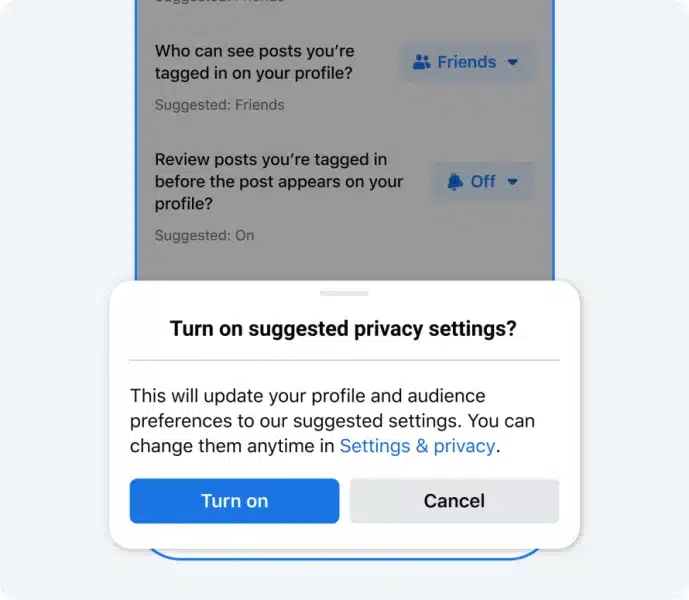
New privacy defaults. Starting today, teens will default to more private settings when they join Facebook. For teens already on the platform, Meta recommends making these changes manually. The new privacy settings affect:

  • Who can see their friends list
  • Who can see the people, Pages and lists they follow 
  • Who can see posts they’re tagged in on their profile
  • Reviewing posts they’re tagged in before the post appears on their profile
  • Who is allowed to comment on their public posts
Advertising & Marketing (NEC)
Computing

Restricting connections. Meta is testing ways to protect teens from messaging suspicious adults they aren’t connected to, and those adults won’t be shown in teens’ People You May Know recommendations. Meta further clarifies that a “suspicious” account is one that belongs to an adult that may have recently been blocked or reported by a young person, for example. As an added layer of protection, Meta is also testing removing the message button on teens’ Instagram accounts when they’re viewed by suspicious adults altogether. 


Get the daily newsletter search marketers rely on.

<input type="hidden" name="utmMedium" value="” />
<input type="hidden" name="utmCampaign" value="” />
<input type="hidden" name="utmSource" value="” />
<input type="hidden" name="utmContent" value="” />
<input type="hidden" name="pageLink" value="” />
<input type="hidden" name="ipAddress" value="” />

Processing…Please wait.

function getCookie(cname) {
let name = cname + “=”;
let decodedCookie = decodeURIComponent(document.cookie);
let ca = decodedCookie.split(‘;’);
for(let i = 0; i <ca.length; i++) {
let c = ca[i];
while (c.charAt(0) == ' ') {
c = c.substring(1);
}
if (c.indexOf(name) == 0) {
return c.substring(name.length, c.length);
}
}
return "";
}
document.getElementById('munchkinCookieInline').value = getCookie('_mkto_trk');


New safety tools. Meta is also developing new tools to report anything that makes them feel uncomfortable. On their blog, Meta says, “we’re prompting teens to report accounts to us after they block someone, and sending them safety notices with information on how to navigate inappropriate messages from adults.  In just one month in 2021, more than 100 million people saw safety notices on Messenger. We’ve also made it easier for people to find our reporting tools and, as a result, we saw more than a 70% increase in reports sent to us by minors in Q1 2022 versus the previous quarter on Messenger and Instagram DMs.”

daily newsletter search marketers
Facebook

Stopping the spread of sensitive images. Meta is also working on new tools to help stop the spread of teens’ intimate images online. Meta says:

We’re working with the National Center for Missing and Exploited Children (NCMEC) to build a global platform for teens who are worried intimate images they created might be shared on public online platforms without their consent. This platform will be similar to work we have done to prevent the non-consensual sharing of intimate images for adults. It will allow us to help prevent a teen’s intimate images from being posted online and can be used by other companies across the tech industry. We’ve been working closely with NCMEC, experts, academics, parents and victim advocates globally to help develop the platform and ensure it responds to the needs of teens so they can regain control of their content in these horrific situations. We’ll have more to share on this new resource in the coming weeks.

We’re also working with Thorn and their NoFiltr brand to create educational materials that reduce the shame and stigma surrounding intimate images, and empower teens to seek help and take back control if they’ve shared them or are experiencing sextortion.

Home Business

Dig deeper. Meta says that anyone seeking support and information related to sextortion can visit their education and awareness resources, including the Stop Sextortion hub on the Facebook Safety Center. You can also read this announcement from Meta on their blog.

Why we care. It’s hard to criticize Meta for taking steps to protect and prevent harm to teens. Though teens will default to the new settings once they sign up, they can still opt out if they choose. And teens already on the platform will have to manually select the new options, which many of them may not do.

At least parents of teens can now be aware of the new changes and take the appropriate steps to help protect them.

The post New Meta privacy updates for teens appeared first on Search Engine Land.

Original source: https://searchengineland.com/new-meta-privacy-updates-for-teens-389742