Many Energy Support Scheme vouchers not being redeemed

Reading Time: 2 mins

Have you redeemed your Energy Support Scheme vouchers?

New reports state many customers on prepayment energy meters have not yet redeemed the £400 vouchers to help with their energy bills. From October 1st, the £400, given in instalments over 6 months, started to be given to people across the UK. 

This is part of the government’s Energy Bills Support Scheme, announced in May. However, many customers with prepayment meters have not yet redeemed the help. The government are using all customers to use the credit as soon as possible, as they are valid for just 90 days. 

This comes after one payment company said it had only redeemed half of the credit it expected to in October. Other money saving websites have suggested there have been delays in receiving the vouchers. This could give reason as to why people may not have redeemed the vouchers. 

The BBC suggest the milder weather may be playing a role. This is due to people wanting to hold off on using the vouchers until chillier days kick in. 

For those who use direct debits to pay their energy bills, the discount will be applied automatically by their energy providers. For those on pre-payment meters who need to top up their accounts via a key or card, the help comes in the form of a voucher. More than four million people have a pre-payment meter. 

PayPoint, a payment company which allows people to top up their cards, keys or pay bills in local shops has said it expected to process 800,000 vouchers in October, worth a staggering £52.8 million. They are now urging people to go through their post in case they missed the delivery of the vouchers. 

Receiving payments

If you have a fixed monthly direct debit, your provider may deduct the amount from each monthly bill. However, you may be able to arrange with them to pay an amount you want. This may help you build up credit for the winter months. Some providers may refund the monthly back monthly, when you have paid your bill. 

Some suppliers are knocking the money off your bill if you pay for what you use every month. They may add the Energy Support Scheme vouchers to your account as credit. This means you pay less at the end of the month. 

Those with a traditional prepayment meter, which require top-ups at shops, will receive their vouchers in the post. This should arrive by the 17th of each month. If you have a smart prepayment meter, suppliers will automatically add credit to your meter. This is usually done in the first week of each month. 


We have all the latest news, useful information and tips and tricks to help you save on your bills here.

The post Many Energy Support Scheme vouchers not being redeemed appeared first on MoneyMagpie.

Original source: https://www.moneymagpie.com/make-money/many-energy-support-scheme-vouchers-not-being-redeemed

Sourcing and Procurement Mistakes You Cannot Afford to Make

Home Business Magazine Online

When you are running a business out of your own home, you likely don’t have a lot of capital to waste. Thus, you need every business process to be perfectly efficient — and sourcing and procurement needs to be the most efficient of all.

Unfortunately, many beginning entrepreneurs make too many mistakes in sourcing and procurement, leading to waste that holds their startups back and can even result in total failure. If you want your budding enterprise to grow, here are a few mistakes to avoid when it comes to sourcing and procurement.

Nonexistent Strategy

No strategy is always the wrong strategy in business. Every action that affects business operations requires careful planning, to include sourcing and procurement, which has great potential to impact business success. The foundation of your sourcing and procurement strategy should be your goals for your business’s supply chain.

  • Do you want a large network of diverse suppliers to provide continuous access to materials and products?
  • Do you want to move with agility from one supplier network to another as market trends impact demand in your industry?
  • Do you want to limit supply to a small handful of exceedingly high-quality manufacturers to develop exclusivity and high demand?

Once you understand how you want to grow your business’s supply chain, you can develop a strategy for sourcing and procurement to match.

Unclear Standards

As you are beginning to put your sourcing and procurement strategy into motion, you should build a set of standards that you and your staff can apply to potential suppliers as your supply chain grows. The standards you use should reflect your supply chain needs as well as your company values. For example, some factors you might consider in your sourcing and procurement process include:

  • Production prices
  • Output benchmarks
  • Turnaround times
  • Communication capabilities
  • Environmental impacts

You should make your standards clear to any supplier you decide to partner with. Then, partners in your supply chain understand how to deliver value to you and maintain your business.

Lack of Information

Sourcing and procurement are all about gaining more information about potential suppliers to make informed decisions regarding supply chain partnerships. Thus, lacking information about potential suppliers is a significant mistake that will inevitably lead to losses of critical resources and time.

Fortunately, it is easy than ever to avoid this mistake. Using strategic sourcing tools, you can collect information recovered about potential sources from online research and offline platforms. Business websites, review platforms and social media networks are valuable sources of information, as are trade shows and industry conferences. You should also ask suppliers directly for more information, as they can supply useful data related to their capabilities and performance.

Poor Security

Risk is an unavoidable element of working with suppliers. Still, if you do not engage with sourcing and procurement with security as a primary concern, you will likely suffer exacerbated risk and intense losses that can threaten your business stability and growth.

Before you sign contracts, you might engage in a pilot period with a supplier, which will help you gain more insight into their typical practices. If you are disappointed in any way by the samples you receive — in the quality of the products, in the time frame of delivery, in the amount of output, in the customer service provided, etc. — you might try to rectify issues with another pilot production period. Engaging in trials can help you build a stronger relationship with your suppliers or else determine which suppliers are not worth your time and investment.

handshake for contract
Photo by Sora Shimazaki from Pexels

Absent Contracts

Many entrepreneurs and small business owners, eager to grow their businesses quickly, will forego contracts in the hopes of securing fast and enviable deals with their suppliers. However, contracts are another layer of security that you cannot neglect. Your sourcing contracts should clearly explain your expectations from your suppliers, so then if they fail to meet your standards, you can terminate your relationship and potentially pursue remuneration for any losses you experience as a result of their improper behavior. Because contracts are useful for suppliers too, as it tells them how they should focus operations to satisfy customer needs, you should never do business with a source that is hesitant to use contracts.

The last thing your small startup needs is for your sourcing and procurement processes to weigh you down. By thinking critically about sourcing and procurement from the start, you can develop systems that will allow your business to grow and thrive into the future.

The post Sourcing and Procurement Mistakes You Cannot Afford to Make appeared first on Home Business Magazine.

Original source: https://homebusinessmag.com/management/operations/sourcing-procurement-mistakes-cannot-afford-make/

HUD App — The Goat of Dating Apps Sponsors New Television Show, Reality of Love

Home Business Magazine Online

What do you get when you combine a genre that’s hard to resist paired with discussions about your love life? Reality of Love is a new series, presented by HUD App, that airs on BSpoke Tv.

On each episode of Reality of Love, celebrities will get real and raw about the reality of their love lives today and receive coaching from Nicole Moore (of Love Works Method) on how to make their love life work, finally. From rewriting celebs’ dating profiles on-air to helping a reality tv couple finally communicate without a fight, nothing is off limits.

The guests may have lost at love on television, but they’re laying it all on the table during the episodes of Reality of Love in a way that has never before been seen. Home Business Magazine got the opportunity to chat with Katie Wilson, Director of Communications, for the HUD App on their involvement with our new obsession, how the idea came about, and so much more!

The following has been edited for continuity purposes

HBM: How is HUD App different from other dating apps?

KW: “HUD App gives you the opportunity to date the way you want – it’s a no-pressure, safe, empowering way to date casually and explore your needs, wants, and desires without judgment. Our ethos is to encourage open-minded connections with people who are into the same things you’re into. The HUD App platform is geared particularly toward women taking control of their sexuality and intimacy in a safe and secure way, and we pride ourselves on driving the conversation around consent, healthy communication, and boundary-setting.

We were the first to roll out safety features like auto-blur photos and video chat – giving users the ability to choose whether they want to see the pics they’re receiving, or whether they want to reveal themselves to people they’re chatting with. We also have real human moderators who strive to support our community and help users make comfortable, authentic choices while feeling safe and looked after.”

HBM: How did HUD App come about?

KW: “Our founder and CEO, Edward Chen, realized there was a gap in the dating app market for an app geared toward people who want to date casually and aren’t necessarily looking for a life partner. Women are underserved in the dating app market – other apps seem to treat women like they’re all desperate to get a ring and get to the altar – and HUD App wants to change that. As an app that is focused on empowering women to date the way they want to, HUD App is giving women permission to explore their sexuality without shame or judgment and facilitates people everywhere on the gender spectrum to feel like casual dating is valid and should be supported, encouraged, and celebrated. And HUD App is fun! We definitely take safety seriously, but we want our users’ dating experiences to be so much more fun than on any other app.”

HBM: Can you share a few stats regarding the app? Who are the users?

KW: “HUD App’s community is very diverse. We have users of all ages 18+, and we also have a growing number of couples who are utilizing the app to broaden their horizons or open up their relationships to casual dating. HUD App is available in over 150 countries worldwide, and right now our biggest user bases are in North America, the UK, and Canada. We’re on our way to 13 million downloads and growing rapidly.”

HBM: What has been the user feedback this far?

KW: “Our users are overwhelmingly positive about their experience with HUD App. People especially love our Bedroom feature, which gives you the ability, to be honest, and upfront about what interests you in the bedroom, and our added safety features for women are very well-respected. When we do get user feedback, it’s always constructive and helpful, and we definitely take it on board and make changes to the app based on what our users want. We really listen to their wants and needs and make an effort to adapt HUD App as the casual dating scene shifts. We know that HUD App isn’t everyone’s cup of tea, but what’s that saying – variety is the spice of life! People who are looking for a quality, safe, fun casual dating app really like HUD App, and we’re here for them.”

HBM: How did the HUD App get involved with Reality of Love?

KW: “Nicole approached us after finding our Instagram, and she loved that we’re on a mission to shake things up in the dating world and be different from other dating apps. She believes that people need to know themselves and what they like before they can commit to being with someone else, and that’s what HUD App offers. We were thrilled and honored to be asked to come on board as a sponsor for Reality of Love.”

American films
HUD App sponsored the ‘Reality of Love’ show on BSpoke Tv. Courtesy of Reality of Love

HBM: Why did HUD App decide to be part of the show?

KW: “The leadership team at HUD App absolutely loved the premise of Reality of Love, and Nicole’s style as the presenter – we felt that it reflected our values and ethos, and we were excited to partner with a show that has the same vibes as we do. Our team agreed that hearing a collective of stories about dating from some of our favorite reality show stars – people whose dating lives have been lived very much in the public eye and who have been faced with a lot of speculation – was incredibly insightful and brave and important, and we want to support them living their own authenticity.

At HUD App we are also hugely invested in education and banishing stigmas around non-traditional kinds of dating. These honest stories about how real people changed their habits and experienced growth with their dating really resonate, and help others to feel more confident in exploring their own needs and ideas about romance, dating, and connection.”

HBM: Anything else you’d like to share with our readers?

KW: “HUD App is truly not like other dating apps. We are genuinely on a mission to break through social norms about how dating “should” be, how it looks and feels, and how others view dating. We want to call out and end slut-shaming and give women the confidence to enjoy their dating life without being judged, shunned, or called names. We are very open and honest, and this is reflected in our features, our community guidelines, and our customer service.

HUD App is a place for people, especially women, to feel empowered to explore, educate and be educated, and communicate, and to feel like it is more than okay to be yourself – in fact, it’s our core tenet. Dating should be fun, and safe, and it should feel good on every level – physically, mentally, and emotionally. We’d love for you to join us on HUD App and experience authentic, honest, upfront dating!”

The post HUD App — The Goat of Dating Apps Sponsors New Television Show, Reality of Love appeared first on Home Business Magazine.

Original source: https://homebusinessmag.com/lifestyles/hud-app-goat-dating-apps-sponsors-new-television-show-reality-of-love/

Crawl efficacy: How to level up crawl optimization

It’s not guaranteed Googlebot will crawl every URL it can access on your site. On the contrary, the vast majority of sites are missing a significant chunk of pages.

The reality is, Google doesn’t have the resources to crawl every page it finds. All the URLs Googlebot has discovered, but has not yet crawled, along with URLs it intends to recrawl are prioritized in a crawl queue.

This means Googlebot crawls only those that are assigned a high enough priority. And because the crawl queue is dynamic, it continuously changes as Google processes new URLs. And not all URLs join at the back of the queue.

So how do you ensure your site’s URLs are VIPs and jump the line?

Crawling is critically important for SEO

Content can't be curated by Google without being crawled.

In order for content to gain visibility, Googlebot has to crawl it first.

But the benefits are more nuanced than that because the faster a page is crawled from when it is:

  • Created, the sooner that new content can appear on Google. This is especially important for time-limited or first-to-market content strategies.
  • Updated, the sooner that refreshed content can start to impact rankings. This is especially important for both content republishing strategies and technical SEO tactics.

As such, crawling is essential for all your organic traffic. Yet too often it’s said crawl optimization is only beneficial for large websites.

 But it’s not about the size of your website, the frequency content is updated or whether you have “Discovered – currently not indexed” exclusions in Google Search Console. 

Crawl optimization is beneficial for every website. The misconception of its value seems to spur from meaningless measurements, especially crawl budget.

Crawl budget doesn’t matter

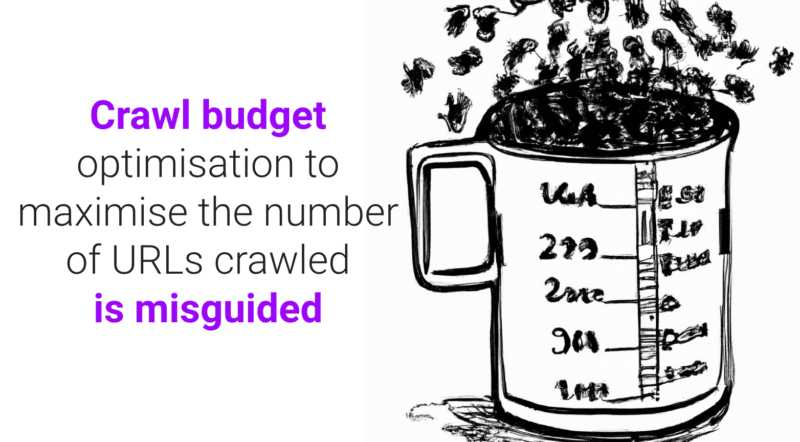
Crawl budget optimization to maximize the number of URLs crawled is misguided.

Too often, crawling is assessed based on crawl budget. This is the number of URLs Googlebot will crawl in a given amount of time on a particular website.

Google says it is determined by two factors:

  • Crawl rate limit (or what Googlebot can crawl): The speed at which Googlebot can fetch the website’s resources without impacting site performance. Essentially, a responsive server leads to a higher crawl rate.
  • Crawl demand (or what Googlebot wants to crawl): The number of URLs Googlebot visits during a single crawl based on the demand for (re)indexing, impacted by the popularity and staleness of the site’s content.

Once Googlebot “spends” its crawl budget, it stops crawling a site.

Google doesn’t provide a figure for crawl budget. The closest it comes is showing the total crawl requests in the Google Search Console crawl stats report.

So many SEOs, including myself in the past, have gone to great pains to try to infer crawl budget. 

The often presented steps are something along the lines of:

  • Determine how many crawlable pages you have on your site, often recommending looking at the number of URLs in your XML sitemap or run an unlimited crawler.
  • Calculate the average crawls per day by exporting the Google Search Console Crawl Stats report or based on Googlebot requests in log files.
  • Divide the number of pages by the average crawls per day. It’s often said, if the result is above 10, focus on crawl budget optimization.

However, this process is problematic.

Not only because it assumes that every URL is crawled once, when in reality some are crawled multiple times, others not at all.

Not only because it assumes that one crawl equals one page. When in reality one page may require many URL crawls to fetch the resources (JS, CSS, etc) required to load it. 

But most importantly, because when it is distilled down to a calculated metric such as average crawls per day, crawl budget is nothing but a vanity metric.

Any tactic aimed toward “crawl budget optimization” (a.k.a., aiming to continually increase the total amount of crawling) is a fool’s errand.

Why should you care about increasing the total number of crawls if it’s used on URLs of no value or pages that haven’t been changed since the last crawl? Such crawls won’t help SEO performance.

Plus, anyone who has ever looked at crawl statistics knows they fluctuate, often quite wildly, from one day to another depending on any number of factors. These fluctuations may or may not correlate against fast (re)indexing of SEO-relevant pages.

A rise or fall in the number of URLs crawled is neither inherently good nor bad. 

Crawl efficacy is an SEO KPI

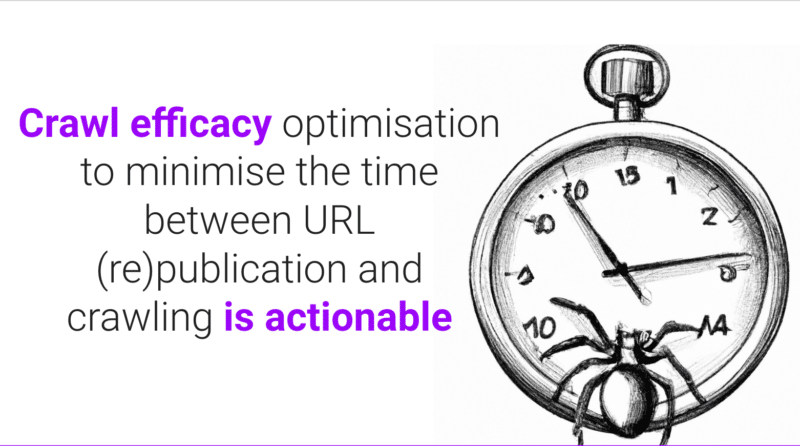
Crawl efficacy optimization to minimize the time between URL (re)publication and crawling is actionable.

For the page(s) that you want to be indexed, the focus shouldn’t be on whether it was crawled but rather on how quickly it was crawled after being published or significantly changed.

Essentially, the goal is to minimize the time between an SEO-relevant page being created or updated and the next Googlebot crawl. I call this time delay the crawl efficacy.

The ideal way to measure crawl efficacy is to calculate the difference between the database create or update datetime and the next Googlebot crawl of the URL from the server log files.

If it’s challenging to get access to these data points, you could also use as a proxy the XML sitemap lastmod date and query URLs in the Google Search Console URL Inspection API for its last crawl status (to a limit of 2,000 queries per day).

Plus, by using the URL Inspection API you can also track when the indexing status changes to calculate an indexing efficacy for newly created URLs, which is the difference between publication and successful indexing.

Because crawling without it having a flow on impact to indexing status or processing a refresh of page content is just a waste.

Crawl efficacy is an actionable metric because as it decreases, the more SEO-critical content can be surfaced to your audience across Google.

You can also use it to diagnose SEO issues. Drill down into URL patterns to understand how fast content from various sections of your site is being crawled and if this is what is holding back organic performance.

If you see that Googlebot is taking hours or days or weeks to crawl and thus index your newly created or recently updated content, what can you do about it?


Get the daily newsletter search marketers rely on.

<input type="hidden" name="utmMedium" value="” />
<input type="hidden" name="utmCampaign" value="” />
<input type="hidden" name="utmSource" value="” />
<input type="hidden" name="utmContent" value="” />
<input type="hidden" name="pageLink" value="” />
<input type="hidden" name="ipAddress" value="” />

Processing…Please wait.

function getCookie(cname) {
let name = cname + “=”;
let decodedCookie = decodeURIComponent(document.cookie);
let ca = decodedCookie.split(‘;’);
for(let i = 0; i <ca.length; i++) {
let c = ca[i];
while (c.charAt(0) == ' ') {
c = c.substring(1);
}
if (c.indexOf(name) == 0) {
return c.substring(name.length, c.length);
}
}
return "";
}
document.getElementById('munchkinCookieInline').value = getCookie('_mkto_trk');


7 steps to optimize crawling

Crawl optimization is all about guiding Googlebot to crawl important URLs fast when they are (re)published. Follow the seven steps below.

1. Ensure a fast, healthy server response

server response

A highly performant server is critical. Googlebot will slow down or stop crawling when:

  • Crawling your site impacts performance. For example, the more they crawl, the slower the server response time.
  • The server responds with a notable number of errors or connection timeouts.

On the flip side, improving page load speed allowing the serving of more pages can lead to Googlebot crawling more URLs in the same amount of time. This is an additional benefit on top of page speed being a user experience and ranking factor.

If you don’t already, consider support for HTTP/2, as it allows the ability to request more URLs with a similar load on servers.

However, the correlation between performance and crawl volume is only up to a point. Once you cross that threshold, which varies from site to site, any additional gains in server performance are unlikely to correlate to an uptick in crawling.

How to check server health

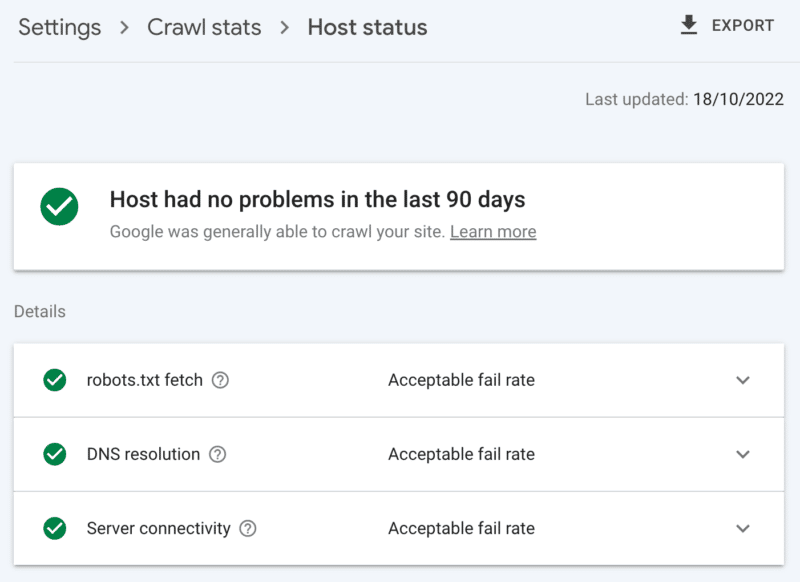
The Google Search Console crawl stats report:

  • Host status: Shows green ticks.
  • 5xx errors: Constitutes less than 1%.
  • Server response time chart: Trending below 300 milliseconds.

2. Clean up low-value content

If a significant amount of site content is outdated, duplicate or low quality, it causes competition for crawl activity, potentially delaying the indexing of fresh content or reindexing of updated content.

Add on that regularly cleaning low-value content also reduces index bloat and keyword cannibalization, and is beneficial to user experience, this is an SEO no-brainer.

Merge content with a 301 redirect, when you have another page that can be seen as a clear replacement; understanding this will cost you double the crawl for processing, but it’s a worthwhile sacrifice for the link equity.

If there is no equivalent content, using a 301 will only result in a soft 404. Remove such content using a 410 (best) or 404 (close second) status code to give a strong signal not to crawl the URL again.

How to check for low-value content

The number of URLs in the Google Search Console pages report ‘crawled – currently not indexed’ exclusions. If this is high, review the samples provided for folder patterns or other issue indicators.

3. Review indexing controls

Rel=canonical links are a strong hint to avoid indexing issues but are often over-relied on and end up causing crawl issues as every canonicalized URL costs at least two crawls, one for itself and one for its partner.

Similarly, noindex robots directives are useful for reducing index bloat, but a large number can negatively affect crawling – so use them only when necessary.

In both cases, ask yourself:

  • Are these indexing directives the optimal way to handle the SEO challenge? 
  • Can some URL routes be consolidated, removed or blocked in robots.txt?

If you are using it, seriously reconsider AMP as a long-term technical solution.

With the page experience update focusing on core web vitals and the inclusion of non-AMP pages in all Google experiences as long as you meet the site speed requirements, take a hard look at whether AMP is worth the double crawl.

How to check over-reliance on indexing controls

The number of URLs in the Google Search Console coverage report categorized under the exclusions without a clear reason:

  • Alternative page with proper canonical tag.
  • Excluded by noindex tag.
  • Duplicate, Google chose different canonical than the user.
  • Duplicate, submitted URL not selected as canonical.

4. Tell search engine spiders what to crawl and when

An essential tool to help Googlebot prioritize important site URLs and communicate when such pages are updated is an XML sitemap.

For effective crawler guidance, be sure to:

  • Only include URLs that are both indexable and valuable for SEO – generally, 200 status code, canonical, original content pages with a “index,follow” robots tag for which you care about their visibility in the SERPs.
  • Include accurate <lastmod> timestamp tags on the individual URLs and the sitemap itself as close to real-time as possible.

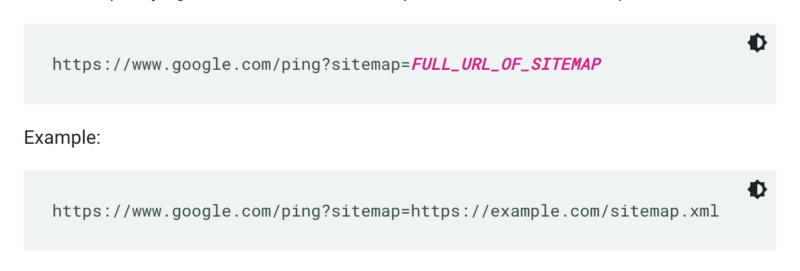
Google doesn’t check a sitemap every time a site is crawled. So whenever it’s updated, it’s best to ping it to Google’s attention. To do so send a GET request in your browser or the command line to:

How to ping Google after updating your sitemap

Additionally, specify the paths to the sitemap in the robots.txt file and submit it to Google Search Console using the sitemaps report.

As a rule, Google will crawl URLs in sitemaps more often than others. But even if a small percentage of URLs within your sitemap is low quality, it can dissuade Googlebot from using it for crawling suggestions.

XML sitemaps and links add URLs to the regular crawl queue. There is also a priority crawl queue, for which there are two entry methods.

Firstly, for those with job postings or live videos, you can submit URLs to Google’s Indexing API.

Or if you want to catch the eye of Microsoft Bing or Yandex, you can use the IndexNow API for any URL. However, in my own testing, it had a limited impact on the crawling of URLs. So if you use IndexNow, be sure to monitor crawl efficacy for Bingbot.

URL inspection tool

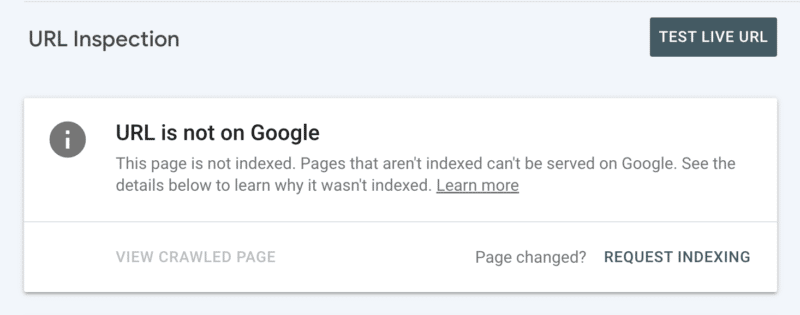
Secondly, you can manually request indexing after inspecting the URL in Search Console. Although keep in mind there is a daily quota of 10 URLs and crawling can still take quite some hours. It is best to see this as a temporary patch while you dig to discover the root of your crawling issue.

How to check for essential Googlebot do crawl guidance

In Google Search Console, your XML sitemap shows the status “Success” and was recently read.

5. Tell search engine spiders what not to crawl

Some pages may be important to users or site functionality, but you don’t want them to appear in search results. Prevent such URL routes from distracting crawlers with a robots.txt disallow. This could include:

  • APIs and CDNs. For example, if you are a customer of Cloudflare, be sure to disallow the folder /cdn-cgi/ which is added to your site.
  • Unimportant images, scripts or style files, if the pages loaded without these resources are not significantly affected by the loss.
  • Functional page, such as a shopping cart.
  • Infinite spaces, such as those created by calendar pages.
  • Parameter pages. Especially those from faceted navigation that filter (e.g., ?price-range=20-50), reorder (e.g., ?sort=) or search (e.g., ?q=) as every single combination is counted by crawlers as a separate page.

Be mindful to not completely block the pagination parameter. Crawlable pagination up to a point is often essential for Googlebot to discover content and process internal link equity. (Check out this Semrush webinar on pagination to learn more details on the why.)

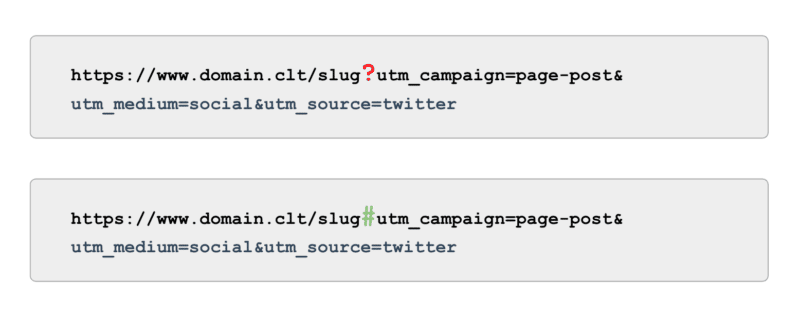
URL parameters for tracking

And when it comes to tracking, rather than using UTM tags powered by parameters (a.k.a., ‘?’) use anchors (a.k.a., ‘#’). It offers the same reporting benefits in Google Analytics without being crawlable.

How to check for Googlebot do not crawl guidance

Review the sample of ‘Indexed, not submitted in sitemap’ URLs in Google Search Console. Ignoring the first few pages of pagination, what other paths do you find? Should they be included in an XML sitemap, blocked from being crawled or let be?

Also, review the list of “Discovered – currently not indexed” – blocking in robots.txt any URL paths that offer low to no value to Google.

To take this to the next level, review all Googlebot smartphone crawls in the server log files for valueless paths.

Backlinks to a page are valuable for many aspects of SEO, and crawling is no exception. But external links can be challenging to get for certain page types. For example, deep pages such as products, categories on the lower levels in the site architecture or even articles.

On the other hand, relevant internal links are:

  • Technically scalable.
  • Powerful signals to Googlebot to prioritize a page for crawling.
  • Particularly impactful for deep page crawling.

Breadcrumbs, related content blocks, quick filters and use of well-curated tags are all of significant benefit to crawl efficacy. As they are SEO-critical content, ensure no such internal links are dependent on JavaScript but rather use a standard, crawlable <a> link.

Bearing in mind such internal links should also add actual value for the user.

How to check for relevant links

Run a manual crawl of your full site with a tool like ScreamingFrog’s SEO spider, looking for:

  • Orphan URLs.
  • Internal links blocked by robots.txt.
  • Internal links to any non-200 status code.
  • The percentage of internally linked non-indexable URLs.

7. Audit remaining crawling issues

If all of the above optimizations are complete and your crawl efficacy remains suboptimal, conduct a deep dive audit.

Start by reviewing the samples of any remaining Google Search Console exclusions to identify crawl issues.

Once those are addressed, go deeper by using a manual crawling tool to crawl all the pages in the site structure like Googlebot would. Cross-reference this against the log files narrowed down to Googlebot IPs to understand which of those pages are and aren’t being crawled.

Finally, launch into log file analysis narrowed down to Googlebot IP for at least four weeks of data, ideally more.

If you are not familiar with the format of log files, leverage a log analyzer tool. Ultimately, this is the best source to understand how Google crawls your site.

Once your audit is complete and you have a list of identified crawl issues, rank each issue by its expected level of effort and impact on performance.

Note: Other SEO experts have mentioned that clicks from the SERPs increase crawling of the landing page URL. However, I have not yet been able to confirm this with testing.

Prioritize crawl efficacy over crawl budget

The goal of crawling is not to get the highest amount of crawling nor to have every page of a website crawled repeatedly, it is to entice a crawl of SEO-relevant content as close as possible to when a page is created or updated. 

Overall, budgets don’t matter. It’s what you invest into that counts.

The post Crawl efficacy: How to level up crawl optimization appeared first on Search Engine Land.

Original source: https://searchengineland.com/crawl-efficacy-optimization-389085

GA4 gets new homepage experience, 5 new features

Google has just unveiled several new Google Analytics 4 (GA4) updates, including a new homepage experience, real-time behavioral modeling reports, and custom channel grouping.

Insights through machine learning

Behavioral modeling. Behavior modeling with real time reporting will give advertisers a complete picture of user behavior as it happens, in a privacy-centric way. 

Behavior modeling uses machine learning to fill in the gaps of your understanding of customer behavior when cookies and other identifiers aren’t available.

Real-time updates will be available in the near future to give advertisers a complete view of the customer journey as it’s happening.

The new home page experience. Originally previewed at Google Marketing Live and available to all advertisers as of today, is personalized for customers, highlighting key top-line trends, real-time behavior and their most viewed reports. Additionally, it uses machine learning to look for trends and insights and surfaces them directly to advertisers on the home page.

Integrations and solutions to power better ROI

Data-driven attribution (DDA). DDA was introduced into GA4 earlier this year, after becoming the default for all ads conversions last fall. Soon, Google will launch custom channel grouping, a feature that lets advertisers combine different channels to compare cost-per-acquisition and return-on-ad-spend based on data-driven attribution. For example, businesses will be able to compare the performance of their paid search brand with their non-brand campaigns.

Integration with Campaign Manager 360. With this integration, you’ll be able to see a more complete picture of your campaign performance alongside web and app behavioral metrics. 

GA4 Setup Assistant updates

Universal Analytics (UA) is sunsetting in 2023, so to help advertisers complete the transition easily, Google is rolling out an update early next year that will automatically help standard UA users set up their GA4 properties.

Google’s step-by-step guide will help you migrate to GA4 on your own if you choose to opt out of using the Setup Assistant. If you choose to utilize the Setup Assistant, you can access it in the admin section of your UA property.

Beginning early next year, the Setup Assistant will create a new Google Analytics 4 property for each standard UA property that doesn’t already have one. It should also be noted “the new GA4 properties will be connected with the corresponding UA properties to match your privacy and collection settings. They’ll also enable equivalent basic features such as goals and Google Ads links,” Google said.

New migration deadline for 360 customers

Google is also pushing the migration deadline for 360 customers from October 2023 to July 2024, to ensure a successful setup:

“We recognize that setting up Google Analytics 4 to fit your needs takes time and resources, in particular for large enterprises with complex Analytics 360 setups. To allow enterprise customers more time to have a smoother transition to Google Analytics 4, we’re moving the Universal Analytics 360 properties’ sunset date from October 1, 2023 to July 1, 2024.”

Dig deeper. You can read the full announcement and more details on the features on the Google Marketing Blog.

Why we care. GA4 has been an inconvenient thorn in the garden of marketing. Maybe that’s being dramatic, but most advertisers are putting off implementing the new Analytics property to the last minute. This is a bad idea.

If you haven’t set up GA4 yet, get started on it ASAP. Use the Setup Assistant to begin collecting data, then go back later and customize your dashboard and create additional views.

These new features are only helpful if you’re actually using the product.

More resources. Check out these additional resources to help you set up and get the most out of GA4:

The post GA4 gets new homepage experience, 5 new features appeared first on Search Engine Land.

Original source: https://searchengineland.com/a-new-homepage-experience-plus-5-other-new-ga4-features-389104

Sound in Motion Brings Slander’s “The Thrive Tour” To A Sold-Out Crowd In Minneapolis

Home Business Magazine Online

The fall season helps us to say goodbye to summer music festivals and hello to endless exciting indoor music events! Autumn is especially busy for the Twin Cities most trusted EDM-event production company, Sound in Motion. Every weekend, Sound in Motion designs, plans, and produces electronic music events that attract thousands of EDM-lovers around the Twin Cities metro. Their most recent SOLD-OUT event at The Armory showed just how spectacular of a production they can put on for such a large crowd. Slander’s The Thrive Tour proved to be the hottest EDM show of the fall season thus far.

Space Laces keeps the energy gets the crowd on their feet with every bas-heavy drop. Photo credit: Brez Media
Space Laces keeps the blood pumping with every bass-heavy drop. Photo credit: Brez Media

The event started off with the openers Nitepunk and Wavedash (DJ set). Nitepunk set the tone of the night with wub-filled heavy bass drops to satisfy even the hardest of bassheads. The Wavedash DJ set kept the crowd’s energy rising with adrenaline-pumping drops and remixes of well-known songs that kept the crowd jumping on their feet. The last pre-performer was Space Laces, whose heavy bass intertwined with perfectly-timed beats satisfied attendees’ hunger for head-bang-worthy drops.

Albums
Slander brings the heat with electrifying visuals. Photo credit: Brez Media

Finally, Slander took the stage with an exceptional show that combined their skillfully-mixed EDM tracks with a dazzling light and laser show. The DJ duo gave the crowd over an hour of head-bang-worthy drops, crowd-pleasing classics, and beautiful slower songs from their new album. The crowd unanimously screamed with excitement at each drop with the synchronized lights, piercing lasers, and other finely-tuned visual details that make Sound in Motion’s stand out from other production companies.

Slander's set featured a light show that reached every corner of the venue. Photo credit: Brez Media
Slander’s perfectly synchronized light show filled every inch of the venue. Photo credit: Brez Media

Slander’s The Thrive Tour was a great opportunity for lifestyle brands to promote their offerings to a sold-out crowd of thousands of Twin Cities consumers. Sponsors may look toward future Sound in Motion shows to market their brand or product to enthusiastic concert goers: LSR/CITY V2 on December 3rd, Excision on January 27th and January 28th, and Subtronics on March 3rd and March 4th.

The post Sound in Motion Brings Slander’s “The Thrive Tour” To A Sold-Out Crowd In Minneapolis appeared first on Home Business Magazine.

Original source: https://homebusinessmag.com/businesses/sound-in-motion-brings-slanders-the-thrive-tour-to-a-sold-out-crowd-in-minneapolis/

Kerry W. Kirby Shares Important Skills That Every Successful Entrepreneur Possess

Home Business Magazine Online

So, you want to be an entrepreneur? It is a great ambition, but it should not be taken lightly. Experts like Kerry W. Kirby in New Orleans, Louisiana, say starting and running your own business takes a lot of hard work, dedication, and skill. Let us look at some critical skills every successful entrepreneur needs to possess.

Creativity

Kerry W. Kirby says one of the most critical skills for entrepreneurs is creativity. Challenges and obstacles will always exist when you are running your own business. It is up to you to find innovative solutions to overcome these challenges. The ability to think outside the box and come up with creative solutions is essential for any entrepreneur who wants to be successful.

Time Management

Kerry W. Kirby says another critical skill for entrepreneurs is time management. When you are running your own business, a million and one things need to be done each day. It is up to you to prioritize and manage your time effectively to get everything done. Time management is also crucial because it allows you to take advantage of opportunities as they arise. If you work your time well, you will be able to seize opportunities when they come up instead of letting them pass you by.

Ability to Handle Rejection

Of course, no one likes to be rejected, but according to Kerry W. Kirby, it is a skill that every entrepreneur must possess. When you are starting your own business, there will be many people who will tell you that it is not going to work. You have to stay positive and keep moving forward despite the rejection. If you cannot handle rejection, then entrepreneurship is not for you.

To help you handle rejection, ask naysayers questions, and use their feedback as ways to negate any problems along the way. After all, even the most successful entrepreneurs have been rejected. If you can take rejection as feedback, you will be able to learn from it and use it to improve your business.

Leadership

Another essential skill for entrepreneurs is leadership. As the head of your own business, it is up to you to inspire and motivate your team members. You need to be able to provide direction and guidance so that your team can achieve success.

Having good leadership in place is imperative to build relationships with other businesses. These relationships can help you expand your reach in the market, grow your business, and achieve success.

Ability to Persevere

Kerry W. Kirby says the ability to persevere is a must-have skill for any entrepreneur. Starting your own business is complex, and sometimes you want to give up. Having the strength to keep going — even when things are tough ― is not always easy, but as an entrepreneur, you keep going. If you can persevere through the tough times, you will be able to achieve anything you set your mind to.

Organizational Skills

Some of the most critical skills for entrepreneurs are their organizational skills. Being organized will help eliminate frustrations, challenges, and obstacles when they occur. It is up to you to find innovative organizational solutions to give you the highest potential for success.

Ability to Handle Stress

Another critical skill for entrepreneurs, according to Kerry W. Kirby, is the ability to handle stress. Challenges, big and small, will always exist when you are running your own business, and stress can be a major byproduct. Being able to handle stress is imperative. Exercise, meditation, prayer, listening to music, and reading, are just a few examples of positive ways to handle stress. There are many, many more to help you through stress when it arises.

Sales Skills

Entrepreneurs need to have good sales skills. Most companies have their own marketing and sales departments to handle the daily sales of products and services. However, it is important for entrepreneurs themselves to be able to sell their products. This is because a large part of business success is built on your leadership and passion. Your team looks to you to be an example for generating revenue. As an entrepreneur, good sales techniques will consistently be used in closing deals to progress your business.

Passion

Entrepreneurs need to have passion. When you are passionate about something, it shows in everything you do. Passion is what drives entrepreneurs to keep going — even when things are tough. It motivates them to find creative solutions to problems and persevere through challenges. To be a successful entrepreneur, you need to have a passion for what you are doing.

Risk Taking

When starting your own business, there is always a risk involved. As an entrepreneur, you have to be ready and willing to take those risks. Yes, it is scary. You could fail and lose everything you have put into it. However, without taking risks, you will never know if you could have achieved your dream. Entrepreneurs are willing to take the risks, because they know that it is necessary to be successful.

Thinking Big

Kerry W. Kirby says one of the most important things for entrepreneurs is to think big. When starting your own business, it is easy to be caught up in the day-to-day tasks and forget about the bigger picture. However, if you want to be successful, you must have a long-term vision for your business. You need to think about where you want your business to be in the future and what you want to achieve.

Confidence

Finally yet importantly, Kerry W. Kirby says entrepreneurs need to be confident. When starting your own business, there will always be challenges and obstacles. However, you should always believe in yourself and your business. Be confident in yourself and your abilities as well as what your business has to offer. No matter what challenges come up, as an entrepreneur, it is up to you to exude the confidence to overcome them. After all, if you are not confident in yourself or your product, how can you expect anyone else to be?

Final Comments

There are great risks involved with following your dreams of being an entrepreneur, but the rewards can be just as sweet. There are many vital skills that entrepreneurs must have to be successful. These include leadership skills, organizational skills, the ability to handle stress, and confidence ― to name just a few. Are you ready to be the next great success story?

The post Kerry W. Kirby Shares Important Skills That Every Successful Entrepreneur Possess appeared first on Home Business Magazine.

Original source: https://homebusinessmag.com/lifestyles/success-lifestyles/kerry-w-kirby-shares-important-skills-successful-entrepreneur-possess/

Reddit is building an Ads API, first 4 partners announced

Reddit is working on a new Ads API and have just announced their first four alpha partners. The partners will be integrated into the API and are helping build solution that will inevitably help advertisers build, scale, and optimize campaigns.

Who are the partners. The four partners involved in Reddit’s new venture are:

  • Vidmob
  • Sprinklr
  • adMixt
  • PMG

Who will benefit. Reddit’s API will benefit advertisers spending at scale, as well as self-serve advertisers who are using Reddit ads for the first time.

Release date. The API is still in development and there is no release date published at this time. Reddit says they are looking to “bring more strategic developers on board in the coming months.” 

What Reddit says. “We have long had the aspiration to build an ecosystem of partners via our API that enables more effective and efficient campaign management on our platform. The Reddit Ads API will allow a global, diverse set of partners and clients to access all the capabilities we have built and continue to develop to drive performance,” said Reddit COO, Jen Wong. “These foundational alpha partners represent some of the best and brightest across the industry in terms of innovation, creativity and adtech. Having them join our developer ecosystem is tremendously exciting.”

Why we care. The new API will help advertisers discover new audiences, trends, and additional data they need to optimize their campaigns for conversions.

The post Reddit is building an Ads API, first 4 partners announced appeared first on Search Engine Land.

Original source: https://searchengineland.com/reddit-is-building-an-ads-api-first-4-partners-announced-389111

How to make the most of Performance Max this holiday shopping season

Performance Max is one of the biggest shifts to automation that we’ve seen from Google. How do we make it work this holiday shopping season?

Ideally, you should’ve prepared everything in advance.

Black Friday is in ~30 days! If you’re just starting now, you’re already behind.

Below are some ways you can still get ahead.

1. Audience signals

This is the most underrated part of Performance Max, but likely the most important.

Google gives you the ability to input signals on who the system should target. Upload your customer and email lists, compile top keywords, use interests etc.

We’ve found success with the following audience signals:

  • Customer match
    • High-value customers
    • 2021 holiday shoppers
    • Email subscribers
  • Custom intent
    • Competitor names and URLs
    • High-intent (bottom-funnel) keywords

Tip: Use the Klaviyo and Google Ads integration.

2. Asset groups

With PMax, it’s important not to shock the system by making drastic changes. It’s better to make smaller and more incremental changes.

You can use these approaches:

  • Create a new asset group for promotional items.
  • Layer new promo creative and extensions.

If you’re creating a new asset group, do it within the same campaign so that the product-level historical performance will be utilized.

Be patient and give it some time to collect data and ramp up. It can take time!

Keep in mind: Creating new Performance Max campaigns for BFCM is not recommended because the learning period takes too long to ramp up.

You’re best off adding new asset groups to existing Performance Max campaigns or layering on promotional assets with the current asset groups.


Get the daily newsletter search marketers rely on.

<input type="hidden" name="utmMedium" value="” />
<input type="hidden" name="utmCampaign" value="” />
<input type="hidden" name="utmSource" value="” />
<input type="hidden" name="utmContent" value="” />
<input type="hidden" name="pageLink" value="” />
<input type="hidden" name="ipAddress" value="” />

Processing…Please wait.

function getCookie(cname) {
let name = cname + “=”;
let decodedCookie = decodeURIComponent(document.cookie);
let ca = decodedCookie.split(‘;’);
for(let i = 0; i <ca.length; i++) {
let c = ca[i];
while (c.charAt(0) == ' ') {
c = c.substring(1);
}
if (c.indexOf(name) == 0) {
return c.substring(name.length, c.length);
}
}
return "";
}
document.getElementById('munchkinCookieInline').value = getCookie('_mkto_trk');


3. Datafeed

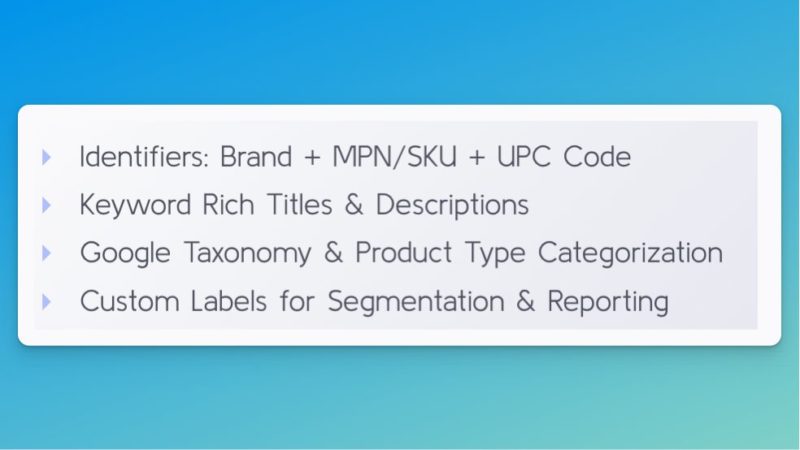
The datafeed is important all year round, but especially important now!

Google Shopping and Performance Max do not allow you to target based on keywords.

The system uses your product information to understand what search queries should show your ads.

Datafeed

4. Ad extensions

Ad extensions (assets) are an easy way to launch promos without making campaign changes that can throw off the system.

You can and should add promo extensions in two places:

  • Google Merchant Center for Shopping
  • Google Ads for Search, YouTube, etc.

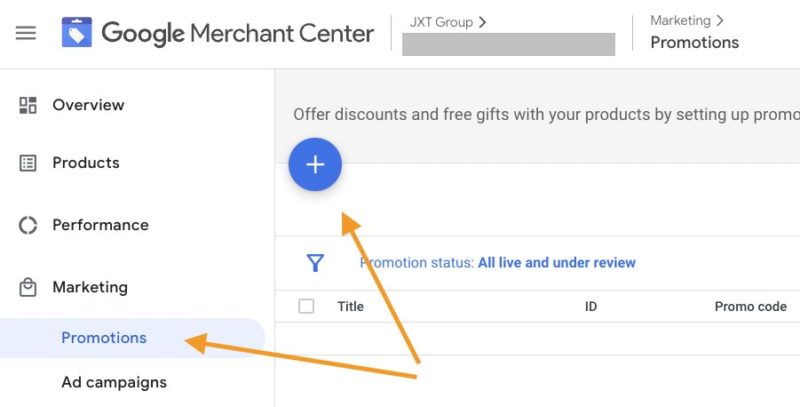
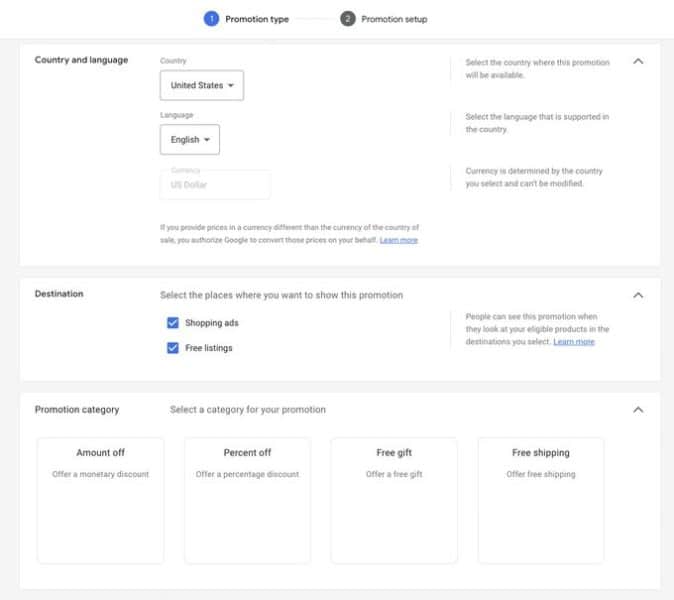
In Google Merchant Center (GMC), you’ll want to make sure you have Promotions enabled under Growth > Manage Programs.

Once you have the option to create promos, go to Marketing > Promotions, then click the big blue button to submit your promotion info.

Google Merchant Center promotions

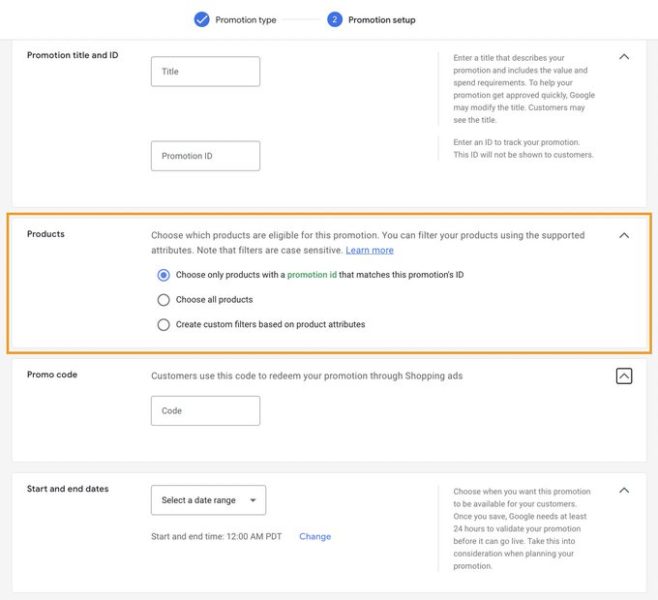
Note: GMC promos are very finicky and subject to manual approval so make sure to set this up correctly. It’s especially important to get the product selection right. (Step 2 below.)

Give yourself time and submit all promos in advance, just in case.

Brokerage Services
Step 1: Promotion type
Display advertising
Step 2: Promotion setup

In Google Ads, promotion extensions (assets) can be added on the account level or campaign level. Just click the Assets tab and add new.

promotion extensions

5. Bids and budget

Give the system space to perform but don’t make super-drastic changes.

We recommend increasing budgets and decreasing tROAS targets incrementally. Again, don’t shock the system.

Anytime you increase the budget, you force the system to find new audiences. It can take time for the algorithm to find a new audience that’ll perform well.

Also, keep in mind that as you increase your budget, you’ll likely see your ad costs increase as well.

6. Smart Shopping style

You can run Performance Max without any assets, only using your product datafeed. This forces the system to run in a similar manner to Smart Shopping with more placements available.

This is a great way to capture high-intent traffic at scale.

Smart Shopping style

7. Paid social style

Additionally, you can run Performance Max without a datafeed which will exclude the Shopping placements and run display ads only.

If you see success with Facebook, Instagram, and TikTok, this can work very well for you.

Paid social style

And make sure you’ve got the setup, reporting and optimization basics of PMax covered by reading the following articles:

The post How to make the most of Performance Max this holiday shopping season appeared first on Search Engine Land.

Original source: https://searchengineland.com/how-to-make-the-most-of-performance-max-this-holiday-shopping-season-389136

Top 5 Common Misconceptions About SEO

Home Business Magazine Online

To the outward observer, SEO can seem like a bit of a mysterious art. This is largely because Google won’t release exactly what goes into their algorithm. As a theory, success in SEO relies on a multi-discipline approach that is as much about research as it is about testing and tweaking.

A good way to begin to understand SEO is by understanding some of the common myths that surround it. By understanding these myths, you can avoid pouring budget into strategies that aren’t relevant, or don’t work as well as they used to.

In this article, we’ll be covering the top 5 misconceptions about modern SEO.

1. SEO is all about keywords

Contrary to popular belief, SEO is no longer just about keyword implementation. In fact, if you stuff your content full of nothing but keywords, not only will it likely not rank, but it will also turn off your readers. A good rule of thumb is to use your keyword(s) about 2-5% of the time.

What’s more important is to develop content for people. Good quality content needs to be read by human eyes, rather than crawled by bots. In the end, Google is looking to connect people with answers — answers that you can provide with content. You can learn more through Google’s helpful content update.

2. Meta tags don’t matter

Meta tags are actually still quite important for SEO. While the meta keywords tag has been all but ignored by Google, the meta description tag is still used as the snippet that appears beneath your URL in the search results.

You owe it to yourself to make sure your meta titles and descriptions are well optimised. Not only are they an important ranking factor for Google, but they give your audience an invaluable preview as to what they are clicking on. This can increase traffic to your pages all on its own.

Person working on SEO
Photo by Teona Swift from Pexels

3. Social media has no bearing on SEO

Social media can actually have a pretty big impact on SEO. Google takes into account social signals when determining where to rank a piece of content. Things like the number of social shares, likes, and tweets can all help improve your ranking.

A social media strategy can work in tandem with a more holistic offsite strategy, driving more traffic to your pages through more channels. A quick organic post on Facebook to your audience can increase your page traffic tenfold in a matter of minutes.

4. Link building is dead

Link building might not be as effective as it once was, but it’s far from dead. In fact, links are still a very important ranking factor for Google. The key is to build links that are high-quality and relevant to your site.

It’s important to note that unpaid link building is basically non-existent. These days, you need to dedicate a budget to get quality links from authoritative sources — this may come in the form of a dedicated PR budget whether in-house or with an agency’s help. How much of your marketing budget to dedicate towards link building will depend on your business and your niche.

5. You need to be on Google’s first page

It’s no secret that everybody wants to be on the first page of Google, but it’s important to realise that this is not always possible or even necessary. Depending on your business, being on the second or third page could still result in a lot of traffic and conversions.

The key is to make sure your site is optimised for conversion so that people take the desired action when they land on your page. More conversions from less traffic is a key indicator that your website is doing its duty.

SEO is an ever-changing landscape, but by dispelling these common misconceptions, you can give yourself a leg up on the competition.

The post Top 5 Common Misconceptions About SEO appeared first on Home Business Magazine.

Original source: https://homebusinessmag.com/businesses/seo/top-5-common-misconceptions-about-seo/