Use this SEO forecasting template to gain insights for 2023

Even in boom times, marketing budgets are divided among a range of teams, channels, and initiatives.

Going into 2023, with a shaky economy likely to cap many budgets and headcounts far below optimal levels, it will be especially important for marketers to articulate a compelling case for why their area of expertise should get a fair share of resources.

In other words: forecasting how X resources will achieve Y growth is going to be vital.

Because of this, I frequently get the following questions from clients (and prospective clients):

  • “How much traffic will we get from SEO and how long will it take?”
  • “What can SEO do for our revenue?”
  • “What kind of lift are we going to see from this work?”

The beauty and unique challenge of SEO is its blend of art and science. Unlike paid performance channels, where you have CPC and CPM benchmarks that tell you how many clicks and impressions you’ll get for a specific amount of spend, SEO doesn’t have a clear, quantifiable path to cause/effect.

That said, you can do SEO forecasting to give some directional answers to these questions and set traffic expectations for the year (or any specified time frame) ahead. In this article, I’ll explain my approach.

SEO forecasting template for 2023: How to use the tool

We’ve built a forecasting template that I’m happy to share with you here

Before we get started, note that:

  • It’s view-only, so you’ll have to download your copy. The ranges are not recommendations; you’ll need to fill in your own.
  • The randbetween() formulas recalculate with every change to the document, so numbers will not be static. We recommend saving these estimates in another sheet/location for posterity and comparisons.

Let’s break down how the tool works.

Benchmarking your growth data

In this SEO forecasting doc, rows 3-14 give you a year’s worth of monthly traffic history. For the purpose of forecasting a full year to come, you should be able to reference at least a year of historical data for benchmarking.

It’s important to note, though, that reliable forecasting depends on having mature data as a benchmark. Extrapolating growth rates from, say, the first 12 months of a website’s traffic will yield highly skewed projections.

Pick a time period that makes sense for your brand’s traffic history. Make sure you’re accounting for factors that artificially spiked or depressed any particular month’s search:

  • A one-off ad campaign.
  • A site migration.
  • A prolonged site outage.
  • Etc.

Once you have your benchmarking data selected, take those numbers and calculate an average month-over-month growth rate (and add to cell L5); this smooths out factors like seasonality. 


Get the daily newsletter search marketers rely on.

<input type="hidden" name="utmMedium" value="” />
<input type="hidden" name="utmCampaign" value="” />
<input type="hidden" name="utmSource" value="” />
<input type="hidden" name="utmContent" value="” />
<input type="hidden" name="pageLink" value="” />
<input type="hidden" name="ipAddress" value="” />

Processing…Please wait.

function getCookie(cname) {
let name = cname + “=”;
let decodedCookie = decodeURIComponent(document.cookie);
let ca = decodedCookie.split(‘;’);
for(let i = 0; i <ca.length; i++) {
let c = ca[i];
while (c.charAt(0) == ' ') {
c = c.substring(1);
}
if (c.indexOf(name) == 0) {
return c.substring(name.length, c.length);
}
}
return "";
}
document.getElementById('munchkinCookieInline').value = getCookie('_mkto_trk');


Forecasting baseline growth (with no resources)

Your next 12 rows after the historical benchmarking data are where the forecasting begins. 

Starting with row 15, Column B takes your benchmarked traffic and simply applies the average growth rate (in L5) over the next year to get a forecasting baseline.

Column D takes the previous year’s data and applies the Google Sheets “forecast” formula, which you can get by entering =round(forecast(A15,C$3:C14,A$3:A14),0) into Column D, Row 15 and dragging the formula down through all applicable cells.

This formula does not produce a flat month-over-month growth rate; as Google describes the formula, it “calculates the expected y-value for a specified x based on a linear regression of a dataset.”

The values in columns B and D are forecasting models for your growth if you applied no SEO resources at all and simply let your growth momentum continue on its own.

Forecasting growth with resources

We really get to the good stuff with Column E, which takes your historical, known SEO data (rows 3-14) and applies a range of expected % of growth given whatever SEO resources you’re projected to have on hand. 

It’s up to you to set the two ranges we’ll describe below (which are only included as examples and not as recommendations in the forecasting doc).

To calculate the expected growth ranges:

  • Start by analyzing the keywords you want to rank for over the next year.
  • Look at the monthly search volume.
  • Then apply a basic CTR to get total traffic if you ranked on Page 1 for those terms for approximately nine months (given that it will take a few months to achieve a higher ranking). 

Create two ranges: one conservative range for the first three months (to allow momentum to build for newly in-focus keywords) and a more aggressive range for the following nine months. 

Once you have your conservative range, add the low end to L6 in the sheet and the high end to M6. Paste the formula =round(D3*((RANDBETWEEN($L$6,$M$6)/100)+1),0) into Column E, Row 15, and drag down for the first three months to get forecasts for applicable cells. 

Once you have your aggressive range, add the low end to L7 in the sheet and the high end to M7. Paste the formula =round(E6*((RANDBETWEEN($L$7,$M$7)/100)+1),0) into Column E, Row 18, and drag down for the next nine months to get forecasts for applicable cells. 

Now you have your forecasts for traffic without SEO resources (Column D) and traffic with SEO resources (Column E).

Note: I recommend using Column D, not Column B, for comparison purposes because you’ll likely report to your team by month, not by year, and should therefore reference the more accurate monthly forecasts. Subtract the number from Column D from the number in Column E, and you’ll have estimates for SEO growth that you can share with your stakeholders. 

Using SEO forecasting to gain directional insights

This is not an exact science because of the nature of SEO. With frequent algorithm and SERP updates that can swing your traffic one way or another, this data will be directional.

It also won’t account for external factors like a planned site relaunch, cuts in top-of-funnel ad spend that may stunt organic growth for brand keywords, etc. 

That said, it is a reference point for what’s at stake for teams weighing whether to invest in SEO in the coming months.

All good SEO professionals know how to paint a picture with some data ambiguity, so use those storytelling skills and some Excel formulas to support your cause.

The post Use this SEO forecasting template to gain insights for 2023 appeared first on Search Engine Land.

Original source: https://searchengineland.com/seo-forecasting-template-389686

Google is testing new Rewarded Ad Gate beta program for publishers

Google has just started testing a new rewarded ad beta program for publishers to serve their players long-form, playable ads.

How it works. As described by WebmasterWorld.com, “The Rewarded Ad Gate beta program will give you an opportunity to monetize your most engaged users. If a user frequently visits your site, you’ll have a way to collect additional ad revenue.”

1. The Rewarded Ad Gate will be displayed to a visitor on their fifth-page view of each month.
2. If the visitor chooses to view a short ad, a video or image ad will play for 30 seconds or less.
3. A “Thank you” message will appear after the ad is complete and the visitor will gain access to your site.
4. If the user chooses not to view a short ad, they won’t be able to access the site until their page views reset the following month or they choose to view the ad.

Alphabet Inc.

Dig deeper. There is no info from Google on the new test, but you can read the post from WebmasterWorld.com here.

Why we care. If you’re a publisher, the new feature could be another option for you to further monetize your content. We’ll update this article with more information as soon as it becomes available.

The post Google is testing new Rewarded Ad Gate beta program for publishers appeared first on Search Engine Land.

Original source: https://searchengineland.com/google-is-testing-new-rewarded-ad-gate-beta-program-for-publishers-389762

Jackson Hanson Shares Five Tips to Attract New Investors When Starting a Business

Home Business Magazine Online

Starting a business is always a challenging task. Aside from the countless hours of hard work and dedication you need to put in, there are also numerous other challenges you will face along the way. Experts like Jackson Hanson in West Palm Beach, Florida, would likely mention one of the most daunting of these: to attract new investors. Investors are essential for any business, as they provide the much-needed capital to get things off the ground. They can be challenging to come by, especially if you do not have a solid plan or product to attract new investors.

However, do not worry – with the right approach, you can make it much easier to attract new investors that will see just how valuable your company could be. Here are five tips that will help you do just that:

1. Have a Detailed Business Plan with Realistic Goals and Objectives

Jackson Hanson might say a business plan is an essential tool for any entrepreneur. It provides a roadmap for starting and growing a business. Moreover, it helps to ensure that all of the necessary components are in place. With a business plan, it can be easier to make informed decisions about where to allocate resources and how to measure progress.

A business plan should be detailed and realistic and set clear goals and objectives. It should also consider the unique circumstances of the business and its industry. By creating a comprehensive business plan, entrepreneurs can give themselves the best possible success to attract new investors.

2. Create a Strong Branding Strategy That Will Differentiate Your Company from the Competition

In today’s highly competitive business environment, it is essential to have a strong branding strategy. It will differentiate your company from the competition. There are many ways to create a strong brand, but it is necessary to remember that your brand should reflect your company’s unique values and strengths. It is also essential to ensure that your branding strategy is consistent across all marketing channels.

One way to create a strong brand is to create a unique selling proposition (USP). This statement highlights what makes your company different from others in your industry. Make sure your USP is clear and concise and effectively communicates your value. Another way to create a strong brand is to connect emotionally with customers.

Jackson Hanson would likely say this could be done by creating a compelling story or message that resonates with your target audience. Whatever approach you take, it is essential to ensure that your branding strategy is well thought out and aligned with your overall business strategy.

3. Invest in Marketing and Advertising to Reach New Customers

It is more important than ever to invest in marketing and advertising. While traditional methods like print ads and television commercials can still be effective, businesses need to think outside the box to reach new customers. Social media platforms like Facebook and Instagram offer unique opportunities to connect with potential customers where they already are.

Additionally, investing in search engine optimization can help ensure that your website appears at the top of the search results when potential customers are looking for products or services like yours. You can reach new customers and grow your business by investing in marketing and advertising.

4. Build a Talented and Passionate Team That Shares Your Company’s Vision

The foundation of successful companies is their team. Building a talented and passionate team is essential to achieve your goals. The first step is to define your company’s mission and values clearly. Once you have articulated your company’s purpose, you can identify individuals aligned with your mission.

Look for individuals with the skills and experience needed to help you achieve your goals. Also, look for individuals who are passionate about your company’s vision and will be motivated to see the company succeed. Building a solid team of talented and dedicated individuals will set your company up for success.

5. Showcase Your Success by Sharing Case Studies and Customer Testimonials

One of the best ways to showcase your company’s success is by sharing case studies and customer testimonials. These can be potent marketing tools, showing potential clients that you have a proven track record of delivering results. When sharing case studies, highlight the projects’ critical points and the ways that your company helped solve the clients’ problems.

Jackson Hanson would probably say that for customer testimonials, try to include quotes emphasizing the impact your product or service had on the customer’s business. By sharing these success stories, you can give potential clients the confidence they need to choose your company for their next project.

Conclusion 

By following these five tips, you will be on your way to attract new investors and build a successful business that stands out from the competition. Creating a detailed business plan with achievable goals, investing in marketing and advertising, establishing a solid branding strategy, building a talented team who share your company’s vision, and showcasing your success through case studies and customer testimonials are all essential for long-term success. What are you waiting for? Get started today!

The post Jackson Hanson Shares Five Tips to Attract New Investors When Starting a Business appeared first on Home Business Magazine.

Original source: https://homebusinessmag.com/business-start-up/raising-money/jackson-hanson-shares-five-tips-attract-new-investors-starting-business/

H2 Gambling Capital Report Gambling Revenue’s Year-to-year Growth of 11% in Q2 2022

Home Business Magazine Online

Following the completion of the Q2 2022 reporting season, H2 Gambling Capital has made its analysis of the performance of the market available through its recently expanded business research service. According to the tracker’s first iteration, global revenues increased by 11% year over year in Q2.

More than 65 companies in the global gaming industry, including operators, suppliers, and affiliates, have recently been added to H2’s corporate coverage, which now includes companies with annual revenues over €100 billion.

Main Takeaways from Q2 2022 Gambling Revenue Report by H2 Gambling Capital

Revenues for gaming companies have not yet surpassed pre-Covid levels in Q2 2022 and are 2.9% lower than in Q2 2019. However, they are up 5.5% from Q1 2022 and 11% from the prior year.

However, there is still a sizable performance gap between the retail and online markets, both globally and regionally.

These are the main lessons learned from the quarter:

  • Online sales for Q2 were up 8% year over year and 77% over Q2 of 2019;
  • Although it is up 11% year over year, Q2 retail revenue is down 21% from Q2 2019;
  • Significant geographic differences: Macau continues to be the main source of difficulty for Asian land-based gaming, whereas non-Asian retail gambling is up 6% from Q2 2019 to Q3.

Online gaming sales have increased by 8% annually and 6% quarterly.

  • In this, B2B revenues, which increased 17% year over year, outpaced B2C revenues, which increased 7%;
  • But B2C, which increased 7% in comparison to Q1 2022, was what drove the sequential rise, while B2B shrank by 0.5%, marking the first quarterly decline since Q2 2020.

The growth of the online market is driven by new markets that open their doors every year and various incentives and promotions for players, like free spins awarded as part of the welcoming bonuses intended to provide the best experience for new players.

Not many businesses divide their B2C operations by product, but those that do include the following split:

  • Sports betting increased 5% year over year and 11% quarter over quarter;
  • Gaming revenue increased 10% year over year and only 2% quarter over quarter.

Growth of Earnings

The earnings before interest, tax, depreciation and amortization for the quarter are derived from a smaller number of companies than the revenues because some large companies do not report earnings on a quarterly basis. But for those that provide quarterly data:

  • The quarterly performance has improved significantly, with Q2 adjusted EBITDA up 18% compared to Q1 2022, offsetting the 5% year-over-year decline;
  • However, this is still 29% lower than what was reported for Q2 2019;
  • Land-based EBITDA is still 35% lower than that of Q2 2019 reported;
  • For this group of businesses, online EBITDA is 5% lower than what was reported in Q2 2019, but this is greatly distorted by the reporting of US-facing operators with sizable quarterly losses.

About H2 Gambling Capital

H2 Gambling Capital is a data and consulting company serving the global gaming, gambling, and lottery industries. H2 helps to change legislators’ perceptions of the industry by providing specialized consultation, market research, and in-depth data analysis. Over 500 organizations, including a number of top suppliers, financial institutions, and operators in the industry, have collaborated closely with H2.

H2 Gambling Capital, which manages consultancy and data solutions for a variety of markets within the gaming industry, is a part of The H2 Leisure Group.

The post H2 Gambling Capital Report Gambling Revenue’s Year-to-year Growth of 11% in Q2 2022 appeared first on Home Business Magazine.

Original source: https://homebusinessmag.com/businesses/special-types/h2-gambling-capital-report-revenues-growth-11-percent-q2-2022/

The Unlikely Marketing Tools You Might Not Have Considered

Home Business Magazine Online

Have you contemplated a change or addition to your marketing strategy but are unsure where to start? Capturing the attention of your target audience is the crucial aspect of any marketing strategy. However, with trends constantly changing, it can be hard to keep up or keep fresh. In addition, that is without mentioning the waning attention span of audiences today. Trying to get ahead of the curve and keep your target audience on their toes can be tricky, but lucky for you, we have done the research. Read on to find out exactly why patches have got us so excited.

The Mighty Patches

Patches on clothing have been around for 100s of years. They have their humble beginnings in China to patch up holes in clothing, but they became fashion statements with royalty. Eventually, they made the military their home to identify rank. Patches have been consistent parts of fashion for centuries.

Moreover, they are still going strong today! They are so strong that they have come back as a current trend. Custom embroidered patches are everywhere — on sports team jackets, band merchandise, motorcycle club leathers, and Gen Z dressing in 90s style. How can this help you in your marketing strategy?

How to Use Patches for Marketing

There are two main points to note here before we can fully understand how to use embroidered patches for marketing:

  1. People like to belong to a community.
  2. Fashion means a lot.

Therefore, with that in mind, creating custom embroidered patches for your business meets both of those points. By introducing them for your customers, you are expanding your brand to be more than simply a place they buy from, but creating a place where they can feel part of a community.

Adding them to your employees’ uniforms is a great place to start. The logo will get the patches out into the public eye. From there, you can include them as prizes in giveaways and competitions. These make the patches sought after and thus will increase your positive marketing. From there, it is all plain sailing!

Benefits

So, let us start with the biggie here: Custom embroidered patches are cheap! They are cost-effective methods of marketing with proven results! However, that is not where the benefits end.

In fact, using patches is a form of passive promotion — the more people wearing your patches, the more your brand is working wonders without you having to do a thing! Whether that is employees or customers, it does not matter.

Furthermore, it can be an excellent opportunity to support a cause! We know customers are concerned with brands’ ethics these days, so do a double whammy and advertise your brand while supporting a cause with your patches. It is a win-win!

Get Creative with Your Marketing!

When it comes to marketing, it is all about creating something lasting and memorable — something that people will talk about. Custom-embroidered patches do precisely that!

By bringing patches into your marketing strategy, you are introducing a cost-effective and highly beneficial passive promotion that will surely get your name out there.

The post The Unlikely Marketing Tools You Might Not Have Considered appeared first on Home Business Magazine.

Original source: https://homebusinessmag.com/marketing/branding/unlikely-marketing-tools-not-considered-patches/

Council tax could increase by 5% next year

Reading Time: 2 mins

The government have announced a new measure which will give local councils in England more opportunity to set council tax according to the needs of the area. This change could mean households in council tax band D could see an increase of almost £250 but the 2027-28 tax year, according to stats from the Office for Budget Responsibility (OBR). 

Currently, councils can only set tax in line with that laid out by the government. Any authority who wants to raise bills above the limit set by the government must hold a referendum and get the backing of the residents in that particular area. 

Councils in England can currently increase council tax by 2.99% per year if they provide social care. Councils that do not provide any form of social are can increase taxes by 1.99% annually. 

From 2023, however, the government has said they will give councils a great ability to set their council tax needs based on need and the resources available to them. Councils providing social care will be able to increase council tax by 5%, with other councils being given the opportunity to add an extra 3% to people’s bills. This will be able to be set in place by authorities without a referendum needing to be held. 

According to the Treasury, 95% of councils are likely to implement a 5% rise for the residents within the area. 

Of course, the money generated from council tax increases will differ between geographical locations. Areas with higher bills and more expensive properties will be able to raise more money, thus the council in those areas being able to achieve more with this greater funding. 

What does council tax go towards?

Council tax mainly funds local services and needs. This can range from funding waste collections and street lights to public libraries, parks and recreational facilities. Police and fire services are also funded by council, tax. A majority of councils within England and across the UK rely heavily on council tax. 

In fact, this is the main source of income for many local authorities. Some councils receive more than half of their funding from council tax. 


Want more information on council tax? Check out these useful articles:

The post Council tax could increase by 5% next year appeared first on MoneyMagpie.

Original source: https://www.moneymagpie.com/make-money/council-tax-could-increase-by-5-next-year

Is it Possible To Borrow Money Safely?

Reading Time: 3 mins

This is a paid article on behalf of Creditspring

A national debt charity has warned that a startling number of households are turning to credit cards and loans “to plug the gap between their income and outgoings” this winter.

As energy bills soar and the cost-of-living increases, it has been reported that a whopping two-fifths of people are already behind on one or more of their household bills. The huge financial pressure on people across the county is rising alarmingly. Now nearly a fifth of low-income households owe money to high-cost lenders. According to Bank of England figures this year, in fact, over 14 million people are excluded from mainstream financial services due to poor credit ratings – and this number is rising, fast.

The battle to get people away from dangerous loan sharks and taking on unaffordable loans is bigger than lots of us realise. Many people are signing up for levels of credit they can’t afford and are quickly finding that the repayments alone will lead them further into the red. High-cost lenders typically have no consideration for the financial wellbeing of borrowers, which has catastrophic consequences for people’s finances, often pushing them into debt spirals that can feel impossible to escape.

In lieu of adequate government support, the onus now falls on lenders to ensure they are lending responsibly and protecting borrowers.


Enter Creditspring  

Creditspring.

Creditspring launched in 2016 as a new kind of responsible lender, and has been disrupting the credit market ever since- making borrowing simple and safe. It provides affordable credit to people who fall into the ‘near-prime’ segment, whilst also providing the tools to empower them to improve their long-term financial stability.

It has a subscription model – a fixed-cost, low-risk credit solution that gives members access to two loans per year, with clear repayments, capped costs, and no hidden charges or confusing APRs. Think Netflix for loans – you know exactly how much you’re paying, and this figure is fixed.

This model also means people know up front the cost of borrowing and, importantly, there are no late fees. It makes it simple for people to evaluate the real cost of borrowing and eliminates the risk of falling into a debt spiral.

Creditspring’s way of working and offering credit is particularly important now when the country is in a period of national financial instability. It enables people to access responsible credit without the risk of financial harm – something which is not often available to ‘near prime’ borrowers.


Is there ever a situation in which borrowing can be “safe”?

“It’s important to be aware that using credit particularly to cover essential spending carries risk, especially for someone with less financial resilience who may find the only option available to them is high-cost credit,” said Sue Anderson, spokesperson for debt charity StepChange.

Very few lenders, however, take this into consideration. To ensure it is lending safely, Creditspring uses in-depth credit assessments – including open banking technology – to accurately measure an applicant’s creditworthiness. This results in consistently more informed and responsible lending decisions that protect borrowers.

It also has several free tools such as the Stability Hub and the Spring Score, that provide members with weekly customised support and actionable tips to encourage more informed financial decision making. Creditspring works closely with leading debt charity, StepChange, to ensure professional financial support is easily accessible to applicants and members should they need it.


 The Benefit of Using Creditspring 

By avoiding high-cost lenders, Creditspring saves its members an average of £117 each year in borrowing costs – amounting to more than £17 million across its member base. As well as saving people money, after joining 90% of members saw improved financial stability and 82% saw an improvement in their credit score. A good credit score has knock on effect on other areas of financial wellbeing, for example it can make getting a mortgage easier with more competitive rates.

Creditspring has a rating of 4.8 on Trustpilot, which is in stark contrast to research findings that show a third of people think lenders are deceitful and dishonest. The juxtaposition of these two statistics goes to show that Creditspring really is the lender doing it differently. It is the lender that’s disrupting the market and building trust with UK borrowers by prioritising their financial wellbeing.

DisclaimerMoneyMagpie is not a licensed financial advisor and therefore information found here including opinions, commentary, suggestions or strategies are for informational, entertainment or educational purposes only. This should not be considered as financial advice. Anyone thinking of investing should conduct their own due diligence.

The post Is it Possible To Borrow Money Safely? appeared first on MoneyMagpie.

Original source: https://www.moneymagpie.com/make-money/is-it-possible-to-borrow-money-safely

New Meta privacy updates for teens

Facebook and Instagram parent Meta has just rolled out new privacy updates for everyone under the age of 16, or 18 in some countries.

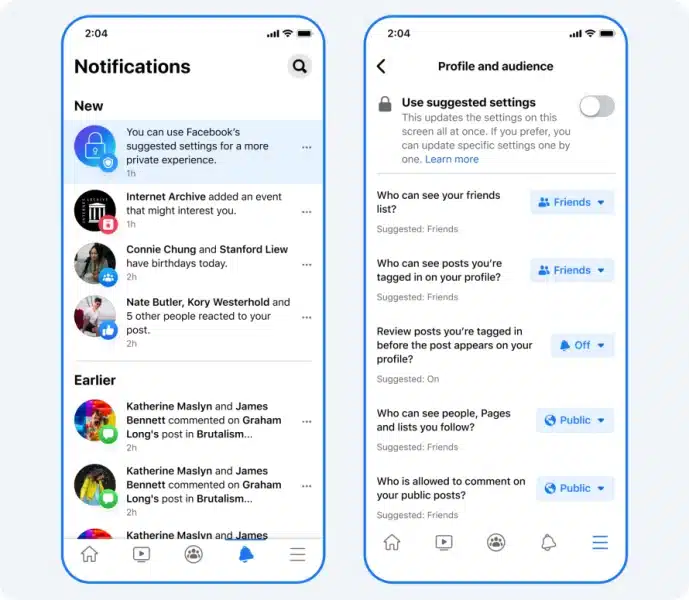
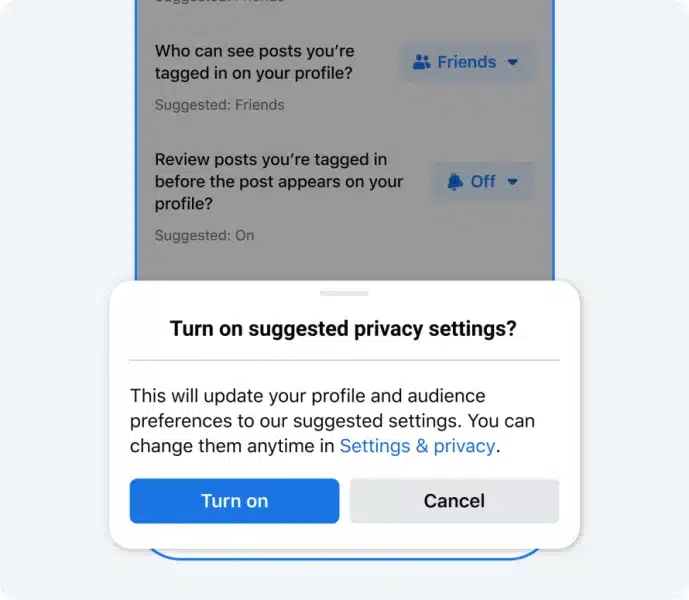
New privacy defaults. Starting today, teens will default to more private settings when they join Facebook. For teens already on the platform, Meta recommends making these changes manually. The new privacy settings affect:

  • Who can see their friends list
  • Who can see the people, Pages and lists they follow 
  • Who can see posts they’re tagged in on their profile
  • Reviewing posts they’re tagged in before the post appears on their profile
  • Who is allowed to comment on their public posts
Advertising & Marketing (NEC)
Computing

Restricting connections. Meta is testing ways to protect teens from messaging suspicious adults they aren’t connected to, and those adults won’t be shown in teens’ People You May Know recommendations. Meta further clarifies that a “suspicious” account is one that belongs to an adult that may have recently been blocked or reported by a young person, for example. As an added layer of protection, Meta is also testing removing the message button on teens’ Instagram accounts when they’re viewed by suspicious adults altogether. 


Get the daily newsletter search marketers rely on.

<input type="hidden" name="utmMedium" value="” />
<input type="hidden" name="utmCampaign" value="” />
<input type="hidden" name="utmSource" value="” />
<input type="hidden" name="utmContent" value="” />
<input type="hidden" name="pageLink" value="” />
<input type="hidden" name="ipAddress" value="” />

Processing…Please wait.

function getCookie(cname) {
let name = cname + “=”;
let decodedCookie = decodeURIComponent(document.cookie);
let ca = decodedCookie.split(‘;’);
for(let i = 0; i <ca.length; i++) {
let c = ca[i];
while (c.charAt(0) == ' ') {
c = c.substring(1);
}
if (c.indexOf(name) == 0) {
return c.substring(name.length, c.length);
}
}
return "";
}
document.getElementById('munchkinCookieInline').value = getCookie('_mkto_trk');


New safety tools. Meta is also developing new tools to report anything that makes them feel uncomfortable. On their blog, Meta says, “we’re prompting teens to report accounts to us after they block someone, and sending them safety notices with information on how to navigate inappropriate messages from adults.  In just one month in 2021, more than 100 million people saw safety notices on Messenger. We’ve also made it easier for people to find our reporting tools and, as a result, we saw more than a 70% increase in reports sent to us by minors in Q1 2022 versus the previous quarter on Messenger and Instagram DMs.”

daily newsletter search marketers
Facebook

Stopping the spread of sensitive images. Meta is also working on new tools to help stop the spread of teens’ intimate images online. Meta says:

We’re working with the National Center for Missing and Exploited Children (NCMEC) to build a global platform for teens who are worried intimate images they created might be shared on public online platforms without their consent. This platform will be similar to work we have done to prevent the non-consensual sharing of intimate images for adults. It will allow us to help prevent a teen’s intimate images from being posted online and can be used by other companies across the tech industry. We’ve been working closely with NCMEC, experts, academics, parents and victim advocates globally to help develop the platform and ensure it responds to the needs of teens so they can regain control of their content in these horrific situations. We’ll have more to share on this new resource in the coming weeks.

We’re also working with Thorn and their NoFiltr brand to create educational materials that reduce the shame and stigma surrounding intimate images, and empower teens to seek help and take back control if they’ve shared them or are experiencing sextortion.

Home Business

Dig deeper. Meta says that anyone seeking support and information related to sextortion can visit their education and awareness resources, including the Stop Sextortion hub on the Facebook Safety Center. You can also read this announcement from Meta on their blog.

Why we care. It’s hard to criticize Meta for taking steps to protect and prevent harm to teens. Though teens will default to the new settings once they sign up, they can still opt out if they choose. And teens already on the platform will have to manually select the new options, which many of them may not do.

At least parents of teens can now be aware of the new changes and take the appropriate steps to help protect them.

The post New Meta privacy updates for teens appeared first on Search Engine Land.

Original source: https://searchengineland.com/new-meta-privacy-updates-for-teens-389742

Google Search adds new spam policy: Policy circumvention

Google has added a new spam policy to its search spam policies today, the new spam policy is named “Policy circumvention.” In short, if you find ways to get around the current spam prevention measures, Google may take action on your content, site, or account.

The new policy. Google posted the new policy over here, it reads:

“If you engage in actions intended to bypass our spam or content policies for Google Search, undermine restrictions placed on content, a site, or an account, or otherwise continue to distribute content that has been removed or made ineligible from surfacing, we may take appropriate action which could include restricting or removing eligibility for some of our search features (for example, Top Stories, Discover). Circumvention includes but is not limited to creating or using multiple sites or other methods intended to distribute content or engage in a behavior that was previously prohibited.”

The penalty. Google said if you violate this new policy, Google may restrict or remove the content from showing up in search or for some search features.

What is a policy circumvention? In short, it sounds like any action you take to bypass the other Google Search spam or content policies. This includes creating new sites, using other sites or other methods to distribute that content, maybe on third-party sites or other avenues.

Why we care. Knowing Google’s spam and content policies is a prerequisite for performing SEO services and other marketing services on Google Search. This is a new policy but the fundamentals of logic behind the policy match most of the already published Google Search spam policies. In short, don’t try to manipulate Google Search’s ranking algorithms and if you do, you run the risk of having your site removed or downgraded in Google Search.

The post Google Search adds new spam policy: Policy circumvention appeared first on Search Engine Land.

Original source: https://searchengineland.com/google-search-adds-new-spam-policy-policy-circumvention-389759

Marketing in a recession: How to avoid 5 common mistakes

It’s hard not to be anxious about the macroeconomy right now. 

Unless you’re a brand marketer in a thoroughly recession-proof industry or an agency marketer with a portfolio of clients in recession-proof industries, you’re working against an undercurrent of stress and performance pressure.

These emotions may help some marketers achieve hyper-focus. But they’re also leading many to make hasty decisions that run counter to the short- and long-term health of their businesses. 

In this article, you’ll learn some common mistakes marketers make and more thoughtful alternatives that will position brands to survive and thrive over the long haul.

Mistake 1: Cutting instead of reducing

You’ve likely heard that marketing is a flywheel.

What that means, especially with major platform algorithms’ self-learning capabilities, is that cutting spend implies a hard reset that will have last ramifications well beyond the time it takes to turn campaigns back on.

What to do instead

Wherever possible, keep the lights on in campaigns you know are providing results. If you need to reduce spend: 

  • Understand that you’re in good company.
  • Take a deep breath and start by dialing back (but not cutting altogether) where you’ll see a less immediate impact. 

If you can’t clearly see opportunities within specific campaign segments, you may need more precise segmentation:

  • Top of funnel, middle of funnel or bottom of funnel at the campaign level.
  • By objective at the ad set level. 

This will help you assess where performance is relatively poor and eligible for reductions.

Mistake 2: Cutting without referencing account history

It’s an especially tough time for startups. Without a lot of benchmarking data, they’re unable to reference past account history for smarter budget reductions. 

There are fewer excuses for more established brands not to dig into the history of account performance (especially if the history goes back to other frenetic times, like the first six months of the COVID-19 pandemic), but I’ve seen it happen.

What to do instead

If you are a startup and don’t have a helpful archive of performance data, but you do have an agency running your account, lean heavily on them to pull insights from similar accounts they may have had in the past. (Make sure you’re involving your agency in any big decisions, of course.)

If you have a more established set of accounts, go back at least to your 2020 data to analyze: 

  • How you reallocated budget then.
  • What worked in the short and long terms.
  • What had lasting effects (good or bad). 

This will give you a good strategic starting point for product or service campaigns that remain relevant to your business.


Get the daily newsletter search marketers rely on.

<input type="hidden" name="utmMedium" value="” />
<input type="hidden" name="utmCampaign" value="” />
<input type="hidden" name="utmSource" value="” />
<input type="hidden" name="utmContent" value="” />
<input type="hidden" name="pageLink" value="” />
<input type="hidden" name="ipAddress" value="” />

Processing…Please wait.

function getCookie(cname) {
let name = cname + “=”;
let decodedCookie = decodeURIComponent(document.cookie);
let ca = decodedCookie.split(‘;’);
for(let i = 0; i <ca.length; i++) {
let c = ca[i];
while (c.charAt(0) == ' ') {
c = c.substring(1);
}
if (c.indexOf(name) == 0) {
return c.substring(name.length, c.length);
}
}
return "";
}
document.getElementById('munchkinCookieInline').value = getCookie('_mkto_trk');


Mistake 3: Cutting without referencing CRM data

I’ve seen this a lot over the years and not just in recessions: marketers who react to surface-level metrics without understanding actual business impact make poor budget decisions.

Examples: 

  • A B2B brand throws more budget at a source of cheap CPLs instead of understanding which source is driving the most qualified leads that evolve into opportunities.
  • An ecommerce brand reduces budget for their highest-CPA audience without realizing that the audience in question carries an average LTV 50% higher than other audiences.

In times where spend reductions are widespread, kneecapping your most valuable audiences, segments or campaigns may achieve your immediate budget goals, but it’ll crater your revenue over the long term.

What to do instead

If you haven’t synced your marketing data with your CRM data, it’s high time to get that nailed down. 

At the very least, make sure you have an understanding (on the B2B side) of which channels are driving your most qualified leads (which you can keep track of on a simple Excel sheet if you’re waiting on dev resources) so you can prioritize other areas for spend reductions.

Mistake 4: Cutting new campaigns prematurely

In today’s algorithm-heavy marketing world:

  • Campaigns need time and data to optimize. 
  • Tests need enough time to return statistically significant results. 

Early indicators are not the full picture and shouldn’t be all the information you need to make your decisions.

What to do instead

Rather than panicking and cutting, rotate in fresh creative and messaging while adjusting bidding types. Go through all the usual optimization options you normally would, and resist the urge to cut without understanding the true performance ceiling of your campaigns.

In B2B, where data density takes longer to build, set some higher-volume growth indicators that will return information more quickly. 

Even CTR can be a decent proxy metric to start with (as long as you react to high CTR/low conversion scenarios by optimizing the weak point in your funnel).

Mistake 5: Going blind to opportunity

While it may feel like a worst-case scenario for many marketers, the likelihood is that at least one of your competitors is in poorer shape – which means they may be leaving market share and/or lower costs on the table for you to grab. 

(If you’re working for a recession-proof brand and have a full budget on hand, this is relevant to you as well, since you may see lower CPMs and CPCs in your social channels once the election and holiday seasons have elapsed).

Yes, many of us are on the defensive for good reason. But spending all of your energy on preservation means you might miss out on opportunities to expand.

What to do instead

Make sure you’re paying attention to weekly cost trends so you can quickly identify (and jump on) any market softness. 

Keep close tabs on industry news, particularly concerning platforms you haven’t yet tested, that indicate any general downward cost trends making those platforms more viable. 

The other thing to watch for is emerging trends and market shifts that you can address in your campaigns. If your traditional ideal customer profile (ICP) is developing new pain points: 

  • Make sure your marketing addresses those.
  • Communicate the developments to your executive team so they can consider shifting any offers accordingly. 

Above all, do your best to approach your campaigns with an eye toward the long term, which will help keep you from spending all of your time and money on sheer survival tactics.

Great marketers emerge from recessions

You may notice that every one of these mistakes should be avoided at all times, not just during economic upheaval

There’s a reason for the adages about great marketers emerging from recessions

Whether the recession forces you into good new habits or you brought good habits that helped keep your company ahead of the curve, the foundations of great marketing persist. 

Keep them top of mind as you wade through the news cycles and tough internal meetings.

The post Marketing in a recession: How to avoid 5 common mistakes appeared first on Search Engine Land.

Original source: https://searchengineland.com/marketing-recession-common-mistakes-389542